MedVellum
MCQsExamsAtlas
DashboardPricing
MBBS / Core medicine✳Dermatology✳ICU Fellowship (CICM)✳Anaesthesia✳Emergency Medicine✳Psychiatry Fellowship✳Paediatrics Fellowship✳Physician Medicine✳MCQs✳SAQs✳Vivas✳OSCE✳Evidence-first✳MBBS / Core medicine✳Dermatology✳ICU Fellowship (CICM)✳Anaesthesia✳Emergency Medicine✳Psychiatry Fellowship✳Paediatrics Fellowship✳Physician Medicine✳MCQs✳SAQs✳Vivas✳OSCE✳Evidence-first✳

MedVellum.

The folio

Exam-exhaustive medical education across every specialty — evidence-graded topics, engraved plates, and practice in every written and oral format. Educational content only — not medical advice.

llms.txt · psychiatry LLM catalog · sitemap

Atlas

  • Specialty atlas
  • MBBS / Core medicine
  • Dermatology
  • ICU Fellowship (CICM)
  • Anaesthesia
  • Emergency Medicine
  • Psychiatry Fellowship
  • Paediatrics Fellowship
  • Physician Medicine

Study & account

  • MCQ practice
  • Practice alias
  • Exam tools
  • Dashboard
  • Pricing
  • Sign in

© 2026 MedVellum. For education only — not a substitute for clinical judgement.

Folio edition · Set in Instrument Serif & Archivo

ICU TopicsRenal and metabolic

ICU · Renal and metabolic

RRT modality selection: IHD vs CRRT vs SLED — when and why

Also known as RRT modality · Intermittent haemodialysis · Continuous renal replacement therapy · SLED · Sustained low-efficiency dialysis · Haemodialysis ICU

When AKI requires RRT, three modalities are available: (1) INTERMITTENT HAEMODIALYSIS (IHD) — standard, 3-4h sessions, high efficiency, rapid solute removal. (2) CONTINUOUS RENAL REPLACEMENT THERAPY (CRRT — CVVH, CVVHD, CVVHDF) — 24h/day, slow, gentle, haemodynamically stable, better for shocked/cerebral oedema patients. (3) SUSTAINED LOW-EFFICIENCY DIALYSIS (SLED) — hybrid, 6-12h sessions, intermediate efficiency, haemodynamic stability between IHD and CRRT. CHOICE based on: HAEMODYNAMICS (CRRT for shocked, IHD for stable), CEREBRAL OEDEMA (CRRT — slower fluid/urea shift - less brain swelling), ANTICOAGULATION (CRRT needs more — citrate or heparin), ACIDOSIS (CRRT for severe lactic acidosis — continuous correction), MOBILITY (IHD for ambulatory/rehab). EVIDENCE: NO mortality difference between IHD and CRRT (multiple RCTs — HEMO, SHARF, Vinsonneau). COST: CRRT more expensive. DOSE: CRRT 20-25 mL/kg/hr; IHD Kt/V 1.2-1.5. TIMING: AKIKI, STARRT-AKI — EARLY vs LATE RRT — no mortality difference (don't rush to RRT — wait for clinical indications).

high13 referencesUpdated 1 July 2026
On this page & tools

Your progress

Saved locally on this device.

Target exams

CICMFFICMEDIC

Red flags

No mortality difference between IHD and CRRT (multiple RCTs) — choice based on patient factorsCRRT for: haemodynamic instability, cerebral oedema, severe acidosis, large fluid removalIHD for: stable haemodynamics, ambulatory/rehab, lower costAKIKI/STARRT-AKI: no mortality benefit of EARLY RRT — wait for clinical indicationsCRRT dose: 20-25 mL/kg/hr (effluent); IHD: Kt/V 1.2-1.5

Your progress

Saved locally on this device.

Target exams

CICMFFICMEDIC

Red flags

No mortality difference between IHD and CRRT (multiple RCTs) — choice based on patient factorsCRRT for: haemodynamic instability, cerebral oedema, severe acidosis, large fluid removalIHD for: stable haemodynamics, ambulatory/rehab, lower costAKIKI/STARRT-AKI: no mortality benefit of EARLY RRT — wait for clinical indicationsCRRT dose: 20-25 mL/kg/hr (effluent); IHD: Kt/V 1.2-1.5
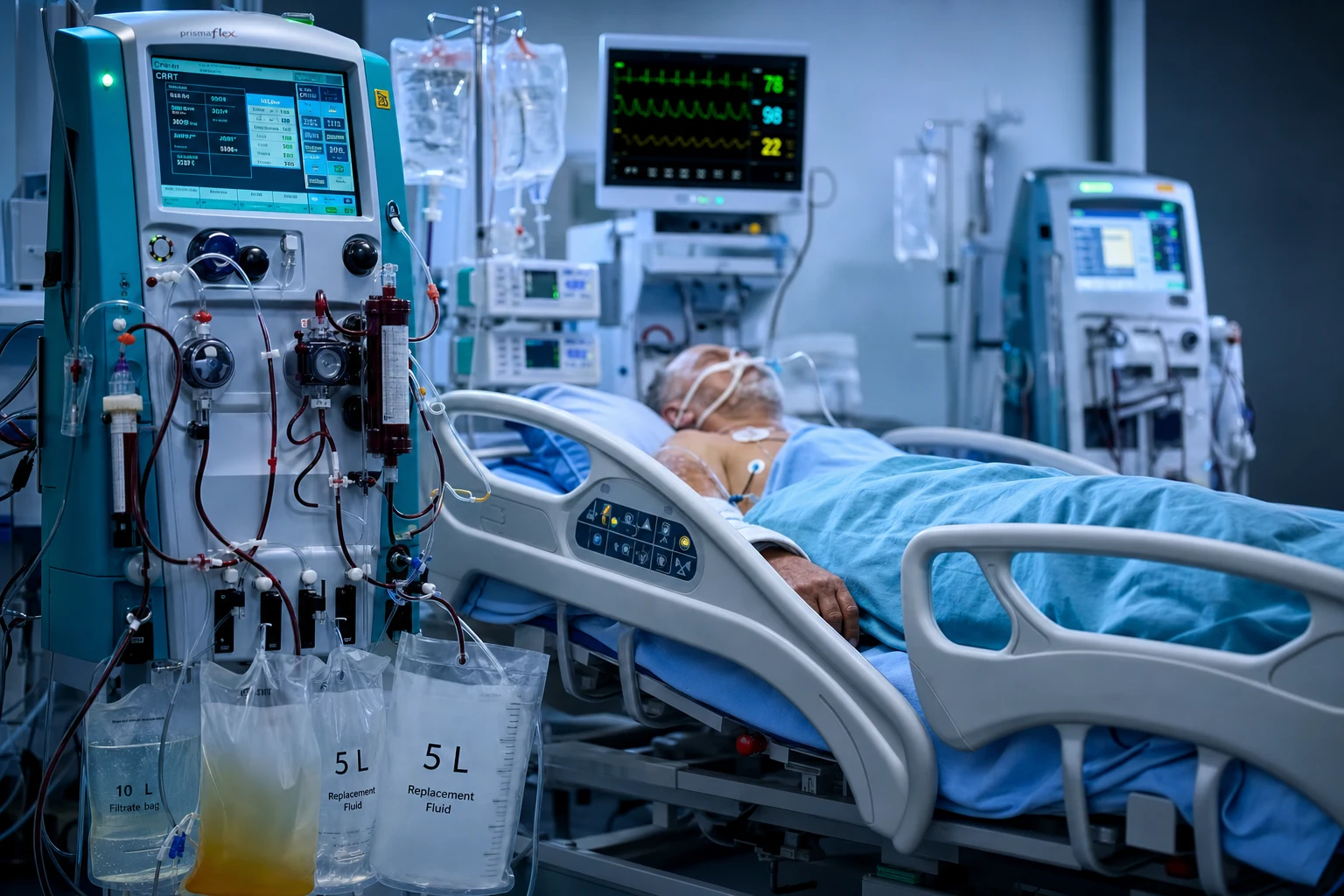
Cinematic ICU scene showing three renal replacement therapy setups side by side — a continuous CVVHDF machine at an unstable patient on vasopressors, an intermittent haemodialysis chair in the background, and a sustained low-efficiency dialysis machine as a hybrid, clinical-blue lighting, medical educational, no faces, no text
FigureNo RCT shows a survival advantage of CRRT over IHD for ICU-AKI — modality is chosen on physiological grounds. CRRT (CVVHDF) for the haemodynamically unstable, fluid-overloaded or brain-injured; IHD for the stable patient needing rapid solute removal (hyperkalaemia, toxin); SLED as a hybrid — gentler than IHD, more efficient than CRRT — for the haemodynamically marginal. Dose: 20–25 mL/kg/h effluent for CRRT, single-pool Kt/V 1.2–1.4 for IHD.
Comparison of solute and fluid kinetics IHD CRRT SLED
FigureModality physiology — rapid solute shifts (IHD) vs continuous gentle clearance (CRRT) vs hybrid SLED; choose on haemodynamics, ICP risk, and need for rapid correction.
[1]
Decision algorithm for RRT modality and dose targets
FigureModality algorithm — shock/ICP → CRRT; stable hyperK/toxin → IHD; intermediate → SLED. Dose: CRRT effluent 20–25 mL/kg/h; IHD Kt/V about 1.2–1.4.
[1]

In one line

RRT modality choice: NO mortality difference between IHD and CRRT (multiple RCTs). CRRT preferred for: haemodynamic instability (shocked), cerebral oedema (slower solute shift — less brain swelling), severe metabolic acidosis (continuous correction), large fluid removal (gentle). IHD preferred for: stable haemodynamics, ambulatory/rehab, lower cost, rapid correction needed (hyperkalaemia — faster than CRRT). SLED: hybrid (6-12h) — stability between IHD and CRRT. Timing (AKIKI, STARRT-AKI): NO mortality benefit of EARLY RRT — wait for clinical indications (AEIOU: Acidosis, Electrolytes, Ingestion, Overload, Uraemia). Dose: CRRT 20-25 mL/kg/hr effluent; IHD Kt/V 1.2-1.5.

[1]

IHD vs CRRT vs SLED compared

FeatureIHDCRRT (CVVH/CVVHD)SLED
Duration3-4h sessions (alternate days)24h/day continuous6-12h sessions (daily or alternate)
EfficiencyHIGH (rapid solute removal)LOW (slow, gentle)INTERMEDIATE
Haemodynamic stabilityVariable (fluid + solute shifts)EXCELLENT (slow)GOOD (slower than IHD)
Cerebral oedemaWorse (dialysis disequilibrium — rapid urea shift -> brain swelling)BETTER (slow urea removal)Good
Acidosis correctionRapid (session) but reboundCONTINUOUS (stable)Intermediate
Fluid removalRapid (may cause hypotension)Gentle (continuous)Gentle
AnticoagulationMinimal (heparin during session, off between)MORE (citrate or heparin — continuous)Some (during session)
Drug dosingStandard (dialysis days)Adjusted (CRRT clears differently)Adjusted
MobilityBetter (between sessions)Worse (connected 24/7)Intermediate
CostLOWERHIGHER (fluids, filters, staff)Intermediate
Best forStable, ambulatoryShocked, cerebral oedema, severe acidosisModerate instability, cost-conscious
[1]

RRT modality selection in ICU

  1. DETERMINE IF RRT IS INDICATED (TIMING) — (a) LIFE-THREATENING INDICATIONS (start IMMEDIATELY — 'AEIOU'): (i) Acidosis (severe metabolic, pH <7.1 not responding). (ii) Electrolytes (hyperkalaemia refractory, severe hypercalcaemia). (iii) Ingestion/toxin (dialysable — lithium, salicylate, toxic alcohols, metformin). (iv) Overload (pulmonary oedema refractory to diuretics). (v) Uraemia (pericarditis, encephalopathy, bleeding). (b) NON-LIFE-THREATENING: AKIKI + STARRT-AKI trials — NO mortality benefit of EARLY RRT (starting before clinical indications) -> WAIT for clinical indications (don't rush to RRT for 'rising creatinine' alone — may recover without). (c) DISCUSS with nephrology + ICU team
  2. ASSESS PATIENT FACTORS FOR MODALITY — (a) HAEMODYNAMICS: stable -> IHD acceptable; shocked/unstable (vasopressors) -> CRRT or SLED. (b) BRAIN: cerebral oedema (TBI, ALF, SAH) -> CRRT (avoid dialysis disequilibrium — rapid urea shift -> brain swelling). (c) ACIDOSIS: severe lactic acidosis -> CRRT (continuous correction; IHD may overshoot alkalinisation then rebound). (d) FLUID: need large fluid removal (e.g., 3-5L/day in septic shock) -> CRRT (gentle continuous). (e) MOBILITY: rehabilitating, need to be up -> IHD (between sessions). (f) ANTICOAGULATION risk: bleeding (citrate CRRT — no systemic anticoag; heparin-free IHD). (g) COST/availability: IHD cheaper + widely available; CRRT needs special machine + staff
  3. CHOOSE MODALITY — (a) CRRT: shocked/unstable, cerebral oedema, severe acidosis, large fluid removal. DOSE: 20-25 mL/kg/hr effluent rate (KDIGO). ANTICOAGULATION: citrate (preferred — regional, no systemic; monitor Ca2+, especially liver failure -> accumulation) or heparin (systemic — bleeding risk). CIRCUIT life: 24-72h (citrate longer). (b) IHD: stable haemodynamics, ambulatory. DOSE: Kt/V 1.2-1.5 per session, 3-4 sessions/week. ANTICOAGULATION: heparin (during session) or heparin-free (saline flush) if bleeding risk. (c) SLED: moderate instability, cost-conscious, between shifts. 6-12h sessions (daily or alternate). Good haemodynamic stability + reasonable efficiency
  4. MONITOR + ADJUST — (a) SOLUTE: urea, creatinine (trend — is RRT effective?), K+ (target normal), bicarbonate (acidosis corrected?), phosphate (hypophosphataemia common with RRT — replace). (b) FLUID: net ultrafiltration (target — offload fluid slowly), input/output, weight (if possible), haemodynamics (hypotension from over-rapid fluid removal). (c) CIRCUIT: filter life (clotting?), pressures (transmembrane pressure — rising = filter clotting), anticoagulation (citrate ratio, heparin APTT). (d) COMPLICATIONS: hypotension (IHD — rapid fluid removal), hypothermia (CRRT — fluid cool), electrolyte derangement (K+, phosphate, Mg2+, Ca2+), bleeding (anticoagulation), infection (catheter), citrate accumulation (liver failure -> acidosis + low Ca2+)
  5. DRUG DOSING ADJUSTMENT — (a) CRRT: clears drugs DIFFERENTLY (continuous, depends on effluent rate + filter). Dose drugs based on CRRT clearance (e.g., beta-lactams — higher dose or continuous infusion; vancomycin — dose by CRRT clearance; anticoagulants — adjust). Consult pharmacist + drug dosing in CRRT references. (b) IHD: intermittent clearance — dose on dialysis days (supplement after session for dialysed drugs). (c) SLED: intermediate — adjust per centre protocol. (d) THERAPEUTIC DRUG MONITORING: vancomycin (trough or AUC), aminoglycosides (if used), beta-lactams (some centres — emerging)
  6. WEAN + TRANSITION — (a) RECOVERY SIGNS: rising urine output (polyuria phase of AKI recovery), falling creatinine (between sessions — kidney clearing), stable fluid/electrolytes. (b) WEAN: increase time between IHD sessions (alternate days -> 2x/week); reduce CRRT effluent rate; consider stopping if urine output >500 mL/day + creatinine stable. (c) TRANSITION: CRRT -> IHD (if stabilising); IHD -> stop (if recovering). (d) LONG-TERM: if AKI -> CKD (10-30% of severe AKI) -> chronic dialysis. (e) RENAL REHAB: nutrition, avoid nephrotoxins, monitor renal function. (f) FOLLOW-UP: nephrology (renal recovery vs progression)
[1]

Clinical pearls

High-yield RRT modality selection points for CICM/FFICM exam

  1. No mortality difference between IHD and CRRT — the key evidence. (1) MULTIPLE RCTs: (a) Vinsonneau (Hemodiafe 2006, Lancet): CRRT vs IHD in ICU AKI -> NO mortality difference. (b) HEMO, SHARF, others: same. (c) Meta-analyses: no survival advantage of either. (2) WHY NO DIFFERENCE: both modalities achieve SOLUTE CLEARANCE + FLUID REMOVAL — the OUTCOME (mortality) depends on the UNDERLYING ILLNESS (sepsis, multi-organ failure), not the RRT modality. (3) CHOICE based on PATIENT FACTORS (haemodynamics, brain, acidosis, fluid) — not 'one modality is better.' (4) COST: CRRT is MORE EXPENSIVE (special machine, fluids, filters, staff time) — if outcomes equal, IHD may be preferred (cost-effectiveness). (5) PRACTICE: most ICUs use BOTH — CRRT for unstable, IHD/SLED for stabilising — transition between as patient improves.[1] }
  2. AKIKI and STARRT-AKI — EARLY vs LATE RRT timing. (1) THE QUESTION: when to START RRT in AKI — early (at FUREA > some threshold, e.g., BUN >80) vs late (wait for CLINICAL INDICATIONS — AEIOU)? (2) AKIKI (2016, NEJM): early (KFRE >85% at 7d — high risk) vs late (wait for AEIOU indications) -> NO mortality difference; early group had MORE RRT (some recovered without). (3) STARRT-AKI (2020, NEJM): early (immediately at stage 2 AKI) vs delayed (AEIOU or no recovery) -> NO mortality difference; early had MORE ADVERSE EVENTS (infection, bleeding — from catheter/anticoag). (4) IDEAL-ICU (2018): early vs late in septic shock AKI -> NO mortality difference. (5) CONCLUSION: NO BENEFIT of EARLY RRT -> WAIT for clinical indications (AEIOU) — don't rush to RRT for 'rising creatinine' alone. (6) EXCEPTION: if clearly going to need RRT (e.g., creatinine rising fast, oliguria, fluid overloaded) -> may start earlier (pre-emptive) to avoid emergency in the middle of the night.[2] }
  3. CRRT for haemodynamic instability — why. (1) IHD: RAPID fluid removal (3-4h session -> offload 2-4L quickly) + rapid solute shift -> HYPOTENSION (especially in shocked patient who can't tolerate fluid shifts). (2) CRRT: SLOW, continuous fluid removal + solute clearance -> GENTLE -> better haemodynamic stability. (3) MECHANISM: (a) IHD: high blood flow + high dialysate flow -> efficient but rapid fluid/urea removal -> plasma osmolality drops fast -> water shifts from extracellular to intracellular -> intravascular volume drops -> hypotension. (b) CRRT: low blood flow + low dialysate flow -> slow, continuous -> plasma osmolality drops gradually -> less fluid shift -> stable BP. (4) CLINICAL: patient on high-dose vasopressors -> CRRT (IHD may cause hypotension -> worse perfusion -> more kidney injury). (5) TRANSITION: as patient stabilises (weaning vasopressors) -> transition CRRT to IHD (or SLED).[1] }
  4. Dialysis disequilibrium — why CRRT for cerebral oedema. (1) DIALYSIS DISEQUILIBRIUM SYNDROME: (a) In IHD: RAPID urea removal from blood -> blood osmolality drops faster than BRAIN (urea clears slowly from brain — blood-brain barrier). (b) Osmotic gradient: brain (high urea) vs blood (low urea) -> water moves INTO brain -> cerebral oedema -> headache, confusion, seizures, coma, herniation. (c) Especially dangerous in: high urea (>50), TBI, ALF, SAH, pre-existing cerebral oedema. (2) PREVENTION: (a) CRRT: SLOW urea removal -> gradual osmolality change -> less brain swelling -> preferred for cerebral oedema patients. (b) If IHD MUST be used: SLOW session (reduced blood flow/dialysate), reduced urea removal per session, mannitol (for cerebral oedema). (3) CLINICAL: ANY patient with raised ICP / cerebral oedema (TBI, ALF, SAH, meningitis) -> CRRT (not IHD) to avoid dialysis disequilibrium. (4) This is a STRONG indication for CRRT (even if haemodynamically stable).[5] }
  5. Citrate anticoagulation — preferred for CRRT. (1) WHY ANTICOAGULATE CRRT: (a) Blood in extracorporeal circuit (tubing + filter) -> contact activation -> clotting -> filter clots (stops working). (b) Without anticoagulation: filter clots every 12-24h -> inefficient, blood loss, cost. (2) CITRATE: (a) MECHANISM: chelates CALCIUM in circuit (calcium is cofactor for clotting cascade) -> prevents clotting IN CIRCUIT. (b) REGIONAL (not systemic): citrate infused PRE-PUMP (into blood entering circuit) -> chelates Ca2+ in circuit -> prevents clotting; then calcium is INFUSED back into patient (return line) -> systemic calcium normal. (c) ADVANTAGES: (i) NO systemic anticoagulation (bleeding risk same as no anticoag). (ii) Longer filter life (24-72h). (iii) Better clearance (filter patent). (d) DISADVANTAGES: (i) CITRATE ACCUMULATION (in liver failure — can't metabolise citrate -> metabolic acidosis + low Ca2+). (ii) Monitoring: post-filter Ca2+ (target 0.25-0.35 — low in circuit — confirms anticoag) + systemic Ca2+ (target normal — 1.1-1.3). (iii) Protocol-intensive (need calcium infusion + citrate titration). (3) HEPARIN (alternative): (a) Systemic anticoagulation -> works but bleeding risk. (b) Filter life: 24-48h. (c) Use if citrate contraindicated (liver failure — accumulation). (4) CURRENT: CITRATE PREFERRED for CRRT (less bleeding, longer filter life) — unless liver failure (then heparin or saline flush).[6] }
  6. CRRT dose — 20-25 mL/kg/hr effluent. (1) DOSE = EFFLUENT RATE (the fluid leaving the filter — contains cleared solutes). (2) KDIGO (2012): target 20-25 mL/kg/hr effluent (for CRRT). (3) EVIDENCE: (a) ATN (2009, NEJM): intensive (35 mL/kg/hr) vs less intensive (20 mL/kg/hr) -> NO mortality difference. (b) RENAL Replacement Study (2009, NEJM): same. (c) CONCLUSION: 20-25 mL/kg/hr is SUFFICIENT — higher doses don't improve outcomes (just increase cost + filter burden). (4) ADJUST: (a) Increase if solute control inadequate (urea still high, acidosis persisting). (b) Decrease if haemodynamics can't tolerate (blood flow limited). (c) Account for downtime (filter changes, clotting, procedures) -> prescribe slightly higher to compensate for interruptions. (5) MONITOR: pre- and post-filter urea (calculate clearance), K+, bicarbonate, phosphate.[5] }
  7. SLED — the hybrid. (1) SLED (Sustained Low-Efficiency Dialysis): (a) Uses IHD machine but with LOW blood flow + LOW dialysate flow + LONGER duration (6-12h). (b) Intermediate efficiency between IHD and CRRT. (2) ADVANTAGES: (a) Haemodynamic stability (better than IHD — slower fluid/solute removal). (b) Reasonable efficiency (sessions clear more than CRRT in 6-12h). (c) Can use standard IHD machine (no special CRRT machine needed). (d) Allows breaks (not 24/7 — patient can be off for procedures). (e) Lower cost than CRRT. (3) DISADVANTAGES: (a) Less stable than CRRT (faster removal in 6-12h vs 24h). (b) Anticoagulation during session (not continuous). (c) Less commonly available (some ICUs only have IHD or CRRT). (4) USE: (a) Moderate haemodynamic instability (shocked but not on high-dose vasopressors). (b) Cost-conscious (if CRRT unavailable/affordability). (c) Transitioning CRRT -> IHD (intermediate). (5) EVIDENCE: SLED vs CRRT — equivalent outcomes (Schneider 2019 — small studies, no clear difference).[4] }
  8. AKI recovery + weaning RRT. (1) RECOVERY SIGNS: (a) INCREASING URINE OUTPUT (polyuria phase — as tubules recover, they can't concentrate -> high output; if >500 mL/day without diuretics -> recovering). (b) FALLING CREATININE between sessions (kidney clearing some — not just RRT). (c) STABLE FLUID/ELECTROLYTES (between sessions — kidney maintaining). (2) WEAN: (a) CRRT: reduce effluent rate (20 -> 15 -> 10 -> off) OR increase time off (if tolerating breaks). (b) IHD: increase interval between sessions (alternate days -> 2x/week -> off). (c) MONITOR: creatinine (rises off RRT?), K+ (hyperkalaemia off RRT?), fluid (overload off RRT?). (3) STOPPING: if urine output >1L/day + creatinine stable + electrolytes/fluid managed without RRT -> stop. (4) RE-LATE RISK: some patients need re-start (if kidney falters) — monitor closely after stopping. (5) LONG-TERM: 10-30% of severe AKI -> CKD (especially elderly, diabetes, pre-existing CKD) -> may need chronic dialysis.[3] }
  9. Hypophosphataemia from RRT. (1) RRT clears PHOSPHATE (small molecule, dialysable). (2) ESPECIALLY: CRRT (continuous — clears more phosphate than intermittent IHD). (3) CONSEQUENCE: hypophosphataemia -> respiratory failure (diaphragm weakness — ATP), cardiac dysfunction, rhabdomyolysis, leukocyte dysfunction. (4) MANAGEMENT: (a) MONITOR phosphate daily (in RRT). (b) REPLACE: IV phosphate (sodium/potassium phosphate 15-30 mmol) or oral. (c) Phosphate-supplemented dialysate/replacement fluid (some centres). (5) ALSO: hypokalaemia, hypomagnesaemia, hypocalcaemia (citrate) — all need monitoring + replacement. (6) This is a COMMON complication of RRT — often missed (focus on urea/creatinine, forget phosphate).[5] }
  10. Drug dosing in RRT — adjust! (1) RRT clears drugs — dose must be ADJUSTED (else subtherapeutic — ineffective — or toxic if accumulation). (2) CRRT: (a) Clears drugs CONTINUOUSLY (effluent rate-dependent). (b) Beta-lactams: HIGHER dose or continuous infusion (CRRT clears — need more). (c) Vancomycin: dose by CRRT clearance (trough or AUC — TDM). (d) Anticoagulants: adjust (some cleared, some not). (e) Consult: CRRT drug dosing references + pharmacist. (3) IHD: (a) Intermittent clearance — drug removed DURING session (but not between). (b) Dose on DIALYSIS days (give after session — supplement for what was removed). (c) Standard dose on NON-dialysis days. (4) SLED: intermediate — per protocol. (5) TDM: vancomycin (trough 15-20 or AUC 400-600), aminoglycosides (if used), beta-lactams (emerging — some centres). (6) COMMON ERROR: not adjusting antibiotics for RRT -> subtherapeutic -> treatment failure / resistance.[5] }
  11. Citrate accumulation — liver failure risk. (1) CITRATE METABOLISM: citrate (infused into circuit) -> returns to patient (with chelated calcium) -> metabolised by LIVER (Krebs cycle) -> bicarbonate generated. (2) In LIVER FAILURE: can't metabolise citrate -> ACCUMULATES -> metabolic acidosis (citrate is an anion — unmeasured -> high AG) + low ionised Ca2+ (calcium chelated by citrate). (3) DIAGNOSIS: (a) Metabolic acidosis (in patient on citrate CRRT). (b) Total Ca2+/ionised Ca2+ ratio >2.5 (total high from citrate-bound, ionised low). (c) High AG. (4) MANAGEMENT: (a) REDUCE or STOP citrate (switch to heparin anticoag). (b) Give calcium (ionised low). (c) Treat acidosis. (5) PREVENT: (a) Monitor total/ionised Ca2+ ratio + AG (in citrate CRRT). (b) Caution in liver failure (reduce citrate, or avoid — use heparin). (c) Some centres: citrate in mild-moderate liver failure (with monitoring); avoid in severe.[6] }
  12. Vascular access — catheter type. (1) RRT needs LARGE-BORE CENTRAL ACCESS (for high blood flow). (2) SITES (preference order): (a) RIGHT INTERNAL JUGULAR (straight to RA — best flow, lowest recirculation). (b) FEMORAL (easy, but higher infection + recirculation in ambulatory). (c) LEFT INTERNAL JUGULAR (less optimal — kinking). (d) SUBCLAVIAN (avoid — stenosis risk for future AV fistula; if CKD -> chronic). (3) CATHETER: (a) TUNNELLED (long-term — weeks-months) or non-tunnelled (short-term — days-weeks). (b) Large bore (13-15 Fr) — for adequate flow (200-300 mL/min). (4) ULTRASOUND-guided insertion (standard of care — reduces complications). (5) AVOID: subclavian in patients who may need AV fistula (CKD -> chronic dialysis). (6) INFECTION: catheter-related bloodstream infection — strict asepsis, chlorhexidine-impregnated dressing, remove as soon as possible.[5] }
  13. Peritoneal dialysis in ICU — rarely used. (1) PD uses peritoneum as membrane (dialysate infused into abdomen, exchanges). (2) ADVANTAGES: no vascular access, no anticoagulation, haemodynamically gentle. (3) DISADVANTAGES: less efficient than haemodialysis (slow clearance), protein loss, infection (peritonitis), recent abdominal surgery may preclude, hyperglycaemia (dialysate glucose). (4) USE in ICU: (a) Rarely (most centres prefer haemodialysis). (b) May consider in: children (vascular access difficult), resource-limited settings, patients already on chronic PD. (5) NOT standard for ICU AKI in most developed countries — haemodialysis/CRRT preferred.[5] }
  14. RRT complications — know them. (1) HAEMODYNAMIC: hypotension (rapid fluid removal in IHD), arrhythmia. (2) ELECTROLYTE: hypophosphataemia, hypokalaemia, hypomagnesaemia, hypocalcaemia (citrate). (3) ACID-BASE: metabolic acidosis (citrate accumulation), alkalosis (bicarbonate from citrate metabolism). (4) TEMPERATURE: hypothermia (CRRT — fluid cool — may mask fever). (5) BLEEDING: from anticoagulation (heparin) — less with citrate. (6) INFECTION: catheter-related bloodstream infection. (7) CIRCUIT: filter clotting (under-anticoag), air embolism (rare — air detector), haemolysis (kinked line). (8) CITRATE: accumulation (liver failure), metabolic acidosis. (9) NUTRITION: protein loss (CRRT — amino acids filtered), need to increase protein (1.5-2 g/kg/day). (10) DRUG: subtherapeutic (underdosing — RRT clears), toxic (overdosing — not adjusting for reduced renal function). MONITOR + manage each.[5] }

Red flags

Critical RRT modality red flags

  • No mortality difference between IHD and CRRT (multiple RCTs) — choose by patient factors.[1] }
  • CRRT for: shocked/unstable, cerebral oedema (dialysis disequilibrium), severe acidosis, large fluid removal.[1] }
  • AKIKI/STARRT-AKI: no mortality benefit of EARLY RRT — wait for AEIOU indications.[2] }
  • Citrate preferred for CRRT anticoagulation (regional — no systemic bleeding) — avoid in liver failure (accumulation).[6] }
  • Dose: CRRT 20-25 mL/kg/hr effluent (KDIGO); IHD Kt/V 1.2-1.5.[5] }
  • Dialysis disequilibrium: rapid urea removal -> brain swelling -> CRRT for cerebral oedema.[5] }
  • Hypophosphataemia common (RRT clears phosphate) — monitor + replace daily.[5] }
  • Drug dosing: adjust for RRT (CRRT clears differently) — consult pharmacist + TDM.[5] }

Prognosis

RRT modality and timing evidence

IHD vs CRRT (Vinsonneau Hemodiafe 2006, multiple RCTs): NO mortality difference — choose by patient factors (haemodynamics, brain, acidosis, cost). AKIKI (2016, NEJM): early vs late RRT -> no mortality difference; early had more RRT (some recover without). STARRT-AKI (2020, NEJM): early vs delayed -> no mortality difference; early had more adverse events (infection, bleeding). IDEAL-ICU (2018): early vs late in septic AKI -> no difference. ATN (2009, NEJM): intensive (35 mL/kg/hr) vs less (20) -> no difference -> 20-25 mL/kg/hr sufficient. Citrate vs heparin (Bagshaw 2018): citrate less bleeding, longer filter life — preferred (unless liver failure). SLED vs CRRT: equivalent outcomes (Schneider 2019) — hybrid option. AKI -> CKD: 10-30% of severe AKI (especially elderly, diabetes, pre-existing CKD) -> chronic dialysis.

[1]

Anticoagulation strategy

CRRT anticoagulation strategies compared

FeatureRegional citrate (preferred)Unfractionated heparin (UFH)No anticoagulation / saline flush
MechanismChelates Ca²⁺ in circuit (clotting cofactor) -> regional anticoagActivates antithrombin -> inhibits IIa + Xa (SYSTEMIC)Frequent saline flushes dilute + wash circuit (no pharmacologic anticoag)
Bleeding riskNONE (no systemic anticoagulation)HIGH (systemic — APTT 1.5-2x normal)NONE
Filter lifeLONGEST (median 40-72h)Moderate (median 24-48h)SHORTEST (median 12-18h -> frequent clotting)
MonitoringPost-filter iCa²⁺ (target <0.4 mmol/L); systemic iCa²⁺ (normal); total/iCa²⁺ ratio (<2.5)APTT (60-90s) or anti-Xa (0.25-0.35 IU/mL)None specific (clinical — circuit pressures)
Best forDefault in MOST centres; bleeding risk; post-opCitrate contraindicated (severe liver failure); citrate unavailableActive bleeding + contraindication to both citrate + heparin
Avoid inSevere liver failure (accumulation); propofol-renal contraindication; severe lactic acidosis (relative)Active bleeding, HIT, recent surgery, coagulopathyNone (fallback when others unsuitable)
Metabolic effectMetabolic ALKALOSIS (citrate -> bicarbonate); risk of acidosis if accumulationNone direct (heparin neutral)None
ElectrolytesHypocalcaemia (if calcium replacement inadequate)Heparin-induced hypokalaemia (rare)None
CostModerate (citrate + calcium solutions)Low (cheap drug)Low drug cost but HIGH circuit/filter cost (clotting)
[1]

CRRT modality subtypes — CVVH vs CVVHD vs CVVHDF

FeatureCVVH (haemofiltration)CVVHD (haemodialysis)CVVHDF (haemodiafiltration)
Solute removalCONVECTION (solvent drag — solutes pulled with water across membrane)DIFFUSION (concentration gradient — solutes move from blood to dialysate)BOTH (convection + diffusion)
Middle molecules (β2-microglobulin, cytokines)BETTER cleared (convective)Poorly cleared (diffusive — small molecules only)Good clearance
Small molecules (urea, creatinine, K⁺)GoodEXCELLENT (diffusive — efficient for small)Excellent
Effluent = doseUltrafiltrate (replacement fluid added)Dialysate outflowBoth (dialysate + ultrafiltrate)
Replacement fluidYES (pre- or post-dilution)No (dialysate only)Yes (may have replacement)
Filter requirementsHigh-flux (high water permeability)Low-flux sufficientHigh-flux
Common practiceMost common CRRT mode (with CVVHDF)Less common aloneCommon (combined clearance)
Anticoagulation needHigher (more filtration -> concentration -> clotting)LowerIntermediate
[1]

CRRT circuit management — preventing filter clotting

  1. PRESCRIBE THE CIRCUIT — (a) MODALITY: CVVH, CVVHD or CVVHDF (per centre + solute target). (b) DOSE: 20-25 mL/kg/hr EFFLUENT (delivered — prescribe 25-30 to account for downtime). (c) BLOOD FLOW: 150-200 mL/min (higher = better filter patency — less stasis). (d) ANTICOAGULATION: citrate (preferred) -> set citrate rate to blood flow ratio (e.g., citrate 30-40 mL/h per L/min blood flow); calcium infusion separate. (e) FLUID REMOVAL: net ultrafiltration target (e.g., -100 mL/h — slow continuous offload)
  2. MONITOR CIRCUIT PRESSURES — (a) ACCESS PRESSURE (pre-pump negative): pulling blood from patient -> very negative = poor access flow (kink, positional, catheter against wall). (b) RETURN PRESSURE (post-filter positive): returning blood -> rising = filter resistance (clotting) or venous obstruction. (c) TRANSMEMBRANE PRESSURE (TMP): pressure across membrane -> RISING TMP = filter clotting (early sign — track trend; >250-300 mmHg suggests imminent failure). (d) FILTER PRESSURE DROP (ΔP across filter): rising = clotting in filter fibres. (e) EFFLUENT PRESSURE: should be stable; rising = blockage
  3. MONITOR ANTICOAGULATION — (a) CITRATE: post-filter iCa²⁺ q4-6h (target <0.4 mmol/L — circuit anticoag); systemic iCa²⁺ q6h (normal 1.0-1.3); total Ca/iCa ratio q6-12h (<2.5 — if >2.5 = citrate accumulation -> reduce citrate). (b) HEPARIN: APTT q6h (target 60-90s) or anti-Xa; titrate infusion. (c) NO-ANTICOAG: no pharmacologic monitor — watch circuit pressures closely (clot expected)
  4. RECOGNISE FILTER CLOTTING (EARLY SIGNS) — (a) RISING TMP + filter pressure drop (clot forming in fibres). (b) DECREASING effluent rate (machine compensating). (c) DARKER filter (visible clot in fibres — striped). (d) MACHINE ALARMS (high return pressure, low effluent, low blood flow). (e) HAEMOLYSIS (rare — kinked line -> high shear -> red cells lyse -> dark plasma, high K⁺, high LDH, falling haemoglobin). (f) ACTION: if clotting imminent + patient not bleeding -> consider heparin bolus or circuit change
  5. CHANGE THE CIRCUIT (ELECTIVE) — (a) WHEN: routine change q48-72h (citrate) or q24h (no-anticoag); OR if clotting/alarms. (b) ASEPTIC: full sterile technique (catheter hub -> bloodstream infection risk). (c) BLOOD RETURN: clamp + return patient's blood (avoid blood loss — ~150 mL in circuit) unless clotted (then discard). (d) DOCUMENT: circuit life (track — short life = anticoag problem), blood loss, reason for change
  6. TROUBLESHOOT FREQUENT CLOTTING — (a) OPTIMISE anticoag (citrate dose, heparin APTT). (b) INCREASE blood flow (150-200 mL/min). (c) PRE-DILUTION (replacement fluid before filter -> dilutes blood -> less clotting — but reduces efficiency). (d) CHECK access (kink, positional, catheter tip against wall). (e) EXCLUDE HIT (falling platelets on heparin -> switch to citrate or alternative anticoag). (f) PATIENT FACTORS: sepsis (hypercoagulable — needs more anticoag), high haematocrit (viscous -> clot)
[1]

Membrane considerations

Dialyser membrane characteristics

FeatureHigh-flux biocompatible (PREFERRED)Low-flux/unmodified cellulose (avoid)High cut-off (HCO)
MaterialSynthetic (polysulfone, polyethersulfone, polyamide, AN69)Cuprophane, cellulose acetateModified polysulfone (larger pores)
BiocompatibilityHIGH (low complement/leucocyte activation)LOW (complement activation -> inflammation, leukopenia)High
Water permeabilityHigh (Kuf >20 mL/h/mmHg)Low (Kuf <10)Very high
Middle molecule clearanceGood (β2-microglobulin)PoorExcellent (clears cytokines, myoglobin, free haemoglobin)
EvidenceImproved survival vs cuprophane (meta-analyses) — biocompatible preferredWorse outcomes (complement activation)Investigational for sepsis, rhabdomyolysis, removal of protein-bound toxins
UseSTANDARD for CRRT + IHD in ICUObsolete in ICUSelected cases (rhabdomyolysis, sepsis trials)
Albumin lossMinimalMinimalSIGNIFICANT (large pores leak albumin -> need replacement)
Anticoagulation needLower (smoother surface)Higher (rough — more clotting)Higher
[1]

High-yield RRT modality selection points for CICM/FFICM exam (extended)

  1. AKIKI — the detail. (1) AKIKI (Gaudry 2016, NEJM): early (start RRT within 6h of KDIGO stage 2 / FUpURE >85% at 7d) vs late (start only for AEIOU indications or no recovery by 60d). (2) PRIMARY OUTCOME: 60-day mortality -> NO difference (early 48.5%, delayed 49.7%). (3) KEY FINDING: 49% of 'late' group NEVER received RRT (recovered spontaneously) -> confirming early RRT is OVER-TREATMENT in many. (4) ADVERSE: more catheter-related infections + bleeding in early group (more RRT = more lines + anticoag). (5) CONCLUSION: WAIT for clinical indications (AEIOU) unless absolute. (6) CAVEAT: AKIKI excluded immediately life-threatening AKI (those got RRT) — trial only about the GREY ZONE of rising creatinine/oliguria without AEIOU.[2] }
  2. STARRT-AKI — the detail. (1) STARRT-AKI (NEJM 2020): multi-national, 3019 patients. Early (start RRT within 12h of AKI stage 2) vs delayed (start only for AEIOU or AKI persists >72h). (2) PRIMARY OUTCOME: 90-day mortality -> NO difference (early 43.9%, delayed 43.7%). (3) ADVERSE: early group had MORE adverse events at 90d (renal function dependence on RRT 10.4% vs 6.0%; more infections, bleeding). (4) CONTRAST with AKIKI: STARRT-AKI used MORE aggressive early criteria (stage 2 within 12h) — but still no benefit. (5) CONCLUSION: TWO landmark trials (AKIKI + STARRT-AKI) + IDEAL-ICU -> ROBUST evidence that EARLY RRT does NOT improve survival -> WAIT for AEIOU.[3] }
  3. IDEAL-ICU — septic shock AKI. (1) IDEAL-ICU (Barbar 2018, NEJM): early (within 12h of AKI diagnosis in septic shock + RIFLE-F) vs delayed (within 48h if no AEIOU). (2) Outcome: NO mortality difference at 90d (early 58%, delayed 54%). (3) Stopped EARLY for futility. (4) Even in septic shock (high-risk subgroup) -> EARLY RRT no benefit. (5) TAKEN TOGETHER (AKIKI + STARRT-AKI + IDEAL-ICU + ELAIN 2016): majority favour LATE/DELAYED strategy (except ELAIN — single-centre, smaller, suggested benefit in post-surgical AKI — not robust). (6) EXAM ANSWER: 'No mortality benefit of early RRT — wait for AEIOU indications.' [4] }
  4. RENAL + ATN — the dose trials. (1) THE QUESTION: does MORE INTENSE CRRT dose improve survival? (2) RENAL (Bellomo 2009, NEJM): 25 vs 40 mL/kg/hr effluent -> NO mortality difference. (3) ATN (Palevsky 2008, NEJM): intensive (35 mL/kg/hr CVVHDF or 6x/week IHD) vs less intensive (20 mL/kg/hr or 3x/week) -> NO mortality difference. (4) CONCLUSION: HIGHER dose does NOT improve survival -> prescribe 20-25 mL/kg/hr (delivered — prescribe 25-30 to account for downtime). (5) EXCEPTION: increase to 35 mL/kg/hr if POISONING (salicylate, metformin, lithium — maximise clearance) or severe acidosis refractory. (6) EXAM ANSWER: 'CRRT dose 20-25 mL/kg/hr — higher doses do not improve outcomes.' [7] [8] }
  5. Zarbock RICH trial — citrate beats heparin. (1) RICH (Zarbock 2020, JAMA): multicentre RCT, citrate vs systemic heparin in CRRT. (2) PRIMARY OUTCOME (90d mortality): NO difference (citrate 57%, heparin 56%) — but trend. (3) KEY SECONDARY: citrate -> LONGER filter life (median 69h citrate vs 40h heparin), FEWER bleeding complications, MORE metabolic alkalosis (from bicarbonate generation). (4) PRIOR meta-analyses (Zhang 2012, Li 2022): citrate REDUCES bleeding + prolongs filter life -> preferred anticoagulant. (5) CAVEAT: citrate accumulation in severe liver failure -> use heparin or no-anticoag. (6) CONCLUSION: CITRATE = FIRST-LINE anticoag for CRRT (unless liver failure). [6] [9] [12] }
  6. Citrate in liver failure — Zhang meta-analysis. (1) CONCERN: citrate metabolised by liver -> accumulation in liver failure -> acidosis + hypocalcaemia. (2) ZHANG 2019 META-ANALYSIS (Critical Care): citrate CRRT in liver failure patients -> SAFE in MODERATE liver failure (Child-Pugh A/B) with careful monitoring; AVOID in severe (Child-Pugh C / fulminant). (3) MONITORING: total/iCa²⁺ ratio <2.5 + pH stable + iCa²⁺ normal -> continue citrate. (4) ALTERNATIVES in liver failure: heparin (bleeding risk), no-anticoag (short filter life), regional heparin-protamine (rarely used), prostacyclin (vasodilation). (5) CITRATE DOSING in liver impairment: reduce rate + increase monitoring frequency. (6) DECISION: trial citrate with CLOSE monitoring in moderate liver disease; switch if ratio rises or acidosis develops. [10] }
  7. CRRT solute clearance — convection vs diffusion. (1) CONVECTION (CVVH): solute dragged with water across membrane (solvent drag) -> clears MIDDLE molecules (β2-microglobulin, cytokines, vancomycin) better. (2) DIFFUSION (CVVHD): solute moves down concentration gradient blood->dialysate -> clears SMALL molecules (urea, creatinine, K⁺) efficiently. (3) CVVHDF (combined): both mechanisms -> broadest clearance. (4) CLINICAL: most centres use CVVHDF (combined) — good for both small + middle molecules. (5) CYTOKINE REMOVAL: convection (CVVH/CVVHDF) clears cytokines -> rationale for high-volume haemofiltration in sepsis (but trials negative — no survival benefit). (6) DRUG CLEARANCE: convective clearance of larger drugs (vancomycin) differs from diffusive (beta-lactams) — affects dosing.
  8. Delivered vs prescribed dose — downtime matters. (1) PRESCRIBED dose: what you set on machine (e.g., 25 mL/kg/hr). (2) DELIVERED dose: what patient ACTUALLY gets — LOWER due to DOWNTIME (filter changes q48-72h, clotting, line alarms, procedures, transport). (3) DELIVERED is typically 70-80% of prescribed (e.g., prescribe 30 mL/kg/hr -> deliver 25 mL/kg/hr). (4) STRATEGY: prescribe 25-30 mL/kg/hr to DELIVER 20-25 mL/kg/hr (target). (5) MONITOR: track downtime daily (audit) — if >20% downtime, address (more anticoag, fewer interruptions). (6) EFFLUENT-BASED DOSE = (effluent rate in mL/hr) ÷ (patient weight kg). (7) HIGH-VOLUME: 35-45 mL/kg/hr ONLY for poisoning/acidosis (not routine — no survival benefit). [13] }
  9. Hypothermia from CRRT — under-recognised. (1) CRRT fluid at room temp (~22°C) + extracorporeal circuit -> patient loses HEAT -> core temp drops 0.5-1.5°C. (2) CONSEQUENCES: (a) masks fever (sepsis not apparent -> delayed diagnosis); (b) coagulopathy (hypothermia impairs clotting -> more bleeding); (c) arrhythmia (if <34°C); (d) shivering (increased O2 consumption). (3) MANAGEMENT: (a) fluid warmer (blood-line warmer — set to 37°C); (b) active warming (forced air blanket); (c) monitor core temp (bladder/oesophageal). (4) PARADOX: therapeutic hypothermia post-cardiac arrest — CRRT-induced hypothermia sometimes USED intentionally (then rewarm slowly). (5) RECOGNISE: in septic patient on CRRT, normal temp may MASK infection — use other markers (lactate, WBC, trend). (6) TISSUE OXYGENATION: hypothermia lowers metabolic rate -> may be beneficial (less O2 demand) — but not the goal in most.
  10. Drug dosing on CRRT — practical rules. (1) HYDROPHILIC drugs (beta-lactams, vancomycin, aminoglycosides, digoxin) -> CLEARED by CRRT -> dose HIGHER or by TDM. (2) LIPOPHILIC drugs (azoles, macrolides, amiodarone, fentanyl, midazolam) -> NOT significantly cleared (protein-bound, large Vd) -> near-normal dosing. (3) BETA-LACTAMS: target 100% fT > MIC (often need CONTINUOUS or extended infusion) — e.g., meropenem 1g q8h extended infusion or 2g continuous; piperacillin-tazobactam 4.5g q6h or continuous. (4) VANCOMYCIN: loading 25-30 mg/kg, then 15-25 mg/kg q12-24h guided by TDM (trough 15-20 or AUC 400-600) — CRRT clears slowly. (5) ANTICOAGULANTS: heparin NOT cleared (titrate by APTT); DOACs — generally AVOID (unpredictable on CRRT) -> use heparin/LMWH. (6) ANTIBIOTIC TDM: vancomycin + (emerging) beta-lactams — improves outcomes in septic shock. (7) CONSULT: pharmacist + CRRT drug dosing reference (e.g., Sanford, Medscape) — dose by EFFLUENT RATE (clearance proportional to effluent).
  11. Filter clotting — causes + prevention. (1) CAUSES: (a) INADEQUATE anticoagulation (citrate dose too low, heparin APTT subtherapeutic, no-anticoag); (b) LOW blood flow (stasis -> clot — access problem); (c) HIGH haematocrit (viscous -> clot — especially polycythaemia, dehydration); (d) HIGH filtration fraction (>25% — blood concentrated in filter -> clot — reduce by pre-dilution or increase blood flow); (e) CATHETER positional (tip against vessel wall -> poor flow -> stasis); (f) AIR in circuit (microbubbles -> clot nidus — prime carefully). (2) PREVENTION: (a) ADEQUATE anticoag (titrate citrate by post-filter iCa²⁺ <0.4); (b) BLOOD FLOW 150-200 mL/min; (c) PRE-DILUTION (replacement fluid before filter -> dilutes -> reduces filtration fraction); (d) FRICTION to filtration fraction (keep <25%); (e) CHECK access (positional, kinks); (f) ASEPTIC priming (no air). (3) FREQUENT clotting despite optimisation: exclude HIT (falling platelets on heparin) -> switch to citrate or argatroban/bivalirudin. (4) COST of clotting: ~$200-500 per filter + blood loss + nursing time + treatment interruption.
  12. Transitioning CRRT to IHD. (1) INDICATION: patient STABILISING (weaning vasopressors, recovering urine output) — IHD allows MOBILITY + lower cost. (2) TIMING: when MAP stable on LOW/NO vasopressors + lactate clearing + no ongoing severe acidosis. (3) OVERLAP strategy: STOP CRRT, observe 6-12h — if solutes/fluid stable + urine output rising, start IHD next day (or extend interval if recovering). (4) RISK: rebound fluid overload / solute accumulation if transition too early. (5) CRRT-to-IHD is COMMON (most ICU AKI survivors transition); CRRT-to-nothing (full recovery) in ~50%. (6) IHD-to-CRRT: rarely needed (if patient destabilises on IHD — switch back).
  13. Peritoneal dialysis vs haemodialysis in ICU. (1) PD: peritoneum as membrane; dialysate in abdomen, exchanges q4-6h (or continuous). (2) PROS: no vascular access, no anticoagulation (heparin-free), haemodynamically gentle, no extracorporeal circuit. (3) CONS: SLOW (low clearance — inadequate for hyperkalaemia/severe acidosis), PROTEIN LOSS (need extra nutrition), PERITONITIS risk, CONTRAINDICATED after recent abdominal surgery/adhesions, hyperglycaemia (high-dextrose dialysate), impaired ventilation (fluid in abdomen). (4) USE in ICU: RARE in developed countries — haemodialysis/CRRT/SLED preferred. May consider in: paediatrics (vascular access difficult), resource-limited settings (no CRRT machine), patients already on chronic PD, catastrophic vascular access failure. (5) NOT standard for ICU AKI in ANZ practice.
  14. Vascular access for RRT — the catheter. (1) TEMPORARY (acute): large-bore (13-15 Fr) non-tunnelled CENTRAL catheter — sites: RIGHT INTERNAL JUGULAR (straight to RA, best flow, lowest recirculation) > FEMORAL (easy, higher infection, recirculation if ambulatory) > LEFT IJ (kinking) > SUBCLAVIAN (AVOID — stenosis risk for future AV fistula). (2) TUNNELLED (subacute/chronic, weeks-months): cuffed tunnelled catheter (e.g., Tesio, Permcath) — for prolonged ICU RRT or transition to chronic. (3) ULTRASOUND guidance (standard of care — reduces pneumothorax, arterial puncture, failure). (4) AVOID subclavian if any chance of CKD progression to chronic dialysis (subclavian stenosis precludes ipsilateral AV fistula). (5) INFECTION: catheter-related bloodstream infection (CRBSI) — rate ~2-5/1000 catheter days; reduce with aseptic insertion, chlorhexidine dressings, antimicrobial locks (in high-risk). (6) DYSFUNCTION: poor flow, recirculation, fibrin sheath — flush, reposition, urokinase lock, replace.
  15. RRT and nutrition — increased protein needs. (1) CRRT clears AMINO ACIDS (small molecules) -> PROTEIN LOSS (10-15 g/day) -> negative nitrogen balance if not supplemented. (2) RECOMMEND: PROTEIN 1.5-2.0 g/kg/day (higher than non-RRT ICU patient) — counteract losses + catabolism. (3) GLUCOSE: dialysate/replacement contains glucose -> some caloric input (~200-500 kcal/day — account in nutrition). (4) MICRONUTRIENT loss: water-soluble vitamins (B, C), folate, trace elements — SUPPLEMENT (multivitamin). (5) LIPID: minimal clearance (large molecules) — standard lipid. (6) REFEEDING: if malnourished + starting RRT + nutrition -> monitor phosphate, K⁺, Mg²⁺ (CRRT clears phosphate too -> compounded risk). (7) IHD: intermittent losses (between sessions kidney recovers some) -> protein 1.2-1.5 g/kg/day. (8) NUTRITION is CRITICAL in ICU AKI — under-nutrition worsens outcomes.
  16. Renal recovery + long-term outcomes. (1) RENAL RECOVERY: ~50-60% of ICU AKI survivors recover kidney function (come off RRT) within 90d; ~10-30% develop CKD (especially elderly, diabetes, pre-existing CKD, severe AKI, recurrent AKI). (2) DIALYSIS DEPENDENCE at discharge: 10-25% of severe AKI survivors. (3) RISK FACTORS for non-recovery: older age, diabetes, pre-existing CKD, higher AKI stage, longer RRT duration, sepsis, contrast nephropathy. (4) LONG-TERM: AKI survivors -> INCREASED risk of CKD progression, cardiovascular events, mortality (even years later). (5) FOLLOW-UP: nephrology clinic at 3 months — renal function (eGFR, proteinuria), BP, avoid nephrotoxins, glycaemic control. (6) AKI -> CKD continuum: severe AKI is a CHRONIC DISEASE RISK FACTOR — patient needs lifelong renal surveillance (even if 'recovered'). (7) EXAM: '10-30% of severe AKI -> CKD; long-term nephrology follow-up essential.'

Drug dosing on CRRT

Drug class dosing on CRRT — practical guide

Drug classCRRT clearanceDosing approachNotes
Beta-lactams (meropenem, pip-taz, cefepime)HIGH (hydrophilic, small)HIGHER dose + EXTENDED/CONTINUOUS infusion (e.g., meropenem 1g q8h EI; pip-taz 4.5g q6h or CI)Target 100% fT>MIC — beta-lactam TDM emerging
VancomycinMODERATE (large, but cleared by convective CRRT)Loading 25-30 mg/kg; maintenance 15-25 mg/kg q12-24h by TDM (trough 15-20, AUC 400-600)Check pre-dose level q48-72h
Aminoglycosides (gentamicin)HIGHExtended-interval dosing usually INAPPROPRIATE on CRRT — dose by TDM (gentamicin 5-7 mg/kg q24-48h guided by level)Avoid if possible (nephrotoxic in AKI)
LinezolidMODERATE (50-70% CRRT clearance)Standard 600 mg q12h (usually no adjustment)Monitor for thrombocytopenia
DaptomycinHIGH6-10 mg/kg q24-48h (some adjustment)TDM if prolonged
Antifungals — fluconazoleHIGH (hydrophilic)Higher dose (e.g., 400-800 mg q24h)Voriconazole/posaconazole — lipophilic, minimal adjustment
Amphotericin BLOW (large, protein-bound, liposomal)Standard dosingNephrotoxic — use liposomal
Anticoagulants — heparinNOT cleared (large)Titrate by APTTStandard approach
LMWH (enoxaparin)Partial (anti-Xa)AVOID therapeutic on CRRT (unpredictable) -> use UFHAnti-Xa monitoring
DOACs (apixaban, rivaroxaban)VariableAVOID on CRRT (unpredictable) -> switch to heparinContraindicated in CRRT generally
Sedation — propofol, midazolamLOW (lipophilic, protein-bound)Standard dosingFentanyl — moderate clearance (titrate)
Vasopressors — noradrenaline, adrenalineLOW (large, catecholamines)Standard dosingNot significantly cleared
Antiepileptics — valproate, levetiracetamLevetiracetam HIGH; valproate LOW (protein-bound)Levetiracetam — adjust (e.g., 500-1000 mg q12-24h); valproate — minimalLevels guide dosing
DigoxinLOW (large, protein-bound)Minimal adjustment — but AKI reduces renal clearance tooFab fragment for toxicity not removed by CRRT
[1]

Complications of RRT — comprehensive

RRT complications — recognise and prevent

  • HAEMODYNAMIC: hypotension (rapid UF in IHD — reduce rate, vasopressors, consider CRRT), arrhythmia (K⁺/Mg²⁺ shifts, especially IHD).
  • ELECTROLYTE: hypophosphataemia (CRRT clears phosphate -> respiratory failure, weakness — replace daily), hypokalaemia, hypomagnesaemia, hypocalcaemia (citrate chelation).
  • ACID-BASE: metabolic acidosis (citrate accumulation in liver failure), metabolic alkalosis (citrate -> bicarbonate, or acetate-buffered solutions).
  • TEMPERATURE: hypothermia (CRRT — fluid at room temp — use fluid warmer; may MASK fever -> sepsis under-recognised).
  • BLEEDING: heparin anticoagulation (citrate avoids — switch to citrate if bleeding risk); thrombocytopenia (heparin — exclude HIT).
  • INFECTION: catheter-related bloodstream infection (CRBSI) — aseptic technique, chlorhexidine dressings, antimicrobial locks, remove unnecessary catheters.
  • CIRCUIT: filter clotting (under-anticoag — optimise citrate/heparin), air embolism (rare — air detector alarms), haemolysis (kinked line -> high shear -> dark plasma, high K⁺, high LDH, falling Hb — check line).
  • CITRATE ACCUMULATION (liver failure): metabolic acidosis + total/iCa²⁺ ratio >2.5 -> reduce citrate or switch to heparin. [10] }
  • NUTRITION: protein loss (CRRT — 10-15 g/day -> supplement to 1.5-2 g/kg/day); water-soluble vitamin loss -> supplement.
  • DRUG DOSING: subtherapeutic (under-dosing on CRRT — sepsis failure) or toxic (accumulation — AKI + CRRT not clearing) -> TDM + pharmacist.
  • ACCESS: pneumothorax (IJ/subclavian insertion), arterial puncture, haematoma, catheter malposition, thrombosis (DVT), stenosis (subclavian -> avoid if future AV fistula).
  • DIALYSIS DISEQUILIBRIUM (IHD in cerebral oedema): rapid urea removal -> brain swelling -> CRRT for cerebral oedema.

Extended evidence

RRT dose + anticoagulation trials in detail

RENAL trial (Bellomo 2009, NEJM): 1508 patients, CRRT 25 vs 40 mL/kg/hr effluent -> NO mortality difference (44.7% vs 44.7%) -> established 20-25 mL/kg/hr as standard. [7] } ATN trial (Palevsky 2008, NEJM): 1124 patients, intensive (35 mL/kg/hr CVVHDF or 6x/week IHD) vs less intensive (20 mL/kg/hr or 3x/week) -> NO mortality difference (53.6% vs 51.5%) -> higher dose does NOT improve survival. [8] } RICH trial (Zarbock 2020, JAMA): 595 patients, citrate vs systemic heparin CRRT -> NO mortality difference (57% vs 56%) but citrate -> LONGER filter life (median 69h vs 40h), FEWER bleeding events. [6] } Zhang 2012 meta-analysis (ICM): citrate vs heparin CRRT -> citrate REDUCES bleeding + prolongs filter life -> citrate preferred anticoagulant. [9] } Zhang 2019 meta-analysis (Critical Care): citrate CRRT SAFE in moderate liver failure (Child-Pugh A/B) with monitoring; AVOID in severe (Child-Pugh C) -> accumulation. [10] } Li 2022 meta-analysis (Therapeutic Apheresis and Dialysis): RCTs of citrate vs heparin -> confirms citrate superiority (filter life, bleeding) -> citrate first-line. [12] } AKIKI (Gaudry 2016, NEJM): 619 patients, early vs late RRT in stage 2/3 AKI -> NO mortality difference (48.5% vs 49.7%); 49% of late group NEVER needed RRT. [2] } STARRT-AKI (2020, NEJM): 3019 patients, early vs delayed RRT -> NO mortality difference (43.9% vs 43.7%); EARLY group MORE adverse events (RRT dependence 10.4% vs 6.0%, more infections/bleeding). [3] } IDEAL-ICU (Barbar 2018, NEJM): 477 septic shock AKI patients, early vs late RRT -> NO mortality difference (58% vs 54%); stopped early for futility. [4] } Hemodiafe (Vinsonneau 2006, Lancet): 359 patients, CRRT vs IHD -> NO mortality difference -> modality by patient factors. [1] } KDIGO Conference (Ostermann 2020, Kidney Int): expert consensus — 20-25 mL/kg/hr CRRT; citrate preferred; wait for clinical indications (AEIOU) before RRT. [5] }

Indication-specific modality selection — quick reference

Clinical scenarioPreferred modalityRationale
Septic shock + vasopressors, oliguric AKICRRTHaemodynamic instability — IHD causes hypotension
Severe lactic acidosis (pH <7.1)CRRTContinuous correction (IHD -> rebound + overshoot)
Acute liver failure + cerebral oedema + AKICRRTSlow urea removal (avoid dialysis disequilibrium + raised ICP)
Severe TBI / SAH + AKICRRTAvoid ICP rise from rapid urea/osmolality shift
Massive fluid overload (5+ L)CRRTGentle continuous UF — IHD too rapid
Hyperkalaemia K⁺ >7 with ECG changesIHD (urgent) then maintenanceIHD clears K⁺ FASTEST (rapid) — life-saving; transition to CRRT after
Salicylate / lithium / metformin / toxic alcohol poisoningIHD (high-efficiency) or CRRT (high-dose)IHD fastest for small molecules; CRRT for rebound (lithium/salicylate redistribute)
Stable post-op AKI, no vasopressorsIHDStable, allows rehab, lower cost
Moderate instability (1 low-dose vasopressor)SLEDHybrid — stability + reasonable efficiency
Resource-limited / no CRRT machineSLED or IHDUses standard IHD machine
Paediatric AKI, vascular access difficultPeritoneal dialysis (rare)Gentler access; less commonly used in adults
End-stage renal disease (ESRD) patient + critical illnessContinue chronic IHD or CRRT (if unstable)Maintain usual modality if possible; CRRT if shocked
Recovering AKI (rising UO, falling Cr)Wean — extend interval or stopTrial off RRT if UO >500 mL/day + stable solutes
[1]

Approach to refractory filter clotting

  1. CONFIRM clotting (not machine issue) — (a) RISING transmembrane pressure (TMP) + filter pressure drop. (b) Visible clot in filter fibres (striped/dark). (c) Falling effluent rate. (d) Machine alarms (high return pressure, low blood flow). (e) Distinguish from access problem (very negative access pressure = catheter issue)
  2. OPTIMISE anticoagulation FIRST — (a) CITRATE: check post-filter iCa²⁺ (target <0.4 mmol/L) — if >0.4, INCREASE citrate rate. Check systemic iCa²⁺ + ratio (if ratio >2.5 + acidosis = accumulation — DO NOT increase citrate; switch). (b) HEPARIN: check APTT (target 60-90s) — if low, INCREASE infusion; consider bolus. (c) NO-ANTICOAG: expect short life — consider starting citrate/heparin if bleeding risk permits
  3. OPTIMISE blood flow + filtration — (a) INCREASE blood flow to 180-200 mL/min (less stasis). (b) ADD pre-dilution (replacement fluid before filter -> dilutes blood -> lowers filtration fraction -> less clotting). (c) KEEP filtration fraction <25% ((UF rate + replacement) / plasma flow). (d) CHECK access catheter (positional — reposition; kink — untwist; fibrin sheath — urokinase lock or replace)
  4. EXCLUDE PATIENT FACTORS — (a) HIGH haematocrit (Hct >0.40) -> viscous -> clot (pre-dilute, increase blood flow). (b) SEPSIS (hypercoagulable) -> needs MORE anticoag. (c) HEPARIN-INDUCED THROMBOCYTOPAENIA (HIT): falling platelets on heparin (4Ts score) -> STOP heparin, switch to citrate (or argatroban/bivalirudin). (d) ANTITHROMBIN DEFICIENCY (rare — AT level low) -> heparin ineffective -> citrate or AT concentrate. (e) HYPERCOAGULABLE state (active clot, malignancy) -> more anticoag
  5. CONSIDER ALTERNATIVE ANTICOAGULATION (if citrate + heparin both unsuitable) — (a) REGIONAL HEPARIN-PROTAMINE (heparin pre-filter, protamine post — neutralises systemic) — rarely used (complex). (b) PROSTACYCLIN (PGI2) — vasodilation (may worsen hypotension) + antiplatelet. (c) ARGATROBAN / BIVALIRUDIN (direct thrombin inhibitors) — for HIT. (d) DANAPAROID (anti-Xa) — HIT alternative. (e) NO-ANTICOAG with pre-dilution + high blood flow (short life but feasible)
  6. DOCUMENT + AUDIT — (a) Track filter life per patient (median should be >24h citrate, >12h no-anticoag). (b) Auditable reasons for short life (anticoag adequacy, access issues, downtime). (c) COST: frequent clotting = $200-500/filter + blood loss + nursing time + treatment interruption. (d) GOAL: minimise downtime — delivered dose 80% of prescribed
[1]

Sustained Low-Efficiency Dialysis (SLED) — when to choose the hybrid

FeatureSLED details
DefinitionHybrid modality — IHD machine with LOW blood flow (150-200 mL/min) + LOW dialysate flow (100-200 mL/min) + LONGER duration (6-12h, daily or alternate)
EfficiencyIntermediate — clears more per session than CRRT (in 6-12h) but slower than IHD (in 3-4h)
Haemodynamic stabilityGOOD (better than IHD — slower fluid/solute shift; close to CRRT)
IndicationsModerate haemodynamic instability (1 low-dose vasopressor); resource-limited (no CRRT machine); bridge IHD-CRRT; cost-conscious unit
AdvantagesUses STANDARD IHD machine (no special CRRT); allows breaks (not 24/7); lower cost than CRRT; reasonable stability + efficiency
DisadvantagesLess stable than CRRT (faster removal in 6-12h vs 24h); anticoag during session only (not continuous); less commonly available; fewer protocols/evidence than CRRT/IHD
AnticoagulationUFH (during session) or citrate (if available); heparin-free with saline flush (bleeding risk)
Drug dosingIntermediate between IHD and CRRT — per protocol + TDM
Solute clearanceSmall molecules (urea, K⁺) good; middle molecules moderate
EvidenceEquivalent outcomes to CRRT in observational studies + small RCTs (Caires 2016; others) — hybrid option with reasonable outcomes [11] }
PrescriptionBlood flow 150-200 mL/min; dialysate flow 100-200 mL/min; duration 6-12h; anticoag as above; UF target per fluid needs

Critical RRT red flags (extended)

  • EARLY RRT does NOT improve survival (AKIKI, STARRT-AKI, IDEAL-ICU) — wait for AEIOU indications (Acidosis, Electrolytes, Ingestion, Overload, Uraemia). [2] [3] [4] }
  • CRRT dose 20-25 mL/kg/hr (delivered) — HIGHER doses (35-40) do NOT improve outcomes (RENAL, ATN). Increase to 35 mL/kg/hr ONLY for poisoning or refractory acidosis. [7] [8] }
  • CITRATE = first-line anticoagulant for CRRT (RICH, Zhang meta-analyses) — longer filter life + less bleeding than heparin; AVOID in severe liver failure (accumulation). [6] [9] [12] }
  • CITRATE ACCUMULATION (liver failure, severe lactic acidosis) — total/iCa²⁺ ratio >2.5 + metabolic acidosis -> STOP citrate, switch to heparin/no-anticoag. [10] }
  • HYPOPHOSPHATAEMIA — CRRT clears phosphate -> respiratory failure (diaphragm weakness) + cardiac dysfunction + rhabdomyolysis — MONITOR DAILY + replace. [5] }
  • HYPOTHERMIA — CRRT fluid at room temp -> core temp drops 0.5-1.5°C -> MASKS fever (sepsis under-recognised) + coagulopathy — use fluid warmer.
  • DRUG DOSING — beta-lactams + vancomycin + aminoglycosides CLEARED by CRRT -> dose HIGHER + TDM (subtherapeutic = sepsis failure); lipophilic drugs (azoles, macrolides, amiodarone) NOT significantly cleared.
  • FILTER CLOTTING — optimise anticoag (citrate post-filter iCa²⁺ <0.4), blood flow 150-200 mL/min, filtration fraction <25%, pre-dilution — exclude HIT (falling platelets on heparin).
  • DIALYSIS DISEQUILIBRIUM — IHD in cerebral oedema (TBI, ALF, SAH) -> brain swelling -> use CRRT (slow urea removal).
  • AKI -> CKD — 10-30% of severe AKI survivors develop CKD; lifelong nephrology follow-up even if 'recovered'.
  • PROTEIN LOSS on CRRT (10-15 g/day) -> supplement to 1.5-2 g/kg/day; water-soluble vitamins also lost -> supplement.
  • HIGH-FLUX BIOCOMPATIBLE MEMBRANE standard (polysulfone, AN69) — biocompatibility improves outcomes vs cellulose; avoid low-flux/cuprophane.

Prognosis and long-term

AKI recovery + long-term outcomes

Mortality: ICU AKI requiring RRT — 50-60% in-hospital mortality (sepsis + multi-organ failure); survivors recover renal function in ~50-60%. Dialysis dependence at discharge: 10-25% of severe AKI survivors (higher with elderly, diabetes, pre-existing CKD, sepsis, prolonged RRT). CKD progression: 10-30% of severe AKI -> CKD (stages 3-5) within 1-5 years — even if 'recovered' renal function initially. Long-term mortality: AKI survivors have INCREASED mortality years later (cardiovascular + renal causes) — AKI is a chronic disease risk factor. Renal recovery trajectory: most recovery in first 90 days; plateau by 6-12 months; some continued slow recovery up to 2 years. Predictors of non-recovery: older age, diabetes, pre-existing CKD (eGFR <60), higher AKI stage (KDIGO 3), longer RRT duration (>14 days), sepsis-associated, contrast nephropathy, recurrent AKI episodes. Follow-up: nephrology clinic at 3 months — eGFR, proteinuria, BP, glycaemic control, avoid nephrotoxins (NSAIDs, contrast, aminoglycosides), medication review. Patient education: AKI -> CKD risk — lifestyle (BP, diabetes, hydration), medication avoidance, regular monitoring.

[1]

Exam practice — SAQs

SAQ — Septic shock with vasopressor-dependent AKI: CRRT versus IHD

10 minutes · 10 marks

A 64-year-old man (80 kg) is admitted to ICU with septic shock from a necrotising fasciitis of the left leg. Despite 30 mL/kg crystalloid and broad-spectrum antibiotics, he requires noradrenaline 0.4 mcg/kg/min and vasopressin 0.03 U/min to maintain MAP 66. Lactate 5.8 mmol/L, pH 7.18 (HCO3 14), K+ 6.3 mmol/L (refractory to insulin-dextrose and salbutamol), creatinine 340 micromol/L (baseline 90), urine output 10 mL/h. He is oligoanuric and 5 L positively balanced. The team agrees RRT is indicated and is debating intermittent haemodialysis (IHD) versus continuous renal replacement therapy (CRRT).

[1]

SAQ — Acute liver failure with cerebral oedema and AKI: why CRRT, citrate monitoring, and weaning

10 minutes · 10 marks

A 52-year-old woman (60 kg) is admitted with acetaminophen-induced acute liver failure (ALF), Grade III hepatic encephalopathy, and AKI (creatinine 290 micromol/L). CT brain shows early cerebral oedema; the intracranial pressure monitor reads 22 mmHg. She is intubated and on noradrenaline 0.1 mcg/kg/min (MAP 68), with K+ 5.8 mmol/L, pH 7.24 and lactate 4.2 mmol/L. The nephrology registrar suggests starting intermittent haemodialysis tomorrow morning.

[1]

References

  1. [1]Vinsonneau C, et al. Continuous venovenous haemodiafiltration versus intermittent haemodialysis for acute renal failure in patients with multiple-organ dysfunction syndrome (Hemodiafe). Lancet, 2006.PMID 16876666
  2. [2]Gaudry S, et al. Initiation Strategies for Renal-Replacement Therapy in the Intensive Care Unit (AKIKI). New England journal of medicine, 2016.PMID 27181456
  3. [3]STARRT-AKI Investigators, et al. Timing of Initiation of Renal-Replacement Therapy in Acute Kidney Injury (STARRT-AKI). New England journal of medicine, 2020.PMID 32668114
  4. [4]Barbar SD, et al. Timing of Renal-Replacement Therapy in Patients with Acute Kidney Injury and Sepsis (IDEAL-ICU). New England journal of medicine, 2018.PMID 30304656
  5. [5]Ostermann M, et al. Controversies in acute kidney injury: conclusions from a Kidney Disease: Improving Global Outcomes (KDIGO) Conference. Kidney international, 2020.PMID 32709292
  6. [6]Zarbock A, et al. Effect of Regional Citrate Anticoagulation vs Systemic Heparin Anticoagulation During Continuous Kidney Replacement Therapy on Dialysis Filter Life Span and Mortality (RICH). JAMA, 2020.PMID 33095849
  7. [7]RENAL Replacement Therapy Study Investigators, et al. Intensity of continuous renal-replacement therapy in critically ill patients (RENAL). New England journal of medicine, 2009.PMID 19846848
  8. [8]VA/NIH Acute Renal Failure Trial Network, et al. Intensity of renal support in critically ill patients with acute kidney injury (ATN). New England journal of medicine, 2008.PMID 18492867
  9. [9]Zhang Z, et al. Efficacy and safety of regional citrate anticoagulation in critically ill patients undergoing continuous renal replacement therapy. Intensive care medicine, 2012.PMID 22124775
  10. [10]Zhang W, et al. Safety and efficacy of regional citrate anticoagulation for continuous renal replacement therapy in liver failure patients: a systematic review and meta-analysis. Critical care, 2019.PMID 30678706
  11. [11]Caires RA, et al. Sustained low-efficiency extended dialysis (SLED) with single-pass batch system in critically-ill patients with acute kidney injury. Journal of nephrology, 2016.PMID 26298845
  12. [12]Li R, et al. Regional citrate versus heparin anticoagulation for continuous renal replacement therapy in critically ill patients: A meta-analysis of randomized controlled trials. Therapeutic apheresis and dialysis, 2022.PMID 35385216
  13. [13]Karkar A, et al. Prescription of CRRT: a pathway to optimize therapy. Annals of intensive care, 2020.PMID 32144519