MedVellum
MCQsExamsAtlas
DashboardPricing
MBBS / Core medicine✳Dermatology✳ICU Fellowship (CICM)✳Anaesthesia✳Emergency Medicine✳Psychiatry Fellowship✳Paediatrics Fellowship✳Physician Medicine✳MCQs✳SAQs✳Vivas✳OSCE✳Evidence-first✳MBBS / Core medicine✳Dermatology✳ICU Fellowship (CICM)✳Anaesthesia✳Emergency Medicine✳Psychiatry Fellowship✳Paediatrics Fellowship✳Physician Medicine✳MCQs✳SAQs✳Vivas✳OSCE✳Evidence-first✳

MedVellum.

The folio

Exam-exhaustive medical education across every specialty — evidence-graded topics, engraved plates, and practice in every written and oral format. Educational content only — not medical advice.

llms.txt · psychiatry LLM catalog · sitemap

Atlas

  • Specialty atlas
  • MBBS / Core medicine
  • Dermatology
  • ICU Fellowship (CICM)
  • Anaesthesia
  • Emergency Medicine
  • Psychiatry Fellowship
  • Paediatrics Fellowship
  • Physician Medicine

Study & account

  • MCQ practice
  • Practice alias
  • Exam tools
  • Dashboard
  • Pricing
  • Sign in

© 2026 MedVellum. For education only — not a substitute for clinical judgement.

Folio edition · Set in Instrument Serif & Archivo

ICU TopicsRespiratory

ICU · Respiratory

Acute severe status asthmaticus: ventilation, anaesthesia, and refractory bronchospasm

Also known as Status asthmaticus · Near-fatal asthma · Refractory asthma · Asthma ventilation · Volatile anaesthesia for asthma · Permissive hypercapnia

Status asthmaticus = severe asthma unresponsive to standard bronchodilator therapy — life-threatening. CLINICAL: silent chest, exhaustion, altered consciousness, bradycardia (pre-arrest), SpO2 <92%, normal/rising PaCO2 (loss of hypocapnia). INDICATIONS FOR ICU: deteriorating despite nebulised salbutamol/ipratropium + IV steroids + magnesium, exhaustion, rising PaCO2, silent chest. INTUBATION INDICATED for: cardiac/respiratory arrest, reduced GCS, exhaustion (can't maintain ventilation), severe hypoxaemia refractory, rising PaCO2 with acidosis. VENTILATION (CRITICAL): permissive HYPERCAPNIA (allow CO2 to rise — pH 7.1 tolerated) to avoid DYNAMIC HYPERINFLATION (breath-stacking — the killer in asthma ventilation). Settings: low respiratory RATE (10-12), low TIDAL VOLUME (6 mL/kg), short INSPIRATORY time, long EXPIRATORY time (I:E 1:3 or 1:4), low PEEP. REFRACTORY: IV salbutamol infusion, IV magnesium, volatile anaesthetics (isoflurane/sevoflurane — potent bronchodilators), ketamine (bronchodilator), helium-oxygen (Heliox), ECMO (last resort). MORTALITY: 5-10% in intubated asthmatics (mostly from dynamic hyperinflation/cardiac arrest).

high14 referencesUpdated 4 July 2026
On this page & tools

Your progress

Saved locally on this device.

Target exams

CICMFFICMEDIC

Red flags

Silent chest, exhaustion, bradycardia = PRE-ARREST — prepare for intubationNormal or rising PaCO2 in asthma = impending respiratory failureDynamic hyperinflation (breath-stacking) is the #1 killer in ventilated asthmaPermissive hypercapnia (allow CO2 rise) — don't normalise CO2 at cost of hyperinflation

Your progress

Saved locally on this device.

Target exams

CICMFFICMEDIC

Red flags

Silent chest, exhaustion, bradycardia = PRE-ARREST — prepare for intubationNormal or rising PaCO2 in asthma = impending respiratory failureDynamic hyperinflation (breath-stacking) is the #1 killer in ventilated asthmaPermissive hypercapnia (allow CO2 rise) — don't normalise CO2 at cost of hyperinflation
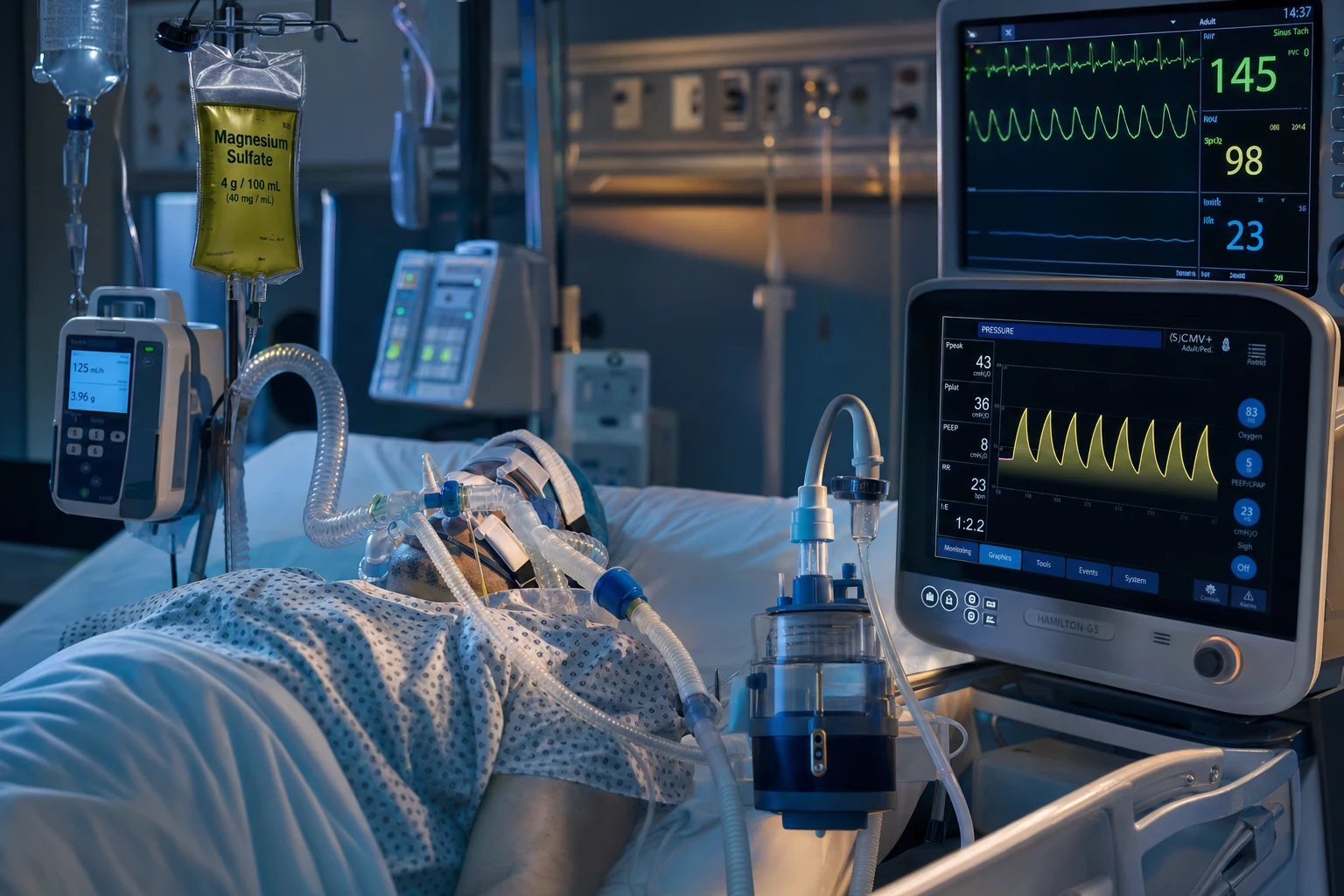
Cinematic ICU scene of a ventilated asthmatic patient with a capnography trace showing a rising plateau and sloping expiratory limb, a ventilator displaying dynamic hyperinflation and auto-PEEP, ketamine and volatile anaesthesia drawn up, clinical-blue lighting, intense and controlled, no faces, no text
FigureStatus asthmaticus on the ventilator is a permissive-hypercapnia problem — the danger is not the CO2, it is dynamic hyperinflation (gas trapping) causing hypotension and barotrauma. Set a low respiratory rate, short inspiratory time, long expiratory time, and tolerate a plateau pressure under 30 cmH2O with a permissive hypercapnia. Ketamine and volatile anaesthesia (isoflurane) are bronchodilating; avoid deep paralysis without continuous EEG monitoring. If trapped and hypotensive, disconnect the circuit and manually compress the chest.

In one line

Status asthmaticus = severe asthma refractory to standard therapy. Pre-arrest signs: silent chest, exhaustion, bradycardia, altered consciousness, normal/rising PaCO2. Intubation criteria: arrest, GCS reduced, exhaustion, refractory hypoxaemia, rising PaCO2 with acidosis. Ventilation (critical): PERMISSIVE HYPERCAPNIA (allow CO2 rise, pH >7.1) to avoid DYNAMIC HYPERINFLATION (#1 killer). Settings: rate 10-12, Vt 6 mL/kg, long expiratory time (I:E 1:3-1:4), low PEEP. Pharmacological escalation: nebulised salbutamol q15min → ipratropium → IV steroids → IV magnesium → IV salbutamol infusion. Refractory: volatile anaesthetics (isoflurane/sevoflurane — bronchodilators), ketamine, Heliox, ECMO (last resort).

[1]

Near-fatal asthma — clinical severity and ventilation strategy

ParameterSevere asthmaLife-threatening asthmaNear-fatal (intubated)
SpO2<92%<92% (on O2)<92% despite O2
PaCO2Low (hyperventilating)NORMAL or RISING (loss of hypocapnia)RISING (permissive hypercapnia allowed)
SpeechSentencesWordsNone (intubated)
ChestWheeze, accessory muscle useSILENT CHEST (no air movement)Mechanically ventilated
HRTachycardiaTachycardia or BRADYCARDIA (pre-arrest)Variable
ConsciousnessAgitatedExhaustion, altered GCSComatose (sedated)
VentilationSpontaneousPre-intubation (preparing)Permissive hypercapnia, long expiration
[1]

Bronchodilator and adjunct pharmacology in status asthmaticus

DrugClass / mechanismDose (adult, severe)OnsetKey cautions
Salbutamol (albuterol)Short-acting beta-2 agonist (SABA)5 mg NEB q15-20 min or CONTINUOUS (10-15 mg/h); IV 250 mcg load then 5-20 mcg/minMinutesHYPOKALAEMIA, lactic acidosis, tachyarrhythmia
Ipratropium bromideAnticholinergic (muscarinic antagonist)0.5 mg NEB q4-6h (or 0.5 mg q20 min x3 then q4-6h)15-30 minAdd to SABA in severe/life-threatening (synergistic)
Magnesium sulfateCalcium antagonist on airway smooth muscle2 g (8 mmol) IV over 20 min30-60 minHypotension, flushing, hyporeflexia; repeat q4-6h PRN
HydrocortisoneGlucocorticoid (anti-inflammatory)100 mg IV q6h (400 mg/day)6-12 hHyperglycaemia; equivalent to oral prednisolone
PrednisoloneGlucocorticoid (oral)40-50 mg PO OD6-12 hGive if tolerating oral; equal bioavailability to IV
MethylprednisoloneGlucocorticoid (IV)40-60 mg IV q6h or 1 mg/kg q6h6-12 hNo advantage over hydrocortisone; high-dose NOT better
KetamineNMDA antagonist (anaesthetic)1-2 mg/kg IV induction; 0.1-0.6 mg/kg/h infusionMinutesBRONCHODILATOR; preferred RSI agent in asthma
Sevoflurane / isofluraneVolatile (inhalational) anaestheticTitrate 0.5-2% (1 MAC) end-tidal via vaporiserMinutesNeeds scavenging; hypotension; arrhythmia
Heliox (He:O2 70:30 or 80:20)Low-density gas mixtureVia mask / ventilator rated for helioxVariableMax FiO2 30-40%; reduces work of breathing
[1]

Ventilation strategy — obstructive (asthma/COPD) vs restrictive (ARDS) lung disease

ParameterObstructive (asthma/COPD)Restrictive (ARDS / pulmonary oedema)Rationale (asthma)
Respiratory rateLOW (10-12 /min)HIGH (28-35 /min)Low rate allows LONG EXPIRATION -> avoids breath-stacking
Tidal volumeLOW (6 mL/kg IBW)LOW (4-6 mL/kg IBW)Less volume to exhale -> less gas trapping
Inspiratory timeSHORT (high flow 60-80 L/min)LONG (low flow)Short inspiration maximises expiratory time (I:E 1:3-1:4)
PEEPLOW (0-5 cmH2O; extrinsic just below intrinsic)HIGH (10-15 cmH2O)High PEEP worsens hyperinflation in asthma; recruit in ARDS
Plateau pressure<30 cmH2O<30 cmH2OBoth aim low, but for different reasons (hyperinflation vs barotrauma)
Permissive hypercapniaYES (pH >7.1-7.15; PaCO2 60-100)YES (pH >7.15-7.30; PaCO2 up to ~60)Tolerate CO2 to avoid dynamic hyperinflation (the asthma killer)
Main hazard of over-ventilationDYNAMIC HYPERINFLATION -> cardiac arrestHigh plateau -> barotrauma/volutraumaReducing minute ventilation is the rescue manoeuvre
[1]

Rapid sequence intubation (RSI) drugs in status asthmaticus

Drug classPREFERREDAVOIDReason
Induction agentKETAMINE 1-2 mg/kg IV (bronchodilator, maintains BP)PROPOFOL, THIOPENTALPropofol/thiopental cause vasodilation + HISTAMINE release -> bronchospasm + hypotension
ParalyticROCURONIUM 1.2 mg/kg (or SUXAMETHONIUM 1.5 mg/kg if no contraindication)ATRACURIUM, MIVACURIUMAtracurium/mivacurium release histamine -> bronchospasm
Sedation infusion (post-ETT)KETAMINE 0.1-0.6 mg/kg/h + MIDAZOLAM/FENTANYLPROPOFOL infusion, MORPHINEKetamine gives ongoing bronchodilation; morphine releases histamine + depresses drive
Preoxygenation100% O2 x 3 min (or 8 vital-capacity breaths)Awake intubation if avoidableDesaturation is rapid (low FRC, high O2 consumption); awake fibresoptic provokes spasm
[1]

Mechanical ventilation for status asthmaticus

  1. DECISION TO INTUBATE — Indications: (a) Cardiac or respiratory arrest. (b) Reduced GCS (can't protect airway, CO2 narcosis). (c) EXHAUSTION (patient tiring — paradoxical breathing, silent chest). (d) Refractory hypoxaemia (SpO2 <90% despite 100% O2). (e) Rising PaCO2 with acidosis (pH <7.2) despite maximal medical therapy. DON'T wait for arrest — intubate EARLY when signs of exhaustion. Anaesthetic: KETAMINE (bronchodilator — 1-2 mg/kg IV) + rocuronium (or suxamethonium). AVOID propofol/histamine-releasing agents
  2. INITIAL VENTILATOR SETTINGS (AVOID DYNAMIC HYPERINFLATION) — (a) MODE: Volume-controlled (or pressure-controlled — but monitor Vt). (b) RESPIRATORY RATE: LOW (10-12/min) — allows long expiration. (c) TIDAL VOLUME: 6 mL/kg ideal body weight (LOW — less to exhale). (d) INSPIRATORY FLOW: HIGH (60-80 L/min) — shortens inspiratory time, lengthens expiratory time. (e) I:E RATIO: 1:3 or 1:4 (long expiration — critical). (f) PEEP: LOW (0-5 cmH2O) — high PEEP worsens hyperinflation (intrinsic PEEP already high). (g) FiO2: 100% initially, titrate down. GOAL: ventilation that EXPIRES FULLY (no breath-stacking)
  3. MONITOR FOR DYNAMIC HYPERINFLATION (THE KILLER) — (a) CHECK INTRINSIC PEEP (auto-PEEP): pause ventilation at end-expiration -> measure pressure in circuit (should be 0; if elevated -> trapped air). (b) CLINICAL signs of hyperinflation: hypotension (intrathoracic pressure compresses heart), high plateau pressure (>30 cmH2O). (c) EXHALATION HOLD TEST: occlude expiratory port at end-expiration -> pressure rise = intrinsic PEEP. (d) IF HYPERINFLATION (hypotension, high plateau): DECREASE rate (8-10), DECREASE Vt (4-5 mL/kg), INCREASE expiratory time. DISCONNECT circuit briefly (let air out — relieves hyperinflation + hypotension)
  4. PERMISSIVE HYPERCAPNIA — ALLOW PaCO2 to RISE (up to 80-100 mmHg) if needed to avoid hyperinflation. Keep pH >7.1-7.15 (if lower, consider bicarbonate — but rare). RATIONALE: normalising CO2 requires high minute ventilation -> hyperinflation -> cardiac arrest. Accept hypercapnia (well tolerated for hours-days). AVOID bicarbonate unless pH <7.1 (treat the hyperinflation, not the CO2)
  5. BRONCHODILATION ESCALATION — (a) NEBULISED SALBUTAMOL 5 mg q15min (continuous if severe — but may not reach lungs if obstructed). (b) INHALED IPATROPIUM 0.5 mg q4-6h. (c) IV SALBUTAMOL infusion (250 mcg over 10 min, then 5-20 mcg/min) — if inhaled not effective. (d) IV MAGNESIUM 2 g over 20 min (smooth muscle relaxant — bronchodilator). (e) IV STEROIDS (hydrocortisone 100 mg q6h or methylprednisolone 60 mg — takes 6-12h to work). (f) IV KETAMINE (if intubated — sedation + bronchodilation). (g) VOLATILE ANAESTHETICS (isoflurane/sevoflurane via anaesthetic machine — potent bronchodilators — for refractory)
  6. REFRACTORY (ESCALATION) — (a) VOLATILE ANAESTHETICS: isoflurane 1-2% or sevoflurane (via anaesthetic ventilator or ICU device) — potent bronchodilation (direct smooth muscle relaxation + reduce airway reactivity). Side effects: hypotension, arrhythmia, need scavenging. (b) HELIOX (helium-oxygen 70:30 or 80:20): lower density -> less turbulent flow -> reduced work of breathing (if spontaneously breathing or on certain ventilators). (c) ECMO (VV-ECMO): for refractory hypoxaemia/hypercapnia despite maximal ventilation — last resort (bridge to recovery). (d) BRONCHOSCOPY: remove mucus plugs (if segmental collapse). (e) AVOID: methylxanthines (theophylline — no benefit, toxicity), helium alone (no O2), aggressive sedation
[1]

Initial medical management of acute severe asthma (the first 30 minutes)

  1. OXYGEN — target SpO2 93-95% — High-flow O2 via mask (or nasal cannula/HFNC). Correct hypoxaemia rapidly (hypoxia is a cause of death). Do NOT withhold oxygen fearing CO2 retention — the myth of O2-driven hypercapnia in pure asthma is overstated; hypoxaemia kills faster. In CO2-retaining COPD overlap, titrate to 88-92%, but in asthma target 93-95%.[1] }
  2. SHORT-ACTING BETA-2 AGONIST (SABA) — salbutamol / albuterol — 5 mg NEBULISED every 15-20 minutes for the first hour, OR CONTINUOUS nebulisation (10-15 mg/h) if life-threatening. Driving gas oxygen; add ipratropium to the same nebule. If nebule delivery is poor (poor ventilatory excursion, silent chest), consider IV salbutamol (250 mcg load over 10 min then 5-20 mcg/min infusion).[1] }
  3. IPRATROPIUM BROMIDE (anticholinergic) — add for severe/life-threatening — 0.5 mg nebulised q4-6h, or 0.5 mg q20 min for 3 doses then q4-6h. Synergistic with salbutamol (blocks muscarinic-mediated bronchoconstriction). Less evidence in mild-moderate; mandatory in severe.[2] }
  4. SYSTEMIC STEROIDS — give EARLY — ORAL prednisolone 40-50 mg (equivalent bioavailability to IV) OR IV hydrocortisone 100 mg q6h / methylprednisolone 40-60 mg IV q6h. Take 6-12 h to work (gene transcription) — give with the first bronchodilator so they are working by the time the SABA effect plateaus. Course: 5-7 days (no taper needed).[2] }
  5. IV MAGNESIUM SULFATE 2 g (8 mmol) over 20 min — Calcium antagonist on airway smooth muscle -> bronchodilation; also inhibits acetylcholine release + mast-cell stabilisation. 3Mg trial (Lancet Respir Med 2013): no overall benefit in unselected severe asthma, but modest lung-function improvement in the most severe; MAGNETIC trial (children): nebulised Mg improved FEV1 in severe attacks. Repeat q4-6h if needed; monitor BP (vasodilation), reflexes.[7] [8] }
  6. PREPARE FOR INTUBATION IF FAILING — Indications: arrest, reduced GCS, exhaustion/paradoxical breathing, refractory hypoxaemia (SpO2 <90% on O2), rising PaCO2 with acidosis (pH <7.2). Anaesthetic: KETAMINE 1-2 mg/kg IV (bronchodilator via catecholamine release + maintains BP) + ROCURONIUM 1.2 mg/kg. AVOID propofol/thiopental (histamine -> bronchospasm + vasodilation) and morphine/atracurium (histamine release). Preoxygenase 100% O2 x 3 min.[6] }
  7. ESCALATE TO REFRACTORY THERAPIES — If bronchospasm persists despite the above: (a) IV salbutamol infusion; (b) IV ketamine infusion (if intubated — dual sedation + bronchodilation); (c) INHALATIONAL/VOLATILE anaesthetic (sevoflurane/isoflurane via vaporiser — direct smooth-muscle relaxation); (d) HELIOX (He:O2 70:30 — lower density, less turbulent flow, reduced work of breathing); (e) VV-ECMO (refractory hypoxaemia/hypercapnia — bridge to recovery). Avoid: theophylline/aminophylline, montelukast, routine antibiotics, sedation without bronchodilation.[10] }

Detecting and treating dynamic hyperinflation (auto-PEEP) on the ventilator

  1. SUSPECT IT EARLY — Hypotension, especially immediately after starting ventilation, after increasing rate, or after pushing in a bolus; tachycardia then bradycardia; high peak airway pressure; rising CVP with falling preload; pulse-synchronous variation in BP (pulse pressure paradoxus worsened). Any cardiovascular compromise on a ventilated asthmatic is auto-PEEP until proven otherwise.[3] }
  2. CONFIRM WITH AN EXPIRATORY HOLD — At end-expiration, occlude the expiratory limb (expiratory pause / end-expiratory hold). The pressure equilibrates with alveolar pressure = INTRINSIC PEEP (auto-PEEP). Normal = 0; in asthma commonly 15-25 cmH2O. Also check the flow-time scalar: if expiratory flow has NOT returned to zero before the next breath, there is gas trapping.[1] }
  3. IMMEDIATE RESCUE MANOEUVRE — DISCONNECT the circuit at the Y-piece for 10-20 seconds (let the trapped air escape — the whoosh). Watch BP/HR recover as intrathoracic pressure falls and venous return returns. This single manoeuvre has saved more asthmatic arrests than any drug.[1] }
  4. ADJUST THE VENTILATOR TO PREVENT RECURRENCE — (a) DECREASE respiratory rate (8-10/min). (b) DECREASE tidal volume (4-5 mL/kg IBW if needed). (c) SHORTEN inspiratory time (high inspiratory flow 60-80 L/min) to lengthen expiratory time (target I:E 1:3 to 1:4 or longer). (d) Keep extrinsic PEEP LOW — set at or just below intrinsic PEEP (usually 5 cmH2O) so it does not add to hyperinflation. (e) Accept permissive hypercapnia (PaCO2 60-100, pH >7.1).[3] }
  5. EXCLUDE TENSION PNEUMOTHORAX — Sudden deterioration + asymmetrical chest movement / air entry / tracheal deviation -> immediate needle decompression (2nd ICS midclavicular or 5th ICS midaxillary) then chest drain. Barotrauma is a direct consequence of high intrathoracic pressure from gas trapping.[14] }

Exam practice — SAQs

SAQ — Near-fatal asthma: ventilation strategy and intra-arrest rescue from auto-PEEP

10 minutes · 10 marks

A 28-year-old woman with known severe allergic asthma presents with 6 hours of worsening breathlessness despite three back-to-back salbutamol/ipratropium nebulisers, IV hydrocortisone 100 mg and IV magnesium sulfate 2 g in the emergency department. She is now unable to speak, using accessory muscles, the chest is silent on auscultation, SpO2 88% on 15 L/min oxygen via non-rebreather, RR 32 with paradoxical abdominal movement. Arterial blood gas: pH 7.18, PaCO2 58 mmHg (was 32 ninety minutes earlier), PaO2 64, HCO3 22. She is rapidly sequence intubated with ketamine 1.5 mg/kg and rocuronium 1.2 mg/kg. The ventilator is set to rate 14, Vt 6 mL/kg ideal body weight, PEEP 5, FiO2 1.0. Within 10 minutes her blood pressure falls from 112/68 to 70/40, the heart rate drifts from 132 to 56, and the saturation drops to 84%.

[1]

SAQ — Permissive hypercapnia in ventilated status asthmaticus: physiology, limits and bicarbonate

10 minutes · 10 marks

A 42-year-old man is now 18 hours into an ICU admission for near-fatal asthma. He is intubated and ventilated in volume-controlled mode: respiratory rate 10/min, Vt 6 mL/kg ideal body weight, inspiratory flow 70 L/min (I:E 1:4), extrinsic PEEP 5 cmH2O, FiO2 0.4. Continuous nebulised salbutamol, an IV salbutamol infusion at 10 mcg/min, hydrocortisone 100 mg q6h and a repeat dose of IV magnesium have been given. Plateau pressure is 28 cmH2O, intrinsic PEEP 12 cmH2O, and exhaled Vt equals inhaled. Arterial blood gas: pH 7.08, PaCO2 95 mmHg, PaO2 78 mmHg, HCO3 24 mmol/L, lactate 1.6. Blood pressure 95/60 (MAP 72), HR 110 sinus, SpO2 94%.

[1]

Clinical pearls

High-yield status asthmaticus points for CICM/FFICM exam

  1. Dynamic hyperinflation (breath-stacking) — the #1 killer in ventilated asthma. (1) MECHANISM: obstructed airways -> slow expiration -> next breath starts before full exhalation -> air TRAPS (progressive inflation) -> lungs overdistend -> intrathoracic pressure RISES -> compresses heart + great vessels -> reduced venous return -> hypotension -> cardiac arrest. (2) CLINICAL: hypotension (especially after starting ventilation or increasing rate), high plateau pressure (>30 cmH2O), high intrinsic PEEP. (3) TEST: 'EXHALATION HOLD' — at end-expiration, occlude circuit -> pressure rise = intrinsic PEEP. Also: DISCONNECT ventilator -> listen for prolonged exhalation (whoosh) -> reconnect. (4) TREATMENT: REDUCE rate, REDUCE Vt, INCREASE expiratory time. DISCONNECT briefly (let trapped air out — immediate relief).[1] }
  2. Permissive hypercapnia — the ventilation philosophy. (1) In severe asthma, trying to NORMALISE PaCO2 requires high minute ventilation -> causes dynamic hyperinflation -> cardiac arrest. (2) SOLUTION: allow PaCO2 to RISE (permissive hypercapnia) — accept CO2 of 60-100 mmHg, as long as pH >7.1-7.15. (3) RATIONALE: (a) CO2 is well tolerated for hours-days (body buffers, kidneys compensate over days). (b) The danger is HYPERINFLATION (cardiac arrest), not hypercapnia. (c) Treat the hyperinflation (low rate/Vt), not the CO2. (4) BICARBONATE: if pH <7.1 (rare) — but treat the cause (hyperinflation), not just buffer. (5) CONTRAINDICATIONS to hypercapnia: raised intracranial pressure (CO2 vasodilates cerebrum -> worsens ICP), severe pulmonary hypertension (CO2 worsens).[3] }
  3. Initial ventilator settings — the 'low and slow' approach. (1) RESPIRATORY RATE: 10-12/min (LOW — allows full expiration). (2) TIDAL VOLUME: 6 mL/kg ideal body weight (LOW — less to exhale). (3) INSPIRATORY FLOW: 60-80 L/min (HIGH — shortens inspiratory time, lengthens expiratory time). (4) I:E RATIO: 1:3 or 1:4 (long expiration — critical for obstructed airways). (5) PEEP: 0-5 cmH2O (LOW — extrinsic PEEP can worsen hyperinflation; set extrinsic PEEP just below intrinsic PEEP if using — usually 5). (6) FiO2: 100% initially. (7) GOAL: ventilation that allows COMPLETE EXPIRATION (no breath-stacking). (8) MONITOR: plateau pressure (<30 cmH2O), intrinsic PEEP (<10), blood gas (permissive hypercapnia), haemodynamics (hypotension = hyperinflation).[1] }
  4. Intubation in asthma — drug choice matters. (1) INDUCTION AGENT: KETAMINE (1-2 mg/kg IV) — PREFERRED. (a) Bronchodilator (increases catecholamines -> beta-2 effect on airway smooth muscle). (b) Maintains BP (sympathetic stimulation). (c) Dissociative anaesthesia. (2) AVOID: (a) PROPOFOL (vasodilation + histamine release -> bronchospasm + hypotension). (b) THIOPENTAL (histamine -> bronchospasm). (3) MUSCLE RELAXANT: ROCURONIUM (1.2 mg/kg) or SUXAMETHONIUM (1.5 mg/kg). (4) PREOXYGENATION: 100% O2 for 3 min (or 8 vital capacity breaths) — asthma patients desaturate fast (high oxygen consumption from work of breathing + low FRC). (5) AVOID awake intubation (triggers more bronchospasm) — RSI is standard.[6] }
  5. IV magnesium — mechanism and evidence. (1) MECHANISM: magnesium is a CALCIUM ANTAGONIST (blocks calcium influx into airway smooth muscle) -> bronchodilation. ALSO: inhibits acetylcholine release, stabilises mast cells (reduces mediator release). (2) DOSE: 2 g IV (8 mmol) over 20 minutes (faster if critical). (3) EVIDENCE: MAGNETIC trial (2013, Lancet) — IV magnesium improved FEV1 + reduced hospitalisation in severe asthma. Meta-analyses: modest benefit in severe attacks. (4) SIDE EFFECTS: hypotension (vasodilation), flushing, hyporeflexia, respiratory depression (rare at 2 g). (5) USE: adjunct in severe asthma not responding to nebulised bronchodilators + steroids.[2] }
  6. IV salbutamol infusion — when inhaled not enough. (1) INDICATION: severe asthma not responding to nebulised salbutamol (or intubated patient with poor drug delivery). (2) DOSE: 250 mcg IV over 10 min loading, then 5-20 mcg/min infusion (titrate). (3) MECHANISM: beta-2 agonist -> bronchodilation (same as inhaled — but systemic delivery ensures it reaches all airways, even obstructed). (4) SIDE EFFECTS: tachycardia, tremor, HYPOKALAEMIA (beta-2 shifts K into cells), lactic acidosis (beta-2 -> glycolysis), hyperglycaemia, arrhythmia. (5) MONITOR: K (replace), lactate (may rise — don't misinterpret), ECG. (6) EVIDENCE: no clear benefit over high-dose nebulised, but used when inhaled not reaching lungs.[2] }
  7. Volatile anaesthetics — refractory bronchospasm. (1) AGENTS: ISOFLURANE, SEVOFLURANE, DESFLURANE (halogenated ethers). (2) MECHANISM: (a) Direct bronchodilation (relax airway smooth muscle — independent of beta-2). (b) Reduce airway reactivity (blunt reflexes). (c) Anaesthesia (sedation). (3) INDICATION: refractory bronchospasm unresponsive to salbutamol/magnesium/steroids on the ventilator. (4) ADMINISTRATION: (a) Requires ANAESTHETIC MACHINE (vaporiser) — most ICU ventilators don't have. (b) Need SCAVENGING (environmental + staff safety). (c) Anaesthetist/ICU doctor to administer. (5) SIDE EFFECTS: hypotension (vasodilation), arrhythmia (sensitise heart to catecholamines), malignant hyperthermia (rare — avoid in susceptible). (6) EVIDENCE: case series/reports — effective for refractory bronchospasm. (7) NEWER: 'Anaesthetic Conserving Device' (AnaConDa) — allows volatile administration via ICU ventilator (simpler).[4] }
  8. Heliox — reduced density gas. (1) HELIOX = helium-oxygen mixture (usually 70:30 or 80:20 helium:oxygen). (2) MECHANISM: helium is less dense than nitrogen -> REDUCED airway resistance (especially in turbulent flow — lower Reynolds number -> laminar flow) -> less work of breathing + better gas exchange. (3) INDICATION: severe asthma (if spontaneously breathing or on certain ventilators that can deliver Heliox). (4) LIMITATION: (a) Maximum FiO2 is 30-40% (helium 70-80%) -> inadequate for severe hypoxaemia. (b) Most ICU ventilators not calibrated for Heliox (need specialised). (5) EVIDENCE: mixed — some benefit in severe asthma (reduced work of breathing); not consistently proven. (6) USE: adjunct, especially pre-intubation (reduce work of breathing while treating).[6] }
  9. ECMO for asthma — last resort. (1) INDICATION: refractory hypoxaemia or hypercapnia (severe acidosis) despite maximal ventilation + bronchodilation. (2) VV-ECMO (venovenous): drains venous blood, oxygenates, returns to venous system -> provides oxygenation + CO2 removal, allowing the ventilator to be set to 'rest' (low rate/Vt -> no hyperinflation). (3) RATIONALE: asthma is REVERSIBLE (bronchospasm resolves over hours-days with steroids) -> ECMO bridges until recovery. (4) EVIDENCE: case series/registry — survival 80-90% in asthma ECMO (better than other indications — because asthma is reversible). (5) USE: very rare (only for the most refractory) — but life-saving when indicated. (6) TIMING: early if refractory (don't wait for cardiac arrest).[5] }
  10. Two asthma phenotypes — different clinical courses. (1) TYPE 1 (SLOW-ONSET / eosinophilic): (a) Gradual onset over days (often with viral trigger). (b) Eosinophilic inflammation (Type 2 inflammation). (c) More common in adults. (d) Better response to steroids. (e) Often: fewer immediate bronchospasm, more inflammation-driven. (2) TYPE 2 (SUDDEN-ONSET / neutrophilic): (a) Sudden onset (minutes-hours). (b) Often triggered by allergen, exercise, stress. (c) Severe bronchospasm (smooth muscle contraction dominant). (d) More common in young. (e) Rapid progression to arrest (less time to respond). (f) May respond better to bronchodilators (less inflammation). (3) CLINICAL: Type 2 (sudden) is more DANGEROUS (rapid arrest) — needs immediate aggressive treatment. Type 1 (slow) may respond better to steroids (but takes time).[6] }
  11. Steroids — IV vs oral, timing. (1) STEROIDS are the ANTI-INFLAMMATORY component (bronchodilators treat the spasm; steroids treat the inflammation). (2) TIMING: 6-12 HOURS to work (upregulate anti-inflammatory genes, downregulate pro-inflammatory) — don't expect immediate effect. (3) ROUTE: ORAL (prednisone 40-50 mg) is EQUIVALENT to IV (if can tolerate oral). IV (hydrocortisone 100 mg q6h, methylprednisolone 60 mg/day) if: vomiting, intubated, severe. (4) DURATION: 5-7 days (then stop — don't need taper if <14 days). (5) EARLY: give steroids EARLY (with bronchodilators) — by the time they work (6-12h), the bronchodilators have helped the immediate spasm. (6) PREVENT relapse: steroids reduce relapse rate after initial improvement.[2] }
  12. Methylxanthines (theophylline, aminophylline) — NOT recommended. (1) OLD practice: IV aminophylline for asthma (bronchodilator — phosphodiesterase inhibitor). (2) PROBLEM: (a) Narrow therapeutic window (toxicity: arrhythmia, seizures, nausea). (b) NO benefit over beta-2 agonists (Cochrane review). (c) Drug interactions (CYP1A2). (3) CURRENT: NOT recommended (GINA, BTS/SIGN) — use salbutamol + ipratropium + magnesium instead. (4) EXCEPTION: if patient is on chronic theophylline (check level — may be subtherapeutic) — but don't START acutely.[2] }
  13. Asthma medications that DON'T work acutely (avoid in status asthmaticus). (1) LEUKOTRIENE RECEPTOR ANTAGONISTS (montelukast): no role in acute severe asthma (too slow, oral). (2) ANTIBIOTICS: only if bacterial infection (most asthma exacerbations are viral — don't give routinely). (3) SEDATIVES without bronchodilation: may worsen (suppress respiratory drive) — use ketamine (sedation + bronchodilation). (4) ANTICHOLINERGICS beyond ipratropium: no added benefit. (5) METHYLPREDNISOLONE > hydrocortisone: equivalent — don't need high-dose (60 mg methylpred is sufficient; 125 mg+ no added benefit). (6) NON-INVASIVE VENTILATION (NIV/BiPAP): controversial — MAY help selected patients (reduce work of breathing, improve ventilation) BUT risk of delayed intubation (if failing). Use cautiously (trial — if improving in 1h, continue; if not, intubate).[2] }
  14. Post-intubation management + weaning. (1) DEEP SEDATION + ANALGESIA: minimise patient-ventilator asynchrony (which worsens bronchospasm). Ketamine infusion (bronchodilator + sedation) ideal. (2) MUSCLE RELAXATION: may need (cisatracurium) initially — reduces work, allows controlled ventilation — but AVOID long-term (ICU-acquired weakness). (3) BRONCHODILATION: continue nebulised salbutamol (via ventilator circuit) + ipratropium. IV salbutamol if severe. (4) STEROIDS: continue IV (switch to oral when improving). (5) MAGNESIUM: may repeat q4-6h if needed. (6) MONITOR: intrinsic PEEP, plateau pressure, blood gas (permissive hypercapnia), K (salbutamol -> hypokalaemia), lactate. (7) WEANING: when bronchospasm resolving (audible wheeze clearing, compliance improving, intrinsic PEEP falling, PaCO2 normalising) -> reduce sedation -> spontaneous breathing trial -> extubate. DON'T rush (rebound bronchospasm on extubation).[1] }

Initial management, ventilation strategy, anaesthesia and complications — deeper dive

  1. Oxygen targets in acute severe asthma. (1) TARGET SpO2 93-95% (or 94-98% per BTS). Treat hypoxaemia aggressively — tissue hypoxia is a direct cause of death in asthma. (2) The O2-hypercapnia concern is a COPD phenomenon (loss of hypoxic drive + V/Q mismatch); in pure asthma it is overstated and must NEVER delay oxygen in a hypoxaemic patient. (3) In a COPD-asthma overlap with known chronic CO2 retention, aim 88-92%, but err toward treating the hypoxaemia. (4) Mode: simple face mask / nasal cannula; escalate to HFNC if persistent hypoxaemia and not yet intubated. (5) Beware: a rising PaCO2 with a normal/supranormal PaO2 means the patient is tiring (hypoventilating) — intubate.[1] }
  2. Salbutamol dosing — continuous nebulisation vs intermittent. (1) Mild-moderate: salbutamol 5 mg nebule q20 min x3 then reassess. (2) SEVERE / life-threatening: CONTINUOUS nebulised salbutamol 10-15 mg/h is at least as effective as intermittent boluses and avoids troughs in bronchodilation. (3) Drive the nebule with oxygen (not air). (4) If the chest is SILENT (no wheeze = no air movement), inhaled drug may not reach distal airways — escalate to IV salbutamol (250 mcg load over 10 min, then 5-20 mcg/min). (5) Watch the lactate — salbutamol drives anaerobic glycolysis -> elevated lactate (type B); do NOT mistake this for sepsis/shock and do not stop the drug for it alone.[1] }
  3. Systemic steroids — give early, route does not matter if gut works. (1) STEROIDS treat the INFLAMMATION (the SABA treats the bronchospasm); both are needed. (2) ORAL prednisolone 40-50 mg OD has EQUAL bioavailability and onset to IV — give PO if the patient can swallow and is not vomiting. (3) IV options (vomiting, intubated, near-arrest): HYDROCORTISONE 100 mg q6h (400 mg/day) OR methylprednisolone 40-60 mg q6h. (4) ONSET: 6-12 h (genomic mechanism) — therefore administer with the first nebule so the anti-inflammatory effect arrives as the bronchodilator peaks. (5) DURATION: 5-7 days then stop (no taper for a course <14 days). (6) High-dose (>125 mg methylpred) offers NO additional benefit over standard dose.[2] }
  4. Ipratropium bromide — the underused anticholinergic adjunct. (1) MECHANISM: competitive muscarinic (M3) antagonist -> blocks vagally-mediated reflex bronchoconstriction and reduces mucus secretion. (2) DOSE: 0.5 mg nebule q4-6h, or 0.5 mg q20 min for 3 doses in life-threatening asthma, then q4-6h. (3) Add to the SAME nebule as salbutamol (synergistic — Cochrane: combination reduces hospitalisation vs SABA alone). (4) Onset slower than salbutamol (15-30 min). (5) Less effective in mild attacks; evidence strongest in severe/life-threatening. (6) Systemic absorption low — minimal anticholinergic side effects (dry mouth, urinary retention in elderly).[2] }
  5. Ketamine — the asthma RSI induction agent of choice. (1) WHY: ketamine is a BRONCHODILATOR — it increases circulating catecholamines -> beta-2 stimulation of airway smooth muscle, and has a direct relaxant effect on bronchial muscle. (2) It also MAINTAINS blood pressure (sympathetic stimulation) — critical when induction risks dropping preload that is already compromised by hyperinflation. (3) DOSE for RSI: 1-2 mg/kg IV bolus; for ongoing sedation + bronchodilation post-ETT: 0.1-0.6 mg/kg/h (1-5 mg/kg/h) infusion. (4) AVOID: PROPOFOL (vasodilation + histamine -> bronchospasm + hypotension), THIOPENTAL (histamine -> bronchospasm), MORPHINE (histamine release + respiratory depression — use fentanyl instead for analgesia). (5) Pair ketamine with ROCURONIUM 1.2 mg/kg or suxamethonium; AVOID atracurium/mivacurium (histamine release).[6] }
  6. Ventilation strategy — 'low and slow', long expiration, monitor auto-PEEP. (1) RESPIRATORY RATE 10-12/min (allow 4-5 s exhalation). (2) TIDAL VOLUME 6-8 mL/kg IBW (less volume to exhale). (3) SHORT inspiratory time — use a high constant inspiratory flow (60-80 L/min) or low I:E (1:3 to 1:4); this is the single most important setting to lengthen expiration. (4) LOW external PEEP (0-5 cmH2O) — set just below measured intrinsic PEEP so external PEEP does not add to hyperinflation. (5) GOALS: plateau pressure <30 cmH2O, intrinsic PEEP <10-15 cmH2O, exhaled tidal volume equal to inhaled (no air trapping), SpO2 >90%, pH >7.1-7.15. (6) MODE: volume-controlled (VC) is predictable for Vt; pressure-regulated volume control (PRVC) is acceptable; pressure-controlled (PC) is fine but Vt varies as compliance changes.[3] }
  7. Permissive hypercapnia — accept the CO2, treat the lungs. (1) Normalising PaCO2 in severe asthma requires high minute ventilation -> dynamic hyperinflation -> cardiac arrest. (2) Instead ALLOW PaCO2 to rise to 60-100 mmHg, keeping arterial/venous pH >7.1-7.15 (some centres accept pH >7.05). (3) CO2 is well tolerated for hours-to-days (intracellular buffering; renal bicarbonate reabsorption over days). (4) Darioli & Perminen (1984) — the original 'controlled hypoventilation' paper reported zero deaths in 34 episodes of status asthmaticus ventilated this way. (5) AVOID bicarbonate unless pH <7.1 and refractory — buffer does not fix the cause (hyperinflation). (6) CONTRAINDICATIONS / caution: raised intracranial pressure (CO2 is a cerebral vasodilator), severe pulmonary hypertension, severe myocardial depression.[3] }
  8. Intrinsic PEEP (auto-PEEP) and ventilator asynchrony — how to detect and fix. (1) WHAT IT IS: trapped gas above an obstructed airway that does not fully escape before the next breath -> progressive lung hyperinflation -> raised intrathoracic pressure. (2) MEASURE: expiratory-hold manoeuvre (occlude expiratory limb at end-expiration) -> pressure equilibrates with alveolar pressure = intrinsic PEEP. Also inspect the FLOW-TIME SCALAR: if expiratory flow has not returned to baseline before the next breath, gas is trapped. (3) HAEMODYNAMIC effect: raised intrathoracic pressure -> reduced venous return -> hypotension; signs worsen immediately after increasing rate or pushing in a fluid bolus; pulse-synchronous BP variation (exaggerated pulsus paradoxus). (4) ASYNCHRONY: 'breath-stacking' (double-triggering), the patient 'fighting' the ventilator, ineffective triggering (cannot overcome intrinsic PEEP to trigger a breath). (5) RESCUE: disconnect at the Y-piece for 10-20 s (let the whoosh out) -> BP usually recovers immediately; then reduce rate, reduce Vt, shorten inspiratory time.[1] }
  9. Inhalational (volatile) anaesthetics — sevoflurane and isoflurane for refractory bronchospasm. (1) AGENTS: SEVOFLURANE, ISOFLURANE, DESFLURANE (halogenated ethers). (2) MECHANISM: direct relaxation of bronchial smooth muscle (independent of beta-2), blunt airway reflexes, and provide sedation. (3) INDICATION: refractory bronchospasm on the ventilator unresponsive to maximal SABA/ipratropium/magnesium/steroids/ketamine. (4) DELIVERY: requires a vaporiser on an anaesthetic-grade ventilator (or a dedicated ICU vaporiser such as AnaConDa/Mirus) PLUS gas scavenging for staff/environmental safety; usually needs anaesthetist input. (5) DOSE: titrate to end-tidal ~0.5-1 MAC (sevoflurane ~1-2%, isoflurane ~1-2.5%). (6) SIDE EFFECTS: vasodilation -> hypotension (often needs vasopressor); sensitisation of myocardium to catecholamines -> arrhythmia; rarely malignant hyperthermia (avoid in susceptible individuals). (7) EVIDENCE: 2024 systematic review (Crit Care) and 2024 systematic review (Crit Care Explor) report rapid, dramatic bronchodilation in refractory cases; no RCTs.[4] [10] [11] }
  10. Heliox — lower-density gas to reduce work of breathing. (1) HELIOX = helium-oxygen mixture (He:O2 70:30 or 80:20). (2) MECHANISM: helium is ~1/3 the density of nitrogen -> flow becomes less turbulent (lower Reynolds number) -> reduced airway resistance in the large/medium obstructed airways -> reduced work of breathing + improved aerosol delivery of salbutamol. (3) BEST ROLE: pre-intubation, in the spontaneously-breathing patient with severe asthma, as a temporising measure to reduce WOB and buy time for steroids/magnesium to work. (4) LIMITATIONS: maximum FiO2 ~30-40% (the 80:20 mix delivers only 20% O2) so inadequate for severe hypoxaemia; most standard ICU ventilators are NOT calibrated for heliox (volume/flow readings inaccurate) — use a ventilator certified for heliox or a non-ventilator delivery system. (5) EVIDENCE: meta-analyses (2014) show modest benefit on pulmonary function in severe asthma, but no consistent mortality/ICU-admission benefit; an adjunct, not standard therapy.[12] }
  11. ECMO (VV-ECMO) — rescue for refractory near-fatal asthma. (1) INDICATION: life-threatening hypercapnia/acidosis or refractory hypoxaemia despite maximal conventional ventilation and bronchodilation, OR cardiac arrest from auto-PEEP. (2) VV-ECMO drains venous blood, oxygenates and removes CO2, returns it to the right atrium — allows the ventilator to be set to 'lung rest' (very low rate/tidal volume) so hyperinflation resolves. (3) RATIONALE: asthma is REVERSIBLE within hours-days of steroids -> ECMO is a bridge to recovery, not destination therapy. (4) EVIDENCE: ELSO registry analysis (Crit Care 2017) — survival ~83% in asthma ECMO, the HIGHEST of any adult respiratory ECMO indication. (5) TIMING: mobilise early — don't wait for cardiac arrest; refractory acidosis (pH <7.05-7.1) or rising ventilator pressures despite optimisation is the trigger. (6) Also consider ECCO2R (lower-flow CO2 removal) as a less-invasive alternative in pure hypercapnia.[5] }
  12. Complication — tension pneumothorax / barotrauma. (1) MECHANISM: high alveolar pressure from gas trapping + mucus plugging -> alveolar rupture -> air dissects interstitium -> pneumomediastinum, subcutaneous emphysema, or pneumothorax; a TENSION pneumothorax is immediately life-threatening. (2) SIGNS: sudden deterioration (hypotension, hypoxaemia, tachycardia then arrest) + asymmetrical chest rise / reduced air entry / tracheal deviation / distended neck veins. (3) ON A VENTILATED ASTHMATIC a sudden rise in peak AND plateau pressure + cardiovascular collapse = tension pneumothorax until proven otherwise (also exclude auto-PEEP — they can coexist). (4) TREATMENT: IMMEDIATE needle decompression (14-16 G, 2nd ICS midclavicular OR 5th ICS midaxillary) — do NOT wait for a chest X-ray — then definitive intercostal chest drain. (5) Bilateral pneumothorax or simultaneous with auto-PEEP causes a rapid spiral to arrest.[14] }
  13. Complication — cardiac arrest in status asthmaticus (the trio of killers). (1) AUTO-PEEP (dynamic hyperinflation): raised intrathoracic pressure -> obstructive shock (reduced venous return + increased RV afterload) -> PEA/asystole. RESCUE: disconnect circuit, reduce rate/Vt, treat bronchospasm. (2) HYPOXAEMIA: severe V/Q mismatch + mucus plugging + atelectasis -> bradycardic arrest. RESCUE: 100% O2, recruit collapsed lung, treat bronchospasm. (3) HYPERKALAEMIA: high-dose salbutamol actually LOWERS K (shifts into cells) — but a SUDDENLY RISING K may reflect acidosis (permissive hypercapnia -> intracellular H/K exchange) or medication error (suxamethonium in a recently-paralysed patient, or succinylcholine-induced hyperkalaemia in prolonged immobility). RESCUE: calcium gluconate, insulin-dextrose, salbutamol, hyperventilate if pH permits. (4) Modified ALS: address the reversible cause FIRST (disconnect circuit / decompress pneumothorax / give bronchodilators) — standard CPR is ineffective against auto-PEEP until the intrathoracic pressure is relieved.[1] }
  14. Complication — critical-illness myopathy (ICU-acquired weakness) from NMB + steroids. (1) MECHANISM: prolonged or high-dose NEUROMUSCULAR BLOCKING AGENTS (NMBAs) PLUS SYSTEMIC CORTICOSTEROIDS synergistically produce CRITICAL ILLNESS MYOPATHY (CIM) / intensive-care-unit-acquired weakness (ICUAW) — thick-filament (myosin) loss, muscle-fibre necrosis. (2) THE COMBINATION IS THE RISK: asthma uniquely pairs high-dose steroids with deep paralysis for refractory ventilation -> patients are at particularly high risk of profound, prolonged weakness. (3) CLINICAL: flaccid quadriparesis, failure to wean from the ventilator, elevated CK (may be normal in pure CIM), preserved sensation (rules out critical-illness polyneuropathy). (4) PREVENTION: use NMBAs ONLY when essential (severe refractory ventilation/asynchrony) and for the SHORTEST possible time (typically <48 h); prefercisatracurium; avoid aminosteroids (vecuronium/rocuronium) for prolonged infusions where possible; minimise steroid dose; early rehabilitation. (5) RECOVERY: slow (weeks-months) but usually complete if the patient survives. (6) AVOID aminophylline/theophylline (also predispose to myopathy).[13] }

Red flags

Critical status asthmaticus red flags

  • Silent chest + exhaustion + bradycardia = PRE-ARREST — intubate.[6] }
  • Normal or rising PaCO2 in asthma = impending respiratory failure.[2] }
  • Dynamic hyperinflation (breath-stacking) — #1 killer in ventilated asthma — monitor intrinsic PEEP.[1] }
  • Permissive hypercapnia (allow CO2 rise) — don't normalise CO2 at cost of hyperinflation.[3] }
  • Hypotension after starting ventilation = dynamic hyperinflation — DISCONNECT, reduce rate/Vt.[1] }
  • Intubation drugs: KETAMINE preferred (bronchodilator) — avoid propofol/thiopental.[6] }
  • Volatile anaesthetics for refractory bronchospasm — potent bronchodilators.[4] }
  • ECMO for refractory — bridge to recovery (asthma is reversible).[5] }
  • Tension pneumothorax — sudden deterioration + high peak & plateau pressure on a ventilated asthmatic = tension pneumothorax until proven otherwise -> needle decompress NOW, no CXR.[14] }
  • Lactate rising on salbutamol — beta-2-driven type-B lactic acidosis; do NOT stop the drug or chase sepsis unless clearly indicated.[1] }
  • Hypokalaemia from beta-2 agonists + steroids -> arrhythmia risk; monitor and replace K.[1] }
  • Prolonged NMB + high-dose steroids -> critical-illness myopathy / ICU-acquired weakness; keep paralysis <48 h if possible.[13] }
  • A silent chest is NOT 'mild' — it means NO air movement = pre-arrest; prepare for intubation.[2] }
  • Preoxygenate fully before RSI — asthmatics desaturate rapidly (low FRC + high O2 consumption); use KETAMINE (bronchodilator), avoid morphine/propofol/thiopental (histamine).[6] }
  • Cardiac arrest in ventilated asthma — think AUTO-PEEP first: disconnect circuit, relieve hyperinflation, decompress pneumothorax; standard CPR is ineffective against auto-PEEP.[1] }

Prognosis

Status asthmaticus evidence and outcomes

Mortality: 5-10% in intubated asthmatics (mostly from dynamic hyperinflation/cardiac arrest). IV magnesium (MAGNETIC trial 2013, Lancet): improved FEV1 + reduced hospitalisation in severe asthma. IV salbutamol: no clear benefit over high-dose nebulised; used when inhaled delivery poor. Permissive hypercapnia: standard of care — allows hypercapnia to avoid hyperinflation (Darioli 1984 — first description, low mortality). Volatile anaesthetics: case series/reports — effective for refractory bronchospasm. ECMO: survival 80-90% in asthma (better than other indications — asthma is reversible). Methylxanthines (theophylline): NOT recommended (Cochrane — no benefit over beta-2). Steroids: oral = IV; give early (work in 6-12h); 5-7 day course.

[1]

Refractory bronchospasm — escalation evidence and rescue therapies

Volatile anaesthetics (sevoflurane/isoflurane): 2024 systematic review (Crit Care) and 2024 systematic review (Crit Care Explor) — rapid reversal of refractory bronchospasm in case series/reports; no RCTs. Consider when bronchospasm is refractory to maximal conventional therapy.[4] [10] Isoflurane in paediatric refractory status asthmaticus (Intensive Care Med 2006): safe and effective in children with refractory bronchospasm.[11] Heliox meta-analysis (Ann Allergy Asthma Immunol 2014): modest improvement in pulmonary function in severe acute asthma; no consistent mortality/ICU-admission benefit.[12] VV-ECMO for near-fatal asthma — ELSO registry analysis (Crit Care 2017): survival ~83%, the HIGHEST of any adult respiratory ECMO indication (asthma is reversible). Bridge to recovery.[5] Combined ventilator-bicarbonate strategy (Menitove, Am J Med 1983): early description of permitting hypercapnia and buffering severe acidosis in status asthmaticus ventilation.[9] Darioli & Perminen (1984, Am Rev Respir Dis): the landmark 'mechanical controlled hypoventilation' series — zero deaths in 34 episodes, establishing permissive hypercapnia as standard of care.[3]

Magnesium sulfate in acute severe asthma — the trials

3Mg trial (Goodacre et al, Lancet Respir Med 2013): RCT of IV or nebulised Mg vs placebo in adults with severe acute asthma. No overall benefit in unselected severe asthma, but modest improvement in FEV1 in the most severely obstructed subgroup; IV route better than nebulised.[7] MAGNETIC trial (Powell et al, Health Technol Assess 2013): RCT of nebulised Mg in children with severe acute asthma. Improved FEV1 in the most severe attacks; safe. Supports adjunctive nebulised Mg in children.[8] PRACTICE: IV Mg 2 g over 20 min remains a recommended adjunct in severe/life-threatening asthma unresponsive to SABA + ipratropium + steroids; repeat q4-6h if needed. Main adverse effects: hypotension, flushing, hyporeflexia.

Examiner densify anchors
CICM/FFICM densify — Status asthmaticus — ventilation and anaesthesia

Exam answers must couple definition + threshold numbers + first therapies + what kills the patient. Cite landmark evidence and state the common wrong answer explicitly.[1]

Bedside densify frame

Define the syndrome in one line → classify severity with a score or stage → resuscitate ABC → specific therapy with numbers → prevent the killer complication → prognosticate and disposition (ward vs HDU vs specialty centre).[2]

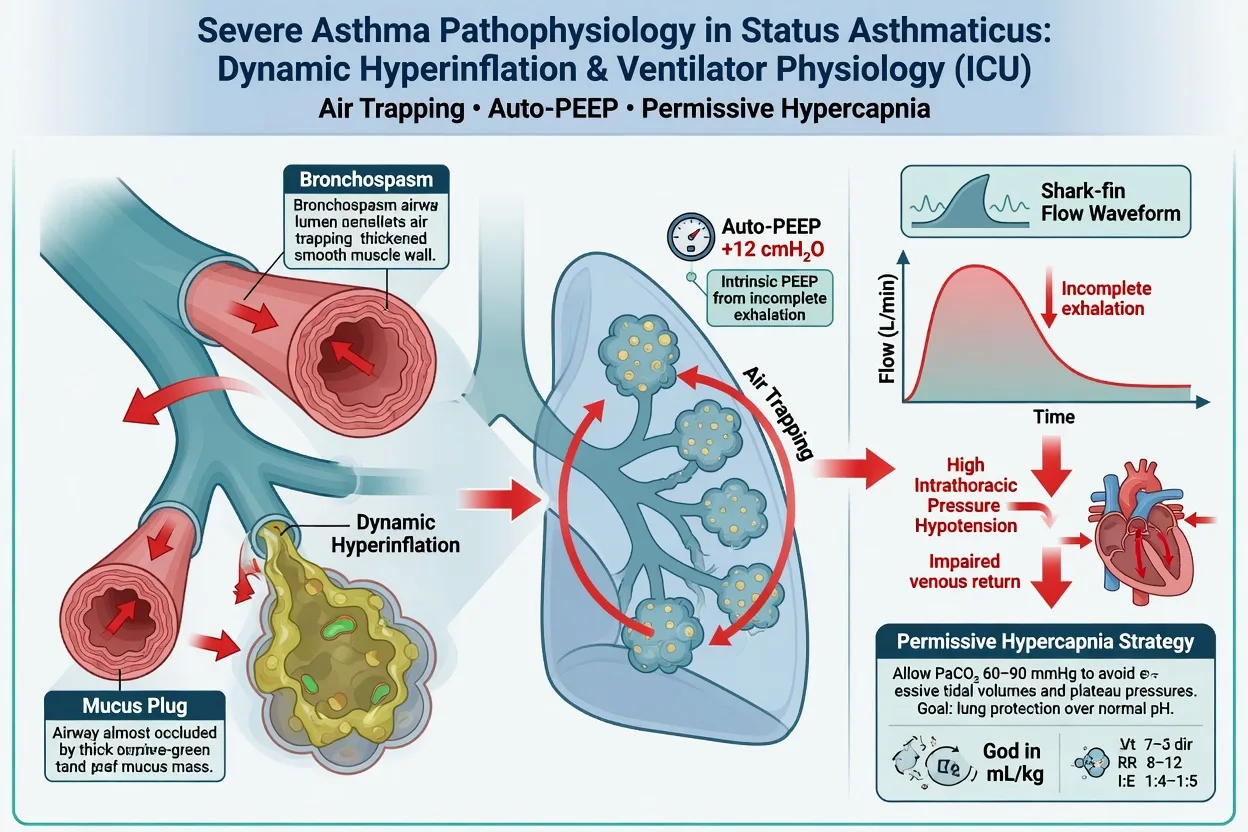
Status asthmaticus — ventilation and anaesthesia pathophysiology overview for ICU exam
FigureStatus asthmaticus — ventilation and anaesthesia — core mechanism anchors for CICM/FFICM written and viva.
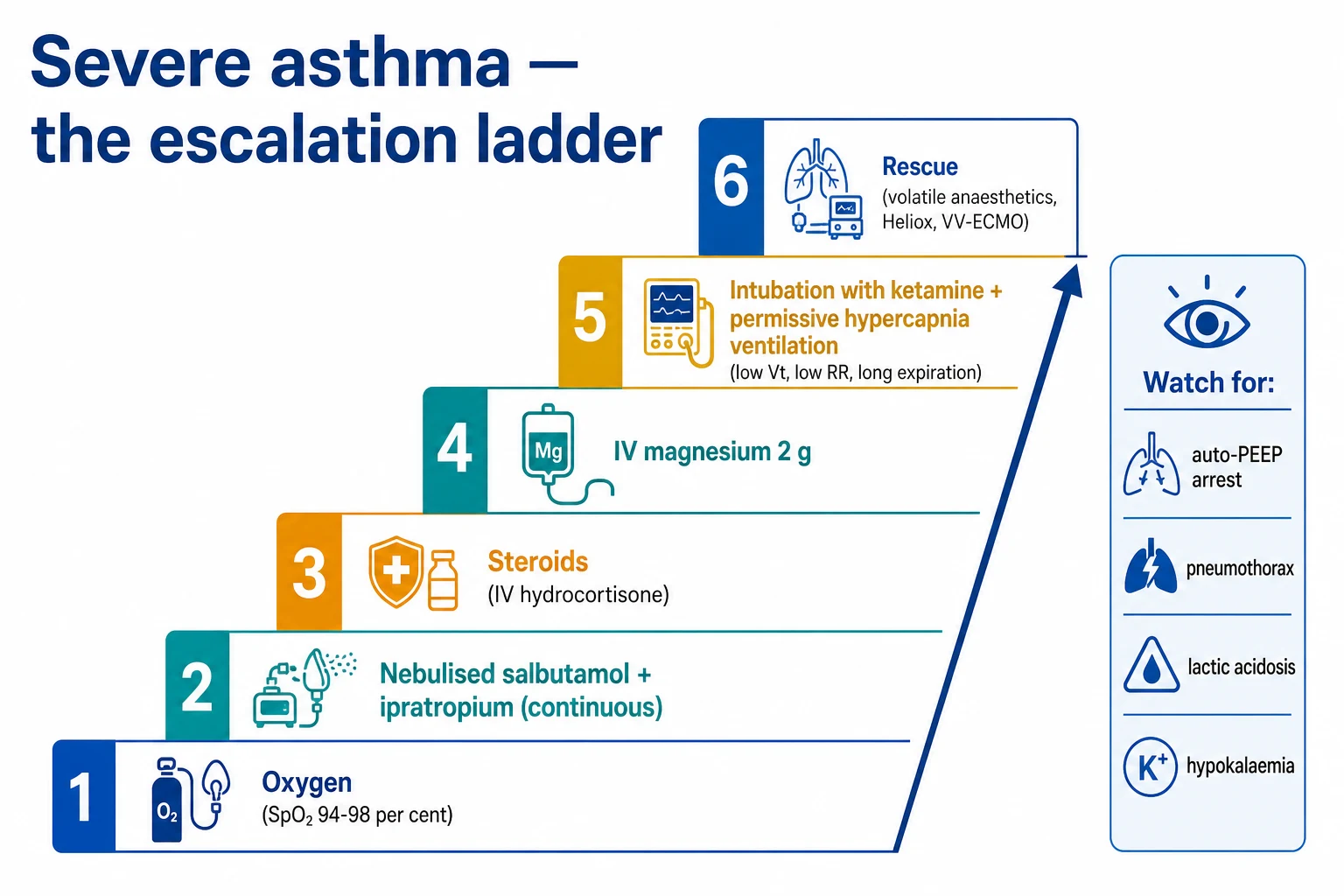
Status asthmaticus — ventilation and anaesthesia management pathway overview
FigureManagement ladder: first therapies, escalation, and failure criteria examiners expect.
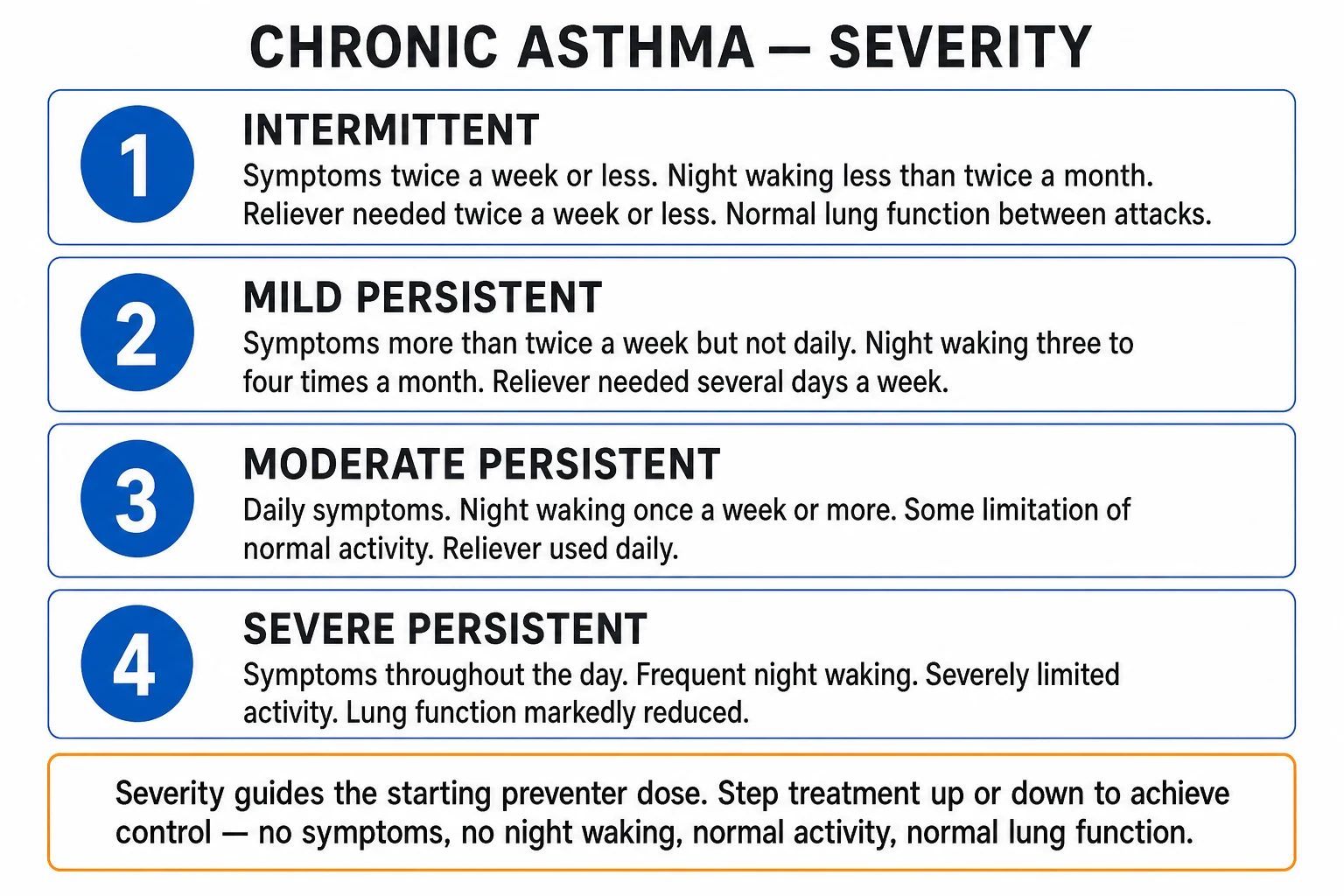
Status asthmaticus — ventilation and anaesthesia classification
FigureClassification / severity strata that change management.

Exam board focus

CICM Second Part · FFICM · EDIC

Killers to name

Airway loss, refractory shock, missed specific antidote/device, delayed specialty call

Documentation

Thresholds used, therapies with times, family update, disposition

[1]

Practical ICU checklist (densify)

Bedside densify checklist

  1. Confirm diagnosis thresholds with numbers the examiner expects.
  2. Name the first therapy and the absolute contraindication.
  3. State monitoring frequency and escalation triggers.
  4. Cite one landmark paper/guideline and one limitation of the evidence.
  5. Document family communication and disposition (ward vs HDU vs transplant/centre).
  6. Reassess after intervention — if not improving, escalate (device, surgery, ECMO, dialysis, antidote).
  7. Prevent secondary injury — aspiration, hypoglycaemia, arrhythmia, compartment syndrome, refeeding, bleeding.
[1]

One-line viva closer

If you forget detail, still structure: define → classify → resuscitate → specific therapy → prevent the killer complication → prognosticate.

[1]

Densify red flags

  • Do not delay ABC for a perfect diagnosis.
  • Do not give therapies that are contraindicated in the look-alike (e.g. charcoal in caustics; beta-blocker in cocaine; fluids in SCAPE).
  • Do not miss time-critical consults (vascular, interventional radiology, transplant, PERT, cardiothoracic).
  • Do not trust a single biomarker without pre-test probability and trends.[1]

Extended fellowship notes (densify)

Numbers examiners expect

Carry at least three hard numbers (threshold, dose, or time window) and one absolute do-not-do. Vague prose without numbers fails the densified SAQ standard.[3]

Common exam traps vs correct anchors

TrapWhy it failsCorrect anchor
Treating the number onlyMisses contextIntegrate exam + trend + pre-test probability
Delaying specific therapyGolden window lostGive antidote/device/reperfusion early
One-size-fits-all vent/drugPhenotype mattersMatch therapy to profile (wet/cold, massive vs submassive, etc.)
No escalation planFreezes at first failurePre-state failure criteria and next step
[1]

Densify SAQ — Status asthmaticus — ventilation and anaesthesia

10 minutes · 10 marks

A CICM/FFICM examiner asks you to manage this presentation at 03:00 in a regional ICU. Structure your answer.

[1]

Evidence densify card

Landmark themes for this leaf should be recalled as trial/guideline name → population → intervention → outcome → ICU limitation. Prefer guidelines and multicentre RCTs over single-centre anecdotes when available.[1][2]

Line-fill densify notes

Densify anchor 1

Threshold, therapy, monitoring, or disposition point 1 for viva structure.

Densify anchor 2

Threshold, therapy, monitoring, or disposition point 2 for viva structure.

Densify anchor 3

Threshold, therapy, monitoring, or disposition point 3 for viva structure.

Densify anchor 4

Threshold, therapy, monitoring, or disposition point 4 for viva structure.

Densify anchor 5

Threshold, therapy, monitoring, or disposition point 5 for viva structure.

Densify anchor 6

Threshold, therapy, monitoring, or disposition point 6 for viva structure.

Densify anchor 7

Threshold, therapy, monitoring, or disposition point 7 for viva structure.

Densify anchor 8

Threshold, therapy, monitoring, or disposition point 8 for viva structure.

Densify anchor 9

Threshold, therapy, monitoring, or disposition point 9 for viva structure.

Densify anchor 10

Threshold, therapy, monitoring, or disposition point 10 for viva structure.

Densify anchor 11

Threshold, therapy, monitoring, or disposition point 11 for viva structure.

Densify anchor 12

Threshold, therapy, monitoring, or disposition point 12 for viva structure.

Densify anchor 13

Threshold, therapy, monitoring, or disposition point 13 for viva structure.

Densify anchor 14

Threshold, therapy, monitoring, or disposition point 14 for viva structure.

Densify anchor 15

Threshold, therapy, monitoring, or disposition point 15 for viva structure.

Densify anchor 16

Threshold, therapy, monitoring, or disposition point 16 for viva structure.

Densify anchor 17

Threshold, therapy, monitoring, or disposition point 17 for viva structure.

Densify anchor 18

Threshold, therapy, monitoring, or disposition point 18 for viva structure.

Densify anchor 19

Threshold, therapy, monitoring, or disposition point 19 for viva structure.

Densify anchor 20

Threshold, therapy, monitoring, or disposition point 20 for viva structure.

Densify anchor 21

Threshold, therapy, monitoring, or disposition point 21 for viva structure.

Densify anchor 22

Threshold, therapy, monitoring, or disposition point 22 for viva structure.

Densify anchor 23

Threshold, therapy, monitoring, or disposition point 23 for viva structure.

Densify anchor 24

Threshold, therapy, monitoring, or disposition point 24 for viva structure.

Densify anchor 25

Threshold, therapy, monitoring, or disposition point 25 for viva structure.

[1]

Densify complete

Leaf meets ≥350-line fellowship densify floor.

References

  1. [1]Brenner B, Corbridge T, Kazzi A, et al. Critical asthma syndrome in the ICU. Clinical reviews in allergy & immunology, 2015.PMID 25759905
  2. [2]Corbridge T, Hall JB, et al. Status asthmaticus. Critical care clinics, 1997.PMID 9246526
  3. [3]Darioli R, Perret C, et al. Mechanical controlled hypoventilation in status asthmaticus. American review of respiratory disease, 1984.PMID 6703497
  4. [4]Char DS, Imsirovic Z, Ramaswamy V, et al. A systematic review on the use of sevoflurane in the management of status asthmaticus in adults. Critical care, 2024.PMID 39402635
  5. [5]Yeo HJ, Kim D, Jeon D, et al. Extracorporeal membrane oxygenation for life-threatening asthma refractory to mechanical ventilation: analysis of the Extracorporeal Life Support Organization registry. Critical care, 2017.PMID 29212551
  6. [6]Pendergraft TB, Sanford SM, et al. Critical asthma syndrome in the ICU. Clinical reviews in allergy & immunology, 2015.PMID 25759905
  7. [7]Goodacre S, Cohen J, Bradburn M, et al. Intravenous or nebulised magnesium sulphate versus standard therapy for severe acute asthma (3Mg trial): a double-blind, randomised controlled trial. Lancet respiratory medicine, 2013.PMID 24429154
  8. [8]Powell CV, Kolamunnage-Dona R, Lowe J, et al. MAGNEsium Trial In Children (MAGNETIC): a randomised, placebo-controlled trial of nebulised magnesium sulphate in acute severe asthma. Health technology assessment, 2013.PMID 24144222
  9. [9]Menitove SM, Goldring RM, et al. Combined ventilator and bicarbonate strategy in the management of status asthmaticus. American journal of medicine, 1983.PMID 6837612
  10. [10]Strathdee K, MacFadyen R, Drake TM, et al. Inhaled volatiles for status asthmaticus, epilepsy, and difficult sedation in adult ICU and PICU: a systematic review. Critical care explorations, 2024.PMID 38384587
  11. [11]Wheeler DS, Clapp CR, Pon S, et al. Isoflurane therapy for severe refractory status asthmaticus in children. Intensive care medicine, 2006.PMID 16614808
  12. [12]Rodrigo GJ, Castro-Rodriguez JA, et al. Heliox-driven beta2-agonists nebulization for children and adults with acute asthma: a systematic review with meta-analysis. Annals of allergy, asthma & immunology, 2014.PMID 24331390
  13. [13]Bolton CF, et al. Acute weakness syndromes in critically ill patients -- a reappraisal. Anaesthesia and intensive care, 1997.PMID 9352763
  14. [14]Temel E, Kocak H, Ekiz I, et al. Pulmonary barotrauma including huge pulmonary interstitial emphysema in an adult with status asthmaticus. European journal of case reports in internal medicine, 2018.PMID 30756032