ICU · Respiratory
Acute severe community-acquired pneumonia: severity prediction and outcome
Also known as CAP severity prediction · PSI vs CURB-65 · SMART-COP score · CRB-65 score · IDSA/ATS severity criteria · Pneumonia outcomes · Pneumonia Severity Index · PORT score
Severity prediction scores guide admission decisions (ward vs ICU) and predict mortality in CAP. PSI (Pneumonia Severity Index — 20 variables, most accurate): classes I-V. CURB-65 (5 variables, simpler): 0-1 (outpatient), 2 (inpatient), 3+ (ICU). CRB-65 (simplified CURB-65 without urea — for pre-hospital/primary care use). SMART-COP (8 variables — predicts need for ICU respiratory/vasopressor support). IDSA/ATS 2007 minor/major criteria (predict need for ICU). All scores have limitations: none are perfect — clinical judgement must always accompany scoring. Key outcome predictors: PaO2/FiO2 ratio, lactate, age, comorbidities, early appropriate antibiotics.
On this page & tools
Your progress
Saved locally on this device.
Target exams
Red flags
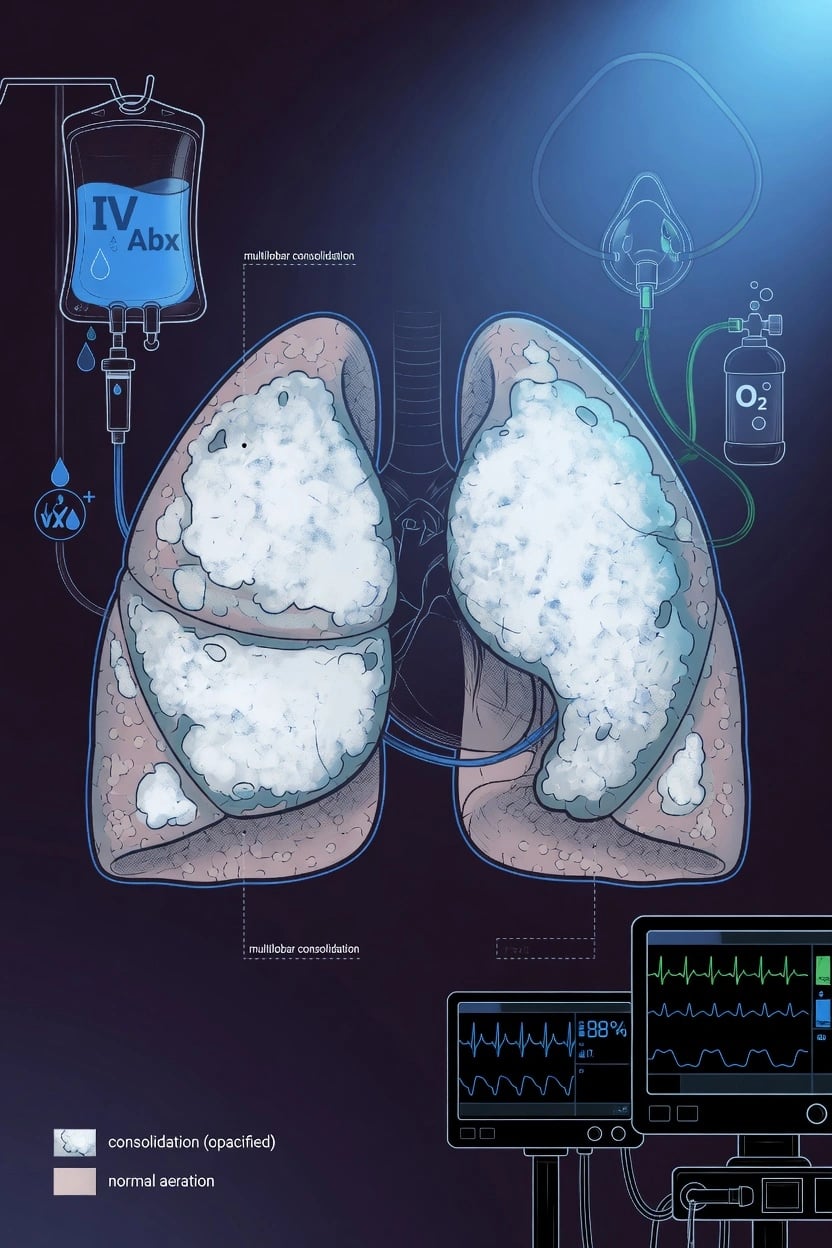
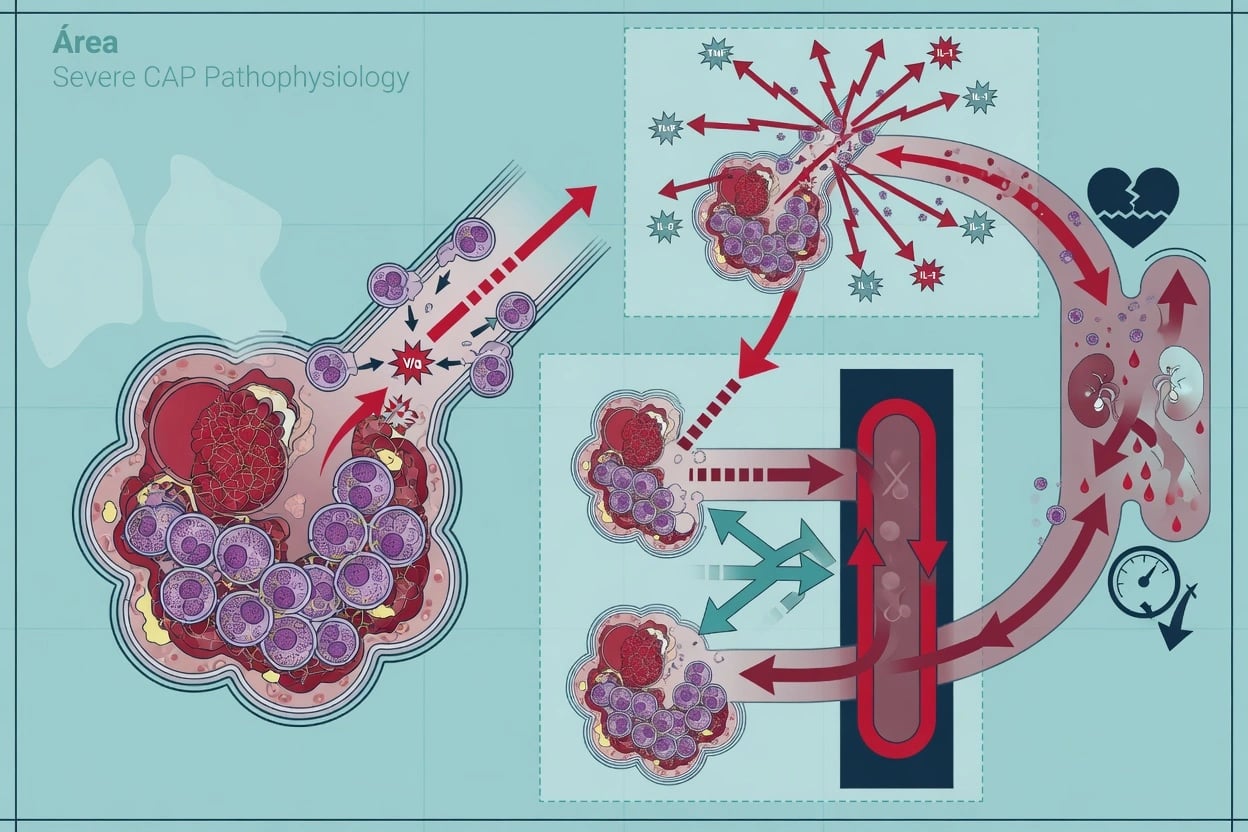
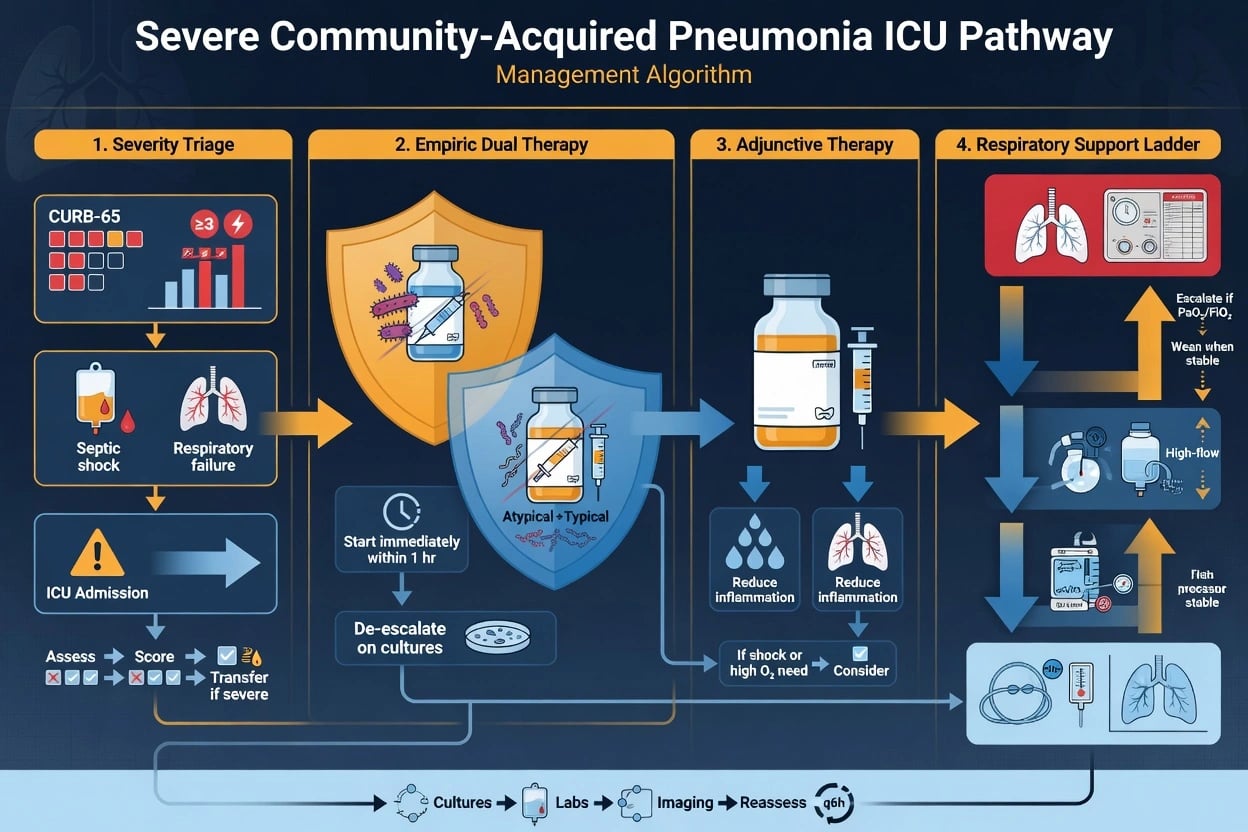
Why severity scoring matters
CAP spans a spectrum from a self-limiting illness managed at home to a rapidly fatal disease requiring ICU. The triage decision — outpatient, ward admission, or ICU — is the single most important early decision and is repeatedly examined in CICM/FFICM/EDIC. The four scoring systems answer slightly different questions: [1]
PSI / PORT
What is the risk of death?
- Best for identifying LOW-risk patients suitable for outpatient management
- Most validated and most sensitive for low-risk classification
- Class I-II = low risk; Class IV-V = high mortality
CURB-65
What is the risk of death? (simple)
- Bedside 5-variable score, easy to remember and calculate
- Predicts 30-day mortality
- Good for triage at the front door of the hospital
IDSA/ATS 2007
Does this patient need ICU?
- The ONLY score designed specifically to answer the ICU admission question
- Major criteria: mechanical ventilation or septic shock
- Minor criteria: 9 parameters, 3+ = ICU
SMART-COP
Will this patient need ICU support?
- Predicts need for intensive respiratory or vasopressor support (IRVS)
- Specifically calibrated for ICU resource need, not just mortality
CURB-65 score
A simple 5-point bedside score, derived and validated in the UK by Lim et al. (2003). Each criterion scores 1 point; the total predicts 30-day mortality and guides the site of care. [1]
CURB-65 — 5 criteria, 1 point each
Severe
Severe CAP. Hospital admission mandatory. Consider ICU admission, especially if any single criterion is rapidly progressive or oxygenation is impaired.
CURB-65 criteria — detailed
C — Confusion
1 point
- Defined as NEW disorientation in time, place or person (mental test score <=8/10)
- Acronym: BUN >19 mg/dL, RR >=30, BP <90/60, age >=65
- Excludes chronic dementia — must be a NEW change from baseline
- Reflects cerebral hypoperfusion (sepsis) or direct infection effect
U — Urea >7 mmol/L
1 point
- Urea >7 mmol/L (BUN ~19.6 mg/dL; some use BUN >19 mg/dL)
- Marker of dehydration and renal hypoperfusion from sepsis
- Often elevated in elderly and in those with reduced oral intake
- The criterion that distinguishes CURB-65 from CRB-65
R — Respiratory rate >=30
1 point
- RR >=30 breaths/min
- Single most powerful individual predictor of severity
- Reflects work of breathing and impending ventilatory failure
- Must be measured (counted), not estimated — frequent under-documentation
B — Blood pressure <90/60
1 point
- Systolic BP <90 mmHg OR diastolic BP <60 mmHg
- Indicates septic shock physiology (early)
- Always reassess after a fluid bolus — persistent hypotension worsens score interpretation
65 — Age >=65 years
1 point
- Age >=65 years
- Age is the strongest NON-modifiable mortality predictor
- Note: CURB-65 does NOT capture very young hypoxic patients — PSI is better for young patients
CURB-65 limitations
[2]CRB-65 score (simplified CURB-65 without urea)
CRB-65 removes the urea measurement, making it usable in primary care and pre-hospital settings where blood tests are not immediately available. Validated by Bauer et al. (CAPNETZ, 2006) and others. [1]
CRB-65 — 4 criteria (no urea needed)
Severe — hospitalise
Score >=2 = severe CAP. Hospital admission mandatory. Consider ICU assessment, particularly if oxygenation impaired.
PSI / PORT score (Pneumonia Severity Index)
Derived by Fine et al. (1997) from the Pneumonia Patient Outcomes Research Team (PORT) cohort of >14,000 patients. It is the most comprehensive and best validated severity score, using ~20 variables to assign one of five risk classes (I-V). Its strength is identifying genuinely LOW-risk patients suitable for outpatient care. [1]
PSI calculation — two-step process
PSI calculation — step by step
Step 1: Assign Class I or II directly (men / women shortcut)
If the patient is YOUNGER than 50 with NONE of the five comorbid conditions (neoplastic disease, liver disease, CHF, cerebrovascular disease, renal disease) and NONE of the exam abnormalities (altered mental status, RR >=30, SBP <90, T <35 or >=40), then assign Class I. This bypasses the point scoring entirely. ANY age >=50 OR any comorbidity OR any exam abnormality → proceed to Step 2 (point scoring).
Step 2: Calculate the point total (if not Class I)
Sum points from: demographics (age x1 male / age-10 female, nursing home resident +10), comorbidities (neoplastic +30, liver +20, CHF +10, cerebrovascular +10, renal +10), exam findings (altered mental status +20, RR >=30 +20, SBP <90 +20, T <35 or >=40 +15, pulse >=125 +10), and labs/ABG/radiology (arterial pH <7.35 +30, BUN >=11 mmol/L / 30 mg/dL +20, Na <130 +20, glucose >=14 +10, haematocrit <30% +10, PaO2 <60 or SpO2 <90% +10, pleural effusion +10).
Step 3: Assign risk class from total
Class II: <=70 points. Class III: 71-90 points. Class IV: 91-130 points. Class V: >130 points. Classes II-III = low/moderate risk (mostly inpatient or brief observation). Class IV = moderate-high risk (inpatient, sometimes ICU). Class V = high risk (ICU consideration).
Step 4: Apply clinical judgement overlay
PSI is the MOST sensitive score for low-risk classification but UNDERESTIMATES severity in young patients (age weighting means a 25-year-old with multilobar septic CAP scores low). Always cross-check oxygenation, lactate, social factors, and IDSA/ATS criteria before discharging.
PSI — the ~20 variables (full list)
Demographics
age + sex + residence
- Age in years — men: +1/yr; women: +1/yr minus 10
- Nursing home resident: +10
Comorbidities (5)
+30 to +10
- Neoplastic disease: +30 (any active cancer except non-melanoma skin)
- Liver disease: +20 (cirrhosis, chronic active hepatitis)
- Congestive heart failure: +10
- Cerebrovascular disease: +10
- Renal disease: +10 (chronic, creatinine elevated)
Examination (5)
+10 to +20
- Altered mental status: +20 (disorientation, stupor, coma)
- RR >=30 breaths/min: +20
- Systolic BP <90 mmHg: +20
- Temperature <35C or >=40C: +15
- Pulse >=125 beats/min: +10
Labs / ABG / CXR (7)
+10 to +30
- Arterial pH <7.35: +30
- BUN >=11 mmol/L (>=30 mg/dL): +20
- Sodium <130 mmol/L: +20
- Glucose >=14 mmol/L (>=250 mg/dL): +10
- Haematocrit <30%: +10
- PaO2 <60 mmHg OR SpO2 <90%: +10
- Pleural effusion on CXR: +10
PSI risk classes and mortality
PSI / PORT — 5 risk classes
Moderate
71-90 points. Moderate risk. Often brief inpatient or observation. Individualise.
PSI strengths and weaknesses
Strengths
why it is the gold standard
- Most validated score (>40 validation studies worldwide)
- Highest sensitivity for identifying LOW-risk patients (best for safe discharge)
- Incorporates oxygenation (PaO2/SpO2) and ABG pH — unlike CURB-65
- Accounts for major comorbidities that drive mortality
- Risk-stratifies into 5 classes for finer granularity
Weaknesses
practical limitations
- Complex — requires calculator/app, not bedside-calculable
- Heavy age weighting UNDER-SCORES young patients (a 25-yo with multilobar septic CAP can score Class II)
- Does NOT specifically predict ICU need (designed for mortality/discharge, not ICU triage)
- Requires ABG and multiple labs — may delay scoring
- No social factor weighting (oral intake, home support, compliance)
IDSA/ATS 2007 minor/major criteria for ICU admission
The 2007 IDSA/ATS consensus guidelines (Mandell et al.) defined the most widely used ICU admission criteria for CAP. Unlike PSI/CURB-65 (which predict mortality), these criteria directly answer: does this patient need ICU-level care? [1]
[4]IDSA/ATS performance and caveats
Strengths
why it is the ICU triage tool
- The ONLY score designed specifically for ICU admission decisions
- Endorsed by ATS, IDSA, and incorporated into the 2019 update
- Captures oxygenation (PaO2/FiO2) — the key respiratory variable
- Includes septic shock and ventilation as definitive major criteria
- Validated in multiple international cohorts
Limitations
practical issues
- PaO2/FiO2 requires ABG or close estimation — may not be available early
- BUN threshold (>=20 mg/dL) differs from CURB-65 urea (>7 mmol/L ~ 19.6 mg/dL)
- Only ~60-65% of patients meeting minor-criteria actually receive ICU-level interventions — risk of over-triage
- Li et al.: the 4 most predictive minor criteria are PaO2/FiO2, confusion, urea, RR — a simplified 4-criterion version performs similarly
- Does not capture social factors or trajectory (deteriorating vs improving)
IDSA/ATS simplified minor criteria (Li et al.)
Full 9 minor criteria
original IDSA/ATS
- RR, PaO2/FiO2, multilobar, confusion, BUN, WBC, platelets, hypothermia, hypotension
- >=3 = severe CAP / ICU
- Sensitivity ~84%, specificity ~78% for ICU need (Li et al.)
Simplified 4 minor criteria
Li et al. 4-variable
- PaO2/FiO2 <=250, confusion, BUN >=11 mmol/L, RR >=30
- >=2 = severe CAP / ICU
- Similar discrimination to full 9-criteria version (AUROC ~0.80)
- Faster to apply at the bedside; requires ABG for PaO2/FiO2
SMART-COP
Developed by Charles et al. (2008) in the Australian ACEM/SMART-COP cohort. Uniquely predicts the need for intensive respiratory or vasopressor support (IRVS) within the first 72 hours — a more ICU-specific question than mortality. [1]
S — Systolic BP
<90 mmHg = 2 points
- Systolic BP <90 mmHg (2 points — double-weighted)
M — Multilobar CXR
= 1 point
- Multilobar infiltrates on chest X-ray
A — Albumin
<35 g/L = 1 point
- Low albumin (<3.5 g/dL) — marker of chronic illness and severity
R — Respiratory rate
>=30 (age <=50) or >=25 (age >50) = 1 point
- Age-adjusted RR threshold (lower threshold for older patients)
T — Tachycardia
HR >=125 = 1 point
- Heart rate >=125 bpm
C — Confusion
new = 1 point
- New confusion / disorientation
O — Oxygen
low = 2 points
- PaO2 <54 mmHg OR SpO2 <90% OR PaO2/FiO2 <250 (2 points — double-weighted)
P — pH
<7.35 = 2 points
- Arterial pH <7.35 (2 points — double-weighted; reflects severe acidosis)
SMART-COP — predicted need for ICU respiratory/vasopressor support
High
High risk. ICU or HDU admission warranted.
Scoring systems compared
PSI (Pneumonia Severity Index)
Most accurate, most complex
- 20 variables: demographics, comorbidities, examination, labs, CXR
- 5 classes: I-II (low risk, outpatient), III (moderate, brief inpatient), IV-V (severe, ICU)
- Advantage: most validated, highest sensitivity for identifying low-risk patients
- Disadvantage: complex to calculate (requires online calculator), may underestimate severity in young patients without comorbidities
- Best for: SAFE DISCHARGE decisions in adults of all ages
CURB-65
Simple, widely used
- 5 variables: Confusion, Urea >7, RR >=30, BP <90/60, Age >=65
- Score 0-1: outpatient. Score 2: inpatient. Score 3+: severe — consider ICU
- Advantage: simple (bedside calculation), widely used, good predictor of mortality
- Disadvantage: less sensitive than PSI for identifying low-risk patients. Does not include oxygenation
- Best for: rapid ED triage and mortality prediction
CRB-65
No urea needed — pre-hospital
- 4 variables: Confusion, RR >=30, BP <90/60, Age >=65 (no urea)
- Score 0: consider outpatient. Score >=1: hospital assessment. Score >=2: severe
- Advantage: usable in primary care / pre-hospital without blood tests
- Disadvantage: less discriminative than CURB-65; still no oxygenation variable
- Best for: GP triage and pre-hospital decision-making
SMART-COP
Predicts ICU need
- 8 variables: Systolic BP, Multilobar CXR, Albumin, RR, Tachycardia, Confusion, Oxygen, pH
- Designed to predict need for ICU-level respiratory or vasopressor support
- Score 0-2: low risk. Score 3-4: moderate. Score 5+: high risk (ICU)
- Advantage: specifically predicts ICU need (not just mortality). Includes oxygenation.
- Best for: predicting the NEED FOR ICU SUPPORT
IDSA/ATS criteria
ICU admission criteria
- Major criteria (either = ICU): invasive mechanical ventilation, septic shock
- Minor criteria (3+ = ICU): RR >=30, PaO2/FiO2 <250, multilobar, confusion, BUN >=20, WBC <4, platelets <100, hypothermia, hypotension needing fluids
- Advantage: specifically defines ICU admission criteria. Endorsed by ATS/IDSA.
- Disadvantage: may overestimate ICU need (only ~65% of patients meeting criteria actually need ICU)
- Best for: ICU ADMISSION DECISIONS
How the scores compare head-to-head
Ease of use
bedside practicality
- CRB-65 > CURB-65 > IDSA/ATS > SMART-COP > PSI
- CRB-65: no labs needed. CURB-65: urea only. PSI: full calculator.
Mortality prediction
discrimination
- PSI ~= CURB-65 > SMART-COP for 30-day mortality (AUROC ~0.70-0.80 across studies)
- All scores perform similarly for mortality — no single score is clearly superior (Chalmers meta-analysis)
Low-risk identification
safe discharge
- PSI is the BEST score for identifying genuinely low-risk patients (highest sensitivity)
- CURB-65 under-classifies some low-risk patients as moderate
ICU need prediction
resource triage
- IDSA/ATS and SMART-COP are specifically designed for ICU need
- PSI and CURB-65 were designed for mortality/discharge, not ICU — use them with IDSA/ATS for the ICU question
Young patients
the PSI blind spot
- PSI UNDER-SCORES young patients (age is the dominant variable) — a 25-yo septic multilobar CAP can be Class II
- CURB-65 and IDSA/ATS do not have this age-weighting flaw
- ALWAYS cross-check oxygenation, lactate, and trajectory in young patients regardless of score
Landmark trials and evidence
Fine et al. — PORT cohort (PSI derivation)
Prospective observational cohort (Pneumonia Patient Outcomes Research Team), 14,199 inpatients, derivation + validation
Population: Adults with radiographically confirmed CAP across 3 US cohorts
Key finding
Strong gradient of mortality by class: Class I 0.1%, Class II 0.6%, Class III 0.9%, Class IV 8.2%, Class V 29.2%. Identified ~30% of inpatients as low-risk (Class I-II) suitable for outpatient care.
Practice change
PSI is the most validated and most sensitive score for identifying low-risk CAP patients. Foundation for outpatient management decisions.
Lim et al. — CURB-65 derivation and validation
International derivation and validation study across 3 cohorts (UK, New Zealand, Netherlands), 1,068 patients
Population: Adults hospitalised with CAP
Key finding
Mortality by CURB-65 score: 0 = 0%, 1 = 2.7%, 2 = 6.8%, 3 = 14.0%, 4 = 27.8%, 5 = 27.0%. CURB-65 performed similarly to PSI for mortality prediction but is far simpler to calculate.
Practice change
CURB-65 is a simple, validated, bedside score for predicting 30-day mortality and triaging site of care. Score 0-1 = low risk; 2 = moderate; 3+ = severe.
Mandell et al. — IDSA/ATS 2007 CAP consensus guidelines
Evidence-based consensus guidelines (Infectious Diseases Society of America / American Thoracic Society)
Population: Adults with CAP (diagnosis, severity, treatment)
Key finding
Severe CAP defined as >=1 major OR >=3 minor criteria. Validated subsequently: ~60-65% of patients meeting minor criteria actually receive ICU-level interventions.
Practice change
The IDSA/ATS criteria are the standard tool for the ICU admission decision in CAP. The 2007 definitions were retained in the 2019 ATS/IDSA update.
Charles et al. — SMART-COP derivation
Prospective multicentre Australian cohort (ACEM), 882 patients; derivation + validation
Population: Adults presenting to ED with CAP
Key finding
SMART-COP predicted IRVS better than PSI or CURB-65 (AUROC 0.87). Score 0-2: 5% IRVS; 3-4: 15%; 5-6: 41%; 7+: 79%.
Practice change
SMART-COP is the score of choice for predicting the specific need for ICU respiratory or vasopressor support — a more granular ICU-triage tool than PSI/CURB-65.
Chalmers et al. — Meta-analysis of severity scores
Systematic review and meta-analysis of 33 validation studies
Population: Hospitalised adults with CAP across multiple cohorts
Key finding
All validated scores performed similarly for mortality prediction (AUROC ~0.70-0.80). No single score was clearly superior. PSI had marginally better sensitivity for low-risk identification.
Practice change
No score is universally superior. Choice depends on the clinical question: PSI for safe discharge, CURB-65 for bedside triage, IDSA/ATS / SMART-COP for ICU decisions. Always combine with clinical judgement.
Application in practice — a clinical pathway
How to apply the scores sequentially in a CAP patient
1. Primary care / pre-hospital — use CRB-65
If CRB-65 = 0 with normal SpO2 and good social factors → consider outpatient management. If CRB-65 >=1 OR SpO2 <92% OR unwell → refer to hospital.
2. ED arrival — calculate CURB-65 and check oxygenation
Within minutes: CURB-65 (5 bedside variables) + SpO2 + RR + lactate. CURB-65 0-1 with normal SpO2 = low risk; 2 = admit; 3+ = severe, assess ICU. ALWAYS check SpO2/PaO2 regardless of score.
3. Risk-stratify with PSI once labs return
When ABG and full bloods available, calculate PSI (app/calculator). Use PSI primarily to CONFIRM low-risk status (Class I-II) before discharge, and to identify Class IV-V for ICU consideration.
4. Answer the ICU question with IDSA/ATS and/or SMART-COP
For the ICU admission decision, apply IDSA/ATS: any major criterion (ventilation / septic shock) = ICU immediately. Otherwise count minor criteria — >=3 = ICU. SMART-COP >=5 also supports ICU.
5. Overlay clinical judgement and social factors
No score captures: rapid trajectory of deterioration, inability to take oral medications, absent home support, frailty, immunocompromise, pregnancy, or patient preference. If ANY of these is concerning, escalate care regardless of score.
6. Reassess within 4-6 hours and at 24 hours
Scores are static snapshots — reassess. A patient improving on antibiotics + oxygen may de-escalate; a patient whose lactate is rising, RR increasing, or who is developing new confusion must be re-evaluated for ICU.
Outcome predictors beyond the scores
Strongly modifiable
change these
- Delay in appropriate antibiotics (>4-8 hours) — the strongest MODIFIABLE predictor of death
- Delayed source control (empyema drainage, abscess)
- Delayed ICU admission / mechanical ventilation when indicated
Non-modifiable
recognise and adjust
- Age (the dominant variable in PSI)
- Comorbidities (COPD, CHF, diabetes, liver disease, immunocompromise)
- Bacteraemia (positive blood cultures) — doubles to triples mortality
- Pathogen (S. aureus, Pseudomonas, Legionella carry higher mortality)
Physiologic markers
monitor these
- Lactate — elevated = tissue hypoperfusion; predicts severity and mortality
- PaO2/FiO2 ratio — <250 = impaired oxygenation (IDSA/ATS minor criterion)
- Procalcitonin — guides antibiotic duration, less so severity
- CRP — high inflammatory burden predicts steroid responsiveness
- Sequential organ failure (SOFA) trajectory
Prognosis by site of care
CAP mortality by site of care
Adjunctive corticosteroids in severe CAP
Siemieniuk et al. — Corticosteroids for hospitalised CAP (meta-analysis)
Systematic review and meta-analysis of 13 RCTs (>2,000 patients)
Population: Adults hospitalised with CAP
Key finding
Reduced mortality (RR ~0.70), reduced need for mechanical ventilation, reduced ARDS. Greatest benefit in severe CAP with high inflammatory burden (high CRP). Increased hyperglycaemia.
Practice change
Consider corticosteroids in severe CAP with high inflammatory burden. Hydrocortisone 200 mg/day or prednisolone 50 mg/day for 5-7 days. Caution: hyperglycaemia; avoid in influenza-only CAP without confirmed bacterial co-infection.
Exam practice
SAQ — Applying CAP severity scores
10 minutes · 10 marks
A 72-year-old man with COPD and heart failure presents with 4 days of fever, productive cough, and dyspnoea. He lives alone. RR 32, SpO2 88% on room air, BP 86/54 after 1.5L crystalloid, confused (oriented to person only). CXR shows right middle and lower lobe consolidation. WBC 3.2, platelets 95, Hb 110, Na 128, BUN 22 mg/dL (urea 7.9 mmol/L), glucose 9, PaO2 54, pH 7.32. Temp 35.5C. Heart rate 128.
Clinical pearls
Red flags
References
- [1]Martin-Loeches I, Torres A. Severe community-acquired pneumonia Eur Respir Rev, 2022.PMID 36517046
- [2]Lim WS, van der Eerden MM, Laing R, et al. Defining community acquired pneumonia severity on presentation to hospital: an international derivation and validation study Thorax, 2003.PMID 12728155
- [3]Fine MJ, Auble TE, Yealy DM, et al. Antithrombin mutation database: 2nd (1997) update. For the Plasma Coagulation Inhibitors Subcommittee of the Scientific and Standardization Committee of the International Society on Thrombosis and Haemostasis Thromb Haemost, 1997.PMID 9031473
- [4]Mandell LA, Wunderink RG, Anzueto A, et al. Molecular cloning of a C-type lectin (LvLT) from the shrimp Litopenaeus vannamei: early gene down-regulation after WSSV infection Fish Shellfish Immunol, 2007.PMID 17276083
- [5]Charles PGP, Wolfe R, Whitby M, et al. Absence of H186R polymorphism in exon 4 of the APOBEC3G gene among North Indian individuals Genet Test, 2008.PMID 18652534
- [6]Wunderink RG, Waterer GW. Aqueous extract of Annona macroprophyllata: a potential α-glucosidase inhibitor Biomed Res Int, 2013.PMID 24298552
- [7]Metlay JP, Waterer GW, Long AC, et al. Recruitment of Reverse Transcriptase-Cas1 Fusion Proteins by Type VI-A CRISPR-Cas Systems Front Microbiol, 2019.PMID 31572350
- [8]Aujesky D, Auble TE, Yealy DM, et al. Ionophore taste preferences of dairy heifers J Anim Sci, 2004.PMID 15542479
- [9]Chalmers JD, Singanayagam A, Akram AR, et al. Bioengineering for salinity tolerance in plants: state of the art Mol Biotechnol, 2013.PMID 22539206
- [10]Bauer TT, Ewig S, Marre R, Suttorp N, Welte T (CAPNETZ). The long-term results of keratoplasty in eyes with a glaucoma drainage device Am J Ophthalmol, 2004.PMID 15289127
- [11]Siemieniuk RAC, Meade MO, Alonso-Coello P, et al. Blockade to pathological remodeling of infarcted heart tissue using a porcupine antagonist Proc Natl Acad Sci U S A, 2017.PMID 28143939
- [12]Ferrer M, Travierso C, Cilloniz C, et al. Simplification of the IDSA/ATS criteria for severe CAP using meta-analysis and observational data Eur Respir J, 2014.PMID 24114960