ICU · Resuscitation
Anaphylaxis in the ICU
Also known as Anaphylactic shock · Refractory anaphylaxis · Biphasic anaphylaxis · Intravenous adrenaline · Glucagon for beta-blocked anaphylaxis
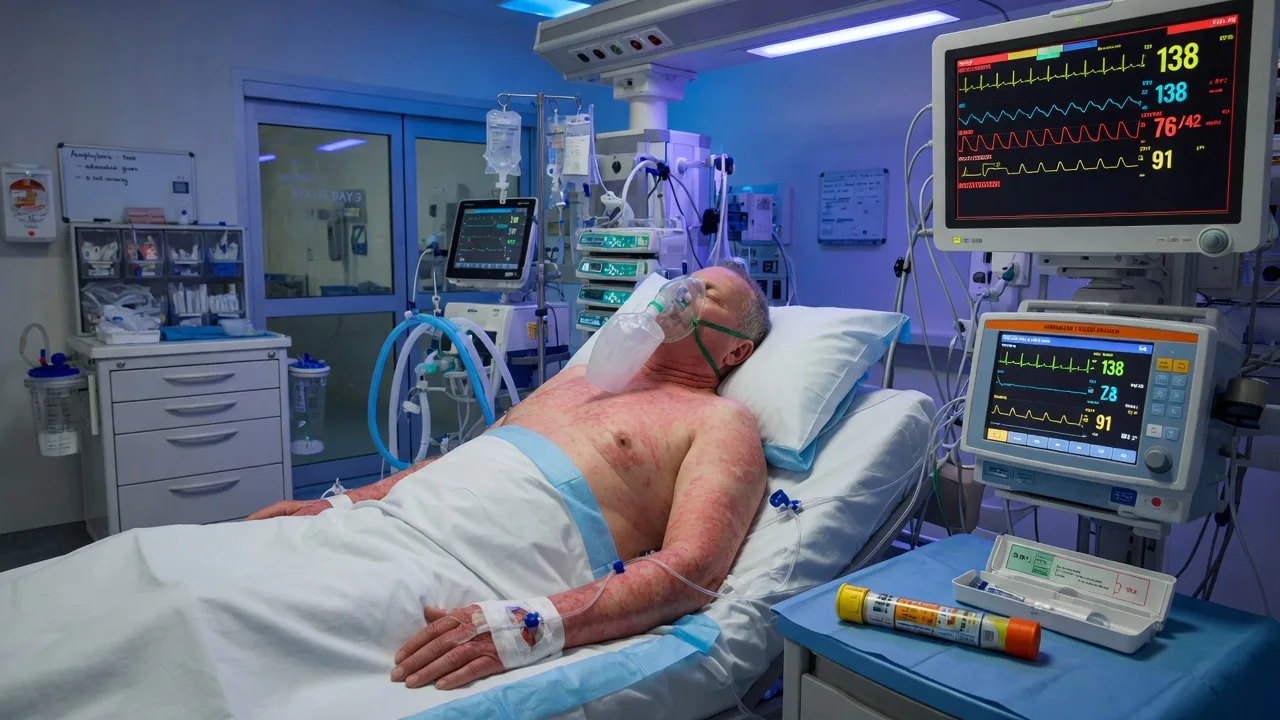
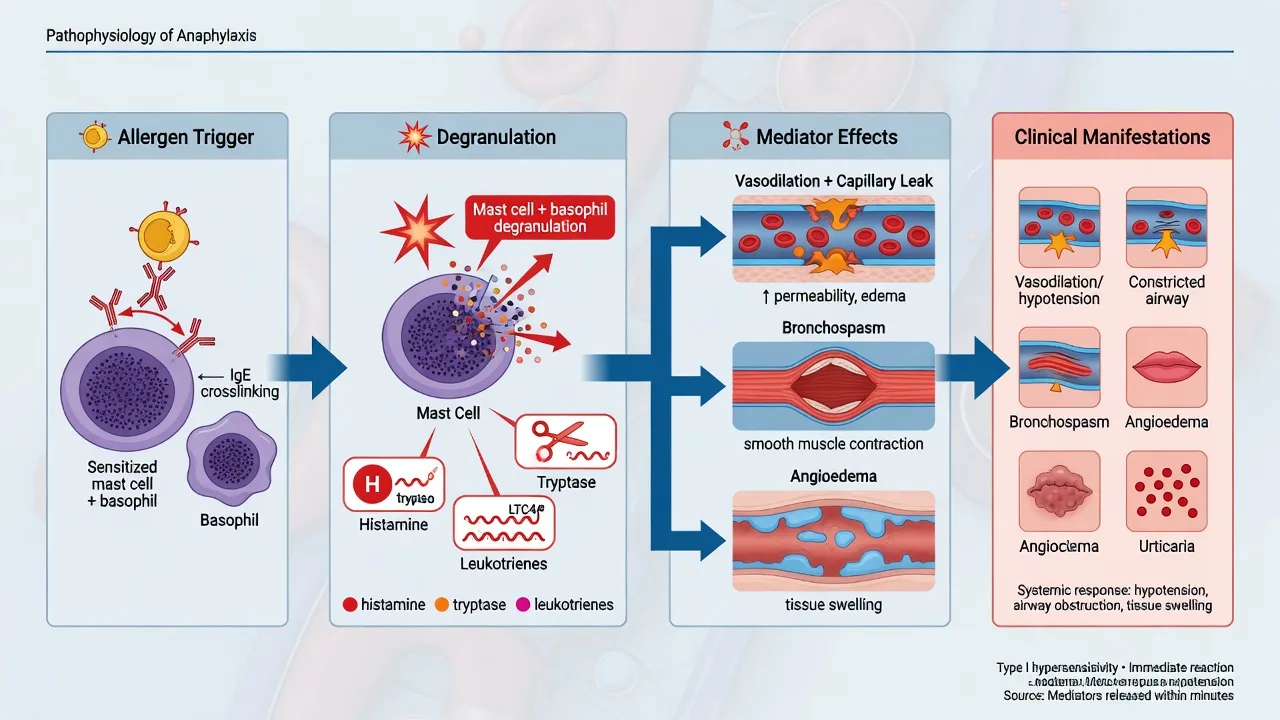
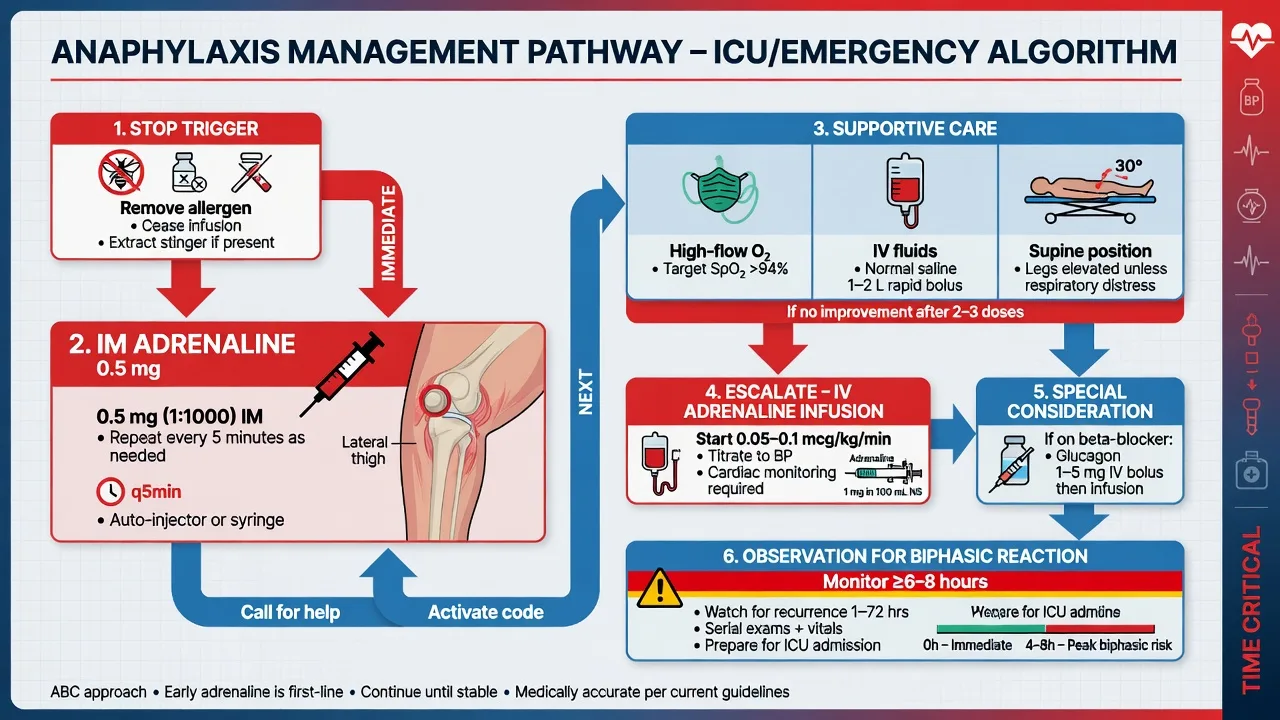
Anaphylaxis is a severe, life-threatening systemic hypersensitivity reaction. Diagnosis: acute onset (minutes-hours) with skin/mucosal involvement AND respiratory compromise OR hypotension OR end-organ dysfunction. Management: IM adrenaline 0.5 mg (anterolateral thigh, repeat every 5 min), IV fluids, oxygen, supine position with legs elevated. Refractory: IV adrenaline infusion (0.05-0.1 mcg/kg/min), glucagon if beta-blocked (3-5 mg IV over 5 min — bypasses beta-receptor). Biphasic reactions occur in 5-20% — observe 6-12h. Common triggers: drugs (antibiotics, NSAIDs, neuromuscular blockers), foods (nuts, shellfish), insect stings, radiocontrast.
On this page & tools
Your progress
Saved locally on this device.
Target exams
Red flags
Diagnostic criteria
Management
Anaphylaxis management protocol
1. IM ADRENALINE 0.5 mg (500 mcg) — FIRST-LINE
Give IMMEDIATELY. Site: anterolateral thigh (vastus lateralis — best absorption). Dose: 0.5 mg (0.5 mL of 1:1000). REPEAT every 5 minutes if no improvement (up to 3 doses). Do NOT delay for IV access or investigations. IM is preferred over IV for initial treatment (safer, effective).<Cite id="2" />
2. Position and oxygen
SUPINE with legs elevated (maximises venous return). Do NOT sit up or stand (empty vena cava syndrome — catastrophic hypotension). Oxygen 15 L/min via non-rebreather mask. If airway compromised from angioedema: early intubation by experienced operator.
3. IV fluid resuscitation
1-2 large-bore IV cannulae. Crystalloid bolus: 20 mL/kg rapidly (may need 1-2 L). Anaphylactic shock causes massive vasodilation + capillary leak + third-space losses. Continue fluids guided by response.
4. Second-line agents
Antihistamines: chlorphenamine 10 mg IV (H1 blocker — helps urticaria/itch but NOT first-line for airway/circulation). Ranitidine/famotidine 20 mg IV (H2 blocker — adjunctive). Corticosteroids: hydrocortisone 200 mg IV (may prevent biphasic reaction but no definitive evidence). These do NOT substitute for adrenaline.
5. Refractory anaphylaxis — IV adrenaline
If 2-3 doses IM adrenaline + fluids are ineffective: start IV adrenaline infusion. Bolus: 50 mcg IV over 5 min (dilute 1 mL of 1:1000 in 10 mL saline). Infusion: 0.05-0.1 mcg/kg/min, titrate up. Consider vasopressin if refractory. ICU admission for monitoring.<Cite id="3" />
6. Beta-blocked patient — GLUCAGON
Patients on beta-blockers may not respond to adrenaline (beta-receptor blocked). Give GLUCAGON 3-5 mg IV over 5 min, then infusion 5-15 mcg/min. Glucagon bypasses the beta-receptor — activates adenylate cyclase directly, increasing cAMP. Also treat bradycardia from beta-blockade.
7. Investigations
Tryptase: send at 1-2h (peak), 24h, and baseline (after recovery). Elevated mast cell tryptase confirms anaphylaxis (vs vasovagal). Allergy referral for identification of trigger (skin prick testing, specific IgE). Check: FBC, U&E, lactate, ABG.
8. Observe for biphasic reaction
5-20% of anaphylaxis cases have a biphasic reaction (recurrence 1-72h after initial recovery). Observe for 6-12 hours (longer if severe, needed IM adrenaline x2+, or beta-blocked). Discharge with adrenaline auto-injector (EpiPen) and allergy referral.
Common triggers
ICU-specific triggers
Peri-procedural
- Neuromuscular blocking agents: rocuronium, suxamethonium (#1 perioperative)
- Antibiotics: penicillins, cephalosporins, vancomycin
- Radiocontrast media
- Chlorhexidine (increasingly recognised — catheters, skin prep)
- Latex (less common now — latex-free environment)
- Ethylene oxide (sterilising agent)
- Patent Blue dye (sentinel lymph node biopsy)
General triggers
Community
- Foods: nuts (peanut, tree nuts), shellfish, eggs, milk
- Medications: NSAIDs, antibiotics
- Insect stings: bee, wasp
- Exercise-induced
- Idiopathic (no trigger identified in 20-30%)
Sugammadex reversal for rocuronium anaphylaxis
Exam practice
SAQ — Perioperative anaphylaxis
10 minutes · 10 marks
A 55-year-old woman receives IV co-amoxiclav and rocuronium for induction of anaesthesia for elective cholecystectomy. Within 2 minutes she becomes hypotensive (BP 65/35), tachycardic (HR 130), develops widespread urticaria, and has audible wheeze with SpO2 falling to 85%.
Clinical pearls
Red flags
NIAID/FAAN diagnostic criteria — the three criteria in detail
The NIAID/FAAN second symposium (Sampson 2006) criteria remain the international standard for diagnosing anaphylaxis and are required knowledge for the CICM/FFICM exam.[5] Anaphylaxis is highly likely when any one of three clinical criteria is fulfilled. The criteria exist because anaphylaxis is under-diagnosed — relying on "rash plus collapse" misses the 10–20% of cases without cutaneous features.[24]
[1] [1] [1]When the NIAID/FAAN criteria are NOT met — recognise the mimics
True anaphylaxis mimics
Look-alikes
- Vasovagal syncope — pallor (NOT flush), bradycardia, no urticaria/itch, resolves supine
- Asthma exacerbation — isolated bronchospasm, no hypotension or urticaria
- Panic attack — subjective dyspnoea with normal SpO2/BP, no urticaria
- Carcinoid syndrome — episodic flush/diarrhoea/bronchospasm (not acute collapse)
- Mastocytosis — recurrent unexplained anaphylaxis; persistently elevated baseline tryptase
- Hereditary angioedema — complement C4 low, no urticaria, bradykinin-mediated (NOT histamine)
- Scombroid — histamine fish poisoning with flush (NOT IgE-mediated, responds to antihistamines)
Red flags that favour anaphylaxis
Treat as anaphylaxis
- Sudden cardiovascular collapse within minutes of a drug/food/sting
- Angioedema (lip/tongue/uvula swelling) + any other system
- Bilateral wheeze + hypotension after an exposure
- Hypotension refractory to fluids in the perioperative window
- Pulse >130 and SBP <90 with a temporal trigger
- When in doubt, give IM adrenaline — the harm of omission > harm of an unnecessary dose
Brown's severity grading — guides who needs ICU
Brown's 3-grade severity grading (anaphylaxis)
Grade 1 — mild
Skin only
- Generalised urticaria, erythema, angioedema WITHOUT other system involvement
- Rarely needs adrenaline — observe and consider oral antihistamine
- ED observation usually sufficient; ICU rarely needed
Grade 2 — moderate
Skin + one system
- Skin features PLUS respiratory (dyspnoea/wheeze), cardiovascular (tachycardia, dizziness, SBP 90–110), or GI symptoms
- Standard IM adrenaline 0.5 mg; usually responds
- ED/HDU observation 6–12 h for biphasic risk
Grade 3 — severe
Life-threatening
- Hypoxia (SpO2 <92%), cyanosis, hypotension (SBP <90), collapse, neurological (confusion/loss of consciousness)
- IM adrenaline + IV fluids; often needs multiple adrenaline doses, IV adrenaline infusion, ICU admission
- ICU admission mandatory — high risk of refractory course and biphasic recurrence
ICU-specific triggers — in depth
The ICU and perioperative environment is a high-density allergen landscape — patients are exposed to dozens of parenteral agents within minutes, and parenteral exposure produces a faster, more severe reaction than oral.[12] Below are the ICU-relevant triggers that must be considered for every collapse in ICU/ theatre.
Beta-lactam antibiotics
[1]Vancomycin — "red man syndrome" vs true anaphylaxis
[1]Neuromuscular blocking agents — the #1 perioperative trigger
NSAIDs
[1]Radiocontrast media
[1]Latex
Blood products and transfusion reactions
[1]Other ICU/perioperative triggers worth knowing
Less common but high-yield ICU triggers
Chestnut triggers
Often missed
- Chlorhexidine — increasingly recognised; central line dressings, chlorhexidine-impregnated CVCs, urinary catheters, oral rinses. Can cause anaphylaxis on mucosal contact. Check dressings in unexplained ICU anaphylaxis
- Patent Blue / Isosulfan Blue dye — sentinel lymph node biopsy; vivid blue urticaria easily missed
- Protamine — heparin reversal in cardiac surgery; rapid IV bolus → catastrophic vasoplegia/anaphylaxis
- Ethylene oxide — sterilising agent on disposable equipment; bovine/porcine proteins in surgical haemostats
- Colloid plasma expanders — gelatins (Gelofusine, Haemaccel) and dextrans can trigger non-IgE anaphylactoid reactions
- Aprotinin, fluorescein, indocyanine green, methylene blue itself, oxytocin, iron dextran infusion
Perioperative anaphylaxis — NAP6 in depth
NAP6 (6th National Audit Project of the Royal College of Anaesthetists, 2018) is the definitive UK epidemiological study of perioperative anaphylaxis and required knowledge for the exam.[9][10] Every FFICM/CICM candidate should be able to quote its headline findings.
NAP6 (2018) — UK 6th National Audit Project, perioperative anaphylaxis (PMID 29935569, 29935567)
Source
Royal College of Anaesthetists 6th National Audit Project — UK-wide prospective case capture of all Grade 3–5 perioperative anaphylaxis events (2016)
Incidence
~1 in 10,000 anaesthetics (similar to historical UK and French data)
Triggers
NMBAs ~50–60% (rocuronium #1), antibiotics ~33% (teicoplanin and co-amoxiclav over-represented), chlorhexidine ~9%, Patent Blue dye ~4%, latex <1%
Mortality
3.8% death or brain damage (Grade 5) — higher than non-perioperative anaphylaxis
Adrenaline delays
Adrenaline was delayed or under-dosed in the majority of fatal/near-fatal cases — the single most cited preventable failure
Key recommendation
All suspected perioperative anaphylaxis MUST be referred to a specialist allergy clinic; serial tryptase mandatory; never re-expose without workup
Clinical bottom line
NMBAs (especially rocuronium) are the #1 perioperative trigger; antibiotic anaphylaxis is rising (teicoplanin); adrenaline delay kills — give IM adrenaline EARLY and in adequate dose
Tryptase sampling protocol
Mast-cell tryptase sampling after suspected anaphylaxis
Sample 1 — ASAP (ideally within 1–2 h)
Take the first serum tryptase as soon as feasible after the event, ideally within the **1–2 h peak window**. Mast-cell tryptase rises within 30 min, peaks at **1–2 h**, and falls back to baseline by **4–6 h** (sometimes up to 24 h). A peak tryptase > (1.2 × baseline) + 2 mcg/L supports anaphylaxis (the 1.2 + 2 rule).<Cite id="12" />
Sample 2 — at 4 h (or convalescence)
A second sample at ~4 h (or as the patient stabilises) captures the falling phase. A **normal** tryptase does **NOT** exclude anaphylaxis — mast-cell degranulation can be localised (food-triggered reactions often have normal tryptase). The **delta** (rise above baseline) matters more than the absolute value.
Sample 3 — baseline (≥24 h after full recovery)
A baseline tryptase taken at least 24 h after complete recovery (or at the allergy clinic visit) lets you interpret the acute rise. A **persistently elevated baseline tryptase (>11.4 mcg/L, especially >20)** raises the possibility of **mastocytosis / clonal mast-cell disorder** — these patients have recurrent unexplained anaphylaxis and need bone-marrow workup.
Interpretation
Acute tryptase >25 mcg/L (or a rise >2 mcg/L above baseline per the 1.2+2 rule) supports mast-cell activation. Send samples **clotted (serum) gold-top tube**, 1–2 mL, room temperature. Always pair with the **clinical picture** — tryptase is supportive, not diagnostic.
Trigger identification — at 4–6 weeks
Refer to a specialist allergy / perioperative allergy clinic. Skin-prick testing, intradermal testing and specific serum IgE performed at **4–6 weeks** post-event (to avoid false-negatives during the refractory mast-cell period immediately after the event, and to allow recovery of skin reactivity). NAP6 recommends every case is referred — under-referral was a major quality finding.<Cite id="9" />
Refractory anaphylaxis — escalation beyond IM adrenaline
Refractory anaphylaxis is defined (Delphi consensus, Dribin 2020) as anaphylaxis unresponsive to adequate initial treatment — typically 2–3 doses of IM adrenaline plus IV crystalloid.[8][3] Management requires escalating to IV catecholamine infusions and, if these fail, non-adrenergic rescue agents.[18]
Rescue agents for refractory anaphylaxis — when to use which
IV adrenaline infusion
First refractory step
- Indication: not responding to 2× IM adrenaline + fluids
- Dose: 0.05–0.5 mcg/kg/min titrated; bolus 50 mcg IV (diluted)
- Mechanism: alpha-1 vasoconstriction + beta-1 inotropy + beta-2 bronchodilation
- Watch: tachyarrhythmia, myocardial ischaemia, lactate rise — requires arterial line and ICU monitoring
Glucagon
Beta-blocked patient
- Indication: anaphylaxis in a patient on beta-blockers refractory to adrenaline
- Dose: 3–5 mg IV over 5 min, then 5–15 mcg/min infusion
- Mechanism: bypasses the beta-receptor — Gs protein → adenylate cyclase → cAMP
- Watch: nausea/vomiting (give antiemetic), hyperglycaemia — does NOT replace adrenaline, used IN ADDITION
Vasopressin / terlipressin
Catecholamine-resistant vasoplegia
- Indication: refractory vasodilatory shock despite catecholamines
- Dose: 2–10 units IV bolus; infusion 0.01–0.04 U/min
- Mechanism: V1 receptor vasoconstriction — independent of adrenergic pathway
- Watch: peripheral/splanchnic ischaemia, hyponatraemia — adjunct, not replacement
Methylene blue
NO-mediated vasoplegia
- Indication: catecholamine-resistant vasoplegic shock (case reports; not first-line)
- Dose: 1–2 mg/kg IV over 5 min, repeatable; infusion 0.25–2 mg/kg/h
- Mechanism: inhibits soluble guanylate cyclase → blocks NO-cGMP vasodilation
- Watch: serotonin syndrome risk with SSRIs/MAOIs; SpO2 readout falls to ~85% (spectral interference, not desaturation); DO NOT use with VV/VA-ECMO circuit priming concerns
ECMO (VA / VV)
Last-resort salvage
- Indication: refractory cardiac arrest / circulatory failure (VA-ECMO) or refractory bronchospasm (VV-ECMO) despite full pharmacological therapy
- Modality: VA-ECMO for circulatory support; VV-ECMO for gas exchange in refractory bronchospasm
- Evidence: case reports/series — protamine anaphylaxis, peanut anaphylaxis, NMBA anaphylaxis
- Watch: anticoagulation, limb ischaemia, transfer to ECMO centre — only at experienced centres
Why is methylene blue rational in anaphylaxis?
Biphasic reactions — observation period
A biphasic reaction is recurrence of anaphylaxis symptoms 1–72 hours after the initial event resolves, with no new allergen exposure. The reported incidence varies widely (5–20%) depending on case definition and population; modern meta-analyses suggest ~5% overall, higher in severe presentations.[4][7]
Lee 2015 — Time of onset and predictors of biphasic anaphylactic reactions: meta-analysis (PMID 25680923)
Source
Systematic review and meta-analysis — Journal of Allergy and Clinical Immunology in Practice
Biphasic rate
~4.6–5% across studies (range 1–23%); most recurrences within 10 h, nearly all within 24 h
Predictors
Severity of initial reaction (need for >1 adrenaline dose), delayed adrenaline (>60 min), wide pulse pressure, unknown trigger, beta-blocker/ACE-inhibitor use
Fatal biphasic reactions
Rare but reported — usually in patients with severe initial reaction or comorbidity
Clinical bottom line
Most biphasic reactions occur within the first 10 hours — an observation window of 6–12 h captures the majority; longer for high-risk features
Kim 2019 — Duration of observation for detecting biphasic reaction: meta-analysis (PMID 30763927)
Source
Meta-analysis — International Archives of Allergy and Immunology
Key finding
To detect 95% of biphasic reactions, an observation period of ~**48 h** would be required — but most (>95%) occur within the first 24 h
Practical cut-off
Observation to **6–12 h** captures the great majority; extending to 24 h only for high-risk patients
Risk-stratified observation
Mild (grade 1): can discharge early. Moderate (grade 2): observe 6–12 h. Severe (grade 3), multiple adrenaline doses, beta-blocked, or unknown trigger: observe 24 h or admit
Clinical bottom line
No single observation window captures 100% of biphasic reactions — risk-stratify. ICU admission reserved for severe/refractory or those needing ongoing vasopressors
Recommended observation period by risk stratification
Low risk — discharge early
Grade 1 / mild
- Single-system reaction (e.g. skin only) that fully resolves with one dose of IM adrenaline
- No biphasic risk factors; trigger identified and avoidable
- Discharge at 4–6 h with adrenaline auto-injector, written action plan, allergy referral
Moderate risk — observe 6–12 h
Grade 2
- Two-system involvement, resolved with 1 dose IM adrenaline, normal haemodynamics after
- No IV adrenaline, no vasopressors; no high-risk comorbidity
- ED/HDU observation; discharge with auto-injector + plan if no recurrence
High risk — observe ≥24 h / ICU
Grade 3 / refractory
- Severe reaction: hypoxia, hypotension, or any IV adrenaline/vasopressor use
- 2 or more IM adrenaline doses; beta-blocked patient; mastocytosis
- ICU admission for haemodynamic monitoring and ongoing vasopressor titration
- Discharge only after stable off all catecholamines for >12 h
ICU management protocol — ongoing care after initial resuscitation
Once the patient reaches ICU after initial resuscitation, the focus shifts to haemodynamic support, ventilatory support, monitoring for biphasic recurrence, and trigger identification. [1]
ICU management protocol for anaphylaxis — first 24 hours
1. Airway and breathing
Maintain intubation if angioedema was severe or airway was threatened — extubate only when swelling clearly receding (often 12–24 h). Lung-protective ventilation if bronchospasm/atelectasis. Bronchodilator (salbutamol nebs/IV) for ongoing bronchospasm — note IV salbutamol can cause lactic acidosis and tachycardia that mimic ongoing anaphylaxis.
2. Circulation — vasopressor titration
Arterial line + central access. Titrate adrenaline/noradrenaline to MAP >65. If persistent vasoplegia despite escalating catecholamines → add vasopressin (0.01–0.04 U/min) and/or methylene blue (1–2 mg/kg). Reassess intravascular volume with POCUS IVC / dynamic indices — anaphylactic capillary leak often needs **3–7 L** crystalloid over 12–24 h, with albumin in refractory cases.<Cite id="18" /><Cite id="19" />
3. Glucagon if beta-blocked
If the patient is on beta-blockers and bradycardic/refractory → glucagon 3–5 mg IV bolus then 5–15 mcg/min infusion. Watch for vomiting (give ondansetron). Continue adrenaline as well — glucagon is adjunctive.<Cite id="20" />
4. Adjunctive therapy
H1 blocker (chlorphenamine 10 mg IV q8h or oral cetirizine 10 mg); H2 blocker (famotidine 20 mg IV q12h — note ranitidine withdrawn); corticosteroid (hydrocortisone 200 mg IV q6h for 24–48 h — evidence for biphasic prevention is weak but commonly given). These DO NOT treat the acute airway/circulation — they are for symptomatic itch and (theoretically) biphasic prevention.
5. Serial tryptase and investigation
Send tryptase at baseline (on ICU), 4 h, and convalescent. Check FBC, U&E, lactate, ABG, troponin (Kounis syndrome — type II vasospastic ACS from mast-cell mediators), IgE, specific IgE to suspected triggers. Arrange specialist allergy clinic referral at 4–6 weeks for skin testing.<Cite id="12" />
6. Monitor for biphasic recurrence
Continuous cardiac/SpO2 monitoring, hourly observations for first 12 h. Any new urticaria, hypotension, or bronchospasm → repeat IM adrenaline and escalate. Most biphasic reactions occur within the first 10 h — vigilance is highest during this window.<Cite id="4" /><Cite id="6" />
7. De-escalation
Once stable off catecholamines for >6–12 h with no new features, step down to HDU/ward. Continue H1/H2 blocker for 48–72 h. Arrange adrenaline auto-injector (EpiPen 0.3 mg, or Anapen) — at least 2 devices — and structured patient education before discharge.
8. Discharge planning
Written anaphylaxis action plan, 2 adrenaline auto-injectors, MedicAlert bracelet, training of patient and family in auto-injector use. Specialist allergy clinic referral (mandatory after perioperative anaphylaxis per NAP6). Document the suspected trigger clearly and flag in the electronic record.<Cite id="9" /><Cite id="23" />
Special situations
Anaphylaxis in special populations — ICU nuances
Pregnancy
Maternal + foetal
- Left lateral tilt (avoid aortocaval compression); IM adrenaline dose UNCHANGED (no contraindication)
- Higher incidence in caesarean section — suxamethonium, oxytocin, antibiotics, chlorhexidine all candidates
- Foetal distress common — continuous CTG; consider early delivery if peri-arrest
- Try to identify trigger before next pregnancy/paediatric anaesthesia (NMBAs cross placenta rarely relevant acutely)
Cardiac disease / Kounis syndrome
Coronary vasospasm
- Mast-cell mediators cause coronary vasospasm and plaque erosion — "allergic ACS"
- ECG and troponin mandatory; treat anaphylaxis FIRST (adrenaline) then standard ACS therapy
- Adrenaline can worsen ischaemia — use lowest effective dose; nitrate/morphine as adjunct
- Beta-blockers relatively contraindicated in active anaphylaxis — withhold; consider glucagon early if already on beta-blocker
Elderly / comorbid
Polypharmacy
- Beta-blockers, ACE-inhibitors, diuretics all impair compensation — have glucagon ready
- Reduced physiological reserve → decompensate faster; lower threshold for ICU
- Higher risk of adrenaline-induced myocardial ischaemia/arrhythmia — titrate carefully
- Antihistamine anticholinergic effects compound delirium
Mastocytosis
Clonal mast-cell disorder
- Recurrent unexplained anaphylaxis with elevated baseline tryptase (>20 mcg/L)
- Reactions often WITHOUT an identifiable trigger; venom (Hymenoptera) is the classic elicitor
- Pre-medicate procedures with H1/H2 blockers and steroids; have adrenaline infusion ready
- Refer for bone-marrow biopsy and KIT D816V mutation testing
Additional exam practice
SAQ — Refractory perioperative anaphylaxis and methylene blue
12 minutes · 10 marks
A 68-year-old man undergoes elective aortic valve replacement. After protamine reversal of heparin at the end of bypass, he develops sudden profound hypotension (MAP 35), bronchospasm with peak airway pressures rising from 25 to 55 cmH2O, and widespread erythema. He has received 3 doses of IM adrenaline (0.5 mg each), 2 L of crystalloid, and is now on a noradrenaline infusion at 0.5 mcg/kg/min. MAP remains 45 with bronchospasm persisting. He takes metoprolol 50 mg daily.
SAQ — Tryptase sampling and NAP6 referral
10 minutes · 10 marks
A 45-year-old woman undergoes emergency laparotomy for perforated diverticulitis. After induction with propofol, fentanyl, rocuronium and co-amoxiclav, she develops profound hypotension (BP 60/30), bronchospasm and widespread urticaria. She is resuscitated with IM adrenaline (×2), IV fluids and IV chlorphenamine/hydrocortisone, and is stabilised in ICU. It is now 90 minutes since the event.
Additional clinical pearls
Red flags — extended
References
- [1]Brown SG Anaphylaxis: clinical concepts and research priorities Emerg Med Australas, 2006.PMID 16669942
- [2]Shaker MS, Wallace DV, Golden DBK, et al. Anaphylaxis-a 2020 practice parameter update, systematic review, and Grading of Recommendations, Assessment, Development and Evaluation (GRADE) analysis J Allergy Clin Immunol, 2020.PMID 32001253
- [3]Pouessel G, Dribin TE, Tacquard C, et al. Management of Refractory Anaphylaxis: An Overview of Current Guidelines Clin Exp Allergy, 2024.PMID 38866583
- [4]Lee S, Bellolio MF, Hess EP, et al. Time of Onset and Predictors of Biphasic Anaphylactic Reactions: A Systematic Review and Meta-analysis J Allergy Clin Immunol Pract, 2015.PMID 25680923
- [5]Sampson HA, Munoz-Furlong A, Campbell RL, et al. Second symposium on the definition and management of anaphylaxis: summary report--Second National Institute of Allergy and Infectious Disease/Food Allergy and Anaphylaxis Network symposium J Allergy Clin Immunol, 2006.PMID 16461139
- [6]Kim TH, Yoon SH, Choi YH, et al. Duration of Observation for Detecting a Biphasic Reaction in Anaphylaxis: A Meta-Analysis Int Arch Allergy Immunol, 2019.PMID 30763927
- [7]Lee S, Sadosty AT, Campbell RL Update on biphasic anaphylaxis Curr Opin Allergy Clin Immunol, 2016.PMID 27253484
- [8]Dribin TE, Sachs PE, Scharf SM, et al. Persistent, refractory, and biphasic anaphylaxis: A multidisciplinary Delphi study J Allergy Clin Immunol, 2020.PMID 32853640
- [9]Harper NJN, Cook TM, Garcez T, et al. Anaesthesia, surgery, and life-threatening allergic reactions: management and outcomes in the 6th National Audit Project (NAP6) Br J Anaesth, 2018.PMID 29935569
- [10]Cook TM, Harper NJN, Garcez T, et al. Anaesthesia, surgery, and life-threatening allergic reactions: epidemiology and clinical features of perioperative anaphylaxis in the 6th National Audit Project (NAP6) Br J Anaesth, 2018.PMID 29935567
- [11]Kemp HI, Cook TM, Thomas M, Harper NJN UK anaesthetists' perspectives and experiences of severe perioperative anaphylaxis: NAP6 baseline survey Br J Anaesth, 2017.PMID 28498889
- [12]Ebo DG, Clarke RC, Mertes PM, et al. Acute Management, Diagnosis, and Follow-Up of Suspected Perioperative Hypersensitivity Reactions in Flanders 2001-2018 J Allergy Clin Immunol Pract, 2019.PMID 30857939
- [13]Dejoux D, Gatineau-Sailliant G, De Chaisemartin L, et al. Neuromuscular blocking agent induced hypersensitivity reaction exploration: an update Eur J Anaesthesiol, 2023.PMID 36301083
- [14]Pouessel G, Lucet Y, Dorkenoo A, et al. Anaphylaxis mortality in the perioperative setting: Epidemiology, elicitors, risk factors and knowledge gaps Clin Exp Allergy, 2024.PMID 38168878
- [15]Sheikh A, Shehata YA, Brown SG, Simons FE Adrenaline for the treatment of anaphylaxis: cochrane systematic review Allergy, 2009.PMID 19178399
- [16]Gouel-Cheron A, Harpan A, Mertes PM, Longrois D Management of anaphylactic shock in the operating room Presse Med, 2016.PMID 27208918
- [17]Zheng F, Barthel G, Collange O, et al. Epinephrine, compared with arginine vasopressin, is associated with similar haemodynamic effects but significantly improved brain oxygenation in the early phase of anaphylactic shock in rats: An experimental study Eur J Anaesthesiol, 2015.PMID 26244468
- [18]Heyman HM, Chappell TL, DeBeer DA, et al. Vasoplegic Syndrome and Noncatecholamine Therapies 2026.PMID 38261707
- [19]Russell JA, Lee T Vasopressor Therapy in the Intensive Care Unit Semin Respir Crit Care Med, 2021.PMID 32820475
- [20]Thomas M, Crawford I Best evidence topic report. Glucagon infusion in refractory anaphylactic shock in patients on beta-blockers Emerg Med J, 2005.PMID 15788828
- [21]Oda Y, Hayashida K, Matsuda N, et al. Rescuing Protamine Anaphylaxis Refractory to Adrenaline Using Extracorporeal Membrane Oxygenation JACC Case Rep, 2025.PMID 40118612
- [22]Garcia-Mendez JP, Lancheros PA, Jaimes JP, et al. VV-ECMO as a lifesaving measure for refractory bronchospasm in anaphylactic shock: A case report Perfusion, 2025.PMID 41021782
- [23]Gorham NP, Wang J, Samaan Z Anaphylaxis:: After the Emergency Department Immunol Allergy Clin North Am, 2023.PMID 37394253
- [24]Wallace DV Knowledge gaps in the diagnosis and management of anaphylaxis Ann Allergy Asthma Immunol, 2023.PMID 37209836