ICU · Applied pharmacology
Applied Pharmacology — Vasoactives, Sedatives and Paralysers
Also known as Vasoactive drugs · Inotropes · Vasopressors · Pharmacokinetics · Pharmacodynamics · Drug interactions · Receptor pharmacology
The applied pharmacology of the ICU drugs — the vasoactives (the noradrenaline, the vasopressin, the dobutamine, the milrinone, the adrenaline), the sedatives (the propofol, the midazolam, the dexmedetomidine, the ketamine), the analgesics (the fentanyl, the morphine), the paralysers (the rocuronium, the cisatracurium) — with their receptor pharmacology, the PK/PD, the doses, the adverse effects, and the evidence for the choice in each clinical scenario.
On this page & tools
Your progress
Saved locally on this device.
Target exams
Overview & definition
The applied pharmacology is the CICM First Part backbone — the receptor pharmacology, the PK/PD, the doses, and the adverse effects of the drugs the intensivist uses daily. The examinable classes: the vasoactives (the vasopressors and the inotropes), the sedatives (the propofol, the midazolam, the dexmedetomidine, the ketamine), the analgesics (the fentanyl, the morphine), and the paralysers (the rocuronium, the cisatracurium).[1][1]
Pharmacokinetics in critical illness — why the standard dose fails
Critical illness is not normal physiology plus an infection — it is a profoundly altered pharmacokinetic environment in which the volume of distribution, the protein binding, the hepatic clearance, the renal clearance, and the circulating plasma volume all shift in parallel and in opposite directions across the trajectory of the illness. A drug dose derived from a phase 1 study in healthy volunteers will systematically fail in the ICU — either under-dosing the patient with augmented renal clearance (ARC) and a leaky endothelium, or over-dosing the patient with multi-organ failure. The intensivist must therefore reason about each drug as a function of the patient's current physiology, not as a fixed milligram-per-kilogram number.[10][18]
The increased volume of distribution (Vd)
The Vd rises in critical illness through three convergent mechanisms: (1) the aggressive crystalloid resuscitation (the typical septic shock patient receives 3-5 L in the first 6 hours, expanding the extracellular water by 30-50%); (2) the systemic inflammatory response syndrome (SIRS) causes endothelial glycocalyx shedding and capillary leak, redistributing albumin and fluid into the interstitial space (the so-called "third space"); and (3) hypoalbuminaemia (typically 15-25 g/L by day 2-3 of ICU stay) reduces the oncotic gradient holding fluid intravascularly.[18]
The clinical consequence is that hydrophilic drugs (the beta-lactams, the aminoglycosides, the glycopeptides, the vancomycin) — which confine themselves largely to the extracellular water — see their Vd rise by 30-100% and their peak concentrations fall, sometimes below the minimum inhibitory concentration (MIC) of the pathogen. The DALI study of 384 ICU patients across 68 ICAs showed that 19% of patients failed to achieve the beta-lactam pharmacokinetic/pharmacodynamic target (50% fT>MIC), and these patients had a 32% lower probability of positive clinical outcome.[10] The fix is the larger loading dose (a beta-lactam loading dose uses the same mg/kg as the non-ICU dose but should be given in full at hour 0, then followed by a maintenance strategy that preserves the time above MIC).
Lipophilic drugs (the fentanyl, the midazolam, the propofol, the amiodarone, the macrolides) have a large Vd under any condition (tens of litres per kilogram); fluid resuscitation barely alters their Vd, but they redistribute extensively into fat and muscle and accumulate with prolonged infusion. [1]
The hydrophilic vs lipophilic distinction — a load-bearing concept
| Property | Hydrophilic (beta-lactam, aminoglycoside, vancomycin, digoxin) | Lipophilic (propofol, midazolam, fentanyl, amiodarone, macrolide, clonidine) |
|---|---|---|
| Vd in health | Small (10-30 L) — confined to extracellular water | Large (100-500 L) — distributes into fat and muscle |
| Effect of fluid resuscitation on Vd | Rises markedly (capillary leak, third-spacing) → lower peaks, sub-therapeutic concentrations | Minimal change (already distributes widely) |
| Effect of hypoalbuminaemia | Modest direct effect (low protein binding for many) | Large effect — free fraction rises, Vd rises further |
| Effect of AKI | Direct — drug accumulates (renal clearance dominant) | Indirect — active metabolites may accumulate (e.g. midazolam → alpha-hydroxymidazolam) |
| Effect of CRRT | Removed efficiently (small Vd, water-soluble) | Poorly removed (large Vd, protein-bound) |
| Effect of ECMO circuit | Minimal sequestration | Substantial sequestration into the PVC/oxygenator |
| Dosing implication | Higher loading dose, then titrate to renal function | Be wary of accumulation with prolonged infusion |
Altered protein binding — the unbound fraction is what matters
Only the unbound (free) drug distributes, exerts a pharmacological effect, is cleared by the kidney, and is measured by the laboratory. In critical illness the two binding proteins behave differently:[18]
- Albumin (the carrier for acidic drugs — the beta-lactams, the phenytoin, the valproate, the bilirubin) falls acutely (negative acute-phase reactant; capillary leak). The free fraction of acidic drugs rises — sometimes dramatically. Phenytoin's free fraction doubles in hypoalbuminaemia; flucloxacillin's unbound AUC falls (because the unbound clearance by the kidney rises), even though the total concentration may look "normal".
- Alpha-1-acid glycoprotein (AAG, the carrier for basic drugs — the fentanyl, the propofol, the morphine, the lidocaine, the beta-blockers, the quinidine, the disopyramide) rises as a positive acute-phase reactant. The free fraction of basic drugs falls — meaning a higher total concentration is needed for the same effect, and a "therapeutic" total level may still be sub-therapeutic in the unbound fraction. [1]
The clinical traps are legion: [1]
- Total phenytoin underestimates efficacy in hypoalbuminaemia. Use the corrected equation (Sheiner-Tozer: corrected phenytoin = measured / [0.2 × albumin + 0.1]) or, better, measure the free phenytoin directly.
- Total valproate is meaningless in hypoalbuminaemia — the binding is non-linear and saturates. Always send free valproate.
- Total beta-lactam trough targets can mislead — the unbound concentration is what exceeds the MIC. In hypoalbuminaemia the unbound trough may be far lower than the total trough suggests.
- Vancomycin is only ~55% protein-bound but the relationship is not always linear; the AUC target (400-600 mg·h/L) is referenced to total concentration in the consensus guidance, but Bayesian dosing tools now incorporate free fraction adjustments.[7]
Hepatic dysfunction — the cytochrome P450 is downregulated
Critical illness downregulates CYP450 enzyme expression through three mechanisms: (1) the inflammatory cytokines (IL-1, IL-6, TNF-alpha) directly suppress CYP1A2, CYP2C19, CYP3A4 — the so-called "acute phase cholestasis"; (2) hepatocellular dysfunction (the ischaemic hepatitis, the drug-induced injury) reduces functional mass; (3) portosystemic shunting in chronic liver disease bypasses the hepatocyte.[1]
The clinical consequence is that hepatically-cleared drugs with flow-dependent clearance (the morphine, the midazolam, the labetalol, the propofol — high extraction ratio) become prolonged in low-output shock (less blood delivered to the liver), while capacity-dependent clearance (the benzodiazepine oxidation, the phenytoin hydroxylation, the theophylline, the warfarin) falls in cirrhosis and acute hepatitis. Midazolam, for example, has a half-life of 1.5-3 hours in health but 6-15+ hours in cirrhosis or septic shock — the active metabolite (alpha-hydroxymidazolam) accumulates and is renally cleared, compounding the problem in hepatorenal failure. [1]
Renal dysfunction — Cockcroft-Gault and the eGFR are unreliable in AKI
Renal clearance equations are calibrated for stable chronic kidney disease and systematically mislead in the ICU:[1][19]
- Cockcroft-Gault estimates creatinine clearance from age, weight, sex, and a single serum creatinine. In ICU it fails because (a) the serum creatinine is in flux (rising in AKI, falling in recovery or after RRT), (b) the actual weight is inflated by oedema — using it overestimates clearance and over-doses; (c) the muscle mass (and hence creatinine generation) is collapsed in cachexia, paralysis, and burns — underestimating clearance.
- MDRD/CKD-EPI eGFR indexes to a body surface area of 1.73 m² and was derived in stable CKD populations — it is not validated for AKI, for paediatric/elderly ICU patients, or for those on RRT. Drug labelling still uses Cockcroft-Gault, not eGFR, for renal dose adjustment.
- Augmented renal clearance (ARC) — the opposite problem: in the young, the trauma, the septic, the burns patient, the creatinine clearance is often 130-250 mL/min (measured by 8-hour urine collection), driven by the inflammatory hyperdynamic state. Standard beta-lactam doses will fail in ARC — the DALI and Udy data showed troughs fall below the MIC in 30-75% of ARC patients.[12][13]
The principle: in AKI, do not "renally dose-reduce" the first dose. The first dose of an antibiotic in sepsis is a loading dose intended to immediately achieve a therapeutic concentration — under-dosing it because the patient "has AKI" delays the time-above-MIC and worsens outcomes. Dose-reduce from dose 2 onwards, and reconsider daily as renal function changes (in either direction). [1]
ECMO sequestration — the circuit is a drug sink
The ECMO circuit increases the Vd and reduces the apparent clearance of many drugs through two mechanisms: (1) the large priming volume (the prime volume of an adult circuit is 1-2 L) dilutes the plasma concentration acutely at circuit initiation; (2) the polyvinyl chloride tubing and the polymethylpentene oxygenator adsorb lipophilic drugs reversibly, sequestering them in the plastic and reducing bioavailability.[14][15]
The clinically significant sequestration (in order): propofol > midazolam > fentanyl > voriconazole > amiodarone > vancomycin — all lipophilic, all protein-bound. Hydrophilic drugs (the beta-lactams, the aminoglycosides) are largely spared. Vancomycin population PK on ECMO shows a 50-100% increase in Vd and reduced clearance, mandating higher loading doses and Bayesian-guided maintenance.[11]
A unified heuristic — the "PK trajectory" of the ICU patient
Reasoning about drug dosing across the ICU trajectory
- HOURS 0-6 (the resuscitation phase) — large-volume crystalloid, capillary leak, falling albumin, hyperdynamic ARC if young/trauma. Hydrophilic drugs: load with full dose, expect to need higher maintenance (ARC). Lipophilic drugs: Vd unchanged but free fraction rising; the standard induction/bolus dose works.
- HOURS 6-48 (the established shock phase) — albumin now 15-25 g/L, AAG rising, CYP450 suppressed, AKI may be developing. All drugs: reassess the dose — midazolam is accumulating, beta-lactam peaks are dropping, vancomycin needs AUC monitoring. Check the measured creatinine clearance (not the eGFR).
- DAY 3-7 (the recovery or multi-organ failure phase) — either the patient is diuresing (clearance rising — be ready to up-titrate antibiotics), or the patient is on CRRT/IHD (clearance now circuit-dependent — see RRT dosing below), or the patient has persistent shock with hepatic and renal failure (down-titrate almost everything, prefer cisatracurium and remifentanil whose clearance is organ-independent).
- DAY 7+ (the chronic ICU / weaning phase) — accumulation of lipophilic drugs is now the dominant problem. Propofol is changed for longer-acting context-sensitive half-times — switch to dexmedetomidine, clonidine, or a benzodiazepine-weaning protocol. The context-sensitive half-time of fentanyl at 5 days of infusion is ~9 hours.
Antimicrobial pharmacodynamics — T>MIC, peak/MIC, AUC/MIC
Antibiotics are the one class where the PK/PD index — the relationship between the drug concentration-time profile and the MIC of the pathogen — has been rigorously validated in animal models, in vitro pharmacodynamic models, and human trials. The three indices map cleanly onto the three antibiotic classes, and the intensivist must know which index governs each drug.[7][9]
The three PK/PD indices and the drugs they govern
| Index | What it measures | Drug classes | Target | Practical implication |
|---|---|---|---|---|
| fT>MIC (time above MIC) | The cumulative % of the dosing interval during which the free drug concentration exceeds the MIC | Beta-lactams (penicillins, cephalosporins, carbapenems), lincosamides (clindamycin), linezolid, erythromycin | 50% fT>MIC for efficacy; 100% fT>MIC for bactericidal; 4× MIC for maximal stasis | Prolonged or continuous infusion maximises fT>MIC — the rationale for giving meropenem/pip-tazo over 3-4 h or as CI |
| Cmax/MIC (peak/MIC ratio) | The ratio of the peak concentration to the MIC | Aminoglycosides (gentamicin, tobramycin, amikacin), fluoroquinolones (ciprofloxacin), metronidazole, daptomycin, amphotericin B | Cmax/MIC ≥ 8-10 for aminoglycosides | Extended-interval (once-daily) dosing — give a large dose 5-7 mg/kg to achieve a high peak; concentration-dependent killing means the high peak, not the time, kills |
| AUC/MIC (area under curve / MIC) | The total drug exposure over 24 h relative to the MIC | Vancomycin, fluoroquinolones, tigecycline, linezolid, azoles | Vancomycin AUC24 400-600 mg·h/L (for MRSA bacteraemia); AUC/MIC ≥ 400 (some sources ≥ 125 for HAP) | Bayesian AUC-guided dosing — measure two levels and use software (Insight-Rx, DoseMe) to compute AUC; superior to trough-only monitoring |
The beta-lactam principle: fT>MIC — and the case for prolonged infusion
Beta-lactam killing is time-dependent and concentration-independent above the MIC — once the concentration is 4-5× MIC, raising it further does not increase the kill rate; only the duration above the MIC matters. The ICU problems (large Vd, ARC, hypoalbuminaemia) all conspire to lower the time above MIC — the DALI cohort found ~20% of patients failed 50% fT>MIC, and target non-attainment was associated with worse clinical outcome.[10]
The BLISS trial randomised 60 severe-sepsis patients to continuous vs intermittent beta-lactam (pip-tazo, meropenem, ticarcillin-clavulanate) and found a statistically significant improvement in clinical cure (81% vs 29%, P=0.001) for continuous infusion in the per-protocol analysis.[9] Subsequent meta-analyses (including the 2022 individual-patient-data meta-analysis of over 1900 ICU patients) confirm a consistent mortality benefit with prolonged/continuous infusion in critically ill patients with severe infections (OR ~0.66 for mortality in the most recent IPD-MA).
Operationalising beta-lactam fT>MIC in your ICU
- Give a LOADING DOSE first — never start a beta-lactam on an infusion without a loading bolus. The CI reaches steady state only after 4 half-lives (~8-12 h for pip-tazo); a patient on an infusion alone is sub-therapeutic for half a day.
- In severe sepsis/septic shock with a susceptible organism, switch to prolonged infusion (over 3-4 h every 6-8 h) or continuous infusion (over 24 h). This reliably achieves 100% fT>MIC and is supported by BLISS and meta-analysis.
- In ARC (measured CrCl > 130 mL/min), increase the dose (e.g. meropenem 2 g q8h prolonged instead of 1 g q8h) AND consider prolonged infusion — both fixes are additive.
- In AKI/CRRT, dose to the effluent rate (see RRT dosing section) — do NOT default to "q24h" or "hold"; a held dose in active sepsis is sub-therapeutic.
- Therapeutic drug monitoring of beta-lactam troughs (target 100% fT>MIC, ideally 4× MIC for severe infection) is increasingly available and is recommended by some societies for prolonged ICU courses.[12]
The aminoglycoside principle: Cmax/MIC — extended-interval dosing
Aminoglycoside killing is concentration-dependent — the higher the peak, the more complete the kill, and there is a substantial post-antibiotic effect (the persistent suppression of bacterial growth after the concentration falls below the MIC). Two toxicities — nephrotoxicity (proximal tubular uptake saturable, so high peaks are less nephrotoxic per mg than low sustained troughs) and ototoxicity (cochlear hair cell accumulation) — are driven by trough concentrations. Extended-interval dosing (once-daily 5-7 mg/kg gentamicin/tobramycin, 15-20 mg/kg amikacin) achieves both goals: a high peak (Cmax/MIC ≥ 8-10) and a low undetectable trough, with a built-in drug-free period in the dosing interval that allows the proximal tubule to recover. [1]
The vancomycin principle: AUC/MIC — Bayesian-guided dosing
Vancomycin killing against MRSA is best predicted by AUC24/MIC ≥ 400. The historic target of trough 15-20 mg/L was a surrogate for AUC 400, but it systematically over-exposes patients to nephrotoxicity (the trough ≥ 20 has a 2-3× risk of AKI; the Hanrahan cohort showed OR ~3 for AKI at trough > 20)[16] and under-exposes patients with ARC. The 2020 ASHP/IDSA/PIDS/SIDP consensus therefore abandoned trough-only monitoring in favour of AUC-guided dosing (target AUC24 400-600 mg·h/L for serious MRSA infection), using Bayesian software with two levels (one peak ~2 h, one trough ~ pre-dose) and a population-PK prior. In practice the AUC target usually corresponds to a trough of 10-15 mg/L, lower than the old trough target.[7]
MERINO 2018 — meropenem vs piperacillin-tazobactam for ESBL E. coli/Klebsiella bacteraemia (PMID 30208454)
Source
JAMA 2018;320(10):984-994 — 378 patients with ESBL-E. coli or K. pneumoniae bacteraemia, multinational
Question
Is piperacillin-tazobactam (extended infusion 4.5 g q6h over 30 min) non-inferior to meropenem (1 g q8h) for 30-day mortality?
Primary outcome
30-day all-cause mortality: 12% meropenem vs 23% pip-tazo — **non-inferiority margin (5%) NOT met**; the trial was stopped for futility
Key finding
Piperacillin-tazobactam is INFERIOR to meropenem for ESBL bacteraemia. The hypothesised reason is sub-therapeutic pip-tazo fT>MIC (extended infusion over 30 min is too short; many ESBLs have MICs near the susceptibility breakpoint of 8 mg/L, making pip-tazo target attainment unreliable)
Clinical bottom line
Use **meropenem** (or another carbapenem) for confirmed ESBL E. coli/Klebsiella bacteraemia, and consider **prolonged/continuous infusion** of pip-tazo if you must use it (e.g. for ESBL UTI without bacteraemia). The MERINO result is a real-world lesson in beta-lactam fT>MIC.
BLISS 2016 — continuous vs intermittent beta-lactam in severe sepsis (PMID 26754759)
Source
Intensive Care Med 2016;42(10):1537-1548 — 60 patients with severe sepsis, two Malaysian centres, open-label RCT
Question
Does continuous infusion of beta-lactams (pip-tazo, meropenem, ticarcillin-clav) improve clinical cure vs intermittent bolus dosing?
Primary outcome
Per-protocol clinical cure: 81% (continuous) vs 29% (intermittent) (P=0.001); intention-to-treat difference did not reach significance
Key finding
In the per-protocol analysis, continuous infusion tripled the clinical cure rate. Subsequent meta-analyses and the 2022 individual-patient-data meta-analysis confirmed a consistent mortality benefit for prolonged/continuous infusion in critically ill patients with severe infection
Clinical bottom line
For severe sepsis/septic shock with a susceptible organism, **load then infuse over a prolonged interval (3-4 h) or as a 24-h continuous infusion**. The fT>MIC rationale is the most validated PK/PD principle in ICU antimicrobial therapy
Therapeutic drug monitoring (TDM) — principles
TDM is the measurement of a drug concentration at a defined time, interpreted against a target, to inform dose adjustment. The general principles:[7][12]
- The target is the unbound concentration at a defined sampling time — not the total, not "any random level". For vancomycin, AUC24 400-600 mg·h/L; for aminoglycosides, a peak 30 min after infusion and a trough just before the next dose; for anti-epileptics, a trough.
- Sample at steady state — typically 4-5 half-lives after dose initiation or change. In AKI the half-life is prolonged, so steady state takes longer; the first TDM sample is at 24-48 h after starting vancomycin in a patient with normal renal function but at 72-96 h in AKI.
- Bayesian adaptive control uses a population PK prior (e.g. a vancomycin model parameterised by weight, age, renal function) and refines it with the measured level(s) to compute an individualised AUC and an adjusted dose. This is the current standard for vancomycin and is being extended to beta-lactams, aminoglycosides, anti-epileptics, digoxin, and tacrolimus.
- For anti-epileptics in ICU, the indications for TDM are (a) status epilepticus (target the upper end of the range), (b) suspected non-adherence or absorption failure, (c) dose titration in hepatic/renal failure, (d) drug-drug interactions (e.g. phenytoin and meropenem; valproate and meropenem). [1]
Drugs for which ICU TDM is standard practice
| Drug | Target | Sample timing | Practical note |
|---|---|---|---|
| Vancomycin | AUC24 400-600 mg·h/L (trough ~10-15 mg/L as surrogate) | 2 levels in first 24-48 h, then weekly | Bayesian preferred; first-dose loading 20-35 mg/kg over 2 h |
| Aminoglycosides (gent, tobramycin) | Extended-interval: peak ≥ 8-10× MIC; trough < 1 mg/L (undetectable) | Random level 6-14 h post-dose → nomogram | Re-dose only when the 6-14 h level is below the threshold; reduce frequency in AKI |
| Anti-epileptics | Phenytoin total 10-20 mg/L (free 1-2); valproate 50-100 mg/L (free 5-15); levetiracetam 12-46 mg/L | Trough (just pre-dose) | Send free levels in hypoalbuminaemia or organ failure |
| Digoxin | 0.5-0.9 μg/L (heart failure); < 2 (AF) | At least 6 h post-dose (ideally trough) | Halve the dose in AKI; check potassium (toxicity potentiated by hypokalaemia) |
| Tacrolimus / ciclosporin | Tacrolimus trough 5-15 ng/mL depending on indication | Trough | Strong CYP3A4 interactions — azoles, macrolides raise levels; rifampicin, phenytoin lower |
| Beta-lactams (TDM emerging) | 100% fT>MIC (4× MIC for severe) | Trough just before next dose | Available in many ICU labs; recommended for prolonged/complex courses |
Dosing in renal replacement therapy — CRRT, IHD, SLED
Renal replacement therapy adds a third clearance compartment to the patient's own residual renal clearance and the non-renal (hepatic/biliary) clearance. The effluent dose (the ultrafiltration rate in CRRT; the dialysate + ultrafiltration in SLED; the dialysate in IHD) drives the clearance of hydrophilic, low-Vd, low-protein-bound drugs — most antibiotics. The relevant variables for CRRT are:[17][19]
- Modality: CVVH (convective — clearance depends on the ultrafiltration rate and the sieving coefficient), CVVHD (diffusive — clearance depends on the dialysate rate and the saturation coefficient), CVVHDF (both).
- Effluent rate: typically 20-35 mL/kg/h. Higher rates clear more drug.
- Membrane: high cut-off membranes clear larger molecules (vancomycin 1.5 kDa is well cleared; some beta-lactams, linezolid).
- Sieving/saturation coefficient (S): for most hydrophilic antibiotics S ≈ 0.8-1.0 (they pass freely). For protein-bound drugs S falls (vancomycin 55% bound → effective S ~0.8). [1]
The principle: in CRRT, dose the antibiotic to achieve the same AUC/Cmax/T>MIC as in normal renal function — which usually means a dose in between the "normal" and the "AKI" doses. Do NOT default to "AKI dosing" — the CRRT circuit is clearing the drug as fast as a CrCl of 20-40 mL/min, and under-dosing is a common and lethal error.[19]
Dosing of common ICU antibiotics on CRRT (CVVHDF, effluent 25-35 mL/kg/h)
| Drug | Loading dose | Maintenance on CRRT | Notes |
|---|---|---|---|
| Piperacillin-tazobactam | 4.5 g | 4.5 g q6h (or 16-18 g/24 h CI) | Increase to q6h in ARC + CRRT; CI preferred |
| Meropenem | 2 g | 1-2 g q8h (prolonged infusion) | May need 2 g q8h for high-MIC Pseudomonas |
| Vancomycin | 20-35 mg/kg | 15-25 mg/kg q12-24h (AUC-guided) | AUC monitoring essential; CI 25-35 mg/kg/q24h alternative |
| Ceftriaxone | 2 g | 2 g q24h | No dose change — primarily biliary clearance |
| Cefepime | 2 g | 2 g q8-12h (prolonged infusion) | Monitor for neurotoxicity (encephalopathy, myoclonus) |
| Gentamicin/tobramycin | 5-7 mg/kg | Re-dose per random 6-14 h level | Once-daily; extend interval if level high |
| Linezolid | 600 mg | 600 mg q12h | No dose change (50% hepatic); monitor platelets |
| Ciprofloxacin | 400 mg | 400 mg q8-12h | Levofloxacin: 750 mg q24h |
| Fluconazole | 800 mg | 400-800 mg q24h | 100% removed by CRRT; dose as in normal renal function |
Dosing in SLED / sustained low-efficiency dialysis
| Drug class | Approach | Reason |
|---|---|---|
| Beta-lactams | Dose as for CrCl ~20-30 mL/min; give a top-up dose after each SLED session | SLED runs 6-8 h, clears more drug than CVVHDF per hour but intermittently — drug removed only during the session |
| Vancomycin | Re-dose after each SLED session (monitor pre-SLED level) | Large Vd — significant rebound after SLED; AUC monitoring challenging |
| Aminoglycosides | Re-dose after each SLED session per random level | The post-dialysis level governs the next dose |
| Lipophilic drugs (fentanyl, midazolam, propofol) | No dose change | Poorly cleared by SLED (large Vd, protein-bound) |
Dosing in intermittent haemodialysis (IHD)
| Drug | Approach |
|---|---|
| Vancomycin | Give after IHD; re-dose per post-IHD level (typically every 3-5 days in chronic IHD) |
| Beta-lactams | Give a top-up dose after IHD (the session clears 20-50% of most beta-lactams); dose to a CrCl < 15 mL/min baseline, then add a post-HD supplement |
| Aminoglycosides | Dose in the morning pre-IHD, time the next dose per the post-dialysis level |
| Lipophilic drugs | No significant clearance by IHD — dose by hepatic function |
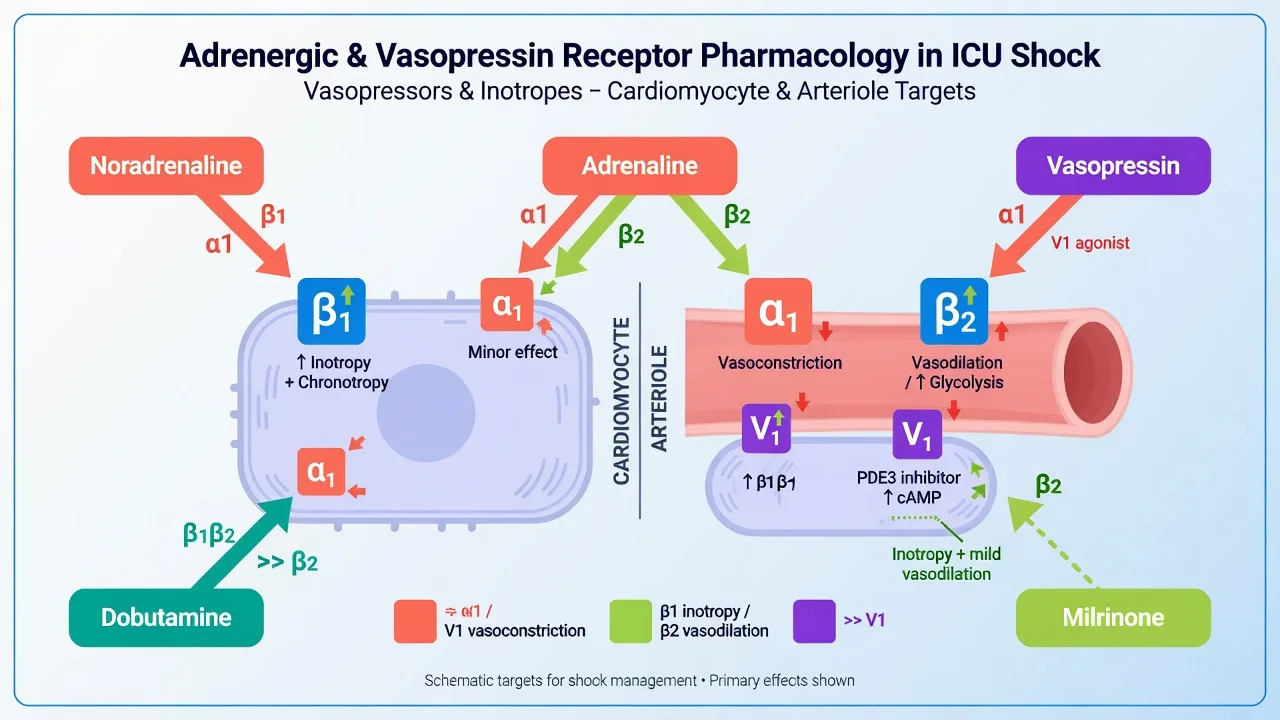
The adrenergic receptors
The adrenergic receptor system is the target of most vasoactive drugs:[1]
- The alpha-1 — the vascular smooth muscle vasoconstriction (the SVR rise). The noradrenaline and the adrenaline (high dose).
- The alpha-2 — the presynaptic inhibition of the noradrenaline release; the central sedation (the dexmedetomidine). The clonidine.
- The beta-1 — the cardiac (the heart rate, the contractility, the AV conduction). The dobutamine, the adrenaline (low dose), the isoprenaline.
- The beta-2 — the bronchial and the vascular smooth muscle relaxation; the uterine relaxation. The salbutamol, the dobutamine (some activity).
- The dopamine receptors (D1/D2) — the renal and the splanchnic vasodilation (D1); the central (D2). The dopamine (the dose-dependent: D1 at the low dose, beta at the intermediate, alpha at the high).
The vasopressors
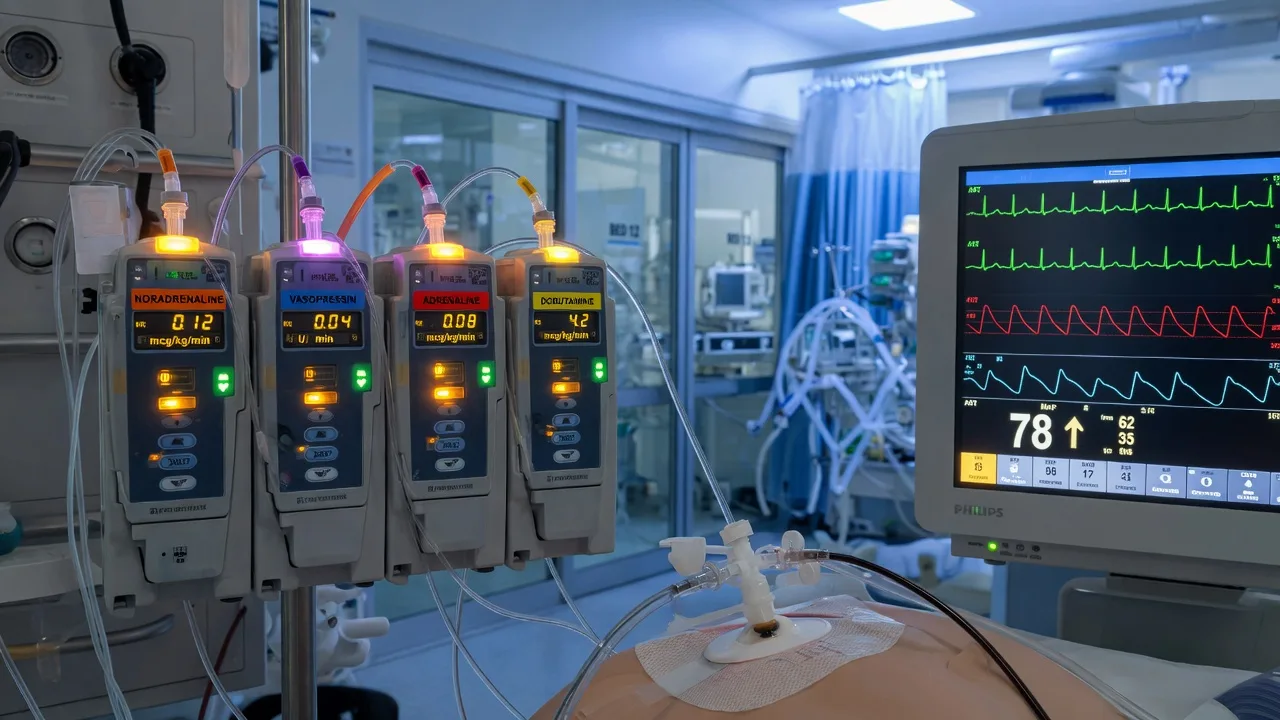
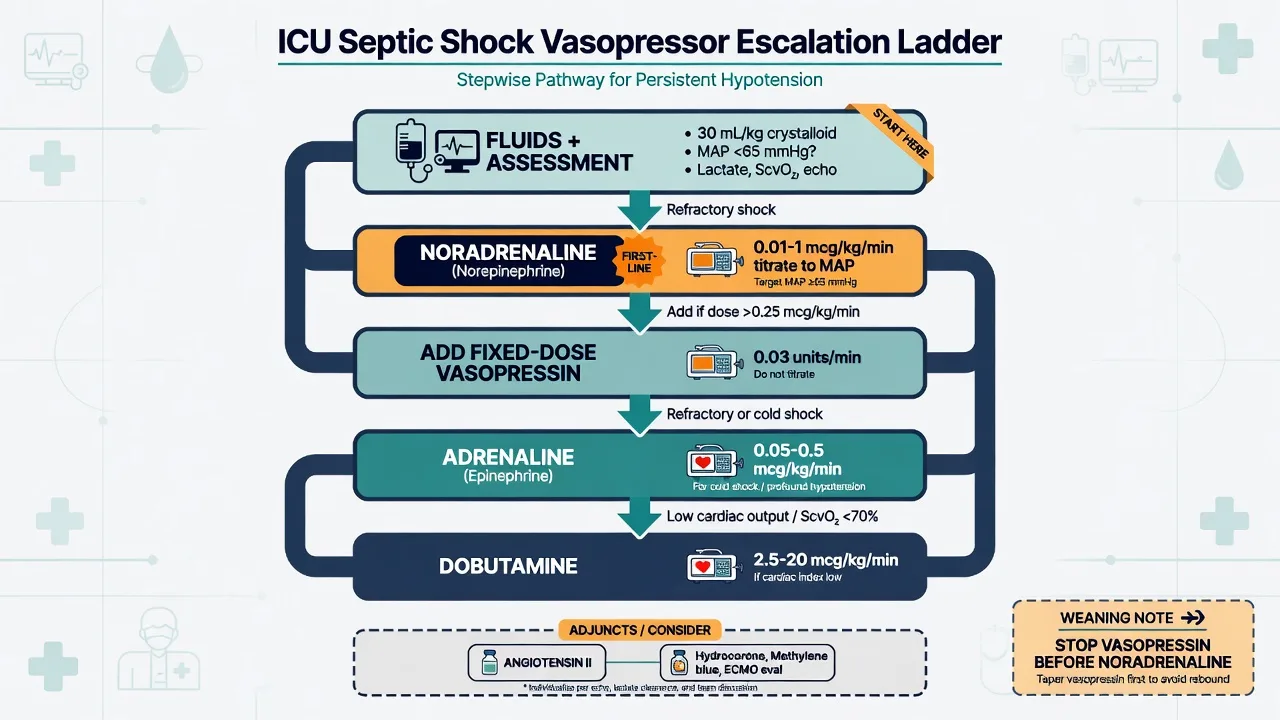
The noradrenaline — the alpha-1 agonist with the modest beta-1 effect. The first-line vasopressor for the distributive shock (SOAP II — preferred over dopamine for the lower arrhythmia rate). The onset within seconds, the half-life 2 to 3 minutes (the continuous infusion). The dose 0.05 to 1.0 micrograms/kg/min. The extravasation — the necrosis (the phentolamine for the reversal).[1]
The vasopressin — the V1 agonist (the vascular smooth muscle vasoconstriction independent of the adrenergic receptor). The catecholamine-sparing adjunct in the septic shock (VASST — no mortality benefit but reduces the noradrenaline dose). The dose 0.03 units/min (the fixed dose). The ischaemia (the mesenteric, the digital).[1][1]
The adrenaline — the alpha and the beta agonist (the dose-dependent: the beta at the low, the alpha at the high). The refractory shock, the anaphylaxis (the IM 0.5 mg), the cardiac arrest (the 1 mg IV). The lactate rise (the beta-2 glycolysis). The arrhythmia.[1]
The inotropes
The dobutamine — the synthetic beta-1 agonist (the contractility and the heart rate) with some beta-2 (the vasodilation). The low-output cardiogenic shock. The dose 2.5 to 20 micrograms/kg/min. The tachyarrhythmia, the hypotension (the beta-2 vasodilation), the myocardial oxygen demand.[1]
The milrinone — the phosphodiesterase-3 inhibitor (the increased cAMP — the inotropy and the vasodilation, including the pulmonary vasodilation). The selective pulmonary vasodilator (the right-heart failure, the pulmonary hypertension). The dose 0.375 to 0.75 micrograms/kg/min. The thrombocytopenia, the arrhythmia. The long half-life (the slow offset).[1][1]
The dopamine — the dose-dependent D1/beta/alpha. The D1 (the low dose 1 to 3 — the renal vasodilation; NOT renal-protective — disproven). The beta (the intermediate dose 3 to 10 — the inotropy). The alpha (the high dose above 10 — the vasoconstriction). The arrhythmia (the SOAP II — more than noradrenaline). The reserved for the bradycardic shock.[1]
The sedatives
The propofol — the GABA-A agonist. The rapid onset, the rapid offset (the redistribution). The ICU sedation (the short-term, the rapid wake-up for the neurological assessment). The hypotension (the vasodilation, the negative inotropy). The propofol infusion syndrome (the high dose over 4 mg/kg/h for over 48 hours — the metabolic acidosis, the rhabdomyolysis, the cardiac failure).[1]
The midazolam — the benzodiazepine (the GABA-A). The accumulation (the active metabolites, the prolonged effect in the renal/hepatic failure). The delirium (the strongest association). The flumazenil (the antidote).[1][1]
The dexmedetomidine — the selective alpha-2 agonist (the locus coeruleus — the sedation without the respiratory depression). The rousable sedation (the PADIS-preferred for the delirium; the MENDS and the SPICE III evidence). The bradycardia and the hypotension (the sympatholysis).[1][4][5][22]
The ketamine — the NMDA antagonist. The dissociative anaesthesia, the analgesia, the bronchodilation, the preserved haemodynamics (the sympathetic stimulation). The induction agent for the hypotensive, the asthmatic. The emergence phenomenon (the hallucinations).[1]
The analgesics
The fentanyl — the mu-opioid agonist. The rapid onset (1 to 2 minutes), the short duration (30 to 60 minutes). The most commonly used ICU analgesic (the infusion). The chest wall rigidity (the high dose).[1]
The morphine — the mu-opioid. The slower onset (5 to 10 minutes), the longer duration (2 to 4 hours). The active metabolite (the accumulation in the renal failure). The histamine release (the vasodilation).[1][1]
Sedative pharmacokinetics — dexmedetomidine vs propofol vs benzodiazepines
The choice of ICU sedative is dominated by three PK/PD properties: (1) the context-sensitive half-time (CSHT — the time for the plasma concentration to halve after stopping an infusion of a given duration; the "context" is the duration of the infusion); (2) the organ-dependent clearance (hepatic vs renal vs organ-independent); and (3) the receptor profile (GABA-A vs alpha-2 vs NMDA — each carries a distinct adverse-effect profile).[8]
The four ICU sedatives side-by-side — PK and PD
| Property | Propofol | Dexmedetomidine | Midazolam | Ketamine |
|---|---|---|---|---|
| Receptor | GABA-A agonist | Selective alpha-2A agonist | GABA-A agonist (benzodiazepine) | NMDA antagonist (also opioid, sigma, monoaminergic) |
| Onset | 30-60 s | 5-10 min | 2-5 min | 30-60 s |
| CSHT after short infusion (<8 h) | ~10-20 min (very short) | ~25 min | ~30-60 min | ~30-60 min |
| CSHT after prolonged infusion (days) | ~40-60 min | ~2-3 h (worse with longer infusions) | ~6-15 h (active metabolite accumulates) | ~2-4 h (norketamine active) |
| Clearance | Hepatic glucuronidation (high extraction) → flow-dependent | Hepatic CYP2A4 → glucuronidation; metabolite renally cleared | Hepatic CYP3A4 oxidation → active alpha-hydroxy → renal glucuronidation | Hepatic CYP2B6/CYP3A4 → norketamine |
| Organ failure implication | Reduced clearance in cirrhosis/severe shock; large Vd → accumulates with prolonged infusion | Caution in severe hepatic impairment; renal dose-reduce (metabolite) | Accumulates profoundly in hepatorenal failure (parent + active metabolite) | Hepatic clearance; reduced dose in cirrhosis |
| Haemodynamic profile | Hypotension (vasodilation, negative inotropy) | Bradycardia, hypotension (sympatholysis); may cause initial transient hypertension from peripheral alpha-2B | Minimal haemodynamic effect alone; potentiates opioids | Preserves or raises BP/HR (sympathetic stimulation); direct negative inotrope in denervated/depleted heart |
| Respiratory effect | Apnoea; dose-dependent respiratory depression | Minimal respiratory depression (rousaable sedation) | Respiratory depression (synergistic with opioid) | Preserves airway reflexes; bronchodilation |
| Delirium association | Modest | Reduced delirium (MENDS, SPICE III signal) | Strongest association with ICU delirium — minimise | Modest; emergence phenomenon |
| Best ICU niche | Short-term sedation with rapid wake-up for neuro exam | Long-term sedation, weaning, delirium-prone, extubation bridge | Agitation, alcohol/benzo withdrawal, status epilepticus | Hypotensive/asthmatic induction, refractory bronchospasm, painful dressing changes |
| Critical toxicity | Propofol infusion syndrome (PRIS) — >4 mg/kg/h for >48 h | Bradycardia (severe; avoid in high-grade AV block without pacing), rebound hypertension if abrupt cessation | Prolonged coma in organ failure; delirium | Emergence phenomenon; hypersalivation; raised ICP/intraocular pressure (controversial) |
SOAP II 2010 — dopamine vs noradrenaline in shock (PMID 20200382)
Source
N Engl J Med 2010;362(9):779-789 — 1,679 patients with any shock type, 7 European centres, multicentre RCT
Question
Is dopamine (up to 20 mcg/kg/min) non-inferior to noradrenaline (up to 0.79 mcg/kg/min) as first-line vasopressor?
Primary outcome
28-day mortality similar (52.5% dopamine vs 48.5% noradrenaline, P=0.10); BUT dopamine had MORE arrhythmia (24.1% vs 12.4%, P<0.001; predominantly AF) and more arrhythmia-related discontinuation
Subgroup
Cardiogenic shock subgroup had significantly higher mortality with dopamine (P=0.03 interaction)
Clinical bottom line
**Noradrenaline is the first-line vasopressor for ALL shock types.** Dopamine causes significantly more arrhythmia, with no mortality benefit; reserve it for bradycardic shock where its chronotropy is an advantage.
VASST 2008 — vasopressin vs noradrenaline in septic shock (PMID 18305265)
Source
N Engl J Med 2008;358(9):877-887 — 778 patients with septic shock on vasopressors, multicentre RCT
Question
Does low-dose vasopressin (0.01-0.03 U/min) added to noradrenaline reduce 28-day mortality vs noradrenaline alone?
Primary outcome
No difference in 28-day mortality (35.4% vasopressin vs 39.3% noradrenaline, P=0.26)
Subgroup
Pre-specified less-severe-shock subgroup (norepi 1-14 mcg/min at randomisation) had lower mortality with vasopressin (26.5% vs 35.7%, P=0.05)
Clinical bottom line
Vasopressin is catecholamine-sparing and is a reasonable adjunct in septic shock on rising noradrenaline; it is NOT monotherapy and the dose is **FIXED at 0.03 U/min** (titrating higher risks ischaemia). No mortality benefit overall.
VANISH 2016 — early vasopressin in septic shock (PMID 27483065)
Source
JAMA 2016;316(5):509-518 — 409 patients with septic shock, UK, factorial RCT (vasopressin vs noradrenaline × hydrocortisone vs placebo)
Primary outcome
Kidney-failure-free days: no difference between vasopressin and noradrenaline (median 23 days vs 21, P=0.38); vasopressin used less RRT (25% vs 35%, no formal significance)
Key finding
Vasopressin did NOT reduce kidney failure overall, but there was a signal of less RRT use. Atrial fibrillation was less common with vasopressin
Clinical bottom line
Supports vasopressin 0.06 U/min as a second-line catecholamine-sparing agent in septic shock on rising noradrenaline; the catecholamine-sparing (and AF-sparing) effect is the practical benefit, not a mortality or renal-recovery benefit
MENDS 2007 — dexmedetomidine vs lorazepam in ICU sedation (PMID 18073360)
Source
JAMA 2007;298(22):2644-2653 — 103 medical/vascular ICU patients expected to need >24 h mechanical ventilation, single-centre RCT
Question
Does dexmedetomidine (vs lorazepam) reduce the duration of delirium and coma in ICU patients?
Primary outcome
More delirium-free days (median 7 vs 3, P=0.01) and more ventilator-free days with dexmedetomidine
Key finding
First RCT to show dexmedetomidine reduces acute brain dysfunction (delirium and coma) vs a benzodiazepine in ICU patients
Clinical bottom line
Foundation for PADIS 2018 preference for non-benzodiazepine sedation; extended by SPICE III and Kawazoe 2017
SPICE III 2019 — early dexmedetomidine sedation (PMID 31112380)
Source
N Engl J Med 2019;381(12):1103-1111 — 4,000 mechanically ventilated ICU patients, multinational (8 countries), RCT
Question
Does early sedation with dexmedetomidine (vs usual care — usually propofol/midazolam) improve 90-day mortality?
Primary outcome
No difference in 90-day mortality (29% dex vs 30% usual care); **bradycardia** more common with dexmedetomidine (OR 2.18) and **higher than usual-care need for additional sedatives** in a quarter of patients
Key finding
Dexmedetomidine is safe (no mortality difference, not inferior) but is NOT a mortality-improving drug and not all patients can be sedated with it alone
Clinical bottom line
Dexmedetomidine is a reasonable first-line ICU sedative, particularly for delirium-prone patients; combine with propofol/opioid when needed. Watch for bradycardia. The Kawazoe 2017 JAMA sepsis subgroup had similar neutrality
PADIS 2018 — SCCM pain/agitation/delirium/immobility/sleep guidelines (PMID 30113379)
Source
Crit Care Med 2018;46(9):e825-e873 — SCCM multispecialty consensus guideline (Devlin et al.)
Key recommendations
Pain-first (analgo-sedation — treat pain before sedation); light sedation (RASS -2 to 0) preferred over deep sedation; **prefer non-benzodiazepine sedation (propofol or dexmedetomidine) over benzodiazepines** to reduce delirium; use validated tools (CAPT for pain, RASS for sedation, CAM-ICU/ICDSC for delirium); early mobilisation; sleep promotion
Key finding
Codified the principle that benzodiazepines (especially midazolam/lorazepam) are associated with prolonged mechanical ventilation, longer ICU stay, and more delirium — prefer propofol or dexmedetomidine for sustained ICU sedation
Clinical bottom line
The current reference for ICU sedation practice. Know the **pain-first, light-sedation, non-benzodiazepine** triad — it is examinable in every ICU fellowship
The neuromuscular blockers
The rocuronium — the non-depolarising (the aminosteroid). The rapid onset (60 to 90 seconds — the RSI agent). The reversal: the sugammadex (the encapsulation — the rapid, the reliable, the effective even for the profound block). The duration 30 to 60 minutes.[1]
The cisatracurium — the non-depolarising (the benzylisoquinoline). The Hoffman elimination (the spontaneous breakdown at the physiological pH and temperature — independent of the renal and the hepatic function). The preferred for the prolonged paralysis (the ARDS) and the organ failure. The duration 25 to 40 minutes.[1][1]
The suxamethonium — the depolarising. The rapid onset (30 to 60 seconds), the short duration (5 to 10 minutes — the plasma cholinesterase hydrolysis). The RSI agent (the fastest). The hyperkalaemia (the routine rise of 0.5; the severe in the burns, the crush, the paralysis, the renal failure). The malignant hyperthermia. The bradycardia (the repeat dose).[1]
Management: the integrated approach
- The vasopressor — the noradrenaline first-line (SOAP II); the vasopressin the adjunct; the adrenaline the refractory.[1]
- The inotrope — the dobutamine for the low-output; the milrinone for the right-heart/pulmonary; the adrenaline for the refractory.[1]
- The sedative — the propofol short-term; the dexmedetomidine for the delirium-prone; the midazolam minimised; the ketamine for the hypotensive/asthmatic induction.[1][1]
- The analgesic — the fentanyl the standard; the morphine the alternative.[1]
- The paralyster — the rocuronium + the sugammadex for the RSI; the cisatracurium for the prolonged and the organ-failure.[1]
Monitoring
- The haemodynamics — the MAP, the lactate, the urine output, the cardiac output (the advanced monitor for the complex).
- The sedation — the RASS, the CPOT (the analgesia-first).
- The paralysis — the TOF (the train-of-four).
- The TDM — the where applicable (the antibiotic, the antiepileptic).[1][1]
Prognosis
The appropriate vasoactive (the right drug for the right shock type) and the appropriate sedative (the light, the analgesia-first) improve the outcome. The inappropriate (the dopamine for all, the midazolam for the long-term) worsen it. The pharmacology is the CICM First Part examinable knowledge and the daily ICU practice.[1]
SAQ — Vasopressor selection in septic shock
10 minutes · 10 marks
A 68-year-old man with community-acquired pneumonia and septic shock has received 30 mL/kg of balanced crystalloid. His MAP is 58 mmHg, lactate 4.2 mmol/L, and he is oliguric. He has new atrial fibrillation at 140/min. The registrar asks which vasoactive agent to start and at what dose.
SAQ — Sedation choice and propofol infusion syndrome
10 minutes · 10 marks
A 45-year-old, 110 kg man is intubated for severe ARDS and is being sedated with a propofol infusion at 80 mcg/kg/min for the last 48 hours. His lactate has risen from 1.2 to 5.6 mmol/L, he has new bradycardia (HR 38), and his creatine kinase is 18 000 U/L with myoglobinuria.
Clinical pearls
Vasopressor extravasation — practical management
Extravasation of a vasopressor (noradrenaline, adrenaline, dopamine) from a peripheral line causes local ischaemia and (worst case) tissue necrosis requiring debridement. The incidence rises with the duration of peripheral use, the dose, and the vasoconstricted state. The management:[1]
Managing vasopressor extravasation
- STOP the infusion and disconnect the line. Do NOT flush the cannula (you will push more drug into the tissue).
- Aspirate any residual drug from the cannula if possible.
- Mark the area with a skin marker to monitor progression; photograph.
- Give phentolamine (the alpha-1 antagonist) — 5-10 mg in 10 mL saline, subcutaneous infiltration around the extravasation site (using a 25 G needle, multiple punctures). The vasodilation reverses the ischaemia. Best within 12 h.
- If phentolamine is unavailable (frequent), use topical nitroglycerin paste 2% applied to the area, or terbutaline subcutaneous infiltration (beta-2 agonist).
- Apply warm compresses (vasodilatory) — NOT cold.
- Elevate the limb.
- Surgical review at 24-48 h for any blistering, full-thickness skin loss, or progressive mottling — these need debridement.
Red flags
References
- [1]De Backer D, Biston P, Devriendt J, et al Comparison of dopamine and norepinephrine in the treatment of shock N Engl J Med, 2010.PMID 20200382
- [2]Russell JA, Walley KR, Singer J, et al Vasopressin versus norepinephrine infusion in patients with septic shock N Engl J Med, 2008.PMID 18305265
- [3]Gordon AC, Mason AJ, Thirunavukkarasu N, et al Effect of Early Vasopressin vs Norepinephrine on Kidney Failure in Patients With Septic Shock: The VANISH Randomized Clinical Trial JAMA, 2016.PMID 27483065
- [4]Pandharipande PP, Pun BT, Herr DL, et al Effect of sedation with dexmedetomidine vs lorazepam on acute brain dysfunction in mechanically ventilated patients: the MENDS randomized controlled trial JAMA, 2007.PMID 18073360
- [5]Shehabi Y, Howe BD, Bellomo R, et al Early Sedation with Dexmedetomidine in Critically Ill Patients N Engl J Med, 2019.PMID 31112380
- [6]Harris PNA, Tambyah PA, Lye DC, et al Effect of Piperacillin-Tazobactam vs Meropenem on 30-Day Mortality for Patients With E coli or Klebsiella pneumoniae Bloodstream Infection and Ceftriaxone Resistance: A Randomized Clinical Trial JAMA, 2018.PMID 30208454
- [7]Rybak MJ, Le J, Lodise TP, et al Therapeutic Monitoring of Vancomycin for Serious Methicillin-resistant Staphylococcus aureus Infections: A Revised Consensus Guideline and Review by the American Society of Health-system Pharmacists, the Infectious Diseases Society of America, the Pediatric Infectious Diseases Society, and the Society of Infectious Diseases Pharmacists Clin Infect Dis, 2020.PMID 32658968
- [8]Devlin JW, Skrobik Y, Gelinas C, et al Clinical Practice Guidelines for the Prevention and Management of Pain, Agitation/Sedation, Delirium, Immobility, and Sleep Disruption in Adult Patients in the ICU Crit Care Med, 2018.PMID 30113379
- [9]Abdul-Aziz MH, Sulaiman H, Mat-Nor MB, et al Beta-Lactam Infusion in Severe Sepsis (BLISS): a prospective, two-centre, open-labelled randomised controlled trial of continuous versus intermittent beta-lactam infusion in critically ill patients with severe sepsis Intensive Care Med, 2016.PMID 26754759
- [10]De Waele JJ, Lipman J, Akova M, et al (DALI Study) Risk factors for target non-attainment during empirical treatment with β-lactam antibiotics in critically ill patients Intensive Care Med, 2014.PMID 25053248
- [11]Donadello K, Roberts JA, Cristallini S, et al Vancomycin population pharmacokinetics during extracorporeal membrane oxygenation therapy: a matched cohort study Crit Care, 2014.PMID 25416535
- [12]Udy AA, De Waele JJ, Lipman J Augmented renal clearance and therapeutic monitoring of β-lactams Int J Antimicrob Agents, 2015.PMID 25665727
- [13]Udy AA, Varghese JM, Altukroni M, et al Subtherapeutic initial β-lactam concentrations in select critically ill patients: association between augmented renal clearance and low trough drug concentrations Chest, 2012.PMID 22194591
- [14]Raffaeli G, Pokorna P, Allegaert K, et al Drug Disposition and Pharmacotherapy in Neonatal ECMO: From Fragmented Data to Integrated Knowledge Front Pediatr, 2019.PMID 31552205
- [15]Raffaeli G, Allegaert K, Koch B, et al In Vitro Adsorption of Analgosedative Drugs in New Extracorporeal Membrane Oxygenation Circuits Pediatr Crit Care Med, 2018.PMID 29419606
- [16]Hanrahan TP, Harlow G, Hutchinson J, et al Vancomycin-associated nephrotoxicity in the critically ill: a retrospective multivariate regression analysis* Crit Care Med, 2014.PMID 25083977
- [17]Jamal JA, Udy AA, Lipman J, et al The impact of variation in renal replacement therapy settings on piperacillin, meropenem, and vancomycin drug clearance in the critically ill: an analysis of published literature and dosing regimens* Crit Care Med, 2014.PMID 24674926
- [18]Ulldemolins M, Roberts JA, Wallis SC, et al Flucloxacillin dosing in critically ill patients with hypoalbuminaemia: special emphasis on unbound pharmacokinetics J Antimicrob Chemother, 2010.PMID 20530507
- [19]Ulldemolins M, Vaquer S, Llaurado-Serra M, et al Beta-lactam dosing in critically ill patients with septic shock and continuous renal replacement therapy Crit Care, 2014.PMID 25042938
- [20]Levy B, Desebbe O, Montemont C, et al Increased aerobic glycolysis through beta2 stimulation is a common mechanism involved in lactate formation during shock states Shock, 2008.PMID 18323749
- [21]Kawazoe Y, Miyamoto K, Morimoto T, et al Effect of Dexmedetomidine on Mortality and Ventilator-Free Days in Patients Requiring Mechanical Ventilation With Sepsis: A Randomized Clinical Trial JAMA, 2017.PMID 28322414
- [22]Skrobik Y, Duprey MS, Hill NS, et al Low-Dose Nocturnal Dexmedetomidine Prevents ICU Delirium. A Randomized, Placebo-controlled Trial Am J Respir Crit Care Med, 2018.PMID 29498534