ICU · Resuscitation
Blood transfusion in the ICU
Also known as Transfusion thresholds · Restrictive vs liberal transfusion · TRICC trial · TRISS trial · REALITY trial · Transfusion reactions · TRALI and TACO · Massive transfusion ratio 1:1:1 · PROPPR trial · Blood product administration · Transfusion-associated circulatory overload · Transfusion-related acute lung injury
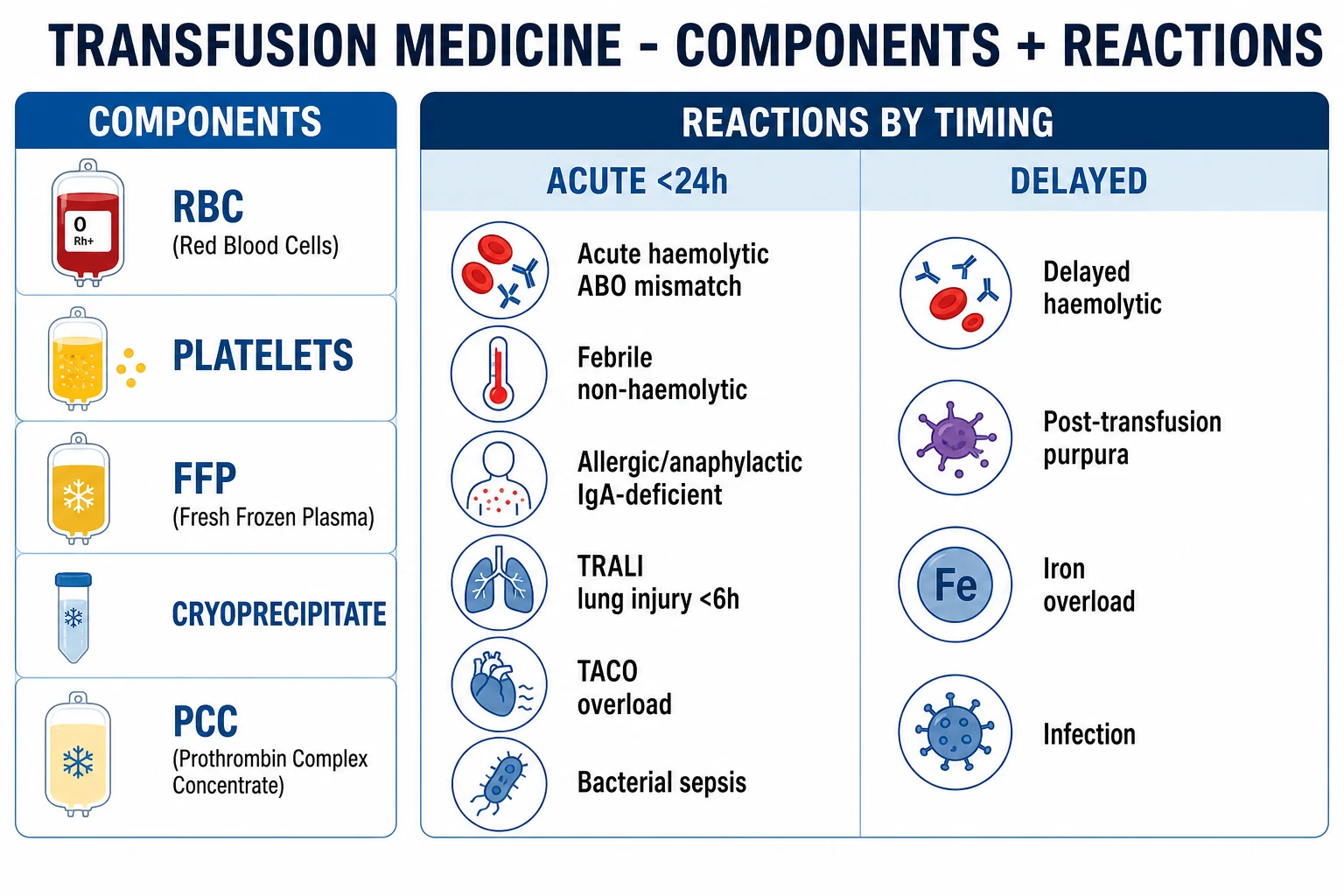
The TRICC trial (1999) established that a RESTRICTIVE transfusion strategy (Hb <70 g/L) is as safe as and possibly superior to a liberal strategy (Hb <100 g/L) in most ICU patients. Restrictive reduces transfusion-associated risks: infection, TRALI, TACO, immunomodulation. Exceptions where higher thresholds may apply: acute MI/unstable ACS (REALITY trial — restrictive non-inferior), cardiac surgery (TRICS III — restrictive non-inferior), hip fracture surgery (FOCUS — restrictive equivalent), severe sepsis (TRISS — restrictive non-inferior), acute brain injury/TBI (debated, often 80-90 g/L due to cerebral oxygen delivery concerns). Single unit transfusion (one at a time, reassess) is standard. Transfusion reactions: TRALI (acute lung injury — donor antibodies), TACO (circulatory overload), allergic, anaphylactic (anti-IgA), acute haemolytic (ABO mismatch), delayed haemolytic, febrile non-haemolytic, bacterial contamination, transfusion-associated GVHD. Blood products: PRBC, FFP, platelets, cryoprecipitate, prothrombin complex concentrate (PCC). Massive transfusion: 1:1:1 ratio (PROPPR trial).
On this page & tools
Your progress
Saved locally on this device.
Target exams
Red flags
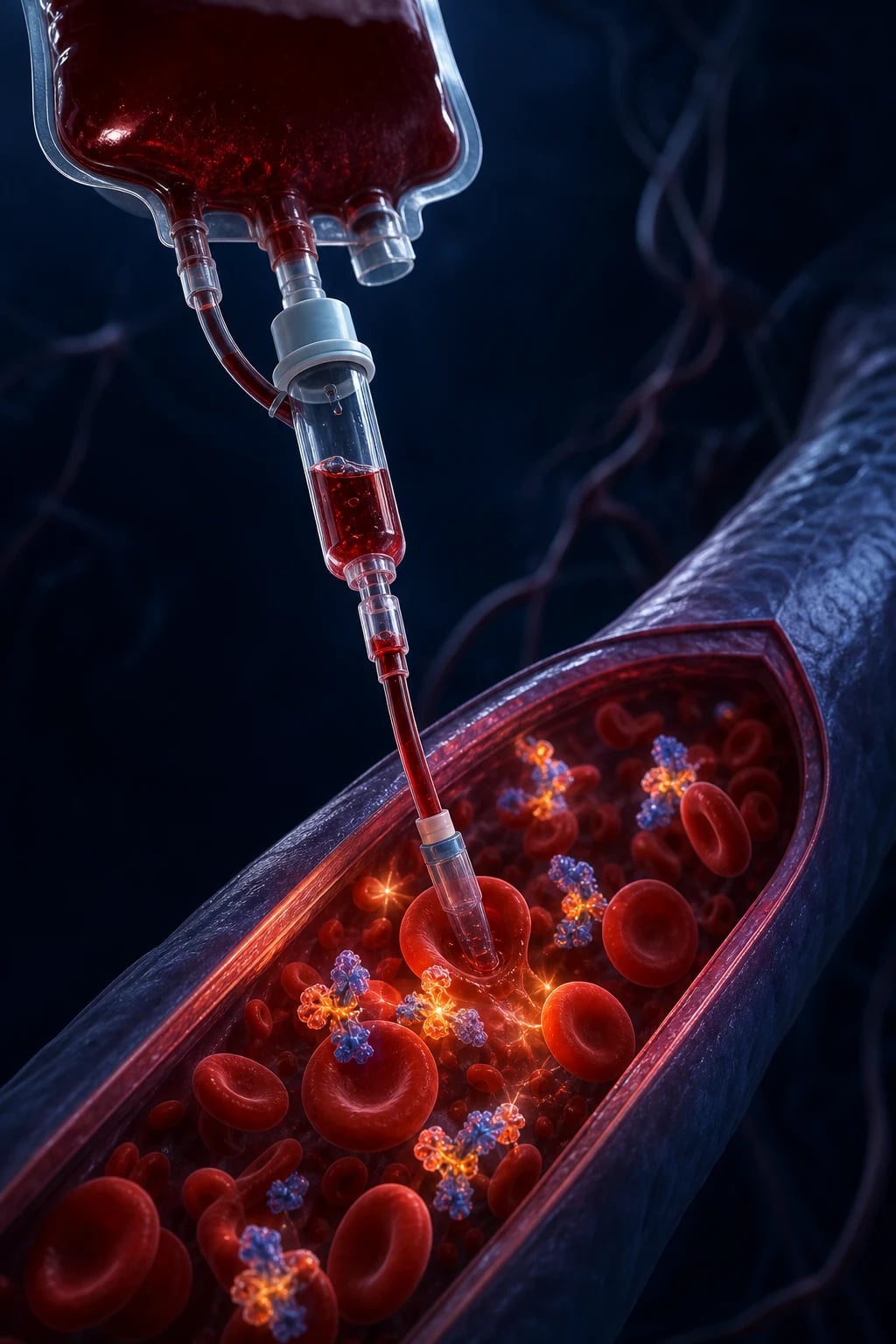
Transfusion thresholds
Restrictive (Hb <70)
Standard for most ICU patients
- TRICC trial (NEJM 1999): restrictive (<70) non-inferior to liberal (<100)
- TRISS trial (NEJM 2014): restrictive (<70) safe in septic shock
- FOCUS (NEJM 2011): restrictive equivalent in elderly hip-fracture patients with CV disease
- REALITY (JAMA 2021): restrictive non-inferior for 30-day MACE in acute MI
- TRICS III (NEJM 2018): restrictive non-inferior in cardiac surgery
- Reduces: infection, TRALI, TACO, immunosuppression (TRIM), cost, donor exposure
- Target Hb: 70-90 g/L for most ICU patients
- Transfuse ONE unit at a time, reassess Hb after each
Possible exceptions (higher threshold)
Selected populations — individualise
- Acute brain injury / TBI: some evidence for ~80-90 g/L (cerebral O2 delivery critical, hypoxia poorly tolerated) — threshold still debated
- Acute coronary syndrome with ongoing ischaemia: historically ~80-90; REALITY suggests restrictive (≥80) is safe and non-inferior
- Severe tissue hypoxia (mesenteric ischaemia, profound shock with lactate): higher threshold reasonable until resuscitated
- Acute haemorrhage: transfuse based on blood loss and physiology, NOT Hb (see massive transfusion)
- Haemoglobinopathy / chronic severe anaemia with symptoms: individualise
- ALL decisions should be individualised — assess clinical context, tissue oxygenation, not just the Hb number
TRICC trial
TRICC (Hebert, NEJM 1999)
Multicentre RCT: 838 critically ill patients
Population: ICU patients with Hb <90 within 72h of admission
Key finding
Restrictive was NON-INFERIOR to liberal for 30-day mortality (18.7% vs 23.3%, p=0.11). Restrictive had fewer transfusions (2.6 vs 5.6 units per patient) and fewer complications. Subgroup analysis: restrictive trended toward BETTER outcomes in younger (<55) and less sick (APACHE II <20) patients.
Practice change
Restrictive transfusion (Hb <70 threshold) is safe in most ICU patients and may be superior to liberal transfusion. Landmark trial underpinning modern transfusion practice.
TRISS trial
TRISS (Holst, NEJM 2014)
Multicentre RCT: 998 patients with septic shock
Population: ICU patients with septic shock and Hb <90 g/L
Key finding
No significant difference in 90-day mortality (27.8% restrictive vs 28.6% liberal). Restrictive group received 50% fewer transfusions (median 1 vs 4 units). No difference in ischaemic events, severe bleeding, or organ failure.
Practice change
In septic shock, a restrictive threshold (Hb <70) is safe and not inferior to a liberal threshold — and dramatically reduces blood exposure.
REALITY trial (acute MI)
REALITY (Ducrocq, JAMA 2021)
Multicentre RCT: 668 patients, open-label with blinded endpoint adjudication
Population: Acute MI (STEMI/NSTEMI) with Hb 70-90 g/L
Key finding
Restrictive strategy was NON-INFERIOR to liberal for 30-day MACE (11.0% vs 14.0%; absolute risk difference -3.0 percentage points, non-inferiority met). Fewer transfusions in restrictive arm.
Practice change
A restrictive transfusion strategy is non-inferior to a liberal strategy in anaemic patients with acute MI — challenging the historical dogma of higher thresholds in ACS.
TRICS III trial (cardiac surgery)
TRICS III (Mazer, NEJM 2018)
Multicentre RCT: 5243 patients undergoing cardiac surgery with cardiopulmonary bypass
Population: Adults at elevated perioperative risk (EuroSCORE ≥6, age ≥75, or prior cardiac surgery)
Key finding
Restrictive was NON-INFERIOR to liberal for the primary composite (15.1% vs 14.0%). Confirmed in 6-month outcomes. No signal of harm in this high-risk cardiac surgical population.
Practice change
Restrictive transfusion (Hb <75) is non-inferior to liberal transfusion in patients undergoing cardiac surgery — even in high-risk groups.
FOCUS trial (hip surgery)
FOCUS (Carson, NEJM 2011)
Multicentre RCT: 2016 patients
Population: Patients ≥50 yr with history of or risk factors for CV disease undergoing hip-fracture surgery, post-op Hb <100 g/L
Key finding
No significant difference in primary outcome or in-hospital MI, mortality, or functional recovery. Liberal group received far more transfusions.
Practice change
A liberal transfusion strategy does not improve functional recovery or mortality in elderly high-risk patients after hip-fracture surgery. Symptom-guided transfusion is sufficient.
Evidence summary: restrictive vs liberal
Trial
Population & threshold
- TRICC (1999): general ICU. Hb <70 vs <100. Restrictive non-inferior
- TRISS (2014): septic shock. Hb <70 vs <90. Restrictive non-inferior
- FOCUS (2011): hip-fracture elderly. Symptomatic vs Hb <100. Equivalent
- TRICS III (2018): cardiac surgery. Hb <75 vs <95. Restrictive non-inferior
- REALITY (2021): acute MI. Hb <70 vs <80. Restrictive non-inferior
- TRIPICU (2007): paediatric ICU. Restrictive non-inferior
Consistent message
Practice implication
- Across ALL tested ICU populations, restrictive (Hb ~70) is non-inferior to liberal
- No trial has shown liberal transfusion improves mortality in stable ICU patients
- Liberal strategy exposes patients to unnecessary risk without measurable benefit
- One unit at a time, reassess — single-unit transfusion policy
- Exceptions: TBI (cerebral O2), profound hypoxia/shock, active haemorrhage
- Patient Blood Management: treat the cause of anaemia (iron, B12, bleeding control)
Blood products — what, when, and dose
Packed red blood cells (PRBC)
Oxygen carriage
- Indication: anaemia with tissue hypoxia, Hb <70 in stable ICU patient, acute haemorrhage
- One unit ≈ 300 mL, raises Hb by ~10 g/L (1 g/dL) in an average adult
- Storage: 1-6°C, up to 42 days (CPD-A / SAGM additive); leucodepleted in most high-income countries
- Crossmatch required (ABO/Rh compatible); emergency → O-negative until typed
- Each unit is one exposure to one donor — minimise donor exposure
- Risks: TRALI, TACO, haemolytic, infection (rare), immunomodulation (TRIM)
- Note: stored units are acidic, hyperkalaemic, low 2,3-DPG (recovers within 24h)
Fresh frozen plasma (FFP)
Clotting factors
- Indication: multiple factor deficiency (massive transfusion, DIC, liver disease, warfarin reversal if PCC unavailable), bleeding with INR >1.5
- Dose: 10-15 mL/kg (~3-4 units in an adult); raises factor levels ~15-20%
- Must be ABO-compatible (Rh independent); thawed before use (takes 20-30 min)
- Risks: volume overload (TACO), TRALI, allergic reactions, transfusion-transmitted infection
- NOT for volume expansion alone; NOT for nutrition; not first-line for warfarin reversal (use PCC)
Platelets
Thrombocytopenia / platelet dysfunction
- Indication: bleeding with thrombocytopenia (<50 × 10⁹/L in bleeding/CNS), prophylaxis (<10 × 10⁹/L), platelet dysfunction on antiplatelet agents with major bleeding
- One adult dose (1 apheresis or 4 pooled units) ≈ raises count by 30-40 × 10⁹/L
- Storage: room temperature (20-24°C) with agitation, only 5-7 days — hence highest bacterial contamination risk
- ABO-compatible preferred; Rh-negative recipients should ideally receive Rh-negative platelets (small RBC contamination)
- Risks: bacterial sepsis, allergic, TRALI, refractoriness (HLA antibodies) — consider HLA-matched
Cryoprecipitate
Fibrinogen + factors VIII/XIII/vWF
- Indication: hypofibrinogenaemia (fibrinogen <1.5-2.0 g/L) with bleeding — massive haemorrhage, DIC, post-cardiac surgery, obstetric haemorrhage
- Dose: 1 pool (5-10 donor units, ~150-300 mL) raises fibrinogen by ~1.0 g/L in an adult
- Rich in fibrinogen, factor VIII, factor XIII, von Willebrand factor, fibronectin
- Storage: frozen (-25°C), thawed on request; ABO-compatible preferred
- Faster fibrinogen repletion per unit volume than FFP
Prothrombin complex concentrate (PCC)
Concentrated factors II/VII/IX/X
- Indication: urgent warfarin reversal (3-factor or 4-factor), major bleeding on DOAC (with andexanet for apixaban/rivaroxaban), factor deficiency
- Dose: 25-50 IU/kg depending on INR / bleeding severity — check local protocol
- Advantage over FFP: small volume, no thawing, rapid reversal (minutes), more effective
- Risks: thromboembolism (prothrombotic), heparin in some 3-factor preparations (contraindicated in HIT)
- Co-administer IV vitamin K 5-10 mg for sustained warfarin reversal
Massive transfusion — the 1:1:1 ratio
Definition & activation
When to call MTP
- Massive transfusion: ≥10 units PRBC in 24 h, or ≥4 units in 1 h, or replacement of entire blood volume in 24 h
- Massive transfusion protocol (MTP): pre-defined, predefined-ratio boxes delivered rapidly from blood bank
- Trauma: activate on clinical grounds — hypotension + active bleeding + positive FAST / penetrating mechanism
- Obstetric, GI, surgical bleeding: same principle — early activation saves lives
- Assign roles: team leader, blood runner, documenter, blood bank liaison
PROPPR: 1:1:1 vs 1:1:2
The definitive trial
- PROPPR (Holcomb, JAMA 2015): 680 severely injured trauma patients
- 1:1:1 (PRBC:FFP:platelets) vs 1:1:2 ratio in first 24 h
- Primary outcome: 24-h and 30-day mortality. No statistically significant difference (12.7% vs 17.0% at 24h, p=0.26)
- 1:1:1 group achieved more haemostasis and fewer exsanguination deaths
- Practice: 1:1:1 has become the default ratio in trauma MTP — delivers balanced resuscitation
Adjuncts & pitfalls
Do not forget
- Tranexamic acid (TXA) 1 g IV bolus + 1 g infusion within 3 h of injury (CRASH-2) — do NOT give after 3 h (mortality may rise)
- Hypocalcaemia from citrate: give IV calcium chloride 10 mmol per 4-6 units blood during rapid transfusion — monitor ionised Ca²⁺
- Hypothermia worsens coagulopathy — active warming, fluid warmers
- Acidosis (pH <7.2) impairs clotting — correct perfusion, not the pH number alone
- Monitor: ionised calcium, ROTEM/TEG-guided product use, fibrinogen level, core temperature
- Damage control resuscitation: permissive hypotension (MAP 50-65) until haemostasis, minimise crystalloid, deliver blood products
PROPPR (Holcomb, JAMA 2015)
Multicentre RCT: 680 severely injured trauma patients at 12 level 1 trauma centres
Population: Adult trauma patients predicted to require massive transfusion
Key finding
No statistically significant difference in 24-h mortality (12.7% vs 17.0%, p=0.26) or 30-day mortality. The 1:1:1 group had MORE patients achieving haemostasis and FEWER deaths from exsanguination within 24 h.
Practice change
A 1:1:1 ratio is at least as good as 1:1:2 and reduces death from exsanguination — it has become the standard for trauma massive transfusion. Neither ratio improves mortality over the other in the overall cohort.
Massive transfusion protocol — step by step
Recognise & activate early
Clinical: haemorrhagic shock, hypotension, active bleeding. Activate MTP — call blood bank, assign a runner. Do not wait for laboratory results; bleeders bleed. Pre-notify blood bank on route.
Deliver 1:1:1 ratio boxes
Standard MTP box per cycle: 6 units PRBC + 6 units FFP + 1 adult dose platelets (≈1:1:1). Issue uncrossmatched O-negative PRBC and AB plasma if typing not available. Reassess after each box.
Give tranexamic acid within 3 h
TXA 1 g IV bolus over 10 min, then 1 g infusion over 8 h (CRASH-2). Time-critical — efficacy falls beyond 3 h, possible harm if given late.
Prevent & treat hypocalcaemia
Citrate anticoagulant in stored blood chelates calcium. Rapid transfusion → ionised hypocalcaemia → hypotension, prolonged QT, coagulopathy. Give IV calcium chloride 10 mmol per 4-6 units blood, guided by ionised Ca²⁺.
Keep them warm, keep them perfusing
Active warming (forced-air blanket, warmed fluids), maintain core temp ≥36°C. Permissive hypotension (MAP ~50-65) until surgical/radiological haemostasis. Minimise crystalloid — worsens dilutional coagulopathy.
Guide with viscoelastic testing
ROTEM/TEG every 15-30 min: low fibrinogen (FIBTEM MCF <10 mm) → cryoprecipitate; prolonged CT/R → FFP; low MA → platelets. Faster and more physiologic than sending INR/fibrinogen to a distant lab.
Achieve definitive haemostasis
Blood products are a bridge — the cure is stopping the bleeding. Early surgical / interventional radiology / endoscopic control. Re-evaluate ratio as bleeding slows; switch to targeted product therapy.
Transfusion reactions — comprehensive
Acute haemolytic (ABO mismatch)
Immediate — life-threatening
- Onset: minutes after start of transfusion
- Mechanism: ABO-incompatible donor RBCs → recipient anti-A / anti-B → complement → intravascular haemolysis
- Almost always a clerical/administrative error (wrong patient, mislabelled sample, bedside check failure)
- Features: fever, chills, flank/back pain, hypotension, tachycardia, haemoglobinuria (red urine), DIC, acute kidney injury
- Under anaesthesia: hypotension, diffuse oozing, tachycardia may be the only signs
- Management: STOP IMMEDIATELY, clamp line (keep IV access), maintain BP and urine output >1 mL/kg/h with crystalloid ± vasopressors, send donor unit + post-transfusion sample + urine to blood bank, treat DIC / AKI
- Prevention: rigorous two-person bedside identity check (patient, unit, crossmatch paperwork)
TRALI
Acute lung injury <6 h
- Transfusion-Related Acute Lung Injury — looks like ARDS within 6 h of transfusion
- Mechanism: donor antibodies (anti-HLA / anti-HNA) against recipient leucocytes → neutrophil sequestration in pulmonary capillaries → capillary leak
- Features: acute dyspnoea, hypoxia, bilateral infiltrates on CXR, NO raised left atrial pressure (no volume overload), often fever and hypotension
- Risk: related to multiparous female donors, plasma-rich products (FFP, platelets)
- Management: STOP transfusion, oxygen, lung-protective ventilation if needed, supportive (no steroids, no diuretics — not a volume problem)
- Report to blood bank: donor identified and permanently deferred
- Mortality 5-10% (lower than ARDS); usually resolves within 72 h
TACO
Circulatory overload <6 h
- Transfusion-Associated Circulatory Overload — volume-mediated pulmonary oedema
- Onset within 6 h; the MOST COMMON cause of transfusion-related mortality reported to haemovigilance schemes
- Features: dyspnoea, orthopnoea, raised JVP, hypertension, widespread crackles, hypoxia, bilateral infiltrates, raised BNP
- Risk factors: elderly, cardiac/renal impairment, positive fluid balance, rapid transfusion, large volumes
- Management: STOP transfusion, sit upright, oxygen, IV furosemide 20-40 mg, consider non-invasive ventilation
- Prevention: slow rate in at-risk patients, single-unit transfusion, diuretic between units if needed
Allergic / anaphylactic
Plasma protein reaction
- Mild allergic (urticaria, itch): common, plasma protein reaction. Slow rate, give antihistamine (chlorphenamine 10 mg IV), resume if settles
- Anaphylaxis (rare, life-threatening): bronchospasm, hypotension, angio-oedema, cardiovascular collapse within minutes
- Classic anaphylaxis cause: IgA-deficient recipient (1 in 500 people) with preformed anti-IgA antibodies reacting to donor IgA
- Management: STOP transfusion, ABC, IM adrenaline 0.5 mg, IV fluids, oxygen, secure airway; future transfusions need washed products / IgA-deficient donors
- Prevention: in known IgA deficiency, use washed RBCs / platelets and IgA-deficient plasma
Febrile non-haemolytic (FNHTR)
Common, benign
- Rise in temperature >1°C with rigors, no haemolysis
- Mechanism: cytokines (IL-1, IL-6, TNF) from donor leucocytes, OR recipient anti-leucocyte antibodies
- Largely eliminated by universal leucodepletion in high-income countries
- Management: STOP transfusion, rule out haemolytic / bacterial (send cultures + samples), give paracetamol; may resume if isolated fever and workup negative
- Distinguish from acute haemolytic — always rule out the dangerous causes first
Delayed haemolytic
Days later — anamnestic
- Onset: 3-14 days post-transfusion
- Mechanism: anamnestic IgG antibody response (Kidd, Duffy, Kell) from previous transfusion / pregnancy
- Features: falling Hb, jaundice, low-grade fever, positive direct antiglobulin test (DAT)
- Usually extravascular haemolysis — milder than acute, but can cause significant anaemia and renal dysfunction
- Management: supportive, identify the antibody, antigen-negative units for future transfusions
- Prevention: thorough antibody screen and crossmatch; review transfusion history
Bacterial contamination
Highest mortality — esp. platelets
- Platelets stored at room temperature are the highest-risk product — Gram-negatives (e.g. Serratia, Klebsiella) and Staphylococci
- Onset: high fever, rigors, profound septic shock during or soon after transfusion
- Mortality can exceed 25% — the leading cause of transfusion-transmitted infectious death
- Management: STOP transfusion immediately, take blood cultures from patient AND the unit, broad-spectrum antibiotics, aggressive resuscitation
- Prevention: bacterial screening of platelets, pathogen reduction technology, strict storage and handling, never transfuse a unit past expiry
Transfusion-associated GVHD (TA-GVHD)
Rare but almost uniformly fatal
- Donor T-lymphocytes engraft and attack recipient tissues (skin, gut, liver, marrow) — onset 2-30 days post-transfusion
- Occurs in profoundly immunosuppressed recipients (HSCT, haematological malignancy on chemo, SCID) — and also in recipients of directed donations from relatives (shared HLA haplotypes)
- Fever, rash (centripetal), diarrhoea, hepatitis, profound pancytopenia
- Mortality >90% — no effective treatment
- Prevention: IRRADIATION of cellular components (PRBC, platelets) for at-risk recipients (25-50 Gy); irradiation prevents donor T-cell proliferation — leucodepletion alone is NOT sufficient
TRALI vs TACO — distinguishing the two most-feared reactions
TRALI
Capillary leak — immune
- Mechanism: donor anti-HLA / anti-HNA antibodies → recipient neutrophil activation → capillary leak
- Onset: within 6 h of transfusion
- Circulation: often HYPOTENSIVE (no overload)
- JVP / filling pressures: NORMAL or low
- Fever: common
- BNP: normal / low
- ECHO: usually normal LV function
- Diuretic response: poor (no excess volume)
- Outcome: mortality 5-10%; resolves in 48-72 h
- Treatment: STOP, oxygen, lung-protective ventilation; NO diuretics, NO steroids
- Donor deferred permanently
TACO
Hydrostatic — volume
- Mechanism: volume / rate overload exceeds cardiac reserve
- Onset: within 6 h of transfusion
- Circulation: often HYPERTENSIVE (overload)
- JVP / filling pressures: RAISED
- Fever: uncommon
- BNP: raised
- ECHO: may show diastolic dysfunction
- Diuretic response: good (rapid improvement)
- Outcome: leading cause of transfusion-related death in many haemovigilance reports
- Treatment: STOP, sit upright, oxygen, IV furosemide, ± NIV
- Slow future transfusions; give diuretic between units; reconsider indication
Preventing TACO
TACO prevention bundle
Identify at-risk patients before transfusion
Risk factors: age ≥70, cardiac dysfunction (HFrEF, diastolic dysfunction), renal impairment, positive fluid balance, hypoalbuminaemia, severe chronic anaemia (low circulating volume). Document a TACO risk assessment.
Question the indication
Is the transfusion truly necessary? Could it wait? In stable anaemia without tissue hypoxia, treat the cause (iron, B12, folate, stop bleeding) rather than transfuse. A transfusion refused safely is a transfusion-related death avoided.
Transfuse ONE unit at a time
A single-unit policy dramatically lowers TACO incidence. Reassess Hb and symptoms after each unit. Most patients needing a transfusion only need one unit.
Slow the rate
In at-risk adults: each unit over 2-4 hours (max rate 1 mL/kg/h in elderly/cardiac). Avoid routine rapid transfusion outside massive haemorrhage. Use a giving set with a flow regulator.
Diurese between units
Consider IV furosemide 20-40 mg between units in patients with cardiac or renal impairment (after first unit, before any second). Aim for negative fluid balance.
Monitor fluid balance & vitals
Document input/output, daily weights where possible, watch for new oxygen requirement, raised JVP, basal crackles. Stop at the first sign of overload.
Choose lowest-volume product when possible
Where safe, prefer concentrated products over FFP for warfarin reversal (PCC instead), use PRBC rather than whole blood. Discuss with transfusion service.
Report TACO events
Report every confirmed or suspected TACO to your haemovigilance system (SHOT in UK, national schemes elsewhere). Lessons learned drive donor selection and unit-issue policy.
Practical transfusion principles
How to transfuse safely
Assess need — clinical context, not just Hb number
Is the patient symptomatic (chest pain, syncope, signs of tissue hypoxia)? Is Hb <70? Are there exceptions (TBI, profound shock, active haemorrhage)? Single-unit transfusion is standard — one at a time, reassess after each.
Check compatibility (two-person bedside check)
Verify: patient identity (name, DOB, hospital number), blood unit number, ABO/Rh type, crossmatch result, expiry date. Two-person check at bedside. This single step prevents the most dangerous preventable error — ABO-incompatible transfusion.
Monitor during transfusion
Baseline vitals. Check vitals at 5 min, 15 min, then every 30-60 min. STOP transfusion immediately if: fever, rigors, hypotension, dyspnoea, chest/back/flank pain, urticaria. Early detection prevents severe reactions.
Transfusion rate
Standard: 1 unit over 1-2 hours (no longer than 4 hours — bacterial growth risk). In cardiac/elderly: slower (over 2-4 hours) to prevent TACO. In acute haemorrhage: rapid infusion (pressure bag, rapid infuser, blood warmer). Use blood warmer for massive transfusion.
Reassess after each unit
Check Hb 15-30 min after the transfusion is completed. If still below threshold with an ongoing indication: give next unit. If above threshold: stop. NEVER give multiple units without reassessment — each unit carries risk.
Document and report
Record indication, product, unit numbers, volume, time, pre/post vitals, and any reaction. Report adverse events to the haemovigilance system. Every transfusion is a regulated act — your documentation may be audited.
Special situations
Jehovah's Witnesses
Consent & alternatives
- Many Jehovah's Witnesses refuse whole blood, PRBC, FFP, platelets, cryoprecipitate on religious grounds
- Acceptance of individual fractions (albumin, clotting factors, individual factor concentrates) is a personal decision
- Cell salvage (intra-operative blood recovery) may be accepted IF in a continuous circuit
- Plan early: optimise Hb (IV iron, erythropoietin), minimise iatrogenic blood loss (paediatric tubes, point-of-care testing)
- A signed advance directive refusing transfusion is legally binding — respect autonomy
- Discuss worst-case scenarios explicitly and document; involve haematology and senior clinicians
Critical bleeding on anticoagulants
Targeted reversal
- Warfarin: 4-factor PCC (25-50 IU/kg) + IV vitamin K 5-10 mg — faster and more effective than FFP
- Apixaban / rivoxaban: andexanet alfa (factor Xa decoy); if unavailable, high-dose PCC (50 IU/kg)
- Dabigatran: idarucizumab 5 g IV; if unavailable, activated charcoal if recent ingestion, consider haemodialysis
- Heparin UFH: protamine 1 mg per 100 U heparin in last 2-3 h (max 50 mg)
- LMWH: protamine partial reversal (~60%); enoxaparin 1 mg per 1 mg enoxaparin in last 8 h
- Antiplatelet agents: platelet transfusion for major bleeding / neurosurgery; desmopressin for uraemic platelet dysfunction
Chronic anaemia in ICU
Patient Blood Management
- Restrictive threshold applies — do not transfuse to "top up"
- Identify and treat cause: GI bleed, iron deficiency, haemolysis, CKD, inflammation of anaemia of chronic disease
- IV iron (ferric carboxymaltose / ferrous sucrose) is faster than oral iron in functional iron deficiency — give if TSAT <20% or ferritin <100
- Erythropoiesis-stimulating agents (ESAs) NOT routine in ICU (thrombosis risk, minimal benefit); consider in CKD or Jehovah's Witnesses
- Minimise phlebotomy — use paediatric tubes, arterial line sampling, point-of-care testing, closed sampling systems
Emergency uncrossmatched blood
When seconds count
- O-negative PRBC: universal donor, for women of childbearing potential (avoid anti-D sensitisation) and emergency use
- O-positive acceptable for males and post-menopausal women in massive haemorrhage (O-negative supply is limited)
- Group-specific blood: available within ~15 min once sample typed — switch from O-negative as soon as possible
- AB plasma (universal plasma): use when type-specific not available, group A FFP acceptable as universal in some centres
- Document every unit issued — traceability is mandatory
SAQ — Transfusion threshold in the critically ill
10 minutes · 10 marks
A 72-year-old man is admitted to ICU with severe pneumonia and septic shock. His haemoglobin is 78 g/L. The foundation doctor has prescribed two units of packed red cells to `bring the Hb above 100`. Outline the evidence-based transfusion strategy and the trial that supports it.
SAQ — Massive transfusion and the 1:1:1 ratio
10 minutes · 10 marks
A 24-year-old motorcyclist arrives in ED after a high-speed collision with an open-book pelvic fracture and a distractive abdominal injury. He is hypotensive (BP 70/40), tachycardic (HR 130), and his FAST is positive. The massive transfusion protocol is activated.
Clinical pearls
Red flags
References
- [1]Hebert PC, Wells G, Blajchman MA, et al. A multicenter, randomized, controlled clinical trial of transfusion requirements in critical care. Transfusion Requirements in Critical Care Investigators, Canadian Critical Care Trials Group N Engl J Med, 1999.PMID 9971864
- [2]Holst LB, Haase N, Wetterslev J, et al. Lower versus higher hemoglobin threshold for transfusion in septic shock N Engl J Med, 2014.PMID 25270275
- [3]Carson JL, Grossman BJ, Kleinman S, et al. Red blood cell transfusion: a clinical practice guideline from the AABB* Ann Intern Med, 2012.PMID 22751760
- [4]Holcomb JB, Tilley BC, Baraniuk S, et al. Transfusion of plasma, platelets, and red blood cells in a 1:1:1 vs a 1:1:2 ratio and mortality in patients with severe trauma: the PROPPR randomized clinical trial JAMA, 2015.PMID 25647203
- [5]Ducrocq G, Gonzalez-Juanatey JR, Puymirat E, et al. Effect of a Restrictive vs Liberal Blood Transfusion Strategy on Major Cardiovascular Events Among Patients With Acute Myocardial Infarction and Anemia: The REALITY Randomized Clinical Trial JAMA, 2021.PMID 33560322
- [6]Mazer CD, Whitlock RP, Fergusson DA, et al. Six-Month Outcomes after Restrictive or Liberal Transfusion for Cardiac Surgery N Engl J Med, 2018.PMID 30146969
- [7]Carson JL, Terrin ML, Noveck H, et al. Liberal or restrictive transfusion in high-risk patients after hip surgery N Engl J Med, 2011.PMID 22168590
- [8]Vlaar AP, Oczkowski S, de Bruin S, et al. A consensus redefinition of transfusion-related acute lung injury Transfusion, 2019.PMID 30993745