ICU · Resuscitation
Acute severe community-acquired pneumonia: ICU admission and discharge criteria
Also known as ICU admission criteria for CAP · IDSA/ATS severe CAP criteria · ICU discharge criteria · Step-down from ICU · HDU vs ICU for pneumonia · CAP triage decision · SWIFT score for ICU readmission · Premature ICU discharge
ICU admission decisions in community-acquired pneumonia (CAP) balance the need for organ support against resource allocation. IDSA/ATS severe CAP criteria require 1 major (invasive mechanical ventilation OR septic shock requiring vasopressors) OR 3 of 9 minor criteria (RR =30, PaO2/FiO2 <250, multilobar infiltrates, confusion, BUN =20, leukopenia, thrombocytopenia, hypothermia, hypotension needing fluids). Severity scoring guides the decision: CURB-65 (0-1 outpatient, 2 inpatient, =3 consider ICU), PSI (classes IV-V inpatient, V often ICU), SMART-COP (=3 points predicts need for intensive respiratory or vasopressor support). Do NOT admit to ICU if CURB-65 0-1, stable, no organ failure — manage on the ward or as outpatient. HDU/step-down suits intermediate patients needing close monitoring but not organ support (low-flow oxygen, low-dose vasopressors, frequent ABGs). Discharge criteria: afebrile 48h, RR <24, SpO2 92% room air, haemodynamically stable off vasopressors for 12h, normal mental status, tolerating oral intake, falling inflammatory markers (CRP, procalcitonon). Premature ICU discharge drives readmission (10-15%) and excess mortality; night-time (after-hours) discharge is an independent risk factor.
On this page & tools
Your progress
Saved locally on this device.
Target exams
Red flags
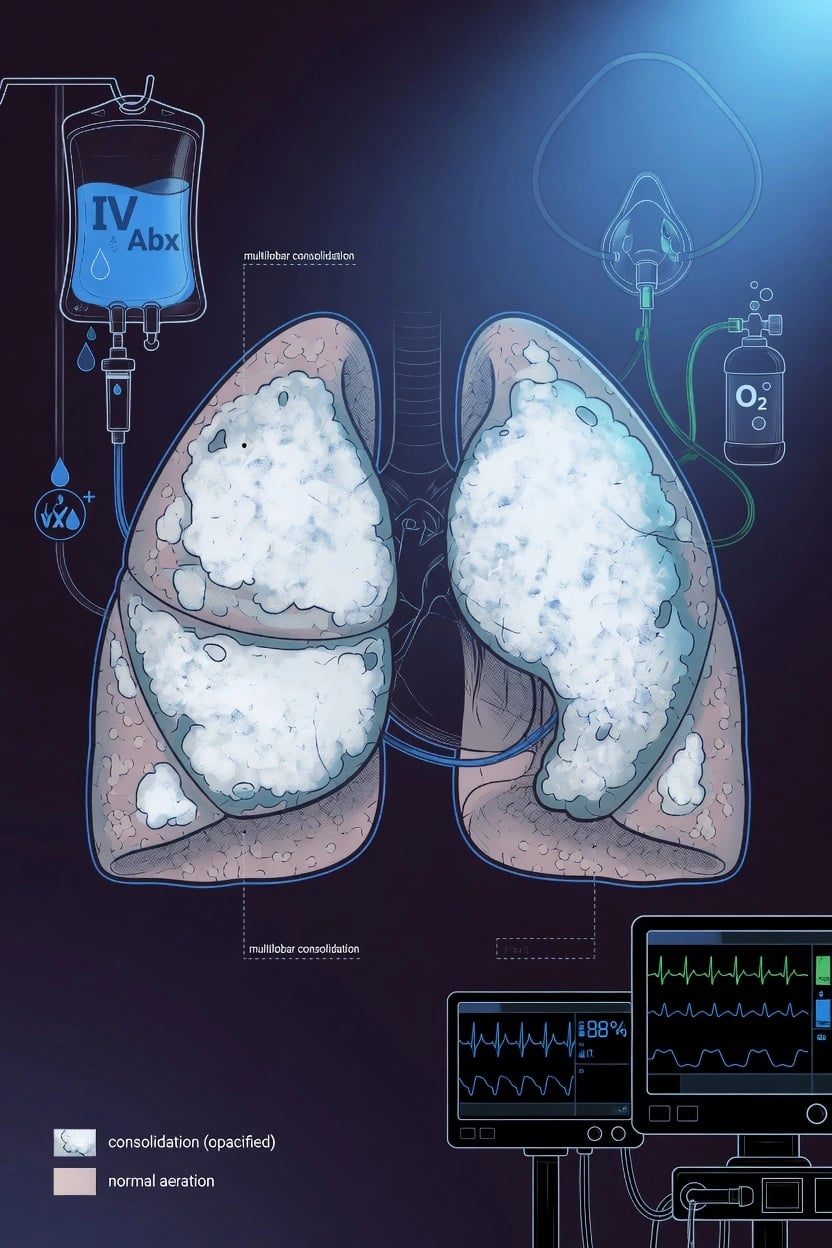
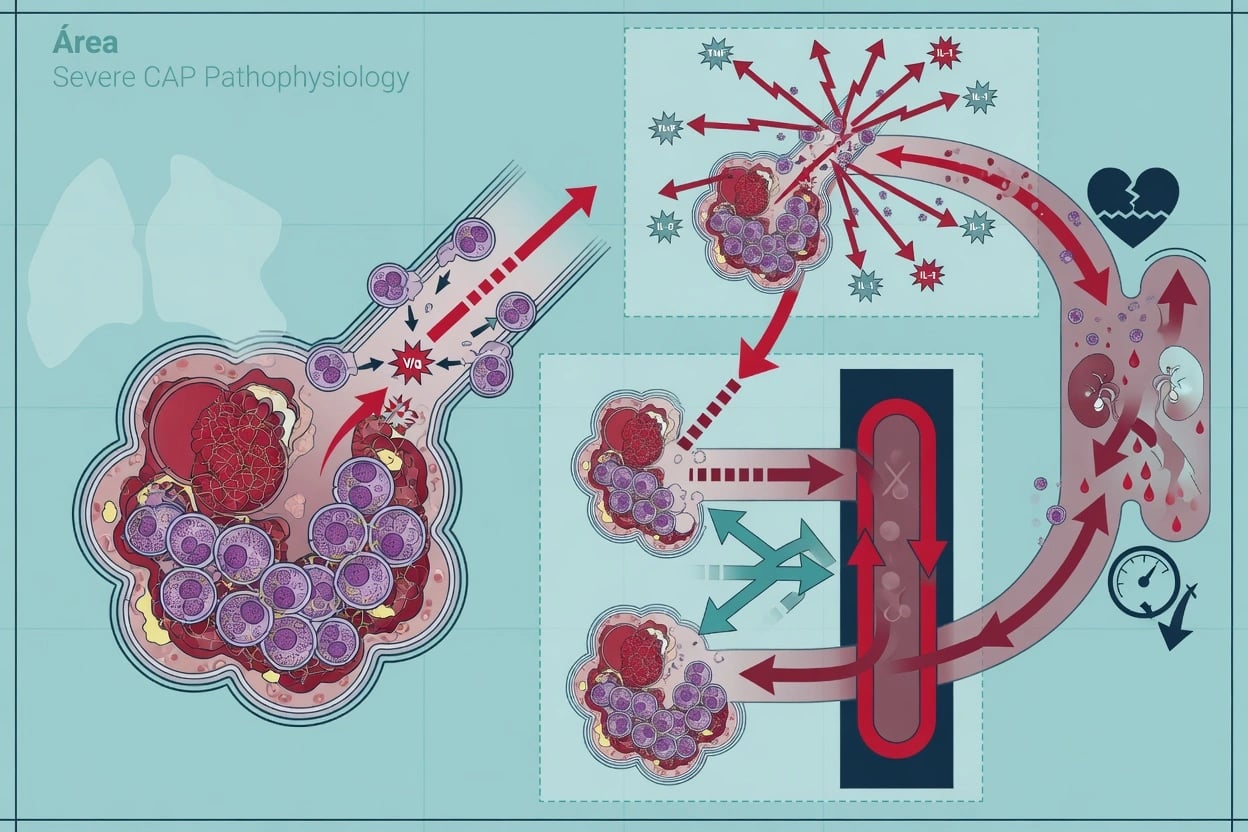
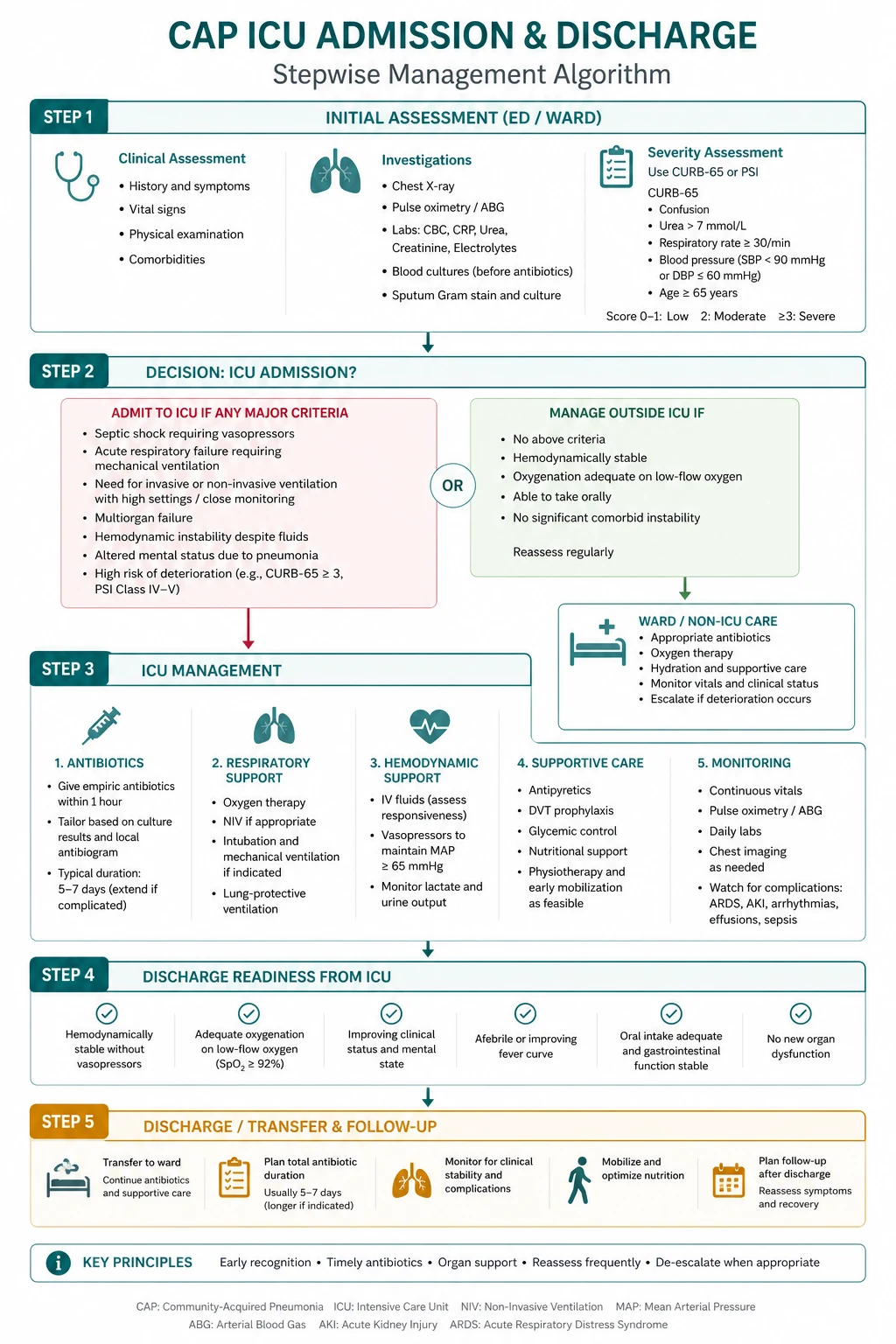
Triage decision framework
The first decision is not "does this patient need ICU?" but "what level of support does this patient need right now, and who can safely provide it?" CAP severity scores stratify risk but do not replace bedside judgement of trajectory and organ-support requirement. [1]
Outpatient
CURB-65 0-1
- CURB-65 0-1, PSI class I-II, SMART-COP 0-2
- No organ failure; SpO2 >92% room air; normal mental status
- Able to take oral antibiotics and fluids
- Manage at home with oral amoxicillin (or doxycycline/macrolide); safety-net review at 24-48 h
- Do NOT send to ICU — resource waste with no expected benefit
Ward
CURB-65 2
- CURB-65 2-3, PSI class III-IV, SMART-COP 3-4 without organ failure
- Needs IV antibiotics, supplemental oxygen up to FiO2 ~0.35, or one organ system mildly impaired
- Stable trajectory (improving on treatment) — escalating MEWS/NEWS triggers reassessment
- Capable ward with telemetry if borderline; early nurse-led observations
HDU / step-down
Intermediate
- Resolving septic shock (off vasopressors <12-24 h) or stable low-dose vasopressor
- Hypoxaemia manageable on low-flow O2 or stable nocturnal NIV only
- Needs frequent ABGs, close nursing, or post-extubation observation
- Bridge between ICU and ward; reduces ICU bed-days without compromising care
ICU
CURB-65 >=3 / organ support
- IDSA/ATS severe CAP: 1 major OR >=3 minor criteria
- Needs invasive mechanical ventilation, vasopressors for septic shock, RRT, or ECMO
- Deteriorating trajectory: rising lactate, worsening oxygenation despite NIV, SOFA rising
- SMART-COP >=5, CURB-65 4-5, PSI class V — high predicted mortality
IDSA/ATS criteria for severe CAP
The IDSA/ATS 2007 consensus criteria are the international standard for defining severe CAP and triggering ICU admission. They were derived to be applied at the bedside at presentation and have been externally validated in multiple cohorts.[3]
[1]Performance and threshold
The minor-criteria threshold of 3 has a pooled sensitivity of approximately 84% and specificity of approximately 78% for ICU admission in meta-analysis.[6] Lowering the threshold to 2 minor criteria raises sensitivity to roughly 95% but drops specificity to about 60% — useful where ICU capacity allows over-triage (maximise sensitivity, accept more HDU/ward monitoring), but impractical where ICU beds are scarce.[6]
The two minor criteria with the strongest independent association with need for intensive support are arterial hypoxaemia (PaO2/FiO2 <250) and hypotension requiring aggressive fluid resuscitation; confusion and high respiratory rate are the next most predictive.[6]
Limitations of IDSA/ATS criteria
Strengths
- Bedside-applicable; uses routinely available data
- Validated internationally; good inter-rater reliability
- Major criteria are unambiguous (ventilation or vasopressors)
- Reproducible across ANZ, European, and North American cohorts
Limitations
- Minor criteria count is a snapshot — does not capture trajectory or rate of change
- Does not weigh individual minor criteria (each counts equally, but they are not prognostically equal)
- Insensitive to pre-existing chronic organ dysfunction and frailty
- Designed for CAP — not validated for hospital-acquired, immunocompromised, or aspiration pneumonia
- Bedside over-scoring common when a single abnormality (e.g. isolated tachypnoea) is over-counted
Common errors
- Counting FiO2-corrected SpO2 as PaO2/FiO2 (must use arterial blood gas)
- Confusing "hypotension needing fluids" (minor) with "septic shock needing vasopressors" (major)
- Forgetting that leukopenia must be infection-induced, not chronic
- Applying the rule once and failing to re-assess as the patient deteriorates
When NOT to admit to ICU
ICU admission is not a marker of diligence — it is a targeted intervention for patients who will benefit from organ support or intensive monitoring. Admitting a low-risk patient to ICU consumes a scarce bed with no mortality benefit and exposes the patient to ICU-acquired complications (delirium, infection, deconditioning).[2]
Manage as outpatient
CURB-65 0-1
- CURB-65 0-1 (mortality ~1-2%)
- PSI class I-II; SMART-COP 0-2
- SpO2 >92% room air, RR <24, normal mental status
- Able to take oral antibiotics and fluids; safe home environment; reliable follow-up
- Safety-net advice: return if breathlessness, confusion, or unable to keep oral medication
- Oral amoxicillin 500 mg TDS (or doxycycline/macrolide if penicillin-allergic)
Ward admission (not ICU)
CURB-65 2-3
- CURB-65 2-3 with no organ failure
- Needs IV therapy or supplemental low-flow oxygen, or social indication (frail, lives alone)
- Stable or improving trajectory; no vasopressors; not for ventilation
- Stable laboratory trend (lactate falling or normal, no new organ dysfunction)
- Frequent observations; early-warning scoring; clear escalation plan if MEWS/NEWS rises
Withholding / withdrawing ICU
Futility / goals of care
- Advanced directives or patient preference declining intensive support
- Terminal illness where ICU care would be futile
- Discussion with patient/surrogate; document goals of care and ceiling of treatment
- Offer ward-based palliation, symptom control, and family support (see end-of-life topic)
Severity scores compared
No single score is perfect; they answer different questions. CURB-65 and PSI predict mortality and disposition; IDSA/ATS and SMART-COP predict the need for intensive respiratory or vasopressor support. [1]
CURB-65
- 5 variables: Confusion, Urea >7, RR >=30, BP <90/60, Age >=65
- 0-1 outpatient; 2 inpatient; >=3 consider ICU/HDU
- Pros: simple, memorable, reproducible
- Cons: ignores oxygenation and comorbidity; underestimates severity in young patients; limited sensitivity for ICU need
PSI / PORT
- 20+ variables (demographics, comorbidity, exam, labs, imaging)
- Class I-II outpatient; III brief obs; IV inpatient; V inpatient (often ICU)
- Pros: most accurate mortality prediction; validated in huge cohorts
- Cons: cumbersome; age and comorbidity-driven — can under-predict severity in fit young patients with physiological derangement (e.g. young hypoxic patient scores "low risk")
IDSA/ATS
- 2 major OR >=3 of 9 minor criteria → severe CAP
- Predicts need for ICU-level organ support
- Pros: directly actionable at the bedside; internationally adopted
- Cons: minor criteria unweighted; no continuous score; insensitive to trajectory
SMART-COP
- Low Systolic BP, Multilobar CXR, low Albumin, high RR, high HR, Confusion, low Oxygen (PaO2 <70/SpO2 <=93%), low pH
- >=3 points → high risk of needing intensive respiratory or vasopressor support
- Pros: emphasises oxygenation and acid-base; strong in ANZ validation cohort
- Cons: less widely used internationally; albumin may be unavailable at presentation
CRB-65 / SOAR
- CRB-65: CURB-65 without the blood test (confusion, RR, BP, age) — for primary care
- SOAR: SaO2, Origin (nursing home), Altered mentation, RR — simple high-risk screen
- Pros: no laboratory dependence; useful pre-hospital or in resource-limited settings
- Cons: lower discrimination than CURB-65/PSI
ICU admission decision pathway
Stepwise CAP triage to ICU, HDU, ward, or outpatient
Assess airway, breathing, circulation (ABCDE)
Identify immediately life-threatening problems first. Is there type 1 respiratory failure (SpO2 <92% despite O2)? Exhaustion, accessory-muscle use, silent chest, or inability to protect the airway = impending ventilatory failure → urgent senior airway/ICU review.
Identify IDSA/ATS major criteria
Two questions only: (1) Does the patient need invasive mechanical ventilation NOW or imminently? (2) Is the patient in septic shock requiring vasopressors (MAP <65 unresponsive to adequate fluid resuscitation)? Either YES = definite ICU admission. There is no HDU alternative for these.
Count IDSA/ATS minor criteria
Of the 9 minor criteria (RR >=30, PaO2/FiO2 <250, multilobar infiltrates, confusion, BUN >=20, leukopenia, thrombocytopenia, hypothermia, hypotension needing fluids): >=3 = severe CAP = ICU. Borderline (2) with deteriorating trajectory or comorbidity = ICU/HDU.
Apply severity scores (CURB-65, PSI, SMART-COP)
CURB-65 >=3, PSI class V, or SMART-COP >=3 support ICU/HDU consideration. Scores do not override clinical judgement or the IDSA/ATS major/minor criteria, but add prognostic context and are favourite exam material.
Judge trajectory and comorbidity
A patient with 2 minor criteria who is rapidly worsening (rising lactate, escalating FiO2, dropping urine output) needs ICU before meeting a third criterion. Conversely, a patient with 3 minor criteria who is clearly improving after 6 h of resuscitation may be managed in HDU. Add weight for frailty, immunocompromise, pregnancy, and chronic organ dysfunction.
Confirm bed availability and goals of care
If ICU is indicated but no bed is available, initiate organ support in ED/HDU and call ICU liaison/retrieval service. For patients where ICU may be inappropriate (advanced frailty, terminal illness), establish a ceiling of care with the patient/surrogate before escalation.
Document the decision and rationale
Record: criteria met, scores, trajectory assessment, comorbidities, and the level of care agreed (ICU / HDU / ward / outpatient / palliative). Triage decisions are examinable and medico-legally important.
HDU / step-down unit: the intermediate zone
HDU (high-dependency unit) is for patients who need closer monitoring or a single organ system supported at a low level, but who do not need the full multi-organ support capability of ICU. Effective use of HDU reduces ICU bed-days without compromising outcomes in carefully selected patients. [1]
Suitable for HDU
- Resolving septic shock: off vasopressors <12-24 h, or stable on a single low-dose agent (e.g. noradrenaline <0.1 mcg/kg/min)
- Hypoxaemia manageable on low-flow oxygen (FiO2 <0.5) or stable nocturnal NIV only
- Post-extubation observation after a straightforward ventilator course
- Frequent ABGs, close nursing ratio (1:2), or non-invasive cardiac monitoring
- Single-organ dysfunction that is improving (e.g. resolving AKI not needing RRT)
NOT suitable for HDU
- Invasive mechanical ventilation (unless stable tracheostomy weaning on a designated unit)
- Two or more vasopressors, or escalating single-agent requirement
- Need for RRT (unless a dedicated renal-HDU exists)
- Deteriorating trajectory or unstable arrhythmia needing continuous intensivist input
- Airway at risk with predicted need for re-intubation
ICU discharge criteria
ICU discharge is safe only when the patient no longer needs the organ-support capability or intensive monitoring that defines ICU, AND when the receiving unit can safely manage residual problems. The decision is multidisciplinary and must consider trajectory, not just a single snapshot. [1]
ICU discharge readiness checklist for CAP
Respiratory status
Afebrile for >48 h. RR <24. SpO2 >92% on room air (or back to baseline in chronic lung disease). FiO2 <0.4. No invasive ventilation; if previously intubated, successfully extubated and stable. No NIV, or stable on nocturnal NIV only. Adequate cough and sputum clearance; no worsening infiltrates on CXR (improvement may lag clinically by days).
Cardiovascular
Haemodynamically stable **off vasopressors for >12 h** with MAP >65 unaided. No active arrhythmia. Lactate normalising (<2 mmol/L or steadily falling). Hb adequate (>70 g/L, or higher if symptomatic). If still on any vasopressor, or requiring frequent fluid boluses to maintain MAP, the patient is NOT ready for discharge.
Neurological
Awake and cooperative (RASS -1 to 0). CAM-ICU negative or delirium clearly resolving. Able to protect the airway (intact gag/cough). Pain controlled on oral or enteral analgesia. Deeply sedated, agitated, or actively delirious patients requiring high-dose sedation are NOT ready.
Renal and metabolic
No requirement for RRT. Urine output >0.5 mL/kg/h. Stable electrolytes (Na, K, Mg, Ca, phosphate corrected). Glucose 6-10 mmol/L. Acid-base stable (pH >7.25). Anuric patients or those still needing RRT remain in ICU (unless planned CRRT in a renal-HDU — rare).
Infection and inflammatory trajectory
Decreasing inflammatory markers: **CRP falling**, **procalcitonin falling** (typically >80% drop from peak or <0.25-0.5 ng/mL). WBC normalising. Afebrile trend. No new organ failure. Infection source controlled where applicable (drainage, debridement). Antibiotic plan agreed and available on the receiving unit (oral step-down or IV access via ward staff).
Functional and nutritional
Able to tolerate oral intake (or established enteral feeding plan). Mobilising (with assistance if needed); not for prolonged immobility that risks deconditioning. Swallow safe if previously intubated (bedside swallow screen if indicated).
Receiving-unit readiness
Ward or HDU bed available with appropriate nurse-to-patient ratio and monitoring capability. Ward staff competent to manage residual oxygen, IV antibiotics, and observations. Multidisciplinary plan: physiotherapy, respiratory/infectious diseases follow-up, ICU follow-up clinic at 2-3 months. Structured **SBAR handover** to the receiving team and documented ICU stay summary, medication list, and escalation plan.
Discharge readiness scoring: SWIFT
[1]Premature discharge and ICU readmission
Premature discharge is one of the most preventable causes of ICU readmission and excess mortality. The widely cited readmission rate after ICU discharge is 10-15%, and readmitted patients have markedly worse outcomes than those never readmitted.[2][7]
Premature ICU discharge and unplanned readmission
Multicentre observational cohort and systematic review
Population: Adults discharged alive from ICU after an acute admission
Key finding
Premature and after-hours discharge independently associated with higher unplanned readmission (~10-15%) and increased hospital mortality. Readmitted patients had ~2- to 6-fold higher mortality than non-readmitted patients.
Practice change
Discharge only when readiness criteria are met. Avoid after-hours (post-22:00) discharge unless clinically unavoidable. Use a readmission-risk tool (e.g. SWIFT) and escalate uncertainty to HDU.
Discharge and readmission — key numbers
Risk factors for premature discharge and readmission
Patient factors
- Advanced age and frailty
- Multiple comorbidities / chronic organ dysfunction
- Immunocompromise or malignancy
- Persistent or unresolved infection source
- Ongoing organ dysfunction at discharge (e.g. low bicarbonate, raised lactate)
System factors
- ICU bed-pressure ("pushed out" to make space for a sicker admission)
- After-hours / night-time discharge (>22:00)
- Discharge to a ward with inadequate nurse-to-patient ratio or monitoring
- No HDU/step-down available, forcing an unsafe ward step
- Poor handover (no SBAR, undocumented escalation plan)
Protective factors
- Meeting all discharge criteria before transfer
- Available HDU/step-down bed for intermediate patients
- Structured handover and post-ICU follow-up
- Falling CRP/procalcitonin and improving trajectory
- Adequate ward staffing and monitoring equipment
Night-time (after-hours) discharge
Discharging a patient from ICU after hours (typically after 22:00) is consistently associated with higher readmission and mortality, independent of illness severity.[2] The mechanism is multifactorial: ward staffing and monitoring are reduced overnight, handovers are abbreviated, and the patient is often "pushed out" to create capacity rather than because they are ready.
Follow-up after ICU discharge
ICU discharge is not the end of the episode of care. CAP survivors — especially those who were ventilated or in septic shock — are at risk of post-intensive care syndrome (PICS): new physical weakness, cognitive impairment, anxiety, depression, and post-traumatic stress. [1]
Post-ICU follow-up pathway
Ward handover and monitoring
Structured SBAR handover to ward team. Define explicit escalation criteria (HR, RR, SpO2, BP, GCS thresholds for calling the medical emergency team / rapid response). Document expected trajectory so that deviation is recognised early.
Continuing antimicrobial and de-escalation plan
Agreed antibiotic duration and step-down plan (IV to oral when afebrile, improving, able to take oral). Procalcitonin-guided cessation where appropriate. Infectious diseases / microbiology review for resistant organisms.
Rehabilitation
Early physiotherapy and mobility on the ward. ICU-acquired weakness is common after severe CAP; nutrition, mobilisation, and occupation therapy reduce long-term disability.
ICU follow-up clinic at 2-3 months
Assess physical function (6-minute walk, grip strength), cognition, mood, and quality of life. Screen for and treat PICS components (see PICS topic). Identify unresolved psychological morbidity and refer appropriately.
Prevention of recurrence
Pneumococcal and influenza vaccination before discharge or at follow-up. Smoking cessation. Review immunosuppression if relevant. Address aspiration risk (swallow assessment, dental hygiene, head-of-bed positioning).
Exam practice
SAQ — CAP triage and ICU discharge
10 minutes · 10 marks
A 71-year-old man is admitted with 3 days of fever, productive cough, and worsening dyspnoea. On arrival: RR 34, SpO2 88% on room air (92% on 6 L via simple mask), BP 84/50 after 1.5 L crystalloid, GCS 14 (drowsy). Temp 35.4C. CXR shows right upper and middle lobe consolidation. WBC 3.1, platelets 92, Na 130, BUN 22 mg/dL, lactate 3.2, PaO2 58 on 6 L (FiO2 ~0.4).
Clinical pearls
Red flags
References
- [1]Martin-Loeches I, Torres A. Severe community-acquired pneumonia Eur Respir Rev, 2022.PMID 36517046
- [2]Negrini D, Shehabi Y, Myburgh J, et al. Notum palmitoleoyl-protein carboxylesterase regulates Fas cell surface death receptor-mediated apoptosis via the Wnt signaling pathway in colon adenocarcinoma Bioengineered, 2021.PMID 34402722
- [3]Mandell LA, Wunderink RG, Anzueto A, et al. Infectious Diseases Society of America/American Thoracic Society consensus guidelines on the management of community-acquired pneumonia in adults Clin Infect Dis, 2007.PMID 17278083
- [4]Fine MJ, Auble TE, Yealy DM, et al. Evidence for regulation of transcription and replication of the human neurotropic virus JCV genome by the human S(mu)bp-2 protein in glial cells Gene, 1997.PMID 9034313
- [5]Charles PGP, Wolfe R, Whitby M, et al. Propofol for stiff-person syndrome: learning new tricks from an old dog Neurology, 2008.PMID 18443308
- [6]Ferrer M, Travierso C, Cilloniz C, et al. Simplification of the IDSA/ATS criteria for severe CAP using meta-analysis and observational data Eur Respir J, 2014.PMID 24114960
- [7]Dharmarajan K, Hsieh AF, Lin Z, et al. AFM cantilever with in situ renewable mercury microelectrode Anal Chem, 2013.PMID 23992481