ICU · Resuscitation
Massive transfusion and coagulopathy
Also known as Massive haemorrhage protocol (MHP) · Damage control resuscitation (DCR) · Trauma-induced coagulopathy (TIC) · 1:1:1 transfusion ratio · Viscoelastic testing (TEG/ROTEM) · Tranexamic acid (TXA)
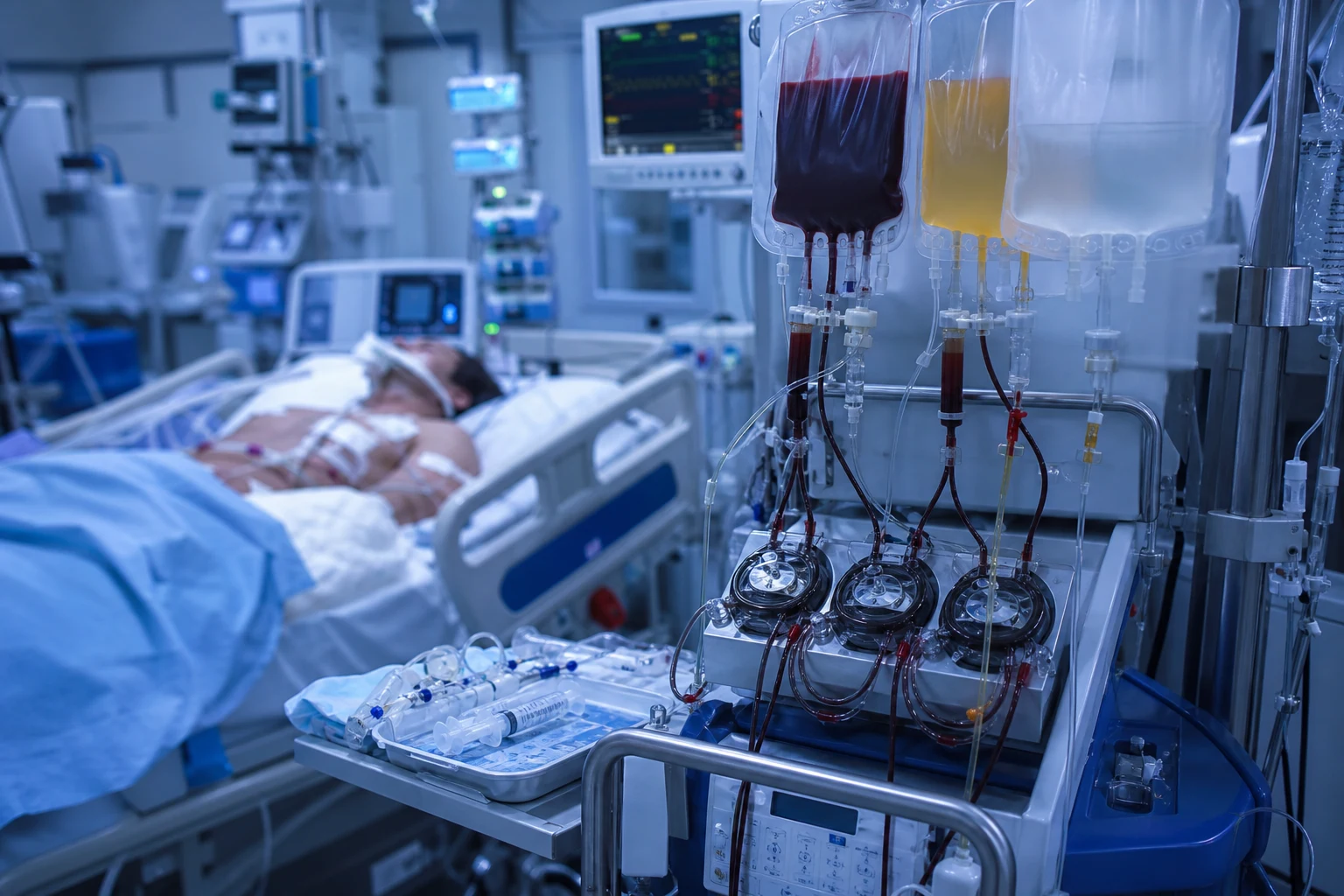
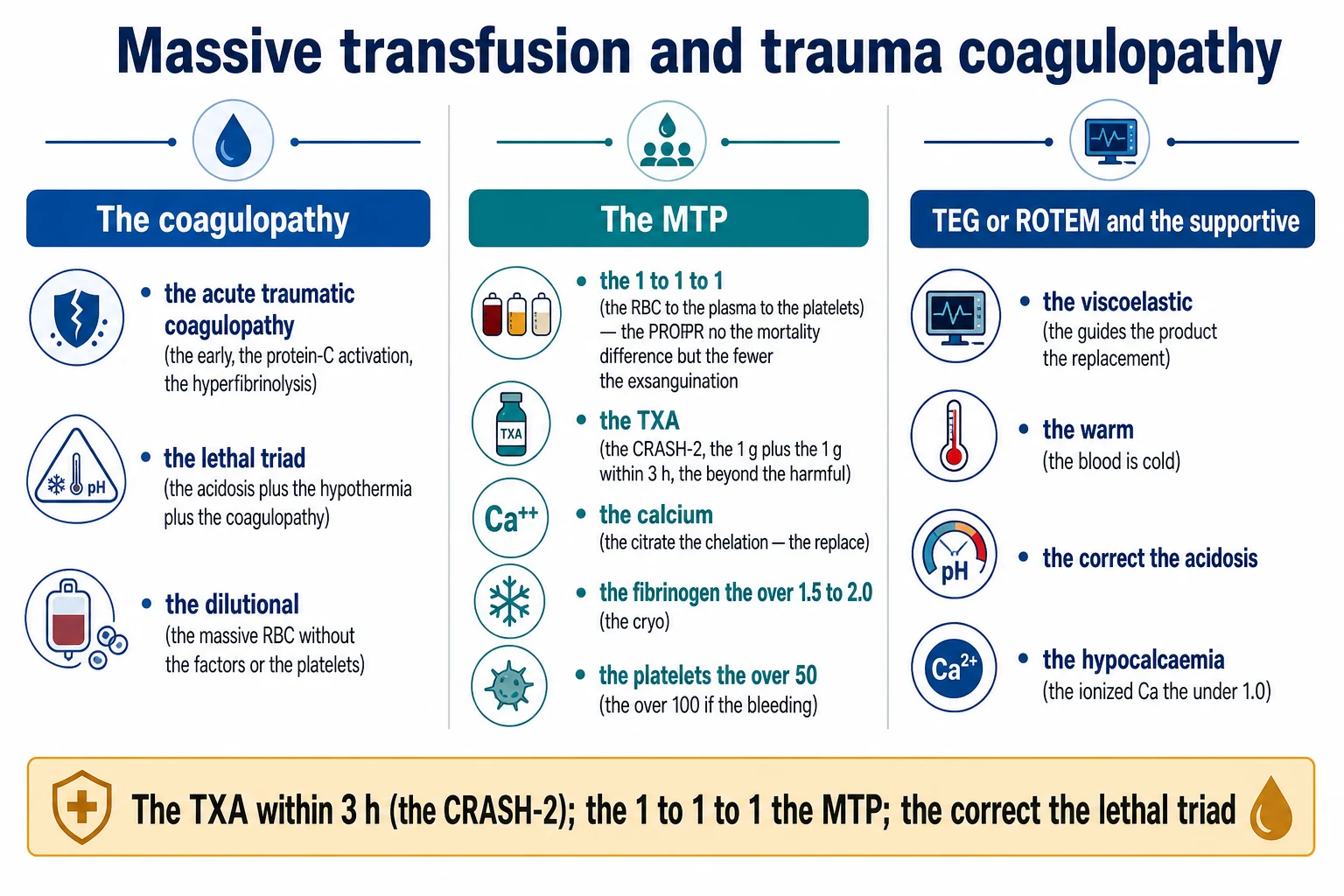
Massive transfusion is the replacement of 1 blood volume in 24h (or 50% in 3h, or 4 units RBC in 1h with ongoing bleeding). Goal: achieve haemostasis while preventing the lethal triad (acidosis, hypothermia, coagulopathy). Damage control resuscitation (DCR) principles: (1) permissive hypotension until control of bleeding, (2) minimise crystalloid, (3) balanced blood component ratio 1:1:1 (RBC:plasma:platelets — PROPPR trial), (4) tranexamic acid within 3h (CRASH-2). Viscoelastic testing (TEG/ROTEM) guides component therapy. Avoid over-transfusion of plasma/platelets — goal-directed using ROTEM. Massive transfusion protocol (MTP) should be activated early and deactivated promptly when bleeding controlled.
On this page & tools
Your progress
Saved locally on this device.
Target exams
Red flags
Definitions
Massive transfusion
Volume-based definition
- Replacement of >1 total blood volume in 24 hours (~10 units RBC)
- OR replacement of >50% blood volume in 3 hours
- OR >4 units RBC in 1 hour with ongoing haemorrhage
- OR rate of blood loss >150 mL/min
Trauma-induced coagulopathy (TIC)
Acute coagulopathy on arrival
- Occurs in ~25% of severe trauma patients ON ARRIVAL (before any fluid)
- Driven by tissue hypoperfusion + endothelial activation (not dilution)
- Protein C activation → anticoagulation + hyperfibrinolysis
- Associated with 3-4x increased mortality
- Diagnosed by viscoelastic testing (TEG/ROTEM) — low clot strength, hyperfibrinolysis
The lethal triad
The lethal triad of massive haemorrhage (click each)
INR >1.5
Trauma-induced coagulopathy + dilutional coagulopathy (crystalloid dilutes clotting factors) + consumption (bleeding uses up factors). INR >1.5 is part of TIC. All three elements of the triad worsen each other in a vicious cycle. Once established, mortality approaches 100%.
Damage control resuscitation (DCR)
DCR principles — the foundation of massive transfusion
Permissive hypotension
Maintain SBP 80-90 mmHg (MAP 50-60) until surgical/radiological control of bleeding. Rationale: higher BP dislodges clots and increases bleeding. Fluids/pressors only to maintain perfusion — NOT to normalise BP. EXCEPTION: do NOT use permissive hypotension in TBI (need CPP >60 = MAP >80) or non-trauma bleeding (GI bleed, ruptured AAA).
Minimise crystalloid
Avoid crystalloid overload — it causes dilutional coagulopathy, hyperchloraemic acidosis, and worsens endothelial glycocalyx damage. Give blood products, not crystalloid. If crystalloid needed, use balanced solution (Hartmann/Plasma-Lyte) — NOT normal saline (hyperchloraemic acidosis worsens coagulopathy).
Balanced blood component ratio (1:1:1)
Give RBC:plasma:platelets in approximately 1:1:1 ratio. PROPPR trial: no 24h or 30-day mortality difference between 1:1:1 and 1:1:2, but 1:1:1 achieved earlier haemostasis and fewer deaths from exsanguination at 24h. Give empirically while bleeding active, then switch to viscoelastic-guided therapy.
Tranexamic acid (TXA) within 3 hours
1 g IV loading over 10 min, then 1 g infusion over 8 hours. CRASH-2: reduces all-cause mortality (14.5% vs 16%) and bleeding death. MUST be given within 3 hours of injury — after 3h, TXA INCREASES mortality. Give as early as possible (prehospital if available).
Calcium replacement
Stored blood contains citrate (anticoagulant) which chelates calcium. Massive transfusion causes hypocalcaemia (ionised Ca <0.9). Hypocalcaemia worsens coagulopathy and hypotension (myocardial depression). Give calcium chloride 10 mmol (1 g) for every 4 units of blood products. Monitor ionised calcium.
Prevent the lethal triad
WARM the patient: forced air warming blanket, warm all fluids (to 37C), raise room temperature. CORRECT acidosis: improve perfusion (stop bleeding, give blood). AVOID crystalloid overload. The lethal triad is easier to prevent than to treat — once established, mortality approaches 100%.
Damage control surgery
Goal of surgery is HAEMOSTASIS, not definitive repair. Pack the abdomen, control contamination (close bowel holes), temporary closure. Return to theatre for definitive repair once physiology restored (warm, corrected acidosis/coagulopathy). This philosophy saves lives vs prolonged surgery on a cold, coagulopathic patient.
Key trials
PROPPR (Holcomb, JAMA 2015)
Multicentre RCT: 680 severely injured patients
Population: Trauma patients predicted to require massive transfusion
Key finding
No significant difference in 24h mortality (12.7% vs 17.0%, p=0.09) or 30-day mortality. BUT 1:1:1 achieved earlier haemostasis and fewer exsanguination deaths at 24h.
Practice change
1:1:1 is safe and may benefit patients at risk of exsanguination. Use empirically during active massive bleeding.
CRASH-2 (Lancet 2010)
Multicentre RCT: 20,211 trauma patients with significant bleeding
Population: Adult trauma patients with or at risk of major bleeding
Key finding
TXA reduced all-cause mortality (14.5% vs 16.0%, p=0.0035) and bleeding death (4.9% vs 5.7%, p=0.0077). Benefit GREATEST when given within 1 hour. Given >3 hours after injury, TXA INCREASED bleeding death.
Practice change
Give TXA 1 g IV ASAP in trauma bleeding — ideally within 1 hour, MUST be within 3 hours. Do NOT give if >3 hours since injury.
Tranexamic acid — evidence and timing
CRASH-3 (Lancet 2019)
Multicentre RCT: 12,737 adults with traumatic brain injury
Population: TBI within 3h of injury (any GCS, any intracranial bleeding on CT)
Key finding
Reduced head-injury death in mild-to-moderate TBI (GCS 9-15) when given within 3h (RR 0.78). No benefit in severe TBI (GCS 3-8) or when given >3h after injury. No increase in thromboembolic events.
Practice change
TXA within 3h of TBI is safe and reduces head-injury death in mild-to-moderate TBI. Avoid >3h.
WOMAN (Lancet 2017)
Multicentre RCT: 20,060 women with post-partum haemorrhage
Population: PPH after vaginal or caesarean delivery
Key finding
Reduced death from bleeding (1.5% vs 1.9%, RR 0.81, p=0.045). No increase in thromboembolic complications, hysterectomy, or maternal morbidity.
Practice change
Give TXA 1 g IV ASAP in PPH — within 3h. May repeat once at 30 min if bleeding continues.
HALT-IT (Lancet 2020)
Multicentre RCT: 12,009 patients with acute upper gastrointestinal bleeding
Population: Adults with significant upper GI bleed
Key finding
NO mortality benefit (death from bleeding 3.7% vs 3.8%, RR 0.99). Signal of HARM in elderly (arterial thromboembolic events 0.7% vs 0.4%) and increased seizures with high doses.
Practice change
TXA is NOT recommended in upper GI bleed. Do not reflexively give TXA to every bleeding patient — confirm the indication.
Within 1 hour
Greatest benefit
- CRASH-2 bleeding-death RR 0.51 — halves bleeding death
- CRASH-3: reduced head-injury death in mild-moderate TBI
- Give prehospital if possible; aim <45 min from injury
- WOMAN: PPH benefit established within 3h
1 to 3 hours
Reduced benefit
- CRASH-2 bleeding-death RR ~0.80 — still beneficial
- Benefit attenuating with each passing minute
- Give if <3h from injury — do NOT wait
After 3 hours
HARMFUL — do NOT give
- CRASH-2 bleeding-death RR 1.44 — increases bleeding death
- CRASH-3: no benefit, possible harm in severe TBI
- Mechanism: inhibits fibrinolysis once clot formed → microvascular thrombosis
- ALWAYS document time of injury before giving TXA
Viscoelastic testing (TEG/ROTEM)
[1]Massive transfusion protocol (MTP)
MTP activation and deactivation
Activation criteria
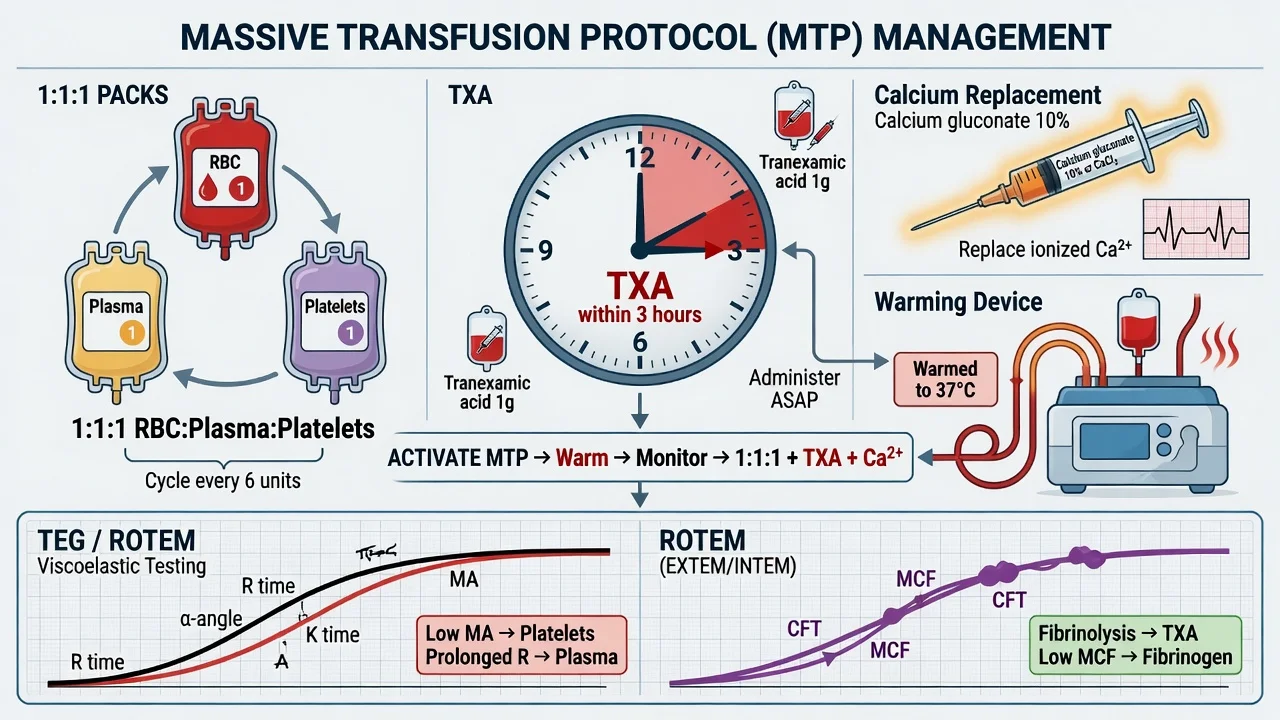
Activate MTP early — do NOT wait for the patient to be in extremis. Criteria: (1) Active massive bleeding (blood loss >150 mL/min, or >4 units RBC in 1h). (2) Severe trauma with haemodynamic instability and predicted ongoing bleeding. (3) Clinical judgement — if you think about it, activate it.
MTP pack delivery
Most hospitals use predefined packs delivered rapidly from blood bank. Pack 1: 4 units RBC + 4 units FFP + 1 adult dose platelets (approx 1:1:1 ratio). Each pack also includes: cryoprecipitate (10 units) and calcium. Repeat packs as needed. Lab draws blood every 30-60 min for ROTEM/TEG, fibrinogen, ionised Ca, haemoglobin.
Transition to viscoelastic-guided therapy
Once initial packs given and bleeding controlled, switch from ratio-based to goal-directed therapy using ROTEM/TEG. Replace specific components based on viscoelastic results (FFP, fibrinogen, platelets, TXA). This avoids over-transfusion of plasma/platelets.
Deactivation
Deactivate MTP when bleeding is controlled AND haemodynamic stability achieved. Do NOT over-transfuse. Post-MTP: monitor for complications (TRALI, TACO, hyperkalaemia, hypocalcaemia, citrate toxicity). Recheck coagulation, electrolytes, and haemoglobin.
Viscoelastic-guided transfusion algorithm
Step-by-step ROTEM/TEG-guided component therapy
Step 1 — Sample on arrival and every 30 min
Draw citrated sample at MTP activation and every 30 minutes during active bleeding. Run EXTEM (extrinsic ROTEM, tissue-factor activated) and FIBTEM (with cytochalasin D to block platelets — isolates the fibrinogen contribution). Simultaneously send fibrinogen (Clauss), ionised Ca, haemoglobin, potassium. TEG equivalents: kaolin TEG + functional fibrinogen TEG.
Step 2 — CT >80 sec (R time >10 min)
Coagulation FACTOR deficiency. Treat with FRESH FROZEN PLASMA 15 mL/kg (~4 units in a 70 kg adult) OR prothrombin complex concentrate (PCC) 25-50 IU/kg if immediately available and bleeding is life-threatening. FFP takes 20-30 min to thaw — request early. Avoid repeated FFP if volume overload is a concern (each unit ~250 mL). On TEG/ROTEM heparinase assay, if heparinase corrects the CT, give protamine rather than FFP (residual heparin, not factor deficiency).
Step 3 — FIBTEM A10 <10 mm (EXTEM A10 <40 mm, TEG alpha <60°)
FIBRINOGEN deficiency (the first factor to fall in massive haemorrhage). Treat with CRYOPRECIPITATE 10 adult units OR fibrinogen concentrate 4-6 g (preferred in many European trauma centres — faster reconstitution in ~3 min, pathogen-inactivated, low volume). Recheck — fibrinogen target >1.5 g/L (>2.0 g/L if ongoing bleeding, >2.5 g/L in pregnancy/PPH).
Step 4 — EXTEM MCF <50 mm (TEG MA <50 mm)
PLATELET dysfunction or depletion. Treat with 1 adult therapeutic dose of platelets (~4 paediatric apheresis units or 1 single-donor unit; raises count by ~30-40 ×10^9/L). Target platelet count >50 ×10^9/L (>100 if TBI or active intracranial bleeding).
Step 5 — EXTEM ML >15% (TEG LY30 >7.5%)
HYPERFIBRINOLYSIS. Treat with TRANEXAMIC ACID 1 g IV over 10 min then 1 g over 8h (if not already given). If lysis persists despite TXA, discuss with haematology — aprotinin is occasionally used off-licence in refractory hyperfibrinolysis.
Step 6 — Ionised Ca <1.1 mmol/L
Hypocalcaemia from citrate. Give CALCIUM CHLORIDE 10 mmol (1 g) IV slow push via central line (vesicant), OR calcium gluconate 3 g (30 mL of 10%) via peripheral line. Repeat per monitoring — target ionised Ca >1.1 mmolL. Ionised Ca <0.9 mmol/L on arrival is an independent predictor of mortality in trauma.
Step 7 — Reassess and de-escalate
Repeat viscoelastic testing every 30 min during active bleeding. Once surgical/radiological haemostasis achieved, switch from empiric 1:1:1 to single-component goal-directed therapy. STOP components once targets achieved — over-transfusion drives ARDS, TRALI, TACO, multi-organ failure.
Differentiating DIC from trauma-induced coagulopathy
Trauma-induced coagulopathy (TIC)
Hypoperfusion-driven
- Onset: MINUTES — present on arrival before any fluid
- Mechanism: tissue hypoperfusion + endothelial activation → Protein C activation → anticoagulation + hyperfibrinolysis
- Viscoelastic: short CT early (transient hypercoagulability), then prolonged CT; low MCF; elevated LY30/ML (hyperfibrinolysis)
- Fibrinogen: LOW EARLY (first factor to fall)
- Platelets: normal or mildly low
- D-dimer: elevated (consumption)
- Treatment: DCR — TXA early, balanced ratio, fibrinogen, surgery
Disseminated intravascular coagulation (DIC)
Sepsis / obstetric / malignancy
- Onset: HOURS to DAYS — complicates sepsis, amniotic fluid embolism, severe pre-eclampsia/HELLP, abruption, leukaemia, snake bite
- Mechanism: massive tissue-factor release → systemic thrombin generation → microvascular thrombosis + consumption of factors and platelets → bleeding
- Viscoelastic: prolonged CT, low MCF, LOW fibrinogen, normal or low lysis (hypocoagulable consumption picture, NOT hyperfibrinolysis)
- Fibrinogen: LOW (consumed)
- Platelets: LOW (consumed) — typically <100 ×10^9/L and falling
- D-dimer: markedly elevated; INR/aPTT prolonged; smear shows schistocytes
- Treatment: TREAT THE UNDERLYING CAUSE (antibiotics, delivery, antivenom) + supportive component therapy
Key differentiators
Bedside
- TIC: trauma history, hyperfibrinolysis on VET, presents within minutes of injury
- DIC: non-trauma trigger (sepsis, obstetric), consumption pattern (low platelets + low fibrinogen), normal/low fibrinolysis on VET
- ISTH overt-DIC score >5 supports DIC (platelets, fibrinogen, D-dimer, INR, underlying condition)
- TXA helps TIC (hyperfibrinolysis) but may HARM thrombotic-phase DIC (microvascular thrombosis) — confirm on VET before giving TXA in non-trauma bleeding
- Both may coexist — a multiply-injured septic patient can have both
Practical approach when bleeding + abnormal coagulation
Take a 30-second history
TRAUMA (within minutes of injury, hyperfibrinolysis) vs OBSTETRIC (amniotic fluid embolism, abruption, HELLP, PPH) vs SEPSIS (meningococcaemia, severe falciparum) vs TOXIN (snake bite). The trigger determines whether you are treating TIC, DIC, or a hybrid.
Run viscoelastic testing early
VET distinguishes consumption (DIC — low everything) from dilution/hyperfibrinolysis (TIC — low fibrinogen, high lysis). The fibrinolysis signature on VET is the single most useful discriminator in the first hour.
Treat the trigger
In TIC: stop the bleeding (surgery, embolisation, tourniquet, pelvic binder) — without haemostasis no amount of blood will save the patient. In DIC: antibiotics/source control, delivery in AFE/abruption, antivenom in snake bite. Components are supportive only.
Component therapy is supportive in both
Both conditions need fibrinogen replacement (cryoprecipitate or fibrinogen concentrate), platelets if <50, and FFP if factor-deficient on VET. TXA helps TIC (hyperfibrinolysis) but is HARMFUL in thrombotic-phase DIC (microvascular thrombosis) — confirm hyperfibrinolysis on VET before giving TXA in non-trauma bleeding.
Complications of massive transfusion
Metabolic complications
From stored blood
- HYPOCALCAEMIA — citrate chelates calcium. Give CaCl2 10 mmol per 4 units blood. Monitor ionised Ca.
- HYPERKALAEMIA — stored RBC leak potassium (up to 70-80 mmol/L in old units). Risk of arrhythmia. Monitor K.
- ACIDOSIS on administration (stored blood pH ~6.5-7.0), then alkalosis (citrate metabolised to bicarbonate).
- HYPOTHERMIA — warm all blood products to 37C.
Transfusion reactions
Immunological
- TRALI (transfusion-related acute lung injury) — donor antibodies attack recipient neutrophils → ARDS. Treat supportively.
- TACO (transfusion-associated circulatory overload) — volume overload. Give diuretics.
- Transfusion-transmitted infection — rare (viral, bacterial).
- Haemolytic transfusion reaction (ABO mismatch) — rare but fatal. Stop transfusion immediately.
Post-MTP complications in detail
TRALI
Transfusion-related acute lung injury
- Mechanism: donor antibodies (usually from multiparous female donors) bind recipient neutrophils → sequestration in pulmonary vasculature → capillary leak → ARDS picture within 6 hours of transfusion
- Clinical: hypoxia, bilateral infiltrates, fever, hypotension — looks like ARDS but NO raised LA pressure (normovolaemic pulmonary oedema)
- Diagnosis of exclusion: hypoxia + new bilateral infiltrates within 6h of transfusion + no evidence of circulatory overload (LA pressure <18 or no left atrial hypertension)
- Treatment: STOP transfusion, report to blood bank, supportive care (oxygen, lung-protective ventilation if intubated). Diuretics do NOT help and may worsen — TRALI is not volume overload
- Mortality: 5-10%. Donor is permanently deferred. Recipient antibodies should also be checked
TACO
Transfusion-associated circulatory overload
- Mechanism: hydrostatic pulmonary oedema from transfusion rate exceeding cardiac output reserve — common in elderly, heart failure, renal failure
- Clinical: hypoxia, bilateral infiltrates, hypertension, raised JVP, S3 gallop — within 6 hours of transfusion
- Differentiator from TRALI: hypertension (not hypotension), raised JVP, positive fluid balance, responds to diuretics
- Treatment: STOP transfusion, sit upright, oxygen, IV FUROSEMIDE 40-80 mg. Slow future transfusions (1 unit over 2-4 hours in at-risk patients)
- Mortality: 5-15%. Most common cause of transfusion-related death in some registries
Citrate toxicity
Hypocalcaemia
- Stored blood contains sodium citrate (anticoagulant) which chelates IONISED calcium. Each unit of RBC/FFP delivers ~3 g of citrate
- Healthy liver metabolises citrate at ~5 g/hr — overwhelmed by massive transfusion (citrate accumulates → ionised Ca plummets)
- Clinical: hypotension (impaired myocardial contractility), prolonged QT, tetany, laryngospasm, impaired coagulation (factor IV is ionised calcium)
- Worse in: hepatic failure, hypothermia, hyperventilation (respiratory alkalosis), and >1 unit transfusion per 5 min
- Treatment: calcium CHLORIDE 10 mmol (1 g) via central line per 4 units blood; OR calcium gluconate 3 g peripherally. Monitor IONISED (not total) calcium — total calcium is falsely low in hypoalbuminaemia
Hyperkalaemia
From stored RBC
- Stored RBC leak potassium: ~5-7 mmol/L at day 1, rising to ~70-80 mmol/L at day 42. Massive transfusion can deliver massive K+ load
- Risk highest with: irradiated units (K+ leaks faster), paediatric/low-body-mass recipients, rapid transfusion (>1 unit/5 min), pre-existing renal failure
- Clinical: peaked T waves, widened QRS, ventricular arrhythmia, cardiac arrest
- Treatment: STOP rapid transfusion, give CALCIUM CHLORIDE (stabilises myocardium), insulin/dextrose, salbutamol, bicarbonate; consider haemofiltration if severe and ongoing
- Prevention: use FRESH (<7 day) RBC for massive transfusion in children and renal failure; intraoperative cell salvage washes out K+
Hypothermia
Stored blood is cold
- Stored blood is stored at 1-6°C. Rapid transfusion without warming causes hypothermia
- Hypothermia (Temp <35°C) impairs coagulation cascade (temperature-dependent enzymes), platelet function, and fibrinogen synthesis
- Temp <32°C = surgical bleeding that will not stop until rewarming
- Treatment: countercurrent fluid warmer (Level 1, Belmont) for all rapid transfusion; forced-air warming blanket; raise theatre/ED temperature; warm irrigation fluids
- Prevention is the only cure — never give unwarmed blood in massive transfusion
Acid-base
Biphasic
- On administration: stored blood pH is 6.5-7.0 (acidotic) due to citric acid and accumulated CO2
- After metabolism: citrate is converted to bicarbonate by the liver → METABOLIC ALKALOSIS (the post-transfusion alkalosis)
- In hepatic failure or shock: citrate accumulates → persistent metabolic acidosis + hypocalcaemia
- Do NOT treat stored-blood acidosis with bicarbonate — it will resolve and overshoot into alkalosis
Non-trauma massive haemorrhage
Upper GI bleed
Variceal / non-variceal
- Activate MTP for massive haemorrhage — permissive hypotension debated; most guidelines target SBP >90 until endoscopy
- TXA is NOT recommended — HALT-IT (Lancet 2020) showed no benefit and possible harm in the elderly
- Correct coagulopathy with FFP / Vitamin K (warfarin) / PCC (DOAC) — do NOT delay endoscopy for normal INR
- Early OGD (within 12h); vasoactive drugs (terlipressin, octreotide) + antibiotics (ceftriaxone) for variceal bleed; TIPSS for refractory variceal bleed
Ruptured AAA
Vascular emergency
- Permissive hypotension (SBP 80-100) ACCEPTABLE until proximal clamp/control achieved in theatre
- Activate MTP — same principles as trauma (DCR, balanced ratio, calcium, warming)
- Consider EVAR in anatomically suitable, haemodynamically stable patients
- Heparin reversal not usually required pre-clamp; cell salvage useful
Post-partum haemorrhage (PPH)
Obstetric
- TXA 1 g IV within 3h — WOMAN trial (Lancet 2017) reduces death from bleeding; may repeat once at 30 min
- Uterotonic ladder: oxytocin (5 IU IV) → ergometrine (500 mcg IM, avoid in hypertension) → carboprost (250 mcg IM, avoid in asthma) → misoprostol (800 mcg PR)
- Higher targets: fibrinogen >2.5 g/L (fibrinogen naturally elevated in pregnancy; a normal-looking level may be deficient), Hb >90, platelets >75
- Consider amniotic fluid embolism if sudden cardiovascular collapse + coagulopathy (DIC-like picture) — catastrophic, supportive care
- Bakri balloon, uterine compression sutures (B-Lynch), internal iliac artery embolisation, hysterectomy as last resort
Cardiac / major surgery
Perioperative
- Cell salvage where possible (avoid in malignancy and contaminated fields; relative contraindication in caesarean section)
- VET-guided component therapy standard — heparinase TEG/ROTEM distinguishes residual heparin (give protamine) from true factor deficiency
- Antifibrinolytics routine: TXA or epsilon-aminocaproic acid; aprotinin in select high-risk cardiac surgery
- Manage dual antiplatelet/anticoagulant reversal per local protocol (PCC for warfarin; andexanet/ciraparantag/PCC for DOAC; platelets for aspirin/clopidogrel in emergency surgery)
Exam practice
SAQ — Massive transfusion in trauma
10 minutes · 10 marks
A 28-year-old man is brought to the emergency department after a motorcycle crash. He is hypotensive (BP 76/40), tachycardic (HR 128), and has a distended abdomen. FAST scan is positive. He has received 2 units of O-negative blood in the ambulance. Temperature 35.2C, pH 7.18, INR 1.8, lactate 6. Time since injury: 45 minutes.
Clinical pearls
Red flags
References
- [1]Bhattacharya S, et al. Massive transfusion protocol in adult trauma population Am J Emerg Med, 2020.PMID 33071074
- [2]Gonzalez E, et al. The Role of TEG and ROTEM in Damage Control Resuscitation Shock, 2021.PMID 33769424
- [3]Cannon JW, et al. American Association for the Surgery of Trauma/American College of Surgeons Committee on Trauma: Clinical protocol for damage-control resuscitation for the adult trauma patient J Trauma Acute Care Surg, 2024.PMID 37697470
- [4]CRASH-2 trial collaborators. Effects of tranexamic acid on death, vascular occlusive events, and blood transfusion in trauma patients with significant haemorrhage (CRASH-2): a randomised, placebo-controlled trial Lancet, 2010.PMID 20554319