ICU · Resuscitation
Postoperative complications in the ICU
Also known as Postoperative care · Post-surgical complications · Postoperative respiratory failure · Anastomotic leak · Myocardial injury after noncardiac surgery (MINS) · Postoperative atrial fibrillation · Surgical site infection · Postoperative delirium · Enhanced Recovery After Surgery (ERAS)
Postoperative ICU patients represent a unique population with specific risks: respiratory complications (atelectasis, pneumonia, pulmonary oedema — 1 cause of postop ICU admission), cardiovascular (myocardial injury after noncardiac surgery [MINS], postoperative atrial fibrillation, heart failure — especially in cardiac and vascular surgery), bleeding/haematoma, infection (wound, anastomotic leak, intra-abdominal abscess), AKI (Kheterpal risk index), delirium, DVT/PE. Prevention: early mobilisation, incentive spirometry, multimodal analgesia (avoid opioids if possible — Enhanced Recovery After Surgery [ERAS]), VTE prophylaxis, glycaemic control, stress-ulcer prophylaxis, normothermia. Key: recognise deterioration EARLY — postop patients can decompensate rapidly. The complications cluster by time: bleeding in the first 24 h, atelectasis day 0-2, AF day 2-4, MINS day 0-3, PE day 3-7, anastomotic leak day 5-7, wound infection day 5-10.
On this page & tools
Your progress
Saved locally on this device.
Target exams
Red flags
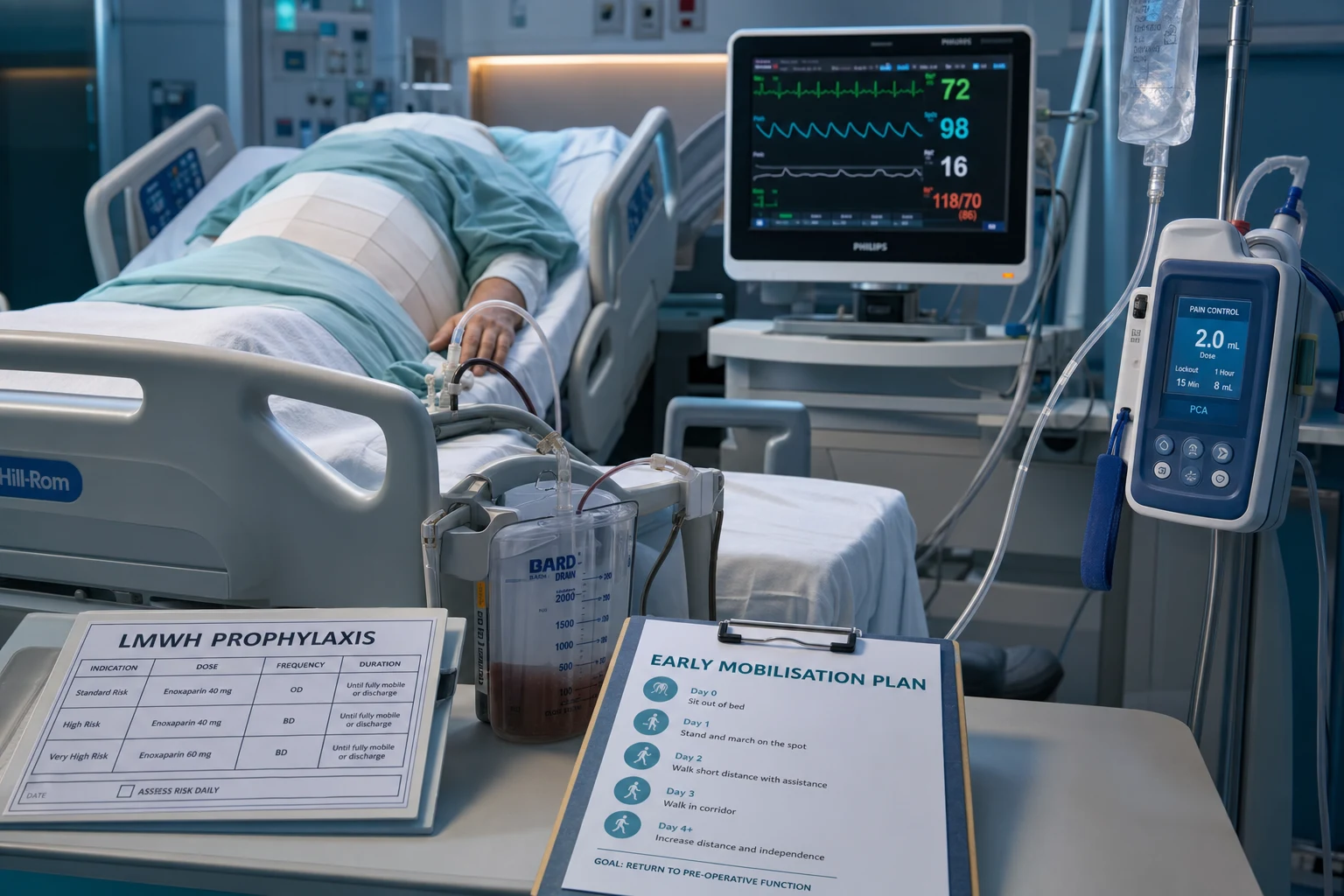
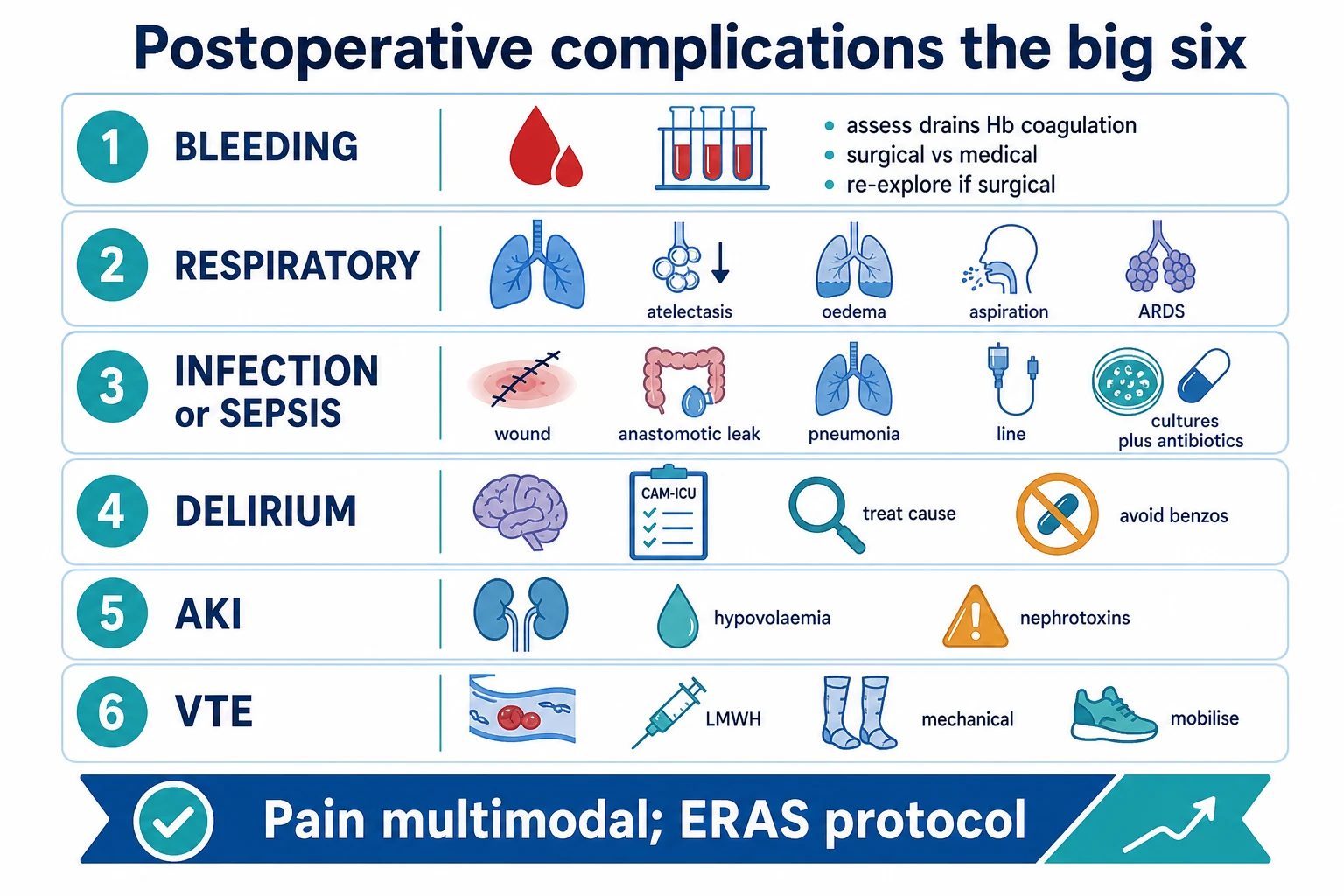
Overview & epidemiology
Postoperative ICU care exists on a continuum from the operating theatre to the ward. The EuSOS study (Pearse 2012) audited mortality in 46,539 patients across 498 European hospitals and found an overall crude mortality of 4 per cent at 30 days — far higher than widely assumed — with the burden concentrated in high-risk (mainly emergency, elderly, and major-comorbidity) patients who account for 80 per cent of postoperative deaths.[1] The implication for the intensivist: the postoperative patient who reaches ICU is, by selection, a high-risk patient, and the task is structured surveillance for predictable, time-clustered complications rather than reactive firefighting.[2]
[1]The surgical stress response — why the postoperative patient decompensates
Surgery is a controlled injury, and the body responds with a neuroendocrine-inflammatory stress response proportional to the magnitude of tissue trauma. This response drives nearly every postoperative complication and is the physiological rationale for ERAS, which aims to attenuate it.[2]
The surgical stress response — the mechanism and the complication it causes
| Axis | What is released | Physiological effect | Resulting complication |
|---|---|---|---|
| Sympathoadrenal | Catecholamines (adrenaline, noradrenaline) | Tachycardia, hypertension, increased myocardial oxygen demand, vasoconstriction, splanchnic ischaemia | MINS, AF, hypertension, mesenteric ischaemia |
| HPA axis | ACTH, cortisol | Catabolism (protein, fat), hyperglycaemia, insulin resistance, immunosuppression | Hyperglycaemia, wound infection, impaired healing |
| Inflammatory | IL-1, IL-6, TNF-alpha, CRP | Capillary leak, vasodilation, endothelial activation, coagulation shift | Third-space losses, hypotension, VTE, AKI |
| Anti-diuretic | ADH, aldosterone, renin | Sodium and water retention, potassium loss | Fluid overload, hyponatraemia, ileus |
| Coagulation | Increased fibrinogen, decreased fibrinolysis, tissue factor expression | Hypercoagulable state peaks 24-72 h postop | DVT/PE (days 3-7) |
| Metabolic | Insulin resistance, gluconeogenesis | Hyperglycaemia, negative nitrogen balance | Impaired healing, infection |
The lesson: most postoperative complications are the measurable downstream effect of this stress response. ERAS interventions (regional analgesia to blunt sympathetic surge, opioid-sparing analgesia, early enteral feeding, avoidance of fluid overload, early mobilisation) work by attenuating each axis — which is why adherence to the ERAS bundle improves long-term survival (Gustafsson showed ERAS adherence independently predicts 5-year survival after colorectal cancer surgery).[23][2]
Common complications
Respiratory (#1)
Most common
- Atelectasis: reduced FRC from anaesthesia, pain, immobility → collapse. Incentive spirometry, early mobilisation.
- Pneumonia: aspiration, hypoventilation, impaired cough. Antibiotics, chest physio.
- Pulmonary oedema: fluid overload, negative pressure (post-extubation stridor), transfusion-related.
- Respiratory failure: ARDS (sepsis, transfusion, aspiration), opiate-induced hypoventilation.
Cardiovascular
High-risk patients
- MI: silent in 50% of diabetics. Postop troponin surveillance in high-risk.
- Arrhythmia: AF common after thoracic/cardiac surgery. Rate control first.
- Heart failure: fluid overload + cardiac dysfunction. Diuretics.
- Hypotension: bleeding, vasodilation (epidural, sepsis), cardiac dysfunction.
Surgical
Specific to procedure
- Bleeding (first 24h): surgical site, drain output, Hb drop, haematoma. May need re-operation.
- Anastomotic leak (days 5-7): GI surgery. Fever, pain, tachycardia, sepsis. CT with oral contrast.
- Wound infection (days 3-10): erythema, discharge, dehiscence. Antibiotics + wound care.
- Intra-abdominal abscess: fever, pain, raised inflammatory markers. CT + drainage.
- Ileus: common post-surgery. NG decompression, prokinetics, early feeding.
Complications cluster by postoperative day — the timeline is diagnostic
The single most useful heuristic at the bedside is the postoperative timeline: knowing how many days since surgery massively narrows the differential for any deterioration.[1]
Postoperative complications by day — the timeline is diagnostic
| Time window | Think | Reason |
|---|---|---|
| 0-24 h | Bleeding; residual anaesthesia/opioid effect; airway oedema; hypothermia; atelectasis; immediate MINS | Surgical haemostasis not yet secure; drugs and hypothermia still recovering; airway manipulation |
| Day 1-3 | Atelectasis, pneumonia, MINS (silent troponin rise), pulmonary oedema, AKI from intraoperative insult, postoperative pain crisis | Resolving anaesthesia meets peak inflammatory stress; fluid shifts; impaired cough |
| Day 2-4 | Postoperative AF (especially thoracic/cardiac); alcohol withdrawal; sepsis onset | Sympathetic surge, electrolyte shifts, atrial stretch from fluid, inflammation peak |
| Day 3-7 | DVT/PE (the classic unexplained hypoxia); anastomotic leak (GI surgery, peak day 5-7); wound infection; intra-abdominal abscess | Hypercoagulable peak; devitalised tissue and anastomotic breakdown; bacterial colonisation |
| Day 7-14 | Wound dehiscence; deep organ-space infection; late PE; malnutrition if NPO | Impaired healing manifesting; inadequate nutrition |
| Week 2-6 | Incisional hernia; chronic post-surgical pain; adhesions (small bowel obstruction) | Late structural failure |
The clinical application: a patient on day 1 with hypotension and tachycardia = bleeding until proven otherwise; the same patient on day 5 with fever and tachycardia = anastomotic leak or abscess; the same patient on day 4 with new AF = search for the trigger (pain, electrolytes, fluid overload, infection, MINS). [1]
Cardiac complications — MINS, postoperative AF and the perioperative cardiac assessment
Cardiac complications are the most common cause of postoperative death in the non-cardiac surgical patient. The landmark VISION studies redefined the field: routine postoperative troponin measurement uncovered a vast hidden burden of myocardial injury after noncardiac surgery (MINS) — ischaemic cardiac injury that is clinically silent in over half of cases and independently predicts 30-day mortality.[7][8]
MINS — the silent killer of the postoperative patient
MINS is defined as a peak troponin T of at least 0.03 ng/mL (or high-sensitivity troponin above the 99th percentile) judged to be of ischaemic origin within 30 days of surgery, with or without ischaemic symptoms. The VISION study (Devereaux 2017) showed that about 1 in 7 patients having noncardiac surgery suffers MINS, and MINS independently predicts 30-day mortality — the higher the troponin, the higher the risk.[8][9][10]
MINS vs perioperative MI (type 1 vs type 2) — the distinction that drives treatment
| Feature | Type 1 (plaque rupture / thrombosis) | Type 2 (supply-demand mismatch) — the commoner MINS mechanism |
|---|---|---|
| Mechanism | Coronary plaque rupture with thrombus | Sustained oxygen supply-demand mismatch (tachycardia, hypotension, hypoxia, anaemia, pain, hypertension) |
| Frequency postop | Minority | Majority of MINS |
| ECG | ST elevation, new Q waves, new LBBB | Often non-specific; may show ischaemic flattening or be normal |
| Troponin | Rise and fall with a clinical ischaemic pattern | Rise (may be sustained); often asymptomatic — detected only by surveillance |
| Management | Antiplatelet + anticoagulation ± urgent PCI | Treat the trigger (pain, hypoxia, anaemia, tachycardia, hypertension); statin; consider aspirin |
| Prognosis | High short-term mortality | Also high — 30-day mortality up to 10 per cent |
The practical consequence: the 2014 ESC/ESA guidelines recommend routine troponin measurement for 48-72 h after surgery in high-risk patients (those with established or risk factors for coronary disease, undergoing high-risk surgery), because most MINS would otherwise be missed.[11][10]
Preoperative cardiac risk stratification — the tools the examiners want
Preoperative cardiac risk tools — when and how to use them
| Tool | What it estimates | How it is calculated | High-risk threshold |
|---|---|---|---|
| Revised Cardiac Risk Index (Lee index) | Major cardiac complications (MI, pulmonary oedema, VF, cardiac arrest) after noncardiac surgery | 1 point each for: high-risk surgery (intraperitoneal, intrathoracic, suprainguinal vascular), history of ischaemic heart disease, history of congestive heart failure, history of cerebrovascular disease, insulin-dependent diabetes, renal failure (creatinine > 177 umol/L) | Score ≥2 (or even 1 with high-risk surgery) |
| NSQIP / Gupta MICA calculator | Perioperative MI and cardiac arrest | Web-based multivariable model (procedure, age, ASA class, functional dependence, creatinine) | Estimated risk > 1% |
| Duke Activity Status Index (DASI) | Cardiorespiratory functional capacity (METs) — a proxy for fitness, the first ESC step | 12-item self-administered questionnaire of daily activities | DASI < 34 (≈ < 4 METs, unable to climb a flight of stairs) triggers cardiology assessment and troponin surveillance |
| NT-proBNP | Cardiac stress / occult dysfunction | Single blood test | Elevated preop value predicts perioperative cardiac events — ESC recommends in intermediate- or high-risk surgery |
The ESC/ESA stepwise algorithm (Kristensen 2014): (1) assess urgency — emergency surgery proceeds without delay; (2) estimate risk with NSQIP or RCRI and assess functional capacity (DASI); (3) in low-risk surgery with adequate functional capacity, proceed; (4) if high-risk surgery or poor functional capacity, measure NT-proBNP and consider echocardiography; (5) escalate cardiology referral only if the result will change management.[11][12][13]
Postoperative atrial fibrillation — the day 2-4 arrhythmia
POAF is the commonest postoperative arrhythmia, occurring in 30-40 per cent of cardiac surgery (CABG, valve), 15-20 per cent of thoracic (lung resection), and 1-8 per cent of major non-cardiac surgery. It typically appears on day 2-4, driven by sympathetic surge, electrolyte shifts (hypokalaemia, hypomagnesaemia), atrial stretch from fluid overload, inflammation (pericarditis), and pain.[11]
Management of new postoperative AF (haemodynamically stable)
- Assess haemodynamic stability first — if hypotensive, shocked, ischaemic, or heart failure: synchronised DC cardioversion (the unstable patient is never rate-controlled first)
- Identify and treat the triggers — pain control, correct potassium to > 4.0 and magnesium to > 1.0, treat hypoxia and fluid overload (diurese), exclude MINS (troponin), treat infection
- Rate control — beta-blocker (metoprolol IV then oral) is first-line; diltiazem if beta-blocker contraindicated (asthma); digoxin if heart failure
- Rhythm control — amiodarone if AF persists, in heart failure, or structurally abnormal heart; consider cardioversion after ≥ 3 weeks anticoagulation or after TOE excludes atrial thrombus if early
- Anticoagulation — assess CHA2DS2-VASc and HAS-BLED; anticoagulate if AF persists > 48 h or recurs, balancing bleeding risk (fresh surgical site). Heparin/LMWH preferred early (reversible); DOAC once haemostasis secure
- Reassess — most POAF self-terminates within 6-8 weeks; re-evaluate need for anticoagulation at outpatient review
For prophylaxis of POAF after cardiac surgery, beta-blockers reduce incidence and are standard; amiodarone prophylaxis and statins provide additional benefit in high-risk patients. The decision is individualised — routine amiodarone prophylaxis is not universal because of pulmonary and thyroid toxicity.[11]
Respiratory complications — the number-one cause of postop ICU admission
Respiratory complications (atelectasis, pneumonia, pulmonary oedema, respiratory failure) are the single most common reason a surgical patient requires ICU, and the most preventable. The ARISCAT risk index (Canet 2010) quantifies the risk and is the screening tool examiners expect.[14][15]
ARISCAT — risk factors for postoperative pulmonary complications (Canet 2010)
| Risk factor | Points |
|---|---|
| Age ≥ 51 (increasing) | up to 3 |
| Preoperative SpO2 < 96% | 1 |
| Respiratory infection in last month | 1 |
| Preoperative anaemia (Hb < 100 g/L) | 1 |
| Upper abdominal or intrathoracic surgery | 1-2 |
| Peripheral surgery (protective) | -1 |
| Surgical duration > 2 h | 1 |
| Emergency surgery | 1 |
| Total | Low < 26, Intermediate 26-40, High > 40 |
High ARISCAT patients need an aggressive lung-protection bundle.[14]
Postoperative pulmonary complications — prevention bundle
Preventing postoperative pulmonary complications (the modifiable drivers)
- Preoperative — smoking cessation ≥ 4-8 weeks (halves PPC risk); optimise COPD/asthma; treat active respiratory infection; treat anaemia; incentive-spirometry teaching
- Intraoperative — protective ventilation (tidal volume 6-8 mL/kg ideal body weight, PEEP 5-8 cmH2O, recruitment manoeuvres); avoid nitrous oxide in prolonged surgery (ENIGMA-II showed N2O increased cardiovascular complications); minimise tidal collapse with paralysis reversal; regional anaesthesia where possible
- Postoperative — the ICU bundle — sit upright > 30 degrees; incentive spirometry hourly while awake; early mobilisation (out of bed day 1 if stable); adequate (opioid-sparing) analgesia to permit deep breathing and coughing; chest physiotherapy for atelectasis; avoid fluid overload; gastric protection if ventilated > 48 h
- Targeted therapy — NIV (CPAP or BiPAP) for established atelectasis/hypoventilation, especially in obese and COPD patients (Level 1 evidence for hypoxaemic respiratory failure after abdominal surgery)
- Venous thromboembolism prophylaxis — prevents PE, the classic day-3-7 cause of unexplained hypoxia
The respiratory complications — distinguishing them at the bedside
| Complication | Typical timing | Hallmark features | Key intervention |
|---|---|---|---|
| Atelectasis | Immediate to day 2 | Basal crackles, reduced expansion, hypoxia responsive to oxygen/CPAP; CXR plate-like collapse | Incentive spirometry, CPAP, mobilisation, analgesia |
| Pneumonia | Day 2 onwards | Purulent sputum, fever, consolidation, raised inflammatory markers; micro-aspiration of oropharyngeal secretions | Antibiotics (culture-directed), chest physio, sit up |
| Aspiration pneumonitis/pneumonia | Peri-extubation, day 0-1 | Right lower lobe infiltrate after vomiting/regurgitation; chemical pneumonitis then bacterial superinfection | Airway protection, antibiotics if progressive, supportive ventilation |
| Pulmonary oedema | Day 0-3 | Bilateral infiltrates, frothy sputum, raised JVP; fluid overload or negative-pressure oedema | Diurese, oxygen, NIV/CPAP; treat the cause |
| Negative-pressure pulmonary oedema | Immediate post-extubation | After laryngospasm/stridor — forceful inspiration against obstructed airway; transient, copious pink frothy sputum | Oxygen, NIV/CPAP; resolves in 24-48 h once airway secured |
| ARDS | Day 1-5, in context of sepsis/transfusion/aspiration/trauma | Refractory hypoxia, bilateral infiltrates, no isolated cardiac cause | Lung-protective ventilation, treat trigger (see ARDS topic) |
| Pulmonary embolism | Day 3-7 (but any time) | Unexplained hypoxia, tachycardia, pleuritic pain; raised D-dimer; RV strain on echo | Anticoagulation; thrombolysis if massive |
Renal complications — postoperative AKI and the Kheterpal index
Postoperative AKI occurs in about 1 per cent of general surgical patients overall, but up to 30 per cent after cardiac surgery (where it is driven by cardiopulmonary bypass, low output, nephrotoxins). It independently predicts mortality, length of stay, and long-term chronic kidney disease. The Kheterpal risk index (developed and validated on 75,952 general surgical patients) stratifies preoperative AKI risk and identifies who needs intraoperative goal-directed therapy and nephrotoxin avoidance.[16]
Kheterpal postoperative AKI risk index (Anesthesiology 2009)
| Risk factor | Points |
|---|---|
| Age ≥ 56 (increasing with age) | up to 3 |
| Male sex | 1 |
| Emergency surgery | 1 |
| Intraperitoneal surgery | 1 |
| Diabetes mellitus (oral medication) | 1 |
| Diabetes mellitus (insulin-treated) | 3 |
| Congestive heart failure | 2 |
| Hypertension | 1 |
| Preoperative creatinine > 106 umol/L (1.2 mg/dL) | 2 |
| Preoperative GFR 30-60 | 1 |
| Risk stratum | Low 0-5, Moderate 6-10, High > 11 |
Patients in the high Kheterpal stratum have a greater than 10-fold higher risk of postoperative AKI requiring dialysis — and they are the population in whom every modifiable AKI driver must be eliminated.[16]
Preventing postoperative AKI (KDIGO bundle applied to surgery)
- Risk stratify — calculate Kheterpal index; identify pre-existing CKD, diabetes, heart failure, age, emergency surgery, contrast exposure
- Maintain intravascular volume — goal-directed therapy (stroke volume variation, dynamic indices); avoid both hypovolaemia (under-resuscitation, blood loss) and fluid overload (venous congestion worsens renal perfusion); balanced crystalloids preferred over normal saline (hyperchloraemic acidosis causes renal vasoconstriction)
- Eliminate nephrotoxins — avoid NSAIDs in high-risk; minimise iodinated contrast; dose-adjust renally-cleared drugs; review all medications daily
- Maintain perfusion pressure — maintain MAP ≥ 65 mmHg (≥ 75 in chronic hypertension); treat hypotension promptly; vasopressors for vasodilatory shock do not cause AKI if perfusion is restored
- Monitor closely — hourly urine output; daily creatinine; watch the trend — a 25 per cent rise is AKI (KDIGO)
- Hyperglycaemic control — 6-10 mmol/L; severe hyperglycaemia causes osmotic diuresis and volume depletion
- Avoid glycaemic extremes and rhabdomyolysis — check creatine kinase after prolonged lithotomy/lateral surgery; aggressive fluids if raised
Gastrointestinal complications — ileus, early feeding, and the day 5-7 anastomotic leak
Postoperative ileus vs early feeding
Postoperative ileus — a transient, physiological inhibition of bowel motility after abdominal surgery — resolves within 24-72 h for small bowel, 24-48 h for stomach, and 48-120 h for colon. It is expected and must be distinguished from mechanical obstruction. The drivers are opioid use, electrolyte disturbance (hypokalaemia), immobility, sympathetic outflow from pain, and inflammation. [1]
Postoperative ileus vs mechanical obstruction vs early small-bowel obstruction
| Feature | Ileus (physiological) | Early mechanical SBO (adhesions, weeks-months) | Anastomotic leak / intra-abdominal catastrophe |
|---|---|---|---|
| Timing | First 24-120 h | Usually > 1-2 weeks postop (often weeks-months) | Day 5-7 (GI surgery) |
| Abdomen | Distended, silent or tinkling, non-tender (unless progressing) | Distended, high-pitched tinkling, colicky pain, hyper-resonance | Distended, guarding/rigidity, severe pain disproportionate to findings |
| Plain film / CT | Diffuse gas and fluid throughout, including large bowel | Dilated small bowel with transition point, no rectal gas | Free gas, free fluid, contrast extravasation at anastomosis |
| Management | Mobilise, minimise opioids, correct electrolytes (K, Mg), prokinetics (metoclopramide), early enteral feeding, NGT if vomiting | Surgical review; often conservative (NGT, fluids) if no peritonitis; surgery if strangulated | Resuscitate, broad-spectrum antibiotics, urgent re-operation |
The ERAS principle of early enteral feeding (within 24 h) has overturned the old dogma of prolonged postoperative NPO. Early feeding maintains gut mucosal integrity, reduces bacterial translocation and infection, and accelerates return of gut function — without increasing anastomotic leak risk.[2]
Anastomotic leak — the catastrophic day 5-7 event
Anastomotic leak (dehiscence of a surgical join — most commonly colorectal, oesophageal, gastric, or biliary) typically presents on day 5-7, and is a leading cause of postoperative death after GI surgery. The classic triad is fever, abdominal pain, and tachycardia, often with signs of sepsis, in a patient who had been recovering well. Low-output leaks may present insidiously as a pelvic abscess; high-output leaks present with frank peritonitis and septic shock. [1]
Risk factors for anastomotic leak
| Modifiable | Non-modifiable |
|---|---|
| Hypotension / hypoperfusion during surgery (the anastomosis is the most ischaemic tissue) | Male sex; low rectal anastomosis (below peritoneal reflection, highest risk) |
| Tension on the anastomosis (inadequate mobilisation) | Emergency surgery; perioperative blood transfusion |
| Anaemia and hypoxaemia (poor oxygen delivery) | Steroid use; malnutrition / hypoalbuminaemia |
| Smoking; poorly controlled diabetes | Neoadjuvant radiotherapy (rectal cancer) |
| Perioperative fluid overload (bowel oedema) | High body mass index |
| Surgeon and technique factors (stapled vs hand-sewn, devascularisation) | Pre-existing cardiovascular disease |
Suspected anastomotic leak — the escalation
- Recognise the pattern — day 5-7, fever + tachycardia + abdominal pain ± ileus ± sepsis in a patient who had been recovering. Pain out of proportion and tachycardia out of proportion to fever are red flags
- Resuscitate — ABCDE; oxygen; IV access; fluid boluses; cross-match; broad-spectrum antibiotics (covering gram-negatives and anaerobes, e.g. piperacillin-tazobactam ± metronidazole)
- Investigate — CT abdomen and pelvis with oral water-soluble contrast (rectal contrast may also help for low pelvic anastomoses); look for extraluminal contrast, free gas, free fluid, abscess; bedside ultrasound if unstable
- Surgical review — urgently — the decision to re-operate is clinical; a normal-looking CT does NOT exclude leak if the patient is septic
- Source control — options range from percutaneous drainage of a contained abscess to re-laparotomy with anastomotic takedown and stoma formation; the leaking anastomosis is usually taken down rather than re-anastomosed
- Postoperative ICU — manage sepsis per SSC bundle; vasopressors, lung-protective ventilation if needed; watch for AKI and ARDS; nutritional support (preferentially enteral once gut recovers)
Wound complications — SSI, dehiscence and the prevention bundle
Surgical site infection (SSI) is infection occurring within 30 days of surgery (or within 90 days if an implant is placed), involving the skin, subcutaneous tissue, deep soft tissue, or organ space. The CDC classification (Mangram 1999) remains the standard, and SSI is the second-most-common healthcare-associated infection.[19]
CDC SSI classification by depth
| Class | Layer involved | Typical features | Management |
|---|---|---|---|
| Superficial incisional | Skin and subcutaneous | Erythema, pain, heat, purulent discharge within 30 days; suture abscess | Open incision, dress, culture, oral antibiotics; remove sutures/staples locally |
| Deep incisional | Fascia or muscle | Purulent drainage, dehiscence, fever; within 30 days (90 if implant) | Surgical exploration and debridement; IV antibiotics; imaging for deeper extension |
| Organ / space | Any organ/space manipulated (peritoneum, pleura, joint) | Often day 5-7; fever, pain, raised markers; abscess on imaging | Percutaneous or surgical drainage; IV antibiotics; source control |
SSI prevention — the evidence-based bundle
SSI risk stratification — wound class
| Wound class | Definition | Approximate SSI rate |
|---|---|---|
| Class I — Clean | Elective, non-traumatic, primary closure, no inflammation, no break in technique | 1-3% |
| Class II — Clean-contaminated | Controlled entry of respiratory, GI, GU tract without significant contamination | 3-7% |
| Class III — Contaminated | Gross spillage from GI tract, fresh trauma, major break in technique | 10-15% |
| Class IV — Dirty / infected | Purulent inflammation, perforated viscus, old traumatic wound | > 20% |
The SSI prevention bundle (the bundle every ICU should enforce)
- Antimicrobial prophylaxis — IV antibiotic within 60 min before incision (Bratzler 2004); re-dose during long surgery (e.g. cefazolin every 4 h, or 3-5 h if high blood loss); cover MRSA with vancomycin in known carriers; do NOT continue prophylactic antibiotics beyond 24 h routinely (no benefit, selects resistance)[18]
- Skin preparation — chlorhexidine-alcohol superior to povidone-iodine; preoperative bathing with chlorhexidine
- Hair removal — clip, do not shave, immediately before surgery (shaving causes micro-abrasions)
- Normothermia — maintain core temperature ≥ 36 degrees C (hypothermia impairs neutrophil function and wound oxygenation, doubling SSI)
- Normoglycaemia — perioperative glucose 6-10 mmol/L in diabetics; hyperglycaemia is an independent SSI risk factor
- Oxygenation — high perioperative FiO2 (80%) in patients with adequate perfusion increases wound partial pressure of oxygen and reduces SSI in class II wounds
- Surgical technique — gentle tissue handling, meticulous haemostasis, antibiotic irrigation (selected cases), drain only when indicated, primary vs delayed closure decision in contaminated wounds
- Postoperative — sterile dressing for 24-48 h; hand hygiene; glycaemic control; nutritional support; smoking cessation
Wound dehiscence — the day 7-14 catastrophe
Superficial dehiscence (skin/fat separation) is managed with local wound care and delayed closure or healing by secondary intention. Fascial dehiscence (burst abdomen) — separation of the deep fascial closure with evisceration — presents classically on day 7-10 as a serosanguinous (pink) discharge from the wound (the herald sign), followed by protrusion of bowel. It is a surgical emergency requiring re-closure under anaesthesia; risk factors include coughing, obesity, malnutrition, sepsis, haematoma, and poor surgical closure technique. [1]
Neurological complications — postoperative delirium and the ABCDEF bundle
Postoperative delirium occurs in 15-50 per cent of elderly surgical patients (highest after hip fracture and cardiac surgery), is strongly associated with longer stay, higher mortality, and long-term cognitive decline, and is largely preventable through non-pharmacological measures. The PADIS guidelines (Devlin 2018) and the ABCDEF bundle (Balas 2014) are the modern framework for both prevention and management.[21][22]
The ABCDEF bundle — the evidence-based ICU delirium prevention bundle (Balas 2014)
| Letter | Component | What it means in the postoperative patient |
|---|---|---|
| A | Assess, prevent, and manage pain | Treat pain adequately (multimodal, opioid-sparing) — untreated pain causes delirium; avoid oversedation which also causes delirium |
| B | Both spontaneous awakening trials and spontaneous breathing trials | Daily SAT + SBT — reduce ventilation and sedation exposure (the strongest delirium driver in ICU) |
| C | Choice of analgesia and sedation | Prefer opioid-sparing analgesia (paracetamol, regional); minimise benzodiazepines (independent delirium risk factor); propofol or dexmedetomidine preferred |
| D | Delirium assess, prevent, manage | Screen with CAM-ICU or ICDSC every shift; non-pharmacological prevention first; treat haloperidol/quetiapine only if distressing or dangerous |
| E | Early mobility and exercise | Mobilise from day 1 if stable — the single most effective intervention |
| F | Family engagement and empowerment | Orientation cues (clock, calendar, glasses, hearing aids); family at bedside; normalise sleep-wake cycle |
Preventing postoperative delirium in the elderly surgical patient
- Preoperative — screen for cognitive impairment, frailty, depression; review polypharmacy (anticholinergics, benzodiazepines); counsel patient and family; optimise hearing and vision aids
- Intraoperative — minimise benzodiazepines and depth of anaesthesia excess (BIS or entropy monitoring where available); avoid hypotension, hypoxia, hypocapnia; regional anaesthesia where possible
- Postoperative — orient frequently (clock, calendar, familiar objects); restore glasses and hearing aids; treat pain (opioid-sparing); avoid urinary catheters and restraints; early mobilisation; normalise sleep-wake cycle (lights, noise, sleep-promotion at night); treat constipation and urinary retention
- Detect early — screen with CAM-ICU/4AT every shift; investigate new delirium (infection, hypoxia, metabolic, drugs, pain, urinary retention, constipation) — delirium is a diagnosis of exclusion for reversible causes
- Pharmacological treatment — only if severe and distressing; haloperidol low-dose, or quetiapine; do NOT use antipsychotics prophylactically
Thromboembolic complications — perioperative VTE
The postoperative state is the archetypal high-VTE-risk state: venous stasis (immobility, raised intraoperative venous pressure), hypercoagulability (surgical tissue factor release, inflammation peak at 24-72 h), and endothelial injury (venous cannulation, direct trauma) — Virchow's triad in full. PE classically presents on day 3-7 as unexplained hypoxia and tachycardia, and is a leading cause of sudden unexpected postoperative death. See the dedicated VTE topic for full detail; the postoperative essentials are below. [1]
VTE risk stratification in surgical patients — Caprini score
| Caprini score | VTE risk without prophylaxis | Recommendation |
|---|---|---|
| 0 (very low) | < 0.5% | Early mobilisation |
| 1-2 (low) | ~1.5% | Mechanical (IPC) |
| 3-4 (moderate) | ~3% | LMWH or IPC |
| ≥ 5 (high) | ~6% | LMWH + IPC; consider extended (4-week) prophylaxis for major cancer surgery |
For major orthopaedic (hip/knee replacement) and cancer surgery, extended-duration prophylaxis (LMWH or DOAC for 4-6 weeks post-discharge) reduces symptomatic VTE and is the standard. For most other surgical patients, prophylaxis continues until the patient is fully mobile.[2]
The perioperative anticoagulation bridge
The patient on long-term anticoagulation (atrial fibrillation, mechanical valve, prior VTE) presents the bridging dilemma: stop the anticoagulant to reduce surgical bleeding, but cover the high-risk window with a short-acting agent. The general principles: [1]
Perioperative anticoagulation management
- Assess thrombotic risk — mechanical mitral valve, recent (< 3 months) VTE or stroke, rheumatic heart disease = HIGH risk (bridge); AF without these risk factors, remote VTE = LOW risk (no bridge, just stop)
- Assess bleeding risk of the procedure — minor procedures (cataract, dental, endoscopy without biopsy) do not require stopping; major surgery requires full reversal
- Warfarin — stop 5 days preop, target INR ≤ 1.5; bridge with LMWH/UFH for high thrombotic risk (stop LMWH 24 h preop); restart warfarin the evening of surgery if haemostasis secure
- DOACs — stop 24-48 h preop (longer for major surgery, renal impairment, dabigatran); NO routine bridging (rapid offset and onset); restart 24-72 h postop once haemostasis secure (BRIDGE trial showed bridging AF patients caused more bleeding without reducing thromboembolism)
- Antiplatelets — aspirin: POISE-2 showed NO benefit and more bleeding for patients started on aspirin perioperatively; stop 5-7 days for non-cardiac surgery UNLESS secondary prevention (recent stent) — the cardiology/surgical decision is critical; never stop dual antiplatelet therapy within 3 months (BMS) or 6 months (DES) of stenting without cardiology input
- Resume promptly — thrombotic risk peaks immediately postop; resume therapeutic anticoagulation as soon as haemostasis allows (usually 24-72 h)
Enhanced Recovery After Surgery (ERAS) — the unifying prevention framework
ERAS is an evidence-based, multimodal perioperative care pathway that attenuates the surgical stress response and accelerates recovery. Adherence reduces complications, length of stay, and cost — and, strikingly, Gustafsson showed that ERAS adherence independently predicts 5-year survival after colorectal cancer surgery.[23][2]
ERAS principles — the full bundle
| Phase | Intervention | Mechanism / benefit |
|---|---|---|
| Preoperative | Counselling, no prolonged fasting (clear fluids up to 2 h, solids 6 h), carbohydrate loading, smoking/alcohol cessation, optimisation of comorbidities, no mechanical bowel preparation (or combined with oral antibiotic) for colorectal | Reduces insulin resistance, dehydration, catabolism; improves postoperative glycaemia |
| Intraoperative | Minimal-access surgery, regional anaesthesia, normothermia, goal-directed fluid therapy, no drains/tubes routinely, avoidance of sodium/water overload, PONV prophylaxis | Less tissue trauma, less opioid use, less ileus, less hypothermia-related infection |
| Postoperative | Early mobilisation (day 1), early enteral feeding, opioid-sparing multimodal analgesia, early removal of catheters/drains, glycaemic control, VTE prophylaxis, audit of compliance | Restores function, prevents PPC/AKI/delirium/VTE |
Management principles
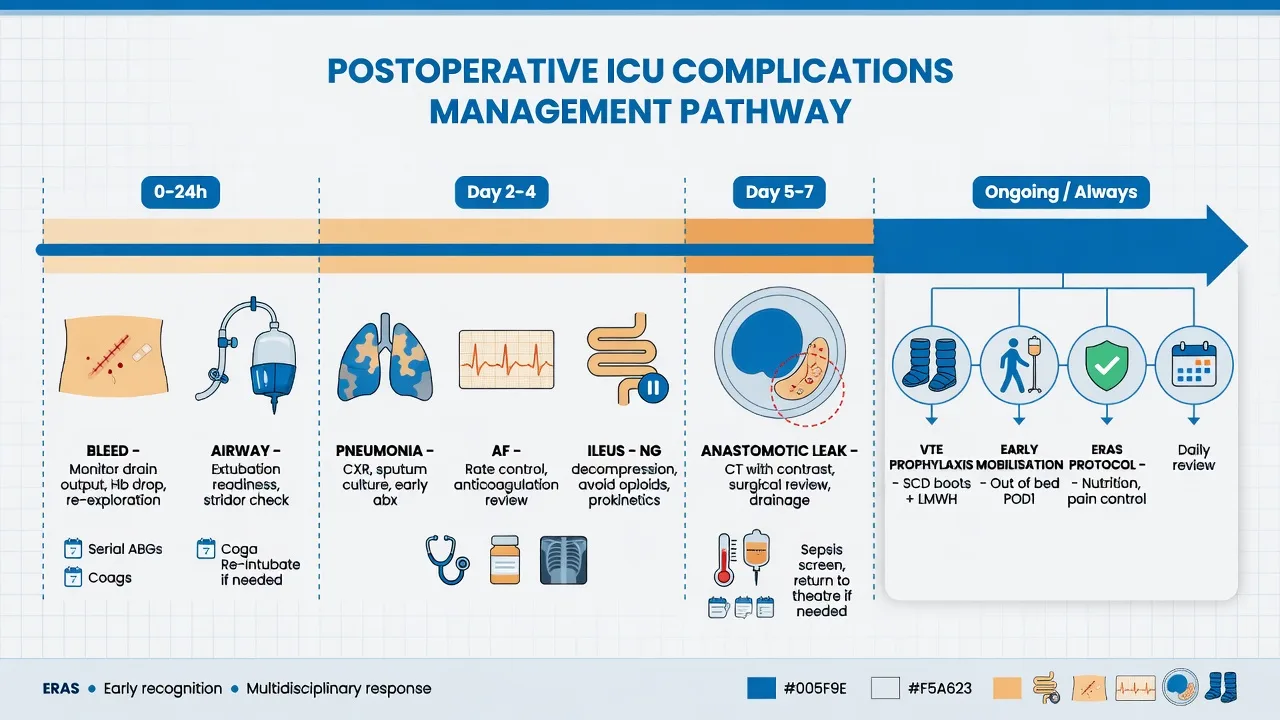
Postoperative ICU management
Assess and monitor
ABCDE on arrival. Monitor: HR, BP, SpO2, temperature, urine output, drain output, pain score. Check: Hb (baseline), U&E, glucose, coagulation. Assess for: bleeding (drains, abdomen, Hb trend), respiratory compromise (SpO2, work of breathing), pain control, fluid balance.
Multimodal analgesia (ERAS)
Paracetamol (scheduled, baseline). Regional anaesthesia (epidural, paravertebral, TAP block — reduces opioid requirement). NSAIDs (if no renal impairment/bleeding risk). Opioids: minimise (PCA, avoid basal infusion — causes respiratory depression and ileus). Local anaesthetic wound infiltration. Goal: adequate analgesia for mobilisation + deep breathing without excessive sedation.
Early mobilisation and respiratory care
Incentive spirometry Q1H while awake. Sit out of bed day 1 (if stable). Mobilise as early as possible. Chest physiotherapy. Avoid fluid overload (restrict maintenance, monitor balance). Early enteral nutrition (gut mucosal integrity, reduces infection).
VTE prophylaxis
ALL post-surgical ICU patients (unless actively bleeding). LMWH (enoxaparin 40 mg SC daily — start 6-12h postop or when bleeding risk acceptable). Mechanical (IPC stockings). Combined for high-risk (major orthopaedic, cancer, prolonged surgery). Balance: surgical bleeding vs thrombosis. Consult surgeon for timing.
Glycaemic control
Target glucose 6-10 mmol/L (NICE-SUGAR). Insulin infusion for diabetics/stress hyperglycaemia. Avoid hypoglycaemia (dangerous) and hyperglycaemia (wound infection, impaired healing).
Recognise and treat complications early
Bleeding: Hb drop >20, drain output >100 mL/h, expanding haematoma, hypotension → transfuse + surgical review. Anastomotic leak: fever + pain + tachycardia days 5-7 → CT + surgery. Sepsis: cultures + antibiotics + source control. DVT/PE: days 3-7, unexplained hypoxia/tachycardia → D-dimer + CTPA + anticoagulation. MINS: routine troponin in high-risk → aspirin, statin, treat triggers.
Key trials and evidence
The evidence base for perioperative cardiac risk and prevention is dominated by the POISE and VISION programmes from the Devereaux / Population Health Research Institute group. The cardiovascular-protection trials have mostly been negative (POISE for beta-blockade, POISE-2 for aspirin and clonidine, MANAGE for dabigatran), which is itself the exam answer: there is no proven single-drug perioperative cardiac protectant beyond optimising the patient.[3][6][10]
POISE — Devereaux 2008 — Perioperative metoprolol for noncardiac surgery (PMID 18479744)
Source
Lancet — randomised controlled trial, 8351 patients undergoing noncardiac surgery
Intervention
Extended-release metoprolol succinate started 2-4 h before surgery and continued 30 days vs placebo
Primary endpoint
Composite of cardiovascular death, nonfatal MI, nonfatal cardiac arrest — REDUCED (5.8% vs 6.9%; HR 0.84)
Safety
MORE overall mortality (3.1% vs 2.3%) and MORE stroke (1.0% vs 0.5%) with metoprolol
Clinical bottom line
Aggressive perioperative beta-blockade reduces MI but increases mortality and stroke — beta-blockers should not be started on the day of surgery in naive patients; continue those already on them
POISE-2 (aspirin) — Devereaux 2014 — Perioperative aspirin (PMID 24679062)
Source
New England Journal of Medicine — randomised placebo-controlled trial, 10,010 patients
Intervention
Aspirin (200 mg preop then 100 mg daily for 30 days) vs placebo, in a 2×2 factorial with clonidine
Primary endpoint
Composite of death or nonfatal MI — NO difference (7.0% vs 7.1%)
Safety
MORE major bleeding (4.6% vs 3.8%); aspirin did NOT prevent perioperative cardiac events
Clinical bottom line
Starting aspirin perioperatively for primary prevention causes bleeding without cardiac benefit — do NOT start aspirin for cardiac prevention around noncardiac surgery (continue if already on it for secondary prevention, generally)
POISE-2 (clonidine) — Devereaux 2014 — Perioperative clonidine (PMID 24679061)
Source
New England Journal of Medicine — randomised placebo-controlled trial (companion to aspirin arm)
Intervention
Clonidine 0.2 mg preop then patch for 4 days vs placebo
Primary endpoint
Composite of death or nonfatal MI — NO difference
Safety
More clinically important hypotension and bradycardia; non-cardiac surgical clonidine is harmful
Clinical bottom line
Clonidine is not a perioperative cardiac protectant — abandoned for this indication
VISION — Devereaux 2017 — High-sensitivity troponin and MINS (PMID 28444280)
Source
JAMA — prospective international cohort, 21,842 patients undergoing noncardiac surgery
Intervention
High-sensitivity troponin T measured daily for 3 days postop; MINS defined as troponin elevation of ischaemic cause
Key finding
MINS occurred in 1 in 7 (14%) of patients; MINS independently predicted 30-day mortality, with a dose-response (higher troponin, higher mortality)
Clinical bottom line
MINS is the commonest perioperative vascular complication and is clinically silent in over half — routine postoperative troponin surveillance in high-risk patients is now standard (ESC/ESA)
MANAGE — Devereaux 2018 — Dabigatran after MINS (PMID 29900874)
Source
Lancet — international randomised placebo-controlled trial, 1754 patients with MINS (or perioperative MI)
Intervention
Dabigatran 110 mg BD vs placebo for a median of 16 months, started after surgery
Primary endpoint
Composite of major vascular complications — reduced (11% vs 14%; HR 0.72)
Safety
More major bleeding (mostly minor, GI); similar life-threatening bleeding
Clinical bottom line
Dabigatran after MINS reduces major vascular events at modest bleeding cost — a treatment option, but management is still dominated by trigger correction (oxygen, analgesia, transfusion thresholds), statin, and aspirin
EuSOS — Pearse 2012 — Mortality after surgery in Europe (PMID 22998715)
Source
Lancet — 7-day prospective multinational cohort, 46,539 patients in 498 hospitals across 28 European countries
What it did
Audited in-hospital mortality and the relationship to patient and surgical factors
Key finding
Crude 30-day mortality 4%; wide variation between countries; most deaths in high-risk subgroups (emergency, major, comorbid)
Clinical bottom line
Defined the scale of postoperative mortality in Europe and the case for dedicated perioperative critical care for high-risk surgical patients
Haynes 2009 — WHO Surgical Safety Checklist (PMID 19144931)
Source
New England Journal of Medicine — pre/post cohort study in 8 hospitals globally, 7688 patients before and after
Intervention
A 19-item surgical safety checklist (sign in, time out, sign out) covering identity, site, anaesthetic safety, antibiotic prophylaxis, airway, blood loss, instrument counts
Key finding
Reduced death (1.5% to 0.8%) and inpatient complications (11% to 7%) after introduction
Clinical bottom line
A simple, low-cost checklist that saves lives — the global standard of safe surgical and perioperative care
ENIGMA-II — Myles 2014 — Nitrous oxide in high-risk surgery (PMID 25142708)
Source
Lancet — randomised single-blind trial, 7112 patients at cardiovascular risk having major noncardiac surgery
Intervention
Nitrous-oxide-based vs nitrous-oxide-free general anaesthesia
Primary endpoint
Composite of death, MI, stroke, cardiac arrest — NO difference
Safety
Nitrous oxide did NOT increase cardiovascular events in high-risk patients, though it caused more nausea/vomiting and wound infection was not increased
Clinical bottom line
Nitrous oxide is safe from a cardiovascular standpoint in high-risk patients; its routine use is limited by PONV, environmental concerns, and the need for B12 monitoring in prolonged use
Balas 2014 — The ABCDEF bundle (PMID 24394627)
Source
Critical Care Medicine — prospective cohort, 296 ICU patients before and 252 after bundle implementation
Intervention
The Awakening and Breathing Coordination, Delirium monitoring/management, and Early exercise/mobility bundle
Key finding
Increased bundle adherence reduced next-day delirium and coma, increased ICU and hospital mobility, and reduced restraint use
Clinical bottom line
A low-cost, non-pharmacological bundle prevents ICU delirium and is the PADIS-recommended standard of care
Gustafsson 2016 — ERAS adherence and long-term survival (PMID 26913728)
Source
British Journal of Surgery — prospective multicentre cohort, 925 patients undergoing colorectal cancer surgery
What it did
Measured adherence to the ERAS protocol and its association with 5-year survival
Key finding
Higher ERAS adherence independently predicted improved 5-year overall and disease-free survival
Clinical bottom line
ERAS is not merely a length-of-stay intervention — protocolised perioperative care changes long-term cancer outcomes
Kheterpal 2009 — Postoperative AKI risk index (PMID 19212261)
Source
Anesthesiology — derivation (45,089) and validation (30,863) cohort from the American College of Surgeons NSQIP database
What it did
Developed a 9-variable risk index for postoperative AKI requiring dialysis in general surgery
Key finding
Indexed age, BMI, male sex, emergency surgery, intraperitoneal surgery, diabetes (insulin > oral), heart failure, hypertension, and preop renal function; high-stratum patients had a 10-fold higher risk
Clinical bottom line
Preoperative AKI risk stratification allows targeted intraoperative goal-directed therapy, nephrotoxin avoidance, and perioperative monitoring
Canet 2010 — ARISCAT postoperative pulmonary risk index (PMID 21045639)
Source
Anesthesiology — population-based prospective cohort, 2400 surgical patients
What it did
Derived and validated a 7-variable risk index for postoperative pulmonary complications
Key finding
Age, low preop SpO2, recent respiratory infection, anaemia, surgical site (upper abdominal/intrathoracic), duration > 2 h, and emergency surgery stratified risk; high score = high PPC rate
Clinical bottom line
Perioperative lung-protective ventilation, analgesia for coughing, early mobilisation, and incentive spirometry are the modifiable interventions in high-risk patients
SAQ — Postoperative respiratory failure on day 2 after emergency laparotomy
10 minutes · 10 marks
A 68-year-old man with COPD (FEV1 50 per cent predicted), a 40 pack-year smoking history, and BMI 32 is admitted to ICU after an emergency Hartmann procedure for a perforated sigmoid diverticular abscess. The operation lasted 4 hours under general anaesthesia with a thoracic epidural for analgesia. On postoperative day 2 he becomes tachypnoeic: RR 32, SpO2 88 per cent on 6 L nasal specs, temperature 38.4°C, BP 96/60, HR 112, with purulent sputum and splinting from pain on coughing. Arterial blood gas on 6 L shows PaO2 56 mmHg, PaCO2 46 mmHg, pH 7.34, HCO3 24, lactate 2.1. Chest X-ray reveals bibasal consolidation and atelectasis with an elevated right hemidiaphragm.
SAQ — Surgical site infection on day 6 after elective colorectal surgery
10 minutes · 10 marks
A 72-year-old woman with type 2 diabetes (HbA1c 78 mmol/mol, on metformin and gliclazide), BMI 35, and a 30 pack-year smoking history is reviewed on postoperative day 6 after an open right hemicolectomy with primary anastomosis for stage II colonic adenocarcinoma. She received a single dose of cefuroxime 1.5 g and metronidazole 500 mg at induction, the operation lasted 4 hours and 20 minutes, her intraoperative core temperature was 35.4°C, and the wound was closed with a subcuticular suture over a drain. She now has a temperature of 38.8°C, HR 108, BP 110/68; the wound is erythematous and tender with 4 cm of purulent discharge from the lower pole, the WCC is 17.2, and CRP is 230. She is otherwise eating and her bowels have opened.
Clinical pearls
Red flags
Exam technique — answering the postoperative complications question
The 90-second viva answer for 'Discuss the prevention and management of postoperative complications in the ICU patient'
- Frame the patient — "The postoperative ICU patient is, by selection, a high-risk patient — EuSOS showed 4 per cent overall mortality, concentrated in emergency, elderly and major-surgery patients."
- Give the timeline — "Complications cluster by day: bleeding day 0-1, MINS and atelectasis day 1-3, AF day 2-4, PE day 3-7, anastomotic leak day 5-7, wound infection day 5-10, dehiscence day 7-14."
- Cardiac — "MINS is silent in over half — VISION showed 1 in 7 — so high-risk patients get troponin surveillance for 48-72 h (ESC/ESA). Manage with trigger correction, statin, aspirin. POISE and POISE-2 buried pharmacological cardiac protection — continue beta-blockers and aspirin only if already on them."
- Respiratory (#1) — "ARISCAT stratifies; the bundle is protective ventilation, analgesia for coughing, incentive spirometry, early mobilisation, NIV for hypoxaemic respiratory failure."
- Renal — "Kheterpal index stratifies; KDIGO bundle — goal-directed therapy, avoid NSAIDs and contrast, MAP ≥ 65, balanced crystalloids."
- GI — "Early feeding (ERAS); anastomotic leak day 5-7 = fever, pain, tachycardia = CT with oral contrast + surgery; the leaking anastomosis is taken down."
- Wound — "SSI prevention bundle — antibiotic within 60 min of incision and stopped at 24 h, normothermia, normoglycaemia, chlorhexidine-alcohol."
- Neurological — "Postoperative delirium is prevented by the ABCDEF bundle — early mobilisation is the single most effective component; minimise benzodiazepines."
- Thromboembolic — "Caprini-stratify; LMWH 40 mg daily for all unless bleeding; extended-duration prophylaxis for orthopaedic and major cancer surgery."
- Summarise — "The unifying framework is ERAS — attenuate the stress response with regional anaesthesia, opioid-sparing analgesia, early feeding and early mobilisation; adherence independently predicts 5-year survival."
Common exam pitfalls in postoperative complications
| Pitfall | The error | The correct answer |
|---|---|---|
| "Start a beta-blocker before high-risk surgery" | POISE showed increased mortality and stroke | Continue beta-blockers in patients already taking them; do not start on the day of surgery |
| "Start aspirin for cardiac prevention perioperatively" | POISE-2 showed more bleeding, no benefit | Continue aspirin for secondary prevention (recent stent); do not start for primary prevention |
| "Keep the patient NPO until flatus" | Prolongs ileus, increases catabolism and infection | Early enteral feeding within 24 h (ERAS) unless bowel not in continuity |
| "A normal CT excludes anastomotic leak" | A contained leak or inter-loop abscess may be subtle | If septic with day 5-7 syndrome, the decision to re-operate is clinical |
| "Continue prophylactic antibiotics for 5 days" | No SSI reduction, selects resistance | Stop within 24 h of surgery (Bratzler) |
| "NSAIDs for postop analgesia in the elderly" | Commonest avoidable cause of AKI | Avoid in Kheterpal high-risk; prefer paracetamol, regional, tramadol |
| "Routine heparin bridging for AF patients having surgery" | BRIDGE showed more bleeding, no thrombotic benefit | Bridge only mechanical valves, recent VTE/stroke, severe rheumatic disease |
| "Haloperidol to prevent delirium" | Does not prevent; treats distressing delirium only | Non-pharmacological ABCDEF bundle prevents; early mobilisation is key |
| "Bed rest after major surgery" | Causes PPC, VTE, AKI, delirium, deconditioning | Early mobilisation day 1 if stable |
| "Hypothermia is harmless" | Doubles SSI, impairs coagulation and drug metabolism | Maintain core ≥ 36 °C actively |
Summary — the non-negotiables
[1]References
- [1]Pearse RM, Moreno RP, Bauer P, et al. (EuSOS) Mortality after surgery in Europe: a 7 day cohort study Lancet, 2012.PMID 22998715
- [2]Ljungqvist O, Scott M, Fearon KC Enhanced Recovery After Surgery: A Review JAMA Surg, 2017.PMID 28097305
- [3]POISE Study Group, Devereaux PJ, Yang H, et al. Effects of extended-release metoprolol succinate in patients undergoing non-cardiac surgery (POISE trial): a randomised controlled trial Lancet, 2008.PMID 18479744
- [4]Devereaux PJ, Mrkobrada M, Sessler DI, et al. (POISE-2) Aspirin in patients undergoing noncardiac surgery N Engl J Med, 2014.PMID 24679062
- [5]Devereaux PJ, Sessler DI, Leslie K, et al. (POISE-2) Clonidine in patients undergoing noncardiac surgery N Engl J Med, 2014.PMID 24679061
- [6]Devereaux PJ, Duceppe E, Guyatt G, et al. (MANAGE) Dabigatran in patients with myocardial injury after non-cardiac surgery (MANAGE): an international, randomised, placebo-controlled trial Lancet, 2018.PMID 29900874
- [7]VISION Study Investigators, Devereaux PJ, Chan MT, et al. Association between postoperative troponin levels and 30-day mortality among patients undergoing noncardiac surgery JAMA, 2012.PMID 22706835
- [8]Writing Committee for the VISION Study Investigators, Devereaux PJ, Biccard BM, et al. Association of Postoperative High-Sensitivity Troponin Levels With Myocardial Injury and 30-Day Mortality Among Patients Undergoing Noncardiac Surgery JAMA, 2017.PMID 28444280
- [9]van Waes JA, Nathoe HM, de Graaff JC, et al. Myocardial injury after noncardiac surgery and its association with short-term mortality Circulation, 2013.PMID 23667270
- [10]Devereaux PJ, Szczeklik W Myocardial injury after non-cardiac surgery: diagnosis and management Eur Heart J, 2020.PMID 31095334
- [11]Kristensen SD, Knuuti J, Saraste A, et al. (ESC/ESA) 2014 ESC/ESA Guidelines on non-cardiac surgery: cardiovascular assessment and management: The Joint Task Force on non-cardiac surgery: cardiovascular assessment and management of the European Society of Cardiology (ESC) and the European Society of Anaesthesiology (ESA) Eur Heart J, 2014.PMID 25086026
- [12]Lee TH, Marcantonio ER, Mangione CM, et al. Derivation and prospective validation of a simple index for prediction of cardiac risk of major noncardiac surgery Circulation, 1999.PMID 10477528
- [13]Wijeysundera DN, Beattie WS, Hillis GS, et al. Integration of the Duke Activity Status Index into preoperative risk evaluation: a multicentre prospective cohort study Br J Anaesth, 2020.PMID 31864719
- [14]Canet J, Gallart L, Gomar C, et al. (ARISCAT) Prediction of postoperative pulmonary complications in a population-based surgical cohort Anesthesiology, 2010.PMID 21045639
- [15]Fisher BW, Majumdar SR, McAlister FA Predicting pulmonary complications after nonthoracic surgery: a systematic review of blinded studies Am J Med, 2002.PMID 11893349
- [16]Kheterpal S, Tremper KK, Heung M, et al. Development and validation of an acute kidney injury risk index for patients undergoing general surgery: results from a national data set Anesthesiology, 2009.PMID 19212261
- [17]Haynes AB, Weiser TG, Berry WR, et al. A surgical safety checklist to reduce morbidity and mortality in a global population N Engl J Med, 2009.PMID 19144931
- [18]Bratzler DW, Houck PM, Surgical Infection Prevention Guidelines Writers Workgroup Antimicrobial prophylaxis for surgery: an advisory statement from the National Surgical Infection Prevention Project Clin Infect Dis, 2004.PMID 15227616
- [19]Mangram AJ, Horan TC, Pearson ML, et al. (CDC) Guideline for prevention of surgical site infection, 1999. Hospital Infection Control Practices Advisory Committee Infect Control Hosp Epidemiol, 1999.PMID 10219875
- [20]Myles PS, Leslie K, Chan MT, et al. (ENIGMA-II) The safety of addition of nitrous oxide to general anaesthesia in at-risk patients having major non-cardiac surgery (ENIGMA-II): a randomised, single-blind trial Lancet, 2014.PMID 25142708
- [21]Devlin JW, Skrobik Y, Gelinas C, et al. (PADIS) Clinical Practice Guidelines for the Prevention and Management of Pain, Agitation/Sedation, Delirium, Immobility, and Sleep Disruption in Adult Patients in the ICU Crit Care Med, 2018.PMID 30113379
- [22]Balas MC, Vasilevskis EE, Olsen KM, et al. Effectiveness and safety of the awakening and breathing coordination, delirium monitoring/management, and early exercise/mobility bundle Crit Care Med, 2014.PMID 24394627
- [23]Gustafsson UO, Oppelstrup H, Thorell A, et al. Adherence to the ERAS protocol is Associated with 5-Year Survival After Colorectal Cancer Surgery: A Retrospective Cohort Study World J Surg, 2016.PMID 26913728