ICU · Resuscitation
Sepsis and septic shock
Also known as Sepsis · Septic shock · Sepsis-3 definitions · Surviving Sepsis Campaign · Early goal-directed therapy (EGDT) · qSOFA
Sepsis is a life-threatening organ dysfunction caused by a dysregulated host response to infection. Septic shock is sepsis with circulatory and cellular/metabolic abnormalities (lactate 2, vasopressor requirement) associated with substantially increased mortality. The Surviving Sepsis Campaign 2021 guidelines provide the evidence-based framework: antibiotics within 1 hour, crystalloid 30 mL/kg, noradrenaline for MAP =65, lactate normalisation. The EGDT era (Rivers 2001) was overturned by ProCESS, ARISE, and ProMISe (2014, 2017). Corticosteroids (APROCCHSS 2018) for refractory shock. Mortality 30-40%.
On this page & tools
Your progress
Saved locally on this device.
Target exams
Red flags
Definition and diagnosis
Sepsis-3 definitions (2016)
The Third International Consensus Definitions for Sepsis and Septic Shock (Sepsis-3) replaced the old SIRS-based definitions with a focus on organ dysfunction:[1]
[1]qSOFA (quick SOFA) — a bedside screening tool for patients with suspected infection:[1][13]
qSOFA criteria (2+ suggests sepsis)
Septic shock (Sepsis-3 definition): Sepsis with:
- Vasopressor requirement to maintain MAP ≥65 mmHg, AND
- Serum lactate >2 mmol/L (18 mg/dL) despite adequate volume resuscitation (30 mL/kg crystalloid) [1]
Hospital mortality: sepsis ~10%, septic shock ~40%.[1][12]
Sepsis severity spectrum (click each)
Vasopressor + lactate >2
Septic shock: requires vasopressors for MAP >=65 AND lactate >2 mmol/L despite adequate fluid resuscitation (30 mL/kg crystalloid).
SOFA score — organ dysfunction components
Each of six organ systems is scored 0-4; an acute change in total SOFA ≥2 consequent to infection defines sepsis.[1]
Respiration
PaO2/FiO2 (mmHg)
- >=400 = 0
- <400 = 1
- <300 = 2
- <200 with ventilation = 3
- <100 with ventilation = 4
Coagulation
Platelets (x10^9/L)
- >=150 = 0
- <150 = 1
- <100 = 2
- <50 = 3
- <20 = 4
Liver
Bilirubin (umol/L)
- <20 = 0
- 20-32 = 1
- 33-101 = 2
- 102-204 = 3
- >204 = 4
Cardiovascular
Hypotension
- MAP >=70 = 0
- MAP <70 = 1
- Dopamine <=5 or dobutamine (any) = 2
- Dopamine >5 or noradrenaline <=0.1 = 3
- Dopamine >15 or noradrenaline >0.1 = 4
CNS
Glasgow Coma Scale
- GCS 15 = 0
- GCS 13-14 = 1
- GCS 10-12 = 2
- GCS 6-9 = 3
- GCS <6 = 4
Renal
Creatinine (umol/L) / UO
- <110 = 0
- 110-170 = 1
- 171-299 = 2
- 300-440 or UO <500 mL/day = 3
- >440 or UO <200 mL/day = 4
Pathophysiology
Normal response to infection: localised inflammation → immune cells clear pathogens → resolution. [1]
Dysregulated response (sepsis): the immune response becomes systemic and self-sustaining:[12]
- Pro-inflammatory cascade: pathogen-associated molecular patterns (PAMPs) and damage-associated molecular patterns (DAMPs) activate Toll-like receptors → massive release of TNF-alpha, IL-1, IL-6 → "cytokine storm"
- Anti-inflammatory counter-regulation: simultaneous release of IL-10, TGF-beta → immunoparalysis → secondary infections
- Endothelial dysfunction: glycocalyx shedding → capillary leak → interstitial oedema → hypotension
- Microcirculatory failure: maldistribution of blood flow → tissue hypoxia despite adequate macro-circulation
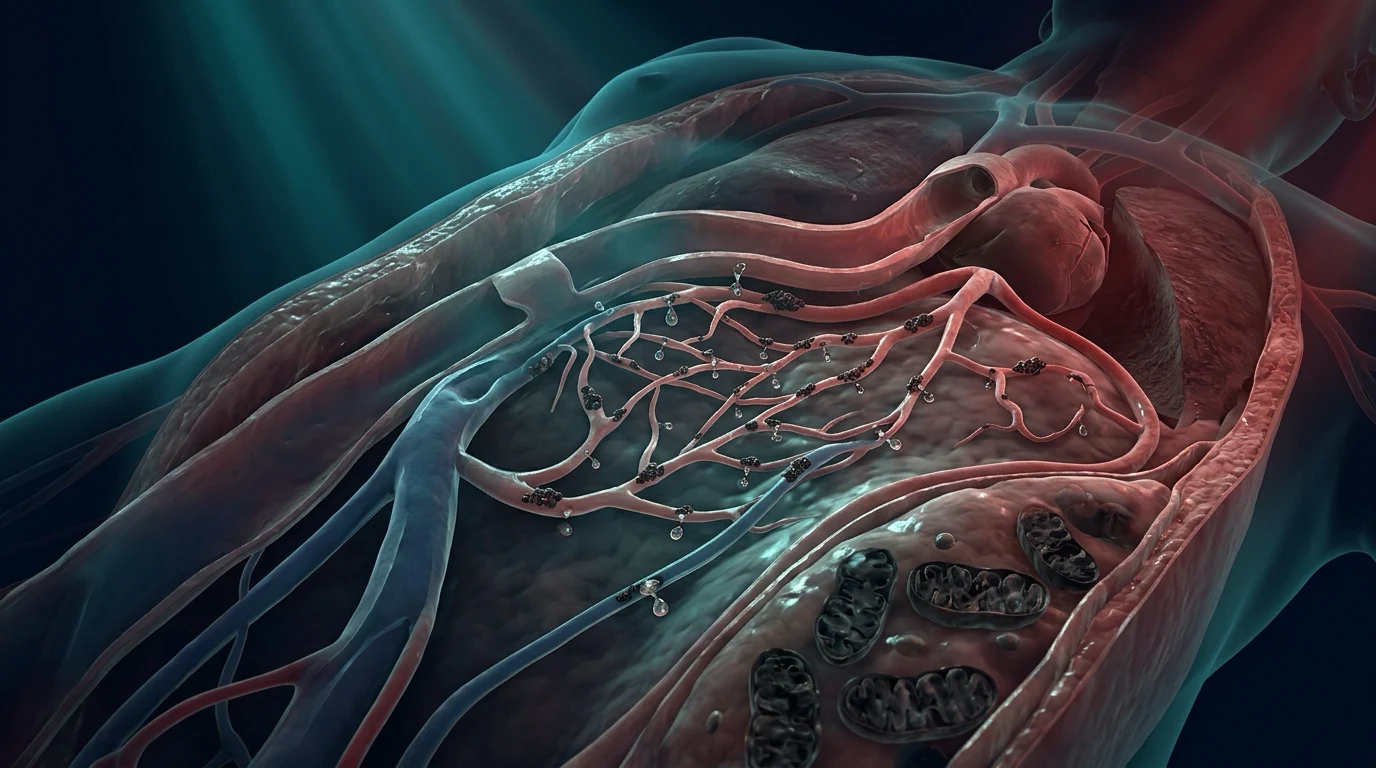
- Mitochondrial dysfunction: cellular dysoxia → lactate production (impaired oxidative phosphorylation despite adequate O2 delivery)
- Coagulation activation: tissue factor expression → DIC → microvascular thrombosis → multi-organ failure [1]
Management: the Surviving Sepsis Campaign 2021
Hour-1 bundle
The SSC 2021 guidelines replaced the old 3-hour and 6-hour bundles with a single Hour-1 bundle:[2]
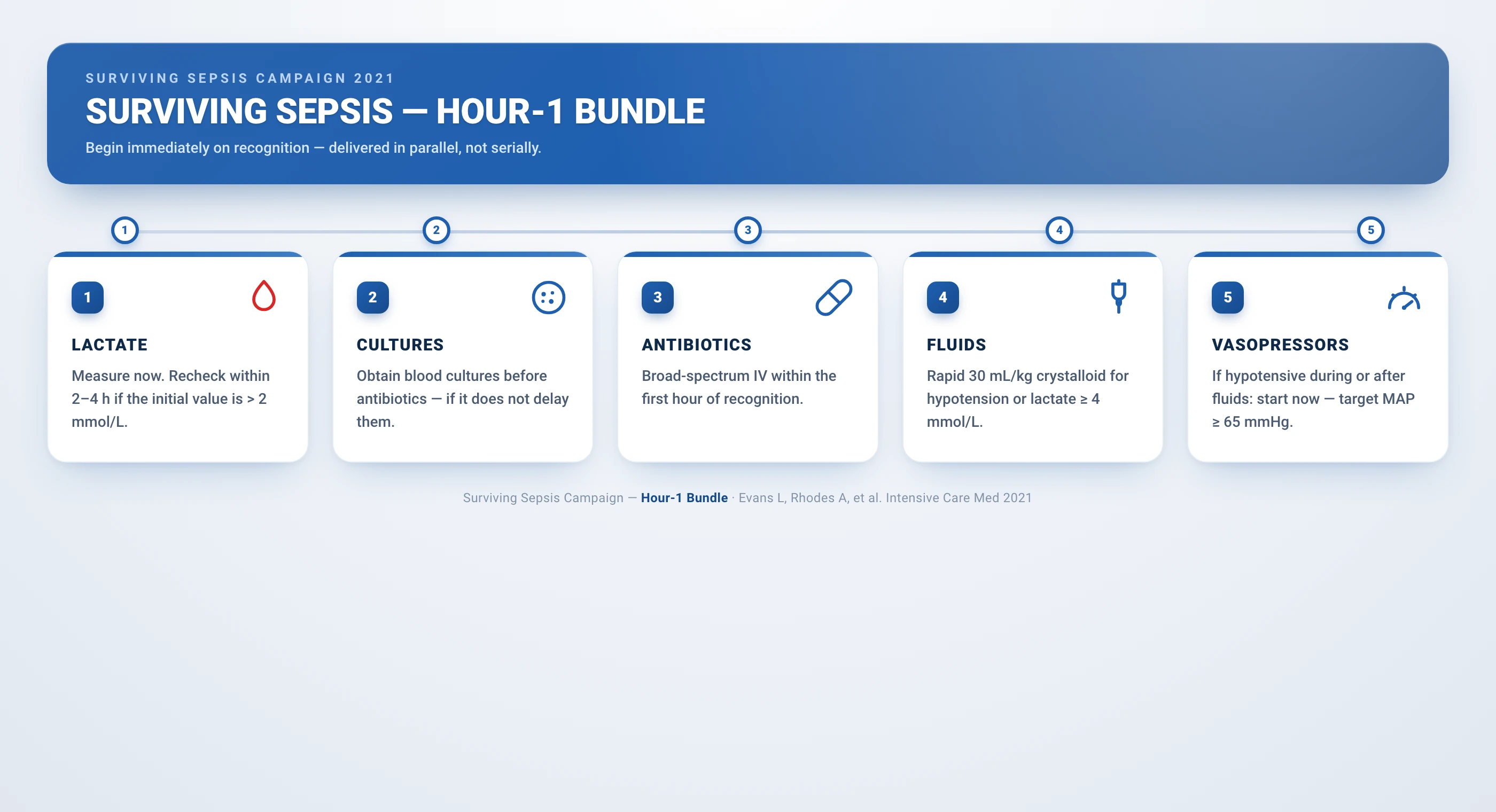
SSC 2021 Hour-1 Bundle (all within 1 hour)
Measure lactate
Obtain baseline serum lactate. If >2 mmol/L, re-measure at 2-4 hours to guide resuscitation. Lactate clearance >=10% over 2 hours is associated with improved survival.
Blood cultures BEFORE antibiotics
Obtain at least 2 sets of blood cultures (aerobic + anaerobic) from separate sites BEFORE administering antibiotics. Do NOT delay antibiotics >45 minutes waiting for cultures.
Administer broad-spectrum antibiotics
Within 1 hour of recognition. Empirical: cover all likely pathogens (Gram-positive + Gram-negative). Consider MRSA cover (vancomycin) if risk factors. Consider antifungal if immunocompromised. De-escalate when culture results available (typically 48-72 hours).
Begin fluid resuscitation
Crystalloid 30 mL/kg IV within the first 3 hours for hypotension or lactate >=4 mmol/L. Use balanced crystalloids (PlasmaLyte, Hartmanns) — SMART trial showed lower mortality vs saline. Reassess fluid responsiveness after each bolus.
Start vasopressors if MAP <65
Noradrenaline first-line (target MAP >=65). Start early if fluid-unresponsive hypotension. Do NOT wait for the full 30 mL/kg if the patient is deteriorating. Consider push-dose adrenaline if imminent arrest.
Fluid resuscitation
Crystalloids (first-line)
Balanced preferred
- 30 mL/kg bolus for hypotension or lactate >=4
- Balanced (PlasmaLyte, Hartmanns) preferred over saline
- SMART trial: balanced reduced mortality vs saline
- Reassess responsiveness after each 500 mL bolus
- Avoid >5L in first 24h without evidence of responsiveness
Albumin
Second-line adjunct
- Consider if large volumes of crystalloid needed (>3-4L)
- ALBIOS trial: no overall mortality benefit
- 20% albumin may help with oncotic pressure in hypoalbuminaemia
- SSC 2021: suggests albumin for ongoing fluid needs (weak)
Starches
CONTRAINDICATED
- Hydroxyethyl starch (HES) is NOT recommended
- Increased risk of AKI and need for RRT
- CHEST and 6S trials: harm signal
- SSC 2021: recommends AGAINST starches (strong)
Vasopressors
Vasopressor escalation ladder
Noradrenaline — first-line
0.05-1.0 mcg/kg/min. Alpha-1 agonist → vasoconstriction. Central line preferred (but can start peripherally via large-bore cannula if urgent). Target MAP >=65 mmHg. SOAP-2: fewer arrhythmias than dopamine.
Add vasopressin — if NA >0.25 mcg/kg/min
Fixed dose 0.03 U/min. V1 receptor agonist (NO/catecholamine-independent). Catecholamine-sparing. VASST trial: no overall mortality benefit, but may benefit less severe shock. Does NOT increase lactate.
Add adrenaline — if shock refractory
0.05-0.5 mcg/kg/min. Alpha + beta agonist. Causes lactate elevation via beta-2 glycolysis (pharmacological, not hypoperfusion). May cause arrhythmias and peripheral ischaemia.
Consider angiotensin II
ATHOS-3 trial: improved MAP in catecholamine-refractory vasodilatory shock. Not commonly used. Reserved for refractory cases at specialist centres.
Corticosteroids
APROCCHSS (2018)
Hydrocortisone + fludrocortisone
- NEJM 2018, n=1241, vasopressor-dependent septic shock
- 90-day mortality: 43% steroid vs 49% placebo (p=0.03)
- Hydrocortisone 200 mg/day + fludrocortisone 50 mcg/day for 7 days
- More superinfections but no excess mortality from them
- SSC 2021: suggests low-dose steroids for vasopressor-dependent shock
ADRENAL (2018)
Hydrocortisone alone
- NEJM 2018, n=3658, septic shock on vasopressors
- 90-day mortality: 27.9% vs 28.7% (NOT significant, p=0.50)
- Fewer days on vasopressors and RRT
- More bloodstream infections with steroid
- Largest steroid trial in septic shock to date
Source control
Source control refers to all physical measures undertaken to eliminate the source of infection and restore anatomy/function. The SSC 2021 guidelines strongly recommend identifying the source and achieving source control within 6-12 hours of diagnosis — antibiotics and resuscitation alone will fail if an abscess, infected device, or obstructed/infected viscus remains.[2]
Source control — principles and interventions
Diagnose the source
History + examination + targeted imaging (CT abdomen/pelvis, bedside ultrasound/eFAST, chest X-ray, echocardiogram if endocarditis suspected). Common sources: lung (pneumonia), abdomen (perforation, cholangitis, abscess, ischaemic bowel), urinary (pyelonephritis, obstructed kidney), skin/soft tissue (necrotising fasciitis), line-related (catheter-related bloodstream infection), CNS (meningitis), bone/joint (septic arthritis, osteomyelitis).
Intervene within 6-12 hours
SSC 2021: source control should be achieved as soon as medically and logistically practical. The four Ds: Drain (percutaneous catheter for abscess, biliary drain for cholangitis), Debride (surgical excision for necrotising fasciitis), Device removal (infected central/urinary lines, prosthetic hardware), Decompress (relief of obstruction — urinary, biliary, bowel).
Do not delay for "stability"
A patient in septic shock from a surgical source (perforated viscus, infarcted bowel, necrotising soft tissue infection) will NOT improve until the source is controlled. Resuscitate and operate in parallel — the surgical axiom: "the best resuscitation is source control." The risk of operating on a vasopressor-dependent patient is lower than the risk of waiting.
Reassess adequacy at 48-72 hours
Failure to improve (persistent vasopressor requirement, rising or static lactate, ongoing organ dysfunction) should prompt repeat imaging and active consideration of incomplete source control. A persistent leak, undrained collection, or retained infected nidus is the commonest reason for failure to respond. The exception is infected pancreatic necrosis, where intervention is deliberately delayed ~4 weeks to allow demarcation (Infected Necrosis Trial).
Rapidly effective source control
High yield
- Percutaneous or surgical drainage of a collection/abscess
- Removal of an infected central venous catheter
- ERCP + stent for ascending cholangitis
- Decompression of an obstructed, infected urinary tract (nephrostomy/stent)
- Surgical debridement of necrotising soft tissue infection
Difficult / delayed source control
Reassess often
- Perforated viscus in a patient too unstable for theatre
- Infected pancreatic necrosis (delay intervention ~4 weeks)
- Deep-seated prosthetic infection (hardware retention vs removal)
- Endocarditis with large/mobile vegetations (surgical timing)
- Intra-abdominal hypertension limiting visceral perfusion
Procalcitonin-guided antibiotic de-escalation
Procalcitonin (PCT) is a calcitonin pro-peptide whose level rises within 2-4 hours of systemic bacterial infection — far faster than CRP. It is used to support (not replace) antibiotic decision-making.[20]
Procalcitonin (PCT)
Biomarker of bacterial infection
- Kinetics: rises 2-4 h after bacterial stimulus, falls with ~24 h half-life once controlled
- A patient-level meta-analysis (n=1376, Wirz/Schuetz 2018) found PCT-guided protocols safely shortened antibiotic duration and exposure without excess mortality.
- Common discontinuation thresholds: PCT <0.5 ug/L OR an >=80% fall from peak
- Use to support earlier de-escalation once cultures return
SSC 2021 position
Conditional recommendation
- Suggests using PCT to support de-escalation when infection is proven (weak, low-quality)
- Can support early discontinuation when infection is subsequently ruled out
- Should NOT delay appropriate empiric antibiotics when infection is suspected
- Re-check PCT at 48-72 h and consider stopping if low and falling
Caveats and pitfalls
Do not over-rely
- False positives: major trauma, surgery, cardiogenic shock, pancreatitis, malignancy, burns
- False negatives: early localised infection, atypical organisms (Legionella, Mycoplasma), intracellular pathogens
- Renal failure: PCT accumulates — use a higher cut-off
- PCT is an adjunct; clinical judgement and culture data take priority
Evidence and landmark trials
Rivers EGDT
NEJM 2001
263 pts severe sepsis/septic shock — EGDT (CVP/ScvO2 targets) vs standard care
Key finding
In-hospital mortality: 30.5% EGDT vs 46.5% control (p=0.009). NNT = 7.
Practice change
EGDT became the standard of care for a decade
ProCESS
NEJM 2014
1341 pts early septic shock — EGDT protocol vs protocolised standard care vs usual care
Key finding
60-day mortality: 21% EGDT vs 18.2% standard vs 18.9% usual (NO significant difference)
Practice change
EGDT with invasive CVP/ScvO2 monitoring is NOT superior to usual care
PRISM meta-analysis
NEJM 2017
Patient-level meta-analysis of ProCESS + ARISE + ProMISe (n=3723)
Key finding
90-day mortality: 22% EGDT vs 21.7% usual care (no difference). No subgroup benefit. No cost saving.
Practice change
EGDT no longer recommended — the key intervention is early antibiotics and fluids, not invasive monitoring targets
VASST
NEJM 2008
778 pts septic shock — vasopressin vs noradrenaline
Key finding
28-day mortality: 35.4% vasopressin vs 39.3% NA (NOT significant, p=0.26). Less severe shock subgroup favoured vasopressin.
Practice change
Vasopressin used as catecholamine-sparing add-on, not first-line
SMART
NEJM 2018
15,802 critically ill adults — balanced crystalloids vs saline
Key finding
30-day mortality: 10.3% balanced vs 11.1% saline (p=0.02). Subgroup: sepsis mortality 25.2% vs 29.4% (p=0.003)
Practice change
Balanced crystalloids preferred over saline for fluid resuscitation
Additional landmark evidence
SEPSISPAM
NEJM 2014
776 pts septic shock on noradrenaline — target MAP 80-85 vs 65
Key finding
28-day mortality: 28.8% high-target vs 34.0% low-target (NOT significant). More atrial fibrillation in high-target group. Subgroup with chronic hypertension had fewer renal-replacement-therapy events at the higher target.
Practice change
MAP 65 mmHg is the standard target; individualise higher (75-80) in chronic hypertension
ANDROMEDA-SHOCK
JAMA 2019
424 pts septic shock — peripheral perfusion (capillary refill time) vs lactate-guided resuscitation
Key finding
28-day mortality: 34.9% CRT vs 43.4% lactate (met non-inferiority; p=0.06). Lower SOFA and less organ dysfunction with CRT. Bayesian re-analysis suggested superiority.
Practice change
CRT-guided resuscitation is a valid, cheap bedside strategy alongside lactate
Seymour — mandated care
NEJM 2017
49,331 sepsis cases across New York State — mandated 3-hr/6-hr bundle compliance
Key finding
In-hospital mortality lower with complete bundle (24.6% vs 32.8%). Each additional hour to antibiotic and fluid delivery independently associated with higher mortality.
Practice change
Foundational real-world evidence underpinning the Hour-1 bundle
Kumar — antibiotic timing
CCM 2006
2154 adults with septic shock — retrospective cohort, time to effective antibiotics from onset of hypotension
Key finding
Survival fell ~7.6% per hour of delay. Effective antibiotics within 1 hour: survival 79.9%; by 6 hours: 41.9%.
Practice change
The single most cited basis for "antibiotics within 1 hour of recognition"
ProMISe
NEJM 2015
1260 pts early septic shock (UK) — EGDT vs usual care
Key finding
90-day mortality: 29.5% EGDT vs 29.2% usual (no difference). EGDT used more central lines, vasopressors and blood; higher cost. Confirmed ProCESS and ARISE.
Practice change
EGDT abandoned in the UK; the three negative trials together ended the EGDT era
Monitoring and targets
| Parameter | Target | Rationale |
|---|---|---|
| MAP | >=65 mmHg | Organ perfusion. Higher target (75-80) in chronic hypertension did NOT improve outcomes (SEPSISPAM) |
| Lactate | Normalisation or >=10% clearance/2hr | Tissue perfusion marker. Serial measurement guides resuscitation adequacy.[11] |
| Urine output | >=0.5 mL/kg/hr | Renal perfusion |
| Central venous O2 (ScvO2) | >=70% (if measured) | O2 delivery/consumption balance — but NOT a mandatory target (PRISM: no benefit of ScvO2-guided therapy) |
| Capillary refill time | <3 seconds | Bedside perfusion assessment. ANDROMEDA-SHOCK: CRT-guided resuscitation non-inferior to lactate-guided |
| Fluid balance | Minimise positive balance after resuscitation | Conservative fluid strategy improves outcomes (excessive fluid causes tissue oedema) |
Complications
| Complication | Recognition | Management |
|---|---|---|
| AKI | Rising creatinine, oliguria, rising K+ | Optimise haemodynamics; avoid nephrotoxins; RRT if refractory acidosis/hyperkalaemia/fluid overload |
| ARDS | Bilateral infiltrates, P/F <300 | Lung-protective ventilation (see ARDS topic) |
| DIC | Prolonged PT/aPTT, low platelets, elevated D-dimer, low fibrinogen | Treat the underlying sepsis; transfuse if bleeding; consider heparin if thrombotic |
| Acalculous cholecystitis | RUQ pain, fever, positive US in prolonged ICU stay | Antibiotics; percutaneous drainage if not settling |
| Critical illness polyneuropathy/myopathy | Weakness, failure to wean from ventilator | Rehabilitation; prolonged recovery |
| Immunoparalysis | Reactivation of latent viruses (CMV, HSV); nosocomial infections | De-escalate immunosuppression; monitor for opportunistic infections |
Prognosis
Sepsis outcomes
- Prognostic factors: age, comorbidities, source of infection, lactate clearance, SOFA score, time to antibiotics, need for vasopressors/RRT
- Long-term: sepsis survivors have increased risk of recurrent sepsis, cognitive impairment, cardiovascular events, and mortality for years after discharge [1]
Exam practice
SAQ — Septic shock resuscitation
10 minutes · 10 marks
A 70-year-old woman is admitted from the emergency department with confusion, fever 38.9C, HR 125, BP 80/45 (MAP 57), RR 28, SpO2 92% on room air. She has a 2-day history of dysuria and flank pain. Lactate 4.8 mmol/L. Urine shows E. coli on microscopy.
SAQ — Septic shock with lactate 6 mmol/L (community-acquired pneumonia)
10 minutes · 10 marks
A 55-year-old man presents with a 2-day history of fever, productive cough and pleuritic chest pain. He is confused, HR 128, BP 78/40 (MAP 53), RR 32, SpO2 90% on 15 L via non-rebreather mask. Chest X-ray shows a right lower lobe consolidation. Initial lactate is 6.2 mmol/L. He weighs 80 kg.
SAQ — Meningococcal sepsis with purpura fulminans and DIC
10 minutes · 10 marks
An 18-year-old university student presents with fever, headache and myalgia. Over 4 hours she develops a rapidly progressive petechial and purpuric rash over the limbs and trunk, becomes drowsy (GCS 13), HR 140, BP 70/35 (MAP 47), lactate 7.5 mmol/L, with cool mottled peripheries. Bloods: Hb 110 g/L, platelets 40 x10^9/L, INR 2.4, APTT 55 s, fibrinogen 1.1 g/L.
Clinical pearls
Red flags
References
- [1]Singer M, Deutschman CS, Seymour CW, et al. The Third International Consensus Definitions for Sepsis and Septic Shock (Sepsis-3) JAMA, 2016.PMID 26903338
- [2]Evans L, Rhodes A, Alhazzani W, et al. Surviving sepsis campaign: international guidelines for management of sepsis and septic shock 2021 Intensive Care Med, 2021.PMID 34599691
- [3]Rivers E, Nguyen B, Havstad S, et al. Early goal-directed therapy in the treatment of severe sepsis and septic shock N Engl J Med, 2001.PMID 11794169
- [4]The ProCESS Investigators. A randomized trial of protocol-based care for early septic shock N Engl J Med, 2014.PMID 24635773
- [5]The ARISE Investigators. Goal-directed resuscitation for patients with early septic shock N Engl J Med, 2014.PMID 25272316
- [6]The PRISM Investigators. Early, Goal-Directed Therapy for Septic Shock - A Patient-Level Meta-Analysis N Engl J Med, 2017.PMID 28320242
- [7]Russell JA, Walley KR, Singer J, et al. Vasopressin versus norepinephrine infusion in patients with septic shock N Engl J Med, 2008.PMID 18305265
- [8]Venkatesh B, Finfer S, Cohen J, et al. Adjunctive Glucocorticoid Therapy in Patients with Septic Shock N Engl J Med, 2018.PMID 29347874
- [9]Annane D, Renault A, Brun-Buisson C, et al. Hydrocortisone plus Fludrocortisone for Adults with Septic Shock N Engl J Med, 2018.PMID 29490185
- [10]Self WH, Semler MW, Wanderer JP, et al. Balanced Crystalloids versus Saline in Critically Ill Adults N Engl J Med, 2018.PMID 29485925
- [11]Casserly B, Phillips GS, Schorr C, et al. What Is the Utility of Measuring Lactate Levels in Patients with Sepsis and Septic Shock? Semin Respir Crit Care Med, 2021.PMID 34544182
- [12]Bauer M, Giamarellos-Bourboulis E, Kaukonen KM, et al. Septic shock: Past, present, and perspectives J Crit Care, 2026.PMID 40972498
- [13]Maitra S, Biswas M, Som A, et al. SIRS, SOFA, qSOFA, and NEWS in the diagnosis of sepsis and prediction of adverse outcomes: a systematic review and meta-analysis Expert Rev Anti Infect Ther, 2023.PMID 37450490
- [14]Katsenos CS, Antonopoulou AN, Apostolidou EN, et al. Low-dose corticosteroids in septic shock: Has the pendulum shifted? Am J Health Syst Pharm, 2019.PMID 30851043
- [15]Asfar P, Meziani F, Hamel JF, et al. High versus low blood-pressure target in patients with septic shock N Engl J Med, 2014.PMID 24635770
- [16]Hernández G, Ospina-Tascón GA, Damiani LP, et al. Effect of a Resuscitation Strategy Targeting Peripheral Perfusion Status vs Serum Lactate Levels on 28-Day Mortality Among Patients With Septic Shock: The ANDROMEDA-SHOCK Randomized Clinical Trial JAMA, 2019.PMID 30772908
- [17]Seymour CW, Gesten F, Prescott HC, et al. Time to Treatment and Mortality during Mandated Emergency Care for Sepsis N Engl J Med, 2017.PMID 28528569
- [18]Kumar A, Roberts D, Wood KE, et al. Duration of hypotension before initiation of effective antimicrobial therapy is the critical determinant of survival in human septic shock Crit Care Med, 2006.PMID 16625125
- [19]Mouncey PR, Osborn TM, Power GS, et al. Trial of early, goal-directed resuscitation for septic shock N Engl J Med, 2015.PMID 25776532
- [20]Wirz Y, Meier MA, Bouadma L, et al. Effect of procalcitonin-guided antibiotic treatment on clinical outcomes in intensive care unit patients with infection and sepsis patients: a patient-level meta-analysis of randomized trials Crit Care, 2018.PMID 30111341