ICU · resuscitation
Sepsis and Septic Shock — Comprehensive Integrated (SSC 2021, Hour-1 Bundle, Vasopressors, Source Control)
Also known as Sepsis · Septic shock · Sepsis-3 · qSOFA · SOFA score · Surviving Sepsis Campaign · SSC 2021 · Hour-1 bundle · Sepsis six · Vasopressors in septic shock · Noradrenaline · Vasopressin septic shock · Source control sepsis · Lactate clearance · Refractory septic shock
Sepsis and septic shock — the leading cause of death in the ICU and the highest-yield topic in critical care exams. SEPSIS-3 DEFINITIONS (Singer 2016): sepsis = life-threatening organ dysfunction caused by a dysregulated host response to infection (SOFA ≥2 point change from baseline); septic shock = sepsis with (1) persistent hypotension requiring vasopressors to maintain MAP ≥65 AND (2) serum lactate 2 mmol/L despite adequate fluid resuscitation (mortality ~40%). qSOFA (quick bedside screen — RR ≥22, altered mentation, SBP ≤100): ≥2 = high risk of poor outcome (a PROMPT to consider sepsis and escalate — NOT a diagnostic criterion and NOT more sensitive than SIRS). The SSC 2021 HOUR-1 BUNDLE (replaced the old 3-hour and 6-hour bundles): within ONE hour of recognition → (1) measure lactate (repeat if 2 mmol/L), (2) obtain blood cultures BEFORE antibiotics, (3) administer broad-spectrum antibiotics, (4) rapid 30 mL/kg crystalloid for hypotension or lactate ≥4, (5) vasopressors if MAP <65 during/after fluids to maintain MAP ≥65. EMPIRIC ANTIBIOTICS within 1 hour: likely source + local resistance + host factors — piperacillin-tazobactam or (ceftriaxone/cefepime + metronidazole) for broad Gram-negative/anaerobic cover, ADD vancomycin/linezolid if MRSA risk (line infection, known colonisation, severe pneumonia), ADD antifungal (echinocandin or liposomal amphotericin) if immunocompromised or prolonged neutropenia/catheter-related. FLUIDS: balanced crystalloids PREFERRED over 0.9% saline (SMART — lower MAKE30), albumin if large volumes required, 30 mL/kg initial then reassess fluid responsiveness — restrictive strategy is at least as good (CLASSIC — less fluid no worse; CLOVERS — liberal vs restrictive similar). VASOPRESSORS: noradrenaline FIRST-LINE, add vasopressin 0.03 U/min (NOT titrated) as second agent, adrenaline third-line or for added inotropy, hydrocortisone 200 mg/day for REFRACTORY shock (ongoing vasopressor requirement — ADRENAL no mortality benefit but faster shock resolution; APROCCHSS lower mortality with hydrocortisone+fludrocortisone). MAP TARGET 65 mmHg (SEPSISPAM — 65 vs 80 mmHg no mortality difference; higher target only for chronic hypertension to reduce RRT). SOURCE CONTROL within 6-12 hours: drain abscess (radiological/surgical), remove infected line/catheter, debride necrotic tissue, relieve obstruction — as important as antibiotics. RESUSCITATION TARGETS: lactate clearance or ScvO2 (ANDROMEDA-SHOCK — lactate clearance non-inferior to ScvO2 and arguably better). MORTALITY 25-30% overall (sepsis), ~40% for septic shock.
On this page & tools
Your progress
Saved locally on this device.
Target exams
Red flags
Overview
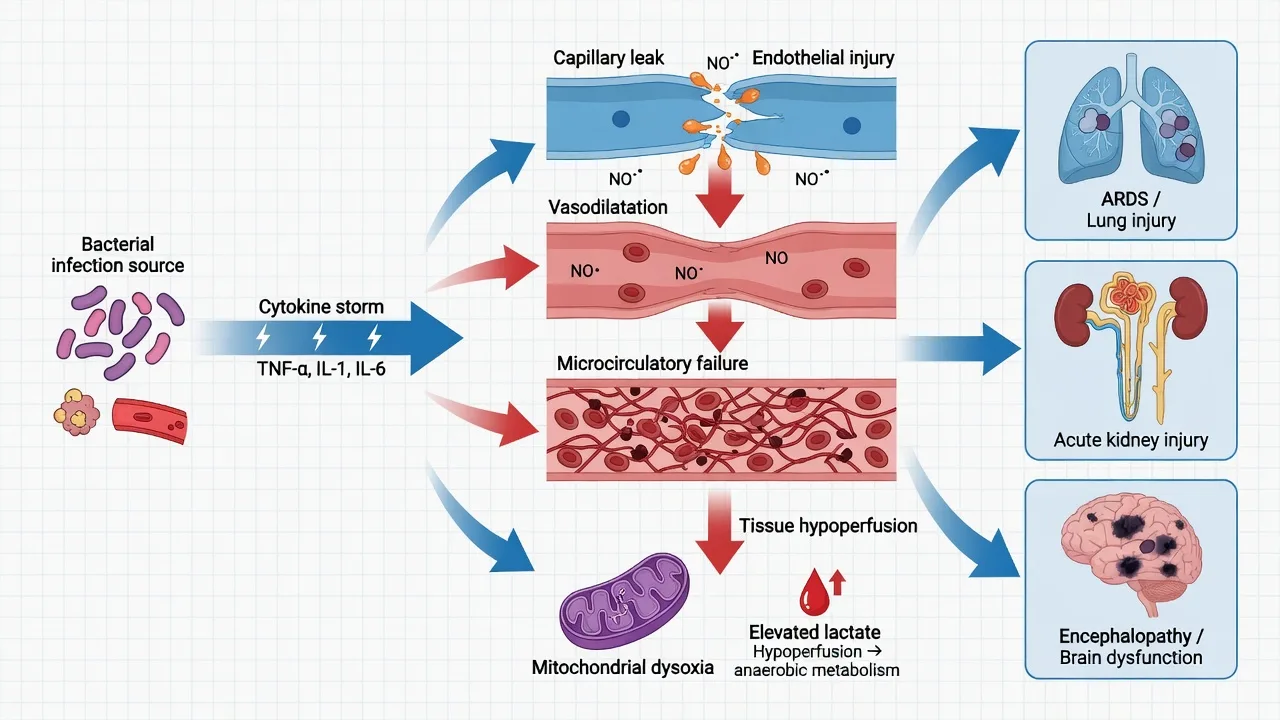
Sepsis is the single most common cause of death in hospitalised patients who reach the ICU and the most heavily examined topic in the CICM/FFICM/EDIC fellowship. The intensivist's job at the bedside distils to five questions asked in the first hour and re-asked every hour thereafter: (1) Is this sepsis/septic shock? (recognition — qSOFA/SOFA/lactate), (2) What is the bug and where is the source? (cultures + empiric antibiotics + source control), (3) Is the circulation perfusing the organs? (fluids then vasopressors to MAP ≥65), (4) Is the resuscitation adequate? (lactate clearance / ScvO2 / urine output), and (5) What can I physically remove or drain to stop the infection? (source control). The hour-1 bundle operationalises these. Every minute counts: in the New York mandated-care cohort, each hour of delay in completing the bundle and in giving antibiotics independently increased the odds of death by ~4%.[1][2]
Definitions — Sepsis-3 (Singer 2016)
The Sepsis-3 consensus (2016) retired "severe sepsis" and reframed sepsis as organ dysfunction rather than inflammation, on the grounds that inflammation (SIRS) is neither sensitive nor specific for the life-threatening phenotype. [1]
Sepsis-3 definitions and the role of each score
| Construct | Definition / use | Score / threshold | What it is NOT |
|---|---|---|---|
| Sepsis | Life-threatening organ dysfunction caused by a dysregulated host response to infection | SOFA ≥2-point acute change from baseline (or clinical suspicion of new organ dysfunction) | NOT defined by SIRS any longer; SIRS still useful as an infection trigger but is neither required nor sufficient |
| Septic shock | A subset of sepsis with particularly high mortality requiring both circulatory and cellular/metabolic abnormalities | (1) Vasopressor requirement to maintain MAP ≥65 mmHg AND (2) serum lactate >2 mmol/L despite adequate volume resuscitation | A hypotensive septic patient with normal lactate who responds to fluids is NOT in septic shock; a normotensive patient with high lactate and organ dysfunction is septic but not in shock |
| qSOFA | Bedside PROMPT to consider sepsis and escalate care (especially outside ICU) | 2 of 3: RR ≥22, altered mentation (GCS <15), SBP ≤100 mmHg | NOT a diagnostic criterion, NOT more sensitive than SIRS, and NOT recommended by SSC 2021 as a single screening tool — use it as an alarm, then confirm with SOFA + lactate |
| SOFA | Quantifies organ dysfunction across 6 systems (range 0-4 each) | PaO2/FiO2 (resp), platelets (coag), bilirubin (liver), MAP/CNS (CV by vasopressors), GCS (CNS), creatinine/urine output (renal) | A baseline SOFA is assumed to be 0 in patients not known to have pre-existing organ dysfunction |
| Lactate | Marker of tissue hypoperfusion / anaerobic metabolism | >2 mmol/L = hypoperfusion; ≥4 mmol/L = severe (trigger for 30 mL/kg bolus) | A normal lactate does not exclude shock; lactate rises in beta-agonist use, malignancy, mitochondrial dysfunction, and poor clearance (e.g. liver failure, metformin) |
qSOFA vs SIRS vs SOFA — what the exams test
| Feature | SIRS (1992) | qSOFA (2016) | SOFA (2016) |
|---|---|---|---|
| Components | Temp >38/<36, HR >90, RR >20/PaCO2 <32, WCC >12/<4 | RR ≥22, AMS, SBP ≤100 | 6 organ systems, scored 0-4 |
| Sensitivity for sepsis | HIGH (but non-specific) | LOW (misses many cases) | High when applied properly |
| Where it shines | Prompting "is there infection?" | Predicting poor outcome (especially on the ward/ED) | Quantifying and tracking organ failure in ICU |
| SSC 2021 position | Still a reasonable screening trigger | NOT recommended as the sole screening tool | Use SOFA (or its equivalent) to define sepsis |
| Bottom line | Use SIRS or qSOFA or any validated trigger to PROMPT action — then ACT on the hour-1 bundle; do not delay treatment arguing about which score is positive |
The SSC 2021 Hour-1 Bundle — operationalising the first 60 minutes
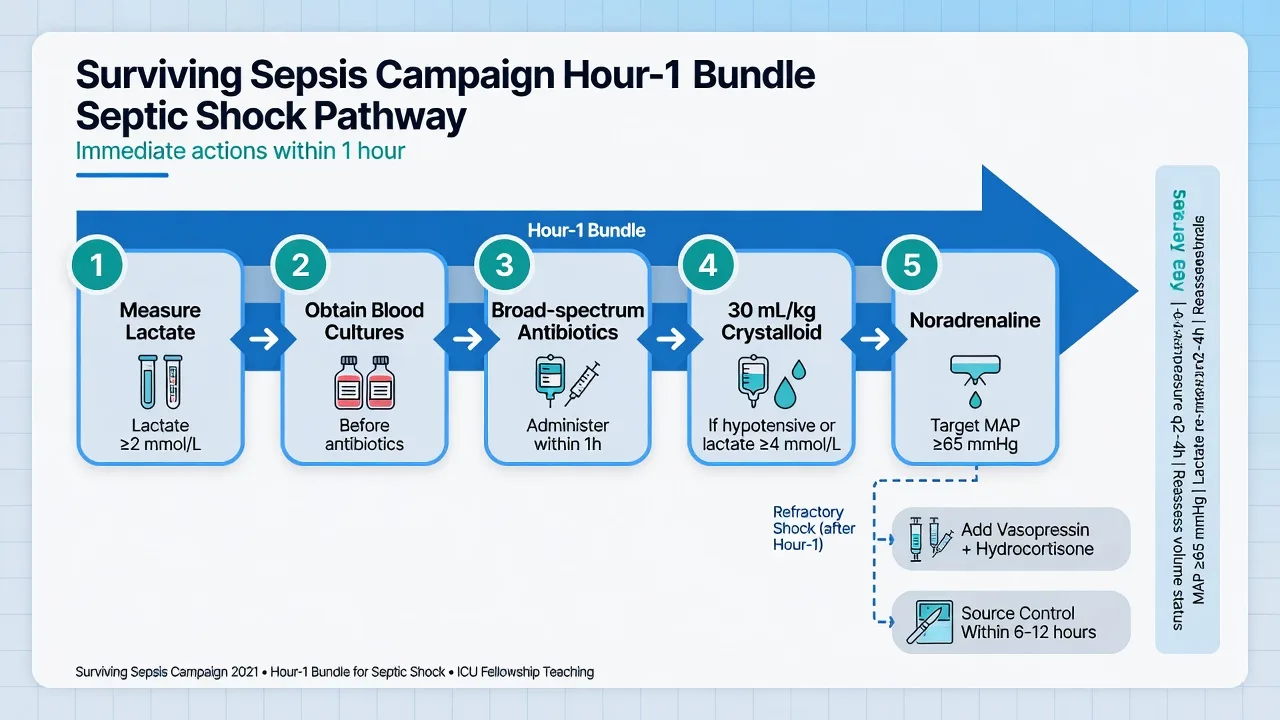
The 2018 update of the Surviving Sepsis Campaign collapsed the old 3-hour and 6-hour bundles into a single "Hour-1 bundle": all elements should be initiated simultaneously, within one hour of recognising sepsis or septic shock. The 2021 guidelines reaffirm this.[1]
The SSC 2021 Hour-1 Bundle — what to do in the first 60 minutes
- RECOGNISE sepsis — suspected infection + organ dysfunction (new SOFA ≥2) OR shock OR lactate ≥4. Screen with qSOFA/SIRS/SOFA; act on a high index of suspicion. Do not wait for confirmatory cultures.
- MEASURE LACTATE — draw a venous/gas lactate immediately. If the initial lactate is <2 mmol/L and the patient is not shocked, the immediate target is met; if >2, re-measure within 2-4 hours to track clearance. A lactate ≥4 mmol/L is a trigger for the 30 mL/kg bolus even without hypotension.
- OBTAIN BLOOD CULTURES BEFORE ANTIBIOTICS — two peripheral sets (aerobic + anaerobic) PLUS one set drawn from each lumen of any indwelling central/arterial catheter. Also culture urine, sputum, and any drainable source. If obtaining cultures would delay antibiotics beyond ~45 minutes, give the antibiotics first — culture yield falls after antibiotics but a delay in antibiotics kills.
- ADMINISTER BROAD-SPECTRUM ANTIBIOTICS WITHIN 1 HOUR — for septic shock or high-likelihood sepsis, this is a STRONG recommendation. Cover the likely source + local resistance + host factors (see empiric selection table). Give the first dose IV at full loading dose — do NOT under-dose the first dose in renal impairment (re-dose/titrate from dose 2).
- RAPID 30 mL/kg CRYSTALLOID BOLUS for hypotension (MAP <65 or SBP <90) OR lactate ≥4 mmol/L — give balanced crystalloid (Hartmann's/Plasma-Lyte/Ringer's lactate) over the first 3 hours, reassessing for fluid responsiveness after each 500 mL. Do not give 30 mL/kg blindly if the patient is fluid-unresponsive — start noradrenaline early.
- APPLY VASOPRESSORS if MAP <65 during or after the fluid bolus to maintain MAP ≥65 mmHg. Start noradrenaline peripherally if no central access yet (modern preparations are safe peripherally for short periods) — do not let MAP stay <65 while waiting for a central line.
- REASSESS at 1 hour — is MAP ≥65? Is lactate falling? Is the patient making urine (>0.5 mL/kg/h)? Is there a source to control? Escalate to ICU, arterial line, central access, and source control imaging.
Empiric antibiotic selection — broad, early, then narrow
The principle: cover broadly within the hour, then de-escalate to the narrowest effective regimen within 48-72 hours based on cultures and source. The empiric choice integrates (a) the suspected source, (b) local antibiogram/resistance patterns, (c) host risk factors (immunocompromise, healthcare exposure, recent antibiotics, MDR colonisation), and (d) allergy/organ function.[1]
Empiric antibiotic selection by likely source (adult, community-onset)
| Likely source | First-line empiric regimen | ADD / MODIFY if… |
|---|---|---|
| Lung (CAP) | Ceftriaxone + azithromycin (or respiratory fluoroquinolone) | Add vancomycin/linezolid if MRSA risk; piperacillin-tazobactam if healthcare-associated/aspiration |
| Lung (HAP/VAP) | Piperacillin-tazobactam OR meropenem (anti-pseudomonal) + vancomycin/linezolid (MRSA) | Add aminoglycoside or second antipseudomonal if MDR; colistin if CRE |
| Abdomen (perforation/cholangitis/peritonitis) | Piperacillin-tazobactam OR (ceftriaxone/cefepime + metronidazole) OR meropenem | Add vancomycin if Enterococcus risk; echinocandin if candidal peritonitis (recent abdominal surgery, pancreatitis) |
| Urinary tract / pyelonephritis | Ceftriaxone OR amoxicillin + gentamicin (ESBL risk → meropenem/ertapenem) | Add vancomycin/linezolid if catheter/healthcare (Enterococcus); treat obstruction as source control |
| Skin/soft tissue / necrotising fasciitis | Piperacillin-tazobactam + clindamycin (+ vancomycin for MRSA/STSS) | Add IVIG + urgent surgical debridement for group A strep toxic shock |
| Catheter/line-related | Vancomycin (or linezolid/daptomycin for MRSA/VRE) + Gram-negative cover (pip-tazo) | REMOVE the line — antibiotics alone fail; add echinocandin if Candida |
| Meningitis | Cefotaxime/ceftriaxone + vancomycin (+ ampicillin if >50 y for Listeria) + dexamethasone | Add aciclovir if HSV encephalitis suspected |
| Neutropenic fever / immunocompromised | Antipseudomonal beta-lactam (pip-tazo, cefepime, or meropenem) | ADD vancomycin if line infection/known colonisation; ADD echinocandin (caspofungin) if persistent fever, prolonged neutropenia, or fungal risk; ADD trimethoprim-sulfamethoxazole if PJP suspected |
When to add MRSA, antifungal, and antiviral cover
| Add… | When… | Agent |
|---|---|---|
| MRSA cover | Indwelling vascular catheter/line infection, known MRSA colonisation, severe CAP with cavitary infiltrate, healthcare-associated infection, endovascular infection, high local MRSA prevalence, haemodialysis | Vancomycin (15-20 mg/kg, trough or AUC-guided) OR linezolid (if pneumonia/VRE — better lung penetration) OR daptomycin (NOT for pneumonia — inactivated by surfactant) |
| Antifungal cover | Immunocompromised (neutropenia, transplant, haematological malignancy), prolonged broad-spectrum antibiotics, total parenteral nutrition, long-term central catheter, recent abdominal surgery with recurrent perforation, pancreatitis | Echinocandin first-line (caspofungin/micafungin/anidulafungin); liposomal amphotericin B if mould risk or unstable |
| Antiviral cover | Severely immunocompromised (HSV, CMV, VZV), suspected viral encephalitis, influenza in season (severe CAP) | Aciclovir (encephalitis), ganciclovir/foscarnet (CMV), oseltamivir (influenza) |
Fluid resuscitation — balanced, goal-directed, and probably less is more
Fluid is a drug with a dose, an indication, and adverse effects. The initial 30 mL/kg bolus (for hypotension or lactate ≥4) is a starting point; everything after that must be guided by fluid responsiveness — giving more fluid to a patient whose heart cannot transmit it to the circulation causes pulmonary oedema, worsens AKI, and may increase mortality. [1]
Fluid strategy — what the trials show
| Trial / question | Comparison | Key result | Practical take |
|---|---|---|---|
| SMART (2018)[3] | Balanced crystalloids vs 0.9% saline in 15,802 ICU adults | MAKE30 (death/RRT/persistent renal dysfunction): 14.3% balanced vs 15.4% saline (OR 0.91; P=0.04) | Prefer balanced crystalloids (Hartmann's, Plasma-Lyte, Ringer's lactate) over 0.9% saline — especially in sepsis subgroup, where benefit was largest |
| SALT-ED, PLUS | Same question in ED/ICU | Consistent trend favouring balanced | Reinforces SMART; saline is acceptable if balanced unavailable, but hyperchloraemic acidosis and AKI risk are real |
| CLASSIC (2022) | Restrictive vs standard IV fluids after initial resuscitation in septic shock | Restrictive strategy non-inferior; trend to less fluid harm | After the initial 30 mL/kg, default to a restrictive strategy — reassess responsiveness before each bolus |
| CLOVERS (2023) | Liberal (early fluids) vs restrictive (early vasopressors) in septic shock | No difference in 90-day mortality; restrictive used less fluid, more vasopressors | Early vasopressors + less fluid is a legitimate strategy; the dogma of "resuscitate first, vasopressors last" is dead |
| ProMISe / ARISE / ProCESS[6] | Protocolised early goal-directed therapy (EGDT, ScvO2-guided) vs usual care | No mortality benefit; EGDT used more fluids, transfusion, dobutamine | Rigid EGDT protocols are not superior to competent bedside care; use lactate clearance + clinical reassessment |
| ALBIOS | Albumin vs crystalloid in severe sepsis | No overall mortality benefit; possible benefit in septic shock | Albumin 20% if large volumes are needed to maintain intravascular volume — adjunct, not routine |
| FEAST / CLASSIC | Aggressive fluid bolus in African children / adults | Harm with aggressive bolus in some settings | Avoid the "fluids are always safe" mindset — bolus only the responsive |
How to resuscitate fluids intelligently — the first 3-6 hours
- GIVE 30 mL/kg balanced crystalloid for hypotension or lactate ≥4 — over 30 min-3 h. Warm the fluids if giving rapidly.
- ASSESS FLUID RESPONSIVENESS before each subsequent bolus — passive leg raise (the most reliable bedside test), stroke volume variation/pulse pressure variation (if passively ventilated with adequate tidal volume), or change in SV with a 250-500 mL bolus. A non-responsive patient will not benefit from more fluid.
- USE DYNAMIC markers over static ones — a CVP of 8 or 12 mmHg tells you almost nothing about responsiveness; the IVC collapsibility, PLR-induced CO change, and delta-PP do.
- START NORADRENALINE EARLY if MAP <65 or rising lactate with shock — do not wait for the full 30 mL/kg if the patient is fluid-unresponsive (CLOVERS supports early vasopressors).
- REASSESS LACTATE every 2 hours — target clearance ≥10% per hour or ≥20% over 2 hours (ANDROMEDA-SHOCK used lactate clearance non-inferior to ScvO2 as a resuscitation goal).
- CONSIDER ALBUMIN 20% if crystalloid requirement exceeds ~3-4 L — to limit positive fluid balance and interstitial oedema.
- STOP the boluses once the patient is euvolaemic and responsive — switch to maintenance fluids and diurese if there is positive fluid balance with tissue oedema.
Vasopressors and inotropes — noradrenaline first, escalate in order
The goal of vasopressor therapy is to restore perfusion pressure (MAP ≥65) without worsening the microcirculation or causing peripheral/ischaemic complications. Sepsis causes vasoplegia (pathological vasodilation from NO, prostaglandins, ATP-sensitive K+ channel opening, and vasopressin deficiency) — the first-line agent must therefore be a potent alpha-1 agonist. [1]
Vasopressor and inotrope ladder in septic shock
| Agent | Receptor profile | Dose range | Role in septic shock | Key cautions |
|---|---|---|---|---|
| Noradrenaline (FIRST-LINE) | Alpha-1 >> beta-1 | 0.05-1.0 mcg/kg/min (titrate) | Drug of choice — potent vasoconstriction + modest inotropy. Start peripherally if needed, central access ASAP. SSC 2021 strong recommendation. | Extravasation → necrosis (use central; have phentolamine ready); arrhythmia (less than adrenaline) |
| Vasopressin (SECOND-LINE ADD-ON) | V1 (pure vasoconstriction, catecholamine-independent) | 0.03 U/min FIXED (do NOT titrate — >0.04 risks ischaemia) | Add when noradrenaline dose rising (e.g. >0.25-0.5 mcg/kg/min) — catecholamine-sparing, may reduce AF. VANISH/VASST | Splanchnic/digital ischaemia at high dose; hyponatraemia (V2 effect); NOT a monotherapy |
| Adrenaline (THIRD-LINE / inotrope) | Alpha-1, beta-1, beta-2 | 0.05-0.5 mcg/kg/min (titrate) | Add if target MAP not met on noradrenaline + vasopressin, or when added inotropy is needed (low CO with septic cardiomyopathy) | Lactate rise (beta-2 → glycolysis — confounds lactate monitoring); tachyarrhythmia; myocardial O2 demand |
| Hydrocortisone (REFRACTORY) | Glucocorticoid — restores vascular tone + adrenergic receptor sensitivity | 200 mg/day (continuous or 50 mg q6h) | For REFRACTORY shock (ongoing vasopressor need despite adequate fluids + noradrenaline ± vasopressin). SSC 2021 weak suggestion. | Hyperglycaemia, secondary infection, neuromyopathy; wean as shock resolves |
| Dobutamine (inotrope) | Beta-1 > beta-2 | 2.5-20 mcg/kg/min (titrate) | For documented LOW cardiac output with high filling pressures (septic cardiomyopathy on echo) despite adequate MAP | Tachyarrhythmia; may worsen hypotension (beta-2 vasodilation) — combine with noradrenaline |
| Methylene blue (rescue) | Inhibits soluble guanylate cyclase → blocks NO-mediated vasoplegia | 1-2 mg/kg IV over 20 min (± infusion 0.25-2 mg/kg/h) | Rescue for catecholamine-resistant vasoplegia refractory to noradrenaline + vasopressin + steroid | Serotonin syndrome with SSRIs/MAOIs; not a substitute for source control and fluids |
What 'refractory septic shock' means and when to escalate
| Threshold (approximate, any one) | Action |
|---|---|
| Noradrenaline ≥0.25-0.5 mcg/kg/min and MAP still <65 | Add vasopressin 0.03 U/min; ensure adequate intravascular volume; check/obtain source control |
| Two vasopressors running (noradrenaline + vasopressin) and still in shock | Start hydrocortisone 200 mg/day; consider echocardiography for septic cardiomyopathy (add dobutamine if low CO) |
| MAP target still unmet on noradrenaline + vasopressin + hydrocortisone | Add adrenaline; consider methylene blue for NO-mediated vasoplegia; reassess source control; exclude adrenal crisis, hypocalcaemia, ongoing loss |
| Refractory cardiovascular collapse | VA-ECMO as bridge to source control/recovery — centre-dependent |
MAP target — 65 mmHg is enough (SEPSISPAM)
MAP 65 vs 80 mmHg in septic shock (SEPSISPAM)
| Outcome | High target (80-85 mmHg) | Low target (65-70 mmHg) | Difference |
|---|---|---|---|
| 28-day mortality | 36.6% | 34.0% | HR 1.07 (0.84-1.38); P=0.57 — no difference |
| 90-day mortality | 43.8% | 42.3% | HR 1.04 (0.83-1.30); P=0.74 — no difference |
| New atrial fibrillation | Higher | Lower | Significantly more AF in high-target group |
| Renal replacement therapy (chronic hypertensives) | Less RRT | More RRT | In the pre-specified chronic-hypertension subgroup, a higher MAP reduced the need for RRT |
Bottom line: target MAP ≥65 mmHg for all patients. The only exception is the patient with chronic hypertension, in whom a higher target (75-80 mmHg) may reduce the need for RRT — but it does not change survival. Pushing MAP to 80 in everyone increases atrial fibrillation without benefit.[4]
Resuscitation targets — lactate clearance ≥10%/h (ANDROMEDA-SHOCK)
After the first hour, how do you know resuscitation is working? Lactate clearance and ScvO2 are the two validated targets; the classic Rivers EGDT protocol (ScvO2 ≥70%, CVP 8-12, MAP ≥65, UO ≥0.5 mL/kg/h) was tested against lactate clearance in the ANDROMEDA-SHOCK trial (Hernández 2019, JAMA) — lactate clearance-guided resuscitation was non-inferior (and the per-protocol analysis suggested lower mortality), and it is simpler (no central ScvO2 line, no dobutamine escalation, no routine transfusion to Hct 30%). SSC 2021 recommends guiding resuscitation by decreasing lactate rather than rigid ScvO2 targets, alongside bedside markers (capillary refill, mottling, urine output, skin temperature). [1]
Resuscitation targets — what to track
| Target | Threshold | Notes |
|---|---|---|
| MAP | ≥65 mmHg (higher in chronic HTN) | Primary perfusion pressure goal |
| Lactate clearance | ≥10% per hour, or ≥20% over 2 hours | Falling lactate = resuscitation working; rising/stagnant lactate → reassess source, fluids, inotropes |
| Urine output | ≥0.5 mL/kg/h | Marker of renal perfusion; oliguria persistent despite adequate MAP → consider AKI/RRT |
| Capillary refill time | <3 seconds | ANDROMEDA-SHOCK used CRT as an alternative — cheap, reproducible, tracks microcirculation |
| ScvO2 | ≥70% (optional) | Useful if central line in place; low ScvO2 → consider dobutamine / transfusion (if Hb <70) |
| Mottling score | Reducing / absent | High mottling around knees = poor microcirculation, high mortality |
Source control — drain, debride, remove (within 6-12 hours)
Antibiotics sterilise the bloodstream; source control removes the nidus of infection that keeps seeding it. An undrained abscess, an infected prosthetic, necrotic tissue, or an infected central line will not respond to antibiotics alone. SSC 2021 issues a best-practice statement: source control should be achieved as rapidly as practical, ideally within 6-12 hours of recognition.[1]
Source control by source type
| Source | Source control intervention | Timing | Caveat |
|---|---|---|---|
| Abscess / collection | Percutaneous drain (radiology-guided) OR surgical drainage | ASAP, <6-12 h | Culture the drain; re-image if no improvement |
| Infected central/arterial line / catheter | REMOVE the device; culture the tip (semi-quantitative) | Immediate, <6 h | Do not "exchange over a wire" if infection confirmed — remove and re-site |
| Necrotising soft tissue infection | Urgent surgical debridement to healthy tissue | <6 h (emergency) | Delayed debridement = mortality; re-look at 24-48 h |
| Perforated viscus / peritonitis | Laparotomy / laparoscopy, washout, repair | <12 h | Antibiotics + source control together |
| Obstructed / infected biliary tree (cholangitis) | ERCP + stent / stone removal OR percutaneous cholecystostomy | <12 h | Septic shock + cholangitis = emergency decompression |
| Pyelonephritis with obstructing stone | Nephrostomy / stent | <12 h | Drain the obstructed system; antibiotics alone fail |
| Empyema | Chest drain (or VATS) | <24 h | Convert loculated collections |
| Endocarditis (infected valve) | Surgical source control (valve replacement) if HF, uncontrolled infection, emboli, abscess | Days (early surgery if unstable) | A subset needs urgent surgical source control |
Source control checklist — ask within the first hour and again at 4-6 hours
- Is there a drainable collection? — request ultrasound/CT early; do not wait for the patient to "stabilise" if stability depends on drainage.
- Is there an infected device? — review every line, catheter, drain, and prosthesis; remove any that are potentially infected (culture the tip).
- Is there necrotic tissue? — surgical review for necrotising fasciitis, infarcted bowel, gangrenous gallbladder.
- Is there an obstruction? — decompress (ERCP, nephrostomy, laparotomy) the obstructed, infected system.
- Re-image and re-examine — if the patient is not improving in 6-12 h, the source is not controlled: look again.
Adjunctive and supportive therapy
Adjuncts with a defined role in septic shock (SSC 2021)
| Intervention | Indication | Dose / detail |
|---|---|---|
| Hydrocortisone | Refractory shock (vasopressor-dependent after fluids) | 200 mg/day (continuous or 50 mg q6h); wean as shock resolves[5] |
| Vasopressin | Rising noradrenaline requirement | 0.03 U/min fixed; do not titrate |
| Stress-dose insulin / glucose control | All ICU patients | Target glucose 8-10 mmol/L; avoid hypoglycaemia and severe hyperglycaemia (NICE-SUGAR) |
| Thromboprophylaxis | All unless contraindicated | LMWH (enoxaparin 40 mg SC) — sepsis is prothrombotic |
| Stress ulcer prophylaxis | Ventilated >48 h OR coagulopathy OR shock | Pantoprazole 40 mg IV — not routine for all |
| Vitamin C / thiamine / steroids (Marik) | — | NOT recommended — LOVIT and CITRIS-ALI showed harm/no benefit with high-dose vitamin C; do NOT use |
| Early enteral nutrition | Haemodynamically stable | Trophic feeds within 48 h; hold full feeds if unstable/high noradrenaline |
| Haemoglobin transfusion | Hb <70 g/L (or <80-90 if active ischaemia) | TRICC — restrictive strategy safe in sepsis |
| Renal replacement therapy | Refractory AKI, severe metabolic acidosis, fluid overload | No benefit to early (before classic indications) RRT (AKIKI, STARRT) |
| Sodium bicarbonate | pH <7.15 with haemodynamic instability | May reduce vasopressor need; not routine (BICAR-ICU) |
Clinical pearls
Red flags
Prognosis
Sepsis outcomes and risk factors
| Factor | Outcome | Notes |
|---|---|---|
| Sepsis mortality | ~25-30% | Higher with delayed antibiotics, age, comorbidity, immunosuppression |
| Septic shock mortality | ~40% | Defined by vasopressor dependence + lactate >2; doubles to ~50%+ with multiple organ failure |
| Time to antibiotics | Each hour of delay → ~4% higher odds of death | The single most modifiable risk factor (Seymour 2017)[2] |
| Lactate at presentation | ≥4 mmol/L → markedly higher mortality | Each 1 mmol/L rise ≈ rise in mortality; clearance ≥10%/h is reassuring |
| Age >65, comorbidity | 2-3× higher mortality | Immunosenescence, frailty, reserve |
| Source | Pneumonia and abdominal highest volume; meningococcaemia highest case-fatality | Source control timing drives outcome |
| Number of organs failing | Each additional organ ~15-20% mortality rise | SOFA score on day 1 predicts mortality |
| Post-sepsis syndrome | 30-50% have cognitive, physical, psychological sequelae | ICU-acquired weakness, PTSD, recurrent infection |
Key trials and evidence
Evans 2021 — Surviving Sepsis Campaign Guidelines (SSC 2021) (PMID 34599691)
Source
Intensive Care Medicine 2021;47(11):1181-1247 — the current international guideline (co-published in Critical Care Medicine)
Key recommendations
Hour-1 bundle (lactate, cultures-before-antibiotics, antibiotics within 1 h, 30 mL/kg crystalloid for hypotension/lactate ≥4, vasopressors to MAP ≥65); balanced crystalloids preferred; noradrenaline first-line; vasopressin add-on; hydrocortisone 200 mg/day for refractory shock; source control within 6-12 h
Strength
Recommendations graded BPS/strong/weak using GRADE — antibiotic timing and source control are best-practice statements
Key finding
Replaced rigid EGDT with lactate-guided resuscitation; does NOT recommend vitamin C; weak suggestion for steroids in refractory shock only
Clinical bottom line
The definitive reference — every sepsis question in CICM/FFICM/EDIC is answerable from SSC 2021. Know the hour-1 bundle cold.
Seymour 2017 — Time to Treatment and Mortality (PMID 28528569)
Source
NEJM 2017;376(23):2235-2244 — New York State mandated sepsis care, 49,331 patients, 149 hospitals
Question
Does faster completion of the 3-hour bundle (and antibiotics) reduce mortality?
Key result
Each hour to bundle completion: OR 1.04 (1.02-1.05); each hour to antibiotics: OR 1.04 (1.03-1.06); time to fluid bolus NOT independently associated (OR 1.01; P=0.21)
Key finding
Antibiotic timing is the dominant time-sensitive variable — fluids matter but must be given WITH antibiotics, guided by responsiveness
Clinical bottom line
The evidence base for the 'antibiotics within 1 hour' mandate — the most cited time-to-treatment paper in sepsis
SMART 2018 — Balanced Crystalloids vs Saline (PMID 29485925)
Source
NEJM 2018;378(9):829-839 — pragmatic cluster-randomised multiple-crossover, 15,802 ICU adults, Vanderbilt
Question
Do balanced crystalloids improve kidney outcomes vs 0.9% saline?
Primary outcome
MAKE30 (death / new RRT / persistent renal dysfunction): 14.3% balanced vs 15.4% saline (OR 0.91; 95% CI 0.84-0.99; P=0.04)
Subgroup
Benefit largest in sepsis subgroup and in patients receiving larger fluid volumes
Clinical bottom line
Balanced crystalloids are the DEFAULT resuscitation fluid in sepsis — saline causes hyperchloraemic acidosis and more AKI
SEPSISPAM 2014 — MAP 65 vs 80 mmHg (PMID 24635770)
Source
NEJM 2014;370(17):1583-1593 — 776 patients with septic shock, multicentre open-label RCT
Question
Is a higher MAP target (80-85) better than 65-70 mmHg?
Key result
No difference in 28-day (36.6% vs 34.0%) or 90-day mortality (43.8% vs 42.3%); MORE atrial fibrillation in high-target group
Subgroup
Chronic hypertensives in the high-target group needed LESS renal replacement therapy (but no survival benefit)
Clinical bottom line
Target MAP ≥65 mmHg for all; consider 75-80 mmHg ONLY in chronic hypertensives to reduce RRT — pushing everyone to 80 causes AF without benefit
ADRENAL 2018 — Hydrocortisone in Septic Shock (PMID 29347874)
Source
NEJM 2018;378(9):797-808 — 3,800 ventilated septic shock patients, ANZICS CTG, hydrocortisone 200 mg/day vs placebo
Primary outcome
90-day mortality: 27.9% hydrocortisone vs 28.8% placebo (OR 0.95; 0.82-1.10; P=0.50) — no difference
Secondary
Faster shock resolution (3 vs 4 days); shorter initial ventilation; fewer transfusions; no excess infections/bacteraemia
Key finding
Hydrocortisone does NOT improve survival but hastens shock resolution and is safe — use for refractory shock to reduce vasopressor load, not for mortality
Clinical bottom line
With APROCCHSS (mortality benefit with hydrocortisone + fludrocortisone), supports SSC 2021's weak suggestion of hydrocortisone 200 mg/day in refractory shock
ProMISe 2015 — Early Goal-Directed Resuscitation (PMID 25776532)
Source
NEJM 2015;372(14):1301-1311 — 1,260 patients with early septic shock, 56 UK hospitals, EGDT vs usual care
Question
Does protocolised EGDT (Rivers protocol — ScvO2-guided) improve mortality?
Primary outcome
90-day mortality: 29.5% EGDT vs 29.2% usual care (RR 1.01; P=0.90) — no difference
Harms
EGDT used more fluids, vasopressors, transfusions, dobutamine; worse organ-failure scores; higher cost
Clinical bottom line
With ARISE and ProCESS, killed rigid EGDT — competent bedside care (lactate-guided, MAP ≥65, source control) is equivalent. The lesson: be early and aggressive, not protocolised and invasive
Exam SAQ
SAQ — Integrated septic shock resuscitation
10 minutes · 10 marks
A 68-year-old man with fever, confusion, HR 128, BP 78/42 (MAP 54), RR 30, SpO2 91% on 4 L O2, lactate 5.1 mmol/L, suspected pneumonia. He has received 500 mL crystalloid in ED.
References
- [1]Evans L, Rhodes A, Alhazzani W, et al. Surviving sepsis campaign: international guidelines for management of sepsis and septic shock 2021 Intensive Care Med, 2021.PMID 34599691
- [2]Seymour CW, Gesten F, Prescott HC, et al. Time to Treatment and Mortality during Mandated Emergency Care for Sepsis N Engl J Med, 2017.PMID 28528569
- [3]Semler MW, Self WH, Wanderer JP, et al. Balanced Crystalloids versus Saline in Critically Ill Adults N Engl J Med, 2018.PMID 29485925
- [4]Asfar P, Meziani F, Hamel JF, et al. High versus low blood-pressure target in patients with septic shock N Engl J Med, 2014.PMID 24635770
- [5]Venkatesh B, Finfer S, Cohen J, et al. Adjunctive Glucocorticoid Therapy in Patients with Septic Shock N Engl J Med, 2018.PMID 29347874
- [6]Mouncey PR, Osborn TM, Power GS, et al. Trial of early, goal-directed resuscitation for septic shock N Engl J Med, 2015.PMID 25776532