ICU · Resuscitation
Septic shock: Surviving Sepsis Campaign 2021
Also known as Surviving Sepsis Campaign (SSC) · Sepsis-3 definition · Hour-1 bundle · qSOFA · SOFA score · Lactate clearance · Noradrenaline first-line · Vasopressin in septic shock · Hydrocortisone refractory shock · Source control sepsis
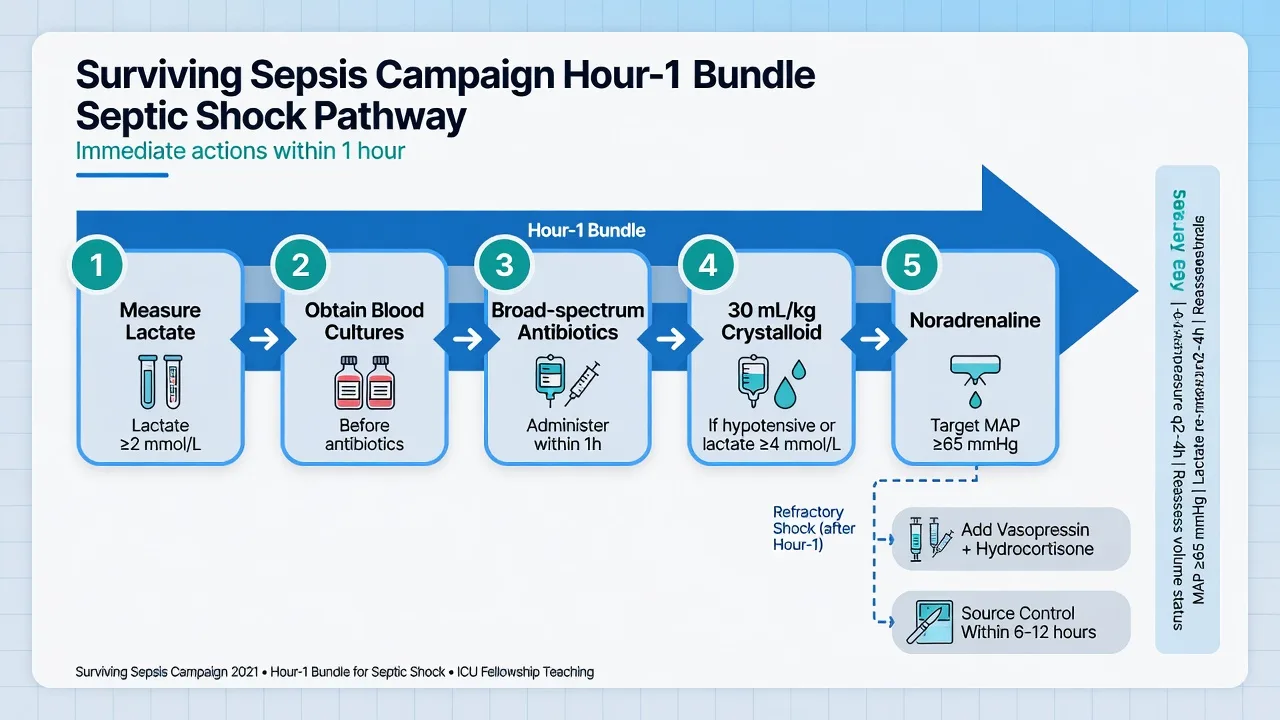
The Surviving Sepsis Campaign 2021 guidelines (Evans et al.) provide the evidence-based standard of care for sepsis and septic shock and are the single most examined document in critical-care fellowship exams. Sepsis-3 (Singer 2016) defines sepsis as life-threatening organ dysfunction caused by a dysregulated host response to infection (SOFA change =2 from baseline); septic shock is a subset with both vasopressor-dependent hypotension (MAP 65) AND lactate 2 mmol/L despite fluids — mortality ~40%. The SSC 2021 HOUR-1 BUNDLE (replaced the 3-hour and 6-hour bundles): within ONE hour of recognition - (1) measure lactate, (2) obtain blood cultures BEFORE antibiotics, (3) administer broad-spectrum antibiotics, (4) rapid 30 mL/kg crystalloid if hypotension or lactate 4, (5) vasopressors if MAP 65 to hold MAP =65. Noradrenaline FIRST-LINE; add vasopressin 0.03 U/min (fixed) when noradrenaline 0.25-0.5 mcg/kg/min; hydrocortisone 200 mg/day for REFRACTORY shock (ADRENAL — faster shock resolution; APROCCHSS — mortality benefit). Balanced crystalloids PREFERRED over saline (SMART). Restrictive fluid strategy at least as good (CLASSIC, CLOVERS). MAP target 65 mmHg — no benefit of higher (SEPSISPAM). Lactate clearance guides resuscitation (ANDROMEDA-SHOCK — non-inferior to ScvO2). Source control within 6-12 h.
On this page & tools
Your progress
Saved locally on this device.
Target exams
Red flags
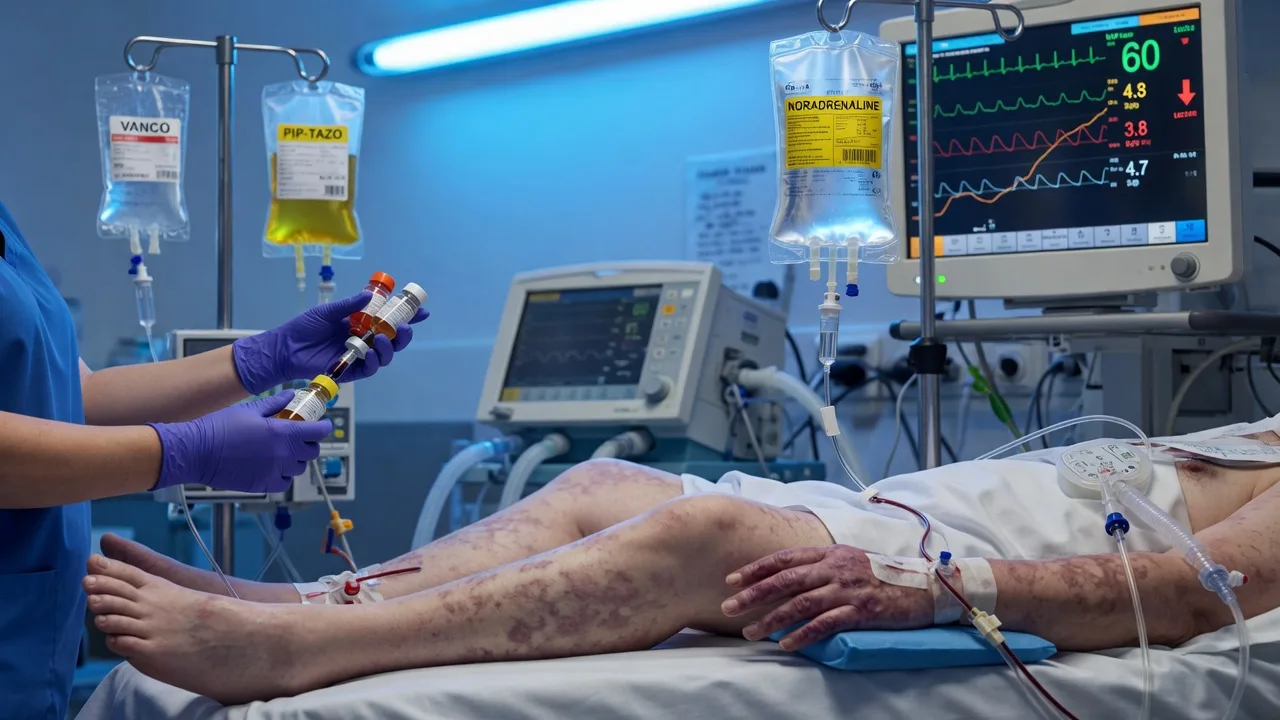
In one line
[1]Pathophysiology — why septic shock behaves the way it does
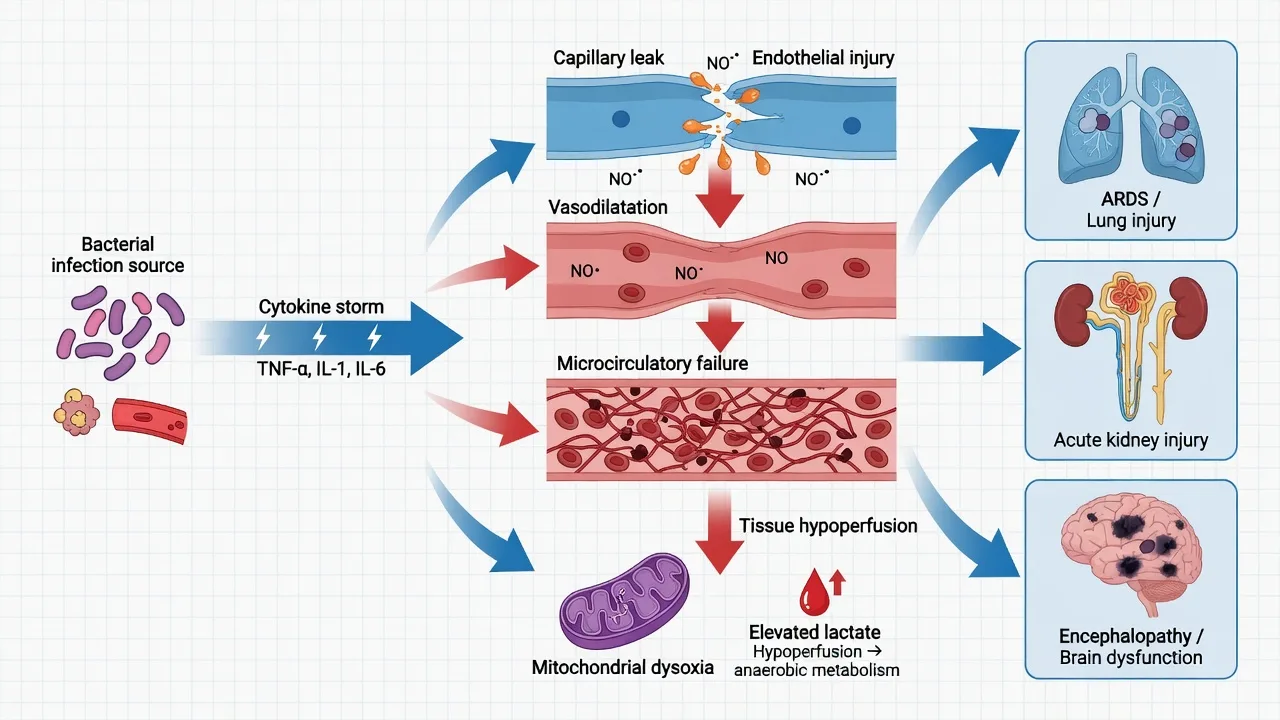
Sepsis is not simply "infection plus inflammation." It is a dysregulated host response in which the normal, localised, self-limiting immune reaction to a pathogen becomes systemic, self-sustaining, and destructive. Understanding the mechanism explains why noradrenaline (not adrenaline) is first-line, why vasopressin levels paradoxically fall, why lactate rises even without hypoxia, and why steroids help only a subset. [1]
The response is triggered when pathogen-associated molecular patterns (PAMPs — endotoxin/LPS, lipoteichoic acid, flagellin, CpG DNA) and damage-associated molecular patterns (DAMPs — HMGB-1, histones, mitochondrial DNA, extracellular ATP) bind pattern-recognition receptors (TLR-2/4, NLRP3 inflammasome, rig-I-like receptors). The downstream cascade produces: [1]
- Pro-inflammatory cytokines — TNF-alpha, IL-1beta, IL-6, IL-8, IFN-gamma — driving fever, endothelial activation, and capillary leak.
- Anti-inflammatory cytokines — IL-10, soluble TNF receptors, IL-1 receptor antagonist — producing the compensatory anti-inflammatory response syndrome (CARS) and later immunoparalysis.
- Endothelial dysfunction — loss of glycocalyx, increased permeability, upregulation of inducible nitric oxide synthase (iNOS) → massive NO release → profound vasoplegia. This is the haemodynamic signature of septic shock: low SVR, high cardiac output, low filling pressures, maldistribution of flow.
- Microcirculatory failure — heterogeneity of capillary flow, mitochondrial dysfunction (cytopathic dysoxia), and oxygen utilisation failure. Tissue can be hypoxic even with a normal or supra-normal global DO2. This is why lactate can be high despite a high cardiac output.
- Mitochondrial dysfunction (cytopathic dysoxia) — impaired oxidative phosphorylation forces anaerobic glycolysis and lactate production even in the presence of oxygen. This is a key exam concept: septic hyperlactataemia is not purely hypoxic — it reflects both hypoperfusion (type A) and impaired pyruvate utilisation (type B).
- Myocardial depression — a circulating myocardial depressant substance (likely TNF and IL-1beta) produces a septic cardiomyopathy in 40-50% of patients: biventricular dilatation, reduced ejection fraction, but a hyperdynamic picture overall (low SVR). This is reversible in survivors.
- Coagulation activation — tissue factor upregulation, protein C consumption, antithrombin depletion, and impaired fibrinolysis produce a prothrombotic state ranging from mild DIC to overt purpura fulminans (meningococcaemia).
- Vasopressin deficiency — in advanced shock, the neurohypophysis becomes depleted and circulating vasopressin falls to inappropriately low levels for the degree of vasodilation. This is the rationale for fixed low-dose vasopressin replacement (0.03 U/min). [1]
The two phases of the septic host response
| Phase | Dominant process | Clinical correlate | Therapeutic implication |
|---|---|---|---|
| Early / pro-inflammatory (SIRS) | Massive cytokine release, endothelial activation, vasoplegia, capillary leak | The "hot" shocked patient: warm peripheries, low SVR, high CO | Antibiotics + fluids + vasopressors + source control in the first hour |
| Late / immunoparalytic (CARS) | Anti-inflammatory cytokines, T-cell exhaustion, lymphocyte apoptosis, monocyte deactivation (low HLA-DR) | Secondary infections (fungal, viral, MDR), viral reactivation (CMV, HSV) | Avoid prolonged broad-spectrum antibiotics; consider procalcitonin-guided stopping; do not assume persistent fever = uncontrolled infection |
Exam point: the term PIIRS (pathogen-induced immunoregulation) and MARS (mixed antagonistic response syndrome) describe the simultaneous pro- and anti-inflammatory activation that characterises real sepsis — neither pure SIRS nor pure CARS. This is why anti-cytokine therapies (anti-TNF) failed: blocking a single mediator cannot fix a network. [1]
Sepsis-3 definitions — and how we got here
The 2016 Sepsis-3 consensus (Singer et al., JAMA) retired the terms "severe sepsis" and reframed sepsis as organ dysfunction rather than inflammation, on the grounds that SIRS is neither sensitive nor specific for the life-threatening phenotype.[2]
Evolution of sepsis definitions
| Consensus | Year | Sepsis defined as | Septic shock defined as | Why it changed |
|---|---|---|---|---|
| Sepsis-1 | 1991 | SIRS + documented/suspected infection | Sepsis + hypoperfusion (lactate, oliguria, AMS) + hypotension | First formal definitions; SIRS was thought to capture sepsis |
| Sepsis-2 | 2001 | SIRS + infection + (suspected) organ dysfunction; expanded signs (inflammatory, haemodynamic, tissue perfusion) | Sepsis + hypotension despite fluids + perfusion abnormalities | Added more clinical signs; still SIRS-centric |
| Sepsis-3 | 2016 | Organ dysfunction (SOFA change >=2) caused by dysregulated host response | Vasopressor-dependent hypotension (MAP >=65) + lactate >2 despite fluids | SIRS is insensitive and non-specific; organ dysfunction better predicts mortality; "severe sepsis" abolished |
qSOFA vs SIRS vs SOFA — what the exams test
| Feature | SIRS (1992) | qSOFA (2016) | SOFA (2016) |
|---|---|---|---|
| Components | Temp >38/<36, HR >90, RR >20 or PaCO2 <32, WCC >12/<4 | 2 of 3: RR >=22, altered mentation, SBP <=100 | 6 organ systems, each scored 0-4 |
| Where it works | Prompting "is there infection?" (sensitive, non-specific) | Predicting poor outcome outside ICU | Quantifying/tracking organ failure in ICU |
| Sensitivity for sepsis | High but non-specific | Low (misses early cases) | High when applied properly |
| SSC 2021 position | Still a reasonable screening trigger | NOT recommended as a SOLE screening tool | Use SOFA (or equivalent) to define sepsis |
| Bottom line | Use SIRS, qSOFA, NEWS, or any validated trigger to PROMPT action — then ACT on the hour-1 bundle regardless of the score; do not delay treatment arguing about which score is positive |
qSOFA caveat (exam favourite): qSOFA was derived to predict death, not to diagnose sepsis. It is less sensitive than SIRS for detecting infection. In the Sepsis-3 derivation cohort, qSOFA >=2 had a sensitivity of ~55% (i.e. it misses nearly half of cases) but high specificity for mortality. SSC 2021 explicitly states it should NOT be used as the sole screening tool — use it as an alarm to escalate, not as a gatekeeper for treatment.[1]
The SSC 2021 Hour-1 Bundle
The 2018 update collapsed the old 3-hour and 6-hour bundles into a single "Hour-1 bundle": all elements should be initiated simultaneously, within one hour of recognising sepsis or septic shock. The 2021 guidelines reaffirm this and emphasise that the elements are concurrent, not sequential — do not finish the fluid bolus before starting the antibiotic.[1]
SSC 2021 Hour-1 bundle — the first 60 minutes
Measure lactate
Draw a venous/gas lactate immediately. If initial lactate >2 mmol/L, remeasure within 2-4 h to track clearance. Lactate >=4 mmol/L is a trigger for the 30 mL/kg bolus even without hypotension. Target clearance >=10%/h or >=20% over 2 h (ANDROMEDA-SHOCK). Falling lactate is a better prognostic marker than ScvO2 or CVP.
Obtain blood cultures BEFORE antibiotics
Two peripheral sets (aerobic + anaerobic) PLUS one set from each lumen of any central/arterial catheter. Also culture urine, sputum, wound, line tips. Do NOT delay antibiotics >45 min for cultures — if cultures would delay antibiotics, give antibiotics first. Cultures drawn after antibiotics still grow ~50-70% of true pathogens.
Administer broad-spectrum antibiotics within 1 h
STRONG recommendation for septic shock/high-likelihood sepsis. Cover all likely pathogens based on source + local resistance + host factors. Empiric: piperacillin-tazobactam (or ceftriaxone/cefepime + metronidazole) + vancomycin/linezolid if MRSA risk + echinocandin if fungal risk. Give FULL loading dose IV first (do NOT under-dose for renal impairment on dose 1; re-dose/titrate from dose 2). De-escalate at 48-72 h. Duration: 7-10 days (shorter if source control + clinical improvement).
Begin rapid 30 mL/kg crystalloid resuscitation
Give 30 mL/kg balanced crystalloid if hypotension (SBP <90 or MAP <65) or lactate >=4 mmol/L, within the first 3 h. BALANCED crystalloid preferred (Hartmann, Plasma-Lyte, Ringer lactate — SMART: less AKI than 0.9% saline). Assess fluid responsiveness after initial bolus (passive leg raise, SVV/PPV, mini-bolus). Do NOT give starch (increased mortality, AKI — CHEST, 6S). After initial bolus, default to a restrictive strategy (CLASSIC, CLOVERS).
Apply vasopressors if hypotensive during/after fluids
Noradrenaline FIRST-LINE (target MAP >=65, SEPSISPAM: no benefit of MAP 80-85). Add vasopressin 0.03 U/min (FIXED dose, NOT titrated) as second agent when noradrenaline >0.25-0.5 mcg/kg/min (catecholamine-sparing, VANISH/VASST). Adrenaline third-line or for added inotropy. Hydrocortisone 200 mg/day if refractory. Central line preferred but do NOT delay starting vasopressor — modern noradrenaline dilutions are safe peripherally for short periods.
Reassess at 1 h
Is MAP >=65? Is lactate falling? Is urine output >0.5 mL/kg/h? Is there a source to control? Escalate to ICU, arterial line, central access, source-control imaging. Re-image and re-examine if not improving in 6-12 h.
Empiric antibiotic selection — broad, early, then narrow
The principle: cover broadly within the hour, then de-escalate to the narrowest effective regimen within 48-72 h based on cultures and source. The empiric choice integrates (a) the suspected source, (b) local antibiogram/resistance, (c) host risk factors (immunocompromise, healthcare exposure, recent antibiotics, MDR colonisation), and (d) allergy/organ function.[1]
Empiric antibiotic selection by likely source (adult, community-onset)
| Likely source | First-line empiric regimen | ADD / MODIFY if… |
|---|---|---|
| Lung (CAP) | Ceftriaxone + azithromycin (or respiratory fluoroquinolone) | Add vancomycin/linezolid if MRSA risk; piperacillin-tazobactam if healthcare-associated/aspiration |
| Lung (HAP/VAP) | Piperacillin-tazobactam OR meropenem (anti-pseudomonal) + vancomycin/linezolid (MRSA) | Add aminoglycoside or second antipseudomonal if MDR; colistin if CRE |
| Abdomen (perforation/cholangitis/peritonitis) | Piperacillin-tazobactam OR (ceftriaxone/cefepime + metronidazole) OR meropenem | Add vancomycin if Enterococcus risk; echinocandin if candidal peritonitis |
| Urinary tract / pyelonephritis | Ceftriaxone OR amoxicillin + gentamicin (ESBL risk -> meropenem/ertapenem) | Treat obstruction as source control (stent/nephrostomy) |
| Skin/soft tissue / necrotising fasciitis | Piperacillin-tazobactam + clindamycin (+ vancomycin for MRSA/STSS) | Add IVIG + URGENT surgical debridement for group A strep toxic shock |
| Catheter/line-related | Vancomycin (or linezolid/daptomycin for MRSA/VRE) + Gram-negative cover (pip-tazo) | REMOVE the line — antibiotics alone fail; add echinocandin if Candida |
| Meningitis | Cefotaxime/ceftriaxone + vancomycin (+ ampicillin if >50 y for Listeria) + dexamethasone | Add aciclovir if HSV encephalitis suspected |
| Neutropenic fever / immunocompromised | Antipseudomonal beta-lactam (pip-tazo, cefepime, or meropenem) | ADD vancomycin if line infection; ADD echinocandin if persistent fever/prolonged neutropenia; ADD co-trimoxazole if PJP suspected |
Fluid resuscitation — balanced, goal-directed, and probably less is more
Fluid is a drug with a dose, an indication, and adverse effects. The initial 30 mL/kg bolus (for hypotension or lactate >=4) is a starting point; everything after that must be guided by fluid responsiveness — giving more fluid to a patient whose heart cannot transmit it to the circulation causes pulmonary oedema, worsens AKI, increases intra-abdominal pressure, and may increase mortality.[1]
Fluid strategy — what the trials show
| Trial / question | Comparison | Key result | Practical take |
|---|---|---|---|
| SMART (2018)[10] | Balanced crystalloids vs 0.9% saline in 15,802 ICU adults | MAKE30 (death/RRT/persistent renal dysfunction): 14.3% balanced vs 15.4% saline (OR 0.91; P=0.04); benefit largest in sepsis subgroup | Prefer balanced crystalloids over 0.9% saline — less hyperchloraemic acidosis and AKI |
| SALT-ED / PLUS | Same question in ED/ICU | Consistent trend favouring balanced | Reinforces SMART; saline acceptable if balanced unavailable |
| CLASSIC (2023) | Restrictive vs standard IV fluids after initial resuscitation in septic shock | Restrictive strategy non-inferior; trend to less fluid harm | After the initial 30 mL/kg, default to a restrictive strategy — reassess responsiveness before each bolus |
| CLOVERS (2023) | Liberal (early fluids) vs restrictive (early vasopressors) in septic shock | No difference in 90-day mortality; restrictive used less fluid, more vasopressors | Early vasopressors + less fluid is a legitimate strategy; the dogma "resuscitate first, vasopressors last" is dead |
| ProMISe / ARISE / ProCESS[11][12][13] | Protocolised EGDT (ScvO2-guided) vs usual care | No mortality benefit; EGDT used more fluids, transfusion, dobutamine | Rigid EGDT is not superior to competent bedside care; use lactate clearance + clinical reassessment |
| ALBIOS | Albumin vs crystalloid in severe sepsis | No overall mortality benefit; possible benefit in septic shock | Albumin 20% if large volumes required — adjunct, not routine |
| CHEST / 6S[17] | Hydroxyethyl starch vs crystalloid | Increased mortality and AKI/RRT with starch | NEVER use starch in sepsis — strong recommendation |
| FEAST | Aggressive fluid bolus in African children | Harm with aggressive bolus | Avoid the "fluids are always safe" mindset — bolus only the responsive |
Fluid responsiveness — use dynamic, not static, markers
After the initial 30 mL/kg, every subsequent bolus must be justified by a positive fluid-response test. Static markers (CVP, single-shot IVC diameter) are near-useless for predicting responsiveness. The validated dynamic tests are: [1]
Fluid responsiveness tests — sensitivity and ease of use
| Test | How it works | Sensitivity/specificity | Practicality |
|---|---|---|---|
| Passive leg raise (PLR) | Autotransfusion of ~300 mL venous blood from legs to heart; measure CO change | Best validated (~85% sens, ~90% spec) | Excellent — free, bedside, reversible; measure CO (echo, arterial pulse contour) before and after 90 s |
| Pulse/stroke pressure variation (PPV/SVV) | Cyclical changes in LV preload with positive-pressure ventilation alter stroke volume | High if passively ventilated with tidal volume >=8 mL/kg and closed chest | Limited in spontaneously breathing, AF, RV failure, low tidal volume, open chest |
| Mini-fluid challenge (250 mL) | Small bolus, measure CO change | Reasonable | Simplest if no advanced monitoring; less "wasted" fluid than a 500 mL bolus |
| End-expiratory occlusion test | 15-s expiratory hold increases venous return; measure CO change | Good | Requires intubated patient and CO monitor |
| IVC collapsibility/distensibility | Respiratory variation of IVC diameter | Moderate (operator-dependent) | Quick bedside echo test; better in spontaneously breathing |
| CVP / single IVC diameter (STATIC) | None | POOR (near-useless for responsiveness) | Do NOT use to decide on fluids |
The ROSE fluid model and the "4 Ds"
How to resuscitate fluids intelligently — the first 3-6 hours
GIVE 30 mL/kg balanced crystalloid
For hypotension or lactate >=4, over 30 min-3 h. Warm the fluids if giving rapidly. Reassess responsiveness after each bolus.
ASSESS FLUID RESPONSIVENESS before each subsequent bolus
Passive leg raise (most reliable bedside test), SVV/PPV (if passively ventilated), or change in SV with a 250 mL mini-bolus. A non-responsive patient will NOT benefit from more fluid.
USE DYNAMIC over STATIC markers
A CVP of 8 or 12 mmHg tells you almost nothing about responsiveness. Use IVC variability, PLR-induced CO change, delta-PP.
START NORADRENALINE EARLY
If MAP <65 or rising lactate with shock — do not wait for the full 30 mL/kg if the patient is fluid-unresponsive (CLOVERS supports early vasopressors).
REASSESS LACTATE every 2 h
Target clearance >=10%/h or >=20%/2 h (ANDROMEDA-SHOCK). A rising lactate despite adequate MAP -> reassess source, consider inotrope (septic cardiomyopathy), or ongoing loss.
CONSIDER ALBUMIN 20%
If crystalloid requirement exceeds ~3-4 L — to limit positive fluid balance and interstitial oedema (ALBIOS — adjunct, not routine).
STOP the boluses
Once euvolaemic and responsive — switch to maintenance fluids; diurese if there is positive fluid balance with tissue oedema (deresuscitation phase).
The ROSE model conceptualises fluid therapy across four phases: Resuscitation (first hours — boluses to restore perfusion), Optimisation (next 6-24 h — titrate to responsiveness, goal-directed), Stabilisation (day 2+ — zero or negative fluid balance), and Evacuation/deresuscitation (mobilise and remove fluid with diuretics/RRT). Over-resuscitation in the O and S phases is one of the most common preventable harms in septic shock — it drives pulmonary oedema, intra-abdominal hypertension, AKI, and wound breakdown. [1]
Vasopressors and inotropes — noradrenaline first, escalate in order
The goal of vasopressor therapy is to restore perfusion pressure (MAP >=65) without worsening the microcirculation or causing peripheral/ischaemic complications. Sepsis causes vasoplegia (pathological vasodilation from NO, prostaglandins, ATP-sensitive K+ channel opening, and vasopressin deficiency) — the first-line agent must therefore be a potent alpha-1 agonist. [1]
Vasopressor and inotrope ladder in septic shock
| Agent | Receptor profile | Dose range | Role in septic shock | Key cautions |
|---|---|---|---|---|
| Noradrenaline (FIRST-LINE) | Alpha-1 >> beta-1 | 0.05-1.0 mcg/kg/min (titrate) | Drug of choice — potent vasoconstriction + modest inotropy. SSC 2021 STRONG recommendation. Start peripherally if needed, central access ASAP. | Extravasation -> necrosis (use central; have phentolamine ready); arrhythmia (less than adrenaline) |
| Vasopressin (SECOND-LINE ADD-ON) | V1 (pure vasoconstriction, catecholamine-independent) | 0.03 U/min FIXED (do NOT titrate — >0.04 risks ischaemia) | Add when noradrenaline >0.25-0.5 mcg/kg/min — catecholamine-sparing, may reduce AF. VASST/VANISH | Splanchnic/digital ischaemia at high dose; hyponatraemia (V2 effect); NOT a monotherapy |
| Adrenaline (THIRD-LINE / inotrope) | Alpha-1, beta-1, beta-2 | 0.05-0.5 mcg/kg/min (titrate) | Add if target MAP not met on noradrenaline + vasopressin, or when added inotropy needed (low CO with septic cardiomyopathy) | Lactate rise (beta-2 -> glycolysis — confounds lactate monitoring); tachyarrhythmia; myocardial O2 demand |
| Dobutamine (inotrope) | Beta-1 > beta-2 | 2.5-20 mcg/kg/min (titrate) | For documented LOW cardiac output with high filling pressures (septic cardiomyopathy on echo) despite adequate MAP | Tachyarrhythmia; may worsen hypotension (beta-2) — combine with noradrenaline |
| Phenylephrine | Pure alpha-1 | 0.5-5 mcg/kg/min | Generally AVOID — pure vasoconstriction reduces stroke volume and splanchnic perfusion | Useful only for tachyarrhythmia precluding noradrenaline |
| Angiotensin II (ATHOS-3) | AT1 receptor | 20-200 ng/kg/min | Rescue for catecholamine-resistant vasoplegia (ATHOS-3 — improved MAP in refractory shock) | Thrombosis risk; expensive; limited data |
| Methylene blue (rescue) | Inhibits soluble guanylate cyclase -> blocks NO-mediated vasoplegia | 1-2 mg/kg IV over 20 min (± infusion 0.25-2 mg/kg/h) | Rescue for catecholamine-resistant vasoplegia refractory to noradrenaline + vasopressin + steroid | Serotonin syndrome with SSRIs/MAOIs; not a substitute for source control |
| Hydrocortisone (REFRACTORY) | Glucocorticoid — restores vascular tone + adrenergic receptor sensitivity | 200 mg/day (continuous or 50 mg q6h) | For refractory shock (ongoing vasopressor need despite adequate fluids + noradrenaline ± vasopressin). SSC 2021 WEAK suggestion | Hyperglycaemia, secondary infection, neuromyopathy; wean as shock resolves |
What 'refractory septic shock' means and when to escalate
| Threshold (approximate, any one) | Action |
|---|---|
| Noradrenaline >=0.25-0.5 mcg/kg/min and MAP still <65 | Add vasopressin 0.03 U/min; ensure adequate intravascular volume; check/obtain source control |
| Two vasopressors running (noradrenaline + vasopressin) and still in shock | Start hydrocortisone 200 mg/day; consider echocardiography for septic cardiomyopathy (add dobutamine if low CO) |
| MAP target still unmet on noradrenaline + vasopressin + hydrocortisone | Add adrenaline; consider methylene blue / angiotensin II for NO-mediated vasoplegia; reassess source control; exclude adrenal crisis, hypocalcaemia, ongoing loss |
| Refractory cardiovascular collapse | VA-ECMO as bridge to source control/recovery — centre-dependent |
Corticosteroids in septic shock — weak suggestion, for refractory shock only
The steroid story in sepsis is one of the most examined and most confusing areas. The key is to understand why the trials diverged and what SSC 2021 actually says. [1]
The corticosteroid trials in septic shock — what the exams test
| Trial | Year | Design | Population | Regimen | Primary result |
|---|---|---|---|---|---|
| Annane 2002 (JAMA) | 2002 | RCT, 300 pts | Vasopressor-unresponsive shock (most unwell) | Hydrocortisone 50 mg q6h + fludrocortisone 50 mcg, 7 days | 28-day mortality benefit in non-responders to ACTH test (relative adrenal insufficiency) |
| CORTICUS[7] | 2008 | RCT, 499 pts | Septic shock (ALL, not just refractory) | Hydrocortisone 50 mg q6h x 5 d then taper, 11 days | No mortality benefit; faster shock reversal but more superinfections and new sepsis episodes. Killed routine use in non-refractory shock |
| ADRENAL[5] | 2018 | RCT, 3,800 pts | Ventilated septic shock (ANZICS CTG) | Hydrocortisone 200 mg/day continuous x 7 d or until ICU discharge | No 90-day mortality benefit (27.9% vs 28.8%, P=0.50); faster shock resolution, more RRT-free days, no excess infection |
| APROCCHSS[6] | 2018 | RCT, 1,241 pts | Septic shock (worse — multi-organ, French) | Hydrocortisone 50 mg q6h + fludrocortisone 50 mcg/day x 7 d | 90-day mortality BENEFIT (43.0% vs 49.1%, P=0.03); faster shock resolution, more RRT-free/ventilator-free days |
| APPROVE-SHOCK | 2020 | RCT, early septic shock | Early shock (not yet refractory) | Early hydrocortisone | No mortality benefit — do NOT give steroids early/pre-emptively |
How to reconcile the divergence: the two positive trials (Annane 2002, APROCCHSS 2018) studied sicker patients (vasopressor-unresponsive or multi-organ failure) and used hydrocortisone + fludrocortisone. The negative trials (CORTICUS, ADRENAL) studied broader/less-sick populations and used hydrocortisone alone. The signal favours steroids in the most refractory shock and possibly the addition of fludrocortisone. SSC 2021 issues only a weak suggestion (not strong recommendation) to use low-dose hydrocortisone in adults with refractory shock — those still needing vasopressors after adequate fluids. Using steroids in every septic patient is NOT supported.[1]
Practical steroid prescribing: hydrocortisone 200 mg/day (50 mg q6h or continuous infusion), for patients with refractory shock (ongoing noradrenaline/vasopressin need despite adequate fluids). Add fludrocortisone 50 mcg/day (consider, given APROCCHSS). Wean as shock resolves (reduce vasopressors first, then taper steroids over several days to avoid rebound). Do NOT do an ACTH stimulation test to decide — it does not reliably predict response. Side effects: hyperglycaemia (monitor, treat per NICE-SUGAR), secondary infection, ICU-acquired weakness, hypernatraemia (fludrocortisone). [1]
MAP target — 65 mmHg is enough (SEPSISPAM)
MAP 65 vs 80 mmHg in septic shock (SEPSISPAM)
| Outcome | High target (80-85 mmHg) | Low target (65-70 mmHg) | Difference |
|---|---|---|---|
| 28-day mortality | 36.6% | 34.0% | HR 1.07 (0.84-1.38); P=0.57 — no difference |
| 90-day mortality | 43.8% | 42.3% | HR 1.04 (0.83-1.30); P=0.74 — no difference |
| New atrial fibrillation | Higher | Lower | Significantly more AF in high-target group |
| Renal replacement therapy (chronic hypertensives) | Less RRT | More RRT | In the pre-specified chronic-hypertension subgroup, a higher MAP reduced the need for RRT |
Bottom line: target MAP >=65 mmHg for all patients. The only exception is the patient with chronic hypertension, in whom a higher target (75-80 mmHg) may reduce the need for renal replacement therapy — but it does not change survival. Pushing MAP to 80 in everyone increases atrial fibrillation without benefit.[4]
Resuscitation targets — lactate clearance vs ScvO2 (ANDROMEDA-SHOCK)
After the first hour, how do you know resuscitation is working? Lactate clearance and ScvO2 are the two validated targets. The classic Rivers EGDT protocol (ScvO2 >=70%, CVP 8-12, MAP >=65, UO >=0.5 mL/kg/h) was tested against peripheral-perfusion-guided (capillary refill time) resuscitation in the ANDROMEDA-SHOCK trial (Hernandez 2019, JAMA):[8]
- ANDROMEDA-SHOCK: 424 patients with septic shock, RCT. CRT-guided (target CRT <3 s) vs lactate-guided (target lactate clearance >=20%/2 h) resuscitation. CRT-guided was non-inferior for 28-day mortality, and the per-protocol analysis suggested lower mortality with CRT-guided. Both approaches are simpler and at least as good as rigid ScvO2-guided EGDT.
- Combined with ProCESS/ARISE/ProMISe (which showed EGDT not superior to usual care), the message is: lactate clearance +/- bedside perfusion markers (CRT, mottling, urine output) are sufficient — you do NOT need a ScvO2 catheter, routine dobutamine escalation, or mandatory transfusion to Hct 30%. [1]
Resuscitation targets — what to track
| Target | Threshold | Notes |
|---|---|---|
| MAP | >=65 mmHg (75-80 in chronic HTN) | Primary perfusion pressure goal |
| Lactate clearance | >=10%/h, or >=20%/2 h | Falling lactate = resuscitation working; rising/stagnant lactate -> reassess source, fluids, inotropes |
| Urine output | >=0.5 mL/kg/h | Marker of renal perfusion; oliguria persistent despite adequate MAP -> consider AKI/RRT |
| Capillary refill time | <3 s | ANDROMEDA-SHOCK — cheap, reproducible, tracks microcirculation |
| ScvO2 | >=70% (optional) | Useful if central line in place; low ScvO2 -> consider dobutamine / transfusion (if Hb <70) |
| Mottling score | Reducing / absent | High mottling around knees = poor microcirculation, high mortality |
Lactate physiology — exam depth
Lactate is produced from pyruvate via lactate dehydrogenase when NADH/NAD+ is high (anaerobic conditions) or when pyruvate exceeds mitochondrial oxidative capacity. Septic hyperlactataemia has two components: [1]
Type A vs Type B hyperlactataemia
| Type A (hypoxic) | Type B (non-hypoxic) | |
|---|---|---|
| Mechanism | Tissue hypoxia/hypoperfusion -> anaerobic glycolysis | Impaired pyruvate metabolism / mitochondrial dysfunction / beta-2 agonism / impaired clearance |
| In sepsis | Hypoperfusion (low DO2, microcirculatory shunting) | Cytopathic dysoxia (mitochondrial dysfunction), adrenaline-driven glycolysis (beta-2), impaired hepatic clearance |
| Implication | Give fluids / vasopressors / inotropes to restore DO2 | Restoring DO2 alone will NOT normalise lactate — the mitochondrion is the problem |
| Other causes of high lactate | Shock, hypoxia, mesenteric ischaemia, seizures | Malignancy, metformin, beta-agonists, liver failure, mitochondrial toxins, thiamine deficiency, linezoilid |
Exam point: a persistently elevated lactate despite adequate MAP and ScvO2 does NOT mean the patient needs more fluid — it may represent cytopathic dysoxia, ongoing adrenaline effect, or impaired clearance. Chasing lactate with more fluid is a common and harmful error. [1]
Source control — drain, debride, remove (within 6-12 hours)
Antibiotics sterilise the bloodstream; source control removes the nidus of infection that keeps seeding it. An undrained abscess, an infected prosthetic, necrotic tissue, or an infected central line will not respond to antibiotics alone. SSC 2021 issues a best-practice statement: source control should be achieved as rapidly as practical, ideally within 6-12 hours of recognition.[1]
Source control by source type
| Source | Source control intervention | Timing | Caveat |
|---|---|---|---|
| Abscess / collection | Percutaneous drain (radiology-guided) OR surgical drainage | ASAP, <6-12 h | Culture the drain; re-image if no improvement |
| Infected central/arterial line / catheter | REMOVE the device; culture the tip (semi-quantitative) | Immediate, <6 h | Do NOT "exchange over a wire" if infection confirmed — remove and re-site |
| Necrotising soft tissue infection | Urgent surgical debridement to healthy tissue | <6 h (emergency) | Delayed debridement = mortality; re-look at 24-48 h |
| Perforated viscus / peritonitis | Laparotomy / laparoscopy, washout, repair | <12 h | Antibiotics + source control together |
| Obstructed / infected biliary tree (cholangitis) | ERCP + stent / stone removal OR percutaneous cholecystostomy | <12 h | Septic shock + cholangitis = emergency decompression |
| Pyelonephritis with obstructing stone | Nephrostomy / stent | <12 h | Drain the obstructed system; antibiotics alone fail |
| Empyema | Chest drain (or VATS) | <24 h | Convert loculated collections |
| Endocarditis (infected valve) | Surgical source control (valve replacement) if HF, uncontrolled infection, emboli, abscess | Days (early surgery if unstable) | A subset needs urgent surgical source control |
Source control checklist — ask within the first hour and again at 4-6 hours
Is there a drainable collection?
Request ultrasound/CT early; do not wait for the patient to "stabilise" if stability depends on drainage.
Is there an infected device?
Review every line, catheter, drain, and prosthesis; remove any that are potentially infected (culture the tip).
Is there necrotic tissue?
Surgical review for necrotising fasciitis, infarcted bowel, gangrenous gallbladder.
Is there an obstruction?
Decompress (ERCP, nephrostomy, laparotomy) the obstructed, infected system.
Re-image and re-examine
If the patient is not improving in 6-12 h, the source is not controlled: look again.
Antibiotic duration and procalcitonin-guided stopping
SSC 2021 recommends a 7-10 day course for most serious infections, with shorter courses appropriate for patients with rapid clinical improvement and adequate source control, and longer courses for slow response, undrained foci, bacteraemia with S. aureus, or immunocompromise.[1]
Procalcitonin (PCT)-guided antibiotic discontinuation is endorsed (weak) by SSC 2021: use a falling or low PCT to support stopping antibiotics earlier than a fixed-duration course. The evidence base: [1]
- PRORATA (Bouadma 2010, Lancet): PCT-guided algorithm reduced antibiotic exposure by ~2.7 days with no excess mortality.
- STOP-IT (2016) / SAPS (2017): shorter courses (5 days) non-inferior to longer in intra-abdominal infection with adequate source control.
- SALT (2018, JAMA Internal Medicine): PCT-guided discontinuation reduced duration without excess adverse events.
- PROGRESS / SAPS: consistent signal that biomarker-guided shortening is safe. [1]
Practical PCT use: measure on admission, then daily. If PCT has fallen >=80% from peak or is <0.5 mcg/L AND the patient is clinically improving, stop antibiotics. If PCT is <0.1 mcg/L on day 1 in a patient with suspected infection, reconsider whether antibiotics are needed at all (infection unlikely). Never override a deteriorating patient because the PCT is low — clinical judgement dominates. [1]
De-escalation at 48-72 h: narrow to the narrowest effective agent based on culture sensitivities and source. Stop empiric MRSA cover (vancomycin) if no MRSA isolated. Stop double Gram-negative cover once sensitivities known. Stop antifungal empiric cover if no fungal growth. [1]
Adjunctive and supportive therapy
Adjuncts with a defined role in septic shock (SSC 2021)
| Intervention | Indication | Dose / detail |
|---|---|---|
| Hydrocortisone | Refractory shock (vasopressor-dependent after fluids) | 200 mg/day (continuous or 50 mg q6h); consider fludrocortisone 50 mcg (APROCCHSS); wean as shock resolves[5][6] |
| Vasopressin | Rising noradrenaline requirement | 0.03 U/min fixed; do not titrate[9][16] |
| Glucose control | All ICU patients | Target glucose 8-10 mmol/L; avoid hypoglycaemia and severe hyperglycaemia (NICE-SUGAR — moderate control better than tight) |
| Thromboprophylaxis | All unless contraindicated | LMWH (enoxaparin 40 mg SC) — sepsis is prothrombotic |
| Stress ulcer prophylaxis | Ventilated >48 h OR coagulopathy OR shock | Pantoprazole 40 mg IV — not routine for all |
| Vitamin C / thiamine / steroids (Marik "HAT") | — | NOT recommended — LOVIT and CITRIS-ALI showed harm/no benefit; do NOT use[14][15] |
| Early enteral nutrition | Haemodynamically stable | Trophic feeds within 48 h; hold full feeds if unstable/high noradrenaline |
| Haemoglobin transfusion | Hb <70 g/L (or <80-90 if active ischaemia) | TRICC — restrictive strategy safe in sepsis |
| Renal replacement therapy | Refractory AKI, severe metabolic acidosis, fluid overload | No benefit to early (before classic indications) RRT (AKIKI, STARRT) |
| Sodium bicarbonate | pH <7.15 with haemodynamic instability | May reduce vasopressor need; not routine (BICAR-ICU) |
| IV immunoglobulin | — | NOT recommended by SSC 2021 (except specific toxin-mediated: IVIG for streptococcal/staphylococcal toxic shock) |
| Blood purification / Polymyxin B haemoperfusion | — | NOT recommended — no convincing mortality benefit |
Vitamin C, thiamine, and the "HAT" protocol — what happened
The 2017 Marik paper (Chest) suggested dramatic mortality benefit from high-dose IV vitamin C + hydrocortisone + thiamine ("HAT" protocol) in sepsis. This generated enormous interest but was a small before-after study. Subsequent rigorous RCTs were negative: [1]
- CITRIS-ALI (Fowler 2019, JAMA):[15] 200 mg/kg/day vitamin C x 4 d — no significant difference in organ dysfunction or mortality (primary). A post-hoc 28-day mortality difference was noted but not the primary endpoint and not durable.
- LOVIT (Lamontagne 2022, JAMA):[14] high-dose vitamin C in 872 patients — higher risk of death or persistent organ dysfunction at 28 days (46.3% vs 40.5%, RR 1.21; P=0.01). HARM. This is now the definitive trial.
SSC 2021 (and 2023 updates) recommends AGAINST high-dose vitamin C in sepsis. Do not use the HAT protocol. Standard care only.[1]
Key trials and evidence
Evans 2021 — Surviving Sepsis Campaign Guidelines (SSC 2021)
International guidelines co-published in Intensive Care Medicine and Critical Care Medicine (PMID 34599691)
Population: Adults and children with sepsis/septic shock
Key finding
Hour-1 bundle (lactate, cultures-before-antibiotics, antibiotics within 1 h, 30 mL/kg crystalloid for hypotension/lactate >=4, vasopressors to MAP >=65); balanced crystalloids preferred; noradrenaline first-line; vasopressin add-on; hydrocortisone 200 mg/day for refractory shock; source control within 6-12 h; AGAINST vitamin C
Practice change
The definitive reference — every sepsis question in CICM/FFICM/EDIC is answerable from SSC 2021. Know the hour-1 bundle cold.
Singer 2016 — Sepsis-3 Definitions (Sepsis-3)
International consensus task force (PMID 26903337)
Population: Derivation and validation cohorts (>1 million patients)
Key finding
Sepsis = organ dysfunction (SOFA change >=2) from dysregulated host response. Septic shock = vasopressors for MAP >=65 + lactate >2 despite fluids (mortality ~40%). 'Severe sepsis' abolished. qSOFA derived as a bedside screen.
Practice change
Retired SIRS as the definition of sepsis; SOFA is now the operational definition; qSOFA is a prompt, not a diagnostic test. The most cited critical-care paper of the decade.
Seymour 2017 — Time to Treatment and Mortality (New York State)
Retrospective cohort, 49,331 patients, 149 hospitals, mandated sepsis care (PMID 28528569)
Population: Patients with sepsis/septic shock under New York State mandated protocols
Key finding
Each hour to bundle completion: OR 1.04 (1.02-1.05); each hour to antibiotics: OR 1.04 (1.03-1.06); time to fluid bolus NOT independently associated (OR 1.01; P=0.21)
Practice change
Antibiotic timing is the dominant time-sensitive variable. The evidence base for the 'antibiotics within 1 hour' mandate.
SEPSISPAM 2014 — MAP 65 vs 80 mmHg
RCT: 776 patients with septic shock, multicentre open-label (PMID 24635770)
Population: Septic shock (vasopressor-dependent)
Key finding
No difference in 28-day (36.6% vs 34.0%) or 90-day mortality (43.8% vs 42.3%). High-target group received more vasopressors and had more atrial fibrillation. Subgroup: chronic hypertensives in high-target group needed LESS RRT.
Practice change
Target MAP >=65 mmHg for all; consider 75-80 mmHg ONLY in chronic hypertensives to reduce RRT. Pushing everyone to 80 causes AF without benefit.
ADRENAL 2018 — Hydrocortisone in Septic Shock
RCT, 3,800 ventilated septic shock patients, ANZICS CTG (PMID 29347874)
Population: Ventilated septic shock
Key finding
90-day mortality: 27.9% hydrocortisone vs 28.8% placebo (OR 0.95; 0.82-1.10; P=0.50) — no difference. BUT: faster shock resolution (3 vs 4 days), shorter initial ventilation, more RRT-free days, no excess bacteraemia/infection.
Practice change
Hydrocortisone does NOT improve survival but hastens shock resolution and is safe — use for refractory shock to reduce vasopressor load, not for mortality.
APROCCHSS 2018 — Hydrocortisone + Fludrocortisone in Septic Shock
RCT, 1,241 patients with septic shock, French multicentre (PMID 29775544)
Population: Septic shock with multi-organ failure (sicker than ADRENAL)
Key finding
90-day mortality: 43.0% steroid vs 49.1% placebo (P=0.03) — mortality benefit. Also faster shock resolution, more ventilator-free and RRT-free days.
Practice change
In the sickest septic shock patients, hydrocortisone + fludrocortisone reduces mortality. This trial (with Annane 2002) underpins SSC 2021's weak suggestion for steroids in refractory shock.
CORTICUS 2008 — Hydrocortisone in Septic Shock (broad population)
RCT, 499 patients with septic shock (PMID 19049956)
Population: ALL septic shock (not just vasopressor-refractory — broader than Annane)
Key finding
No mortality benefit in non-responders or overall. Faster shock reversal but more superinfections and new sepsis episodes. ACTH test did not predict response.
Practice change
Killed routine steroid use in non-refractory septic shock and killed the ACTH stimulation test as a decision tool. Steroids are reserved for refractory shock.
ANDROMEDA-SHOCK 2019 — Capillary Refill vs Lactate-Guided Resuscitation
RCT, 424 patients with septic shock, multicentre Latin America (PMID 30772908)
Population: Septic shock after initial resuscitation
Key finding
CRT-guided non-inferior to lactate-guided (34.9% vs 43.4%; absolute difference -8.5%, 95% CI -18.4 to 1.4; P for non-inferiority <0.001). Per-protocol analysis suggested LOWER mortality with CRT-guided. CRT group received less fluid and less noradrenaline.
Practice change
Bedside perfusion markers (CRT, mottling) are as good as — and possibly better than — lactate-guided resuscitation. Combined with EGDT trials, supports simple, bedside, dynamic monitoring over invasive ScvO2 catheters.
VANISH 2016 — Early Vasopressin vs Noradrenaline in Septic Shock
RCT, 409 patients with septic shock (PMID 27483065)
Population: Septic shock at first vasopressor
Key finding
No significant difference in kidney-failure-free days. Vasopressin group used less renal replacement therapy and had fewer atrial arrhythmias. No interaction with hydrocortisone.
Practice change
Early vasopressin is a safe catecholamine-sparing strategy; supports adding vasopressin early (not titrating it). Does not replace noradrenaline as first-line.
SMART 2018 — Balanced Crystalloids vs Saline
Pragmatic cluster-randomised multiple-crossover, 15,802 ICU adults, Vanderbilt (PMID 29485925)
Population: All ICU adults (including large sepsis subgroup)
Key finding
MAKE30: 14.3% balanced vs 15.4% saline (OR 0.91; 95% CI 0.84-0.99; P=0.04). Benefit largest in sepsis subgroup and in patients receiving larger volumes.
Practice change
Balanced crystalloids are the DEFAULT resuscitation fluid in sepsis — saline causes hyperchloraemic acidosis and more AKI.
ProCESS / ARISE / ProMISe 2014-2015 — EGDT vs Usual Care
Three multicentre RCTs: ~4,000 patients total (ProCESS PMID 24635743, ARISE PMID 25272316, ProMISe PMID 25776532)
Population: Patients with early severe sepsis/septic shock
Key finding
EGDT was NOT superior to usual care in any of the three trials. No difference in mortality. EGDT used more fluids, more blood transfusions, more dobutamine. Usual care is sufficient.
Practice change
Protocolised EGDT with ScvO2 catheter is NOT needed. Clinician-directed resuscitation is equally effective. The legacy of Rivers is the PRINCIPLE (early, aggressive, goal-directed), not the PROTOCOL. Simplified approach: lactate, fluids, vasopressors, MAP >=65.
LOVIT 2022 — High-Dose Vitamin C in Sepsis
RCT, 872 patients with sepsis, multicentre Canada/UK/ANZ (PMID 35939735)
Population: Sepsis (not necessarily shock) within 24 h of ICU admission
Key finding
HIGHER risk of death or persistent organ dysfunction with vitamin C (46.3% vs 40.5%, RR 1.21; P=0.01). HARM.
Practice change
Definitive evidence that high-dose vitamin C is HARMFUL in sepsis. The 'HAT' protocol is dead. SSC 2021/2023 recommend AGAINST vitamin C.
VASST 2008 — Vasopressin vs Noradrenaline in Septic Shock
RCT, 778 patients with septic shock on vasopressors (PMID 18477655)
Population: Septic shock with vasopressor requirement
Key finding
No overall mortality difference (35.4% vs 39.3%, P=0.26). Subgroup: in LESS severe shock (noradrenaline <15 mcg/min), vasopressin trended to LOWER mortality. Vasopressin used at low doses (median 0.02-0.03 U/min) — established the safety of low-dose vasopressin.
Practice change
Established that low-dose vasopressin (0.03 U/min) is safe and catecholamine-sparing in septic shock; not superior to noradrenaline as first-line but a useful second agent. Foundation for the 'fixed 0.03 U/min' practice.
6S 2012 — Hydroxyethyl Starch vs Ringer's Acetate in Severe Sepsis
RCT, 804 patients with severe sepsis, Scandinavian (PMID 22001380)
Population: Severe sepsis requiring fluid resuscitation
Key finding
HES group had HIGHER 90-day mortality (51% vs 43%, RR 1.17; P=0.03) and more RRT (22% vs 16%, RR 1.35; P=0.04).
Practice change
With CHEST (Myburgh 2012), killed hydroxyethyl starch in sepsis. SSC 2021 STRONG recommendation AGAINST starches — increased mortality and AKI. Never use HES in septic shock.
CLASSIC 2023 — Restrictive vs Standard IV Fluids in Septic Shock
RCT, 1,554 patients with septic shock after initial resuscitation, Scandinavian/European
Population: Septic shock after the initial fluid bolus
Key finding
Restrictive strategy non-inferior to standard (mean fluid difference ~1.2 L over the period). Trend to less fluid harm. No difference in serious adverse events.
Practice change
After the initial 30 mL/kg, a restrictive strategy is at least as good as liberal. Reassess responsiveness before each bolus.
CLOVERS 2023 — Liberal vs Restrictive Fluid in Septic Shock
RCT, 1,563 patients with septic shock, US PETAL network (NEJM)
Population: Septic shock with hypotension and elevated lactate
Key finding
No difference in mortality (14.0% restrictive vs 14.9% liberal). Restrictive group received ~2 L less fluid and more vasopressors by 24 h.
Practice change
Early vasopressors + less fluid is a legitimate strategy equivalent to the traditional 'fluids-first' approach. The dogma 'resuscitate first, vasopressors last' is obsolete. Either strategy is acceptable; individualise.
SAQ — Septic shock: recognition and the SSC 2021 Hour-1 bundle
10 minutes · 10 marks
A 70-year-old man with diabetes presents with confusion, fever (39°C), RR 30, BP 80/50 (MAP 60), and a lactate of 5.5 mmol/L. Urinalysis shows nitrites and leucocytes. Outline your immediate management and the supporting evidence.
SAQ — Sepsis-induced cardiomyopathy and the role of inotropes
10 minutes · 10 marks
A 60-year-old man in septic shock from pneumonia has a MAP of 60 mmHg on noradrenaline 0.4 mcg/kg/min and vasopressin 0.03 U/min, with a lactate of 4.5 mmol/L and a central venous saturation of 65%. A bedside echocardiogram shows a hyperdynamic, underfilled left ventricle with an ejection fraction of 60% but a small cavity. Outline the role of inotropes and the diagnosis of septic cardiomyopathy.
Clinical pearls
[1]Red flags
Prognosis and post-sepsis syndrome
Sepsis outcomes and risk factors
| Factor | Outcome | Notes |
|---|---|---|
| Sepsis mortality | ~25-30% | Higher with delayed antibiotics, age, comorbidity, immunosuppression |
| Septic shock mortality | ~40% | Defined by vasopressor dependence + lactate >2; doubles to ~50%+ with multiple organ failure |
| Time to antibiotics | Each hour of delay -> ~4% higher odds of death | The single most modifiable risk factor (Seymour 2017)[3] |
| Lactate at presentation | >=4 mmol/L -> markedly higher mortality | Each 1 mmol/L rise approx. = rise in mortality; clearance >=10%/h is reassuring |
| Age >65, comorbidity | 2-3x higher mortality | Immunosenescence, frailty, reduced reserve |
| Source | Pneumonia and abdominal highest volume; meningococcaemia highest case-fatality | Source control timing drives outcome |
| Number of organs failing | Each additional organ ~15-20% mortality rise | SOFA score on day 1 predicts mortality |
| Post-sepsis syndrome | 30-50% have cognitive, physical, psychological sequelae | ICU-acquired weakness, PTSD, recurrent infection, immunoparalysis (CARS) |
Post-sepsis syndrome: survivors of sepsis face a constellation of long-term sequelae — cognitive impairment (in ~30%, resembling mild-moderate traumatic brain injury), physical disability (ICU-acquired weakness, critical-illness myopathy/neuropathy), psychological morbidity (PTSD, depression, anxiety), recurrent infection (immunoparalysis with low monocyte HLA-DR, lymphopenia), and excess mortality for years after the index episode. This drives the SSC emphasis on early rehabilitation, nutrition, minimising sedation (PADIS guidelines), and structured post-ICU follow-up. [1]
Exam technique — how to answer a septic-shock viva
When the examiner asks "Describe your management of a patient with septic shock," structure your answer around the hour-1 bundle and escalate logically: [1]
- Recognise and resuscitate simultaneously (do not be sequential) — "This is a medical emergency; I would manage in a structured, simultaneous fashion within the first hour, following the SSC 2021 hour-1 bundle."
- A — B — C (oxygen, airway if needed, two large-bore cannulae + arterial line).
- The five bundle elements — lactate, cultures-before-antibiotics, antibiotics within 1 h (state your empiric regimen and why), 30 mL/kg balanced crystalloid, vasopressor (noradrenaline) to MAP >=65.
- Source control — state what you are looking for and the timeframe (6-12 h).
- Refractory shock — vasopressin + hydrocortisone; echo for cardiomyopathy + dobutamine.
- Monitoring/targets — lactate clearance, CRT, urine output, MAP 65.
- Supportive — lung-protective ventilation if ARDS, glycaemic control 8-10, DVT/stress-ulcer prophylaxis, early enteral nutrition.
- De-escalation — narrow antibiotics at 48-72 h, PCT-guided stopping, fluid removal once stable. [1]
State the landmark trials (SSC 2021, Seymour, SEPSISPAM, ADRENAL, APROCCHSS, ANDROMEDA-SHOCK, SMART, ProCESS/ARISE/ProMISe, CLASSIC, CLOVERS, LOVIT) by name when justifying a decision — examiners reward evidence-based reasoning over dogma. [1]
References
- [1]Evans L, Rhodes A, Alhazzani W, et al. Surviving sepsis campaign: international guidelines for management of sepsis and septic shock 2021 Intensive Care Med, 2021.PMID 34599691
- [2]Singer M, Deutschman CS, Seymour CW, et al. Epidemiology, Patterns of Care, and Mortality for Patients With Acute Respiratory Distress Syndrome in Intensive Care Units in 50 Countries JAMA, 2016.PMID 26903337
- [3]Seymour CW, Gesten F, Prescott HC, et al. Time to Treatment and Mortality during Mandated Emergency Care for Sepsis N Engl J Med, 2017.PMID 28528569
- [4]Asfar P, Meziani F, Hamel JF, et al. High versus low blood-pressure target in patients with septic shock N Engl J Med, 2014.PMID 24635770
- [5]Venkatesh B, Finfer S, Cohen J, et al. Adjunctive Glucocorticoid Therapy in Patients with Septic Shock N Engl J Med, 2018.PMID 29347874
- [6]Annane D, Renault A, Brun-Buisson C, et al. Recovery of glucose from dried distiller's grain with solubles, using combinations of solid-state fermentation and insect culture Can J Microbiol, 2018.PMID 29775544
- [7]Sprung CL, Annane D, Keh D, et al. Exploring the early origins of the synapse by comparative genomics Biol Lett, 2009.PMID 19049956
- [8]Hernandez G, Ospina-Tascon GA, Damiani LP, et al. Effect of a Resuscitation Strategy Targeting Peripheral Perfusion Status vs Serum Lactate Levels on 28-Day Mortality Among Patients With Septic Shock: The ANDROMEDA-SHOCK Randomized Clinical Trial JAMA, 2019.PMID 30772908
- [9]Gordon AC, Mason AJ, Thirunavukkarasu N, et al. Effect of Early Vasopressin vs Norepinephrine on Kidney Failure in Patients With Septic Shock: The VANISH Randomized Clinical Trial JAMA, 2016.PMID 27483065
- [10]Semler MW, Self WH, Wanderer JP, et al. Balanced Crystalloids versus Saline in Critically Ill Adults N Engl J Med, 2018.PMID 29485925
- [11]Mouncey PR, Osborn TM, Power GS, et al. Trial of early, goal-directed resuscitation for septic shock N Engl J Med, 2015.PMID 25776532
- [12]Peake SL, Delaney A, Bailey M, et al. Goal-directed resuscitation for patients with early septic shock N Engl J Med, 2014.PMID 25272316
- [13]Yealy DM, Kellum JA, Huang DT, et al. An adult blind man presenting severe impairment of the right finger, ecchymosis in the thorax region, and haemorrhagic blisters on the oral mucosa J Eur Acad Dermatol Venereol, 2015.PMID 24635743
- [14]Lamontagne F, Masse MH, Menard J, et al. Culturally Safe Cancer Care for Indigenous People: Nursing Practice Beyond the Rhetoric Clin J Oncol Nurs, 2022.PMID 35939735
- [15]Fowler AA 3rd, Truwit JD, Hite RD, et al. Injectable Polymer-Nanoparticle Hydrogels for Local Immune Cell Recruitment Biomacromolecules, 2019.PMID 31682423
- [16]Russell JA, Walley KR, Singer J, et al. Survival and tumorigenesis in O6-methylguanine DNA methyltransferase-deficient mice following cyclophosphamide exposure Mutagenesis, 2008.PMID 18477655
- [17]Perner A, Haase N, Guttormsen AB, et al. Serum autoantibody biomarkers for age-related macular degeneration and possible regulators of neovascularization Exp Mol Pathol, 2012.PMID 22001380
- [18]Seymour CW, Liu VX, Iwashyna TJ, et al. Epidemiology, Patterns of Care, and Mortality for Patients With Acute Respiratory Distress Syndrome in Intensive Care Units in 50 Countries JAMA, 2016.PMID 26903337