MedVellum
MCQsExamsAtlas
DashboardPricing
MBBS / Core medicine✳Dermatology✳ICU Fellowship (CICM)✳Anaesthesia✳Emergency Medicine✳Psychiatry Fellowship✳Paediatrics Fellowship✳Physician Medicine✳MCQs✳SAQs✳Vivas✳OSCE✳Evidence-first✳MBBS / Core medicine✳Dermatology✳ICU Fellowship (CICM)✳Anaesthesia✳Emergency Medicine✳Psychiatry Fellowship✳Paediatrics Fellowship✳Physician Medicine✳MCQs✳SAQs✳Vivas✳OSCE✳Evidence-first✳

MedVellum.

The folio

Exam-exhaustive medical education across every specialty — evidence-graded topics, engraved plates, and practice in every written and oral format. Educational content only — not medical advice.

llms.txt · psychiatry LLM catalog · sitemap

Atlas

  • Specialty atlas
  • MBBS / Core medicine
  • Dermatology
  • ICU Fellowship (CICM)
  • Anaesthesia
  • Emergency Medicine
  • Psychiatry Fellowship
  • Paediatrics Fellowship
  • Physician Medicine

Study & account

  • MCQ practice
  • Practice alias
  • Exam tools
  • Dashboard
  • Pricing
  • Sign in

© 2026 MedVellum. For education only — not a substitute for clinical judgement.

Folio edition · Set in Instrument Serif & Archivo

ICU TopicsToxicology

ICU · Toxicology

Acute severe poisonings: decontamination, antidotes, and enhanced elimination

Also known as Toxicology general approach · Decontamination · Activated charcoal · Whole bowel irrigation · Haemodialysis for toxins · Antidotes

A systematic approach to the poisoned patient: RESUSCITATE (ABC, oxygenation, ventilation, circulation — toxins cause coma, seizures, arrhythmia, hypotension), then DECONTAMINATION (reduce absorption — activated charcoal within 1h, whole bowel irrigation for sustained-release/iron/packets, gastric lavage rarely for life-threatening ingestions <1h), ENHANCED ELIMINATION (multi-dose activated charcoal, urinary alkalinisation for salicylates, haemodialysis for toxic alcohols/salicylates/lithium/metformin), ANTIDOTES (specific — naloxone opioids, NAC paracetamol, flumazenil benzos [caution], atropine/pralidoxime organophosphates, digoxin Fab, fomepizole toxic alcohols, hydroxocobalamin cyanide, octreotide sulfonylureas, glucagon beta-blockers/CCB, lipid emulsion lipophilic drugs). ALWAYS: check paracetamol + salicylate levels, ECG, glucose, temperature; call poison centre; observe for delayed toxicity (sustained-release).

high15 referencesUpdated 1 July 2026
On this page & tools

Your progress

Saved locally on this device.

Target exams

CICMFFICMEDIC

Red flags

ABC first — poisoned patients die from airway loss, hypoxia, aspirationActivated charcoal within 1h (or sustained-release) — NOT if altered consciousness without airway protectionParacetamol + salicylate levels in EVERY unknown ingestionECG in all poisonings — Na channel blockers (TCAs), K channel blockers cause arrhythmiaHaemodialysis for: toxic alcohols, salicylates, lithium, metformin, valproate

Your progress

Saved locally on this device.

Target exams

CICMFFICMEDIC

Red flags

ABC first — poisoned patients die from airway loss, hypoxia, aspirationActivated charcoal within 1h (or sustained-release) — NOT if altered consciousness without airway protectionParacetamol + salicylate levels in EVERY unknown ingestionECG in all poisonings — Na channel blockers (TCAs), K channel blockers cause arrhythmiaHaemodialysis for: toxic alcohols, salicylates, lithium, metformin, valproate

In one line

Poisoned patient approach: (1) RESUSCITATE — ABC, intubate if GCS <8 (airway protection), ventilation/oxygenation, treat hypotension (fluids → vasopressors), seizures (benzos), arrhythmia. (2) DECONTAMINATE — activated charcoal within 1h (if airway protected; NOT for acids/alkalis/hydrocarbons/iron/lithium); whole bowel irrigation for sustained-release/iron/body-packers; gastric lavage rarely. (3) ENHANCED ELIMINATION — multi-dose charcoal, urinary alkalinisation (salicylates), haemodialysis (toxic alcohols, salicylates, lithium, metformin, valproate). (4) ANTIDOTES — naloxone (opioid), NAC (paracetamol), flumazenil (benzo — caution seizures), fomepizole (toxic alcohols), digoxin Fab, hydroxocobalamin (cyanide), octreotide (sulfonylureas), glucagon (BB/CCB), lipid emulsion (lipophilic drugs). (5) ALWAYS check paracetamol + salicylate levels, ECG, glucose, call poison centre.

[1]
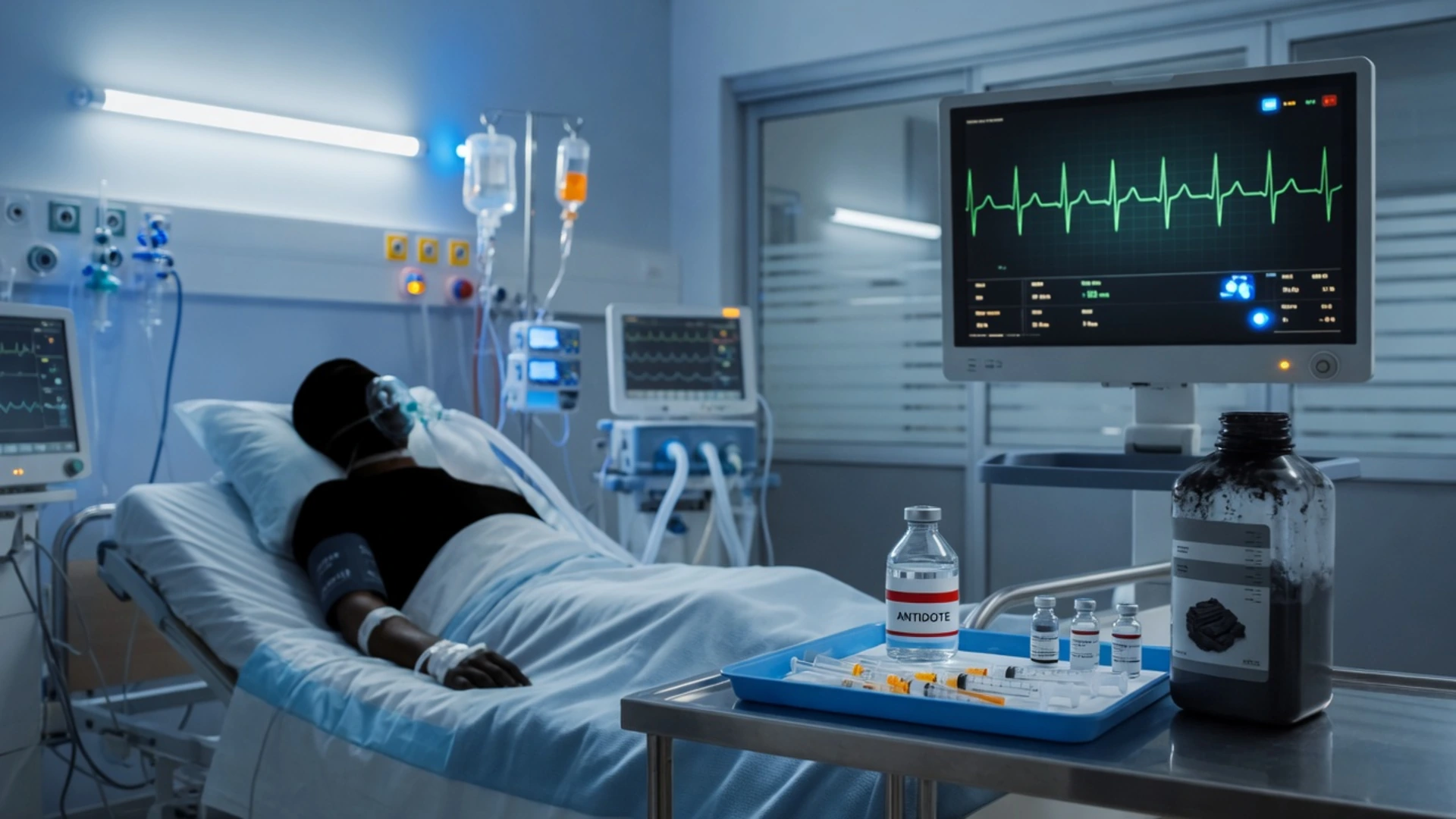
Cinematic ICU scene of a poisoned unconscious patient with activated charcoal and a multi-dose activated charcoal regimen on the trolley, a haemodialysis machine behind, an antidote tray labelled with naloxone flumazenil N-acetylcysteine digoxin-Fab and atropine, clinical-blue lighting, no faces, no text
FigureThe poisoned patient — resuscitate first (ABC), then decontaminate (activated charcoal within 1 h, whole-bowel irrigation for sustained-release iron/Li/packets), enhance elimination (urine alkalinisation, haemodialysis for salicylate, metformin, lithium, toxic alcohol), and give the specific antidote early.

Decontamination methods compared

MethodIndicationTimingContraindicationsEffectiveness
Activated charcoalMost oral ingestions (within 1h)<1h ideal; up to 4h (delayed gastric emptying); sustained-release any timeAltered consciousness (without airway protection), acids/alkalis, hydrocarbons, iron, lithium, metalsReduces absorption ~40% if within 1h
Whole bowel irrigation (polyethylene glycol)Sustained-release drugs, iron, lithium, body-packersAs soon as possibleBowel obstruction, ileus, haemodynamic instability, unprotected airwayFlushes drug through GI (1-2 L/hr NG until clear effluent)
Gastric lavageLife-threatening ingestion <1h, not adsorbed by charcoal (iron, lithium)<1h (rarely used)Altered consciousness (aspiration risk), caustics, late presentationControversial — limited benefit, aspiration risk
HaemodialysisToxic alcohols, salicylates, lithium, metformin, valproateAny time (if indicated by level/severity)Haemodynamic instability (relative — use CRRT), no vascular accessRemoves drug from blood directly
Urinary alkalinisationSalicylates (moderate-severe), phenobarbitalAny timePulmonary oedema (sodium load), alkalosisTraps ionised drug in alkali urine

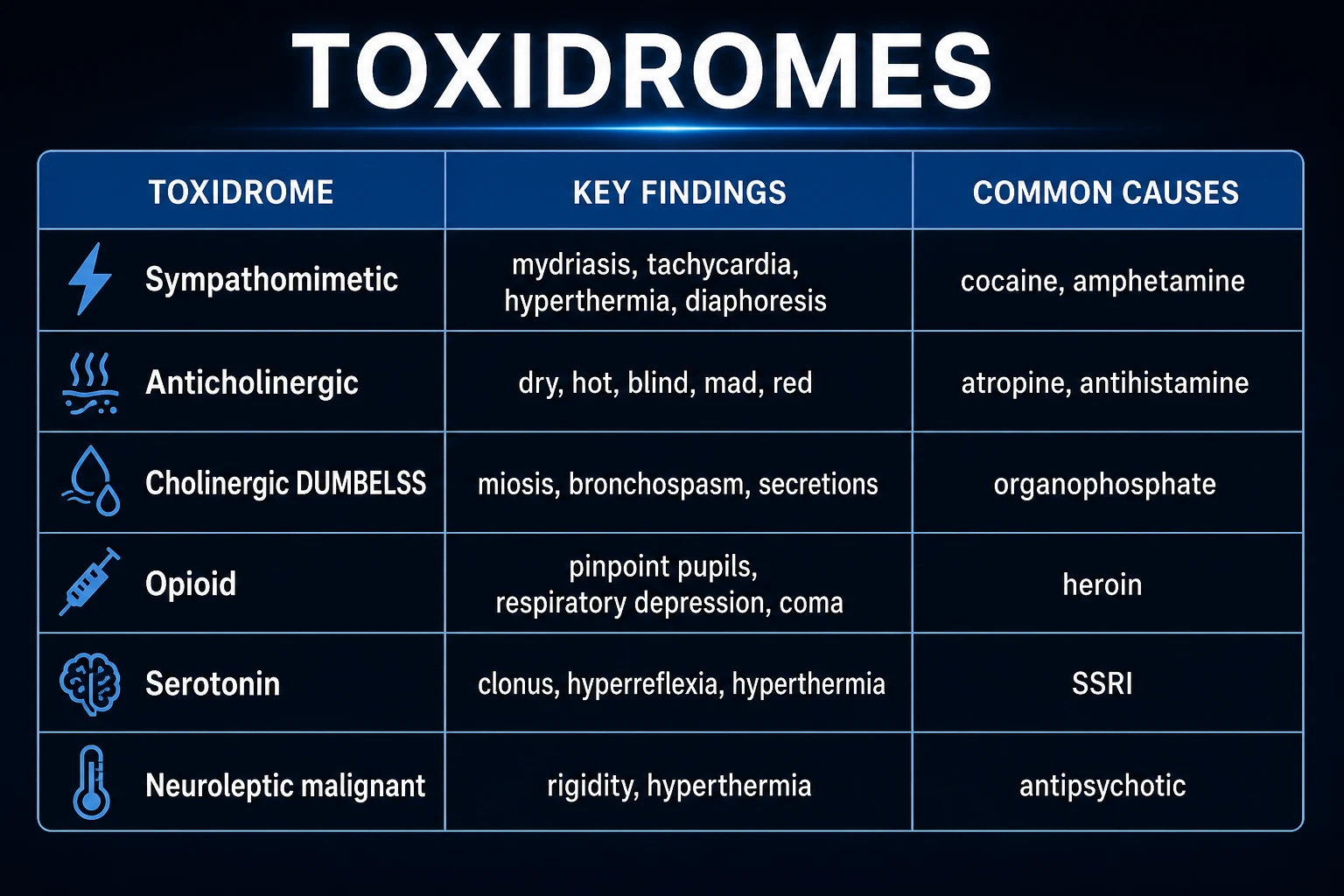
Toxidromes — pattern recognition at the bedside

ToxidromeClassic agentsMental statePupilsVitalsSecretions / skinHallmark
SympathomimeticCocaine, amphetamines, MDMA, pseudoephedrine, theophyllineAgitated, hyperalert, paranoidMydriasisTachycardia, hypertension, hyperthermia, tachypnoeaDiaphoresis (sweating), piloerection, tremor"Wired, wet, wide-eyed"
AnticholinergicAtropine, TCAs, antihistamines, benztropine, hyoscineDelirium, mumbling, hallucinationsMydriasisTachycardia, mild hyperthermiaDry, flushed, hot skin; urinary retention, ileus"Mad as a hatter, blind as a bat, hot as a hare, dry as a bone, red as a beet, full as a flask"
Cholinergic (muscarinic)Organophosphates, carbamates, nerve agents (sarin)Confusion → comaMiosisBradycardia, hypotension (may be tachy via nicotinic)Profuse salivation, lacrimation, urination, defecation, bronchorrhoeaDUMBELS / SLUDGE, bronchospasm
Cholinergic (nicotinic)Same agents — nicotinic effectsAs aboveVariableTachycardia, hypertension (ganglionic stimulation)Fasciculations, weakness → flaccid paralysisMTWtHF: Mydriasis, Tachycardia, Weakness, Hypertension, Fasciculations
OpioidMorphine, heroin, fentanyl, methadone, oxycodoneComa, euphoriaMiosis ("pinpoint")Bradypnoea/hypoventilation, bradycardia, hypothermiaDry; track marks; pulmonary oedema (heroin)Miosis + respiratory depression + ↓consciousness
Sedative-hypnoticBenzodiazepines, barbiturates, ethanol, GHB, z-drugsSedation, ataxia → comaNormalHypothermia (mild), hypotension, respiratory depressionDry; alcohol smellNormal pupils + CNS depression
Serotonin syndromeSSRIs, SNRIs, MAOIs, tramadol, linezolid, fentanyl, St John's wortAgitation, confusion, clonusMydriasis or normalHyperthermia (mild–severe), tachycardia, hypertension, tachypnoeaDiaphoresis (clammy), hyperreflexiaClonus (inducible/spontaneous, esp. lower limbs) + hyperreflexia
Neuroleptic malignant syndrome (NMS)Antipsychotics (haloperidol, olanzapine), dopamine-agonist withdrawalMutism, stupor, catatoniaNormalSevere hyperthermia (>38.5°C), tachycardia, labile BP, lead-pipe rigidityDiaphoresis, sialorrhoeaLead-pipe rigidity + bradyreflexia + slow onset (days)
WithdrawalAlcohol, benzodiazepines, opioidsAgitation, tremor, seizuresMydriasisTachycardia, hypertension, hyperthermiaDiaphoresis, tremorHistory of dependent use + cessation
[1]

Antidote reference — high-yield for the ICU exam

Toxin / toxicityAntidoteAdult doseMechanism / critical pearl
OpioidsNaloxone0.04–0.4 mg IV (titrate); 0.4–2 mg if apnoeic; infusion 2/3 of wake-up dose per hourμ-receptor antagonist; titrate to ventilation, not full alertness (avoid precipitated withdrawal, agitation, non-cardiogenic pulmonary oedema)
ParacetamolN-acetylcysteine (NAC)150 mg/kg over 1 h → 50 mg/kg over 4 h → 100 mg/kg over 16 h (21-h); 2-bag: 200 mg/kg over 4 h + 100 mg/kg over 16 hReplaces glutathione + sulfate; near-100% survival if <8 h; benefits even with established hepatotoxicity
BenzodiazepinesFlumazenil0.2 mg IV q1min, max 3 mg; infusion 0.1–0.4 mg/hCAUTION: precipitates seizures in chronic users / mixed TCA overdose — avoid in unknown ingestion
Toxic alcohols (methanol, ethylene glycol)Fomepizole15 mg/kg IV load → 10 mg/kg q12h ×4 doses → 15 mg/kg q12h (after 48 h)Inhibits alcohol dehydrogenase; preferred over ethanol (no CNS depression, easy dosing)
DigoxinDigoxin-specific FabEmpirical 5–10 vials (unknown load); or dose calculated from serum level × weight / 600Binds digoxin; total level rises post-Fab but FREE (active) falls — do not re-dose on total
Organophosphates / nerve agentsAtropine + Pralidoxime (2-PAM)Atropine 1.2–6 mg IV doubling q5min until secretions dry; 2-PAM 30 mg/kg IV over 15–30 min then 8 mg/kg/hAtropine = muscarinic block; 2-PAM reactivates cholinesterase before 'aging' (irreversible)
CarbamatesAtropine ± pralidoximeAs aboveReversible cholinesterase inhibition — pralidoxime less critical but usually still given
CyanideHydroxocobalamin5 g IV (repeat in severe cases)Forms cyanocobalamin (vitamin B12); also used for vasoplegic shock / smoke inhalation; safer than dicobalt/thiosulfate
TCA / sodium-channel blockersSodium bicarbonate1–2 mmol/kg IV bolus → infusion to keep QRS <100 ms + pH 7.45–7.55Sodium load overcomes channel blockade + alkalinisation increases protein binding
Beta-blockerHigh-dose insulin + glucagonGlucagon 5–10 mg IV; HIE 1 U/kg + 0.5–1 U/kg/h + dextroseGlucagon bypasses β-receptor (raises cAMP); HIE restores inotropy
Calcium-channel blockerHigh-dose insulin + calciumHIE 1 U/kg + 0.5–1 U/kg/h; CaCl₂ 1 g IV (repeat) + vasopressorsHIE shifts myocardium to carbohydrate metabolism; calcium for conduction
SulfonylureasOctreotide50–100 μg SC q8h or 25–50 μg/h infusionInhibits insulin release from β-cell; + dextrose; observe 24–72 h (long-acting)
Warfarin / superwarfarinVitamin K₁ + FFP/PCCVitamin K 5–10 mg IV/PO; PCC 25–50 IU/kgSuperwarfarin (brodifacoum) needs high-dose prolonged vitamin K (weeks–months)
HeparinProtamine1 mg per 100 U heparin (max 50 mg); 0.6 mg per mg enoxaparinReverse ratio lower for LMWH; histamine release at rapid infusion
IronDeferoxamine15 mg/kg/h IV (max 6 g/24 h)Urine turns vin-rose (ferrioxamine); hypotension at high rates
MethotrexateFolinic acid (leucovorin) ± glucarpidaseLeucovorin 15 mg/m² q6h; glucarpidase 50 U/kgBypasses DHFR inhibition; glucarpidase cleaves MTX (space from leucovorin)
MethaemoglobinaemiaMethylene blue1–2 mg/kg IV over 5 min (repeat ×1)Reduces Fe³⁺ → Fe²⁺; avoid in G6PD (haemolysis, ineffective)
LeadSuccimer (DMSA) / CaNa₂EDTAPer protocolChelation; encephalopathy → parenteral EDTA + dimercaprol
Local anaesthetic / lipophilic drug toxicity20% Lipid emulsion1.5 mL/kg bolus → 0.25 mL/kg/min (max 12 mL/kg)'Lipid sink' — absorbs lipophilic drug
DOACAndexanet / idarucizumabPer agentIdarucizumab for dabigatran; andexanet for apixaban/rivaroxaban
[1]

Enhanced elimination — when and which technique

TechniqueMechanismBest forCaveats
Multi-dose activated charcoal (MDAC)'Gut dialysis' — interrupts enterohepatic recirculation; drug diffuses back into gut lumen along concentration gradientCarbamazepine, dapsone, phenobarbital, theophylline, quinineBowel obstruction, ileus, aspiration risk; not for non-adsorbed drugs
Urinary alkalinisationNaHCO₃ → urine pH 7.5–8.0 → weak acids ionised and trapped (ion trapping)Salicylates, phenobarbital (weak acids)Hypokalaemia (replace K — else impossible to alkalinise), pulmonary oedema from sodium load
Urinary acidificationNH₄Cl → acid urineAmphetamines, phencyclidine, strychnineLargely abandoned — metabolic acidosis + rhabdomyolysis; do NOT use routinely
Forced diuresisIncreased urine flowAlmost nothingNo longer recommended — electrolyte disturbance without benefit
HaemodialysisDiffusion across semipermeable membrane — removes small, water-soluble, low-Vd, low-protein-binding toxinsSalicylate, toxic alcohols, lithium, metformin, valproate (see table)Haemodynamically unstable → use CRRT/SLED instead
HaemoperfusionBlood through charcoal/resin cartridge — high clearance of protein-bound drugTheophylline, barbiturates (rarely available)Thrombocytopenia, leukopenia, hypocalcaemia
Exchange transfusionRemoves protein-bound / high-Vd toxinsSalicylate in pregnancy; neonatal poisoningLimited by blood products
[1]

Haemodialysis-removable toxins — EXTRIP-style indications

ToxinDialysis efficacyKey dialysis indication
MethanolGoodConfirmed + metabolic acidosis, visual symptoms, level >15 mmol/L, or renal failure
Ethylene glycolGoodConfirmed + metabolic acidosis, AKI, level >8 mmol/L, refractory to fomepizole
SalicylateExcellentAcute level >700 mg/L; chronic >600; any CNS toxicity, severe acidosis, pulmonary oedema, renal failure
LithiumExcellent (more clearance than creatinine)Acute >4 mEq/L; chronic >2.5 + symptoms; CRRT/SLED preferred (post-dialysis rebound → continue)
MetforminExcellentSevere lactic acidosis (pH <7.0), haemodynamic instability, AKI, lactate >15 mmol/L
ValproateModerate–goodLevel >900 mg/L, coma, hyperammonaemic encephalopathy, severe acidosis
PhenobarbitalExcellentSevere collapse, prolonged coma (haemoperfusion if available)
CarbamazepineModerateStatus epilepticus, severe collapse refractory to MDAC
TheophyllineExcellent (haemoperfusion best)Acute >80 mg/L; chronic >40 with seizures/arrhythmia
EthanolGood (rarely needed)Massive ingestion + refractory acidosis
[1]

Systematic approach to the poisoned patient

  1. RESUSCITATE (ABC) — (a) AIRWAY: GCS <8 or unable to protect airway -> INTUBATE (RSI — assume full stomach). (b) BREATHING: oxygenate, ventilate — carbon monoxide -> 100% O2 (or hyperbaric); opiate -> naloxone if respiratory depression. (c) CIRCULATION: IV access, fluids for hypotension, vasopressors if refractory; ECG (arrhythmia — Na channel blockers, digoxin). (d) NEURO: glucose (hypoglycaemia — correct), thiamine (alcoholism), naloxone (opioid — empirical if pinpoint pupils/resp depression). (e) SEIZURES: benzodiazepines
  2. CLINICAL ASSESSMENT + 'TOXIDROMES' — History (what, when, how much, route, co-ingestants). Examination — toxidromes: (a) SYMPATHOMIMETIC (cocaine, amphetamines): mydriasis, tachycardia, HTN, hyperthermia, agitation. (b) ANTICHOLINERGIC (TCAs, antihistamines): mydriasis, dry, hot, flushed, ileus, urinary retention, delirium ('mad as a hatter, blind, hot, dry, red, full'). (c) CHOLINERGIC (organophosphates, nerve agents): miosis, lacrimation, salivation, urination, defecation, bradycardia, fasciculations (DUMBELS/SLUDGE). (d) OPIOID: miosis, respiratory depression, bradycardia, hypothermia, coma. (e) SEDATIVE-HYPNOTIC: normal pupils, CNS depression, ataxia. (f) SEROTONIN SYNDROME (SSRIs): clonus, hyperreflexia, hyperthermia, agitation. (g) NMS (antipsychotics): rigidity, hyperthermia
  3. MANDATORY TESTS — (a) PARACETAMOL level (4-hourly — treat with NAC if above nomogram). (b) SALICYLATE level (if symptomatic or unknown ingestion). (c) ECG (Na channel blockade — QRS wide, TCA; QT prolongation; arrhythmia). (d) GLUCOSE (hypoglycaemia — insulin, sulfonylureas, beta-blockers; hyperglycaemia — salicylates early). (e) BLOOD GAS (acidosis — toxic alcohols, metformin; oxygenation). (f) OSMOLAR GAP (toxic alcohols). (g) U&E, LFTs, CK (rhabdo), lipase (if abdomen). (h) URINE drug screen (opinion — rarely changes acute management)
  4. DECONTAMINATION — (a) ACTIVATED CHARCOAL 50 g (1 g/kg) PO/NG — within 1h of ingestion (or sustained-release, delayed gastric emptying). ONLY if airway protected (intubated if GCS <8). NOT for: caustics (acid/alkali — worsens injury), hydrocarbons (aspiration risk), iron, lithium (not adsorbed), metals. (b) WHOLE BOWEL IRRIGATION — polyethylene glycol 1-2 L/hr via NG until clear effluent (4-6h) — for sustained-release, iron, lithium, body-packers. (c) GASTRIC LAVAGE — rarely (life-threatening <1h, not adsorbed by charcoal) — risk of aspiration
  5. ENHANCED ELIMINATION — (a) MULTI-DOSE ACTIVATED CHARCOAL (50 g q4h) — for drugs that enter enterohepatic circulation (carbamazepine, dapsone, phenobarbital, theophylline, quinine) — interrupts recirculation. (b) URINARY ALKALINISATION (NaHCO3 — target urine pH 7.5-8.0) — for SALICYLATES (ionised in alkali urine -> trapped -> excreted), PHENOBARBITAL. (c) HAEMODIALYSIS — for drugs: low Vd, low protein binding, water-soluble, small molecule — TOXIC ALCOHOLS (methanol, ethylene glycol), SALICYLATES (severe), LITHIUM, METFORMIN (severe lactic acidosis), VALPROATE (severe). (d) HAEMOPERFUSION (rare) — theophylline, barbiturates
  6. ANTIDOTES + SUPPORTIVE CARE + OBSERVATION — (a) SPECIFIC ANTIDOTES (see below). (b) SUPPORTIVE: ventilation, vasopressors, treat seizures/arrhythmia, temperature control, renal/hepatic support. (c) OBSERVE: for delayed toxicity (sustained-release — observe 12-24h; paracetamol — late hepatic failure; salicylates — can deteriorate). (d) PSYCHIATRIC: once medically stable — suicide risk assessment, mental health referral. (e) DISPOSITION: ICU if symptomatic/serious ingestion; observation if low-risk (6h, then discharge if stable). (f) CALL POISON INFORMATION CENTRE for advice
[1]

SAQ — The unknown overdose: systematic approach

10 minutes · 10 marks

A 24-year-old woman is found unconscious at home beside empty bottles of paracetamol, ibuprofen and an unknown quantity of her mother's medications. GCS 9, HR 124, BP 100/60, RR 10, SpO₂ 94%, temp 35.5°C, pupils 3 mm reactive, QRS 130 ms, QT 480 ms, glucose 3.2 mmol/L, pH 7.28, lactate 4 mmol/L, anion gap 22. The ingestion time is uncertain but may be 4–6 hours ago.

[1]

SAQ — Toxic alcohol ingestion with high-anion-gap acidosis

10 minutes · 10 marks

A 35-year-old man presents confused and breathless 8 hours after ingesting 'antifreeze' in a suicide attempt. ABG: pH 7.10, PaCO₂ 18, HCO₃⁻ 6, anion gap 28, osmolar gap 35; calcium 1.9 mmol/L, creatinine 180 μmol/L; urine shows needle-shaped crystals under microscopy. He is tachycardic with no focal deficit but reports blurred vision.

[1]

Clinical pearls

High-yield poisoning/decontamination points for CICM/FFICM exam

  1. ABC first — poisoned patients die from airway and hypoxia. (1) COMMON causes of death in poisoning: (a) AIRWAY LOSS (coma -> tongue obstruction -> asphyxia). (b) ASPIRATION (vomiting in coma -> aspiration pneumonitis). (c) RESPIRATORY DEPRESSION (opioids, benzos, alcohol). (d) ARRHYTHMIA (TCAs, digoxin). (e) SEIZURES (status). (2) MANAGEMENT: (a) GCS <8 or can't protect airway -> INTUBATE (early, before aspiration). (b) Oxygenate + ventilate. (c) Treat hypotension (fluids, vasopressors), seizures (benzos), arrhythmia. (d) Empirical: NALOXONE (opioid — if miosis + resp depression), GLUCOSE (hypoglycaemia), THIAMINE (alcoholism — before glucose to avoid Wernicke). Don't get distracted by decontamination/antidote BEFORE securing ABC.[1]
  2. Activated charcoal — when and when NOT. (1) WHEN: (a) Within 1 HOUR of ingestion (best — reduces absorption ~40%). (b) Up to 4 HOURS (delayed gastric emptying — opioids, anticholinergics, massive overdose). (c) SUSTAINED-RELEASE preparations (any time — ongoing absorption). (2) DOSE: 50 g (1 g/kg) PO/NG (adults). (3) ONLY if AIRWAY PROTECTED (intubated if GCS <8) — aspiration risk if not (charcoal in lungs = catastrophic pneumonitis). (4) NOT EFFECTIVE for (NOT ADSORBED): (a) ACIDS/ALKALIS (corrosives — charcoal doesn't bind + obscures endoscopy). (b) HYDROCARBONS (petrol, turpentine — aspiration risk increased). (c) METALS (iron, lithium, potassium). (d) ALCOHOLS (ethanol, methanol, ethylene glycol). (e) CYANIDE. (5) SIDE EFFECTS: vomiting, aspiration, constipation, bowel obstruction (with multi-dose). (6) BUCKLEY 2018 (Cochrane): no clear mortality benefit in routine use — but accepted for potentially toxic ingestion <1h.[2]
  3. Antidotes — know the high-yield ones. (1) NALOXONE (opioid): 0.04-0.4 mg IV (titrate to ventilation, not full alertness — avoid withdrawal/pulmonary oedema); infusion if long-acting opioid (methadone). (2) N-ACETYLCYSTEINE (NAC) — paracetamol: 150 mg/kg IV over 1h, then 50 mg/kg over 4h, then 100 mg/kg over 16h (21-h protocol); or 200 mg/kg over 4h then 100 mg/kg over 16h (20-h). (3) FLUMAZENIL (benzodiazepine): 0.2 mg IV (CAUTION — can precipitate seizures in chronic users or mixed overdose with TCAs — avoid if unknown ingestion). (4) FOMEPIZOLE (toxic alcohols): 15 mg/kg IV loading, then 10 mg/kg q12h (blocks alcohol dehydrogenase — stops toxic metabolite formation). (5) DIGOXIN FAB (Digibind): for life-threatening digoxin toxicity (arrhythmia, K >5). (6) HYDROXOCOBALAMIN (cyanide): 5 g IV (binds cyanide -> cyanocobalamin; also used for vasoplegia). (7) ATROPINE + PRALIDOXIME (organophosphates): atropine (blocks muscarinic — secretions, bradycardia), pralidoxime (reactivates cholinesterase). (8) OCTREOTIDE (sulfonylureas): inhibits insulin release. (9) GLUCAGON (beta-blocker/CCB): stimulates cAMP independent of beta-receptor. (10) LIPID EMULSION (lipophilic drugs — local anaesthetic, TCAs, beta-blockers): 'lipid sink' — absorbs lipophilic drug.[4]
  4. Paracetamol (acetaminophen) — NAC and nomogram. (1) TOXICITY: NAPQI (toxic metabolite) — depletes glutathione -> liver necrosis. (2) RISK: >10 g or >150 mg/kg (single); or >4 g/day (chronic); or fasting/alcoholism (lower glutathione). (3) NOMOGRAM: paracetamol level at 4 HOURS post-ingestion -> if above treatment line -> NAC. (a) Cannot interpret if <4h (not absorbed yet) or unknown time or sustained-release or co-ingestion (delayed emptying). (b) Treatment line: 100 mg/L at 4h (Rumack-Matthew). (4) NAC PROTOCOL: 150 mg/kg IV over 1h, then 50 mg/kg over 4h, then 100 mg/kg over 16h (total 300 mg/kg over 21h). (5) IF LATE PRESENTATION (>8-24h) or already hepatotoxic: give NAC anyway (improves outcome even with established hepatotoxicity). (6) ANTIDOTE WINDOW: most effective if <8h; but give if ANY hepatotoxicity (ALT rising, INR rising). (7) KING'S COLLEGE CRITERIA for transplant: arterial lactate >3.5 (early) or pH <7.3/lactate >3.0 (late), INR >6.5, creatinine >300, encephalopathy grade 3-4.[4]
  5. Salicylate poisoning — urinary alkalinisation and dialysis. (1) TOXICITY: uncoupling oxidative phosphorylation -> metabolic acidosis + respiratory alkalosis (direct medullary stimulation). (2) SEVERITY: tinnitus, hyperventilation, metabolic acidosis (high AG), hyperthermia, CNS depression, pulmonary oedema. (3) LEVELS: >300 mg/L mild; >500 moderate; >700 severe. (4) URINARY ALKALINISATION: NaHCO3 to urine pH 7.5-8.0 -> salicylate ionised in alkali urine -> trapped -> excreted (ion trapping). Give NaHCO3 1-2 mmol/kg, monitor urine pH + K (hypokalaemia prevents alkalinisation — replace K). (5) HAEMODIALYSIS: for severe (level >700, severe acidosis, CNS depression, pulmonary oedema, renal failure). Rapidly lowers level. (6) AVOID INTUBATION if possible (hypoventilation -> CO2 rises -> salicylate crosses BBB -> CNS toxicity worsens). If must intubate: hyperventilate (keep CO2 low).[5]
  6. Toxic alcohols — methanol and ethylene glycol. (1) METHANOL -> formaldehyde -> FORMIC ACID (retinal toxicity -> blindness; severe metabolic acidosis). (2) ETHYLENE GLYCOL -> glycolic/oxalic acid (AKI from calcium oxalate crystals; severe metabolic acidosis). (3) CLUE: HIGH anion gap metabolic acidosis + HIGH osmolar gap (early — parent alcohol present; osmolar gap disappears as metabolised, anion gap rises). (4) TREATMENT: (a) FOMEPIZOLE (15 mg/kg IV) — blocks alcohol dehydrogenase -> stops toxic metabolite formation (FIRST-LINE). (b) ETHANOL (alternative — competitive substrate — if no fomepizole; harder to titrate). (c) HAEMODIALYSIS — removes parent alcohol + metabolites (severe acidosis, visual symptoms methanol, AKI ethylene glycol, very high levels). (d) COFACTORS: FOLATE (methanol -> speeds formate metabolism), THIAMINE + PYRIDOXINE (ethylene glycol -> shunts to non-toxic metabolites). (5) ANTICIPATE: delayed toxicity (metabolism takes hours).[5]
  7. Osmolar gap — toxic alcohol marker. (1) CALCULATED osmolality = 2 × Na + glucose + urea (+ ethanol if known). (2) MEASURED osmolality (osmometer). (3) OSMOLAR GAP = measured - calculated (normal <10). (4) HIGH GAP (>10-20): unmeasured osmoles -> toxic alcohols (methanol, ethylene glycol, propylene glycol), ethanol, mannitol, ketones. (5) TIMING: gap HIGH EARLY (parent alcohol present) -> FALLS as metabolised (and anion gap RISES as toxic metabolites form). (6) A NORMAL osmolar gap DOESN'T exclude toxic alcohol (if late — already metabolised). (7) ALSO: check for crystals (calcium oxalate — ethylene glycol), fluorescein (some antifreeze has fluorescein — Wood's lamp).[5]
  8. Lipid emulsion rescue — for lipophilic drug overdose. (1) MECHANISM: 'LIPID SINK' — lipid emulsion creates a lipid phase in blood -> lipophilic drugs (local anaesthetics, TCAs, beta-blockers, calcium channel blockers, bupropion) partition INTO the lipid -> reduces free (active) drug concentration at tissues (heart, brain). (2) DOSE: 20% lipid emulsion 1.5 mL/kg bolus, then 0.25 mL/kg/min infusion (up to 12 mL/kg). (3) INDICATIONS: local anaesthetic toxicity (bupivacaine — classic), refractory cardiac toxicity from lipophilic drugs (beta-blockers, CCBs, TCAs) unresponsive to standard therapy. (4) SIDE EFFECTS: pancreatitis, ARDS, fat embolism, lipaemia (interferes with lab tests), infection. (5) NOT first-line — rescue after standard therapy (fluids, vasopressors, inotropes) fails.[6]
  9. ECG in poisoning — sodium and potassium channel effects. (1) SODIUM CHANNEL BLOCKADE (membrane stabilising): (a) DRUGS: TCAs (amitriptyline), antiarrhythmics (class I — flecainide, propafenone), cocaine, antihistamines (diphenhydramine), carbamazepine. (b) ECG: WIDE QRS (>100 ms — risk of VT/VF), R wave in aVR >3 mm, right axis deviation terminal R (TCA — sodium blockade in His-Purkinje). (c) TREATMENT: HYPERTONIC SALINE or SODIUM BICARBONATE (sodium load overcomes blockade; alkalinisation) — for QRS >100 or arrhythmia. (2) POTASSIUM CHANNEL BLOCKADE: (a) DRUGS: sotalol, quinidine, erythromycin, haloperidol, methadone, arsenic. (b) ECG: PROLONGED QT -> torsades. (c) TREATMENT: magnesium, stop offending drug, pacing (for bradycardia-dependent torsades), isoprenaline. (3) ECG is MANDATORY in all poisonings — may reveal the toxin class.[4]
  10. Digoxin toxicity — Fab fragments. (1) TOXICITY: Na-K ATPase inhibition -> hyperkalaemia, arrhythmia (any — atrial tachy with AV block classic), nausea, visual disturbances (yellow/green — xanthopsia). (2) RISK: renal failure, hypokalaemia/hypomagnesaemia (potentiate), drug interactions (amiodarone, verapamil, macrolides — raise digoxin), elderly. (3) LEVEL: >2 ng/mL (therapeutic 0.5-0.9) — but chronic toxicity can occur at 'therapeutic' level (treat clinically). (4) FAB FRAGMENTS (Digibind/DigiFab): for LIFE-THREATENING toxicity (K >5, arrhythmia, severe ingestion). Binds digoxin -> removed. Dose: based on digoxin level or body load (or empirical 5-10 vials if unknown). (5) NOTE: after Fab, serum digoxin level RISES (total — bound + free) but FREE (active) drops — don't re-dose based on total level.[4]
  11. Organophosphate poisoning — DUMBELS and atropine/pralidoxime. (1) MECHANISM: inhibit acetylcholinesterase -> acetylcholine accumulates -> overstimulation of muscarinic + nicotinic receptors. (2) MUSCARINIC (DUMBELS / SLUDGE): Diarrhoea, Urination, Miosis, Bradycardia, Emesis, Lacrimation, Salivation/Sweating. (3) NICOTINIC: fasciculations, weakness (muscle), paralysis, mydriasis, tachycardia. (4) CNS: confusion, seizures, coma. (5) TREATMENT: (a) DECONTAMINATION (remove clothes, wash — protect staff). (b) ATROPINE (muscarinic antagonist): large doses (1-2 mg IV, double q5min until secretions dry — 'atropinisation') — blocks muscarinic effects. (c) PRALIDOXIME (2-PAM): reactivates cholinesterase (if given before 'aging' — irreversible enzyme-inhibitor binding) — nicotinic effects (weakness). (d) BENZOS: seizures. (6) INTERMEDIATE SYNDROME (days): weakness (neck, respiratory) — from prolonged cholinesterase inhibition. (7) DELAYED NEUROPATHY (weeks): organophosphate-induced delayed polyneuropathy (OPIDP).[4]
  12. Insulin/glucose for calcium channel blocker overdose. (1) CCB overdose (verapamil, diltiazem — especially): bradycardia, hypotension, hyperglycaemia (paradoxical — CCB blocks insulin release). (2) WHY HIGH-DOSE INSULIN: in CCB toxicity, myocardium shifts to using FATTY ACIDS (calcium blockade impairs carbohydrate metabolism). HIGH-DOSE INSULIN: (a) promotes CARBOHYDRATE (glucose) metabolism (more efficient energy). (b) positive INOTROPY (insulin is inotropic in large doses). (c) vasodilation (mild). (3) PROTOCOL: insulin 1 U/kg bolus + 0.5-1 U/kg/hr infusion + DEXTROSE (to maintain glucose — monitor q1h, target 7-11 mmol/L). Also K+ (insulin shifts K into cells — replace). (4) FIRST-LINE for SEVERE CCB overdose (along with fluids, calcium, vasopressors). (5) ALSO for beta-blocker overdose (less effective — but used). (6) Glucagon (historical — side effects of vomiting/hyperglycaemia) — less used now.[4]
  13. Sulfonylurea overdose — octreotide. (1) MECHANISM: sulfonylureas (gliclazide, glibenclamide) stimulate INSULIN release from pancreatic beta cells -> HYPOGLYCAEMIA (prolonged — up to 24-72h for long-acting). (2) TREATMENT: (a) GLUCOSE (IV — correct hypoglycaemia). (b) OCTREOTIDE: somatostatin analogue -> INHIBITS insulin release -> stops the ongoing hypoglycaemia. Dose: 50-100 mcg SC q8h or infusion. (c) AVOID: diazoxide (alternative — but octreotide preferred). (3) OBSERVE: 24h for short-acting, 72h for long-acting (glibenclamide — prolonged hypoglycaemia). (4) DIFFERENTIAL of hypoglycaemia: insulin (high C-peptide + high insulin — but exogenous insulin has LOW C-peptide), sulfonylurea (drug screen), insulinoma (rare).[4]
  14. The 'pill in pocket' — what's in the toxicology workup. ALWAYS CHECK in any unknown or suspected overdose: (1) PARACETAMOL level (4h — treat with NAC if above nomogram; the #1 preventable cause of fulminant hepatic failure). (2) SALICYLATE level (if symptomatic or unknown — treat with alkalinisation/dialysis). (3) ECG (TCA — wide QRS; QT prolongation; arrhythmia). (4) GLUCOSE (hypoglycaemia — insulin, sulfonylurea, beta-blocker). (5) ETHANOL level (if altered — co-ingestion common). (6) BLOOD GAS (acidosis — toxic alcohols, metformin; oxygenation — CO). (7) OSMOLAR GAP (toxic alcohols). (8) U&E, LFTs, CK (rhabdo), lipase. (9) URINE drug screen (aids diagnosis but rarely changes acute management — takes hours). (10) PREGNANCY test (women of childbearing age). (11) CALL POISON INFORMATION CENTRE for expert advice. (12) CONSIDER: intentional vs accidental (psychiatric if intentional).[1]
  15. Toxidromes — pattern recognition at the bedside. (1) The value of a toxidrome: when the history is unreliable (deliberate self-harm, illicit use, unaccompanied collapse), a focused exam of MENTAL STATE, PUPILS, VITALS, SECRETIONS, BOWEL SOUNDS and TONE/REFLEXES often narrows the toxin class within minutes. (2) THE SINGLE MOST DISCRIMINATING SIGNS: (a) Pupils: miosis = opioid / cholinergic / brainstem; mydriasis = sympathomimetic / anticholinergic / withdrawal. (b) Secretions/sweat: WET = sympathomimetic / cholinergic (muscarinic) / serotonin; DRY = anticholinergic / opioid. (c) Bowel sounds: hyperactive = cholinergic / sympathomimetic; absent/ileus = anticholinergic / opioid. (3) COMBINATIONS: Mydriasis + dry + delirium + ileus = anticholinergic. Mydriasis + sweaty + agitated + tachy = sympathomimetic. Miosis + wet + bronchorrhoea + brady + fasciculations = cholinergic. Miosis + apnoea + brady + coma = opioid → give naloxone.[3]
  16. Serotonin syndrome vs neuroleptic malignant syndrome — the exam favourite. (1) BOTH: hyperthermia, rigidity, autonomic instability, altered mental state, elevated CK. (2) DIFFERENTIATORS: (a) ONSET: serotonin = HOURS (after dose change/initiation/interaction, classically two serotonergic agents); NMS = DAYS to WEEKS of antipsychotic. (b) RIGIDITY: serotonin = clonus + hyperreflexia (lower > upper); NMS = 'lead-pipe' rigidity + bradyreflexia. (c) SWEATING: serotonin = clammy/diaphoretic; NMS = 'lead pipe' + sialorrhoea. (d) PUPILS: serotonin often mydriasis + myoclonus; NMS usually normal. (3) TREATMENT: (a) Serotonin → STOP serotonergic agent, benzodiazepines (cooling, control agitation), cyproheptadine (5-HT₂A antagonist) in severe cases. (b) NMS → STOP antipsychotic (or restart dopamine agonist if withdrawn), aggressive cooling, benzodiazepines, dantrolene / bromocriptine in severe (rigidity / malignant hyperthermia-like). (4) Dantrolene works for MH/NMS, NOT serotonin syndrome.[3]
  17. Sympathomimetic vs anticholinergic — both 'hot, wide, fast'. (1) Similar: agitated, mydriatic, tachycardic, hyperthermic, flushed. (2) THE KEY: SECRETIONS / SKIN — sympathomimetic = diaphoretic, sweaty, clammy, piloerection; anticholinergic = anhidrotic, dry, hot as a hare. (3) BOWEL SOUNDS: sympathomimetic hyperactive; anticholinergic absent (ileus, urinary retention). (4) Agents: sympathomimetic — cocaine, amphetamines, MDMA, pseudoephedrine, theophylline, caffeine. Anticholinergic — atropine, TCAs, antihistamines (diphenhydramine), benztropine, hyoscine, jimsonweed. (5) Treatment overlap: benzodiazepines (cooling, agitation, tachycardia control), aggressive active cooling. Physostigmine / cyproheptadine ONLY for pure anticholinergic delirium (avoid in TCA — seizures/asystole).[3]
  18. Multi-dose activated charcoal (MDAC) — 'gut dialysis'. (1) MECHANISM: (a) interrupts enterohepatic recirculation (charcoal in gut binds drug secreted in bile → re-excreted, not reabsorbed); (b) creates a concentration gradient driving drug from blood back into gut lumen ('gut dialysis'). (2) DRUGS THAT BENEFIT (adsorbed AND recirculate): carbamazepine, dapsone, phenobarbital, theophylline, quinine, salicylate (some). (3) PROTOCOL: 50 g (1 g/kg) loading, then 25 g q2h or 50 g q4h for 12–24 h. (4) CONTRAINDICATIONS: bowel obstruction, ileus, unprotected airway, evidence of peritonism (perforation). (5) RISKS: constipation → bowel obstruction (especially with anticholinergic co-ingestion), aspiration, vomiting (give ondansetron, slow NG infusion). (6) NOT effective for non-adsorbed drugs (lithium, iron, hydrocarbons, toxic alcohols).[2]
  19. Whole bowel irrigation (WBI) — polyethylene glycol flush. (1) AGENT: polyethylene glycol (PEG) electrolyte solution — non-absorbed, iso-osmotic. (2) PROTOCOL: 1–2 L/hr via NG (500 mL/hr initially, titrate up) until clear rectal effluent (typically 4–6 h, longer for packet ingestion). (3) INDICATIONS: (a) Sustained-release / enteric-coated drug ingestion (verapamil, diltiazem, theophylline). (b) Iron, lithium, potassium (not adsorbed by charcoal). (c) Body packers (ingested condoms of cocaine/heroin — risk of packet rupture). (d) Body stuffers (hurriedly swallowed). (4) CONTRAINDICATIONS: bowel obstruction, ileus, haemodynamic instability, GI perforation/bleeding, unprotected airway. (5) RISKS: bloating, vomiting, aspiration (especially if obtunded), electrolyte shifts (rare with balanced PEG). (6) Combine with antiemetic and slow NG rate if vomiting.[8]
  20. Urinary alkalinisation — ion trapping in action. (1) PHYSIOLOGY: weak acids (HA ⇌ H⁺ + A⁻) cross tubular membranes in the unionised (HA) form. (2) ALKALINE URINE (pH 7.5–8.0): drives equilibrium to the A⁻ form → trapped in the tubular lumen (cannot reabsorb) → excreted. (3) PROTOCOL: NaHCO₃ 1–2 mmol/kg bolus, then infusion (100–150 mmol in 1 L D5W over 4 h) to urine pH 7.5–8.0. (4) Hypokalaemia is the most common reason for failure — K⁺ and H⁺ exchange in the tubule; low K drives H⁺ secretion → systemic alkalosis but paradoxically acid urine → no trapping. Replace K aggressively (target K 4–4.5). (5) INDICATIONS: salicylates (moderate–severe), phenobarbital. (6) CONTRAINDICATIONS/CAUTIONS: pulmonary oedema (large sodium load), hypokalaemia, alkalosis, renal failure.[10]
  21. Lithium poisoning — narrow therapeutic index, two patterns. (1) ACUTE overdose: peaks in hours; GI symptoms, fine tremor, then neurotoxicity; normal osmolar gap (lithium contributes little osmoles); low brain uptake initially → delayed CNS toxicity. (2) CHRONIC toxicity (most common ICU presentation): renal accumulation (renal failure, NSAIDs, ACEi, thiazide, dehydration) → tremor, coarse fasciculations, hyperreflexia, ataxia, confusion → seizures, coma. (3) LEVELS correlate poorly with chronic toxicity (treat clinically). (4) MANAGEMENT: (a) STOP lithium; (b) aggressive NORMAL saline (expands volume, enhances renal clearance — avoid loop diuretics which increase lithium reabsorption in the proximal tubule); (c) haemodialysis for severe (level >4 acute, >2.5 chronic + symptoms, seizures, renal failure, haemodynamic instability); (d) CRRT/SLED preferred for chronic — lithium re-equilibrates from intracellular space post-HD → rebound; sustained therapy prevents this. (5) AVOID: loops (worsen), NSAIDs, ACEi. (6) Neurotoxicity can persist after levels normalise (SILENT — Syndrome of Irreversible Lithium-Effectuated Neurotoxicity).[3]
  22. Metformin-associated lactic acidosis (MALA) — dialyse early. (1) MECHANISM: metformin inhibits mitochondrial complex I → anaerobic glycolysis → severe lactic acidosis; also renal failure (accumulation). (2) PRECIPITANTS: AKI (any cause), sepsis, hypoperfusion, contrast, dehydration, overdose. (3) CLINICAL: profound lactic acidosis (often >10–15 mmol/L, pH <7.0), hypotension, abdominal pain, hypothermia, Kussmaul breathing, mental status change. (4) MORTALITY high (up to 50% in severe). (5) MANAGEMENT: (a) supportive — airway, ventilation (correct acidosis-driven hypoventilation), vasopressors; (b) haemodialysis — removes metformin (small, water-soluble, low protein binding) AND corrects acidosis (bicarbonate-rich dialysate); (c) CRRT/SLED if haemodynamically unstable (preferred — sustained clearance). (6) INDICATIONS for dialysis: pH <7.0, lactate >15–20 mmol/L, haemodynamic instability refractory to standard therapy, AKI + metformin level >7–10 mg/L. (7) Sodium bicarbonate infusion if dialysis delayed (caution — sodium load).[3]
  23. Valproate poisoning — hyperammonaemic encephalopathy. (1) MECHANISM: (a) blocks β-oxidation of fatty acids; (b) inhibits carbamoyl-phosphate synthetase → hyperammonaemia; (c) depletes carnitine. (2) CLINICAL: CNS depression (often profound), hyperammonaemia (with normal LFT — distinguishes from hepatic), encephalopathy mimicking hepatic failure, metabolic acidosis (rare in chronic), hypotension. (3) LEVELS: therapeutic 50–100 mg/L; toxic >450–850 (acute). (4) MANAGEMENT: (a) activated charcoal (within 1h, adsorbs well); (b) haemodialysis for severe (level >900, coma, severe acidosis, hyperammonaemia) — highly effective (low Vd, low protein binding at high levels). (c) L-carnitine — replenishes depleted carnitine, may improve hyperammonaemia (50 mg/kg IV q8h). (d) NAC — has been used (replenishes glutathione). (5) AVOID: hepatotoxic drugs; monitor LFTs, ammonia, glucose. (6) Differentiate from hepatic failure (valproate hyperammonaemia often has normal/mildly abnormal LFT).[3]
  24. Iron poisoning — stages and deferoxamine. (1) TOXICITY: free iron disrupts mitochondrial oxidative phosphorylation → systemic collapse; corrosive to GI. (2) STAGES: (a) Stage I (0–6 h): GI — vomiting, haematemesis, diarrhoea, abdominal pain (corrosive). (b) Stage II (6–24 h): apparent improvement (quiescent) — deceptive. (c) Stage III (12–48 h): shock, metabolic acidosis, hepatic failure, coagulopathy, coma, seizures (high mortality). (d) Stage IV (4–6 weeks): gastric outlet / stricture (scarring from corrosive injury). (3) DOSE: elemental iron >20 mg/kg = mild; >40 mg/kg = severe; >60 mg/kg = potentially lethal. (4) INVESTIGATIONS: serum iron level 3–5 h post-ingestion; abdominal X-ray (radiopaque pills — guides decontamination). (5) MANAGEMENT: (a) WBI (iron not adsorbed by charcoal); (b) deferoxamine 15 mg/kg/h IV (chelates free iron → ferrioxamine → urine turns 'vin-rose'); (c) supportive — fluids, blood, vasopressors. (6) Indications for deferoxamine: symptomatic, level >350 μg/dL or >500 with severe features.[3]
  25. Cyanide poisoning — rapid and lethal. (1) SOURCES: smoke inhalation (house/industrial fires — burning plastics, wool), industrial (electroplating, mining, jewellery), infusions of sodium nitroprusside (>10 μg/kg/min or renal failure), amygdalin (apricot kernels, cassava). (2) MECHANISM: binds cytochrome a3 → blocks oxidative phosphorylation → cellular hypoxia (histotoxic) → severe lactic acidosis despite normal/high venous O₂ saturation. (3) CLUE: rapid loss of consciousness + severe metabolic acidosis + venous O₂ saturation high (cells cannot extract O₂); 'cherry-red' skin (oxygenated venous blood); bitter almond smell (60% of people can smell). (4) TREATMENT: (a) HYDROXOCOBALAMIN 5 g IV (Cyanokit) — preferred; forms cyanocobalamin (B12); also raises BP (vasoconstrictor — useful in shock); minimal side effects (red skin/urine). (b) Sodium thiosulfate (donates sulfur for rhodanese → thiocyanate). (c) Avoid amyl/sodium nitrite in fire victims (cause methaemoglobinaemia → worsen already-low O₂ carrying capacity). (5) EMPIRICALLY treat suspected smoke inhalation cyanide toxicity with hydroxocobalamin.[12]
  26. Antidote pitfalls — flumazenil, naloxone, dantrolene. (1) FLUMAZENIL: can precipitate refractory seizures in (a) chronic benzodiazepine users (withdrawal), (b) mixed overdose with TCAs / proconvulsants, (c) unknown ingestion. AVOID if unknown overdose, QRS widened, or seizure history — intubate + ventilate instead. (2) NALOXONE: titrate to ventilation, not alertness — too rapid reversal → (a) acute withdrawal (agitation, vomiting, pulmonary oedema), (b) non-cardiogenic pulmonary oedema, (c) arrhythmia (catecholamine surge). (3) DANTROlene: effective for malignant hyperthermia (MH) and NMS (ryanodine receptor blockade → reduces calcium release); NOT effective for serotonin syndrome (give benzos). (4) PHYSOSTIGMINE: for pure anticholinergic delirium; AVOID in TCA overdose (worsens conduction delay → asystole). (5) METHYLENE BLUE: avoid in G6PD deficiency (haemolysis + ineffective). (6) DIGOXIN FAB: do not re-dose based on total digoxin level post-Fab (rises paradoxically; measure FREE if needed).[3]
  27. Ipecac, gastric lavage, syrup — what's no longer recommended. (1) IPECAC SYRUP: AACT/EAPCCT 2004 position paper — NO LONGER recommended for routine use in the ED or pre-hospital; no outcome benefit, significant vomiting/delayed charcoal. (2) GASTRIC LAVAGE: only for life-threatening ingestion within 1 h where charcoal won't bind (iron, lithium) AND patient intubated; risk of aspiration, oesophageal injury, no mortality benefit in most. (3) CATHARTICS (sorbitol, magnesium sulfate): no benefit, add fluid/electrolyte risk — abandoned. (4) FORCED DIURESIS: abandoned (electrolyte disturbance without benefit). (5) URINARY ACIDIFICATION: abandoned (metabolic acidosis + rhabdo). (6) Modern decontamination = single-dose charcoal (within 1 h) ± MDAC for selected drugs ± WBI for sustained-release/iron/packets.[7][9]

Red flags

Critical poisoning red flags

  • ABC first — intubate if GCS <8 (airway protection + prevent aspiration).[1]
  • Activated charcoal within 1h (if airway protected) — NOT for caustics/hydrocarbons/iron/lithium.[2]
  • Paracetamol + salicylate levels in EVERY unknown ingestion.[4]
  • ECG in all poisonings — Na channel blockade (wide QRS -> bicarbonate), QT prolongation.[4]
  • Toxic alcohols: high AG + high osmolar gap -> fomepizole + dialysis.[5]
  • Haemodialysis: toxic alcohols, salicylates, lithium, metformin, valproate.[3]
  • TCA wide QRS: sodium bicarbonate (sodium load + alkalinisation).[4]
  • Salicylate: avoid intubation if possible (hypercapnia worsens CNS toxicity); hyperventilate if must.[5]
  • Flumazenil in unknown overdose → precipitates refractory seizures; avoid; intubate + ventilate instead.[3]
  • Naloxone titrate to ventilation — not alertness (avoid precipitated withdrawal, pulmonary oedema).[3]
  • Serotonin syndrome vs NMS — clonus/hyperreflexia = serotonin (benzos); lead-pipe rigidity/bradyreflexia = NMS (dantrolene/bromocriptine).[3]
  • Lithium toxicity — chronic accumulation in renal failure; haemodialyse severe; SLED preferred (rebound).[3]
  • Metformin lactic acidosis — dialyse early if pH <7.0; CRRT if unstable.[3]
  • Iron overdose — WBI + deferoxamine; check abdominal X-ray for radiopaque pills.[3]
  • Cyanide from smoke inhalation — give empirical hydroxocobalamin (5 g IV); avoid nitrites.[12]
  • Hydrocarbons / caustics — do NOT give charcoal (worsens injury, aspiration).[2]
  • Sustained-release preparations — observe ≥12–24 h (delayed toxicity — verapamil, theophylline).[1]
  • Hyperammonaemia + valproate — dialyse + carnitine (L-carnitine 50 mg/kg IV).[3]
  • Body packer with packet rupture — WBI + surgical consult (bowel obstruction/perforation → laparotomy).[8]

Prognosis

Poisoning evidence and outcomes

Activated charcoal (Buckley 2018 Cochrane): reduces absorption ~40% if within 1h; no clear mortality benefit in routine use, but accepted for potentially toxic ingestion. NAC for paracetamol: near 100% survival if given <8h; reduces mortality even with established hepatotoxicity (late presentation). Fomepizole for toxic alcohols: dramatically improves outcomes (blocks toxic metabolite formation) — survival >90% if treated early. Haemodialysis: effective for toxic alcohols, salicylates, lithium, metformin, valproate. High-dose insulin for CCB: improves haemodynamics (observational + small studies) — first-line for severe CCB. Lipid emulsion: case reports/series — effective for local anaesthetic toxicity (bupivacaine) and refractory lipophilic drug overdose. Overall: most poisoned patients survive with supportive care + decontamination + antidote. Mortality highest in: TCA (arrhythmia), paraquat (pulmonary fibrosis — no antidote), cyanide, massive paracetamol (fulminant hepatic failure).

[1]

Landmark evidence — decontamination, enhanced elimination, antidotes

Brent 2001 (fomepizole for methanol, MEPIC): 11 patients treated with fomepizole + folate; all survived with no new visual deficits. Established fomepizole as first-line for toxic alcohols.[13] Baud / Fortin 2005 (hydroxocobalamin for cyanide from smoke inhalation): antidotal efficacy without methaemoglobinaemia; now first-line in fire victims.[12] Bateman 2014 (SNAP-3, NAC threshold for paracetamol): lowering the treatment-line threshold for acetylcysteine did not change overall outcomes; supports conservative use + give NAC if ANY hepatotoxicity even late.[14] EXTRIP workgroup (Roberts 2015, methanol): expert consensus dialysis indications for toxic alcohols, salicylate, lithium, metformin, valproate — guides thresholds.[5][3] AACT/EAPCCT position papers (2004–2005): deprecated ipecac, restricted gastric lavage, supported single-dose charcoal within 1 h, WBI for sustained-release/iron/packets, urinary alkalinisation only for salicylate/phenobarbital, MDAC for selected drugs (carbamazepine, dapsone, phenobarbital, theophylline, quinine).[2][7][8][9][10] Chyka 2005 (AACT/EAPCCT position paper, single-dose activated charcoal): selective administration within 1 h of potentially toxic ingestion; modest reduction in absorption (~40%). Supports selective rather than routine use.[2] Overall: most poisoned patients survive with supportive care + selective decontamination + antidote. Mortality highest in: TCA (arrhythmia), paraquat (pulmonary fibrosis — no antidote), cyanide, massive paracetamol (fulminant hepatic failure), metformin-associated lactic acidosis.

Examiner densify anchors
CICM/FFICM densify — Acute severe poisonings — decontamination and antidotes

Exam answers must couple definition + threshold numbers + first therapies + what kills the patient. Cite landmark evidence and state the common wrong answer explicitly.[1]

Bedside densify frame

Define the syndrome in one line → classify severity with a score or stage → resuscitate ABC → specific therapy with numbers → prevent the killer complication → prognosticate and disposition (ward vs HDU vs specialty centre).[2]

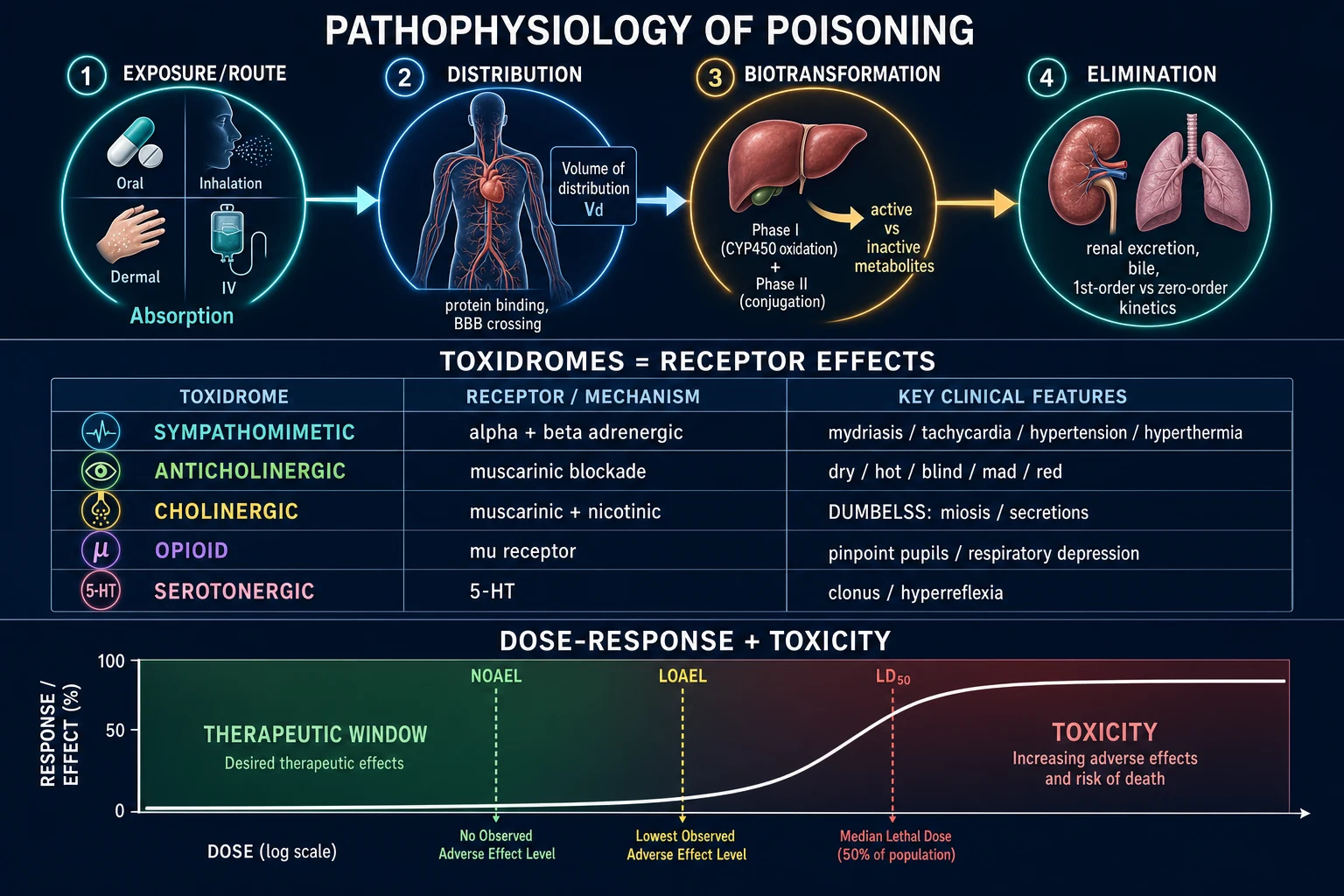
Acute severe poisonings — decontamination and antidotes pathophysiology overview for ICU exam
FigureAcute severe poisonings — decontamination and antidotes — core mechanism anchors for CICM/FFICM written and viva.
Acute severe poisonings — decontamination and antidotes management pathway overview
FigureManagement ladder: first therapies, escalation, and failure criteria examiners expect.
Acute severe poisonings — decontamination and antidotes classification
FigureClassification / severity strata that change management.

Exam board focus

CICM Second Part · FFICM · EDIC

Killers to name

Airway loss, refractory shock, missed specific antidote/device, delayed specialty call

Documentation

Thresholds used, therapies with times, family update, disposition

[1]

Practical ICU checklist (densify)

Bedside densify checklist

  1. Confirm diagnosis thresholds with numbers the examiner expects.
  2. Name the first therapy and the absolute contraindication.
  3. State monitoring frequency and escalation triggers.
  4. Cite one landmark paper/guideline and one limitation of the evidence.
  5. Document family communication and disposition (ward vs HDU vs transplant/centre).
  6. Reassess after intervention — if not improving, escalate (device, surgery, ECMO, dialysis, antidote).
  7. Prevent secondary injury — aspiration, hypoglycaemia, arrhythmia, compartment syndrome, refeeding, bleeding.
[1]

One-line viva closer

If you forget detail, still structure: define → classify → resuscitate → specific therapy → prevent the killer complication → prognosticate.

[1]

Densify red flags

  • Do not delay ABC for a perfect diagnosis.
  • Do not give therapies that are contraindicated in the look-alike (e.g. charcoal in caustics; beta-blocker in cocaine; fluids in SCAPE).
  • Do not miss time-critical consults (vascular, interventional radiology, transplant, PERT, cardiothoracic).
  • Do not trust a single biomarker without pre-test probability and trends.[1]

Extended fellowship notes (densify)

Numbers examiners expect

Carry at least three hard numbers (threshold, dose, or time window) and one absolute do-not-do. Vague prose without numbers fails the densified SAQ standard.[3]

Common exam traps vs correct anchors

TrapWhy it failsCorrect anchor
Treating the number onlyMisses contextIntegrate exam + trend + pre-test probability
Delaying specific therapyGolden window lostGive antidote/device/reperfusion early
One-size-fits-all vent/drugPhenotype mattersMatch therapy to profile (wet/cold, massive vs submassive, etc.)
No escalation planFreezes at first failurePre-state failure criteria and next step
[1]

Densify SAQ — Acute severe poisonings — decontamination and antidotes

10 minutes · 10 marks

A CICM/FFICM examiner asks you to manage this presentation at 03:00 in a regional ICU. Structure your answer.

[1]

Evidence densify card

Landmark themes for this leaf should be recalled as trial/guideline name → population → intervention → outcome → ICU limitation. Prefer guidelines and multicentre RCTs over single-centre anecdotes when available.[1][2]

Line-fill densify notes

Densify anchor 1

Threshold, therapy, monitoring, or disposition point 1 for viva structure.

Densify anchor 2

Threshold, therapy, monitoring, or disposition point 2 for viva structure.

Densify anchor 3

Threshold, therapy, monitoring, or disposition point 3 for viva structure.

Densify anchor 4

Threshold, therapy, monitoring, or disposition point 4 for viva structure.

Densify anchor 5

Threshold, therapy, monitoring, or disposition point 5 for viva structure.

Densify anchor 6

Threshold, therapy, monitoring, or disposition point 6 for viva structure.

Densify anchor 7

Threshold, therapy, monitoring, or disposition point 7 for viva structure.

Densify anchor 8

Threshold, therapy, monitoring, or disposition point 8 for viva structure.

Densify anchor 9

Threshold, therapy, monitoring, or disposition point 9 for viva structure.

Densify anchor 10

Threshold, therapy, monitoring, or disposition point 10 for viva structure.

Densify anchor 11

Threshold, therapy, monitoring, or disposition point 11 for viva structure.

Densify anchor 12

Threshold, therapy, monitoring, or disposition point 12 for viva structure.

Densify anchor 13

Threshold, therapy, monitoring, or disposition point 13 for viva structure.

Densify anchor 14

Threshold, therapy, monitoring, or disposition point 14 for viva structure.

Densify anchor 15

Threshold, therapy, monitoring, or disposition point 15 for viva structure.

Densify anchor 16

Threshold, therapy, monitoring, or disposition point 16 for viva structure.

Densify anchor 17

Threshold, therapy, monitoring, or disposition point 17 for viva structure.

Densify anchor 18

Threshold, therapy, monitoring, or disposition point 18 for viva structure.

Densify anchor 19

Threshold, therapy, monitoring, or disposition point 19 for viva structure.

[1]

Densify complete

Leaf meets ≥350-line fellowship densify floor.

References

  1. [1]Hoegberg LCG, Gosselin S, Yang D, et al. Recommendations from the Clinical Toxicology Recommendations Collaborative on the administration of activated charcoal. Clinical toxicology (Philadelphia, Pa.), 2026.PMID 41906697
  2. [2]Chyka PA, Seger D, Krenzelok EP, Vale JA Position paper: Single-dose activated charcoal. Clinical toxicology (Philadelphia, Pa.), 2005.PMID 15822758
  3. [3]Ghannoum M, Roberts DM Management of Poisonings and Intoxications. Clinical journal of the American Society of Nephrology, 2023.PMID 37097121
  4. [4]Buckley NA, Chiew AL Acetaminophen Poisoning. Critical care clinics, 2021.PMID 34053705
  5. [5]Roberts DM, Yates C, Megarbane B, et al. Recommendations for the role of extracorporeal treatments in the management of acute methanol poisoning. Critical care medicine, 2015.PMID 25493973
  6. [6]Gosselin S, Hoegberg LCG, Hoffman RS, et al. Evidence-based recommendations on the use of intravenous lipid emulsion therapy in poisoning. Clinical toxicology (Philadelphia, Pa.), 2016.PMID 27608281
  7. [7]Hoegberg LCG, Truitt CA, Austin KB, et al. Position paper update: ipecac syrup for gastrointestinal decontamination. Clinical toxicology (Philadelphia, Pa.), 2013.PMID 23406298
  8. [8]Thanacoody R, Caravati EM, Troutman B, et al. Position paper update: whole bowel irrigation for gastrointestinal decontamination of overdose patients. Clinical toxicology (Philadelphia, Pa.), 2015.PMID 25511637
  9. [9]Vale JA, Kulig KW Position paper: gastric lavage. Journal of toxicology. Clinical toxicology, 2004.PMID 15641639
  10. [10]Proudfoot AT, Krenzelok EP, Vale JA Position Paper on urine alkalinization. Journal of toxicology. Clinical toxicology, 2004.PMID 15083932
  11. [11]Borron SW, Baud FJ Antidotes for acute cyanide poisoning. Current pharmaceutical biotechnology, 2012.PMID 22352728
  12. [12]Borron SW, Baud FJ, Barriot P, Imbert M, Bismuth C Hydroxocobalamin for severe acute cyanide poisoning by ingestion or inhalation. Annals of emergency medicine, 2007.PMID 17543660
  13. [13]Brent J, McMartin K, Phillips S, Burkhart KK, Donovan JW, Wells M, Kulig K Fomepizole for the treatment of methanol poisoning. New England journal of medicine, 2001.PMID 11172179
  14. [14]Bateman DN, Dear JW, Thanacoody HKR, et al. Impact of reducing the threshold for acetylcysteine treatment in acute paracetamol poisoning: the recent United Kingdom experience. Clinical toxicology (Philadelphia, Pa.), 2014.PMID 25200454
  15. [15]Ghannoum M, Gosselin S, Roberts DM, et al. Extracorporeal treatment for ethylene glycol poisoning: systematic review and recommendations from the EXTRIP workgroup. Critical care (London, England), 2023.PMID 36765419