ICU · Toxicology
Beta-blocker and calcium channel blocker overdose
Also known as Beta-blocker poisoning · Calcium channel blocker poisoning · CCB overdose · High-dose insulin euglycaemia therapy (HIET)
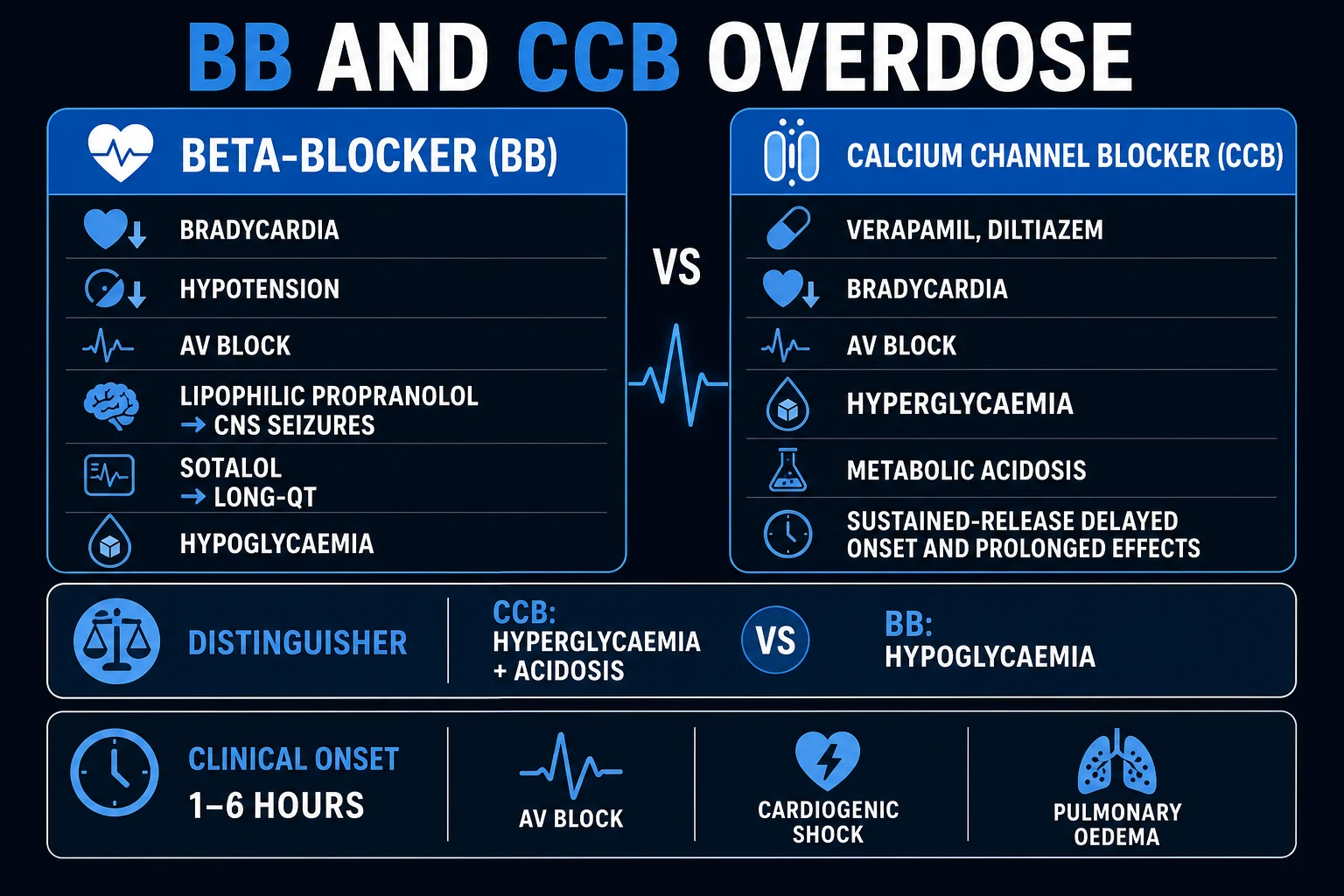
Beta-blocker (BB) and calcium channel blocker (CCB) overdose are life-threatening poisonings with HIGH mortality (CCB ~10-15%, BB ~5-10%). Both cause: bradycardia, hypotension, AV block, and (CCBs) hyperglycaemia. Pathophysiology: BBs block beta-adrenergic receptors (reduced cAMP → reduced inotropy/chronotropy). CCBs block L-type calcium channels (reduced calcium influx → reduced inotropy, vasodilation, pancreatic beta-cell dysfunction). Management: ABCDE + specific antidotes. Key treatments: (1) IV calcium (chloride preferred — 10-20 mL of 10%). (2) High-dose insulin euglycaemia therapy (HIET — insulin 1 U/kg bolus + 0.5-1 U/kg/h infusion + glucose to maintain euglycaemia). (3) Glucagon (5-10 mg IV — bypasses beta-receptor). (4) Vasopressors (noradrenaline + adrenaline). (5) Lipid emulsion therapy (last resort). (6) Pacing for bradycardia. (7) ECMO for refractory shock.
On this page & tools
Your progress
Saved locally on this device.
Target exams
Red flags
SAQ — Severe verapamil overdose
10 minutes · 10 marks
A 28-year-old woman is brought to ED 2 hours after ingesting 9.6 g of modified-release verapamil (60 × 160 mg tablets) in a suicide attempt. She is drowsy (GCS 13), HR 32 with a junctional rhythm, BP 70/40, glucose 12.4 mmol/L, lactate 6 mmol/L, with first-degree AV block and a QRS of 90 ms. Standard ACLS with atropine and an adrenaline infusion at 0.5 µg/kg/min has not improved her haemodynamics.
SAQ — Beta-blocker overdose with bronchospasm and hypoglycaemia
10 minutes · 10 marks
A 45-year-old man on long-acting propranolol 80 mg daily for migraine presents after ingesting an unknown quantity. He is bradycardic at 28/min, BP 78/45, GCS 11, wheezy with SpO₂ 90%, blood glucose 2.2 mmol/L, and has a history of asthma. An initial 1 mg atropine and a 1 L crystalloid bolus have produced no improvement.
Clinical pearls
Red flags
Pathophysiology — beta-blocker overdose
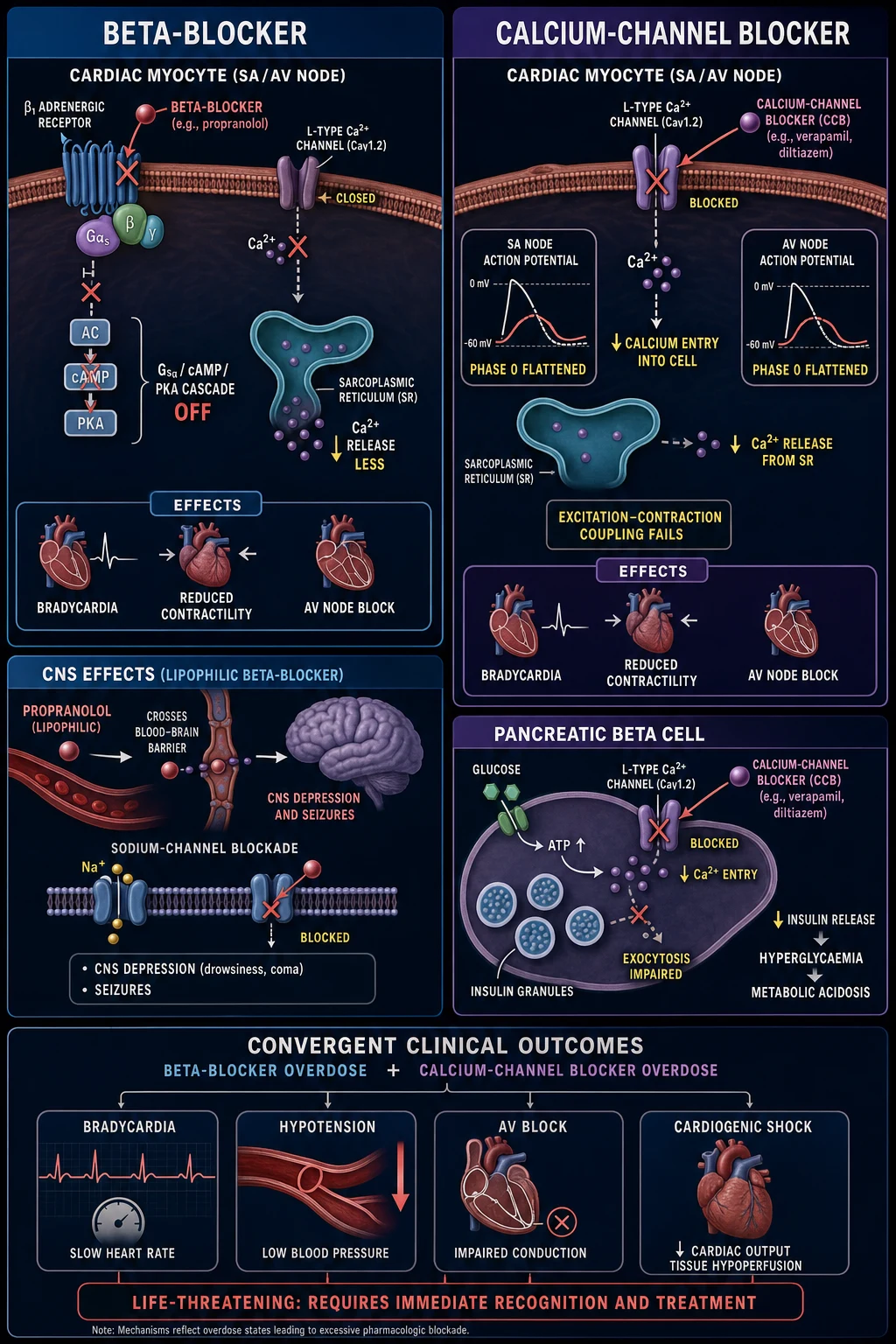
Beta-blockers competitively antagonise beta-adrenergic receptors ($\beta_1$, $\beta_2$, and in some agents mixed $\alpha_1$), reducing intracellular cAMP and protein kinase A activity. The downstream consequences depend on receptor affinity but share a common final pathway of reduced positive chronotropy, inotropy, dromotropy, and lusitropy.[2][5]
Cardiovascular effects:
- $\beta_1$ blockade (cardiac): reduced sinoatrial node automaticity $\rightarrow$ sinus bradycardia; reduced AV nodal conduction velocity $\rightarrow$ first-, second-, or third-degree AV block; reduced myocardial contractility $\rightarrow$ negative inotropy / cardiogenic shock.
- $\beta_2$ blockade (bronchial/vascular/metabolic): bronchospasm in susceptible patients (asthma/COPD); loss of $\beta_2$-mediated vasodilation $\rightarrow$ vasoconstriction (mild); impaired gluconeogenesis/glycogenolysis and blockade of catecholamine-mediated lipolysis.
- Mixed $\alpha_1$/$\beta$ agents (carvedilol, labetalol): additional arteriolar vasodilation $\rightarrow$ more profound hypotension. [1]
Lipophilicity and the central nervous system. Lipophilic beta-blockers (propranolol, metoprolol, timolol) readily cross the blood–brain barrier. In overdose, supratherapeutic CNS concentrations produce generalised tonic-clonic seizures, obtundation, and coma — a feature that distinguishes a lipophilic-agent overdose from a hydrophilic one (atenolol, nadolol, sotalol are hydrophilic, poorly cross the BBB, and cause little CNS toxicity). Seizures in a bradycardic, hypotensive patient should prompt consideration of propranolol or metoprolol overdose specifically.[5][9]
Membrane-stabilising activity (MSA). Some agents (propranolol, acebutolol, alprenolol, carvedilol at high dose) possess fast-sodium-channel-blocking activity (quinidine-like effect). At overdose concentrations this causes QRS widening, VT/VF, and is associated with markedly worse prognosis. Sotalol is exceptional — it is a class III antiarrhythmic that markedly prolongs the QT interval and causes torsades de pointes.[5]
Metabolic masking. Non-selective beta-blockade masks the adrenergic warning signs of hypoglycaemia (tremor, palpitations, anxiety), so hypoglycaemia may be unrecognised. Beta-blockers do NOT themselves cause hyperglycaemia (contrast with CCBs). [1]
Pathophysiology — calcium channel blocker overdose
CCBs block the L-type voltage-gated calcium channel, reducing calcium influx into cardiac myocytes, vascular smooth muscle, and pancreatic beta-cells. The two pharmacological subclasses produce distinct toxidromes.[2][5]
Non-dihydropyridines (verapamil, diltiazem): predominant action on the myocardium and conducting system — marked negative inotropy, negative chronotropy (bradycardia), and negative dromotropy (AV nodal block). Verapamil is the most lethal single agent in cardiovascular overdose; even a handful of sustained-release tablets can be fatal. [1]
Dihydropyridines (amlodipine, nifedipine, felodipine, nicardipine): predominant action on vascular smooth muscle L-type channels — vasodilation and distributive/refractory hypotension, with relative sparing of heart rate and contractility at therapeutic doses. In massive overdose, however, selectivity is lost and DHPs also produce cardiodepression. Amlodipine overdose is common and frequently complicated by non-cardiogenic pulmonary oedema (capillary leak) and an early distributive-shock physiology.[5]
Hyperglycaemia — the CCB signature. L-type calcium influx into pancreatic beta-cells is the trigger for insulin granule exocytosis. CCB blockade suppresses glucose-stimulated insulin release, producing hyperglycaemia (often mild–moderate, occasionally severe). This is the single most useful bedside discriminator between CCB and BB overdose and underpins the rationale for high-dose insulin therapy.[5][11]
Metabolic/lactic acidosis develops from tissue hypoperfusion (cardiogenic shock) combined with impaired mitochondrial fatty-acid oxidation (CCBs inhibit carnitine palmitoyltransferase-I). The combination of metabolic acidosis + hyperglycaemia + bradycardia/hypotension is highly suggestive of CCB poisoning. [1]
BB vs CCB overdose — clinical discriminator table
Beta-blocker vs calcium channel blocker overdose
| Feature | Beta-blocker overdose | CCB overdose |
|---|---|---|
| Receptor/target | $\beta_1/\beta_2$ (and $\alpha_1$ for labetalol/carvedilol) adrenoceptors | L-type voltage-gated Ca2+ channels |
| Mortality (untreated/severe) | ~5–10% | ~10–15% (HIGHER — verapamil worst) |
| Heart rate | Bradycardia | DHP: reflex tachycardia early, then bradycardia; non-DHP: bradycardia |
| AV conduction | AV block (any degree) | AV block (especially non-DHP — verapamil/diltiazem) |
| Blood pressure | Hypotension (cardiogenic) | Hypotension (vasodilatory + cardiogenic) |
| QRS duration | Widened if MSA agent (propranolol, acebutolol) | Usually normal (sotalol excepted — it is a BB, not a CCB) |
| QT interval | Prolonged with sotalol only | Usually normal |
| Glucose | Normal (may mask hypoglycaemia) | Hyperglycaemia (suppressed insulin release) — KEY discriminator |
| CNS (seizures/coma) | Common with lipophilic agents (propranolol, metoprolol) | Uncommon |
| Bronchospasm | Can occur (non-selective agents) | Does not occur |
| Pulmonary oedema | Cardiogenic (if severe cardiodepression) | Non-cardiogenic common with amlodipine (capillary leak) |
| Most effective antidote | Glucagon, HIET, lipid (lipophilic agents) | HIET (most effective), calcium, lipid |
| ECMO indication | Refractory cardiogenic shock | Refractory cardiogenic/distributive shock |
DHP vs non-DHP CCB — subclass comparison
Dihydropyridine vs non-dihydropyridine CCB in overdose
| Feature | Non-DHP (verapamil, diltiazem) | DHP (amlodipine, nifedipine, felodipine) |
|---|---|---|
| Primary site of action | Myocardium + conducting tissue | Vascular smooth muscle |
| Predominant toxicity | Bradycardia, AV block, cardiogenic shock | Vasodilation, distributive shock |
| Heart rate | Bradycardia | Tachycardia early, may normalise/brady at severe doses |
| AV block | Common, often high-grade | Uncommon |
| Inotropy | Severely depressed | Relatively preserved until very high doses |
| Hyperglycaemia | Present (verapamil more than diltiazem) | Present |
| Pulmonary oedema | Cardiogenic | Non-cardiogenic (amlodipine — capillary leak) |
| Lethality per tablet | Verapamil highest of all CCBs | Amlodipine common but lower per-tablet lethality |
| Best responder to HIET | Yes | Yes |
| Best responder to vasopressors | May need high doses | Often need high-dose catecholamines + vasopressin |
Lipophilic vs hydrophilic beta-blockers
Lipophilic vs hydrophilic beta-blockers in overdose
| Property | Lipophilic (propranolol, metoprolol, timolol) | Hydrophilic (atenolol, nadolol, sotalol) |
|---|---|---|
| BBB penetration | High — crosses readily | Low — minimal CNS entry |
| CNS toxicity | Seizures, coma, delirium | Absent |
| Volume of distribution | Large | Small |
| Renal elimination | Hepatic metabolism | Predominantly renal |
| Dialysability | Poor (large Vd) | Potentially better (small Vd, low protein binding) |
| Lipid emulsion response | Good (lipophilic — sequestered into lipid sink) | Limited |
| MSA (QRS widening) | Propranolol has MSA | Usually absent |
| Renal failure accumulation | Less (hepatic clearance) | Marked — dose-adjust in CKD |
Clinical features in detail
Organ-system manifestations of BB/CCB overdose
| System | Beta-blocker | CCB |
|---|---|---|
| Cardiovascular | Sinus bradycardia, AV block, hypotension, cardiogenic shock; sotalol $\rightarrow$ QT prolongation/torsades; propranolol $\rightarrow$ wide QRS | Bradycardia + AV block (non-DHP); vasodilatory shock (DHP); cardiogenic shock (both, severe) |
| Respiratory | Bronchospasm (non-selective agents); aspiration if obtunded | Pulmonary oedema (amlodipine); aspiration |
| Neurological | Seizures/coma (lipophilic — propranolol, metoprolol); lethargy | Lethargy (from hypoperfusion); seizures uncommon |
| Metabolic | Hypoglycaemia possible (masks symptoms); mild acidosis | Hyperglycaemia; lactic acidosis; hypokalaemia (from insulin therapy) |
| GI | Nausea, vomiting | Nausea, vomiting; bowel hypomotility (CCBs reduce gut motility — delays absorption) |
| Cutaneous | Cool, mottled peripheries (low cardiac output) | Warm peripheries early (vasodilation) then cool; mottled |
Management — the escalating protocol
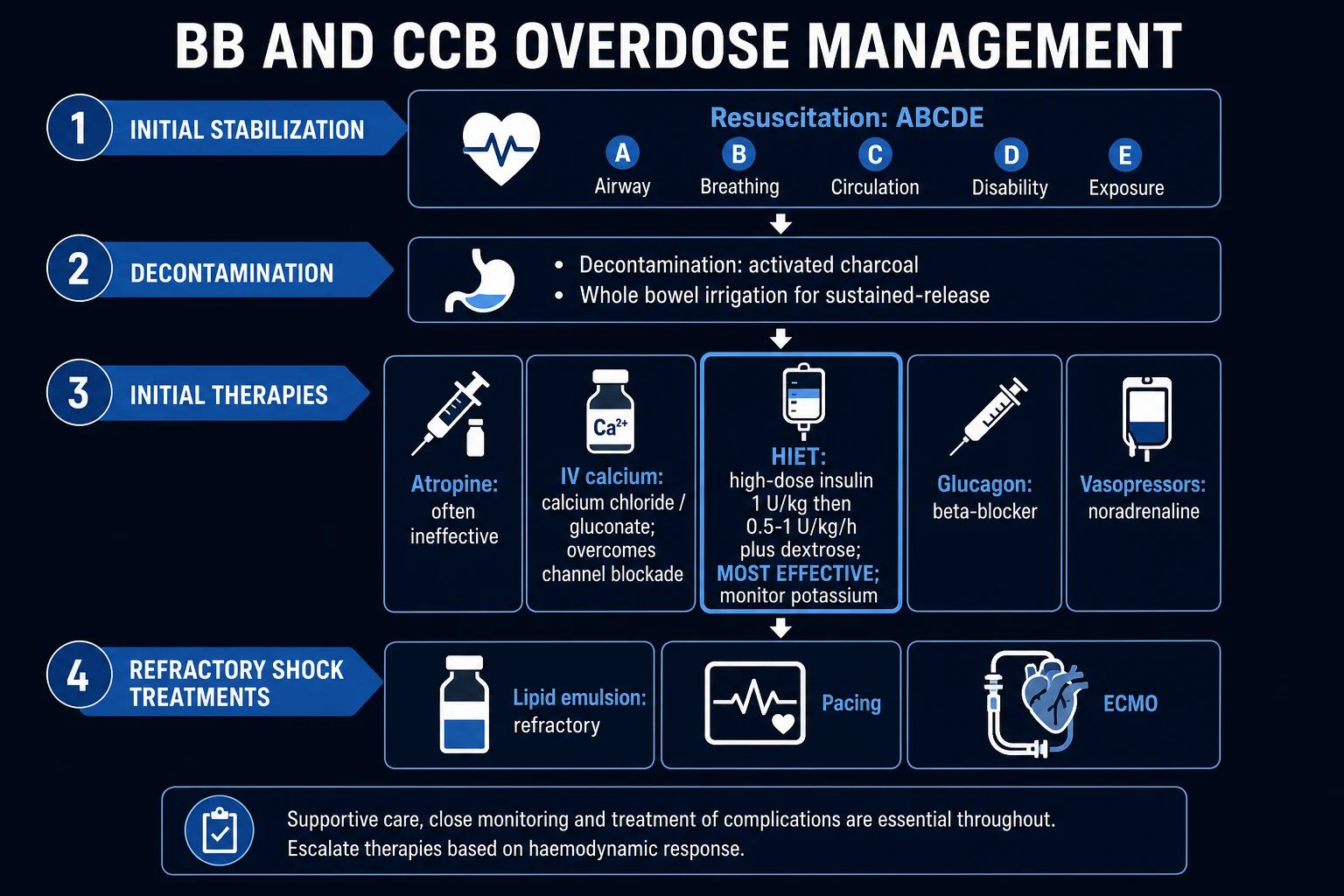
BB/CCB overdose — stepwise management protocol
- RESUSCITATE (ABCDE): oxygen/airway support; secure IV access; continuous cardiac monitoring; 12-lead ECG. Intubate early if GCS impaired (propranolol coma) or for transport. Establish two large-bore IV cannulae; send venous gas (lactate, glucose — glucose is the CCB discriminator), U&E, troponin, paracetamol/salicylate levels (co-ingestion screen), ECG. Do NOT delay antidotes waiting for levels.[1]
- DECONTAMINATION:
- Activated charcoal 50 g PO/NG if presentation within 1 hour AND airway protected. For sustained-release formulations or delayed presentation, give charcoal even up to 2–4 hours (gut motility is reduced by the toxin itself).
- Multi-dose activated charcoal 25–50 g every 4 hours for sustained-release BB/CCB ingestion (enhances elimination through gut dialysis for some agents).[5]
- Whole bowel irrigation (polyethylene glycol 1–2 L/h via NG in adults) for large sustained-release ingestions (especially if packets/bezoar on X-ray) — continue until rectal effluent clear.
- Obtain an abdominal X-ray — sustained-release CCB/BB tablets (especially verapamil SR, theophylline-like) may be radio-opaque and reveal a bezoar.
- ATROPINE 0.5–1 mg IV (up to 3 mg) — single trial for symptomatic bradycardia. Usually INEFFECTIVE because the mechanism is not vagal. If no response, do not persist — move on.[1][5]
- IV CALCIUM — first-line antidote to overcome channel/receptor blockade:
- Calcium chloride 10% — 10–20 mL IV (10 mL = 6.8 mmol Ca2+) via a CENTRAL line (vesicant in peripheral tissue), OR
- Calcium gluconate 10% — 30–60 mL IV via a peripheral line (each 10 mL = 2.2 mmol Ca2+).
- Repeat every 10–20 min to a total of 3–4 doses, titrated to BP/HR response. Calcium chloride delivers ~3× more ionised calcium per mL and is preferred when a central line is available. Effect is transient (minutes) — start a calcium infusion if responsive.[5]
- HIGH-DOSE INSULIN/EUGLYCAEMIA THERAPY (HIET) — the MOST EFFECTIVE therapy for severe CCB overdose and a key therapy for severe BB overdose. Begin EARLY (do not wait for refractory shock):
- Bolus: regular insulin 1 U/kg IV.
- Infusion: 0.5–1 U/kg/h (titrate up; some protocols go to 10 U/kg/h in refractory cases).
- Glucose: 25 g (50 mL of 50%) dextrose with the bolus, then titrate to keep blood glucose 5–10 mmol/L. Continue a separate dextrose infusion because HIET causes intracellular glucose shift.
- Monitor: glucose every 30–60 min (risk of hypoglycaemia for hours after stopping), potassium (supplement K+ to keep 3.5–5.0). See detailed HIET protocol below.[6][7][11]
- GLUCAGON (most useful for BB overdose; bypasses the blocked beta-receptor):
- Bolus 5–10 mg IV over 1–2 min (this is 100–1000× the hypoglycaemia dose).
- Infusion 1–5 mg/h, titrated to response.
- Mechanism: activates adenylate cyclase via a separate Gs-protein-coupled glucagon receptor $\rightarrow$ raises cAMP $\rightarrow$ positive inotropy/chronotropy independent of the blocked beta-receptor.
- Side effects: nearly universal nausea/vomiting (give an antiemetic), hyperglycaemia, and possible rebound hypoglycaemia. Drug supply is often limited (expensive, large volumes).[5][9]
- VASOPRESSORS / INOTROPES for ongoing shock:
- Noradrenaline first-line (alpha-vasoconstriction + some beta-1 inotropy).
- Adrenaline add-on if inadequate (inotropy + chronotropy). High doses are frequently required (resistant vasoplegia).[1]
- Vasopressin may be added for refractory vasodilatory shock (case reports support use in amlodipine toxicity).
- AVOID phosphodiesterase inhibitors (milrinone) — vasodilation worsens hypotension.
- AVOID calcium-sensitisers (levosimendan) as first-line — limited evidence.
- SODIUM BICARBONATE 1–2 mmol/kg IV if QRS > 120 ms (especially propranolol, acebutolol — membrane stabilising activity causing Na-channel blockade). Repeat to narrow QRS and correct acidosis.[5]
- LIPID EMULSION 20% for severe lipophilic-agent poisoning (propranolol, verapamil, DHPs) with refractory cardiovascular collapse:
- CARDIAC PACING (transcutaneous $\rightarrow$ transvenous) for symptomatic bradycardia/AV block unresponsive to pharmacotherapy. May fail to capture in severe poisoning — the myocardium is electrically refractory.[1]
- EXTRACORPOREAL LIFE SUPPORT (VA-ECMO) for refractory cardiogenic shock/collapse. Mobilise EARLY — do not reserve as the absolute last resort. The drug will eventually redistribute and be metabolised; ECMO bridges the patient to drug clearance. Survival with VA-ECMO in published series is 40–60%.[3][14]
- OBSERVATION: ICU admission for a minimum of 12–24 h for immediate-release, 24–48 h for sustained-release formulations. Discharge only when stable off all antidotes/vasopressors for ≥6 h with normal mental state.[5]
High-dose insulin/euglycaemia therapy (HIET) — in detail
HIET is now considered the single most effective pharmacological therapy for severe CCB overdose and a key adjunct for severe BB overdose. Its use should be anticipated and started EARLY — do not wait for refractory shock.[6][8][11]
Mechanism of action (multi-modal):
- Inotropic: insulin shifts cardiac myocyte metabolism from free-fatty-acid oxidation toward carbohydrate oxidation, which yields more ATP per mole of O2 consumed $\rightarrow$ improved contractility in the energy-starved, calcium-deprived myocardium.
- Positive inotropy without chronotropy (advantageous — does not increase myocardial O2 demand excessively).
- Microcirculatory vasodilation improves tissue perfusion (may transiently lower BP — volume loading and vasopressors may be needed).
- In CCB overdose, HIET partially restores glucose-stimulated insulin signalling that was suppressed by channel blockade. [1]
HIET administration protocol
- PREPARATION: concentrate insulin infusion (e.g. 1 U/mL in normal saline — large volumes required; 1 U/kg/h = 70 U/h in a 70 kg patient). Set up a SEPARATE dextrose infusion. Place the patient on continuous cardiac monitoring.
- BOLUS: regular (soluble) insulin 1 U/kg IV over 1–2 min. (Some protocols use 1 U/kg as bolus only, others skip bolus — follow local guideline.)[6]
- INFUSION: start at 0.5 U/kg/h, titrate upward by 0.5–1 U/kg/h every 30–60 min to a maximum of ~10 U/kg/h in refractory cases. Most patients respond by 1–2 U/kg/h.[11]
- DEXTROSE: give 50 mL of 50% dextrose (25 g) with the bolus, then a dextrose infusion (e.g. D10% or D25% at 50–100 mL/h) titrated to keep glucose 5–10 mmol/L. If the patient is already hyperglycaemic (CCB overdose), defer dextrose until glucose falls <10 mmol/L, but ALWAYS co-administer — hypoglycaemia is the most dangerous HIET complication.
- POTASSIUM: HIET drives K+ intracellularly. Check K+ q2h; supplement KCl to keep K+ 3.5–5.0 mmol/L. Do not give K+ at baseline if already normal — recheck after starting.
- MONITORING: glucose q30–60 min (and for ≥6 h AFTER stopping HIET — delayed hypoglycaemia is well described); K+ q2h; continuous ECG; BP, urine output, mental state.
- EXPECTED RESPONSE: improvement in inotropy/BP over 15–60 min; peak effect may take several hours. If no response at a moderate dose, escalate the insulin rate rather than declaring failure.[7]
- WEANING: once the patient is haemodynamically stable off vasopressors, taper insulin by 0.5 U/kg/h every 1–2 h. Continue dextrose for ≥6 h after insulin cessation; check glucose hourly during this window.[10]
- CONTRAINDICATIONS/CAUTIONS: none absolute in life-threatening overdose. Watch for hypoglycaemia, hypokalaemia, and (rarely) volume overload from the large dextrose volumes.
IV calcium — practical detail
Calcium is the first-line specific antidote; it transiently overcomes channel/receptor blockade by increasing the extracellular calcium gradient so that residual unblocked channels can flux enough calcium to sustain contractility.[5]
Calcium chloride vs calcium gluconate in overdose
| Property | Calcium chloride 10% | Calcium gluconate 10% |
|---|---|---|
| Elemental calcium per 10 mL | 272 mg (6.8 mmol) — ~3× more | 90 mg (2.2 mmol) |
| Route | CENTRAL line only (severe tissue necrosis if extravasated) | Peripheral line acceptable |
| Onset | Seconds | Seconds |
| Typical dose | 10–20 mL IV, repeat q10–20 min (max 3–4 doses) | 30–60 mL IV, repeat q10–20 min |
| Conversion to active ionised Ca2+ | Immediate (requires no hepatic metabolism) | Requires hepatic conversion in hypoperfusion — less reliable in shock |
| Preferred when | Central access available, severe toxicity | Peripheral access only |
Key point: in severe shock with hepatic hypoperfusion, calcium gluconate is less effective (it must be metabolised by the liver to release ionised calcium). Calcium chloride is preferred when central access is available.[5]
Glucagon — practical detail
Glucagon bypasses the blocked beta-receptor entirely: it binds its own Gs-protein-coupled receptor on the cardiac myocyte, activates adenylyl cyclase, raises cAMP, and restores inotropy/chronotropy. Most useful for beta-blocker overdose (where the beta-receptor is blocked); limited incremental benefit in pure CCB overdose.[5][9]
- Bolus 5–10 mg IV (drawn up from multiple 1 mg vials — large volume).
- Infusion 1–5 mg/h titrated to response.
- Onset 1–5 min; duration 10–20 min (hence the infusion).
- Side effects: nausea/vomiting (give ondansetron prophylactically — important as vomiting risks aspiration in an obtunded patient), hyperglycaemia, and (with prolonged use) rebound hypoglycaemia. Tachyphylaxis may develop.
- Limitation: supply, cost, and the very large doses required (a single 10 mg bolus = 10 standard vials) mean many hospitals stock insufficient glucagon for a severe case. [1]
Intravenous lipid emulsion — practical detail
Lipid emulsion (20% ILE) is an adjunct for severe lipophilic-agent poisoning (propranolol, verapamil, amlodipine, and other highly lipophilic BBs/CCBs) with refractory cardiovascular collapse or cardiac arrest.[12][13]
Postulated mechanisms:
- Lipid sink / partitioning: creates an intravascular lipid phase that sequesters lipophilic drug, lowering the free (active) concentration at target receptors.
- Metabolic/fatty-acid shunt: provides free fatty acids to a starved myocardium, improving contractility.
- Cardioprotection via direct membrane effects and ion-channel modulation. [1]
Dose: 20% lipid emulsion 1.5 mL/kg IV bolus over 1 min, then 0.25 mL/kg/min infusion for 30–60 min. Repeat bolus ×1–2 if recurrent arrest. Maximum cumulative ~12 mL/kg. (Doses vary by guideline — follow local protocol.)[12]
Caveats: evidence is largely from animal studies and case reports (no RCTs); may cause pancreatitis, fat embolism, ARDS, and lab interference (lipaemia). The AHA 2023 guideline supports its use for toxin-induced arrest refractory to standard therapy.[1][12]
VA-ECMO — when and why
VA-ECMO provides full cardiopulmonary support for refractory cardiogenic collapse, bypassing the heart and lungs. In BB/CCB overdose, the poison will eventually redistribute out of tissue stores and be metabolised/cleared; ECMO bridges the patient to toxin clearance.[3][14]
Indications:
- Cardiac arrest unresponsive to standard resuscitation + antidotes + lipid.
- Refractory cardiogenic shock (lactate rising, escalating vasopressors, failing HIET/calcium/glucagon).
- Severe poisoning with a sustained-release agent and early haemodynamic collapse (anticipate deterioration — early cannulation). [1]
Outcomes: published case series report survival of 40–60% with VA-ECMO for severe BB/CCB poisoning. Interfacility transfer for ECMO is increasingly described for patients who present to non-ECMO centres.[14]
Antidote/therapy summary — BB/CCB overdose
| Therapy | Mechanism | Typical dose | Best for | Key caveat |
|---|---|---|---|---|
| IV calcium | Raises extracellular Ca2+ gradient | CaCl2 10% 10–20 mL or Ca gluconate 30–60 mL | First-line for both | Transient; central line for CaCl2 |
| HIET | Shifts myocardium to carbohydrate metabolism; positive inotropy | Insulin 1 U/kg bolus + 0.5–1 U/kg/h + glucose | MOST EFFECTIVE for severe CCB; key for severe BB | Hypoglycaemia/hypokalaemia — monitor |
| Glucagon | Bypasses beta-receptor → raises cAMP | 5–10 mg IV bolus + 1–5 mg/h | Beta-blocker overdose | Nausea/vomiting; supply/cost |
| Vasopressors | Alpha-vasoconstriction + inotropy | Noradrenaline ± adrenaline, high doses | Both — refractory hypotension | Often need very high doses |
| NaHCO3 | Overcomes Na-channel blockade | 1–2 mmol/kg IV | QRS widening (propranolol, acebutolol) | Not for pure bradycardia |
| Lipid emulsion 20% | Lipid sink + metabolic support | 1.5 mL/kg bolus + 0.25 mL/kg/min | Lipophilic agents, refractory arrest | Limited RCT evidence |
| Pacing | Electrical capture of bradycardia | Transcutaneous → transvenous | Symptomatic bradycardia/AV block | May fail to capture in severe toxicity |
| VA-ECMO | Full cardiopulmonary bypass | Standard cannulation | Refractory collapse | Mobilise EARLY — bridges to clearance |
| Activated charcoal | Adsorption in gut lumen | 50 g PO/NG within 1 h | Early presentation | Only if airway protected |
| Whole bowel irrigation | Flushes sustained-release tablets | PEG 1–2 L/h via NG | Large SR ingestion/bezoar | Until effluent clear |
Drug-specific considerations
Agent-specific overdose features and management
| Agent | Class | Distinctive toxicity | Specific management |
|---|---|---|---|
| Propranolol | Non-selective BB, lipophilic, MSA | Seizures, coma, QRS widening (Na-channel blockade), bradycardia | NaHCO3 for QRS; lipid emulsion; treat seizures (benzodiazepines) |
| Metoprolol | $\beta_1$-selective, lipophilic | Bradycardia, hypotension; can cross BBB | Glucagon, HIET, calcium |
| Sotalol | Non-selective BB + class III | QT prolongation → torsades de pointes; renal elimination | MgSO4 2–4 g IV; isoprenaline/overdrive pacing for torsades; avoid QT-prolongers; consider dialysis |
| Atenolol, nadolol | Hydrophilic | Bradycardia; renal accumulation; minimal CNS | HIET, glucagon, calcium; consider dialysis (small Vd) |
| Carvedilol, labetalol | $\alpha_1$ + $\beta$ blockade | Profound hypotension (vasodilation + cardiodepression) | Vasopressors prominent; glucagon, HIET |
| Verapamil | Non-DHP CCB | Highest lethality — bradycardia, AV block, cardiogenic shock, hyperglycaemia | HIET (first-line), calcium, vasopressors, ECMO early |
| Diltiazem | Non-DHP CCB | Bradycardia, AV block (less lethal than verapamil) | HIET, calcium, pacing |
| Amlodipine | DHP CCB | Vasodilatory shock + non-cardiogenic pulmonary oedema; very long half-life | HIET, high-dose vasopressors ± vasopressin, watch for pulmonary oedema |
| Nifedipine | DHP CCB | Rapid vasodilation, reflex tachycardia, hypotension | HIET, vasopressors |
Key trials and evidence
Engebretsen et al. 2011 — HIET in BB/CCB poisoning (PMID 21563902)
Source
Clinical Toxicology — narrative review and case series
Key finding
HIET (1 U/kg bolus + 0.5–1 U/kg/h) produced sustained improvement in haemodynamics in severe BB and CCB overdose, including patients refractory to calcium, glucagon, and catecholamines
Key finding
Onset of inotropic effect typically within 30–60 min; peak effect over several hours
Clinical bottom line
HIET should be started EARLY in severe BB/CCB poisoning — do not wait for refractory shock
Holger et al. 2011 — High-dose insulin case series (PMID 21819291)
Source
Clinical Toxicology — consecutive case series, toxin-induced cardiogenic shock
Key finding
Nine of ten patients with drug-induced cardiogenic shock (BB/CCB) survived with HIET as primary inotropic therapy
Key finding
Survivors showed improved stroke volume and blood pressure without an increase in heart rate
Clinical bottom line
HIET provides effective positive inotropy without chronotropy — favourable in toxin-induced shock
Wong et al. 2021 — EXTRIP CCB poisoning (PMID 33555964)
Source
Clinical Toxicology — EXTRIP workgroup systematic review and recommendations
Key finding
Extracorporeal treatments (haemodialysis, haemoperfusion) are NOT recommended for CCB removal (large volume of distribution, high protein binding)
Key finding
VA-ECMO is RECOMMENDED for refractory cardiogenic shock/collapse as salvage therapy
Clinical bottom line
Do NOT use haemodialysis for CCB clearance; DO use VA-ECMO for refractory collapse
Bouchard et al. 2021 — EXTRIP beta-blocker poisoning (PMID 34112223)
Source
Critical Care — EXTRIP workgroup systematic review and recommendations
Key finding
Extracorporeal treatment is NOT recommended for beta-blocker removal (with the possible exception of hydrophilic, renally-cleared agents such as atenolol, sotalol, nadolol in renal failure)
Key finding
VA-ECMO is recommended as salvage for refractory collapse
Clinical bottom line
Dialysis is rarely indicated; reserve for hydrophilic BBs with renal failure and high serum levels
Gosselin et al. 2016 — Lipid emulsion recommendations (PMID 27608281)
Source
Clinical Toxicology — evidence-based consensus recommendations on IV lipid emulsion
Key finding
Lipid emulsion recommended as adjunct for severe lipophilic drug poisoning (including verapamil, propranolol, DHP CCBs) with refractory collapse
Key finding
Standard dosing: 1.5 mL/kg bolus + 0.25 mL/kg/min infusion
Clinical bottom line
Use lipid emulsion for refractory lipophilic-agent poisoning; not a first-line agent
Lavonas et al. 2023 — AHA Focused Update (PMID 37721023)
Source
Circulation — 2023 American Heart Association Focused Update on poisoning/cardiac arrest
Key finding
For toxin-induced cardiac arrest, prolonged CPR is justified; early use of specific antidotes (calcium, HIET, glucagon, lipid) over standard ACLS
Key finding
ECMO and lipid emulsion supported for refractory toxin-induced arrest
Clinical bottom line
Standard ACLS is INEFFECTIVE — escalate to specific antidotes and ECPR early
Rotella et al. 2020 — Beta-blocker poisoning systematic review (PMID 32310006)
Source
Clinical Toxicology — systematic review of BB poisoning treatment
Key finding
Evidence supports glucagon and HIET as the most useful pharmacological therapies for BB overdose
Key finding
Atropine frequently ineffective; pacing often fails to capture in severe poisoning
Clinical bottom line
Combine calcium + HIET + glucagon early; do not rely on atropine/pacing alone
Additional clinical pearls
Additional red flags
Prognosis
Factors influencing BB/CCB overdose outcome
| Factor | Favourable | Poor prognosis |
|---|---|---|
| Agent | Hydrophilic BB, amlodipine (lower per-tablet lethality) | Verapamil, diltiazem, propranolol (MSA) |
| Formulation | Immediate-release | Sustained-release (prolonged absorption) |
| Time to treatment | Presentation < 1 h (charcoal effective) | Delayed presentation, already in shock |
| Co-ingestants | Single agent | Co-ingestion with other cardiotoxins, antidepressants |
| Comorbidity | Young, previously well | Elderly, cardiac disease, renal failure |
| Lactate | Falling with treatment | Persistently rising despite full therapy |
| ECMO | Early cannulation for refractory collapse | Late ECMO after prolonged arrest |
| Overall mortality | BB ~5–10%; CCB ~10–15% | Verapamil + sustained-release + delayed presentation highest |
Differential diagnosis
Bradycardia + hypotension — DDx to exclude
| Condition | Distinguishing feature | Key test |
|---|---|---|
| CCB overdose | Hyperglycaemia + bradycardia | Glucose, ECG, history |
| BB overdose | Bronchospasm, seizures (propranolol), QT (sotalol) | ECG, glucose normal |
| Digoxin toxicity | Any arrhythmia, hyperkalaemia (acute), visual symptoms | Digoxin level, K+ |
| Cardiogenic shock (MI) | Troponin rise, regional wall abnormality | ECG, troponin, echo |
| Sick sinus syndrome / AV block | Elderly, no toxidrome, chronic | ECG, electrophysiology |
| Hypothermia | Low core temp, Osborn J waves | Temperature |
| Hyperkalaemia | Peaked T waves, wide QRS | K+, ECG |
| Organophosphate poisoning | Miosis, salivation, lacrimation, fasciculations | Cholinesterase, history |
| Opioid overdose | Miosis, respiratory depression (HR often normal/low) | Naloxone response |
Monitoring and disposition
Monitoring and disposition for BB/CCB overdose
- Continuous cardiac monitoring (minimum 12–24 h immediate-release; 24–48 h sustained-release) — ECG telemetry, pulse oximetry, continuous BP (arterial line in unstable).
- Glucose: hourly during HIET and for ≥6 h after cessation; before each escalation.
- Potassium and magnesium: q2–4 h during HIET/calcium therapy.
- Lactate: serial venous gas — trend as a marker of perfusion and treatment response.
- Urine output: indwelling catheter in unstable patients — target > 0.5 mL/kg/h.
- Mental state: hourly GCS — propranolol/lipophilic agents may cause obtundation; reassess for aspiration.
- Repeat ECG: after each antidote escalation and with any rhythm change — watch QRS (MSA), QT (sotalol), AV block.
- Disposition: ICU for any symptomatic overdose or sustained-release ingestion. Ward/HDU only if asymptomatic at 6 h for immediate-release AND normal vitals/ECG/glucose.
- Psychiatric assessment: once medically stable — deliberate self-harm is the commonest context.
- Discharge criteria: asymptomatic, normal haemodynamics off all antidotes/vasopressors for ≥6 h, normal mental state, normal glucose, observed serial ECGs, psychiatric review complete.[2]
References
- [1]Lavonas EJ, Akpunonu PD, Arens AM, et al. 2023 American Heart Association Focused Update on the Management of Patients With Cardiac Arrest or Life-Threatening Toxicity Due to Poisoning: An Update to the American Heart Association Guidelines for Cardiopulmonary Resuscitation and Emergency Cardiovascular Care Circulation, 2023.PMID 37721023
- [2]St-Onge M. Cardiovascular Drug Toxicity Crit Care Clin, 2021.PMID 34053706
- [3]Wong A, Hoffman RS, Walsh SJ, Roberts DM, Gosselin S, et al. Extracorporeal treatment for calcium channel blocker poisoning: systematic review and recommendations from the EXTRIP workgroup Clin Toxicol (Phila), 2021.PMID 33555964
- [4]Bouchard J, Shepherd G, Hoffman RS, Gosselin S, Roberts DM, et al. Extracorporeal treatment for poisoning to beta-adrenergic antagonists: systematic review and recommendations from the EXTRIP workgroup Crit Care, 2021.PMID 34112223
- [5]Graudins A, Lee HM, Druda D. Calcium channel antagonist and beta-blocker overdose: antidotes and adjunct therapies Br J Clin Pharmacol, 2016.PMID 26344579
- [6]Engebretsen KM, Kaczmarek KM, Morgan J, Holger JS. High-dose insulin therapy in beta-blocker and calcium channel-blocker poisoning Clin Toxicol (Phila), 2011.PMID 21563902
- [7]Holger JS, Stellpflug SJ, Cole JB, Harris CR, Engebretsen KM. High-dose insulin: a consecutive case series in toxin-induced cardiogenic shock Clin Toxicol (Phila), 2011.PMID 21819291
- [8]Lheureux PE, Zahir S, Gris M, Derrey AS, Penaloza A. Bench-to-bedside review: hyperinsulinaemia/euglycaemia therapy in the management of overdose of calcium-channel blockers Crit Care, 2006.PMID 16732893
- [9]Rotella JA, Greene SL, Koutsogiannis Z, Graudins A, et al. Treatment for beta-blocker poisoning: a systematic review Clin Toxicol (Phila), 2020.PMID 32310006
- [10]Schult RF, Nacca N, Grannell TL, Jorgensen RM, Acquisto NM. Evaluation of high-dose insulin/euglycemia therapy for suspected β-blocker or calcium channel blocker overdose following guideline implementation Am J Health Syst Pharm, 2022.PMID 34957477
- [11]Krenz JR, Kaakeh Y. An Overview of Hyperinsulinemic-Euglycemic Therapy in Calcium Channel Blocker and β-blocker Overdose Pharmacotherapy, 2018.PMID 30141827
- [12]Gosselin S, Hoegberg LC, Hoffman RS, Graudins A, et al. Evidence-based recommendations on the use of intravenous lipid emulsion therapy in poisoning() Clin Toxicol (Phila), 2016.PMID 27608281
- [13]Cave G, Harvey M. Intravenous lipid emulsion as antidote beyond local anesthetic toxicity: a systematic review Acad Emerg Med, 2009.PMID 19845549
- [14]Fisher R, Minaya SB, Brunette H, Nogar J, Sud P. Interfacility Transfer for VA-ECMO in Beta Blocker and Calcium Channel Blocker Overdoses: A Report of Two Cases Clin Pract Cases Emerg Med, 2025.PMID 39903613