ICU · Toxicology
Digoxin toxicity in the ICU
Also known as Digoxin poisoning · Cardiac glycoside toxicity · Digoxin Fab antibody fragments (DigiFab) · Digoxin-specific antibody · Cardiac glycoside poisoning · Digitalis toxicity · Xanthopsia
Digoxin toxicity is a life-threatening condition from excessive digoxin (cardiac glycoside). Clinical features: (1) CARDIAC: arrhythmias (atrial tachycardia with block, premature ventricular contractions, bradycardia, AV block, ventricular fibrillation, bidirectional VT). (2) GI: nausea, vomiting, anorexia, diarrhoea. (3) CNS: confusion, visual disturbances (yellow/green vision — xanthopsia, blurred), weakness. (4) ELECTROLYTE: HYPERKALAEMIA (digoxin inhibits Na-K ATPase → K+ leaks out of cells). Diagnosis: clinical + elevated serum digoxin (2 ng/mL) + ECG changes. Treatment: (1) DigiFab (digoxin-specific antibody fragments) — specific antidote. Indications: life-threatening arrhythmia, K+ 5.0, digoxin 10 ng/mL (acute), 6 ng/mL (chronic). (2) Correct hyperkalaemia (insulin-dextrose, salbutamol — AVOID calcium). (3) Atropine / pacing for bradycardia. (4) Magnesium for ventricular arrhythmia. AVOID IV calcium ('stone heart' — controversial).
On this page & tools
Your progress
Saved locally on this device.
Target exams
Red flags
Pharmacology — the mechanism that explains everything
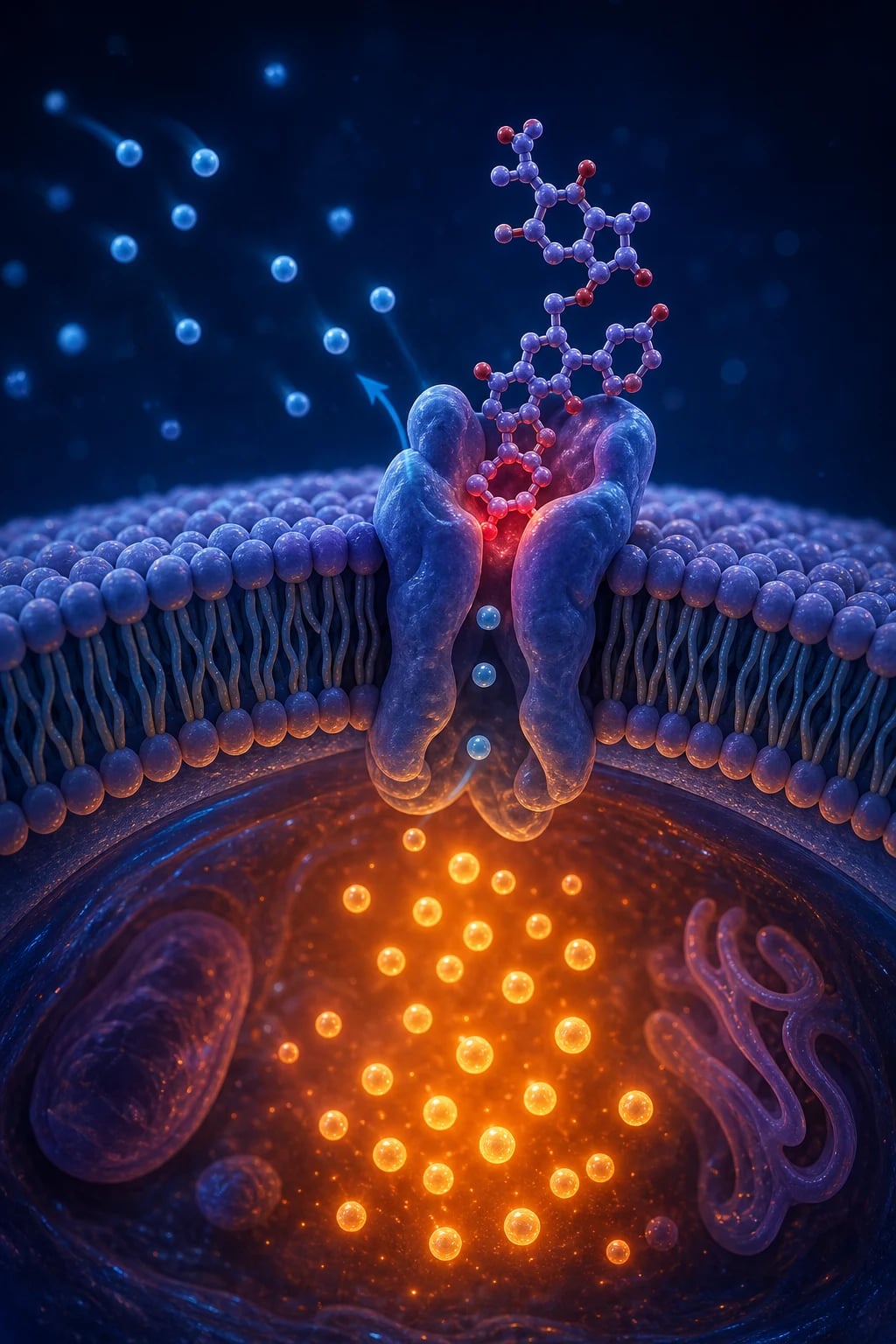
Digoxin is a cardiac glycoside — a steroid nucleus with a lactone ring and sugar moieties, extracted from the foxglove plant Digitalis lanata. Its molecular target is the α-subunit of the Na⁺/K⁺-ATPase (the sodium pump), where it binds to the same site as endogenous potassium. Understanding the cascade of consequences is the key to every exam question on digoxin.[1]
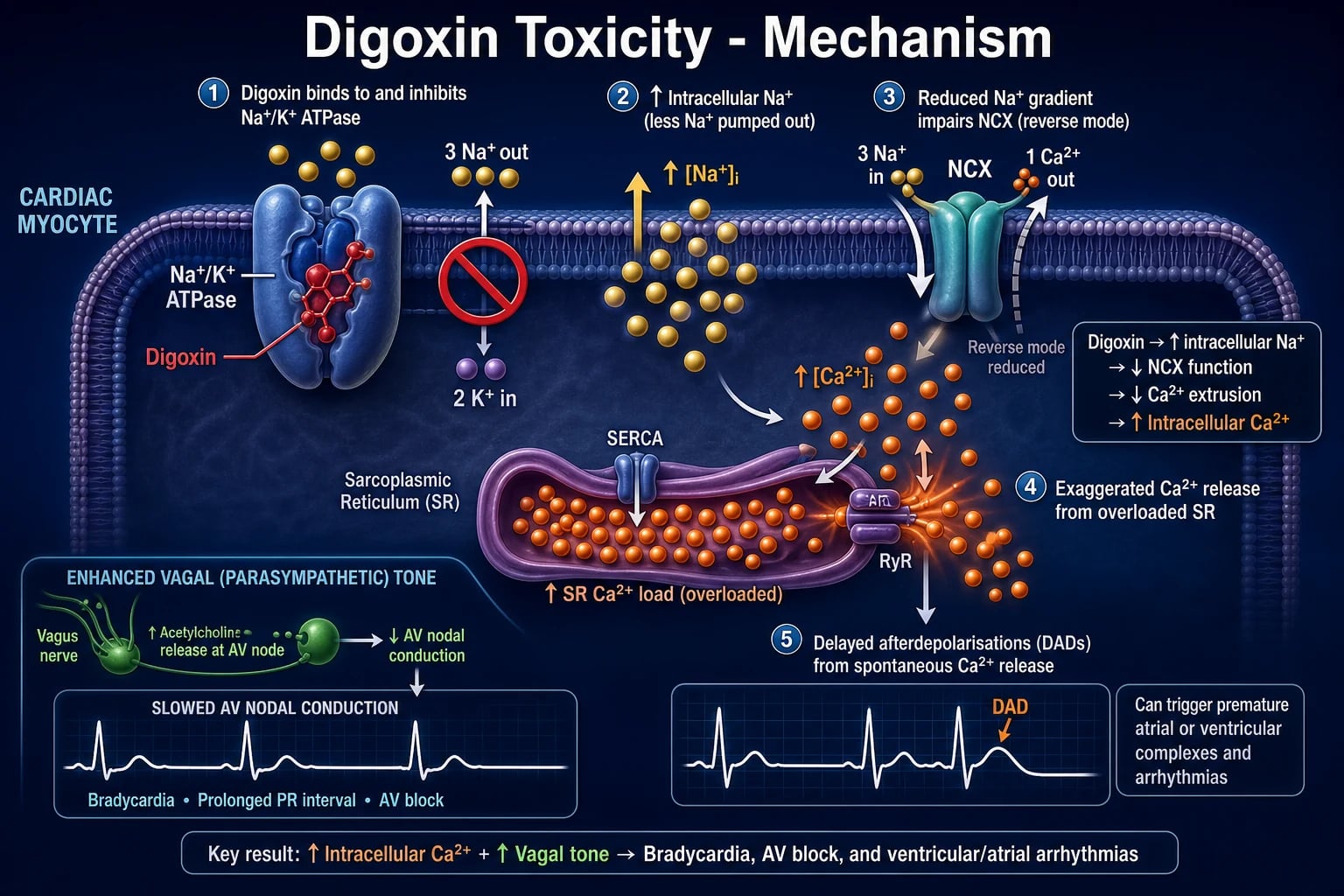
The mechanism of positive inotropy (and toxicity) — step by step: [1]
- Digoxin binds the Na⁺/K⁺-ATPase on the extracellular face of the cardiac myocyte sarcolemma, inhibiting the pump (competitively antagonised by extracellular K⁺ — the molecular basis of the hypokalaemia–toxicity interaction)
- Intracellular Na⁺ rises (the pump normally extrudes 3 Na⁺ for every 2 K⁺ imported; when inhibited, intracellular Na⁺ accumulates, particularly in the subsarcolemmal space near the Na⁺/Ca²⁺ exchanger)
- The transmembrane Na⁺ gradient falls → the Na⁺/Ca²⁺ exchanger (NCX), which normally extrudes Ca²⁺ using the energy of Na⁺ influx, is now less effective (the driving force for Ca²⁺ extrusion is diminished)
- Intracellular Ca²⁺ rises → more Ca²⁺ is loaded into the sarcoplasmic reticulum (SR) via SERCA → on the next action potential, more Ca²⁺ is released from the SR through the ryanodine receptor → more Ca²⁺ available to bind troponin C → enhanced actin-myosin cross-bridge cycling → positive inotropy
- The trade-off: at higher doses, intracellular Ca²⁺ overload generates delayed afterdepolarisations (DADs) via the Na⁺/Ca²⁺ exchanger and Ca²⁺-activated transient inward current → triggered automaticity → arrhythmias [1]
Autonomic effects (at lower, therapeutic concentrations): increased vagal (parasympathetic) tone → decreased AV nodal conduction and increased AV nodal refractoriness → heart rate control in atrial fibrillation; decreased sympathetic tone. At toxic doses, the sympathetic nervous system is paradoxically activated (increased central sympathetic outflow) contributing to arrhythmogenesis. [1]
Pharmacokinetic essentials for the exam: [1]
| Parameter | Value | Clinical significance |
|---|---|---|
| Therapeutic range | 0.5–0.9 ng/mL (0.6–1.2 for some labs) | NARROW therapeutic index — toxicity can occur at <2 ng/mL in susceptible patients |
| Onset (oral) | 1.5–6 h (peak 4–6 h) | IV faster — onset 5–30 min, peak 1–4 h |
| Bioavailability | 60–80% (tablets), 90% (elixir/IV) | Reduced bioavailability in malabsorption |
| Volume of distribution | 5–7 L/kg | LARGE Vd — binds extensively to skeletal and cardiac muscle → NOT dialysable |
| Protein binding | 20–30% | Relatively low — most drug is free or tissue-bound |
| Half-life | 36–48 h (longer in renal failure — up to 4–6 days) | Steady state in ~7 days. Renal impairment → accumulation → toxicity |
| Elimination | 50–70% renally excreted UNCHANGED (glomerular filtration + tubular secretion) | CRITICAL: dose must be adjusted for renal function (eGFR). P-glycoprotein substrate |
| Metabolism | Minimal hepatic metabolism | Not dependent on CYP450 — but IS a P-glycoprotein substrate (basis of drug interactions) |
Why digoxin is still used — the clinical indications
Despite being one of the oldest cardiac drugs (William Withering described foxglove for "dropsy" in 1785), digoxin retains two niche roles supported by modern evidence:[4][8]
- Rate control in permanent atrial fibrillation — especially in sedentary patients or those intolerant of beta-blockers/non-dihydropyridine calcium channel blockers. The RATE-AF trial confirmed digoxin's symptom and ventricular-rate benefit, though it does not control rate during exertion (no sympathetic blockade at atrial level)
- Symptom relief in heart failure with reduced ejection fraction (HFrEF) — the DIG trial (1997) showed digoxin reduced heart-failure hospitalisations without a mortality benefit. It is added on top of evidence-based therapy (ACEi/ARNI, beta-blocker, MRA, SGLT2i) for persistently symptomatic patients [1]
Why digoxin causes toxicity — the three interacting mechanisms
| Mechanism | Therapeutic effect | Toxic effect |
|---|---|---|
| Na⁺/K⁺-ATPase inhibition (cardiac myocytes) | ↑ intracellular Ca²⁺ → positive inotropy | Ca²⁺ overload → DADs → atrial tach, PVCs, bidirectional VT |
| Na⁺/K⁺-ATPase inhibition (systemic — all cells) | Minimal at therapeutic doses | K⁺ leaks OUT of cells → hyperkalaemia (acute overdose); also systemic cell dysfunction |
| Enhanced vagal tone (AV node) | ↓ AV nodal conduction → rate control in AF | Excessive AV block → bradycardia, complete heart block |
| ↑ central sympathetic outflow (toxic doses) | — | Facilitates DADs and ventricular arrhythmias |
Clinical presentation — the four-system pattern
Digoxin toxicity affects four systems in a recognisable pattern. The combination of GI symptoms + visual disturbance + arrhythmia in a patient on digoxin (especially an elderly patient with renal impairment) is the classic exam presentation. [1]
Clinical features of digoxin toxicity — system by system
| System | Features | Pathophysiology |
|---|---|---|
| GASTROINTESTINAL (often earliest) | Anorexia, nausea, vomiting, diarrhoea, abdominal pain, weight loss | Direct stimulation of the chemoreceptor trigger zone (area postrema) in the medulla + direct GI mucosal irritation |
| VISUAL (classic exam clue) | Xanthopsia (yellow-green vision/halos — the pathognomonic description), blurred vision, photophobia, scotomas, colour distortion, flickering, decreased acuity | Retinal cone dysfunction (digoxin inhibits Na⁺/K⁺-ATPase in retinal photoreceptors — the retina has the highest Na⁺/K⁺-ATPase density in the body) |
| CARDIAC (the killer) | ANY arrhythmia — atrial tachycardia with AV block (pathognomonic), PVCs, bradycardia, AV block (1st–3rd degree), bidirectional VT, monomorphic VT, VF | Ca²⁺ overload → DADs (atria + ventricles) + vagal-mediated AV block + direct AV nodal depression |
| CNS / NEUROLOGICAL | Confusion, weakness, fatigue, lethargy, headache, dizziness, neuralgia, psychosis (rare) | Na⁺/K⁺-ATPase inhibition in neurons; altered CNS electrolyte gradients |
The pathognomonic arrhythmia — atrial tachycardia with AV block: this is the single highest-yield exam fact. The mechanism is elegant — digoxin simultaneously (a) increases atrial automaticity (Ca²⁺ overload → DADs → atrial tachycardia) AND (b) impairs AV nodal conduction (vagal effect + direct AV node depression). The result is a fast atrial rate with a SLOW or irregular ventricular response — the combination you would almost never see in any other single condition. Other cardiac glycoside effects: premature ventricular contractions (the commonest early sign on monitoring), bradycardia, all degrees of AV block, and bidirectional VT (alternating QRS axis polarity — virtually pathognomonic for digoxin toxicity, though it can also occur in catecholaminergic polymorphic VT and some channelopathies).[1][9]
[1]ECG — digoxin effect vs digoxin toxicity
This distinction is a favourite exam topic and a common clinical error. The ECG changes of digoxin split into two categories that must NOT be confused:[1]
Digoxin EFFECT (therapeutic, benign) vs digoxin TOXICITY (dangerous)
| Feature | Digoxin EFFECT (therapeutic) | Digoxin TOXICITY |
|---|---|---|
| ST segments | "Reverse tick" / "scooped" ST depression (concave upward) — resembles a check mark | ST changes are irrelevant — toxicity is defined by ARRHYTHMIAS |
| T waves | Flattening, inversion (especially in leads with tall R waves) | — |
| QT interval | Shortened (faster repolarisation from Ca²⁺-dependent early phase) | — |
| U waves | May be prominent (especially with hypokalaemia) | — |
| Rhythm | SINUS (or whatever the underlying rhythm is — e.g. controlled AF) | ANY arrhythmia — atrial tach with AV block, PVCs, bradycardia, AV block, bidirectional VT, VF |
| Clinical significance | NORMAL finding in patients on digoxin — does NOT indicate toxicity, does NOT require dose change | MEDICAL EMERGENCY — stop digoxin, correct electrolytes, consider DigiFab |
| Mnemonic | "Effect = ST" | "Toxicity = arrhythmia" |
The arrhythmias of digoxin toxicity — any arrhythmia, but some are classic: [1]
- Premature ventricular contractions (PVCs) — the commonest early manifestation; often bigeminy
- Atrial tachycardia with AV block — PATHOGNOMONIC; atrial rate typically 130–250, with 2:1 or variable AV block
- Atrial fibrillation with slow ventricular response — or with regularised RR intervals (the digoxin converts the irregular AF to a regular slow rhythm by imposing complete AV block with a junctional escape — "regularisation of AF")
- Junctional tachycardia — accelerated AV junctional rhythm
- Ventricular arrhythmias — PVCs, VT (monomorphic or bidirectional), VF
- Bidirectional VT — alternating QRS axis (up-right then down-right) beat-to-beat; caused by alternating focal activation of the left and right His-Purkinje fascicles from DADs; virtually pathognomonic for digoxin toxicity[9]
- Bradyarrhythmias — sinus bradycardia, sinoatrial block, all degrees of AV block (including complete heart block)
Precipitating factors — why a patient "on a stable dose" becomes toxic
Most digoxin toxicity is CHRONIC (accumulative), not acute overdose. A patient who has been on "a stable dose for years" becomes toxic because one of the factors maintaining the steady state has changed. Recognising these is the key to prevention.[1]
Precipitants of digoxin toxicity and their mechanism
| Precipitant | Mechanism | Clinical scenario |
|---|---|---|
| HYPOKALAEMIA (#1 precipitant) | K⁺ and digoxin COMPETE for the same binding site on the Na⁺/K⁺-ATPase. Low K⁺ → digoxin binds MORE avidly → MORE pump inhibition at any given digoxin level. Also, hypokalaemia independently increases automaticity | Diuretic therapy (loop/thiazide), diarrhoea, vomiting, hyperaldosteronism. A K⁺ of 3.0 can tip a previously stable patient into toxicity |
| Hypomagnesaemia | Similar to hypokalaemia — Mg²⁺ is a cofactor for Na⁺/K⁺-ATPase; low Mg²⁺ reduces pump activity and potentiates digoxin. Also promotes arrhythmias independently | Diuretic use, alcoholism, PPI therapy, refeeding |
| Hypercalcaemia | Additive Ca²⁺ load on an already Ca²⁺-overloaded myocyte → more DADs → arrhythmias | Malignancy, hyperparathyroidism, vit D toxicity |
| Renal impairment | Digoxin is 50–70% renally cleared UNCHANGED. ↓GFR → ↓clearance → accumulation. Half-life can extend from 36–48 h to 4–6 days | Acute kidney injury (AKI) in a previously stable patient — the classic "hospital-acquired digoxin toxicity" |
| Hypothyroidism | ↓ metabolism and ↓renal clearance of digoxin; also alters Na⁺/K⁺-ATPase sensitivity | Untreated hypothyroidism |
| Advanced age | ↓ renal function (even with "normal" creatinine — low muscle mass), ↓ total body K⁺, polypharmacy | Elderly women with low body mass — the classic chronic toxicity patient |
| Drug interactions (P-glycoprotein) | Digoxin is a substrate for P-glycoprotein (P-gp/MDR1), the intestinal and renal tubular efflux pump. Inhibitors of P-gp ↑ digoxin absorption and ↓ renal excretion → ↑ digoxin levels | See dedicated table below |
| Acidosis / hypoxia | Shift digoxin binding, alter K⁺ gradients | Severe illness, sepsis, respiratory failure |
| Cardiomyopathy / amyloidosis | ↑ sensitivity to digoxin; amyloid binds digoxin preferentially | Advanced heart failure, cardiac amyloidosis (avoid digoxin) |
Drugs that INCREASE digoxin levels — the P-glycoprotein interactions
| Drug | Mechanism of interaction | Effect on digoxin level |
|---|---|---|
| Amiodarone | Inhibits P-gp → ↓ digoxin clearance; ALSO — amiodarone itself causes bradycardia and AV block → additive cardiotoxicity | ↑ 50–100%. HALVE the digoxin dose when starting amiodarone |
| Verapamil / diltiazem (non-DHP CCBs) | Inhibit P-gp (renal and intestinal) | ↑ 30–70%. Reduce digoxin dose |
| Quinidine | Classic interaction — displaces digoxin from tissue binding sites AND inhibits P-gp. Historic "quinidine–digoxin interaction" | ↑ 100%. Rarely used now but high-yield exam fact |
| Spironolactone / eplerenone | Inhibit tubular secretion of digoxin; spironolactone also interferes with some digoxin assays (falsely high/low depending on assay) | ↑ 15–30% |
| Macrolides (clarithromycin, erythromycin, azithromycin) | Inhibit P-gp and CYP3A4 | ↑ 20–50%. A common cause of hospital-acquired toxicity when antibiotics are added |
| Cyclosporin, tacrolimus | Potent P-gp inhibitors | ↑ significantly |
| Itraconazole, ketoconazole | P-gp + CYP3A4 inhibition | ↑ significantly |
| Propafenone, dronedarone, flecainide | P-gp inhibition | ↑ 20–100% (variable) |
| Rifampicin, St John's wort (INDUCERS) | INDUCE P-gp → ↑ digoxin efflux → ↓ digoxin levels | ↓ 30% — may cause loss of digoxin efficacy (a "negative" interaction to recognise) |
P-glycoprotein inhibitors that raise digoxin — 'A-VQ-MAC'
Diagnosis — clinical judgement, not just a number
Digoxin toxicity is a CLINICAL DIAGNOSIS supported by (not defined by) the serum level. The serum digoxin level correlates poorly with severity, especially in chronic toxicity — a patient can be toxic at 1.5 ng/mL (with hypokalaemia and renal impairment) or asymptomatic at 3 ng/mL.[1]
Diagnostic approach: [1]
- Clinical suspicion — any patient on digoxin with new GI symptoms, visual symptoms, confusion, or ANY arrhythmia. Send: serum digoxin level, U&E (K⁺, Mg²⁺, Ca²⁺, creatinine/eGFR), ECG, troponin
- Serum digoxin level — therapeutic 0.5–0.9 ng/mL; >2 ng/mL suggests toxicity (but NOT diagnostic in isolation). Levels >10 ng/mL (acute) or >6 ng/mL (chronic) are an indication for DigiFab REGARDLESS of symptoms
- Potassium — in ACUTE overdose, hyperkalaemia is a DIRECT marker of acute Na⁺/K⁺-ATPase inhibition (K⁺ efflux). K⁺ >5.0 in suspected acute digoxin toxicity = an indication for DigiFab. In CHRONIC toxicity, K⁺ may be normal or low (diuretics)
- ECG — look for arrhythmias (not ST changes). Atrial tach with AV block, bidirectional VT, or new bradycardia in a patient on digoxin = toxicity until proven otherwise
- Renal function — rising creatinine / falling eGFR explains accumulation in chronic toxicity [1]
Chronic vs acute digoxin toxicity — the critical distinction
| Feature | CHRONIC toxicity (commoner) | ACUTE toxicity (overdose) |
|---|---|---|
| Typical patient | Elderly, renal impairment, "stable dose for years" + new precipitant (diuretic, AKI, interacting drug) | Young, deliberate self-harm ingestion (often many tablets) |
| Potassium | Normal or LOW (diuretics co-prescribed) | HIGH (acute massive Na⁺/K⁺-ATPase inhibition → K⁺ efflux). K⁺ >5.0 = severe |
| Serum digoxin | May be only mildly elevated (1.5–3 ng/mL) — level correlates poorly with severity in chronic toxicity | Markedly elevated (>10 ng/mL) — correlates with body load |
| Predominant features | GI (nausea/vomiting), visual (xanthopsia), confusion, arrhythmias | Initially asymptomatic → then severe hyperkalaemia + life-threatening arrhythmias |
| DigiFab dose | Lower (often 1–2 vials) — smaller body burden | HIGH — often 10–20 vials (massive body burden) |
| Prognosis | Good with recognition and withdrawal + electrolyte correction | Guarded if hyperkalaemia + arrhythmia — DigiFab is life-saving |
| Key teaching point | "Chronic toxicity hides — suspect it in any unwell patient on digoxin" | "Acute overdose is overt — treat the number and the potassium" |
Management — the step-by-step protocol
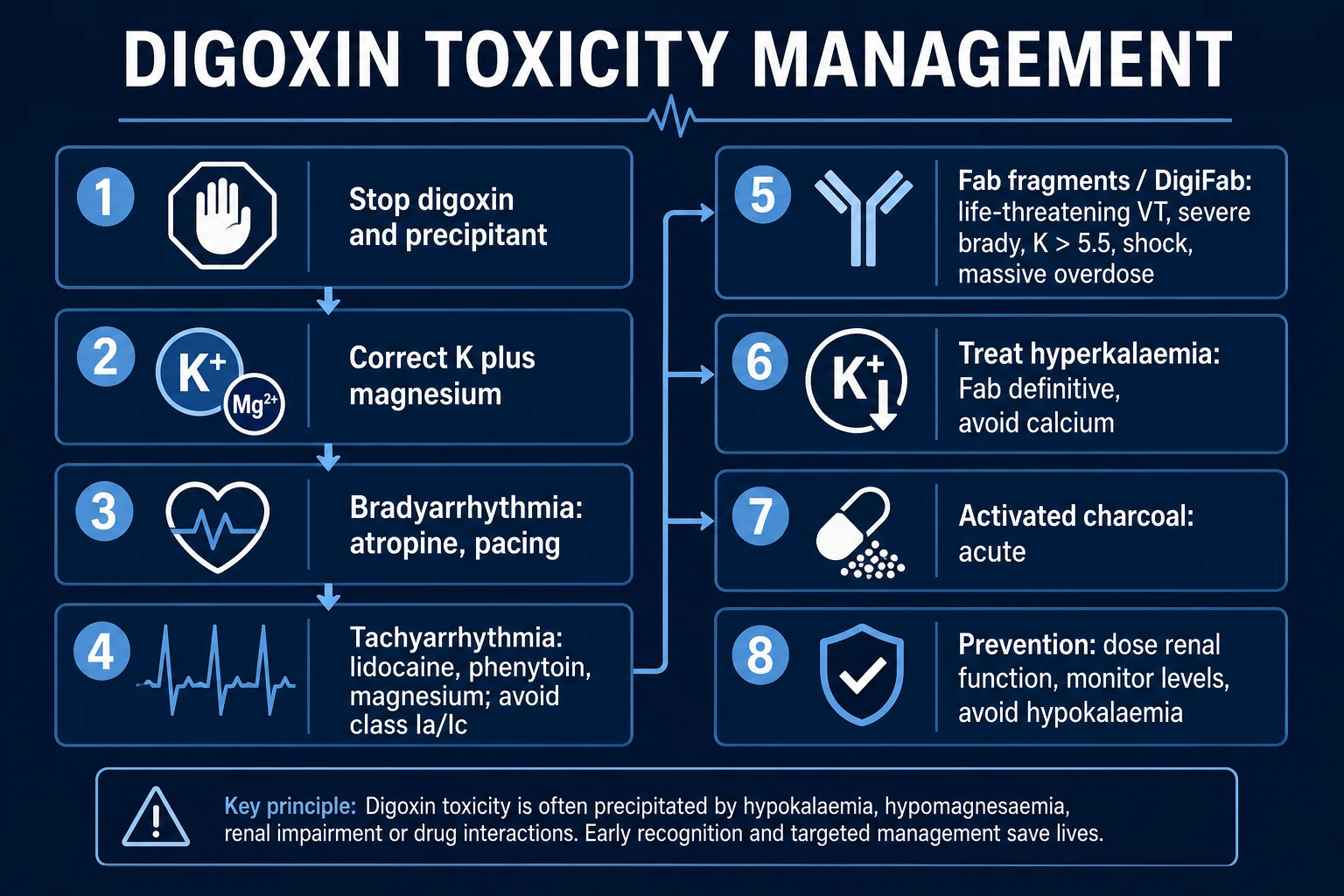
Digoxin toxicity — ICU management protocol
- RECOGNISE AND RESUSCITATE: ABC. IV access. Continuous ECG monitoring (arrhythmias can evolve rapidly). Identify and STOP all sources of digoxin AND interacting drugs (amiodarone, verapamil, macrolides). Draw: serum digoxin level, U&E (K⁺, Mg²⁺, Ca²⁺, creatinine), TSH, LFTs, troponin, βhCG
- CORRECT PRECIPITANTS — K⁺ AND Mg²⁺:
- If HYPOKALAEMIC (chronic toxicity, diuretics): give KCl IV/PO to target K⁺ 4.0–4.5. Hypokalaemia potentiates digoxin and prevents DigiFab from working well (the Fab must displace digoxin from the ATPase, which is harder when K⁺ is low)
- If HYPOMAGNESAEMIC: give MgSO₄ 2 g IV — Mg²⁺ deficiency independently promotes digoxin arrhythmias
- DO NOT aggressively correct hypercalcaemia acutely (calcium infusion — see below)
- DECONTAMINATION (acute ingestion): activated charcoal 50 g PO/NG if within 1–2 h of ingestion AND airway protected. Multi-dose charcoal (25 g q4–6 h) interrupts enterohepatic recirculation of digoxin and enhances elimination. Contraindicated: bowel obstruction, ileus, unprotected airway
- DIGIFAB (digoxin-specific antibody fragments) — THE SPECIFIC ANTIDOTE:
- Indications: (a) life-threatening arrhythmia (VT/VF, complete heart block, severe bradycardia unresponsive to atropine), (b) K⁺ >5.0 mmol/L in ACUTE toxicity, (c) digoxin >10 ng/mL (acute) / >6 ng/mL (chronic), (d) cardiac arrest attributed to digoxin
- Dose — see dedicated section below (level-based, body-load-based, or empirical)
- Onset: 15–45 minutes; full effect by 30–45 min
- Expect: serum digoxin level RISES dramatically post-DigiFab (bound digoxin re-enters the circulation) — this is EXPECTED and does NOT indicate worsening toxicity. Monitor FREE digoxin if available
- TREAT BRADYARRHYTHMIAS / AV BLOCK: atropine 0.5–1 mg IV (often ineffective — digoxin directly depresses the AV node; atropine works on the SA node). If ineffective → transcutaneous pacing → transvenous pacing. DigiFab is the definitive treatment (takes 30–45 min). AVOID isoprenaline (may worsen ventricular ectopy)
- TREAT HYPERKALAEMIA (acute overdose): insulin-dextrose (10 units soluble insulin + 25 g IV dextrose), salbutamol 10–20 mg nebulised, sodium bicarbonate (if acidotic). AVOID calcium gluconate (theoretical 'stone heart' — see below). NOTE: DigiFab will correct the hyperkalaemia by reversing the Na⁺/K⁺-ATPase inhibition — treat the digoxin, not just the K⁺
- TREAT VENTRICULAR ARRHYTHMIAS: magnesium sulphate 2 g IV (first-line — stabilises myocardial membrane, treats Mg²⁺ deficiency, suppresses DADs). Lidocaine 1–1.5 mg/kg IV (second-line — class Ib, safe in digoxin toxicity). DigiFab. AVOID amiodarone (increases digoxin levels via P-gp inhibition)
- AVOID HAEMODIALYSIS: digoxin has a LARGE Vd (5–7 L/kg) and extensive tissue binding → haemodialysis does NOT effectively remove it. DigiFab is the treatment. (The only role for dialysis is treating the refractory hyperkalaemia while awaiting DigiFab, NOT removing digoxin itself.)
- MONITOR AND RE-EVALUATE: continuous ECG until arrhythmia resolved; serial K⁺ (will FALL as Na⁺/K⁺-ATPase recovers post-DigiFab — watch for hypokalaemia and replace); clinical status. Onset of DigiFab: 15–45 min. Duration: Fab–digoxin complex cleared renally over several days (longer in renal failure — monitor for re-toxification if the complex dissociates in severe renal failure)
DigiFab dosing — the four methods
DigiFab (digoxin-specific antigen-binding fragments) is a preparation of Fab fragments from sheep immunised with digoxin. Each 40 mg vial of DigiFab binds 0.5 mg of digoxin. Dosing can be calculated three ways, or given empirically.[2][3]
DigiFab dosing methods — when to use each
| Method | Formula / approach | When to use |
|---|---|---|
| Empirical (most common in emergencies) | 1–2 vials (40–80 mg) IV for chronic toxicity; 5–10 vials for acute overdose or cardiac arrest. Repeat if no response in 30–45 min | When serum level or ingested dose is UNKNOWN, or in cardiac arrest (give rapidly) |
| Based on serum level (steady state) | Vials = (serum digoxin in ng/mL × body weight in kg) / 100. Round UP. (Based on the known Vd of 5–7 L/kg.) | When a reliable steady-state serum level is available (≥ 6–8 h post-ingestion) |
| Based on known ingested dose | Vials = total digoxin ingested (mg) / 0.5. Round UP. (Each vial binds 0.5 mg digoxin.) | Acute overdose where the number of tablets ingested is known reliably |
| Total body load (from level) | Body load (mg) = serum digoxin (ng/mL) × 5.6 L/kg × weight (kg) / 1000. Then vials = body load / 0.5 | Pharmacokinetic approach — equivalent to the level-based formula |
Worked example — level-based dosing (the exam scenario): A 70 kg patient, chronic toxicity, serum digoxin 8 ng/mL. [1]
- Vials = (8 × 70) / 100 = 560 / 100 = 5.6 → round up to 6 vials (240 mg DigiFab) [1]
Worked example — acute overdose, known ingestion: A 60 kg patient ingests 25 × 0.25 mg digoxin tablets = 6.25 mg. [1]
- Vials = 6.25 / 0.5 = 12.5 → round up to 13 vials (520 mg DigiFab) [1]
The 'titrated' (start low) approach (ATOM-6): modern toxicology practice increasingly uses a titrated strategy — start with 1–2 vials and repeat the dose based on clinical response (arrhythmia resolution, K⁺ correction) rather than giving the full calculated dose up front. This reduces cost, avoids overshoot hypokalaemia, and is supported by the ATOM-6 trial for chronic toxicity. For LIFE-THREATENING acute overdose or cardiac arrest, give the full calculated (or empirical large) dose immediately.[3]
[1]The 'stone heart' controversy — calcium in digoxin toxicity
The traditional teaching is to AVOID IV calcium in digoxin toxicity because of the theoretical risk of 'stone heart' — the idea that calcium infusion into a myocardium already overloaded with intracellular Ca²⁺ (from Na⁺/K⁺-ATPase inhibition) would precipitate irreversible sustained contracture → refractory VF.[1][5]
The evidence is actually weak: [1]
- The 'stone heart' concept originates from animal studies in the 1930s (by Sharashkova and others) using massive doses of calcium and cardiac glycosides in animal models — not robust by modern standards
- No convincing human cases clearly attributable to calcium in digoxin toxicity have been reported; recent reviews and case series suggest calcium may actually be SAFE in this setting
- A 2024 case report documented 'stone heart' after calcium infusion in digoxin toxicity, reviving the debate — but a single case report is weak evidence and the patient was critically ill with multiple confounders[5]
Pragmatic recommendation (most toxicologists / guidelines): [1]
Calcium in digoxin toxicity — the three positions
| Position | Rationale | Clinical approach |
|---|---|---|
| Traditional (AVOID) | Theoretical risk of 'stone heart' (irreversible contracture → VF) from calcium into Ca²⁺-overloaded myocardium | Avoid IV calcium in digoxin toxicity unless absolutely necessary (e.g. cardiac arrest from severe hyperkalaemia refractory to insulin-dextrose + bicarbonate) |
| Permissive (use if needed) | No convincing human evidence of harm; calcium is effective for hyperkalaemia; the risk of untreated severe hyperkalaemia (>6.5 with ECG changes) exceeds the theoretical risk | Use calcium for hyperkalaemia with ECG changes, but prefer insulin-dextrose + DigiFab first; DigiFab corrects the hyperkalaemia at its source |
| DigiFab first | DigiFab reverses the Na⁺/K⁺-ATPase inhibition → corrects hyperkalaemia AND arrhythmia at the source. Calcium only treats the number, not the cause | Give DigiFab early; use insulin-dextrose + salbutamol for temporary K⁺ control while awaiting DigiFab; reserve calcium for cardiac arrest from hyperkalaemia unresponsive to everything else |
Exam answer: AVOID calcium in digoxin toxicity (the 'stone heart' risk). If forced to give it (cardiac arrest from severe hyperkalaemia), give DigiFab concurrently and document the reasoning. In practice, the DigiFab-first approach makes the calcium question moot in most cases. [1]
Clinical pearls
Red flags
Key trials and evidence
Digitalis Investigation Group (DIG) trial 1997 — digoxin in heart failure (PMID 9036306)
Source
NEJM — the landmark RCT of digoxin in heart failure
Design
Randomised, double-blind, placebo-controlled. 6800 patients with HFrEF in sinus rhythm, followed mean 37 months
Intervention
Digoxin (target level 0.5–2.0 ng/mL) vs placebo, on top of then-standard HF therapy
Primary outcome
All-cause mortality: NO difference (HR 0.99). Digoxin did NOT reduce mortality
Secondary outcomes
Significant REDUCTION in heart-failure hospitalisations (HR 0.72, p<0.001) and in the composite of death + HF hospitalisation
Safety signal
Digoxin-associated mortality increased at higher serum levels — the basis for the modern LOW target range (0.5–0.9 ng/mL)
Clinical bottom line
Digoxin reduces HF hospitalisations but NOT mortality — a symptomatic add-on to evidence-based therapy, targeting a LOW serum level to minimise toxicity
ATOM-4 — Chan 2019 — early DigiFab in chronic digoxin poisoning (PMID 30585517)
Source
Clinical Toxicology — Australian multicentre RCT
Design
Randomised, double-blind, placebo-controlled. Patients with chronic digoxin toxicity (level >1.2 ng/mL + symptoms)
Intervention
Early DigiFab (2 vials) vs placebo + supportive care
Key finding
No significant difference in the primary outcome between early DigiFab and supportive care in mild–moderate chronic toxicity — supporting a conservative, titrated approach in this group
Clinical bottom line
Chronic digoxin toxicity is often managed conservatively (stop digoxin, correct electrolytes) — reserve DigiFab for severe/life-threatening features (arrhythmia, K+ >5.0). Supportive care alone is often sufficient in mild–moderate cases
ATOM-6 — Chan 2022 — titrated DigiFab dosing in acute overdose (PMID 34424803)
Source
Clinical Toxicology — prospective case series of titrated DigiFab
Design
Patients with acute digoxin overdose — DigiFab dosed by clinical response rather than full calculated dose
Key finding
Titrated dosing (1–2 vials, repeat as needed) was effective and safe in acute overdose — avoided the overshoot hypokalaemia and excessive cost of full empirical dosing
Clinical bottom line
For non-arrest acute overdose, a titrated strategy (start low, repeat per clinical response) is reasonable and reduces cost — BUT for cardiac arrest or immediately life-threatening toxicity, give the full calculated dose immediately
RATE-AF — Abdali 2025 — digoxin vs beta-blocker in permanent AF (PMID 39819610)
Source
Heart — cost-effectiveness analysis of the RATE-AF RCT
Population
Patients with permanent atrial fibrillation
Comparison
Digoxin vs beta-blocker for rate control
Key finding
Digoxin provided comparable symptom control at lower cost in selected (sedentary) patients. Digoxin does not control rate during exertion (no sympathetic blockade)
Clinical bottom line
Digoxin retains a niche role for rate control in permanent AF — useful in sedentary patients or those intolerant of beta-blockers — but should be combined with rate-controlling agents for activity-related tachycardia
Hussein 2024 — 'Stone heart' after calcium in digoxin toxicity (PMID 39219774)
Source
Clinical Case Reports — single case report reviving the debate
Case
Patient with digoxin toxicity who developed 'stone heart' (refractory VF / myocardial contracture) after calcium infusion for hyperkalaemia
Context
The 'stone heart' concept originates from 1930s animal studies; robust human evidence has been lacking. This single case re-opens the question but is weak evidence (confounders: critically ill, multiple interventions)
Clinical bottom line
The calcium-in-digoxin-toxicity debate is unresolved. Pragmatic approach: prefer DigiFab + insulin-dextrose for hyperkalaemia; reserve calcium for cardiac arrest from refractory hyperkalaemia, given concurrently with DigiFab
Baher 2011 — mechanism of bidirectional VT (PMID 21118730)
Source
Heart Rhythm — computational and experimental mapping study
Key finding
Bidirectional VT is caused by alternating focal activation of the anterior and posterior fascicles of the left bundle branch — a 'ping-pong' pattern driven by delayed afterdepolarisations (DADs)
Relevance to digoxin
Digoxin causes Ca²⁺ overload → DADs → this ping-pong mechanism → the characteristic alternating QRS axis. Explains why bidirectional VT is so characteristic of digoxin toxicity
Clinical bottom line
Bidirectional VT in a patient on digoxin = digoxin toxicity until proven otherwise. Other causes (CPVT, Andersen-Tawil) are rare
Comparison — DigiFab vs other modalities
DigiFab vs Digibind vs haemodialysis — what actually removes digoxin?
| Modality | Mechanism | Effectiveness for digoxin | Role |
|---|---|---|---|
| DigiFab (digoxin-specific Fab fragments) | Antibody fragments bind digoxin with very high affinity → Fab–digoxin complex removed renally | HIGHLY EFFECTIVE — the specific antidote. Reverses arrhythmia and hyperkalaemia at the source in 15–45 min | First-line for severe/life-threatening toxicity |
| Digibind (original product) | Identical mechanism to DigiFab | Identical — 40 mg vial binds 0.5 mg digoxin | Clinically equivalent to DigiFab (discontinued in many markets) |
| Haemodialysis | Extracorporeal removal from blood | NOT effective — large Vd (5–7 L/kg), extensive tissue binding; only removes the small intravascular fraction | NO role for digoxin removal. May be used for refractory hyperkalaemia while awaiting DigiFab |
| Multi-dose activated charcoal | Adsorbs digoxin in gut lumen; interrupts enterohepatic recirculation ("gut dialysis") | Moderate — enhances elimination by ~30–50% in some studies | Adjunct in acute ingestion with protected airway |
| Urinary manipulation | — | Not useful (digoxin is not amenable to forced diuresis or ion trapping) | No role |
Drugs to AVOID in digoxin toxicity — and why
| Drug | Reason to AVOID | Safe alternative |
|---|---|---|
| Calcium gluconate / chloride | Theoretical 'stone heart' (irreversible VF from Ca²⁺ into Ca²⁺-overloaded myocardium) | Insulin-dextrose, salbutamol, bicarbonate (for hyperkalaemia); DigiFab (definitive) |
| Amiodarone | Inhibits P-gp → RAISES digoxin levels; also additive bradycardia/AV block | Magnesium (first-line), lidocaine (second-line) for VT |
| Verapamil / diltiazem | P-gp inhibitors → raise digoxin levels; additive AV block | Magnesium, lidocaine; DigiFab; pacing for bradycardia |
| Quinidine | Classic interaction — displaces digoxin from tissue binding + P-gp inhibition | As above |
| Beta-blockers (for tachyarrhythmia) | Additive bradycardia and AV block | Magnesium, lidocaine, DigiFab |
| Class Ic antiarrhythmics (flecainide, propafenone) | Propafenone inhibits P-gp; class Ic may be pro-arrhythmic in this setting | Magnesium, lidocaine |
| Isoprenaline (for bradycardia) | May worsen ventricular ectopy / DAD-mediated arrhythmias | Atropine (first-line, often ineffective), pacing, DigiFab |
Digoxin effect vs digoxin toxicity — the exam comparison table
| Feature | Digoxin EFFECT (therapeutic) | Digoxin TOXICITY |
|---|---|---|
| ST segment | "Reverse tick" / scooped ST depression | Irrelevant — toxicity is about RHYTHM not ST |
| T wave | Flattened / inverted | — |
| QT | Shortened | — |
| U waves | May be prominent | — |
| Rhythm | Sinus (or controlled AF) | ANY arrhythmia (atrial tach + AV block, PVCs, bidirectional VT, bradycardia, VF) |
| Clinical meaning | NORMAL — patient is taking digoxin | EMERGENCY — stop digoxin, treat |
| Action | None | Stop digoxin, correct K⁺/Mg²⁺, DigiFab if severe |
| Correlates with serum level? | NO | Partially — but clinical picture trumps the number |
Quick-reference management summary card
Digoxin toxicity — 60-second ICU resuscitation
- ABC + IV access + continuous ECG monitor. STOP digoxin AND any interacting drugs (amiodarone, verapamil, macrolides). Draw: digoxin level, U&E (K⁺, Mg²⁺, Ca²⁺, creatinine, eGFR), TSH, troponin
- Correct hypokalaemia (if K⁺ <4.0 in chronic toxicity) → KCl IV/PO to K⁺ 4.0–4.5. Correct hypomagnesaemia → MgSO₄ 2 g IV. (K⁺ and digoxin compete for the same ATPase binding site — fixing K⁺ is the first step)
- DigiFab if: life-threatening arrhythmia, K⁺ >5.0 (acute), digoxin >10 ng/mL (acute) / >6 ng/mL (chronic), or cardiac arrest. Dose: empirical 1–2 vials (chronic) or 5–10 vials (acute/arrest); or level-based: vials = (digoxin ng/mL × weight kg) / 100
- Bradycardia/AV block: atropine 0.5–1 mg IV → transcutaneous pacing → transvenous pacing. (Atropine often fails — be ready to pace early.)
- Hyperkalaemia (acute overdose): insulin-dextrose + salbutamol + bicarbonate. AVOID calcium. (DigiFab corrects it at the source — treat the digoxin, not just the K⁺)
- Ventricular arrhythmia: magnesium 2 g IV (first-line) → lidocaine 1–1.5 mg/kg IV (second-line). AVOID amiodarone (raises digoxin levels)
- Activated charcoal (acute ingestion, airway protected, within 1–2 h) — then multi-dose 25 g q4–6 h (interrupts enterohepatic recirculation)
- AVOID haemodialysis — digoxin has a large Vd and is not dialysable. (Dialysis only for refractory hyperkalaemia, NOT for digoxin removal)
- Monitor: continuous ECG until arrhythmia resolved; serial K⁺ q1–2 h (will FALL post-DigiFab — replace); clinical status. Expect serum digoxin to RISE post-DigiFab (bound digoxin — inactive — do NOT re-dose based on this)
- Investigate precipitant: new AKI, diuretic-induced K⁺ loss, new interacting drug, non-adherence then re-exposure. Address it before restarting digoxin (if at all)
Worked clinical example — the classic chronic toxicity scenario
Presentation: 82-year-old woman, 55 kg, on digoxin 0.25 mg OD for permanent AF (rate control) for 8 years. Admitted with 3 days of nausea, vomiting, and "seeing yellow halos." Also takes frusemide 40 mg OD, spironolactone 25 mg OD, and was started on clarithromycin 500 mg BD 5 days ago for a chest infection. Creatinine has risen from 90 to 160 μmol/L over the same period. [1]
Step 1 — Clinical pattern: elderly woman on digoxin + GI symptoms + visual symptoms (xanthopsia) + new interacting drug (clarithromycin, a P-gp inhibitor) + new AKI → CLASSIC chronic digoxin toxicity. [1]
Step 2 — Investigations: digoxin level 4.5 ng/mL. K⁺ 3.2 mmol/L (diuretic-induced). Mg²⁺ 0.6 mmol/L. Creatinine 160 (eGFR ~30). ECG: atrial tachycardia at 150 with 2:1 AV block (ventricular rate 75). [1]
Step 3 — Diagnosis: chronic digoxin toxicity with PATHOGNOMONIC atrial tachycardia with AV block. Precipitants: (a) clarithromycin (P-gp inhibitor → ↑ digoxin), (b) AKI (↓ renal clearance → accumulation), (c) hypokalaemia (potentiates toxicity at the ATPase). [1]
Step 4 — Management: STOP digoxin + clarithromycin. Give KCl (target K⁺ 4.0–4.5) + MgSO₄ 2 g IV. Continuous ECG monitoring. The arrhythmia (atrial tach with AV block) is life-threatening → DigiFab indicated. Dose (level-based): vials = (4.5 × 55) / 100 = 247.5 / 100 = 2.48 → 3 vials IV. Expect serum digoxin to rise dramatically post-dose (bound digoxin — inactive). Monitor K⁺ q1–2 h (will fall as ATPase recovers — replace). Onset of effect: 15–45 min. [1]
Step 5 — Review before any restart: is digoxin still needed? Consider alternative rate control (beta-blocker if tolerated). If digoxin is restarted: use a LOWER dose (0.0625–0.125 mg) adjusted to renal function, target level 0.5–0.9 ng/mL, and avoid future P-gp inhibitors. [1]
Endogenous and exogenous cardiac glycosides — the broader picture
Digoxin is one of many cardiac glycosides — naturally occurring Na⁺/K⁺-ATPase inhibitors found in plants and animals. All produce the same toxicity profile and all cross-react with digoxin assays and respond to DigiFab.[10]
Cardiac glycoside sources — beyond digoxin tablets
| Source | Glycoside | Clinical context |
|---|---|---|
| Foxglove (Digitalis purpurea, D. lanata) | Digoxin, digitoxin | Herbal tea/gardening ingestion; the original source of digoxin |
| Oleander (Nerium oleander) | Oleandrin | Common in deliberate self-harm in tropical/subtropical regions; highly toxic; requires LARGE DigiFab doses |
| Yellow oleander (Cascabela thevetia) | Thevetin A/B | Mass self-harm outbreaks in South Asia; high mortality without DigiFab |
| Lily of the valley (Convallaria majalis) | Convallatoxin | Garden plant; accidental ingestion; milder toxicity |
| Red squill (Drimia maritima) | Proscillaridin | Historical rodenticide; rare ingestions |
| Cane toad (Rhinella marina) | Bufotoxins (bufadienolides) | "Licking" or ingestion of toad venom/eggs; hallucinogenic misuse |
| Some Chinese herbal medicines (Chan Su, Lu-Shen-Wan) | Bufadienolides | Cardiac glycoside-containing traditional remedies |
Clinical implication: in any unexplained cardiac glycoside–like toxicity (hyperkalaemia + arrhythmia + GI symptoms) with a "digoxin level" but no prescribed digoxin, ask about herbal remedies, plants, and unusual exposures. All are treated with DigiFab, often requiring very large doses because the body burden is high and the assay may under-read non-digoxin glycosides.[10]
Digoxin vs other ICU toxins — high-yield comparisons
Digoxin toxicity vs other cardiac/ICU toxins — distinguishing features
| Feature | Digoxin | Beta-blocker overdose | Calcium channel blocker overdose | Tricyclic antidepressant overdose |
|---|---|---|---|---|
| Heart rate | Variable (brady or tachy) | Bradycardia | Bradycardia | Tachycardia (anticholinergic) → then bradycardia (severe) |
| Blood pressure | Usually maintained early | Hypotension | Hypotension (often severe) | Hypotension |
| K⁺ | HIGH (acute) or low (chronic, diuretics) | Normal / low | Normal | Normal |
| ECG signature | Atrial tach + AV block; bidirectional VT; scooped ST (effect) | Bradycardia, AV block | Bradycardia, AV block | Wide QRS, tall R in aVR, long QT |
| Specific antidote | DigiFab | Glucagon, high-dose insulin | High-dose insulin, calcium, lipid | Sodium bicarbonate (sodium loading + alkalinisation) |
| Key avoidance | Calcium (stone heart), amiodarone | — | — | Antiarrhythmics (use bicarbonate) |
Mnemonics
Digoxin toxicity features — 'GI-VIS-CAR'
DigiFab indications — 'K-A-L-I'
Precipitants of chronic digoxin toxicity — 'HARD-ON-DIG'
Short-answer question
Digoxin toxicity — SAQ (CICM/FFICM style)
10 minutes · 10 marks
Key facts summary
[1]References
- [1]Roberts DM, Gallapatthy G, Dunuwille A, Chan BS Pharmacological treatment of cardiac glycoside poisoning Br J Clin Pharmacol, 2016.PMID 26505271
- [2]Chan BS, Isbister GK, Page CB, et al. Clinical outcomes from early use of digoxin-specific antibodies versus observation in chronic digoxin poisoning (ATOM-4) Clin Toxicol (Phila), 2019.PMID 30585517
- [3]Chan BS, Isbister GK, Chiew AL, Buckley NA Clinical experience with titrating doses of digoxin antibodies in acute digoxin poisoning. (ATOM-6) Clin Toxicol (Phila), 2022.PMID 34424803
- [4]Digitalis Investigation Group The effect of digoxin on mortality and morbidity in patients with heart failure N Engl J Med, 1997.PMID 9036306
- [5]Hussein G, Krastev P, Mallari AJP Stone heart syndrome: A curious case of digoxin toxicity and calcium infusion Clin Case Rep, 2024.PMID 39219774
- [6]Haruna Y, Kawasaki T, Kikkawa Y Xanthopsia Due to Digoxin Toxicity as a Cause of Traffic Accidents: A Case Report Am J Case Rep, 2020.PMID 32769961
- [7]Piltz JR, Wertenbaker C, Lance SE, et al. Digoxin toxicity. Recognizing the varied visual presentations J Clin Neuroophthalmol, 1993.PMID 8113441
- [8]Abdali Z, Bunting KV, Mehta S, et al. Cost-effectiveness of digoxin versus beta blockers in permanent atrial fibrillation: the Rate Control Therapy Evaluation in Permanent Atrial Fibrillation (RATE-AF) randomised trial Heart, 2025.PMID 39819610
- [9]Baher AA, Uy M, Xie F, et al. Bidirectional ventricular tachycardia: ping pong in the His-Purkinje system Heart Rhythm, 2011.PMID 21118730
- [10]Wong A, Greene SL Successful treatment of Nerium oleander toxicity with titrated Digoxin Fab antibody dosing Clin Toxicol (Phila), 2018.PMID 29382214