ICU · toxicology
Drug-Induced Hyperthermia Syndromes — Comprehensive Differential and Management
Also known as Malignant hyperthermia · Neuroleptic malignant syndrome · NMS · Serotonin syndrome · Sympathomimetic toxicity · Anticholinergic syndrome · Drug-induced hyperthermia · Hyperthermia differential · Dantrolene
Drug-induced hyperthermia syndromes — five life-threatening conditions that present with hyperthermia + autonomic instability + altered mental status + muscle rigidity, each requiring a SPECIFIC antidote/management approach: (1) Malignant hyperthermia (MH — ryanodine receptor mutation, triggered by volatile anaesthetics/succinylcholine → intracellular calcium release → sustained muscle contraction → hyperthermia, hypercapnia, hyperkalaemia, acidosis → dantrolene 2.5 mg/kg IV is the life-saving antidote), (2) Neuroleptic malignant syndrome (NMS — dopamine D2 receptor blockade from antipsychotics → lead-pipe rigidity, hyperthermia, altered mental status, autonomic instability → bromocriptine/dantrolene + supportive), (3) Serotonin syndrome (excess serotonergic activity from SSRIs, MAOIs, tramadol, linezolid, fentanyl → CLONUS [diagnostic hallmark], hyperreflexia, agitation, hyperthermia → cyproheptadine + benzodiazepines), (4) Sympathomimetic toxicity (cocaine, amphetamines, MDMA → hyperthermia, tachycardia, hypertension, agitation, seizures → benzodiazepines + active cooling), (5) Anticholinergic syndrome (antihistamines, atropine, TCA, jimsonweed → hyperthermia, dry skin, mydriasis, urinary retention, delirium → physostigmine if severe). The critical diagnostic clues: MH (anaesthetic trigger + hypercapnia refractory to ventilation), NMS (antipsychotic + lead-pipe rigidity + slow onset days-weeks), serotonin syndrome (serotonergic drug + CLONUS + hyperreflexia + rapid onset hours), sympathomimetic (stimulant + diaphoretic + agitation), anticholinergic (anticholinergic + dry as a bone, red as a beet, mad as a hatter). The universal management: STOP the trigger, ACTIVE COOLING, benzodiazepines for agitation/seizures, specific antidote (dantrolene/bromocriptine/cyproheptadine/physostigmine), supportive care.
On this page & tools
Your progress
Saved locally on this device.
Target exams
Red flags
Overview
The drug-induced hyperthermia syndromes are among the MOST commonly tested topics in CICM/FFICM exams because: (a) they are life-threatening, (b) they have SPECIFIC antidotes (getting the diagnosis wrong = wrong treatment = death), (c) they have DISTINCTIVE clinical features that allow rapid bedside diagnosis, (d) they test pharmacology knowledge (receptor mechanisms). The intensivist must be able to distinguish them WITHIN MINUTES — the treatment window for MH and serotonin syndrome is measured in hours.[1][4]
The unified diagnostic approach — distinguishing the five syndromes
The five drug-induced hyperthermia syndromes — side-by-side comparison
| Feature | MH | NMS | Serotonin syndrome | Sympathomimetic | Anticholinergic |
|---|---|---|---|---|---|
| Trigger | Volatile anaesthetic (sevoflurane, isoflurane, desflurane), succinylcholine | Antipsychotics (haloperidol, olanzapine, clozapine, risperidone), antiemetics (metoclopramide, promethazine) | SSRIs, SNRIs, MAOIs, tramadol, linezolid, fentanyl, triptans, St John's wort, MDMA | Cocaine, amphetamines, methamphetamine, MDMA, pseudoephedrine | Antihistamines (diphenhydramine), atropine, scopolamine, TCAs, jimsonweed (Datura), oxybutynin |
| Mechanism | RYR1 mutation → uncontrolled Ca2+ release from sarcoplasmic reticulum → sustained muscle contraction | Dopamine D2 receptor blockade → loss of dopaminergic inhibition → sustained muscle tone | Excess serotonergic activity (5-HT1A, 5-HT2A receptor activation) | Alpha + beta adrenergic + dopaminergic stimulation | Muscarinic acetylcholine receptor blockade → loss of parasympathetic tone |
| Onset | MINUTES to 1 hour (rapid — during anaesthesia) | DAYS to WEEKS (slow — after days of antipsychotic) | HOURS (rapid — within hours of drug initiation/interaction) | MINUTES to HOURS (rapid — after drug use) | HOURS (variable — after drug ingestion) |
| Muscle tone | MASSETER spasm early → GENERALISED rigidity (sustained contraction from calcium) | LEAD-PIPE rigidity (uniform increase in tone — NOT clonus) | Normal or mildly increased (NOT rigid — but may have tremor) | Normal or mildly increased (agitation-driven) | Normal (NOT rigid) |
| Reflexes | — | BRADYREFLEXIA (decreased — from rigidity) | HYPERREFLEXIA (especially lower limbs) — clonus is the HALLMARK | Normal or mildly increased | Normal |
| Characteristic sign | ETCO2 rising REFRACTORY to ventilation + masseter spasm | LEAD-PIPE rigidity + altered mental status + slow onset | CLONUS (inducible/spontaneous) + hyperreflexia + diaphoresis | DIAPHORESIS + agitation + hypertension + mydriasis | DRY skin + flushed + mydriasis + urinary retention |
| Skin | Normal/mottled (from vasoconstriction) | Normal/mottled (sweating possible) | DIAPHORETIC (sweating — from serotonergic autonomic drive) | DIAPHORETIC (sweating — from sympathetic drive) | DRY (anhidrosis — KEY DISTINGUISHER from sympathomimetic) |
| Pupils | Normal | Normal | NORMAL or mildly dilated | DILATED (mydriasis — sympathetic) | DILATED (mydriasis — loss of parasympathetic constriction) |
| Bowel sounds | Normal | Normal/decreased | Normal/increased (serotonin stimulates gut → diarrhoea) | Normal | DECREASED/absent (ileus — parasympathetic blockade) |
| Temperature | Markedly elevated (39-42+ C — from muscle thermogenesis) | Elevated (38-41 C) | Elevated (38-41 C — severe cases) | Elevated (38-42 C) | Elevated (38-40 C — usually milder) |
| Antidote | DANTROLENE 2.5 mg/kg IV | BROMOCRIPTINE 2.5 mg PO TDS (or amantadine) ± dantrolene | CYPROHEPTADINE 12 mg PO/NG (then 2 mg q2h to max 32 mg/day) | NONE specific — benzodiazepines + cooling | PHYSOSTIGMINE 1-2 mg IV slowly (if severe + stable rhythm) |
1. Malignant hyperthermia (MH) — the anaesthetic emergency
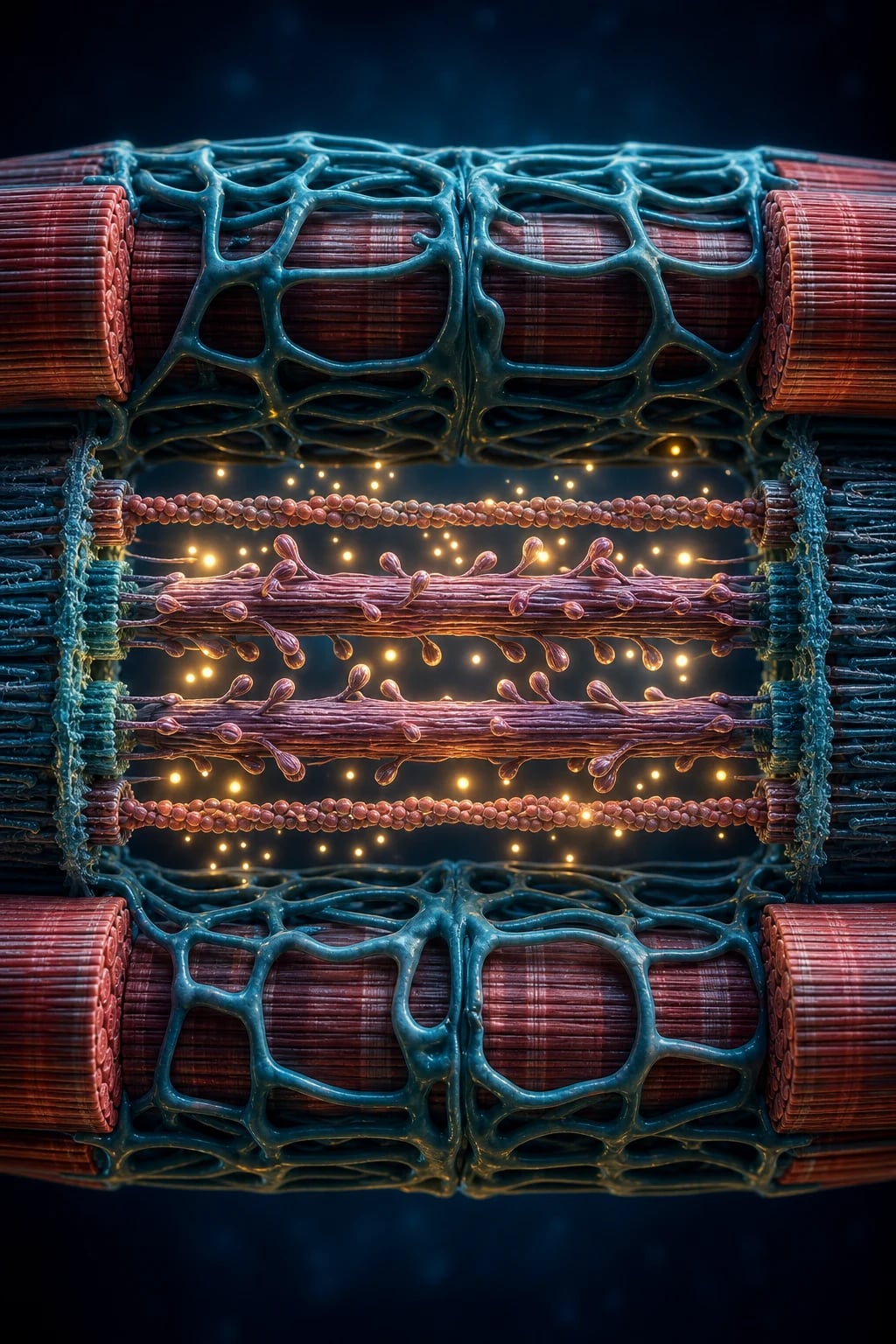
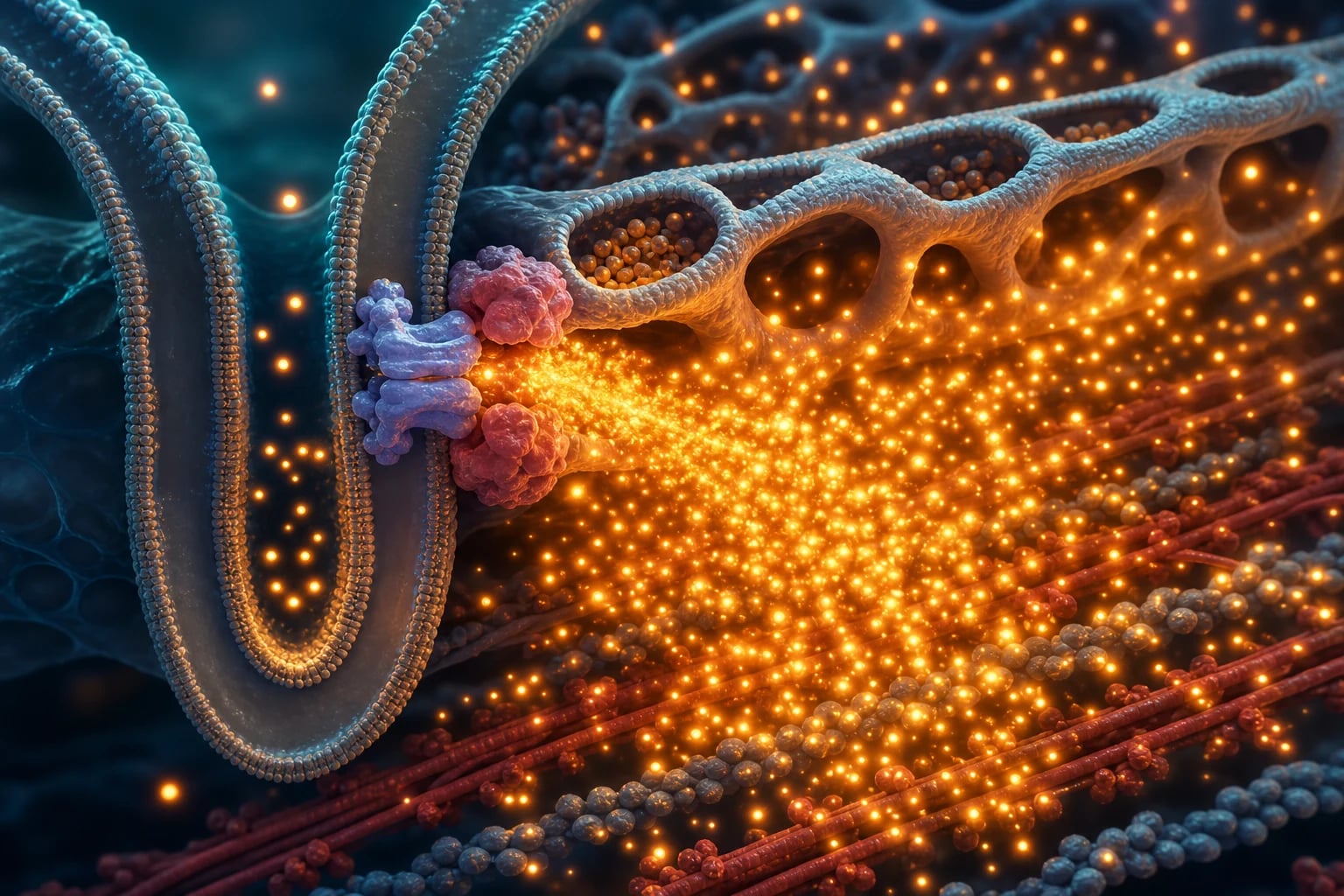
MH is a pharmacogenetic disorder: a mutation in the ryanodine receptor (RYR1 gene, chromosome 19) causes the calcium release channel in skeletal muscle sarcoplasmic reticulum to become HYPERSENSITIVE to volatile anaesthetics and succinylcholine → uncontrolled calcium release → sustained muscle contraction → massive heat production, CO2 production, potassium release, acidosis. MH occurs in 1:5,000 to 1:50,000 anaesthetics. Without dantrolene, mortality is 70-80%; with dantrolene, mortality is <5%.[1][4]
Clinical presentation (during or shortly after anaesthesia):
- Early signs: (a) Masseter muscle spasm (difficulty opening jaw after succinylcholine — CLASSIC early sign — may be the first manifestation). (b) Rising ETCO2 despite adequate ventilation (the SINGLE MOST IMPORTANT early sign — CO2 production from sustained muscle contraction — the capnograph rises steadily despite increased minute ventilation). (c) Tachycardia (from sympathetic response to hypercapnia). (d) Tachypnoea (if spontaneously breathing — "breathing the machine" through the circuit)
- Late signs: (a) Rapid temperature rise (1-2C every 5 min — can exceed 42C). (b) Generalised muscle rigidity. (c) Hyperkalaemia (from muscle cell lysis). (d) Metabolic + respiratory acidosis. (e) Arrhythmia (from hyperkalaemia/acidosis). (f) Rhabdomyolysis (dark urine, rising CK — myoglobinuria → AKI). (g) Disseminated intravascular coagulation (DIC). (h) Cardiac arrest [1]
Malignant hyperthermia management protocol
- RECOGNISE — rising ETCO2 + tachycardia + masseter spasm during anaesthesia = MH until proven otherwise
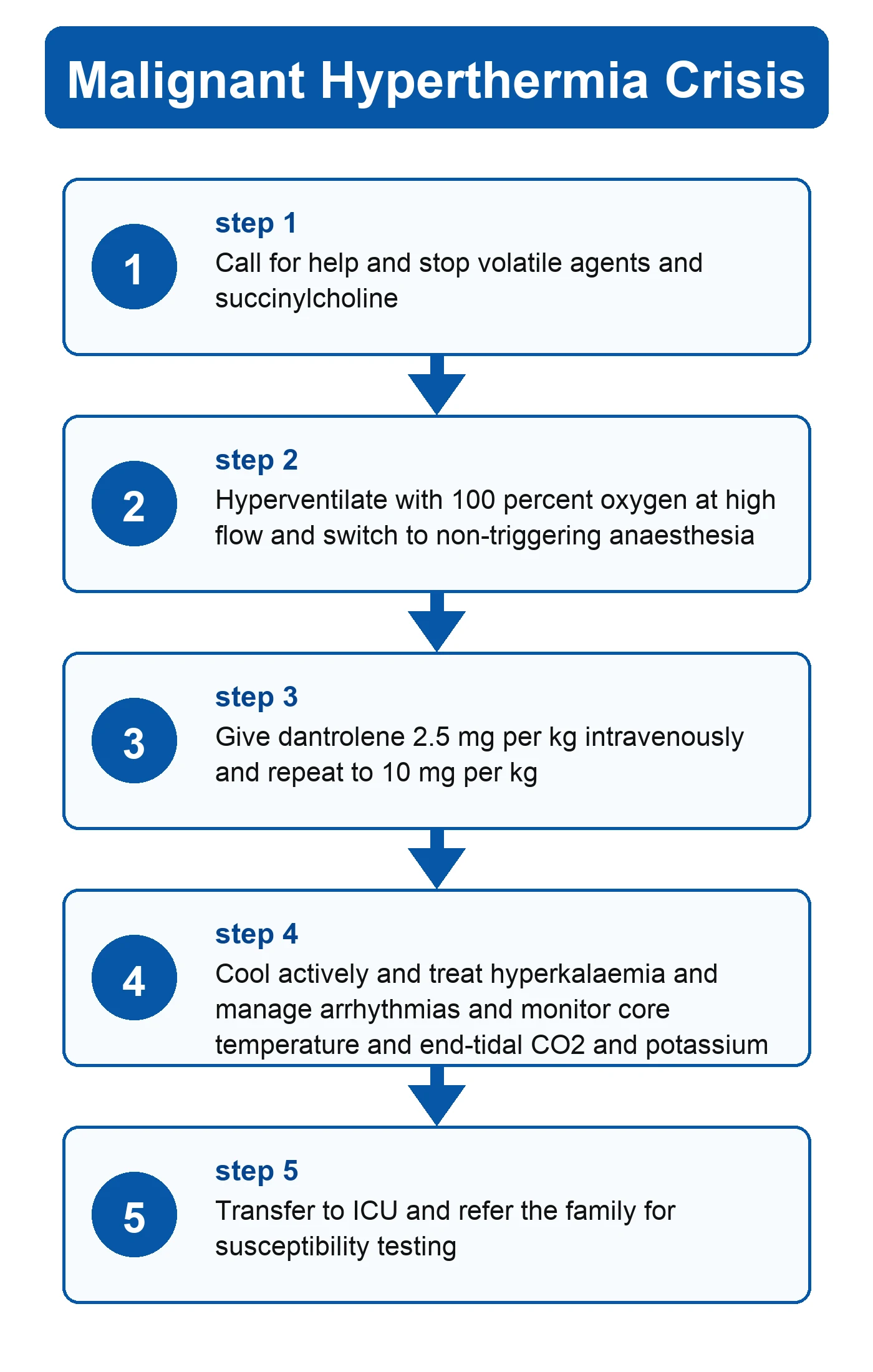
- STOP TRIGGER — IMMEDIATELY: (a) STOP volatile anaesthetic (sevoflurane, isoflurane, desflurane). (b) STOP succinylcholine. (c) Flush anaesthetic circuit with 100% oxygen at high flow (10 L/min). (d) Replace circuit if possible (charcoal filters available — filter placement on inspiratory/expiratory limbs removes residual volatile)
- CALL FOR HELP — anaesthetist, intensivist, pharmacy (dantrolene preparation takes 5-10 minutes for multiple vials)
- DANTROLENE 2.5 mg/kg IV IMMEDIATELY — the life-saving antidote:
- Mechanism: blocks ryanodine receptor → stops calcium release from sarcoplasmic reticulum → muscle relaxation → stops heat/CO2/K+ production
- Dose: 2.5 mg/kg IV (for 70 kg adult: ~175 mg = ~9 vials of 20 mg each). Each vial is reconstituted with 60 mL sterile water (use large-bore IV — it is viscous)
- Repeat every 5 minutes until signs resolve (up to 10 mg/kg total = 40 vials for 70 kg)
- Newer formulation (Ryanodex): 250 mg/vial — reconstitutes in 5 mL (much faster preparation)
- Response: ETCO2 falls, temperature falls, rigidity resolves, tachycardia settles (within 10-30 minutes of first dose)
- HYPervENTILATE WITH 100% OXYGEN at 2-3x normal minute ventilation (wash out CO2 and residual volatile anaesthetic from circuit)
- ACTIVE COOLING: cold IV fluids (4C saline 1-2 L), ice packs (groin, axilla, neck), cooling blanket, gastric/bladder lavage with cold saline. Target temperature 38.5C
- CORRECT METABOLIC DERANGEMENTS: (a) Hyperkalaemia — calcium gluconate 10 mmol IV (stabilise myocardium), insulin/dextrose, bicarbonate. (b) Acidosis — sodium bicarbonate 1-2 mmol/kg if pH <7.1. (c) Arrhythmia — standard ACLS (AVOID calcium channel blockers — dangerous interaction with dantrolene → hyperkalaemia + cardiovascular collapse)
- MONITOR: ABG (acidosis, hypercapnia), U&E (hyperkalaemia), CK (rhabdomyolysis), coagulation (DIC), urine output (myoglobinuria → AKI), temperature, ETCO2
- POST-CRISIS: continue dantrolene 1 mg/kg q4-6h or infusion 0.25 mg/kg/hr for 24-48h (recurrence in 25%). ICU admission. Monitor for rhabdomyolysis (CK, urine), AKI (creatinine, urine output), DIC (coagulation). Refer for genetic testing (RYR1 mutation) + family counselling. MEDIC ALERT bracelet. Avoid all future volatile anaesthetics/succinylcholine (use total intravenous anaesthesia — TIVA)
2. Neuroleptic malignant syndrome (NMS)
NMS is caused by dopamine D2 receptor blockade in the hypothalamus and basal ganglia, typically from antipsychotics (haloperidol, olanzapine, clozapine, risperidone, quetiapine) or antiemetics (metoclopramide, promethazine, prochlorperazine). It is less common than serotonin syndrome (incidence 0.01-0.02% of patients on antipsychotics) but has higher mortality (5-20%).[3]
Clinical presentation (DAYS to WEEKS after starting/increasing antipsychotic):
- Hyperthermia (38-41C — from impaired hypothalamic thermoregulation + muscle thermogenesis)
- Lead-pipe rigidity (uniformly increased tone throughout range of motion — NOT cogwheel — from basal ganglia dopamine blockade)
- Altered mental status (confusion, agitation, mutism, coma — from cortical dopamine blockade)
- Autonomic instability (tachycardia, hypertension or hypotension, diaphoresis, incontinence)
- Bradyreflexia (decreased reflexes — from rigidity masking them)
- Laboratory: elevated CK (from rhabdomyolysis — often >1000 IU/L), leucocytosis, transaminitis, AKI (from rhabdomyolysis), electrolyte derangement [1]
Distinguishing NMS from serotonin syndrome (the critical differential):
| Feature | NMS | Serotonin syndrome |
|---|---|---|
| Onset | Slow (days-weeks) | Rapid (hours) |
| Trigger | Antipsychotic (D2 blocker) | Serotonergic drug (SSRI, MAOI, tramadol) |
| Tone | Lead-pipe rigidity (uniform) | Normal or tremor (NOT rigid) |
| Reflexes | Bradyreflexia (decreased) | HYPERREFLEXIA + CLONUS |
| Skin | Mottled/sweating | DIAPHORETIC |
| Gut | Normal/decreased | Hyperactive (diarrhoea) |
| Antidote | Bromocriptine + dantrolene | Cyproheptadine |
Management:
- STOP the antipsychotic (the trigger)
- BROMOCRIPTINE 2.5 mg PO/NG TDS (dopamine D2 agonist — restores dopaminergic tone — takes 6-48h to work). Titrate to 5 mg TDS then taper over 1-2 weeks
- DANTROLENE 1-2.5 mg/kg IV (if severe rigidity/hyperthermia — same mechanism as MH — reduces muscle calcium release). Use for severe cases only
- ACTIVE COOLING (cold IV fluids, ice, cooling blanket — same as MH)
- BENZODIAZEPINES (diazepam 5-10 mg IV — reduces rigidity + agitation + seizure risk)
- SUPPORTIVE: IV fluids, treat rhabdomyolysis (fluids, alkalinisation of urine), renal replacement therapy for AKI, VTE prophylaxis (immobility from rigidity)
- RESTART antipsychotic at lower dose or switch to different class after recovery (NMS can recur — wait at least 2 weeks) [1]
3. Serotonin syndrome — the clonus diagnosis
Serotonin syndrome is caused by EXCESS serotonergic activity in the central nervous system. It is MORE COMMON than NMS and usually occurs within HOURS of: (a) initiating a serotonergic drug, (b) increasing the dose, (c) ADDING a second serotonergic drug (drug-drug interaction — the #1 cause).[2]
Common serotonergic drug combinations that cause serotonin syndrome:
- SSRI + MAOI (the MOST DANGEROUS combination — MAOIs prevent serotonin breakdown → SSRI adds more → catastrophic serotonin excess). MUST have a 2-week washout between SSRI and MAOI (5 weeks for fluoxetine — long half-life)
- SSRI + tramadol (tramadol has SNRI activity — commonly co-prescribed — high-risk interaction)
- SSRI + linezolid (linezolid is a weak MAOI — common in ICU patients on linezolid for VRE/MRSA)
- SSRI + fentanyl (fentanyl has weak serotonergic activity — especially in high doses)
- SSRI + St John's wort (herbal supplement with serotonergic activity)
- Tramadol + mitragynine (kratom)
- MDMA/ecstasy + any serotonergic drug [1]
Clinical presentation (within HOURS):
- Neuromuscular (the DIAGNOSTIC features): (a) CLONUS — inducible (ankle clonus on dorsiflexion) or spontaneous (lower limb). This is the HALLMARK of serotonin syndrome — NOT seen in NMS or MH. (b) Hyperreflexia (especially lower limbs — reflexes are BRISK). (c) Tremor (fine, rapid, especially in hands). (d) Hypertonia (especially lower limbs — but NOT lead-pipe rigidity like NMS)
- Autonomic: tachycardia, hypertension, mydriasis, diaphoresis, hyperthermia (severe cases), diarrhoea (serotonin stimulates gut motility)
- Mental status: agitation, confusion, restlessness (mild), delirium, coma (severe) [1]
Sternbach's diagnostic criteria (classic — simplified): triad of: (1) serotonergic agent, (2) altered mental status (confusion, agitation), (3) autonomic instability OR neuromuscular hyperactivity (clonus, hyperreflexia, tremor). Must EXCLUDE NMS, infection, and other causes. [1]
Serotonin syndrome management protocol
- RECOGNISE — patient on serotonergic drug + CLONUS + hyperreflexia + agitation = serotonin syndrome
- STOP ALL SEROTONERGIC DRUGS — review the medication list carefully (SSRI, SNRI, MAOI, tramadol, fentanyl, linezolid, triptans, St John's wort, ondansetron)
- BENZODIAZEPINES — first-line symptomatic treatment:
- Diazepam 5-10 mg IV (or lorazepam 1-2 mg IV) for agitation + tremor + muscle hyperactivity
- Repeat as needed (can require large doses — the goal is calm but rousable)
- Benzodiazepines reduce sympathetic outflow + muscle activity → reduces hyperthermia
- CYPROHEPTADINE (specific antidote — 5-HT2A receptor antagonist):
- 12 mg PO/NG loading dose (then 2 mg q2h up to 32 mg/day maintenance)
- Mechanism: blocks serotonin at the 5-HT2A receptor (the receptor most responsible for serotonin syndrome symptoms)
- Limitation: only available as oral/NG formulation (no IV form) — not useful in vomiting or rapid-onset cases
- ACTIVE COOLING — cold IV fluids, ice packs, cooling blanket. Target temperature <38.5C
- AVOID: (a) Antipyretics (INEFFECTIVE — hyperthermia is from muscle/receptor activity, not hypothalamic set-point). (b) Beta-blockers (can worsen hypotension + unopposed alpha → hypertension). (c) Antipsychotics (can worsen — many have serotonergic or antidopaminergic activity)
- SEVERE CASES (hyperthermia >41.5C, refractory rigidity): (a) Intubation + paralysis with NON-DEPOLARISING neuromuscular blocker (vecuronium/rocuronium — NOT succinylcholine — which can worsen hyperkalaemia in rhabdomyolysis). (b) Dantrolene (1-2.5 mg/kg IV — if rigidity is refractory). (c) ECMO for refractory hyperthermia
- MONITOR: temperature, HR, BP, CK (rhabdomyolysis), U&E (AKI), coagulation (DIC). ICU admission for moderate-severe cases
- RESOLUTION — usually within 24-72 hours of stopping serotonergic drugs (serotonin syndrome is self-limiting once the drug is stopped and metabolised)
4. Sympathomimetic toxicity — the agitated hyperthermia
Sympathomimetic toxicity from cocaine, amphetamines, methamphetamine, MDMA (ecstasy), and pseudoephedrine causes direct sympathetic nervous system activation → hyperthermia, tachycardia, hypertension, mydriasis, agitation, and seizures. [1]
MDMA deserves special mention — it can cause BOTH sympathomimetic toxicity AND serotonin syndrome (MDMA is a serotonin releaser). MDMA toxicity also causes: (a) hyponatraemia (SIADH from MDMA-stimulated ADH release → cerebral oedema), (b) hepatic necrosis (metabolite toxicity), (c) rhabdomyolysis (from agitation + hyperthermia), (d) DIC, (e) hyperthermia can exceed 42C → multi-organ failure.[5]
Management:
- BENZODIAZEPINES — first-line (diazepam 5-10 mg IV or lorazepam 1-2 mg IV, repeat as needed): (a) reduce agitation + muscle activity → reduces hyperthermia. (b) Treat seizures. (c) Reduce sympathetic outflow → reduces tachycardia/hypertension. Large doses may be required
- ACTIVE COOLING — cold IV fluids (4C saline 1-2 L), ice packs, cooling blanket. Evaporative cooling (mist + fan). Target temperature <38.5C rapidly
- AVOID: (a) Beta-blockers (labetalol, esmolol) — can cause UNOPPOSED ALPHA stimulation → worsen hypertension + coronary vasospasm. (b) Antipsychotics (haloperidol, droperidol) — can lower seizure threshold + QT prolongation + may worsen hyperthermia. (c) Non-selective beta-blockers specifically
- HYPERTENSION: nicardipine infusion (titratable arterial vasodilator) or phentolamine (alpha-blocker — for cocaine-induced coronary vasospasm)
- SEVERE HYPERTHERMIA (>41.5C): intubate + paralyse (non-depolarising — vecuronium/rocuronium — NOT succinylcholine) to eliminate muscle thermogenesis. Dantrolene 2.5 mg/kg IV (if rigidity). ECMO for refractory
- RHABDOMYOLYSIS: aggressive IV fluids (target urine output 1-2 mL/kg/hr), urine alkalinisation (sodium bicarbonate infusion — controversial), monitor CK, renal function
- HYPONATRAEMIA (MDMA-specific): 3% saline if Na <120 with seizures, otherwise slow correction [1]
5. Anticholinergic syndrome — 'dry as a bone'
Anticholinergic toxicity from antihistamines (diphenhydramine), atropine, scopolamine, tricyclic antidepressants, jimsonweed (Datura stramonium), oxybutynin causes muscarinic acetylcholine receptor blockade → loss of parasympathetic tone. The classic mnemonic: 'dry as a bone, red as a beet, blind as a bat, mad as a hatter, hot as a hare, full as a flask'.[6]
Clinical features:
- Dry (anhidrosis — no sweating — KEY DISTINGUISHER from sympathomimetic which causes diaphoresis)
- Red (flushed skin — from loss of sympathetic cholinergic vasodilator tone)
- Blind (mydriasis + cycloplegia — blurred vision, photophobia)
- Mad (delirium — agitation, hallucinations, confusion — central anticholinergic effect)
- Hot (hyperthermia — mild to moderate — from anhidrosis)
- Full (urinary retention — from bladder detrusor paralysis)
- Other: tachycardia (from vagal blockade), decreased bowel sounds (ileus), dry mucous membranes [1]
Management:
- STOP the anticholinergic drug
- SUPPORTIVE: benzodiazepines for agitation, IV fluids, active cooling (usually mild — anticholinergic hyperthermia is less severe than MH or MDMA)
- PHYSOSTIGMINE (acetylcholinesterase inhibitor — increases acetylcholine at muscarinic receptors — reverses anticholinergic effect):
- Dose: 1-2 mg IV SLOWLY over 5 minutes (rapid injection → bradycardia, hypersalivation, seizures)
- Indication: SEVERE anticholinergic delirium (agitation, hallucinations) with STABLE cardiac rhythm
- Have ATROPINE drawn up at bedside (physostigmine can cause cholinergic crisis → bradycardia, bronchorrhoea, bronchospasm → atropine reverses)
- Contraindications: (a) TCA overdose (physostigmine can cause asystole in TCA — AVSaD — avoid in TCA). (b) Asthma/COPD (bronchospasm). (c) Heart block. (d) GI obstruction
- Onset: minutes. Duration: 30-60 min. May need repeat dose
- AVOID: antipsychotics (haloperidol — has anticholinergic activity → may WORSEN the syndrome) [1]
SAQ — Malignant hyperthermia in the operating theatre
10 minutes · 10 marks
A 25-year-old man undergoing elective orthopaedic surgery develops, 40 minutes after induction with sevoflurane and succinylcholine, a rapidly rising ETCO₂ (from 38 to 78 mmHg) DESPITE increased minute ventilation, masseter spasm, a core temperature climbing 1°C every 5 minutes (now 39.8°C), peaked T waves on the ECG, and a base excess of −8 mmol/L.
SAQ — Differentiating serotonin syndrome from NMS in the ICU
10 minutes · 10 marks
A 60-year-old man with depression on sertraline 200 mg/day is admitted with pneumonia and started on linezolid. Twenty-four hours later he is agitated, diaphoretic, hyperreflexic with sustained ankle clonus and a temperature of 40.2°C. On a different ward a 50-year-old man with schizophrenia on long-term haloperidol depot presents with 5 days of progressive lead-pipe rigidity, mutism, bradyreflexia and a temperature of 40.8°C. The examiners ask you to compare and contrast these two patients.
Clinical pearls
Red flags
Prognosis
Prognosis by hyperthermia syndrome
| Syndrome | Mortality | Key prognostic factor | Prevention |
|---|---|---|---|
| Malignant hyperthermia | <5% (with dantrolene) / 70-80% (without) | Time to dantrolene (every minute counts) | TIVA for known MH-susceptible patients |
| NMS | 5-20% | Early recognition + bromocriptine; CK level; renal failure | Avoid high-potency antipsychotics in dehydrated/catatonic patients |
| Serotonin syndrome (mild-moderate) | <1% | Usually self-limiting once drug stopped | Check for serotonergic drug interactions (linezolid + SSRI) |
| Serotonin syndrome (severe) | 2-12% | Temperature >41.5C = multi-organ failure | 2-week washout between MAOI and SSRI |
| Sympathomimetic (cocaine/amphetamine) | 1-5% | Temperature >41.5C + rhabdomyolysis + DIC | Avoid co-administration with beta-blockers |
| Anticholinergic | <1% (usually self-limiting) | Co-ingestion with TCA (sodium channel blockade) | Avoid physostigmine in TCA overdose |
| MDMA | 5-10% (severe cases) | Temperature >42C, hyponatraemia, hepatic necrosis | Harm reduction (hydration, cooling, rest breaks) |
Key trials and evidence
Dantrolene in MH — the landmark intervention (PMID 26903437)
Context
Dantrolene introduced in 1979 — revolutionised MH treatment
Mechanism
Direct ryanodine receptor antagonist → blocks calcium release from skeletal muscle sarcoplasmic reticulum → stops sustained muscle contraction
Mortality
Before dantrolene (1970s): 70-80%. With dantrolene (current): <5%
Dose
2.5 mg/kg IV immediately, repeat q5 min to max 10 mg/kg. Post-crisis: 1 mg/kg q4-6h or 0.25 mg/kg/hr infusion for 24-48h (recurrence rate 25%)
Key finding
Time to dantrolene is the SINGLE MOST IMPORTANT determinant of survival — every minute of delay = worse outcome
Clinical bottom line
Dantrolene is the most dramatic drug intervention in medicine — reduces MH mortality from 80% to <5%. Every anaesthetising location should have dantrolene immediately available
Boyer 2005 — Serotonin syndrome (PMID 15798188)
Source
NEJM review — the definitive clinical description of serotonin syndrome
Key principle 1
Serotonin syndrome is NOT a diagnosis of exclusion — it has SPECIFIC clinical features: clonus, hyperreflexia, agitation, autonomic instability
Key principle 2
The Hunter Serotonin Toxicity Criteria are superior to Sternbach's — presence of clonus (spontaneous, inducible, or ocular) + serotonergic agent = diagnosis
Key principle 3
Cyproheptadine is the specific antidote (5-HT2A antagonist) but is only available orally
Key principle 4
Benzodiazepines are first-line for symptom control (reduce sympathetic outflow + muscle activity)
Clinical bottom line
The sentinel paper defining serotonin syndrome — clonus is the diagnostic hallmark, cyproheptadine is the antidote, benzodiazepines are first-line
References
- [1]Hopkins PM, et al. Fine particulate matter components and emergency department visits among a privately insured population in Greater Houston Sci Total Environ, 2016.PMID 27235902
- [2]Boyer EW, et al. Scaffold attachment factor B1 functions in development, growth, and reproduction Mol Cell Biol, 2005.PMID 15798188
- [3]Strawn JR, et al. Images in clinical medicine. Patulous eustachian tube N Engl J Med, 2005.PMID 16093458
- [4]Rosenberg H, et al. Confidentiality Protections for Adolescents and Young Adults in the Health Care Billing and Insurance Claims Process J Adolesc Health, 2016.PMID 26903437
- [5]Bouchama A, et al. Algorithms for managing infant constipation, colic, regurgitation and cow's milk allergy in formula-fed infants Acta Paediatr, 2015.PMID 25646670
- [6]Anwar YA, et al. Optimizing Antibiotic Drug Therapy in Pediatrics: Current State and Future Needs J Clin Pharmacol, 2018.PMID 30248202