ICU · Toxicology
Heat stroke and hyperthermia in the ICU
Also known as Heat stroke · Exertional heat stroke · Non-exertional heat stroke · Classic heat stroke · Heat-related illness · Malignant hyperthermia (differential)
Heat stroke is a life-threatening condition defined by core temperature 40C with CNS dysfunction (confusion, seizures, coma). Two types: EXERTIONAL (young, healthy, exercise in heat — e.g., athlete, military) and NON-EXERTIONAL/CLASSIC (elderly, chronic disease, during heatwaves). Pathophysiology: thermoregulatory failure → direct thermal cellular damage (protein denaturation, membrane injury) + systemic inflammatory response (cytokine cascade resembling sepsis) → multi-organ failure (brain, heart, liver, kidney, muscle, coagulation/DIC). Management: RAPID COOLING (target <39C within 30-60 min) — cold water immersion gold standard for exertional, evaporative (mist + fans) for non-exertional, stop aggressive cooling at 38.5-39C. Antipyretics INEFFECTIVE (not prostaglandin-mediated). Dantrolene INEFFECTIVE (not malignant hyperthermia). Mortality 10-50%.
On this page & tools
Your progress
Saved locally on this device.
Target exams
Red flags
SAQ — Classic heat stroke during a heatwave
10 minutes · 10 marks
A 78-year-old woman with chronic schizophrenia on clozapine and benztropine is brought from an upstairs, non-air-conditioned flat during a heatwave (ambient 43°C, humidity 80%). She is confused and diaphoretic-absent (anhidrotic), core temperature 41.6°C (rectal), HR 132, BP 86/50, RR 28, SpO₂ 96%, GCS 13, with a lactate of 7 mmol/L, INR 2.1, platelets 90 ×10⁹/L, CK 3,200 U/L and creatinine 190 μmol/L.
SAQ — Exertional heat stroke with rhabdomyolysis
10 minutes · 10 marks
A 22-year-old army recruit collapses at the end of a 12 km route march in 38°C/70% humidity. He is sweaty and agitated, core temperature 42.4°C, HR 148, BP 100/60, GCS 12, with CK 38,000 U/L, K⁺ 6.8 mmol/L, creatinine 210 μmol/L, urine dark tea-coloured and dipstick-positive for blood with no red cells on microscopy, and an ECG showing peaked T waves.
Clinical pearls
Red flags
Pathophysiology — thermoregulatory failure and the heat-as-toxin cascade
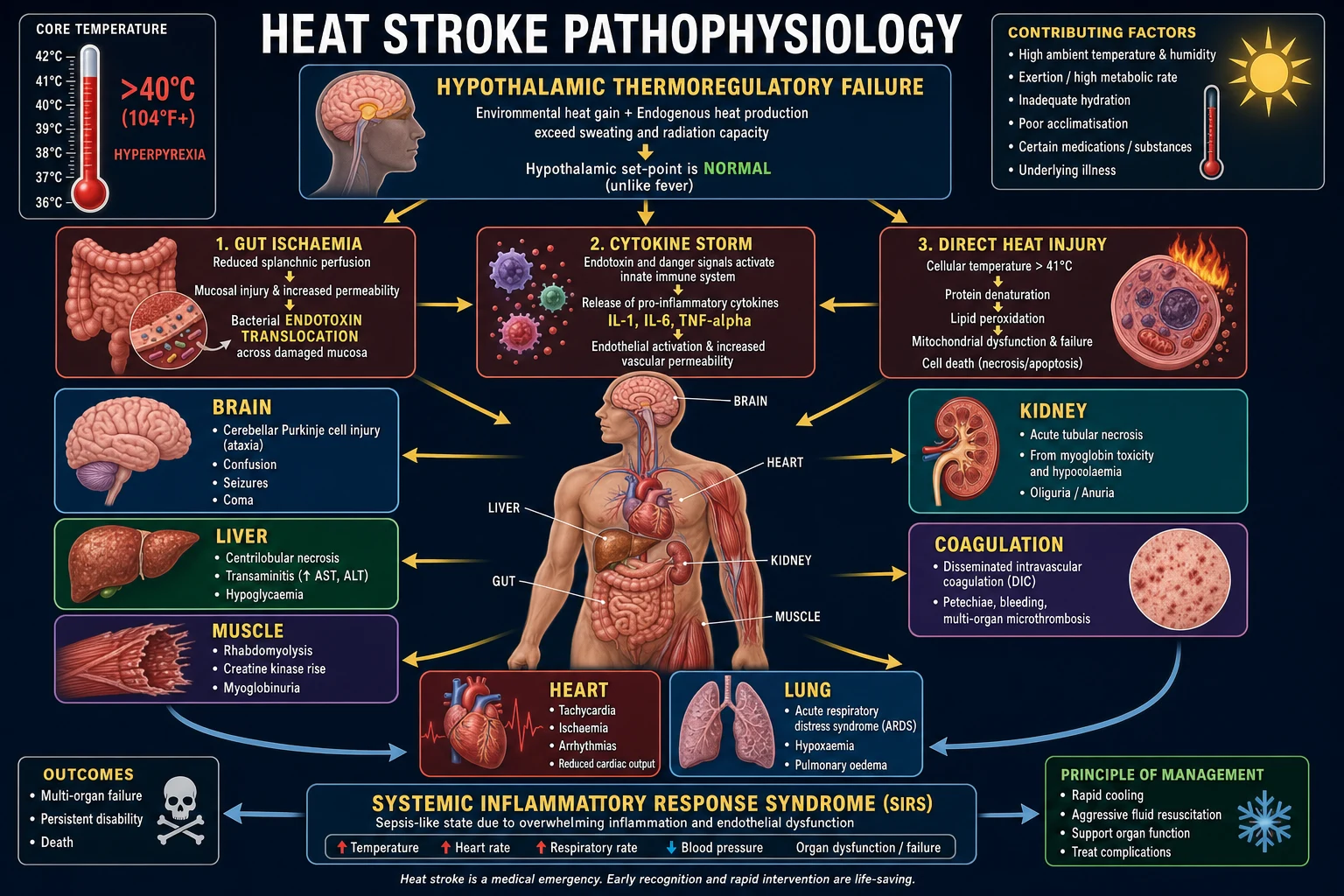
Normal thermoregulation is governed by the preoptic area of the anterior hypothalamus (POAH), which integrates central and peripheral thermoreceptor input and balances heat production (basal metabolism, shivering, muscular work) against heat loss (radiation, convection, conduction, evaporation). At an ambient temperature below ~35C, the body loses heat mainly by radiation and convection; once ambient temperature exceeds skin temperature (~35C), these channels reverse and the body gains heat, leaving evaporation of sweat as the sole heat-loss mechanism. High humidity (>75%) abolishes evaporative loss — which is why hot, humid environments (wet-bulb temperature ~35C) are the lethal threshold for sustained human survival.[1][8]
Heat stroke occurs when the thermoregulatory set-point is overwhelmed or fails, so core temperature climbs above ~40C. Two parallel processes then drive injury:[1][8]
- Direct thermal cytotoxicity — time- and temperature-dependent. Above ~41-42C, enzyme kinetics derange, structural and enzyme proteins denature, cell-membrane lipids peroxidise, and the mitochondrial and cytoskeletal architecture collapses. The longer and higher the temperature, the more irreversible the injury — the rationale for "every minute counts."
- A SIRS-like inflammatory cascade — heat-damaged gut and tissues release cytokines (IL-1, IL-6, TNF-α), activate complement and coagulation, and produce widespread endothelial activation. Splanchnic ischaemia allows bacterial/endotoxin translocation, which amplifies the cytokine storm in a positive-feedback loop ("malignant" self-perpetuating hyperthermia). The resulting distributive shock, capillary leak and coagulopathy are clinically indistinguishable from septic shock.[1][8]
The end result is multi-organ dysfunction syndrome (MODS): brain (Purkinje cell loss → cerebellar ataxia; cerebral oedema; coma), heart (myocardial stunning, arrhythmia, distributive shock), liver (centrilobular zone-3 necrosis, transaminitis), kidney (acute tubular necrosis from myoglobin + hypoperfusion + DIC), skeletal muscle (rhabdomyolysis), coagulation (DIC), and lung (ARDS).[1][4]
Pathophysiology cascade — from heat load to multi-organ failure
- Excessive heat load — exertional heat production (muscle generates ~15-20× resting heat) OR impaired heat dissipation (dehydration, anticholinergic drugs, anhidrosis, high humidity, occlusive clothing).[1][8]
- Thermoregulatory saturation — POAH can no longer increase cardiac output, skin blood flow or sweating enough to dump heat; core temperature climbs above 40C.[8]
- Direct thermal injury — protein denaturation and membrane lipid peroxidation at >41C cause cell death (time/temperature dependent). Heat-shock protein response is overwhelmed.[1][8]
- Gut barrier breakdown — splanchnic vasoconstriction/ischaemia → mucosal integrity lost → endotoxin and bacterial translocation into portal circulation.[1][8]
- Systemic inflammatory response — cytokine release (IL-1, IL-6, TNF-α), complement and coagulation activation; clinically mimics septic shock.[1]
- Endothelial activation & capillary leak — nitric-oxide-mediated vasodilation, third-space losses, hypovolaemia, distributive shock.[8][10]
- DIC — endothelial damage releases tissue factor → consumption coagulopathy with microvascular thrombosis AND bleeding.[1]
- Multi-organ dysfunction — CNS (cerebellar Purkinje loss, oedema, coma), liver (centrilobular necrosis), kidney (ATN), muscle (rhabdomyolysis → myoglobinuric AKI), lung (ARDS), heart (stunning, arrhythmia).[1][4]
Spectrum of heat illness — heat exhaustion vs heat stroke
Heat illness exists on a continuum. Heat exhaustion (core usually 38-40C, intact mental state, malaise, headache, nausea, tachycardia, profuse sweating, possible orthostatic syncope) is the warning state; the defining threshold to heat stroke is the appearance of CNS dysfunction with core temperature >40C. The single most important discriminator at the bedside is the mental state — a hot patient who is confused, fitting or comatose has heat stroke and needs rapid cooling, not just oral rehydration.[1][3][6]
Heat exhaustion vs heat stroke — the exam favourite
| Feature | Heat exhaustion | Heat stroke |
|---|---|---|
| Core temperature | 38-40C | >40C |
| Mental state | Normal (may be irritable) | Abnormal — confusion, agitation, seizure, coma (hallmark) |
| Sweating | Profuse | May be present (exertional) or absent (classic) |
| Skin | Cool, clammy, pale | Hot; dry OR sweaty |
| Haemodynamics | Tachycardia, possible orthostatic hypotension | Tachycardia, hypotension, distributive shock |
| Organ injury | None / minimal | CNS, liver, kidney, muscle, DIC, ARDS |
| Management | Rest, shade, oral/IV rehydration, monitor | RAPID COOLING + ICU admission |
| Disposition | Usually discharges after observation | ICU admission; mortality 10-50% |
The two subtypes — exertional vs classic (non-exertional)
Although the endpoint (core >40C + CNS dysfunction + MODS) is identical, the patient, mechanism and prognosis differ. This distinction is a perennial fellowship exam topic.[1][3]
Classic (non-exertional) heat stroke
Occurs predominantly in the elderly, the chronically ill and those on psychotropic/anticholinergic drugs during heatwaves — often socially isolated, without air-conditioning, in enclosed upstairs rooms or locked cars. The mechanism is impaired heat dissipation: thermoregulation, sweating and cardiovascular reserve all fail. Onset is insidious (days), skin is often dry (anhidrosis), and epidemic outbreaks occur (the 2003 European heatwave caused an estimated >70,000 excess deaths; 1995 Chicago; 2022 Europe). Mortality is high (10-50%) because of comorbidity and delayed presentation.[1][7]
Exertional heat stroke (EHS)
Occurs in young, fit individuals — athletes, military recruits, miners, firefighters, labourers — performing intense exertion in hot/humid conditions. Muscle can generate 15-20× resting heat; when production overwhelms dissipation, core temperature rises rapidly. Onset is sudden (hours), sweating is usually present (skin may be wet), and rhabdomyolysis, DIC, AKI and lactic acidosis are more severe. With immediate cold-water immersion, mortality is <5%.[1][6]
Exertional vs classic (non-exertional) heat stroke
| Feature | Classic (non-exertional) | Exertional (EHS) |
|---|---|---|
| Patient | Elderly, chronic disease, psychiatric meds | Young, fit (athlete, military, miner) |
| Context | Heatwave, no air-conditioning, poor ventilation | Intense exertion in hot/humid |
| Epidemiology | EPIDEMIC (mass casualties in heatwaves) | Sporadic (individual) |
| Onset | Insidious (days) | Sudden (hours), during/after exertion |
| Mechanism | Impaired DISSIPATION (thermoregulatory failure) | Heat PRODUCTION >> dissipation |
| Sweating | Often ABSENT (anhidrosis — dry skin) | Usually PRESENT (profuse — wet skin) |
| Temperature | 40-41C | Often very high (>42C) |
| Rhabdomyolysis | Mild-moderate | Common + SEVERE (CK >10,000) |
| DIC | Variable | Common, early |
| AKI | Common (dehydration + comorbidity) | Common (rhabdo + dehydration) |
| Lactic acidosis | Variable | Severe (exertion + shock) |
| Hypoglycaemia | Less common | Common (glycogen depletion) |
| Drugs implicated | Anticholinergics, diuretics, beta-blockers, antipsychotics | Ergogenic aids, stimulants (ephedra, MDMA) |
| Best cooling method | Evaporative (mist + fan) ± ice packs | COLD-WATER IMMERSION (on-site) |
| Mortality (treated) | 10-50% (worse with age/comorbidity) | <5% (with rapid cooling) |
Differential diagnosis of hyperthermia — "what else drives a high temperature?"
Heat stroke is a diagnosis of exclusion for the cause of hyperthermia in the right environmental context. The fellowship exam frequently tests the differentiation of the hyperthermia syndromes — all share high temperature + altered mental state, but the triggers, exam features and specific treatments differ.[1][5]
The hyperthermia syndromes — distinguishing heat stroke from its mimics
| Syndrome | Trigger | Hallmark features | Specific treatment |
|---|---|---|---|
| Heat stroke | Heat exposure / exertion | Hot environment, anhidrosis OR sweating, MODS, normal tone | Rapid external cooling; antipyretics & dantrolene useless |
| Malignant hyperthermia (MH) | Volatile anaesthetics / suxamethonium | Hypercarbia, rigidity (masseter, generalized), rapid CO2 rise, post-op | Dantrolene + stop trigger; hyperventilate |
| Neuroleptic malignant syndrome (NMS) | Antipsychotics (days-weeks) | Lead-pipe rigidity, bradyreflexia, slow onset, elevated CK | Stop drug; dantrolene/bromocriptine; cooling supportive |
| Serotonin syndrome | Serotonergic drugs (SSRIs, MAOIs, tramadol, linezolid) | Clonus (esp. lower limbs/inducible), hyperreflexia, mydriasis, agitation, diarrhoea | Cyproheptadine; benzodiazepines; cooling supportive |
| Anticholinergic toxicity | Antihistamines, antispasmodics, plants | "Hot as a hare, dry as a bone, red as a beet, mad as a hatter"; mydriasis, urinary retention | Physostigmine; benzodiazepines |
| Thyrotoxic crisis | Thyroid storm; infection trigger | Tachyarrhythmia (AF), high T4/T3, suppressed TSH, goitre/exophthalmos | Beta-blocker, PTU/methimazole, iodine, steroids |
| Sepsis | Infection | Focus on exam/investigation; warm shock; cultures positive | Antibiotics, source control, supportive |
| Sympathomimetic / stimulant toxicity | Cocaine, amphetamines, MDMA | Agitation, tachycardia, hypertension, mydriasis, sweating | Benzodiazepines; active cooling |
Key exam point: clonus + hyperreflexia points to serotonin syndrome; rigidity points to MH or NMS; dry skin + mydriasis points to anticholinergic toxicity; the right environmental exposure + otherwise unexplained hyperthermia points to heat stroke.[1][5]
Management — the rapid-cooling principle
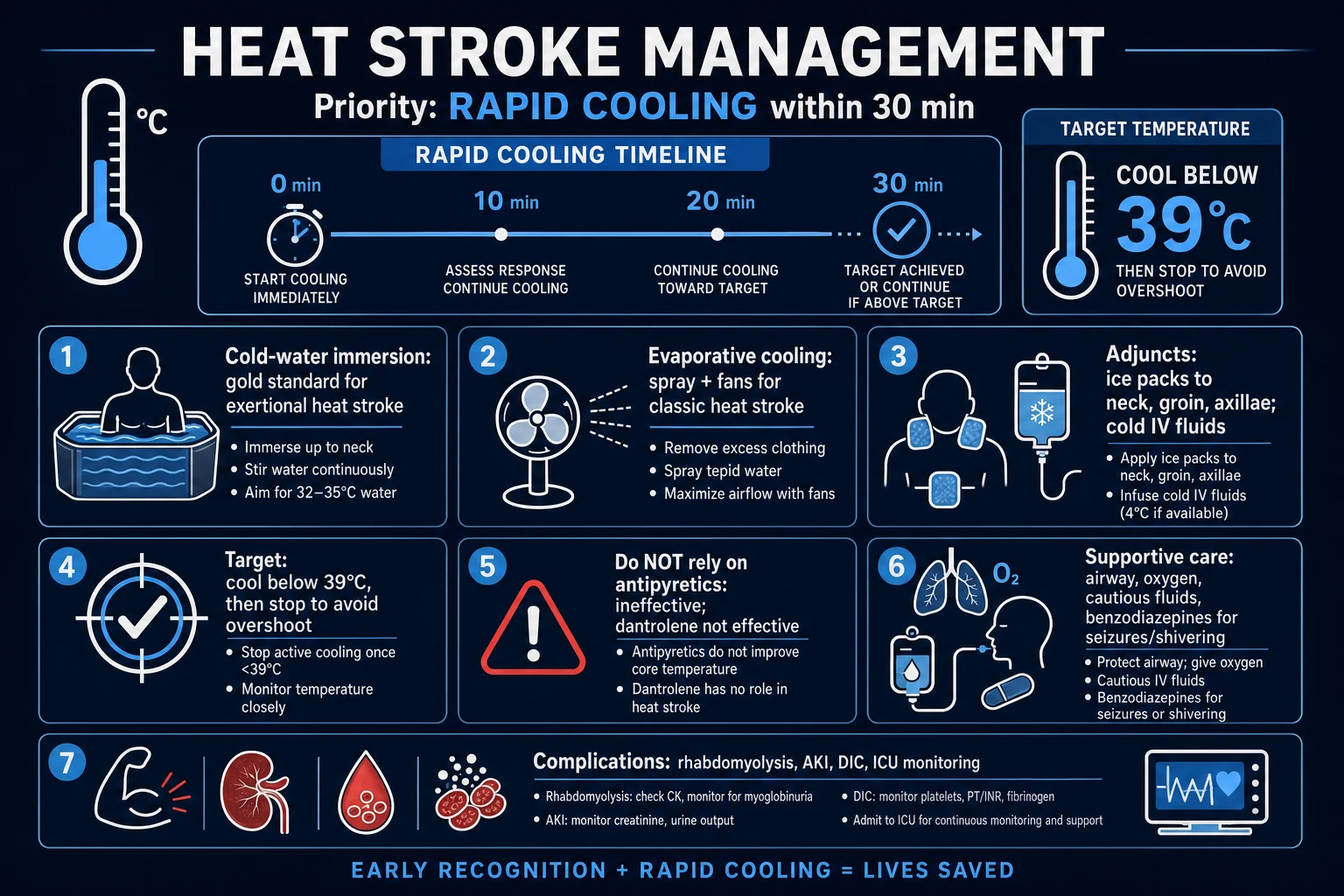
Cooling is the only intervention proven to reduce mortality, and its benefit is time-critical. The goal is to reduce core temperature to <39C as rapidly as possible (ideally within 30 minutes), then stop active cooling to avoid overshoot hypothermia. The duration of hyperthermia correlates directly with mortality and with the risk of permanent cerebellar (Purkinje cell) injury — so cooling must begin at the point of collapse, not be delayed for transport, imaging or laboratory results.[1][2][11]
Cooling methods compared
Cooling methods — rate, indication, practical notes
| Method | Cooling rate | Best for | Practical notes |
|---|---|---|---|
| Cold-water immersion (CWI), 2-15C | FASTEST — 0.15-0.20C/min | EXERTIONAL (gold standard) | On-site tub/ice bath; reduces EHS mortality to <5%; stop at 38.5-39C |
| Evaporative (warm mist + fan) | ~0.10C/min | CLASSIC / hospital ICU | Most practical in ICU; use lukewarm (15-25C) mist (not ice water — avoids vasoconstriction) + continuous fan; fully expose patient |
| Ice packs (groin/axilla/neck) + massage | ~0.05C/min alone | Adjunct or if no other method | Slow alone; rotate sites; better with active massage to maintain skin blood flow |
| IV cold crystalloid (4C), 30 mL/kg | Adjunct ~0.3-0.5C total | adjunct to external cooling | Speeds cooling + treats hypovolaemia; NOT sole method; large-bore IV, bolus |
| Cooling blankets / gel pads (Arctic Sun) | ~0.05-0.10C/min | ICU non-exertional | Invasive surface devices; combine with ice packs/evaporative |
| Intravascular cooling catheter | ~0.10-0.15C/min | ICU (if available) | IVC filter-type; precise temperature control; costly |
| Body cavity lavage (gastric, bladder, peritoneal, rectal) | Adjunct | Refractory / severe | Iced saline lavage; risk of fluid overload; not first-line |
| Cardiopulmonary bypass / ECMO | Very fast | Refractory w/ cardiac failure | Rescue therapy only; resource-intensive |
Why cold water for exertional but lukewarm mist for non-exertional? Cold-water immersion works fastest because exertional heat stroke patients retain a functioning cutaneous circulation and a young cardiovascular system that tolerates the cold-induced stress. In classic heat stroke of the elderly, ice water can cause intense peripheral vasoconstriction (counterproductive) and provoke arrhythmia — hence evaporative cooling with lukewarm mist and continuous airflow is preferred, exploiting evaporation rather than conduction.[1][10]
Rapid cooling protocol — the 'cool first, move second' principle
- Recognise & remove — recognise core >40C + CNS dysfunction; remove from heat source; fully expose patient (remove clothing/equipment).[6][11]
- Start cooling IMMEDIATELY at point of collapse — do NOT delay for transport, ECG, imaging or bloods. Cooling is the treatment.[1][6]
- Choose method — EHS: cold-water immersion (tub/tank of ice water) preferred. Classic/hospital: evaporative (lukewarm mist + fan) ± ice packs + 4C IV crystalloid 30 mL/kg.[1][11]
- Continuous core temperature monitoring — rectal, oesophageal or bladder probe (oral/tympanic/axillary are unreliable in heat stroke).[2]
- Suppress shivering — shivering generates heat and defeats cooling. Use benzodiazepines (midazolam/diazepam), counter-warm extremities, skin counter-warming; paralyse if intubated and severe.[2][11]
- Cool to 38.5-39C then STOP active cooling — prevents overshoot hypothermia (which worsens coagulopathy and outcomes).[1][2]
- Support airway, breathing, circulation — intubate if GCS <8/uncontrolled seizures; fluid resuscitate with balanced crystalloid; vasopressor for refractory shock (use lowest dose — vasoconstriction slows cooling).[4][10]
- Serial bloods — glucose (treat hypoglycaemia), K+ (hyperkalaemia from rhabdo), CK, LFTs, coagulation (PT/aPTT/fibrinogen/D-dimer), FBC, lactate, ABG.[1][4]
Worked example — cold-water immersion timing
A collapsed military recruit (core 42.0C) is placed in ice-water immersion, which cools at ~0.15C/min. To reach the 39C target: [1]
ΔT = 42.0 − 39.0 = 3.0 °C ⇒ time = 3.0 / 0.15 ≈ 20 minutes [1]
To reach 38.5C (the stop threshold): ΔT = 3.5C → ~23 minutes. This is the basis of the "cool first, transport second" rule — most EHS deaths are preventable with ~20 min of on-site immersion before any move to hospital.[6][11]
Drugs that do NOT work in heat stroke
- Antipyretics (paracetamol/acetaminophen, NSAIDs) — INEFFECTIVE. Heat stroke is NOT prostaglandin-mediated; the hypothalamic set-point is normal. Paracetamol may additionally worsen hepatic injury (already heat-damaged), and NSAIDs worsen AKI and coagulopathy. Do not give.[1][4]
- Dantrolene — INEFFECTIVE. Heat stroke is NOT malignant hyperthermia; there is no pathologic ryanodine-receptor-mediated intracellular calcium dysregulation. The Bouchama 1991 RCT showed no benefit, and systematic reviews confirm this. Do not give.[9][1]
Bouchama et al, 1991 — Dantrolene in heatstroke (RCT)
Critical Care Medicine
PMID 1989755
Randomised, double-blind, placebo-controlled trial
Population: 32 patients with heatstroke (Saudi Arabia)
Key finding
No difference in cooling rate (0.16 vs 0.14C/min) or mortality between dantrolene and placebo.
ICU management — beyond the first hour
Once the patient reaches the ICU (or if heat stroke is diagnosed in ICU), management combines ongoing temperature control with multi-organ support, mirroring the supportive care of septic shock. There is no antidote — the heat has been removed; the task is to support the organs until they recover.[1][4]
ICU management of heat stroke — organ-by-organ
- Temperature control — maintain 36-38.5C with cooling blankets/evaporative as needed; watch for rebound hyperthermia and for overshoot hypothermia (worsens coagulopathy/outcome).[4]
- Airway/breathing — intubate for GCS <8, uncontrolled seizures, severe shock or ARDS; lung-protective ventilation (Vt 6 mL/kg PBW, plateau <30) if ARDS.[4]
- Circulation — balanced crystalloid for hypovolaemia/distributive shock (capillary leak + dehydration); noradrenaline for refractory hypotension at LOWEST effective dose (vasoconstriction impedes cooling — consider adrenaline or vasopressin); correct hypoglycaemia and electrolytes.[4][10]
- Rhabdomyolysis & AKI — aggressive isotonic fluid to target urine output 200-300 mL/h (or 1-2 mL/kg/h); monitor CK, K+, Ca2+, phosphate; renal replacement therapy (CRRT/SLED) for refractory hyperkalaemia, acidosis, fluid overload or oliguric AKI.[1][4]
- Coagulopathy / DIC — monitor PT/aPTT/fibrinogen/D-dimer/platelets q6h for first 24-48h (DIC may manifest 1-3 days after presentation); transfuse FFP, cryoprecipitate (fibrinogen <1.5-2.0 g/L) and platelets for active bleeding / pre-procedure; avoid anticoagulation in pure consumption phase.[1][4]
- Hepatic support — supportive; monitor LFTs and glucose (hepatic glycogen depletion → hypoglycaemia); fulminant hepatic failure is rare but may need transplant referral.[1]
- Neurology — treat seizures with benzodiazepines (then levetiracetam); continuous EEG if poor recovery; counsel on possible permanent cerebellar ataxia (Purkinje cell loss) and cognitive impairment.[1][7]
- Glucose & electrolytes — treat hypoglycaemia (common, especially exertional); manage hyperkalaemia (rhabdo), hypocalcaemia (do NOT treat unless symptomatic — Ca deposits in damaged muscle, then rebounds), hyperphosphataemia.[1][4]
- Avoid harmful drugs — NO antipyretics (useless, hepatotoxic), NO dantrolene (useless), NO NSAIDs (worsen AKI/coagulopathy); minimise vasoconstrictors.[1][4][9]
- Secondary prevention & disposition — identify drug/exertion triggers; gradual return to activity after recovery (EHS return-to-play protocol over weeks); address social factors in classic heat stroke.[6][12]
Complications — the multi-organ failure landscape
The complication profile of heat stroke mirrors severe sepsis, because the underlying pathophysiology (SIRS + endothelial activation + coagulation) is shared. Severity and timing differ between exertional and classic types.[1][4][7]
Heat stroke complications — organ, mechanism, monitoring, management
| Organ system | Complication | Mechanism | Monitor | Management |
|---|---|---|---|---|
| CNS | Encephalopathy, seizures, coma; cerebellar ataxia (Purkinje loss) | Direct thermal injury, oedema, ischaemia | GCS, cerebellar signs, EEG | Supportive; benzodiazepines for seizures; counsel re permanent ataxia |
| Cardiovascular | Distributive shock, myocardial stunning, arrhythmia | NO-mediated vasodilation, capillary leak, direct myocardial injury | ECG, troponin, lactate, echo | Fluids, vasopressors (lowest dose), antiarrhythmics |
| Liver | Acute liver injury (AST/ALT >1000), centrilobular necrosis; rarely fulminant failure | Direct thermal hepatocyte injury, ischaemia | LFTs, glucose, coagulation | Supportive; transplant if fulminant |
| Renal | Acute kidney injury (ATN) | Myoglobin (pigment nephropathy), hypoperfusion, DIC microthrombi | U&Es, CK, urine output, myoglobin | Fluids (target UO 200-300 mL/h); CRRT if refractory |
| Skeletal muscle | Rhabdomyolysis | Thermal + exertional muscle injury | CK, K+, Ca2+, PO4, urine myoglobin | Aggressive fluids; treat hyperkalaemia; CRRT |
| Coagulation | DIC (consumption + bleeding + thrombosis) | Endothelial tissue-factor release, consumption | PT/aPTT, fibrinogen, D-dimer, platelets q6h | FFP/cryo/platelets for bleeding; factor concentrates |
| Pulmonary | ARDS, aspiration pneumonitis | Direct thermal/aspiration injury, transfusion (if massive) | ABG, CXR, oxygenation | Lung-protective ventilation, proning, O₂ |
| Metabolic | Hypoglycaemia, hyperkalaemia, hypocalcaemia, acidosis | Glycogen depletion, rhabdo, lactic acidosis | Glucose, K+, Ca2+, lactate, ABG | Replace glucose; treat K+; do NOT treat asymptomatic hypocalcaemia |
| Gut | Ischaemia, bleeding, translocation | Splanchnic hypoperfusion | Lactate, haemoglobin | Supportive; early enteral nutrition when stable |
Rhabdomyolysis and the myoglobinuric AKI
Rhabdomyolysis (especially in exertional heat stroke) is both a marker of severity and a direct cause of AKI. Damaged muscle releases myoglobin, creatine kinase, potassium and phosphate; myoglobin is filtered, precipitates in the tubules with Tamm-Horsfall protein (worsened by aciduria and hypovolaemia), and generates free radicals that cause acute tubular necrosis. The classic laboratory clue is a urine dipstick positive for "blood" with no red cells on microscopy (the dipstick reacts to myoglobin). CK is typically >5,000 U/L and may exceed 100,000 U/L in severe exertional cases. Early, aggressive isotonic fluid is the cornerstone of prevention.[1][4]
Rhabdomyolysis management in heat stroke
- Recognise — CK >5,000 U/L, dark "tea-coloured" urine, urine dipstick blood-positive with no RBCs, rising K+, falling Ca2+, high phosphate.[4]
- Aggressive isotonic fluid — target urine output 200-300 mL/h (1-2 mL/kg/h); balanced crystalloid; titrate to haemodynamics and UO; avoid chloride-rich fluids.[4]
- Electrolytes — treat hyperkalaemia (insulin/dextrose, calcium for ECG changes); do NOT treat asymptomatic early hypocalcaemia (Ca rebounds as muscle recovers → hypercalcaemia).[4]
- Alkalinisation / mannitol — historically advocated; evidence weak; mannitol only if not oliguric/anuric; sodium bicarbonate only if severe acidosis. Not routinely recommended.[1]
- Renal replacement therapy — CRRT/SLED for refractory hyperkalaemia, severe acidosis, fluid overload, or oliguric AKI. Myoglobin (17 kDa) is removed by high-flux dialysis/CRRT.[4]
- Monitor — serial CK (peaks at 24-72h), K+, renal function, urine output, fluid balance; compartment pressure if severe limb pain (compartment syndrome).[1]
Evidence and prognosis
Mortality in heat stroke correlates with duration of hyperthermia, maximum temperature, time to cooling, and the severity of organ failure. In the landmark Lyon series of the 2003 French heatwave, hospital mortality was ~58% at 1 year and many survivors had persistent neurological and cognitive deficits — demonstrating that even survivors carry a heavy burden of permanent injury, particularly cerebellar ataxia and cognitive impairment.[7]
Argaud et al, 2007 — Lyon 2003 heatwave outcomes
Archives of Internal Medicine
PMID 17698677
Retrospective cohort
Population: 83 patients with classic heat stroke admitted during the 2003 Lyon heatwave
Key finding
In-hospital mortality 58%; 1-year mortality 71%. Independent predictors of death: ICU admission with coma, inhospital cardiac arrest, and the use of vasoconstrictors. Many survivors had persistent neurological/cognitive sequelae.
Return to play / duty (EHS). After exertional heat stroke, a structured return-to-physical-activity protocol over weeks is recommended (asymptomatic, normal labs, gradual re-acclimatisation, supervised exercise) — premature return risks recurrent heat illness and there is an identifiable subset with heat intolerance (transient or persistent) after EHS.[6][12]
Prevention
Prevention is the single most effective intervention at a population level, particularly for classic heat stroke during heatwaves.[1][12]
- Acclimatisation — 7-14 days of graded heat exposure induces plasma-volume expansion, earlier onset and higher sweat rate, and lower exercise heart rate; the most powerful individual protection for exertional heat illness.[6][12]
- Hydration — maintain euvoalemia; do not rely on thirst; monitor urine colour/volume. Avoid over-hydration (exercise-associated hyponatraemia).[6]
- Modify activity — schedule strenuous exercise for cooler hours; cancel/alter activity in extreme heat/humidity; enforce work:rest cycles; wet-bulb globe temperature (WBGT) thresholds.[6][12]
- Environment — air-conditioning (the strongest protective factor in classic heat stroke), shade, fans (effective only below ~35C — above which they add heat), cooling vests, cold showers.[1]
- Public health — heatwave early-warning systems; check on elderly/isolated; review heat-aggravating medications (anticholinergics, diuretics, antipsychotics); cool public refuges.[1][7]
Additional clinical pearls
Additional red flags
References
- [1]Bouchama A, Knochel JP. Heat stroke N Engl J Med, 2002.PMID 12075060
- [2]Lipman GS, Eifling KP, Ellis MA, et al. Wilderness Medical Society practice guidelines for the prevention and treatment of heat-related illness: 2014 update Wilderness Environ Med, 2014.PMID 25498263
- [3]Epstein Y, Yanovich R. Heatstroke N Engl J Med, 2019.PMID 31216400
- [4]Barletta JF, Palmieri TL, Toomey SA, et al. Management of Heat-Related Illness and Injury in the ICU: A Concise Definitive Review Crit Care Med, 2024.PMID 38240487
- [5]O'Connor FG, et al. Heat-Related Illnesses Ann Intern Med, 2025.PMID 40569698
- [6]Casa DJ, DeMartini JK, Bergeron MF, et al. National Athletic Trainers' Association Position Statement: Exertional Heat Illnesses J Athl Train, 2015.PMID 26381473
- [7]Argaud L, Ferry T, Le QH, et al. Short- and long-term outcomes of heatstroke following the 2003 heat wave in Lyon, France Arch Intern Med, 2007.PMID 17698677
- [8]Leon LR, Bouchama A. Heat stroke Compr Physiol, 2015.PMID 25880507
- [9]Bouchama A, Cafege A, Devol EB, et al. Ineffectiveness of dantrolene sodium in the treatment of heatstroke Crit Care Med, 1991.PMID 1989755
- [10]Bouchama A, Dehbi M, Chaves-Carballo E, et al. Cooling and hemodynamic management in heatstroke: practical recommendations Crit Care, 2007.PMID 17498312
- [11]Bennett BL, Hew-Butler T, Rosner MH, et al. Wilderness Medical Society Clinical Practice Guidelines for the Management of Exercise-Associated Hyponatremia: 2019 Update Wilderness Environ Med, 2020.PMID 32044213
- [12]Eifling KP, Gaudio FG, Dumke C, et al. Wilderness Medical Society Clinical Practice Guidelines for the Prevention and Treatment of Heat Illness: 2024 Update Wilderness Environ Med, 2024.PMID 38425235