ICU · Toxicology
Serotonin syndrome and neuroleptic malignant syndrome
Also known as Serotonin syndrome (SS) · Neuroleptic malignant syndrome (NMS) · Serotonin toxicity · Cyproheptadine · Dantrolene · Bromocriptine · Malignant hyperthermia (MH) · Hunter Serotonin Toxicity Criteria · Sternbach criteria · Drug-induced hyperthermia · Ryanodine receptor (RYR1)
Serotonin syndrome (SS) = excess serotonergic activity from drug combinations (SSRIs + MAOIs, tramadol, linezolid, fentanyl, St John's wort). Triad: mental status change + autonomic instability + neuromuscular hyperactivity (clonus, hyperreflexia). Onset: HOURS. Treatment: stop serotonergic drugs, benzodiazepines, cyproheptadine (serotonin antagonist), cooling, supportive. Neuroleptic malignant syndrome (NMS) = idiosyncratic reaction to dopamine antagonists (antipsychotics). Triad: mental status change + muscle rigidity (lead-pipe) + hyperthermia + autonomic instability. Onset: DAYS-WEEKS. Treatment: stop antipsychotic, dantrolene, bromocriptine, cooling, supportive. KEY DIFFERENCE: SS has clonus/hyperreflexia (onset hours); NMS has rigidity/hyporeflexia (onset days). Malignant hyperthermia (MH) — the third hyperthermia differential — is a pharmacogenetic crisis of the ryanodine receptor (RYR1) triggered by volatile anaesthetics (halothane, sevoflurane, desflurane, isoflurane) and succinylcholine: rapid onset (minutes-hours) of profound hypercapnia refractory to ventilation, generalised rigidity (especially masseter), rhabdomyolysis, hyperthermia, treated with immediate cessation of trigger + IV dantrolene 2.5 mg/kg repeat to 10 mg/kg.
On this page & tools
Your progress
Saved locally on this device.
8 MCQs with explanations
Target exams
Red flags
Overview
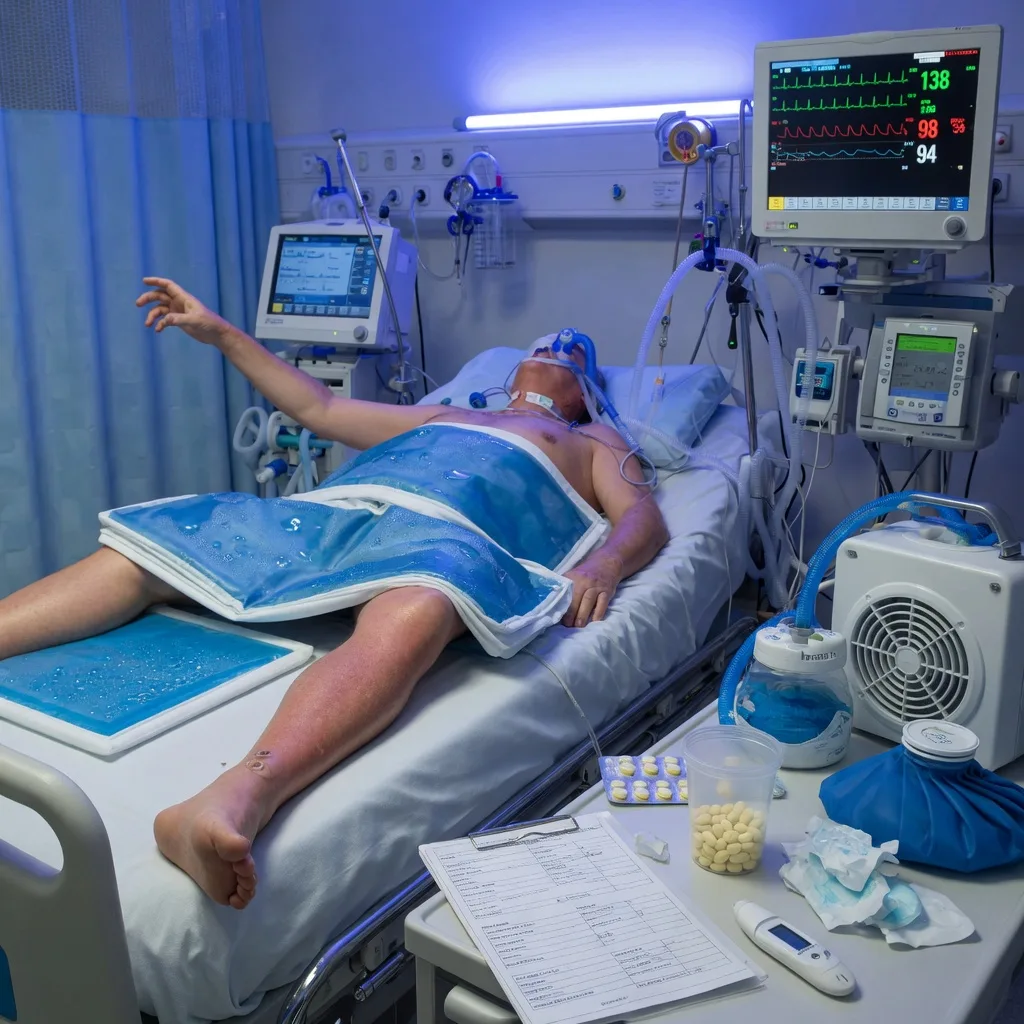
[1]The three drug-induced hyperthermia syndromes — serotonin syndrome (SS), neuroleptic malignant syndrome (NMS) and malignant hyperthermia (MH) — are the classic fellowship "viva triumvirate". They share a final common pathway of central nervous system disturbance, autonomic instability, neuromuscular excitation (rigidity or hyper-reflexia) and uncontrolled heat production, but they differ fundamentally in mechanism, trigger, onset, neuromuscular signature and specific therapy. Confusing them is dangerous: giving cyproheptadine (a serotonergic) to a patient with NMS is useless; giving an antipsychotic (the NMS treatment adjunct for dopamine restoration... which is wrong — antipsychotics CAUSE NMS) to a serotonergic patient worsens them; and giving dantrolene to a patient with pure serotonin syndrome is ineffective — dantrolene is reserved for the rigidity-driven syndromes (NMS and MH). The discriminator that anchors every viva answer is onset and rigidity pattern.[1][7][10]
Pathophysiology — why each syndrome looks the way it does
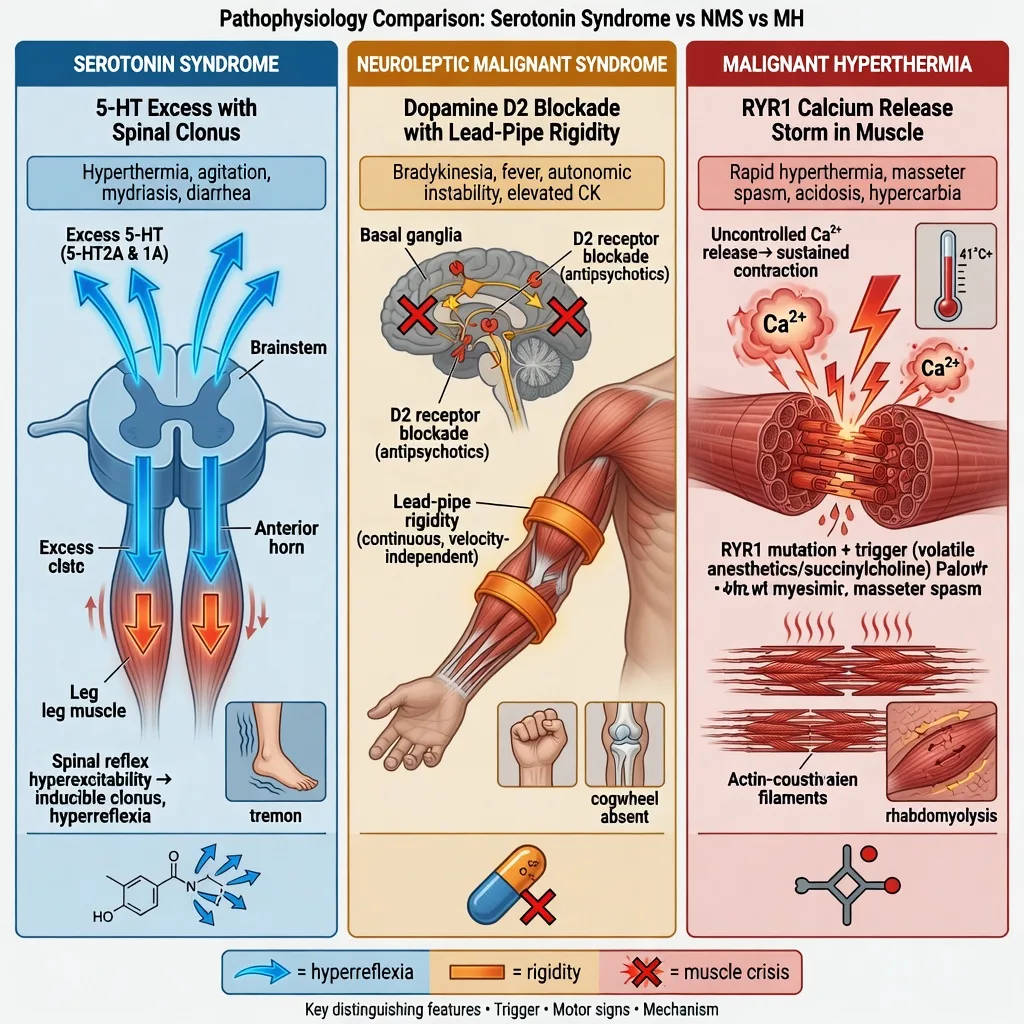
A mechanistic grasp separates a candidate who memorises tables from one who understands. All three syndromes ultimately produce uncontrolled muscle activity and/or central thermoregulatory disturbance, but the receptor and the location of the defect differ.[4][9][6]
Serotonin syndrome — 5-HT excess in the central nervous system
Serotonin (5-hydroxytryptamine, 5-HT) is synthesised from tryptophan via tryptophan hydroxylase and aromatic L-amino acid decarboxylase, stored in vesicles and released into the synaptic cleft, where it acts at seven families of receptor (5-HT1–5-HT7). The clinically important receptors are 5-HT1A (anxiolytic, antidepressant effects, central), 5-HT2A (the receptor most responsible for the neuromuscular and autonomic features of serotonin toxicity — clonus, hyperreflexia, myoclonus) and 5-HT3 (peripheral, triggers nausea and vomiting — hence ondansetron works here). Serotonin is cleared by reuptake (via the serotonin transporter, SERT) and metabolism by monoamine oxidase A (MAO-A) to 5-hydroxyindoleacetic acid (5-HIAA).[4]
Serotonin syndrome arises when excess 5-HT saturates the synaptic cleft — most classically by combining a drug that increases serotonin release/availability with one that blocks its metabolism or reuptake. The classic deadly pairing is an SSRI/SNRI/clomipramine + an MAOI (the SSRI blocks reuptake, the MAOI blocks metabolism — both pathways of clearance are closed). Other combinations that close the system: tramadol (weak serotonin reuptake inhibitor + opioid) plus an SSRI; linezolid (a reversible, non-selective MAOI antibiotic) plus an SSRI; methylene blue (a potent MAOI used in vasoplegia/met-Hb) plus an SSRI; fentanyl plus an MAOI; and meperidine/pethidine plus an MAOI. The result is over-stimulation of brainstem and spinal cord 5-HT2A receptors → clonus (spinal 5-HT2A), myoclonus, hyperreflexia (especially lower limbs — the spinal cord has the densest serotonergic innervation to the lower motor neuron pool), autonomic instability (brainstem), agitation and hyperthermia. The clonus and hyperreflexia are directly the clinical fingerprint of 5-HT2A over-activation in the spinal cord.[1][4][11]
Neuroleptic malignant syndrome — sudden dopamine withdrawal/blockade
Dopamine is the key inhibitory neurotransmitter in the hypothalamus (thermoregulation) and the basal ganglia (motor control), and a major regulator of sympathetic outflow. Dopamine antagonists — typical antipsychotics (haloperidol, chlorpromazine), atypicals (olanzapine, risperidone, clozapine, quetiapine, ziprasidone, aripiprazole), and the antiemetic dopamine antagonists (metoclopramide, prochlorperazine, promethazine, droperidol) — block D2 receptors. NMS is an idiosyncratic, dose-independent, hyporesponsive-state that occurs when D2 blockade in the hypothalamus and basal ganglia is sudden or profound (rapid dose escalation, depot injection, withdrawal of a dopamine agonist in Parkinson's, or simply high-potency neuroleptic use in a susceptible patient).[2][9]
The loss of hypothalamic dopaminergic tone produces unregulated heat production and altered set-point; the loss of basal ganglia dopaminergic tone produces lead-pipe rigidity (the extrapyramidal extreme) with reflex suppression; and the loss of brainstem dopaminergic modulation produces mutism, stupor and autonomic lability. The muscle rigidity generates heat directly (muscle is the body's main heat source), and sustained contraction causes rhabdomyolysis, CK elevation, hyperkalaemia, AKI and DIC — the downstream consequences that drive mortality. The bradyreflexia/hyporeflexia of NMS (in contrast to the hyperreflexia of SS) reflects the extrapyramidal (rigidity-dominant) rather than spinal origin of the motor disturbance.[9][10]
Malignant hyperthermia — a pharmacogenetic calcium storm
Malignant hyperthermia is genetically and mechanistically distinct. It is an autosomal dominant pharmacogenetic disorder of skeletal muscle (in ~70–80% of cases due to mutations in the ryanodine receptor type 1 gene, RYR1, on chromosome 19q13; in ~1% due to the dihydropyridine receptor gene, CACNA1S; the remainder are unidentified loci). The ryanodine receptor is the calcium-release channel of the sarcoplasmic reticulum of skeletal muscle. When triggered by a potent volatile anaesthetic (halothane — historical; sevoflurane, desflurane, isoflurane — current) or succinylcholine (the depolarising neuromuscular blocker), the mutant RYR1 channel opens inappropriately and fails to close, causing uncontrolled efflux of calcium from the sarcoplasmic reticulum into the myoplasm. The result is sustained, forceful muscle contraction, massive ATP consumption (by the SERCA pump and the contractile apparatus), accelerated aerobic and anaerobic metabolism → hypercapnia, hyperthermia and lactate — and ultimately rhabdomyolysis, hyperkalaemia and disseminated intravascular coagulation.[6][8]
The clinical fingerprint is refractory hypercapnia (rising end-tidal CO₂ despite increasing minute ventilation — the single earliest and most specific sign), generalised or masseter (jaw) rigidity, tachycardia and rapidly rising temperature, with mottled skin, sweating and rhabdomyolysis. MH occurs in the operating theatre or shortly after anaesthesia (rarely, exercise- or heat-induced "awake MH" variants exist), with onset minutes to a few hours after exposure to the trigger — distinguishing it sharply from SS (hours) and NMS (days–weeks). The mortality has fallen from 70–80% in the 1970s to under 5% today entirely because of dantrolene, the direct RYR1 antagonist.[6][8]
The serotonergic drug list — what to stop, what never to add
The single most useful clinical skill in suspected SS is recognising the serotonergic agent(s). The list is long and crosses drug classes; the high-yield mnemonic is "MEDS-MOAT" — MAOIs, EMA/antidepressants (SSRIs/SNRIs/TCAs), Drugs of abuse (MDMA, cocaine, LSD), Serotonin precursors (L-tryptophan, 5-HTP), Methylene blue, Opioids (tramadol, pethidine, fentanyl), Anti-emetics/migraine (ondansetron, metoclopramide, triptans), Tricyclics and other (linezolid, St John's wort).[4][11]
Comprehensive serotonergic drug list (every class)
| Class | Drugs | Mechanism of serotonergic effect | Relative potency |
|---|---|---|---|
| SSRIs | sertraline, fluoxetine, paroxetine, citalopram, escitalopram, fluvoxamine | Block 5-HT reuptake via SERT | High (foundation drugs) |
| SNRIs | venlafaxine, duloxetine, desvenlafaxine, milnacipran | Block 5-HT (and NA) reuptake | High (venlafaxine especially) |
| TCAs (serotonergic) | clomipramine, imipramine | Block 5-HT reuptake (clomipramine most potent) | High (clomipramine) |
| MAOIs | phenelzine, tranylcypromine, isocarboxazid, moclobemide (RIMA), selegiline | Block 5-HT (and NA) metabolism by MAO-A | Highest (the killer combination) |
| Antibiotic MAOI | linezolid | Reversible non-selective MAOI | High (forgotten culprit) |
| Other MAOI | methylene blue | Potent MAOI | High (used in vasoplegia, met-Hb) |
| Opioids | tramadol, pethidine/meperidine, fentanyl, methadone, dextromethorphan | Weak SERT inhibition (tramadol, pethidine, fentanyl); NMDA (methadone, dextromethorphan) | Moderate–high (synergy with SSRI) |
| 5-HT3 antagonists | ondansetron, granisetron, tropisetron, palonosetron | 5-HT3 antagonists (paradoxically serotonergic in overdose/combination) | Moderate |
| Triptans | sumatriptan, zolmitriptan, rizatriptan, etc. | 5-HT1B/1D agonists | Moderate |
| Antiemetic | metoclopramide | 5-HT4 agonist + D2 antagonist | Moderate |
| Herbal | St John's wort (Hypericum perforatum) | Weak SSRI + MAOI effect | Moderate (interacts with SSRIs) |
| Drugs of abuse | MDMA (ecstasy), cocaine, amphetamines, LSD, synthetic cathinones | 5-HT release / reuptake / receptor agonism | High (MDMA classic) |
| Precursors | L-tryptophan, 5-hydroxytryptophan (5-HTP) | Increase 5-HT synthesis | Moderate (mono) |
| Buspirone, lithium | buspirone (5-HT1A agonist), lithium (enhances 5-HT) | Augment central serotonergic tone | Lower (as adjuncts) |
The classic lethal combinations (these are the viva "name three"): (1) SSRI + MAOI (the textbook killer — reuptake AND metabolism both blocked); (2) linezolid + SSRI/SNRI (the forgotten ICU combination — linezolid is a weak MAOI, and SS patients on this combination appear regularly); (3) tramadol + SSRI (common in the community — tramadol is a weak SNRI). Also exam-favoured: methylene blue + SSRI (parathyroid/vasoplegia surgery), pethidine + MAOI, MDMA + SSRI/MAOI, and the MAOI washout problem (a patient started on an SSRI within 14 days of stopping an MAOI will develop SS).[4][11]
Hunter Serotonin Toxicity Criteria — the diagnostic standard
The Hunter Serotonin Toxicity Criteria (Dunkley, Isbister et al., QJM 2003) replaced the older Sternbach criteria (1991) because the latter were over-sensitive and based on a single centre's opinion. Hunter was derived from 2,222 cases of overdosage with serotonergic agents prospectively classified by a clinical toxicologist; the criteria have sensitivity 84% and specificity 97% for serotonin toxicity, and require the recent use of a serotonergic agent PLUS one of the following clinical features of clonus (the pathognomonic sign):[3][4]
Hunter Serotonin Toxicity Criteria (Dunkley 2003) — serotonergic agent PLUS any ONE of:
| Feature (any one = diagnosis) | Specificity / why it matters |
|---|---|
| Spontaneous clonus | The single most specific sign — clonus that occurs without provocation |
| Inducible clonus + agitation + diaphoresis | Clonus elicited on rapid dorsiflexion of the foot, with the sympathomimetic/psychomotor picture |
| Ocular clonus + agitation + diaphoresis | Spontaneous, rhythmic, vertical/horizontal eye movements — pathognomonic |
| Tremor + hyperreflexia + hypertonia | Distinguish the lower-limb-predominant hyperreflexia of SS |
| Hypertonia + temperature >38.5°C + ocular or inducible clonus | A severe phenotype — beware progression to hyperthermic crisis |
The decision rule: in the presence of a serotonergic drug, spontaneous clonus alone is diagnostic; otherwise the combinations above apply. The criteria deliberately centre on clonus (spinal 5-HT2A over-activation), because clonus is the sign that most specifically distinguishes SS from other causes of agitation/autonomic instability — anticholinergic toxicity has mydriasis and urinary retention but no clonus; sympathomimetic toxicity has tachycardia/hypertension but no clonus; NMS has rigidity but no clonus (and is hyporeflexic).[3][11]
Sternbach's criteria (for historical context — still occasionally examined): require three of (mental status change, agitation, myoclonus, hyperreflexia, diaphoresis, shivering, tremor, diarrhoea, incoordination, fever) PLUS a serotonergic agent PLUS no other cause. Hunter is preferred because it is data-derived and clonus-centric.[3]
NMS diagnostic criteria and drug list
NMS diagnosis is clinical — there is no confirmatory test. The international Delphi consensus (Gurrera 2011) requires the recent use of a dopamine antagonist (or withdrawal of a dopamine agonist) PLUS the cardinal triad: (1) hyperthermia (typically >38.5°C, often >40°C), (2) diffuse muscular rigidity ("lead-pipe") often with associated tremor/"lead-pipe and cogwheel" or rhabdomyolysis, and (3) altered mental status (agitation, mutism, stupor, coma), PLUS two of: autonomic instability (tachycardia, labile BP, diaphoresis, incontinence), leukocytosis, or elevated CK (>4× upper limit of normal).[5][9]
NMS drug triggers — every dopamine antagonist
| Class | Drugs | Notes |
|---|---|---|
| Typical (1st gen) antipsychotics | haloperidol (highest risk), chlorpromazine, fluphenazine (depo!), thiothixene | High-potency typicals carry highest NMS risk; depots cause prolonged NMS |
| Atypical (2nd gen) antipsychotics | olanzapine, risperidone, clozapine, quetiapine, ziprasidone, aripiprazole, paliperidone, lurasidone | Lower risk than typicals but DO occur — clozapine is classic |
| Antiemetic dopamine antagonists | metoclopramide, prochlorperazine, promethazine, droperidol, domperidone | Often overlooked cause in surgical/ICU patients |
| Withdrawal of dopamine agonist | L-dopa/carbidopa, bromocriptine, amantadine (suddenly stopped in Parkinson's) | "Symptomatic NMS" — abrupt withdrawal in a Parkinson's patient |
| Anti-vertigo | cinnarizine, prochlorperazine | Weak D2 antagonists |
Risk factors for NMS: high-potency typical agents, rapid dose escalation, depot injection, dehydration, agitation, catatonia, organic brain disease, intellectual disability, Parkinson's disease, lithium co-administration, and a prior episode of NMS. Onset is typically within hours to days of starting or escalating an antipsychotic (median ~4 days; range 1–14 days for the first episode, but a depot injection can precipitate NMS weeks later). NMS may also occur after abrupt withdrawal of a dopamine agonist in a Parkinson's patient (the "symptomatic" form), and after withdrawal of L-dopa.[9][12]
Malignant hyperthermia — the third hyperthermia syndrome
MH is a pharmacogenetic emergency of skeletal muscle occurring almost exclusively in the operating theatre or PACU within minutes to a few hours of exposure to a trigger agent. Triggers: all potent volatile anaesthetics (halothane [historical], sevoflurane, desflurane, isoflurane, enflurane) and the depolarising neurelaxant succinylcholine (suxamethonium). Non-triggers (safe): all intravenous induction agents (propofol, thiopental, ketamine, etomidate, benzodiazepines), opioids, local anaesthetics, non-depolarising neuromuscular blockers (rocuronium, vecuronium, cisatracurium), nitrous oxide.[6][8]
Clinical picture — onset minutes to a few hours after exposure: unexpected, unexplained rise in end-tidal CO₂ despite increasing minute ventilation (the single most specific and earliest sign — a hypermetabolic state producing CO₂ faster than the ventilator can clear it), tachycardia, masseter muscle rigidity (jaw clonus/"jaws of steel"), generalised rigidity, rapidly rising core temperature (can rise 1–2°C every 5 min), mottled/cyanotic skin, sweating, arrhythmias, hyperkalaemia, grossly elevated CK and myoglobinuria, and disseminated intravascular coagulation. The genetic defect is in the RYR1 gene (ryanodine receptor type 1, ~70–80% of families) or CACNA1S (the dihydropyridine receptor, ~1%); diagnosis in the stable survivor is by in-vitro contracture test (IVCT) on a fresh muscle biopsy (caffeine-halothane contracture test — the caffeine-halothane contracture test, CHCT in North America), with molecular genetic testing of RYR1/CACNA1S increasingly used. Treatment is immediate cessation of the trigger + hyperventilation with 100% oxygen + IV dantrolene 2.5 mg/kg bolus, repeated every 5 min to a total of 10 mg/kg (some protocols to 20 mg/kg) + aggressive cooling + treat hyperkalaemia/acidosis/arrhythmias (avoid calcium-channel blockers with dantrolene — cardiovascular collapse).[6][8]
Differentiation
Serotonin syndrome
Onset: HOURS
- Caused by: excess serotonin (drug combinations)
- Drugs: SSRIs + MAOIs, tramadol, linezolid, fentanyl, St John wort, triptans, ondansetron
- Neuromuscular: CLONUS (inducible/spontaneous), HYPERREFLEXIA (lower limbs), ocular clonus
- Mental status: agitation, confusion
- Autonomic: hyperthermia, tachycardia, hypertension, diaphoresis, mydriasis
- Onset: within HOURS of drug interaction/change
- Treatment: stop drugs, benzodiazepines, cyproheptadine
Neuroleptic malignant syndrome
Onset: DAYS-WEEKS
- Caused by: dopamine blockade (antipsychotics)
- Drugs: haloperidol, olanzapine, risperidone, clozapine, metoclopramide
- Neuromuscular: LEAD-PIPE RIGIDITY (generalised), bradyreflexia, rhabdomyolysis
- Mental status: mutism, stupor, coma
- Autonomic: hyperthermia (often >40C), tachycardia, diaphoresis, labile BP
- Onset: DAYS to WEEKS after starting/increasing antipsychotic
- Treatment: stop antipsychotic, dantrolene, bromocriptine
Three-way comparison — SS vs NMS vs MH
This is the table to memorise for the viva. The discriminator rows are onset, rigidity/reflex pattern, the hallmark sign and the specific antidote.[7][10]
Serotonin syndrome vs NMS vs malignant hyperthermia
| Feature | Serotonin syndrome (SS) | Neuroleptic malignant syndrome (NMS) | Malignant hyperthermia (MH) |
|---|---|---|---|
| Mechanism | Excess serotonin (5-HT) in CNS | Dopamine D2 blockade / withdrawal | RYR1-mediated skeletal-muscle Ca²⁺ storm |
| Genetic basis | None (purely pharmacological) | None (idiosyncratic) | Autosomal dominant, RYR1 / CACNA1S |
| Triggers | 2 serotonergic drugs (SSRI+MAOI etc.) | Dopamine antagonists (antipsychotics, antiemetics) or dopamine-agonist withdrawal | Volatile anaesthetics + succinylcholine |
| Onset | Hours (within 24 h of new/changed drug) | Days–weeks (median ~4 d, 1–14 d) | Minutes (intra-/post-anaesthesia) |
| Hallmark sign | Clonus (spontaneous/inducible/ocular) | Lead-pipe rigidity | Refractory hypercapnia + masseter rigidity |
| Reflexes | Hyperreflexia (lower > upper limbs) | Hyporeflexia / bradyreflexia | N/A (rigid; reflexes obscured) |
| Muscle tone | Hypertonia (lower limb), myoclonus | Diffuse lead-pipe rigidity | Diffuse or masseter rigidity |
| Mental state | Agitation, restlessness, confusion | Mutism, stupor, coma | Awake but deteriorating (under GA) |
| Temperature | Mild–moderate; severe >41.5°C | Often >40°C | Rapidly rising (1–2°C/5 min) |
| Autonomic | Tachycardia, hypertension, mydriasis, diaphoresis | Tachycardia, labile BP, diaphoresis, incontinence | Tachycardia, arrhythmias, mottled skin |
| Bowel/bladder | Diarrhoea, hyperactive bowel | Incontinence, reduced bowel sounds | N/A |
| CK / rhabdo | Mild–moderate (if severe) | Marked (the defining biomarker) | Marked + myoglobinuria |
| Setting | Ward, ED, ICU | Ward, ED, ICU | Operating theatre / PACU |
| Specific treatment | Cyproheptadine (5-HT2A antagonist) + benzodiazepines | Bromocriptine (D2 agonist) ± dantrolene | IV dantrolene 2.5 mg/kg → 10 mg/kg |
| Mortality (treated) | <1% | 5–20% | <5% (was 70–80% pre-dantrolene) |
| Re-challenge | Avoid serotonergic combinations | Antipsychotic can be re-tried cautiously at low dose after weeks | Volatile + sux absolutely contraindicated for life |
Viva discriminator (the two-sentence answer when asked "how do you tell them apart at the bedside?"): "Onset and the motor sign: serotonin syndrome comes on within hours of a serotonergic drug and shows clonus with lower-limb hyperreflexia; NMS comes on over days of a dopamine antagonist and shows lead-pipe rigidity with bradyreflexia; malignant hyperthermia comes on in minutes after a volatile anaesthetic or succinylcholine with refractory hypercapnia and masseter rigidity. The antidotes follow the mechanism: cyproheptadine for serotonin, bromocriptine/dantrolene for NMS, and dantrolene for MH."[7][10]
Management — common principles
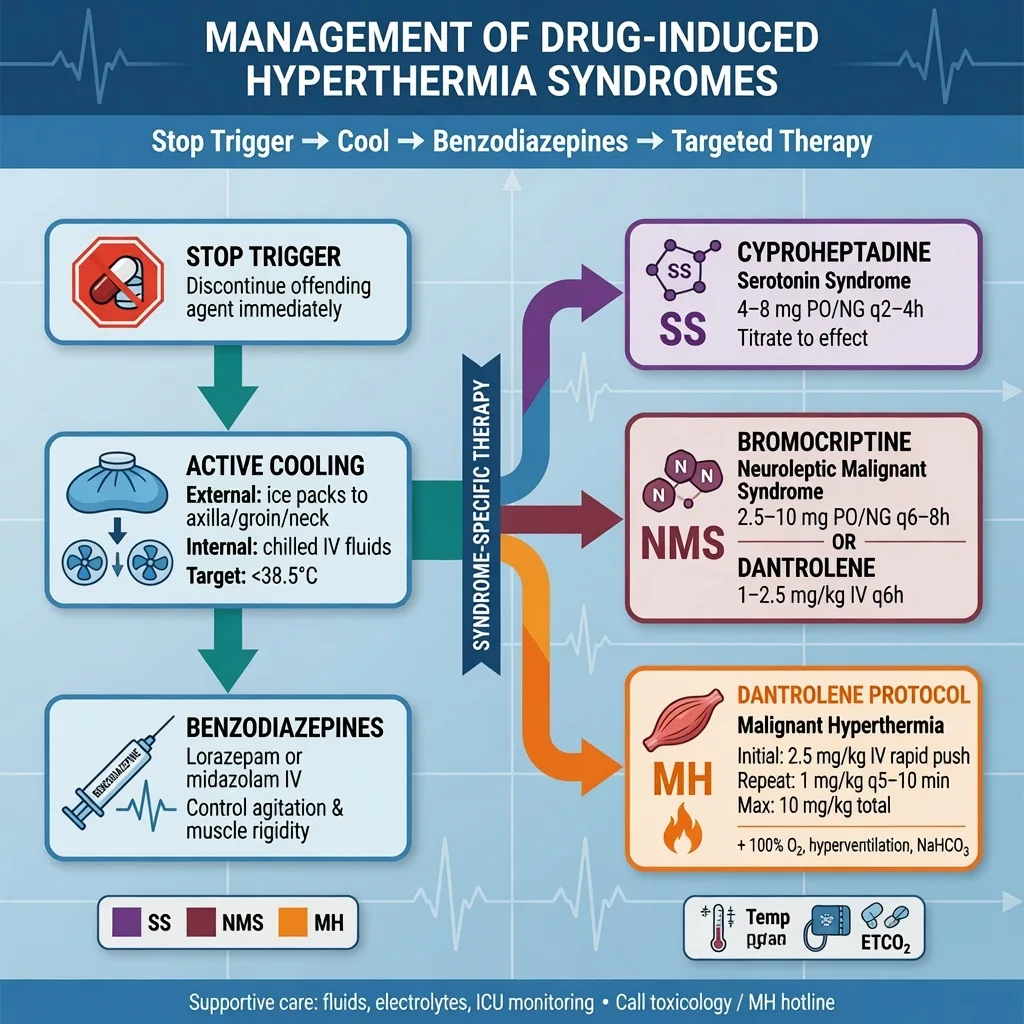
All three syndromes share five management pillars, then diverge on specific pharmacotherapy:[1][9][6]
- Remove the trigger — stop ALL serotonergic drugs (SS), stop ALL dopamine antagonists and withdraw any causative agent (NMS), or stop the volatile and switch to TIVA and give 100% O₂ (MH). This single step is the most important intervention in mild–moderate disease.
- Aggressive cooling — evaporative (tepid sponging + fans), surface (cooling blankets, ice packs to groins/axillae/neck), intravascular (cold 0.9% saline 30 mL/kg boluses), and in refractory cases cardiopulmonary bypass / ECMO. Target temperature <39°C rapidly; over-shoot to <36°C is harmful.
- Benzodiazepines for agitation and rigidity — diazepam 5–10 mg IV or lorazepam 2–4 mg IV titrated; benzodiazepines reduce muscle tone (so heat and rhabdomyolysis), control agitation, and (in SS) blunt the sympathomimetic drive. They are the first-line agent across all three.
- Intubate and paralyse for severe disease (T >41.5°C, uncontrolled rigidity/agitation, refractory hypoxia/acidosis) — use a non-depolarising agent (rocuronium 1.2 mg/kg or vecuronium); avoid succinylcholine (hyperkalaemia from rhabdomyolysis, and it is an MH trigger). Paralysis reduces heat production from muscle and aids cooling; continuously monitor the paralysis.
- Supportive care and complication surveillance — IV fluids, treat hyperkalaemia (insulin/dextrose, calcium), monitor CK, urine myoglobin, renal function, coagulation (DIC), ECG (QT), and look for and treat seizures, hepatic injury, AKI and compartment syndrome. [1]
SS and NMS management
Stop the causative drug(s)
SS: stop ALL serotonergic drugs (SSRIs, SNRIs, MAOIs, tramadol, fentanyl, linezolid, triptans, St John wort, ondansetron). NMS: stop ALL antipsychotics and dopamine antagonists (including metoclopramide, promethazine). This is the most important step.
Supportive care + cooling
Aggressive cooling if hyperthermic (cooling blankets, ice packs, cold IV fluids). Benzodiazepines for agitation and muscle rigidity (diazepam 5-10 mg IV, or lorazepam). Intubation + paralysis if severe (propofol or non-depolarising NMBA). Avoid succinylcholine (hyperkalaemia risk from rhabdomyolysis). Monitor for rhabdomyolysis (CK, urine myoglobin), AKI, DIC.
SS-specific: cyproheptadine
Cyproheptadine 12 mg PO/NG loading, then 2 mg Q2H until response (max 32 mg/24h). It is a 5-HT2A receptor antagonist (serotonin receptor blocker). Only available orally/NG. For mild-moderate SS. Severe SS may need intubation + paralysis + active cooling.
NMS-specific: dantrolene ± bromocriptine
Dantrolene 1-2.5 mg/kg IV (repeated up to 10 mg/kg total) — direct muscle relaxant (reduces rigidity and heat production). Bromocriptine 2.5 mg PO/NG Q8H (dopamine agonist — counteracts dopamine blockade). Amantadine 100 mg BD is an alternative dopamine agent. Both take days to work.
Avoid drugs that worsen the condition
SS: do NOT give serotonergic drugs (tramadol, fentanyl, ondansetron, SSRIs). NMS: do NOT give antipsychotics (even for agitation — use benzodiazepines instead). In BOTH: avoid anticholinergics (worsen hyperthermia). Use benzodiazepines for agitation.
Detailed SS management — cyproheptadine dosing and severity-stratified care
Severity is graded by the original Radomski classification (still useful): mild (subtle tremor, hyperreflexia, low-grade fever, no spontaneous clonus — self-limiting on stopping the drug); moderate (spontaneous or inducible clonus, hyperreflexia, agitation, diaphoresis, tachycardia, temperature 38.5–40°C); severe (sustained hyperthermia >40°C, rigidity, autonomic instability, seizures, coma — the life-threatening phase).[4][10]
Severity-stratified serotonin syndrome management
- MILD SS: stop serotonergic drugs; benzodiazepine for agitation (diazepam 5 mg PO/IV); observe 6–12 h; hydration. Often resolves within 24 h of stopping the agent. Do NOT give cyproheptadine routinely — supportive care suffices
- MODERATE SS: stop all serotonergic drugs; benzodiazepines (diazepam 5–10 mg IV q10–15 min titrated to agitation — often requires substantial doses); cyproheptadine 12 mg PO/NG loading dose, then 2 mg every 2 hours until clinical response (target 0.5 mg/kg/day = ~32 mg/day in an adult); active external cooling; cardiac monitoring; IV fluids. Observe in HDU/ICU. Most moderate cases resolve in 24–72 h
- SEVERE SS (hyperthermia >40°C, rigidity, autonomic instability, seizures, coma): ICU admission; intubate and paralyse with a non-depolarising NMBA (rocuronium 1.2 mg/kg — NEVER succinylcholine); aggressive cooling to <39°C (evaporative + cold IV saline ± intravascular device); maximise cyproheptadine via NG (32 mg/24 h); benzodiazepine infusion (midazolam 0.1 mg/kg/h, or propofol for sedation); treat seizures (benzodiazepines, then levetiracetam); monitor and treat rhabdomyolysis, AKI, DIC, hyperkalaemia; vasopressors (noradrenaline) for hypotension. Consider the pathophysiology: cyproheptadine is only an adjunct in severe disease — the cornerstones are paralysis, cooling and supportive care
- Cyproheptadine pharmacology: a 5-HT1A and 5-HT2A antagonist (also H1-antihistamine and anticholinergic — hence sedation and dry mouth). Oral only — bioavailability ~35%, onset 30–60 min, half-life 8 h, hepatic metabolism. Dose: 12 mg loading, then 2 mg q2h to response, max 0.5 mg/kg/day (~32 mg in adults, ~0.25 mg/kg/day in children). Total antagonist dose required averages 8–30 mg/24 h. Note: cyproheptadine is not on every formulary; check availability early. There is no IV serotonin antagonist available anywhere
- Drugs to AVOID in SS: tramadol, pethidine, fentanyl and other serotonergic opioids; ondansetron and other 5-HT3 antagonists; metoclopramide; SSRIs/SNRIs/TCAs/MAOIs; St John's wort; triptans; and all antipsychotics (they are dopamine antagonists, serotonergic in some cases, and confound the differential with NMS). For agitation, benzodiazepines only
- Observation and disposition: most SS resolves within 24–72 h of stopping the offending agent (5-HT turnover is rapid). After recovery, review the medication list, document the serotonergic interaction in the chart/allergy record, and arrange psychiatric/pharmacy review before any future psychotropic prescribing. An MAOI requires a 2-week washout before any other serotonergic agent — never re-introduce early
Detailed NMS management — bromocriptine, dantrolene and ECT
NMS resolves over 7–14 days (longer with depot antipsychotics, where the offending agent continues to be absorbed for weeks). Specific pharmacotherapy is supportive, not curative — randomised trials are absent and evidence comes from case series and expert consensus.[2][9]
NMS management protocol
- Stop ALL dopamine antagonists: every antipsychotic (typical and atypical, including depot), metoclopramide, prochlorperazine, promethazine, droperidol. If the patient is on a dopamine agonist that was withdrawn (Parkinson's), restart it. Re-introduction of an antipsychotic after recovery should wait ≥2 weeks (5 half-lives of the depot) and start at low dose with a different agent
- Aggressive supportive care: ICU/HDU; IV fluids (NMS patients are diaphoretic, volume-deplete and at risk of AKI from rhabdomyolysis); cooling to <39°C; benzodiazepines for agitation and rigidity (diazepam 5–10 mg IV q15 min titrated — lorazepam 2 mg IV); treat hyperkalaemia; alkalinise urine (NaHCO₃) if severe rhabdomyolysis; monitor CK q6–12h, renal function, coagulation
- Bromocriptine (dopamine agonist) — restores dopaminergic tone: 2.5 mg PO/NG Q8H, increasing every 24 h to a maximum of 15 mg Q8H (45 mg/day). Onset 1–2 h, half-life ~6 h. Continue for 7–10 days after NMS resolves then taper slowly over 1 week (sudden withdrawal can precipitate recurrence). Cautions: hypotension (common — monitor), nausea/vomiting, hallucinations, and do NOT use in pregnancy. Bromocriptine is the first-line specific agent in NMS because it directly reverses the underlying dopamine-deficiency mechanism
- Dantrolene (direct-acting muscle relaxant) — for severe rigidity/hyperthermia: 1–2.5 mg/kg IV bolus, repeat q5 min to a total of 10 mg/kg, then 1 mg/kg Q6H until rigidity and hyperthermia resolve. Mechanism: binds the ryanodine receptor (RYR1) on the sarcoplasmic reticulum → blocks Ca²⁺ release → muscle relaxation → reduces heat production and rhabdomyolysis. Dantrolene is most useful in NMS when rigidity and hyperthermia dominate; it does NOT treat the underlying dopamine blockade, so combine with bromocriptine. Cautions: hepatotoxicity (avoid in liver disease), muscle weakness (prolongs ventilation), phlebitis (large-bore IV). Note: the modern dantrolene preparations (Ryanodex) reconstitute far more rapidly than the older Dantrium (which took minutes to dissolve per vial)
- Amantadine (alternative dopamine agent): 100 mg PO/NG BD — weak NMDA antagonist with dopaminergic effects; useful where bromocriptine is unavailable
- Electroconvulsive therapy (ECT) — considered for refractory NMS (no response to bromocriptine + dantrolene by 7–10 days), in catatonic features, or where ongoing severe psychiatric illness requires urgent treatment. Proposed mechanism: ECT increases dopamine receptor sensitivity and may "reset" the dopaminergic system. Evidence is case-series only
- Avoid: anticholinergics (worsen hyperthermia, urinary retention, ileus); further antipsychotics; serotonergic agents (confound); succinylcholine for RSI (hyperkalaemia)
- Disposition: 7–14 days recovery in moderate–severe NMS; longer with depot antipsychotics. After recovery, re-introduce an antipsychotic of a different class at low dose after ≥2 weeks, with close monitoring — NMS can recur (mortality of recurrent NMS is ~10–20%)
Malignant hyperthermia management — the MHAUS protocol
MH is an operating-theatre emergency and the protocol is rehearsed and standardised (Malignant Hyperthermia Association of the United States — MHAUS). The intensivist encounters MH in the PACU/ICU (delayed presentation), and in the ICU patient requiring emergency anaesthesia who has a known or suspected MH history.[6][8]
MHAUS malignantant hyperthermia protocol
- RECOGNISE: unexpected rise in end-tidal CO₂ despite increased ventilation; tachycardia; masseter/generalised rigidity; rapidly rising temperature; arrhythmia; hyperkalaemia; mottled skin
- STOP THE TRIGGER: discontinue the volatile agent immediately; switch to TIVA (propofol ± opioid ± benzodiazepine); hyperventilate with 100% O₂ at high flows (to flush the volatile from the circuit — use a non-rebreathing circuit if possible, change the circuit/CO₂ absorber); do NOT waste time changing the machine if dantrolene is being given
- GIVE DANTROLENE NOW: 2.5 mg/kg IV bolus, repeat every 5 minutes until signs abate (decreasing ETCO₂, relaxation, falling temperature) — up to a cumulative dose of 10 mg/kg (some patients require ≥20 mg/kg). The earlier dantrolene is given, the better the outcome. Each vial contains 20 mg (Dantrium — reconstitute with 60 mL sterile water; slow) or 250 mg (Ryanodex — reconstitute with 5 mL; fast — preferred)
- AGGRESSIVE COOLING: surface (ice packs to groins/axillae/neck, cooling blanket), cold IV saline, gastric/bladder lavage, and consider cardiopulmonary bypass in refractory cases. STOP cooling at 38.5°C to avoid hypothermia
- TREAT HYPERKALAEMIA AND ACIDOSIS: insulin/dextrose (10 units regular insulin + 25 g dextrose IV), calcium chloride 10 mmol, sodium bicarbonate 1–2 mmol/kg (also treats metabolic acidosis and may help by alkalinising). Treat arrhythmias with standard agents; AVOID calcium-channel blockers with dantrolene (combined → severe hyperkalaemia and cardiovascular collapse)
- MAINTAIN URINE OUTPUT: target >2 mL/kg/h to protect against myoglobinuric AKI; mannitol (often already in dantrolene preparation — Dantrium contains mannitol) ± furosemide. Monitor CK, K⁺, myoglobin, renal function, coagulation (DIC)
- POST-CRISIS: continue dantrolene 1 mg/kg q4–6 h or 0.25 mg/kg/h infusion for 24–48 h to prevent recurrence (recrudescence occurs in ~20%); ICU admission; refer for genetic testing and IVCT of the patient and first-degree relatives; all future anaesthetics must be trigger-free (TIVA, no sux, non-depolarising NMBA); the patient should wear a MedicAlert bracelet and be entered on the MH registry
Pharmacology of the antidotes — exam depth
The fellowship exam expects you to know the mechanism, dose, onset and adverse effects of each specific agent, not just the name.[8][10]
Pharmacology of the hyperthermia-syndrome antidotes
| Drug | Mechanism | Dose | Route | Onset | Key adverse effects |
|---|---|---|---|---|---|
| Cyproheptadine | 5-HT1A + 5-HT2A antagonist (also H1 + muscarinic) | 12 mg load, then 2 mg q2h to 0.5 mg/kg/day (~32 mg/day) | PO/NG only | 30–60 min | Sedation, anticholinergic (dry mouth, urinary retention), increased appetite |
| Bromocriptine | D2 dopamine agonist (ergot derivative) | 2.5 mg Q8H → up to 15 mg Q8H (45 mg/day) | PO/NG | 1–2 h (effect over days) | Hypotension, nausea, hallucinations, pulm fibrosis (rare), pregnancy contraindicated |
| Dantrolene | RYR1 antagonist → blocks sarcoplasmic reticulum Ca²⁺ release in skeletal muscle | NMS: 1–2.5 mg/kg IV → 10 mg/kg. MH: 2.5 mg/kg → 10 mg/kg repeat q5 min (to 20 mg/kg) | IV (also PO for spasticity) | Minutes (IV) | Hepatotoxicity, muscle weakness (prolongs ventilation), phlebitis; contains mannitol (Dantrium) |
| Amantadine | Weak NMDA antagonist with dopaminergic effect (alternative in NMS) | 100 mg BD | PO/NG | Hours | Livedo reticularis, hallucinations, ankle oedema |
| Benzodiazepines (diazepam, midazolam, lorazepam) | GABA-A agonist — sedation, anticonvulsant, muscle relaxation | Diazepam 5–10 mg IV q10–15 min; midazolam infusion 0.1 mg/kg/h | IV/PO | Minutes | Respiratory depression, hypotension, prolonged sedation |
Why dantrolene treats NMS and MH but not SS: dantrolene acts directly on the ryanodine receptor of skeletal muscle, blocking intracellular calcium release. In MH the defect is the RYR1 channel itself → dantrolene is the rational and curative antidote. In NMS the lead-pipe rigidity is driven by central dopamine blockade but is expressed as sustained skeletal-muscle contraction → dantrolene relieves the rigidity and so the heat/rhabdomyolysis, but does not reverse the underlying mechanism (hence combine with bromocriptine). In SS the muscle activity is driven by spinal 5-HT2A over-activation (not by RYR1), so dantrolene has little role (its occasional use in severe hyperthermic SS is for the rigidity/heat production, not the serotonergic cause — and the evidence is weak).[8][10]
Investigations
There is no diagnostic blood test for SS or NMS — both are clinical diagnoses (Hunter for SS, the Delphi/Gurrera consensus for NMS) and investigations serve to (a) exclude alternatives, (b) grade severity, and (c) monitor complications.[3][5]
- Drug history is the investigation: a meticulous reconciliation of every serotonergic agent (SS) and every dopamine antagonist / recent withdrawal (NMS) is the single most informative step. Ask specifically about over-the-counter St John's wort, recent antibiotic (linezolid), recent surgery (methylene blue, ondansetron, fentanyl), Parkinson's drugs (and any recent change), and recreational drugs (MDMA).
- Creatine kinase (CK): elevated in all three syndromes — markedly in NMS and MH, mild–moderate in SS. Serial CK q6–12h. A CK >5,000 U/L marks significant rhabdomyolysis and AKI risk.
- Renal function and electrolytes: AKI (from rhabdomyolysis and hypotension), hyperkalaemia, hypocalcaemia, deranged sodium. Treat hyperkalaemia aggressively (insulin/dextrose, calcium).
- Liver function: transaminitis (heat-stroke-like hepatic injury in severe hyperthermia), coagulation (DIC) — INR, fibrinogen, D-dimer.
- Arterial/venous blood gas: metabolic acidosis (lactate from rigidity, AKI), respiratory alkalosis (SS agitation) or mixed; lactate is a severity marker.
- Urine: myoglobin (dipstick positive for blood but no red cells → think myoglobin), urine drug screen (MDMA, amphetamines), pregnancy test.
- ECG: sinus tachycardia, QT prolongation (drug effect, hypocalcaemia), arrhythmias (hyperkalaemia).
- Septic and infectious workup: blood/urine cultures, CXR, lactate — to exclude sepsis (which can mimic and co-exist, especially in ICU).
- CT brain / LP: if altered mental status or focal signs — to exclude structural CNS disease or meningitis/encephalitis. SS/NMS/MH are diagnoses of pattern, and CNS infection must be excluded in the obtunded hyperthermic patient.
- Thyroid function and cortisol: exclude thyroid storm and adrenal crisis in the hyperthermic, agitated, tachycardic patient.
- CK-MB / troponin: myocardial injury from heat/hyperthermia or cocaine (sympathomimetic).
- For MH specifically: in the recovered patient, in-vitro contracture test (IVCT) on a fresh muscle biopsy (EMHG protocol) and RYR1/CACNA1S genetic testing of the patient and at-risk relatives. [1]
Differential diagnosis — the broader hyperthermia and rigidity list
Always think beyond the "triad". The confused, rigid, hyperthermic ICU patient demands a structured differential.[7][10]
Differential of the hyperthermic, rigid, agitated ICU patient
| Condition | Key distinguishing features |
|---|---|
| Serotonin syndrome | Serotonergic drug, clonus, hyperreflexia, hours |
| NMS | Antipsychotic, lead-pipe rigidity, bradyreflexia, days |
| Malignant hyperthermia | Volatile/sux exposure, refractory hypercapnia, masseter rigidity, minutes |
| Anticholinergic toxicity | Mydriasis, dry skin/mucosae, urinary retention, no clonus, normal reflexes; antihistamines, atropine, TCA |
| Sympathomimetic toxicity | Cocaine/amphetamine/MA — tachycardia, hypertension, mydriasis, no clonus, normal reflexes |
| Heat stroke | Exertional/environmental exposure; dry or sweaty, hot; no clonus; CK high; ATN; coagulopathy |
| Sepsis / septic shock | Fever (not typically >40°C unless severe), source identifiable, rigors (not rigidity), leucocytosis |
| Thyroid storm | Thyrotoxic signs, AF, goiter, high T4/T3, suppressed TSH; no clonus |
| Meningitis / encephalitis | Meningism, focal signs, CSF pleocytosis; not rigid (unless tetanus) |
| Tetanus / strychnine | Trismus, opisthotonos, symmetrical intermittent spasms, lucid between spasms, recent wound |
| Hypoglycaemia | Sweating, tachycardia, obtundation — glucose fingerstick |
| Cocaine/amphetamine withdrawal delirium | Can mimic agitation — careful drug history |
| Malignant catatonia / lethal catatonia | Precedes or coexists with NMS — stereotypies, mutism, posturing; treat with benzodiazepines ± ECT |
| Alcohol/benzo withdrawal | Tremor, autonomic, seizures, hallucinosis — CIWA picture, no clonus |
SAQ — Serotonin syndrome after MAOI/tramadol combination
10 minutes · 10 marks
A 34-year-old woman with chronic depression on phenelzine (an MAOI) is brought to ED agitated and diaphoretic 6 hours after taking tramadol prescribed by a different doctor for back pain. She is tremulous with sustained ankle clonus and patellar hyperreflexia, HR 128, BP 164/95, temp 39.4°C, GCS 14, pupils dilated and reactive, bowels hyperactive with audible borborygmi, and she has rigidity worse in the lower limbs.
SAQ — Neuroleptic malignant syndrome in the ICU
10 minutes · 10 marks
A 52-year-old man with schizophrenia treated with olanzapine 20 mg/day and haloperidol depot presents with 3 days of progressive confusion, profound lead-pipe rigidity, sweating and a temperature of 41.2°C. On examination HR 122, BP 190/105 then fluctuating to 90/50, RR 26, CK 14,800 U/L, creatinine 220 μmol/L, WCC 18 ×10⁹/L, mild transaminitis. He has not had neuroleptics withheld.
Clinical pearls
Red flags
Prognosis and outcomes
Outcomes of the three hyperthermia syndromes
| Syndrome | Mortality (treated) | Resolution | Key determinants of outcome |
|---|---|---|---|
| Serotonin syndrome | <1% (severe cases 2–12%) | 24–72 h after stopping agent | Early recognition; cooling; paralysis for severe hyperthermia |
| NMS | 5–20% (modern series ~10%) | 7–14 d (longer with depot) | Time to drug cessation; rhabdomyolysis/AKI/DIC; CK peak |
| Malignant hyperthermia | <5% (was 70–80% pre-dantrolene) | 24–48 h after dantrolene | Time to dantrolene (every minute counts); hyperkalaemia; DIC |
The single most important determinant of survival in all three is how quickly the trigger is removed and the specific therapy (cooling, cyproheptadine, bromocriptine/dantrolene, or dantrolene for MH) is started. Complications driving mortality are shared: rhabdomyolysis → AKI, DIC, hepatic injury, compartment syndrome, arrhythmia from hyperkalaemia, and irreversible neurological injury from prolonged hyperthermia. SS carries the best prognosis because serotonin turnover is rapid and the offending drugs clear within hours–days. NMS mortality reflects its longer course and the depth of rigidity/hyperthermia. MH mortality, transformed by dantrolene, now depends almost entirely on the speed of recognition and dantrolene administration.[1][9][6]
After recovery from any of the three: document the syndrome and its trigger in the medical record and allergy/ADR system; educate the patient and family; review the medication list with pharmacy; for MH, enter on the MH registry, arrange genetic testing and IVCT of relatives, and prescribe a MedicAlert bracelet. Re-challenge decisions: serotonergic combinations should never be repeated; an antipsychotic can be re-tried cautiously (different class, low dose, ≥2 weeks after NMS resolution, with close monitoring); volatiles and succinylcholine are absolutely contraindicated for life in the MH survivor.[6]
Key trials and evidence
Dunkley 2003 — The Hunter Serotonin Toxicity Criteria (PMID 12454324)
Source
QJM — the definitive diagnostic decision rules for serotonin toxicity
Design
Retrospective derivation from 2,222 cases of overdosage with serotonergic agents classified by a clinical toxicologist; prospectively validated
Key finding 1
Hunter criteria (serotonergic drug + clonus patterns) have sensitivity 84% and specificity 97% — superior to Sternbach's older criteria
Key finding 2
Spontaneous clonus alone is diagnostic in the presence of a serotonergic agent — clonus is the pathognomonic sign
Clinical bottom line
Hunter replaced Sternbach as the diagnostic standard; centred the criteria on clonus (spinal 5-HT2A over-activation)
Boyer & Shannon 2005 — The serotonin syndrome (PMID 15798188)
Source
N Engl J Med — the definitive clinical review (the modern reference)
Key principle 1
Serotonin syndrome is a spectrum from mild tremor to life-threatening hyperthermia — not a diagnosis of exclusion
Key principle 2
Combining a serotonergic drug with an MAOI is the classic lethal interaction; linezolid, methylene blue, tramadol and St John's wort are the overlooked triggers
Key principle 3
Cyproheptadine is the only available 5-HT2A antagonist (oral/NG only); severe disease requires paralysis + cooling + benzodiazepines
Clinical bottom line
The bedside reference for SS recognition and management
Gurrera 2011 — International consensus NMS diagnostic criteria (Delphi) (PMID 21577279)
Source
J Clin Psychiatry — the consensus diagnostic standard for NMS
Design
International Delphi consensus of 16 NMS experts
Key finding 1
NMS requires recent dopamine antagonist + hyperthermia + rigidity + altered mental status + (autonomic instability OR leukocytosis OR CK >4× ULN)
Key finding 2
May also follow withdrawal of a dopamine agonist (symptomatic NMS) — important in Parkinson's disease
Clinical bottom line
Codified NMS as a clinical diagnosis with explicit criteria — replaced heterogeneous earlier frameworks
Rosenberg 2015 — Malignant hyperthermia: a review (PMID 26238398)
Source
Orphanet Journal of Rare Diseases — the modern MH reference
Key principle 1
MH is an autosomal dominant pharmacogenetic disorder of skeletal muscle — RYR1 (70–80%), CACNA1S (~1%)
Key principle 2
Triggers: volatile anaesthetics (sevoflurane, desflurane, isoflurane) and succinylcholine — safe agents include all IV induction agents, opioids, non-depolarising NMBAs, nitrous oxide
Key principle 3
Dantrolene (2.5 mg/kg → 10–20 mg/kg) reduced mortality from 70–80% (1970s) to <5% (current)
Clinical bottom line
The MHAUS-aligned modern reference — recognition, dantrolene, and post-crisis genetic workup
Krause 2014 — Dantrolene pharmacology review (PMID 24641386)
Source
Anaesthesia — definitive pharmacology review of dantrolene
Mechanism
Binds RYR1 on the sarcoplasmic reticulum → blocks Ca²⁺ release → skeletal-muscle relaxation (no CNS effect)
Indications
MH (2.5 mg/kg → 10 mg/kg), NMS (1–2.5 mg/kg → 10 mg/kg), severe spasticity; emerging use in MDMA/ecstasy toxicity and MDMA-induced hyperthermia
Adverse effects
Hepatotoxicity (cumulative dose >10 mg/kg/day), muscle weakness, phlebitis; contains mannitol (Dantrium); Ryanodex reconstitutes faster
Clinical bottom line
Established dantrolene as the rational antidote for the rigidity-driven syndromes (MH and NMS) but not for SS
Volpi 2022 — Serotonin syndrome and NMS: a guide for the intensivist (PMID 35862603)
Source
Journal of Critical Care — contemporary ICU-focused review
Key principle 1
Onset (hours vs days) and the motor sign (clonus vs rigidity) remain the bedrock of the bedside diagnosis
Key principle 2
Cyproheptadine (SS), bromocriptine ± dantrolene (NMS), and dantrolene (MH) are mechanism-rational and condition-specific
Key principle 3
Avoid antipsychotics for agitation in either SS or NMS; benzodiazepines and non-depolarising paralysis are the safe common pillars
Clinical bottom line
The modern ICU synthesis of the three syndromes — pairs the diagnostic discriminator with the specific antidote
Strawn 2007 — Neuroleptic malignant syndrome (PMID 17898343)
Source
Am J Psychiatry — comprehensive NMS review
Key principle 1
Risk factors: high-potency typical antipsychotics, rapid escalation, depot, dehydration, agitation, Parkinson's, prior NMS
Key principle 2
Bromocriptine (D2 agonist) and dantrolene (muscle relaxant) are the specific agents; supportive care is the cornerstone
Key principle 3
Re-challenge with a different-class antipsychotic after ≥2 weeks is generally safe but recurrent NMS carries higher mortality
Clinical bottom line
The standard psychiatric-ICU reference for NMS
Exam technique — how to answer the SS/NMS/MH viva
For the structured viva ("A 35-year-old on sertraline presents 4 hours after starting tramadol, agitated, diaphoresis, clonus in the lower limbs, temperature 39.2°C — discuss"):[7][10]
- Open with the discriminator: "This is most likely serotonin syndrome: the patient has recently taken two serotonergic agents (sertraline + tramadol), the onset is hours, and the cardinal signs of clonus and lower-limb hyperreflexia are present."
- State the diagnostic criteria: Hunter — serotonergic drug PLUS spontaneous clonus (or the inducible/ocular/tremor-hyperreflexia combinations).
- Grade severity: this patient is moderate (clonus, agitation, diaphoresis, temperature 38.5–40°C) — needs HDU.
- Management in sequence: (a) stop sertraline and tramadol; (b) benzodiazepine (diazepam 5–10 mg IV); (c) cyproheptadine 12 mg PO/NG then 2 mg q2h; (d) cooling; (e) monitor CK, K⁺, renal function; (f) escalate to intubation + non-depolarising paralysis + active cooling if temperature >41.5°C or rigidity/seizures.
- Explicitly name what NOT to give: no tramadol/pethidine/fentanyl, no ondansetron (use a different antiemetic — e.g. promethazine... but careful: it is a dopamine antagonist — use a prokinetic or low-dose haloperidol? NO — haloperidol is a dopamine antagonist. The safe ICU antiemetic in SS is a 5-HT3-sparing option: metoclopramide? NO, it is serotonergic and dopaminergic. The honest answer: avoid all the standard antiemetics; use NG decompression, propofol infusion which is antiemetic, and a 5-HT3 antagonist is the very thing to avoid. This is a viva trap — know that there is NO clean antiemetic in SS).
- Differential: mention NMS (no — onset too fast, no antipsychotic), anticholinergic toxicity (no clonus), sympathomimetic (no clonus), sepsis, thyroid storm.
- Disposition and prevention: 24–72 h observation; document the serotonergic interaction; pharmacy review; psychiatric follow-up; warn against future MAOI/tramadol/linezolid combinations. [1]
For the SAQ ("Compare and contrast SS, NMS and MH") — use the three-way table verbatim, lead with onset, and finish with the specific antidote for each. [1]
Quick-reference summary
SS vs NMS vs MH — the one-line discriminator
Serotonergic drug list — MEDS-MOAT
The three antidotes by mechanism
References
- [1]Boyer EW, Shannon M. Apo-metallothionein-3 cooperatively forms tightly compact structures under physiological conditions J Biol Chem, 2023.PMID 36639030
- [2]Stubbefield WP, et al. Synthesis of cationic biomass lignosulfonate hydrogel for the efficient adsorption of Cr(VI) in wastewater with low pH Environ Technol, 2023.PMID 34962213
- [3]Dunkley EJ, Isbister GK, Sibbritt D, Dawson AH, Whyte IM Nutrition, adequacy of dialysis, and clinical outcome in Indo-Asian and White European patients on peritoneal dialysis QJM, 2002.PMID 12454324
- [4]Boyer EW, Shannon M Scaffold attachment factor B1 functions in development, growth, and reproduction Mol Cell Biol, 2005.PMID 15798188
- [5]Gurrera RJ, Caroff SN, Cohen A, Carroll BT, DeRoos F, Francis A, Frucht SJ, Gelenberg AJ, Heiman-Patterson TD, Kaplan J, Kramer KM, Labelle A, Nisijima K, Orhewere F, Pappadopoulos E, Perry PJ, Rosenberg H, Sachs GS, Sakkas P, Sharma N, Thompson BB, Rose M Modulation of metabolic activity of phagocytes by antihistamines Interdiscip Toxicol, 2011.PMID 21577279
- [6]Rosenberg H, Pollock N, Schiemann A, Bulger T, Stowell K TEP and Lichtenstein anatomy: does simulation accelerate acquisition among interns? Hernia, 2016.PMID 26238398
- [7]Perry PJ, Wilborn CA The delivered dose: Applying particokinetics to in vitro investigations of nanoparticle internalization by macrophages J Control Release, 2012.PMID 22824784
- [8]Krause T, Gerbershagen MU, Fiege M, Weisshorn R, Wappler F Diagnostic value of fecal calprotectin as a screening biomarker for gastrointestinal malignancies Asian Pac J Cancer Prev, 2014.PMID 24641386
- [9]Strawn JR, Keck PE Jr, Caroff SN Association of different adverse life events with distinct patterns of depressive symptoms Am J Psychiatry, 2007.PMID 17898343
- [10]Volpi S, Bellato L, Manfrin A, Castellini G, Bertelloni CA, Ravaldi C, Ricca V, Bowden C The Role of RNs in Transforming Primary Care Am J Nurs, 2022.PMID 35862603
- [11]Gillman PK The NKG2D-activating receptor mediates pulmonary clearance of Pseudomonas aeruginosa Infect Immun, 2006.PMID 16622193
- [12]Sachdev PS, Mason C, Hadzi-Pavlovic D Competencies needed by graduate respiratory therapists in 2015 and beyond Respir Care, 2010.PMID 20420732