ICU · toxicology
Acute Snake Envenomation — Comprehensive (ANZ Context)
Also known as Snakebite envenomation · Snake envenoming · Elapid envenomation · Brown snake bite · Tiger snake bite · Taipan bite · Death adder bite · Venom-induced consumption coagulopathy · VICC · Australian snakebite · Pressure immobilisation bandage · Snake antivenom
Acute snake envenomation in Australia and New Zealand — the world's most venomous snakes belong to the family Elapidae (front-fanged: brown snake [Pseudonaja — 1 cause of snakebite death — procoagulant + presynaptic neurotoxin + rarely thrombotic microangiopathy], tiger snake [Notechis — procoagulant + neurotoxic + myotoxic], taipan [Oxyuranus — most toxic land snake — procoagulant + neurotoxic + myotoxic], death adder [Acanthophis — postsynaptic neurotoxin — curare-like — reversible], black snake [Pseudechis — myotoxic + anticoagulant], rough-scaled snake [Tropidechis — procoagulant + myotoxic], sea snakes [Hydrophiidae — myotoxic + neurotoxic]). Clinical syndromes: (1) PROCOAGULANT → venom-induced consumption coagulopathy [VICC] — prothrombin activators → massive consumption of fibrinogen and factors V, VIII, X → INR 5 + fibrinogen <0.5 + D-dimer massively elevated + PLATELETS NORMAL — but BLEEDING IS RARE despite extreme coagulopathy because the venom clots AND lyses simultaneously (unlike warfarin or DIC — no true anticoagulated state) — give antivenom NOT FFP unless actively bleeding — recovery takes 12-24h with antivenom as liver resynthesises factors. (2) NEUROTOXIC → descending flaccid paralysis: ptosis → ophthalmoplegia → bulbar palsy → limb weakness → respiratory failure — resembles myasthenia gravis (postsynaptic: death adder) or botulism (presynaptic: tiger, brown, taipan) — the pupil reflex and deep tendon reflexes distinguish. (3) MYOTOXIC → muscle pain, tenderness, rising CK (10,000-100,000+), myoglobinuria, AKI — tiger, black, taipan, sea snakes. (4) NEPHROTOXIC → AKI from rhabdomyolysis + direct nephrotoxicity + thrombotic microangiopathy — brown snake. (5) CARDIOVASCULAR COLLAPSE → sudden early collapse (within 1h of bite) — brown snake — thought to be transient hypotension from venom cardiotoxicity or anaphylactoid reaction — high-risk feature. Management: (1) FIRST AID: pressure immobilisation bandage [PIB] — broad bandage over bite site + splint + immobilise the limb — slows LYMPHATIC venom spread (NOT venous — venom moves via lymphatics) — DO NOT remove until antivenom ready in hospital (removal causes venom surge). (2) SNAKE VENOM DETECTION KIT [SVDK] — bite site swab or urine — identifies snake GROUP (brown, tiger, black, death adder, taipan) — guides monovalent antivenom choice — BUT 5% false negative in envenomed patients + 36% false positive in non-envenomed patients — clinical syndromic diagnosis is more reliable. (3) ANTIVENOM: monovalent if snake identified by SVDK or clinical/geographic assessment OR polyvalent if snake unknown — ONE VIAL is sufficient to bind all circulating venom (recent evidence: median dose declined from 4 to 1 vial without harm) — pre-medicate with adrenaline (subcutaneous 0.25 mg) to reduce hypersensitivity reactions (24% reaction rate, 6% severe) — large volumes if polyvalent (dilute in crystalloid, infuse over 30 min). (4) VICC MANAGEMENT: give antivenom — DO NOT give blood products (FFP, cryoprecipitate, platelets) UNLESS actively bleeding — the coagulopathy resolves over 12-24h with antivenom as the liver resynthesises factors — giving FFP 'feeds' the venom prothrombin activator more substrate to consume (paradoxical worsening) and risks transfusion reactions. (5) SUPPORTIVE: mechanical ventilation for neurotoxicity, renal replacement therapy for AKI, treat rhabdomyolysis with fluids. Mortality ~1-2% with antivenom (23 deaths over 10 years in ASP-20; 17 from brown snake).
On this page & tools
Your progress
Saved locally on this device.
Target exams
Red flags
Overview
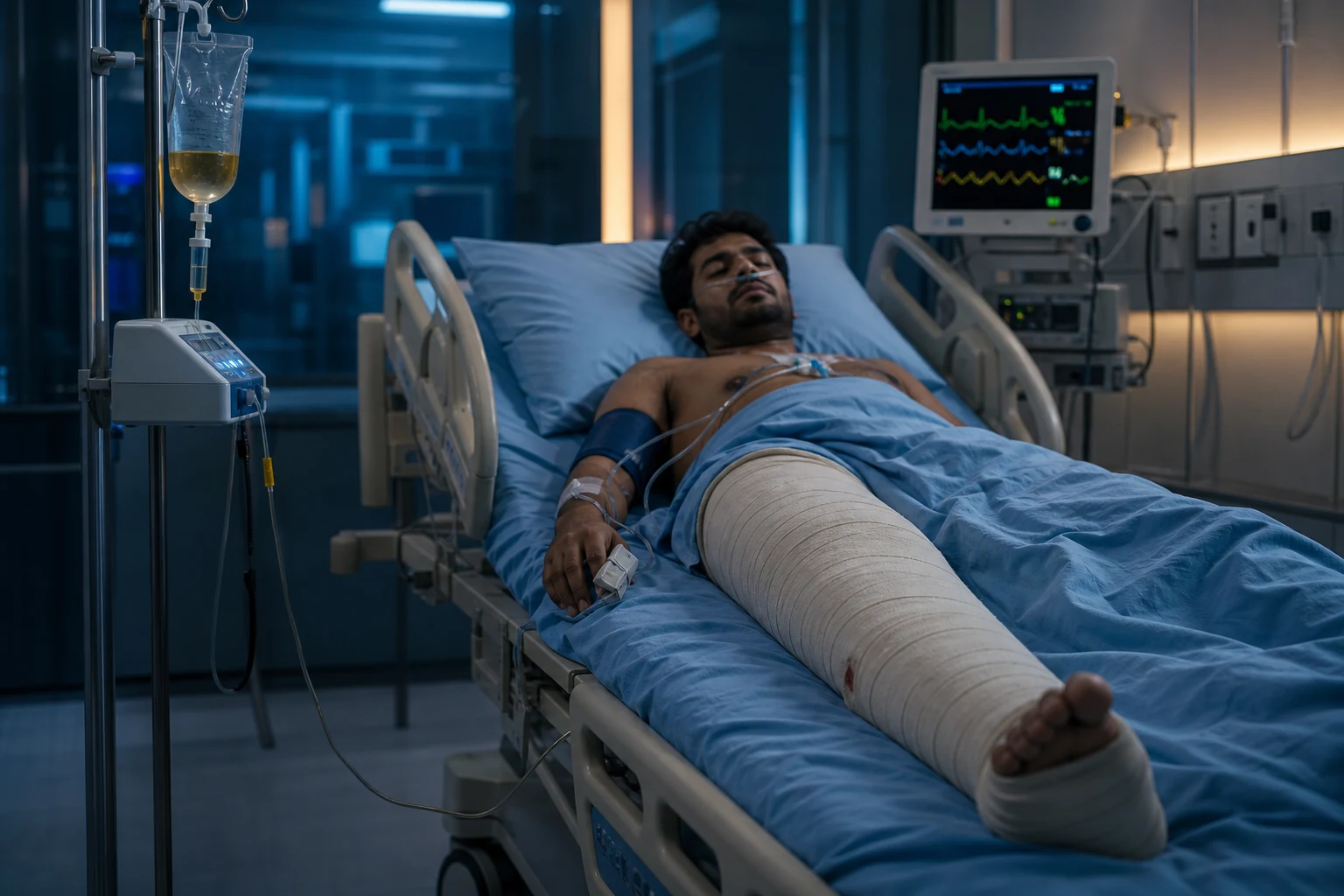
Australia is home to the world's most venomous snakes — all are elapids (family Elapidae — front-fanged, fixed fangs). Despite the extreme toxicity of Australian snake venom, death is uncommon (approximately 2-3 per year nationally) because of effective first aid (pressure immobilisation bandage), widely available antivenom, and well-organised clinical pathways. The Australian Snakebite Project (ASP), a prospective multicentre study (2005-2015, ASP-20), enrolled 1,548 suspected snakebites with 835 envenomed patients and provides the evidence base for current management.[2] The intensivist must master: (a) the syndromic approach to diagnosis (the snake type is inferred from the clinical syndrome — VICC, neurotoxicity, myotoxicity — rather than from visual identification, which is notoriously unreliable), (b) the paradox of VICC (extreme coagulopathy but rare bleeding — do NOT reflexively give blood products), (c) the distinction between presynaptic and postsynaptic neurotoxicity (affects reversibility and ventilation duration), (d) the role and limitations of the SVDK, and (e) antivenom dosing (the paradigm shift from multiple vials to ONE vial).[1][2]
The major ANZ venomous snakes — syndromic classification
Major Australian elapid snakes — venom composition and clinical syndromes
| Snake (genus) | Procoagulant (VICC) | Neurotoxic | Myotoxic | Nephrotoxic | Other | Key distinguishing features |
|---|---|---|---|---|---|---|
| Brown snake (Pseudonaja) | YES — dominant (prothrombin activator) | Rare/presynaptic (cardiovascular collapse more common) | No | YES (AKI + thrombotic microangiopathy) | Sudden early collapse (within 1h); thrombotic microangiopathy (13%) | #1 cause of snakebite death (17/23 deaths in ASP-20). Cardiac arrest (2.9%). Most common envenoming type (41%). Platelets NORMAL in simple VICC but LOW in TMA |
| Tiger snake (Notechus) | YES (prothrombin activator) | YES — presynaptic (irreversible) | YES (CK 10,000-100,000) | YES (rhabdomyolysis) | — | Second most common (17%). Causes the FULL TRIAD: VICC + neurotoxic + myotoxic. Southern Australia (Tasmania, Victoria, southern NSW, south-west WA). Presynaptic neurotoxin = prolonged ventilation |
| Taipan (Oxyuranus) | YES (prothrombin activator) | YES — presynaptic (irreversible) | YES | YES | — | Most toxic land snake (inland taipan — LD50 most potent). Rare (far north Queensland + NT). Causes severe VICC + neurotoxicity + myotoxicity. High mortality if untreated |
| Death adder (Acanthophis) | No (usually) | YES — POSTSYNAPTIC (curare-like — REVERSIBLE) | No | No | — | Only Australian snake with purely postsynaptic neurotoxin — resembles myasthenia gravis — responds to antivenom AND neostigmine. Found in eastern and northern Australia. Descending paralysis but REVERSIBLE |
| Black snake (Pseudechis) — red-bellied black, mulga | Mild/anticoagulant (less severe VICC) | Rare | YES — dominant (myotoxin) | YES (rhabdomyolysis) | Local pain and swelling (more than other elapids) | Third most common (16%). Red-bellied black snake rarely causes severe envenoming. Mulga/king brown snake more severe. Myotoxicity is the dominant feature |
| Rough-scaled snake (Tropidechis) | YES | Rare | YES | Possible | — | Similar to tiger snake syndrome. Restricted to north-east NSW and south-east Queensland. Rare |
| Sea snakes (Hydrophiidae) | No | YES (presynaptic + postsynaptic) | YES — dominant | YES (rhabdomyolysis) | — | Rare in Australia. Myotoxicity + neurotoxicity. Found in coastal waters. Bite may not be painful |
Pathophysiology — venom composition determines the syndrome
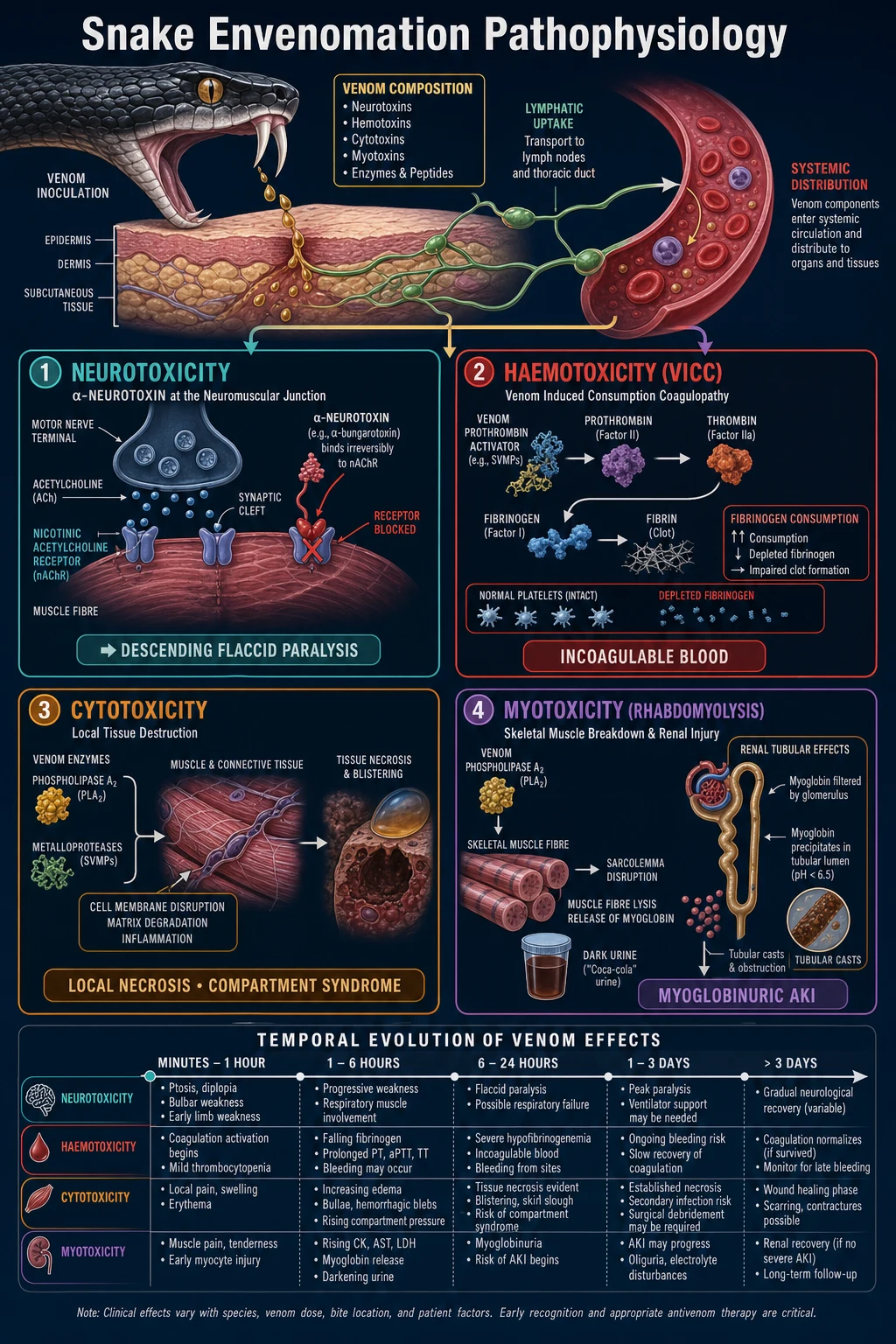
Australian elapid venoms contain different toxin families that produce distinct clinical syndromes. Understanding the mechanism of each toxin is essential for rational management. [1]
Procoagulant toxins — prothrombin activators (brown, tiger, taipan, rough-scaled)
The venom of brown, tiger, taipan, and rough-scaled snakes contains prothrombin converters (group C or group D prothrombin activators) that directly activate prothrombin → thrombin → massive fibrinogen consumption + factor V, VIII, X consumption → VICC. This is NOT DIC — there is no systemic activation of endogenous coagulation. The venom acts as an exogenous enzyme that bypasses the normal regulatory mechanisms. The result is: [1]
- INR >5 (often unrecordable — >20)
- aPTT prolonged (factors consumed)
- Fibrinogen <0.5 g/L (often unrecordable)
- D-dimer massively elevated (>20 ug/mL — from simultaneous plasminogen activation and fibrinolysis)
- Platelets NORMAL (the key distinction from DIC and thrombotic microangiopathy) [1]
The venom also activates plasminogen → plasmin → fibrinolysis → the clot that was formed is immediately lysed. This is the paradox: the patient has massive consumption (looks anticoagulated on lab) but the simultaneous clotting and lysis means there is no stable intravascular thrombus and no true anticoagulated state — hence bleeding is rare despite INR >10.[3]
Neurotoxins — presynaptic vs postsynaptic
Presynaptic vs postsynaptic neurotoxins — critical clinical distinction
| Feature | Presynaptic neurotoxins (phospholipase A2) | Postsynaptic neurotoxins (three-finger toxins / alpha-neurotoxins) |
|---|---|---|
| Snakes | Tiger, brown, taipan, rough-scaled | Death adder (and some sea snakes) |
| Site of action | Presynaptic nerve terminal (motor end plate) | Postsynaptic nicotinic acetylcholine receptor (NMJ) |
| Mechanism | Phospholipase A2 destroys the presynaptic nerve terminal membrane → prevents acetylcholine release → terminal is structurally DAMAGED | Competitive antagonist at the nicotinic ACh receptor — blocks ACh binding (curare-like) — receptor is structurally intact |
| Reversibility | IRREVERSIBLE — the nerve terminal is physically destroyed → recovery requires nerve sprouting and reinnervation (days-weeks) | REVERSIBLE — once antivenom binds the circulating toxin, the blocked receptors recover |
| Response to antivenom | Prevents FURTHER damage but does NOT reverse established paralysis — antivenom must be given BEFORE nerve terminal damage is complete | Dramatic response to antivenom — paralysis reverses within hours |
| Response to neostigmine | NO response (nerve terminal destroyed — no ACh to release) | YES response (neostigmine inhibits acetylcholinesterase → increases ACh at the synapse → overcomes competitive blockade) — diagnostic and therapeutic |
| Onset | Slower (hours) — progressive | May be rapid |
| Duration of ventilation | PROLONGED — days to weeks (nerve terminal regeneration) | Short — hours to 1-2 days (once antivenom given) |
| Pupil reflex / DTRs | Pupils reactive, DTRs preserved early (pure motor neuropathy) | Pupil reflex may be impaired (some alpha-toxins also affect parasympathetic), DTRs may be reduced |
This distinction is exam-critical: death adder bite (postsynaptic) responds to antivenom + neostigmine and ventilation may be avoided or brief. Tiger/taipan/brown neurotoxicity (presynaptic) does NOT respond to neostigmine and requires prolonged ventilation (days) — antivenom prevents worsening but cannot reverse damaged nerve terminals.[1][4]
Myotoxins — phospholipase A2 (tiger, black, taipan, sea snakes)
Some phospholaxis A2 toxins are myotoxic — they damage skeletal muscle cell membranes → rhabdomyolysis → CK release (10,000-100,000+ U/L) → myoglobinuria → pigment nephropathy (AKI). Clinical features: muscle pain and tenderness (especially trunk and proximal limbs), dark urine (myoglobinuria), rising CK. The myotoxicity may not appear for 1-3 hours after the bite and peaks at 12-24h. Red-bellied black snake and mulga snake are predominantly myotoxic.[1]
Nephrotoxins and thrombotic microangiopathy (brown snake)
AKI in snake envenomation is multifactorial: (a) rhabdomyolysis (pigment nephropathy — myoglobin is nephrotoxic), (b) direct nephrotoxicity (some venoms directly damage renal tubular cells), (c) thrombotic microangiopathy (TMA) — seen in 13% of brown snake VICC cases — presents with severe thrombocytopenia (<20 x 10^9/L), microangiopathic haemolytic anaemia (MAHA — fragmented red cells on blood film), and AKI requiring dialysis (onset 1-3 days post-bite). TMA is distinct from simple VICC: in VICC platelets are normal; in TMA platelets are severely low. The mechanism is thought to be direct endothelial damage by the venom (similar to atypical HUS or TTP but NOT caused by ADAMTS13 deficiency). Management is supportive: dialysis, transfusion if needed. The role of plasma exchange (PE) is uncertain — the ASP study found no clear benefit of PE over supportive care.[5]
Sudden cardiovascular collapse (brown snake)
A distinctive feature of brown snake envenomation is sudden early collapse — typically within 1 hour of the bite. The patient collapses, often transiently, with hypotension, sometimes progressing to cardiac arrest. The mechanism is debated: (a) transient venom-induced cardiac depression, (b) an anaphylactoid reaction to venom, (c) transient neurotoxic effect on autonomic function. Early collapse is a HIGH-RISK feature — it signals severe envenoming and indicates need for immediate antivenom and resuscitation. In ASP-20, 25/835 (2.9%) envenomed patients had cardiac arrest and 10 deaths followed out-of-hospital cardiac arrest.[2]
Clinical presentation — the syndromic approach
Clinical syndromes of Australian snake envenomation
| Syndrome | Venom action | Clinical features | Snakes | Lab findings |
|---|---|---|---|---|
| VICC (procoagulant) | Prothrombin activator → factor consumption + plasminogen activation | Usually asymptomatic (no bleeding despite INR >10). Occasionally: gingival bleeding, haematuria. Rare: intracranial haemorrhage (the feared but uncommon complication — 1.6% in ASP-20) | Brown, tiger, taipan, rough-scaled | INR >5, aPTT prolonged, fibrinogen <0.5, D-dimer >20, platelets NORMAL, CK normal (no myotoxicity) |
| Neurotoxic (presynaptic) | Phospholipase A2 → presynaptic nerve terminal destruction | Descending flaccid paralysis: ptosis (early — 'sleepy eyes') → ophthalmoplegia (diplopia) → bulbar palsy (dysarthria, dysphagia, drooling) → proximal limb weakness → respiratory failure. Onset 1-6h. Pupil reflex PRESERVED, DTRs preserved early | Tiger, brown (rare), taipan, rough-scaled | CK may be elevated (if coexisting myotoxicity). Normal INR unless coexisting VICC |
| Neurotoxic (postsynaptic) | Alpha-neurotoxin → competitive ACh receptor blockade | Same descending paralysis pattern BUT responsive to neostigmine and antivenom. Onset may be faster | Death adder, some sea snakes | Neostigmine test: improvement within minutes confirms postsynaptic block |
| Myotoxic | Phospholipase A2 → skeletal muscle membrane damage | Muscle pain and tenderness (trunk, proximal limbs), weakness (proximal > distal), dark urine (myoglobinuria). Onset 1-3h, peaks 12-24h | Tiger, black (red-bellied black, mulga), taipan, sea snakes | CK 10,000-100,000+, myoglobin in urine, AST/ALT elevated (from muscle), creatinine rising (AKI) |
| Nephrotoxic / TMA | Direct nephrotoxicity + rhabdomyolysis pigment nephropathy + endothelial damage | Oliguria/anuria at 1-3 days. MAHA: jaundice, fatigue. Hypertension. Occurs mainly after brown snake (TMA) or with severe myotoxicity | Brown (TMA), tiger/taipan/black (rhabdomyolysis AKI) | AKI (creatinine rising), thrombocytopenia (<20 — TMA only), fragmented red cells (schistocytes — TMA), LDH elevated, haptoglobin low (haemolysis) |
| Cardiovascular collapse | Unknown — transient cardiac depression / anaphylactoid | Sudden collapse within 1h of bite, hypotension, may progress to cardiac arrest. Usually transient but signals severe envenoming | Brown snake (mainly) | VICC usually present on bloods |
| Local effects | Cytotoxic components | Usually MINIMAL local effects (Australian elapids — unlike viperids). Some local pain, swelling, bruising at bite site. Red-bellied black snake causes more local pain/swelling than others | Black snake (more local effects); others minimal | — |
VICC vs DIC vs warfarin — the coagulopathy comparison
| Feature | VICC (snakebite) | DIC (sepsis, trauma, malignancy) | Warfarin / anticoagulant |
|---|---|---|---|
| Mechanism | Exogenous prothrombin activator → factor consumption + plasminogen activation | Systemic activation of endogenous coagulation + fibrinolysis (consumption + microvascular thrombosis) | Vitamin K antagonism → reduced factors II, VII, IX, X + protein C/S |
| INR | >5 (often >10, unrecordable) | Prolonged (moderate) | Prolonged (proportional to dose) |
| Fibrinogen | <0.5 g/L (unrecordable) | Low (consumption) | Normal (not consumed) |
| D-dimer | Massively elevated (>20 ug/mL) | Elevated | Normal or mildly elevated |
| Platelets | NORMAL (key — not consumed) | LOW (consumption — thrombocytopenia) | Normal |
| aPTT | Prolonged | Prolonged | Prolonged |
| Bleeding risk | RARE (1.6% major haemorrhage — venom clots AND lyses simultaneously — no stable anticoagulated state) | COMMON (both bleeding AND microvascular thrombosis) | COMMON (proportional to INR) |
| Thrombosis risk | Very low (simultaneous lysis) | HIGH (microvascular thrombosis — the defining feature) | Low |
| Recovery | 12-24h with antivenom (liver resynthesises factors) | Treat the underlying cause (sepsis, etc.) | Days (depending on half-life of factors — II ~60h) |
| Treatment of coagulopathy | Antivenom — NOT blood products (unless bleeding) | Treat underlying cause + blood products if bleeding | Vitamin K + FFP/PCC if bleeding or urgent reversal |
| Schistocytes (MAHA) | Absent (unless TMA — brown snake) | May be present (microangiopathy) | Absent |
Management protocol — the first 12 hours
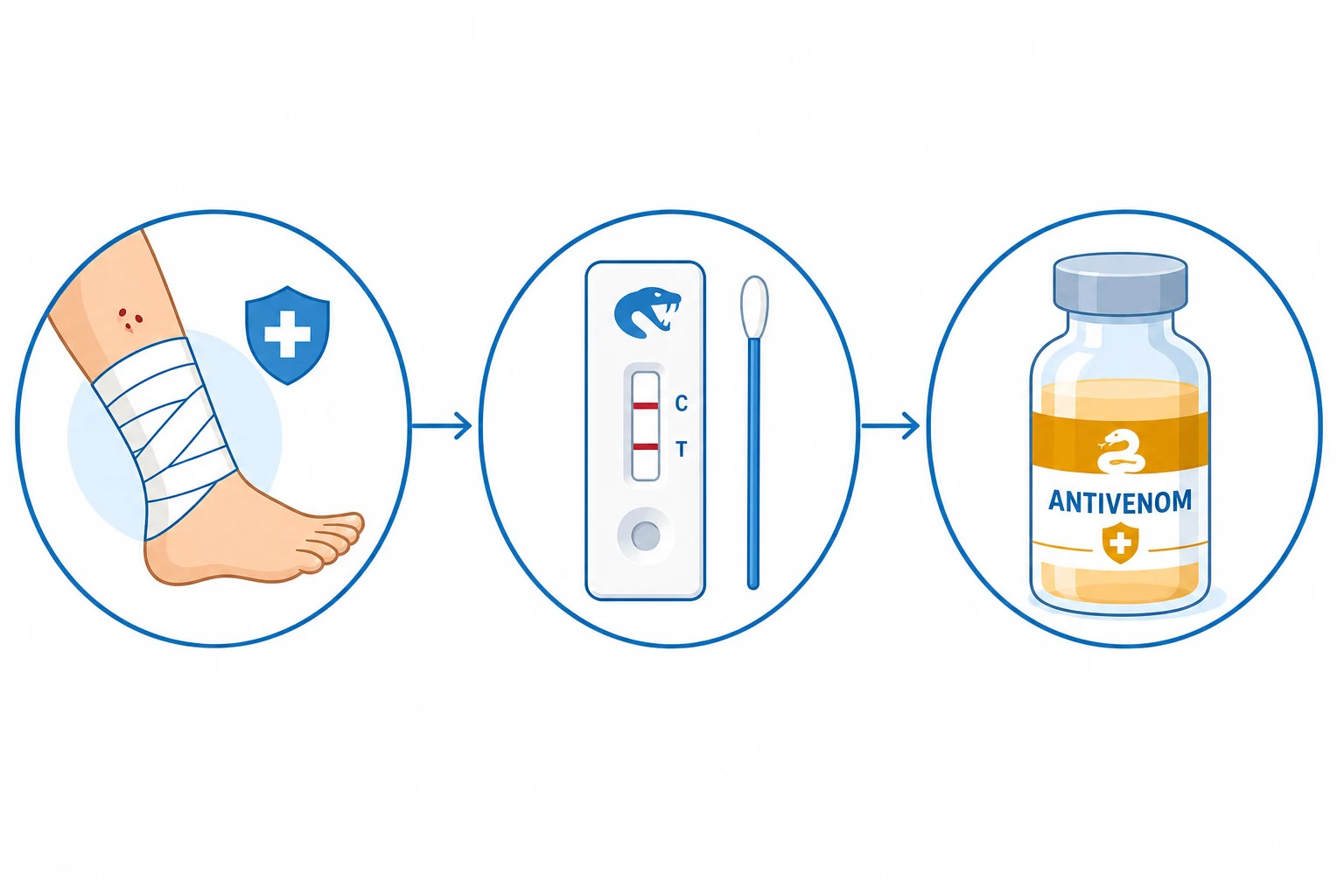
Snake envenomation management — the first 12 hours
-
FIRST AID — PRESSURE IMMOBILISATION BANDAGE (PIB):
- Apply a broad (10-15 cm) crepe bandage firmly over the bite site (as for a sprained ankle — not so tight as to occlude arterial flow) and extend proximally to cover the whole limb
- Apply a SPLINT to immobilise the limb (bandage + splint + immobilise — all three are needed)
- Immobilise the PATIENT (do not allow walking — carry on stretcher) — muscle contraction pumps lymphatic venom into the circulation
- The PIB slows LYMPHATIC venom transport (not venous — venom moves via lymphatics, not veins) — delays systemic envenoming by HOURS (proven in animal models)
- DO NOT REMOVE the PIB until the patient is in hospital with IV access established and antivenom at the bedside — removal causes a sudden surge of venom into the circulation ('bolus effect') → can precipitate collapse or worsening envenoming
- Do NOT wash the bite site (venom residue on skin is used for SVDK swab)
- Do NOT cut, suck, or apply ice — these are HARMFUL and do not work
- If the patient presents WITHOUT a PIB and is already envenomed — it is too late for PIB (venom already systemic) — proceed directly to management [1]
-
ASSESSMENT AND RESUSCITATION (on arrival):
- ABC: assess airway (bulbar palsy from neurotoxicity → aspiration risk), breathing (respiratory failure from neurotoxic paralysis), circulation (brown snake collapse → hypotension)
- IV access x2 (large bore) — BEFORE removing the PIB
- Bloods: FBC (platelets), coagulation (INR, aPTT, fibrinogen, D-dimer), CK, U&E (creatinine), LFTs, group and save, troponin if collapse, blood gas (lactate)
- Urinalysis: dipstick (blood positive on dipstick but no RBC on microscopy = myoglobinuria from rhabdomyolysis)
- ECG and continuous cardiac monitoring (arrhythmia risk, especially after collapse)
- Do NOT remove PIB yet — first obtain baseline bloods, then remove PIB and take a bite site swab for SVDK [1]
-
DETERMINE IF ENVENOMING IS PRESENT (before antivenom):
- Envenoming is CLINICAL + LABORATORY — NOT based on SVDK alone
- Evidence of systemic envenoming: VICC (INR elevated, fibrinogen low, D-dimer high), neurotoxicity (ptosis, ophthalmoplegia, bulbar palsy), myotoxicity (CK elevated, muscle pain), nephrotoxicity (AKI, haematuria), thrombotic microangiopathy (thrombocytopenia + MAHA), or sudden collapse
- If NO evidence of envenoming: observe for 12 hours with serial bloods (INR, aPTT, CK) at 1h, 3h, 6h, 12h — most envenoming manifests within 6h but some (e.g., myotoxicity) may take longer. If bloods remain normal at 12h → discharge
- Do NOT give antivenom to non-envenomed patients (24% hypersensitivity reaction rate — unnecessary risk) [1]
-
SNAKE VENOM DETECTION KIT (SVDK):
- Take a swab from the bite site (the PIB is removed, bite site swabbed — the venom on the skin is the sample) BEFORE cleaning the wound
- Also test URINE if bite site swab is negative (venom is excreted in urine once systemic)
- SVDK identifies the snake GROUP (brown, tiger, black, death adder, taipan) — NOT the exact species
- LIMITATIONS: 5% false negative in envenomed patients (snake not detected), 36% false positive in non-envenomed patients (contamination / non-significant venom on skin)
- NEVER use SVDK to decide WHETHER to give antivenom — use it only to guide WHICH antivenom (monovalent selection)
- If SVDK is unavailable or unreliable → use the CLINICAL SYNDROME + GEOGRAPHY to determine the likely snake (this is the preferred method per Isbister)[1]
-
ANTIVENOM ADMINISTRATION (once envenoming confirmed):
- Choice: monovalent antivenom if the snake is identified (by SVDK or clinical/geographic assessment) — ONE monovalent vial is sufficient. If TWO snakes are possible → give TWO monovalent antivenoms (e.g., brown + tiger — the two most common). If the snake CANNOT be determined → POLYVALENT antivenom (covers all 5 major groups) — but polyvalent requires large volume and carries higher reaction risk
- DOSE: ONE VIAL of monovalent antivenom is sufficient to bind ALL circulating venom (ASP-20 confirmed: median dose declined from 4 vials to 1 vial without harm — the earlier practice of multiple vials was unnecessary and increased hypersensitivity reactions)[2]
- Pre-medication: give SUBCUTANEOUS ADRENALINE 0.25 mg (adults) 5-10 minutes before antivenom to reduce hypersensitivity reactions (24% reaction rate without pre-med; adrenaline reduces this). Do NOT give IV adrenaline pre-med routinely (risk of hypertension/arrhythmia in older patients). Also give an antihistamine (e.g., promethazine) — though the evidence for antihistamine is weaker than for adrenaline
- Dilution: dilute antivenom in normal saline (1:10 — e.g., 1 vial in 100-500 mL saline for monovalent; polyvalent in larger volume) and infuse over 30 minutes (NOT bolus). For children, dilute in 10 mL/kg saline
- Monitoring: during infusion, monitor for hypersensitivity (rash, itching, hypotension, bronchospasm). If reaction occurs → STOP infusion, give adrenaline IV/IM, hydrocortisone, antihistamine, then RESUME at slower rate once reaction controlled
- Repeat: if envenoming does not improve or worsens after 1 vial (e.g., INR still rising, neurotoxicity progressing) → give a SECOND vial (rarely needed — 1 vial neutralises all circulating venom). Do NOT give more than 2 vials routinely
-
VICC MANAGEMENT — THE CRITICAL DECISION:
- Give ANTIVENOM (as above) — this neutralises circulating venom and stops further factor consumption
- DO NOT give FFP, cryoprecipitate, or platelets UNLESS the patient is ACTIVELY BLEEDING (gingival bleeding, haematuria, intracranial haemorrhage, GI bleed). The reasons: (a) the coagulopathy resolves spontaneously in 12-24h as the liver resynthesises factors (antivenom stops the consumption); (b) giving FFP provides more substrate (fibrinogen, prothrombin) for the venom prothrombin activator to consume — PARADOXICAL WORSENING; (c) FFP risks transfusion reactions including TRALI; (d) the Isbister RCT showed FFP did NOT hasten VICC recovery in Russell's viper bite and one patient developed TRALI from FFP[6]
- If the patient IS actively bleeding (e.g., intracranial haemorrhage — rare but devastating): give antivenom FIRST (neutralise venom), THEN give blood products (FFP, cryoprecipitate, platelets, red cells) — this is the one scenario where blood products are appropriate
- Monitor INR, fibrinogen every 6-12h — expect gradual improvement over 12-24h (not immediate — antivenom does NOT reverse consumed factors; it only stops further consumption — the liver must resynthesise)
- Do NOT use heparin, tranexamic acid, or other procoagulants — no role in VICC
-
NEUROTOXICITY MANAGEMENT:
- Monitor for descending paralysis: assess hourly for ptosis, ophthalmoplegia (ask patient to follow finger — ptosis + limited eye movement is the earliest sign), bulbar function (speech, swallow, cough), respiratory effort (FVC, NIF — serial measurements)
- Intubate EARLY if neurotoxicity is progressing — bulbar palsy (aspiration risk) and declining FVC (<15-20 mL/kg or <1 L) are indications. Do NOT wait for respiratory arrest — the paralysis is unpredictable and can progress rapidly
- Ventilation strategy: pressure support or volume control — the paralysis is flaccid so lung compliance is normal (unlike ARDS). Prolonged ventilation may be needed (days for presynaptic neurotoxicity — nerve terminal regeneration)
- Determine if presynaptic or postsynaptic: death adder (postsynaptic) → give antivenom + consider NEOSTIGMINE (1-2.5 mg IV with glycopyrrolate) — this reverses the competitive blockade and may avoid intubation or hasten extubation. Presynaptic (tiger, taipan, brown) → neostigmine is NOT effective (nerve terminal destroyed) — prolonged ventilation required
- Antivenom prevents FURTHER neurotoxicity but does NOT reverse established presynaptic paralysis (the nerve terminal is already destroyed). For presynaptic neurotoxicity, ventilation may be needed for DAYS [1]
-
MYOTOXICITY AND AKI MANAGEMENT:
- Aggressive IV fluid resuscitation to maintain urine output (>1 mL/kg/hr) — prevents pigment nephropathy (myoglobin is nephrotoxic in low-flow states)
- Monitor CK every 6h — if rising rapidly, increase fluid rate
- Consider sodium bicarbonate (alkalinisation of urine — theoretical benefit for myoglobin clearance but unproven) — 1-2 mmol/kg over 1-2h to keep urine pH >6.5
- Renal replacement therapy (CVVH or intermittent HD) if AKI is severe (oliguric, creatinine rising, hyperkalaemia, acidosis) — brown snake TMA may require dialysis for 2-8 weeks
- For TMA (brown snake): supportive care (dialysis, transfusion for anaemia). The role of plasma exchange is UNCERTAIN — the ASP study found no clear benefit. Do NOT give platelets unless life-threatening bleeding (platelet transfusion may worsen microvascular thrombosis in TMA, as in TTP) [1]
-
OBSERVATION AND DISCHARGE:
- All patients with suspected snakebite must be observed for MINIMUM 12 hours with serial bloods (INR, aPTT, CK at 1h, 3h, 6h, 12h)
- If envenomed: ICU admission for monitoring (neurotoxicity, AKI, VICC recovery)
- After antivenom: monitor for serum sickness (delayed hypersensitivity — fever, rash, arthralgia at 5-14 days post-antivenom) — advise patient to return if symptoms. Give oral prednisone if serum sickness develops
- Discharge criteria: asymptomatic, bloods normalising (INR <2, CK stable or falling, renal function stable), no neurotoxicity for 12h. Follow-up at 1 week for repeat bloods and serum sickness review
Antivenom — the paradigm shift in dosing
Old vs new antivenom dosing paradigm (the ASP-20 evidence)
| Feature | OLD practice (pre-2010) | NEW practice (ASP-20, 2017 onwards) |
|---|---|---|
| Number of vials | Multiple vials (4-6+) — 'more is better' | ONE vial of monovalent antivenom is sufficient to bind ALL circulating venom |
| Rationale for high dose | Fear of inadequate neutralisation | Unfounded — pharmacokinetic studies show 1 vial contains enough antibody to neutralise all circulating venom |
| Evidence | Empiric / expert opinion | ASP-20 (Johnston 2017): median dose declined from 4 to 1 vial over the study period with NO increase in adverse outcomes[2] |
| Hypersensitivity reaction rate | HIGHER (more antivenom = more foreign protein = more reactions) | LOWER (less antivenom = fewer reactions) |
| Cost | Higher (polyvalent = very expensive) | Lower |
| Time to administration | Delayed (waiting to give large volume, preparing multiple vials) | Faster (single vial) |
| When to give more | Routine multiple doses | Only if envenoming FAILS to improve or WORSENS after 1 vial (rare — <5% of cases) |
| Polyvalent vs monovalent | Polyvalent routinely if snake unknown | Monovalent preferred (if snake identified by SVDK or syndrome) — polyvalent only if snake truly cannot be determined (higher volume + reaction risk) |
VICC — why bleeding is rare and why FFP is NOT routinely given
The management of VICC is the single most examined and most misunderstood aspect of snake envenomation. The traditional 'coagulopathy = bleeding risk = give blood products' reflex is WRONG for VICC. [1]
VICC management — what TO do vs what NOT to do
| Action | Correct? | Rationale |
|---|---|---|
| Give antivenom (1 vial monovalent) | YES | Neutralises circulating venom → stops further factor consumption → allows liver to resynthesise factors over 12-24h |
| Observe and wait for INR to improve | YES | The coagulopathy is self-limiting — INR improves over 12-24h as liver resynthesises factors. Bleeding is rare (1.6% major haemorrhage) |
| Give FFP / cryoprecipitate / platelets routinely | NO (unless actively bleeding) | (a) Provides more substrate for venom to consume (paradoxical worsening). (b) Risks transfusion reactions (TRALI). (c) Does not hasten recovery (Isbister RCT). (d) Bleeding is rare so the risk-benefit is unfavourable |
| Give FFP / blood products if ACTIVELY bleeding | YES | If intracranial haemorrhage or other major bleed: give antivenom FIRST (neutralise venom), THEN give blood products to replace consumed factors |
| Give heparin | NO | No role — the coagulopathy is from consumption, not from thrombin generation that heparin would inhibit |
| Give tranexamic acid | NO | No role — the fibrinolysis is venom-driven (plasminogen activation), not pathological tPA release that TXA would inhibit |
| Give vitamin K | NO | No role — the coagulopathy is not vitamin K-dependent factor deficiency (factors are consumed, not under-produced) |
| Repeat antivenom if INR does not improve | Rarely | 1 vial binds all circulating venom. If INR still rising after 1 vial, give a 2nd vial (rare). But expect INR to take 12-24h to normalise — do NOT keep giving antivenom for a high INR that is stable or slowly falling |
| Monitor INR every 6-12h | YES | To track recovery. INR should fall gradually over 12-24h. Fibrinogen rises in parallel |
The Isbister 2009 study (ASP, PMID 19570990) found that neither antivenom dose nor timing significantly influenced VICC recovery time (median recovery 14.4h to INR <2). This does NOT mean antivenom is useless — it means that once venom is neutralised (by any dose of antivenom), recovery depends on hepatic factor resynthesis, which takes 12-24h regardless. Antivenom IS needed to STOP ongoing consumption — without it, the venom continues to activate prothrombin and consume factors as they are produced. The 2017 RCT (PMID 28106331) confirmed that FFP did NOT hasten VICC recovery and one patient developed TRALI from FFP.[3][6]
Clinical pearls
Red flags
Prognosis
Snake envenomation prognosis — factors and outcomes
| Factor | Effect on prognosis | Notes |
|---|---|---|
| Snake type | Brown snake = highest mortality (17/23 deaths). Death adder = better (postsynaptic, reversible). Tiger/taipan = moderate (risk from neurotoxicity + myotoxicity) | Brown snake bite carries the highest risk of cardiac arrest and TMA |
| Sudden early collapse | Worse (high-risk feature) | Signals severe envenoming — 2.9% cardiac arrest rate |
| Time to antivenom | Earlier = better (for preventing progression) | Antivenom does NOT reverse established presynaptic neurotoxicity or consumed factors — but it prevents WORSENING. Median time to first antivenom in ASP-20 was 4.3h (IQR 2.7-6.3h) — this is TOO LONG and improved early diagnostic strategies are needed |
| Pressure immobilisation bandage | Applied correctly = better (delays systemic envenoming) | PIB delays venom spread by HOURS — buys time for hospital transfer |
| VICC | Recovers in 12-24h with antivenom | Bleeding is rare (1.6%). Intracranial haemorrhage is the feared complication (6/23 deaths in ASP-20) |
| Neurotoxicity (presynaptic) | Prolonged ventilation (days) — recovery by nerve regeneration | Complete recovery expected but ICU stay is long |
| Neurotoxicity (postsynaptic — death adder) | Rapid recovery with antivenom + neostigmine | Best prognosis of neurotoxic syndromes |
| Myotoxicity | Recovery in days-weeks. AKI may require RRT | CK peaks at 12-24h then falls. Full muscle recovery expected |
| Thrombotic microangiopathy (brown snake) | AKI requiring dialysis for 2-8 weeks. Full renal recovery expected | 13% of brown snake VICC cases. Plasma exchange role uncertain |
| Cardiac arrest | Poor (10/25 died in ASP-20) | Out-of-hospital cardiac arrest from brown snake is the leading cause of snakebite death |
| Overall mortality | 1-2% with antivenom (23 deaths over 10 years in ASP-20 — median 2 per year nationally) | Higher without antivenom or with delayed presentation |
| Serum sickness | Self-limiting (5-14 days post-antivenom) | Incidence proportional to antivenom dose — another reason for 1-vial dosing |
Key trials and evidence
Johnston 2017 — Australian Snakebite Project, 2005-2015 (ASP-20) (PMID 28764620)
Source
Medical Journal of Australia — the definitive prospective multicentre study of Australian snakebite (10 years, 1,548 patients, 835 envenomed)
Snake types
Brown snake 41%, tiger snake 17%, red-bellied black snake 16%. Clinical syndromes: VICC 73%, myotoxicity 17%, AKI 12%
Deaths
23 deaths (median 2/year): brown 17, tiger 4, unknown 2. 10 followed out-of-hospital cardiac arrest, 6 followed intracranial haemorrhage
Antivenom dosing
Median dose DECLINED from 4 vials to 1 vial over the study period with NO increase in adverse outcomes — confirming that 1 vial is sufficient
SVDK reliability
5% false negative in envenomed patients, 36% false positive in non-envenomed — SVDK is unreliable and should not drive antivenom decisions alone
Reactions
24% hypersensitivity reaction rate to antivenom (6% severe — hypotension, hypoxaemia). 49 non-envenomed patients received antivenom unnecessarily
Clinical bottom line
One vial of antivenom is sufficient. SVDK is unreliable. Syndromic diagnosis is preferred. Major haemorrhage is rare (1.6%). Cardiac arrest is the leading cause of death (brown snake)
Isbister 2009 — Failure of antivenom to improve recovery in snakebite coagulopathy (PMID 19570990)
Study design
Prospective cohort study (Australian Snakebite Project) — 167 cases of VICC
Population
167 patients with VICC from Australian elapid envenomation (median age 41, 78% male)
Intervention
Analysis of the effect of antivenom DOSE and TIMING, and FFP, on time to VICC recovery (INR <2)
Key finding
Neither antivenom dose nor timing significantly influenced VICC recovery time (median 14.4h to INR <2). FFP within 4h appeared to shorten recovery (12% recovered at 6h with FFP vs 2.5% without) — BUT this was observational (not randomised) and confounded by indication
Interpretation
Antivenom is still ESSENTIAL (it stops ongoing venom-driven consumption — without it, the venom continues to consume resynthesised factors). But once venom is neutralised, recovery depends on hepatic factor resynthesis (12-24h), which antivenom dose does not accelerate. More antivenom does NOT speed up VICC recovery
Clinical bottom line
One vial of antivenom is sufficient to neutralise circulating venom. The coagulopathy resolves over 12-24h as the liver resynthesises factors — do NOT keep giving antivenom for a high INR that is stable or falling
Isbister 2017 — RCT of FFP for snakebite coagulopathy (PMID 28106331)
Study design
Open-label randomised controlled trial — Sri Lanka (Russell's viper bite — VICC)
Population
141 patients with VICC from Russell's viper bite (70 high-dose antivenom 20 vials vs 71 low-dose antivenom 10 vials + FFP)
Intervention
High-dose antivenom (20 vials) vs low-dose antivenom (10 vials) + 4 units FFP
Primary outcome
Proportion with INR <2 at 6h post-antivenom: 33% high-dose vs 42% low-dose/FFP (no significant difference)
Key finding
FFP did NOT hasten VICC recovery. Low-dose antivenom (10 vials) did not worsen VICC compared to high-dose (20 vials). One patient given FFP developed TRALI (transfusion-related acute lung injury)
Clinical bottom line
FFP does NOT improve VICC recovery and carries transfusion risks (TRALI). Low-dose antivenom is as effective as high-dose. This RCT (though in Russell's viper, not Australian elapids) supports the VICC management principle: antivenom YES, FFP NO (unless bleeding)
Exam practice — SAQ
SAQ — Brown snake VICC and antivenom strategy
10 minutes · 10 marks
A 42-year-old man collapses after a suspected brown snake bite in rural NSW. Pressure immobilisation bandage is in situ. On arrival: alert, BP 95/55 after fluids, no active bleeding. Labs: INR >10, fibrinogen unrecordable, D-dimer >20, platelets 185, CK 220. SVDK from the bite site is indeterminate.
References
- [1]Isbister GK, Brown SG, Page CB, et al. Snakebite in Australia: a practical approach to diagnosis and treatment Med J Aust, 2013.PMID 24329653
- [2]Johnston CI, Ryan NM, Page CB, et al. The Australian Snakebite Project, 2005-2015 (ASP-20) Med J Aust, 2017.PMID 28764620
- [3]Isbister GK, Duffull SB, Brown SG; ASP Investigators. Failure of antivenom to improve recovery in Australian snakebite coagulopathy QJM, 2009.PMID 19570990
- [4]Cheng AC, Currie BJ. Venomous snakebites worldwide with a focus on the Australia-Pacific region: current management and controversies J Intensive Care Med, 2004.PMID 15358944
- [5]Isbister GK, Little M, Cull G, et al. Thrombotic microangiopathy from Australian brown snake (Pseudonaja) envenoming Intern Med J, 2007.PMID 17640187
- [6]Isbister GK, Jayamanne S, Mohamed F, et al. A randomized controlled trial of fresh frozen plasma for coagulopathy in Russell's viper (Daboia russelii) envenoming J Thromb Haemost, 2017.PMID 28106331