ICU · Toxicology
Paracetamol (Acetaminophen) Overdose
Also known as Acetaminophen overdose · Paracetamol poisoning · N-acetylcysteine · NAC · Rumack-Matthew nomogram · NAPQI · Hepatotoxicity · Acute liver failure · King's College Criteria · Centrilobular necrosis · Glutathione depletion · Modified-release paracetamol · Anaphylactoid reaction · Panadol Osteo · CYP2E1
Paracetamol (acetaminophen) overdose — the commonest overdose and a leading cause of the acute liver failure. The metabolism to the toxic NAPQI via the CYP2E1 and the detoxification by the glutathione; the depletion of the glutathione in the overdose and the centrilobular hepatocyte necrosis. The clinical course (the four phases). The Rumack-Matthew nomogram and the treatment line. The N-acetylcysteine (the NAC) — the antidote that replenishes the glutathione, its timing (the effective within 8 hours), and the rate-related anaphylactoid reactions. The King's College criteria for the liver transplant. The management of the staggered and the massive ingestion.
On this page & tools
Your progress
Saved locally on this device.
Target exams
Overview & definition
Paracetamol (acetaminophen) overdose is the commonest overdose in the developed world and the leading cause of the acute liver failure. Most patients do well with the supportive care, but the timely N-acetylcysteine (NAC) within 8 hours of the ingestion prevents the hepatotoxicity almost completely — making the recognition and the early treatment the critical, the time-dependent skill.[1][1]

Pathophysiology: the NAPQI and the glutathione
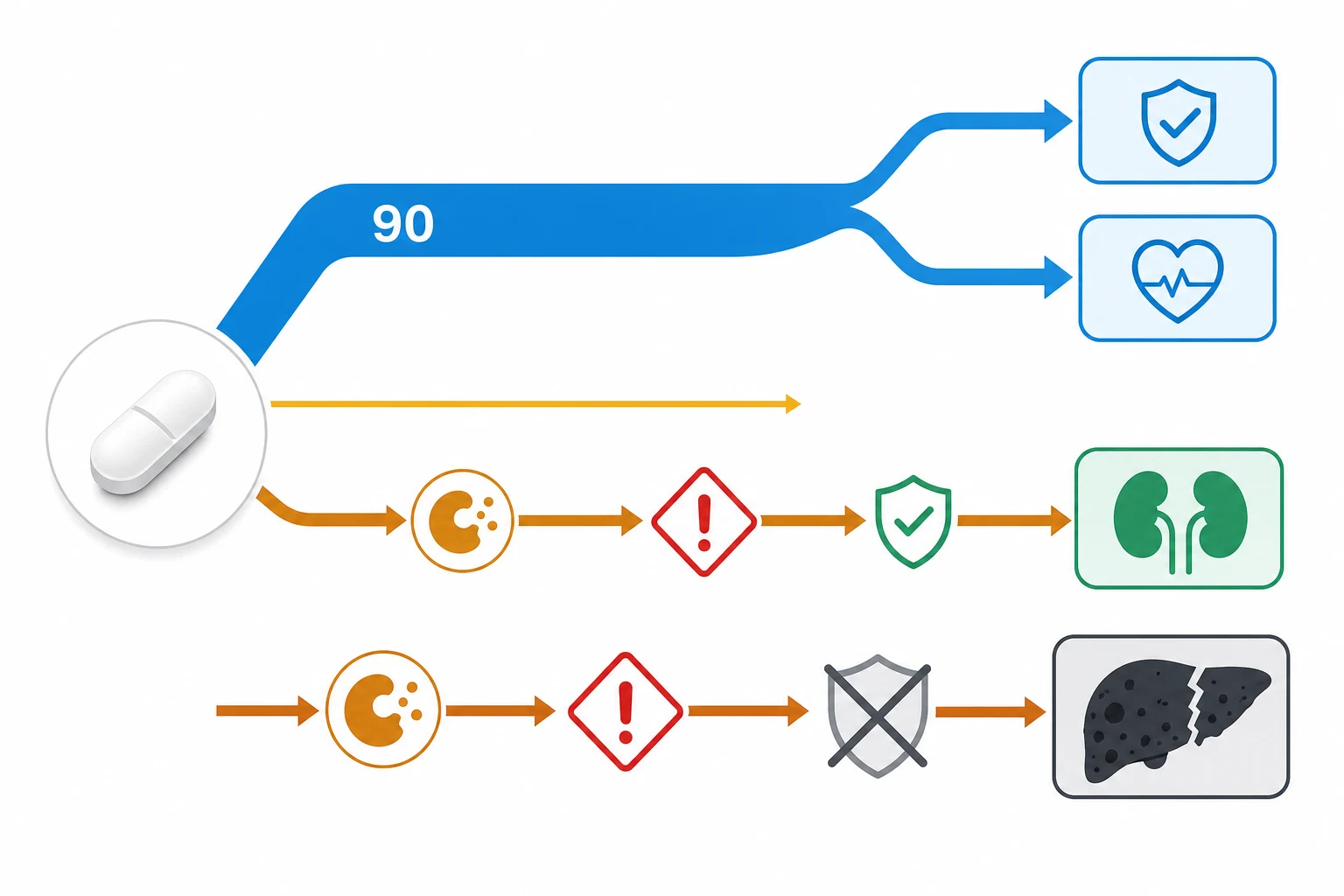
Paracetamol is metabolised by three pathways:[1][1]
- The glucuronidation and the sulphation — about 90 per cent — the safe, the water-soluble conjugates excreted by the kidney.
- The CYP2E1 (and the CYP1A2, the CYP3A4) oxidation — about 5 per cent — to the reactive, the toxic intermediate N-acetyl-p-benzoquinone imine (NAPQI). At the therapeutic dose, the NAPQI is immediately detoxified by the conjugation with the glutathione to the safe mercapturic acid.
- In the overdose, the glucuronidation and the sulphation saturate, the CYP2E1 pathway is up-regulated, and the glutathione stores are depleted (below about 30 per cent of normal). The unbound NAPQI binds the hepatocyte macromolecules (the centrilobular zone 3, the area of the highest CYP2E1) and the covalent binding and the oxidative injury cause the centrilobular (zone-3) hepatocyte necrosis.[1]
The NAC is the antidote because it is the precursor of the cysteine and hence the glutathione — it replenishes the stores and the detoxifies the NAPQI (and may also act as the glutathione substitute and the sulphate donor).[1]
The clinical course (four phases)
| Phase | Time | Features |
|---|---|---|
| 1 | 0 to 24 h | Often asymptomatic, or the nausea, the vomiting, the malaise, the pallor, the diaphoresis. The liver enzymes are normal. The "well-looking" trap. |
| 2 | 24 to 72 h | The right-upper-quadrant pain, the transaminitis (the AST rising first, often into the thousands), the early coagulopathy, the renal injury. |
| 3 | 72 to 96 h | The peak hepatotoxicity — the fulminant hepatic failure, the coagulopathy, the encephalopathy, the lactic acidosis, the renal failure. The maximal AST (can exceed 10 000). |
| 4 | Recovery | If the patient survives, the complete hepatic recovery over the weeks (the no chronic damage). |
The Rumack-Matthew nomogram
The treatment decision for the single acute ingestion is based on the paracetamol level drawn at 4 hours after the ingestion (and up to 24 h), plotted on the Rumack-Matthew nomogram.[1][1]
- The treatment line starts at 150 µg/mL (0.66 mmol/L) at 4 hours and declines semi-logarithmically (in the UK/Australasia; the US line is 150 µg/mL with a "possible treatment" line at 100). A level above the line — give the NAC.
- The nomogram applies only to the single acute ingestion with the known time, between 4 and 24 hours. It does NOT apply to: the staggered ingestion, the repeated supratherapeutic doses, the sustained-release formulation, the unknown time, or the presentation after 24 hours (treat on the clinical and the biochemical grounds). [1]
The investigation
- The paracetamol level at 4 hours (the nomogram).
- The liver function — the AST/ALT (the transaminitis), the bilirubin.
- The coagulation — the INR (the early coagulopathy; the paracetamol itself does NOT cause the isolated INR rise without the hepatotoxicity, so the INR rise IS the liver injury).
- The renal function, the lactate, the venous pH (the poor-prognosis markers), the phosphate (a rising phosphate is the poor prognostic marker).
- The salicylate level (the co-ingestion).[1][1]
Treatment: N-acetylcysteine (NAC)
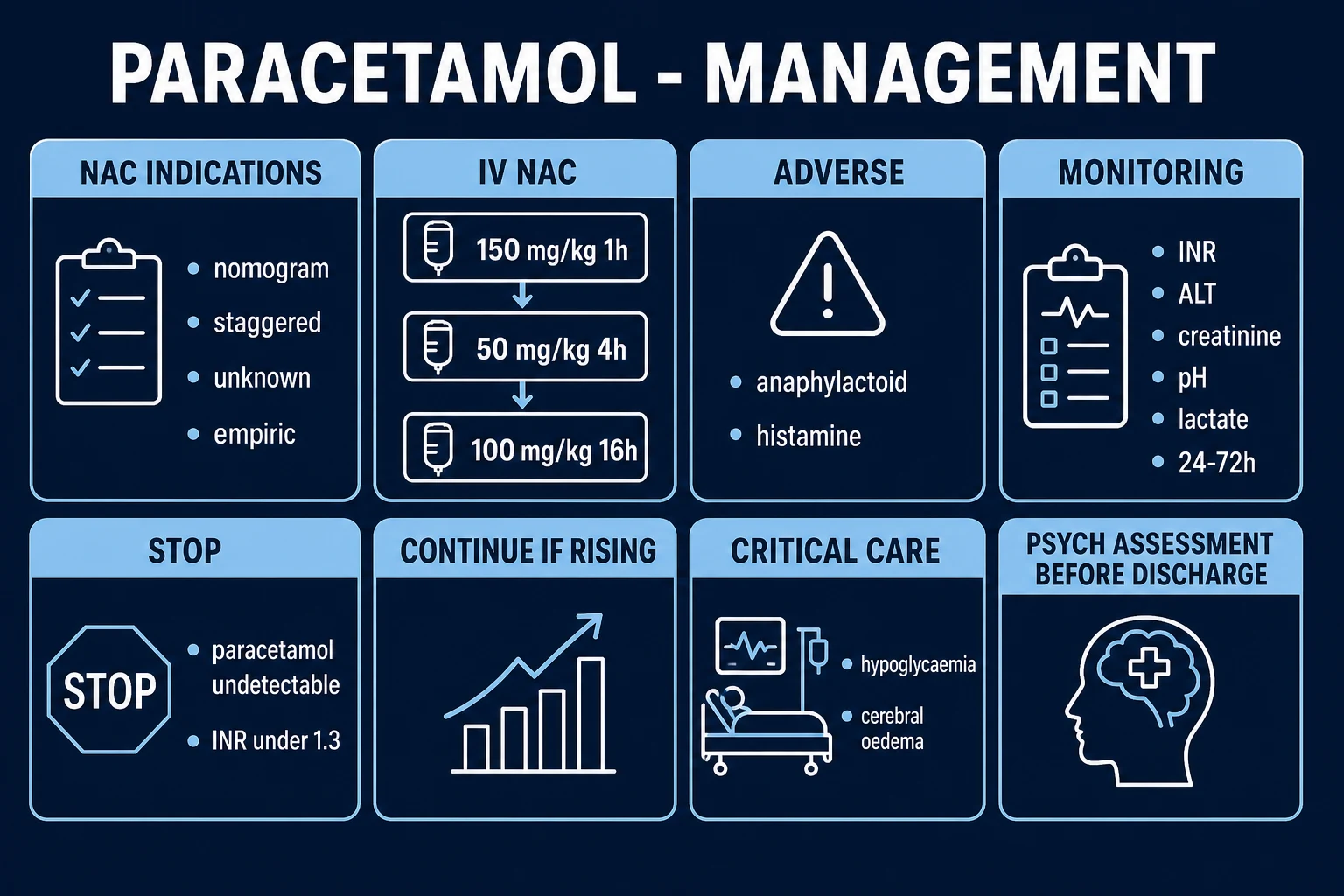
The NAC is the antidote — it replenishes the glutathione and detoxifies the NAPQI. The earlier the better; the most effective within 8 hours of the ingestion (the near-complete prevention of the hepatotoxicity), but it is still beneficial up to 24 hours and beyond (even in the established hepatotoxicity it improves the outcome).[1][1]
The IV regimen (the standard 21-hour protocol): the 150 mg/kg loading dose over 1 hour, then 50 mg/kg over 4 hours, then 100 mg/kg over 16 hours (total 300 mg/kg over 21 hours).[1][1]
The oral regimen (the alternative, the 72-hour): the 140 mg/kg loading then 70 mg/kg every 4 hours for 17 doses. The vomiting is the common problem (the antiemetic, the ondansetron).[1]
The anaphylactoid reactions. The IV NAC (NOT the IgE anaphylaxis — it is the rate-related, the histamine-mediated reaction) causes the flushing, the rash, the urticaria, the bronchospasm and the hypotension, classically during the rapid 1-hour loading infusion, in about 10 to 20 per cent of patients. The management: the slow or the pause the infusion, the antihistamine (the diphenhydramine), and the resume (the NAC should NOT be stopped — the treatment is continued, often at the reduced rate, and most reactions are the mild and the self-limited).[2][1]
The decontamination and the timing
The activated charcoal (50 to 100 g) within 1 to 2 hours of the ingestion reduces the absorption and the need for the NAC; it is effective for the paracetamol. The charcoal is still reasonable up to 4 hours for the large ingestion.[1]
The staggered and the massive ingestion
For the staggered ingestion (over more than 1 to 2 hours), the repeated supratherapeutic dosing, the sustained-release formulation, or the unknown time — do NOT use the nomogram. Treat empirically with the NAC on the clinical grounds; the risk of the NAC is low, and the untreated hepatotoxicity is the severe.[1][3][1]
The risk stratification: the King's College criteria
The King's College criteria (for the paracetamol-induced the acute liver failure) identify the patients with the poor prognosis who warrant the liver-transplant referral:[1][1]
- The arterial pH below 7.3 after the fluid resuscitation (regardless of the grade of the encephalopathy), OR
- All three of: the INR above 6.5, the creatinine above 300 µmol/L, and the grade 3 or 4 encephalopathy. [1]
The additional poor-prognosis markers: the lactate above 3.5 (or above 3.0 after the resuscitation), the phosphate rise, the falling AST (the "the burnt-out liver"), the renal failure, the cerebral oedema. The early transplant-centre referral is the essential.[1]
Prognosis
The paracetamol overdose treated with the NAC within 8 hours has the near-zero hepatotoxicity and mortality. The late presentation (the established hepatotoxicity) carries the significant mortality — the King's College positive patient has the mortality above 80 per cent without the transplant. The survivors recover the complete hepatic function (the no chronic liver disease).[1][1]
Pharmacology & metabolism in depth
Paracetamol (N-acetyl-p-aminophenol) is absorbed rapidly from the small intestine (peak level 30–60 min, faster than the 4-hour nomogram assumes for slow absorbers), with bioavailability of 60–90 per cent and a volume of distribution of roughly 0.9 L/kg. Protein binding is negligible and the elimination half-life is around 2 hours at therapeutic dose — a half-life that lengthens dramatically as hepatocellular function fails (a rising half-life above 4 hours, even with a falling level, is itself a poor-prognostic marker in established toxicity).[1][1]
The four metabolic fates — and what each means clinically:[1]
- Glucuronidation (≈40–60 per cent) via UGT1A1/UGT1A6 — the dominant pathway in adults. Matures late in neonates and infants, which is one reason young children actually form proportionally MORE NAPQI per kilogram and yet are paradoxically LESS prone to hepatotoxicity (they also have higher glutathione turnover and more active sulphation).
- Sulphation (≈20–40 per cent) via SULT1A1 — the dominant pathway in children. Sulphation saturates FIRST in overdose (limited cysteine/cysteine precursor availability), shunting substrate onto glucuronidation and then onto CYP2E1.
- CYP2E1 oxidation (≈5–10 per cent) to NAPQI (N-acetyl-p-benzoquinone imine) — the toxic, highly reactive electrophile. Minor contributors are CYP1A2 (induced by smoking, omeprazole, insulin — increases NAPQI formation), CYP3A4 (induced by anticonvulsants, rifampicin, ethanol — relevant in chronic co-ingestion), and to a lesser extent CYP2A6. CYP2E1 itself is induced by chronic ethanol, isoniazid (in slow acetylators after 2 weeks), and starvation — each of these increases the fraction converted to NAPQI and is a recognised risk factor for hepatotoxicity at "lower-than-expected" ingested doses.
- Direct renal excretion of unchanged drug (≈2–5 per cent). [1]
At therapeutic dose the small amount of NAPQI is conjugated with glutathione (GSH) to mercapturic acid and cysteine conjugates, then excreted. The critical biochemical event in overdose is GSH depletion below ≈30 per cent of baseline: once that threshold is crossed, unconjugated NAPQI covalently binds cysteine residues on hepatocyte mitochondrial proteins (notably mitochondrial ATP synthase, aldehyde dehydrogenase, and selenium-binding proteins), generating mitochondrial dysfunction, ATP depletion, oxidative stress, formation of reactive oxygen and nitrogen species, opening of the mitochondrial permeability transition pore, and ultimately oncotic (centrilobular, zone-3) necrosis — the zone adjacent to the central vein where CYP2E1 expression is highest and oxygen tension is lowest.[1][1]
The reason NAC works is not only GSH repletion. NAC is deacetyylated to cysteine, the rate-limiting amino acid for GSH synthesis (via γ-glutamylcysteine synthetase); it also acts as a direct GSH substitute and a sulphate donor, restoring sulphation capacity. In established hepatotoxicity, NAC has additional mechanisms — it improves microvascular blood flow, scavenges free radicals, and enhances oxygen delivery — which is why a 2010s meta-analysis (the PARK trialists and Cochrane) showed a survival benefit even when NAC was started AFTER hepatotoxicity was established.[1]
Risk factors for hepatotoxicity at lower-than-expected paracetamol doses — the 'glutathione-depleted' patient
| Risk factor | Mechanism | Practical implication |
|---|---|---|
| Chronic alcohol misuse / chronic ethanol induction | Induces CYP2E1 → more NAPQI formed per dose; chronic malnutrition → low hepatic GSH | Historically a 'lower treatment line' (100 µg/mL at 4 h in UK for chronic alcoholics) was advocated — now DISCONTINUED (BTS 2024) as the evidence did not support a separate line |
| Malnutrition, anorexia, chronic fasting, cachexia | Low baseline GSH; depleted sulphate stores | Treat on the standard nomogram — but have a LOW threshold to start NAC if borderline |
| Chronic enzyme inducers — phenytoin, carbamazepine, phenobarbitone, rifampicin | Induce CYP2E1/CYP3A4 → more NAPQI | Same — standard nomogram, low threshold |
| HIV / AIDS (advanced) | Low GSH reported | Standard nomogram, low threshold |
| Eating disorders | Low weight, low GSH, often delayed presentation | High index of suspicion; consider admission even for small overdoses |
| Pregnancy | Increased GFR clears paracetamol faster (lower levels) BUT the foetus has immature conjugation and lower GSH — foetal hepatotoxicity can occur at maternal levels below the line | Treat on the standard line; foetal risk is maternal risk — NAC is safe in pregnancy (does not cross placenta in significant amounts) |
| Paediatric age | Children actually have HIGHER relative GSH turnover → historically thought more resistant; in practice, hepatotoxicity in children is uncommon even after large ingestions | Use the same nomogram and weight-based NAC |
| Staggered / repeated supratherapeutic ingestion | Cumulative GSH depletion over time; nomogram invalid | Treat empirically with NAC regardless of single level |
The Rumack-Matthew nomogram — country-specific treatment lines
The nomogram plots the serum paracetamol concentration (y-axis, log scale, µg/mL) against the time post-ingestion (x-axis, linear, 4–24 h) and uses treatment lines that decline semi-logarithmically with a half-life of approximately 4 hours (mirroring elimination). Three conventions are in use worldwide and an exam candidate MUST know the regional line:[1][1]
The three Rumack-Matthew treatment lines — know YOUR region's
| Region / guideline | Treatment line at 4 h | Notes |
|---|---|---|
| ANZ (Australia/NZ — ToxBase / NSW PIC) | 150 µg/mL (0.66 mmol/L) at 4 h, declining with half-life ≈ 4 h | Single treatment line — at/above = give NAC |
| UK (NHS/ToxBase, Royal College) | 100 mg/L (= 100 µg/mL, 0.66 mmol/L lower) treatment line at 4 h — UK dropped the 200-line decades ago and now uses a SINGLE 100-line for ALL patients | More conservative than ANZ — reflects the low cost/safety of NAC and the desire to never miss a treatable case |
| US/Canada (AAPCC/ACMT consensus 2023) | 150 µg/mL treatment line + a 'possible treatment' line at 100 µg/mL for high-risk patients (GSH-depleted) | US retained the dual-line concept; the 100-line is for the chronic-alcohol/induced-CYP/malnourished patient |
| Hong Kong / parts of Asia | 200-line at 4 h still used historically (the original Rumack line) | Largely abandoned elsewhere; risk of missing borderline cases |
Nomogram caveats — when it CANNOT be used
- Before 4 hours: levels are still rising (absorption incomplete). A level drawn at 2 h that is below the line does NOT exclude toxicity — repeat at 4 h. (For massive/sustained-release ingestions, even 4 h can underestimate — see modified-release section.)
- After 24 hours: the nomogram is extrapolated and unreliable. Treat on the clinical/biochemical picture (AST/ALT, INR, lactate, pH).
- Staggered ingestion, repeated supratherapeutic dosing, sustained-release formulation, unknown time — nomogram is INVALID. Treat empirically.
- IV paracetamol overdose (rare, usually a prescribing/dilution error in theatre/ED) — kinetics differ; treat empirically and consult toxicology. [1]
The NAC protocol — the 21-hour IV regimen in detail
N-acetylcysteine (NAC) — the 21-hour IV protocol
- DECIDE to treat — single acute ingestion: paracetamol level at 4 h on the nomogram at/above the treatment line (150 ANZ / 100 UK / 150 US, 100 for high-risk). Staggered/unknown/modified-release: treat empirically.
- WEIGH the patient (actual body weight). All NAC doses are mg/kg. In obesity, most centres now cap the dose at a weight of 100–110 kg (or use a dosing weight) to avoid excessive total dose — local protocol applies.
- LOADING DOSE — 150 mg/kg IV over 1 hour (one bag). This is the bag that triggers anaphylactoid reactions in 10–20 per cent of patients — give via a dedicated line, with the patient under observation. Many modern protocols (e.g. SNAP, the Scottish 2-bag regimen) now run the load over 1 h WITHOUT dilution constraints, recognising that the reaction is rate-related.
- SECOND BAG — 50 mg/kg IV over 4 hours (begins immediately after the loading bag).
- THIRD BAG — 100 mg/kg IV over 16 hours (begins after the second bag). Total = 300 mg/kg over 21 hours.
- DURING THE INFUSION — monitor for anaphylactoid reaction (flushing, rash, urticaria, bronchospasm, hypotension) especially during the loading hour. If mild (rash only): SLOW the rate by 50 per cent and give an antihistamine (chlorphenamine 10 mg IV or diphenhydramine 25–50 mg IV). If moderate–severe (bronchospasm, hypotension): PAUSE the infusion, give antihistamine ± hydrocortisone 200 mg IV, supportive care, then RESUME at 50 per cent rate once symptoms settle. NAC is NOT stopped — the untreated overdose is far more dangerous than the reaction.
- AT 21 HOURS (end of third bag) — recheck AST/ALT, INR, creatinine, venous pH, paracetamol level. Decide:
- If AST/ALT normal, INR <1.3, paracetamol level undetectable → STOP NAC, observe 6–12 h, medical clearance (psychiatric assessment).
- If AST/ALT raised OR INR ≥1.3 OR paracetamol level still measurable → CONTINUE NAC (the "fourth bag" — 100 mg/kg over 16 h, repeat as needed) until INR <1.3, paracetamol undetectable, encephalopathy resolving, ALT/AST falling. Some units use 150 mg/kg over 24 h as the continuation bag.
- KING'S COLLEGE CRITERIA at any point (pH <7.3 after resuscitation, OR all three of INR >6.5, creatinine >300 µmol/L, grade III–IV encephalopathy) → urgent liver-transplant unit referral.
Alternative regimens
- Oral NAC (the original 72-hour Smolinske regimen): 140 mg/kg loading, then 70 mg/kg every 4 hours for 17 doses (total 1330 mg/kg over 72 h). Largely superseded by IV NAC in the ICU setting because of (a) vomiting (50–60 per cent of patients vomit within the first hour — give ondansetron 4–8 mg IV and use a nasogastric tube if needed), (b) the 72-hour duration, and (c) equivalent efficacy of the shorter IV course. Still used where IV NAC is unavailable.
- The 2-bag Scottish/SNAP regimen (increasingly adopted): 200 mg/kg over 4 h, then 100 mg/kg over 16 h (total 300 mg/kg over 20 h). Simplifies nursing, reduces the loading-bag reaction rate, equivalent outcomes. Some Australian units now use a similar 2-bag protocol.
- Modified-duration / post-NAC continuation: where hepatotoxicity is established at 21 h, continue at 100 mg/kg/16 h or 6.5 mg/kg/h until the stopping criteria above are met. NAC beyond 21 h is also given as part of ALF management (see Acute Liver Failure topic) for its oxygen-delivery and free-radical-scavenging effects. [1]
IV NAC (21-hour) vs oral NAC (72-hour)
| Feature | IV NAC | Oral NAC |
|---|---|---|
| Total dose | 300 mg/kg over 21 h | 1330 mg/kg over 72 h |
| Efficacy | Equivalent (within 8 h: near-100 % hepatotoxicity prevention) | Equivalent if tolerated |
| Anaphylactoid reaction | 10–20 per cent (rate-related, during load) | Rare (nausea/vomiting predominate) |
| Vomiting | Uncommon (treat if occurs) | 50–60 per cent — common reason for switch to IV |
| Duration | 21 h (longer if continued) | 72 h |
| Indicated in | Established hepatotoxicity, vomiting, ICU, ALF | Stable patient, no IV access, resource-limited settings |
| Cost / logistics | More expensive per vial, shorter | Cheaper, longer |
Anaphylactoid reaction to NAC — recognition and management
The reaction is NOT IgE-mediated anaphylaxis. It is a direct, rate-related, non-immunological histamine release (and a direct effect of NAC on vascular endothelium and mast cells), hence "anaphylTOID" not anaphyLACTIC. Itch, flushing, and a localised rash during the loading infusion are very common and benign; true bronchospasm or hypotension is uncommon and usually mild. Risk factors: a history of asthma or atopy, and — paradoxically — a LOW paracetamol level (the reaction is more common when the patient does not actually need NAC, because paracetamol itself appears to inhibit the mast-cell degranulation).[2]
Anaphylactoid (NAC) vs IgE-mediated anaphylaxis
| Feature | Anaphylactoid (NAC) | IgE anaphylaxis |
|---|---|---|
| Mechanism | Direct mast-cell histamine release (rate-related) | IgE cross-linking → mast-cell degranulation |
| Timing | During the loading infusion (first hour); resolves when rate slowed | Any time after exposure; may be biphasic |
| Prior exposure needed | No — first exposure can react | Usually yes (sensitisation) |
| Skin | Flushing, localised urticarial rash (common) | Diffuse urticaria, angio-oedema |
| Airway | Mild bronchospasm (uncommon) | Stridor, tongue swelling, severe bronchospasm |
| Circulation | Mild, transient hypotension (common) | Hypotension, shock |
| GI | Nausea | Vomiting, cramps |
| Treatment | SLOW/PAUSE the infusion + antihistamine (chlorphenamine/diphenhydramine) ± hydrocortisone; RESUME NAC | IM adrenaline 0.5 mg, IV fluids, oxygen, intubation if airway compromise |
| Re-challenge | Resume NAC (often at 50 % rate) — the reaction typically does NOT recur | AVOID the trigger |
| Implication for NAC | NAC continues | Rarely requires stopping NAC — must weigh risk/benefit |
Staggered ingestion, repeated supratherapeutic dosing, and modified-release paracetamol
Staggered ingestion (over >1 hour) or unknown time
For any ingestion where the timing cannot be reliably established (e.g. found unconscious with empty blister packs, deliberate self-harm with pills taken "over the evening", the cognitively impaired patient), or where the ingestion occurred over more than 1 hour, the nomogram is invalid and the default is empirical NAC. The reasoning: the paracetamol level after a staggered ingestion reflects absorption from multiple time-points — plotting it against a single "time since ingestion" gives a false sense of precision, and the level may be lower than the true hepatotoxic risk. The downside of empirical NAC (a 21-hour infusion, with a 10–20 per cent anaphylactoid reaction rate, and minimal other risk) is far smaller than the downside of missing treatable toxicity.[1][3][1]
Practical approach (UK BTS 2024 / ANZ approach):
- Send a baseline paracetamol level, AST/ALT, INR, creatinine, venous pH/lactate.
- If ANY evidence of hepatotoxicity (AST/ALT raised, INR ≥1.3) OR the paracetamol level is detectable (>10 mg/L = >10 µg/mL) → start NAC.
- If the baseline is entirely normal and the patient is clinically well, observe and repeat the level at 4-hourly intervals; start NAC if the level rises or transaminitis develops. [1]
Repeated supratherapeutic ingestion (RSTI)
Repeated doses above the therapeutic maximum (4 g/day in adults; the patient taking 6–8 g/day for several days for toothache, the post-operative patient on regular paracetamol + combination analgesics accumulating the dose) can deplete GSH and cause hepatotoxicity without a single "overdose". The nomogram does NOT apply. Treat on the clinical/biochemical picture: AST/ALT raised OR INR ≥1.3 ± detectable paracetamol → start NAC. RSTI is increasingly recognised in the post-operative patient and the chronic-pain patient. [1]
Modified-release (MR / sustained-release) paracetamol
Modified-release paracetamol (665 mg MR tablets, marketed in Australasia as "Panadol Osteo") is a special case. The MR formulation releases 33 per cent of the dose immediately and 66 per cent over ~8 hours, so a single serum level at 4 h post-ingestion systematically UNDERESTIMATES the eventual peak — the level continues to rise for many hours and there are documented cases of late-rising levels crossing the treatment line after a reassuring early level. The Australasian guidance ( NSW PIC, ToxBase): [1]
- For an acute MR ingestion of >10 g or >200 mg/kg (whichever is less), give NAC empirically and measure two levels: at 4 h AND at 4–6 h after the FIRST level. If BOTH are below the line AND the patient is clinically well, stop NAC. If EITHER crosses the line, continue the full course.
- For smaller MR ingestions, measure two levels (4 h and a second at 4–6 h later); start NAC only if either crosses the line.
- Activated charcoal is recommended (within 2 h) for MR ingestion — it reduces the absorption of the slow-release component, which is the dangerous part.
- Whole-bowel irrigation with polyethylene glycol has been advocated for massive MR ingestion but evidence is limited. [1]
Massive single ingestion (>30 g or >500 mg/kg) [1]
Massive ingestions can produce early hepatotoxicity (within 12–18 h rather than the typical 72–96 h), early encephalopathy, severe metabolic acidosis from the paracetamol itself (lactate-independent acidosis from the paracetamol metabolites and from mitochondrial poisoning), and prolonged elimination. The nomogram is still broadly applicable to a single known-time massive ingestion, but start NAC immediately rather than waiting for the 4-h level. Activated charcoal (within 1–2 h) is particularly valuable. Have a very low threshold to involve the toxicology service and the liver-transplant unit. [1]
The King's College Criteria for transplant in paracetamol-induced ALF — detail
The King's College Criteria (KCC), derived by O'Grady and colleagues at King's College Hospital, remain the most widely used and best-validated predictors of death without transplant in paracetamol-induced acute liver failure. For paracetamol specifically, the criteria differ from the non-paracetamol (e.g. viral, drug-induced) ALF criteria.[1][1]
King's College Criteria for liver transplant — PARACETAMOL-induced ALF
| Criterion | Threshold | Notes |
|---|---|---|
| Arterial pH | < 7.30 after adequate fluid resuscitation, regardless of grade of encephalopathy | A single value after resuscitation. Acidosis reflects the combined lactic acidosis of poor hepatic perfusion, the loss of hepatic lactate clearance, and renal failure. Strong single predictor — meets KCC alone. |
| OR all THREE of: | ||
| → INR | > 6.5 | Synthesis failure. INR >6.5 alone (without the other two) does NOT meet criteria — all three are required. |
| → Creatinine | > 300 µmol/L (≈3.4 mg/dL) | Reflects the hepatorenal syndrome of ALF. |
| → Encephalopathy grade | Grade III or IV | Grade I: confusion/asterixis; II: drowsy, agitated; III: markedly confused, mumbling, obeys simple commands only; IV: unresponsive to voice (comatose), may respond to pain. |
Additional poor-prognosis markers (used adjunctively, NOT formally in KCC)
- Venous/arterial lactate > 3.5 mmol/L at baseline (or > 3.0 mmol/L after early fluid resuscitation) — a lactate-based refinement from the Bernal group that improves sensitivity at the cost of some specificity.
- Phosphate rising or persistently > 1.2 mmol/L at 48–96 h — reflects the loss of hepatic phosphate uptake/regeneration; a rising phosphate in the recovery phase is a poor sign.
- A falling AST/ALT ("burnt-out liver") in the face of worsening coagulopathy and encephalopathy — the hepatocytes have died and are no longer transaminase-productive; this is a terminal sign.
- Acute kidney injury requiring renal replacement therapy, cerebral oedema (rising ICP), refractory hypotension, and uncontrolled sepsis. [1]
Applying the KCC in practice
- Sensitivity is ~70 per cent, specificity ~90 per cent for predicting death without transplant — meaning a NEGATIVE KCC does NOT exclude the need for transplant, and a positive KCC mandates urgent transplant-unit discussion. Many centres use a lower threshold to refer (e.g. INR > 4.0, or any encephalopathy with rising lactate) given the KCC's imperfect sensitivity.
- pH < 7.25 in isolation, or any grade III–IV encephalopathy, warrants early transplant-centre contact — do not wait for the full KCC to be met.
- Contraindications to transplant (absolute): uncontrolled sepsis, severe pre-existing comorbidity, age > 70 with poor physiological reserve, irreversible brain injury, active substance dependence with high likelihood of non-adherence (relative — centre-specific). The psychiatric context of the overdose is NOT an absolute contraindication — paracetamol-overdose survivors transplanted for ALF have similar long-term survival to other transplant indications. [1]
Supportive care and management of complications
Once hepatotoxicity is established, management is that of acute liver failure (see the Acute Liver Failure topic) — NAC continuation, neuroprotection (head of bed 30°, hypertonic saline or mannitol for cerebral oedema), haemodynamic support (norepinephrine; avoid vasopressin in the vasodilated ALF patient who is already vasopressin-deficient), renal replacement therapy (continuous, to avoid rapid solute shifts that worsen cerebral oedema), seizure prophylaxis (low threshold for levetiracetam), stress-ulcer prophylaxis, antimicrobial therapy at the first sign of infection (ALF patients are functionally immunosuppressed and infection precipitates deterioration), and early referral to a liver-transplant centre. Hypoglycaemia is common and dangerous — maintain glucose 4–8 mmol/L with 10 % dextrose infusion.[1][1]
Special populations
- Pregnancy: paracetamol crosses the placenta; the foetal liver has immature conjugation and lower GSH and is more vulnerable. NAC is safe in pregnancy (minimal placental transfer). Treat on the standard nomogram — do NOT lower the threshold for NAC, and do NOT delay NAC for foetal concerns. Maternal survival is the route to foetal survival.
- Paediatrics: children tolerate paracetamol better than adults (higher relative GSH turnover). The same nomogram and weight-based NAC (do NOT cap at 110 kg in children — use actual weight).
- Elderly / frail / chronic liver disease: cirrhotic patients are NOT necessarily at higher risk from a single overdose (their CYP2E1 and GSH are often preserved until end-stage), but their reserve to withstand hepatotoxicity is reduced. Treat on the standard nomogram. In decompensated cirrhosis, lower the threshold.
- The post-operative patient: RSTI from combination analgesics (paracetamol + codeine + ibuprofen + paracetamol-oxycodone) is the classic iatrogenic scenario. Audit the cumulative dose, switch to non-paracetamol analgesia, check AST/ALT/INR, treat on the RSTI pathway above. [1]
SAQ — Staggered paracetamol overdose with acute liver failure
10 minutes · 10 marks
A 28-year-old woman (65 kg) presents 36 hours after taking 25 g of paracetamol in divided doses over 8 hours. ALT 6,800 U/L, INR 4.2, creatinine 220 μmol/L, lactate 6.4, pH 7.28, encephalopathy grade 2. Arterial ammonia 180 μmol/L. She is cardiovascularly stable.
SAQ — Acute single paracetamol ingestion — nomogram decision
10 minutes · 10 marks
A 19-year-old man (70 kg) is brought to ED 2 hours after ingesting 15 g of paracetamol as a single dose. He is alert, no symptoms, normal examination. AST 25, INR 1.0, creatinine normal. The 4-hour paracetamol level returns at 180 mg/L.
Clinical pearls
Key trials and evidence
Green 2023 — AAPCC/ACMT consensus on acetaminophen poisoning (PMID 37552484)
Source
JAMA Network Open — US/Canada multidisciplinary consensus
Design
Modified Delphi consensus across toxicology, emergency medicine, hepatology
Key recommendation
150 µg/mL treatment line at 4 h; 100 µg/mL 'possible treatment' line for high-risk (GSH-depleted) patients
Key recommendation
Empirical NAC for staggered, repeated supratherapeutic, modified-release, and unknown-time ingestions — nomogram does NOT apply
Key recommendation
Continue NAC beyond 21 h if AST/ALT raised, INR ≥1.3, or paracetamol still measurable
Clinical bottom line
The modern North American standard — codifies empirical NAC for the difficult presentations
Yarema 2018 — Anaphylactoid reactions to IV NAC (PMID 29423816)
Source
Journal of Medical Toxicology — prospective multicentre cohort
Population
Acetaminophen-poisoned patients receiving IV NAC
Key finding
Anaphylactoid reaction rate 10–20 per cent, almost exclusively during the 1-hour loading infusion
Key finding
Reaction is RATE-related and dose-related — more common when paracetamol level is LOW (paracetamol stabilises mast cells)
Key finding
Management: slow/pause infusion + antihistamine; NAC is resumed — no patient required permanent cessation
Clinical bottom line
Never stop NAC for an anaphylactoid reaction — slow, treat, and resume
Salinsky 2025 — Out-of-hospital triage of paracetamol exposure (PMID 40047505)
Source
Clinical Toxicology (Philadelphia)
Key finding
Pre-hospital triage protocols can safely identify low-risk patients for delayed assessment
Key finding
Staggered, unknown-time, and modified-release ingestions warrant direct ED referral regardless of reported quantity
Clinical bottom line
Triage on the TIMING and the formulation, not on the reported dose
The PARK trial / Cochrane meta-analyses — NAC in non-paracetamol and late paracetamol ALF
Source
Cochrane reviews of NAC in acute liver failure
Key finding
NAC improves survival in non-paracetamol ALF (especially early, grade I–II encephalopathy) — non-lover-related evidence for NAC's non-GSH mechanisms
Key finding
In paracetamol ALF presenting late (> 24 h), NAC still confers a survival benefit — 'it is never too late to give NAC'
Clinical bottom line
Late NAC in established hepatotoxicity is standard of care
BTS 2024 — UK paracetamol overdose guideline (British Toxicological Society)
Source
UK national toxicology society consensus
Key change
ABOLISHED the separate lower treatment line for chronic alcoholics / induced-CYP patients — now a single 100-line for all
Key recommendation
100 µg/mL (0.66 mmol/L) treatment line at 4 h, declining with a 4-h half-life
Key recommendation
Empirical NAC for staggered / repeated supratherapeutic / modified-release / unknown-time ingestions
Clinical bottom line
The UK's deliberately conservative single-line approach — minimises missed cases
Paracetamol overdose outcomes — timing of NAC determines everything
| Timing of NAC | Hepatotoxicity rate | Mortality | Notes |
|---|---|---|---|
| Within 8 h of ingestion | ~1 % | ~0 % | Near-complete prevention — the time-critical window |
| 8–24 h | 10–30 % | < 5 % | Still clearly beneficial; risk rises with each hour of delay |
| After 24 h / established hepatotoxicity | 50 % + | 10–30 % without transplant | NAC still improves survival (PARK/Cochrane) — never withhold |
| King's College positive (no transplant) | — | > 80 % | Mortality of untreated KCC-positive ALF |
| King's College positive (transplanted) | — | 20–30 % at 1 year | Transplant transforms outcome; long-term survival good |
The four-phase clinical course — recognising where the patient is
| Phase | Time | Clinical | Labs | Trap |
|---|---|---|---|---|
| 1 — Pre-icteric | 0–24 h | Asymptomatic or nausea, vomiting, pallor, diaphoresis, malaise | Normal AST/ALT, normal INR, paracetamol level high | The patient looks well — the trap of false reassurance |
| 2 — Hepatic injury | 24–72 h | RUQ pain, may still feel well; transaminitis | AST/ALT rising (often into thousands), early INR rise, early AKI | The AST rise lags the injury by hours — a 'normal' AST at 24 h can be the lull before the storm |
| 3 — Maximum hepatotoxicity | 72–96 h | Fulminant hepatic failure: coagulopathy, encephalopathy, jaundice, renal failure, cerebral oedema | AST can exceed 10 000, INR > 6.5, lactate high, pH low, hypoglycaemia | The AST can be falsely reassuring if it is 'burnt out' (falling because the cells are dead) |
| 4 — Recovery | 4 days–weeks | Complete hepatic recovery if survives | AST/ALT, INR normalise | No chronic liver disease in survivors — full structural and functional recovery |
Red flags
References
- [1]Green JL, Heard KJ, Reynolds KM, et al. Management of Acetaminophen Poisoning in the US and Canada: A Consensus Statement JAMA Netw Open, 2023.PMID 37552484
- [2]Yarema M, Chopra P, Sivilotti ML, et al. Anaphylactoid Reactions to Intravenous N-Acetylcysteine during Treatment for Acetaminophen Poisoning J Med Toxicol, 2018.PMID 29423816
- [3]Salinsky M, et al. Out-of-hospital assessment and triage of paracetamol (acetaminophen) exposure in the United States and Canada: a consensus guideline Clin Toxicol (Phila), 2025.PMID 40047505