ICU · Toxicology
Toxic Alcohols — Methanol & Ethylene Glycol
Also known as Methanol poisoning · Ethylene glycol poisoning · Toxic alcohols · Fomepizole · Alcohol dehydrogenase inhibitor · High anion gap and high osmolar gap · Calcium oxalate crystals
The toxic alcohols — the methanol (the formic acid, the retinal toxicity and the blindness) and the ethylene glycol (the glycolate and the oxalate, the acute kidney injury and the calcium oxalate crystals). The dual gap (the high anion gap PLUS the high osmolar gap) is the signature. The fomepizole (the alcohol-dehydrogenase inhibitor) or the ethanol, the haemodialysis for the severe, and the cofactors (the folinic acid for the methanol, the thiamine and the pyridoxine for the ethylene glycol).
On this page & tools
Your progress
Saved locally on this device.
Target exams
Overview & definition
The toxic alcohols — the methanol (the wood alcohol, the windshield washer, the antifreeze, the illicit spirits) and the ethylene glycol (the antifreeze, the coolant) — are the dangerous ingestions defined by the dual gap: the high anion-gap metabolic acidosis PLUS the high osmolar gap. The parent alcohol is the benign; the TOXICITY comes from the metabolites (the formic acid, the glycolate and the oxalate), formed by the alcohol dehydrogenase. The fomepizole (the ADH inhibitor) and the haemodialysis are the life-saving.[1][1]

The metabolism and the toxicity
Both methanol and ethylene glycol are the metabolised by the alcohol dehydrogenase (ADH) to the toxic metabolites — the parent alcohols themselves are the relatively benign (the mild intoxication). The toxicity is the metabolite-driven.[1][1]
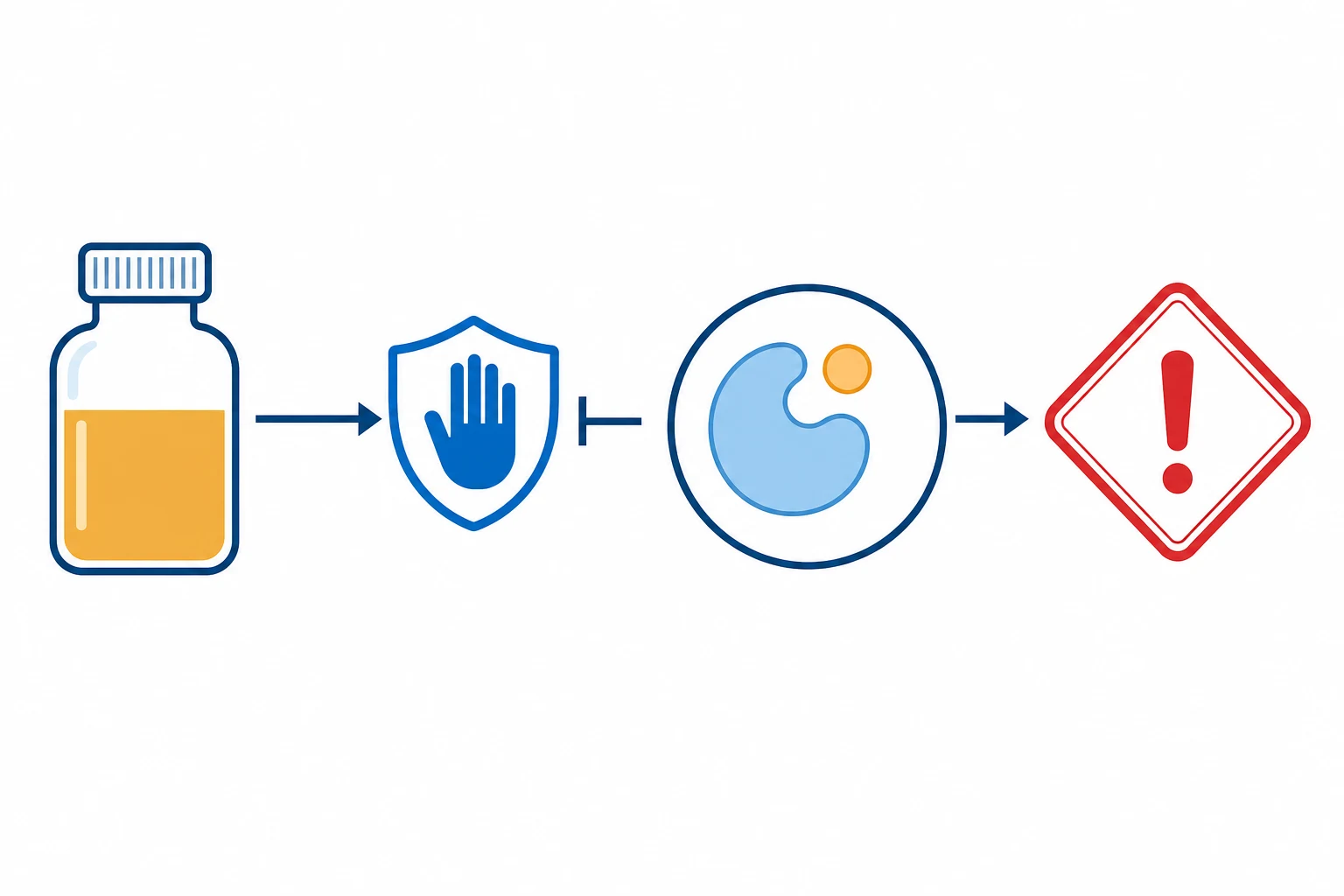
The methanol — the ADH → the formaldehyde → the formic acid (the formate). The formate is the toxic — the retinal and the optic-nerve toxicity (the blindness), and the basal-ganglia (the putaminal) necrosis.[2]
The ethylene glycol — the ADH → the glycolaldehyde → the glycolate (the main acid) → the glyoxylate → the oxalate. The oxalate precipitates as the calcium oxalate crystals in the kidney (the acute kidney injury) and the tissue (the hypocalcaemia).[1][1]
The isopropanol (the distinction) — the ADH → the acetone. The HIGH osmolar gap but the NO anion gap (the acetone is the not an acid) and the ketonuria. The less toxic — the CNS depression (the haemorrhagic gastritis occasionally).[1]
The clinical features
- The latent period — the asymptomatic (the parent alcohol is the benign), the symptoms develop as the metabolism to the toxic metabolite proceeds (the 12 to 24 hours, the longer if the co-ingested ethanol).
- The methanol — the visual disturbance (the blurred vision, the photophobia, the "the snowstorm vision", the blindness), the headache, the nausea, the abdominal pain, the coma, the seizures.
- The ethylene glycol — the CNS depression, the inebriation, the flank pain (the renal), the hypocalcaemia (the tetany, the QT prolongation), the acute kidney injury.
- The inebriation the disproportionate to the ethanol level (the no ethanol detected, yet the drunken state).[1][1]
The investigation: the dual gap
- The high anion-gap metabolic acidosis — the formate (the methanol), the glycolate (the ethylene glycol).
- The high osmolar gap (the calculated osmolar gap = the measured minus the calculated osmolality; the normal below 10). The parent alcohol raises the osmolar gap.
- The dual gap (the high AG + the high osmolar gap) is the signature of the toxic alcohol in the undifferentiated acidosis. (The late presentation — the all-metabolised — may show the high AG with the normalised osmolar gap.)[1][1]
- The serum methanol / ethylene glycol levels (the confirmatory, the quantitative).
- The urine (the ethylene glycol → the calcium oxalate crystals — the envelope and the needle/birefringent; the fluorescence under the Wood's lamp from the antifreeze fluorescein).[1][1]
- The lactate gap (the false-high lactate on some analysers with the glycolate).
Treatment
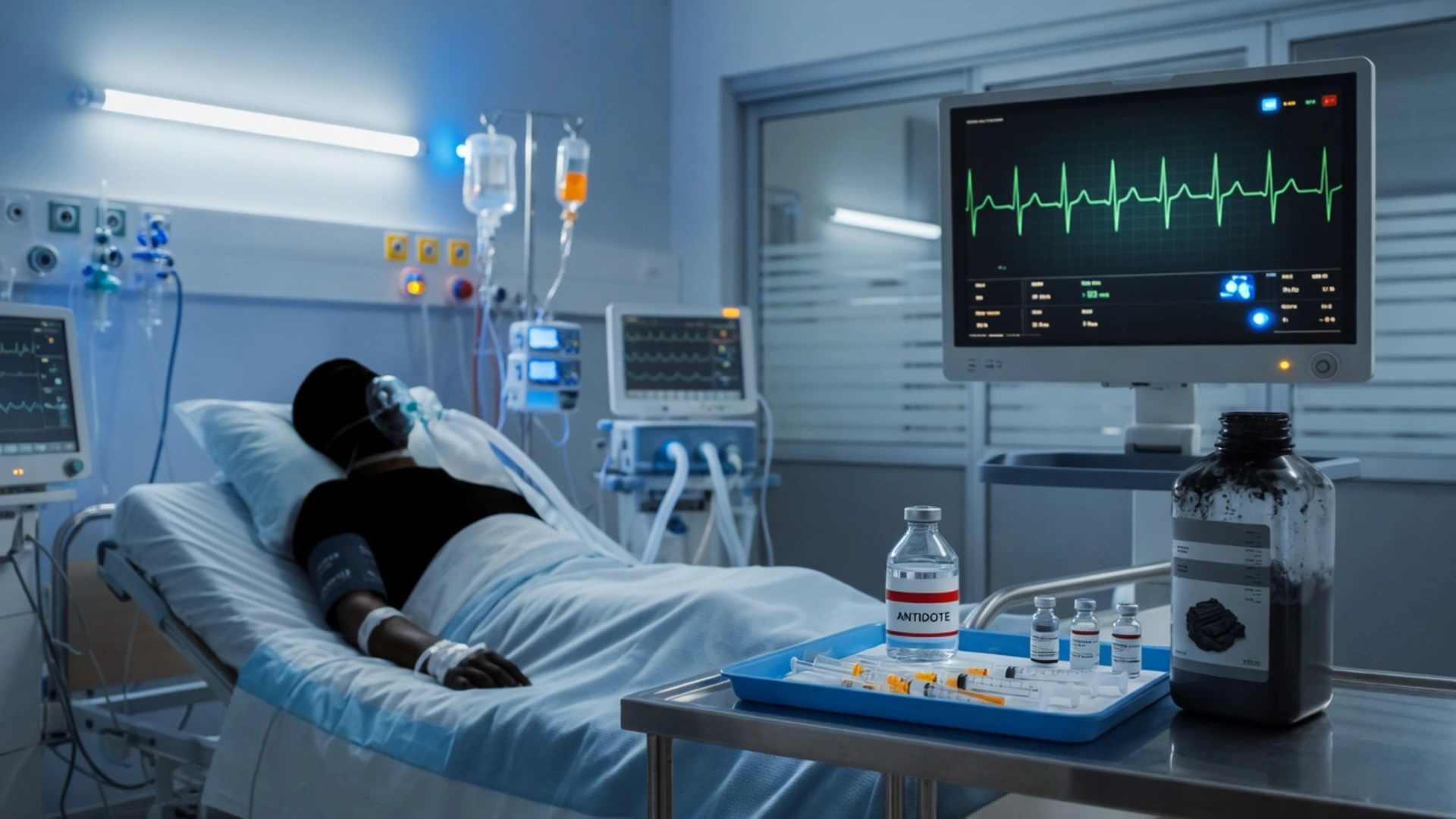
1. The fomepizole (the ADH inhibitor) — the preferred.[1][3]
- The 15 mg/kg IV loading, then the 10 mg/kg every 12 hours for the 4 doses, then the 15 mg/kg every 12 hours — until the level below 20 mg/dL AND the acidosis resolved.
- The mechanism: the inhibits the ADH — the parent alcohol is the not metabolised to the toxic metabolite, and the eliminated unchanged (the kidney, the lung).
- The preferred over the ethanol (the easier, the no CNS depression, the no monitoring of the ethanol level).[3]
2. The ethanol (the competitive ADH substrate) — the alternative.[1]
- The IV or the oral, the target the blood-ethanol concentration of the 100 to 150 mg/dL (the ADH has the 100x greater affinity for the ethanol than the methanol/EG — the ethanol the outcompetes). The continuous infusion, the level monitoring. The ICU, the CNS depression, the more-laborious.[1]
3. The haemodialysis — the severe.[1][2]
- The indications: the methanol or the EG level above 50 mg/dL, the severe metabolic acidosis (the pH below 7.3), the renal failure, the visual symptoms (the methanol), the end-organ damage, the deterioration despite the fomepizole.
- The removes the alcohol AND the metabolites AND the corrects the acidosis. The continue the fomepizole DURING the dialysis (the increased dosing frequency — the q4h).[2]
4. The cofactors — the metabolite clearance.[2][1]
- The methanol — the folinic acid (the folate) IV (the cofactor for the formate → the CO2 + the water); the speeds the formate clearance.
- The ethylene glycol — the thiamine and the pyridoxine (the cofactors that the shunt the glyoxylate to the non-toxic metabolites — the glycine, the hippurate — away from the oxalate).
5. The bicarbonate for the acidosis (the correct the pH, the reduce the tissue penetration of the weak acids).[1]
Prognosis
The toxic alcohol poisoning is the survivable with the early fomepizole and the dialysis. The poor-prognostic features: the severe acidosis, the delayed presentation, the visual symptoms (the methanol — the irreversible blindness), the renal failure (the EG), the brain injury (the putaminal necrosis).[1][2][1]
Red flags
Methanol poisoning — deep dive
Methanol (methyl alcohol, CH₃OH — "wood alcohol") is found in windscreen washer fluid, antifreeze, paint thinner, shellac, photocopying fluid, canned-heat ("Sterno"), and illicitly distilled ("moonshine") spirits — the latter responsible for most large outbreaks. Mass-poisoning outbreaks (Czech Republic 2012, Iran 2018, Norway 2002–2004) carry a 20–50% mortality and leave survivors permanently blind.[2][12]
Pathophysiology — formaldehyde → formic acid
The parent methanol is only mildly intoxicating (less potent than ethanol). The toxicity is generated entirely by the oxidative pathway: [1]
Methanol ──alcohol dehydrogenase (ADH)──▶ Formaldehyde ──aldehyde dehydrogenase (ALDH)──▶ Formic acid (formate)
   (parent)                                   (transient)                                 (THE TOXIN)
Formic acid (formate) is the lethal metabolite. It acts through two mechanisms:[2][4]
- Mitochondrial cytochrome c oxidase (complex IV) inhibition — formate blocks the terminal electron-transport chain, producing cellular hypoxia that is biochemically indistinguishable from cyanide toxicity at the mitochondrial level.
- Strong organic acid — contributes the bulk of the high anion gap metabolic acidosis. [1]
Formate has a striking tropism for the retina and optic nerve (retinal ganglion cells, optic disc) → optic disc oedema and hyperaemia → permanent blindness. It also injures the basal ganglia — putaminal necrosis is the classic radiological finding in severe cases, and surviving patients may develop a parkinsonian syndrome weeks to months later.[4][12]
Why humans are uniquely susceptible — folate
Most mammals (rats, dogs) clear formate rapidly and tolerate methanol well. Humans and other primates are folate-dependent for formate detoxification — formate must be oxidised to CO₂ + H₂O via 10-formyl-tetrahydrofolate dehydrogenase, a folate-dependent enzyme. Because humans are relatively folate-deficient compared with rodents, formate accumulates. This is the molecular rationale for folinic acid (leucovorin) as a specific cofactor antidote in methanol poisoning.[2][4]
Clinical features of methanol
- Latent period 12–24 h (longer with co-ingested ethanol, which competes for ADH and slows metabolism). The patient looks merely "drunk."
- Visual disturbance is the cardinal methanol sign: blurred vision, photophobia, the sensation of "walking in a snowstorm" or "in a blizzard," reduced visual acuity, and frank blindness. Fundoscopy shows optic disc hyperaemia/oedema.
- Headache, nausea, vomiting, abdominal and back pain (pancreatitis is described).
- CNS: confusion, lethargy → coma; seizures in severe cases.
- Basal ganglia injury: a delayed parkinsonian syndrome (bradykinesia, rigidity, tremor) weeks–months after recovery, with putaminal necrosis on CT/MRI.[12]
Specific management of methanol
- Fomepizole (ADH inhibitor) — preferred.
- Folinic acid (leucovorin) 1 mg/kg (up to 50 mg) IV every 4–6 h — drives formate → CO₂ + H₂O. Folic acid is a cheaper alternative if folinic acid unavailable.
- Haemodialysis — mandatory and immediate for any visual symptom, severe acidosis (pH <7.3), renal failure, or methanol >50 mg/dL.
- Bicarbonate for the acidosis.[2][8]
Ethylene glycol poisoning — deep dive
Ethylene glycol (1,2-ethanediol, HOCH₂CH₂OH) is the principal component of automotive antifreeze/coolant (sweet-tasting, which makes it attractive to children and a vehicle for deliberate self-harm), and is also found in brake/hydraulic fluids and industrial solvents.[7]
Pathophysiology — glycolate → oxalate
Ethylene glycol ──ADH──▶ Glycoaldehyde ──ALDH──▶ Glycolic acid ──▶ Glyoxylic acid ──▶ Oxalic acid
   (parent)                                         (acidosis)       (shunt point)      (renal toxin)
Glycolic acid (glycolate) is the dominant contributor to the metabolic acidosis (a strong organic acid). Oxalic acid is the renal toxin: it irreversibly chelates calcium to form calcium oxalate crystals, which precipitate in and obstruct the proximal renal tubules → acute tubular necrosis → AKI (frequently oliguric/anuric).[4][7]
The calcium consumption produces hypocalcaemia (prolonged QT, tetany, Chvostek/Trousseau signs). Glyoxylic acid sits at a metabolic branch point: with the cofactors thiamine (to α-hydroxy-β-ketoadipate) and pyridoxine (to glycine) it is diverted away from oxalate to non-toxic metabolites — the rationale for these two cofactors as specific adjuncts in EG poisoning.[4]
Clinical features of ethylene glycol (three classical stages)
- Stage 1 (1–12 h) — CNS stage: inebriation without the smell of ethanol, ataxia, slurred speech, progressing to stupor and coma. Nausea, vomiting. Hypocalcaemic tetany and seizures may occur early.
- Stage 2 (12–24 h) — metabolic/cardiorespiratory stage: severe high anion gap metabolic acidosis, tachycardia, hyperventilation (Kussmaul), hypocalcaemia, QT prolongation, and occasionally congestive cardiac failure or pulmonary oedema. The most dangerous stage.
- Stage 3 (24–72 h) — renal stage: flank pain, oliguria → anuric AKI from calcium oxalate crystal nephropathy. Creatinine rises; urinalysis shows crystals and haematuria/proteinuria. [1]
Urine findings — calcium oxalate crystals
Calcium oxalate crystals are the hallmark (ethylene glycol). Two morphologies:[1][1]
- Dihydrate — envelope-shaped / octahedral ("letterbox" or "envelope" crystals).
- Monohydrate — needle-shaped / prism-shaped (monoclinic) — often the more abundant form in poisoning. [1]
Wood's lamp (UV) fluorescence of urine — antifreeze often contains fluorescein (added so mechanics can detect radiator leaks), which may fluoresce under UV. This is unreliable: many preparations lack fluorescein, and a negative result never excludes EG poisoning.[1][1]
"Lactate gap" — glycolate is misread as lactate by some blood-gas analysers (glycolate cross-reacts with the L-lactate oxidase on certain platforms). A large discrepancy between lactate measured on two different platforms (e.g., blood gas vs laboratory) in an acidotic patient is a strong clue to EG poisoning.[4]
Specific management of ethylene glycol
- Fomepizole (ADH inhibitor) — preferred.
- Thiamine 100 mg IV and pyridoxine (vitamin B6) 50 mg IV every 6 h — divert glyoxylate to glycine, away from oxalate.
- Haemodialysis for severe acidosis (pH <7.3), renal failure/oliguria, or EG >50 mg/dL.
- Bicarbonate for the acidosis; correct calcium cautiously (only for symptomatic hypocalcaemia — over-correction can worsen crystallisation).[6][7]
Methanol vs ethylene glycol — the two patterns
Methanol vs ethylene glycol poisoning — the bedside discriminator
| Feature | Methanol (wood alcohol) | Ethylene glycol (antifreeze) |
|---|---|---|
| Source | Windscreen washer, antifreeze, paint thinner, shellac, Sterno, illicit "moonshine" spirits | Automotive antifreeze/coolant (sweet taste), brake/hydraulic fluid |
| Lethal metabolite | Formic acid (formate) | Glycolic acid (acidosis) + oxalic acid (renal) |
| Signature organ injury | Retina / optic nerve → BLINDNESS; basal ganglia (putaminal necrosis) | Kidney → AKI (calcium oxalate crystals); hypocalcaemia |
| Hallmark symptom | Visual disturbance — "snowstorm" vision, photophobia, optic disc hyperaemia | Flank/abdominal pain, oliguria/anuria, tetany (hypocalcaemia) |
| Acid-base | Severe high AG metabolic acidosis (formate) | Severe high AG metabolic acidosis (glycolate) |
| Osmolar gap (early) | HIGH (parent methanol is osmotically active) | HIGH (parent EG is osmotically active) |
| Urine | No specific crystal | Calcium oxalate crystals (envelope/needle); may fluoresce (Wood's lamp) |
| Cofactor antidote | Folinic acid (folate) — formate oxidation | Thiamine + pyridoxine — shunt glyoxylate to glycine |
| Specific dialysis trigger | Visual symptoms, pH <7.3, AKI, level >50 mg/dL | AKI/oliguria, pH <7.3, level >50 mg/dL |
| Electrolyte clue | None specific | Hypocalcaemia (chelated into oxalate) |
| Long-term sequelae | Permanent blindness, parkinsonism (basal ganglia) | Usually full renal recovery with early treatment |
| Mortality | 10–40% (up to 50% in outbreaks) | ~1–2% with early fomepizole + dialysis |
Differentiation from ethanol and other causes of a high anion gap + high osmolar gap
Not every combined gap is a toxic alcohol. The bedside task is to separate the toxic alcohols (which need fomepizole ± dialysis) from the mimics (which do not).[1][4]
Differential of a HIGH anion gap + HIGH osmolar gap
| Cause | Anion gap | Osmolar gap | Distinguishing feature |
|---|---|---|---|
| Methanol | HIGH (formate) | HIGH | Visual symptoms, optic disc oedema, putaminal necrosis; folate-responsive |
| Ethylene glycol | HIGH (glycolate) | HIGH | Calcium oxalate crystalluria, AKI, hypocalcaemia, "lactate gap" |
| Diabetic ketoacidosis (DKA) | HIGH | Mild ↑ (acetone) | Hyperglycaemia, ketones, responds to insulin + fluids; OG usually <15 |
| Alcoholic ketoacidosis (AKA) | HIGH | Mild ↑ (acetone, glycerol) | Alcohol misuse history, low-normal glucose, ketones, resolves with glucose + thiamine |
| Lactic acidosis (severe) | HIGH | Usually normal | High true lactate; sepsis, shock, metformin, isoniazid |
| Renal failure (uraemia) | HIGH | Normal | Urea is in the calculated osmolality formula, so OG stays normal |
| Propylene glycol toxicity | HIGH | HIGH | ICU patient on high-dose IV lorazepam/diazepam/etomidate/phenobarbital; lactic acidosis |
| Isopropanol (rubbing alcohol) | NORMAL | HIGH | The exception — ketonaemia WITHOUT acidosis; acetone is not an acid; haemorrhagic gastritis |
| Ethanol (acute) | Usually normal | HIGH | Inebriation; mild/no acidosis; high measured ethanol level |
The isopropanol trap
Isopropanol (isopropyl alcohol, rubbing alcohol) is the classic exception. ADH converts it to acetone, which is osmotically active but not an acid. The result is a HIGH osmolar gap with a NORMAL anion gap and NO metabolic acidosis, plus ketonuria/ketonaemia. Isopropanol also causes haemorrhagic gastritis (unique among the alcohols) and CNS depression. Treatment is supportive — do NOT give fomepizole (blocking ADH prevents formation of the harmless acetone and would prolong exposure to the parent isopropanol, which is more CNS-toxic than its metabolite). Haemodialysis is reserved for massive ingestion with refractory shock.[1][4]
Propylene glycol — the ICU iatrogenic cause
Propylene glycol is the solvent vehicle for several IV drugs — lorazepam, diazepam, phenobarbital, etomidate, nitroglycerin, and esmolol. Patients on high-dose or prolonged infusions (e.g., lorazepam infusion for status epilepticus or sedation) develop a high anion gap metabolic acidosis (lactic) + high osmolar gap. Recognise the cause, switch the sedative (midazolam, propofol — not in propylene glycol), and stop the offending drug; haemodialysis is rarely needed.[4]
The "lactate gap" and the osmol gap
In ethylene glycol poisoning, glycolate cross-reacts with the L-lactate oxidase on certain point-of-care blood gas analysers, producing a spuriously high lactate that is much lower when re-measured on the laboratory analyser. A large discrepancy ("lactate gap") between platforms in an acidotic patient is a strong pointer to EG. The "osmole gap" itself can also be confounded by ethanol, acetone, mannitol, or ketones, so an isolated modestly elevated gap is non-specific — it is the combination with a high anion gap and a compatible history that drives the diagnosis.[4]
The osmolar gap FALLS as the anion gap RISES
This is the single most commonly examined — and most commonly missed — concept in toxic alcohol poisoning. The parent alcohol generates the osmolar gap; the metabolites generate the anion gap. As metabolism proceeds, osmoles are converted into acids.[1][4]
Timing of the gaps — early vs late presentation
| Time after ingestion | Parent alcohol present? | Osmolar gap | Anion gap / acidosis | Clinical picture |
|---|---|---|---|---|
| Early (0–12 h) | YES (mostly) | HIGH | Normal / mild ↑ | Looks "drunk," mild CNS depression, little acidosis |
| Middle (12–24 h) | Partially metabolised | Moderate ↑ | Rising (formate/glycolate) | Vomiting, visual (MeOH) or renal (EG) features, worsening acidosis |
| Late (>24 h) | Mostly metabolised away | NORMAL | HIGH (organic acids remain) | Severe acidosis, blindness/AKI, coma — but OG has normalised |
A normal osmolar gap NEVER excludes toxic alcohol poisoning. A late presenter, or a chronic drinker of contaminated spirits, may have a completely normal osmolar gap because all the parent alcohol has been converted to (non-osmotic) organic acids. If the anion gap is high and the history fits, treat empirically with fomepizole — do not be reassured by a "normal" osmolar gap.[1][4]
Fomepizole — the ADH inhibitor of choice
Fomepizole (4-methylpyrazole) is a potent competitive inhibitor of alcohol dehydrogenase with approximately 500–10000 times the affinity of ethanol for ADH. By blocking ADH it halts formation of every downstream toxin (formate, glycolate, oxalate), and the parent alcohol is then cleared unchanged by the kidney (~zero-order) and lung.[5][6]
Fomepizole dosing
Fomepizole dosing schedule
| Step | Dose | Timing | Rationale |
|---|---|---|---|
| Loading | 15 mg/kg IV | Over 30 min | Saturates ADH binding |
| Maintenance (doses 2–4) | 10 mg/kg IV | q12h × 4 doses | Covers first 48 h |
| Maintenance (after 48 h) | 15 mg/kg IV | q12h | Dose increase — fomepizole induces its own hepatic CYP metabolism, so clearance rises |
| During haemodialysis | q4h, OR an extra dose at HD start + q4h | Throughout HD | HD removes fomepizole — must dose more frequently |
| End-point | — | Continue until level <20 mg/dL AND anion gap normal AND asymptomatic | Recheck level 2–4 h after stopping (rebound) |
The dose escalation after 48 h is the most commonly examined pharmacokinetic point: fomepizole auto-induces its own hepatic metabolism, so its half-life falls and the dose must rise. During haemodialysis the clearance of fomepizole roughly doubles, so dosing intervals shorten to q4h.[5][8]
Why fomepizole is preferred over ethanol
Fomepizole (preferred) vs ethanol (alternative)
| Feature | Fomepizole (4-methylpyrazole) | Ethanol |
|---|---|---|
| Mechanism | Potent competitive ADH inhibitor (5000–10000× affinity of ethanol) | Competes for ADH (~100× affinity of methanol/EG) |
| Efficacy | Equivalent — both halt toxic metabolite formation | Equivalent when therapeutic levels maintained |
| Ease of use | Fixed intermittent dosing — no level titration | Requires hourly ethanol levels and constant rate adjustment |
| CNS effects | NONE — patient awake, examinable | Intoxicates → CNS depression, aspiration, confounds neuro exam |
| Hypoglycaemia | None | Significant risk (children, malnourished, hepatic impairment) |
| Hepatotoxicity / gastritis | None | Yes |
| During haemodialysis | Increase frequency (q4h) | Increase infusion rate (HD clears ethanol) |
| Cost / availability | Expensive, may be scarce in some centres | Cheap, universally available |
| Bottom line | PREFERRED wherever available | Acceptable alternative when fomepizole unavailable |
Ethanol — the alternative ADH inhibitor
Ethanol has approximately 100× the affinity of methanol or ethylene glycol for ADH, so a therapeutic blood-ethanol concentration saturates the enzyme and competitively blocks metabolism of the toxic alcohol. It is effective, cheap, and universally available, but laborious.[1][8]
Ethanol protocol
- Target blood-ethanol concentration: 100–150 mg/dL (22–33 mmol/L).
- Loading: 10% ethanol 7.5–10 mL/kg IV over 30 min (or 0.8 g/kg oral/NG), adjusted for chronic alcoholics (higher) and naïve patients (lower).
- Maintenance: 10% ethanol ~1–1.5 mL/kg/h (continuous infusion), titrated to hourly ethanol levels.
- Increase during haemodialysis to ~2–3 mL/kg/h (HD clears ethanol).
- Monitor: hourly ethanol level, CNS depression, blood glucose (hypoglycaemia — especially children), LFTs.
- Continue until toxic alcohol level <20 mg/dL AND anion gap normal AND asymptomatic.[1][8]
Haemodialysis — indications and endpoints
Haemodialysis removes the parent alcohol AND the metabolites and rapidly corrects the acidosis. Both the EXTRIP methanol (2015) and ethylene glycol (2023) workgroups endorse extracorporeal treatment in severe poisoning.[9][10]
Indications for haemodialysis (any one)
- Severe metabolic acidosis: pH <7.25–7.3 or HCO₃⁻ <15–18 mmol/L despite bicarbonate.
- Visual symptoms (methanol) — immediate, regardless of level.
- Renal failure / oliguria (especially ethylene glycol).
- Methanol or ethylene glycol level >50 mg/dL (some centres use >25 mg/dL).
- Deterioration despite adequate fomepizole.
- Severe electrolyte disturbance (e.g., refractory hypocalcaemia in EG). [1]
Endpoint for haemodialysis
Stop when pH and anion gap have normalised AND the toxic alcohol level is <20 mg/dL, then recheck the level 2–4 h after stopping to detect rebound (ongoing absorption or redistribution may raise the level again). Increase fomepizole to q4h during HD because dialysis removes fomepizole itself.[9][10]
Cofactors — the metabolite-clearance adjuncts
Cofactors are cheap, safe, and essential. They accelerate clearance of the toxic metabolite once it has formed, and they are given empirically alongside fomepizole.[2][4]
Cofactor antidotes by alcohol
| Alcohol | Cofactor | Dose | Mechanism |
|---|---|---|---|
| Methanol | Folinic acid (leucovorin) | 1 mg/kg (up to 50 mg) IV q4–6h (folic acid acceptable alternative) | Folate cofactor for 10-formyl-THF dehydrogenase → formate → CO₂ + H₂O |
| Ethylene glycol | Thiamine | 100 mg IV q6h | Shunts glyoxylate → α-hydroxy-β-ketoadipate (away from oxalate) |
| Ethylene glycol | Pyridoxine (B6) | 50 mg IV q6h | Shunts glyoxylate → glycine (away from oxalate) |
Management protocol
Toxic alcohol poisoning — ICU management protocol
- RECOGNISE & RESUSCITATE — ABCs; IV access; cardiac monitoring. Any patient with altered consciousness + unexplained metabolic acidosis → check anion gap + osmolar gap + lactate + glucose + ethanol level + calcium + renal function + ketones. Treat empirically if AG high + OG high (or strong history) — do NOT wait for the methanol/EG level.
- FOMEPIZOLE 15 mg/kg IV loading (the preferred ADH inhibitor) — blocks ADH → immediately stops toxic metabolite formation. Then 10 mg/kg q12h × 4 doses, then 15 mg/kg q12h (auto-induction). During haemodialysis, dose q4h.
- HAEMODIALYSIS if: pH <7.3 / severe acidosis, visual symptoms (methanol), renal failure/oliguria, level >50 mg/dL, or deterioration despite fomepizole. Stop when AG + pH normalise AND level <20 mg/dL; recheck at 2–4 h for rebound.
- COFACTORS — give both, empirically, on suspicion: methanol → folinic acid 1 mg/kg IV q4–6h; ethylene glycol → thiamine 100 mg + pyridoxine 50 mg IV q6h.
- BICARBONATE (1–2 mmol/kg) for pH <7.2 — corrects acidosis and ion-traps formate/glycolate in the blood (weak acids less lipid-soluble at higher pH → less tissue penetration, especially retina and brain).
- DO NOT give activated charcoal — alcohols bind charcoal poorly and are absorbed within 30–60 min; it is useless and delays antidote.
- MONITOR — serial anion gap + osmolar gap + pH q2–4h; toxic alcohol level when available; renal function, calcium, glucose, ethanol level; fundoscopy (methanol); urine for crystals (EG); CT brain if coma or parkinsonism.
- DECONTAMINATION OF STAFF is NOT required (unlike organophosphates) — toxic alcohols are not dermally absorbed in significant amounts, but remove contaminated clothing and wash skin if there has been gross spillage.
- PSYCHIATRIC / SOCIAL assessment once recovered — most ingestions are deliberate or involve illicit alcohol; involve toxicology/poisons centre and public health for outbreak reporting.
Key trials and evidence
Brent et al. 1999 — Fomepizole for ethylene glycol poisoning (NEJM; PMID 10080845)
Design
Prospective multicentre trial (MEPO) of fomepizole in EG-poisoned patients
Patients
Adults with EG ingestion and confirmed EG level
Key finding
Fomepizole halted glycolate accumulation; acidosis resolved; renal function preserved when started before established injury
Key finding
Plasma glycolate fell rapidly WITHOUT ethanol's CNS depression, hypoglycaemia, or hepatotoxicity
Clinical bottom line
Fomepizole is effective and safe for EG poisoning — give early, before AKI develops
Brent et al. 2001 — Fomepizole for methanol poisoning (NEJM; PMID 11172179)
Design
Prospective multicentre trial (MEPO) of fomepizole in methanol-poisoned patients
Key finding
Fomepizole arrested formate accumulation and prevented further visual deterioration
Key finding
Few side effects; fixed intermittent dosing feasible without level titration
Clinical bottom line
Fomepizole is effective and safe for methanol poisoning — the basis for its adoption as first-line ADH inhibitor
Roberts et al. 2015 — EXTRIP methanol consensus (Crit Care Med; PMID 25493973)
Design
Systematic review + expert consensus (EXTRIP workgroup) on extracorporeal treatment for methanol
Recommendation
Intermittent haemodialysis recommended for severe methanol poisoning (visual signs, severe acidosis, AKI, high level)
Key finding
ECTR efficiently removes methanol and formate; fomepizole must be dosed q4h during HD
Clinical bottom line
HD is the definitive enhanced-elimination modality for severe methanol poisoning
Lavergne et al. 2023 — EXTRIP ethylene glycol consensus (Crit Care; PMID 36765419)
Design
Systematic review + expert consensus (EXTRIP workgroup) on extracorporeal treatment for EG
Recommendation
Intermittent haemodialysis suggested for severe EG poisoning (severe acidosis, AKI, high level)
Key finding
ECTR removes EG and glycolate; thiamine + pyridoxine + fomepizole continued during HD
Clinical bottom line
HD indicated for severe EG — earlier is better to prevent permanent renal injury
Zakharov et al. 2015 — Fomepizole vs ethanol in methanol outbreak (Clin Toxicol; PMID 26109326)
Design
Observational comparison from the Czech mass methanol outbreak (2012)
Key finding
Fomepizole and ethanol both effective when started early; fomepizole easier to manage with fewer CNS/metabolic complications
Clinical bottom line
Supports fomepizole as first-line where available; ethanol remains an effective alternative
SAQ — Methanol poisoning with high anion-gap acidosis
10 minutes · 10 marks
Six patrons of a remote community gathering present over 8 hours with headache, nausea, abdominal pain and progressive visual disturbance (one is now blind). They had shared a single batch of illicit ‘spirits’. The first patient is drowsy, RR 32 (Kussmaul), HR 110, BP 96/60. Blood gas: pH 7.18, HCO₃⁻ 9 mmol/L, PaCO₂ 22, anion gap 32, osmolar gap 38 mOsm/kg. Lactate 4.2 mmol/L. No other history of note.
SAQ — Ethylene glycol poisoning with calcium oxalate crystals
10 minutes · 10 marks
A 47-year-old alcoholic man is brought in unconscious (GCS 7) after an unknown ingestion. HR 110, BP 88/50, RR 26 (Kussmaul), temp 35.2°C. Blood gas: pH 7.10, HCO₃⁻ 6, PaCO₂ 18, anion gap 35, osmolar gap 41, lactate 3.4. Urine microscopy shows envelope- and needle-shaped crystals. Creatinine 240 μmol/L, calcium 1.85 mmol/L.
Clinical pearls
Additional red flags
Exam-style questions and answers
-
"Describe the metabolism of methanol and explain why folinic acid is a specific antidote." Methanol → (ADH) → formaldehyde → (ALDH) → formic acid (formate). Formate inhibits mitochondrial cytochrome c oxidase (cellular hypoxia) and is a strong organic acid (high AG acidosis), with tropism for the retina/optic nerve and basal ganglia. Humans clear formate via the folate-dependent enzyme 10-formyl-tetrahydrofolate dehydrogenase (formate → CO₂ + H₂O); we are relatively folate-deficient compared with rodents, so formate accumulates. Folinic acid (leucovorin) provides the folate cofactor and accelerates formate detoxification — hence it is specific to methanol (not EG).[2][4]
-
"How does the osmolar gap change over time in toxic alcohol poisoning, and what is the practical implication?" The parent alcohol generates the osmolar gap; the metabolites generate the anion gap. Early (0–12 h) the OG is high and the AG near normal; late (>24 h) the OG has normalised (parent metabolised away) while the AG is high (organic acids remain). Implication: a normal osmolar gap never excludes toxic alcohol poisoning. Treat on the anion gap and the history.[1][4]
-
"Compare fomepizole and ethanol as ADH inhibitors." Both competitively inhibit ADH and halt toxic metabolite formation. Fomepizole is a more potent ADH inhibitor (5000–10000× ethanol's affinity), requires no level titration (fixed intermittent dosing), does not intoxicate, does not cause hypoglycaemia or hepatotoxicity, and does not confound the neuro exam. Ethanol is cheap and universally available but requires hourly level monitoring and a titrated infusion, intoxicates the patient, and risks hypoglycaemia (children) and gastritis. Fomepizole is preferred wherever available.[5][6][13]
-
"What is the fomepizole dosing regimen, and why does it change after 48 h and during haemodialysis?" 15 mg/kg IV loading, then 10 mg/kg q12h for 4 doses, then 15 mg/kg q12h thereafter (the increase is because fomepizole auto-induces its own hepatic CYP metabolism, raising clearance). During haemodialysis, dose q4h because HD removes fomepizole. Continue until the toxic alcohol level is <20 mg/dL AND the anion gap is normal, then recheck at 2–4 h for rebound.[5][8]
-
"A patient with presumed EG poisoning has hypocalcaemia. How aggressively do you correct it?" Cautiously. Oxalate chelates calcium; symptomatic hypocalcaemia (tetany, prolonged QT, seizures) should be corrected with cautious IV calcium, but aggressive repletion can drive further calcium oxalate crystallisation and worsen AKI. The definitive therapy is fomepizole + thiamine + pyridoxine (shunt glyoxylate to glycine) + haemodialysis.[6][7]
-
"Why does isopropanol cause a high osmolar gap but NOT a high anion gap?" ADH converts isopropanol to acetone, which is osmotically active (raises the OG) but not an acid (no contribution to the AG). The result is ketosis without acidosis — plus haemorrhagic gastritis. Do NOT give fomepizole; treatment is supportive.[1][4]
One-line summary
The toxic alcohols (methanol, ethylene glycol) cause a high anion gap + high osmolar gap metabolic acidosis from ADH-derived organic acids (formate → blindness; glycolate/oxalate → AKI). Block ADH early with fomepizole 15 mg/kg IV (preferred over ethanol), add cofactors (folinic acid for methanol; thiamine + pyridoxine for EG), and haemodialyse for severe acidosis, visual symptoms, renal failure, or level >50 mg/dL. A normal osmolar gap never excludes the diagnosis — treat empirically on the anion gap and the history.[1][2][4]
References
- [1]Ross JA, Borek HA, Holstege CP, et al. Toxic Alcohol Poisoning Emerg Med Clin North Am, 2022.PMID 35461626
- [2]Kraut JA Approach to the Treatment of Methanol Intoxication Am J Kidney Dis, 2016.PMID 27180631
- [3]Pohanka M Antidotes Against Methanol Poisoning: A Review Mini Rev Med Chem, 2019.PMID 30864518
- [4]Kraut JA, Kurtz I. Toxic alcohol ingestions: clinical features, diagnosis, and management Clin J Am Soc Nephrol, 2008.PMID 18045860
- [5]Brent J, McMartin K, Phillips S, Aaron C, Kulig K. Fomepizole for the treatment of methanol poisoning N Engl J Med, 2001.PMID 11172179
- [6]Brent J, McMartin K, Phillips S, Burkhart KK, Donovan JW, Wells M, Kulig K. Fomepizole for the treatment of ethylene glycol poisoning. Methylpyrazole for Toxic Alcohols Study Group N Engl J Med, 1999.PMID 10080845
- [7]Barceloux DG, Krenzelok EP, Olson K, Watson W. American Academy of Clinical Toxicology Practice Guidelines on the Treatment of Ethylene Glycol Poisoning. Ad Hoc Committee J Toxicol Clin Toxicol, 1999.PMID 10497633
- [8]Barceloux DG, Bond GR, Krenzelok EP, Cooper H, Vale JA. American Academy of Clinical Toxicology practice guidelines on the treatment of methanol poisoning J Toxicol Clin Toxicol, 2002.PMID 12216995
- [9]Roberts DM, Yates C, Megarbane B, et al. Recommendations for the role of extracorporeal treatments in the management of acute methanol poisoning: a systematic review and consensus statement Crit Care Med, 2015.PMID 25493973
- [10]Ghannoum M, Gosselin S, Hoffman RS, et al. Extracorporeal treatment for ethylene glycol poisoning: systematic review and recommendations from the EXTRIP workgroup Crit Care, 2023.PMID 36765419
- [11]McMartin K, Jacobsen D, Hovda KE Antidotes for poisoning by alcohols that form toxic metabolites Br J Clin Pharmacol, 2016.PMID 26551875
- [12]Zakharov S, Kurcova I, Diblik P, et al. Long-term visual damage after acute methanol poisonings: Longitudinal cross-sectional study in 50 patients Clin Toxicol (Phila), 2015.PMID 26364866
- [13]Zakharov S, Pelclova D, Diblik P, et al. Fomepizole versus ethanol in the treatment of acute methanol poisoning: Comparison of clinical effectiveness in a mass poisoning outbreak Clin Toxicol (Phila), 2015.PMID 26109326