Paeds · gastroenterology-hepatology-and-nutrition
Normal nutritional requirements across childhood
Also known as Paediatric nutritional requirements · Energy and protein needs in childhood · Micronutrient requirements in children · Dietary reference intakes in childhood
Fellowship guide to normal nutritional requirements across childhood, covering the age-specific energy, protein, fat and micronutrient needs that sustain growth, with the ESPGHAN, WHO and AAP reference values and how to deliver them.
On this page & tools
Your progress
Saved locally on this device.
Practise this topic
Target exams
Red flags
Life stages
Care settings
Clinical exam formats
Board mappings
Overview & Definition
Normal nutritional requirements are the amounts of energy, protein, fat and micronutrients that a healthy child must absorb to sustain growth, maintain body functions and support physical activity at each age. They are not a single number but a trajectory that is highest per kilogram in early infancy, when the brain and body are growing fastest, and that falls steadily relative to weight as the child matures. [1]
The practical framework combines the estimated energy and protein needs derived from total energy expenditure and growth, with recommended micronutrient intakes set by bodies such as the World Health Organization, the United States Institute of Medicine and the European Society for Paediatric Gastroenterology, Hepatology and Nutrition. Together these form the dietary reference intakes that clinicians use to judge whether a child is being adequately fed. [1]
Energy is the master requirement because it gates everything else. A child who meets energy needs will generally use protein for growth, whereas an energy-deficient child burns protein for fuel and stops growing. The landmark measurement study of energy expenditure in the first two years of life established that healthy infants require about 80 to 100 kilocalories per kilogram per day, derived from total energy expenditure plus the energy deposited in new tissue. [1]
Classification
Requirements are classified along two axes that the clinician must hold in mind at once: the life stage of the child, and the nutrient class being considered. The life stages that determine the requirement are the neonate, the infant from birth to twelve months, the toddler and preschool child from one to five years, the school-age child from six to twelve years, and the adolescent from thirteen to eighteen years. [2]
Within each life stage the requirement splits into macronutrients, which provide energy and building blocks, and micronutrients, which are needed in small amounts for specific metabolic functions. The macronutrients are protein, fat and carbohydrate, and their balance matters as much as their total. The micronutrients of greatest clinical importance across childhood are iron, vitamin D, calcium, zinc, iodine and the B vitamins. [7]
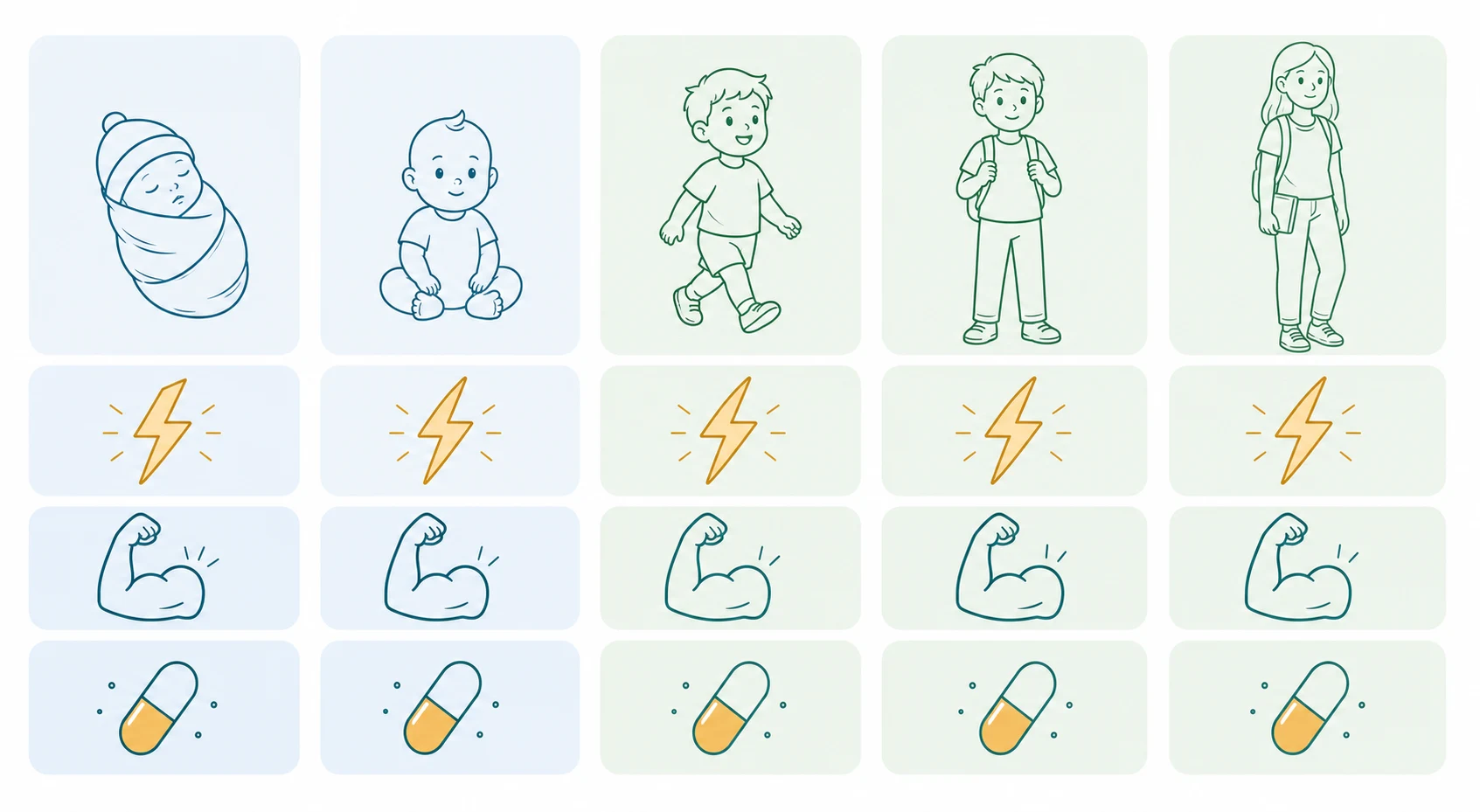
The defining pattern of this classification is that energy and protein needs per kilogram decline as the child ages, while the absolute daily requirement rises. A neonate needs more than ten times as much energy per kilogram as an adolescent, but the adolescent still consumes far more total food because the body mass is so much larger. [2]
Epidemiology & Risk Factors
Most healthy children in well-resourced settings meet their requirements through a varied diet and grow along their centile lines. The risk of failing to meet requirements, or of exceeding them, is unevenly distributed and tracks closely with socioeconomic position, feeding practice and access to fortified foods. [7]
Globally, suboptimal complementary feeding is among the most common nutritional problems of the second six months of life. Infants who are not introduced to iron-rich foods around six months are at high risk of iron deficiency, which remains the most prevalent micronutrient deficiency in early childhood worldwide. [7]
Vitamin D deficiency is common even in high-income countries, particularly in exclusively breastfed infants who do not receive a supplement, in children with dark skin, and in those with limited sun exposure. Iron deficiency and vitamin D deficiency together account for most of the preventable micronutrient shortfall in otherwise healthy children. [6]
At the other extreme, energy intake that persistently exceeds requirements has driven a rise in childhood overweight and obesity across all income groups. The same child can be overfed on energy yet undernourished on micronutrients, a pattern seen with excessive intake of energy-dense, nutrient-poor foods and large volumes of cow's milk. [11]
Pathophysiology
Total energy intake in a growing child partitions into five competing demands: basal metabolism, physical activity, the thermic effect of food, energy lost in faeces and urine, and the energy deposited as new tissue during growth. Growth is the component that makes the paediatric requirement so different from the adult one, because every gram of weight gained locks away energy and protein that cannot be reclaimed. [1]
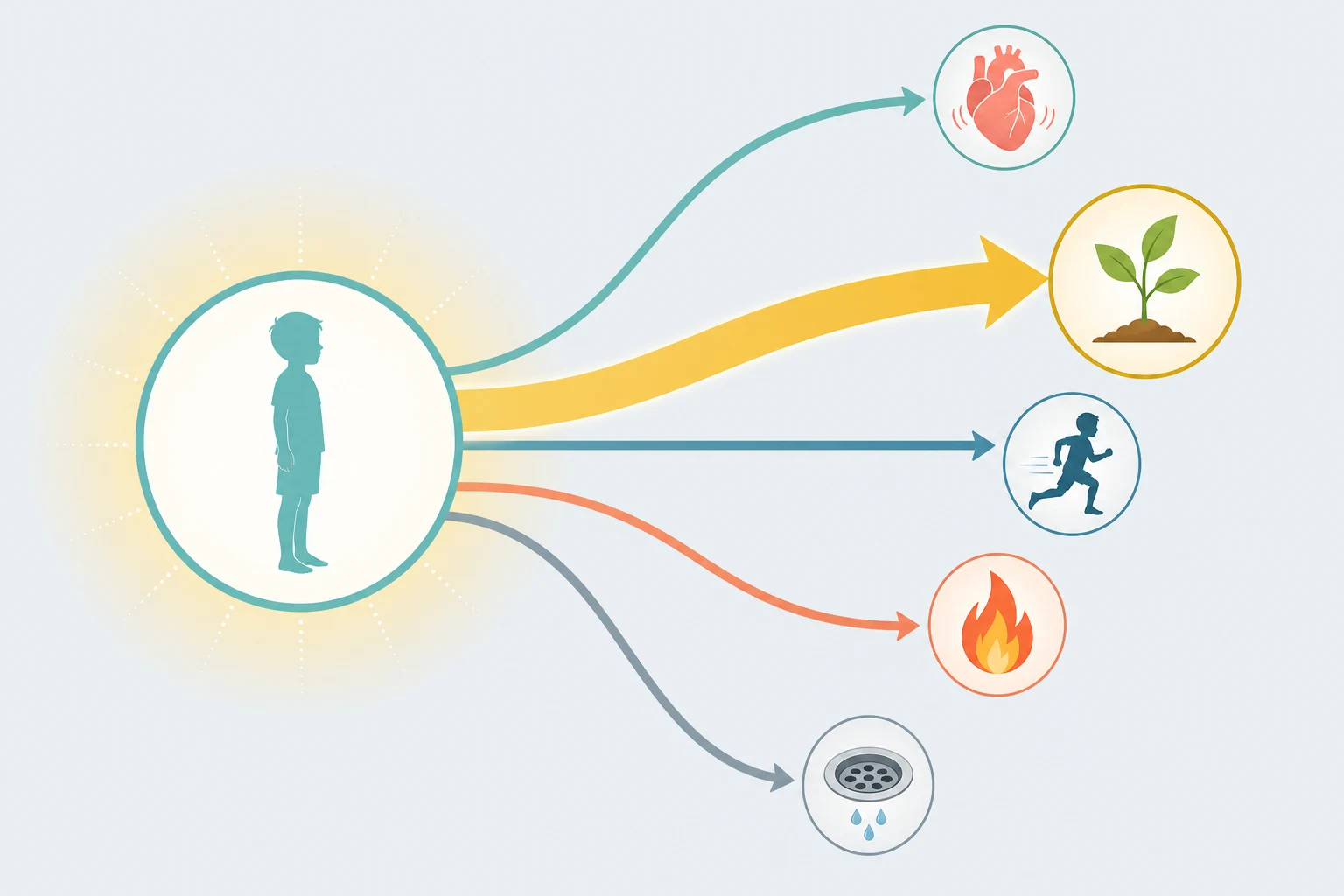
Basal metabolism consumes the largest share of energy at every age, typically 50 to 60 percent of total expenditure, and is driven largely by the mass of metabolically active tissue, particularly the brain. In an infant the brain alone accounts for nearly 60 percent of basal energy use because it is such a large fraction of body mass, which is why undernutrition in infancy is so damaging to neurodevelopment. [1]
The energy cost of growth is high in infancy, when up to a third of intake is deposited as new tissue, and falls toward the adult value of near zero as growth velocity slows. This is the physiological reason that energy needs per kilogram decline across childhood: the slower the growth, the smaller the deposition cost, and the lower the per-kilogram requirement. [3]
Protein follows the same logic. The requirement per kilogram is highest in early infancy, when tissue accretion is maximal, and falls as growth decelerates. Protein quality matters as much as quantity because the growing child needs all nine indispensable amino acids in proportions that match tissue synthesis, which is why animal protein and carefully combined plant proteins are both able to support normal growth. [9]
Fat deserves special emphasis in infancy because it supplies roughly half the energy in human milk and carries the essential fatty acids needed for brain and retinal development. The fat content of the diet is intentionally high in infancy and is gradually reduced toward the adult pattern of about 30 to 35 percent of energy by the preschool years. [3]
Clinical Presentation
A child who is meeting requirements presents only through growth and development. The expected pattern is steady tracking along centile lines for weight, length and head circumference, achievement of developmental milestones, and a normal level of energy and activity. There is no symptom of adequate nutrition, only the absence of the signs of inadequacy. [1]
The presentation of failing to meet requirements is therefore a trajectory read off the growth chart rather than an acute symptom. Weight gain that slows or stops, a length that lags, or a head circumference that flattens are the cardinal signs. Each charts a different failure: weight first reflects acute energy inadequacy, length reflects chronic inadequacy, and head circumference reflects early and serious undernutrition. [1]
Micronutrient inadequacy presents with specific signatures that may precede growth faltering. Pallor, fatigue and pica point to iron deficiency; bone pain, delayed walking or rachitic deformities point to vitamin D deficiency; and impaired taste, poor wound healing and growth faltering point to zinc deficiency. The clinician must look for these when the diet history raises concern. [7]
Exceeding requirements presents as upward centile crossing for weight, particularly when it outpaces height. A child whose weight-for-height or body mass index centile rises steadily is accumulating excess energy, and the associated dietary pattern typically reveals large portions, frequent sweetened drinks, or limited physical activity. [11]
Differential Diagnosis
When growth falters or a child seems to be failing to thrive, the clinician must decide whether the problem is inadequate intake, increased losses, increased requirements, or a non-nutritional cause. Most cases are inadequate intake, and a careful dietary history resolves it without investigation. [7]
| Category | Examples | Clue |
|---|---|---|
| Inadequate intake | Insufficient volume, poor weaning, feeding aversion | Diet history and mealtime observation |
| Increased losses | Vomiting, malabsorption, chronic diarrhoea | Stool pattern and abdominal signs |
| Increased requirements | Recurrent infection, chronic disease, catch-up growth | Underlying illness identified |
| Non-nutritional | Endocrine, genetic or syndromic short stature | Growth harmonious, proportions abnormal |
| Excess intake | Large portions, sweetened drinks, low activity | Weight-for-height rising |
The critical distinction is between a child whose growth faltering is nutritional and reversible, and one whose smallness is constitutional or pathological. A nutritional cause tends to produce disproportionate slowing of weight before length and is accompanied by a diet history that falls short of the expected requirement. Constitutional and endocrine causes tend to produce harmonious smallness with a diet history that is adequate. [1]
The clinician should also separate inadequate total energy from specific micronutrient deficiency, because a child can be energy-replete yet iron- or vitamin-D-deficient. A targeted diet history and, where indicated, a small set of blood tests clarify which requirement is unmet. [7]
Clinical & Bedside Assessment
Bedside assessment of nutritional status combines three elements: a diet history, a focused physical examination and anthropometry. The diet history establishes what the child actually eats, the examination looks for signs of micronutrient deficiency and chronic disease, and anthropometry quantifies whether the intake is meeting requirements. [7]
Anthropometry is the cornerstone. Weight is measured at every visit and plotted on WHO growth standards from birth to five years, and on national or WHO reference charts thereafter. Length is measured lying down under two years and standing thereafter, and head circumference is measured routinely in the first two years. Each measurement is compared with previous values to detect crossing of centile lines. [1]
The diet history should establish the feeding method in infancy, the timing and content of complementary feeding, the pattern of meals and snacks in older children, and the intake of milk, sweetened drinks and nutrient-poor foods. For infants, the key questions are whether breastfeeding or formula is adequate in volume, and whether complementary foods are iron-rich and varied. [4]
Body mass index is calculated from weight and height in children from two years and plotted on age-specific centile charts. It is the standard summary measure of weight relative to height in school-age children and adolescents, and it flags both undernutrition and excess energy intake that a weight-for-age chart alone would miss. [11]
Investigations
Growth chart plotting is the primary investigation and is both necessary and usually sufficient. Serial measurement reveals the trajectory that no single value can. A child whose measurements track parallel to the centile lines is growing normally and requires no further nutritional testing in the absence of symptoms. [1]
Targeted blood testing is reserved for children whose growth, examination or diet history suggests a specific deficiency. A full blood count and ferritin screen for iron deficiency, and a serum 25-hydroxyvitamin D level screens for vitamin D deficiency when clinical or dietary risk is present. Routine screening of well, growing children is not warranted. [7]
When iron deficiency is confirmed, the workup should consider dietary causes first, particularly excessive cow's milk intake in toddlers, before pursuing occult gastrointestinal blood loss. A trial of oral iron with a measured rise in haemoglobin over four weeks confirms dietary iron deficiency and completes the diagnosis without invasive testing. [10]
Investigating suspected unmet requirements
Plot weight, length and head circumference and review the trajectory
Take a structured diet history including milk volume and food variety
Examine for pallor, rickets and chronic disease
Measure full blood count and ferritin if iron deficiency is suspected
Measure 25-hydroxyvitamin D if dietary risk or clinical signs are present
Treat the identified gap and re-measure growth to confirm response
Management — Resuscitation

Nutritional resuscitation applies to the child who is acutely and severely deficient in an essential nutrient, where correction must be prompt but controlled. The two scenarios that demand this approach are severe acute malnutrition and the risk of refeeding syndrome in a starved child. [9]
In severe acute malnutrition the immediate priority is not feeding but stabilisation of fluid, electrolytes, infection and hypothermia, because the severely malnourished child is fragile and dies of metabolic collapse rather than hunger. This stabilisation phase precedes any attempt to deliver the full nutritional requirement and is detailed in the dedicated malnutrition topic. [9]
The refeeding hazard applies whenever nutrition is restarted in a chronically underfed child. Sudden delivery of carbohydrate and energy drives insulin release and intracellular uptake of phosphate, potassium and magnesium, producing dangerous falls in these electrolytes and fluid overload. Energy is therefore started well below full requirements and advanced over several days while electrolytes are monitored. [9]
For an isolated severe micronutrient deficiency such as symptomatic iron deficiency anaemia or vitamin D deficiency rickets, the resuscitation principle is to replace the specific nutrient at a treatment dose while addressing the dietary cause, then step down to a maintenance intake that meets the ongoing requirement. [7]
Management — Definitive & Stepwise
Definitive management is the lifelong process of delivering the age-appropriate requirement through food and, where needed, supplements. The strategy is built in stages that follow the child from breastfeeding through complementary feeding and the family diet to the nutritional demands of adolescence. [4]
Stage 1 — Exclusive breastfeeding in early infancy
Exclusive breastfeeding for about the first six months delivers an energy and nutrient package that is precisely matched to the infant requirement and carries immunological protection that no formula replicates. ESPGHAN and WHO align on exclusive or predominant breastfeeding for around six months as the foundation of infant nutrition. [4]
Human milk provides about 67 to 70 kilocalories per 100 millilitres and supplies protein, fat, lactose and most micronutrients in bioavailable form. It does not, however, reliably provide enough vitamin D or, after around four to six months, enough iron, which is why targeted supplementation is added rather than abandoning breastfeeding. [8]
Stage 2 — Complementary feeding from around six months
When breastfeeding alone can no longer meet the requirement, complementary foods are introduced. ESPGHAN advises that complementary feeding should not begin before four months of age and not be delayed beyond six months, with the goal of moving the child toward a varied family diet by one year. [4]
The 2017 ESPGHAN position paper reinforced that there is no evidence that delaying the introduction of allergenic foods such as egg or peanut prevents allergy, and that these foods should be introduced alongside other solids from around six months. Iron-rich foods are prioritised because the iron store laid down at birth is depleted by around six months. [5]
Stage 3 — The micronutrient safety net
Three micronutrient supplements anchor the preventive requirement across childhood. Vitamin D at 400 international units per day is recommended for all infants from the first days of life, all children and all adolescents, continued until vitamin D from fortified formula, milk or food reliably provides this amount. [6]
Iron is delivered through iron-fortified formula or iron-rich complementary foods, with a supplement of 1 milligram per kilogram per day of elemental iron for exclusively breastfed term infants starting at about four months. Preterm infants need 2 milligrams per kilogram per day from one month of age because their iron stores at birth are smaller. [7]
Cow's milk is delayed as a main drink until twelve months because, before that age, it causes occult gastrointestinal blood loss, imposes a high renal solute load and displaces iron-rich foods. From twelve months, full-fat cow's milk may be the main drink, with intake capped at about 500 millilitres per day in toddlers to protect iron status. [10]
Stage 4 — Childhood and the family diet
From the second year the requirement is met through a varied family diet that provides adequate energy, protein and the full range of micronutrients. The diet should include iron-rich foods, dairy or fortified alternatives for calcium, fruit and vegetables, and limited energy-dense nutrient-poor foods and sweetened drinks. [11]
Energy and protein needs per kilogram continue to fall as growth slows, but the absolute requirement rises with body size. The focus shifts from the composition of individual feeds to the overall dietary pattern, portion size and physical activity, which together determine whether the child stays within a healthy weight range. [2]
Stage 5 — Adolescence
Adolescence brings a final surge of growth that briefly raises the requirement, particularly for iron in menstruating females, calcium for bone mineral accrual, and energy and protein for the pubertal growth spurt. The peak bone mass accumulated in these years determines lifelong skeletal health, making calcium and vitamin D adequacy especially important. [6]
FEED-UP
Vitamin D supplement
Loading dose
400 international units once daily
Maintenance dose
400 international units once daily, continued until dietary intake reliably meets this amount
Specific Subtypes & Scenarios
| Stage | Energy | Protein | Key micronutrient focus |
|---|---|---|---|
| 0–6 months | ~90 kcal/kg/d | ~1.5 g/kg/d | Vitamin D, iron |
| 6–12 months | ~80 kcal/kg/d | ~1.5 g/kg/d | Iron, zinc |
| 1–3 years | ~80 kcal/kg/d | ~1.05 g/kg/d | Iron, calcium, vitamin D |
| School-age | ~60 kcal/kg/d | ~0.95 g/kg/d | Calcium, vitamin D |
| Adolescent | ~45–55 kcal/kg/d | ~0.85 g/kg/d | Iron, calcium |
The preterm infant after discharge carries a requirement that exceeds the term infant's because of the need for catch-up growth and the recovery of nutrient deficits accumulated in the neonatal period. These infants often need continued fortification or post-discharge formula until growth is established, as detailed in the dedicated preterm nutrition topic. [9]
Vegetarian and vegan diets can meet the requirement at every age but require careful planning. The nutrients most at risk are iron, zinc, calcium, vitamin B12 and, for vegans, long-chain fatty acids. Adequacy depends on combining plant proteins, using fortified foods or supplements, and monitoring growth, particularly in infancy when the margin for error is small. [11]
The adolescent athlete has increased energy and protein requirements and may need attention to iron, calcium and hydration. Energy intake must match the training load, because the developing body will prioritise growth and the shortfall falls on performance and immune function. [2]
[7]Complications & Pitfalls
The clearest complication of unmet requirements is growth faltering that, when chronic and early, carries long-term consequences for stature and cognitive development. The brain grows fastest in the first two years, and sustained undernutrition in this window is associated with lasting deficits that catch-up growth later only partially reverses. [1]
Micronutrient inadequacy produces its own complications. Untreated iron deficiency in infancy impairs neurodevelopment and may have effects that persist beyond correction. Vitamin D deficiency causes rickets and hypocalcaemic seizures. Excessive vitamin or mineral supplementation, conversely, causes toxicity, underscoring that more is not better once the requirement is met. [7]
The most dangerous iatrogenic pitfall is refeeding syndrome. Delivering full nutrition to a starved child causes precipitate falls in phosphate, potassium and magnesium that can lead to cardiac arrhythmia and death. The defence is to start below the requirement, advance slowly, and monitor electrolytes. [9]
Excessive cow's milk intake in toddlers is a classic and under-recognised pitfall. More than about 500 millilitres per day displaces iron-rich foods and causes occult gastrointestinal blood loss, producing iron deficiency anaemia that will not resolve until the milk intake is reduced, however much iron is prescribed. [10]
Prognosis & Disposition
The prognosis for a child whose requirements are met is excellent. Adequate nutrition sustains growth along the genetic potential set by the parents, supports normal development, and lays down the bone mass and metabolic reserve that protect health into adult life. The growth chart that tracks steadily is itself the evidence of a good prognosis. [1]
Children whose requirements are not met, particularly in the first two years, face a less favourable prognosis. Growth faltering that is identified early and corrected usually recovers fully, but chronic undernutrition in the period of fastest brain growth carries a risk of lasting cognitive and behavioural effects. Early recognition and intervention change the outcome. [1]
Disposition for most children is ongoing preventive care in the medical home, with routine growth monitoring and age-appropriate feeding advice. Children identified as failing to meet requirements need a structured plan with close follow-up until growth is back on track, and those with underlying disease need coordinated multidisciplinary input. [7]
Special Populations
Aboriginal, Torres Strait Islander and Maori children in Australia and New Zealand carry a disproportionate burden of nutritional risk through higher rates of preterm birth, iron deficiency and food insecurity. Culturally safe nutritional assessment, access to iron-rich foods and vitamin D supplementation, and growth monitoring in the first thousand days are priorities for closing the gap in nutritional outcomes. [7]
Children in socioeconomically disadvantaged families face the combined risk of inadequate access to nutrient-rich foods and higher rates of obesity driven by the low cost of energy-dense, nutrient-poor foods. These families benefit from practical, low-cost feeding advice, connection to food support programmes, and vigilant growth monitoring. [11]
Children with chronic disease, disability or technology dependence have requirements that may be higher, lower or altered in composition, and they frequently need individualised plans, fortified feeds or enteral supplementation. Their nutritional status must be assessed as a routine part of chronic disease care, not only when growth falters. [9]
Evidence, Guidelines & Regional Differences
The scientific basis for paediatric energy requirements is the body of doubly labelled water and indirect calorimetry work that measures total energy expenditure in children. The Butte study used these methods to show that infant energy requirements are about 80 to 100 kilocalories per kilogram per day in the first two years, refining earlier estimates. [1]
The Torun paper extended this across childhood and adolescence, providing the age-specific energy recommendations that underpin the FAO, WHO and UNU consensus for children aged one to eighteen years. These measurements replaced older factorial estimates and remain the foundation of modern reference values. [2]
ESPGHAN complementary feeding (2017)
Position paper by the ESPGHAN Committee on Nutrition
Population: Infants and young children
Key finding
Introduce complementary foods not before four months and not after six months; no benefit to delaying allergenic foods
Practice change
Replaced older advice to delay allergens and fixed the six-month window for solids
The Koletzko-led ESPGHAN global standard for infant formula established the compositional requirements that infant formula must meet to substitute for human milk, including energy of 60 to 70 kilocalories per 100 millilitres and protein of 1.8 to 3.0 grams per 100 kilocalories. This standard underpins formula regulation worldwide. [8]
Regional practice converges on the same principles but differs in the growth charts used and in the availability of fortified foods and supplements. WHO growth standards are used globally from birth, with national references for older children. The AAP vitamin D and iron guidance and the ESPGHAN feeding position papers are adopted across ANZ, Europe and North America with only minor local variation. [6]
Exam Pearls
The single most testable fact is that energy and protein requirements per kilogram are highest in infancy and fall with age. Know that an infant needs about 80 to 120 kilocalories per kilogram per day while an adolescent needs about 40 to 55, and that protein falls from about 1.5 grams per kilogram per day in infancy to about 0.85 grams in adolescence. [1]
The three micronutrient rules that recur in exams are: vitamin D 400 international units daily for all infants, children and adolescents, iron supplementation for breastfed infants from four months and preterm from one month, and cow's milk delayed to twelve months. These three facts appear in nearly every nutrition question. [6]
Finally, remember the principle behind the numbers. Growth is what makes paediatric requirements higher than adult ones per kilogram, and the slowing of growth is what lowers the per-kilogram requirement with age. Every requirement figure is justified by the energy and substrate cost of growing that amount of tissue, and the clinician who understands this can derive, rather than merely memorise, the numbers. [1]
THE NUMBERS
References
- [1]Butte NF, Wong WW, Hopkinson JM, Heinz CJ, Mehta NR, Smith EO Energy requirements derived from total energy expenditure and energy deposition during the first 2 y of life. Am J Clin Nutr, 2000.PMID 11101486
- [2]Torun B, Davies PS, Livingstone MB, Paolisso M, Sackett R, Spurr GB Energy requirements and dietary energy recommendations for children and adolescents 1 to 18 years old. Eur J Clin Nutr, 1996.PMID 8641267
- [3]Butte NF Fat intake of children in relation to energy requirements. Am J Clin Nutr, 2000.PMID 11063466
- [4]Agostoni C, Decsi T, Fewtrell M, Goulet O, Kolacek S, Koletzko B, et al Complementary feeding: a commentary by the ESPGHAN Committee on Nutrition. J Pediatr Gastroenterol Nutr, 2008.PMID 18162844
- [5]Fewtrell M, Bronsky J, Campoy C, Domellof M, Embleton N, Fidler Mis N, et al Complementary Feeding: A Position Paper by the European Society for Paediatric Gastroenterology, Hepatology, and Nutrition (ESPGHAN) Committee on Nutrition. J Pediatr Gastroenterol Nutr, 2017.PMID 28027215
- [6]Wagner CL, Greer FR, American Academy of Pediatrics Section on Breastfeeding and Committee on Nutrition Prevention of rickets and vitamin D deficiency in infants, children, and adolescents. Pediatrics, 2008.PMID 18977996
- [7]Baker RD, Greer FR, Committee on Nutrition American Academy of Pediatrics Diagnosis and prevention of iron deficiency and iron-deficiency anemia in infants and young children (0-3 years of age). Pediatrics, 2010.PMID 20923825
- [8]Koletzko B, Baker S, Cleghorn G, Neto UF, Gopalan S, Hernell O, et al Global standard for the composition of infant formula: recommendations of an ESPGHAN coordinated international expert group. J Pediatr Gastroenterol Nutr, 2005.PMID 16254515
- [9]Mihatsch WA, Braegger C, Bronsky J, Cai W, Campoy C, Carnielli V, et al ESPGHAN/ESPEN/ESPR/CSPEN guidelines on pediatric parenteral nutrition. Clin Nutr, 2018.PMID 30471662
- [10]Michaelsen KF Cows' milk in complementary feeding. Pediatrics, 2000.PMID 11061845
- [11]Ziegler EE Adverse effects of cow's milk in infants. Nestle Nutr Workshop Ser Pediatr Program, 2007.PMID 17664905