Phys · dermatological
Vasculitic Skin Lesions
Also known as Vasculitic Skin Lesions · vasculitic skin lesions
Consultant-physician depth guide to Vasculitic Skin Lesions for FRACP DWE/DCE preparation — presentation, differentials, investigations, management, complications and exam angles.
On this page & tools
Your progress
Saved locally on this device.
Practise this topic
Target exams
Red flags
The answer first
Vasculitic Skin Lesions is managed with an answer-first physician approach: recognise the pattern, exclude dangerous differentials, choose investigations that change action, and deliver a sequenced management plan that accounts for multimorbidity. [1] [2]
The FRACP candidate must be able to open a long-case presentation, defend thresholds, and answer DWE vignettes without hedging. Lead with the decision, then the evidence and the trap. [1]

Clinical spectrum and red flags
Presentations range from incidental or outpatient findings to emergency decompensation. Always ask what would make this urgent today — airway, perfusion, neurological threat, metabolic crisis, infection, or bleeding. [1] [2]
Red flags force same-day action rather than elective pathways. Document them explicitly in the plan. [1]
Classification that changes management
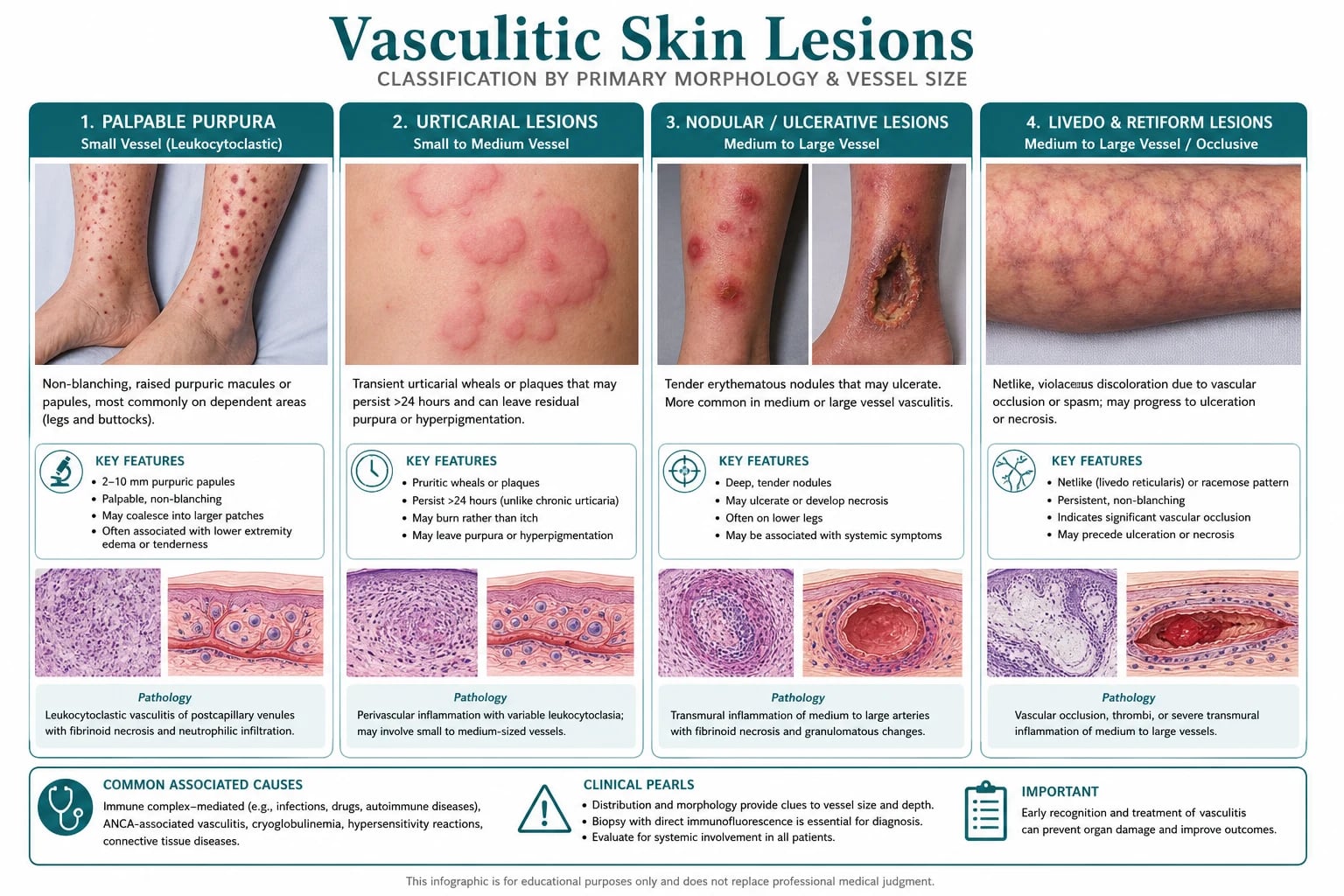
Classify by acuity, mechanism, severity and care setting. A useful classification changes investigation choice, initial therapy, disposition or specialist referral — otherwise it is taxonomy without purpose. [1] [2]
Pathophysiology linked to bedside decisions
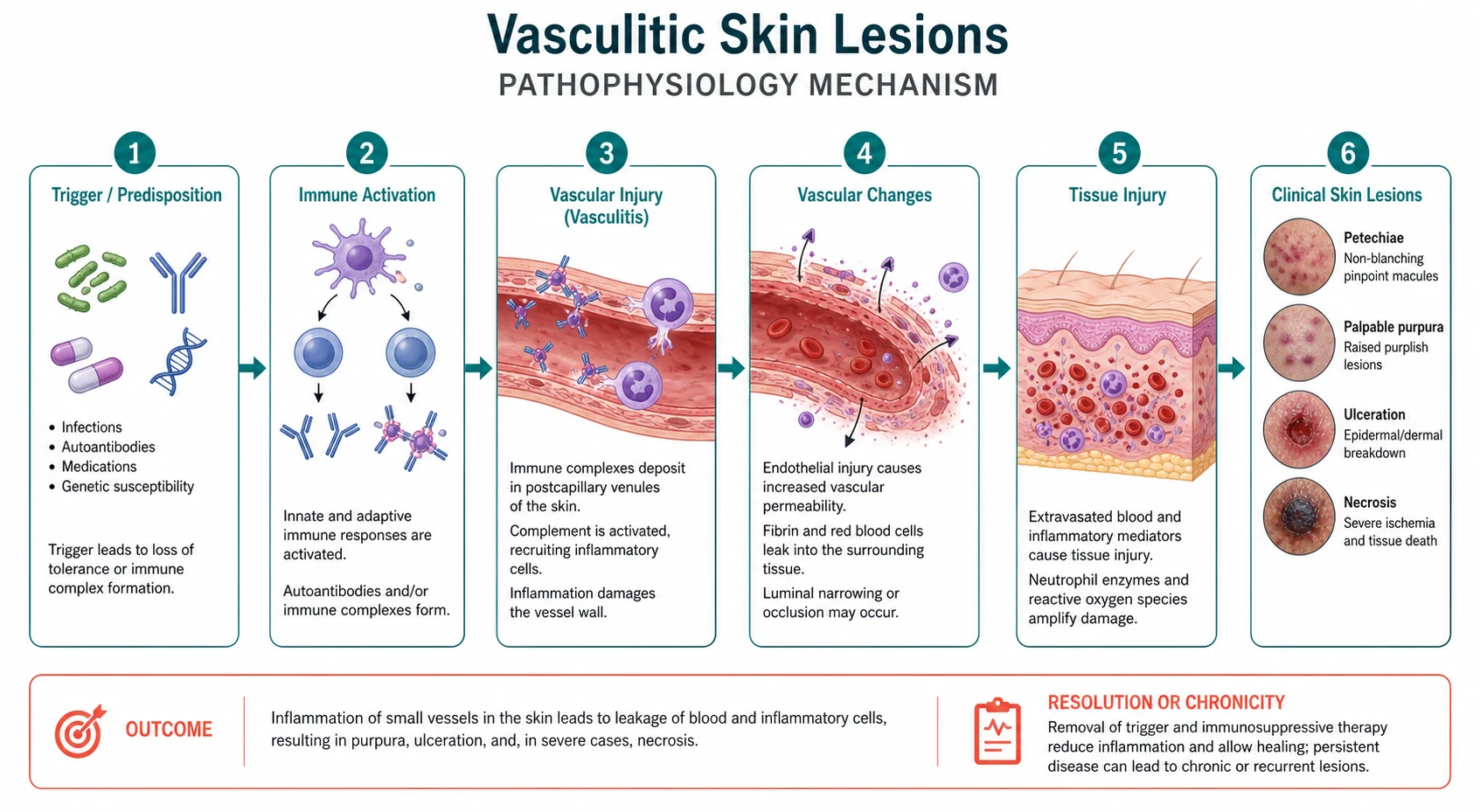
Mechanism matters when it predicts treatment response, complications or monitoring. Teach pathophysiology as a bridge to action, not as isolated basic science. [1] [2] [3]
Differentials and discrimination
Build a short differential that includes the common, the dangerous and the commonly missed. For each alternative, name one history clue, one examination clue and one investigation that discriminates. [1] [2]
Investigations
Order tests that change management. State what is required now, what can wait, and what is low-value or harmful. Interpret results in clinical context rather than in isolation. [1] [2]
Management — immediate then definitive
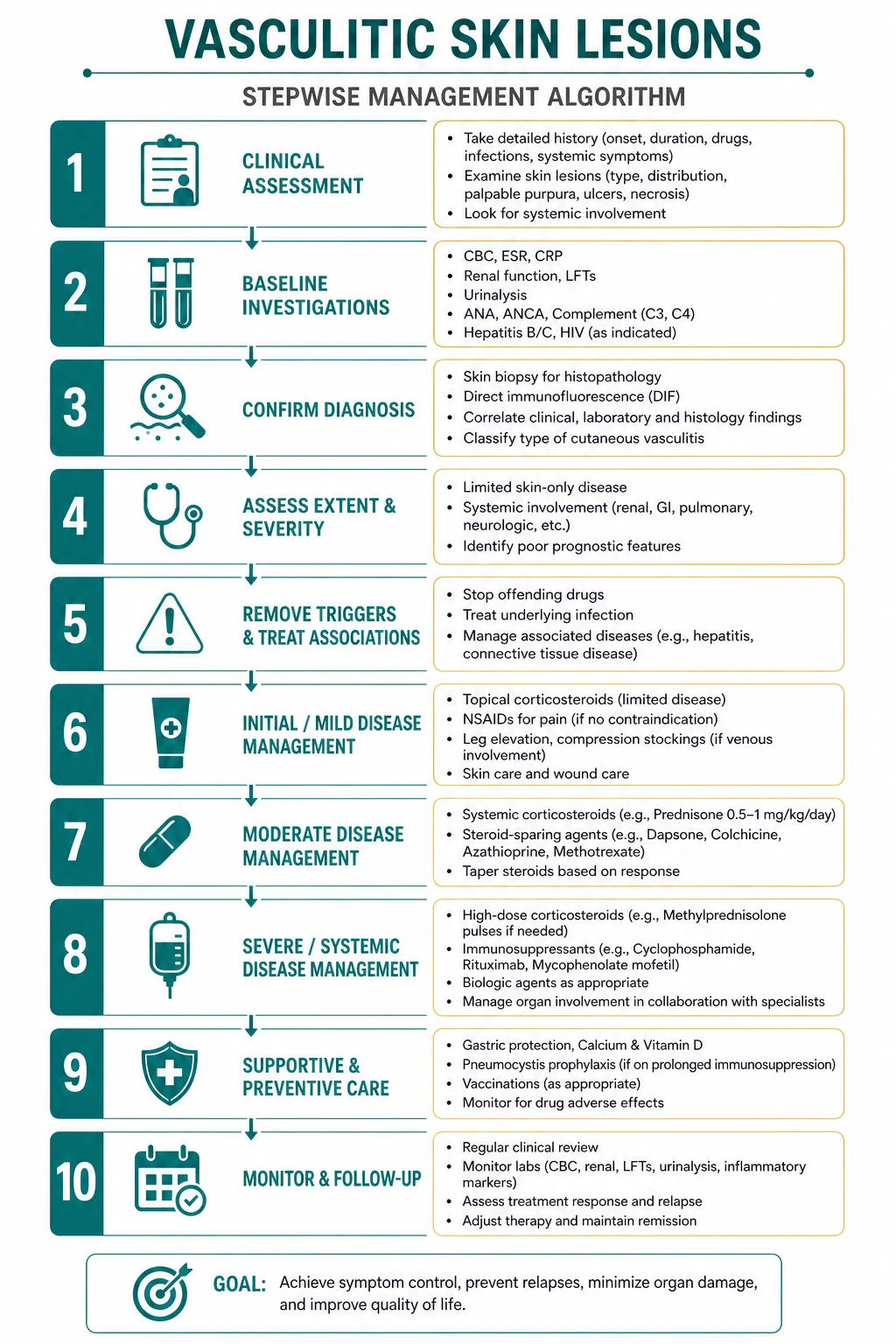
- Stabilise threats to life and organ function. [1]
- Start disease-specific therapy once the working diagnosis is secure enough to act. [1] [2]
- Address complications, drug interactions and monitoring. [1] [2]
- Plan disposition, follow-up intensity and patient education with safety-net advice. [1]
Complications and prognosis
Anticipate early and late complications. Prognosis depends on severity at presentation, speed of effective therapy, comorbidity and adherence to secondary prevention or disease-modifying treatment. [1] [2]
Special populations and multimorbidity
Adjust for pregnancy potential, frailty, CKD, liver disease, immunosuppression and polypharmacy. In older adults, goals-of-care and treatment burden can change the preferred plan even when disease-directed options remain available. [1] [2]
DCE long-case angles
Open with a one-sentence synthesis, then a prioritised problem list, then an integrated plan covering investigations, treatment, prevention and communication. Link Vasculitic Skin Lesions to cardiovascular risk, infection risk, medications and social context where relevant. [1] [2]
DCE short-case angles
Be prepared to demonstrate or discuss focused examination findings, interpret a key investigation, and counsel on risks, benefits and follow-up in plain language. [1]
Exam traps
- Delaying urgent care because the presentation looks "stable enough". [1]
- Treating a syndrome label without confirming mechanism. [1] [2]
- Forgetting drug interactions and organ-function dosing. [1] [2]
- Omitting safety-net advice and follow-up ownership. [1]
- Quoting thresholds without knowing the source trial or guideline. [1] [2] [3]
References
- [1]Balado-Simó P, Gimeno-Ribes E, Riera-Monroig J, Catalá-Gonzalo A, et al. Dermatological manifestations associated with chemsex J Eur Acad Dermatol Venereol, 2026.PMID 42434837
- [2]Sharma Y, Nadig P, Das J, Iyengar V, et al. Henoch-Schoenlein purpura-like lesions in IL12RB1 and IL12B defects-a multi-centric experience from India Clin Exp Immunol, 2026.PMID 42366588
- [3]Ribero Vargas DA, Ayala Monroy GA, Gómez Cerón LN, Aguilar Gómez M, et al. Retiform purpura and blue toe: an unusual presentation of systemic lupus erythematosus Clin Rheumatol, 2026.PMID 42329349
- [4]Di Rocco M, Fantasia AR, Taro M, Loy A, et al. Systemic lupus erythematosus-like disease in a 6-year-old boy with prolidase deficiency J Inherit Metab Dis, 2007.PMID 17570078
- [5]Xi Y, Yao T, Zhang C, Zhuang T Effectiveness of safety care and clinical nursing pathway in patients undergoing cardiovascular intervention: a randomized controlled trial Perioper Med (Lond), 2026.PMID 42469924
- [6]Marks FJ, Walters SJ, Sutton L, Jacques RM What statistical methods are more appropriate for predicting recruitment at the design stage of a randomised controlled trial? Trials, 2026.PMID 42469922
- [7]Hajiaqaei M, Mohammadi A Transcranial random noise stimulation (tRNS) over the left dorsolateral prefrontal cortex ameliorates emotion dysregulation and executive function: a single-blind, randomized, sham-controlled clinical trial BMC Psychol, 2026.PMID 42469906
- [8]Erol V, Güzel Z, Akgün İE, Ecer G Hydroxyurea-Associated Wunderlich Syndrome in Triple-Negative Myelofibrosis: A Case Report and Literature Review Case Rep Hematol, 2026.PMID 42182820
- [9]Agüera-Sánchez A, Del Carmen Brufau-Redondo M, Poblet E Whipple's Disease: Panniculitis Among Other Dermatoses. A Case Report and Literature Review J Cutan Pathol, 2026.PMID 41631710
- [10]Costacurta L, Di Biagio A, Taramasso L Cutaneous manifestations associated with HIV preexposure prophylaxis: what to expect and when to worry Curr Opin Infect Dis, 2026.PMID 41397237