Phys · gastrointestinal
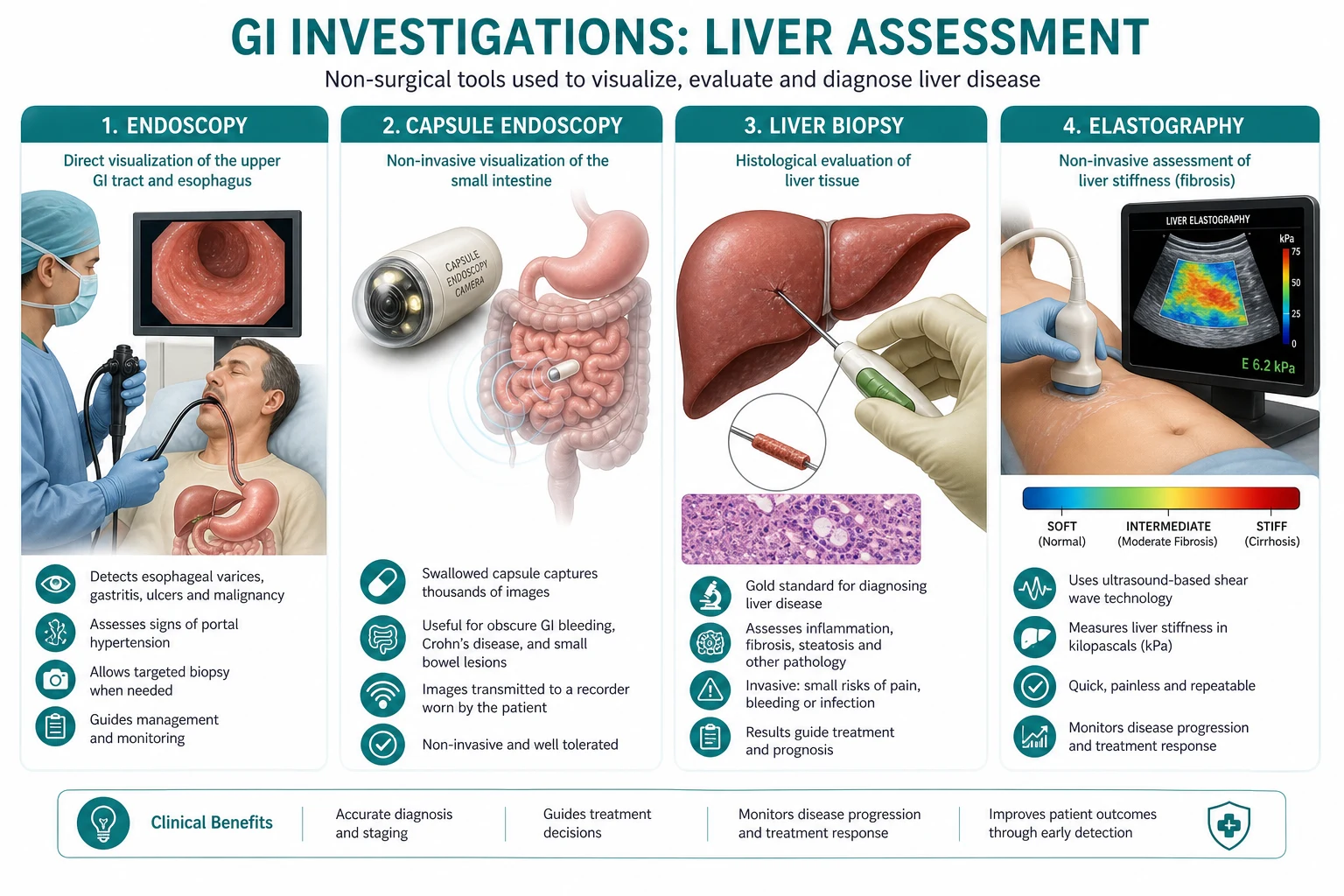
GI Investigation Endoscopy Capsule Liver Biopsy Elastography
Also known as GI Investigation Endoscopy Capsule Liver Biopsy Elastography · gi investigation endoscopy capsule liver biopsy elastography
Consultant-physician depth guide to GI Investigation Endoscopy Capsule Liver Biopsy Elastography for FRACP DWE/DCE preparation — presentation, differentials, investigations, management, complications and exam angles.
On this page & tools
Your progress
Saved locally on this device.
Practise this topic
Target exams
Red flags
The answer first
GI Investigation Endoscopy Capsule Liver Biopsy Elastography is managed with an answer-first physician approach: recognise the pattern, exclude dangerous differentials, choose investigations that change action, and deliver a sequenced management plan that accounts for multimorbidity. [1] [2]
The FRACP candidate must be able to open a long-case presentation, defend thresholds, and answer DWE vignettes without hedging. Lead with the decision, then the evidence and the trap. [1]

Clinical spectrum and red flags
Presentations range from incidental or outpatient findings to emergency decompensation. Always ask what would make this urgent today — airway, perfusion, neurological threat, metabolic crisis, infection, or bleeding. [1] [2]
Red flags force same-day action rather than elective pathways. Document them explicitly in the plan. [1]
Classification that changes management
Classify by acuity, mechanism, severity and care setting. A useful classification changes investigation choice, initial therapy, disposition or specialist referral — otherwise it is taxonomy without purpose. [1] [2]
Pathophysiology linked to bedside decisions
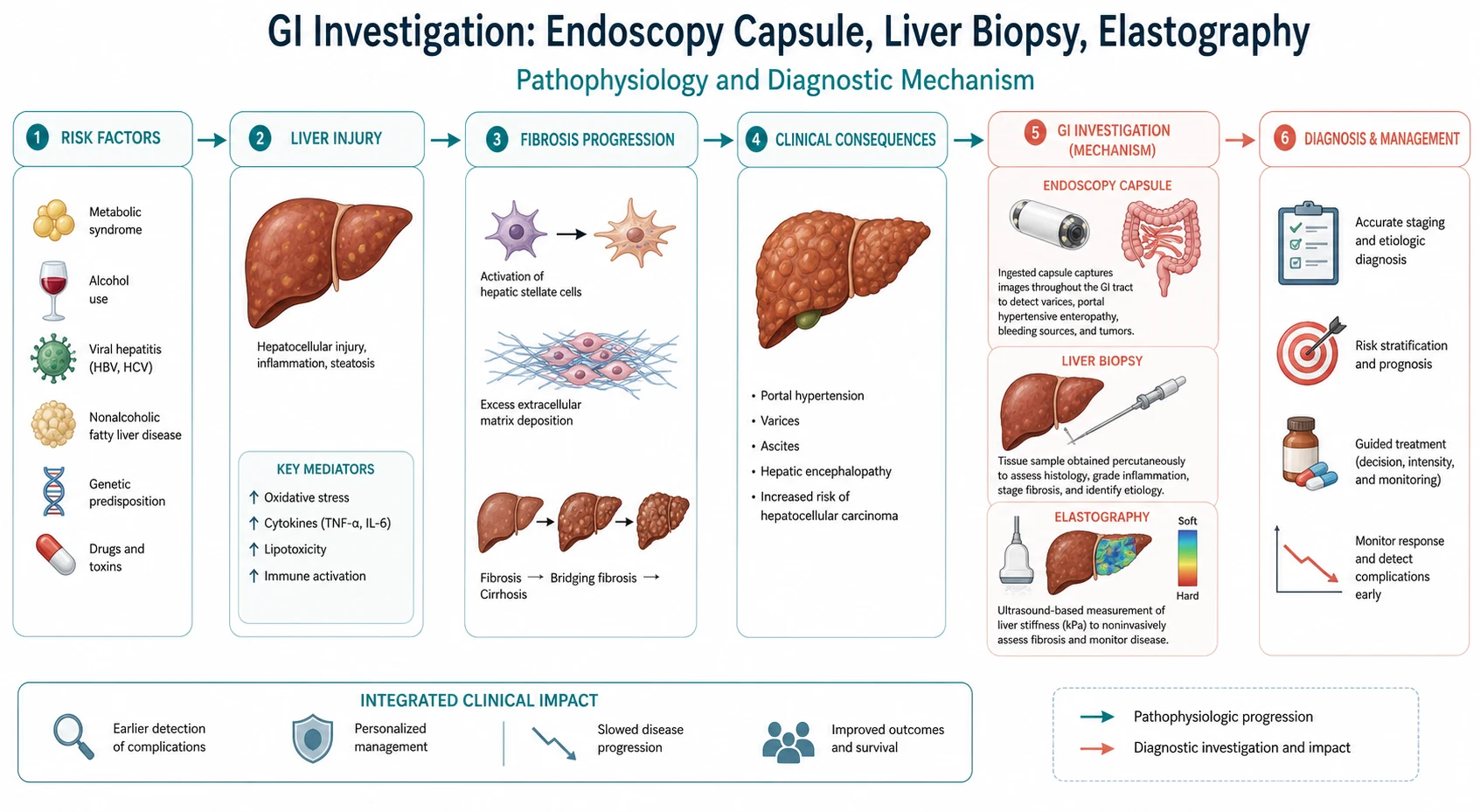
Mechanism matters when it predicts treatment response, complications or monitoring. Teach pathophysiology as a bridge to action, not as isolated basic science. [1] [2] [3]
Differentials and discrimination
Build a short differential that includes the common, the dangerous and the commonly missed. For each alternative, name one history clue, one examination clue and one investigation that discriminates. [1] [2]
Investigations
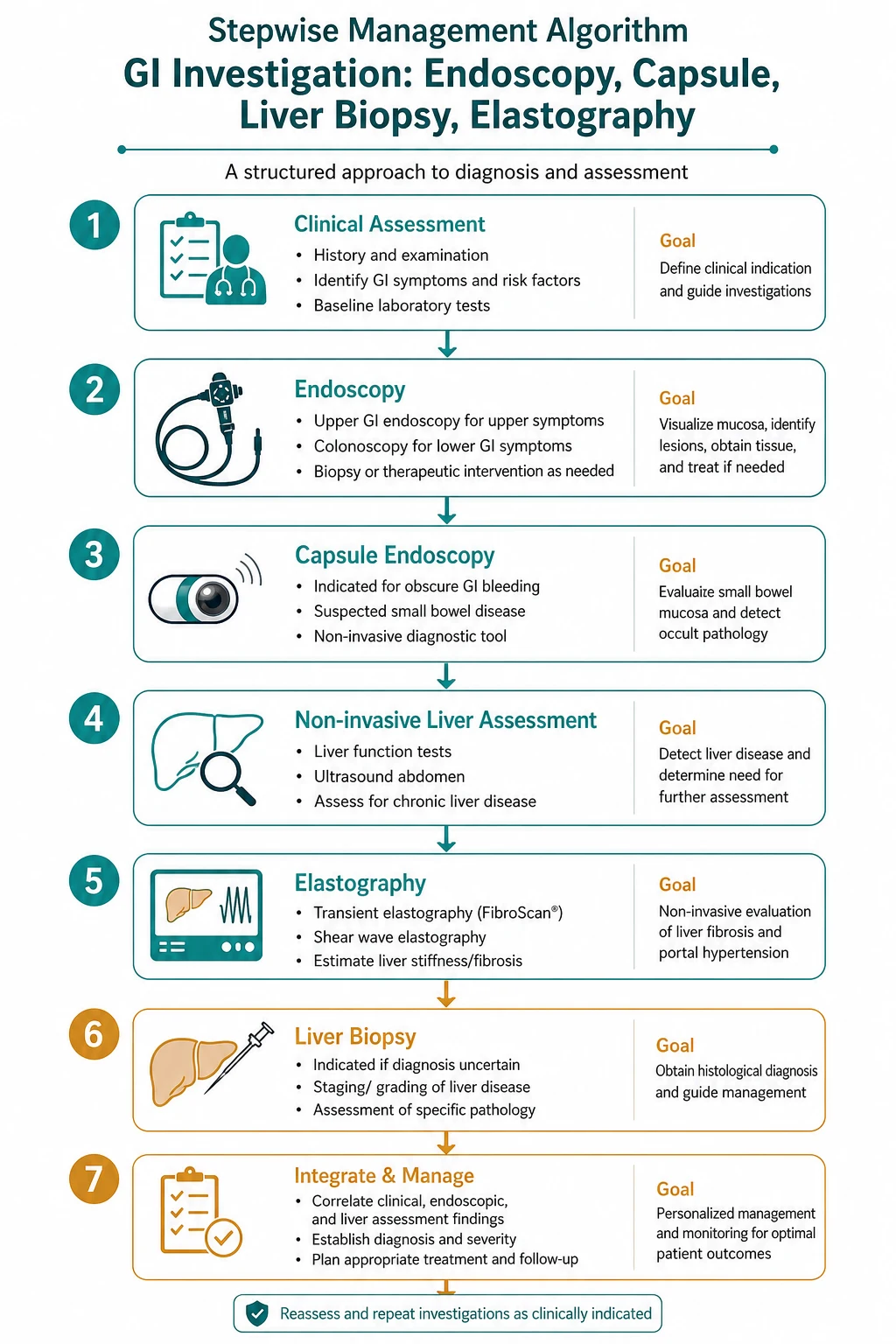
Order tests that change management. State what is required now, what can wait, and what is low-value or harmful. Interpret results in clinical context rather than in isolation. [1] [2]
Management — immediate then definitive
- Stabilise threats to life and organ function. [1]
- Start disease-specific therapy once the working diagnosis is secure enough to act. [1] [2]
- Address complications, drug interactions and monitoring. [1] [2]
- Plan disposition, follow-up intensity and patient education with safety-net advice. [1]
Complications and prognosis
Anticipate early and late complications. Prognosis depends on severity at presentation, speed of effective therapy, comorbidity and adherence to secondary prevention or disease-modifying treatment. [1] [2]
Special populations and multimorbidity
Adjust for pregnancy potential, frailty, CKD, liver disease, immunosuppression and polypharmacy. In older adults, goals-of-care and treatment burden can change the preferred plan even when disease-directed options remain available. [1] [2]
DCE long-case angles
Open with a one-sentence synthesis, then a prioritised problem list, then an integrated plan covering investigations, treatment, prevention and communication. Link GI Investigation Endoscopy Capsule Liver Biopsy Elastography to cardiovascular risk, infection risk, medications and social context where relevant. [1] [2]
DCE short-case angles
Be prepared to demonstrate or discuss focused examination findings, interpret a key investigation, and counsel on risks, benefits and follow-up in plain language. [1]
Exam traps
- Delaying urgent care because the presentation looks "stable enough". [1]
- Treating a syndrome label without confirming mechanism. [1] [2]
- Forgetting drug interactions and organ-function dosing. [1] [2]
- Omitting safety-net advice and follow-up ownership. [1]
- Quoting thresholds without knowing the source trial or guideline. [1] [2] [3]
References
- [1]Doan HN, Chang MC Comparative Effectiveness of Unstable Versus Stable Resistance Training on Lower Limb Strength, Mobility, and Fear of Falling in Older Adults: A Systematic Review and Meta-analysis of Randomized Controlled Trials Am J Phys Med Rehabil, 2026.PMID 42468010
- [2]Liu HW, Tsai TL Virtual Reality-assisted Physiotherapeutic Training for Patients With Knee Osteoarthritis: A Systematic Review and Meta-analysis Am J Phys Med Rehabil, 2026.PMID 42468005
- [3]Osborne AK, Brown RD, Sillence E Effects of Social Media Narratives on Affective and Behavioral Responses to Menopause Content: Randomized Online Experimental Study JMIR Form Res, 2026.PMID 42467962
- [4]Muggleston D, O'Grady G, Varghese C, Andrews C Artificial Intelligence in Gastrointestinal Motility Diagnostics: A Systematic Review Neurogastroenterol Motil, 2026.PMID 41933458
- [5]Jourdain A, Leenhardt R, Popa I, Dray X Hemorrhagic jejunal vascular malformations with loop telangiectasia in Turner's syndrome Clin Res Hepatol Gastroenterol, 2026.PMID 41655792
- [6]Bester EV, Chen W, van der Mijle Meijer JK, Ligtenberg LW, et al. Dynamic Modeling of a Magnetic Video Capsule for Enhanced Navigation in the Gastrointestinal Tract Annu Int Conf IEEE Eng Med Biol Soc, 2025.PMID 41336199
- [7]Bang CS, Kang SJ, Lim H, Kim SH, et al. Evidence-Based Guidelines for the Diagnosis and Treatment of Helicobacter pylori Infection in Korea: 2025 Revised Edition Helicobacter, 2026.PMID 42439470
- [8]Van de Bruaene C, De Schepper H, Surmont M, Van de Putte D, et al. Guideline on Pelvic Floor Disorders: consensus on Obstructed Defecation Syndrome (ODS) Acta Gastroenterol Belg, 2026.PMID 42417642
- [9]Truyens M, Cremer A, Jauregui-Amezaga A, Verstockt B, et al. From theory to practice: a Belgian consensus on minimal monitoring strategies for patients with IBD treated with advanced therapies Acta Gastroenterol Belg, 2026.PMID 42417635
- [10]Adamina M, Kienle P, Chaparro M, Verstockt B, et al. ECCO Guidelines on Therapeutics in Ulcerative Colitis: Surgical Treatment J Crohns Colitis, 2026.PMID 42381162
- [11]Luglio CV, Di Ciaula A, Sozzi S, Conforti C, et al. A Pilot Real-life Study Opioid Induced Constipation in Neoplastic Patients Admitted to Internal Medicine Ward. Outcome of Naldemedine Therapy According to Available Guidelines J Gastrointestin Liver Dis, 2026.PMID 42365650
- [12]Peulen HMU, Rønde HS, Kronborg C, Burger JWA, et al. ESTRO recommendations for the use, planning and delivery of reirradiation in locally recurrent rectal cancer - Endorsed by ASTRO Radiother Oncol, 2026.PMID 42364818