Phys · geriatric
Nutrition AND Hydration IN Older Adults
Also known as Nutrition AND Hydration IN Older Adults · nutrition and hydration in older adults
Consultant-physician depth guide to Nutrition AND Hydration IN Older Adults for FRACP DWE/DCE preparation — presentation, differentials, investigations, management, complications and exam angles.
On this page & tools
Your progress
Saved locally on this device.
Practise this topic
Target exams
Red flags
The answer first
Nutrition AND Hydration IN Older Adults is managed with an answer-first physician approach: recognise the pattern, exclude dangerous differentials, choose investigations that change action, and deliver a sequenced management plan that accounts for multimorbidity. [1] [2]
The FRACP candidate must be able to open a long-case presentation, defend thresholds, and answer DWE vignettes without hedging. Lead with the decision, then the evidence and the trap. [1]

Clinical spectrum and red flags
Presentations range from incidental or outpatient findings to emergency decompensation. Always ask what would make this urgent today — airway, perfusion, neurological threat, metabolic crisis, infection, or bleeding. [1] [2]
Red flags force same-day action rather than elective pathways. Document them explicitly in the plan. [1]
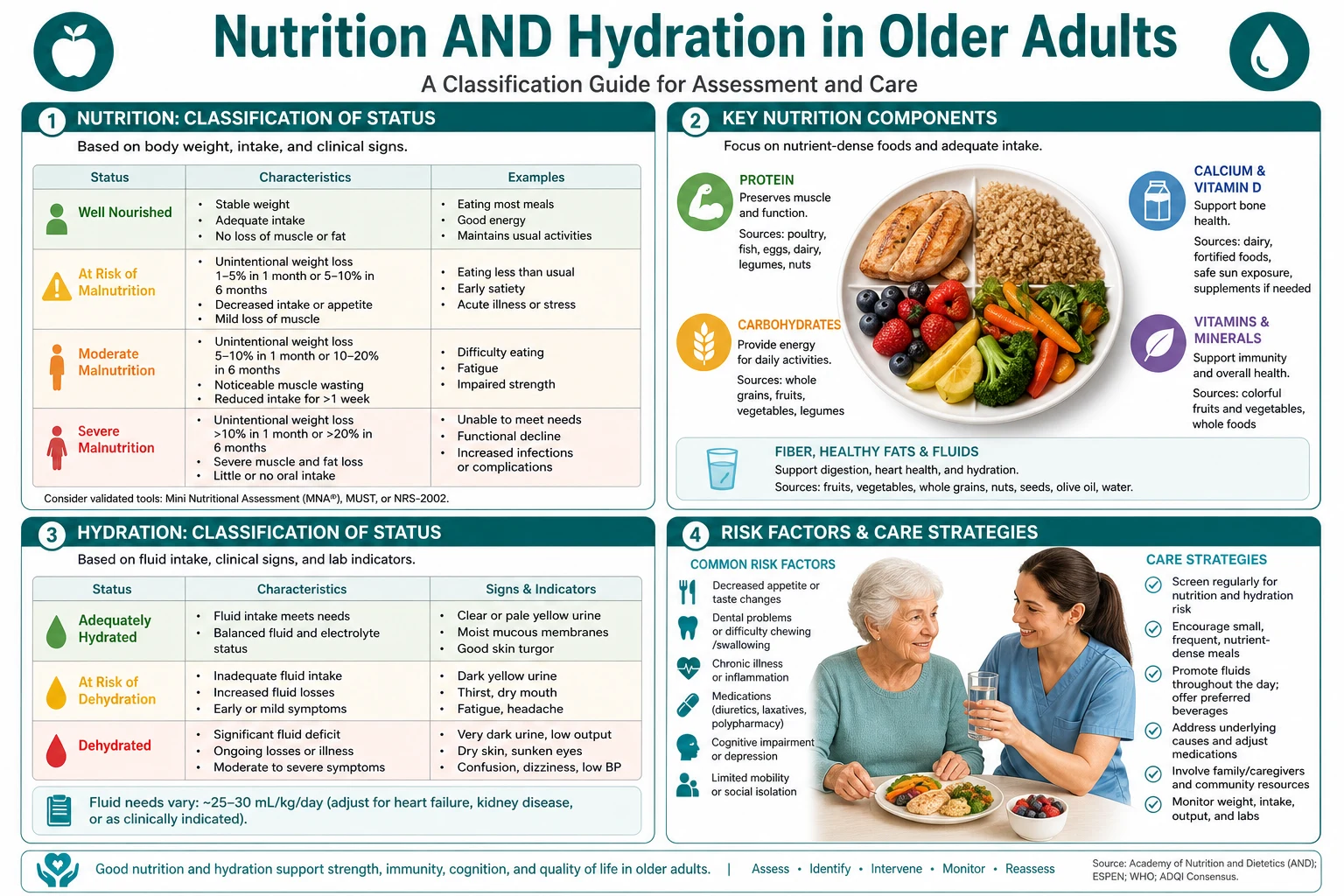
Classification that changes management
Classify by acuity, mechanism, severity and care setting. A useful classification changes investigation choice, initial therapy, disposition or specialist referral — otherwise it is taxonomy without purpose. [1] [2]
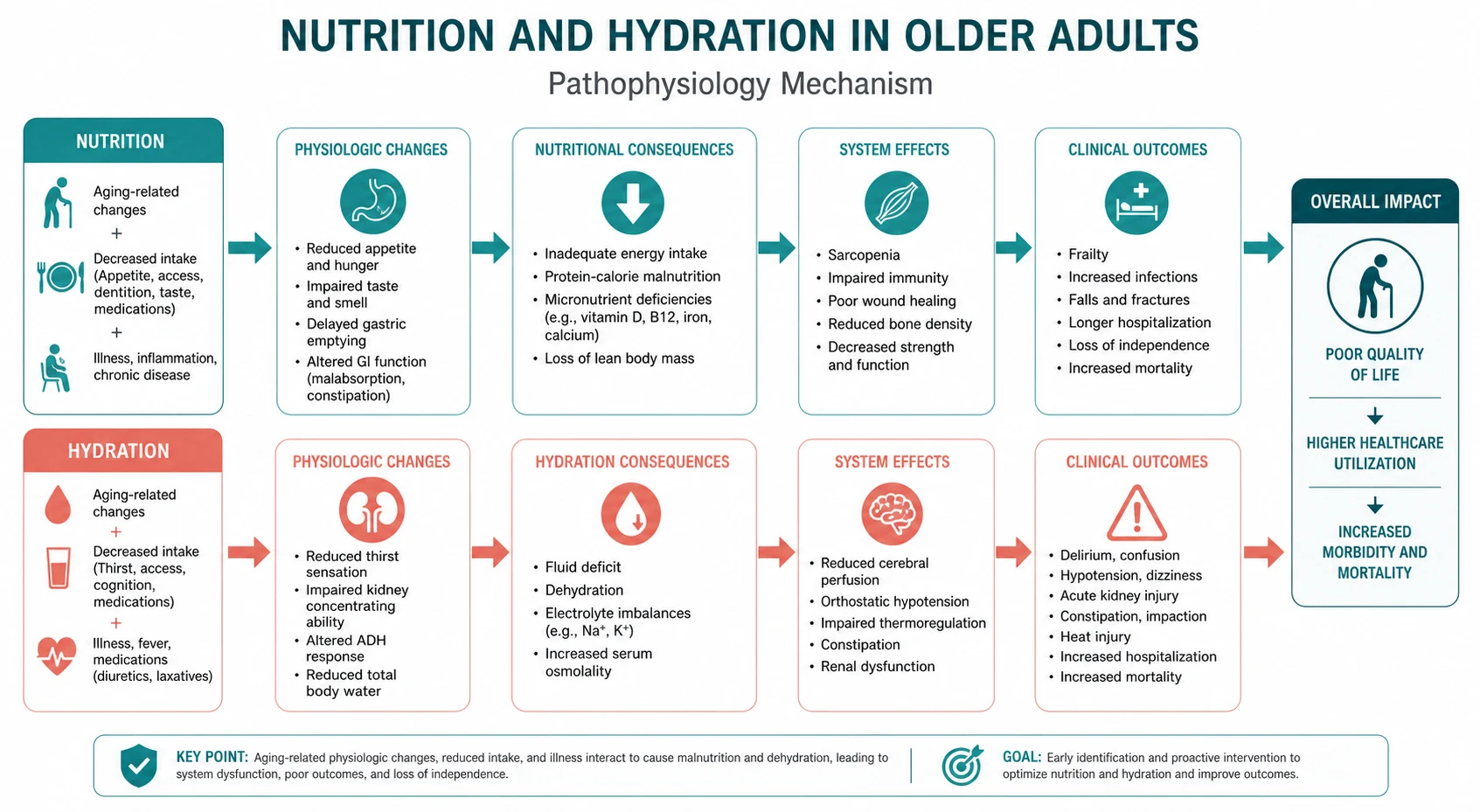
Pathophysiology linked to bedside decisions
Mechanism matters when it predicts treatment response, complications or monitoring. Teach pathophysiology as a bridge to action, not as isolated basic science. [1] [2] [3]
Differentials and discrimination
Build a short differential that includes the common, the dangerous and the commonly missed. For each alternative, name one history clue, one examination clue and one investigation that discriminates. [1] [2]
Investigations
Order tests that change management. State what is required now, what can wait, and what is low-value or harmful. Interpret results in clinical context rather than in isolation. [1] [2]
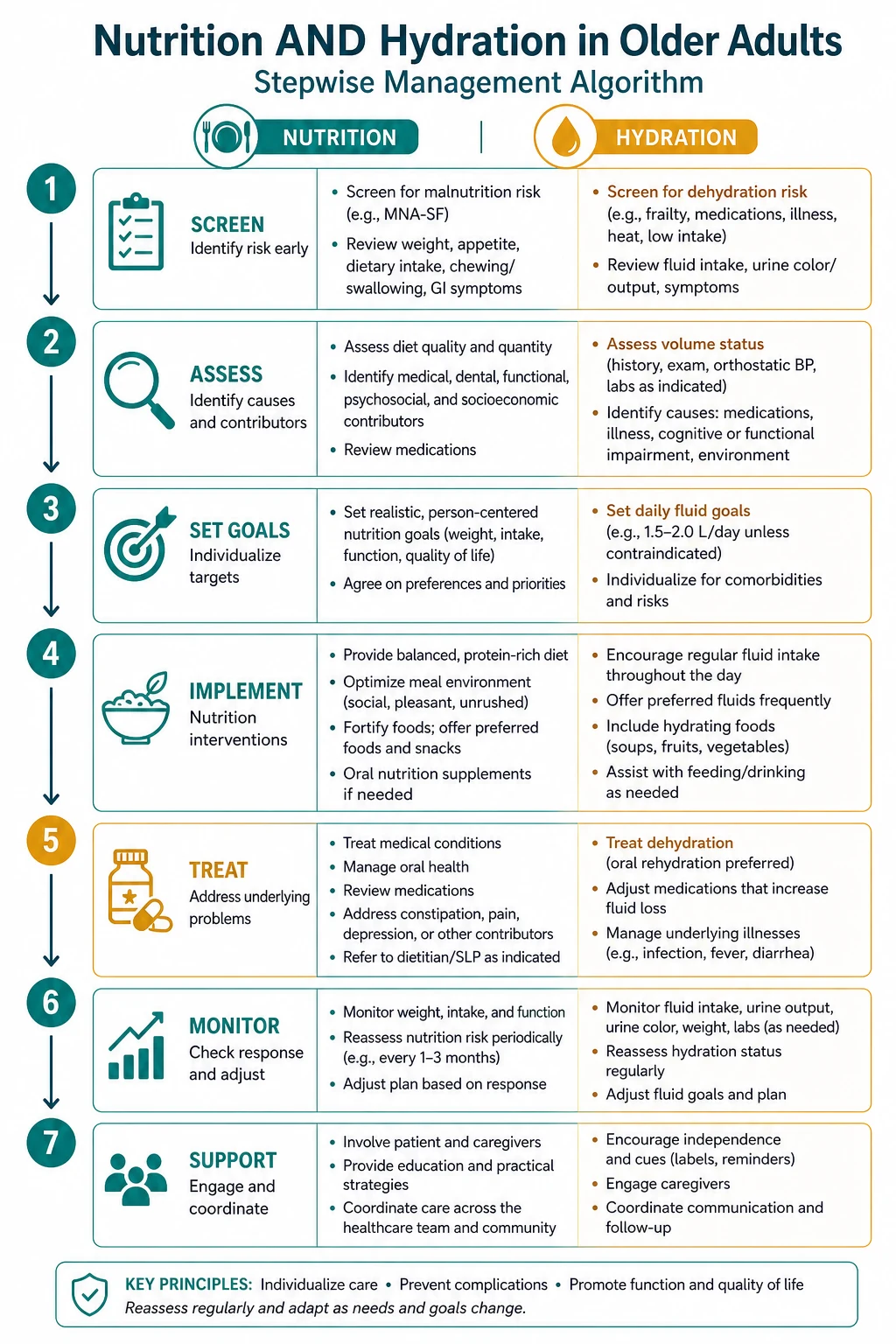
Management — immediate then definitive
- Stabilise threats to life and organ function. [1]
- Start disease-specific therapy once the working diagnosis is secure enough to act. [1] [2]
- Address complications, drug interactions and monitoring. [1] [2]
- Plan disposition, follow-up intensity and patient education with safety-net advice. [1]
Complications and prognosis
Anticipate early and late complications. Prognosis depends on severity at presentation, speed of effective therapy, comorbidity and adherence to secondary prevention or disease-modifying treatment. [1] [2]
Special populations and multimorbidity
Adjust for pregnancy potential, frailty, CKD, liver disease, immunosuppression and polypharmacy. In older adults, goals-of-care and treatment burden can change the preferred plan even when disease-directed options remain available. [1] [2]
DCE long-case angles
Open with a one-sentence synthesis, then a prioritised problem list, then an integrated plan covering investigations, treatment, prevention and communication. Link Nutrition AND Hydration IN Older Adults to cardiovascular risk, infection risk, medications and social context where relevant. [1] [2]
DCE short-case angles
Be prepared to demonstrate or discuss focused examination findings, interpret a key investigation, and counsel on risks, benefits and follow-up in plain language. [1]
Exam traps
- Delaying urgent care because the presentation looks "stable enough". [1]
- Treating a syndrome label without confirming mechanism. [1] [2]
- Forgetting drug interactions and organ-function dosing. [1] [2]
- Omitting safety-net advice and follow-up ownership. [1]
- Quoting thresholds without knowing the source trial or guideline. [1] [2] [3]
References
- [1]von Känel-Cordoba I, Wilhelm M, Leite LB, Andrade MS, et al. Performance, physiology, and determinants of success in IRONMAN® 70.3: A systematic review PLoS One, 2026.PMID 42467690
- [2]Dave J, Nirmal N, Kumar S, Jain N, et al. Soft Matter Physics-Driven Design of Texture-Modified Foods for Geriatric Nutrition J Nutr, 2026.PMID 42413771
- [3]Manzano-Nunez R, Gomez DA, Triana EM, Alcalá R, et al. Venous Thromboembolism as a Forgotten Complication of Physical Restraint: A Scoping Review and Implications for Practice Int J Ment Health Nurs, 2026.PMID 42252977
- [4]Volkert D, Beck AM, Cederholm T, Cruz-Jentoft A, et al. [The European Society for Clinical Nutrition and Metabolism (ESPEN) Guideline on Clinical Nutrition and Hydration in Geriatrics] Rev Esp Geriatr Gerontol, 2026.PMID 41820196
- [5]Volkert D, Beck AM, Cederholm T, Cruz-Jentoft A, et al. [The European Society for Clinical Nutrition and Metabolism (ESPEN) Guideline on Clinical Nutrition and Hydration in Geriatrics] Nutr Hosp, 2026.PMID 41810828
- [6]Shen S, Zhou K, Wu M, Liu D, et al. Feeding intelligence: comparative evaluation of ChatGPT and clinical guidelines for nutritional management in head and neck cancer J Transl Med, 2025.PMID 41272713
- [7]Xi Y, Yao T, Zhang C, Zhuang T Effectiveness of safety care and clinical nursing pathway in patients undergoing cardiovascular intervention: a randomized controlled trial Perioper Med (Lond), 2026.PMID 42469924
- [8]Marks FJ, Walters SJ, Sutton L, Jacques RM What statistical methods are more appropriate for predicting recruitment at the design stage of a randomised controlled trial? Trials, 2026.PMID 42469922
- [9]Hajiaqaei M, Mohammadi A Transcranial random noise stimulation (tRNS) over the left dorsolateral prefrontal cortex ameliorates emotion dysregulation and executive function: a single-blind, randomized, sham-controlled clinical trial BMC Psychol, 2026.PMID 42469906
- [10]Magee N, Simpson EEA, McCarthy H, Douglas P, et al. Diet and ileostomy: a qualitative comparison of patient and healthcare professional perspectives in the United Kingdom and Australia Eur J Nutr, 2026.PMID 42439965
- [11]Divakar Prabhu S, Mahmood H, Menzies S Withdrawal of Clinically Assisted Nutrition and Hydration for a Patient in a Persistent Vegetative State: A Report of a Case in the UK With Cross-Jurisdictional and Islamic Law Perspectives Cureus, 2026.PMID 42460213
- [12]Al Fehaidi AAAHZ, Khan SHU, Abdelrahman RAA, Skairjeh NMS, et al. Nutritional Disorders and Their Clinical Impact in Older Adults With COVID-19: A Retrospective Study From Qatar Cureus, 2026.PMID 42147681