Phys · geriatric
Parkinson S Disease IN Older Adults
Also known as Parkinson S Disease IN Older Adults · parkinson s disease in older adults
Consultant-physician depth guide to Parkinson S Disease IN Older Adults for FRACP DWE/DCE preparation — presentation, differentials, investigations, management, complications and exam angles.
On this page & tools
Your progress
Saved locally on this device.
Practise this topic
Target exams
Red flags
The answer first
Parkinson S Disease IN Older Adults is managed with an answer-first physician approach: recognise the pattern, exclude dangerous differentials, choose investigations that change action, and deliver a sequenced management plan that accounts for multimorbidity. [1] [2]
The FRACP candidate must be able to open a long-case presentation, defend thresholds, and answer DWE vignettes without hedging. Lead with the decision, then the evidence and the trap. [1]

Clinical spectrum and red flags
Presentations range from incidental or outpatient findings to emergency decompensation. Always ask what would make this urgent today — airway, perfusion, neurological threat, metabolic crisis, infection, or bleeding. [1] [2]
Red flags force same-day action rather than elective pathways. Document them explicitly in the plan. [1]
Classification that changes management
Classify by acuity, mechanism, severity and care setting. A useful classification changes investigation choice, initial therapy, disposition or specialist referral — otherwise it is taxonomy without purpose. [1] [2]
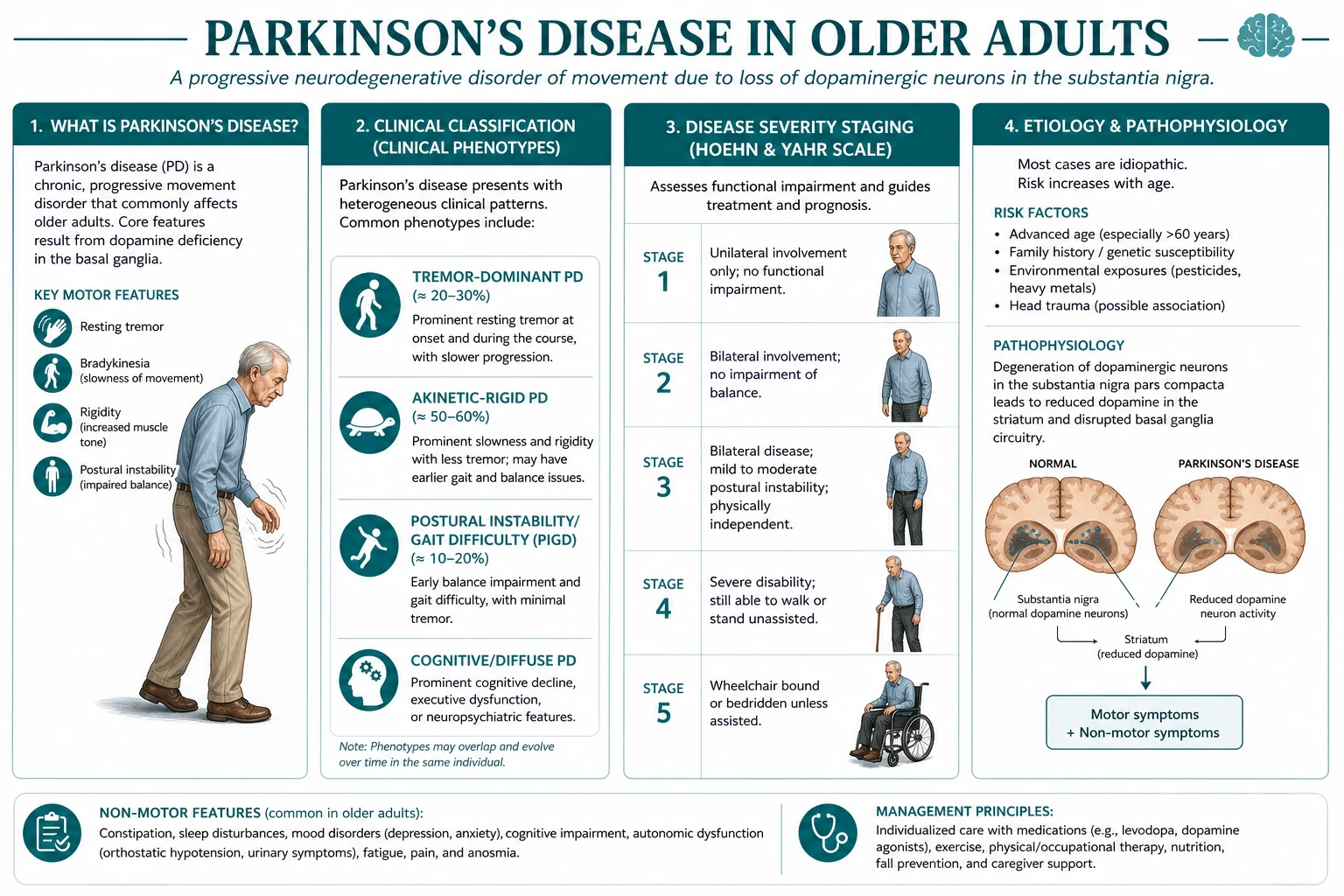
Pathophysiology linked to bedside decisions
Mechanism matters when it predicts treatment response, complications or monitoring. Teach pathophysiology as a bridge to action, not as isolated basic science. [1] [2] [3]
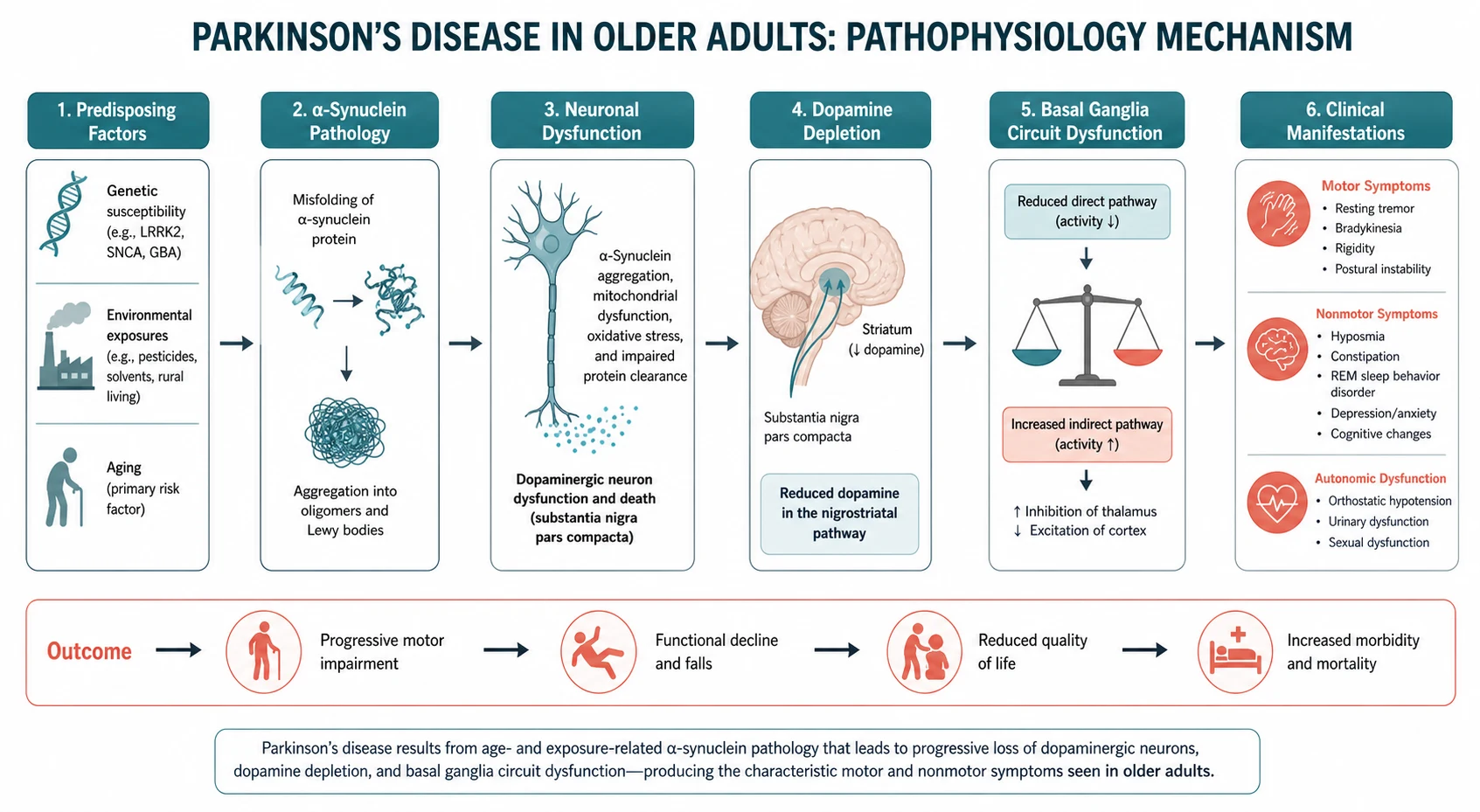
Differentials and discrimination
Build a short differential that includes the common, the dangerous and the commonly missed. For each alternative, name one history clue, one examination clue and one investigation that discriminates. [1] [2]
Investigations
Order tests that change management. State what is required now, what can wait, and what is low-value or harmful. Interpret results in clinical context rather than in isolation. [1] [2]
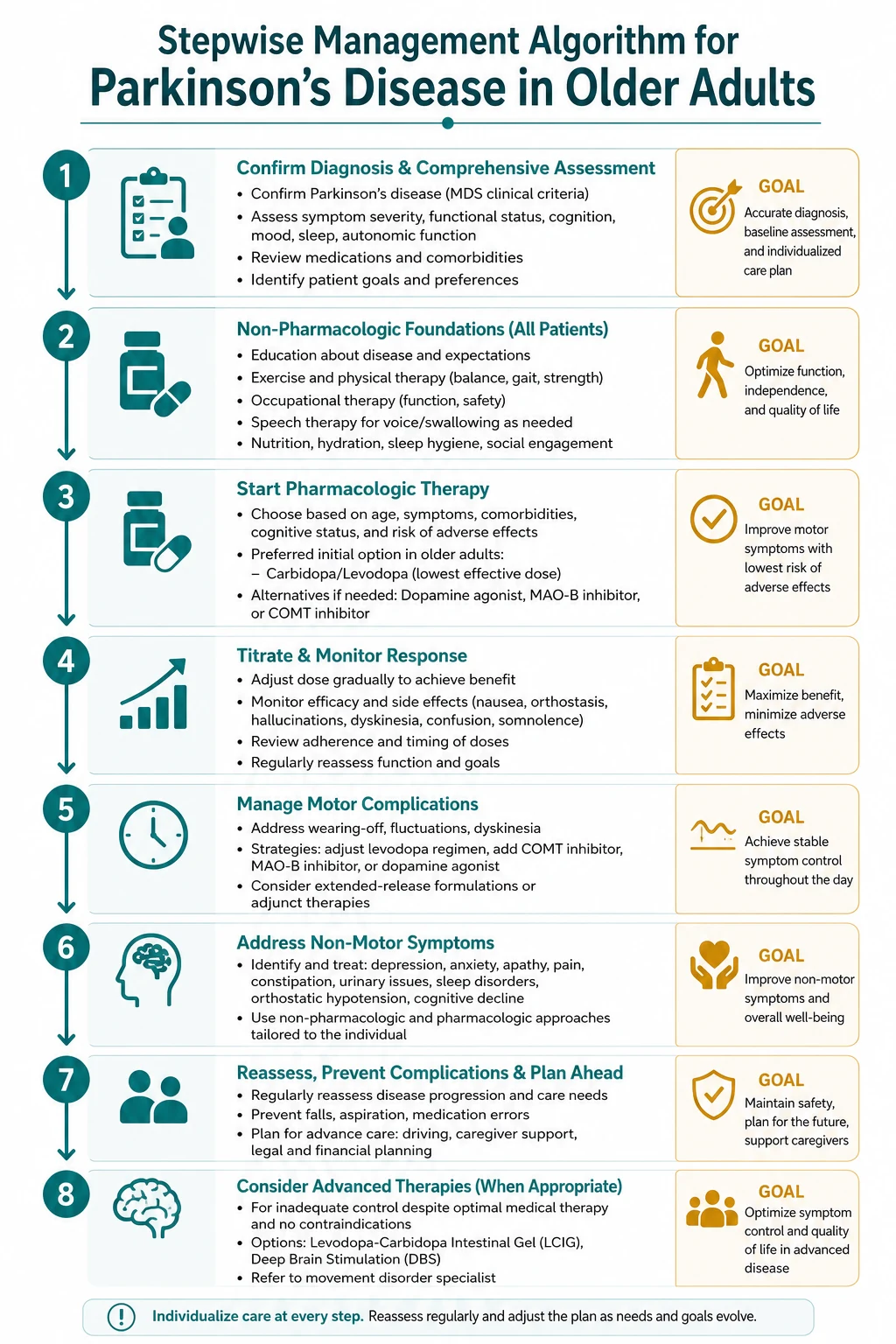
Management — immediate then definitive
- Stabilise threats to life and organ function. [1]
- Start disease-specific therapy once the working diagnosis is secure enough to act. [1] [2]
- Address complications, drug interactions and monitoring. [1] [2]
- Plan disposition, follow-up intensity and patient education with safety-net advice. [1]
Complications and prognosis
Anticipate early and late complications. Prognosis depends on severity at presentation, speed of effective therapy, comorbidity and adherence to secondary prevention or disease-modifying treatment. [1] [2]
Special populations and multimorbidity
Adjust for pregnancy potential, frailty, CKD, liver disease, immunosuppression and polypharmacy. In older adults, goals-of-care and treatment burden can change the preferred plan even when disease-directed options remain available. [1] [2]
DCE long-case angles
Open with a one-sentence synthesis, then a prioritised problem list, then an integrated plan covering investigations, treatment, prevention and communication. Link Parkinson S Disease IN Older Adults to cardiovascular risk, infection risk, medications and social context where relevant. [1] [2]
DCE short-case angles
Be prepared to demonstrate or discuss focused examination findings, interpret a key investigation, and counsel on risks, benefits and follow-up in plain language. [1]
Exam traps
- Delaying urgent care because the presentation looks "stable enough". [1]
- Treating a syndrome label without confirming mechanism. [1] [2]
- Forgetting drug interactions and organ-function dosing. [1] [2]
- Omitting safety-net advice and follow-up ownership. [1]
- Quoting thresholds without knowing the source trial or guideline. [1] [2] [3]
References
- [1]Fogaça LZ, Schveitzer MC, Ferreira A, Feitosa ADC, et al. Evidence map of Tai Chi interventions for older adults Front Public Health, 2026.PMID 42465647
- [2]Kim JY, Park HC, Park SW, Rhee CS Sensory Impairment and Risk of Neurodegenerative Diseases: A Nationwide Cohort Study in Korea Clin Exp Otorhinolaryngol, 2026.PMID 42458698
- [3]Kong J, Yang Z, Liu Y, Chen W Apathy and Reduced Voluntary Activity in Older Adults with Parkinson's Disease: Mechanisms, Clinical Assessment, and Rehabilitation Implications Clin Interv Aging, 2026.PMID 42445620
- [4]Montúffar-Otero NV, Gómez-Coello A, Murphy P, Murillo-Chavez AA, et al. Top-Cited Articles on Dysphagia and Cognitive Impairment: A Scopus-Based Bibliometric Analysis of Publications Retrieved Through October 2025 Cureus, 2026.PMID 42434674
- [5]Rogatto FBT, Guelfi ÉTN, Alflen VEV, Silva LBB, et al. Linking the Pre-Assessment Information Form (PIF) to the ICF: Enhancing Standardized Functional Assessment in Parkinson's Disease Physiother Res Int, 2026.PMID 42287705
- [6]Sriram D, Pourzinal D, Bailey DX, Brooks D, et al. Recommendations to Improve Healthcare Service Provision for Cognitive Impairment in People With Parkinson's Disease: A Mixed Methods Study of the Lived Experience Expert Perspective Health Expect, 2026.PMID 41834361
- [7]Doan HN, Chang MC Comparative Effectiveness of Unstable Versus Stable Resistance Training on Lower Limb Strength, Mobility, and Fear of Falling in Older Adults: A Systematic Review and Meta-analysis of Randomized Controlled Trials Am J Phys Med Rehabil, 2026.PMID 42468010
- [8]Liu HW, Tsai TL Virtual Reality-assisted Physiotherapeutic Training for Patients With Knee Osteoarthritis: A Systematic Review and Meta-analysis Am J Phys Med Rehabil, 2026.PMID 42468005
- [9]Osborne AK, Brown RD, Sillence E Effects of Social Media Narratives on Affective and Behavioral Responses to Menopause Content: Randomized Online Experimental Study JMIR Form Res, 2026.PMID 42467962
- [10]Madny MA, Yadav KS Ageing-driven gastrointestinal variability in Parkinson's disease: implications for oral levodopa pharmacokinetics and formulation design Eur J Pharm Biopharm, 2026.PMID 42413884
- [11]Cohen RG, Bellingham JG, Mello B, Bond L, et al. 'Partnering With Poise': A Preliminary Study of an Alexander Technique-Based Group Course for Informal Care Partners Int J Geriatr Psychiatry, 2026.PMID 42406561
- [12]Campo-Caballero D, Rodriguez-Antiguedad J, Puig-Davi A, Ruiz-Martinez J, et al. Neuropsychiatric Adverse Events Associated With Foslevodopa/Foscarbidopa Continuous Subcutaneous Infusion in Clinical Practice: A Multicenter Study Eur J Neurol, 2026.PMID 42405633