Phys · geriatric
Pressure Injuries AND Wound Care
Also known as Pressure Injuries AND Wound Care · pressure injuries and wound care
Consultant-physician depth guide to Pressure Injuries AND Wound Care for FRACP DWE/DCE preparation — presentation, differentials, investigations, management, complications and exam angles.
On this page & tools
Your progress
Saved locally on this device.
Practise this topic
Target exams
Red flags
The answer first
Pressure Injuries AND Wound Care is managed with an answer-first physician approach: recognise the pattern, exclude dangerous differentials, choose investigations that change action, and deliver a sequenced management plan that accounts for multimorbidity. [1] [2]
The FRACP candidate must be able to open a long-case presentation, defend thresholds, and answer DWE vignettes without hedging. Lead with the decision, then the evidence and the trap. [1]

Clinical spectrum and red flags
Presentations range from incidental or outpatient findings to emergency decompensation. Always ask what would make this urgent today — airway, perfusion, neurological threat, metabolic crisis, infection, or bleeding. [1] [2]
Red flags force same-day action rather than elective pathways. Document them explicitly in the plan. [1]
Classification that changes management
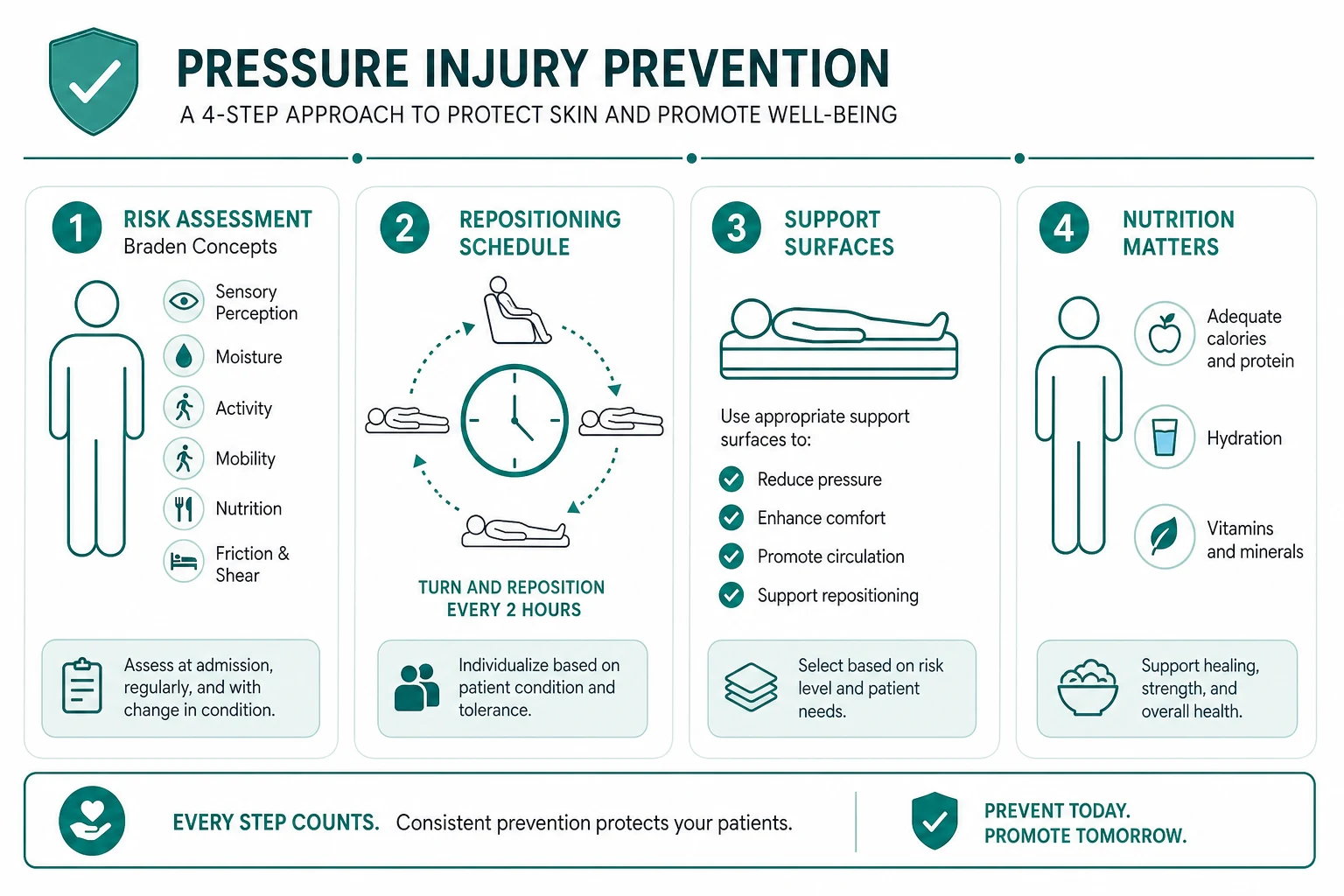
Classify by acuity, mechanism, severity and care setting. A useful classification changes investigation choice, initial therapy, disposition or specialist referral — otherwise it is taxonomy without purpose. [1] [2]
Pathophysiology linked to bedside decisions
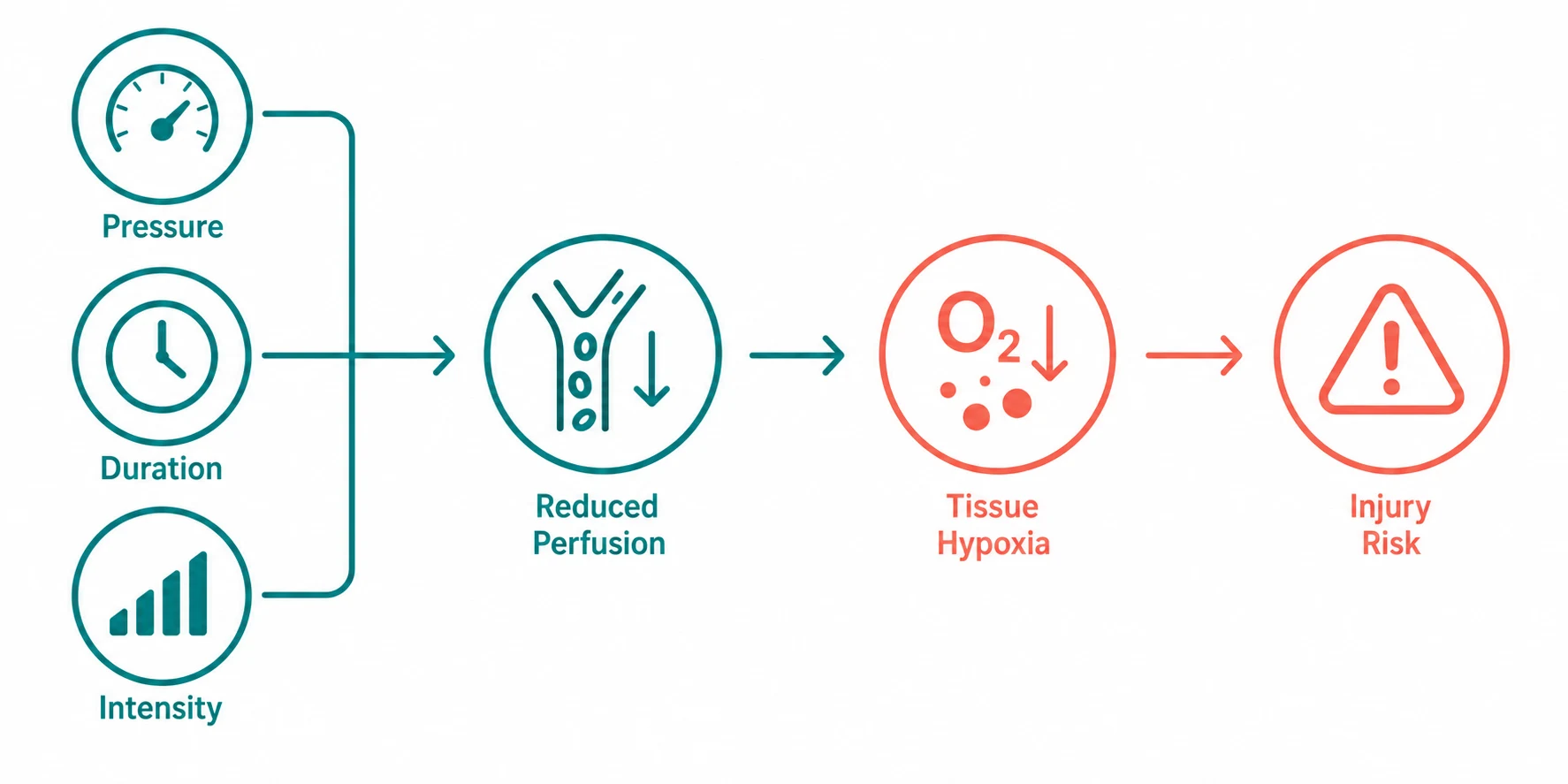
Mechanism matters when it predicts treatment response, complications or monitoring. Teach pathophysiology as a bridge to action, not as isolated basic science. [1] [2] [3]
Differentials and discrimination
Build a short differential that includes the common, the dangerous and the commonly missed. For each alternative, name one history clue, one examination clue and one investigation that discriminates. [1] [2]
Investigations
Order tests that change management. State what is required now, what can wait, and what is low-value or harmful. Interpret results in clinical context rather than in isolation. [1] [2]
Management — immediate then definitive
- Stabilise threats to life and organ function. [1]
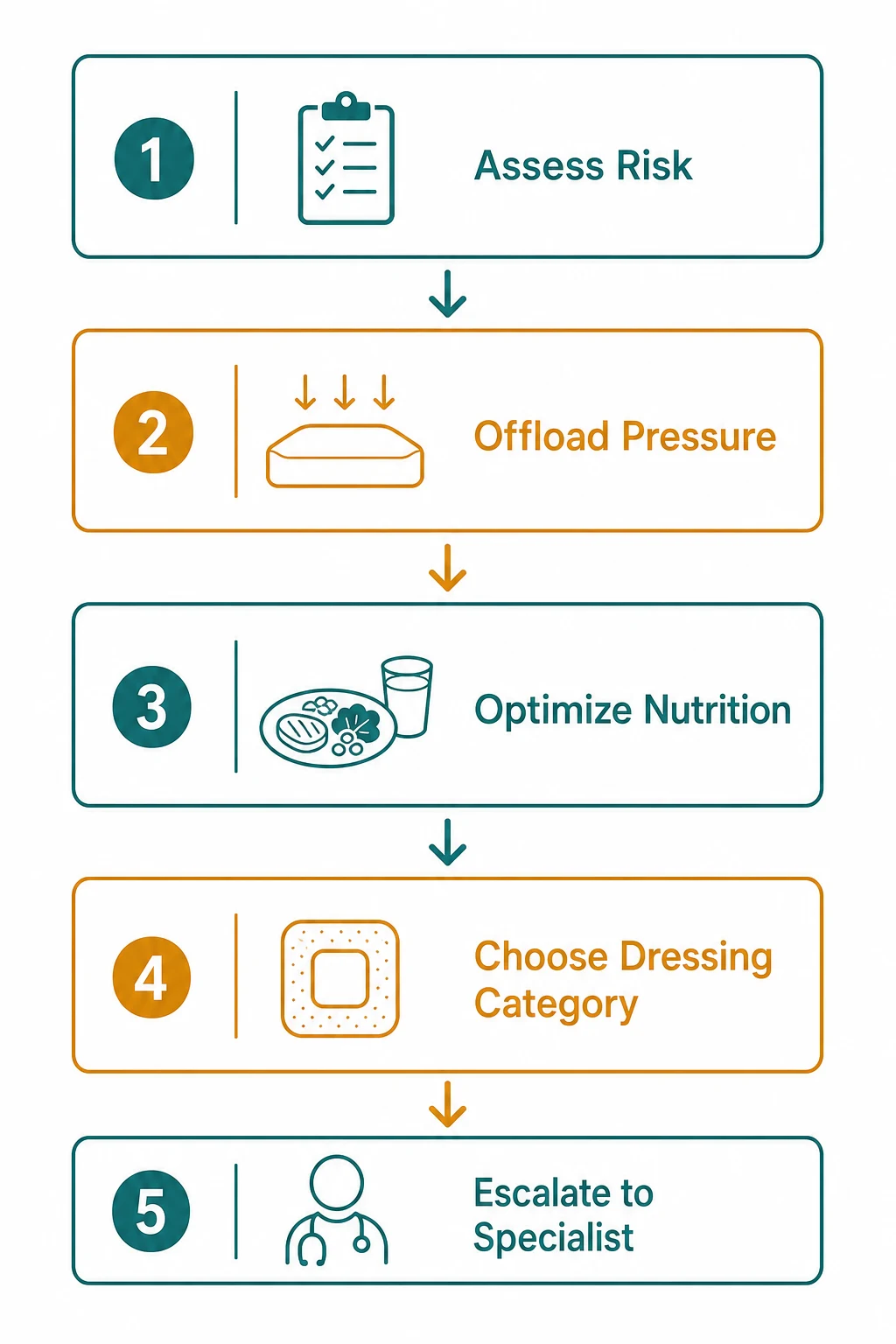
- Start disease-specific therapy once the working diagnosis is secure enough to act. [1] [2]
- Address complications, drug interactions and monitoring. [1] [2]
- Plan disposition, follow-up intensity and patient education with safety-net advice. [1]
Complications and prognosis
Anticipate early and late complications. Prognosis depends on severity at presentation, speed of effective therapy, comorbidity and adherence to secondary prevention or disease-modifying treatment. [1] [2]
Special populations and multimorbidity
Adjust for pregnancy potential, frailty, CKD, liver disease, immunosuppression and polypharmacy. In older adults, goals-of-care and treatment burden can change the preferred plan even when disease-directed options remain available. [1] [2]
DCE long-case angles
Open with a one-sentence synthesis, then a prioritised problem list, then an integrated plan covering investigations, treatment, prevention and communication. Link Pressure Injuries AND Wound Care to cardiovascular risk, infection risk, medications and social context where relevant. [1] [2]
DCE short-case angles
Be prepared to demonstrate or discuss focused examination findings, interpret a key investigation, and counsel on risks, benefits and follow-up in plain language. [1]
Exam traps
- Delaying urgent care because the presentation looks "stable enough". [1]
- Treating a syndrome label without confirming mechanism. [1] [2]
- Forgetting drug interactions and organ-function dosing. [1] [2]
- Omitting safety-net advice and follow-up ownership. [1]
- Quoting thresholds without knowing the source trial or guideline. [1] [2] [3]
References
- [1]Liu N, Liang R, Zhu J, Jia E, et al. Nutritional support for pressure injury: a bibliometric analysis of research trends Front Nutr, 2026.PMID 42466136
- [2]Gajardo AIJ, Steinert SF, de la Barra M, Neman A, et al. Efficacy and safety of conventional vs. prolonged prone positioning in ARDS patients: An evidence synthesis with meta-analysis Med Intensiva (Engl Ed), 2026.PMID 42448511
- [3]Raihane AS, Deusch GM, Liu C, Najafi B, et al. Spooky action at a distance: neuromodulation, physiologic distress signals, and limb preservation Burns Trauma, 2026.PMID 42441071
- [4]Frasier LL, Alindogan A, Hoskins N, McGinnis L, et al. Use of Digital Clinical Decision Support System Increases Adherence to Provision of Evidence-Based Interventions for Elevated Intracranial Pressure During Simulated Care of Patients with Traumatic Brain Injury Prehosp Disaster Med, 2026.PMID 42466954
- [5]Rosado-Fonseca M, Silva E, Ribeiro T, Rocha-Melo A, et al. Pedal acceleration time as a diagnostic and prognostic tool in peripheral artery disease: systematic review and meta-analysis BMC Med Imaging, 2026.PMID 42426635
- [6]Huang S, Yang M, Xu F, Huang Y, et al. The Practice Experience of ICU Nurses in Preventing Pressure Injuries: A Qualitative Meta-Synthesis J Adv Nurs, 2026.PMID 42362388
- [7]Xi Y, Yao T, Zhang C, Zhuang T Effectiveness of safety care and clinical nursing pathway in patients undergoing cardiovascular intervention: a randomized controlled trial Perioper Med (Lond), 2026.PMID 42469924
- [8]Marks FJ, Walters SJ, Sutton L, Jacques RM What statistical methods are more appropriate for predicting recruitment at the design stage of a randomised controlled trial? Trials, 2026.PMID 42469922
- [9]Hajiaqaei M, Mohammadi A Transcranial random noise stimulation (tRNS) over the left dorsolateral prefrontal cortex ameliorates emotion dysregulation and executive function: a single-blind, randomized, sham-controlled clinical trial BMC Psychol, 2026.PMID 42469906
- [10]Brooks KR, Alderden J, Horn SD, Sharkey PD, et al. Examining Risk Factors for Pressure Injury Development Among Nursing Home Residents: A Retrospective Study J Clin Nurs, 2026.PMID 42437704
- [11]Yang H, Xiao D, Su Y, Zhong Q, et al. Effect of motivational behavioral change-integrated rehabilitation nursing on recovery and prognosis in patients with hypertension and diabetic foot ulcers Medicine (Baltimore), 2026.PMID 42410817