Phys · infectious
Vaccine-Preventable Diseases and Adult Immunisation
Also known as adult immunisation · vaccination · immunisation schedule · vaccine-preventable disease · Shingrix · recombinant zoster vaccine · pneumococcal vaccine · HPV vaccine · travel medicine · vaccine hesitancy · live vaccine contraindication · cocooning · dTpa pregnancy · asplenic vaccination
Consultant-physician-depth guide to adult immunisation in the physician context — where comorbidity, immunosuppression, pregnancy, asplenia, and travel modify the standard schedule and turn each vaccine decision into a clinical-reasoning task. Covers the Australian NIP adult schedule (annual enhanced influenza above 65, pneumococcal PCV then PPSV23 or PCV20, recombinant zoster Shingrix above 50, dTpa every pregnancy 28 to 32 weeks, HPV catch-up to 25), the live-versus-inactivated principle that governs vaccination in immunocompromise, the pre-immunosuppression window (before rituximab, anti-TNF, transplant, chemotherapy), the asplenic vaccination-plus-prophylaxis bundle, travel medicine (yellow fever, Japanese encephalitis, typhoid, rabies), vaccine adverse events (anaphylaxis, Guillain-Barre after influenza, VAPP after oral polio, intussusception after rotavirus), and the communication strategies for vaccine hesitancy — structured for FRACP DWE and DCE preparation.
On this page & tools
Your progress
Saved locally on this device.
Practise this topic
Target exams
Red flags
Vaccine-Preventable Diseases and Adult Immunisation

The one-minute consultant answer
Adult immunisation in the physician context is not the protocol-driven GP encounter — it is a clinical-reasoning task applied to the patient whose comorbidity, immunosuppression, pregnancy, asplenia, or travel plans modify the standard schedule in ways that the schedule alone cannot resolve. The physician is the doctor who sees the patient before rituximab, before anti-TNF, before transplant, before splenectomy, before international travel, and in pregnancy — the moments where the question is not "what vaccines are due?" but "what can I safely give, in what order, and by when, before the window for a useful vaccine response closes?" [1]
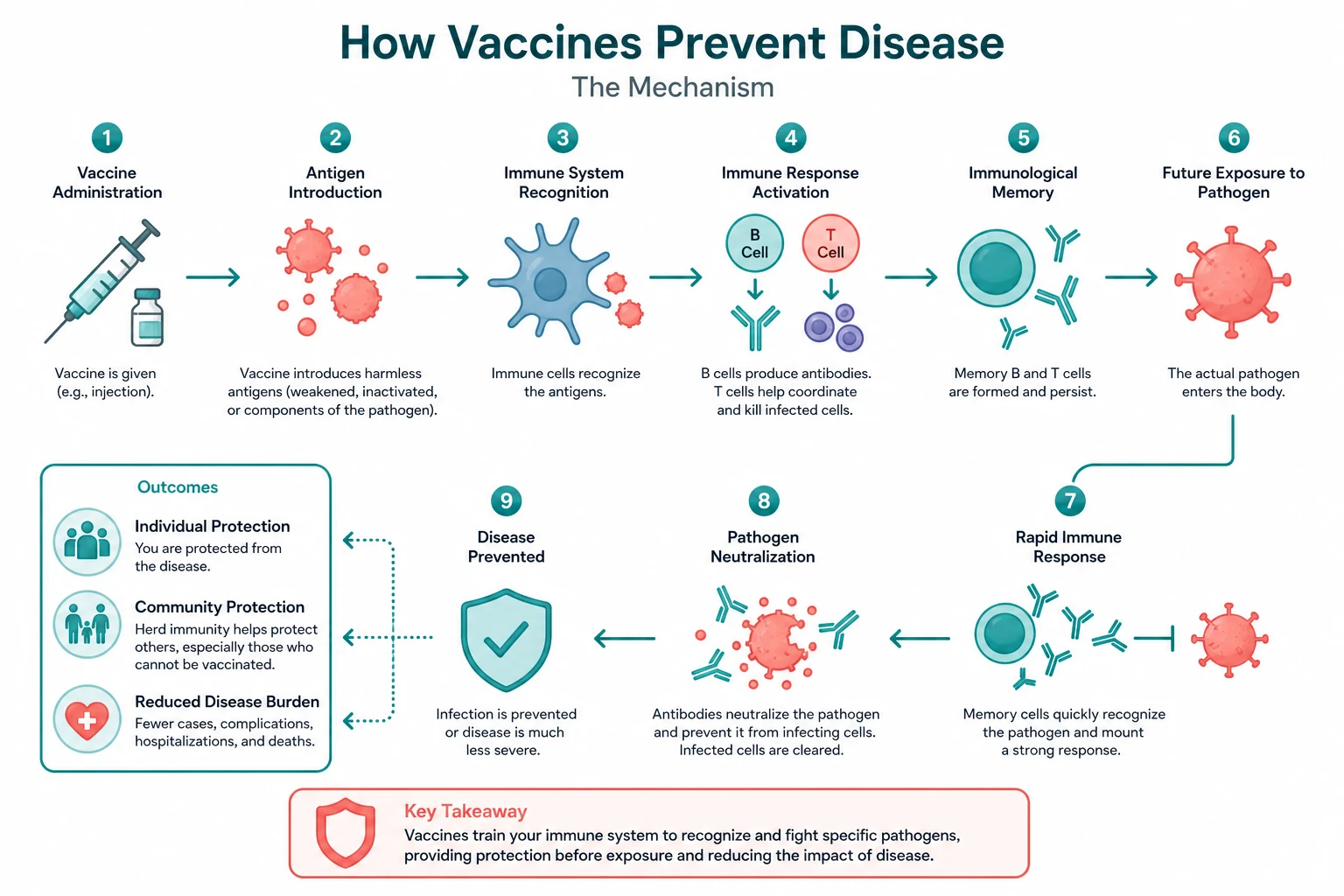
The central principle is: vaccinate before immunosuppression begins, because the vaccine response depends on a functional immune system [1]. Give inactivated vaccines at least 2 weeks before immunosuppression (ideally 4) and live vaccines at least 4 weeks before — because B-cell-depleting therapy like rituximab renders vaccines ineffective for 6 to 12 months, and the patient on chemotherapy or post-transplant immunosuppression cannot mount the antibody response that the vaccine requires.
The second principle is the live-versus-inactivated distinction, which governs every immunisation decision in immunocompromise. Live vaccines — MMR, varicella, yellow fever, BCG, oral polio (OPV), oral typhoid (Ty21a), live attenuated influenza (intranasal), and rotavirus — replicate in the host and can cause disseminated disease in severe immunosuppression. They are contraindicated in the severely immunosuppressed (high-dose corticosteroids above 20 mg prednisolone for more than 2 weeks, chemotherapy, transplant immunosuppression, anti-CD20 therapy, HIV with CD4 below 200), and the safe inactivated alternative must be used instead. The one exception with nuance is HIV: MMR and varicella are safe if the CD4 is above 200 and the patient is clinically stable, but yellow fever is still avoided [1].
The third principle is the sequential pneumococcal schedule: give the conjugate vaccine (PCV13, PCV15, or PCV20) first because it primes T-cell-dependent immunological memory, then the polysaccharide (PPSV23) at least 8 weeks later to broaden serotype coverage — or simply give PCV20 alone, which has superseded the two-dose schedule in the 2024 ACIP guidance. The CAPiTA trial demonstrated that PCV13 prevents vaccine-type community-acquired pneumonia (45.6 per cent efficacy) and invasive pneumococcal disease (75 per cent efficacy) in adults aged 65 and older [2].
The central framework — live, inactivated, conjugate, and recombinant

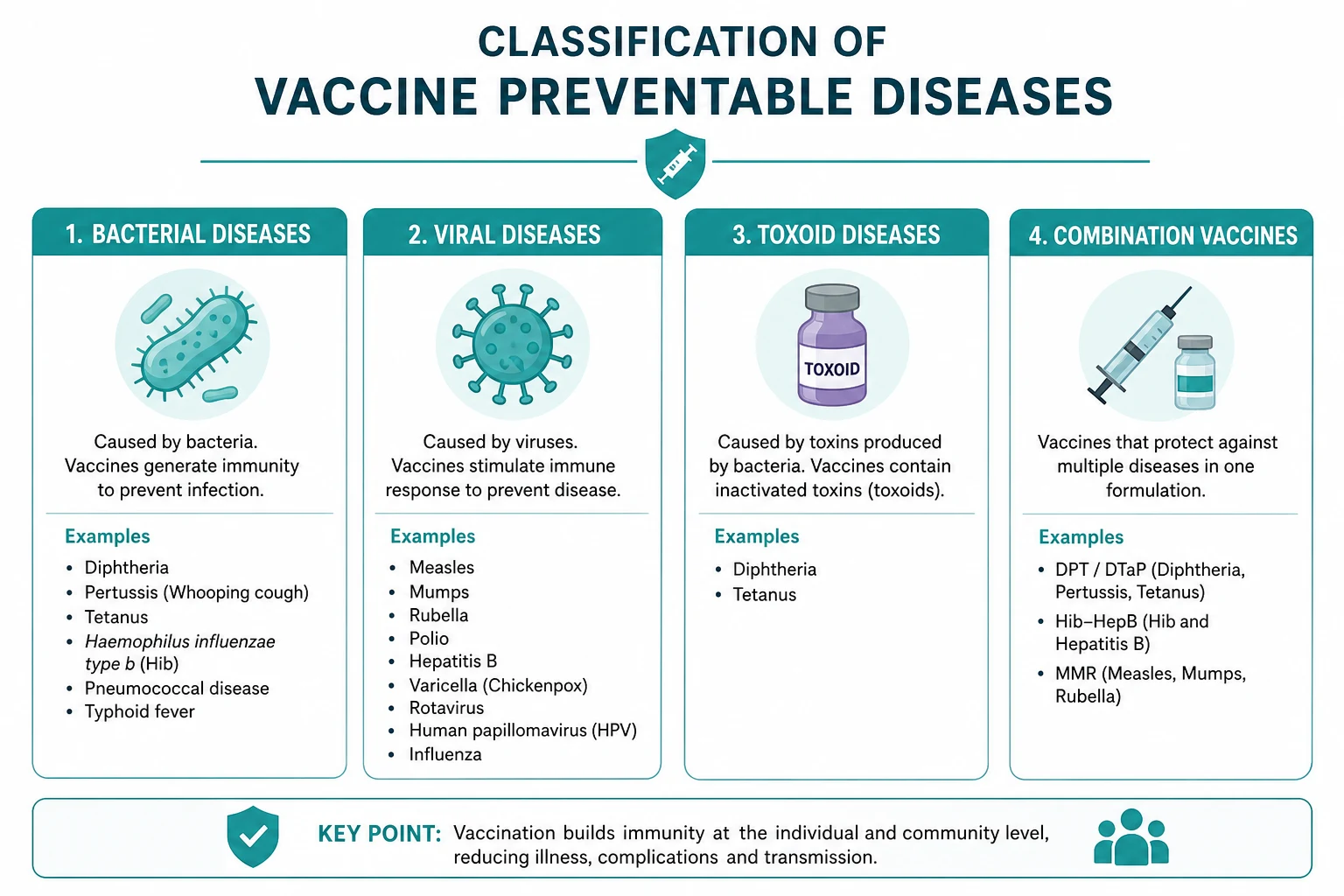
Every vaccine decision begins with the question: what type of vaccine is this, and what does that mean for this patient? Four vaccine platforms define the landscape. [1]
| Type | Mechanism | Key examples | Safe in immunosuppression? | Immunogenicity |
|---|---|---|---|---|
| Live attenuated | Replicating organism induces immunity | MMR, varicella, yellow fever, BCG, OPV, oral typhoid Ty21a, LAIV, rotavirus | No — can cause disseminated disease | High, often single dose |
| Inactivated | Killed organism or subunit | Influenza (inactivated), IPV, injectable typhoid Vi, rabies, hepatitis A | Yes | Moderate, may need boosters |
| Conjugate | Polysaccharide linked to protein carrier | PCV13/15/20, MenACWY, MenB, Hib | Yes | High, T-cell-dependent memory |
| Recombinant / adjuvanted | Recombinant antigen plus adjuvant | Hepatitis B, HPV (Gardasil 9), recombinant zoster (Shingrix), COVID-19 | Yes | High, robust antibody response |
The exam trap: the question stem will name a patient on immunosuppression and ask which vaccine is contraindicated — the correct answer is always the live vaccine (MMR, varicella, yellow fever, BCG, oral polio, oral typhoid, or LAIV). The corollary trap is the patient about to start immunosuppression — the correct answer is to vaccinate before, with the live vaccine at least 4 weeks prior and the inactivated at least 2 weeks prior. [1]
The Australian NIP adult immunisation schedule

The Australian National Immunisation Program (NIP) funds specific vaccines for adults based on age, Indigenous status, pregnancy, and medical risk. The Australian Immunisation Handbook (current online edition) is the primary reference and is updated continuously — the physician must consult the live version, not a printed edition, because recommendations evolve. [1]
Influenza — annual, for all
Annual inactivated influenza vaccine is recommended for all persons aged 6 months and over and is funded under the NIP for adults aged 65 and older (with an enhanced vaccine — adjuvanted or high-dose), pregnant women (any trimester), Aboriginal and Torres Strait Islander people aged 6 months and over, and people aged 6 months and over with chronic medical conditions (cardiac, respiratory including severe asthma, chronic neurological, diabetes and other metabolic, renal, haematological, and immunocompromised). [1]
The rationale for annual dosing is antigenic drift — point mutations in haemagglutinin and neuraminidase change the circulating strains each season, and vaccine-induced antibody wanes over 6 to 12 months. The annual formulation is updated based on WHO surveillance, and the enhanced vaccines (adjuvanted or high-dose) address the age-related decline in immunogenicity in adults aged 65 and older. The live attenuated intranasal influenza vaccine (LAIV) is not used in Australia. [1]
Pneumococcal — conjugate then polysaccharide, or conjugate alone
The pneumococcal schedule is the most frequently tested and most commonly confused in exams. The principle is conjugate first to prime, then polysaccharide to broaden — or conjugate alone if PCV20 is used. [1]
For immunocompetent adults aged 70 and older (ANZ): a single dose of PCV13 or PCV15, followed by PPSV23 at least 8 weeks later (minimum 2 months), with a second PPSV23 at 5 years for high-risk. Alternatively, PCV20 alone simplifies the schedule and is the preferred single-dose option in the 2024 ACIP guidance. [1]
For immunocompromised or asplenic adults of any age: PCV13 or 15 or 20 first, then PPSV23 at least 8 weeks later, with a repeat PPSV23 at 5 years [7]. The ACIP 2012 recommendation established the sequential schedule for adults with immunocompromising conditions, asplenia, CSF leaks, or cochlear implants [7].
The CAPiTA trial (84,496 immunocompetent adults aged 65 and older) demonstrated that PCV13 prevented vaccine-type community-acquired pneumonia (45.6 per cent efficacy), non-bacteraemic vaccine-type CAP (45.0 per cent), and vaccine-type invasive pneumococcal disease (75.0 per cent) [2].
The trap: if PPSV23 is given first, it blunts the subsequent response to PCV because the T-cell-independent polysaccharide response does not generate the memory B-cells that the conjugate vaccine depends on for boosting. The conjugate must come first. [1]
Herpes zoster — recombinant zoster vaccine (Shingrix)
The recombinant zoster vaccine (RZV, Shingrix) is a 2-dose inactivated vaccine given intramuscularly 2 to 6 months apart, recommended for all adults aged 50 and older and for immunocompromised adults aged 19 and older. It is funded under the NIP for adults aged 65 and older (and for immunocompromised adults aged 18 and older at high risk of herpes zoster). [1]
The ZOE-50 trial (Lal et al., NEJM 2015) demonstrated 97.2 per cent efficacy against herpes zoster in adults aged 50 and older [8], and the ZOE-70 trial (Cunningham et al., NEJM 2016) confirmed sustained efficacy (89.8 per cent) in adults aged 70 and older, including against postherpetic neuralgia [3]. The key advance is the AS01B adjuvant, which drives a robust CD4 T-cell response that overcomes the age-related decline in cell-mediated immunity — the limitation that caused the older live zoster vaccine (Zostavax) to lose efficacy with age.
Shingrix is inactivated and safe in immunosuppression — it supersedes Zostavax (which was live and contraindicated in severe immunosuppression). The expected reactogenicity (local pain and systemic symptoms in 10 to 20 per cent) is notable and should be counselled, but it is not a reason to skip the second dose. [1]
Tetanus, diphtheria, and pertussis — dTpa booster every 10 years
The dTpa (reduced-antigen diphtheria-tetanus-acellular pertussis) vaccine replaces one dT dose in adulthood, with subsequent dT or dTpa every 10 years. Pertussis immunity wanes significantly over 4 to 12 years, which is why regular boosters are essential. [1]
In pregnancy, dTpa is given in every pregnancy at 28 to 32 weeks (acceptable 20 to 32 weeks per the Australian Immunisation Handbook) to maximise transplacental transfer of pertussis antibodies. The UK observational study by Amirthalingam et al. demonstrated greater than 90 per cent effectiveness of maternal Tdap vaccination in preventing pertussis in infants younger than 2 months [4] — the window before the infant's own primary immunisation series begins at 6 weeks.
The trap: dTpa is given in every pregnancy, not just the first. The antibody wanes between pregnancies, and each neonate needs the transplacentally transferred antibody. [1]
Hepatitis B — at-risk groups
Hepatitis B vaccine is recommended for at-risk groups: healthcare workers (and post-vaccination serology to confirm anti-HBs at least 10 mIU/mL), injecting drug users, dialysis patients (higher-dose schedule), chronic liver disease, diabetes (in some guidelines), household and sexual contacts of HBsAg-positive persons, men who have sex with men, prisoners, and travellers to endemic areas. [1]
Hepatitis A — travellers, chronic liver disease, MSM
Hepatitis A vaccine (2 doses, 0 and 6 to 12 months) is recommended for travellers to endemic areas, chronic liver disease (including hepatitis B and C), men who have sex with men, injecting drug users, and people with clotting disorders. Check IgG serology in patients born in endemic countries, who are likely immune from prior infection. [1]
MMR and varicella — non-immune adults
MMR (measles, mumps, rubella) is recommended for non-immune adults, particularly healthcare workers, women of childbearing age (check rubella IgG; vaccinate pre-pregnancy or postpartum; it is a live vaccine and contraindicated in pregnancy), and travellers. Two doses are needed for durable measles immunity. [1]
Varicella (2 doses, 4 to 8 weeks apart) is recommended for non-immune adults, especially healthcare workers — check varicella IgG if the history of chickenpox is uncertain, because a negative or uncertain history is unreliable. [1]
Meningococcal — ACWY and B
MenACWY (conjugate) is recommended for adolescents (dose at 13 to 15 with booster at 16), asplenia, complement deficiency (including eculizumab therapy), laboratory workers exposed to Neisseria meningitidis, military recruits, and travellers to the meningitis belt or Hajj. MenB (Bexsero, 2 doses 8 weeks apart; or Trumenba, 3 doses for high-risk or 2 doses for standard-risk adolescents) is recommended for asplenia, complement deficiency, laboratory workers, and adolescents (shared clinical decision-making). [1]
Asplenic patients need both ACWY and B plus boosters: ACWY every 5 years, B after 1 year then every 2 to 3 years for ongoing risk. [1]
HPV — Gardasil 9
The 9-valent HPV vaccine (Gardasil 9) is recommended for adolescents (school-based program aged 12 to 13), with a 2-dose schedule (0 and 6 to 12 months) if the first dose is given before age 15, or a 3-dose schedule (0, 2, and 6 months) if started at age 15 or older or in immunocompromised persons. Catch-up is funded in Australia through the NIP for ages 12 to 25. ACIP recommends shared clinical decision-making for adults aged 27 to 45. [1]
The pivotal trial by Joura et al. (NEJM 2015) demonstrated 96.7 per cent efficacy of the 9-valent vaccine against high-grade cervical, vulvar, and vaginal disease related to the five additional HPV types (31, 33, 45, 52, and 58), in addition to the four types covered by the quadrivalent vaccine (6, 11, 16, and 18) [5].
COVID-19 — boosters for above 65, immunocompromised, healthcare workers
COVID-19 vaccination follows the current ATAGI guidance: an annual booster is recommended for adults aged 65 and older, residents of aged care, people aged 18 to 64 with severe immunocompromise or complex medical conditions, and healthcare workers. The formulation is updated to match circulating variants, and the dose interval depends on prior infection and vaccination history. [1]
Special populations — where the standard schedule does not apply

Immunocompromised patients — the live-vaccine prohibition and the pre-immunosuppression window
The 2013 IDSA guideline (Rubin et al.) established the principles that govern vaccination in the immunocompromised host [1]:
- Inactivated vaccines are safe but may be less immunogenic — the response depends on the degree of immunosuppression, and higher doses or additional boosters may be needed.
- Live vaccines are contraindicated in severe immunosuppression — defined as high-dose corticosteroids (prednisolone above 20 mg for more than 2 weeks), active chemotherapy, transplant immunosuppression, anti-CD20 therapy (rituximab), and HIV with CD4 below 200 (or below 15 per cent in children under 5). [1]3. Vaccinate before immunosuppression where possible — at least 2 weeks before for inactivated vaccines (ideally 4), and at least 4 weeks before for live vaccines, so the immune response can develop before the immunosuppression begins.
- Vaccinate household contacts to provide indirect protection (cocooning) — the contacts should NOT receive the live attenuated intranasal influenza vaccine if a severely immunocompromised person is in the household, because of shedding.
- Re-evaluate and re-vaccinate after immune reconstitution — for example, after HSCT (from 6 months for inactivated, 24 months for live), after rituximab (when CD19 B-cells recover, typically 6 to 12 months). [1]
The rituximab timing trap is the most frequently tested: vaccines given after rituximab are essentially wasted because B-cell depletion prevents antibody production. The physician who does not address vaccination before the first rituximab dose has missed the window — all indicated vaccines should be given at least 2 weeks before (ideally 4), and re-vaccination planned for 6 to 12 months after the last dose once B-cells recover. [1]
Pregnancy — influenza, dTpa, and the live-vaccine prohibition
In pregnancy:
- Inactivated influenza — recommended in any trimester. Influenza infection in pregnancy carries high risks of pneumonia, hospitalisation, and adverse fetal outcomes (preterm birth, stillbirth), and the vaccine is safe and immunogenic. The antibody transfer protects the neonate for the first 6 months.
- dTpa — given in every pregnancy at 28 to 32 weeks (acceptable 20 to 32 weeks) to maximise transplacental transfer of pertussis antibodies [4]. The vaccine effectiveness in preventing pertussis in infants under 2 months exceeds 90 per cent.
- COVID-19 — recommended as per current guidance; pregnancy is a risk factor for severe COVID-19.
- Hepatitis B, hepatitis A, pneumococcal, MenACWY — give if the pregnant woman is at risk by her comorbidities or travel.
- Live vaccines are CONTRAINDICATED — MMR, varicella, yellow fever, BCG, OPV, oral typhoid Ty21a, and LAIV. If a woman receives a live vaccine inadvertently in pregnancy, the data do not support termination, but the vaccine should be documented and the woman counselled. Live vaccines can be given postpartum, including immediately, and breastfeeding is not a contraindication to any vaccine.
Asplenia — the vaccination-plus-prophylaxis bundle
The asplenic patient needs the full bundle because the risk of overwhelming post-splenectomy infection (OPSI) with encapsulated bacteria is lifelong and carries 50 to 70 per cent mortality despite treatment. The vaccination pillar: [1]
- Pneumococcal (PCV then PPSV23)
- Meningococcal ACWY and B (with booster plan: ACWY every 5 years, B annually to every 2 to 3 years)
- Haemophilus influenzae type b (Hib)
- Annual influenza [1]
Ideally vaccinate at least 2 weeks before elective splenectomy (and from 14 days post-op for emergency cases) to allow the immune response to develop before the spleen is removed. This is supplemented by lifelong penicillin prophylaxis (penicillin V 500 mg BD, or amoxicillin; macrolide if penicillin-allergic) and a standby-antibiotic plan (amoxicillin to take at the first fever before reaching hospital), an alert card and medical bracelet, and patient education that any fever is a medical emergency. [1]
HIV — live vaccines safe above CD4 200
In HIV-positive patients:
- All inactivated vaccines are given regardless of CD4 count, though response may be attenuated with low CD4 — influenza (annual), pneumococcal, hepatitis B (higher dose, check anti-HBs), HPV (3-dose schedule), and recombinant zoster (Shingrix, which is inactivated and safe).
- Live vaccines — MMR and varicella are safe if CD4 is above 200 (or above 15 per cent in children under 5) and the patient is clinically stable on antiretroviral therapy. Yellow fever is avoided if CD4 is below 200; for the patient with CD4 below 200 who must travel to a yellow fever country, issue a medical waiver and counsel on mosquito avoidance. [1]
Solid organ transplant — vaccinate before, live vaccines contraindicated after
The solid organ transplant candidate should be vaccinated before transplant because post-transplant immunosuppression attenuates vaccine responses. Give all age-appropriate inactivated vaccines (pneumococcal, influenza, hepatitis A and B, Tdap, recombinant zoster, HPV, meningococcal) and check serology (hepatitis B anti-HBs, MMR, varicella, hepatitis A IgG). Live vaccines (MMR, varicella, yellow fever) are given at least 4 weeks before transplant and are contraindicated after transplant. [1]
Travel medicine — 4 to 6 weeks before departure
The travel consultation should occur ideally 4 to 6 weeks before departure to allow time for multi-dose schedules and for the immune response to develop. The vaccines are stratified by destination and by the traveller's underlying conditions: [1]
- Yellow fever — required for entry to some countries in sub-Saharan Africa and the Amazon basin; only available at designated yellow fever vaccination centres; a live vaccine, contraindicated in severe immunosuppression, thymus disorder, infants under 6 months, and pregnancy (unless travel is unavoidable); the International Certificate of Vaccination or Prophylaxis is valid from 10 days after vaccination for the lifetime of the traveller.
- Japanese encephalitis — for travellers to rural Asia with prolonged exposure (more than 1 month, or shorter with intense exposure); inactivated, 2-dose schedule (0 and 28 days).
- Typhoid — for most developing countries; the injectable Vi polysaccharide is inactivated (single dose, every 2 to 3 years) and the oral Ty21a is live (3 to 4 capsules on alternate days, every 5 years) — use the injectable form in immunosuppression.
- Cholera — oral inactivated (Dukoral), for high-risk travellers to cholera-endemic areas; limited efficacy and not routinely needed.
- Rabies — pre-exposure prophylaxis (3 doses, days 0, 7, and 21 to 28) for high-risk travellers (veterinary workers, cavers, travellers to remote areas with dog rabies); post-exposure prophylaxis for any bite or scratch in a rabies-endemic country (immediate wound cleaning, rabies immunoglobulin into the wound, and vaccine on days 0, 3, 7, and 14).
- Hepatitis A — universally recommended for non-immune travellers to endemic areas; check IgG first if born in an endemic country.
- Meningococcal ACWY — for the meningitis belt of sub-Saharan Africa and for Hajj pilgrims (Saudi Arabia requires a certificate). [1]
Vaccine adverse events — common, rare, and the expected
Common adverse events
Local reactions (pain, erythema, induration at the injection site) occur in 10 to 60 per cent of recipients and are expected, self-limiting within 1 to 3 days, and not contraindications to further doses. Low-grade fever, malaise, and myalgia are common, especially with adjuvanted vaccines (Shingrix has notable reactogenicity in 10 to 20 per cent). Antipyretics can be offered but are not routinely recommended prophylactically because they may blunt the antibody response. [1]
Rare adverse events
Anaphylaxis occurs at an estimated rate of 1 to 10 per million doses, typically within 30 minutes. The patient must be observed for 15 minutes after vaccination (30 minutes for severe egg allergy or previous reaction). Epinephrine (adrenaline 0.5 mg IM into the anterolateral thigh) and resuscitation equipment must be available. The causative component is most often egg protein (influenza, yellow fever), gelatin (some MMR and varicella formulations), latex (vial stopper), or yeast (hepatitis B, HPV). [1]
Guillain-Barre syndrome (GBS) after influenza vaccine is estimated at approximately 1 additional case per million doses — far lower than the risk of GBS from influenza infection itself [6]. A history of GBS within 6 weeks of a previous influenza vaccine is a precaution, not an absolute contraindication; the benefit-risk assessment usually favours vaccination because influenza infection itself carries a higher GBS risk.
Vaccine-associated paralytic poliomyelitis (VAPP) — a rare complication of the live oral polio vaccine (OPV, Sabin) caused by reversion of the attenuated virus to neurovirulence, at a rate of approximately 1 per 2 to 3 million doses. This is why OPV has been replaced by the inactivated polio vaccine (IPV, Salk) in Australia, the UK, the US, and most developed countries. [1]
Intussusception after rotavirus vaccine — approximately 1 to 7 per 100,000 doses, presenting in infants within 1 to 21 days of vaccination. The benefit (preventing rotavirus hospitalisation and death) far outweighs the risk. [1]
Contraindications
The true contraindications to vaccination are narrow:
- Anaphylaxis to a vaccine component or a previous dose of the same vaccine.
- Severe immunosuppression for live vaccines — MMR, varicella, yellow fever, BCG, OPV, oral typhoid, LAIV.
- Pregnancy for live vaccines. [1]
Common conditions that are NOT contraindications: mild illness (upper respiratory infection, low-grade fever), antibiotic therapy, breastfeeding, prematurity, family history of adverse events, and stable neurological conditions (including cerebral palsy, well-controlled epilepsy, and a family history of seizures). [1]
The egg allergy question — what is and is not contraindicated
The egg allergy question is a perennial exam discriminator: [1]
- MMR is safe in egg allergy. The measles and mumps components are grown in chick fibroblast culture, not in egg, and the trace protein is negligible. No special precautions are needed.
- Influenza vaccines contain only trace ovalbumin and are safe for all but the most severe egg allergy (anaphylaxis to egg). In Australia and the US, the influenza vaccine can be given in the standard setting to egg-allergic patients without additional observation beyond the standard 15 minutes.
- Yellow fever vaccine is the one vaccine that genuinely requires caution in egg allergy because it is grown in eggs and contains significant egg protein. In a patient with egg anaphylaxis who must travel to a yellow fever country, consider testing (skin prick with the vaccine) under specialist supervision, desensitisation, or a medical waiver with mosquito-avoidance counselling. [1]
Vaccine hesitancy — the communication challenge
Vaccine hesitancy is a delay in acceptance or refusal of vaccination despite availability, driven by factors including complacency (low perceived risk), convenience (access), and confidence (trust in the vaccine and the system). The physician's role is to address the underlying concern with evidence and empathy, not to dismiss or to coerce. [1]
The most effective communication strategies: [1]
- Use a presumptive rather than participatory opening. "Your child is due for MMR and varicella today" is more effective than "What do you think about vaccines?" — the presumptive approach normalises vaccination as the default and reduces refusal.
- Address the specific concern directly. The most common concerns are: autism and MMR (the Wakefield study was retracted and fraudulent; large epidemiological studies show no association), aluminium and adjuvants (the aluminium content of vaccines is far less than daily dietary intake), rapid schedule overload (the immune system handles thousands of antigens daily), and natural immunity is better (natural infection carries far greater risk of complications).
- Use clear, plain language and a decision aid. Provide written information and offer time for consideration.
- Leave the door open. A patient who refuses today may accept at the next visit if the relationship is maintained. Document the discussion, the refusal, and the advice. [1]
Regional guideline deltas
| Aspect | ANZ (Australian Immunisation Handbook) | UK (Green Book) | US (ACIP) |
|---|---|---|---|
| Pneumococcal | PCV13 or 15 then PPSV23, or PCV20 alone; funded above 70 | PCV13 then PPV23 for high-risk | PCV20 preferred; or PCV15 then PPSV23 |
| Herpes zoster | Shingrix 2 doses; funded above 65 | Shingrix 2 doses; funded above 65 | Shingrix 2 doses; above 50, above 19 if immunocompromised |
| Maternal pertussis | dTpa every pregnancy, 20 to 32 weeks | dTpa every pregnancy, 16 to 32 weeks | Tdap every pregnancy, 27 to 36 weeks |
| Influenza above 65 | Enhanced (adjuvanted or high-dose) | Adjuvanted trivalent | High-dose or adjuvanted |
| HPV | Funded ages 12 to 25 (Gardasil 9) | Funded ages 12 to 25 (Gardasil 9) | Funded ages 9 to 26; shared decision 27 to 45 |
| Meningococcal B | Funded for Indigenous infants; asplenia | Funded for infants; asplenia | Shared decision for adolescents; asplenia |
High-yield exam discriminators
- Live vaccines are contraindicated in severe immunosuppression — MMR, varicella, yellow fever, BCG, OPV, oral typhoid Ty21a, LAIV; the safe alternative is the inactivated or injectable form.
- Vaccinate before immunosuppression — at least 2 weeks for inactivated, 4 weeks for live; vaccines given after rituximab are wasted.
- PCV before PPSV23 — the conjugate primes the memory response; if PPSV23 is given first, it blunts the subsequent PCV response; or use PCV20 alone.
- Shingrix is 2-dose, inactivated, and safe in immunosuppression — it supersedes Zostavax; 90 per cent plus efficacy across age groups.
- dTpa in every pregnancy at 28 to 32 weeks — not just the first pregnancy; over 90 per cent effectiveness in preventing neonatal pertussis.
- Yellow fever is live, at designated centres only, and contraindicated in immunosuppression and pregnancy — the immunocompromised traveller needs a waiver or mosquito avoidance.
- The asplenic bundle: pneumococcal, MenACWY, MenB, Hib, influenza, plus penicillin prophylaxis and standby antibiotic — ideally before splenectomy.
- MMR is safe in egg allergy — the components are grown in chick fibroblast, not egg; only yellow fever requires egg caution.
- GBS after influenza vaccine is a precaution, not a contraindication — the risk (approximately 1 per million) is far lower than GBS from influenza infection itself.
- HIV: live vaccines safe above CD4 200 — MMR and varicella yes; yellow fever no if CD4 below 200. [1]
Communication and shared decision-making
- Before rituximab: "These medicines work by reducing your immune system's B-cells, and that means vaccines won't work properly once you start. So today I want to give you the vaccines you need — pneumococcal, influenza, shingles, and tetanus — so your immune system can respond before the treatment begins. We will do this at least two weeks before your first dose, ideally four."
- The vaccine-hesitant parent: "I understand your concern about vaccines. Let me address your specific question about MMR and autism. The study that first suggested a link has been thoroughly discredited and retracted — it was fraudulent, and large studies involving millions of children have found no connection between MMR and autism. Measles, on the other hand, can cause pneumonia, encephalitis, and death, and we are seeing outbreaks in unvaccinated communities. I strongly recommend vaccination today, and I am happy to answer any further questions."
- The pregnant woman: "The pertussis vaccine at 28 weeks protects your baby from whooping cough in the first weeks of life, when it can be fatal and they are too young to be vaccinated themselves. By having it in every pregnancy at this time, you pass protective antibodies through the placenta. The influenza vaccine is also recommended at any stage of pregnancy because flu can be very severe in pregnancy, and the protection passes to your baby."
- The asplenic patient: "Your spleen protects you from certain bacteria, and without it, a simple infection can become overwhelming within hours. So we vaccinate you against the most dangerous bacteria, give you daily penicillin, and you must carry a standby antibiotic and a medical bracelet. Any fever is a medical emergency — take the standby antibiotic and come straight to hospital." [1]
Summary: the immunisation consultation in one paragraph
Identify the patient's risk factors — age, comorbidity, immunosuppression, pregnancy, asplenia, transplant, HIV, travel — because the risk factors modify the standard schedule in ways that turn each vaccine decision into a clinical-reasoning task. Vaccinate before immunosuppression begins: give all indicated inactivated vaccines at least 2 weeks before (ideally 4) and live vaccines at least 4 weeks before, because the vaccine response depends on a functional immune system and B-cell-depleting therapy renders vaccines ineffective. Never give a live vaccine (MMR, varicella, yellow fever, BCG, OPV, oral typhoid, LAIV) to a severely immunosuppressed patient — use the inactivated alternative and vaccinate the household contacts for indirect protection. Give the conjugate pneumococcal vaccine (PCV) before the polysaccharide (PPSV23), or PCV20 alone. Give Shingrix as 2 doses, inactivated and safe in immunosuppression, for all adults above 50. Give dTpa in every pregnancy at 28 to 32 weeks. For the asplenic patient, deliver the full bundle: pneumococcal, MenACWY, MenB, Hib, influenza, penicillin prophylaxis, and a standby-antibiotic plan. For travel, consult 4 to 6 weeks before departure, and remember that yellow fever is live and contraindicated in severe immunosuppression. Report adverse events, counsel the vaccine-hesitant with empathy and evidence, and document the discussion. [1]
References
- [1]Rubin LG, Levin MJ, Ljungman P, et al. 2013 IDSA clinical practice guideline for vaccination of the immunocompromised host Clin Infect Dis, 2014.PMID 24421306
- [2]Bonten MJM, Huijts SM, Bolkenbaas M, et al. Polysaccharide conjugate vaccine against pneumococcal pneumonia in adults N Engl J Med, 2015.PMID 25785969
- [3]Cunningham AL, Lal H, Kovac M, et al. Efficacy of the Herpes Zoster Subunit Vaccine in Adults 70 Years of Age or Older N Engl J Med, 2016.PMID 27626517
- [4]Amirthalingam G, Andrews N, Campbell H, et al. Effectiveness of maternal pertussis vaccination in England: an observational study Lancet, 2014.PMID 25037990
- [5]Joura EA, Giuliano AR, Iversen OE, et al. A 9-valent HPV vaccine against infection and intraepithelial neoplasia in women N Engl J Med, 2015.PMID 25693011
- [6]Haber P, DeStefano F, Angulo FJ, et al. Guillain-Barré syndrome following influenza vaccination JAMA, 2004.PMID 15562126
- [7]CDC Use of 13-valent pneumococcal conjugate vaccine and 23-valent pneumococcal polysaccharide vaccine for adults with immunocompromising conditions: recommendations of the Advisory Committee on Immunization Practices (ACIP) MMWR Morb Mortal Wkly Rep, 2012.PMID 23051612
- [8]Lal H, Cunningham AL, Godeaux O, et al. Efficacy of an adjuvanted herpes zoster subunit vaccine in older adults N Engl J Med, 2015.PMID 25916341