Phys · pharmacological
Toxic Alcohols
Also known as Toxic Alcohols · toxic alcohols
Consultant-physician depth guide to Toxic Alcohols for FRACP DWE/DCE preparation — presentation, differentials, investigations, management, complications and exam angles.
On this page & tools
Your progress
Saved locally on this device.
Practise this topic
Target exams
Red flags
The answer first
Toxic Alcohols is managed with an answer-first physician approach: recognise the pattern, exclude dangerous differentials, choose investigations that change action, and deliver a sequenced management plan that accounts for multimorbidity. [1] [2]
The FRACP candidate must be able to open a long-case presentation, defend thresholds, and answer DWE vignettes without hedging. Lead with the decision, then the evidence and the trap. [1]

Clinical spectrum and red flags
Presentations range from incidental or outpatient findings to emergency decompensation. Always ask what would make this urgent today — airway, perfusion, neurological threat, metabolic crisis, infection, or bleeding. [1] [2]
Red flags force same-day action rather than elective pathways. Document them explicitly in the plan. [1]
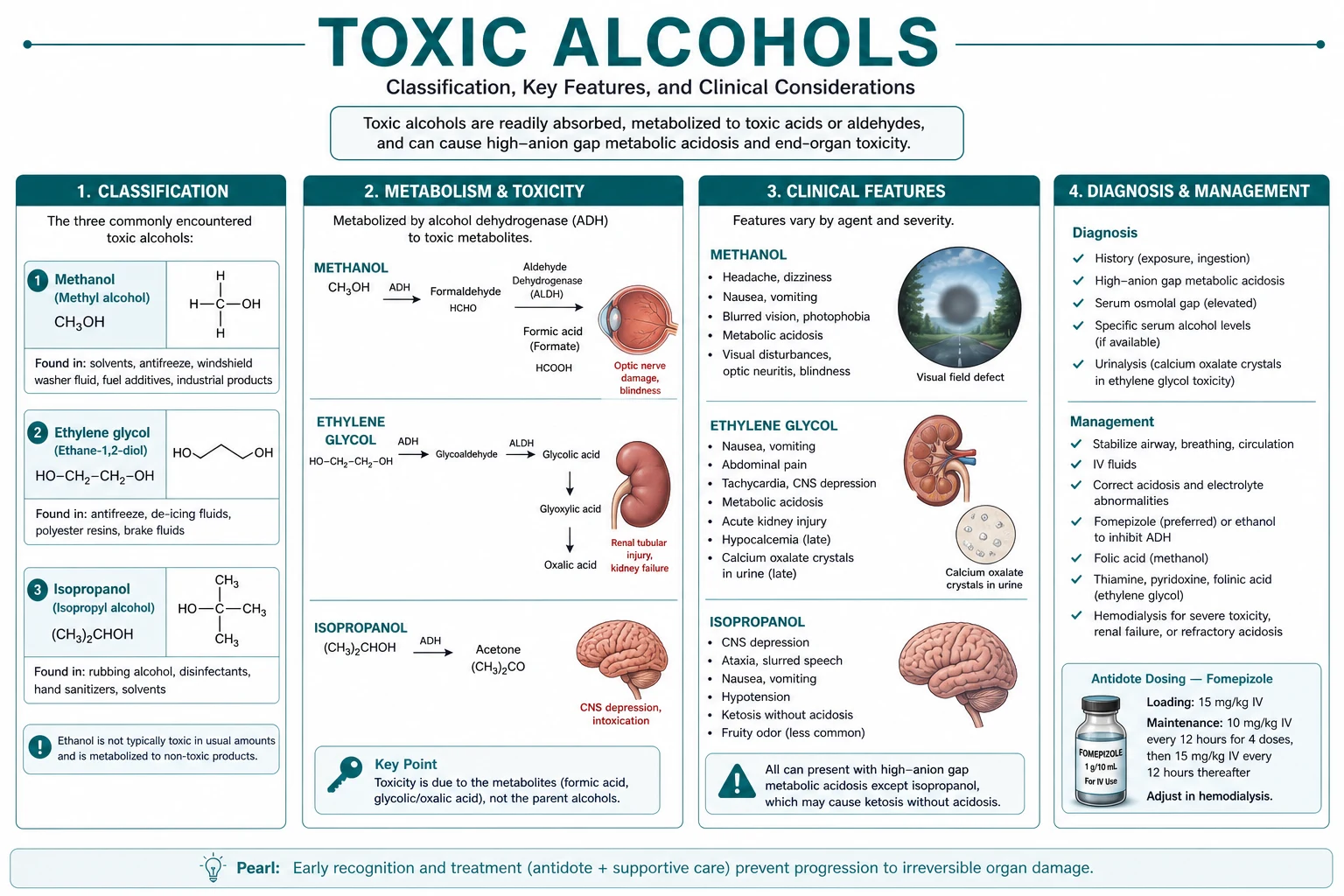
Classification that changes management
Classify by acuity, mechanism, severity and care setting. A useful classification changes investigation choice, initial therapy, disposition or specialist referral — otherwise it is taxonomy without purpose. [1] [2]
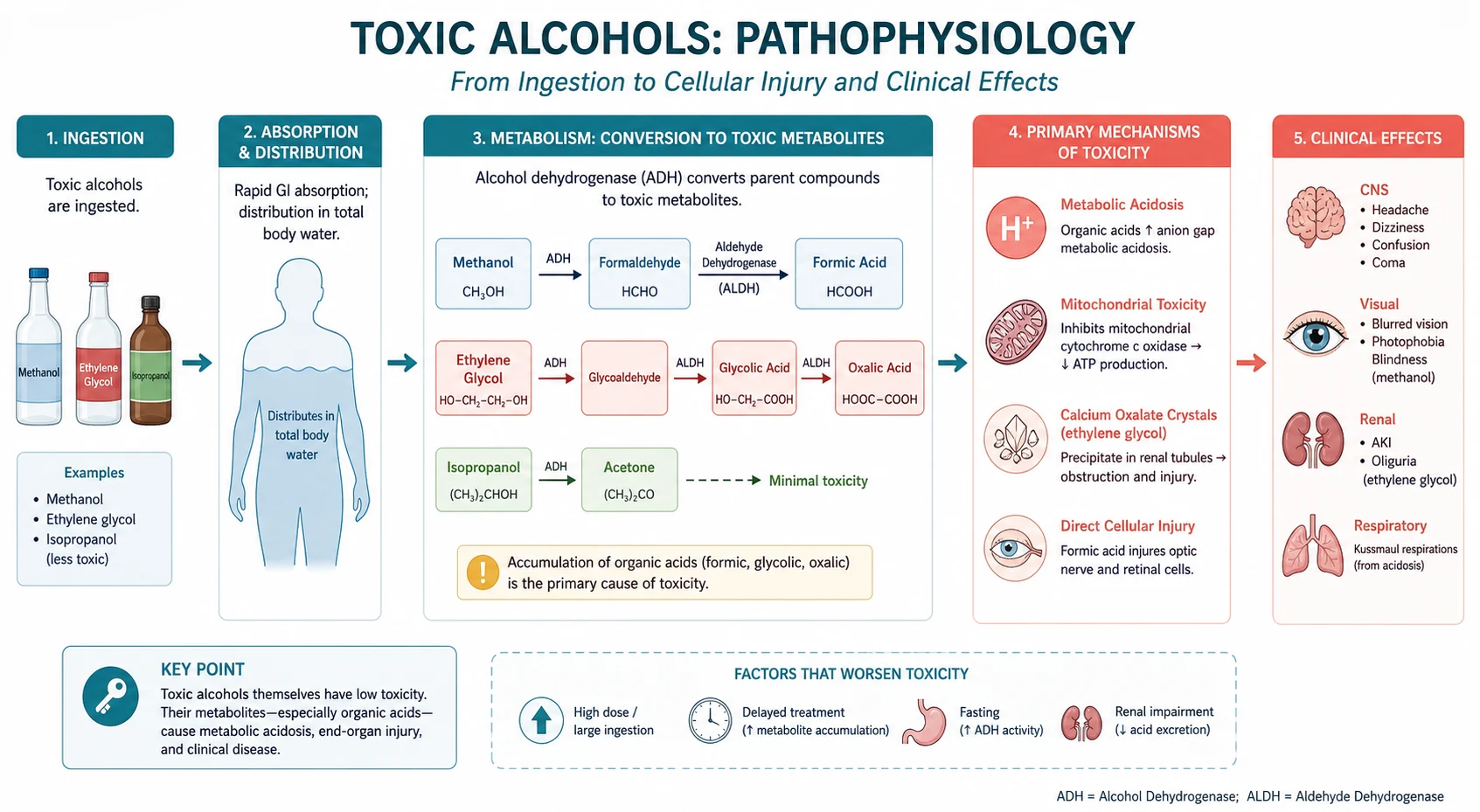
Pathophysiology linked to bedside decisions
Mechanism matters when it predicts treatment response, complications or monitoring. Teach pathophysiology as a bridge to action, not as isolated basic science. [1] [2] [3]
Differentials and discrimination
Build a short differential that includes the common, the dangerous and the commonly missed. For each alternative, name one history clue, one examination clue and one investigation that discriminates. [1] [2]
Investigations
Order tests that change management. State what is required now, what can wait, and what is low-value or harmful. Interpret results in clinical context rather than in isolation. [1] [2]
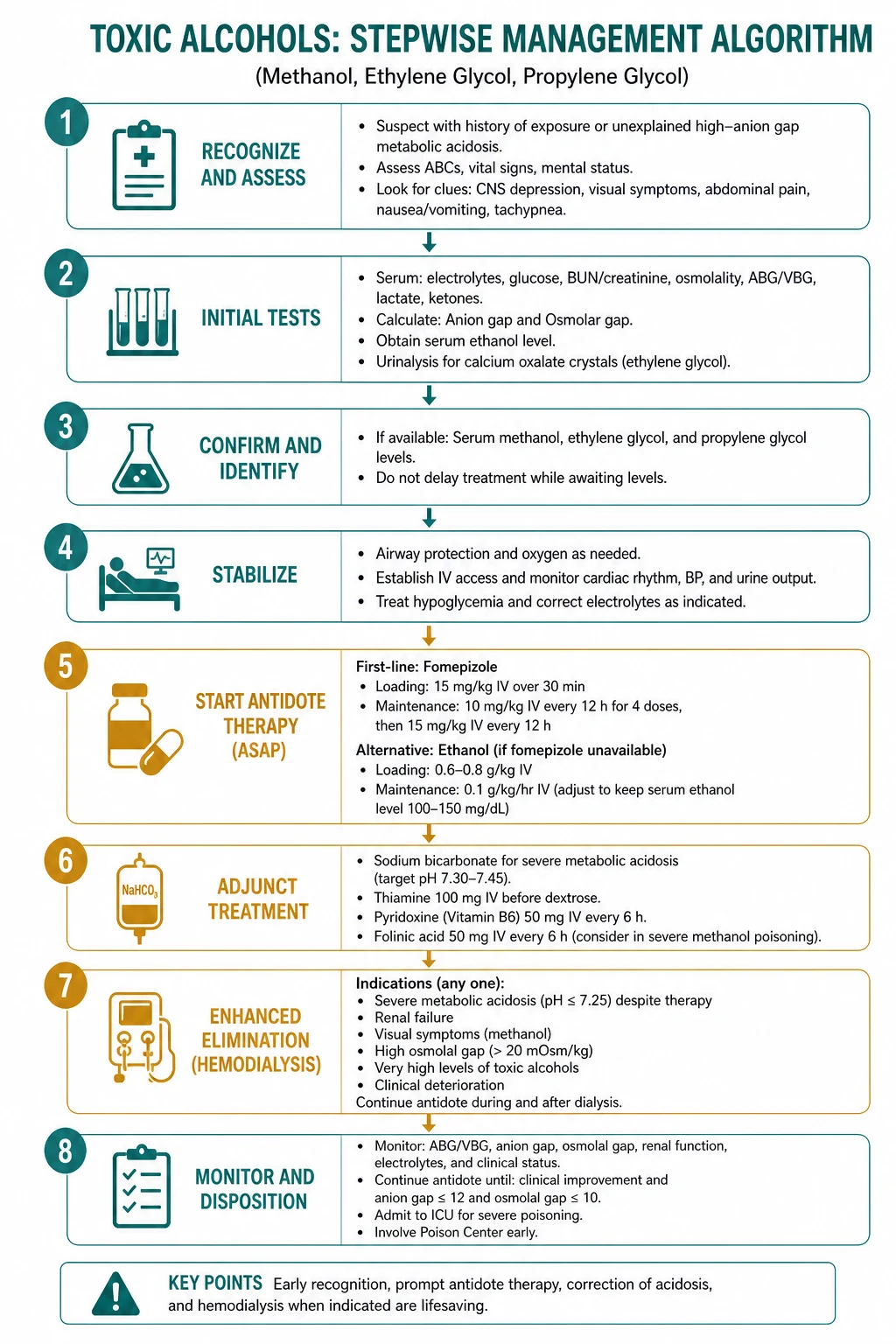
Management — immediate then definitive
- Stabilise threats to life and organ function. [1]
- Start disease-specific therapy once the working diagnosis is secure enough to act. [1] [2]
- Address complications, drug interactions and monitoring. [1] [2]
- Plan disposition, follow-up intensity and patient education with safety-net advice. [1]
Complications and prognosis
Anticipate early and late complications. Prognosis depends on severity at presentation, speed of effective therapy, comorbidity and adherence to secondary prevention or disease-modifying treatment. [1] [2]
Special populations and multimorbidity
Adjust for pregnancy potential, frailty, CKD, liver disease, immunosuppression and polypharmacy. In older adults, goals-of-care and treatment burden can change the preferred plan even when disease-directed options remain available. [1] [2]
DCE long-case angles
Open with a one-sentence synthesis, then a prioritised problem list, then an integrated plan covering investigations, treatment, prevention and communication. Link Toxic Alcohols to cardiovascular risk, infection risk, medications and social context where relevant. [1] [2]
DCE short-case angles
Be prepared to demonstrate or discuss focused examination findings, interpret a key investigation, and counsel on risks, benefits and follow-up in plain language. [1]
Exam traps
- Delaying urgent care because the presentation looks "stable enough". [1]
- Treating a syndrome label without confirming mechanism. [1] [2]
- Forgetting drug interactions and organ-function dosing. [1] [2]
- Omitting safety-net advice and follow-up ownership. [1]
- Quoting thresholds without knowing the source trial or guideline. [1] [2] [3]
References
- [1]Faheem S, Hameed H, Al-Hussain SA, Irfan A, et al. Formulation development and preliminary biological evaluation of a menthol modified thermoresponsive tamoxifen sol-gel Med Oncol, 2026.PMID 42467342
- [2]Angkyier JB, Sackey LNA, Sarpong P, Adjei EA, et al. Toxicity of Industry Effluents to Freshwater Invertebrates (Focus: Daphnia spp.): A Bibliometric and Systematic Review of Acute, Chronic, and Sublethal Effects J Appl Toxicol, 2026.PMID 42444416
- [3]Lee D, Chung H Sex-related differences in psychoactive drug toxicology: Implications and limitations for forensic interpretation Leg Med (Tokyo), 2026.PMID 42442175
- [4]Kanawade SN, Laware RB, Kunkulol RK, Patare VB Integrated in vivo and in silico evaluation of Coccinia grandis (L.) Voigt root constituents reveals dual targeting of 5-HT(3)A and D(2) receptors in emesis In Silico Pharmacol, 2026.PMID 42389726
- [5]Nguedia MY, Nkuimi OBK, Mafogang B, Ngatanko HHA, et al. Acute (14-Day) and Subchronic (90-Day) Toxicity Evaluation of the Dried Fruit Spice Xylopia aethiopica (Dunal) A. Rich. (Annonaceae) in Male and Female Wistar Rats J Toxicol, 2026.PMID 42179896
- [6]Zhao C, Yang Y, Yang B, Zhang R, et al. Biogenic AuNP-Loaded Electroconductive Hydrogels: A Multifunctional Therapeutic Strategy for Isoproterenol-Induced Myocardial Infarction J Biomed Mater Res B Appl Biomater, 2026.PMID 41913492
- [7]Doan HN, Chang MC Comparative Effectiveness of Unstable Versus Stable Resistance Training on Lower Limb Strength, Mobility, and Fear of Falling in Older Adults: A Systematic Review and Meta-analysis of Randomized Controlled Trials Am J Phys Med Rehabil, 2026.PMID 42468010
- [8]Liu HW, Tsai TL Virtual Reality-assisted Physiotherapeutic Training for Patients With Knee Osteoarthritis: A Systematic Review and Meta-analysis Am J Phys Med Rehabil, 2026.PMID 42468005
- [9]Osborne AK, Brown RD, Sillence E Effects of Social Media Narratives on Affective and Behavioral Responses to Menopause Content: Randomized Online Experimental Study JMIR Form Res, 2026.PMID 42467962
- [10]Rabbani I, Rafiq M, Shah S, Ahmad T, et al. GCMS-based evaluation, characterization and in silico analysis of antimicrobial metabolites in the crude extract of cold-adapted Alcaligenes pakistanensis LTP10 AIMS Microbiol, 2026.PMID 42459391
- [11]Nagpal T, Baker T, Farooqui AS Lithium Toxicity or Alcohol Withdrawal? Cureus, 2026.PMID 42453840
- [12]Kostici R, Kamal AM, Trasca DM, Vladulescu C, et al. Physicochemical, Phytochemical, and Toxicological Assessment of Agrimonia pilosa, Calendula arvensis, and Polygonum hydropiper Tinctures with Hypoglycemic Potential Molecules, 2026.PMID 42451683