Phys · respiratory
Bronchiectasis AND Suppurative Lung Disease
Also known as Bronchiectasis AND Suppurative Lung Disease · bronchiectasis and suppurative lung disease
Consultant-physician depth guide to Bronchiectasis AND Suppurative Lung Disease for FRACP DWE/DCE preparation — presentation, differentials, investigations, management, complications and exam angles.
On this page & tools
Your progress
Saved locally on this device.
Practise this topic
Target exams
Red flags
The answer first
Bronchiectasis AND Suppurative Lung Disease is managed with an answer-first physician approach: recognise the pattern, exclude dangerous differentials, choose investigations that change action, and deliver a sequenced management plan that accounts for multimorbidity. [1] [2]
The FRACP candidate must be able to open a long-case presentation, defend thresholds, and answer DWE vignettes without hedging. Lead with the decision, then the evidence and the trap. [1]

Clinical spectrum and red flags
Presentations range from incidental or outpatient findings to emergency decompensation. Always ask what would make this urgent today — airway, perfusion, neurological threat, metabolic crisis, infection, or bleeding. [1] [2]
Red flags force same-day action rather than elective pathways. Document them explicitly in the plan. [1]
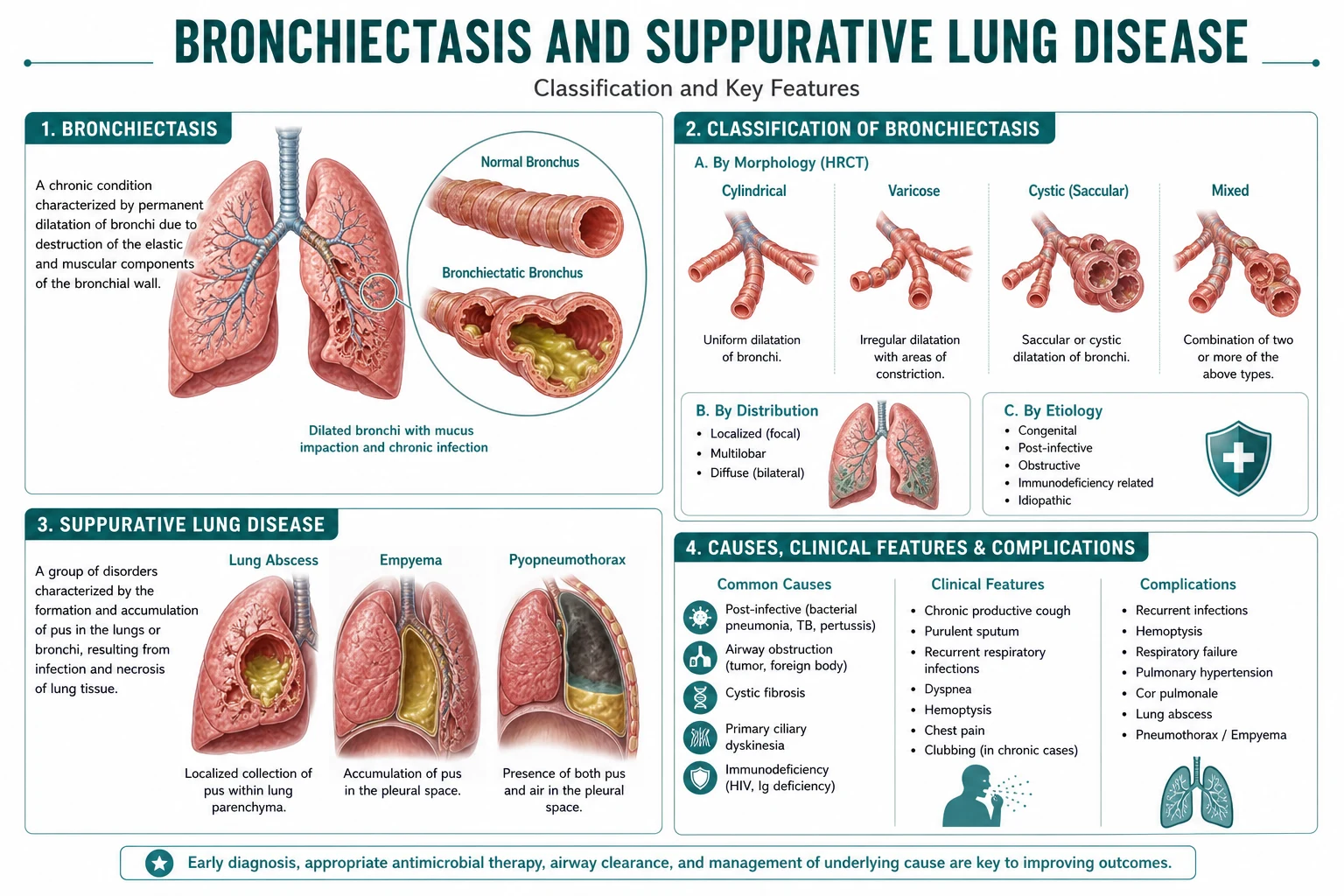
Classification that changes management
Classify by acuity, mechanism, severity and care setting. A useful classification changes investigation choice, initial therapy, disposition or specialist referral — otherwise it is taxonomy without purpose. [1] [2]
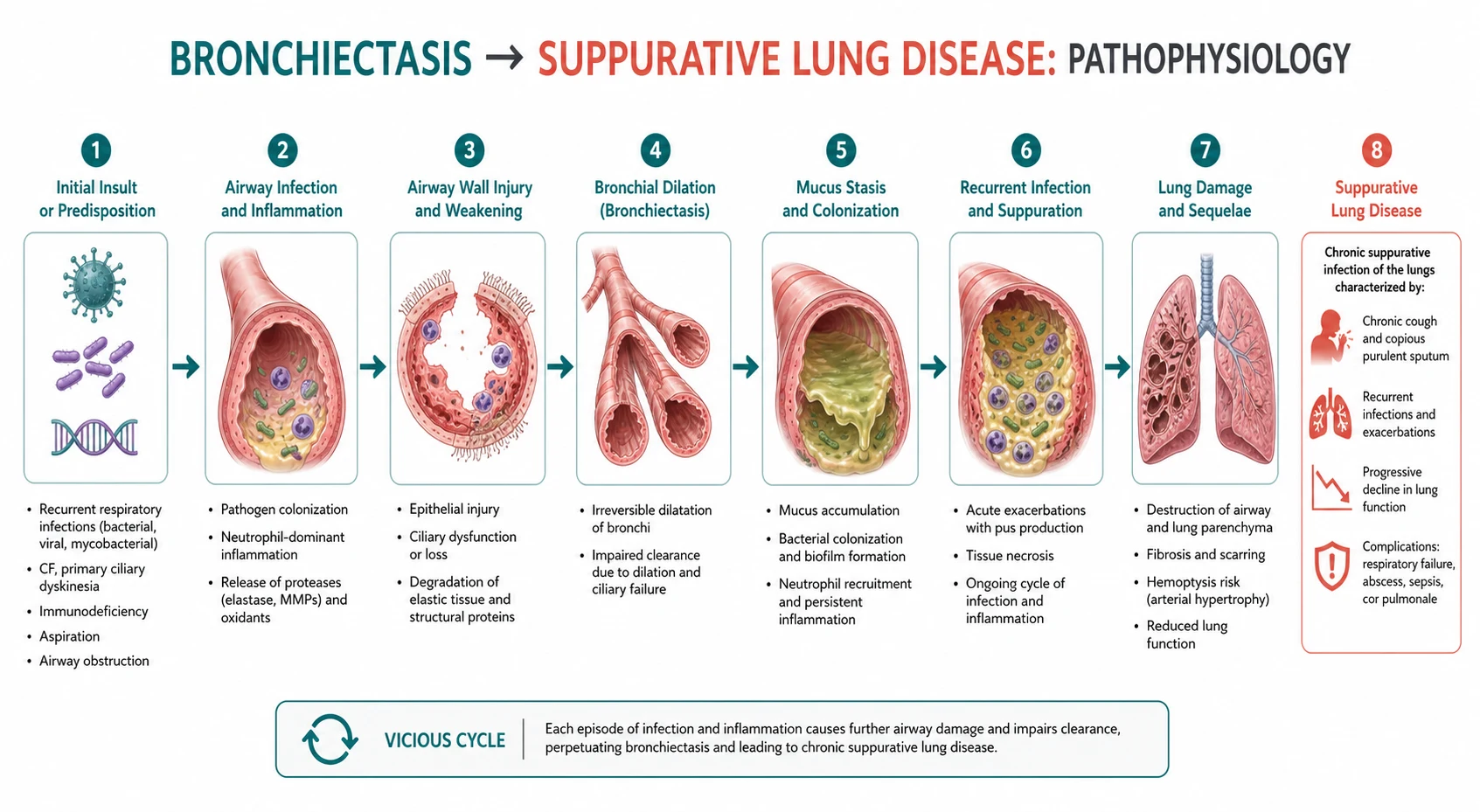
Pathophysiology linked to bedside decisions
Mechanism matters when it predicts treatment response, complications or monitoring. Teach pathophysiology as a bridge to action, not as isolated basic science. [1] [2] [3]
Differentials and discrimination
Build a short differential that includes the common, the dangerous and the commonly missed. For each alternative, name one history clue, one examination clue and one investigation that discriminates. [1] [2]
Investigations
Order tests that change management. State what is required now, what can wait, and what is low-value or harmful. Interpret results in clinical context rather than in isolation. [1] [2]
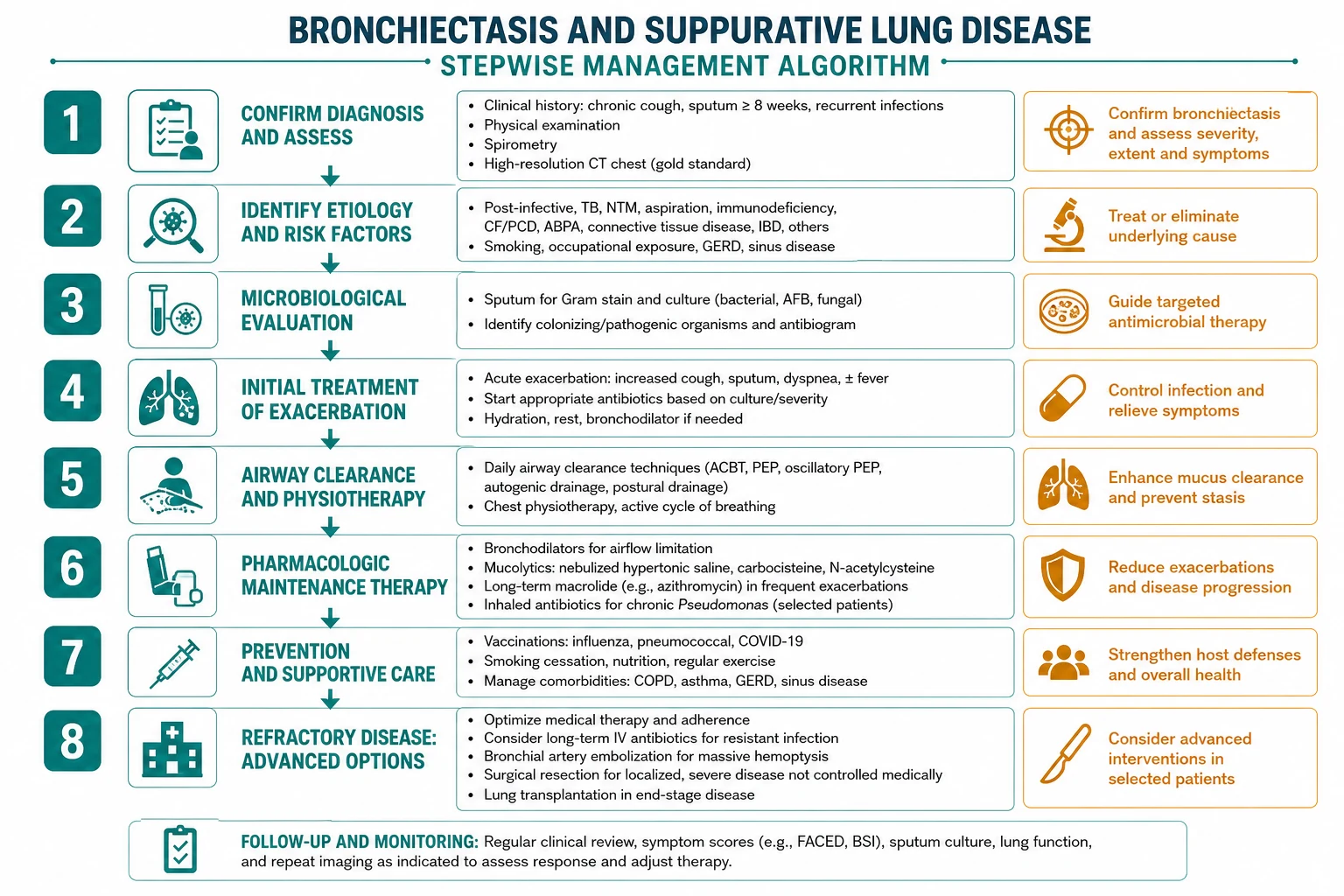
Management — immediate then definitive
- Stabilise threats to life and organ function. [1]
- Start disease-specific therapy once the working diagnosis is secure enough to act. [1] [2]
- Address complications, drug interactions and monitoring. [1] [2]
- Plan disposition, follow-up intensity and patient education with safety-net advice. [1]
Complications and prognosis
Anticipate early and late complications. Prognosis depends on severity at presentation, speed of effective therapy, comorbidity and adherence to secondary prevention or disease-modifying treatment. [1] [2]
Special populations and multimorbidity
Adjust for pregnancy potential, frailty, CKD, liver disease, immunosuppression and polypharmacy. In older adults, goals-of-care and treatment burden can change the preferred plan even when disease-directed options remain available. [1] [2]
DCE long-case angles
Open with a one-sentence synthesis, then a prioritised problem list, then an integrated plan covering investigations, treatment, prevention and communication. Link Bronchiectasis AND Suppurative Lung Disease to cardiovascular risk, infection risk, medications and social context where relevant. [1] [2]
DCE short-case angles
Be prepared to demonstrate or discuss focused examination findings, interpret a key investigation, and counsel on risks, benefits and follow-up in plain language. [1]
Exam traps
- Delaying urgent care because the presentation looks "stable enough". [1]
- Treating a syndrome label without confirming mechanism. [1] [2]
- Forgetting drug interactions and organ-function dosing. [1] [2]
- Omitting safety-net advice and follow-up ownership. [1]
- Quoting thresholds without knowing the source trial or guideline. [1] [2] [3]
References
- [1]AlHarbi N, AlEidan A, AlZanbagi MA Reversible Rituximab-Induced Bronchiectasis: A Pediatric Case Report and Literature Review Am J Case Rep, 2026.PMID 42098995
- [2]Ünal A, Gündeşlioğlu ÖÖ, Pişkin FC, Tutuş K, et al. Pediatric lung abscesses: a 13-year journey from diagnosis to treatment BMC Infect Dis, 2026.PMID 41808029
- [3]Martin I, Waters V Prophylactic antibiotics in chronic pediatric lung disease: balancing benefit, resistance, and future care models Expert Rev Respir Med, 2026.PMID 41729069
- [4]Dawkins P, Poot B, Mooney S Thoracic Society of Australia and New Zealand position statement on chronic suppurative lung disease and bronchiectasis in children, adolescents and adults: what is new and relevant to Aotearoa New Zealand? N Z Med J, 2024.PMID 38901044
- [5]Benscoter DT Bronchiectasis, Chronic Suppurative Lung Disease and Protracted Bacterial Bronchitis Curr Probl Pediatr Adolesc Health Care, 2018.PMID 29602647
- [6]Doan HN, Chang MC Comparative Effectiveness of Unstable Versus Stable Resistance Training on Lower Limb Strength, Mobility, and Fear of Falling in Older Adults: A Systematic Review and Meta-analysis of Randomized Controlled Trials Am J Phys Med Rehabil, 2026.PMID 42468010
- [7]Liu HW, Tsai TL Virtual Reality-assisted Physiotherapeutic Training for Patients With Knee Osteoarthritis: A Systematic Review and Meta-analysis Am J Phys Med Rehabil, 2026.PMID 42468005
- [8]Osborne AK, Brown RD, Sillence E Effects of Social Media Narratives on Affective and Behavioral Responses to Menopause Content: Randomized Online Experimental Study JMIR Form Res, 2026.PMID 42467962
- [9]Khanna S, Das J, Kumar S, Mehta Y Anesthesia for lung transplantation: A narrative review J Anaesthesiol Clin Pharmacol, 2025.PMID 41181241
- [10]Fuchs T, Donovan J, Ives A, Irving S, et al. Function and Structure Relationships With Inflammation Differ in Two Chronic Suppurative Lung Diseases Pediatr Pulmonol, 2026.PMID 42101371