Phys · respiratory
Pulmonary Vascular Disease AND COR Pulmonale
Also known as Pulmonary Vascular Disease AND COR Pulmonale · pulmonary vascular disease and cor pulmonale
Consultant-physician depth guide to Pulmonary Vascular Disease AND COR Pulmonale for FRACP DWE/DCE preparation — presentation, differentials, investigations, management, complications and exam angles.
On this page & tools
Your progress
Saved locally on this device.
Practise this topic
Target exams
Red flags
The answer first
Pulmonary Vascular Disease AND COR Pulmonale is managed with an answer-first physician approach: recognise the pattern, exclude dangerous differentials, choose investigations that change action, and deliver a sequenced management plan that accounts for multimorbidity. [1] [2]
The FRACP candidate must be able to open a long-case presentation, defend thresholds, and answer DWE vignettes without hedging. Lead with the decision, then the evidence and the trap. [1]

Clinical spectrum and red flags
Presentations range from incidental or outpatient findings to emergency decompensation. Always ask what would make this urgent today — airway, perfusion, neurological threat, metabolic crisis, infection, or bleeding. [1] [2]
Red flags force same-day action rather than elective pathways. Document them explicitly in the plan. [1]
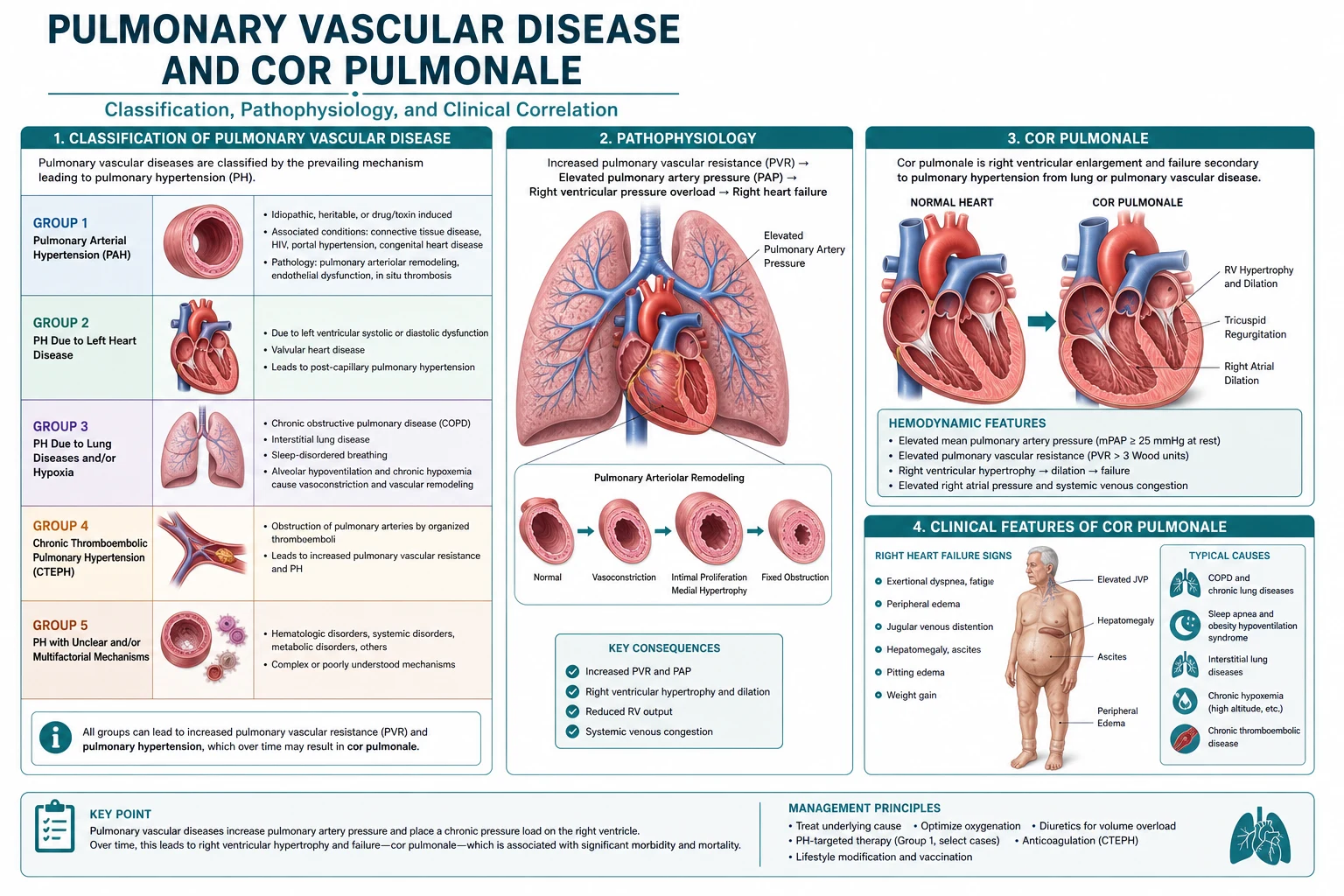
Classification that changes management
Classify by acuity, mechanism, severity and care setting. A useful classification changes investigation choice, initial therapy, disposition or specialist referral — otherwise it is taxonomy without purpose. [1] [2]
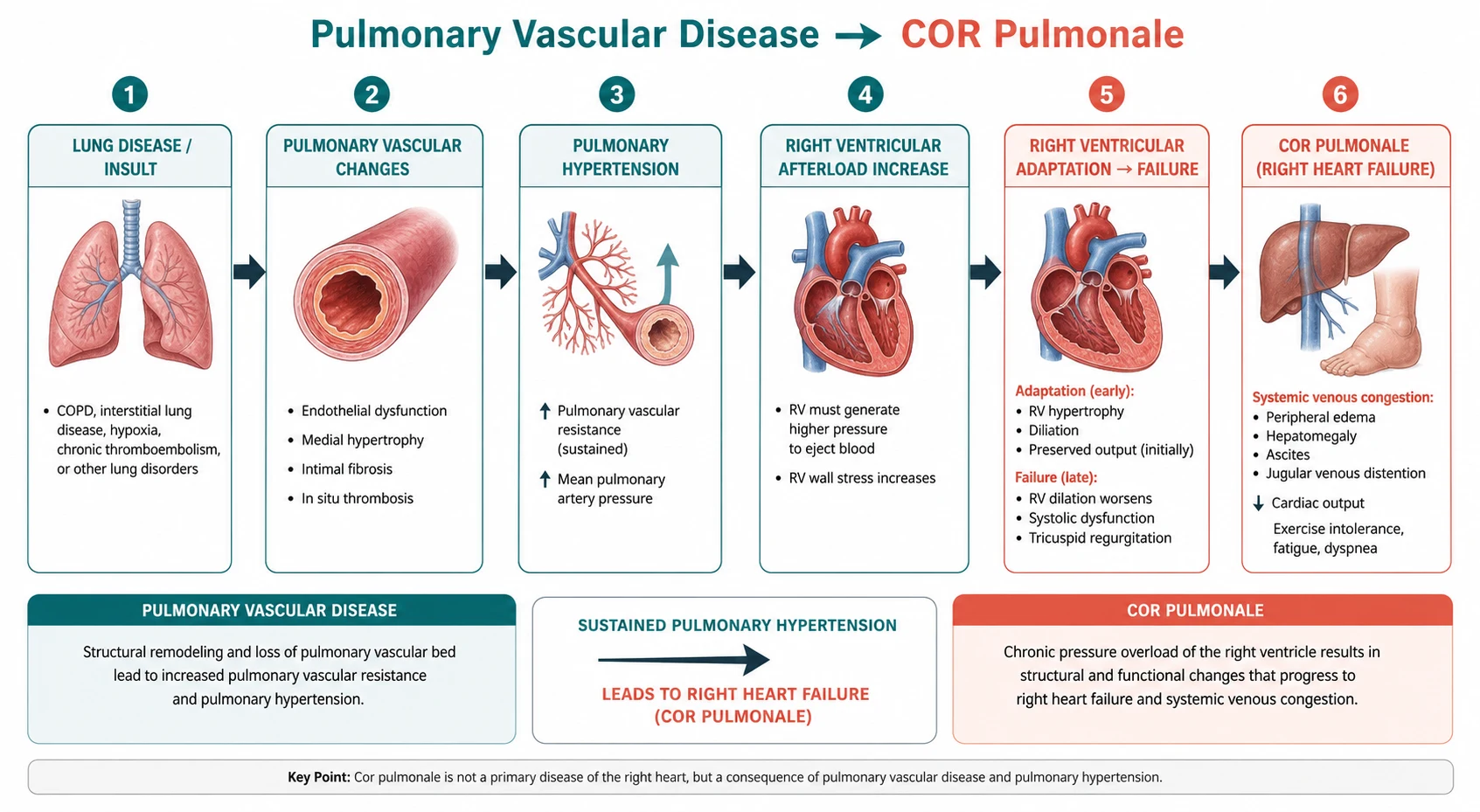
Pathophysiology linked to bedside decisions
Mechanism matters when it predicts treatment response, complications or monitoring. Teach pathophysiology as a bridge to action, not as isolated basic science. [1] [2] [3]
Differentials and discrimination
Build a short differential that includes the common, the dangerous and the commonly missed. For each alternative, name one history clue, one examination clue and one investigation that discriminates. [1] [2]
Investigations
Order tests that change management. State what is required now, what can wait, and what is low-value or harmful. Interpret results in clinical context rather than in isolation. [1] [2]
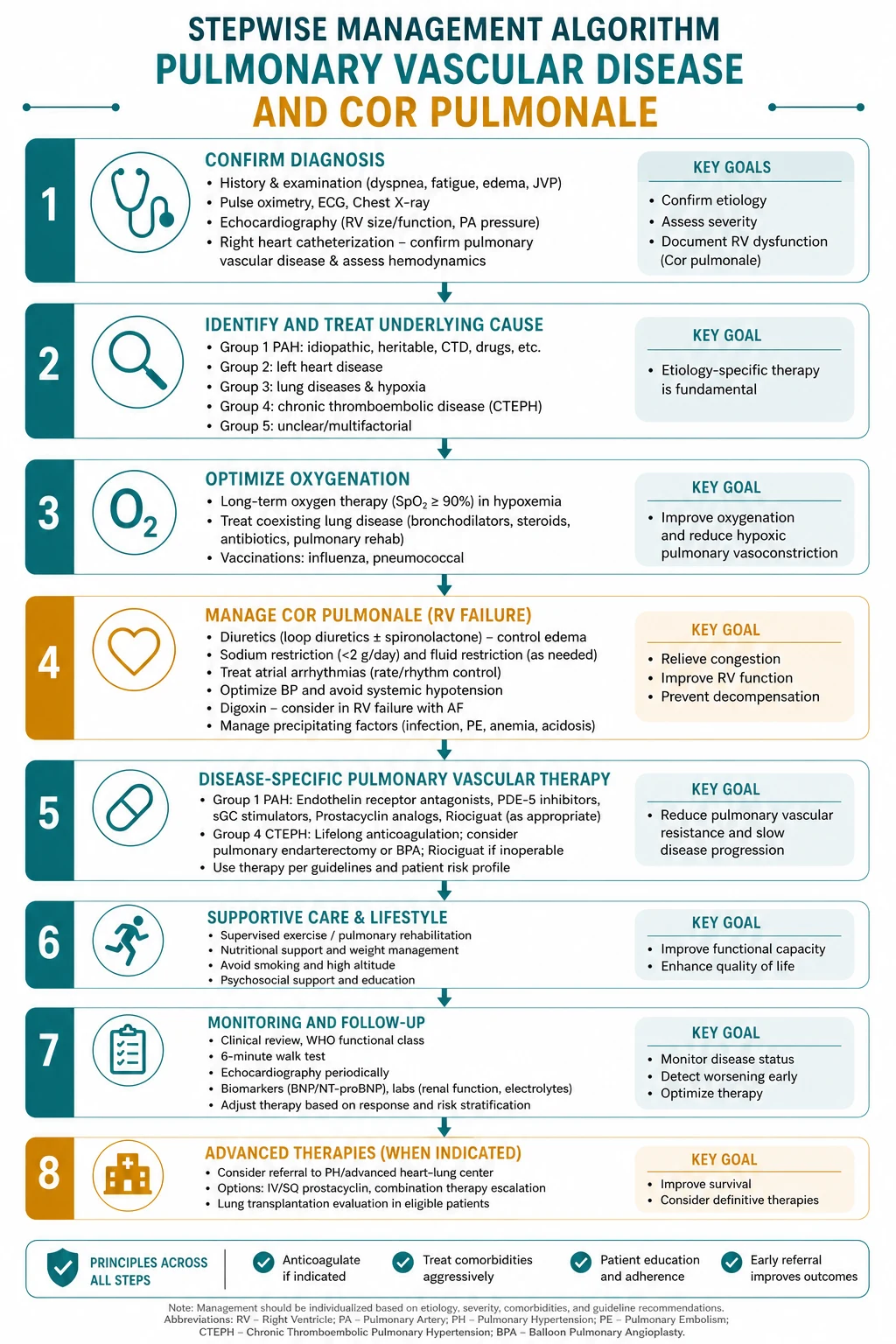
Management — immediate then definitive
- Stabilise threats to life and organ function. [1]
- Start disease-specific therapy once the working diagnosis is secure enough to act. [1] [2]
- Address complications, drug interactions and monitoring. [1] [2]
- Plan disposition, follow-up intensity and patient education with safety-net advice. [1]
Complications and prognosis
Anticipate early and late complications. Prognosis depends on severity at presentation, speed of effective therapy, comorbidity and adherence to secondary prevention or disease-modifying treatment. [1] [2]
Special populations and multimorbidity
Adjust for pregnancy potential, frailty, CKD, liver disease, immunosuppression and polypharmacy. In older adults, goals-of-care and treatment burden can change the preferred plan even when disease-directed options remain available. [1] [2]
DCE long-case angles
Open with a one-sentence synthesis, then a prioritised problem list, then an integrated plan covering investigations, treatment, prevention and communication. Link Pulmonary Vascular Disease AND COR Pulmonale to cardiovascular risk, infection risk, medications and social context where relevant. [1] [2]
DCE short-case angles
Be prepared to demonstrate or discuss focused examination findings, interpret a key investigation, and counsel on risks, benefits and follow-up in plain language. [1]
Exam traps
- Delaying urgent care because the presentation looks "stable enough". [1]
- Treating a syndrome label without confirming mechanism. [1] [2]
- Forgetting drug interactions and organ-function dosing. [1] [2]
- Omitting safety-net advice and follow-up ownership. [1]
- Quoting thresholds without knowing the source trial or guideline. [1] [2] [3]
References
- [1]Jimenez D, Bikdeli B, Tapson V, Becattini C, et al. Systematic review of prognostic scores and individual predictor variables for short-term mortality after acute pulmonary embolism Pulmonology, 2026.PMID 42461710
- [2]Alfonso DM, Sy JC, Palabrica MC The Apelin-APJ Axis in Heart Failure: Mechanistic Insights, Clinical Evidence, and Translational Challenges Cardiovasc Drugs Ther, 2026.PMID 42455245
- [3]Almaimani M, Alamri SA Finerenone Beyond Diabetic Kidney Disease: Emerging Evidence and Potential Systemic Implications J Clin Med, 2026.PMID 42452314
- [4]Larsen TB, Flyckt RNH, Henriksen MB, Brasen CL, et al. Cardiovascular risk after cancer in patients with ischemic heart disease or peripheral artery disease Cardiooncology, 2026.PMID 42387666
- [5]Cabré F, Cascante M Present and Future Options for Pharmacotherapy in Cardiovascular Disease: Hemodynamic and Mechanistic Therapeutic Targets Med Sci (Basel), 2026.PMID 42346870
- [6]Doan HN, Chang MC Comparative Effectiveness of Unstable Versus Stable Resistance Training on Lower Limb Strength, Mobility, and Fear of Falling in Older Adults: A Systematic Review and Meta-analysis of Randomized Controlled Trials Am J Phys Med Rehabil, 2026.PMID 42468010
- [7]Liu HW, Tsai TL Virtual Reality-assisted Physiotherapeutic Training for Patients With Knee Osteoarthritis: A Systematic Review and Meta-analysis Am J Phys Med Rehabil, 2026.PMID 42468005
- [8]Osborne AK, Brown RD, Sillence E Effects of Social Media Narratives on Affective and Behavioral Responses to Menopause Content: Randomized Online Experimental Study JMIR Form Res, 2026.PMID 42467962
- [9]Bhardwaj A, Valadi Ramakrishnan S, Joseph D, Nathan S, et al. High-Output Heart Failure and Pulmonary Hypertension Caused by Arteriovenous Graft: Diagnosis and Treatment JACC Case Rep, 2026.PMID 42461181
- [10]Cao M, Zhang L, Ren Y, Zhang G Heyde Syndrome Complicated by Pulmonary Embolism Before Transcatheter Aortic Valve Replacement: A Clinical Dilemma Between Bleeding and Thrombosis Am J Case Rep, 2026.PMID 42458809
- [11]Sabljo D, Fischer S, Berghaus TM, Linseisen J, et al. Association between beta-blocker and statin use and mental health in patients following pulmonary embolism: a prospective cohort study BMC Psychol, 2026.PMID 42464400
- [12]Baker DM, Cruddas L, Benaragama S Peri-operative Outcomes after Carotid Endarterectomy in Selected Operated Patients with Pre-operative Modified Rankin Scale Score 3: Analysis of the UK National Vascular Registry Eur J Vasc Endovasc Surg, 2026.PMID 42462865