Psych · Consultation-liaison psychiatry
Demoralisation and adjustment to medical illness
Also known as Demoralization syndrome · Demoralization in medical illness · Adjustment disorder medical illness · Existential distress medical illness · Coping with medical illness
Exam-exhaustive fellowship topic on demoralisation and adjustment to medical illness for consultation-liaison psychiatry — Clarke/Kissane demoralisation phenomenology and syndrome criteria, DSM-5-TR/ICD-11 adjustment disorder, DS/DS-II measurement, Mitchell prevalence, differential from MDD and grief, desire for hastened death links, dignity therapy/MCP/CALM and brief adjustment therapies, careful antidepressant use (Rayner), Strain C-L framing, and exam algorithms. FRANZCP-primary, globally tagged.
On this page & tools
Your progress
Saved locally on this device.
10 MCQs with explanations
Target exams
Red flags
Demoralisation and adjustment to medical illness is core consultation-liaison work. Examiners test whether you can hold concurrent constructs, name measurement tools, discriminate treatable MDD from non-melancholic meaning collapse, and deploy named psychotherapies rather than vague "supportive chat" or reflexive antidepressants.[1][5][14]
Overview and definition
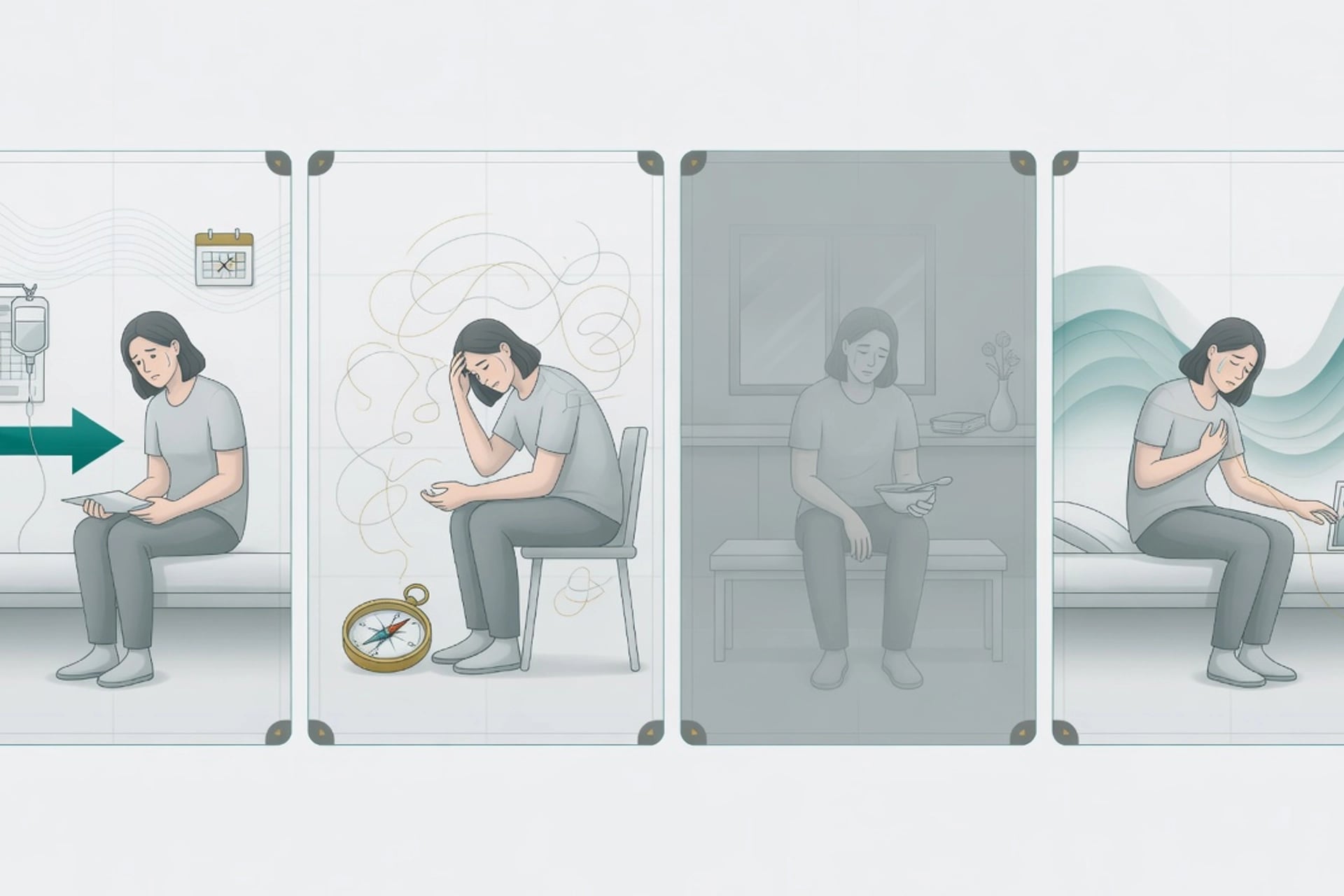
Demoralisation describes a state of subjective incompetence, helplessness, pointlessness, and loss of meaning when a person feels unable to meet the demands of illness or life under current resources. Clarke and Kissane framed it as a distinct phenomenology of existential distress that is clinically important even when major depression criteria are incomplete.[1][6]
Demoralisation syndrome (Kissane) organises this for progressive disease and palliative care: affective symptoms of demoralisation (hopelessness, loss of meaning, pointlessness), cognitive attitudes of helplessness and subjective incompetence, and associated features such as social isolation and death wishes — a useful clinical diagnosis even though it is not a DSM-5-TR code.[2][5]
Adjustment disorder is the formal stressor-related diagnosis when emotional or behavioural symptoms arise in response to an identifiable stressor (here, medical illness or its consequences), begin within a defined time window, cause clinically significant distress or impairment, and do not meet criteria for another mental disorder such as MDD.[13][14]
Strain emphasises adjustment disorder as historically central to liaison psychiatry: medical teams recognise "not coping" and need a precise differential, not a soft label that blocks either psychological help or escalation to MDD care.[14]
Classification and syndrome map

| Construct | Core | Formal status | Primary action |
|---|---|---|---|
| Adjustment disorder | Stressor-linked distress/impairment within time rules | DSM-5-TR / ICD-11 diagnosis | Brief psychological care; safety; reassess |
| Demoralisation | Pointlessness, trapped, subjective incompetence, meaning collapse | Clinical syndrome construct (Kissane); DS/DS-II measured | Meaning, dignity, hope, agency restoration |
| Major depression | Pervasive low mood/anhedonia, cognitive-affective syndrome ≥2 weeks | Full mood disorder | Treat as MDD (therapy ± antidepressant) |
| Grief / anticipatory grief | Yearning, waves, connection retained | Not demoralisation by default | Support; watch for prolonged grief or MDD |
| Desire for hastened death | Wish that death come sooner (spectrum) | Not a diagnosis | Screen depression, hopelessness, demoralisation, symptoms |
DSM-5-TR and ICD-11 adjustment disorder (exam anchors)
DSM-5-TR essentials (paraphrased for teaching — verify against current manual in viva): emotional or behavioural symptoms in response to identifiable stressor(s) within 3 months of onset; clinically significant distress out of proportion or impairment; not better explained by another mental disorder; not normal bereavement; once the stressor or its consequences have terminated, symptoms do not persist more than an additional 6 months (with acute vs persistent course language).[13][14]
ICD-11 frames adjustment disorder as a stress-response syndrome with preoccupation with the stressor or its consequences and failure to adapt, with onset typically within a month of the stressor — know the conceptual shift toward a positive stress-response description rather than residual diagnosis only.[13]
Specifiers (depressed mood, anxiety, mixed, disturbance of conduct) still appear in exam stems; do not let a specifier stop you from upgrading to MDD when full criteria appear.[13][14]
Epidemiology and risk
Mitchell and colleagues' interview-based meta-analysis shows substantial prevalence of depression, anxiety, and adjustment disorder in oncological, haematological, and palliative-care settings — so "everyone is distressed" is not a reason to abandon structured diagnosis.[7] Systematic reviews of demoralisation in progressive disease and cancer document clinically meaningful rates and associations with depression, desire to die, and poorer quality of life.[5][6]
Risk amplifiers: progressive or life-limiting disease, bad-news consultations, functional loss and role collapse, uncontrolled physical symptoms, social isolation, prior mood or trauma history, financial strain, and cultural meaning of illness that erodes identity.[1][5][7]
Pathophysiology and mechanisms
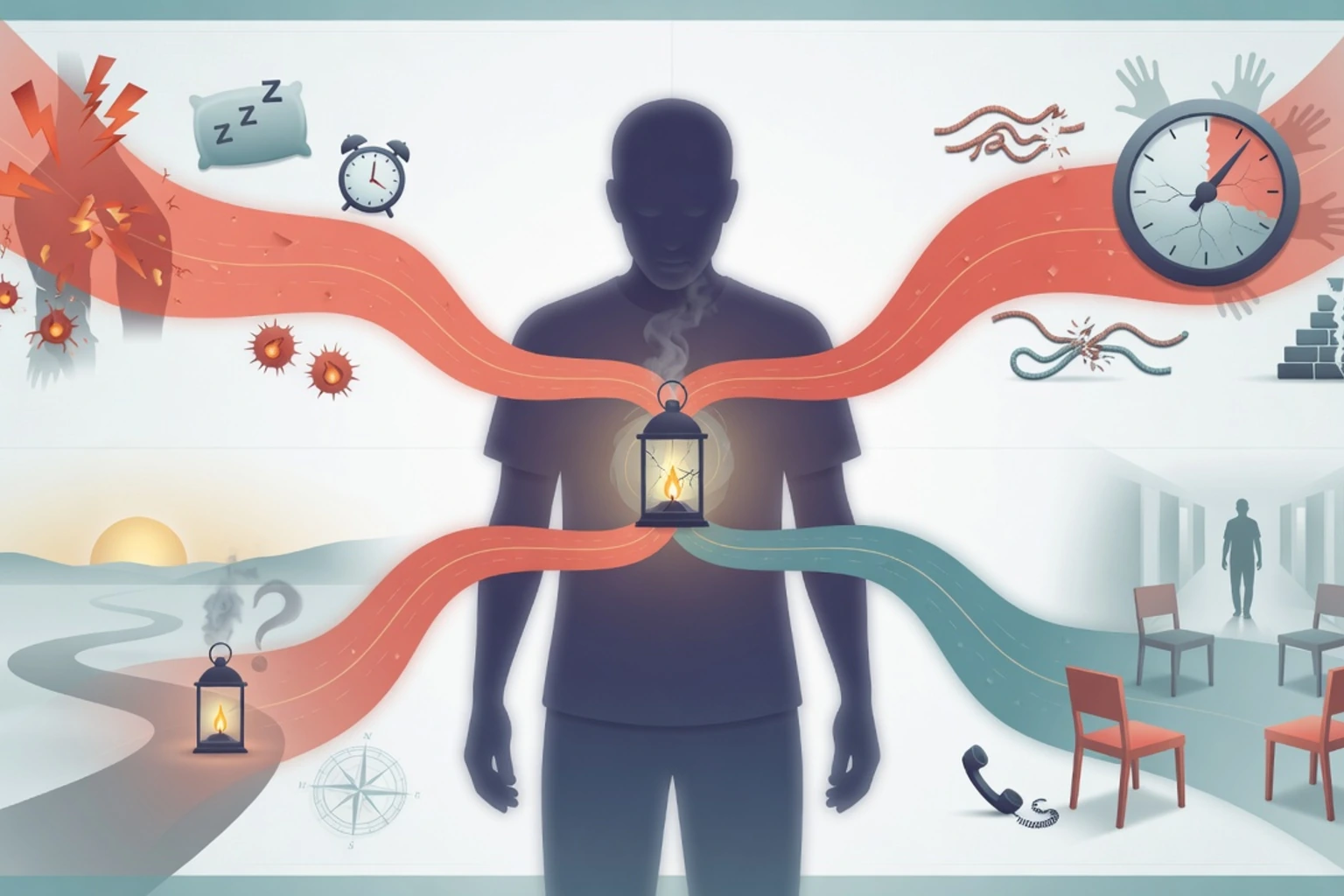
Clarke and Kissane locate demoralisation in the experience of subjective incompetence: the person anticipates failure to meet demands and loses the sense that help will work. This is related to, but not identical with, clinical depression's pervasive anhedonia and self-reproach.[1][6]
Mechanisms are multifactorial and span psychological, existential, social, and biological amplifiers rather than a single demoralisation biomarker.[1][5][14]
- Psychological: shattered assumptions, loss of control, anticipatory fear, identity threat.
- Existential: meaning collapse, dignity threat, unfinished life tasks.
- Social: isolation, stigma, family system strain, loss of work role.
- Biological amplifiers: pain, sleep disruption, inflammation, CNS disease, corticosteroids, cytokines, fatigue — they do not equal demoralisation but intensify it and can mimic or cause MDD or delirium.[1][5][14]
Clinical presentation
Demoralisation language candidates must recognise: "There is no point," "I am trapped," "I cannot cope," "I am a burden," "Nothing will help." Affect may still brighten with family presence; pleasure islands can persist — unlike classic melancholia.[1][2]
Adjustment presentations track medical milestones: new diagnosis, recurrence, treatment failure, amputation or disability, ICU survival, transplant waitlist, dialysis initiation, discharge to institutional care. Symptoms are disproportionate or impairing relative to cultural norms, but the illness narrative remains central.[13][14]
Desire for hastened death (DHD) may appear as a passive wish that death come sooner. It is multifactorial; depression and hopelessness are key independent correlates in terminal cancer research, and demoralisation is clinically adjacent — never equate DHD with a single diagnosis.[8]
Differential diagnosis — discriminators
- Meaning and mastery collapse
- Subjective incompetence
- Pointlessness/trapped
- Reactivity may remain
- Therapies: dignity, MCP, CALM, hope work
- Pervasive anhedonia
- Worthlessness/guilt
- ≥2 weeks full syndrome
- Biological features possible
- Treat as MDD — therapy ± AD
- Clear stressor link
- Timing criteria met
- Not full MDD/PTSD
- Brief psychological focus
- Reassess if symptoms escalate
Also separate from grief (waves, yearning, preserved self-worth), PTSD/ASD (trauma criteria after medical catastrophe), delirium (acute fluctuating inattention), steroid/organic mood, and primary anxiety or personality-driven crises.[1][7][13]
Assessment
- Illness narrative: diagnosis stage, prognostic communication, recent losses of function or role.
- Coping inventory: problem-solving attempts, supports, spiritual resources, prior resilience.
- Syndrome enquiry: demoralisation (pointlessness, trapped, subjective incompetence), MDD criteria, anxiety, grief, PTSD symptoms.
- MSE: affect reactivity, anhedonia, hopelessness, cognition/attention if confusion possible.
- Risk: passive death wish, DHD, suicidal ideation/plan/intent/means; carer distress.
- Capacity: decision-specific if hopelessness or depression may distort weighing of medical choices.
- Measurement: Demoralisation Scale (Kissane), refined DS-II (Robinson), and the brief Demoralisation Interview (Bobevski) when quantification or research-grade tracking helps; PHQ-9 for depression severity with somatic-item caution in medical illness.[3][4][8][17]
Investigations
Directed and goal-sensitive when presentation is new, mixed, or atypical: glucose, FBC, U&E, calcium, TFTs, B12/folate as indicated, infection work-up, medication reconciliation (steroids, interferons, opioids, benzodiazepines, antihypertensives). Image or EEG only if neuro/delirium pathways are active. Do not substitute investigations for listening to meaning collapse when the medical work-up is already complete.[7][14]
Acute management and red flags
Stabilise medical threats first (hypoxia, sepsis, PE, ACS, withdrawal, steroid psychosis). Avoid starting chronic benzodiazepines as the default for medical-illness stress — they mask distress, risk dependence, and block psychological work.[13][15]
Definitive management
Shared foundations
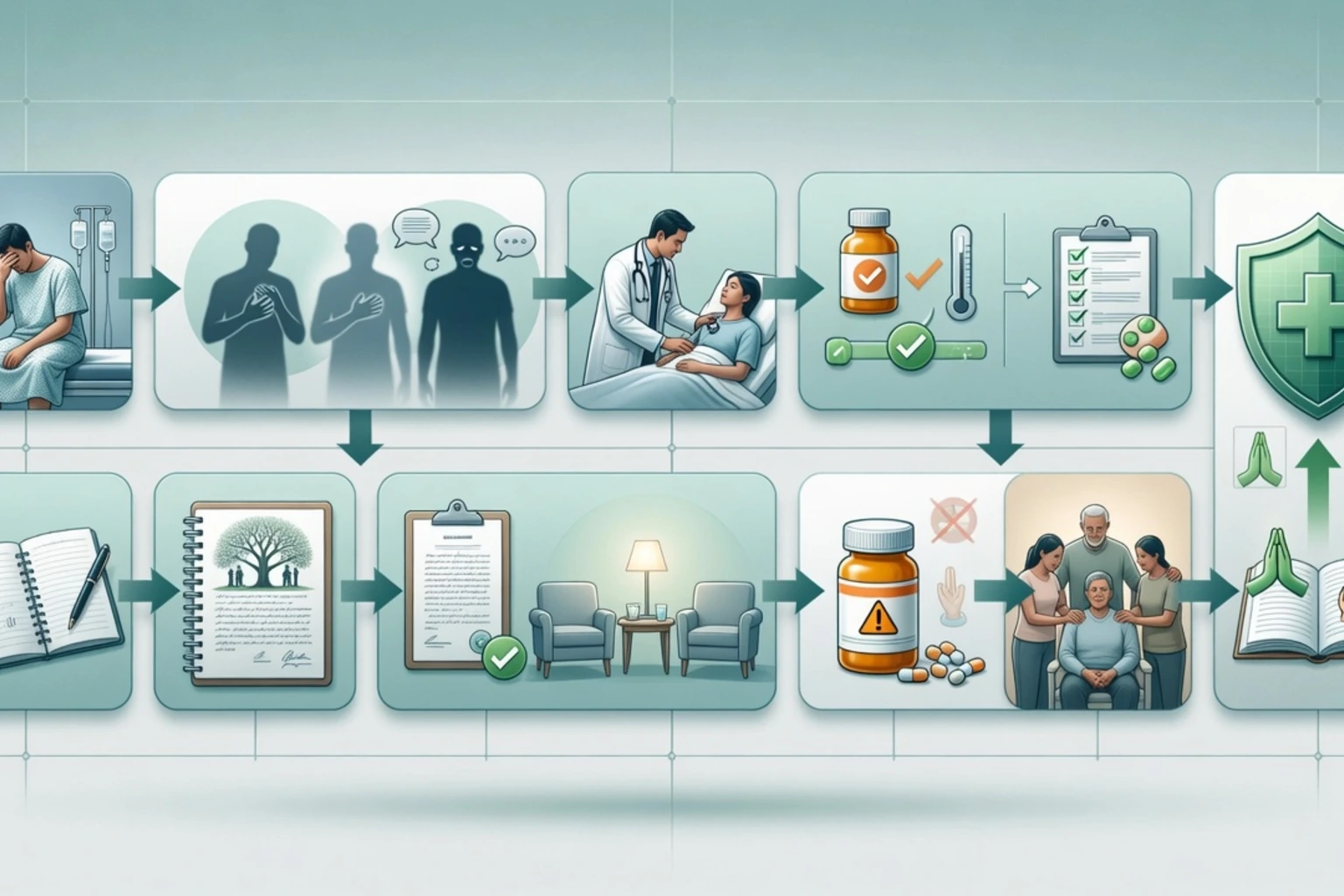
Validate distress without pathologising adaptive sadness. Optimise medical symptom control with the treating team. Restore small islands of agency (problem-solving one controllable domain). Engage family and spiritual care when culturally appropriate.[1][14][16]
Adjustment disorder therapies
Psychological interventions are first-line for adjustment disorder: problem-solving therapy, brief CBT, and structured supportive psychotherapy. Evidence syntheses support psychotherapy approaches while noting heterogeneity and the need for better trials; do not default to long-term antidepressants for pure AD without MDD.[13][15]
Demoralisation-focused named therapies
Dignity therapy creates a legacy document and can improve end-of-life experience and dignity-related outcomes in RCT evidence — examiners expect the name and the model.[9]
Meaning-centered psychotherapy (group and individual) improves spiritual well-being and meaning in advanced cancer trials.[10]
CALM (Managing Cancer and Living Meaningfully) is a brief manualised therapy for advanced cancer that reduces depressive symptoms and supports living with progressive illness in RCT evidence.[11]
Hope modules (Griffith) are brief psychotherapeutic interventions aimed at countering demoralisation from the daily stressors of chronic illness — useful named bedside skill set for C-L teaching.[16]
Antidepressants — when and how
Meta-analysis supports antidepressants for depression in palliative care versus placebo; cancer-specific Cochrane synthesis supports antidepressant treatment with usual caveats of trial quality. These data justify treating MDD in medical illness, not automatic AD for pure demoralisation.[12][18]
Practical fellowship starts (individualise for age, interactions, organ function, prognosis window) follow palliative and cancer depression evidence rather than demoralisation-only prescribing.[12][18]
| Agent | Typical start in medical illness | Monitoring notes |
|---|---|---|
| Sertraline | 25–50 mg oral daily; titrate toward response | Nausea, hyponatraemia, interactions |
| Escitalopram | 5–10 mg oral daily | Simpler kinetics; QTc caution at higher doses |
| Mirtazapine | 7.5–15 mg oral at night | Sleep/appetite may help; sedation |
| Trial logic | Reassess early (1–2 weeks) and at 4–6 weeks | If prognosis is days, prioritise non-drug care |
If only demoralisation/adjustment features are present without MDD, prioritise psychological and social interventions; reassess frequently because trajectories evolve.[1][12][15]
Special populations
Older adults: loneliness, frailty, polypharmacy, delirium risk, and higher hyponatraemia risk with SSRIs. AYA medical illness: identity and unfinished life tasks dominate. Perinatal medical illness: mother–infant dyad and partner demoralisation. Neurological progressive disease (MND, MS, Parkinson): high demoralisation and DHD vigilance. Intellectual disability: behaviour as distress signal; supported decision-making. Indigenous and CALD care: cultural meaning of illness, interpreters, family-centred decisions — no ethnocentric shortcuts on capacity.[5][7][14]
Evidence and regional notes
ANZ / FRANZCP. Clarke and Kissane demoralisation literature is high yield; C-L viva expects DS/DS-II awareness, dignity/meaning therapies, and MDD vs demoralisation discrimination. VAD-adjacent enquiries (where lawful) need capacity and treatable-driver assessment — jurisdiction-specific, no invented statutes.[1][2][4][9]
UK / MRCPsych. Adjustment disorder nosology (Casey/Bachem), CASC communication about medical-illness distress, and NICE-aligned themes for depression in chronic physical illness. Name therapies, not generic counselling only.[13][15]
US / ABPN. DHD literature (Breitbart), dignity therapy, MCP, CALM, and measurement scales; assisted-dying laws vary by jurisdiction.[8][9][10][11]
MD/DNB / NEET-SS. Expect viva on demoralisation vs depression, adjustment timing criteria, and when to start an antidepressant in medical illness.[1][12][13]
Landmark names: Clarke and Kissane (phenomenology; demoralisation syndrome), Kissane DS and Robinson DS-II, Bobevski Demoralisation Interview, Tecuta (characterisation review), Mitchell (prevalence), Breitbart (DHD; MCP), Chochinov (dignity therapy), Rodin (CALM), Griffith (hope modules), Rayner/Ostuzzi (antidepressants), Casey/Bachem/Strain (adjustment disorder).[1][3][4][7][8][9][11][12][14]
Prognosis and disposition
Many adjustment disorders improve as the person adapts and receives brief psychological care; persistent symptoms demand reformulation for evolving MDD, PTSD, grief disorder, or ongoing unmitigated stressor.[13][15] Demoralisation can lessen with restored agency and meaning-centred work even in progressive disease; comorbid MDD and high demoralisation scores worsen quality of life and elevate death-wish risk — treat both layers.[5][8][11]
Disposition: joint medical–psychiatry plan, intensity scaled to suicide/DHD risk, named psychological pathway, family education, spiritual care, and crisis contacts. Document diagnosis clearly so "adjustment" is not used as a discharge code that blocks follow-up.[14][15]
Exam pearls
DEMEAN (demoralisation bedside scaffold)
Fellowship viva one-liners: Demoralisation is subjective incompetence and meaning collapse, not a synonym for depression; Adjustment disorder has timing rules and is real C-L work (Strain); Name dignity therapy, MCP, and CALM; Antidepressants treat MDD in medical illness (Rayner) — they are not a demoralisation default.[1][9][11][12][14]
References
- [1]Clarke DM, Kissane DW Demoralization: its phenomenology and importance Aust N Z J Psychiatry, 2002.PMID 12406115
- [2]Kissane DW, Clarke DM, Street AF Demoralization syndrome--a relevant psychiatric diagnosis for palliative care J Palliat Care, 2001.PMID 11324179
- [3]Kissane DW, Wein S, Love A, et al. The Demoralization Scale: a report of its development and preliminary validation J Palliat Care, 2004.PMID 15690829
- [4]Robinson S, Kissane DW, Brooker J, et al. Refinement and revalidation of the demoralization scale: The DS-II-internal validity Cancer, 2016.PMID 27171617
- [5]Robinson S, Kissane DW, Brooker J, et al. A systematic review of the demoralization syndrome in individuals with progressive disease and cancer: a decade of research J Pain Symptom Manage, 2015.PMID 25131888
- [6]Tecuta L, Tomba E, Grandi S, Fava GA Demoralization: a systematic review on its clinical characterization Psychother Psychosom, 2015.PMID 25032712
- [7]Mitchell AJ, Chan M, Bhatti H, et al. Prevalence of depression, anxiety, and adjustment disorder in oncological, haematological, and palliative-care settings: a meta-analysis of 94 interview-based studies Lancet Oncol, 2011.PMID 21251875
- [8]Breitbart W, Rosenfeld B, Pessin H, et al. Depression, hopelessness, and desire for hastened death in terminally ill patients with cancer JAMA, 2000.PMID 11147988
- [9]Chochinov HM, Kristjanson LJ, Breitbart W, et al. Effect of dignity therapy on distress and end-of-life experience in terminally ill patients: a randomised controlled trial Lancet Oncol, 2011.PMID 21741309
- [10]Breitbart W, Rosenfeld B, Pessin H, et al. Meaning-centered group psychotherapy: an effective intervention for improving psychological well-being in patients with advanced cancer J Clin Oncol, 2015.PMID 25646186
- [11]Rodin G, Lo C, Rydall A, et al. Managing Cancer and Living Meaningfully (CALM): A Randomized Controlled Trial of a Psychological Intervention for Patients With Advanced Cancer J Clin Oncol, 2018.PMID 29958037
- [12]Rayner L, Price A, Evans A, et al. Antidepressants for the treatment of depression in palliative care: systematic review and meta-analysis Palliat Med, 2011.PMID 20935027
- [13]Bachem R, Casey P Adjustment disorder: A diagnosis whose time has come J Affect Disord, 2018.PMID 29107817
- [14]Strain JJ The Adjustment Disorder Diagnosis, Its Importance to Liaison Psychiatry, and its Psychobiology Int J Environ Res Public Health, 2019.PMID 31766628
- [15]Domhardt M, Baumeister H Psychotherapy of adjustment disorders: Current state and future directions World J Biol Psychiatry, 2018.PMID 30204563
- [16]Griffith JL Hope Modules: Brief Psychotherapeutic Interventions to Counter Demoralization from Daily Stressors of Chronic Illness Acad Psychiatry, 2018.PMID 28752229
- [17]Bobevski I, Kissane D, McKenzie D, et al. The Demoralization Interview: Reliability and validity of a new brief diagnostic measure among medically ill patients Gen Hosp Psychiatry, 2022.PMID 36274426
- [18]Ostuzzi G, Matcham F, Dauchy S, et al. Antidepressants for the treatment of depression in people with cancer Cochrane Database Syst Rev, 2018.PMID 29683474