Psych · Consultation-liaison psychiatry
Psycho-oncology
Also known as Cancer psychiatry · Psychosocial oncology · Oncology consultation-liaison · Distress in cancer · Depression in cancer
Exam-exhaustive fellowship topic on psycho-oncology for consultation-liaison psychiatry — distress screening, adjustment and demoralisation, major depression and collaborative care (SMaRT Oncology), delirium in cancer and palliative settings, corticosteroid neuropsychiatry, capacity and end-of-life assessment, suicide risk after diagnosis, SSRI–tamoxifen CYP2D6 interactions, and psychological therapies including meaning-centred psychotherapy. FRANZCP-primary, globally tagged.
On this page & tools
Your progress
Saved locally on this device.
Target exams
Red flags
Psycho-oncology is the consultation-liaison interface that examiners use to test medical psychiatry, risk, capacity, drug interactions, and team-based care. A candidate must not recite a generic depression lecture. They must run a cancer-specific differential, name landmark collaborative-care trials, and avoid classic traps (tamoxifen with paroxetine; neuroleptics as first-line for palliative delirium; calling everything "understandable").[5][6][13]
Overview and definition
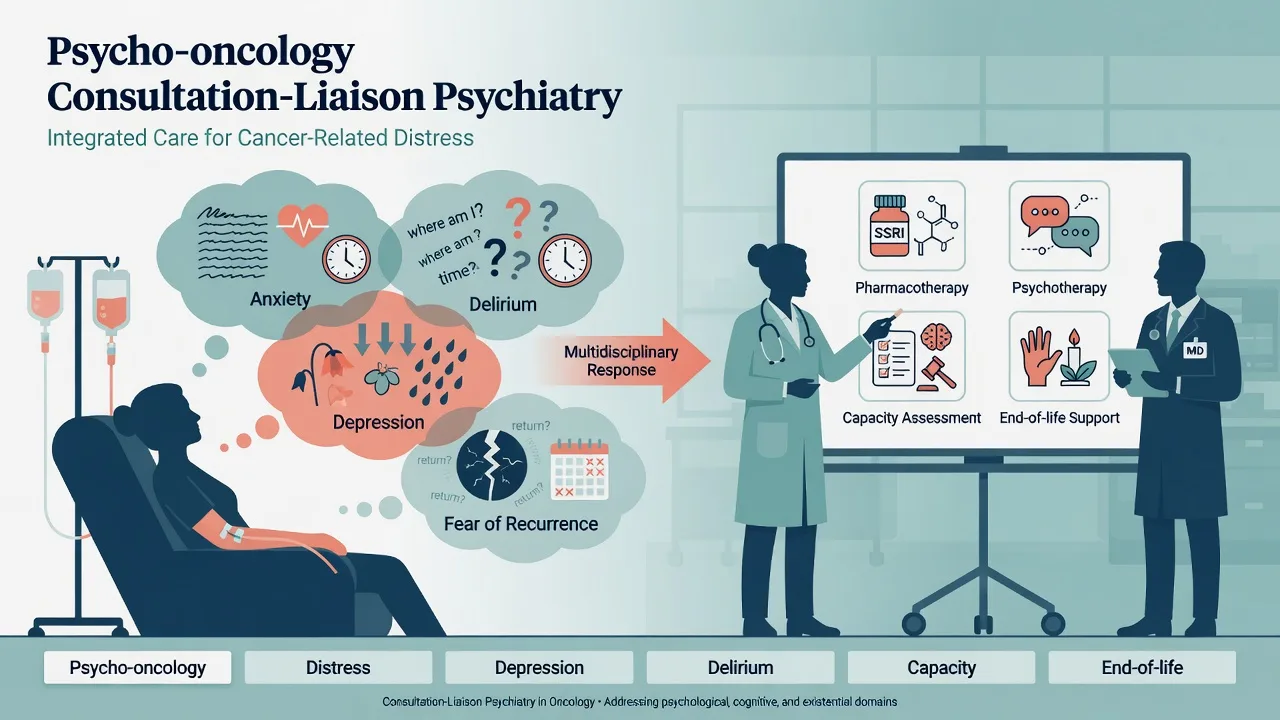
Psycho-oncology addresses psychological, social, behavioural, and psychiatric dimensions of cancer from diagnosis through treatment, survivorship, recurrence, and end of life. Psychiatry's role is detection of treatable syndromes, risk management, capacity, complex psychopharmacology in medically ill people, and liaison with oncology, palliative care, psychology, and social work.[10][13]
Distress (NCCN concept) is a multifactorial unpleasant emotional experience that may interfere with coping. It is a screening construct, not a DSM diagnosis. Elevated distress warrants assessment for adjustment disorder, depression, anxiety, delirium, substance problems, and practical needs.[10][11][21]
Classification and syndrome map
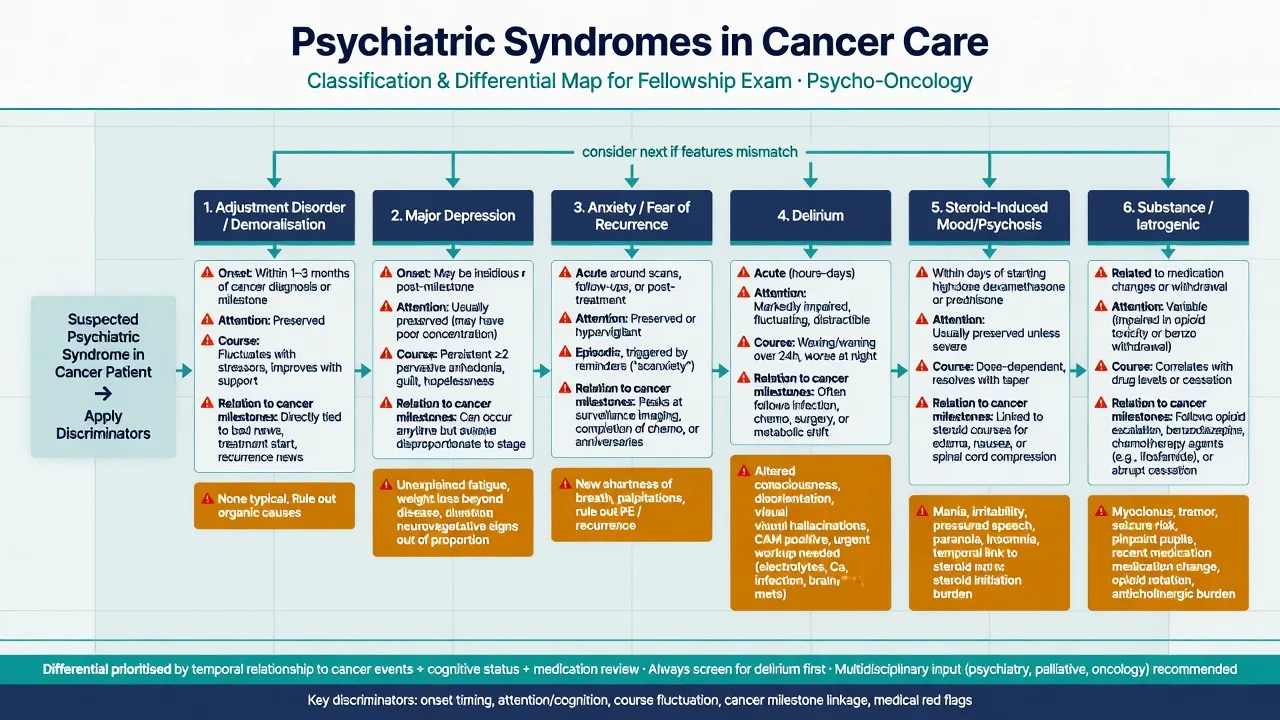
| Syndrome | Core features in cancer | Discriminators |
|---|---|---|
| Adjustment disorder | Emotional/behavioural symptoms within months of a stressor (diagnosis, recurrence, treatment burden), out of proportion or impairing | Still has capacity for pleasure in windows; less pervasive anhedonia/guilt than MDD; tracks milestones |
| Demoralisation | Subjective incompetence, pointlessness, helplessness, loss of meaning; may retain some mood reactivity | Meaning and coping collapse more than classic melancholic biology; may coexist with MDD |
| Major depression | Pervasive low mood/anhedonia, cognitive symptoms, functional collapse for ≥2 weeks | Do not rely only on fatigue/anorexia; weight affective, guilt, hopelessness, suicidal ideation |
| Anxiety / FCR | Worry, arousal, avoidance, scanning for recurrence | Spectrum from adaptive vigilance to impairing fear of cancer recurrence |
| Delirium | Acute fluctuating inattention and awareness | CAM-positive; medical cause; often hypoactive in palliative care |
| Steroid neuropsychiatry | Insomnia, irritability, euphoria/mania, depression, psychosis/delirium after corticosteroids | Temporal link to dose start/escalation; improves with reduction when safe |
DSM-5-TR and ICD-11 both allow mood and anxiety disorders in the context of medical illness; examiners care less about coding pedantry and more about not missing organic contributors and not under-treating MDD because "anyone would feel that way."[13]
Epidemiology and risk
Depression, anxiety, and adjustment disorders are highly prevalent in oncological, haematological, and palliative settings in interview-based meta-analysis.[1] Among people with cancer and major depression, treatment is frequently inadequate relative to need.[2] Long-term survivors still show elevated depression and anxiety signals versus healthy controls in pooled data.[24]
Suicide and cardiovascular death rise after cancer diagnosis, with a particularly important early window after diagnosis — examiners expect active enquiry, not reassurance alone.[7]
Pathophysiology and mechanisms
Cancer psychiatry is multifactorial: cytokine and inflammatory signalling, pain and sleep fragmentation, HPA-axis stress, CNS involvement, existential threat, social isolation, and treatment effects (corticosteroids, some systemic therapies, hormonal blockade, opioids, antiemetics).[12][13][16]
Corticosteroid neurotoxicity is dose- and duration-associated and ranges from mild insomnia/irritability to mania, depression, delirium, and psychosis. Onset is often hours to days after initiation or escalation. Older adults, high doses, and concurrent medical insults increase risk.[12][16][17]
Tamoxifen is converted via CYP2D6 to active endoxifen. Strong CYP2D6-inhibiting SSRIs (notably paroxetine and fluoxetine) associate with reduced benefit signals in observational data (Kelly cohort on breast cancer mortality among tamoxifen users).[5]
Clinical presentation
Tempo. Link symptoms to cancer milestones: new diagnosis, start of chemotherapy/radiotherapy, scan anxiety, recurrence, transition to palliative intent, bereavement of health identity, and survivorship.[10][13]
Somatic overlap. Fatigue, anorexia, sleep change, and concentration problems occur in cancer and in depression. Lean on anhedonia, pervasive hopelessness, worthlessness/guilt out of proportion, suicidal ideation, and diurnal mood variation, plus collateral functional collapse.[13][25]
Demoralisation. Patients describe pointlessness, feeling trapped, and subjective incompetence rather than classic melancholia alone — clinically important for therapy choice (meaning-centred approaches).[8][9]
Delirium. Hypoactive presentations are common and mislabelled as depression or "terminal decline." Test attention; use CAM logic.[6][23]
Differential diagnosis — discriminators
- Pervasive anhedonia/hopelessness
- ≥2 weeks
- Suicidal ideation not rare
- Needs active treatment pathway
- May need antidepressant + collaborative care
- Tied to stressor/meaning collapse
- Some reactivity possible
- Practical + psychological first line
- Watch for evolution into MDD
- Meaning-centred work often fits
- Acute fluctuating inattention
- Altered awareness
- Medical precipitants
- Capacity often impaired
- Fix causes; drugs secondary
Always consider hypercalcaemia, hyponatraemia, hypoxia, infection, CNS progression, hepatic encephalopathy, opioid toxicity, alcohol/BZD withdrawal, hypothyroidism, B12 deficiency, and steroid effects before locking a primary psychiatric label.[12][13][16]
Assessment
- Cancer context: stage, intent of treatment, recent scans, steroids (drug, dose, timing), pain score, sleep, nausea.
- Psychiatric history: prior MDD/bipolar/psychosis, self-harm, substance use, personality vulnerabilities.
- MSE: affect, anhedonia, hopelessness, psychosis, attention tests if any confusion, insight.
- Risk: suicide (passive wish to die vs plan/intent/means), neglect, family violence/vulnerability. Fang data justify early post-diagnosis vigilance.[7]
- Capacity: decision-specific for chemotherapy consent/refusal, hospice transition, discharge against advice.
- Screening tools: Distress Thermometer (0–10 plus problem list) with local cut-points triggering further assessment; PHQ-9 for depression severity tracking; CAM when delirium suspected.[10][11][21][23]
Investigations
Directed, not shotgun: vitals, glucose, FBC, U&E, calcium, LFTs, CRP as indicated, TSH/B12 when mood or cognitive change unexplained, infection work-up, and imaging if focal neurology or suspected CNS disease. ECG when starting agents with QTc risk or when on concurrent ondansetron/methadone/antipsychotics. Medication reconciliation is part of the "investigation."[13][16]
Acute management and red flags
For severe distress with danger (violence, line-pulling, acute psychosis): environmental safety, 1:1 observation if needed, treat pain and metabolic insults, and only then consider short-term low-dose antipsychotic while reassessing daily. For alcohol/BZD withdrawal, use benzodiazepine pathways plus thiamine — not antipsychotic monotherapy.[12][16]
Active suicidality requires a safety plan, means restriction, urgent psychiatry review, and use of local mental health legislation only when criteria are met — statutes are jurisdiction-specific.[7][13]
Definitive management
Stepped psychosocial care
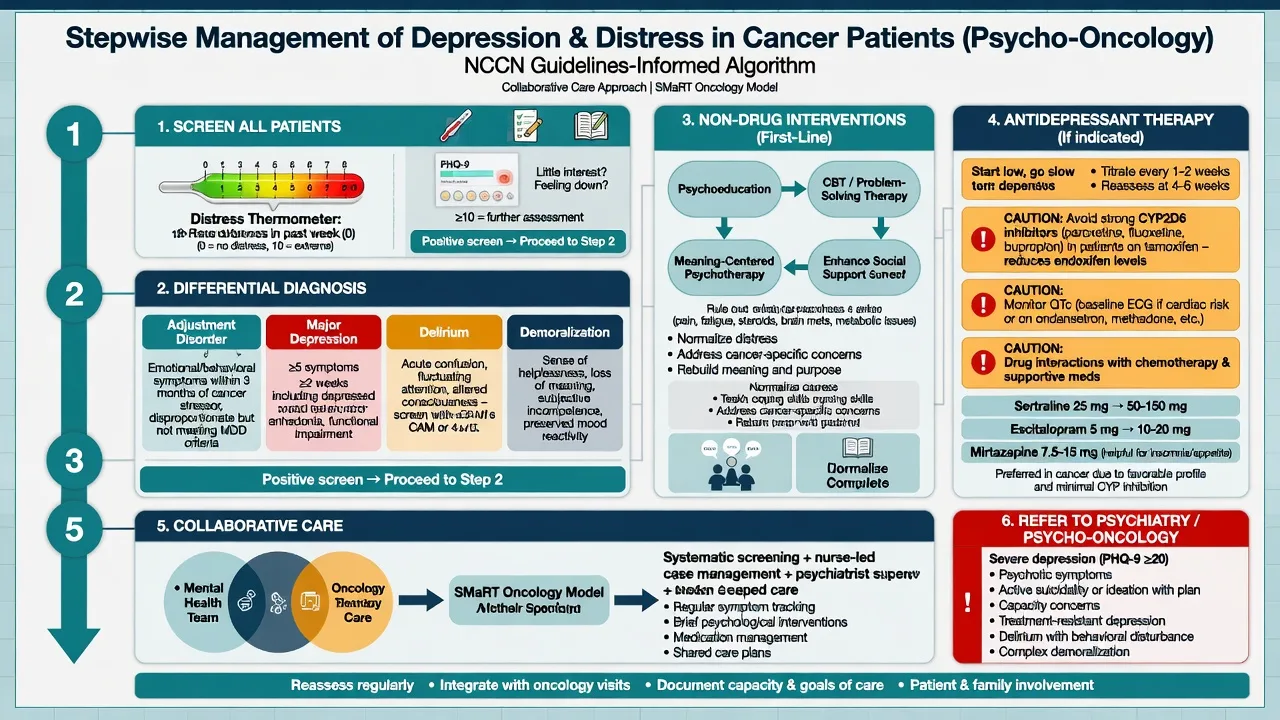
Integrate routine distress screening into oncology pathways and step up from psychoeducation and practical support to structured psychological therapies and specialist psychiatry.[10][11]
Psychological interventions with exam currency include CBT/problem-solving for depression and anxiety, supportive counselling, and meaning-centred psychotherapy (individual and group forms) for advanced cancer existential distress and demoralisation-adjacent presentations.[19][20][13]
Early palliative care alongside standard oncology care in metastatic non-small-cell lung cancer improved quality of life and mood outcomes in Temel's trial — use this as the model for concurrent supportive care rather than late "terminal only" referral.[18]
Collaborative care for major depression — SMaRT Oncology
SMaRT Oncology-2 showed that integrated collaborative care (systematic identification, depression care manager, psychiatrist supervision, algorithm-based treatment including antidepressants and psychological strategies) substantially improved depression outcomes versus usual care in patients with cancer and major depression.[3]
SMaRT Oncology-3 extended the model to people with lung cancer and poor prognosis, again showing benefit for depression outcomes.[4]
Long-term follow-up did not demonstrate that treating depression improved survival — treat for suffering, function, and adherence, not as proven life-prolonging oncology therapy.[22]
Antidepressants
Cochrane synthesis supports antidepressants for depression in people with cancer, with the usual caveats of trial quality and heterogeneity; palliative-care meta-analysis also supports benefit versus placebo for depressive symptoms.[14][15][25]
Practical fellowship dosing anchors (individualise; start low in frail/older adults; check interactions) drawn from antidepressant trial syntheses and interaction data:[5][14][15]
| Agent | Typical start (adult) | Notes in cancer |
|---|---|---|
| Sertraline | 25–50 mg oral daily; titrate toward 50–150 mg | Often preferred; relatively favourable interaction profile |
| Escitalopram | 5–10 mg oral daily; usual 10–20 mg | Watch QTc at higher doses; simpler kinetics |
| Mirtazapine | 7.5–15 mg oral at night initially | Sleep and appetite may help; sedation |
| Avoid with tamoxifen | Paroxetine, fluoxetine (strong CYP2D6 inhibitors) | Kelly observational mortality signal in tamoxifen users |
Monitor response every 1–2 weeks early, review adherence, nausea overlap with chemotherapy, hyponatraemia risk (SSRIs), bleeding risk with antiplatelet/anticoagulant co-therapy, and sexual side effects. Do not abandon an adequate trial too early without reviewing dose, adherence, and residual medical drivers.[13][14]
SSRI–tamoxifen interaction
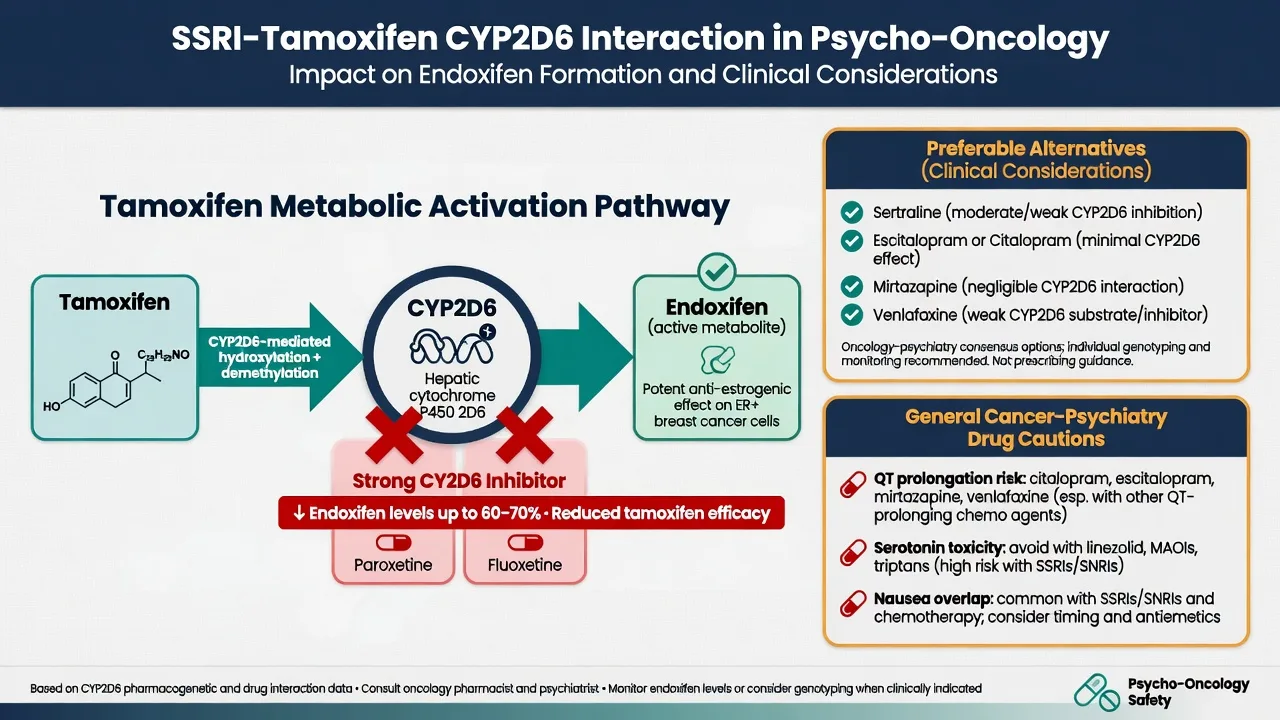
Kelly and colleagues found higher breast cancer mortality among women on tamoxifen who received the strong CYP2D6-inhibiting antidepressant paroxetine; this is the board-favourite interaction stem. Prefer agents with weaker CYP2D6 inhibition when clinically appropriate, and coordinate with oncology.[5]
Steroid-induced psychiatric syndromes
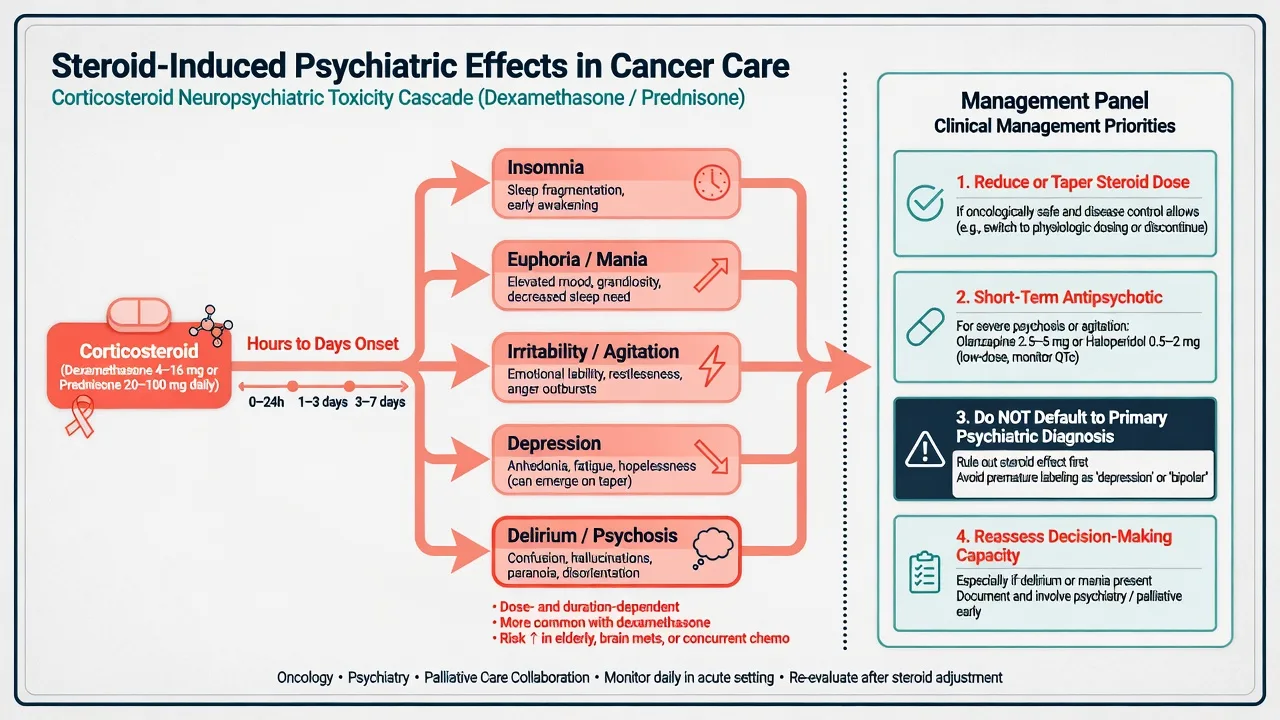
Management hierarchy: (1) confirm temporal link and exclude other organic causes; (2) reduce or taper corticosteroids if disease control allows (liaise with oncology/neurosurgery); (3) environmental support and sleep protection; (4) short-term antipsychotic for severe psychosis, mania with risk, or dangerous agitation — low dose, daily review; (5) reassess capacity during acute phases; (6) avoid prematurely diagnosing lifelong bipolar disorder after a single steroid episode without longitudinal evidence.[12][16][17]
Example cautious acute dosing ranges used in CL practice for severe behavioural disturbance (not a substitute for local formulary): olanzapine 2.5–5 mg oral (or appropriate parenteral pathway if needed) or haloperidol 0.5–2 mg with ECG/EPS monitoring, short duration, stop early when the steroid driver is addressed.[16][17]
Delirium in cancer and palliative care
Use CAM: acute/fluctuating course + inattention + (disorganised thinking or altered consciousness).[23] Reverse infection, metabolic failure, CNS disease, constipation/retention, and deliriogenic drugs. Multicomponent non-pharmacological care remains first-line.
Agar 2017: in palliative-care patients with delirium symptoms, risperidone and haloperidol were associated with worse symptom scores than placebo and more extrapyramidal effects — a high-yield exam result that kills the "routine neuroleptic for terminal confusion" reflex. Reserve antipsychotics for severe distress or danger after non-drug measures, and reassess goals of care.[6]
Capacity, end of life, and desire for hastened death
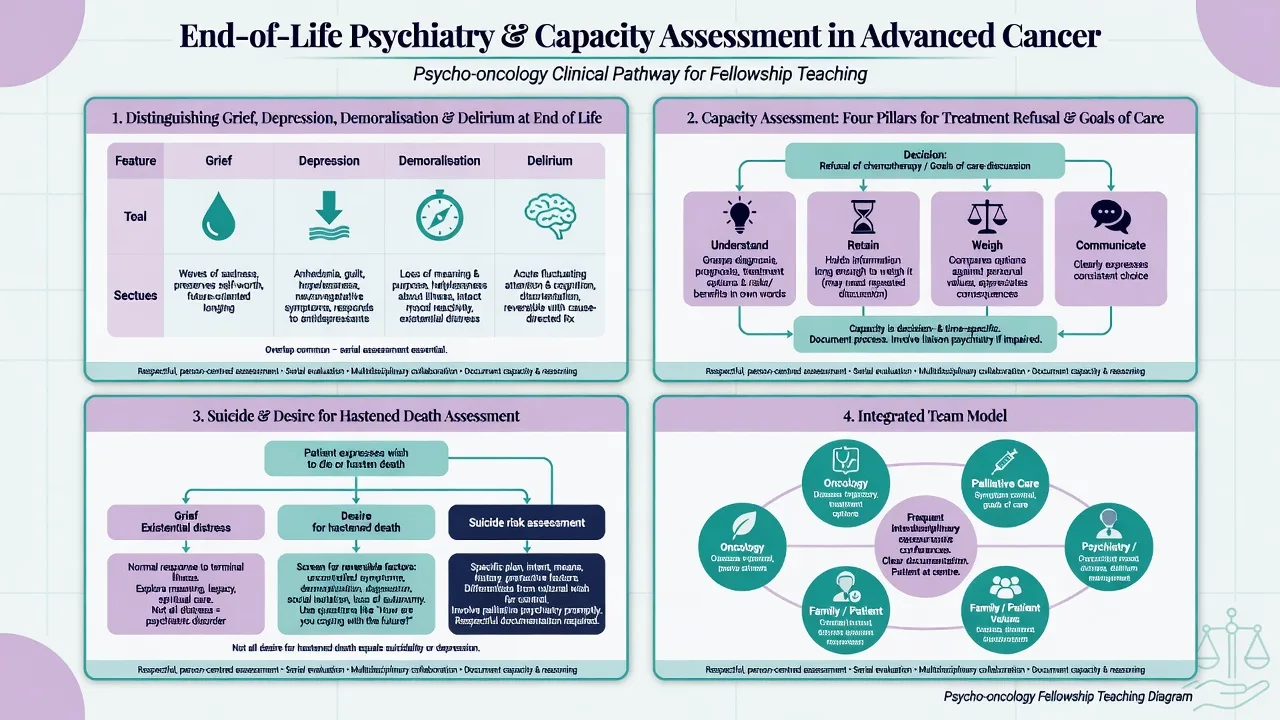
Capacity is decision-specific and time-specific: understand information, retain it long enough, weigh options, and communicate a choice. Delirium, severe depression with nihilistic distortion, mania, and steroid psychosis commonly impair capacity for complex oncology decisions — document findings, treat reversible factors, reassess in a lucid window when possible, and use substitute decision-making under local law (do not invent foreign section numbers).[13][16]
Desire for hastened death is multifactorial. Always screen for depression, demoralisation, uncontrolled symptoms, and delirium before accepting it as a purely settled philosophical stance. Legal frameworks for voluntary assisted dying (where present) are jurisdiction-specific; psychiatry's job is assessment of treatable mental illness, capacity, coercion, and symptom burden — not moral grandstanding.[8][9][13]
Special populations
Older adults carry higher delirium risk and need lower starting psychotropic doses with polypharmacy review. AYA presentations emphasise identity, fertility, education/work disruption, and body image. Survivors often struggle with fear of recurrence and late treatment effects. Cultural diversity requires family-centred decision-making, interpreters, and spiritual care without ethnocentric capacity shortcuts. These issues sit on the evidence base of elevated mood/anxiety burden in survivors and medical complexity in older adults with cancer.[13][24]
Evidence and regional notes
ANZ / FRANZCP. CL psychiatry frameworks emphasise integrated care, capacity under state/territory legislation, and liaison with oncology and palliative care. Cite SMaRT collaborative care and Agar humility on antipsychotics in exams.[3][6]
UK / MRCPsych. NICE supportive and palliative care themes align with systematic psychosocial needs assessment; CASC stations often test breaking bad news sequelae and depression in medical illness.[13][25]
US / ABPN. NCCN distress management language is expected; collaborative care and tamoxifen interaction are high yield.[5][10][11]
MD/DNB / NEET-SS. Expect viva on demoralisation vs depression, steroid psychosis, and delirium discriminators.[8][12][23]
Landmark names to drop cleanly: Mitchell (prevalence), Walker/Sharpe SMaRT, Kelly (tamoxifen–SSRI), Agar (palliative delirium), Fang (suicide after diagnosis), Temel (early palliative care), Breitbart (meaning-centred psychotherapy), Holland/NCCN (distress).[1][3][5][6][7][18][19][10]
Prognosis and disposition
Depression frequently improves with collaborative care; survival benefit from depression treatment was not shown in SMaRT long-term follow-up — still treat vigorously for quality of life.[3][22] Steroid syndromes often improve with dose reduction.[12] Delirium outcomes track cause reversal and baseline vulnerability.[6][23]
Disposition plans should name follow-up (CL psychiatry/psychology), crisis contacts, oncology review timing, palliative care involvement when appropriate, and family education about delirium and depression as medical issues.[3][6][13][18]
Exam pearls
CANCER-CL (assessment scaffold)
Fellowship viva one-liners: Distress Thermometer screens, diagnoses do not; SMaRT is a care system, not a pill; Agar undercuts routine neuroleptics in dying patients with delirium; Kelly undercuts strong CYP2D6 inhibitors with tamoxifen.[3][5][6][21]
References
- [1]Mitchell AJ, Chan M, Bhatti H, et al. Prevalence of depression, anxiety, and adjustment disorder in oncological, haematological, and palliative-care settings: a meta-analysis of 94 interview-based studies Lancet Oncol, 2011.PMID 21251875
- [2]Walker J, Hansen CH, Martin P, et al. Prevalence, associations, and adequacy of treatment of major depression in patients with cancer: a cross-sectional analysis of routinely collected clinical data Lancet Psychiatry, 2014.PMID 26360998
- [3]Sharpe M, Walker J, Holm Hansen C, et al. Integrated collaborative care for comorbid major depression in patients with cancer (SMaRT Oncology-2): a multicentre randomised controlled effectiveness trial Lancet, 2014.PMID 25175478
- [4]Walker J, Hansen CH, Martin P, et al. Integrated collaborative care for major depression comorbid with a poor prognosis cancer (SMaRT Oncology-3): a multicentre randomised controlled trial in patients with lung cancer Lancet Oncol, 2014.PMID 25175097
- [5]Kelly CM, Juurlink DN, Gomes T, et al. Selective serotonin reuptake inhibitors and breast cancer mortality in women receiving tamoxifen: a population based cohort study BMJ, 2010.PMID 20142325
- [6]Agar MR, Lawlor PG, Quinn S, et al. Efficacy of Oral Risperidone, Haloperidol, or Placebo for Symptoms of Delirium Among Patients in Palliative Care: A Randomized Clinical Trial JAMA Intern Med, 2017.PMID 27918778
- [7]Fang F, Fall K, Mittleman MA, et al. Suicide and cardiovascular death after a cancer diagnosis N Engl J Med, 2012.PMID 22475594
- [8]Clarke DM, Kissane DW Demoralization: its phenomenology and importance Aust N Z J Psychiatry, 2002.PMID 12406115
- [9]Robinson S, Kissane DW, Brooker J, et al. A systematic review of the demoralization syndrome in individuals with progressive disease and cancer: a decade of research J Pain Symptom Manage, 2015.PMID 25131888
- [10]Holland JC Distress screening and the integration of psychosocial care into routine oncologic care J Natl Compr Canc Netw, 2013.PMID 23704244
- [11]Holland JC, Andersen B, Breitbart WS, et al. Distress management J Natl Compr Canc Netw, 2013.PMID 23411386
- [12]Warrington TP, Bostwick JM Psychiatric adverse effects of corticosteroids Mayo Clin Proc, 2006.PMID 17036562
- [13]Pitman A, Suleman S, Hyde N, et al. Depression and anxiety in patients with cancer BMJ, 2018.PMID 29695476
- [14]Ostuzzi G, Matcham F, Dauchy S, et al. Antidepressants for the treatment of depression in people with cancer Cochrane Database Syst Rev, 2018.PMID 29683474
- [15]Rayner L, Price A, Evans A, et al. Antidepressants for the treatment of depression in palliative care: systematic review and meta-analysis Palliat Med, 2011.PMID 20935027
- [16]Dubovsky AN, Arvikar S, Stern TA, et al. The neuropsychiatric complications of glucocorticoid use: steroid psychosis revisited Psychosomatics, 2012.PMID 22424158
- [17]Ismail MF, Lavelle C, Cassidy EM Steroid-induced mental disorders in cancer patients: a systematic review Future Oncol, 2017.PMID 29186986
- [18]Temel JS, Greer JA, Muzikansky A, et al. Early palliative care for patients with metastatic non-small-cell lung cancer N Engl J Med, 2010.PMID 20818875
- [19]Breitbart W, Rosenfeld B, Pessin H, et al. Meaning-centered group psychotherapy: an effective intervention for improving psychological well-being in patients with advanced cancer J Clin Oncol, 2015.PMID 25646186
- [20]Breitbart W, Poppito S, Rosenfeld B, et al. Pilot randomized controlled trial of individual meaning-centered psychotherapy for patients with advanced cancer J Clin Oncol, 2012.PMID 22370330
- [21]Donovan KA, Grassi L, McGinty HL, et al. Validation of the distress thermometer worldwide: state of the science Psychooncology, 2014.PMID 25160838
- [22]Mulick A, Walker J, Puntis S, et al. Does depression treatment improve the survival of depressed patients with cancer? A long-term follow-up of participants in the SMaRT Oncology-2 and 3 trials Lancet Psychiatry, 2018.PMID 29544711
- [23]Inouye SK, van Dyck CH, Alessi CA, et al. Clarifying confusion: the confusion assessment method. A new method for detection of delirium Ann Intern Med, 1990.PMID 2240918
- [24]Mitchell AJ, Ferguson DW, Gill J, et al. Depression and anxiety in long-term cancer survivors compared with spouses and healthy controls: a systematic review and meta-analysis Lancet Oncol, 2013.PMID 23759376
- [25]Rayner L, Price A, Hotopf M, et al. The development of evidence-based European guidelines on the management of depression in palliative cancer care Eur J Cancer, 2011.PMID 21211961