Psych · Foundations — basic neuroscience for psychiatry
Basic neuroscience for psychiatry
Also known as Psychiatric neuroscience · Biological psychiatry foundations · Neurobiology for psychiatrists · Brain networks psychiatry · Synaptic plasticity psychiatry · RDoC neuroscience · Neuroimaging for psychiatrists
Exam-exhaustive fellowship foundation on basic neuroscience for psychiatry: neuron and synapse, transmitter systems, LTP/LTD plasticity, large-scale networks (DMN, salience, frontoparietal), methods (MRI/fMRI, EEG, PET occupancy, lesions), and translation to clinical syndromes without chemical-imbalance oversimplification. FRANZCP-primary, globally tagged.
On this page & tools
Your progress
Saved locally on this device.
10 MCQs with explanations
Target exams
Red flags
Overview and definition
Basic neuroscience for psychiatry is the shared language that links cell biology, circuit function, and clinical syndromes. Fellowship exams (FRANZCP theory and clinical reasoning; MRCPsych Paper A/B; ABPN blueprint neuroscience; MD/DNB viva) expect you to move fluently across levels of explanation without collapsing everything into a single "chemical imbalance." [6][17]
| Level | Examples | Exam use |
|---|---|---|
| Molecule / receptor | D2, 5-HT transporters, NMDA, GABA-A | Drug class matching |
| Synapse / plasticity | LTP, LTD, AMPA trafficking | Learning, trauma, antidepressant latency |
| Pathway | Mesolimbic DA, monoamine projections | Side-effect and efficacy maps |
| Large-scale network | DMN, salience, frontoparietal | Cognition, rumination, psychosis models |
| Behaviour / syndrome | Delusions, anhedonia, panic | Formulation and MSE translation |
| Scaffold for multilevel viva answers. [6][17] |
Multilevel explanation is the exam discipline: molecular and circuit language must still terminate in clinical syndromes and formulation, not free-floating neuro-jargon. [6][17]
What this topic is for. To answer mechanism questions, justify investigations, and avoid reverse-inference and localisation myths. What it is not. A substitute for descriptive psychopathology, risk assessment, psychotherapy, or jurisdiction-specific mental health law. [17]
Classification frameworks: diagnoses vs systems
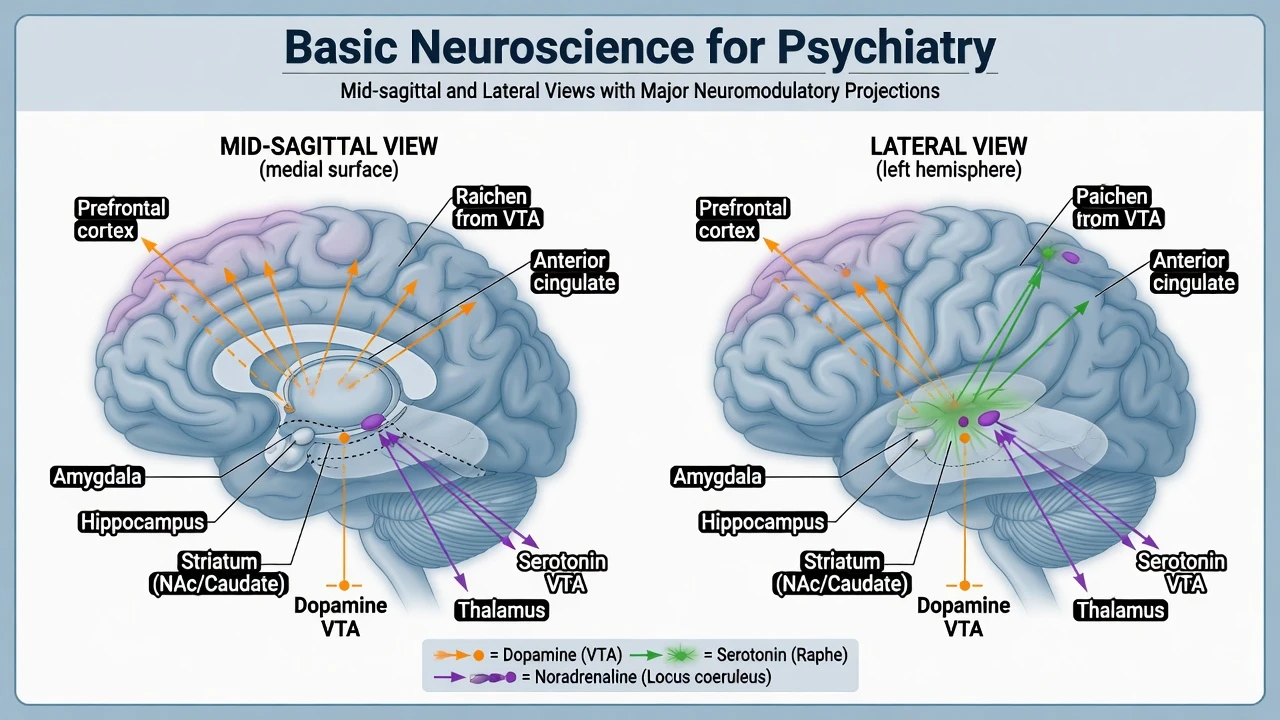
Clinical psychiatry still uses DSM-5-TR / ICD-11 categorical syndromes for communication, coding, and trial eligibility. Parallel research frameworks such as RDoC organise constructs by domain (negative valence, positive valence, cognitive systems, social processes, arousal/regulatory systems) across units of analysis from genes to circuits to self-report. [17]
Neuron, synapse, and plasticity
Neuron essentials
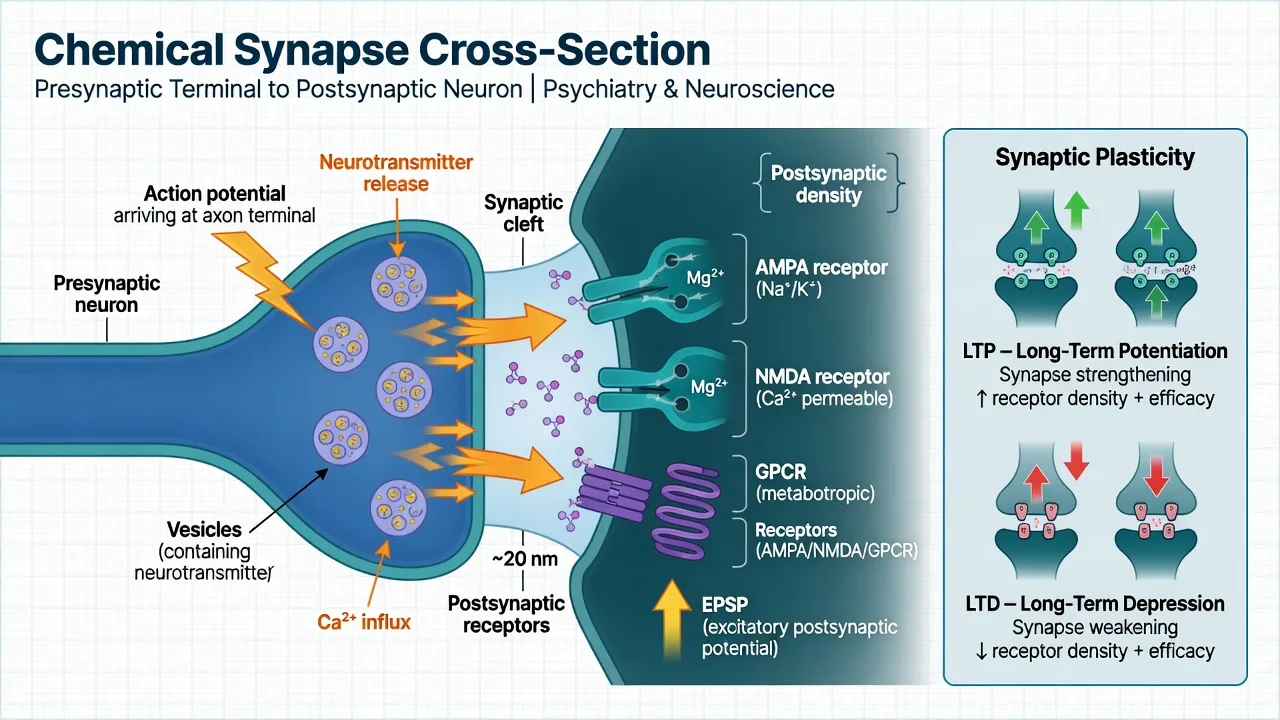
The neuron is a specialised cell that integrates dendritic input and, if threshold is reached, fires an action potential along the axon. Most central synapses of psychiatric relevance are chemical: depolarisation opens voltage-gated calcium channels, vesicles fuse, transmitter crosses the cleft, and postsynaptic ionotropic (fast ion channels: AMPA, NMDA, GABA-A, nicotinic) or metabotropic (G-protein coupled: monoamine receptors, mGluRs, muscarinic) receptors transform the signal into excitation, inhibition, or slower intracellular cascades. [2]
| Transmitter class | Core roles examiners expect | Receptor flavour |
|---|---|---|
| Glutamate | Principal CNS excitation; learning; psychosis models | AMPA, NMDA, kainate; mGluR |
| GABA | Principal CNS inhibition; anxiolysis; seizure control | GABA-A (ionotropic), GABA-B |
| Dopamine | Salience, reward, motor, prolactin | D1-like, D2-like |
| Serotonin | Mood, anxiety, sleep, gut, platelets | Many 5-HT subtypes |
| Noradrenaline | Arousal, attention, stress | Alpha, beta adrenergic |
| Acetylcholine | Attention, memory, autonomic | Nicotinic, muscarinic |
| Transmitter map for psychopharmacology. [4][6] |
These transmitter classes are the backbone of psychopharmacology mapping in fellowship exams (efficacy targets and adverse-effect logic). [4][6]
Long-term potentiation and depression
Long-term potentiation (LTP) is a lasting increase in synaptic strength after high-frequency or associative co-activation of pre- and postsynaptic neurons — classically demonstrated at the perforant path–dentate synapse. [1] Long-term depression (LTD) is lasting weakening. Together they form a cellular substrate for learning and adaptive (or maladaptive) memory. [2]
NMDA receptors act as coincidence detectors: glutamate binding plus postsynaptic depolarisation relieves the magnesium block, calcium enters, kinases such as CaMKII are engaged, and AMPA receptor trafficking can strengthen the synapse. [2]
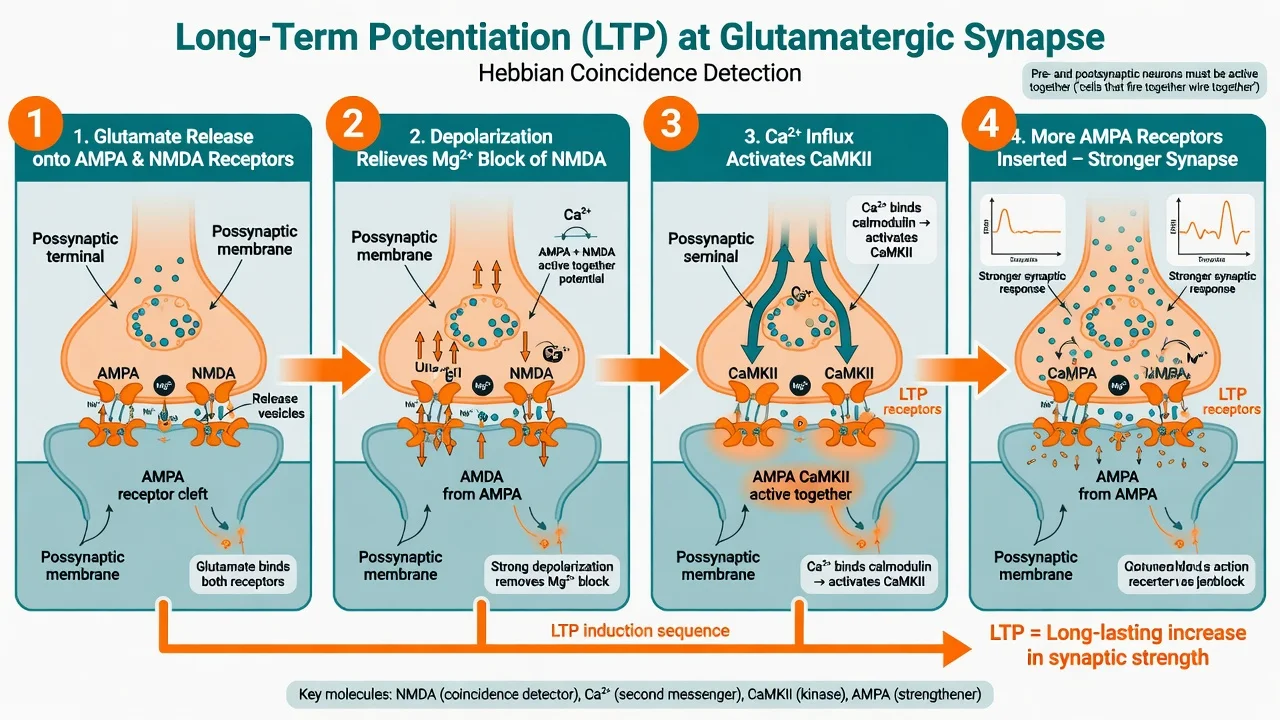
Clinical translation of plasticity (viva depth, not hype). Fear conditioning and extinction are learning phenomena; exposure therapies exploit extinction learning. Delayed onset of many antidepressants has been linked to slower adaptive changes including neurotrophic and plasticity cascades, not only immediate synaptic monoamine rises. [6][7][8] Hippocampal lesion science (patient H.M.) showed that bilateral medial temporal damage devastates new declarative memory while sparing much procedural skill — the classic lesion-method teaching case. [3]
Dopamine pathways and psychosis models
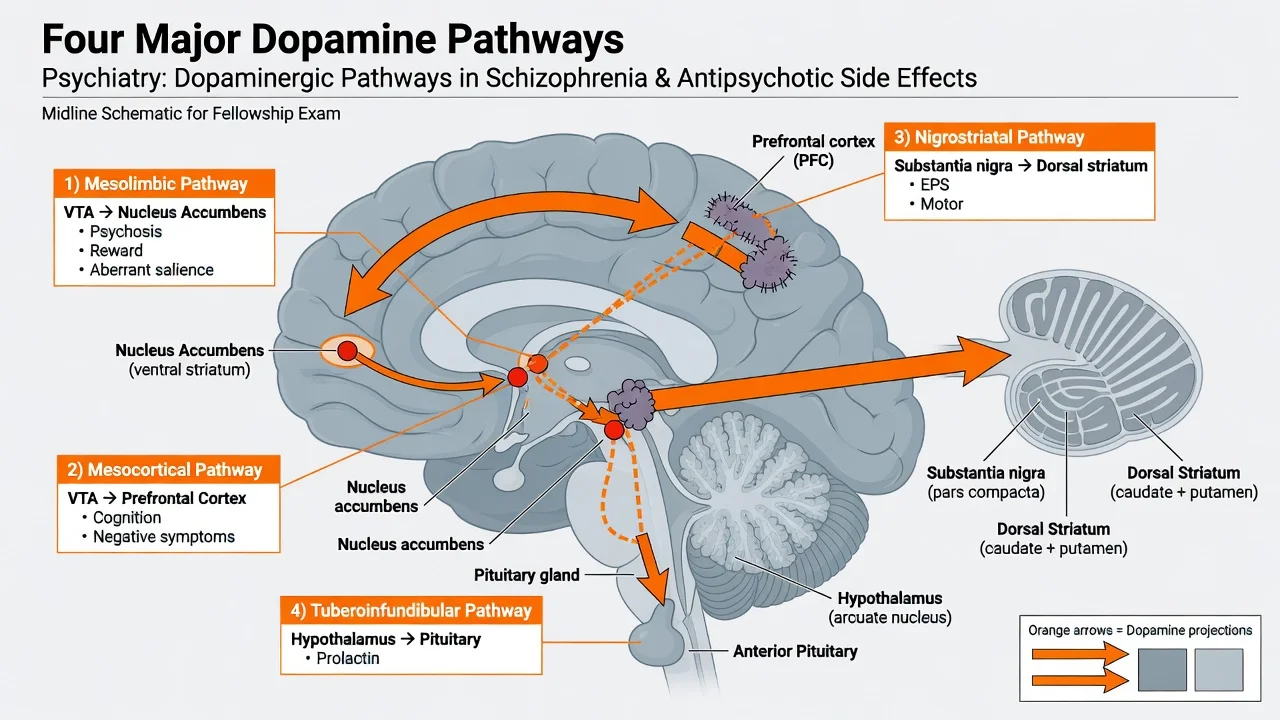
Four pathways (high-yield map)
- Mesolimbic (VTA → ventral striatum / nucleus accumbens) — reward, motivational salience; target of positive-symptom models.
- Mesocortical (VTA → prefrontal cortex) — executive function and negative/cognitive symptom models.
- Nigrostriatal (substantia nigra → dorsal striatum) — motor control; EPS with D2 blockade.
- Tuberoinfundibular (hypothalamus → pituitary) — prolactin inhibition; hyperprolactinaemia with D2 blockade. [4]
This four-pathway map is the standard scaffold linking antipsychotic D2 occupancy to efficacy and adverse effects. [4]
Dopamine hypothesis version III
Howes and Kapur synthesise multiple upstream risks into a final common pathway: striatal dopamine dysregulation producing aberrant salience assignment to irrelevant stimuli — a narrative that links neurochemistry to delusion formation and explains why D2 antagonists can reduce positive symptoms across different aetiologies. [4] Imaging work supports increased baseline D2 receptor occupancy by dopamine in schizophrenia samples relative to controls, consistent with excess dopaminergic tone rather than a simple postsynaptic receptor excess alone. [5]
Exam discipline. Version III is a model, not a universal blood test. Negative and cognitive symptoms are poorly explained by pure D2 antagonism; glutamate/NMDA hypofunction models (informed by ketamine psychotomimesis) complement dopamine accounts. [4][11]
Mood, stress, and neurotrophic models
Simple monoamine deficiency is incomplete. Nestler and colleagues frame depression as multilevel circuit and molecular dysfunction (reward pathways, stress systems, intracellular cascades), not a single missing neurotransmitter litre. [6] Duman and Monteggia articulate a neurotrophic stress model in which chronic stress reduces BDNF and adaptive plasticity in hippocampus and related circuits, with antidepressants gradually reversing these processes. [7] Animal evidence that hippocampal neurogenesis contributes to some behavioural antidepressant effects informed latency theories, with important species and translation caveats. [8]
Circuit imaging anchors. Subgenual prefrontal (subgenual ACC / BA25-related) abnormalities are repeatedly implicated in mood disorders. [12] Experimental deep brain stimulation of the subcallosal cingulate region in highly treatment-resistant depression demonstrated that circuit-level intervention can modulate depressive states in research settings — mechanism proof more than routine care. [13]
Ketamine as a teaching bridge. Subanesthetic ketamine produces psychotomimetic and cognitive effects supporting NMDA models of psychosis. [11] The same drug class, in different clinical contexts, showed rapid antidepressant effects in depressed and treatment-resistant samples — forcing candidates to separate dose, setting, indication, and monitoring from simplistic "ketamine always bad/good" answers. [9][10]
Large-scale networks
Task-negative, intrinsically active systems form a default mode of brain function when people are not focused on external tasks. [14] Menon's triple-network model organises much of modern psychopathology teaching:
| Network | Core nodes (simplified) | Psychiatric mapping |
|---|---|---|
| Default mode (DMN) | mPFC, PCC/precuneus, angular gyrus | Self-referential thought, rumination |
| Salience | Anterior insula, dACC | Switching; aberrant salience themes |
| Frontoparietal / CEN | DLPFC, posterior parietal | Working memory, cognitive control |
| Triple-network teaching map. [14][15] |
The triple-network anatomy above is a teaching simplification of intrinsically coupled systems, not a radiology report template. [14][15]
Aberrant interactions among these networks are proposed to contribute to psychosis, mood disorders, and cognitive control failures — again as models and group findings, not single-patient diagnostics. [15]
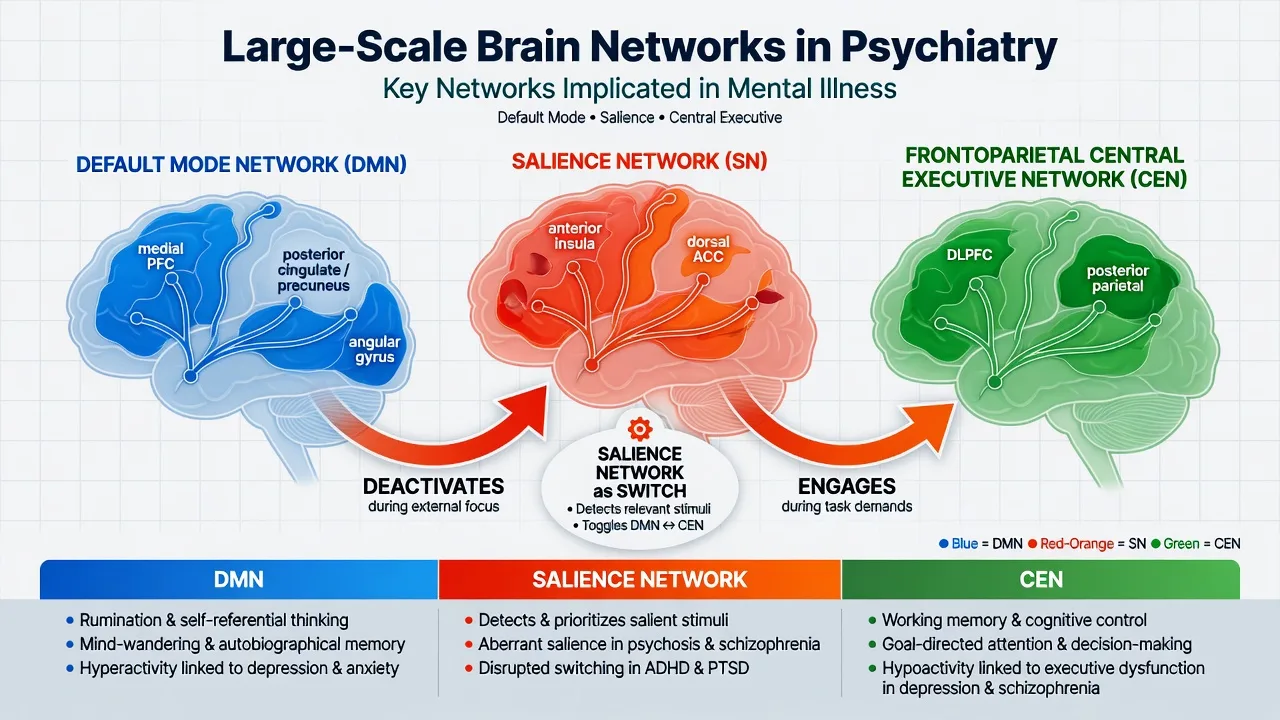
DMN
- Internally directed cognition
- mPFC–PCC core
- Rumination / self-focus themes in depression models
- Disrupted in several major psychiatric syndromes at group level
Salience
- Anterior insula–dACC
- Detects behaviourally relevant stimuli
- Proposed switch between DMN and CEN
- Links conceptually to aberrant salience in psychosis
Frontoparietal / CEN
- Goal-directed control
- DLPFC and parietal nodes
- Working memory and flexible attention
- Deficit themes in schizophrenia cognitive impairment and ADHD models
Methods every psychiatrist must critique
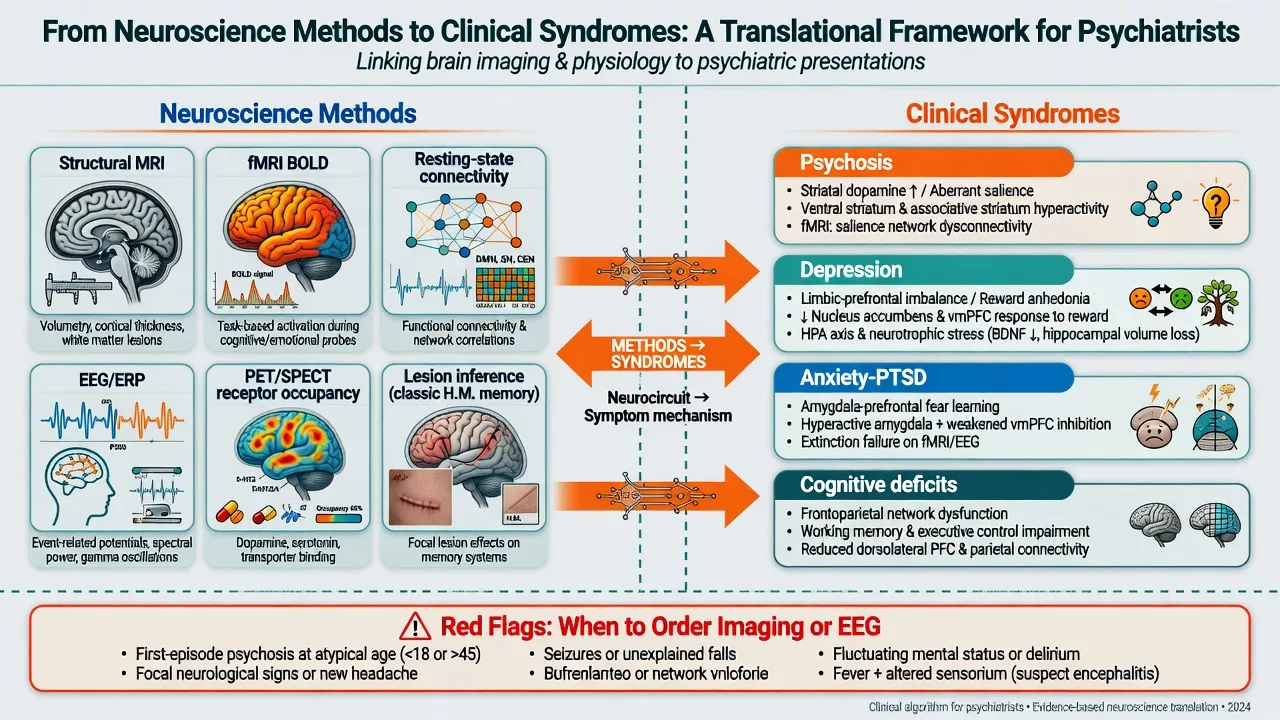
Structural imaging
MRI (or CT when MRI unavailable) is indicated for atypical first presentations, focal neurology, progressive cognitive decline, or other organic red flags. Group-level volumetric findings (e.g. hippocampal volume differences in depression research; ventricular enlargement in schizophrenia cohorts) do not diagnose individuals. [12][6]
Functional MRI and BOLD
The BOLD signal is a haemodynamic proxy related to local neural activity, not a direct count of spikes. Logothetis and colleagues showed the complex relationship between neuronal signals and the fMRI response — the key viva caution against naive reverse inference ("this blob means this thought"). [16] Resting-state connectivity builds on spontaneous fluctuations and network architecture; clinically useful as concept, rarely as a personalised diagnostic test today. [14][15]
EEG / ERP
EEG is the tool for seizure, nonconvulsive status, and encephalopathic differentials of psychiatric presentations. Event-related potentials (e.g. P300, mismatch negativity) are research cognitive markers more than routine clinic diagnostics. Method limits mirror those of other biomarkers: research signal is not automatic clinical indication. [16]
PET / SPECT occupancy
Radioligand imaging established much of modern receptor occupancy teaching (e.g. antipsychotic D2 occupancy bands; excess dopaminergic tone studies). [5] These methods justify mechanism language in exams; they are not required before every prescription.
Lesion inference
Focal lesions provide causal clues that correlational imaging cannot. H.M. remains the teaching case for hippocampal contribution to declarative memory. [3] Frontal lesions can alter personality, judgement, and executive control — always consider structural disease when change is abrupt or lateralising.
Genetics overview
Schizophrenia is a highly heritable complex trait (~80% heritability in twin meta-analysis) yet polygenic and environmentally moderated — heritability is not destiny. [18] Polygenic risk scores and GWAS loci are research and future-medicine tools; they are not current routine diagnostic tests for a single patient in clinic.
Translation to clinical syndromes (overview)
| Syndrome cluster | High-yield neuro constructs | Treatment mechanism link |
|---|---|---|
| Psychosis | Striatal DA / aberrant salience; dysconnectivity; NMDA models | D2 antagonism/partial agonism; clozapine multi-receptor |
| Depression | Limbic–prefrontal imbalance; reward anhedonia; stress–BDNF | Monoamine agents; plasticity/neurotrophic theories; ketamine pathway; neurostimulation |
| Anxiety / PTSD | Amygdala–prefrontal fear learning/extinction | Exposure (extinction); SSRI/SNRI; GABA-A modulators short-term |
| OCD | CSTC loop models | High-dose SSRI; CBT/ERP; augmentation strategies |
| Cognitive / delirium | Large-scale network failure; cholinergic vulnerability | Treat cause; careful psychotropics |
| Syndrome-to-mechanism overview. [4][6][15] |
Use the table as a viva scaffold: mechanism language should name pathway or network and then the treatment implication without claiming a personal diagnostic biomarker. [4][6][15]
Assessment: when neuroscience changes the work-up
Neuroscience raises the index of suspicion for organicity when history or MSE shows fluctuation, new visual hallucinations with medical illness, seizures, fever, focal signs, catastrophic personality change, or first episode at atypical age. Risk (suicide, violence, vulnerability) remains a clinical assessment — no imaging suite replaces it. [15][3]
Investigations — practical fellowship table
| Modality | Order when… | Do not order solely to… |
|---|---|---|
| MRI brain | Atypical onset, focal signs, cognitive decline, red flags | "Confirm depression" |
| EEG | Seizure suspicion, unexplained fluctuation, catatonia differential | Routine first-episode without clues |
| Bloods / metabolic / ECG | Before many psychotropics; medical differentials | Substitute for history |
| PET/fMRI research protocols | Research or highly specialised centres | Everyday diagnosis |
| Genetic testing | Specific syndromes / counselling pathways | Routine polygenic "psychosis test" |
| Investigation selection principles for fellowship practice. [16][18] |
Order investigations for clinical red flags and safety, not to perform research-grade phenotyping on every outpatient. [16][18]
Acute and definitive management links (mechanism → action)
Acute safety first. Agitation, NMS (extreme D2 blockade context), serotonin toxicity, lithium neurotoxicity, and anticholinergic delirium are mechanism-linked emergencies managed with resuscitation and drug cessation logic — detailed algorithms live in emergency topics. Pathway knowledge explains risk but does not delay ABC and medical escalation. [4]
Definitive treatments as circuit tools.
- Antipsychotics: D2 occupancy maps to efficacy and EPS/prolactin risks. [4][5]
- Antidepressants: monoamine synaptic effects plus slower plasticity/neurotrophic adaptations. [6][7]
- Benzodiazepines: GABA-A positive allosteric modulation (anxiolysis, seizure, catatonia adjuncts) with dependence risk. [2]
- Ketamine/esketamine pathway: rapid glutamate–plasticity antidepressant effects in specialist protocols. [9][10]
- ECT / rTMS / experimental DBS: network-level interventions for resistant illness. [13]
- Psychotherapies: learning and extinction, cognitive control, interpersonal regulation — biological and psychological levels are not enemies. [2][6]
Subtypes and scenarios
- First-episode psychosis — dopamine final common pathway language plus mandatory organic screen when indicated. [4]
- Treatment-resistant depression — circuit models, neurostimulation, ketamine evidence base. [10][13]
- PTSD/anxiety — fear circuit and extinction framing for exposure therapy. [2]
- ADHD — frontostriatal catecholamine models (overview). [4]
- Substance use — mesolimbic learning and allostasis (overview). [4]
- Neurocognitive disorders — network degeneration patterns as research scaffolds, not radiology reports alone. [15]
Complications and pitfalls
- Chemical imbalance monologue to patients and examiners. [6]
- Reverse inference from fMRI activation to mental state. [16]
- Individualising group neuroimaging. [16]
- Genetic determinism misreading of heritability. [18]
- Ignoring social determinants because a receptor is named. [17]
- One-region-one-diagnosis localisation myths. [15]
- Conflating ketamine psychotomimesis with antidepressant protocols. [9][11]
Prognosis and disposition
Neurodevelopmental timing, cognitive reserve, substance exposure, and treatment access shape course narratives in formulation. Mechanism heterogeneity (multiple routes to one syndrome) explains treatment response diversity under models such as dopamine version III. [4] Disposition still follows risk, function, support, and legal status, not a BOLD map.
Special populations
- Youth: ongoing pruning and myelination; avoid overclaiming imaging biomarkers.
- Older adults: vascular and degenerative insults; delirium as acute network failure.
- Intellectual disability / autism: atypical developmental baselines; careful attribution of "new" psychotic vs behavioural change.
- Culture: integrate biological explanation with patient explanatory models without dismissing either. [15][18]
Developmental stage changes the prior probability of organic disease and the humility required when interpreting network models. [15][18]
Evidence, guidelines, and regional stance
Landmark method and mechanism papers above are the viva backbone. [1][3][4][14][16][17]
FRANZCP expects integrated biopsychosocial formulation: use neuroscience to deepen, not replace, social and psychological understanding. Routine MRI is not required for uncomplicated MDD or typical schizophrenia without red flags; follow local early-psychosis and metabolic monitoring pathways for treatments. [4][17]
Exam pearls
Neuroscience viva checklist
SYNAPSE
Ionotropic vs metabotropic; EPSP/IPSP
Four DA pathways mapped to effect and side-effect
DMN, salience, frontoparietal triple model
LTP/LTD and learning/extinction
BOLD, occupancy, ERP — know limits
Translate to psychosis, mood, anxiety, cognition
Organic red flags before pure functional labels
Bottom line for fellowship. Speak multilevel neuroscience with precision, cite landmark models honestly, treat patients as people in systems, and never let a pathway diagram substitute for risk assessment or compassionate care. [4][6][15][17]
References
- [1]Bliss TV, Lomo T Long-lasting potentiation of synaptic transmission in the dentate area of the anaesthetized rabbit following stimulation of the perforant path J Physiol, 1973.PMID 4727084
- [2]Malenka RC, Bear MF LTP and LTD: an embarrassment of riches Neuron, 2004.PMID 15450156
- [3]Scoville WB, Milner B Loss of recent memory after bilateral hippocampal lesions J Neurol Neurosurg Psychiatry, 1957.PMID 13406589
- [4]Howes OD, Kapur S The dopamine hypothesis of schizophrenia: version III--the final common pathway Schizophr Bull, 2009.PMID 19325164
- [5]Abi-Dargham A, Rodenhiser J, Printz D, et al. Increased baseline occupancy of D2 receptors by dopamine in schizophrenia Proc Natl Acad Sci U S A, 2000.PMID 10884434
- [6]Nestler EJ, Barrot M, DiLeone RJ, et al. Neurobiology of depression Neuron, 2002.PMID 11931738
- [7]Duman RS, Monteggia LM A neurotrophic model for stress-related mood disorders Biol Psychiatry, 2006.PMID 16631126
- [8]Santarelli L, Saxe M, Gross C, et al. Requirement of hippocampal neurogenesis for the behavioral effects of antidepressants Science, 2003.PMID 12907793
- [9]Berman RM, Cappiello A, Anand A, et al. Antidepressant effects of ketamine in depressed patients Biol Psychiatry, 2000.PMID 10686270
- [10]Zarate CA Jr, Singh JB, Carlson PJ, et al. A randomized trial of an N-methyl-D-aspartate antagonist in treatment-resistant major depression Arch Gen Psychiatry, 2006.PMID 16894061
- [11]Krystal JH, Karper LP, Seibyl JP, et al. Subanesthetic effects of the noncompetitive NMDA antagonist, ketamine, in humans. Psychotomimetic, perceptual, cognitive, and neuroendocrine responses Arch Gen Psychiatry, 1994.PMID 8122957
- [12]Drevets WC, Price JL, Simpson JR Jr, et al. Subgenual prefrontal cortex abnormalities in mood disorders Nature, 1997.PMID 9126739
- [13]Mayberg HS, Lozano AM, Voon V, et al. Deep brain stimulation for treatment-resistant depression Neuron, 2005.PMID 15748841
- [14]Raichle ME, MacLeod AM, Snyder AZ, et al. A default mode of brain function Proc Natl Acad Sci U S A, 2001.PMID 11209064
- [15]Menon V Large-scale brain networks and psychopathology: a unifying triple network model Trends Cogn Sci, 2011.PMID 21908230
- [16]Logothetis NK, Pauls J, Augath M, et al. Neurophysiological investigation of the basis of the fMRI signal Nature, 2001.PMID 11449264
- [17]Insel T, Cuthbert B, Garvey M, et al. Research domain criteria (RDoC): toward a new classification framework for research on mental disorders Am J Psychiatry, 2010.PMID 20595427
- [18]Sullivan PF, Kendler KS, Neale MC Schizophrenia as a complex trait: evidence from a meta-analysis of twin studies Arch Gen Psychiatry, 2003.PMID 14662550