Cardiology · Cardiology
Dyslipidaemia
Also known as Hyperlipidaemia · Hypercholesterolaemia · Hypertriglyceridaemia · Hyperlipoproteinaemia
Dyslipidaemia is an abnormality of circulating lipids or lipoproteins (high LDL-C/apoB, high triglycerides, low HDL-C, or elevated lipoprotein(a)). LDL-C is the primary atherogenic particle and the main target of therapy. Treatment is risk-stratified: high-intensity statin (atorvastatin 40–80 mg or rosuvastatin 20–40 mg) for established/very-high cardiovascular risk, with LDL-C under 1.4 mmol/L (ESC 2019 very-high risk). Add ezetimibe then a PCSK9 inhibitor (alirocumab/evolocumab) if target is unmet. Fibrates/icosapent ethyl treat hypertriglyceridaemia; triglycerides over 10 mmol/L risk pancreatitis.
On this page & tools
Your progress
Saved locally on this device.
Exam tags
Red flags
Overview & Definition
Dyslipidaemia is any disturbance of the concentration, composition, or transport of circulating lipids. Because lipids are insoluble in plasma, they travel as macromolecular complexes called lipoproteins — spherical particles with a hydrophobic core of cholesterol esters and triglycerides, surrounded by a shell of phospholipids, free cholesterol, and one or more apolipoproteins that determine receptor recognition and metabolic fate. Clinically, dyslipidaemia most often means elevated low-density lipoprotein cholesterol (LDL-C), raised triglycerides (TG), reduced high-density lipoprotein cholesterol (HDL-C), or elevated lipoprotein(a) [Lp(a)]. Atherogenic dyslipidaemia is the single most important modifiable risk factor for atherosclerotic cardiovascular disease (ASCVD), driving coronary artery disease, ischaemic stroke, and peripheral arterial disease. [1]
Screening for dyslipidaemia
Opportunistic screening is appropriate in adults with risk factors: men over 40, women over 50 (or post-menopausal), anyone with a family history of premature CAD, diabetes, hypertension, obesity, smoking, CKD, or features of metabolic syndrome. A fasting lipid panel is ideal, but a non-fasting sample is acceptable for initial screening. If non-fasting TG is over 2 mmol/L, repeat fasting. After a cardiovascular event, repeat lipids during admission and again 4–12 weeks after discharge to guide intensity and adherence. After a cardiovascular event, repeat lipids during admission and again 4–12 weeks after discharge to guide intensity. In FH, cascade screening of first-degree relatives should begin from age 2 years. In South Asian populations, consider screening earlier because ASCVD tends to occur a decade sooner than in European populations. Screening is highly cost-effective: every 1 mmol/L reduction in LDL-C reduces major vascular events by roughly 20–25% over 5 years in high-risk patients, and the absolute benefit is greatest in those with the highest baseline cardiovascular risk. [1]
The lipid-heart hypothesis — that elevated LDL-C causes atherosclerosis — is one of the most thoroughly validated and clinically important concepts in medicine. Evidence spans observational epidemiology, Mendelian randomisation, and randomised trials: lowering LDL-C reduces cardiovascular events in proportion to the absolute reduction achieved, with no lower threshold in high-risk patients. The contemporary mantra is therefore "lower is better, earlier is better, for longer is better".[1][2]
Classification
Two complementary classification schemes are examined. The modern aetiological (primary vs secondary) scheme directs the work-up and treatment, while the Fredrickson/WHO phenotypic (types I–V) scheme describes the lipoprotein pattern on electrophoresis/ultracentrifugation and remains a high-yield exam frame. [1]
Type I — Familial chylomicronaemia
- ↑ Chylomicrons only; TG very high (over 10 mmol/L)
- Lipoprotein lipase or ApoC-II deficiency; autosomal recessive
- Eruptive xanthomata, lipaemia retinalis, hepatosplenomegaly, acute pancreatitis
- Rare; does NOT accelerate atherosclerosis (chylomicrons too large to enter vessel wall)
Type IIa — Familial/polygenic hypercholesterolaemia
- ↑ LDL only; TC high, TG normal
- LDL-receptor / ApoB / PCSK9 mutation (FH) or polygenic
- Tendon xanthomata, xanthelasma, arcus, premature CAD
- Common; highly atherogenic — the prototype 'LDL-driven' dyslipidaemia
Type IIb — Familial combined hyperlipidaemia
- ↑ LDL AND ↑ VLDL; TC and TG both high
- Most common genetic hyperlipidaemia; overproduction of ApoB-100
- Variable phenotype within and between families
- Highly atherogenic; first presentation often premature CAD
Type III — Familial dysbetalipoproteinaemia
- ↑ IDL (remnants); TC and TG both raised roughly equally
- ApoE2/E2 homozygosity (requires a second hit — obesity, diabetes, hypothyroid)
- Pathognomonic PALMAR XANTHOMATA (yellow creases of palms/soles) and tubero-eruptive xanthomata
- Atherogenic — premature PAD and CAD
Type IV — Familial hypertriglyceridaemia
- ↑ VLDL; TG high, TC normal/mildly raised
- Common; overproduction of VLDL-TG, often with metabolic syndrome/alcohol
- May cause eruptive xanthomata at very high TG; pancreatitis risk when TG over 10 mmol/L
- Mildly atherogenic; main danger is pancreatitis at extremes
Type V — Mixed hypertriglyceridaemia
- ↑ Chylomicrons AND ↑ VLDL; TG very high with TC also raised
- Uncontrolled diabetes/alcohol with familial predisposition
- Eruptive xanthomata, lipaemia retinalis, hepatosplenomegaly, pancreatitis
- Pancreatitis is the dominant acute risk
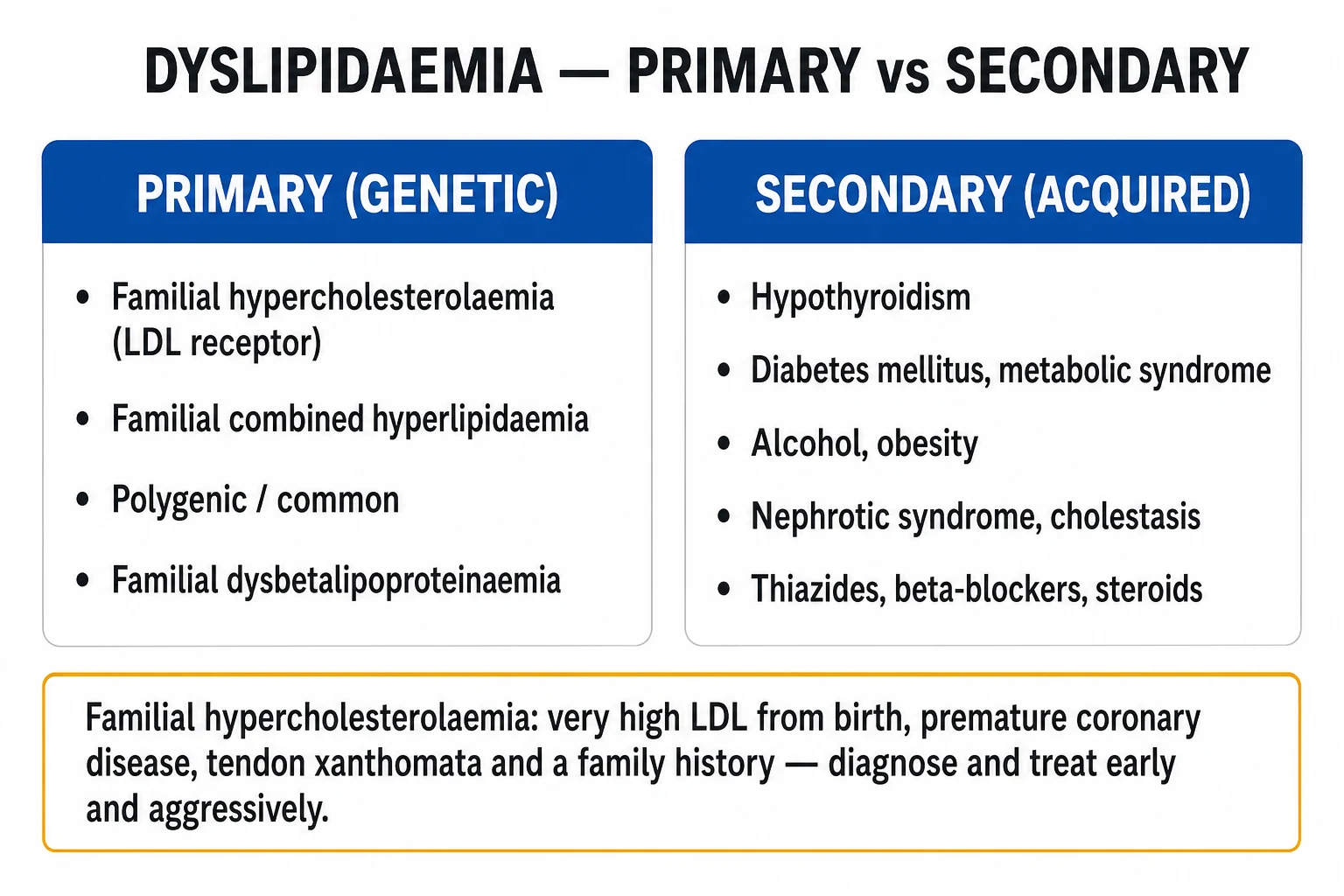
Primary vs secondary dyslipidaemia — how to distinguish them
Secondary causes must be excluded before labelling a dyslipidaemia as primary. The table below shows the typical lipid pattern and the key diagnostic clue for each. [1]
| Secondary cause | Typical lipid pattern | Key clue | What to do |
|---|---|---|---|
| Hypothyroidism | ↑ LDL, ↑ TG | TSH raised, cold intolerance, bradycardia | Treat with levothyroxine; re-check lipids |
| Type 2 diabetes / metabolic syndrome | ↑ TG, ↓ HDL, small dense LDL | HbA1c raised, central obesity, hypertension | Statin, glycaemic control, lifestyle |
| Nephrotic syndrome | ↑ LDL, ↑ TG | Heavy proteinuria, hypoalbuminaemia, oedema | Treat nephrotic state; statin as adjunct |
| Chronic kidney disease | ↑ TG, ↓ HDL, LDL variable | eGFR reduced, proteinuria | Simvastatin+ezetimibe (SHARP); dose-adjust rosuvastatin |
| Cholestasis / PBC | ↑ LDL (often very high) | Raised ALP, pruritus, AMA positive | Treat underlying cholestasis; sequestrants |
| Alcohol excess | ↑ TG, HDL may be normal/high | Raised GGT, MCV, history | Abstinence; fibrate if very high TG |
| Drugs (thiazides, beta-blockers, steroids, OCP, retinoids, protease inhibitors, atypicals) | Variable | Temporal relationship to drug | Stop or switch culprit if possible |
| Anorexia nervosa | ↑ TC, ↑ LDL | Low BMI, amenorrhoea, re-feeding | Weight restoration; do NOT statin |
| Pregnancy | ↑ TG, ↑ LDL | Physiological; third trimester peak | Stop statins; bile-acid sequestrant if needed |
Always screen with TSH, HbA1c/fasting glucose, U&E, urine ACR, LFTs before committing to long-term lipid-lowering therapy. [1]
SECONDARY
First split — is there a genetic cause (FH, FCH, type III) or a secondary driver (diabetes, hypothyroid, nephrotic, alcohol, drugs)?
Type III (dysbetalipoproteinaemia) — IDL remnants, ApoE2/E2, palmar xanthomata
Eruptive xanthomata = high TG (types I, IV, V); tendon/tuberous xanthomata = high cholesterol (types II, III)
Always ask — thiazides, beta-blockers, steroids, OCPs, retinoids, antiretrovirals all raise lipids
Epidemiology & Risk Factors
Dyslipidaemia is globally the commonest modifiable cardiovascular risk factor. In the Indian population (the NEET-PG/INICET context), dyslipidaemia has a particularly high prevalence and a characteristic "atherogenic phenotype" — low HDL, high triglycerides, and small dense LDL — which partly explains why South Asians develop coronary disease a decade earlier than European populations. Roughly 25–30% of urban Indian adults have hypercholesterolaemia and a much larger fraction have low HDL or high TG. Worldwide, raised cholesterol causes roughly 2.6 million deaths annually. [1]
High-yield numbers
Risk factors cluster into dietary/lifestyle (saturated and trans-fat intake, refined carbohydrate, low fibre, physical inactivity, obesity — especially central/visceral — and smoking, which oxidises LDL and lowers HDL), metabolic/endocrine (type 2 diabetes, metabolic syndrome, hypothyroidism, Cushing's, pregnancy), renal (nephrotic syndrome, CKD), hepatic (cholestasis/PBC, NAFLD), and drug-induced (thiazides, beta-blockers, glucocorticoids, anabolic steroids, oral contraceptives/oestrogen, isotretinoin, protease inhibitors, atypical antipsychotics). Family history of premature ASCVD (men under 55, women under 60) raises both polygenic and monogenic risk. The metabolic syndrome — central obesity, hypertension, raised fasting glucose, high TG and low HDL — is the commonest dyslipidaemic syndrome in clinical practice.[1]
Pathophysiology
Lipid transport operates as two parallel circuits. The exogenous pathway carries dietary fat: long-chain triglycerides are absorbed, re-esterified in enterocytes, packaged with apolipoprotein B-48 into chylomicrons, secreted into lymph, and enter the circulation where apolipoprotein C-II activates endothelial lipoprotein lipase (LPL) in muscle and adipose capillary beds. LPL hydrolyses core triglyceride to free fatty acids; the resulting chylomicron remnant is cleared by the liver via the apolipoprotein E / remnant (LDL-receptor-related) receptor. The endogenous pathway packages hepatic fatty acid and cholesterol with apolipoprotein B-100 into VLDL; LPL converts VLDL → IDL → LDL, and LDL — the principal cholesterol carrier — is cleared by the LDL receptor (LDLR) on hepatocytes. HDL, carrying apolipoprotein A-I, performs reverse cholesterol transport, effluxing cholesterol from peripheral tissues (via ABCA1/ABCG1) back to the liver and steroidogenic organs (via SR-B1) for excretion as bile. HMG-CoA reductase is the rate-limiting enzyme of hepatic cholesterol synthesis — the target of statins. [1]
LDL receptor, PCSK9, and ApoB
The LDL receptor on hepatocytes binds ApoB-100 on LDL particles and internalises the whole particle. Once inside, the LDL receptor releases its cargo in the endosome and recycles back to the cell surface — each receptor can make over 100 trips. Proprotein convertase subtilisin/kexin type 9 (PCSK9) is a hepatic protease that also binds the LDL receptor; when PCSK9 is bound, the receptor-PCSK9-LDL complex is routed to the lysosome for degradation rather than recycling. Higher PCSK9 activity therefore means fewer LDL receptors on the hepatocyte surface and higher circulating LDL-C. Gain-of-function mutations in PCSK9 cause familial hypercholesterolaemia; loss-of-function mutations lower LDL-C and protect against ASCVD. Monoclonal antibodies against PCSK9 (alirocumab, evolocumab) and the siRNA inclisiran both increase LDL-receptor recycling and lower LDL-C by 50–60%.[1][17]
Apolipoprotein B (apoB) deserves special attention because it is present on every atherogenic particle: VLDL, IDL, LDL, and Lp(a) each carry one ApoB-100 molecule, while chylomicrons carry ApoB-48. LDL-C measures the cholesterol mass carried by LDL, but in hypertriglyceridaemia, diabetes, and metabolic syndrome, LDL particles can be small and cholesterol-depleted, so LDL-C may underestimate atherogenic burden. ApoB (or non-HDL-C = total cholesterol − HDL-C) is therefore a better marker of total atherogenic particle number. ESC/EAS 2019 considers non-HDL-C and apoB as secondary targets, especially when TG is elevated or discordance with LDL-C is suspected.[1]
ApoB, non-HDL-C, and discordance with LDL-C
Every apoB-containing particle is potentially atherogenic. In the metabolic syndrome, diabetes, and high-TG states, LDL particles become small and cholesterol-depleted, so a patient may have a "normal" or "acceptable" LDL-C but a high apoB because of numerous small LDL particles plus VLDL remnants. This is called LDL-C–apoB discordance. Non-HDL-C captures the cholesterol in all apoB particles and is more stable than calculated LDL-C; ESC/EAS 2019 sets non-HDL-C goals roughly 0.8 mmol/L above the LDL-C goal (very-high risk: non-HDL-C under 2.2 mmol/L; high risk: under 2.6). ApoB is also a strong predictor of residual risk on statin therapy. In routine clinical practice, however, LDL-C remains the primary target because most outcome trials were LDL-C-driven. [1]
[1]Atherosclerosis cascade
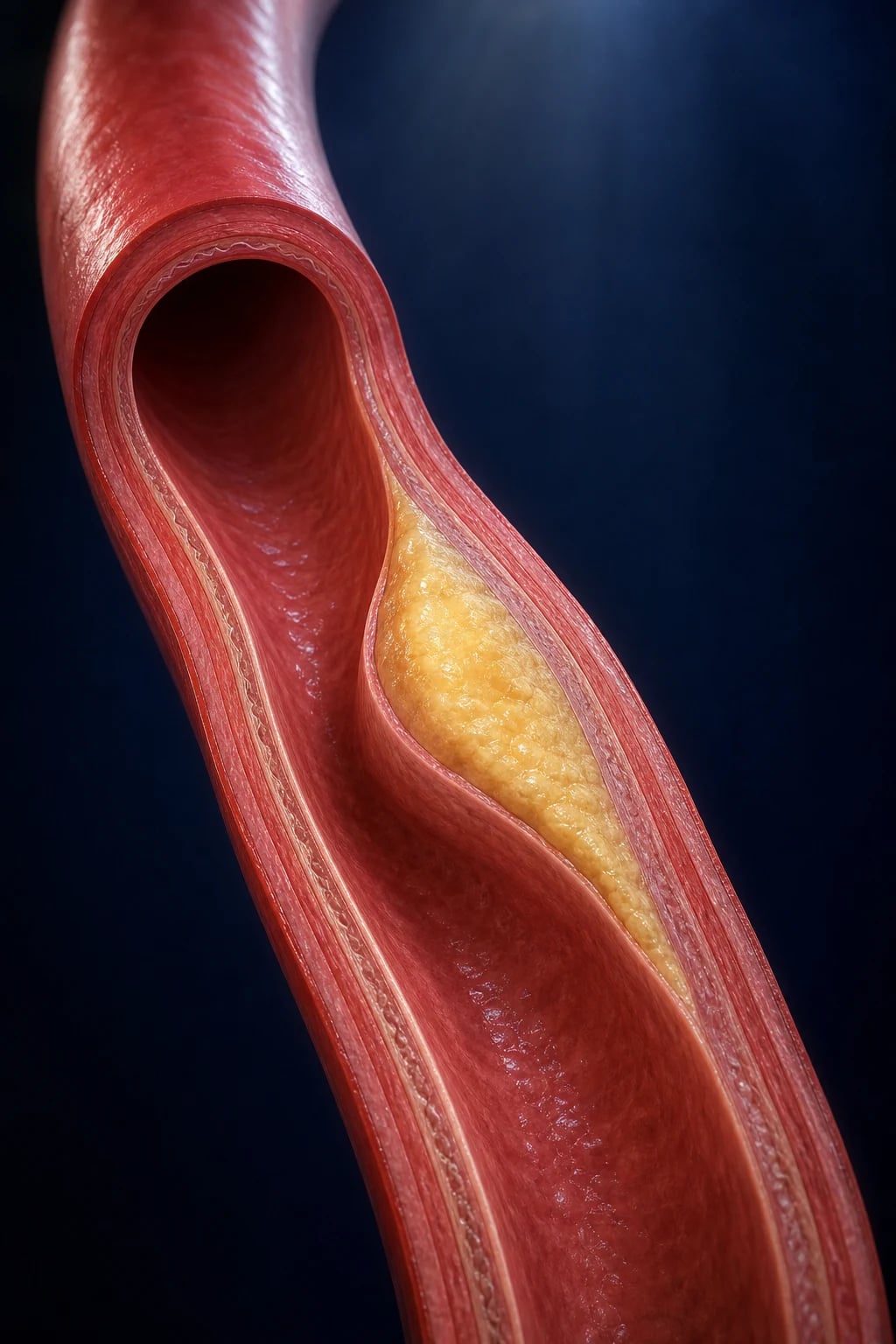
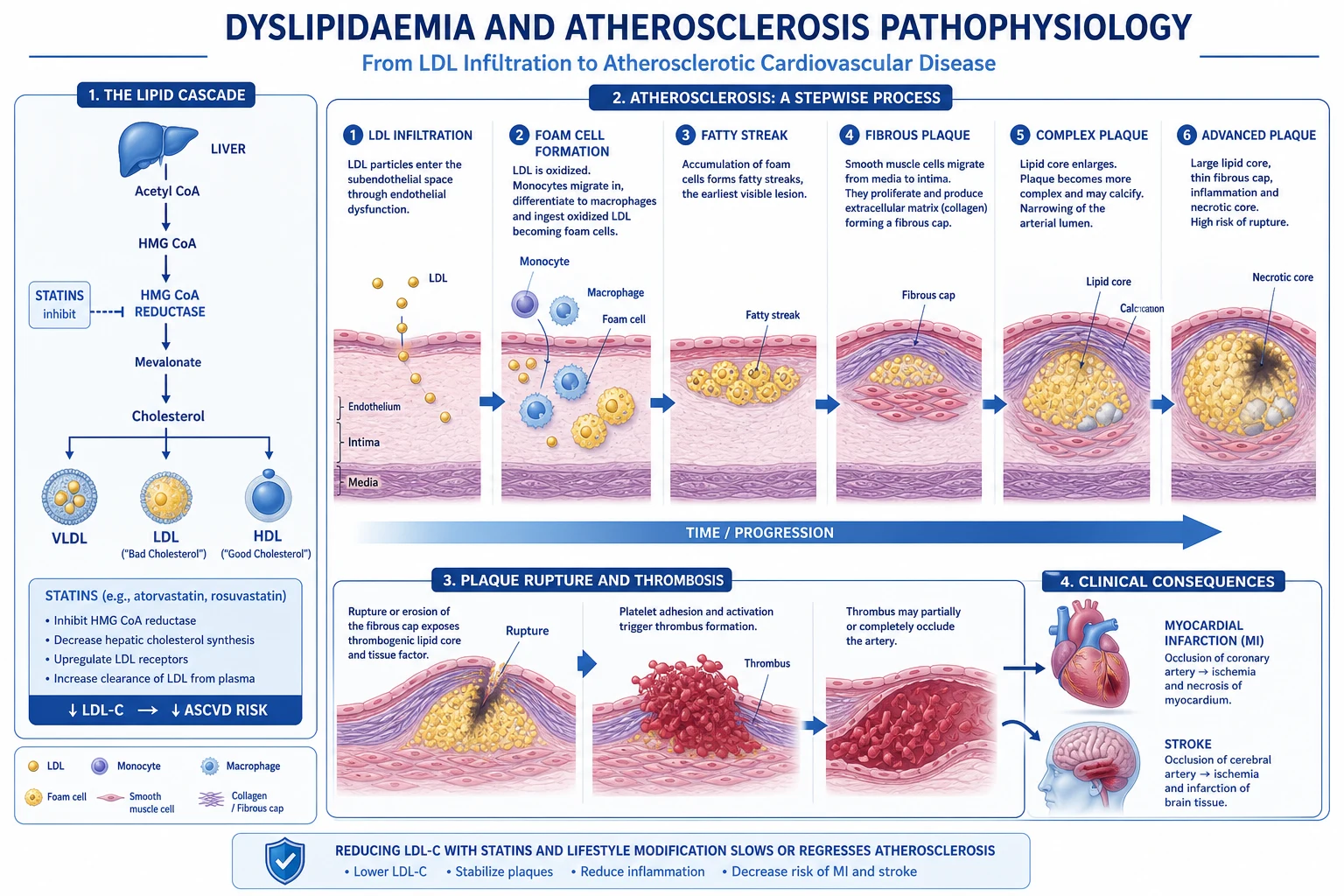
Atherosclerosis follows the response-to-retention hypothesis: apoB-containing lipoproteins (LDL, VLDL remnants, IDL, Lp(a)) cross a dysfunctional endothelium, are retained in the intimal proteoglycans, and undergo oxidative modification. Modified LDL is no longer recognised by the LDL receptor but is taken up — unregulated — by macrophage scavenger receptors (SR-A, CD36), converting macrophages into cholesterol-laden foam cells, the hallmark of the early fatty streak. Foam cells release cytokines (TNF-α, IL-1, MCP-1) that drive endothelial expression of adhesion molecules (VCAM-1, ICAM-1), recruit more monocytes and T-cells, and stimulate smooth-muscle migration and a fibrous cap. The mature fibrous plaque has a lipid-rich necrotic core walled off by the cap; the plaque becomes vulnerable when inflammation (matrix metalloproteinases from macrophages) thins the cap, so that minor mechanical stress precipitates rupture or erosion, exposing the thrombogenic core, activating platelets and the coagulation cascade, and producing the occlusive thrombus of MI or ischaemic stroke.[2]
Lipoprotein(a), HDL, and hypertriglyceridaemic pancreatitis
Lipoprotein(a) is an LDL particle in which apolipoprotein(a) is covalently bound to apoB-100. Apo(a) is structurally homologous to plasminogen (multiple kringle-IV repeats), so it competitively inhibits plasminogen activation — making Lp(a) both atherogenic (it is an LDL) and prothrombotic (impaired fibrinolysis) and pro-inflammatory. Lp(a) is over 90% genetically determined, constant through life, and an independent risk factor that is not lowered meaningfully by statins. [1]
In hypertriglyceridaemia, when triglycerides exceed roughly 10 mmol/L (885 mg/dL), chylomicrons accumulate, sludge in pancreatic capillaries, and release free fatty acids that injure pancreatic acinar cells — the mechanism of hypertriglyceridaemic pancreatitis. HDL's protective role (reverse cholesterol transport plus anti-inflammatory/antioxidant functions) explains why low HDL is a risk marker, though trials of HDL-raising drugs (niacin, CETP inhibitors) have repeatedly failed to improve outcomes — low HDL is now regarded as a marker of the residual risk rather than a proven therapeutic target. [1]
Clinical Presentation
Dyslipidaemia is clinically silent in the vast majority — the first "symptom" is usually a cardiovascular event (MI, stroke, claudication) or an abnormal screening lipid panel. The clinical task is therefore twofold: detect the lipid abnormality (screening), and identify the physical stigmata that suggest a severe, often genetic, dyslipidaemia and its end-organ effects. [1]
Tendon xanthomata
- Firm, subcutaneous nodules on extensor tendons — Achilles (classical), dorsum of hands, knees
- Pathognomonic of familial hypercholesterolaemia (FH) or type III
- Reflect long-standing markedly elevated LDL-C
Tuberous/tubero-eruptive xanthomata
- Yellow-red nodules over elbows, knees, buttocks
- Type III (dysbetalipoproteinaemia) and severe hypercholesterolaemia
- Reduce with treatment
Eruptive xanthomata
- Crops of small yellow papules with an erythematous base on buttocks, back, extensor surfaces
- Hypertriglyceridaemia (TG over 10 mmol/L) — types I, IV, V
- Indicate pancreatitis risk; resolve as TG falls
Palmar xanthomata
- Yellow-orange discoloration of the palmar and digital creases
- PATHOGNOMONIC for type III (familial dysbetalipoproteinaemia)
- Aphthous-looking line in the crease
Xanthelasma
- Soft yellow plaques on eyelids/peri-orbital skin
- Suggestive but NOT diagnostic of dyslipidaemia (~50% have normal lipids)
- Cosmetic; recurrence common even after excision
Arcus senilis / corneal arcus
- Grey-white ring at corneal limbus
- Premature arcus (under 45 years) suggests dyslipidaemia; common and normal in the elderly
- Lipid deposition in the corneal stroma
Other findings at extremes: lipaemia retinalis (milky/peach-coloured retinal vessels at TG over 10–15 mmol/L), hepatosplenomegaly from chylomicron and remnant uptake by reticuloendothelial tissue, and signs of the end-organ disease the dyslipidaemia has caused — established CAD (coronary risk-equivalent findings), carotid bruits, absent/diminished peripheral pulses or bruits of PAD, and aortic stenosis in homozygous FH (supravalvular/valvular cholesterol deposition). Atypical presentations: in the elderly, dyslipidaemia is usually an incidental finding on secondary-prevention bloods and signs are masked; in diabetes, presentation is dominated by the metabolic-syndrome phenotype (high TG, low HDL, small dense LDL) with no xanthomata; in pregnancy, lipids rise physiologically (oestrogen-driven VLDL) and any pharmacological intervention is constrained by teratogenicity. In acute care, a "lipemic" serum sample that appears turbid or milky should prompt immediate triglyceride measurement because values over 10 mmol/L warrant urgent pancreatitis risk assessment and fibrate therapy. [1]
Differential Diagnosis
The key diagnostic question is not "is the lipid high?" but "is there a secondary cause, and what is the atherogenic risk?" Secondary causes are common, reversible, and must be excluded (or addressed) in every new dyslipidaemia. Each produces a characteristic lipid signature. [1]
Hypothyroidism
- ↑ LDL and ↑ TG — reduced hepatic LDL-receptor expression and reduced LPL activity
- Distinguishing clue: fatigue, cold intolerance, bradycardia, raised TSH; CHECK TSH IN EVERY NEW DYSLIPIDAEMIA
- Lipids often normalise on levothyroxine — re-check after euthyroid
Diabetes / metabolic syndrome
- ↑ TG, ↓ HDL, small dense LDL; the 'atherogenic triad'
- Distinguishing clue: raised HbA1c/fasting glucose, central obesity, hypertension
- Treat with statin (diabetes = very-high risk if target-organ damage); glycaemic control improves TG
Nephrotic syndrome
- ↑ LDL and ↑ TG — hepatic overproduction driven by urinary protein loss
- Distinguishing clue: oedema, heavy proteinuria, hypoalbuminaemia
- Lipids improve only as nephrotic state remits
Chronic kidney disease
- ↑ TG, ↓ HDL; LDL variable; apoC-III accumulation
- Distinguishing clue: raised creatinine/low eGFR; adjust statin dose (rosuvastatin max 10 mg if eGFR under 30)
- SHARP supports simvastatin + ezetimibe in CKD
Cholestasis / PBC
- ↑ LDL (often very high); the clue is an isolated raised ALP/GGT and pruritus
- Distinguishing clue: middle-aged woman, fatigue, pruritus, antimitochondrial antibody
- May produce planar/tendon xanthomata
Alcohol excess
- ↑ TG (VLDL overproduction); HDL may be modestly raised
- Distinguishing clue: raised GGT, MCV; history; improves rapidly with abstinence
- Major trigger of hypertriglyceridaemic pancreatitis
Drug-induced
- Thiazides ↑ TG/LDL; non-selective beta-blockers ↑ TG and ↓ HDL; glucocorticoids/OCPs ↑ TG and LDL; retinoids ↑ TG; antiretrovirals (protease inhibitors) ↑ TG
- Distinguishing clue: temporal relationship to drug initiation; review the drug chart
- Address by switching/stopping the culprit where possible
Anorexia nervosa
- Surprisingly high cholesterol — reduced clearance, low T3
- Distinguishing clue: low BMI, amenorrhoea, re-feeding pattern
- Resolves with weight restoration — do NOT statin
Clinical & Bedside Assessment
Bedside assessment targets three questions in parallel: how severe is the lipid abnormality, is there a secondary cause, and what end-organ damage exists? Measure height, weight, BMI and waist circumference (central obesity is the metabolic-syndrome marker). Examine for the xanthomata family described above (inspect the Achilles tendons and extensor surfaces; the eyelids and palmar creases), corneal arcus (note age — premature under 45 years is significant), fundoscopy for lipaemia retinalis when TG is high, the abdomen for hepatosplenomegaly, the thyroid for goitre, and the cardiovascular system for carotid, abdominal, and femoral bruits and for peripheral pulses (ankle–brachial index if PAD suspected). Take a careful family history of premature ASCVD (men under 55, women under 60 years) — a positive history plus tendon xanthomata in the patient effectively diagnoses familial hypercholesterolaemia at the bedside. Always review the drug chart for lipid-raising agents and screen for alcohol. [1]
[1]Investigations
First-line testing is a fasting (9–12 h) lipid panel: total cholesterol, LDL-C, HDL-C, and triglycerides. Contemporary guidelines (ESC/EAS, ACC/AHA) now accept a non-fasting sample as adequate for screening — triglycerides rise only modestly after a meal and a random non-fasting TG under 2 mmol/L is reassuring; request a fasting panel only if the non-fasting TG is raised or for follow-up of known hypertriglyceridaemia. [1]
The work-up of a new dyslipidaemia must screen for secondary causes and total cardiovascular risk: TSH (hypothyroidism), HbA1c/fasting glucose (diabetes), U&E and urine ACR (CKD, nephrotic), LFTs (cholestasis, NAFLD, baseline before statin), and baseline CK (a comparator if myalgia develops later). Measure Lp(a) at least once in every adult's lifetime (ESC/EAS recommendation) — an elevated value re-stratifies risk upward. Apolipoprotein B (apoB) and non-HDL-C (TC − HDL-C) are useful adjuncts — they count every atherogenic particle (LDL + IDL + VLDL + Lp(a)) and, in hypertriglyceridaemia, diabetes, and metabolic syndrome, can be discordant with LDL-C (high apoB/non-HDL-C despite "acceptable" LDL-C signals residual risk). Lipoprotein electrophoresis and genetic testing (LDLR/APOB/PCSK9/LDLRAP1) are reserved for suspected FH or dysbetalipoproteinaemia. [1]
ESC/EAS 2019 LDL-C goals (reproduce verbatim)
Cardiovascular total-risk estimation uses SCORE2 (age 40–69) or SCORE2-OP (over 70), incorporating age, sex, smoking, systolic BP, and total cholesterol; the resulting 10-year fatal-plus-non-fatal CVD risk places the patient in low/moderate/high/very-high categories that drive the LDL-C goal above. Coronary artery calcium scoring (CT) is a useful tie-breaker in borderline primary-prevention decisions. Carotid ultrasound intima–media thickness is largely a research tool and was the negative endpoint of ENHANCE (ezetimibe did not reduce IMT despite lowering LDL — a cautionary tale about surrogate endpoints).[1][14]
Management — Resuscitation
Chronic dyslipidaemia has no resuscitation phase, but severe hypertriglyceridaemia is a metabolic emergency. Triglycerides over 10 mmol/L (885 mg/dL) — typically over 20 mmol/L in established pancreatitis — carry an immediate risk of acute pancreatitis, the dominant life-threatening complication of the dyslipidaemias. [1]
For hypertriglyceridaemic pancreatitis, the time-critical bundle is: admit, NPO (fat-restriction), aggressive IV crystalloid resuscitation, analgesia (opioid), and treat the hypertriglyceridaemia directly with an insulin infusion (activates LPL, accelerates TG clearance — particularly in the diabetic patient), a fibrate (fenofibrate 145–200 mg orally once the patient can take enteral medication), and omega-3 fatty acids. Plasmapheresis / therapeutic plasma exchange rapidly removes chylomicrons and is used in refractory cases or pregnancy; heparin infusion is now largely avoided (rebound hypertriglyceridaemia and bleeding). Prevention of recurrence — dietary fat restriction (under 10–15% energy), strict diabetes/alcohol control, chronic fibrate + omega-3, and identification of any genetic cause — is essential.[1]
Once the acute episode resolves, the patient requires lifelong prevention. Dietary fat should be restricted to under 10–15% of total energy intake (about 20–30 g/day for most adults), alcohol must be avoided completely, and glycaemic control must be optimised in diabetics. A fibrate (fenofibrate 145–200 mg daily) plus icosapent ethyl or other omega-3 preparation is standard maintenance. Genetic testing should be considered in young patients, those with a family history, or recurrent episodes to identify familial chylomicronaemia syndrome (LPL, ApoC-II, ApoA5, GPIHBP1, or LMF1 mutations). [1]
Management — Definitive & Stepwise
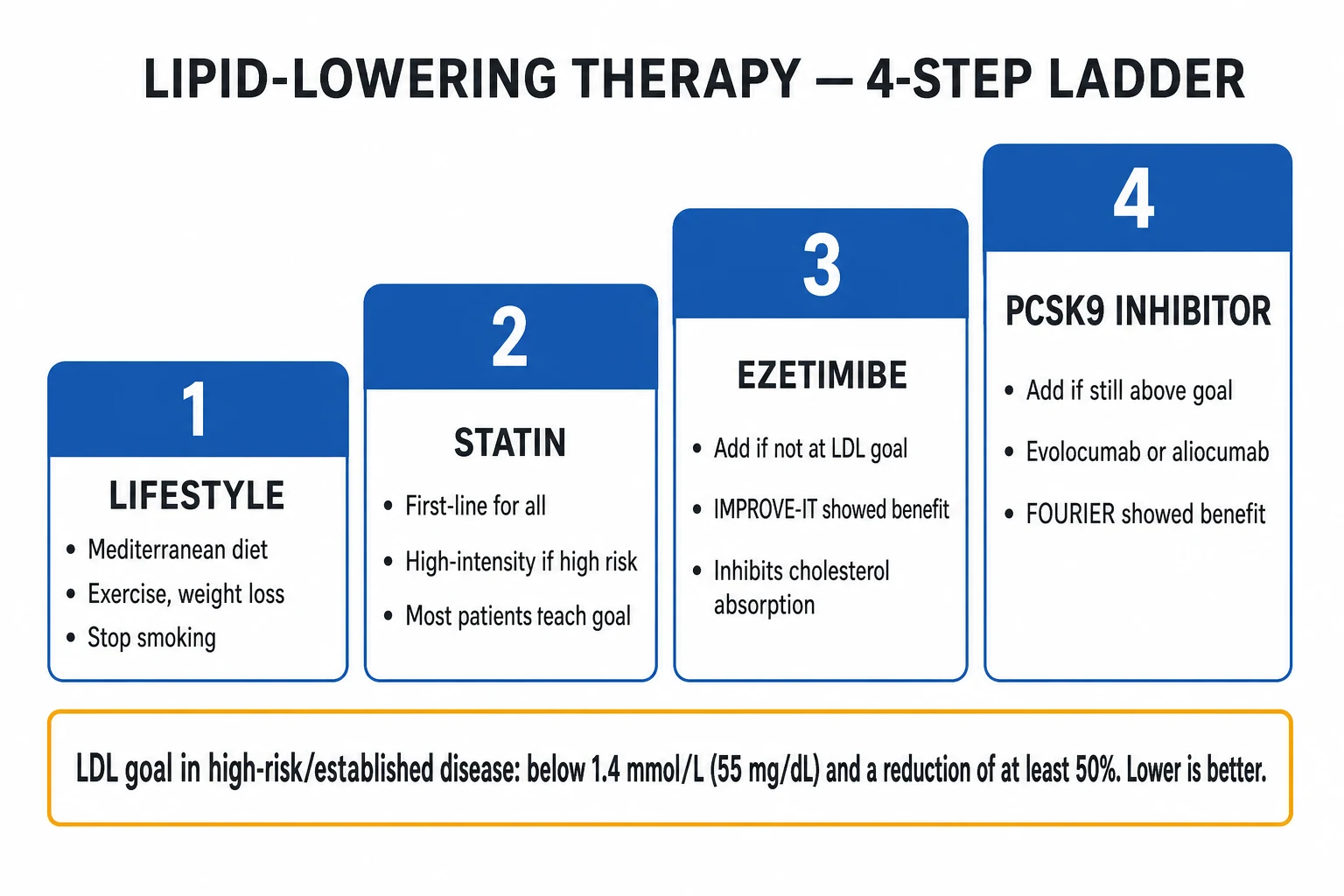
Treatment is risk-stratified, not lipid-value-driven: the same LDL value mandates very different intensity depending on the patient's total cardiovascular risk. The foundation is lifestyle for every patient, on which drug therapy is layered. [1]
Lifestyle (universal foundation)
A Mediterranean-style diet — replace saturated fat (under 7% of energy) and eliminate trans-fat with monounsaturated/polyunsaturated fat, increase soluble fibre (oats, legumes, psyllium), add plant sterols/stanols (2 g/day, ~10% LDL reduction), two or more fish meals per week (omega-3), and reduce refined carbohydrate and added sugar (the dietary driver of hypertriglyceridaemia). Aerobic exercise: at least 150 min/week of moderate-intensity activity. Weight loss of 5–10% improves every lipid fraction. Smoking cessation (raises HDL, lowers ASCVD risk multiplicatively), alcohol moderation (especially for hypertriglyceridaemia), and glycaemic/blood-pressure control complete the lifestyle platform. Lifestyle alone typically lowers LDL by 10–15%. [1]
Statins — first-line for elevated LDL-C
Statins are competitive inhibitors of hepatic HMG-CoA reductase, the rate-limiting enzyme of cholesterol synthesis; the resulting fall in intracellular cholesterol upregulates hepatocyte LDL-receptor expression, increasing LDL clearance from plasma. They are first-line for LDL-driven dyslipidaemia and ASCVD prevention, with the intensity chosen to hit the risk-based target. [1]
High-intensity (over 50% LDL reduction)
- Atorvastatin 40–80 mg once daily
- Rosuvastatin 20–40 mg once daily
- Use for very-high/high ASCVD risk and to achieve under 1.4 mmol/L
- Long half-life — take any time of day
Moderate-intensity (30–50% reduction)
- Atorvastatin 10–20 mg, simvastatin 20–40 mg, pravastatin 40–80 mg, rosuvastatin 5–10 mg, fluvastatin 40 mg twice daily, lovastatin 40 mg
- Use for moderate risk or when high-intensity not tolerated
- Simvastatin/pravastatin/fluvastatin — short half-life, take AT NIGHT (cholesterol synthesis peaks nocturnally)
Low-intensity (under 30% reduction)
- Simvastatin 10 mg, pravastatin 10–20 mg, fluvastatin 20–40 mg
- Rarely adequate as monotherapy for an at-risk patient
- Used when only minimal reduction is needed
Monitoring: lipid panel at 4–12 weeks after initiation/dose change, then every 3–12 months; LFTs at baseline and if symptomatic (routine repeated LFTs are no longer required if stable — statin hepatotoxicity is rare); CK only if myalgia (routine CK is unnecessary). Adverse effects: myalgia (common, ~5–10%, often nocebo — blinded trial re-challenge frequently tolerates the same statin), myositis (muscle symptoms with raised CK — stop), rhabdomyolysis (rare, under 0.01% — CK over 10× ULN, myoglobinuria, AKI — stop, hydrate), transaminitis (over 3× ULN — stop or reduce), new-onset diabetes (small absolute risk, outweighed by ASCVD benefit), and controversial cognitive effects. Contraindications: active liver disease, pregnancy and breastfeeding, concurrent CYP3A4 inhibitors (macrolides — clarithromycin/erythromycin; azole antifungals; grapefruit juice in excess; ciclosporin) with simvastatin/atorvastatin (use rosuvastatin, which is CYP2C9/minimally metabolised); reduce simvastatin dose with amiodarone, verapamil, diltiazem.[1][3][6]
The statin dose-response relationship is log-linear: doubling the dose produces only a further ~6% LDL reduction (the "rule of sixes"). This is why outcomes are driven by baseline potency and adherence, not by endlessly up-titrating the same statin. Atorvastatin and rosuvastatin are the most potent; simvastatin is less potent and has the most drug interactions. Atorvastatin and simvastatin are metabolised by CYP3A4, so their levels rise with CYP3A4 inhibitors (clarithromycin, erythromycin, ketoconazole, itraconazole, HIV protease inhibitors, ciclosporin, large volumes of grapefruit juice). Rosuvastatin is minimally metabolised by CYP2C9 and is the preferred statin when CYP3A4 inhibition is a concern. Simvastatin is particularly susceptible to interaction with amiodarone, verapamil, and diltiazem — the dose should be reduced or the drug switched. Fibrates increase myopathy risk by inhibiting statin glucuronidation; gemfibrozil is far worse than fenofibrate because it also inhibits OATP2-mediated hepatic uptake. Bile-acid sequestrants bind ezetimibe and reduce its absorption, so ezetimibe should be taken at least 2 hours before or 4 hours after a sequestrant. [1]
[1]Step 2 — Ezetimibe
If the LDL-C target is unmet on maximally tolerated statin, add ezetimibe 10 mg orally once daily — it inhibits the NPC1L1 cholesterol transporter at the jejunal brush border, blocking dietary and biliary cholesterol absorption. It adds roughly 15–25% further LDL reduction, is exceptionally well tolerated (the "statin-sparing" add-on), and IMPROVE-IT proved its cardiovascular-event benefit on top of a statin after ACS.[9]
Step 3 — PCSK9 inhibitors
If still off target (or in FH/statin intolerance), add a PCSK9 monoclonal antibody: alirocumab 75–150 mg SC every 2 weeks or evolocumab 140 mg SC every 2 weeks (or 420 mg monthly). PCSK9 normally degrades the LDL receptor; inhibiting it prolongs receptor life and adds 50–60% further LDL reduction. FOURIER (evolocumab, established ASCVD) and ODYSSEY OUTCOMES (alirocumab, post-ACS) both reduced cardiovascular events. Limitations are cost and the subcutaneous route; injection-site reactions and (rarely) influenza-like symptoms are the main adverse effects.[10][11]
Newer / adjunctive LDL-lowering agents
Bempedoic acid (180 mg orally daily) inhibits hepatic ATP-citrate lyase, upstream of HMG-CoA reductase; it is a prodrug activated only in the liver (not muscle), so it lowers LDL ~18% without myopathy — an attractive option in statin-intolerant patients. The CLEAR Outcomes trial demonstrated that bempedoic acid reduced major cardiovascular events in statin-intolerant patients with established ASCVD or high risk.[16] Uric acid rises (gout flare caution). Inclisiran is a small-interfering RNA (siRNA) that silences hepatic PCSK9 mRNA — 300 mg SC on day 0, 3 months, then every 6 months, achieving ~50% LDL reduction with twice-yearly dosing (logistical advantage).[17] Bile-acid sequestrants (colesevelam, cholestyramine) bind bile acids in the gut, forcing hepatic conversion of cholesterol to bile acid — modest LDL reduction, raise TG (avoid if TG over 3), and the only systemic-safety lipid-lowerer safe in pregnancy.
Risk-stratified LDL-lowering algorithm
Lifestyle for everyone
Mediterranean diet, plant sterols 2 g/day, exercise 150 min/week, 5–10% weight loss, smoking cessation, alcohol moderation
High-intensity statin
Atorvastatin 40–80 mg or rosuvastatin 20–40 mg for very-high/high risk; aim LDL under 1.4 mmol/L (very-high) or under 1.8 mmol/L (high)
Add ezetimibe 10 mg
If LDL remains above target on maximally tolerated statin; blocks NPC1L1 intestinal cholesterol absorption
Add PCSK9 inhibitor
Alirocumab 75–150 mg SC q2wk or evolocumab 140 mg SC q2wk (or 420 mg monthly) if still off target
Consider bempedoic acid or inclisiran
For statin-intolerant patients; bempedoic acid 180 mg daily or inclisiran 300 mg SC at 0, 3, then 6-monthly
Treat hypertriglyceridaemia
Fenofibrate 145–200 mg OD or icosapent ethyl 4 g/day if TG 1.5–5.6 mmol/L on statin; urgent fibrate + insulin if TG over 10 and pancreatitis
Follow-up and long-term monitoring
Once a patient is on lipid-lowering therapy, follow-up is structured around three questions: is the target achieved, is the regimen tolerated, and are other risk factors controlled? Check a fasting lipid panel 4–12 weeks after starting or changing therapy, then every 3–12 months once stable. If LDL-C remains above target, confirm adherence (the commonest reason for apparent failure) and intensify through the stepwise algorithm. Measure LFTs at baseline and only repeat if symptomatic; routine CK is not needed unless muscle symptoms occur. At each visit, review blood pressure, glycaemic control, smoking status, weight, diet, and physical activity. In patients with established ASCVD, combine lipid management with antiplatelet therapy, blood-pressure control, and ACE inhibitor/ARB as indicated. In diabetes, address the TG-HDL axis through glycaemic control and consider icosapent ethyl if TG is 1.5–5.6 mmol/L on a statin with established ASCVD or high risk. [1]
Management of hypertriglyceridaemia
For TG under 4.5 mmol/L the goal is ASCVD risk reduction (statin first); for TG over 4.5 mmol/L, the goal shifts to pancreatitis prevention. Step 1 is lifestyle (fat restriction, alcohol abstinence, glycaemic control, weight loss, omega-3). Step 2 adds a fibrate: fenofibrate (145–200 mg once daily) is preferred with a statin because of a far lower myopathy risk than gemfibrozil. Omega-3 fatty acids — icosapent ethyl, a highly purified EPA, 2 g twice daily (4 g/day) — reduced cardiovascular events in REDUCE-IT in patients with established ASCVD or diabetes plus risk factors and TG 1.5–5.6 mmol/L on a statin; mixed EPA/DHA preparations lower TG but lack REDUCE-IT's outcome evidence. Gemfibrozil (600 mg twice daily) is an effective fibrate but must never be combined with a statin (profound myopathy/rhabdomyolysis via OATP2 inhibition). Niacin raises HDL and lowers TG/LDL but is now not recommended — AIM-HIGH and HPS2-THRIVE showed no added cardiovascular benefit and significant adverse effects (flushing, hyperglycaemia, gout).[1][12]
Specific therapy for refractory/genetic disease
Homozygous FH and refractory disease may require lomitapide (microsomal triglyceride transfer protein inhibitor — blocks ApoB lipoprotein assembly) and lipoprotein apheresis (extracorporeal removal of LDL/Lp(a), every 1–2 weeks). Volanesorsen, an apolipoprotein C-III antisense oligonucleotide, is licensed for familial chylomicronaemia syndrome refractory to diet/fibrate. There is currently no specific licensed Lp(a)-lowering drug — an investigational apo(a) antisense (pelacarsen) is in trial — so management of high Lp(a) is aggressive control of all other modifiable risk factors. [1]
Specific Subtypes & Scenarios
The Dutch Lipid Clinic Network (DLCN) criteria assign points across five domains: family history of premature CAD or hypercholesterolaemia; personal history of premature CAD or vascular disease; untreated LDL-C level; presence of tendon xanthomata or corneal arcus under 45 years; and a confirmed pathogenic LDLR, APOB, or PCSK9 mutation. A score of 3–5 is "possible FH", 6–8 is "probable FH", and over 8 is "definite FH". The Simon Broome criteria classify FH as "definite" if total cholesterol is over 7.5 mmol/L in an adult (over 6.7 mmol/L in a child) plus tendon xanthomata in the patient or a first-degree relative; "probable" if total cholesterol over 6.5 mmol/L (adult) or 5.5 mmol/L (child) plus premature CAD in a first-degree relative or hypercholesterolaemia in a first-degree relative. The Make Early Diagnosis to Prevent Early Deaths (MEDPED) criteria use age- and family-history-specific LDL-C thresholds. In practice, any adult with LDL-C over 5 mmol/L (or over 4 mmol/L in a child) plus tendon xanthomata or a strong premature-CAD family history should be referred to a lipid clinic for genetic testing and cascade screening. [1]
Heterozygous vs homozygous FH
Heterozygous FH (one mutated allele) has a prevalence of roughly 1 in 250, but is detected in fewer than 10% of cases. Untreated LDL-C is typically 5–13 mmol/L; tendon xanthomata appear from the second or third decade; men develop CAD around 40–50 years and women around 50–60 years. With modern high-intensity statin ± ezetimibe ± PCSK9 inhibitor therapy, life expectancy is close to normal. Homozygous FH (two mutated alleles) is rare (~1 in 160 000–300 000) and produces LDL-C over 13 mmol/L from birth. Cutaneous xanthomata appear in childhood, and cholesterol deposits cause aortic-valve and supravalvular aortic stenosis. MI can occur in the first decade of life without treatment. Standard drugs are inadequate; treatment requires high-dose statin + ezetimibe + PCSK9 inhibitor, plus lomitapide (oral MTP inhibitor) and/or lipoprotein apheresis every 1–2 weeks. Liver transplantation is curative in selected refractory cases because it restores normal LDL-receptor function. [1]
Familial combined hyperlipidaemia (the commonest familial dyslipidaemia) shows variable elevations of LDL, TG, or both within a family, with raised apoB; treat the dominant abnormality. Familial dysbetalipoproteinaemia (type III) requires homozygous ApoE2 plus a second metabolic hit — presents with palmar and tubero-eruptive xanthomata and premature PAD; fibrate first-line (it accelerates remnant clearance), with statin added for LDL. Severe hypertriglyceridaemia (TG over 10 mmol/L) — pancreatitis risk; the genetic forms are familial chylomicronaemia (LPL/ApoC-II/ApoA5/GPIHBP1 mutations) presenting in childhood, while acquired (diabetes, alcohol, drugs, pregnancy) are more common in adults. Elevated Lp(a) — screen once; treat all other risk factors aggressively and consider apheresis if very high with progressive disease. [1]
Elevated lipoprotein(a) — what to do
Lp(a) is an LDL particle covalently linked to apolipoprotein(a), which is homologous to plasminogen. It is both atherogenic (it is an LDL) and prothrombotic (it inhibits plasminogen activation and fibrinolysis). Lp(a) levels are over 90% genetically determined and are not lowered meaningfully by statins, diet, exercise, or weight loss. The ESC/EAS 2019 guideline recommends measuring Lp(a) at least once in every adult's lifetime. A value over 50 mg/dL (approximately 125 nmol/L) is considered elevated and increases cardiovascular risk independently of LDL-C. Because no specific Lp(a)-lowering drug is yet licensed for routine use, management focuses on aggressive control of all other modifiable risk factors: lower LDL-C to target with high-intensity statin ± ezetimibe ± PCSK9 inhibitor, strict blood-pressure and diabetes control, smoking cessation, and antiplatelet therapy where indicated. Lipoprotein apheresis lowers Lp(a) by 60–70% and may be considered in selected patients with very high Lp(a) and progressive ASCVD despite maximal medical therapy. Investigational agents such as pelacarsen (apo(a) antisense oligonucleotide) and olpasiran (siRNA) are in clinical trials. [1]
Dyslipidaemia in diabetes mellitus
Dyslipidaemia in diabetes mellitus
Diabetes is the commonest secondary cause of the atherogenic triad — high TG, low HDL-C, and small dense LDL. Insulin resistance increases hepatic VLDL production and reduces LPL activity, while hyperglycaemia promotes glycation and oxidation of LDL, making it more atherogenic. Every patient with type 2 diabetes aged 40–75 years should receive at least a moderate-intensity statin; those with target-organ damage (microalbuminuria, retinopathy, neuropathy, eGFR under 30, or established ASCVD) are very-high risk and need a high-intensity statin with an LDL-C target under 1.4 mmol/L. Glycaemic control, weight loss, and alcohol restriction lower triglycerides. If TG remains 1.5–5.6 mmol/L on a statin in a diabetic with established ASCVD or high risk, icosapent ethyl 2 g twice daily is indicated based on REDUCE-IT. If TG approaches or exceeds 10 mmol/L, add fenofibrate and address pancreatitis risk. [1]
Complications & Pitfalls
The complications of untreated dyslipidaemia are the complications of atherosclerosis — coronary artery disease (stable angina, ACS, sudden cardiac death), ischaemic stroke (large-artery atherosclerosis) and transient ischaemic attack, peripheral arterial disease (claudication, critical limb ischaemia), and aortic aneurysm — plus, for hypertriglyceridaemia, acute pancreatitis. Classic pitfalls: not measuring triglycerides and so missing pancreatitis risk; failing to screen secondary causes (especially hypothyroidism) before labelling primary; combining gemfibrozil with a statin (rhabdomyolysis — use fenofibrate); under-treating FH by treating it as "ordinary" polygenic hypercholesterolaemia; ignoring Lp(a) in families with premature CAD despite "normal" LDL; continuing a statin in pregnancy (teratogenic); over-diagnosing statin myopathy on nocebo grounds and withholding proven therapy — blinded de-challenge/re-challenge or switching statin/dose is preferable to abandoning the class; and not checking baseline LFTs/CK, leaving an abnormality unattributable once therapy begins. [1]
Common pitfalls and how to avoid them
| Pitfall | Why it matters | How to avoid it |
|---|---|---|
| Labelling dyslipidaemia as "primary" without screening TSH/glucose/renal/liver | Misses reversible hypothyroidism, diabetes, nephrotic, cholestasis | TSH, HbA1c, U&E, urine ACR, LFTs in every new patient |
| Treating LDL-C alone when TG is high | Pancreatitis risk; discordance between LDL-C and apoB | Always check TG; calculate non-HDL-C; use direct LDL if TG over 4.5 |
| Combining gemfibrozil with a statin | High rhabdomyolysis risk via OATP2 inhibition | Use fenofibrate if fibrate-statin combo needed |
| Stopping statin permanently for mild myalgia | Loses proven ASCVD benefit; most symptoms are nocebo | Stop, recheck CK, re-challenge with hydrophilic statin or lower dose |
| Under-treating FH | Premature CAD, aortic valve disease | Suspect FH at LDL over 5 mmol/L; refer for genetic testing and cascade screening |
| Continuing statin in pregnancy | Teratogenic risk | Stop 1–3 months before conception; use bile-acid sequestrant |
| Ignoring Lp(a) | Independent risk factor not modified by statins | Measure once per lifetime; intensify other risk factors |
| Treating isolated low HDL with niacin | No outcome benefit; significant adverse effects | Do not use niacin routinely; focus on LDL-C and TG |
Prognosis & Disposition
Prognosis is set by the absolute cardiovascular risk, which in turn is set by the lipid burden combined with all other risk factors. Statin therapy reduces major cardiovascular events by roughly 20–25% per 1 mmol/L LDL-C reduction and reduces all-cause mortality — the 4S trial established this for secondary prevention and WOSCOPS for primary prevention.[3][4] The relationship between LDL-C reduction and event reduction is log-linear with no lower threshold — the basis for the "lower is better" ESC goals. Untreated heterozygous FH shortens life expectancy by 20–30 years; modern combination therapy restores it close to normal. Hypertriglyceridaemic pancreatitis has a mortality (5–15%) similar to other aetiologies of pancreatitis but recurs if the dyslipidaemia is uncorrected. Management is outpatient in the overwhelming majority; admission is reserved for hypertriglyceridaemic pancreatitis, planned apheresis, or initiation of complex combination therapy in homozygous FH. Follow-up monitors lipids (every 3–12 months once stable), adherence, adverse effects, and total-risk-factor control.
Special Populations
[1]Pregnancy — discontinue statins 1–3 months before planned conception and throughout pregnancy and breastfeeding (historically category X; current view is "avoid/contraindicated" — inadvertent exposure is not an indication for termination). The lipid-lowerer of choice in pregnancy and lactation is a bile-acid sequestrant (colesevelam/cholestyramine — not systemically absorbed); severe FH in pregnancy is managed with apheresis. Physiological lipid rises are greatest in the third trimester; most women with mild dyslipidaemia can be managed conservatively and re-treated postpartum. [1]
Children and adolescents
In FH, cascade-screen first-degree relatives from age 2 years with a fasting lipid panel, and start a statin from age 8–10 years if LDL-C remains elevated (lifestyle is first-line). The rationale is that atherosclerotic fatty streaks are already present in children with FH, and early statin exposure reduces carotid intima-media thickening and prevents premature CAD. Atorvastatin and rosuvastatin are the most commonly used paediatric statins. For children with severe FH (LDL-C over 5 mmol/L despite lifestyle), refer to a paediatric lipid clinic for genetic testing and possible ezetimibe. Homozygous FH presents in childhood with xanthomata and requires specialist care. [1]
Elderly patients
Statin therapy reduces recurrent cardiovascular events in secondary prevention at any age, including the very elderly. For primary prevention over 75 years, the decision is individualised: weigh life expectancy, frailty, polypharmacy, interaction risk, and patient preference. The benefit is lower when life expectancy is limited, and the risk of drug interactions and adverse effects rises. Do not stop an effective statin in a robust elderly patient with ASCVD; consider not starting one in a frail patient with limited life expectancy or multiple comorbidities. [1]
Chronic kidney disease — atorvastatin needs no renal adjustment (hepatically cleared); rosuvastatin is capped at 10 mg if eGFR under 30 mL/min/1.73 m²; SHARP supports simvastatin + ezetimibe in CKD; do not initiate statins in dialysis (AURORA — no benefit). Diabetes — every diabetic aged 40–75 receives at least a moderate-intensity statin; diabetes is classified as very-high risk (LDL target under 1.4 mmol/L) when target-organ damage is present. Liver disease — stable chronic liver disease (including compensated NAFLD/cirrhosis) is not a contraindication to a statin, which is often beneficial; avoid in acute hepatitis or decompensated cirrhosis. Statin intolerance — switch statin (lipophilic ↔ hydrophilic: atorvastatin/simvastatin ↔ rosuvastatin/pravastatin), reduce dose, use alternate-day rosuvastatin, or move to bempedoic acid/ezetimibe/PCSK9 inhibitor; do not abandon lipid-lowering. [1]
Evidence, Guidelines & Regional Differences
4S (1994)
- Simvastatin vs placebo, 4444 post-MI patients
- First trial to show statins reduce TOTAL MORTALITY in secondary prevention
- Foundation of modern statin therapy
WOSCOPS (1995)
- Pravastatin in 6595 men with hypercholesterolaemia, no prior MI
- Proved primary-prevention benefit — reduced MI and CV mortality
- Established statins in primary prevention
CARE / HPS
- CARE: pravastatin post-MI with 'average' cholesterol — benefit even at normal LDL
- HPS (2002): simvastatin in 20,536 high-risk patients — benefit across all LDL strata, the basis of 'treat the risk, not the number'
TNT / PROVE-IT
- TNT: atorvastatin 80 vs 10 mg in stable CAD — lower LDL better
- PROVE-IT: atorvastatin 80 vs pravastatin 40 post-ACS — intensive better early
- Proved 'lower is better' and high-intensity dosing
JUPITER (2008)
- Rosuvastatin in primary prevention with raised hs-CRP, average LDL
- Reduced first CV events — supports inflammation-augmented risk stratification
- Source of the hs-CRP debate
IMPROVE-IT (2015)
- Ezetimibe + simvastatin vs simvastatin post-ACS
- First non-statin LDL-lowering drug to reduce CV events
- Locked in 'lower is better' below LDL 1.4 mmol/L — ezetimibe second-line
FOURIER / ODYSSEY OUTCOMES
- PCSK9 inhibitors (evolocumab / alirocumab) on top of statin in ASCVD/post-ACS
- Further LDL reduction to under 0.8 mmol/L reduced events — no safety signal
- Cemented PCSK9 inhibitors as step 3
REDUCE-IT (2019)
- Icosapent ethyl 4 g/day in raised TG (1.5–5.6 mmol/L) on statin
- Reduced CV events by 25% — the first TG-targeted drug with outcome benefit
- Supports pure EPA (not mixed fish-oil) in this group
SHARP (2011)
- Simvastatin + ezetimibe in CKD
- Reduced major atherosclerotic events in CKD — supports treatment in non-dialysis CKD
ENHANCE (2008)
- Ezetimibe + simvastatin vs simvastatin in FH — NO reduction in carotid IMT despite lower LDL
- Cautionary tale on surrogate endpoints; event trials (IMPROVE-IT) later vindicated ezetimibe
AIM-HIGH / HPS2-THRIVE
- Niacin on top of statin — no added CV benefit, more adverse effects
- Ended niacin's routine role in dyslipidaemia
Drug-class evidence one-liners
The 2019 ESC/EAS dyslipidaemia guideline (and its 2021 prevention update) is the operative European framework — risk-stratified LDL-C goals, once-in-a-lifetime Lp(a), and a stepwise statin → ezetimibe → PCSK9 inhibitor ladder.[1][2] The 2018 ACC/AHA US guideline prefers a "statin-intensity" approach (high-/moderate-intensity statin for defined risk groups) over explicit LDL targets but aligns closely in practice; for very-high-risk ASCVD patients, it recommends adding ezetimibe then a PCSK9 inhibitor if LDL-C remains 70 mg/dL or above on maximally tolerated statin.[15] The UK NICE NG181 uses atorvastatin 20 mg at a QRISK3 of 10% escalating to 80 mg. In the Indian (ICMR/NEET-PG) context, the South-Asian lipid phenotype (low HDL, high TG, small dense LDL), younger age of ASCVD onset, and the practical availability/cost of PCSK9 inhibitors mean lifestyle, metformin/fibrate for the TG-HDL axis, and statins remain the workhorses, while FH remains under-diagnosed.
ACC/AHA vs ESC/EAS — where the frameworks diverge
Both guidelines agree that LDL-C lowering is the central strategy and that lower is better. The differences are mainly in how the target is expressed. ESC/EAS uses explicit LDL-C targets by risk category — under 1.4 mmol/L for very-high risk, under 1.8 for high risk — and recommends intensifying therapy until the target is reached. ACC/AHA 2018 uses statin-intensity categories (high, moderate, low) based on absolute 10-year ASCVD risk and clinical conditions (clinical ASCVD, LDL-C ≥190 mg/dL, diabetes aged 40–75). For very-high-risk ASCVD, the ACC/AHA recommends adding ezetimibe if LDL-C is ≥70 mg/dL on maximally tolerated statin, then a PCSK9 inhibitor if still ≥70 mg/dL — effectively converging on the ESC/EAS "lower is better" approach. NICE NG181 also uses a risk-threshold approach (10% QRISK3) but sets a fixed starting dose of atorvastatin 20 mg, escalated to 80 mg if a greater than 40% LDL reduction is needed or ASCVD is present. For exam purposes, know the ESC/EAS targets for European/Indian syllabi and the ACC/AHA intensity groups for US-style questions; in clinical practice the two are rarely discordant. [1]
Controversies: the LDL-target versus statin-intensity debate; whether and when to treat primary prevention in the over-75s; the role of apoB and Lp(a) as primary targets; and the failure (so far) of HDL-raising and CETP-inhibitor strategies — reminders that "lower LDL" is the only lipid target with consistently proven outcome benefit. [1]
Exam Pearls
Targets
- Very-high risk: LDL-C under 1.4 mmol/L (55 mg/dL) + 50% reduction
- High risk: under 1.8 mmol/L (70 mg/dL)
- Moderate: under 2.6 (100); Low: under 3.0 (116)
High-intensity statin
- Atorvastatin 40–80 mg or rosuvastatin 20–40 mg
- Reduces LDL by over 50%
Xanthomata
- Tendon → FH
- Palmar → type III dysbetalipoproteinaemia
- Eruptive → hypertriglyceridaemia
Key formulae
- Friedewald: LDL = TC − HDL − (TG ÷ 2.2 mmol/L or ÷ 5 mg/dL)
- Invalid if TG over 4.5 mmol/L
- Non-HDL-C = TC − HDL-C
Dangerous combos
- Gemfibrozil + statin → rhabdomyolysis
- Simvastatin/atorvastatin + CYP3A4 inhibitors → myopathy
- Statin in pregnancy → teratogenic
Trials
- IMPROVE-IT: ezetimibe after ACS
- FOURIER/ODYSSEY: PCSK9 inhibitors
- REDUCE-IT: icosapent ethyl in raised TG
- CLEAR Outcomes: bempedoic acid in statin intolerance
- LDL-C is the primary atherogenic particle and the principal target of therapy; HDL is a marker, not a target.
- Statins (HMG-CoA reductase inhibitors) are first-line; high-intensity = atorvastatin 40–80 mg or rosuvastatin 20–40 mg (over 50% LDL reduction).
- LDL-C targets (ESC 2019): very-high risk under 1.4 mmol/L (55 mg/dL), high risk under 1.8 (70), moderate under 2.6 (100), low under 3.0 (116) — each plus at least a 50% reduction where flagged.
- Friedewald: LDL = TC − HDL − (TG ÷ 2.2 in mmol/L; ÷ 5 in mg/dL); invalid if TG over 4.5 mmol/L → use direct LDL.
- Order of therapy: statin → ezetimibe → PCSK9 inhibitor (alirocumab/evolocumab); fenofibrate/icosapent ethyl for raised TG.
- Gemfibrozil + statin = rhabdomyolysis — contraindicated; fenofibrate + statin is acceptable.
- Short-half-life statins (simvastatin, pravastatin, fluvastatin) are taken at night (cholesterol synthesis peaks nocturnally); atorvastatin/rosuvastatin may be taken any time.
- Familial hypercholesterolaemia: LDL over 5 mmol/L, tendon xanthomata (Achilles), premature CAD; homozygous FH LDL over 13 mmol/L with childhood xanthomata and aortic-valve disease.
- Type III (dysbetalipoproteinaemia): palmar xanthomata are pathognomonic; ApoE2/E2 plus a second hit.
- Hypertriglyceridaemia: eruptive xanthomata, lipaemia retinalis; TG over 10 mmol/L → pancreatitis risk — insulin infusion, fenofibrate, omega-3, plasmapheresis.
- Always exclude secondary causes: TSH, HbA1c, U&E/ACR, LFTs — hypothyroidism, diabetes, nephrotic, cholestasis, alcohol, drugs.
- Statin adverse effects: myalgia, myositis, rhabdo, transaminitis (over 3× ULN), new-onset DM; check baseline LFTs, CK only if symptomatic.
- Pregnancy: stop statins; bile-acid sequestrants safe.
- Bempedoic acid — no myopathy (liver-only prodrug); inclisiran — siRNA PCSK9, twice-yearly dosing.
- Lp(a) — measure once per lifetime; over 50 mg/dL (125 nmol/L) is high risk; not lowered by statins.
- Niacin/CETP inhibitors — abandoned for routine use (no outcome benefit); ENHANCE — ezetimibe did not reduce carotid IMT (surrogate-endpoint caution).
- ApoB and non-HDL-C are better markers of atherogenic particle number than LDL-C when TG is elevated or LDL particles are small and dense.
- Inclisiran (siRNA against PCSK9) and PCSK9 monoclonal antibodies both lower LDL by 50–60% but via different mechanisms: antibodies bind extracellular PCSK9; siRNA reduces hepatic PCSK9 synthesis. [1]
Exam application bank (NEET-PG / INICET)
One-line answer
Dyslipidaemia is an abnormality of circulating lipids or lipoproteins (high LDL-C/apoB, high triglycerides, low HDL-C, or elevated lipoprotein(a)). LDL-C is the primary atherogenic particle and the main target of therapy. Treatment is risk-stratified: high-intensity statin (atorvastatin 40–80 mg or rosuvastatin 20–40 mg) for established/very-high cardiovascular risk, with LDL-C under 1.4 mmol/L (ESC 2019 very-high risk). Add ezetimibe then a PCSK9 inhibitor (alirocumab/evolocumab) if target is unmet. Fibrates/icosapent ethyl treat hypertriglyceridaemia; triglycerides over 10 mmol/L risk pancreatitis. [1]
Worked stems (answer without another resource)
Stem 1 — Classic presentation. Map symptoms to mechanism; name the first investigation and first treatment step with dose/route if drug therapy is standard. [1]
Stem 2 — Unstable / complicated. List red flags that force immediate resuscitation, theatre, ICU, antidote, or reperfusion — and what you do in the first 15 minutes. [1]
Stem 3 — Atypical group. Elderly, pregnancy, child, or immunocompromised: how presentation and thresholds change. [1]
Stem 4 — Differential trap. Name the three closest mimics and one discriminator for each. [1]
Stem 5 — Disposition. Who goes home with safety-netting, who is admitted, who needs HDU/ICU/theatre, and what follow-up is mandatory. [1]
Rapid viva checklist
- Definition + classification
- Pathophysiology chain
- Bedside signs / criteria
- Score with exact components (if any)
- Emergency bundle
- Definitive therapy with doses
- Complications of disease and of treatment
- Special populations
- Guideline/trial name if classic
- Three exam traps
Coverage self-check
If you cannot answer any stem above from this page alone, re-read the matching section — the page is intended to be self-sufficient for final-prof and NEET-PG/INICET questions on Dyslipidaemia.
References
- [1]Mach F, Baigent C, Catapano AL, et al. 2019 ESC/EAS Guidelines for the management of dyslipidaemias: lipid modification to reduce cardiovascular risk Eur Heart J, 2020.PMID 31504418
- [2]Visseren FLJ, Mach F, Smulders YM, et al. 2021 ESC Guidelines on cardiovascular disease prevention in clinical practice Eur Heart J, 2021.PMID 34458905
- [3]Scandinavian Simvastatin Survival Study Group (4S). Randomised trial of cholesterol lowering in 4444 patients with coronary heart disease: the Scandinavian Simvastatin Survival Study (4S) Lancet, 1994.PMID 7968073
- [4]Shepherd J, Cobbe SM, Ford I, et al. (WOSCOPS). Prevention of coronary heart disease with pravastatin in men with hypercholesterolemia. West of Scotland Coronary Prevention Study Group N Engl J Med, 1995.PMID 7566020
- [5]Sacks FM, Pfeffer MA, Moye LA, et al. (CARE). The effect of pravastatin on coronary events after myocardial infarction in patients with average cholesterol levels. Cholesterol and Recurrent Events Trial investigators N Engl J Med, 1996.PMID 8801446
- [6]Heart Protection Study Collaborative Group (HPS). MRC/BHF Heart Protection Study of cholesterol lowering with simvastatin in 20,536 high-risk individuals: a randomised placebo-controlled trial Lancet, 2002.PMID 12114036
- [7]LaRosa JC, Grundy SM, Waters DD, et al. (TNT). Intensive lipid lowering with atorvastatin in patients with stable coronary disease N Engl J Med, 2005.PMID 15755765
- [8]Ridker PM, Danielson E, Fonseca FA, et al. (JUPITER). Rosuvastatin to prevent vascular events in men and women with elevated C-reactive protein N Engl J Med, 2008.PMID 18997196
- [9]Cannon CP, Blazing MA, Giugliano RP, et al. (IMPROVE-IT). Ezetimibe plus a Statin after Acute Coronary Syndromes N Engl J Med, 2015.PMID 26444734
- [10]Sabatine MS, Giugliano RP, Keech AC, et al. (FOURIER). Evolocumab and Clinical Outcomes in Patients with Cardiovascular Disease N Engl J Med, 2017.PMID 28304224
- [11]Schwartz GG, Steg PG, Szarek M, et al. (ODYSSEY OUTCOMES). Alirocumab and Cardiovascular Outcomes after Acute Coronary Syndrome N Engl J Med, 2018.PMID 30403574
- [12]Bhatt DL, Steg PG, Miller M, et al. (REDUCE-IT). Cardiovascular Risk Reduction with Icosapent Ethyl for Hypertriglyceridemia N Engl J Med, 2019.PMID 30415628
- [13]Baigent C, Landray MJ, Reith C, et al. (SHARP). The effects of lowering LDL cholesterol with simvastatin plus ezetimibe in patients with chronic kidney disease (Study of Heart and Renal Protection): a randomised placebo-controlled trial Lancet, 2011.PMID 21663949
- [14]Kastelein JJP, Akdim F, Stroes ESG, et al. (ENHANCE). Simvastatin with or without ezetimibe in familial hypercholesterolemia N Engl J Med, 2008.PMID 18376000
- [15]Grundy SM, Stone NJ, Bailey AL, et al. 2018 AHA/ACC/AACVPR/AAPA/ABC/ACPM/ADA/AGS/APhA/ASPC/NLA/PCNA Guideline on the Management of Blood Cholesterol: A Report of the American College of Cardiology/American Heart Association Task Force on Clinical Practice Guidelines Circulation, 2019.PMID 30586774
- [16]Nissen SE, Lincoff AM, Brennan D, et al. (CLEAR Outcomes). Bempedoic Acid and Cardiovascular Outcomes in Statin-Intolerant Patients N Engl J Med, 2023.PMID 36876740
- [17]Ray KK, Wright RS, Kallend D, et al. (ORION-10/11). Two Phase 3 Trials of Inclisiran in Patients with Elevated LDL Cholesterol N Engl J Med, 2020.PMID 32187462