Cardiology · Cardiology
Hypertension
Also known as High blood pressure · Arterial hypertension · BP · Essential hypertension · Secondary hypertension
Hypertension = sustained office BP at least 140/90 mmHg (2018 ESC/ESH) or at least 130/80 mmHg (2017 ACC/AHA). Primary (essential) hypertension accounts for about 95 percent of cases — a multifactorial disorder of salt sensitivity, sympathetic overactivity, RAAS activation, endothelial dysfunction and arterial stiffening. Secondary causes (about 5 percent) are renal (renovascular disease, CKD, polycystic kidneys), endocrine (primary aldosteronism, phaeochromocytoma, Cushing syndrome, thyroid disease), vascular (coarctation of the aorta, renal artery stenosis), obstructive sleep apnoea, and drug-induced (NSAIDs, oral contraceptive pill, corticosteroids, sympathomimetics, calcineurin inhibitors, liquorice). First-line therapy for most adults: an ACE inhibitor or ARB, a long-acting dihydropyridine calcium-channel blocker (CCB), or a thiazide-like diuretic (chlortalidone 12.5 to 25 mg daily) — alone or in combination; choice is modified by age, ethnicity, pregnancy and comorbidity. Treatment target is below 140/90 mmHg for most patients, below 130/80 mmHg when diabetes, CKD, or high cardiovascular risk is present (per most international guidelines), and a systolic of 120 to 129 mmHg when tolerated per intensive-control evidence (SPRINT). Hypertensive emergency = SBP above 180 or DBP above 120 mmHg with acute target-organ damage (TOD) — pulmonary oedema, acute coronary syndrome, aortic dissection, hypertensive encephalopathy, ischaemic or haemorrhagic stroke, eclampsia, acute kidney injury, retinal haemorrhage or papilloedema; managed in a high-dependency setting with titratable intravenous drugs (labetalol 20 mg IV bolus then 1 to 2 mg/min infusion, nicardipine 5 to 15 mg/hour, GTN 5 to 200 mcg/min, sodium nitroprusside 0.25 to 10 mcg/kg/min, hydralazine 5 to 10 mg IV) aiming for a controlled fall of 10 to 20 percent in mean arterial pressure in the first hour, then a further 5 to 15 percent over the next 23 hours. Hypertensive urgency = severe BP without TOD — restart or up-titrate oral therapy, do not lower BP precipitously (cerebral or coronary hypoperfusion). Diagnosis rests on out-of-office confirmation by ambulatory BP monitoring (ABPM) or home BP monitoring (HBPM) — white-coat and masked hypertension must be excluded. Long-term sequelae include left ventricular hypertrophy, heart failure, ischaemic and haemorrhagic stroke, chronic kidney disease, and atherosclerotic cardiovascular disease. Hypertension is the leading modifiable risk factor for global cardiovascular mortality and remains the commonest reason for primary-care consultation.
On this page & tools
Your progress
Saved locally on this device.
Practise this topic
Exam tags
Red flags
Overview & Definition
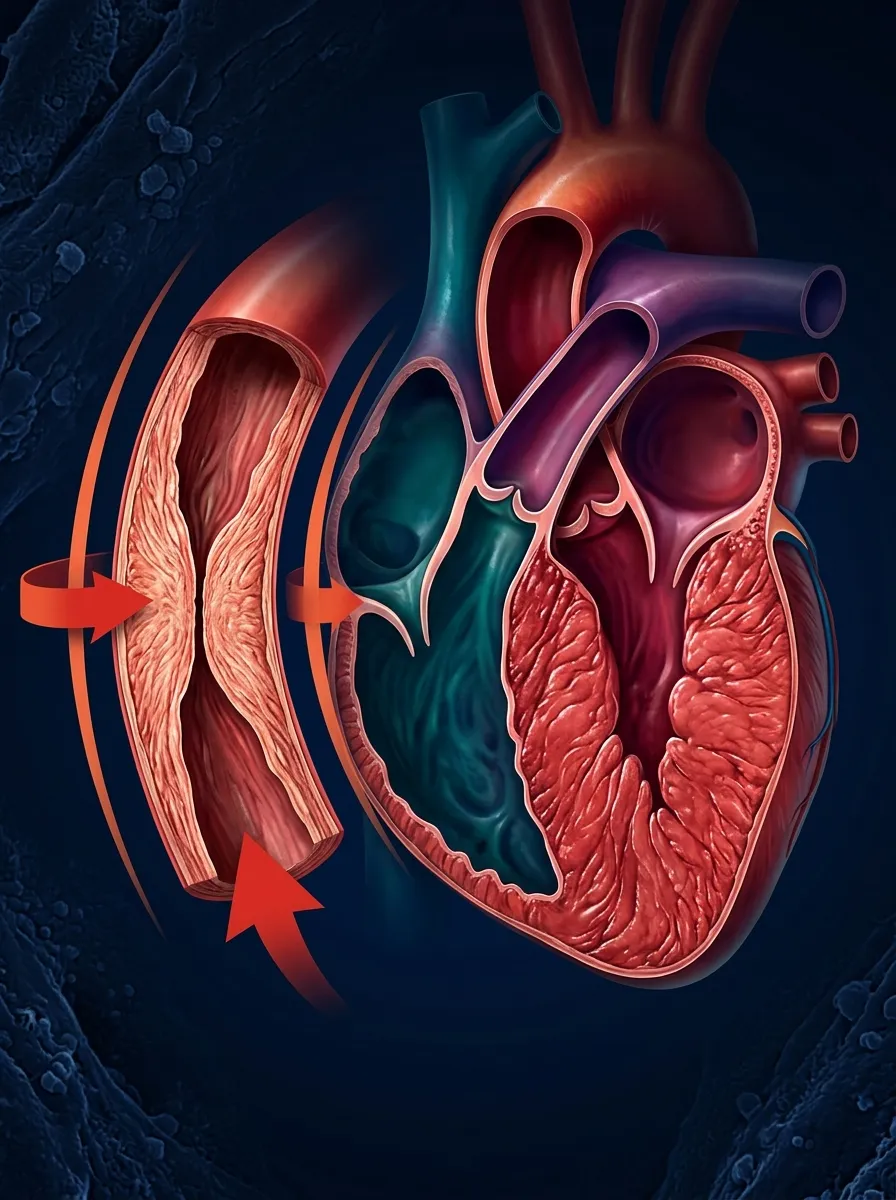
Hypertension is a sustained elevation of arterial blood pressure that, left untreated, produces end-organ damage and increases cardiovascular morbidity and mortality. The diagnostic threshold is set where the cardiovascular risk curve bends upward and drug treatment has been shown to reduce events.[1]
Two competing sets of office-based thresholds dominate international practice. The 2018 ESC/ESH guideline keeps the older threshold — office BP at least 140/90 mmHg for the diagnosis of hypertension, with a treatment target under 140/90 mmHg for most adults and 130 to 139 mmHg systolic if tolerated. The 2017 ACC/AHA guideline lowered the threshold to office BP at least 130/80 mmHg, with treatment target under 130/80 mmHg for most patients; the 2023 ESH guideline subsequently adopted the same 130 to 139 mmHg systolic target. The discrepancy is mainly semantic: both groups endorse the same treatment goal for most patients, but ACC/AHA classifies more people as hypertensive.[1]
The practical diagnostic sequence is therefore: (1) screen with office BP, (2) confirm with out-of-office BP (ambulatory or home) — because up to a third of apparent hypertension is white-coat (raised only in clinic) and up to 15 percent is masked (normal in clinic, raised outside). Without confirmation, treatment is treating a number, not a disease. [1]
Classification
Hypertension can be classified by office BP level, by aetiology, by end-organ damage, and by the clinical pattern (emergency vs urgency vs resistant). [1]
By office BP level (international frameworks — both shown because exam candidates are asked about both):[1]
2018 ESC/ESH
- Optimal: systolic under 120 and diastolic under 80 mmHg
- Normal: systolic 120 to 129 and/or diastolic 80 to 84 mmHg
- High-normal: systolic 130 to 139 and/or diastolic 85 to 89 mmHg
- Grade 1 hypertension: systolic 140 to 159 and/or diastolic 90 to 99 mmHg
- Grade 2 hypertension: systolic 160 to 179 and/or diastolic 100 to 109 mmHg
- Grade 3 hypertension: systolic at least 180 and/or diastolic at least 110 mmHg
- Isolated systolic hypertension: systolic at least 140 and diastolic under 90 mmHg
- Treatment threshold 140/90 mmHg (high CV risk: treat at 130/80)
2017 ACC/AHA
- Normal: under 120/80 mmHg
- Elevated: systolic 120 to 129 AND diastolic under 80 mmHg
- Stage 1 hypertension: systolic 130 to 139 OR diastolic 80 to 89 mmHg
- Stage 2 hypertension: systolic at least 140 OR diastolic at least 90 mmHg
- Treatment target under 130/80 mmHg for most patients
- Drug treatment recommended above 130/80 mmHg if 10-year ASCVD risk at least 10 percent
- Lowered the threshold — created a larger 'hypertensive' population to flag cardiovascular risk earlier
By aetiology: [1]
-
Primary (essential) hypertension — about 95 percent. No single identifiable cause. Driven by genetic predisposition interacting with environmental factors (sodium intake, obesity, alcohol, sedentary lifestyle, ageing, sympathetic overactivity, endothelial dysfunction). Diagnosed by exclusion of secondary causes. [1]
-
Secondary hypertension — about 5 percent, rising to 10 to 30 percent in the young (under 40 years) and in resistant hypertension. Common causes:
- Renal — renovascular disease (renal artery stenosis — atherosclerotic in older patients, fibromuscular dysplasia in young women), CKD, polycystic kidney disease, renin-secreting tumour.
- Endocrine — primary aldosteronism (Conn syndrome — hypokalaemic hypertension), phaeochromocytoma (paroxysmal hypertension, headache, palpitation, diaphoresis), Cushing syndrome, thyroid dysfunction, acromegaly.
- Vascular — coarctation of the aorta (radio-femoral delay, differential BP arms and legs, rib notching).
- Obstructive sleep apnoea — nocturnal hypertension, daytime sleepiness, snoring.
- Drug-induced — NSAIDs, oral contraceptive pill, corticosteroids, sympathomimetics (decongestants, cocaine, amphetamines), calcineurin inhibitors (cyclosporine, tacrolimus), erythropoietin, liquorice (apparent mineralocorticoid excess), venlafaxine.
- Pregnancy — gestational hypertension, pre-eclampsia, eclampsia (see Special Populations). [1]
-
Hypertensive emergency — severe BP elevation with acute target-organ damage. Defined by the end-organ injury, not the number; a patient with BP 200/120 and a chronic asymptomatic pattern is not an emergency. [1]
-
Hypertensive urgency — severe BP elevation without acute target-organ damage — historically over-treated; current consensus is to restart or up-titrate oral therapy and avoid precipitous BP fall. [1]
Epidemiology & Risk Factors
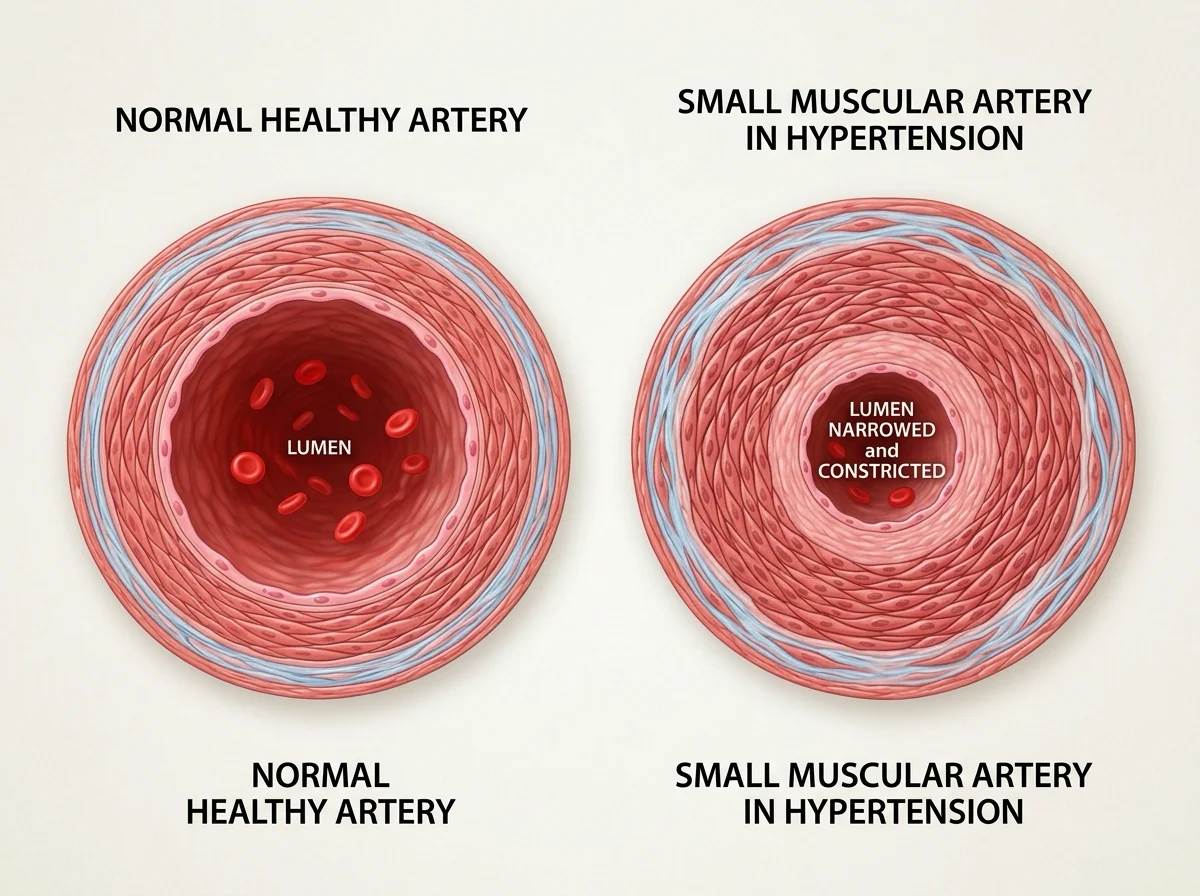
Hypertension is the single largest modifiable contributor to global mortality, accounting for roughly 10 to 12 million deaths per year through coronary disease, stroke, heart failure and CKD. [1]
Prevalence: roughly 1.28 billion adults worldwide with raised BP, 30 to 45 percent of adults, rising with age to over 60 percent in those aged over 60. Up to half are unaware of their diagnosis; among those on treatment, only one in three to four adults has BP under control. Regional variation is wide — highest prevalence in low- and middle-income countries and in people of African ancestry.[1]
Non-modifiable risk factors: age, male sex (until the seventh decade), family history of hypertension or premature cardiovascular disease, ethnicity (Black populations — earlier onset, more severe, more salt-sensitive), genetic syndromes (Liddle, Gordon, apparent mineralocorticoid excess — rare). [1]
Modifiable risk factors: high dietary sodium intake (above 2 g/day sodium / 5 g/day salt), low dietary potassium, obesity (central adiposity — each 5 kg weight gain raises SBP 4 mmHg), physical inactivity, excess alcohol (linear with intake — 1 standard drink per day raises SBP 1 mmHg), tobacco (acute rise; chronic atherosclerosis), chronic psychosocial stress, obstructive sleep apnoea. [1]
Drugs that raise BP: [1]
- NSAIDs (including ibuprofen, diclofenac, COX-2 inhibitors) — renal sodium retention; avoid in treated hypertension.
- Combined oral contraceptive pill (especially with hypertension, smoking, migraine — added thrombotic risk).
- Corticosteroids — mineralocorticoid effect.
- Calcineurin inhibitors (cyclosporine, tacrolimus) — post-transplant hypertension.
- Liquorice (glycyrrhizin) — inhibits 11β-hydroxysteroid dehydrogenase type 2, mimicking mineralocorticoid excess.
- Erythropoietin, venlafaxine, SNRI antidepressants, decongestants (pseudoephedrine), cocaine, amphetamines, anabolic steroids. [1]
Pathophysiology
Arterial pressure is the product of cardiac output and systemic vascular resistance (MAP = CO × SVR; CO = stroke volume × heart rate). Sustained hypertension requires one (or both) to remain elevated. [1]
1. Renal pressure-natriuresis curve shift. The kidney is the central organ in chronic hypertension. In a normotensive subject, an acute rise in arterial pressure produces natriuresis (pressure natriuresis) and the system resets. In hypertension, the pressure-natriuresis curve is shifted to the right and steeper — higher pressures are required to excrete the same sodium load. Salt sensitivity explains why a quarter to a third of normotensive adults, and a larger fraction of hypertensive patients (notably Black patients), retain sodium disproportionately and why thiazide diuretics are uniformly effective regardless of plasma renin activity. [1]
2. Renin–angiotensin–aldosterone system (RAAS). Juxtaglomerular cells sense renal perfusion pressure and tubular sodium load. Renin converts angiotensinogen (from liver) to angiotensin I; ACE (on pulmonary endothelium) converts angiotensin I to angiotensin II — a potent vasoconstrictor (increases SVR), stimulator of aldosterone secretion (sodium retention, potassium loss), promoter of vascular remodelling and cardiac hypertrophy, and stimulator of ADH and thirst. Excess RAAS activity is the rationale for ACE inhibitors, ARBs and direct renin inhibitors in hypertension. [1]
3. Sympathetic nervous system. Chronic sympathetic overactivity raises peripheral vascular resistance (alpha-adrenergic vasoconstriction), heart rate and contractility (beta-1), and stimulates renin release. It underpins the white-coat response, the obstructive-sleep-apnoea–induced hypertension and the obesity-related hypertension. It is also the target of beta-blockers, centrally acting drugs (clonidine, methyldopa — the latter first-line in pregnancy), and alpha-blockers. [1]
4. Endothelial dysfunction and vascular remodelling. Endothelium-derived nitric oxide (vasodilator) production falls; endothelin-1 and other vasoconstrictors rise. Arterial stiffening with ageing and chronic pressure elevation raises systolic and pulse pressure — the basis of isolated systolic hypertension in the elderly. [1]
5. Secondary-mechanism overviews: [1]
- Primary aldosteronism — autonomous aldosterone secretion (Conn adenoma or bilateral adrenal hyperplasia) drives renal sodium retention, potassium loss, and volume hypertension. Clue: hypertension with spontaneous or diuretic-induced hypokalaemia.
- Phaeochromocytoma — catecholamine-secreting adrenal medullary tumour; paroxysmal hypertension, headache, sweating, palpitation, pallor, sometimes with episodic hypotension on standing.
- Renal artery stenosis — chronic renal hypoperfusion drives renin release and a renin-mediated hypertension; ACE inhibitors/ARBs drop the glomerular filtration pressure and precipitate acute kidney injury in bilateral or solitary-kidney stenosis.
- Coarctation of the aorta — mechanical obstruction raises upper-limb pressure; the kidney, sensing lower pressure, activates RAAS.
- Obstructive sleep apnoea — recurrent nocturnal hypoxaemia and arousals drive chronic sympathetic overactivity.
- Liddle syndrome — gain-of-function ENaC mutation — sodium retention, suppressed renin and aldosterone, hypokalaemia — responds to amiloride.
- Cushing syndrome — cortisol-driven mineralocorticoid activity plus catecholamine sensitisation. [1]
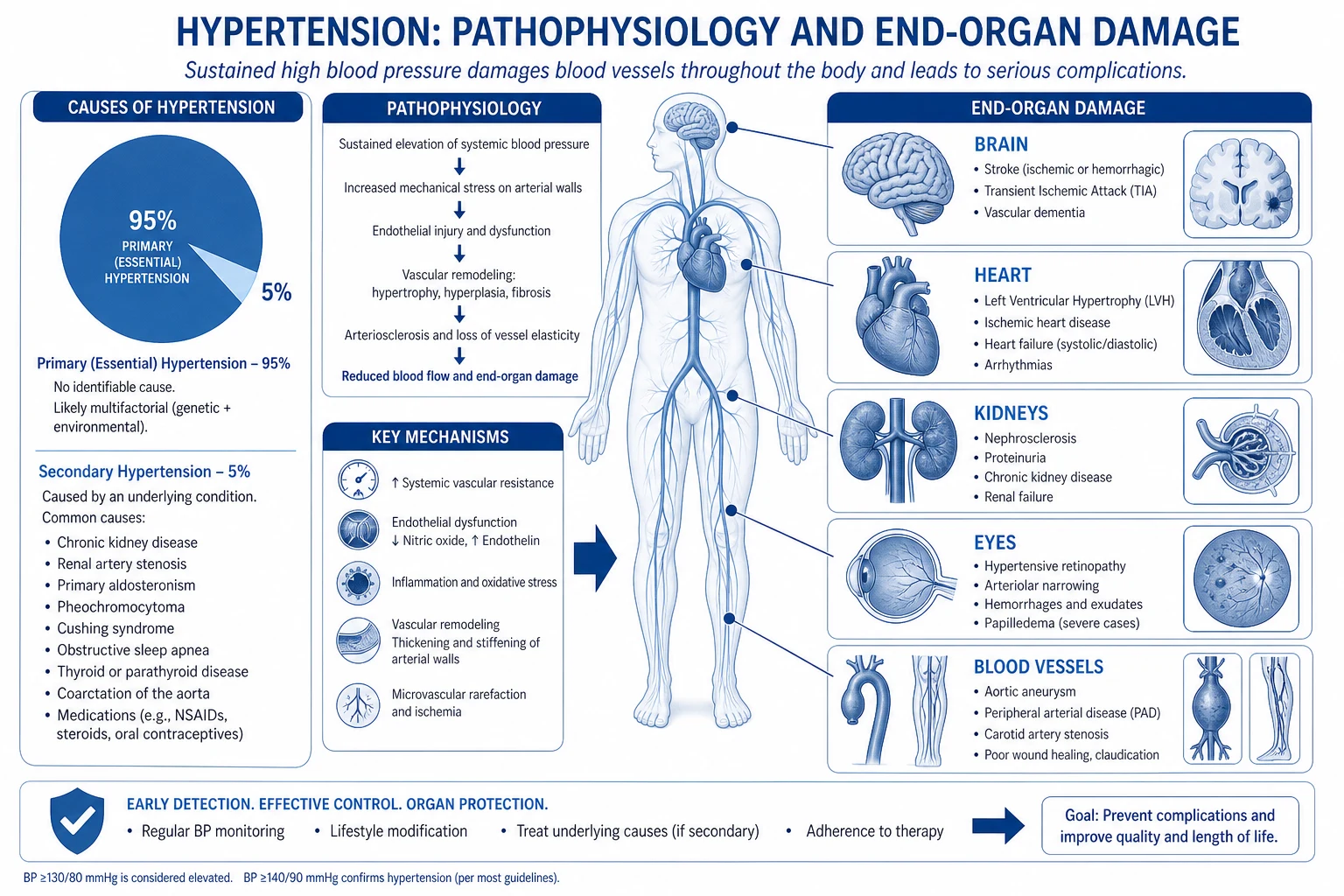
End-organ damage pathway. Pressure overload on the left ventricle produces concentric LV hypertrophy → diastolic dysfunction → heart failure (HFpEF first, then HFrEF). Pressure overload on the cerebral circulation accelerates atherosclerosis and predisposes to lacunar infarcts and intracerebral haemorrhage. Pressure overload on the renal circulation produces arteriolar hyalinosis, glomerulosclerosis and CKD. Pressure overload on the retinal circulation produces the KW grades of hypertensive retinopathy — focal vasospasm (grade 1), flame haemorrhages and cotton-wool spots (grade 3 — moderately severe), papilloedema (grade 4 — malignant). Aortic pressure predisposes to aneurysm formation and dissection. [1]
Clinical Presentation
Hypertension is usually asymptomatic — the "silent killer" — and is detected on screening or when an end-organ event occurs. The role of the examiner is therefore to measure the BP at every opportunity and screen populations at risk (over 40, overweight, family history, pregnancy, pre-op, new target-organ symptoms). [1]
Symptoms of severe or accelerating hypertension: [1]
- Early-morning occipital headache — the classic, gravity-related feature of rising ICP in hypertensive encephalopathy.
- Visual disturbance — blurring, diplopia; retinal haemorrhage, exudates, papilloedema on fundoscopy.
- Epistaxis — incidental BP elevation.
- Dizziness, lightheadedness — a presenting symptom; orthostatic hypotension must be considered.
- Palpitations, anxiety — phaeochromocytoma; consider sweating and pallor. [1]
Symptoms/signs of target-organ damage to elicit: [1]
- Brain — TIA, stroke, cognitive decline.
- Heart — exertional dyspnoea, orthopnoea, ankle swelling (HFpEF/HFrEF), angina.
- Kidney — nocturia (loss of concentrating ability), polyuria, frothy urine, pruritus (uraemia).
- Eye — visual loss (hypertensive retinopathy grade 3/4).
- Peripheral — claudication, absent pulses (atherosclerotic). [1]
Hypertensive emergency presentations (each prompts urgent imaging and IV treatment): [1]
- Acute aortic dissection — severe tearing chest or back pain, pulse deficit, BP differential between arms or between arm and leg.
- Acute pulmonary oedema — dyspnoea, pink frothy sputum, crackles, raised JVP.
- Acute coronary syndrome — chest pain, ECG changes, troponin rise.
- Hypertensive encephalopathy — headache, vomiting, vision change, confusion, seizures; posterior reversible encephalopathy syndrome (PRES) on MRI.
- Stroke (ischaemic or haemorrhagic) — focal neurological deficit.
- Eclampsia — pregnancy above 20 weeks with seizures or severe pre-eclampsia features.
- Acute kidney injury — oliguria, rising creatinine with severe hypertension. [1]
Differential Diagnosis
Hypertension is itself the diagnosis — but the differential the examiner wants is of the causes of secondary hypertension and of hypertensive emergency mimics. Always consider before labelling a patient as having primary essential hypertension: [1]
- Renal artery stenosis — sudden worsening hypertension, recurrent flash pulmonary oedema, asymmetric kidney size (over 1.5 cm difference) on ultrasound, bruits, fall of glomerular filtration rate after ACE inhibitor/ARB (especially in bilateral disease), secondary resistant hypertension.
- Primary aldosteronism (Conn syndrome) — hypertension with spontaneous hypokalaemia (or diuretic-induced hypokalaemia difficult to correct), metabolic alkalosis, suppressed renin, raised aldosterone.
- Phaeochromocytoma — paroxysmal hypertension with the 5 Ps: Pressure (episodic), Pain (headache), Perspiration, Palpitation, Pallor; sustained hypertension in the rest; positive family history (MEN 2A/2B); episodic hypotension after standing or with drugs (tricyclics, metoclopramide).
- Aortic coarctation — young patient (often under 40), radio-femoral delay or absent femoral pulses, BP higher in arms than legs (or differential between arms), rib notching on chest X-ray, hypertension refractory to multiple drugs.
- Cushing syndrome — central obesity, purple striae, proximal myopathy, easy bruising, glucose intolerance, hypokalaemia — screen with 24-hour urinary free cortisol or overnight dexamethasone suppression.
- Obstructive sleep apnoea — obesity, snoring, witnessed apnoeas, daytime sleepiness, non-dipper or reverse-dipper pattern on ABPM.
- Thyroid dysfunction — thyrotoxicosis (systolic hypertension, AF, weight loss) or hypothyroidism (diastolic hypertension, weight gain).
- Drug-induced hypertension — NSAIDs, oral contraceptive pill, corticosteroids, sympathomimetics, calcineurin inhibitors, erythropoietin, liquorice (pseudohyperaldosteronism).
- Renin-secreting tumour (reninoma) — rare; young patient, very high renin, hypokalaemia, secondary hypertension.
- Liddle syndrome, apparent mineralocorticoid excess, congenital adrenal hyperplasia (rare monogenic forms). [1]
When the patient presents with severe hypertension with symptoms, also consider: [1]
- Aortic dissection, subarachnoid haemorrhage, acute stroke — sudden severe hypertension with focal signs demands neuroimaging and CT aortogram.
- Acute kidney injury — secondary renal hypoperfusion.
- Pre-eclampsia/eclampsia in pregnancy beyond 20 weeks.
- Sympathetic crisis from drug withdrawal (clonidine, alcohol, benzodiazepine). [1]
Clinical & Bedside Assessment
1. BP measurement — technique is half the diagnosis. Most apparent hypertension is poor technique. Use a validated upper-arm cuff (choose the correct size — cuff bladder at least 80 percent of arm circumference; a too-small cuff falsely raises BP). Patient seated, back supported, feet flat on the floor, arm at heart level, after 5 minutes of rest, no caffeine or tobacco in the preceding 30 minutes, no talking. Take at least two readings one to two minutes apart on each visit; average them. Measure both arms on first visit — a sustained inter-arm difference above 10 mmHg signals vascular disease. Measure standing BP in the elderly, in diabetics, and in those on alpha-blockers or diuretics — orthostatic hypotension (a SBP fall of at least 20 mmHg or DBP at least 10 mmHg) is a quality-of-care and falls marker.[1]
2. Out-of-office confirmation — ABPM and HBPM. This is now essential to exclude white-coat hypertension and identify masked hypertension — both common and clinically important. [1]
Ambulatory BP monitoring (ABPM)
- 24-hour cuff readings programmed every 15 to 30 min during the day, every 30 to 60 min overnight
- Reproducible; provides daytime, night-time and 24-hour means
- Detects white-coat and masked hypertension
- Identifies 'non-dipping' or 'reverse-dipping' night-time pattern — high cardiovascular risk, suggests OSA or secondary cause
- Normal 24-hour average under 130/80 mmHg; daytime under 135/85; night-time under 120/70 (2018 ESC/ESH)
- Gold standard for diagnosis; preferred for resistant and secondary hypertension work-up
Home BP monitoring (HBPM)
- Patient measures BP at home (validated upper-arm device) twice morning + twice evening for 7 days; discard day 1; average the rest
- Normal home BP under 135/85 mmHg (2018 ESC/ESH) — lower than office threshold because out-of-office values average lower
- Improves adherence and patient engagement
- Practical where ABPM is unavailable or poorly tolerated
- Caveat — risk of over-treatment if not standardised, or patient anxiety/self-titration
3. Focused clinical examination for aetiology and end-organ damage. [1]
- General — obesity, central adiposity, stigmata of Cushing (purple striae, proximal myopathy), acromegaly, thyroid.
- Cardiovascular — apex beat (sustained, displaced = LV hypertrophy), 4th heart sound (S4 — stiff ventricle), aortic regurgitation (aortic root dilatation), carotid bruits.
- Fundoscopy — the KW (Keith-Wagener-Barker) grading: Grade 1 — mild arteriolar narrowing; Grade 2 — arteriovenous nipping; Grade 3 — flame haemorrhages, cotton-wool spots, hard exudates; Grade 4 — papilloedema (malignant hypertension).
- Abdomen — abdominal bruit (renal artery stenosis — present in about 50 percent), palpable kidneys (polycystic kidney disease), aortic pulsation.
- Peripheral — radio-femoral delay or radio-femoral BP differential (coarctation), absent foot pulses, ankle-brachial index if symptomatic.
- Neuro — focal deficit (stroke), cognitive screening (vascular dementia). [1]
Investigations
The aim is (1) confirm severity and exclude white-coat effect, (2) screen for end-organ damage, and (3) screen for a treatable secondary cause — the last guided by clinical clues rather than blind testing. [1]
First-line tests for any patient with newly diagnosed hypertension: [1]
- 12-lead ECG — LV hypertrophy by Sokolow–Lyon (S in V1 + R in V5/V6 at least 35 mm) or Cornell criteria; left atrial enlargement; ischaemia.
- Transthoracic echocardiogram — more sensitive for LV hypertrophy (LV mass index); diastolic dysfunction; systolic function; aortic root dilatation.
- Blood tests — urea, creatinine, estimated glomerular filtration rate (eGFR), sodium, potassium, fasting glucose and HbA1c, lipid profile, thyroid-stimulating hormone, uric acid, full blood count.
- Urinalysis — proteinuria, haematuria, albumin/creatinine ratio (raised in hypertensive nephropathy and diabetic nephropathy).
- Renal ultrasound — kidney size asymmetry (renal artery stenosis), cysts (ADPKD), cortical thinning (renal parenchymal disease). [1]
Additional tests driven by clinical clues: [1]
- Plasma renin activity and aldosterone — for primary aldosteronism screening. Raised aldosterone with suppressed renin; confirm with saline-load suppression test or captopril challenge.
- 24-hour urinary fractionated metanephrines (or plasma free metanephrines) — phaeochromocytoma screening in paroxysmal hypertension, episodic symptoms, or adrenal incidentaloma.
- 24-hour urinary free cortisol or overnight dexamethasone suppression — Cushing syndrome.
- Renal artery imaging — CT angiography or MR angiography for fibromuscular dysplasia (string-of-beads in young women) or atherosclerotic renal artery stenosis; renal arteriography remains the gold standard.
- Polysomnography — for obstructive sleep apnoea in resistant hypertension, non-dippers, obesity, snoring.
- Plasma or urinary catecholamines during a paroxysm if phaeochromocytoma suspected (sample on ice, specific assay).
- Ambulatory BP monitoring — for confirmation, masked/white-coat assessment, dipping status, and resistant hypertension work-up.
- Chest X-ray — cardiomegaly, aortic unfolding (dissection), rib notching (coarctation).
- Fundi photography or ophthalmoscopy — for grades 3/4 retinopathy (malignant hypertension). [1]
Diagnosis-level scoring — High-Yield Tools
ABPM cut-offs (2018 ESC/ESH): [1]
- 24-hour average ≥ 130/80 mmHg
- Daytime average ≥ 135/85 mmHg
- Night-time average ≥ 120/70 mmHg
- Dipping defined as a fall of 10 to 20 percent in night-time systolic BP — non-dippers and reverse-dippers (BP rises at night) have higher cardiovascular risk and warrant a search for secondary causes (OSA, primary aldosteronism, CKD). [1]
Sokolow–Lyon ECG LVH criterion: S in V1 + R in V5 or V6 ≥ 35 mm; Cornel criterion uses S in V3 + R in aVL > 28 mm (men) or > 20 mm (women). [1]
KW (Keith-Wagener-Barker) hypertensive retinopathy grading — reproduced for exam use: [1]
| Grade | Retinal findings | Clinical correlate |
|---|---|---|
| 1 | Mild generalised arteriolar narrowing | Benign hypertension |
| 2 | Focal / generalised narrowing + AV nicking | Moderate benign hypertension |
| 3 | Grade 2 + flame haemorrhages, cotton-wool spots, hard exudates | Severe; rising BP |
| 4 | Grade 3 + papilloedema | Malignant hypertension |
Hypertension — key numbers
Management — Resuscitation
The resuscitation problem is hypertensive emergency: severe BP with acute target-organ damage — handled in a high-dependency or intensive-care setting with titratable IV drugs. The guiding principle: do NOT normalise BP rapidly — the chronically hypertensive patient has shifted the cerebral and renal autoregulatory curves to the right; aggressive normalisation produces cerebral or coronary hypoperfusion and ischaemia.[1]
Bedside actions: [1]
- Airway / breathing / circulation — high-flow oxygen, two large-bore IV cannulae, urinary catheter, continuous ECG and intra-arterial BP monitoring.
- Confirm the emergency — finger-prick glucose (exclude hypoglycaemia), 12-lead ECG (LVH, ischaemia), urgent CT brain if neurological deficit or headache (exclude haemorrhage or PRES), CT aortogram if chest/back pain (dissection), troponin (ACS), creatinine and urine output (AKI), fundoscopy (grade 3/4 retinopathy), bedside echo (acute LV dysfunction, dissection flap, severe AS co-existing).
- Titrated IV therapy (drug choice depends on the target-organ pattern): [1]
Labetalol (α and β blocker)
- First-line for most hypertensive emergencies; safe in pregnancy (after magnesium)
- 20 mg IV bolus over 2 minutes — repeat 20 to 80 mg every 10 minutes up to 300 mg total
- Continuous infusion 1 to 2 mg/min — titrate to MAP target
- Avoid in acute decompensated heart failure, second/third-degree AV block, severe bradycardia
- Onset 5 minutes; duration 2 to 4 hours
Nicardipine (CCB)
- Selective arteriolar vasodilator; excellent in stroke and pre-eclampsia
- Initial infusion 5 mg/hour — titrate by 2.5 mg every 5 to 15 min to max 15 mg/hour
- Pure afterload reduction — avoid in severe aortic stenosis
- Onset 5 to 15 min; duration 30 min after infusion stops
Glyceryl trinitrate (GTN)
- Venodilator with arterial effects at higher dose; first-line in acute pulmonary oedema and acute coronary syndrome
- 5 mcg/min — titrate every 3 to 5 min by 5 to 10 mcg/min up to 200 mcg/min
- Avoid in RV infarction, severe AS, hyponatraemia; tolerance develops within hours
- Onset 1 to 2 min; duration 3 to 5 min
Sodium nitroprusside
- Pure arterio-venous dilator; universal titratable emergency drug (ICU only)
- 0.25 to 10 mcg/kg/min — invasive arterial monitoring mandatory
- Risk of cyanide toxicity above 1.5 mcg/kg/min for more than 6 to 8 hours, in renal/hepatic failure
- Avoid in pregnancy; protect from light
Hydralazine
- Direct arteriolar vasodilator; second-line outside pregnancy
- 5 to 10 mg IV bolus every 10 to 20 min; onset 5 to 20 min; duration 2 to 6 hours
- Reflex tachycardia and fluid retention; useful in pre-eclampsia when labetalol unavailable
BP targets during resuscitation (general adult emergency): [1]
- First hour — reduce MAP by up to 25 percent of the presenting value (not to absolute normal).
- Hours 1 to 6 — further 5 to 15 percent reduction aiming for BP 160/100 mmHg or lower.
- Over 24 to 48 hours — gradual titration to a stable oral regimen targeting under 140/90 mmHg long-term. [1]
Special emergencies override the generic target: [1]
- Aortic dissection — SBP under 120 mmHg in 20 minutes, HR under 60 — IV esmolol or labetalol first to reduce dP/dt, then sodium nitroprusside if BP still high. Pain control (morphine 2.5 to 5 mg IV).
- Acute ischaemic stroke without thrombolysis — withhold treatment unless SBP above 220 or DBP above 120 mmHg (permissive hypertension); lower by 10 to 20 percent over 24 hours if treating.
- Acute ischaemic stroke with thrombolysis — SBP under 185 mmHg before, under 180 mmHg after treatment, with titrated IV drugs.
- Acute intracerebral haemorrhage — SBP under 140 mmHg within 1 hour with nicardipine or labetalol (INTERACT-3, ATACH-2, INTERACT2).
- Acute pulmonary oedema — GTN 5 to 200 mcg/min + IV furosemide 20 to 80 mg; aim SBP under 140.
- Phaeochromocytoma — alpha-block first (phenoxybenzamine, phentolamine IV), only then beta-block (unopposed alpha hypertensive crisis if reversed).
- Eclampsia / severe pre-eclampsia — magnesium sulphate (4 g IV over 5 to 15 min, then 1 g/hour infusion) plus labetalol 20 mg IV bolus or hydralazine 5 to 10 mg IV; deliver the fetus when stable. [1]
Management — Definitive & Stepwise
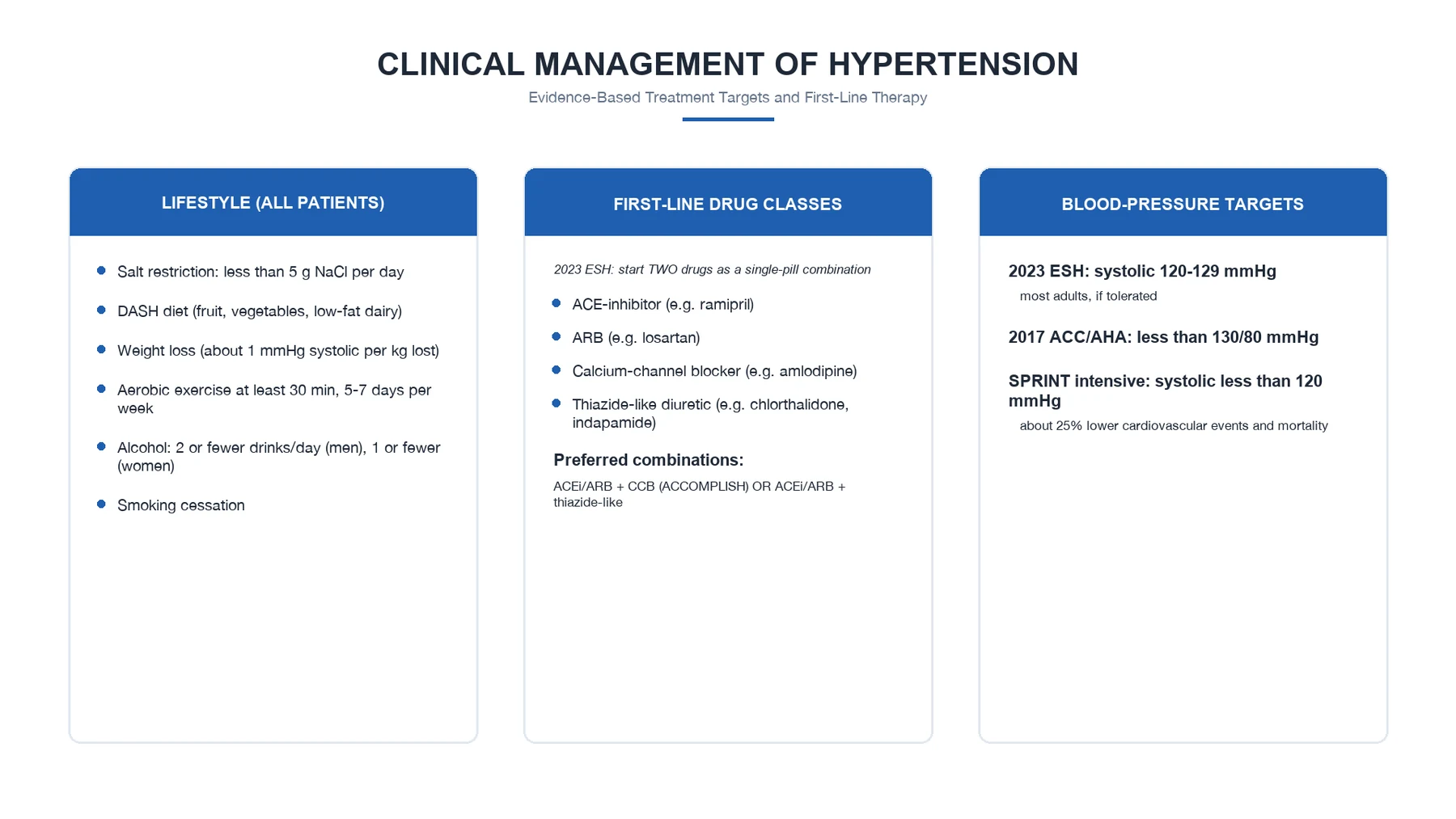
The definitive management of non-emergency hypertension is lifestyle modification combined with pharmacotherapy, selected by patient phenotype, comorbidity and pregnancy. [1]
1. Lifestyle (the foundation — should be reinforced at every visit): [1]
- Sodium restriction — under 2 g sodium per day (5 g salt); this alone lowers SBP by 5 to 8 mmHg.
- DASH diet — high in fruit, vegetables, low-fat dairy, wholegrain, nuts; low in saturated fat; another 11 mmHg SBP fall.
- Weight reduction — 5 to 10 percent body-weight loss; SBP 5 to 20 mmHg drop per 10 kg lost.
- Physical activity — moderate aerobic 150 minutes/week or vigorous 75 minutes/week; SBP 4 to 9 mmHg drop.
- Alcohol — under 14 units/week; under 2 standard drinks/day.
- Tobacco cessation — acute BP benefit small; huge cardiovascular benefit.
- Caffeine moderation, stress reduction, structured mindfulness. [1]
2. Pharmacotherapy — first-line and titration:[1]
The first-line drug classes for essential hypertension are: ACE inhibitor, ARB, long-acting dihydropyridine calcium-channel blocker, or thiazide-like diuretic (chlortalidone or indapamide) — alone or in combination. Beta-blockers are no longer first-line for uncomplicated hypertension but remain first-line where there is a separate indication (post-MI, HFrEF, AF rate control). [1]
Comorbidity-based first-line choice (high-yield exam list): [1]
- Black patient (without CKD, heart failure) — CCB (amlodipine 5 to 10 mg daily) or thiazide (chlortalidone 12.5 to 25 mg daily); ACE/ARB monotherapy is less effective as first-line in this group.
- Diabetes mellitus — ACE inhibitor or ARB (renal protection, RAAS-driven hypertension); add CCB or thiazide to titrate.
- Chronic kidney disease (CKD) — ACE inhibitor or ARB (renoprotective, proteinuria reduction); titrate to the highest tolerated dose; combine with CCB for BP control; loop diuretic replaces thiazide when eGFR below 30 mL/min/1.73 m².
- Heart failure with reduced EF (HFrEF) — ACE inhibitor/ARB/ARNI + beta-blocker + MRA + SGLT2 inhibitor (the four pillars); the ACE inhibitor and beta-blocker titrate the BP.
- Post-MI — beta-blocker + ACE inhibitor; titrate for BP and LV remodelling.
- Atrial fibrillation — consider rate-control beta-blocker or non-dihydropyridine CCB.
- Pregnancy — labetalol, nifedipine, methyldopa; ACE inhibitors and ARBs are contraindicated (teratogenic).
- Elderly with isolated systolic hypertension — CCB or thiazide (reduces pulse pressure); start low, titrate slow; watch for orthostatic hypotension. [1]
3. Stepwise protocol (2018 ESC/ESH; aligned with ACC/AHA): [1]
- Step 1 — monotherapy in low-risk grade 1 hypertension, or in those near target. Choose ACE inhibitor, ARB, CCB or thiazide-like.
- Step 2 — dual therapy if BP still above target after 4 weeks, or upfront in grade 2 / high-risk. Preferred combinations: ACEI/ARB + CCB, ACEI/ARB + thiazide, CCB + thiazide.
- Step 3 — triple therapy if still above target: ACEI/ARB + CCB + thiazide-like diuretic.
- Step 4 (resistant hypertension) — add spironolactone 25 to 50 mg daily (PATHWAY-2); alternatively amiloride, bisoprolol, doxazosin, or hydralazine.
- Step 5 — referral to hypertension specialist for confirmed refractory hypertension, suspected secondary cause not yet identified, or BP uncontrolled on four or more drugs. [1]
4. Common regimens with doses (high-yield for exam): [1]
| Indication | First-line | Alternative | Notes |
|---|---|---|---|
| Uncomplicated essential HTN | Amlodipine 5 to 10 mg daily (start 5 mg) OR Enalapril 10 to 20 mg daily OR Chlortalidone 12.5 to 25 mg daily | Irbesartan 150 to 300 mg daily; indapamide 1.5 to 5 mg | Combine second-line if not at target in 4 weeks |
| Diabetes + proteinuria | Ramipril 5 to 10 mg daily OR Irbesartan 150 to 300 mg daily | Amlodipine 5 to 10 mg daily | Titrate ACE/ARB to highest tolerated; check K⁺, creatinine in 1 to 2 weeks |
| CKD (any) | ACEI or ARB (e.g. enalapril 10 to 20 mg daily) + CCB or loop diuretic | Ramipril 5 to 10 mg + furosemide 20 to 80 mg daily | Hold ACE/ARB if K⁺ > 5.5 mmol/L or creatinine rises >30% |
| HFrEF | Sacubitril/valsartan 24/26 to 97/103 mg twice daily (target 97/103 mg) + bisoprolol 1.25 to 10 mg daily + spironolactone 25 mg daily + dapagliflozin 10 mg daily | Enalapril 10 to 20 mg twice daily if ARNI not available | "Four pillars"; the BP-target is permissive — drugs titrated to tolerability |
| Pregnancy | Labetalol 100 to 400 mg three times daily orally OR Nifedipine slow-release 20 to 60 mg daily OR Methyldopa 250 to 1000 mg three times daily | Hydralazine 25 to 50 mg three times daily | AVOID ACE inhibitors and ARBs (teratogenic); avoid diuretics in pre-eclampsia |
| Resistant HTN (≥ 3 drugs at optimal dose incl. diuretic) | Add Spironolactone 25 to 50 mg daily | Amiloride 5 to 10 mg daily; bisoprolol 5 to 10 mg; doxazosin 4 to 8 mg | Watch K⁺ if on ACE/ARB; check for non-adherence, OSA, secondary cause |
Stepwise Management
The detailed step-by-step protocol, in clinical order, for an adult with newly diagnosed essential hypertension (no comorbidity — choice modifies with comorbidity per above): [1]
- Confirm the diagnosis — office BP ≥ 140/90 mmHg (ESC/ESH) confirmed by ABPM or HBPM ≥ 130/80 or ≥ 135/85 mmHg respectively. Exclude white-coat (BP normal out-of-clinic) and masked (BP raised out-of-clinic despite normal office BP).
- Risk-stratify — calculate 10-year cardiovascular risk (SCORE2 / ASCVD); document target-organ damage (ECG, echo, eGFR, urine ACR, fundus).
- Lifestyle foundations — sodium < 2 g/day, DASH diet, weight, exercise, alcohol moderation, smoking cessation. Reassess at 3 months in low-risk grade 1 — lifestyle alone may be enough.
- Start a first-line drug for grade 2 (≥ 160/100) hypertension, high cardiovascular risk, or persistent grade 1 after lifestyle. Choose ACEI/ARB/CCB/thiazide. Counsel about the most common adverse effect of the chosen class.
- Review at 2 to 4 weeks — check BP (home or office), tolerability, and basic safety labs (creatinine, K⁺ if ACE/ARB; uric acid if thiazide).
- Titrate to target — if above target at 4 weeks, up-titrate the first drug; if still above target at 8 weeks, add a second (ACEI/ARB + CCB, ACEI/ARB + thiazide, CCB + thiazide). Use single-pill combination where possible — improves adherence.
- Triple therapy at 12 weeks if still above target — ACEI/ARB + CCB + thiazide; review non-adherence, white-coat, drug interactions (NSAIDs!).
- Resistant hypertension if still above target on three drugs at optimal doses including a diuretic — add spironolactone 25 to 50 mg daily as fourth-line; screen for secondary cause; refer.
- Long-term follow-up — every 3 to 6 months once controlled; continue lifestyle advice; review adherence and side-effects; recheck labs annually. [1]
Targets (systolic/diastolic office BP): [1]
- Most adults: < 140/90 mmHg (per ESC/ESH); lower to 130 to 139 systolic if tolerated.
- Diabetes or CKD: < 130/80 mmHg.
- High cardiovascular risk: < 130/80 mmHg (per most international guidelines).
- Elderly (over 80): 130 to 149 systolic if tolerated.
- Young/middle-aged, high CV risk, low side-effect burden: intensive control to systolic 120 to 129 mmHg (SPRINT-supported) where tolerated and safe. [1]
Specific Subtypes & Scenarios
- Hypertensive emergency (above 180/120 with TOD) — IV titrated therapy as above; HDU/ICU; controlled MAP fall by 10 to 20 percent in first hour; address the target-organ syndrome (dissection, pulmonary oedema, encephalopathy, stroke, eclampsia).
- Hypertensive urgency (above 180/120 without TOD) — re-start or up-titrate oral therapy; reassess in 24 to 72 hours; do NOT crash the BP — precipitous fall causes cerebral or coronary hypoperfusion.
- Resistant hypertension — BP above target on three or more drugs (including a diuretic) at optimal doses. Pre-test for non-adherence (pill count, biochemical) and pseudo-resistance (white-coat — ABPM). Search for secondary cause (OSA, primary aldosteronism, RAS, CKD, drug-induced). Fourth-line spironolactone 25 to 50 mg daily is the most evidence-backed add-on therapy (PATHWAY-2 trial). Alternatives: amiloride, bisoprolol, doxazosin, hydralazine.
- Refractory hypertension — BP uncontrolled on five or more drugs, including a long-acting thiazide and an MRA (e.g. chlortalidone + spironolactone); needs specialist centre referral and consideration of device-based therapy (RSD) — though evidence remains limited.
- Secondary hypertension — suspected categories — see Differential Diagnosis.
- Worsening hypertension in the elderly — consider renal artery stenosis (atherosclerotic), CKD, OSA, white-coat, drug interactions, secondary causes; review poly-pharmacy.
- Asymptomatic severe hypertension — commonest scenario of over-treatment; stability over hours is reassuring; restart or up-titrate oral therapy. [1]
Complications
Cardiac: left ventricular hypertrophy → heart failure (HFpEF first, then HFrEF); myocardial ischaemia (accelerated coronary atherosclerosis); atrial fibrillation (a common sequela); aortic root dilatation and aortic regurgitation. [1]
Cerebrovascular: stroke — both ischaemic (lacunar and large-vessel) and haemorrhagic (especially with uncontrolled grade 3 hypertension); vascular dementia; hypertensive encephalopathy with PRES; cerebral microbleeds. [1]
Renal: hypertensive nephrosclerosis (arteriolar hyalinosis, glomerulosclerosis) → chronic kidney disease → end-stage kidney disease; ischaemic nephropathy in atherosclerotic RAS. [1]
Ocular: hypertensive retinopathy — KW grades 1 to 4; malignant (grade 4) retinopathy with papilloedema. [1]
Vascular: aortic aneurysm and dissection, peripheral arterial disease, erectile dysfunction. [1]
Pregnancy-specific: fetal growth restriction, placental abruption, prematurity, pre-eclampsia/eclampsia; perinatal mortality. [1]
Treatment-related complications: [1]
- ACE inhibitor — dry cough (about 10 percent — switch to ARB); angioedema (rare but life-threatening — stop, never rechallenge); first-dose hypotension; hyperkalaemia; AKI in bilateral RAS or volume depletion; teratogenic.
- ARB — similar to ACE inhibitor without cough; teratogenic.
- CCB (dihydropyridine) — peripheral oedema (ankle — dihydropyridine-selective; does not respond to diuretic; reduce dose or add ACEI/ARB); flushing, headache, reflex tachycardia (rare with amlodipine).
- Thiazide-like diuretic — hypokalaemia, hyponatraemia, hyperuricaemia (gout flare), hyperglycaemia (new diabetes risk in metabolic syndrome), hyperlipidaemia, sexual dysfunction.
- Beta-blocker — bradycardia, fatigue, cold peripheries, bronchospasm (avoid in asthma), glucose intolerance, weight gain; abrupt withdrawal triggers rebound.
- Spironolactone — hyperkalaemia (especially with ACEI/ARB), gynaecomastia (switch to eplerenone); menstrual irregularity.
- Centrally acting drugs (clonidine, methyldopa) — sedation, dry mouth, rebound hypertension on withdrawal. [1]
Prognosis & Disposition
Prognosis depends on the absolute BP level, the 10-year cardiovascular risk, and the trajectory of end-organ involvement. Each 20 mmHg rise in systolic BP above 115 mmHg roughly doubles cardiovascular mortality across the lifespan. Reducing SBP by 10 mmHg cuts stroke risk by about a third and coronary risk by about a fifth in trials of 5-year duration. [1]
Key outcome data: [1]
- SPRINT — intensive BP control (SBP under 120 mmHg vs under 140 mmHg) reduced cardiovascular events by 25 percent and all-cause mortality by 27 percent in high-risk non-diabetic adults. Note the unblinded automated office BP method used.
- HOPE-3 — BP-lowering with candesartan + hydrochlorothiazide in intermediate-risk adults without cardiovascular disease reduced composite cardiovascular events by 24 percent, driven entirely by those with baseline SBP above 143 mmHg.
- 2017 ACC/AHA threshold shift — modelling suggests 8 to 12 percent more US adults classified as hypertensive, with a similar increase in those eligible for drugs; cost-effectiveness projections are favourable in high-risk subgroups. [1]
Follow-up cadence: [1]
- Stable, controlled — every 3 to 6 months.
- Recently diagnosed or step-up — every 2 to 4 weeks until controlled.
- Resistant or stage 2 / multiple risk factors — every 1 to 3 months.
- Post-emergency — within 7 to 14 days with primary care; sub-specialist review if secondary cause or organ damage. [1]
Special Populations
-
Pregnancy (chronic hypertension) — defined as BP ≥ 140/90 mmHg before 20 weeks. Treatment is indicated when BP is consistently ≥ 150/100 mmHg (mild chronic hypertension), and at lower thresholds in the presence of pre-eclampsia features. First-line: labetalol, nifedipine slow-release, methyldopa; ACE inhibitors and ARBs are CONTRAINDICATED (renal dysgenesis, oligohydramnios, skull ossification defects, neonatal renal failure). Control BP carefully — target under 140/90 mmHg but avoid hypotension (uteroplacental perfusion). Aspirin 75 to 162 mg daily from 12 weeks reduces pre-eclampsia risk (especially in high-risk women). [1]
-
Gestational hypertension — new hypertension after 20 weeks without proteinuria or end-organ features; usually resolves postpartum. Treat if BP ≥ 150/100 mmHg. [1]
-
Pre-eclampsia / eclampsia — new hypertension after 20 weeks with proteinuria or end-organ features (raised creatinine, transaminases, thrombocytopenia, neurological symptoms, fetal growth restriction). Eclampsia = seizures. Treatment: magnesium sulphate 4 g IV over 5 to 15 min loading, then 1 g/hour infusion for 24 hours plus labetalol 20 mg IV bolus then titrate, or hydralazine 5 to 10 mg IV. Deliver the fetus when stable — the definitive cure; expectant management only with mild disease under 34 weeks in a tertiary centre. [1]
-
Elderly (over 80) — start low, titrate slow; aim for standing BP under 150/90 mmHg with no orthostatic symptoms. Watch for falls, hyponatraemia (thiazide), hypokalaemia, and cognitive decline. Avoid alpha-blockers (orthostatic falls). [1]
-
Diabetes — ACEI/ARB first-line for renal and cardiovascular protection (in addition to BP control); target under 130/80 mmHg. Combined with SGLT2 inhibitor and statin. [1]
-
Chronic kidney disease — ACEI/ARB first-line; titrate to highest tolerated; check creatinine and K⁺ within 1 to 2 weeks of starting or up-titrating; combination with CCB for BP control; loop diuretic for eGFR < 30 mL/min/1.73 m². [1]
-
Black populations — CCB or thiazide-like first-line for monotherapy; same targets; earlier onset and more severe end-organ damage warrant early combined therapy. [1]
-
Children and adolescents — BP percentiles by age, sex and height; treat secondary causes early; avoid ACEI/ARB in pregnancy. [1]
-
Perioperative — continue beta-blockers and statins; omit ACEI/ARB on the day of surgery for major non-cardiac surgery to avoid intra-operative hypotension (consider continuing if LV dysfunction). Treat post-operative hypertension with short-acting agents (labetalol, esmolol, GTN). [1]
Evidence & Guidelines
Key guidelines the exam candidate must know: [1]
- 2018 ESC/ESH Guidelines for the Management of Arterial Hypertension — established the 140/90 diagnostic threshold and 130 to 139 mmHg systolic target; framework for ABPM/HBPM; phenotype-based first-line therapy; emergency treatment protocols.
- 2017 ACC/AHA/AAPA/ABC/ACPM/AGS/APhA/ASH/ASPC/NMA/PCNA Guideline (Whelton PK et al.) — lowered the threshold to 130/80 mmHg; four BP categories (normal, elevated, stage 1, stage 2); treatment target under 130/80 for most; aligned with SPRINT evidence.[1]
- 2023 ESH Guidelines — further alignment with ACC/AHA on the 130/80 threshold for diagnosis and the 130 to 139 systolic target.
- NICE NG136 (UK) — ABPM/HBPM-confirmed diagnosis; CCB first-line for over-55s or Black patients; ACEI/ARB first-line for younger; iterative combination therapy.
- ICMR (India) Hypertension Guidelines — adapted for the Indian population; emphasis on salt restriction, lifestyle; targets per cardiovascular risk.
Landmark trials and meta-analyses the exam candidate must know: [1]
- SPRINT (Systolic Blood Pressure Intervention Trial, 2015) — intensive control (SBP under 120 mmHg) reduced major cardiovascular events by 25 percent and all-cause mortality by 27 percent versus standard (under 140 mmHg) in non-diabetic high-risk adults. Stopped early for benefit.
- HOPE-3 (Heart Outcomes Prevention Evaluation-3, 2016) — candesartan + HCTZ in intermediate-risk adults reduced cardiovascular events by 24 percent overall, driven by those with SBP above 143 mmHg.
- PATHWAY-2 (2015) — spironolactone 25 to 50 mg daily was the most effective fourth-line agent in resistant hypertension versus bisoprolol, doxazosin and placebo.
- ALLHAT (2002) — chlortalidone, amlodipine, lisinopril; thiazide-like diuretic was at least as good as newer agents in preventing cardiovascular events in high-risk adults with hypertension.
- ONTARGET (2008) — telmisartan vs ramipril; combined ACEI/ARB caused more adverse events without benefit; do not combine ACE inhibitor with ARB.
- ADVANCE (2007) — perindopril + indapamide reduced mortality in type 2 diabetes regardless of initial BP.
- PROGRESS (2001) — perindopril + indapamide reduced stroke recurrence after TIA/stroke.
- Meta-analyses — Law et al. (2009) — across 147 trials, all major antihypertensive classes reduce cardiovascular events proportional to BP fall; no class difference per mmHg; atenolol worse per mmHg for stroke; diuretics and CCBs marginally better in prevention of stroke in older adults. [1]
Regional practice nuances: [1]
- UK (NICE NG136) — ABPM-confirmed diagnosis; CCB first-line for over 55 or Black patient; ACEI/ARB first-line for under 55 and not Black; iterative dual/triple therapy if not at target.
- US (ACC/AHA) — 130/80 threshold; SPRINT-aligned intensive targets for high-risk patients.
- India (ICMR) — high prevalence of salt-sensitive hypertension; lifestyle and salt reduction high priority; phenotypically CCB and thiazide combination common.
- Europe (ESC/ESH) — 140/90 threshold with 130/80 target in high-risk; phenotype-driven first-line.
- Pregnancy — varies; methyldopa remains in guidelines but labetalol and nifedipine are often preferred for tolerability. [1]
Exam Pearls
- Hypertension = sustained BP above 140/90 mmHg (ESC/ESH) OR above 130/80 mmHg (ACC/AHA) — confirm with ABPM/HBPM before lifelong treatment.
- Primary 95 percent, secondary 5 percent — but secondary rises to 10 to 30 percent in the young (under 40), in resistant hypertension, and where clues (hypokalaemia, abdominal bruit, paroxysmal symptoms, radio-femoral delay) point to a cause.
- First-line: ACE inhibitor (enalapril 10 to 20 mg daily, ramipril 5 to 10 mg) or ARB (irbesartan 150 to 300 mg daily) or CCB (amlodipine 5 to 10 mg daily) or thiazide-like diuretic (chlortalidone 12.5 to 25 mg daily) — choose by comorbidity (ACEI/ARB for diabetes/CKD; CCB or thiazide for Black patients; methyldopa/labetalol/nifedipine for pregnancy).
- ACE inhibitor cough — switch to ARB. ACE inhibitor angioedema — stop and never use again (cross-reactivity with ARB low but consider ARB use with caution).
- Targets: under 140/90 mmHg for most; under 130/80 mmHg for diabetes, CKD, or high CV risk; intensive to systolic 120 to 129 mmHg when tolerated per SPRINT.
- Resistant hypertension = above target on three drugs (including a diuretic) at optimal doses; check adherence and screen for secondary cause; add spironolactone 25 to 50 mg daily (PATHWAY-2 fourth-line winner).
- Emergency = above 180/120 mmHg WITH target-organ damage — treat in HDU/ICU with titrated IV therapy (labetalol 20 mg IV bolus then infusion, nicardipine, GTN, sodium nitroprusside, hydralazine); reduce MAP by 10 to 20 percent in the first hour; do not normalise rapidly (cerebral/coronary hypoperfusion). Urgency = above 180/120 mmHg WITHOUT target-organ damage — restart or up-titrate oral therapy; do not crash BP.
- Clues to secondary hypertension: under 40, resistant (three or more drugs at optimal doses), hypokalaemia, abdominal bruit, paroxysmal symptoms with headache and sweating, radio-femoral delay or arm-leg BP differential.
- Pregnancy: avoid ACEI/ARB (teratogenic); labetalol, nifedipine, methyldopa; severe pre-eclampsia or eclampsia — magnesium sulphate 4 g IV loading, then 1 g/hour plus BP control and delivery.
- Phaeochromocytoma — alpha-block FIRST (phenoxybenzamine / phentolamine), then beta-block — reversing the sequence causes hypertensive crisis.
- Aortic dissection — SBP under 120 mmHg in 20 minutes, HR under 60 — IV beta-block first (labetalol or esmolol), then nitroprusside if BP remains elevated.
- CKD with bilateral RAS — ACE/ARB will precipitate AKI; image the renal arteries before starting.
- Drug interactions — NSAIDs blunt every antihypertensive class; the single commonest reason for "treatment-resistant" is over-the-counter NSAID use.
- SPRINT vs ACCORD — intensive control (SBP under 120 mmHg) was of clear benefit in SPRINT (no diabetics) but neutral in ACCORD (diabetics) — the threshold for tight control is debated. [1]
Causes of secondary hypertension — mnemonic
ABCDE
Primary hyperaldosteronism (hypokalaemic HTN); coarctation (young, radio-femoral delay)
Athterosclerotic older patient, fibromuscular dysplasia in young women; ACE/ARB precipitous AKI
Striae, central obesity, hypokalaemia (Cushing); episodic HTN + 5 Ps (phaeo)
Always check medication and recreational drug history
Hyper- and hypothyroidism, growth hormone excess, pregnancy states
Exam application bank (NEET-PG / INICET)
One-line answer
Hypertension = sustained office BP at least 140/90 mmHg (2018 ESC/ESH) or at least 130/80 mmHg (2017 ACC/AHA). Primary (essential) hypertension accounts for about 95 percent of cases — a multifactorial disorder of salt sensitivity, sympathetic overactivity, RAAS activation, endothelial dysfunction and arterial stiffening. Secondary causes (about 5 percent) are renal (renovascular disease, CKD, polycystic kidneys), endocrine (primary aldosteronism, phaeochromocytoma, Cushing syndrome, thyroid disease), vascular (coarctation of the aorta, renal artery stenosis), obstructive sleep apnoea, and drug-induced (NSAIDs, oral contraceptive pill, corticosteroids, sympathomimetics, calcineurin inhibitors, liquorice). First-line therapy for most adults: an ACE inhibitor or ARB, a long-acting dihydropyridine calcium-channel blocker (CCB), or a thiazide-like diuretic (chlortalidone 12.5 to 25 mg daily) [1]
Worked stems (answer without another resource)
Stem 1 — Classic presentation. Map symptoms to mechanism; name the first investigation and first treatment step with dose/route if drug therapy is standard. [1]
Stem 2 — Unstable / complicated. List red flags that force immediate resuscitation, theatre, ICU, antidote, or reperfusion — and what you do in the first 15 minutes. [1]
Stem 3 — Atypical group. Elderly, pregnancy, child, or immunocompromised: how presentation and thresholds change. [1]
Stem 4 — Differential trap. Name the three closest mimics and one discriminator for each. [1]
Stem 5 — Disposition. Who goes home with safety-netting, who is admitted, who needs HDU/ICU/theatre, and what follow-up is mandatory. [1]
Rapid viva checklist
- Definition + classification
- Pathophysiology chain
- Bedside signs / criteria
- Score with exact components (if any)
- Emergency bundle
- Definitive therapy with doses
- Complications of disease and of treatment
- Special populations
- Guideline/trial name if classic
- Three exam traps
Coverage self-check
If you cannot answer any stem above from this page alone, re-read the matching section — the page is intended to be self-sufficient for final-prof and NEET-PG/INICET questions on Hypertension.
References
- [1]Whelton PK, Carey RM, Aronow WS, et al. 2017 ACC/AHA/AAPA/ABC/ACPM/AGS/APhA/ASH/ASPC/NMA/PCNA Guideline for the Prevention, Detection, Evaluation, and Management of High Blood Pressure in Adults: A Report of the American College of Cardiology/American Heart Association Task Force on Clinical Practice Guidelines Hypertension, 2018.PMID 29133356
- [2]Lee YK, et al. Structural and in vitro digestibility properties of esterified maca starch with citric acid and its application as an oil-in-water (O/W) pickering emulsion stabilizer Int J Biol Macromol, 2019.PMID 31102681
- [3]Sinsch U, et al. Density regulation in toad populations (Epidalea calamita, Bufotes viridis) by differential winter survival of juveniles J Therm Biol, 2016.PMID 26724194
- [4]Wang PK, et al. Low-latency single channel real-time neural spike sorting system based on template matching PLoS One, 2019.PMID 31756211
- [5]Williams B, Mancia G, Spiering W, et al. Ten Commandments of the 2018 ESC/ESH HTN Guidelines on Hypertension in Adults Eur Heart J, 2018.PMID 30990869
- [6]ONTARGET Investigators; Yusuf S, Teo KK, Pogue J, et al. Telmisartan, ramipril, or both in patients at high risk for vascular events N Engl J Med, 2008.PMID 18378520
- [7]Kreutz R, Brunström M, Thomopoulos C, et al. 2024 European Society of Hypertension clinical practice guidelines for the management of arterial hypertension Eur J Intern Med, 2024.PMID 38914505
- [8]Law MR, Morris JK, Wald NJ. Use of blood pressure lowering drugs in the prevention of cardiovascular disease: meta-analysis of 147 randomised trials in the context of expectations from prospective epidemiological studies BMJ, 2009.PMID 19454737
- [9]SPRINT Research Group; Lewis CE, Fine LJ, Beddhu S, et al. Final Report of a Trial of Intensive versus Standard Blood-Pressure Control N Engl J Med, 2021.PMID 34010531
- [10]Williams B, MacDonald TM, Morant S, et al. Spironolactone versus placebo, bisoprolol, and doxazosin to determine the optimal treatment for drug-resistant hypertension (PATHWAY-2): a randomised, double-blind, crossover trial Lancet, 2015.PMID 26414968
- [11]Goff DC Jr, Lloyd-Jones DM, Bennett G, et al. Blood-Pressure and Cholesterol Lowering in the HOPE-3 Trial N Engl J Med, 2016.PMID 28102987
- [12]Jamerson K, Weber MA, Bakris GL, et al. Benazepril plus amlodipine or hydrochlorothiazide for hypertension in high-risk patients N Engl J Med, 2008.PMID 19052124
- [13]Collier DJ, Poulter NR, Dahlöf B, et al. Impact of amlodipine-based therapy among older and younger patients in the Anglo-Scandinavian Cardiac Outcomes Trial-Blood Pressure Lowering Arm (ASCOT-BPLA) J Hypertens, 2011.PMID 21297503
- [14]Böhm M, Schumacher H, Teo KK, et al. Resting heart rate and cardiovascular outcomes in diabetic and non-diabetic individuals at high cardiovascular risk analysis from the ONTARGET/TRANSCEND trials Eur Heart J, 2020.PMID 30590564
- [15]Cho SMJ, Koyama S, Honigberg MC, et al. AHA PREVENT Equations and Cardiovascular Disease Risk in Diverse Health Care Populations J Am Coll Cardiol, 2025.PMID 40669956