Dermatology · Medicine
Acne vulgaris
Also known as Acne · Common acne · Adolescent acne · Adult female acne
Acne vulgaris is a chronic inflammatory disease of the pilosebaceous unit driven by follicular hyperkeratinisation, sebum overproduction, Cutibacterium acnes proliferation and innate immune activation. Fellowship-level assessment demands precise classification (comedonal, inflammatory, nodular, special forms), severity grading, differential diagnosis of acneiform eruptions, rational topical and systemic therapy with antibiotic stewardship, hormonal and isotretinoin regimens, management of acne fulminans, and awareness of scarring and psychosocial impact.
On this page & tools
Your progress
Saved locally on this device.
Exam tags
Red flags
Definition & Classification
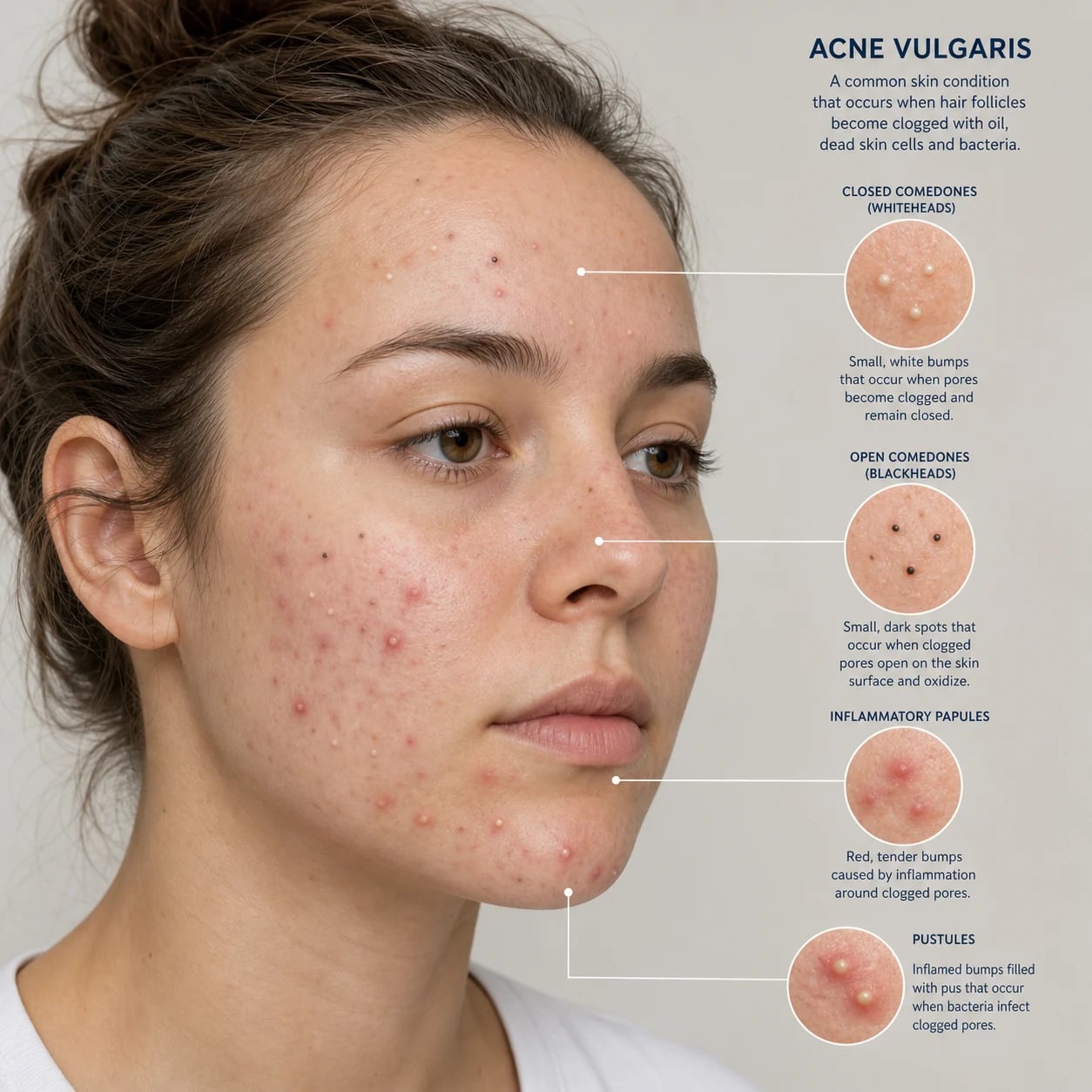
Acne vulgaris is a chronic inflammatory disease of the pilosebaceous unit that typically affects sebaceous-rich areas of the face, neck, trunk and upper arms. The primary lesions are comedones (non-inflammatory) and papules, pustules and nodules (inflammatory). It is classified clinically by dominant lesion type and severity: [1]
| Type | Dominant lesions | Notes |
|---|---|---|
| Comedonal | Open and closed comedones | Often mild; early adolescent presentation |
| Papulopustular | Papules and pustules | Moderate disease; risk of post-inflammatory erythema and hyperpigmentation |
| Nodular/cystic | Nodules, cysts, sometimes abscesses | Severe; high scarring risk |
| Conglobate | Nodules, abscesses, sinus tracts, grouped comedones | Severe, chronic; scarring inevitable |
Severity is usually graded as mild, moderate or severe based on lesion type, count, extent and scarring, supplemented by tools such as the Global Acne Grading System (GAGS) and the Investigator's Global Assessment (IGA).[1][3]
Special forms and life-stage variants
- Neonatal acne — small papulopustules in the first weeks of life, thought to reflect maternal androgens; self-limiting.
- Infantile acne — onset between 3 and 12 months; may persist and warrants follow-up because of androgen-exclusion considerations.
- Adolescent acne — the most common form, driven by pubertal androgens.
- Adult/persistent acne — increasingly recognised, especially in women; often hormonal, jawline and lower-face predominant.
- Acne conglobata — severe, chronic, nodulocystic disease with grouped comedones, abscesses and sinus tracts.
- Acne fulminans — acute, ulcerative, febrile, systemic variant often with osteolytic bone lesions and polyarthralgia.
- Acne mechanica — occlusion/friction-induced (helmets, masks, instruments).
- Drug-induced acneiform eruptions — corticosteroids, androgens, lithium, epidermal growth-factor receptor inhibitors, mTOR inhibitors, isoniazid.
- SAPHO syndrome — synovitis, acne, pustulosis, hyperostosis, osteitis; acne can be a clue. [1]
Epidemiology & Risk Factors
Acne is one of the most common skin diseases worldwide. Peak prevalence occurs in adolescence, affecting approximately 85% of people aged 12–24 years, but a substantial minority have disease persisting into the third and fourth decades, with adult female acne now a major and distinct phenotype.[5]
Risk factors and exacerbating factors [1]
- Genetics — family history of acne is associated with earlier onset and more severe disease.
- Androgens — pubertal, menstrual-cycle, PCOS or exogenous androgens increase sebum production.
- Diet — high-glycaemic-load diets and skimmed milk are most consistently associated with acne in observational studies; evidence for chocolate and whey is less robust.
- Stress — psychological stress can exacerbate acne through neuroendocrine pathways.
- Occupational/friction — occlusive clothing, masks, helmets, topical oils and cosmetics.
- Medications — corticosteroids, androgens, lithium, phenytoin, isoniazid, EGFR inhibitors, mTOR inhibitors.
- Smoking — association is inconsistent; some studies link smoking to non-inflammatory and adult acne. [1]
Pathophysiology
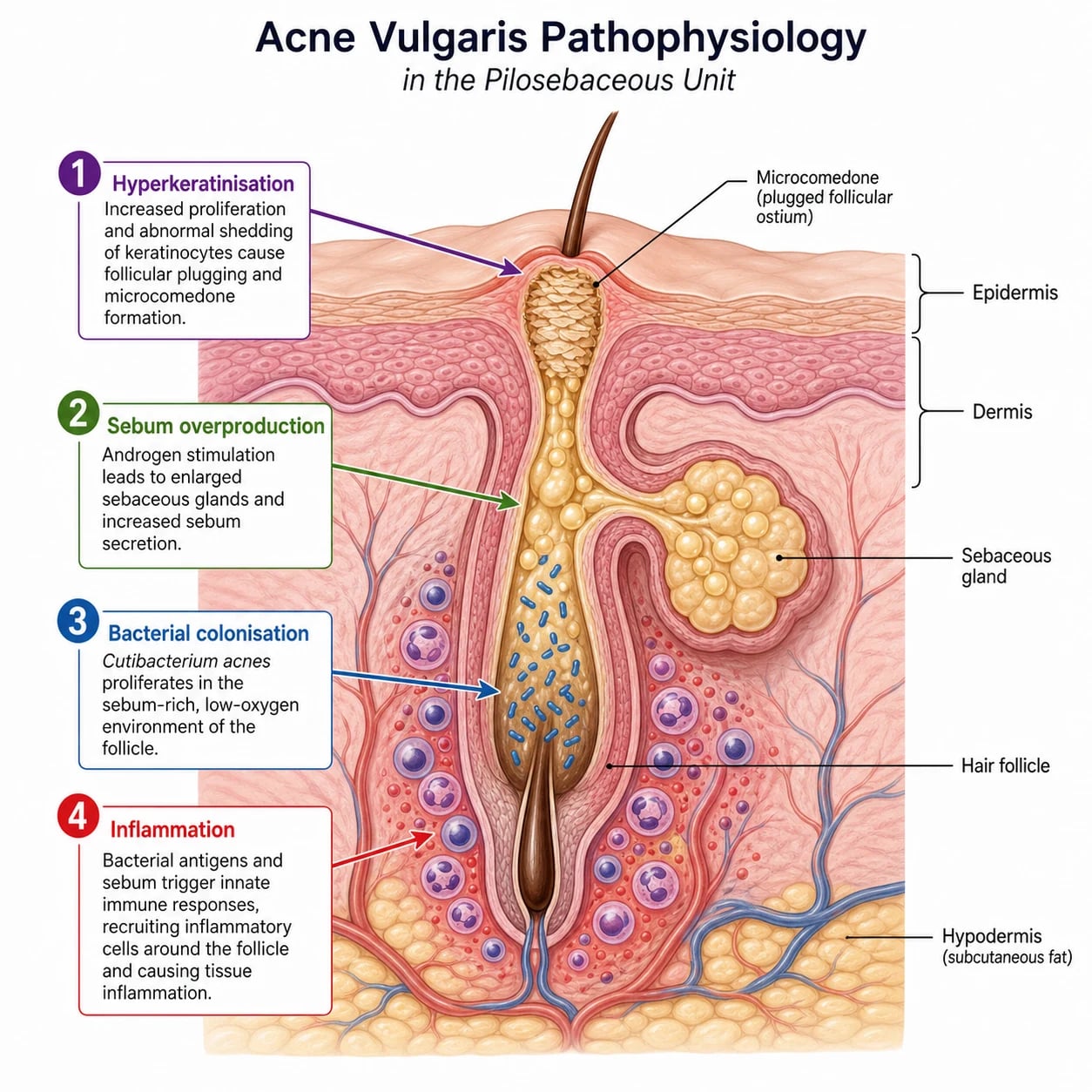
Four interlinked processes drive acne formation: [1]
- Follicular hyperkeratinisation — abnormal desquamation of keratinocytes within the follicular infundibulum produces a microcomedone, the precursor lesion.
- Sebum overproduction — androgen-driven sebaceous gland activity increases sebum output; sebum composition changes (reduced linoleate, altered squalene/oleic acid ratio) may also be pro-inflammatory.
- Cutibacterium acnes proliferation — the anaerobic, lipophilic bacterium colonises the plugged follicle.
- Inflammation and innate immunity — C. acnes activates Toll-like receptor 2 (TLR2) on keratinocytes and sebocytes, triggering IL-1α, IL-8, TNF-α and other cytokines; neutrophils and Th17 responses amplify inflammation. [1]
Therapeutic targets
| Pathogenic factor | Targeted drug classes |
|---|---|
| Follicular hyperkeratinisation | Topical retinoids (adapalene, tretinoin, tazarotene, trifarotene), azelaic acid, salicylic acid |
| Sebum production | Isotretinoin, hormonal therapy (COCs, spironolactone), clascoterone |
| C. acnes | Benzoyl peroxide, topical/systemic antibiotics |
| Inflammation | Topical retinoids, dapsone, oral tetracyclines, isotretinoin, intralesional corticosteroids |
Clinical Presentation
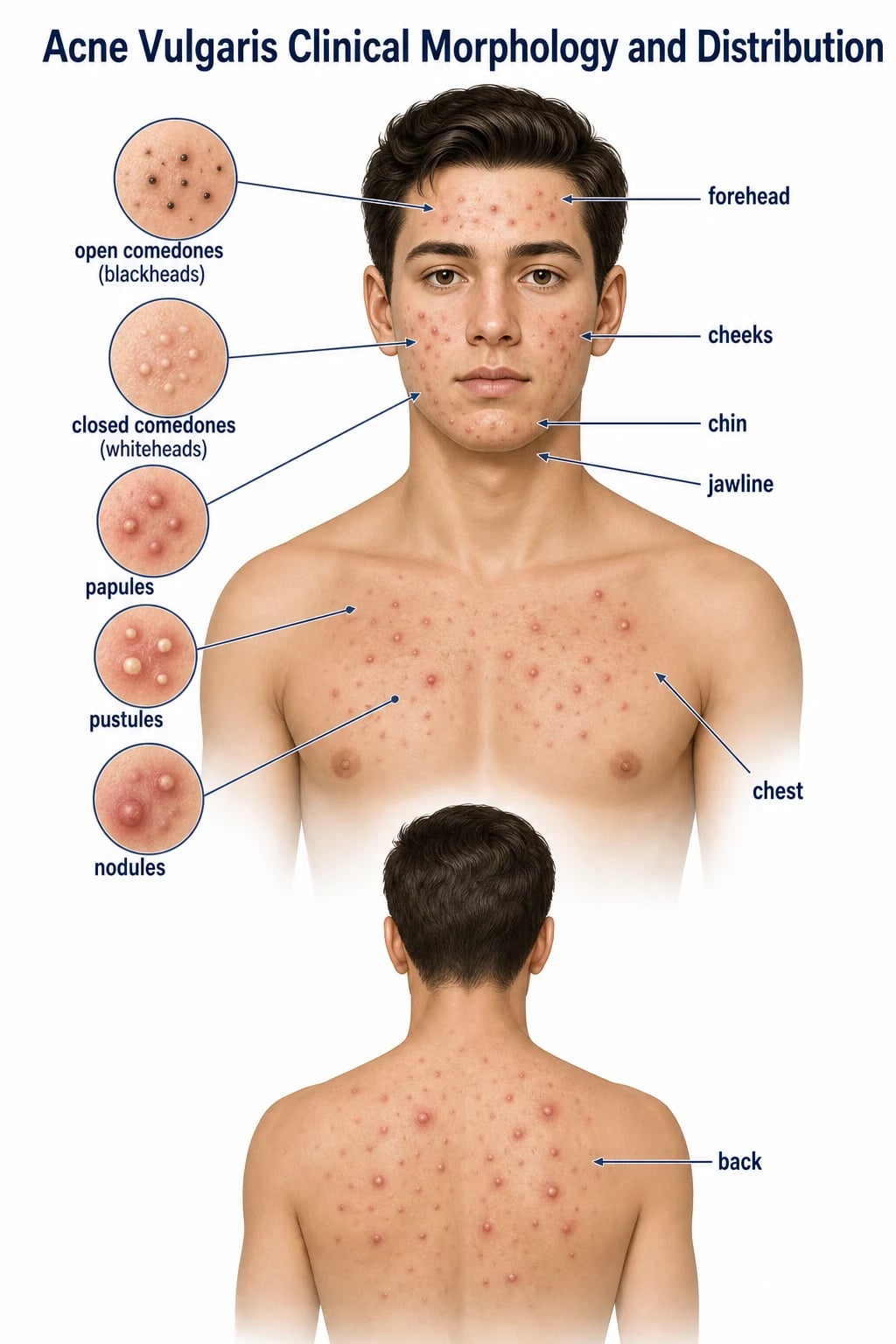
Lesion morphology
- Comedones — non-inflammatory lesions.
- Open comedones (blackheads) — dilated follicular openings with oxidised keratin/sebum.
- Closed comedones (whiteheads) — small, skin-coloured, non-follicular-pore-visible papules.
- Inflammatory lesions — erythematous papules, pustules, nodules and cysts.
- Secondary changes — excoriations, crusting, post-inflammatory erythema, post-inflammatory hyperpigmentation and scarring. [1]
Distribution
- Face — forehead, cheeks, nose, chin and jawline; adult female acne often clusters on the lower face and jaw.
- Trunk — back and chest are commonly affected, especially in males; truncal acne carries a high scarring risk and may be overlooked if treatment focuses only on the face. [1]
Severity assessment
| Tool | What it measures | Notes |
|---|---|---|
| GAGS | Lesion type, count and regional factor | Score 0 = clear; 1–18 = mild; 19–30 = moderate; 31–38 = severe |
| IGA | Global severity on a 5-point scale | 0 = clear; 4 = severe; used in trials |
| Leeds revised scale | Facial and truncal acne photographs | Standardised photographic grading |
Acne fulminans
A dermatology emergency: sudden onset of ulcerative, necrotic, nodulocystic acne with fever, malaise, arthralgia, myalgia, leucocytosis and elevated inflammatory markers. Osteolytic bone lesions (sternum, clavicles, pelvis) may occur. It can be spontaneous or triggered by isotretinoin. Management requires urgent systemic corticosteroids (e.g. prednisolone 0.5–1 mg/kg/day) plus isotretinoin once inflammation is controlled; dapsone and biologics are alternatives in refractory cases.[23][24]
Acne fulminans — clinical pearls
Acne fulminans classically affects adolescent males aged 12–20 years with a personal or family history of severe acne. Triggers include recent commencement of isotretinoin (the most common iatrogenic precipitant), high-dose vitamin B12, androgens, systemic corticosteroids (paradoxically during withdrawal) and Epstein-Barr virus infection. The eruption evolves rapidly over days to weeks from truncal papulopustules to haemorrhagic, ulcerative, necrotic nodules and plaques that ooze and crust with apparent systemic toxicity (pyrexia, weight loss, lymphadenopathy, hepatosplenomegaly, arthralgia, myalgia, bone pain). [1]
Laboratory findings include neutrophilic leucocytosis, raised erythrocyte sedimentation rate and C-reactive protein, anaemia of chronic disease, and elevated transaminases. Radiographs or MRI may demonstrate osteolytic lesions of the clavicles, sternum, ribs, pelvis and long bones — reflecting sterile neutrophilic osteomyelitis. Skin biopsy shows dense dermal neutrophilic infiltrates with follicular rupture and overlying ulceration; differential from pyoderma gangrenosum and Sweet syndrome may require clinicopathological correlation. [1]
Management ladder. Admit or arrange urgent same-day dermatology review. Initial therapy is prednisolone 0.5–1 mg/kg/day for 2–4 weeks to dampen the inflammatory storm, then introduce low-dose isotretinoin (0.1–0.25 mg/kg/day) once fever and ESR have settled. The corticosteroid is then tapered over 4–8 weeks as the isotretinoin dose is titrated upward. Adjunctive options include dapsone 50–100 mg daily (with G6PD screening), salicylic acid soaks and intralesional triamcinolone for active nodules, and biologic agents such as adalimumab or anakinra for refractory, corticosteroid-dependent disease. NSAIDs provide symptomatic analgesia for the osteoarticular pain. Early aggressive therapy limits permanent atrophic scarring — sequelae include pitted and cribriform atrophic scars across the trunk, which remain a major cosmetic concern.[23][24]
Acne conglobata
A severe, chronic, suppurative nodulocystic acne without systemic features. It typically affects adult men aged 18–30 and presents on the trunk, buttocks, proximal limbs and chest with grouped inflammatory nodules, deep bridging cysts, double-headed comedones and sinus tracts that heal with bridging, hypertrophic and keloidal scarring. Unlike acne fulminans, general health is preserved and there are no constitutional or haematological abnormalities. Continuous-pattern rather than relapsing-remitting, acne conglobata is disfiguring and recalcitrant to conventional therapy. Isotretinoin (0.5–1 mg/kg/day to a cumulative ≥120 mg/kg) is the cornerstone, often combined with intralesional corticosteroids for individual cysts, dapsone for neutrophil-rich disease, and wide excision with grafting or secondary-intention healing for retracted sinus tracts. Because the truncal scars are severe, early dermatology referral before fibrosis is established is essential.[1][2]
Severe nodulocystic acne — assessment and thresholds
Severe nodulocystic acne is defined by the presence of multiple deep inflammatory nodules, pseudocysts and indurated plaques, frequently with active scarring, which is the principal clinical threshold for isotretinoin consideration. The Investigator's Global Assessment (IGA) scores it 3–4; the Global Acne Grading System (GAGS) score is typically ≥30; the Leeds Revised Acne Grading System grades ≥8. Candidates for isotretinoin include: [1]
- Severe nodulocystic / scarring acne at presentation.
- Moderate acne refractory to at least 3 months of combination therapy (topical retinoid + BPO plus an oral tetracycline).
- Acne that produces scarring despite treatment.
- Relapse after one or more courses of oral tetracyclines or hormonal therapy.
- Severe psychosocially disabling acne even with low lesion counts (e.g. adult female perimenstrual nodular acne). [1]
Viva-relevant triggers mandating early referral include family history of severe nodulocystic acne, early truncal involvement, rapid onset over weeks, and any clinical suspicion of acne fulminans (see above). Conversely, mild or moderate comedonal acne without scarring does not warrant isotretinoin. [1]
Differential Diagnosis
Clinical & Bedside Assessment
Severity grading in practice
- Mild — mostly comedones, with few papules/pustules; no nodules or scarring.
- Moderate — multiple inflammatory lesions; some risk of scarring and pigmentary change.
- Severe — numerous papules/pustules, nodules or cysts; active scarring or high risk. [1]
Scarring risk
Early recognition of scarring risk guides more aggressive therapy. Risk factors include:
- Severe inflammatory or nodular disease.
- Truncal involvement.
- Family history of scarring.
- Delayed or inadequate treatment.
- Manipulation/picking. [1]
Validated tools such as the atrophic acne scar risk assessment tool help stratify patients who may benefit from early isotretinoin or close follow-up.[21]
Psychosocial impact
Acne significantly impairs quality of life, comparable to chronic medical conditions such as asthma, epilepsy and diabetes. It is associated with depression, anxiety, social withdrawal and, rarely, suicidal ideation. Screening for psychological distress should be routine.[11]
When to investigate endocrine causes
Investigate in:
- Sudden severe acne or acne resistant to standard therapy.
- Signs of hyperandrogenism (hirsutism, androgenic alopecia, voice change, clitoromegaly).
- Menstrual irregularity, infertility or galactorrhoea.
- Prepubertal acne. [1]
Initial work-up: testosterone, DHEAS, LH/FSH, prolactin, 17-hydroxyprogesterone and pelvic ultrasound if PCOS suspected. [1]
[1] [10]Investigations
Acne is primarily a clinical diagnosis. Investigations are reserved for:
- Atypical or treatment-resistant presentations.
- Suspected endocrine disorder or androgen excess.
- Suspected acneiform drug eruption.
- Pre-treatment baseline before isotretinoin or hormonal therapy. [1]
Baseline tests before isotretinoin typically include FBC, LFT, fasting lipids and pregnancy test; additional monitoring is guided by local protocol and the iPLEDGE/ equivalent pregnancy-prevention programme.[1]
Management — Topical Therapy
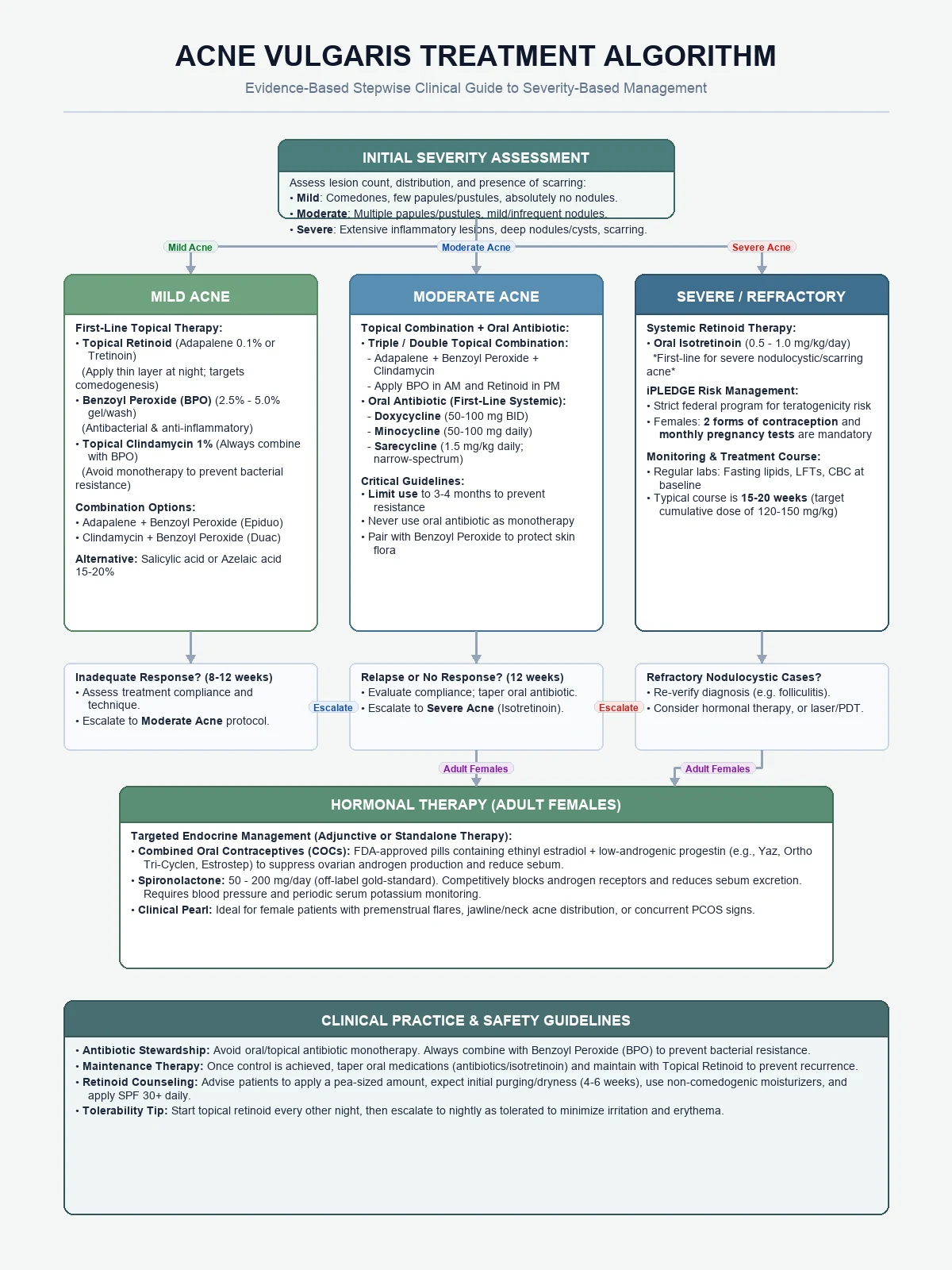
Topical therapy is first-line for mild acne and an essential component of almost all regimens. The AAD and EuroGuiDerm guidelines recommend multimodal therapy addressing more than one pathogenic factor. [1]
| Agent | Examples | Key points |
|---|---|---|
| Topical retinoids | Adapalene, tretinoin, tazarotene, trifarotene | First-line for comedonal and inflammatory acne; apply thinly at night; start 2–3 times weekly to reduce irritation; photosensitivity; teratogenicity (avoid in pregnancy) |
| Benzoyl peroxide (BPO) | 2.5–10% wash, gel, cream | Reduces C. acnes and antibiotic resistance; bleaches fabrics; irritation common; always combine with topical antibiotics |
| Topical antibiotics | Clindamycin, erythromycin | Never use as monotherapy; combine with BPO or retinoid; limit duration (typically 6–12 weeks) |
| Azelaic acid | 15–20% cream/gel | Useful for comedonal acne, post-inflammatory hyperpigmentation and in pregnancy; mild irritation |
| Salicylic acid | 0.5–2% | Keratolytic; modest efficacy; useful adjunct |
| Topical dapsone | 5% gel | Modest benefit; particularly useful in adult females with inflammatory lesions |
| Clascoterone | 1% cream | Topical androgen-receptor inhibitor; approved for acne in patients ≥12 years; useful in hormonal/female acne |
Fixed-dose combinations
Combination products improve adherence and efficacy:
- Adapalene 0.1–0.3% + benzoyl peroxide 2.5%.
- Tretinoin + clindamycin.
- Benzoyl peroxide + clindamycin or erythromycin. [1]
These are particularly useful for mixed comedonal and inflammatory acne and reduce the risk of antibiotic resistance.[1]
[1]Acne quick numbers
ACNE 4 - four pathogenic factors
DHEAS, testosterone, 5alpha-DHT; target with hormonal therapy (OCP, spironolactone)
Retinoid retention; target with topical retinoids, isotretinoin
Lipases, porphyrins, TLR-2; target with BPO, topical/systemic antibiotics
Target with topical/systemic retinoids, dapsone, biologics (anti-IL-23, anti-IL-17)
Management — Systemic Therapy
Oral antibiotics
Oral tetracyclines are first-line for moderate-to-severe inflammatory acne. They are anti-inflammatory as well as antibacterial. [1]
| Drug | Typical dose | Notes |
|---|---|---|
| Doxycycline | 50–100 mg once or twice daily | Photosensitivity, oesophagitis, gastrointestinal upset; avoid in pregnancy and children under 8 years |
| Minocycline | 50–100 mg once or twice daily | Vestibular side effects, drug-induced lupus, pigmentation; Cochrane review found no clear advantage over other tetracyclines |
| Sarecycline | Weight-based once daily (1.5 mg/kg) | Narrow-spectrum tetracycline; reduced impact on gut flora; approved for moderate-to-severe acne |
| Azithromycin | 250–500 mg three times weekly | Second-line when tetracyclines contraindicated; avoid routine use because of resistance concerns |
| TMP-SMX | 160/800 mg twice daily | Third-line; monitor for hypersensitivity and cytopenias |
Antibiotic stewardship: limit oral antibiotic courses to 3–6 months, always combine with BPO or a topical retinoid, and avoid antibiotic monotherapy. A Cochrane review found minocycline does not offer clinically important advantages over other tetracyclines and is associated with more adverse events.[1][3][8][12][16]
Hormonal therapy
Indicated for adult female acne, particularly with perimenstrual flares, jawline predominance or biochemical/clinical hyperandrogenism. [1]
- Combined oral contraceptives (COCs) — reduce ovarian androgen production and increase SHBG. Those containing anti-androgenic progestogens (e.g. drospirenone, cyproterone acetate, chlormadinone acetate) are most effective. Effects become apparent after 3–6 months.
- Spironolactone — aldosterone antagonist with anti-androgen effects. Doses of 50–200 mg daily are commonly used; start low and titrate. Monitor potassium and blood pressure at higher doses; avoid in pregnancy. [1]
Isotretinoin
Oral isotretinoin (13-cis-retinoic acid) is the most effective acne therapy and is indicated for:
- Severe nodulocystic acne.
- Moderate acne that is scarring or refractory to adequate trials of topical and oral therapy.
- Acne causing significant psychosocial morbidity.
- Acne fulminans (after initial corticosteroid control). [1]
Dose: typically 0.5–1 mg/kg/day for 16–24 weeks, with a cumulative target of 120–150 mg/kg for maximal sustained remission. Lower intermittent or continuous low-dose regimens are used in some centres. Side effects are dose-dependent and include cheilitis, xerosis, epistaxis, myalgia, hyperlipidaemia and hepatotoxicity. Mandatory pregnancy prevention is required because of severe teratogenicity; prescribers must follow the local risk-management programme (e.g. iPLEDGE in the United States).[1][2][3]
Isotretinoin pharmacology
Isotretinoin is a naturally-occurring geometric isomer of all-trans retinoic acid (tretinoin), given orally as a soft-gelatin capsule absorbed with food (a fatty meal doubles bioavailability). It binds nuclear retinoic acid receptors (RAR-α, β, γ) and modulates transcription of genes controlling epidermal proliferation, differentiation and sebaceous gland activity. The four pathogenic acne factors are simultaneously addressed: sebaceous gland atrophy with up to 90% reduction in sebum output within 6 weeks; normalisation of follicular keratinisation (comparable to topical retinoids); decreased Cutibacterium acnes colonisation via altered follicular milieu; and anti-inflammatory effect by inhibiting toll-like receptor activation, neutrophil chemotaxis and Th17/IL-17 signalling. Its lipophilicity explains the dosing strategy (always with food), its placental transfer explains the teratogenicity, and its cytochrome P450 3A4 metabolism explains drug-drug interactions with tetracyclines, methotrexate and vitamin A supplements. Elimination half-life is approximately 21 hours, but tissue effects persist long after plasma clearance. [1]
Specific dosing protocols
| Regimen | Daily dose | Course duration | Cumulative target | Best for |
|---|---|---|---|---|
| Conventional full-dose | 0.5–1 mg/kg/day, titrated from 0.5 mg/kg | 16–24 weeks (5–6 months) | 120–150 mg/kg | Severe nodulocystic acne; definitive remission |
| High-dose | >1 mg/kg/day (max 2 mg/kg) | 4–6 months | ≥150 mg/kg | Very severe, refractory or scarring acne |
| Low continuous | 5–10 mg daily | 6–12 months | 60–90 mg/kg | Adult mild-to-moderate recalcitrant acne |
| Intermittent/“microdose” | 5–10 mg daily or alternate-day | months, episodic | variable | Relapse prevention; adults intolerant of standard doses |
| Acne fulminans protocol | 0.1–0.25 mg/kg/day after corticosteroid lead-in | 6–9 months | ≥120 mg/kg | Fulminans; severe initial flares |
Conventional daily dosing tips. Begin at 0.5 mg/kg/day (typically 40 mg/day in a 70 kg adolescent), continue for 4 weeks to assess tolerability and allow flare assessment, then escalate to 1 mg/kg/day in divided doses with the largest meal. Aim for cumulative ≥120 mg/kg to minimise relapse, with some authors targeting ≥150 mg/kg in severe nodulocystic disease. Most courses complete within 5–7 months; shorter courses risk earlier relapse, longer courses rarely add benefit. Common adverse effects (cheilitis >90%, xerosis, epistaxis, dry eyes, mild-moderate hypertriglyceridaemia, transaminitis, myalgia, photosensitivity, mood change) are managed conservatively with emollients, lip balm, preservative-free ocular lubricants and lipid monitoring at baseline and at 4–8 week intervals. Teratogenicity is absolute: patients of childbearing potential require two complementary contraceptive methods (or abstinence + one), monthly negative pregnancy tests, and enrolment in the iPLEDGE programme (US) or local equivalent (e.g. pregnancy-prevention programme in EU/UK/Australia). Stop isotretinoin at least one month before attempting conception. Avoid concurrent tetracyclines (benign intracranial hypertension), vitamin A supplements (additive toxicity) and blood/marrow/organ donation until one month after the last dose.[1][2][3]
Management — Procedural & Adjunctive Therapies
- Intralesional corticosteroids — triamcinolone acetonide 2.5–5 mg/ml into inflammatory nodules/cysts; avoid high concentrations to prevent atrophy.
- Chemical peels — salicylic acid, glycolic acid, Jessner's; modest benefit for comedones and post-inflammatory hyperpigmentation.
- Light and laser therapies — PDT, blue/red light, pulsed-dye laser; generally less effective than pharmacotherapy but useful as adjuncts.
- Comedone extraction — for individual resistant comedones; do not substitute for medical therapy.
- Scar revision — subcision, microneedling, fractional laser, TCA CROSS, fillers; best delayed until active acne is controlled. [1]
Management by Special Scenario
Pregnancy and breastfeeding
- Avoid: topical and oral retinoids (including isotretinoin), oral tetracyclines, spironolactone.
- Preferred: topical azelaic acid, topical erythromycin, benzoyl peroxide (limited areas), gentle skin care.
- iPLEDGE/equivalent: mandatory for isotretinoin; two forms of contraception and negative pregnancy tests required. [1]
Children and adolescents
- Neonatal and infantile acne are usually self-limiting; investigate for androgen excess if severe or persistent.
- Tetracyclines are contraindicated in children under 8 years because of tooth discolouration and bone effects.
- Topical retinoids and BPO are generally well tolerated in pre-adolescents. [1]
Adult female acne
Often presents as jawline and lower-face papules, often perimenstrual, with fewer comedones than adolescent acne. First-line options include topical retinoid + BPO; add hormonal therapy (COC or spironolactone) or oral tetracycline for refractory disease. Clascoterone offers a non-antibiotic, anti-androgen topical option.[10][13][15]
Skin of colour and post-inflammatory hyperpigmentation
Patients with darker skin phototypes are at higher risk of post-inflammatory hyperpigmentation and keloid scarring. Emphasise gentle skin care, avoid overly irritating topical regimens, treat inflammation promptly, and consider azelaic acid or retinoids to address pigmentary sequelae. Sun protection is essential.[1][22]
Antibiotic Resistance & Stewardship
Cutibacterium acnes resistance to macrolides and tetracyclines is rising globally and is associated with treatment failure. Stewardship measures are essential: [1]
- Never use topical antibiotic monotherapy — always combine with benzoyl peroxide.
- Limit oral antibiotic duration — aim to taper and stop by 3–6 months, transitioning to topical maintenance.
- Use benzoyl peroxide — suppresses resistant organisms.
- Avoid repeated courses of the same oral antibiotic without clear rationale. [1]
Complications, Sequelae & Pitfalls
Scarring
Acne scarring is a frequent and permanent complication. Atrophic scars (ice-pick, boxcar, rolling) are most common on the face; hypertrophic scars and keloids are more common on the trunk. Early, adequate treatment of inflammatory acne is the best prevention. Topical retinoids may reduce early scarring; established scars require procedural intervention.[20][21][22]
Post-inflammatory hyperpigmentation and erythema
Common in darker skin types and after inflammatory lesions. Treat underlying acne, use photoprotection, and consider azelaic acid or retinoids. [1]
Psychosocial morbidity
Acne can cause shame, anxiety, depression and impaired academic/work performance. Quality-of-life scores may be worse than in several chronic medical conditions. Ask directly about mood, and refer for mental-health support when indicated.[11]
Classic pitfalls
- Topical antibiotic monotherapy — drives resistance; always add BPO or retinoid.
- Prolonged oral antibiotics without a maintenance plan — transition to topical retinoid ± BPO once controlled.
- Starting isotretinoin too late in scarring acne — early referral can prevent permanent damage.
- Missing acne fulminans — systemic symptoms with ulcerative acne need urgent corticosteroids.
- Forgetting pregnancy status — isotretinoin, tetracyclines and spironolactone are contraindicated in pregnancy. [1]
Evidence, Guidelines & Regional Differences
Major guidelines
- AAD 2024 — updated evidence-based guideline; strongly recommends topical retinoids, BPO and fixed-dose combinations; emphasises antibiotic stewardship and hormonal options for adult females.[1]
- AAD 2016 — foundational guideline covering topical, systemic, procedural and special-population management.[2]
- EuroGuiDerm 2016 / 2026 update — European S3 evidence-based guideline; covers mild-to-severe acne, maintenance, pregnancy and paediatric considerations.[3][27]
Landmark trials and new agents
- Clascoterone phase 3 — first topical androgen-receptor inhibitor; effective for facial acne in patients aged ≥12 years.[15]
- Sarecycline phase 3 — narrow-spectrum tetracycline with reduced impact on gut flora and low resistance rates.[16]
- Tazarotene 0.045% lotion — once-daily retinoid formulation effective for moderate-to-severe acne.[17]
- Network meta-analysis 2022 — supported topical retinoids + BPO combinations and oral isotretinoin as among the most effective options.[18][19]
Exam Pearls
[1]Red Flags
Exam application bank (NEET-PG / INICET)
One-line answer
Acne vulgaris is a chronic inflammatory disease of the pilosebaceous unit driven by follicular hyperkeratinisation, sebum overproduction, Cutibacterium acnes proliferation and innate immune activation. Fellowship-level assessment demands precise classification (comedonal, inflammatory, nodular, special forms), severity grading, differential diagnosis of acneiform eruptions, rational topical and systemic therapy with antibiotic stewardship, hormonal and isotretinoin regimens, management of acne fulminans, and awareness of scarring and psychosocial impact.
Worked stems (answer without another resource)
Stem 1 — Classic presentation. Map symptoms to mechanism; name the first investigation and first treatment step with dose/route if drug therapy is standard. [1]
Stem 2 — Unstable / complicated. List red flags that force immediate resuscitation, theatre, ICU, antidote, or reperfusion — and what you do in the first 15 minutes. [1]
Stem 3 — Atypical group. Elderly, pregnancy, child, or immunocompromised: how presentation and thresholds change. [1]
Stem 4 — Differential trap. Name the three closest mimics and one discriminator for each. [1]
Stem 5 — Disposition. Who goes home with safety-netting, who is admitted, who needs HDU/ICU/theatre, and what follow-up is mandatory. [1]
Rapid viva checklist
- Definition + classification
- Pathophysiology chain
- Bedside signs / criteria
- Score with exact components (if any)
- Emergency bundle
- Definitive therapy with doses
- Complications of disease and of treatment
- Special populations
- Guideline/trial name if classic
- Three exam traps
Coverage self-check
If you cannot answer any stem above from this page alone, re-read the matching section — the page is intended to be self-sufficient for final-prof and NEET-PG/INICET questions on Acne vulgaris.
Expanded exam teaching (depth pass)
Clinical reasoning
For Acne vulgaris, examiners test whether you can prioritise life threats, choose the right first test, and give specific therapy (agent, dose, route, timing). Generic phrases without numbers score poorly.
Mechanism → feature map
Build a short chain: cause → pathophysiologic intermediate → clinical feature → complication. Every major symptom in the classic vignette should sit on that chain.
Investigation strategy
- Bedside/first-line tests that change immediate management
- Confirmatory or staging tests
- What a normal result does not exclude
- When not to delay treatment for imaging (unstable patient)
Management ladder
- Resuscitation / ABC / sepsis or haemorrhage bundle as relevant
- Specific antidote / procedure / antimicrobial / reperfusion / surgery
- Supportive care and monitoring targets
- Definitive long-term therapy and secondary prevention
- Disposition and safety-net advice
Special populations
Always prepare one line each for children, pregnancy, elderly, renal/hepatic impairment, and immunocompromised patients when the topic allows.
Pitfalls that fail candidates
- Treating the number not the patient
- Missing pregnancy status when relevant
- Imaging before stabilisation
- Wrong empiric cover or wrong antidote timing
- Incomplete counselling on recurrence, adherence, or red-flag return
Acne vulgaris is a chronic inflammatory disease of the pilosebaceous unit driven by follicular hyperkeratinisation, sebum overproduction, Cutibacterium acnes proliferation and innate immune activation. Fellowship-level assessment demands precise classification (comedonal, inflammatory, nodular, special forms), severity grading, differential diagnosis of acneiform eruptions, rational topical and systemic therapy with antibiotic stewardship, hormonal and isotretinoin regimens, management of acne f [1]
[1]References
- [1]Reynolds RV, Del Rosso JQ, Dréno B, et al. Guidelines of care for the management of acne vulgaris J Am Acad Dermatol, 2024.PMID 38300170
- [2]Zaenglein AL, Pathy AL, Schlosser BJ, et al. Guidelines of care for the management of acne vulgaris J Am Acad Dermatol, 2016.PMID 26897386
- [3]Nast A, Dréno B, Bettoli V, et al. European evidence-based (S3) guideline for the treatment of acne - update 2016 - short version J Eur Acad Dermatol Venereol, 2016.PMID 27514932
- [4]Williams HC, Dellavalle RP, Garner S. Acne vulgaris Lancet, 2012.PMID 21880356
- [5]Tan JK, Bhate K. A global perspective on the epidemiology of acne Br J Dermatol, 2015.PMID 25597339
- [6]Del Rosso JQ, Kircik LH. The primary role of sebum in the pathophysiology of acne vulgaris and its therapeutic relevance in acne management J Dermatolog Treat, 2024.PMID 38146664
- [7]Dréno B, Dagnelie MA, Khammari A, Corvec S. Understanding innate immunity and inflammation in acne: implications for management J Eur Acad Dermatol Venereol, 2015.PMID 26059728
- [8]Dessinioti C, Katsambas A. Antibiotics and Antimicrobial Resistance in Acne: Epidemiological Trends and Clinical Practice Considerations Yale J Biol Med, 2022.PMID 36568833
- [9]Leyden JJ, Wortzman M, Baldwin EK. In vivo antibacterial effects of tretinoin-clindamycin and clindamycin alone on Propionibacterium acnes with varying clindamycin minimum inhibitory J Drugs Dermatol, 2012.PMID 23377513
- [10]Dréno B, Thiboutot D, Layton AM, et al. Antibiotic stewardship in dermatology: limiting antibiotic use in acne Eur J Dermatol, 2014.PMID 24721547
- [11]Mallon E, Newton JN, Klassen A, et al. The quality of life in acne: a comparison with general medical conditions using generic questionnaires Br J Dermatol, 1999.PMID 10233319
- [12]Garner SE, Eady A, Bennett C, et al. Minocycline for acne vulgaris: efficacy and safety Cochrane Database Syst Rev, 2012.PMID 22895927
- [13]Layton AM, Eady EA, Whitehouse H, et al. Oral Spironolactone for Acne Vulgaris in Adult Females: A Hybrid Systematic Review Am J Clin Dermatol, 2017.PMID 28155090
- [14]van Vloten WA, van Haselen CW, van Zuuren EJ, et al. The effect of 2 combined oral Contraceptives containing either drospirenone or cyproterone acetate on acne and seborrhea Cutis, 2002.PMID 12096825
- [15]Hebert A, Thiboutot D, Stein Gold L, et al. Efficacy and Safety of Topical Clascoterone Cream, 1%, for Treatment in Patients With Facial Acne: Two Phase 3 Randomized Clinical Trials JAMA Dermatol, 2020.PMID 32320027
- [16]Moore A, Green L, Bruce S, et al. Once-Daily Oral Sarecycline 1.5 mg/kg/day Is Effective for Moderate to Severe Acne Vulgaris: Results from Two Identically Designed, Phase 3, Randomized, Double-Blind Clinical Trials J Drugs Dermatol, 2018.PMID 30235387
- [17]Tanghetti EA, Kircik L, Green LJ, et al. Tazarotene 0.045% Lotion for Once-Daily Treatment of Moderate-to-Severe Acne Vulgaris: Results from Two Phase 3 Trials J Drugs Dermatol, 2020.PMID 31985914
- [18]Mavranezouli I, Navarini AA, Dattani S, et al. A systematic review and network meta-analysis of topical pharmacological, oral pharmacological, physical and combined treatments for acne vulgaris Br J Dermatol, 2022.PMID 35789996
- [19]Mavranezouli I, Daly CH, Deshpande S, et al. Cost-effectiveness of topical pharmacological, oral pharmacological, physical and combined treatments for acne vulgaris Clin Exp Dermatol, 2022.PMID 36258288
- [20]Dessinioti C, Antoniou C, Katsambas A. A cross-sectional study of clinical factors associated with acne facial scarring in patients with active acne J Eur Acad Dermatol Venereol, 2018.PMID 29194788
- [21]Tan J, Thiboutot D, Gollnick H, et al. Development of an atrophic acne scar risk assessment tool J Eur Acad Dermatol Venereol, 2017.PMID 28499079
- [22]Tan J, Humphrey S, Vender R, et al. The Role of Topical Retinoids in Prevention and Treatment of Atrophic Acne Scarring: Understanding the Importance of Early Effective Treatment J Drugs Dermatol, 2019.PMID 30909329
- [23]Trave I, Merlo G, Grimalt R. Acne fulminans and its multiple associated factors: a systematic review Eur J Dermatol, 2023.PMID 38465543
- [24]Quan NG, Zaenglein AL. A Practice Approach to Acne Fulminans in Adolescents Am J Clin Dermatol, 2024.PMID 39271603
- [25]Dessinioti C, Katsambas A. Diet and acne: Facts and controversies J Eur Acad Dermatol Venereol, 2026.PMID 42159921
- [26]Greydanus DE, Azmeh R, Cabral MD, et al. Acne in the first three decades of life: An update of a disorder with profound implications for all decades of life Dis Mon, 2021.PMID 33041056
- [27]Nast A, Dréno B, Bettoli V, et al. Update of the EuroGuiDerm evidence-based guideline for the treatment of acne-Short version J Eur Acad Dermatol Venereol, 2026.PMID 41847993
- [28]Del Rosso JQ, Bhate K, Barbieri JS, et al. Response to Reynolds et al's Guidelines of care for the management of acne vulgaris J Am Acad Dermatol, 2025.PMID 39251025