Dermatology · Medicine
Antihistamines and itch
Also known as Antihistamines · H1 antagonists · H1 inverse agonists · histamine-mediated pruritus
H1 antihistamines are first-line pharmacotherapy for histamine-mediated pruritus (urticaria, angioedema, insect bites, allergic rhinitis). They act as inverse agonists at the H1 receptor, not simple competitive antagonists. First-generation agents (chlorpheniramine, diphenhydramine, hydroxyzine, promethazine) cross the blood-brain barrier, are sedating and anticholinergic, and are avoided in the elderly per the Beers Criteria. Second-generation agents (cetirizine, levocetirizine, loratadine, desloratadine, fexofenadine, bilastine) are non-sedating and preferred for chronic use. Terfenadine and astemizole were withdrawn because of hERG K+ channel blockade causing QT prolongation and Torsades de Pointes. In chronic spontaneous urticaria the EAACI/GA²LEN algorithm up-titrates second-generation H1 antihistamines up to 4 times the standard dose before adding omalizumab, the only licensed next-line therapy. Antihistamines have limited efficacy in non-histaminergic itch (atopic dermatitis, cholestasis, uraemia, neuropathic pruritus), where cause-specific treatment is required.
On this page & tools
Your progress
Saved locally on this device.
Exam tags
Red flags
Overview & Definition
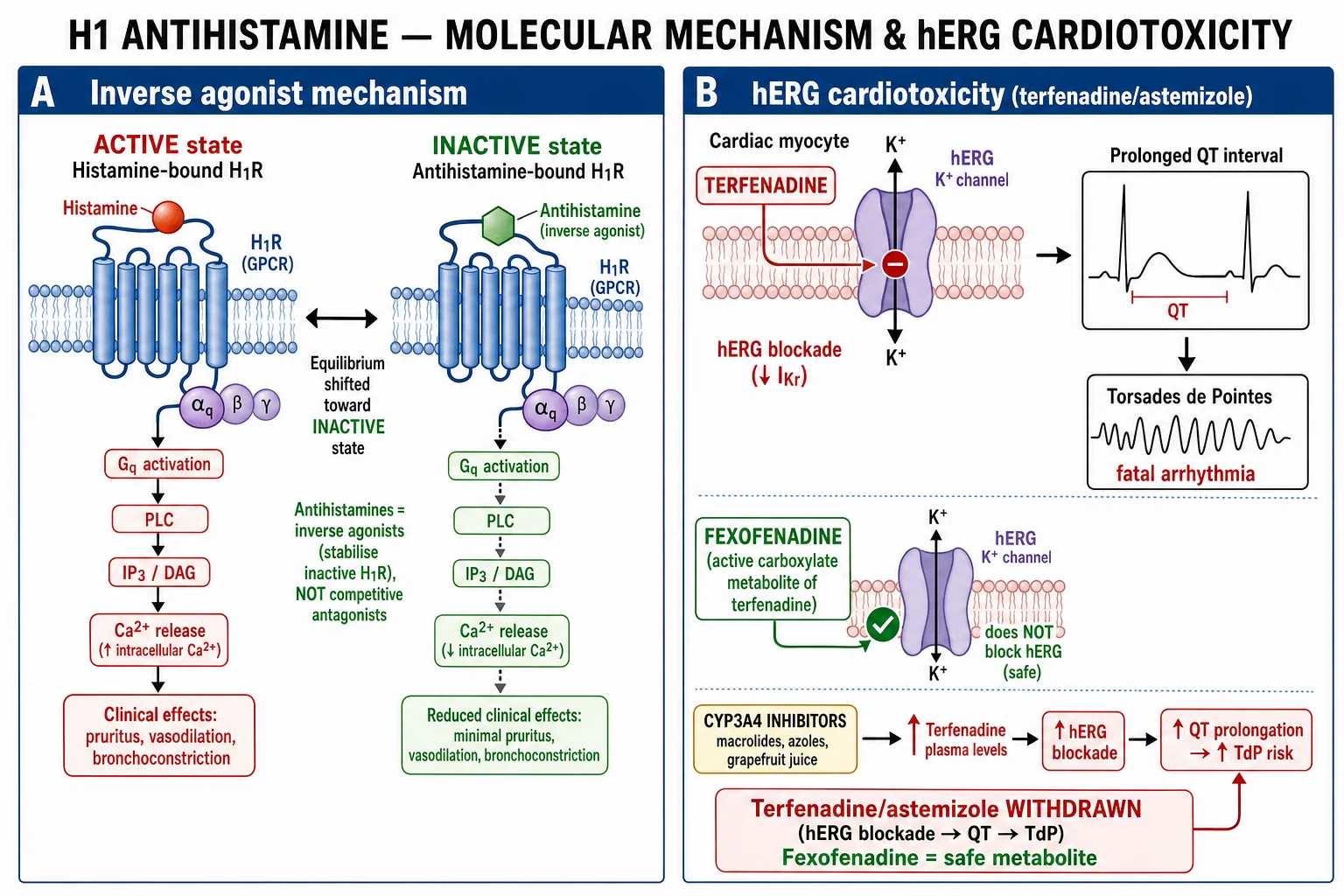
Antihistamines are among the most commonly prescribed and recognised drugs in dermatology, allergy and primary care worldwide. They range from over-the-counter cold and allergy remedies to specialist biologics used in refractory urticaria. A sound understanding of their classification, mechanism, pharmacokinetics, adverse effects and correct escalation is essential for both clinical practice and undergraduate examinations. Mastery of this topic allows the clinician to select the safest, most effective and most appropriate agent for each clinical scenario. The most clinically relevant antihistamines in dermatology are H1 receptor antihistamines, which are the first-line pharmacological treatment for histamine-mediated pruritus such as urticaria, angioedema, insect bites and allergic rhinitis.[2] They are now understood to be inverse agonists rather than simple competitive antagonists at the H1 receptor: they stabilise the inactive conformation of the receptor and shift the equilibrium away from the active state, thereby reducing receptor signalling even in the absence of histamine.[3]
The H1 receptor is a Gq-coupled receptor. When histamine binds, it activates phospholipase C beta, producing inositol trisphosphate (IP3) and diacylglycerol (DAG), which raise intracellular calcium. In the skin this causes vasodilation, increased vascular permeability (the wheal), stimulation of sensory C-fibres (pruritus) and contraction of smooth muscle elsewhere (bronchoconstriction, gut cramping).[3] H1 antihistamines reverse or prevent these effects.
Although the term "antihistamine" in clinical practice usually means an H1 antihistamine, there are four histamine receptor subtypes with distinct signalling and therapeutic roles. H1 blockade treats allergic itch and wheal; H2 blockade reduces gastric acid and cutaneous vasodilation; H3 receptors are central presynaptic autoreceptors that modulate histamine release and neurotransmission; and H4 receptors on immune cells contribute to pruritus and inflammation but are not yet a routine drug target. This topic focuses on H1 and H2 antagonists in the management of itch, with special emphasis on the drugs most commonly examined in undergraduate medical examinations. [1]
For the MBBS student, the high-yield themes are the inverse agonist mechanism, the first-generation versus second-generation distinction, the terfenadine/astemizole hERG withdrawal, the EAACI/GA²LEN up-titration ladder, the central role of omalizumab after antihistamine failure, and the limitations of antihistamines in non-histaminergic itch. [1]
Classification
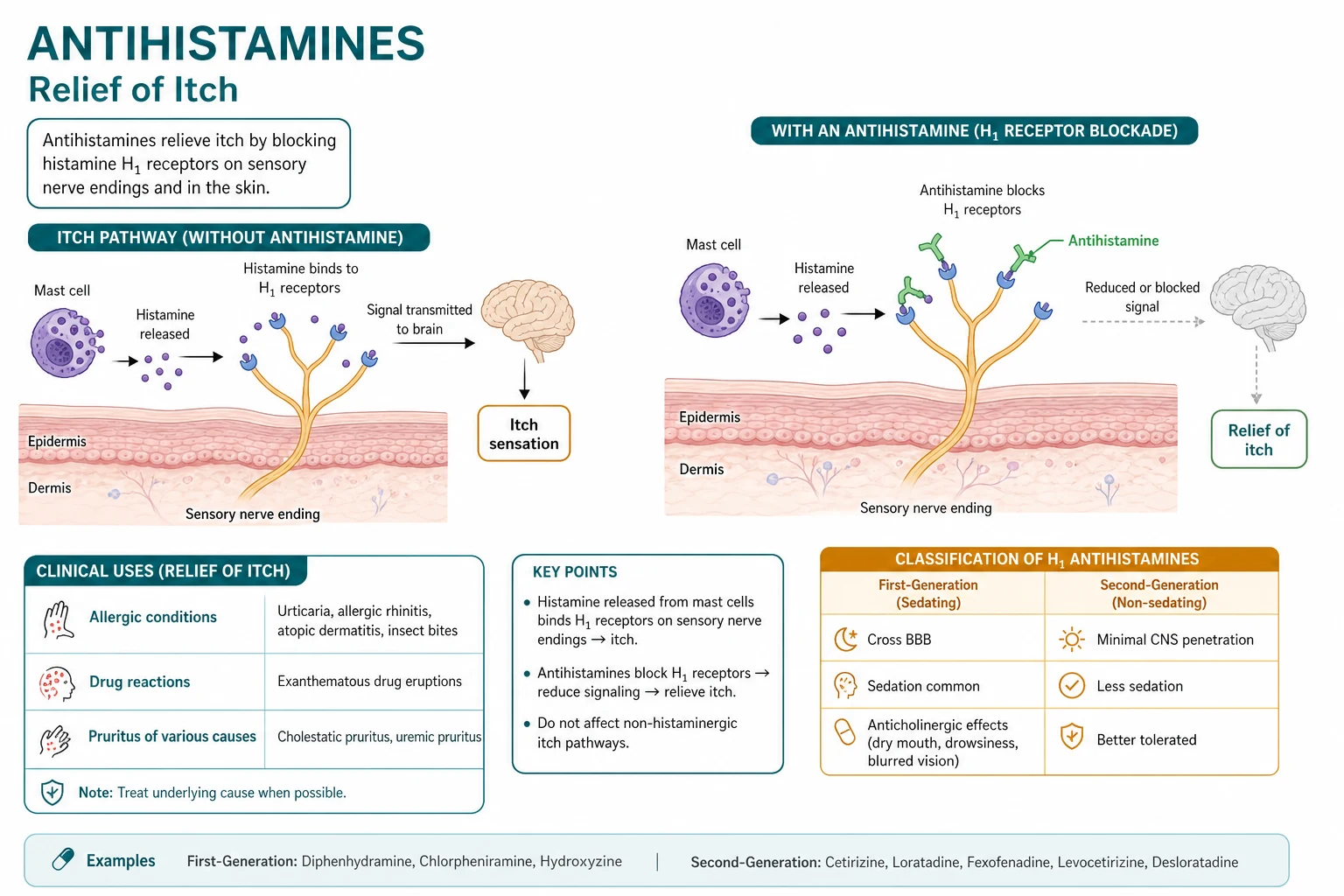
H1 antihistamines: first-generation versus second-generation
H1 antihistamines are divided into two generations based on central nervous system penetration and side-effect profile. [1]
| Feature | First-generation (sedating) | Second-generation (non-sedating) |
|---|---|---|
| Examples | Chlorpheniramine, diphenhydramine, hydroxyzine, promethazine, dimenhydrinate | Cetirizine, levocetirizine, loratadine, desloratadine, fexofenadine, bilastine, rupatadine |
| Blood-brain barrier penetration | Yes (lipophilic, often not P-glycoprotein substrates) | Minimal (P-glycoprotein substrates, zwitterionic or larger) |
| Sedation | Marked | Minimal at standard doses; cetirizine and levocetirizine can cause mild sedation at higher doses |
| Anticholinergic effects | Significant | Minimal or absent |
| Dosing interval | Short, often 4-6 hours; once to three times daily | Once daily, generally 24-hour duration |
| Use in drivers | Contraindicated | Generally safe; counsel about individual response |
| Elderly suitability | Avoid (Beers Criteria) | Preferred |
| Cardiotoxicity | Not a class issue; individual agents withdrawn | Terfenadine and astemizole withdrawn (hERG); modern agents safe |
First-generation agents are non-selective: in addition to H1 blockade they have anticholinergic, antiserotonergic and alpha-adrenergic blocking properties. These off-target effects explain both their historical use as sedatives, hypnotics and anti-emetics and their poor tolerability in older adults. Second-generation agents were developed to minimise CNS penetration and off-target receptor binding; they have a far better safety profile for chronic administration and for patients who need to drive or operate machinery.[2]
Pharmacokinetics and clinical use of common second-generation agents
| Agent | Adult dose | Onset | Half-life | Metabolism | Notes |
|---|---|---|---|---|---|
| Cetirizine | 10 mg OD | 1-2 h | ~7-10 h | Renal; minor hepatic | Most sedating of second-generation; active metabolite of hydroxyzine; dose-reduce in renal impairment |
| Levocetirizine | 5 mg OD | 1 h | ~7-10 h | Renal | R-enantiomer of cetirizine; slightly less sedating; dose-reduce in renal impairment |
| Loratadine | 10 mg OD | 1-3 h | 8-15 h | Hepatic CYP3A4 | Prodrug; desloratadine is active metabolite; generally non-sedating |
| Desloratadine | 5 mg OD | 1-3 h | 19-34 h | Hepatic glucuronidation | Active metabolite of loratadine; very low sedation |
| Fexofenadine | 120-180 mg OD | 1-3 h | 11-16 h | Biliary and renal; not hepatic | Least CNS penetration; P-gp substrate; avoid grapefruit and aluminium/magnesium antacids |
| Bilastine | 20 mg OD | 1-2 h | 14-18 h | Hepatic metabolism minimal | No CYP interactions; no sedation; food reduces absorption; take fasting |
| Rupatadine | 10 mg OD | 1-2 h | 5-6 h | Hepatic CYP3A4 | Also platelet-activating factor antagonist; use caution with CYP3A4 inhibitors |
First-generation agents in detail
| Agent | Typical adult dose | Sedation | Anticholinergic | Special uses |
|---|---|---|---|---|
| Chlorpheniramine | 4 mg TDS-QDS | Moderate | Moderate | Common OTC cold remedy; short-term allergic rhinitis |
| Diphenhydramine | 25-50 mg TDS | Marked | Marked | Short-term insomnia, motion sickness, acute allergic reaction |
| Hydroxyzine | 25 mg TDS or nocte | Marked | Moderate | Nocturnal pruritus, anxiety, preoperative sedation |
| Promethazine | 25 mg nocte or 10-20 mg TDS | Marked | Marked | Nausea, motion sickness, premedication; avoid in children under 2 years |
H2 antihistamines
H2 receptors are Gs-coupled. In the stomach they stimulate acid secretion; in the skin they mediate vasodilation (the flare component of the triple response). H2 blockers used as adjuncts in refractory urticaria include famotidine and cimetidine. Ranitidine was withdrawn globally in 2019-2020 because of N-nitrosodimethylamine (NDMA) contamination. Cimetidine is a cytochrome P450 inhibitor and is associated with drug-drug interactions; famotidine is preferred when an H2 blocker is needed.[3]
Drug interactions and monitoring
Clinically important interactions differ between first-generation and second-generation agents and among individual drugs. First-generation agents with anticholinergic properties can worsen the anticholinergic burden of tricyclic antidepressants, antipsychotics, anticholinergic bladder agents and antiparkinsonian drugs. Their sedative effects are additive with alcohol, benzodiazepines, opioids and other CNS depressants. Promethazine and hydroxyzine can prolong the QT interval and should be used cautiously with other QT-prolonging drugs.[6]
Among second-generation agents, loratadine and rupatadine are metabolised by CYP3A4 and may have elevated levels with macrolides, azoles, protease inhibitors and grapefruit juice, although they do not share the hERG liability of terfenadine. Fexofenadine absorption is reduced by aluminium and magnesium antacids and by grapefruit, apple and orange juice; these should be separated by at least 4 hours. Bilastine absorption is reduced by food, so it should be taken on an empty stomach. Cetirizine and levocetirizine are mainly renally excreted and require dose reduction when renal function falls. No routine blood monitoring is required for antihistamines, but patients should be asked about sedation, dry mouth, urinary symptoms, palpitations and driving performance at follow-up.[2]
Other histamine-modulating drugs
It is important to distinguish H1 antihistamines from other classes that may be mentioned in itch management. Mast-cell stabilisers such as sodium cromoglicate and nedocromil sodium prevent degranulation but do not antagonise histamine once it is released; they are mainly used in allergic conjunctivitis and asthma. Leukotriene receptor antagonists such as montelukast block the cysteinyl leukotriene receptor and may be used as an adjunct in refractory urticaria or aspirin-exacerbated disease. Doxepin is a tricyclic antidepressant with potent H1 and H2 antagonism and is used for nocturnal pruritus and lichen simplex chronicus. Omalizumab is a monoclonal antibody against IgE and is the only licensed next-line therapy for chronic spontaneous urticaria after antihistamine failure; it is not an antihistamine.[2][5]
[1]Epidemiology & Risk Factors
Histamine-mediated pruritic conditions are extremely common. Urticaria affects up to 20 percent of the population at some point, allergic rhinitis affects 10-30 percent depending on region, and almost everyone experiences insect-bite reactions. Chronic spontaneous urticaria has a point prevalence of approximately 0.5-1 percent and a lifetime prevalence of 1-2 percent, with a female predominance and peak onset between 20 and 40 years of age.[2]
Precipitants of histamine-mediated disease can be classified by mechanism. Non-steroidal anti-inflammatory drugs (NSAIDs) precipitate urticaria and angioedema by inhibiting cyclo-oxygenase-1 and shunting arachidonic acid metabolism towards cysteinyl leukotrienes. Beta-lactam antibiotics cause IgE-mediated mast-cell degranulation. Opiates, vancomycin and radiocontrast media can cause direct, non-IgE-mediated mast-cell activation. Other triggers include physical stimuli (cold, heat, pressure, vibration, cholinergic exercise), infections, foods, alcohol, stress and, in autoimmune chronic urticaria, IgG autoantibodies against the high-affinity IgE receptor (Fc epsilon RI) or against IgE itself.[3]
Drug interactions are particularly important for antihistamines. Terfenadine and astemizole were metabolised by CYP3A4, and inhibitors such as macrolide antibiotics (erythromycin, clarithromycin), azole antifungals (ketoconazole, itraconazole), HIV protease inhibitors and grapefruit juice produced markedly elevated parent drug levels, increasing the risk of QT prolongation and Torsades de Pointes. Modern second-generation antihistamines are either not substrates for CYP3A4 or do not block the hERG channel, so this interaction is no longer relevant for cetirizine, loratadine, fexofenadine or bilastine.[2]
Pathophysiology
Histamine synthesis, storage and release
Histamine is formed by decarboxylation of L-histidine by the enzyme histidine decarboxylase. It is stored in granules of mast cells and basophils, bound to heparin and proteases. Release occurs by several mechanisms. In IgE-mediated allergy, allergen cross-links two bound IgE molecules on the high-affinity Fc epsilon RI receptor, triggering intracellular signalling, calcium influx and granule exocytosis. Complement-derived anaphylatoxins (C3a, C5a), direct membrane injury by drugs such as opiates and vancomycin, physical triggers, and autoantibodies against Fc epsilon RI or IgE can all cause degranulation.[3]
Histamine receptors and signalling
Histamine exerts its effects through four G-protein-coupled receptors. H1 receptors are coupled to Gq and activate phospholipase C beta. In the skin this produces the triple response of Lewis: a central wheal from increased vascular permeability, a surrounding flare from axon reflex vasodilation, and itch from C-fibre stimulation. H2 receptors are coupled to Gs and stimulate adenylyl cyclase, raising cyclic AMP; they mediate cutaneous vasodilation and gastric acid secretion. H3 receptors are presynaptic autoreceptors in the central nervous system that modulate histamine, noradrenaline and other neurotransmitter release; H3 antagonists are under investigation for cognition and sleep disorders but are not standard anti-itch drugs. H4 receptors are expressed on eosinophils, mast cells, T cells and dendritic cells and contribute to pruritus and inflammation; selective H4 antagonists are investigational.[2]
Inverse agonism versus competitive antagonism
Older textbooks described H1 antihistamines as competitive antagonists. More recent receptor pharmacology shows that the drugs stabilise the inactive conformation of the H1 receptor and produce a downward shift in constitutive activity. This is called inverse agonism. It explains why antihistamines are effective even when tissue histamine levels are high and why their effect persists beyond simple occupancy of the binding site. In practical terms, an examiner will expect the phrase "inverse agonist at the H1 receptor" rather than "competitive antagonist."[3]
Why first-generation agents sedate and second-generation agents do not
First-generation antihistamines are relatively small, lipophilic molecules that are not substrates for the P-glycoprotein efflux pump at the blood-brain barrier. They therefore enter the brain and block central H1 receptors, causing sedation, impaired cognition and psychomotor slowing. Second-generation agents are larger, often zwitterionic, and are substrates for P-glycoprotein, which actively pumps them out of the CNS. Fexofenadine is the prototypical P-glycoprotein substrate with virtually no CNS penetration. Cetirizine, although a second-generation agent, is partly lipophilic and can enter the brain to a small extent; this explains why it is the most sedating of the modern non-sedating agents, particularly at higher doses.[2]
Cardiac toxicity: hERG blockade
The hERG potassium channel (Kv11.1) mediates the rapid delayed rectifier current (IKr) that drives phase 3 repolarisation of the cardiac action potential. Blockade of hERG prolongs repolarisation, lengthens the QT interval, and predisposes to early after-depolarisations that trigger Torsades de Pointes. Terfenadine and astemizole were found to block hERG. Fexofenadine, the active carboxylate metabolite of terfenadine, is too large and charged to enter the hERG pore and does not prolong QT. No currently available second-generation antihistamine is associated with clinically relevant QT prolongation at therapeutic doses.[2]
Why antihistamines fail in non-histaminergic itch
The pruritus of atopic dermatitis, cholestasis, uraemia and neuropathic conditions is largely driven by cytokines, neuropeptides, bile salts, uraemic toxins and nerve sensitisation rather than histamine. In atopic dermatitis, interleukin-31 is a key "itch cytokine," while interleukin-4 and interleukin-13 sensitise sensory nerves. H1 antihistamines therefore provide little objective relief in these conditions, although a sedating first-generation agent may help sleep.[4]
Clinical Presentation
Histamine-mediated pruritus is most often recognised as urticaria. The lesions are itchy, raised wheals with surrounding erythema. Individual wheals typically last less than 24 hours and leave no bruising or scaling. Angioedema is a deeper swelling of the dermis or subcutaneous tissue, often affecting the eyelids, lips, tongue, genitals or extremities. It may occur with or without wheals and can threaten the airway when laryngeal.[2]
Atypical presentations are important in examinations. In children, first-generation antihistamines can cause paradoxical excitation with hyperactivity, insomnia, irritability or even seizures rather than sedation. In older adults, anticholinergic effects may dominate: dry mouth, blurred vision, urinary retention, constipation, tachycardia, confusion and delirium. In pregnancy, urticaria is common and usually idiopathic, but drug choices are constrained by fetal safety. In chronic inducible urticaria, physical triggers produce reproducible whealing: cold exposure, pressure, vibration, heat, exercise or emotional stress.[2]
Non-histaminergic itch presents differently. Atopic dermatitis produces chronic, relapsing, eczematous plaques with lichenification and excoriation. Cholestatic pruritus is often generalised, worse on the palms and soles, and unresponsive to antihistamines. Uraemic pruritus is generalised, often worse after dialysis, and associated with dry skin and xerosis. Neuropathic itch such as brachioradial pruritus is localised, burning or tingling, and responds to neuromodulators rather than antihistamines. These distinctions guide whether antihistamines are likely to help or whether a different drug class is needed.[4]
Differential Diagnosis
When a patient presents with wheals and itch, the differential includes not only ordinary urticaria but also several important mimics. Chronic spontaneous urticaria is defined by wheals on most days for more than six weeks without a clear trigger. Chronic inducible urticaria is triggered reproducibly by physical stimuli. Urticarial vasculitis produces lesions that last more than 24 hours, leave bruising or hyperpigmentation, and may be accompanied by systemic features such as arthralgia and abdominal pain; biopsy shows leukocytoclastic vasculitis. Autoinflammatory syndromes such as cryopyrin-associated periodic syndrome (CAPS) and Schnitzler syndrome can present with urticarial rash, fever and raised inflammatory markers. Mastocytosis is suggested by tan-brown maculopapular lesions that urticate on stroking (Darier sign) and may be accompanied by flushing, abdominal pain and anaphylaxis. Bradykinin-mediated angioedema, including hereditary angioedema and ACE-inhibitor-induced angioedema, presents with deep swelling without wheals or itch and does not respond to antihistamines, corticosteroids or adrenaline; it is treated with C1-inhibitor concentrate, icatibant or ecallantide.[2]
The urticarial phase of bullous pemphigoid can mimic chronic urticaria in elderly patients before tense bullae appear; direct immunofluorescence shows linear IgG and C3 at the basement membrane. Scabies causes burrows, papules and nodules in web spaces, wrists and genitalia, and often affects close contacts. Papular urticaria in children is a hypersensitivity reaction to insect bites producing grouped papules. Dermatographism is a form of physical urticaria in which stroking the skin produces a linear wheal within minutes.[2]
Clinical & Bedside Assessment
A focused history should establish the onset, duration of individual wheals, presence of angioedema, daily activity, known triggers, recent infections, drug exposure (especially NSAIDs, antibiotics, opiates, ACE inhibitors), family history, quality of life and response to previous antihistamines. Ask specifically about physical triggers if chronic inducible urticaria is suspected. It is helpful to ask the patient to photograph lesions because individual wheals last less than 24 hours and may not be present at the time of consultation.[2]
Bedside provocation tests are used for chronic inducible urticaria. An ice-cube test for cold urticaria, a dermographometer or gentle stroking for symptomatic dermographism, a weighted rod for delayed pressure urticaria, a hot-water bath or exercise challenge for cholinergic urticaria, and a vibrator for vibratory urticaria. The autologous serum skin test (ASST) can be used to detect autoimmune chronic urticaria; a positive wheal at the injection site after 30 minutes suggests circulating histamine-releasing factors. Physical examination should look for dermatographism, Darier sign (urtication after rubbing a pigmented mastocytosis lesion), thyroid enlargement, lymphadenopathy and hepatosplenomegaly if systemic mastocytosis is suspected. A full skin examination, including mucosae and nails, may reveal clues to urticarial vasculitis, cutaneous lymphoma or scabies.[2]
Investigations
First-line investigations in chronic spontaneous urticaria per international guidelines are a differential blood count, C-reactive protein or erythrocyte sedimentation rate. If angioedema is prominent, measure C4 and C1 inhibitor function to screen for hereditary angioedema. If mastocytosis is suspected, obtain a serum tryptase level; tryptase is transiently raised during anaphylaxis and persistently raised in systemic mastocytosis. A level above 20 ng/mL should prompt KIT D816V mutation screening.[2]
Extended workup is reserved for persistent, refractory or atypical disease. This may include thyroid function tests and thyroid autoantibodies, Helicobacter pylori testing, hepatitis B and C serology, and autoimmune screening. A skin biopsy is indicated for suspected urticarial vasculitis, atypical morphology, or when cutaneous T-cell lymphoma is a concern; histology of urticarial vasculitis shows perivascular neutrophils, leukocytoclasis, fibrinoid necrosis and red-cell extravasation.[2]
Management — Resuscitation
Acute urticaria with angioedema is managed by removing the trigger if known, giving a second-generation H1 antihistamine, and adding an H2 blocker if symptoms are severe. A short course of oral corticosteroid may be used for refractory angioedema, but it does not treat the underlying mechanism and should be limited. If there is any airway compromise, intramuscular adrenaline is the life-saving drug and must not be delayed.[3]
Anaphylaxis is a medical emergency. The first-line treatment is intramuscular adrenaline 0.01 mL per kilogram of 1:1000 adrenaline, up to a maximum of 0.5 mL in adults, injected into the lateral thigh. This is repeated every 5-15 minutes if the response is inadequate. The lateral thigh provides faster absorption than the deltoid or subcutaneous routes. Patients should lie supine with legs elevated to improve venous return; if respiratory distress is the dominant feature, they may sit up, but those with hypotension must remain supine. High-flow oxygen, intravenous crystalloid boluses for hypotension, and nebulised beta-agonists for bronchospasm are used as adjuncts. Airway swelling may require early intubation by an experienced operator; cricothyroidotomy is the rescue procedure if intubation fails. [1]
Antihistamines are adjuncts only in anaphylaxis: they may relieve cutaneous symptoms such as urticaria and pruritus but do not reverse airway obstruction, hypotension or cardiovascular collapse. H1 antihistamines such as promethazine or chlorpheniramine and H2 blockers such as famotidine can be given after adrenaline, but they must never replace adrenaline. Glucocorticoids do not act immediately and are used to prevent protracted or biphasic reactions; a typical dose is hydrocortisone 200 mg intravenously or prednisolone 50 mg orally. All patients with anaphylaxis should be observed for at least 4-6 hours because of the risk of biphasic reactions, and those with severe reactions should be discharged with an adrenaline auto-injector and an allergy action plan.[3]
Management — Definitive & Stepwise
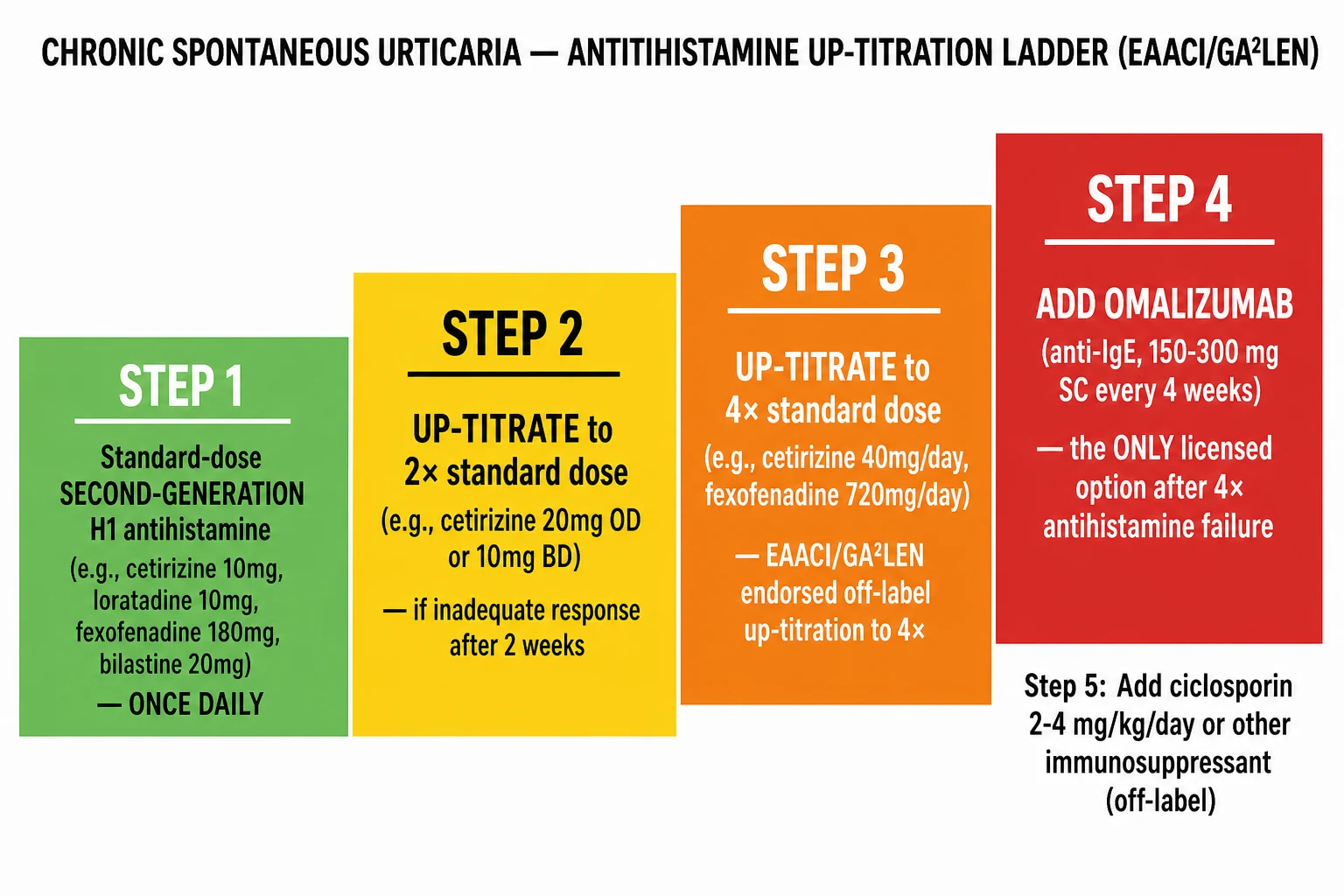
Chronic spontaneous urticaria algorithm
The internationally endorsed stepwise algorithm for chronic spontaneous urticaria is as follows.[1][5]
Step 1: Standard-dose second-generation H1 antihistamine. Choose one of: cetirizine 10 mg orally once daily, levocetirizine 5 mg orally once daily, loratadine 10 mg orally once daily, desloratadine 5 mg orally once daily, fexofenadine 180 mg orally once daily, or bilastine 20 mg orally once daily. Assess response after 2-4 weeks. [1]
Step 2: Up-titrate to two times the standard dose. If control is inadequate, double the dose of the same second-generation agent. This is off-label but widely supported. For example, cetirizine 20 mg daily or 10 mg twice daily. [1]
Step 3: Up-titrate to four times the standard dose. If still inadequate, increase to four times the standard dose. Examples include cetirizine 40 mg daily, fexofenadine 720 mg daily, or loratadine 40 mg daily. These supra-therapeutic doses have been shown to be safe in clinical trials because modern agents have wide therapeutic windows and no hERG liability. [1]
Step 4: Add omalizumab. Omalizumab 150-300 mg subcutaneously every 4 weeks is the only licensed therapy after antihistamine failure. The 300 mg dose is more effective. It binds free IgE, reduces Fc epsilon RI expression on mast cells and basophils, and decreases mediator release. Approximately 60-75 percent of patients achieve good control. [1]
Step 5: Add ciclosporin. For patients who do not respond to omalizumab, ciclosporin 3-5 mg per kilogram per day is used off-label, with monitoring of blood pressure and creatinine. A treatment course of 3-6 months is usual before attempting taper. [1]
Adjunctive and alternative agents
H2 blockers: Add famotidine 20 mg orally twice daily to an H1 antihistamine in refractory urticaria or angioedema. Avoid cimetidine because of CYP interactions. Ranitidine is no longer available in most countries.[3]
Leukotriene antagonists: Montelukast 10 mg orally at night can be added in NSAID-exacerbated or aspirin-sensitive urticaria, though it carries a neuropsychiatric warning in some jurisdictions.[2]
Doxepin: This tricyclic has potent H1 and H2 antagonism. For chronic nocturnal pruritus or lichen simplex chronicus, give 10-25 mg orally at night. Topical doxepin 5 percent cream can be used for short-term localised pruritus but carries a risk of allergic contact sensitisation.[4]
Corticosteroids: A short burst of oral prednisolone 20-40 mg daily for 3-7 days may be used for severe acute flares or refractory angioedema. Long-term steroids are avoided because of toxicity and rebound.[1]
Practical prescribing checklist
When prescribing an H1 antihistamine, confirm the indication is histamine-mediated itch, select a second-generation agent for chronic use, and choose the dose according to the clinical context. For chronic spontaneous urticaria, start at standard dose, reassess at 2-4 weeks, and up-titrate to four times before labelling the patient refractory. Document the indication, duration, driving advice, and any renal or hepatic dose adjustment. Warn the patient about additive sedation with alcohol and other CNS depressants. Review response and adverse effects at each follow-up, and refer for omalizumab when the patient fails four times standard-dose therapy. Avoid first-generation agents in older adults, glaucoma, prostatic hypertrophy, and patients who drive or operate machinery. Always remember that antihistamines are adjuncts, not replacements, for adrenaline in anaphylaxis. [1]
Specific Subtypes & Scenarios
Mastocytosis: Patients with cutaneous or systemic mastocytosis often require high-dose H1 antihistamines plus an H2 blocker. Oral cromolyn sodium 200 mg four times daily may help gastrointestinal symptoms. All patients should carry an adrenaline auto-injector and avoid triggers such as heat, friction, alcohol, opiates and insect stings.[2]
Chronic inducible urticaria: Non-sedating H1 antihistamines are up-titrated to four times the standard dose. For cold urticaria, patients should avoid sudden cold exposure and swimming in cold water because of the risk of massive histamine release and hypotension; gradual cold desensitisation is sometimes attempted under specialist supervision. Ciclosporin or omalizumab is used for severe or refractory cold urticaria. Cholinergic urticaria triggered by exercise, heat or emotional stress may respond to pre-exercise antihistamines; propranolol or danazol are reserved for specialist cases. Delayed pressure urticaria requires higher doses and may need corticosteroids. Vibratory urticaria is rare and associated with inherited ADGRE2 mutations.[2]
Atopic dermatitis: Antihistamines are not first-line for the itch of atopic dermatitis because it is cytokine-driven. A sedating first-generation antihistamine such as hydroxyzine 25 mg at night may be used short-term as a sleep aid, but it does not treat the underlying eczema. Disease-modifying therapy includes topical corticosteroids, topical calcineurin inhibitors, regular emollients, phototherapy, and systemic agents such as dupilumab, tralokinumab, lebrikizumab, nemolizumab and janus kinase inhibitors. The AAD guideline recommends against routine antihistamine prescription for atopic dermatitis pruritus.[4]
Insect bites and stings: Second-generation H1 antihistamines are first-line for local reactions. A short course of a first-generation agent can be used for severe acute pruritus if sedation is acceptable. Large local reactions and anaphylaxis require additional management.[3]
Allergic rhinitis: Oral or intranasal second-generation H1 antihistamines are first-line. Intranasal azelastine has a rapid onset but can cause taste disturbance. Add intranasal corticosteroids for persistent symptoms.[2]
Drug allergy: In mild immediate-type reactions, a second-generation antihistamine may suffice. In systemic reactions or anaphylaxis, adrenaline is essential. Antihistamines are only adjuncts for cutaneous symptoms.[3]
Non-histaminergic systemic itch: Antihistamines are often disappointing in systemic pruritus because histamine is not the dominant mediator. In cholestatic pruritus, bile salts and autotaxin stimulate itch fibres; first-line is cholestyramine 4 g one to four times daily, with rifampicin, naltrexone, sertraline or bezafibrate as second-line options. In uraemic pruritus, optimise dialysis, use emollients, gabapentin or pregabalin, and consider the kappa-opioid agonist difelikefalin in haemodialysis patients. Neuropathic itch such as brachioradial pruritus or post-herpetic itch responds to gabapentinoids, tricyclic antidepressants, or topical agents such as capsaicin or lidocaine. Psychogenic itch may improve with cognitive-behavioural therapy or selective serotonin reuptake inhibitors. A general rule is that if the itch lacks wheals and does not respond to a second-generation antihistamine, the cause is likely non-histaminergic and requires targeted investigation and therapy.[4]
Complications & Pitfalls
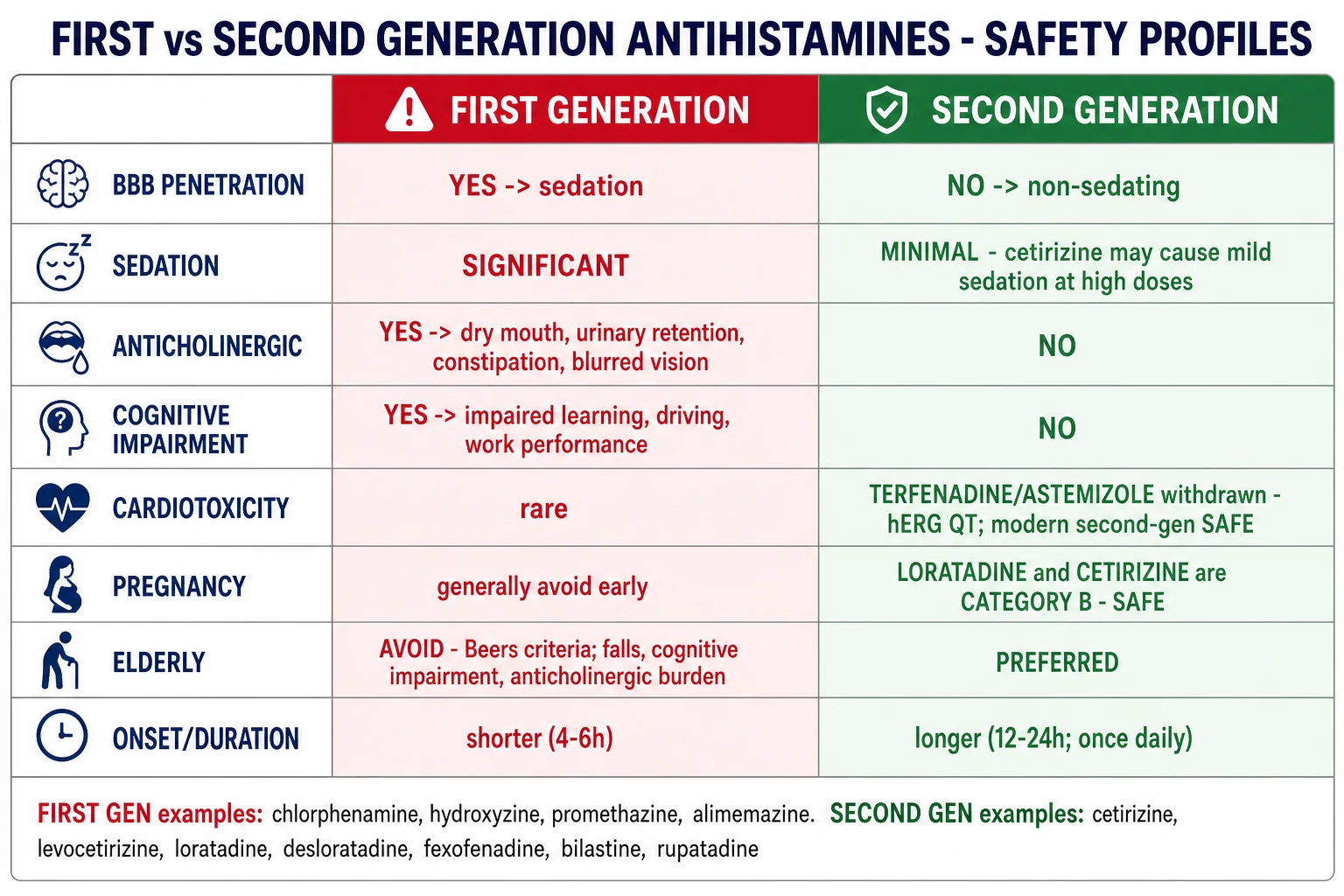
Anticholinergic burden in older adults: First-generation antihistamines are listed on the AGS Beers Criteria as potentially inappropriate medications in older adults because of their anticholinergic effects: confusion, delirium, falls, urinary retention, constipation, dry mouth and blurred vision. The cumulative anticholinergic burden is associated with accelerated cognitive decline and mortality. Always choose a second-generation agent in this population.[6]
QT prolongation and Torsades de Pointes: Although terfenadine and astemizole have been withdrawn, the mechanism remains a high-yield exam topic. Any patient still using old stockpiled medication, or any new drug with hERG liability, should have an ECG reviewed. Avoid combining with other QT-prolonging drugs or electrolyte disturbances.[2]
Paradoxical CNS excitation in young children: First-generation antihistamines can cause hyperactivity, irritability, insomnia, hallucinations or seizures in children. This is why the FDA warned against over-the-counter sedating antihistamines in children under 2 years of age. [1]
Allergic contact dermatitis from topical antihistamines: Diphenhydramine cream and doxepin cream can cause type IV delayed hypersensitivity, worsening the pruritus they were prescribed to treat. They should be used for short periods only and avoided in chronic eczema. [1]
Overdose toxidrome: Overdose of first-generation antihistamines produces anticholinergic delirium, sedation or paradoxical excitation, tachycardia, hyperthermia, QRS widening from sodium-channel blockade, rhabdomyolysis and seizures. Management is supportive; intravenous sodium bicarbonate is used for QRS widening, and benzodiazepines for seizures. [1]
Failure to escalate appropriately in chronic urticaria: Some patients remain on sub-therapeutic doses for months. If standard-dose therapy fails, up-titrate to four times before labelling the disease refractory. If four times fails, refer for omalizumab rather than adding further low-value drugs.[1]
Prognosis & Disposition
Chronic spontaneous urticaria is a relapsing-remitting disease. The median duration is 2-5 years; approximately 50 percent of patients remit within 1 year, while roughly 20 percent have disease lasting beyond 5 years. The impact on quality of life can be substantial, comparable to chronic ischaemic heart disease. Response to standard-dose H1 antihistamines is around 40-60 percent; up-titration to four times adds a further 40-60 percent benefit in those who did not respond to standard doses. Omalizumab produces good control in about two-thirds of refractory patients.[2]
Most patients with chronic urticaria are managed as outpatients. Urgent referral is needed for anaphylaxis, airway-threatening angioedema, or suspected mastocytosis or hereditary angioedema. Specialist allergy or dermatology referral is appropriate when disease is refractory to four times standard-dose antihistamines and omalizumab is being considered. Patients with systemic mastocytosis require lifelong follow-up, trigger counselling and an adrenaline auto-injector because of the significant lifetime risk of anaphylaxis. Patients with chronic urticaria should be reassured that the condition is rarely life-threatening, but they should seek emergency care if they develop tongue or throat swelling, breathing difficulty, dizziness or syncope. [1]
Driving, Occupation & Medicolegal Considerations
Sedation is the single most important occupational adverse effect of antihistamines. First-generation agents impair reaction time, coordination, vigilance and cognitive processing, increasing the risk of road traffic accidents and machinery injuries. Commercial drivers, pilots, crane operators, students sitting examinations and others performing safety-critical tasks should not use first-generation antihistamines during working hours. Second-generation agents are generally safe, but cetirizine and levocetirizine can cause mild sedation in some individuals at standard doses and more noticeably at higher doses. Patients should be advised not to drive until they know how a new antihistamine affects them.[2]
Medicolegally, prescribing a first-generation antihistamine to a patient who then has a fall or a road accident may expose the clinician to criticism if a safer second-generation alternative existed. The same principle applies to older adults: the Beers Criteria explicitly warn against first-generation antihistamines because the risk of anticholinergic harm exceeds expected benefit in most older adults. Documenting the rationale for choosing a sedating agent, the duration of intended use, and counselling given about driving and alcohol reduces medicolegal risk.[6]
Special Populations
Pregnancy and breastfeeding: Loratadine and cetirizine are preferred in pregnancy because they have the largest safety database. They are generally classified as pregnancy category B. Fexofenadine has less data and is often avoided in the first trimester if possible. First-generation antihistamines should be avoided near term because of neonatal sedation and withdrawal; promethazine in the third trimester can cause extrapyramidal reactions in the neonate. Hydroxyzine is generally avoided in early pregnancy. All second-generation agents are considered compatible with breastfeeding because milk levels are low. Breastfeeding mothers should use the lowest effective dose and observe the infant for excessive sedation or poor feeding.[2]
Elderly: Avoid first-generation agents; use second-generation agents. Reduce cetirizine and levocetirizine dose in renal impairment (estimated glomerular filtration rate less than 30 mL per minute). Screen for falls and cognitive impairment before prescribing and after starting therapy. Review the complete medication list for cumulative anticholinergic burden. Beers Criteria explicitly list first-generation antihistamines as potentially inappropriate in older adults because of delirium, falls, constipation, urinary retention and cognitive decline.[6]
Paediatrics: Second-generation agents are preferred. Cetirizine is approved from 6 months of age, loratadine from 2 years, and fexofenadine from 6 months. Avoid first-generation agents in children under 2 years because of paradoxical excitation and sedation. Dosing is by age and weight: cetirizine 2.5 mg daily for 2-5 years and 5-10 mg daily for 6-11 years; loratadine 5 mg daily for 2-5 years and 10 mg daily for 6 years and above; fexofenadine 30 mg twice daily for 2-11 years and 120-180 mg daily for 12 years and above. Up-titration to four times the standard dose is used in specialist practice for chronic spontaneous urticaria in children, but only under specialist supervision.[2]
Hepatic impairment: Bilastine and fexofenadine are not hepatically metabolised and are preferred in liver disease. Loratadine and desloratadine undergo hepatic metabolism and may require dose reduction. Cetirizine and levocetirizine are predominantly renally excreted and are usually safe in liver disease unless renal function is also impaired. Cimetidine, if used as an H2 blocker, is hepatically metabolised and a CYP inhibitor; famotidine is preferred in hepatic impairment.[2]
Renal impairment: Cetirizine, levocetirizine and hydroxyzine accumulate in renal failure. Dose-reduce cetirizine and levocetirizine when estimated glomerular filtration rate is less than 30 mL per minute. Fexofenadine is partly renally excreted and should be reduced in severe renal impairment. Bilastine has minimal renal clearance and may be preferred in mild renal impairment, but data in severe renal impairment are limited. First-generation agents are generally avoided because of sedation and anticholinergic effects, which are worsened by reduced clearance.[2]
Immunocompromised patients: Consider a broader differential including urticarial vasculitis in systemic lupus erythematosus, cryoglobulinaemia, chronic graft-versus-host disease and cutaneous lymphoma. Standard antihistamines are used, but the underlying disease often requires specific therapy. Drug-induced urticaria is more common in patients exposed to multiple antibiotics, anticonvulsants and biologics. Always review the medication list carefully.[2]
Risks of first-generation antihistamines
Evidence, Guidelines & Regional Differences
The EAACI/GA²LEN/EuroGuiDerm/APAAACI 2022 guideline for urticaria provides the stepwise algorithm used in this topic: standard-dose second-generation H1 antihistamine, up-titration to 2 times and then 4 times, omalizumab, and finally ciclosporin.[5] This guideline replaced the 2017 version and strengthened the evidence for up-titration and omalizumab. The landmark omalizumab trials in chronic spontaneous urticaria, including the pivotal phase 3 studies, demonstrated rapid and sustained improvement in itch scores, wheal numbers and quality of life, leading to regulatory approval for antihistamine-refractory disease. The usual starting dose is 300 mg every 4 weeks; some patients respond to 150 mg, and a minority require 300 mg every 2 weeks off-label.[1] The AAD 2023 atopic dermatitis guideline recommends against routine antihistamine use for atopic dermatitis itch and reserves sedating antihistamines only as a short-term sleep aid.[4] The 2019 AGS Beers Criteria list first-generation antihistamines as potentially inappropriate in older adults because of anticholinergic burden and fall risk.[6]
Regional differences are worth noting. Bilastine 20 mg is the standard adult dose in Europe, while some Asia-Pacific formularies use 10 mg. Fexofenadine is available over the counter in several countries including the United States, and is the only second-generation agent approved without prescription in Japan. Rupatadine is widely used in Europe and Latin America but less available in North America. Loratadine and cetirizine are universally considered the safest antihistamines in pregnancy based on the largest data sets. Ranitidine was withdrawn globally because of NDMA contamination; famotidine is the H2 blocker of choice. Some countries still allow short-term use of first-generation agents for acute allergic reactions and motion sickness, but second-generation agents are preferred for chronic use in all regions. Students sitting Indian examinations should emphasise the EAACI/GA²LEN algorithm, terfenadine/astemizole withdrawal, the Beers Criteria, and omalizumab as the next step after 4 times dose failure.[2]
Exam Pearls
[1]Exam application bank (NEET-PG / INICET)
One-line answer
H1 antihistamines are first-line pharmacotherapy for histamine-mediated pruritus (urticaria, angioedema, insect bites, allergic rhinitis). They act as inverse agonists at the H1 receptor, not simple competitive antagonists. First-generation agents (chlorpheniramine, diphenhydramine, hydroxyzine, promethazine) cross the blood-brain barrier, are sedating and anticholinergic, and are avoided in the elderly per the Beers Criteria. Second-generation agents (cetirizine, levocetirizine, loratadine, desloratadine, fexofenadine, bilastine) are non-sedating and preferred for chronic use. Terfenadine and astemizole were withdrawn because of hERG K+ channel blockade causing QT prolongation and Torsades de Pointes. In chronic spontaneous urticaria the EAACI/GA²LEN algorithm up-titrates second-generation H1 antihistamines up to 4 times the standard dose before adding omalizumab, the only licensed next
Worked stems (answer without another resource)
Stem 1 — Classic presentation. Map symptoms to mechanism; name the first investigation and first treatment step with dose/route if drug therapy is standard. [1]
Stem 2 — Unstable / complicated. List red flags that force immediate resuscitation, theatre, ICU, antidote, or reperfusion — and what you do in the first 15 minutes. [1]
Stem 3 — Atypical group. Elderly, pregnancy, child, or immunocompromised: how presentation and thresholds change. [1]
Stem 4 — Differential trap. Name the three closest mimics and one discriminator for each. [1]
Stem 5 — Disposition. Who goes home with safety-netting, who is admitted, who needs HDU/ICU/theatre, and what follow-up is mandatory. [1]
Rapid viva checklist
- Definition + classification
- Pathophysiology chain
- Bedside signs / criteria
- Score with exact components (if any)
- Emergency bundle
- Definitive therapy with doses
- Complications of disease and of treatment
- Special populations
- Guideline/trial name if classic
- Three exam traps
Coverage self-check
If you cannot answer any stem above from this page alone, re-read the matching section — the page is intended to be self-sufficient for final-prof and NEET-PG/INICET questions on Antihistamines and itch.
[1]References
- [1]Kolkhir P, Bonnekoh H, Metz M, et al. Chronic Spontaneous Urticaria: A Review JAMA, 2024.PMID 39325444
- [2]Kolkhir P, Giménez-Arnau AM, Kulthanan K, et al. Urticaria Nat Rev Dis Primers, 2022.PMID 36109590
- [3]Radonjic-Hoesli S, Hofmeier KS, Micaletto S, et al. Urticaria and Angioedema: an Update on Classification and Pathogenesis Clin Rev Allergy Immunol, 2018.PMID 28748365
- [4]Frazier W, Bhardwaj N. Atopic Dermatitis: Diagnosis and Treatment Am Fam Physician, 2020.PMID 32412211
- [5]Zuberbier T, Ensina LF, Giménez-Arnau A, et al. Chronic urticaria: unmet needs, emerging drugs, and new perspectives on personalised treatment Lancet, 2024.PMID 39004090
- [6]By the 2019 American Geriatrics Society Beers Criteria Update Expert Panel. American Geriatrics Society 2019 Updated AGS Beers Criteria® for Potentially Inappropriate Medication Use in Older Adults J Am Geriatr Soc, 2019.PMID 30693946