Dermatology · Medicine
Antimicrobials in dermatology
Also known as Antimicrobials in dermatology · Topical and oral antibiotics · Antibiotic therapy in skin disease · Antifungal and antiviral therapy in dermatology
Comprehensive pharmacology guide to topical and systemic antimicrobials used in dermatology. TOPICAL ANTIBACTERIALS: mupirocin 2% (Staph, nasal MRSA decolonisation), fusidic acid 2%, retapamulin 1% (impetigo), clindamycin 1% and erythromycin 2-4% (acne - always combine with benzoyl peroxide), benzoyl peroxide 2.5-10%, azelaic acid 15-20%, metronidazole 0.75-1% (rosacea), gentamicin, silver sulfadiazine 1% (burns). TOPICAL ANTIFUNGALS: clotrimazole 1%, miconazole 2%, terbinafine 1%, ketoconazole 2% (Malassezia), ciclopirox, selenium sulfide, amorolfine 5% nail lacquer, econazole, sertaconazole. TOPICAL ANTIVIRALS: aciclovir 5%, penciclovir 1%, docosanol 10% (HSV). SYSTEMIC ANTIBACTERIALS: flucloxacillin 500mg QDS (MSSA cellulitis/impetigo), cefalexin 500mg BD, erythromycin/clarithromycin (penicillin allergy), doxycycline 100mg BD, lymecycline 408mg OD, minocycline 100mg OD (acne/rosacea), co-trimoxazole (MRSA), linezolid (resistant Gram-positive), rifampicin + clindamycin (hidradenitis). SYSTEMIC ANTIFUNGALS: terbinafine 250mg OD 6-12 weeks (onychomycosis; LFT monitoring), itraconazole 100-200mg pulse (CYP3A4 interactions), fluconazole 50-100mg weekly, griseofulvin 500-1000mg (tinea capitis). SYSTEMIC ANTIVIRALS: aciclovir 200-400mg five times daily, valaciclovir 500mg BD, famciclovir (HSV/zoster). Key safety: tetracyclines contraindicated in pregnancy and children under 8; flucloxacillin cholestatic hepatitis; clindamycin C. difficile; co-trimoxazole SJS and hyperkalaemia; itraconazole heart failure warning; oral ketoconazole avoid (hepatotoxicity). Antibiotic stewardship: topical for localized, oral for extensive, culture-guided, limit duration, always combine topical antibiotic with benzoyl peroxide for acne.
On this page & tools
Your progress
Saved locally on this device.
Exam tags
Red flags
Overview & Definition
Antimicrobials are the single most-prescribed class of drug in dermatology, used against bacterial, fungal, and viral infections of the skin and — equally often — for their anti-inflammatory rather than microbicidal action (the tetracyclines and macrolides in acne and rosacea, metronidazole in rosacea). The dermatologist's task is not merely to name an antibiotic but to match agent, dose, route, duration, and host to a specific clinical problem, while containing the relentless rise of resistance. Skin and soft-tissue infection (SSTI) is among the commonest reasons people present to care, and Staphylococcus aureus — both methicillin-susceptible (MSSA) and methicillin-resistant (MRSA) — together with Streptococcus pyogenes account for the overwhelming majority of bacterial cases.[3]
Three principles run through everything that follows. First, topical for localised disease, oral for extensive or deep disease. Second, the narrowest effective spectrum for the shortest effective time. Third, when an antibiotic is used for acne, it is always paired with benzoyl peroxide (BPO) to suppress the emergence of resistant Cutibacterium acnes.[6][18] Antifungal and antiviral therapy obey the same logic: terbinafine is preferred for dermatophyte onychomycosis because it is fungicidal, while the azoles are fungistatic and richer in drug interactions.[10] This topic is organised as a therapeutics guide — it covers the same fifteen examiner dimensions, but rearranged around the decision of which drug, for whom, and why.
Classification of Antimicrobials in Dermatology
Every antimicrobial used on the skin falls into one of three families by target organism, and within each family a route (topical versus systemic) and a chemical class. Holding this taxonomy in mind converts a bewildering drug list into a logical prescribing map. [1]
Epidemiology & the Resistance Burden
Skin infections are among the most frequent reasons for antibiotic prescribing worldwide, and dermatologists write a disproportionate share — acne alone sustains years of tetracycline exposure in young adults. S. aureus colonises the anterior nares of roughly a third of healthy people and causes most purulent SSTI; S. pyogenes drives most non-purulent cellulitis and erysipelas.[3] Community-acquired MRSA, once confined to specific risk groups, is now endemic in many regions and must be considered whenever a purulent infection fails first-line therapy.[3]
The counterpoint is resistance. C. acnes resistance to topical erythromycin and clindamycin has risen sharply wherever these agents are used without BPO, and prolonged tetracycline courses select resistant staphylococci and streptococci in the oropharynx and skin flora.[17][18] Stewardship — narrow spectrum, short duration, BPO pairing, and avoidance of antibiotics for conditions that do not need them — is now a core competency, not an optional virtue.
Mechanisms of Action & Resistance
Antibiotics kill or disable bacteria through four classical targets, and knowing the target predicts both spectrum and toxicity. Beta-lactams (flucloxacillin, cefalexin, cefaclor) bind penicillin-binding proteins and disrupt cell-wall synthesis — they are bactericidal and inherently non-toxic to human cells, which is why penicillins and cephalosporins are the backbone of anti-staphylococcal therapy and the safest choice in pregnancy.[1] Protein-synthesis inhibitors act at the ribosome: the tetracyclines (doxycycline, lymecycline, minocycline) and macrolides (erythromycin, clarithromycin) bind the 30S and 50S subunits respectively; clindamycin and fusidic acid also block translation; mupirocin is distinctive in inhibiting isoleucyl-tRNA synthetase, a target unique enough that it almost never cross-resists with other agents.[3] Nucleic-acid inhibitors include the fluoroquinolones (DNA gyrase) and co-trimoxazole (folate pathway). Membrane disruptors include the polymyxins and daptomycin.
Resistance arises by four mechanisms — enzymatic drug inactivation (beta-lactamase, the cardinal reason plain penicillin fails against S. aureus and the reason flucloxacillin is beta-lactamase-stable), target modification (the mecA gene encoding PBP2a underlies MRSA), efflux pumps (tetracycline resistance), and reduced permeability. Inducible clindamycin resistance in staphylococci — detected by the D-test — explains why an apparently sensitive isolate can fail clindamycin therapy, and why the D-test must be checked before relying on it.[3]
Antifungals attack the fungal cell wall and membrane. The allylamine terbinafine inhibits squalene epoxidase, depleting ergosterol and accumulating toxic squalene — a fungicidal mechanism against dermatophytes.[10] The azoles (clotrimazole, miconazole, ketoconazole, itraconazole, fluconazole) inhibit lanosterol 14-alpha-demethylase, a cytochrome P450 enzyme, and are fungistatic; this same P450 inhibition underlies the rich drug-interaction profile of the systemic azoles, especially itraconazole. Griseofulvin disrupts microtubule-mediated mitosis in dermatophytes. Antivirals against HSV and VZV are nucleoside analogues: aciclovir and penciclovir are preferentially phosphorylated by viral thymidine kinase and then inhibit viral DNA polymerase, so they are active only in infected cells.[15][16]
When to Use What: Clinical Scenarios (Dimension of Presentation)
Antimicrobials are prescribed against named clinical pictures, and the exam rewards the candidate who can pair each picture with its first-line drug. The common scenarios are summarised here and elaborated in the management sections. [1]
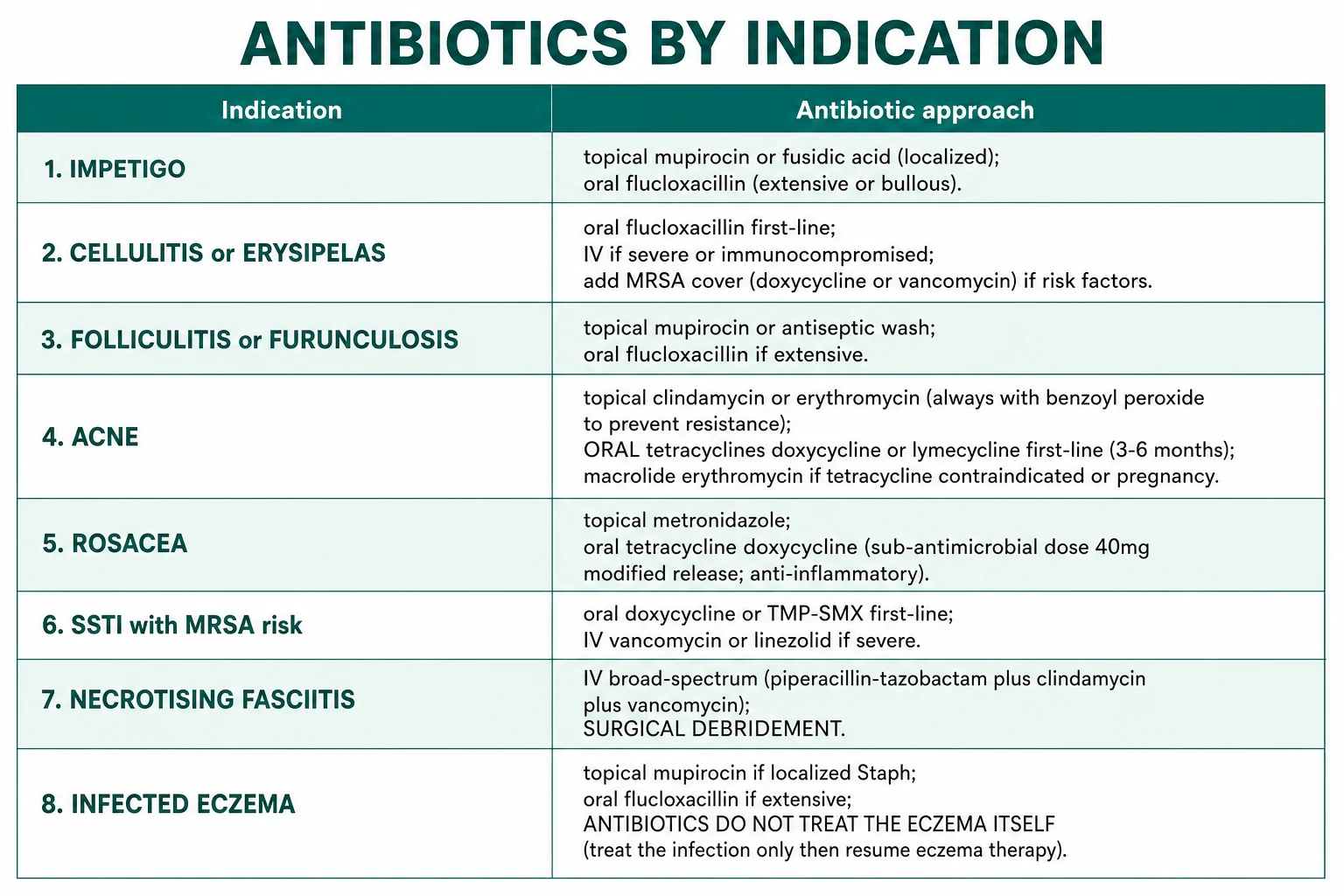
Impetigo presents with honey-coloured crusts (non-bullous, S. aureus / S. pyogenes) or flaccid bullae (bullous, S. aureus exfoliative toxin); localised disease is treated topically, extensive disease orally.[13][14] Cellulitis is a warm, spreading, poorly demarcated erythema of dermis and subcutis, usually unilateral on a leg, caused by S. pyogenes and MSSA — flucloxacillin is first-line.[1] Acne vulgaris is the papulopustular and nodulocystic disease of pilosebaceous units driven by C. acnes, treated with a tetracycline plus BPO for moderate-to-severe inflammatory disease.[6][7] Rosacea is centrofacial erythema with papules and pustules (no comedones) — topical metronidazole or low-dose doxycycline are first-line for the papulopustular phenotype.[8][9] Tinea presents with an annular scaly plaque and a raised leading edge; onychomycosis with thickened discoloured nails.[10][11] Herpes simplex with painful grouped vesicles on an erythematous base; herpes zoster with a painful dermatomal vesicular eruption.[15]
Differential Reasoning: Choosing the Right Agent
The decision is rarely "antibiotic or not" but "which antibiotic, and is the diagnosis even an infection?" Three common traps deserve emphasis. Pseudocellulitis — bilateral red legs from stasis dermatitis or contact dermatitis — is not infected and improves with compression and emollient, not flucloxacillin; the unilateral, warm, spreading, tender limb with systemic upset is the true cellulitis.[1][4] Infected versus colonised eczema — atopic eczema is nearly always colonised by S. aureus; weeping, crusting, and sudden deterioration suggest true infection warranting flucloxacillin, after which eczema therapy (emollient, topical steroid) must resume.[4] Acne versus folliculitis versus rosacea — acne shows comedones and responds to retinoid/BPO plus tetracycline; rosacea lacks comedones and is treated with metronidazole or low-dose doxycycline; folliculitis is pustular around hairs and usually settles with antiseptic wash, reserving antibiotics for extensive disease.
Clinical & Bedside Assessment Before Prescribing
Before writing any antimicrobial, the clinician assesses four things at the bedside: the infection itself (extent, depth, purulence, systemic signs), the portal of entry (tinea pedis fissure, ulcer, IV cannula, eczema — treating the portal prevents recurrence), the host (pregnancy, age, renal function, immunocompromise, drug list), and the need for a sample. Marking the leading edge of cellulitis with a datable pen line tracks response; measuring limb circumference detects deterioration; checking for fluctuance finds a drainable abscess that needs surgery more than antibiotics.[1]
Identify the likely organism from the clinical picture (impetigo -> Staph/Strep; cellulitis -> Strep/Staph; acne -> C. acnes; tinea -> dermatophyte; vesicles -> HSV/VZV).
Assess severity and depth: localised vs extensive; superficial vs deep; any systemic signs (fever, tachycardia, hypotension, confusion).
Decide route: topical for localised superficial; oral for extensive/deep/ambulant; IV for severe/septic/immunocompromised.
Check host constraints: pregnancy, age under 8 (no tetracyclines), renal function, interacting drugs (warfarin, statins, ACE inhibitors), allergy.
Sample when possible: swab pus for culture and sensitivity; KOH for suspected fungus; viral PCR/swab for HSV/VZV; MRSA nasal screen for decolonisation.
Choose the narrowest effective agent at the correct dose and duration; pair acne antibiotics with BPO; set a review date.
Investigations Guiding Therapy
Most uncomplicated skin infections are diagnosed clinically and need no test. Investigations matter when the organism is in doubt, the infection is severe or recurrent, or resistance is suspected.[1][11] A bacterial swab of pus or exudate (not dry intact skin) guides therapy in abscess, purulent cellulitis, infected ulcer, and recurrent SSTI; blood cultures are reserved for severe sepsis, immunocompromise, and atypical infection. Potassium hydroxide (KOH) microscopy of skin scrapings confirms dermatophyte infection within minutes and avoids unnecessary oral antifungals; fungal culture (and PCR) speciates the organism and is needed before committing to a long terbinafine course.[11] Wood's lamp shows microsporum tinea capitis (green fluorescence) and erythrasma (coral-red). Viral PCR or direct fluorescent antibody on vesicle fluid is more sensitive than culture for HSV and VZV. Ultrasound at the bedside distinguishes a drainable abscess (anechoic collection) from cellulitis (cobblestoning without collection). For suspected atypical and mycobacterial infection — chronic non-healing ulcers, nodules, sporotrichoid spread — biopsy for histology and culture (including mycobacterial culture at the right temperature) is essential, because standard antibiotics will fail.[5]
Urgent & Time-Critical Situations
A few situations override the routine prescribing logic and demand immediate, broad action. Severe SSTI with sepsis or suspected necrotising fasciitis requires IV antibiotics and urgent surgical exploration — never delay surgery for imaging. Empiric broad cover combines a beta-lactam/beta-lactamase inhibitor or carbapenem with clindamycin (for toxin suppression) plus MRSA cover (vancomycin, linezolid, or daptomycin).[1] Sepsis itself triggers the hour-1 bundle — cultures, lactate, broad antibiotics, and fluids. A drug reaction — DRESS or Stevens-Johnson syndrome/toxic epidermal necrolysis (SJS/TEN), most often from co-trimoxazole, sulfonamides, or nevirapine — demands immediate withdrawal of the culprit and all unnecessary drugs, supportive care, and for TEN, burn-unit referral.[17]
[1]Topical Antibacterials
Topical therapy delivers a high local concentration with low systemic exposure, making it ideal for localised superficial infection and for the chronic anti-inflammatory use in acne and rosacea. The cardinal rule for acne is that no topical antibiotic is ever used alone — it is always paired with benzoyl peroxide to suppress resistance.[6][18]
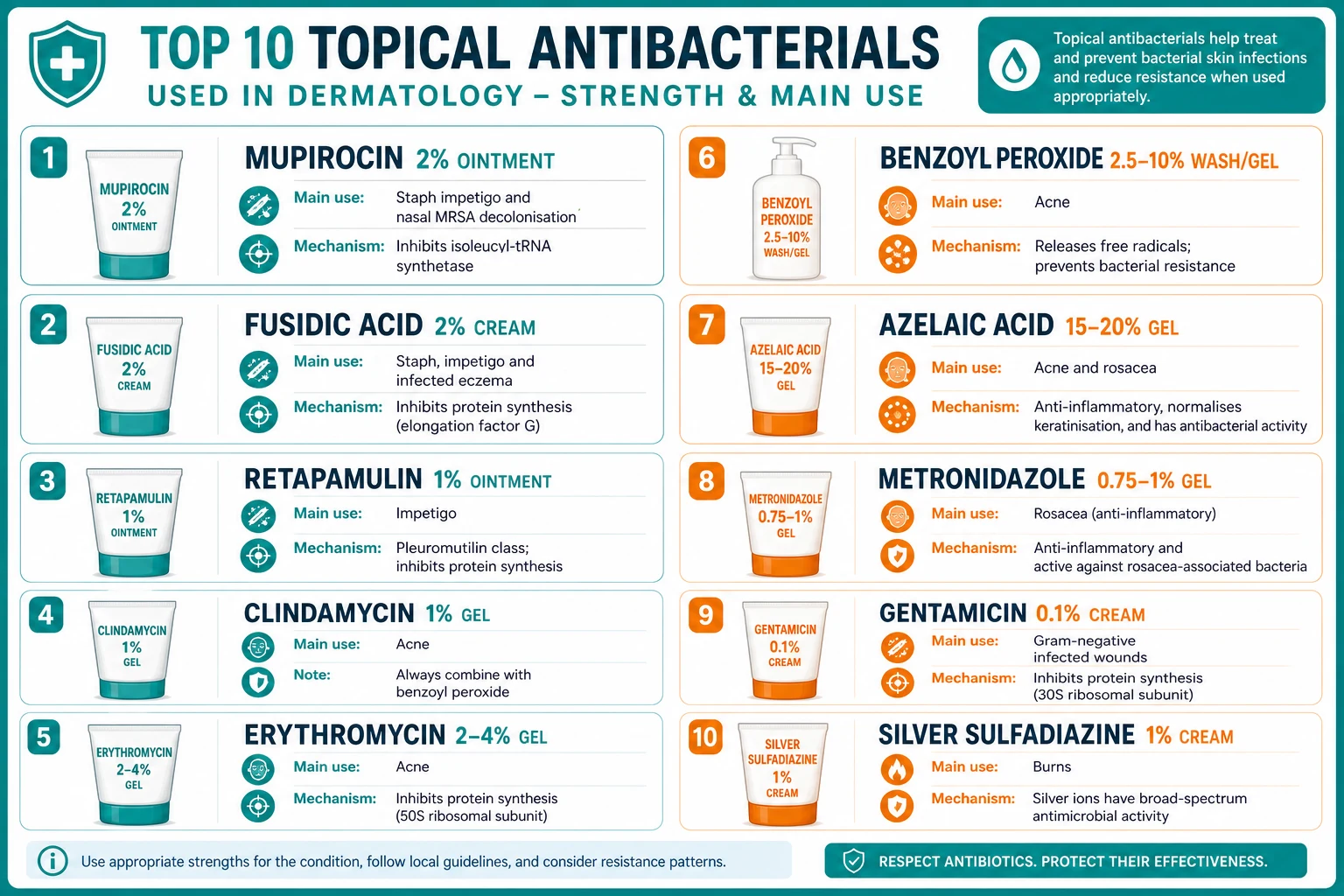
| Topical agent | Strength | Spectrum / mechanism | Principal indication | Notes |
|---|---|---|---|---|
| Mupirocin | 2% ointment | S. aureus, S. pyogenes; inhibits isoleucyl-tRNA synthetase | Localised impetigo; nasal MRSA decolonisation | Twice daily for 5 days; rare resistance (mupA gene) |
| Retapamulin | 1% ointment | Pleuromutilin; 50S protein synthesis | Impetigo (over 9 months) | Twice daily for 5 days; alternative to mupirocin |
| Fusidic acid | 2% cream | S. aureus; inhibits elongation factor G | Impetigo, infected eczema | Resistance increasing — avoid in chronic use; do not use for acne |
| Clindamycin | 1% gel/lotion | Lincosamide; 50S | Acne (topical) | Always combine with BPO; topical C. diff rare but reported |
| Erythromycin | 2-4% gel/solution | Macrolide; 50S | Acne (topical) | Combine with BPO; rising C. acnes resistance |
| Benzoyl peroxide | 2.5-10% wash/gel | Free-radical bactericide | Acne (all severities) | The anti-resistance partner; bleaches fabrics; irritant |
| Azelaic acid | 15-20% gel/cream | Anti-comedonal, anti-C. acnes | Acne, rosacea, hyperpigmentation | Safe in pregnancy; mild local irritation |
| Metronidazole | 0.75-1% gel/cream | Anti-inflammatory | Rosacea (papulopustular) | First-line topical for rosacea; twice daily |
| Gentamicin | 0.1% cream | Aminoglycoside; Gram-negatives | Infected wounds, otitis externa | Avoid prolonged use; contact sensitisation |
| Silver sulfadiazine | 1% cream | Broad-spectrum (silver + sulfonamide) | Burns prophylaxis | Risk of argyria, leucopenia; falling out of favour |
Topical mupirocin 2% (impetigo and nasal MRSA decolonisation)
Dose
Apply to lesions twice daily for 5 days. For decolonisation: intranasal mupirocin twice daily for 5 days plus chlorhexidine body wash
Topical Antifungals
Topical antifungals are first-line for localised superficial fungal infection — tinea corporis, cruris, and pedis, cutaneous candidiasis, and pityriasis versicolor — reserving oral therapy for nail disease, tinea capitis, extensive or refractory infection, and the immunocompromised host. The allylamines (terbinafine) are fungicidal and may cure tinea pedis in one to two weeks; the azoles (clotrimazole, miconazole, econazole) are fungistatic and need two to four weeks.[11]
| Topical antifungal | Class | Principal use | Notes |
|---|---|---|---|
| Clotrimazole 1% | Imidazole | Tinea, candidiasis, pityriasis versicolor | Once or twice daily for 2-4 weeks |
| Miconazole 2% | Imidazole | Tinea, candidiasis | Mild anti-bacterial action; oral gel interacts with warfarin |
| Econazole 1% | Imidazole | Tinea, candidiasis | Once daily; broad dermatophyte/yeast cover |
| Sertaconazole 2% | Imidazole | Tinea pedis (interdigital) | Anti-inflammatory effect; single application formulations |
| Terbinafine 1% | Allylamine | Tinea (fungicidal) | 1-2 weeks for tinea pedis; faster than azoles |
| Ketoconazole 2% shampoo/cream | Imidazole | Malassezia (pityriasis versicolor, seborrhoeic dermatitis) | Shampoo as body wash for extensive Malassezia |
| Ciclopirox | Hydroxypyridone | Tinea, candidiasis, seborrhoeic dermatitis | Nail lacquer 8% for mild onychomycosis |
| Selenium sulfide 2.5% | Inorganic | Pityriasis versicolor, seborrhoeic dermatitis | Apply, leave 10 min, rinse; repeated |
| Amorolfine 5% nail lacquer | Morpholine | Onychomycosis (mild, up to 2 nails) | Once weekly for 6-12 months; poor for matrix involvement |
Topical Antivirals
Topical antivirals have a modest role for early, limited herpes labialis; systemic therapy is superior for genital HSV, extensive disease, and the immunocompromised. Aciclovir 5% cream applied at the prodrome reduces healing time by about half a day; penciclovir 1% cream is similar; docosanol 10% is a barrier cream available without prescription. None meaningfully helps once vesicles have crusted. Their role is small because recurrent labial HSV is self-limiting and oral valaciclovir is more effective for anything beyond the mildest episode.[16]
Systemic Antibacterials — Anti-Staphylococcal & SSTI
When infection is extensive, deep, or accompanied by systemic signs, oral therapy replaces topical, and IV replaces oral for severe disease. The first-line oral agent for MSSA and streptococcal SSTI in most of the world is flucloxacillin, a beta-lactamase-stable penicillin.[1][3]
Flucloxacillin 500 mg four times daily (QDS) orally for 5-7 days is first-line for cellulitis, extensive impetigo, ecthyma, furuncles/carbuncles, and wound infection. Its signature adverse effect is cholestatic hepatitis, which is dose- and duration-related (risk rises beyond 14 days or with IV use) and can appear weeks after the drug is stopped; LFT monitoring is warranted for prolonged courses.[1] For non-anaphylactic penicillin allergy, cefalexin 500 mg BD (a first-generation cephalosporin) provides equivalent anti-staphylococcal and antistreptococcal cover; cefaclor is a second-generation alternative but carries a modest serum-sickness-like reaction risk. For true (anaphylactic) penicillin allergy, erythromycin 500 mg QDS or clarithromycin 500 mg BD are the macrolide fallbacks, noting rising staphylococcal resistance and the QT-prolongation and CYP3A4-inhibition profiles.
Tetracyclines (acne, rosacea)
The tetracyclines are the workhorses of inflammatory acne and papulopustular rosacea, used not for their antibacterial effect but for their anti-inflammatory action (inhibition of neutrophil chemotaxis, matrix metalloproteinases, and C. acnes lipase).[6][8] Doxycycline 100 mg daily (or 40 mg modified-release), lymecycline 408 mg daily, and minocycline 100 mg daily (modified-release) are the standard agents, paired with a topical retinoid and BPO, and limited to 3-6 months to contain resistance.[6] Minocycline carries additional rare but serious risks (drug-induced lupus, autoimmune hepatitis, irreversible slate-grey pigmentation) and is no longer first-line.
Key safety for all tetracyclines: they are contraindicated in pregnancy (Category D) — fetal bone and tooth deposition causing discolouration and skeletal retardation — and in children under 8 years for the same reason. They cause photosensitivity (sunscreen mandatory), benign intracranial hypertension (stop for headache and blurred vision), oesophageal irritation (take with water, sitting upright, not at bedtime), and they are chelated by calcium, iron, and antacids (separate by 2 hours). Vaginal candidiasis is common. Doxycycline is the preferred tetracycline in acne for its favourable profile.[6]
Macrolides
Erythromycin 500 mg QDS and clarithromycin 500 mg BD cover streptococci and staphylococci for the penicillin-allergic, and erythromycin is the acne tetracycline-substitute in pregnancy (where tetracyclines are banned). Two hazards define their use: QT prolongation (especially erythromycin, with arrhythmia risk in combination with other QT-prolonging drugs) and CYP3A4 inhibition (raising warfarin, statin, ciclosporin, and ergot levels — review the patient's drug list). Rising C. acnes resistance limits erythromycin's acne role.[6]
Resistant Gram-positive cover: linezolid and rifampicin combinations
Linezolid 600 mg BD (oral or IV) is an oxazolidinone active against MRSA, VRE, and resistant streptococci, valuable in severe SSTI when vancomycin cannot be used or fails. Its hazards are duration-related: thrombocytopenia (and anaemia) beyond 14 days, peripheral and optic neuropathy, and serotonin syndrome with serotonergic drugs (SSRIs, tramadol, linezolid is a weak monoamine oxidase inhibitor) — weekly full blood count is needed for prolonged courses.[3] Clindamycin plus rifampicin (clindamycin 300 mg BD, rifampicin 300 mg BD) is a recognised combination for hidradenitis suppurativa flares (a 10-12 week course) and for recurrent furunculosis; rifampicin must never be used alone (rapid resistance) and is a powerful CYP3A4 inducer that renders the oral contraceptive pill ineffective.
Systemic Antifungals
Oral antifungals are reserved for onychomycosis, tinea capitis, extensive or refractory dermatophytosis, deep/cutaneous candidiasis, and Malassezia folliculitis. Terbinafine is first-line for dermatophyte onychomycosis; the azoles are alternatives and preferred for candidiasis and certain non-dermatophyte moulds.[10][11]
Terbinafine 250 mg once daily is fungicidal (allylamine; squalene epoxidase inhibition) and is first-line for dermatophyte onychomycosis — 6 weeks for fingernails, 12 weeks for toenails.[10] Its principal toxicity is hepatotoxicity (rare but serious idiosyncratic hepatitis), so LFTs are checked at baseline and during therapy; taste disturbance (dysgeusia, sometimes persistent) and drug-induced lupus are rarer caveats. Terbinafine has few interactions (a mild CYP2D6 inhibitor).
Itraconazole 100-200 mg daily is a broad-spectrum triazole given as continuous therapy (200 mg daily for 12 weeks for toenails) or as pulse therapy (200 mg BD for 1 week, then 3 weeks off, repeated for 2-3 pulses).[10] It is a potent CYP3A4 inhibitor — levels of statins (rhabdomyolysis risk, avoid simvastatin), warfarin, ciclosporin, and many others rise — and carries a heart-failure warning as a negative inotrope (avoid in current or past heart failure). LFTs are monitored. Fluconazole 50-100 mg weekly (or 150-300 mg once weekly for onychomycosis) is a triazole useful for mucocutaneous candidiasis and tinea capitis; it is also a CYP3A4 inhibitor (less potent than itraconazole) and can prolong the QT interval. Griseofulvin 500-1000 mg daily with a fatty meal is an older agent now largely confined to tinea capitis in children, where it remains an effective first-line (6-12 weeks); it is fungistatic, less effective than terbinafine for onychomycosis, and can cause headache and photosensitivity.[11][12]
Onychomycosis network meta-analysis (Gupta 2020)
Systematic review and network meta-analysis of monotherapy for toenail onychomycosis
Key finding
Oral terbinafine achieves the highest mycological and clinical cure for dermatophyte onychomycosis; itraconazole pulse is an effective alternative. Topical agents alone are inferior and reserved for mild disease.
Practice change
Terbinafine 250 mg OD for 12 weeks is first-line for toenail onychomycosis; check LFTs at baseline.
Systemic Antivirals
Systemic antivirals treat HSV and VZV infections. The nucleoside analogues aciclovir, valaciclovir (a prodrug of aciclovir with better bioavailability), and famciclovir (a prodrug of penciclovir) are all virostatic, working only in infected cells after phosphorylation by viral thymidine kinase.[15][16] For mucocutaneous HSV, aciclovir 200-400 mg five times daily for 5 days (or valaciclovir 500 mg BD, or famciclovir 250 mg three times daily) started within 5 days shortens episodes; frequent recurrences warrant suppression (aciclovir 400 mg BD or valaciclovir 500 mg daily).[16] For herpes zoster, higher doses are used — valaciclovir 1000 mg three times daily or famciclovir 500 mg three times daily or aciclovir 800 mg five times daily for 7 days, ideally within 72 hours of rash onset, reducing severity and the risk of postherpetic neuralgia.[15] Dose reduction is required in renal impairment for all three; aciclovir is pregnancy-safe (Category B) and is the agent of choice for HSV and VZV in pregnancy.
Prescribing Principles & Antibiotic Stewardship
Good antimicrobial prescribing is governed by seven principles, and examiners test them repeatedly: spectrum (match the drug to the likely organism), resistance (use BPO with acne antibiotics; avoid antibiotics for non-infections), side effects (tetracyclines in pregnancy/children; flucloxacillin hepatitis; clindamycin C. diff; co-trimoxazole SJS), interactions (macrolide and azole CYP3A4; warfarin; statins; the contraceptive pill), pregnancy categories (penicillins and cephalosporins safe; tetracyclines Category D; metronidazole avoid high-dose first trimester), duration (as short as efficacy allows), and monitoring (LFTs for terbinafine/itraconazole/prolonged flucloxacillin; full blood count for linezolid).[17][18]
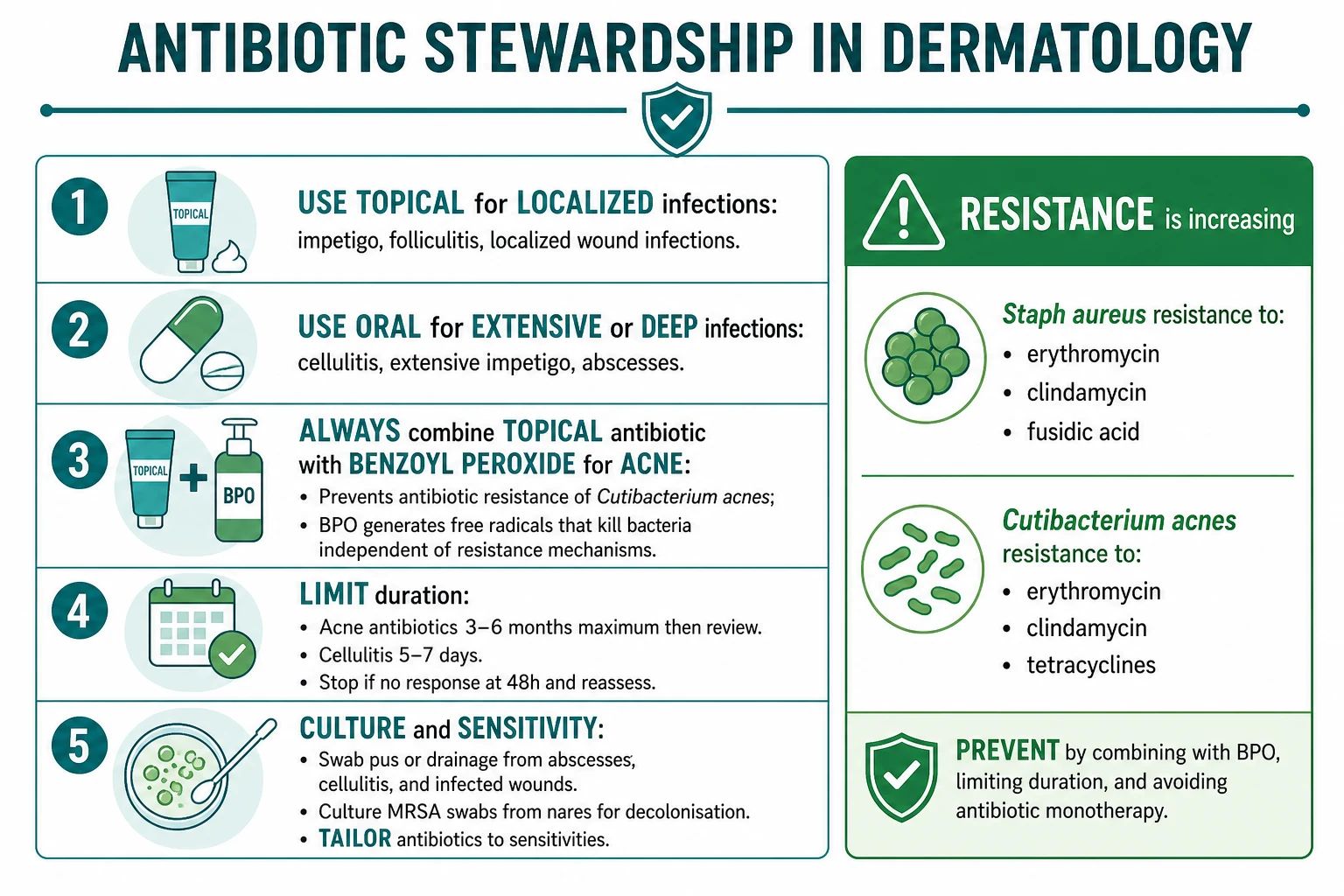
- Topical for localised disease (impetigo, folliculitis, localised tinea and infected wounds).[13][18]
- Oral for extensive or deep disease (cellulitis, extensive impetigo, abscess with surrounding cellulitis, onychomycosis).[1]
- Always combine topical antibiotic with benzoyl peroxide for acne — BPO generates free radicals that kill C. acnes independent of resistance mechanisms, suppressing the emergence of resistant strains.[6][18]
- Limit duration — acne antibiotics to 3-6 months then review; cellulitis 5-7 days; reassess at 48 hours if no response (resistant organism, abscess, wrong diagnosis).[1]
- Culture-guided therapy — swab pus from abscesses, cellulitis, and infected wounds; MRSA nasal screen for decolonisation; KOH/culture before long antifungal courses; tailor to sensitivities.[3]
STEWARDSHIP
Complications & Adverse Effects
Adverse effects fall into three groups: direct drug toxicity, ecological effects (resistance and C. difficile), and idiosyncratic reactions (SJS/TEN, DRESS, drug-induced lupus). Every prescriber must know the signature toxicity of each class, because these are common exam and viva material.[17]
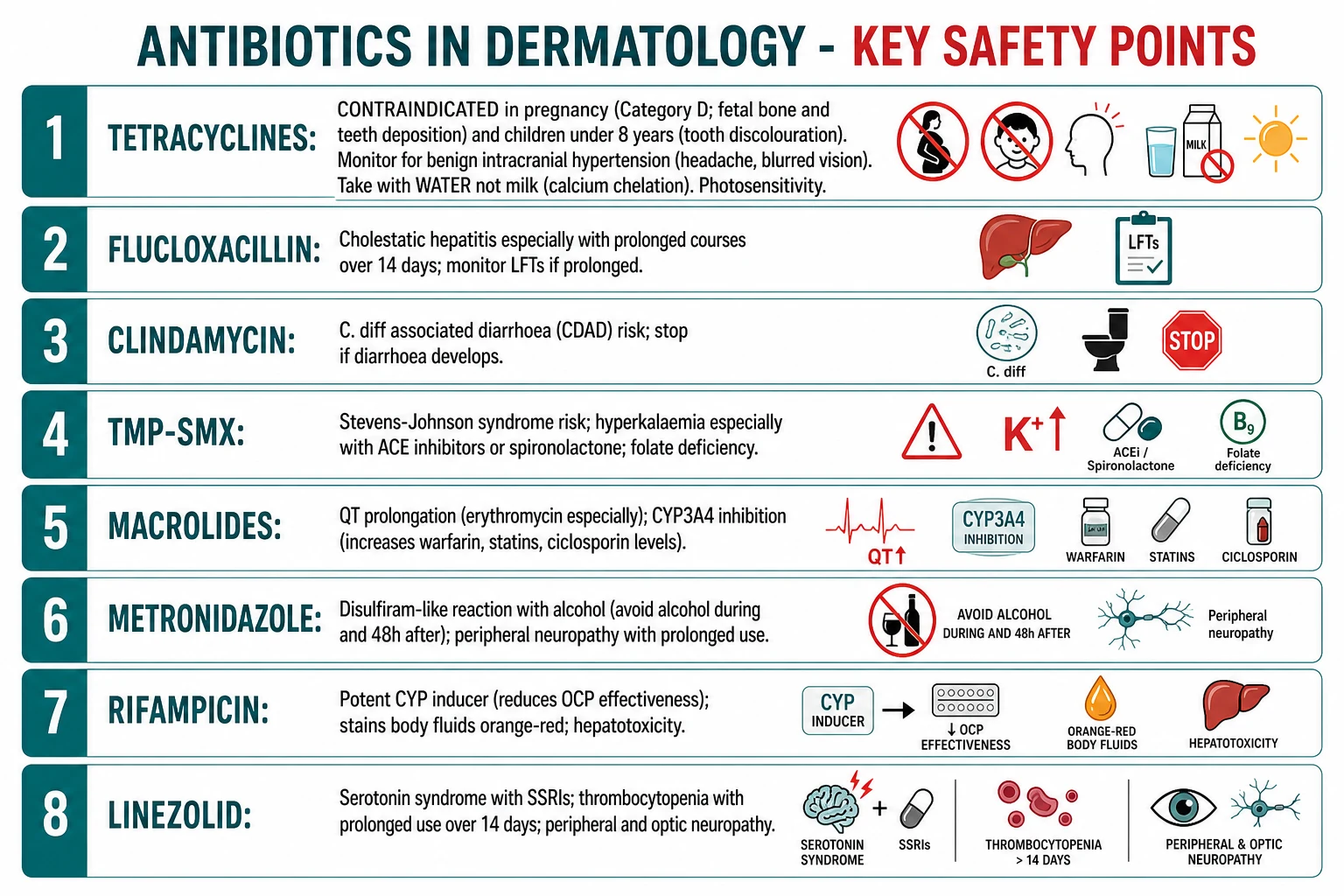
| Drug or class | Key safety issue | Action |
|---|---|---|
| Tetracyclines | Pregnancy Category D and children under 8 (teeth/bone); BIIH; photosensitivity; chelation with Ca/Fe | Avoid in pregnancy and under 8; sunscreen; separate from milk/antacids by 2 h |
| Flucloxacillin | Cholestatic hepatitis (> 14 d or IV; can lag weeks) | Limit course; LFTs if prolonged |
| Clindamycin | C. difficile-associated diarrhoea | Stop if new diarrhoea; send C. diff toxin |
| Co-trimoxazole | SJS/TEN; hyperkalaemia (with ACE inhibitors, spironolactone); folate deficiency | Stop for new rash; check potassium in elderly/renal |
| Macrolides | QT prolongation; CYP3A4 inhibition | Check ECG and drug list (warfarin, statins) |
| Metronidazole | Disulfiram-like reaction with alcohol; peripheral neuropathy (prolonged) | Avoid alcohol; limit long courses |
| Linezolid | Serotonin syndrome (with SSRIs); thrombocytopenia beyond 14 d; neuropathy | Weekly FBC; review serotonergic drugs |
| Itraconazole | Heart failure (negative inotrope); CYP3A4 interactions; hepatitis | Avoid in HF; check LFTs; review drug list |
| Terbinafine | Idiosyncratic hepatitis; taste loss (dysgeusia); drug-induced lupus | Baseline and on-treatment LFTs |
Prognosis, Duration & Follow-Up
Response to appropriate antimicrobial therapy is usually evident within 48-72 hours for bacterial SSTI; failure to improve by then demands reassessment for resistant organism, undrained abscess, deep infection (osteomyelitis, necrotising fasciitis), or a non-infectious diagnosis.[1] Uncomplicated cellulitis resolves on 5-7 days of flucloxacillin; severe disease may need 10-14 days. Acne antibiotics show benefit over 6-8 weeks and are capped at 3-6 months, with a maintenance plan of topical retinoid plus BPO and a switch to hormonal or isotretinoin therapy if response is inadequate.[6] Onychomycosis cure with terbinafine is confirmed at 12 weeks (toenail) by clinical improvement and repeat KOH/culture, recognising that the nail grows out over many months. Recurrent cellulitis is prevented by treating the portal of entry — most often interdigital tinea pedis — and, for frequent recurrences, by prophylactic penicillin (phenoxymethylpenicillin 500 mg daily or benzathine penicillin intramuscularly).[1]
Special Populations
Pregnancy reshapes the choice sharply. Penicillins (flucloxacillin) and cephalosporins (cefalexin) are safe and remain first-line for SSTI. Tetracyclines are Category D and absolutely contraindicated — for acne in pregnancy use erythromycin (topical or oral), topical azelaic acid, or topical BPO.[6] Co-trimoxazole is avoided (folate antagonism, first trimester; kernicterus risk, third). Aciclovir and valaciclovir are Category B and used for HSV/VZV in pregnancy, including suppression near term to prevent neonatal HSV.[16]
Children need weight-based dosing and never receive tetracyclines under 8 years (permanent tooth discolouration). For paediatric impetigo, topical mupirocin or oral flucloxacillin (weight-based) are first-line; tinea capitis is treated with oral griseofulvin or terbinafine for 6-12 weeks.[12][13] The elderly may blunt fever and present with confusion; they are at higher risk of C. difficile (clindamycin, co-trimoxazole) and hyperkalaemia (co-trimoxazole with ACE inhibitors). Renal impairment requires dose adjustment of aciclovir, valaciclovir, fluconazole, co-trimoxazole, and cefalexin; terbinafine needs dose reduction in moderate-to-severe CKD. The immunocompromised (neutropenic, transplant, HIV) need broader empiric cover, lower thresholds for culture and imaging, and consideration of resistant and atypical organisms (Pseudomonas, non-tuberculous mycobacteria, deep fungal infection).[2][5]
[1]Evidence, Guidelines & Controversies
The American Academy of Dermatology 2024 acne guideline codifies the central rules: antibiotics are adjuncts (not monotherapy) for moderate-to-severe inflammatory acne, always combined with a topical retinoid and BPO, limited to 3-6 months, with hormonal therapy or isotretinoin for inadequate response.[6] The network meta-analysis by Mavranezouli and colleagues confirmed that combinations (topical retinoid plus BPO plus oral antibiotic) outperform single agents and that BPO pairing protects against antibiotic-resistant C. acnes.[7] For rosacea, phenotype-based treatment is now standard — topical metronidazole or ivermectin for papulopustular disease, brimonidine for persistent erythema, and low-dose (40 mg modified-release) doxycycline for moderate-to-severe papulopustular rosacea — supported by systematic review evidence.[8][9]
For onychomycosis, terbinafine's superiority over itraconazole for dermatophyte disease is established by network meta-analysis, though itraconazole pulse remains useful for non-dermatophyte and Candida nail disease.[10] The withdrawal of oral ketoconazole for dermatophytosis, on hepatotoxicity grounds, is a settled controversy — topical ketoconazole remains safe. Controversies in antibiotic stewardship include the optimal duration of cellulitis therapy (short courses increasingly supported), the role of anti-MRSA empiric cover in low-prevalence settings, and the place of topical antiseptics (chlorhexidine, hypochlorous acid) as antibiotic-sparing alternatives for decolonisation and infected eczema.[17][18]
Exam Pearls
Red Flags
Exam application bank (NEET-PG / INICET)
One-line answer
Comprehensive pharmacology guide to topical and systemic antimicrobials used in dermatology. TOPICAL ANTIBACTERIALS: mupirocin 2% (Staph, nasal MRSA decolonisation), fusidic acid 2%, retapamulin 1% (impetigo), clindamycin 1% and erythromycin 2-4% (acne - always combine with benzoyl peroxide), benzoyl peroxide 2.5-10%, azelaic acid 15-20%, metronidazole 0.75-1% (rosacea), gentamicin, silver sulfadiazine 1% (burns). TOPICAL ANTIFUNGALS: clotrimazole 1%, miconazole 2%, terbinafine 1%, ketoconazole 2% (Malassezia), ciclopirox, selenium sulfide, amorolfine 5% nail lacquer, econazole, sertaconazole. TOPICAL ANTIVIRALS: aciclovir 5%, penciclovir 1%, docosanol 10% (HSV). SYSTEMIC ANTIBACTERIALS: flucloxacillin 500mg QDS (MSSA cellulitis/impetigo), cefalexin 500mg BD, erythromycin/clarithromycin (penicillin allergy), doxycycline 100mg BD, lymecycline 408mg OD, minocycline 100mg OD (acne/rosacea), [1]
Worked stems (answer without another resource)
Stem 1 — Classic presentation. Map symptoms to mechanism; name the first investigation and first treatment step with dose/route if drug therapy is standard. [1]
Stem 2 — Unstable / complicated. List red flags that force immediate resuscitation, theatre, ICU, antidote, or reperfusion — and what you do in the first 15 minutes. [1]
Stem 3 — Atypical group. Elderly, pregnancy, child, or immunocompromised: how presentation and thresholds change. [1]
Stem 4 — Differential trap. Name the three closest mimics and one discriminator for each. [1]
Stem 5 — Disposition. Who goes home with safety-netting, who is admitted, who needs HDU/ICU/theatre, and what follow-up is mandatory. [1]
Rapid viva checklist
- Definition + classification
- Pathophysiology chain
- Bedside signs / criteria
- Score with exact components (if any)
- Emergency bundle
- Definitive therapy with doses
- Complications of disease and of treatment
- Special populations
- Guideline/trial name if classic
- Three exam traps
Coverage self-check
If you cannot answer any stem above from this page alone, re-read the matching section — the page is intended to be self-sufficient for final-prof and NEET-PG/INICET questions on Antimicrobials in dermatology.
[1]References
- [1]Rrapi R, Chand S, Kroshinsky D. Cellulitis: A Review of Pathogenesis, Diagnosis, and Management Med Clin North Am, 2021.PMID 34059247
- [2]Holt RIG, Cockram CS, Ma RCW, et al. Diabetes and infection: review of the epidemiology, mechanisms and principles of treatment Diabetologia, 2024.PMID 38374451
- [3]Hatlen TJ, Miller LG. Staphylococcal Skin and Soft Tissue Infections Infect Dis Clin North Am, 2021.PMID 33303329
- [4]Yosipovitch G, Nedorost ST, Silverberg JI, et al. Stasis Dermatitis: An Overview of Its Clinical Presentation, Pathogenesis, and Management Am J Clin Dermatol, 2023.PMID 36800152
- [5]Gardini G, Gregori N, Matteelli A, et al. Mycobacterial skin infection Curr Opin Infect Dis, 2022.PMID 35067521
- [6]Reynolds RV, Yeung H, Cheng CE, et al. Guidelines of care for the management of acne vulgaris J Am Acad Dermatol, 2024.PMID 38300170
- [7]Mavranezouli I, Daly CH, Welton NJ, et al. A systematic review and network meta-analysis of topical pharmacological, oral pharmacological, physical and combined treatments for acne vulgaris Br J Dermatol, 2022.PMID 35789996
- [8]Sharma A, Kroumpouzos G, Kassir M, et al. Rosacea management: A comprehensive review J Cosmet Dermatol, 2022.PMID 35104917
- [9]van Zuuren EJ, Fedorowicz Z, Tan J, et al. Interventions for rosacea based on the phenotype approach: an updated systematic review including GRADE assessments Br J Dermatol, 2019.PMID 30585305
- [10]Gupta AK, Foley KA, Mays RR, et al. Monotherapy for toenail onychomycosis: a systematic review and network meta-analysis Br J Dermatol, 2020.PMID 31120134
- [11]Ely JW, Rosenfeld S, Seabury Stone M. Diagnosis and management of tinea infections Am Fam Physician, 2014.PMID 25403034
- [12]Hill RC, Gold JAW, Lipner SR. Comprehensive Review of Tinea Capitis in Adults: Epidemiology, Risk Factors, Clinical Presentations, and Management J Fungi (Basel), 2024.PMID 38786712
- [13]Hartman-Adams H, Banvard C, Juckett G. Impetigo: diagnosis and treatment Am Fam Physician, 2014.PMID 25250996
- [14]Koning S, van der Sande R, Verhagen AP, et al. Interventions for impetigo Cochrane Database Syst Rev, 2012.PMID 22258953
- [15]Saguil A, Kane S, Mercado M, Lauters R. Herpes Zoster and Postherpetic Neuralgia: Prevention and Management Am Fam Physician, 2017.PMID 29431387
- [16]Pinninti SG, Kimberlin DW. Neonatal herpes simplex virus infections Semin Perinatol, 2018.PMID 29544668
- [17]Shah RA, Hsu JI, Patel RR, et al. Antibiotic resistance in dermatology: The scope of the problem and strategies to address it J Am Acad Dermatol, 2022.PMID 34555484
- [18]MacGibeny MA, Jo JH, Kong HH. Antibiotic Stewardship in Dermatology-Reducing the Risk of Prolonged Antimicrobial Resistance in Skin JAMA Dermatol, 2022.PMID 35947396