Dermatology · Medicine
Biologics and small molecules in dermatology
Also known as Biologics and small molecules · Targeted therapies · Biologic therapy · Immunomodulators in dermatology
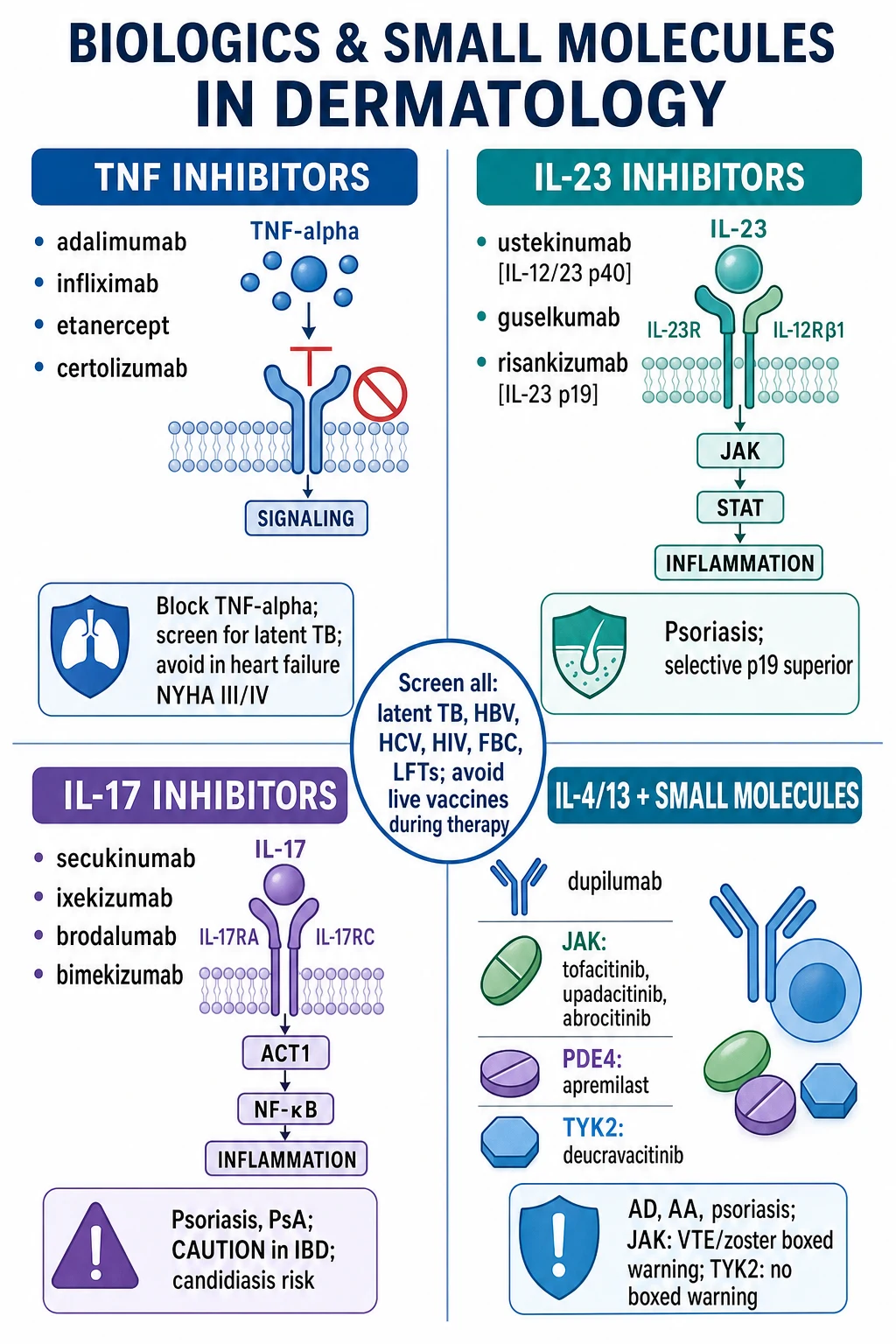
Biologic therapies (monoclonal antibodies / fusion proteins targeting specific cytokines) and small-molecule inhibitors (JAK, PDE4, TYK2, S1P) have transformed dermatology. TNF inhibitors (adalimumab, infliximab, etanercept, certolizumab) treat psoriasis, PsA, HS — but require latent TB screening and are avoided in heart failure NYHA III/IV. IL-23 inhibitors (ustekinumab [IL-12/23], guselkumab/risankizumab [p19]) are first-line for moderate-severe plaque psoriasis. IL-17 inhibitors (secukinumab, ixekizumab, brodalumab, bimekizumab) are highly effective for psoriasis/PsA but contraindicated in inflammatory bowel disease (can worsen Crohn's/UC). Dupilumab (IL-4Rα) is first-line systemic for atopic dermatitis — conjunctivitis is the class-specific AE. JAK inhibitors (tofacitinib, upadacitinib, abrocitinib) carry an FDA boxed warning (VTE, herpes zoster, MACE, malignancy). Deucravacitinib (TYK2 inhibitor) treats psoriasis without the JAK boxed warning. Pre-treatment screening for ALL biologics and JAK: latent TB (IGRA + CXR), HBV, HCV, HIV, FBC, LFTs.
On this page & tools
Your progress
Saved locally on this device.
Exam tags
Red flags
Overview & Cytokine-Target Framework
Biologics are large-molecule recombinant proteins (monoclonal antibodies, fusion proteins, PEGylated fragments, recombinant receptor-Fc constructs) that bind a circulating cytokine, a cytokine receptor, or a cell-surface antigen (CD20, IgE, C5a). They are given parenterally (subcutaneous or intravenous) and have long half-lives (weeks to months). Small molecules are low-molecular-weight synthetic compounds (JAK inhibitors, PDE4 inhibitors, TYK2 inhibitors, S1P modulators) that act intracellularly by blocking kinase signalling or second-messenger pathways. They are given orally, have short half-lives (hours), and most need baseline organ-function testing.[1][6]
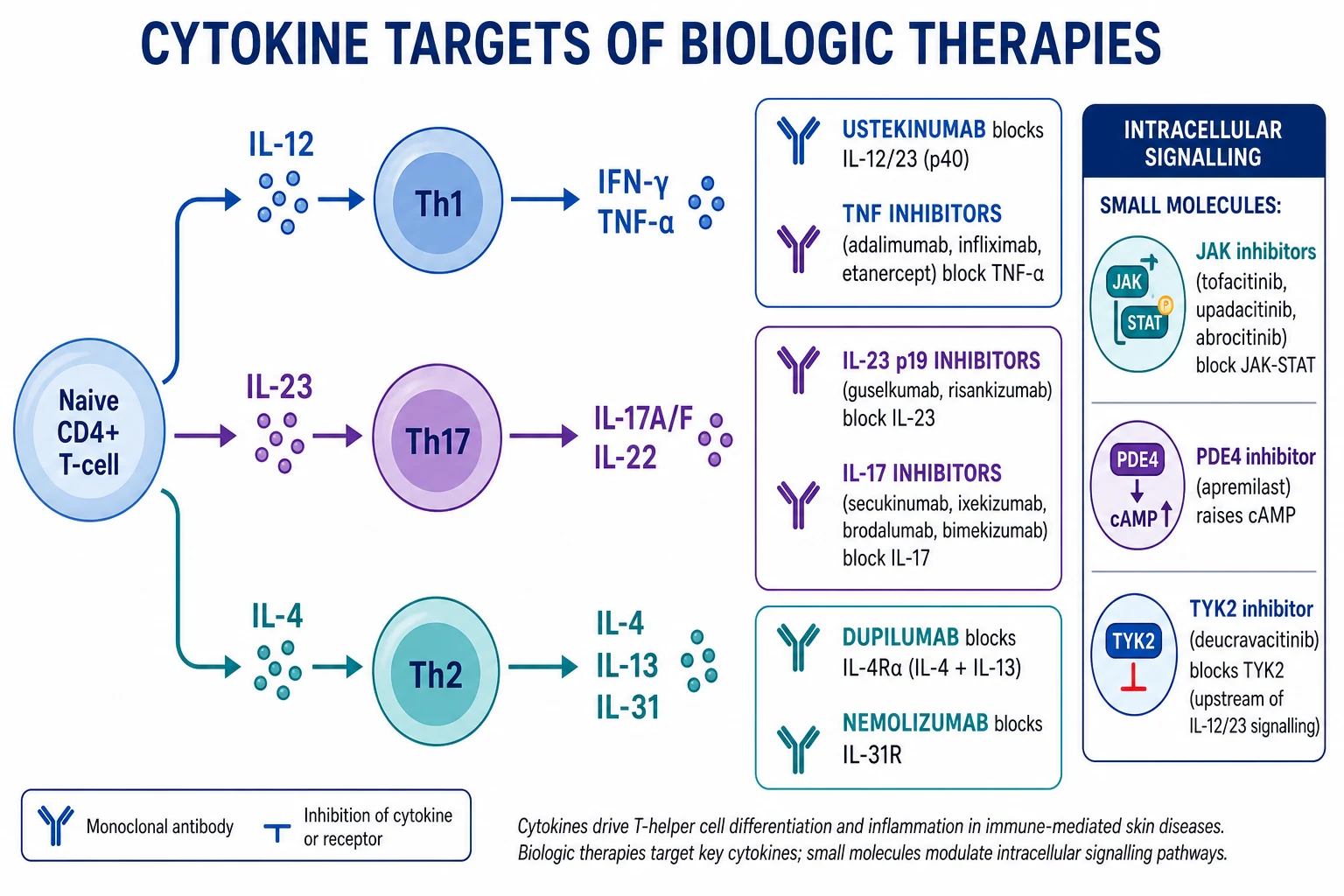
The cleanest way to classify dermatologic targeted therapies is by cytokine pathway rather than by disease. The three functional T-helper axes cover almost the entire syllabus: [1]
- Th1 / Th17 axis (psoriasis, PsA, HS, axial spondyloarthritis) — driven by IL-12, IL-23, IL-17, IL-22, TNF-α.
- Th2 axis (atopic dermatitis, prurigo nodularis, chronic spontaneous urticaria) — driven by IL-4, IL-13, IL-31, IgE.
- B-cell / neutrophil axis (pemphigus, hidradenitis, pyoderma gangrenosum) — driven by CD20 (B-cells), C5a (neutrophil chemotaxis), IL-1 (autoinflammatory).[1][6]
TNF-α Inhibitors
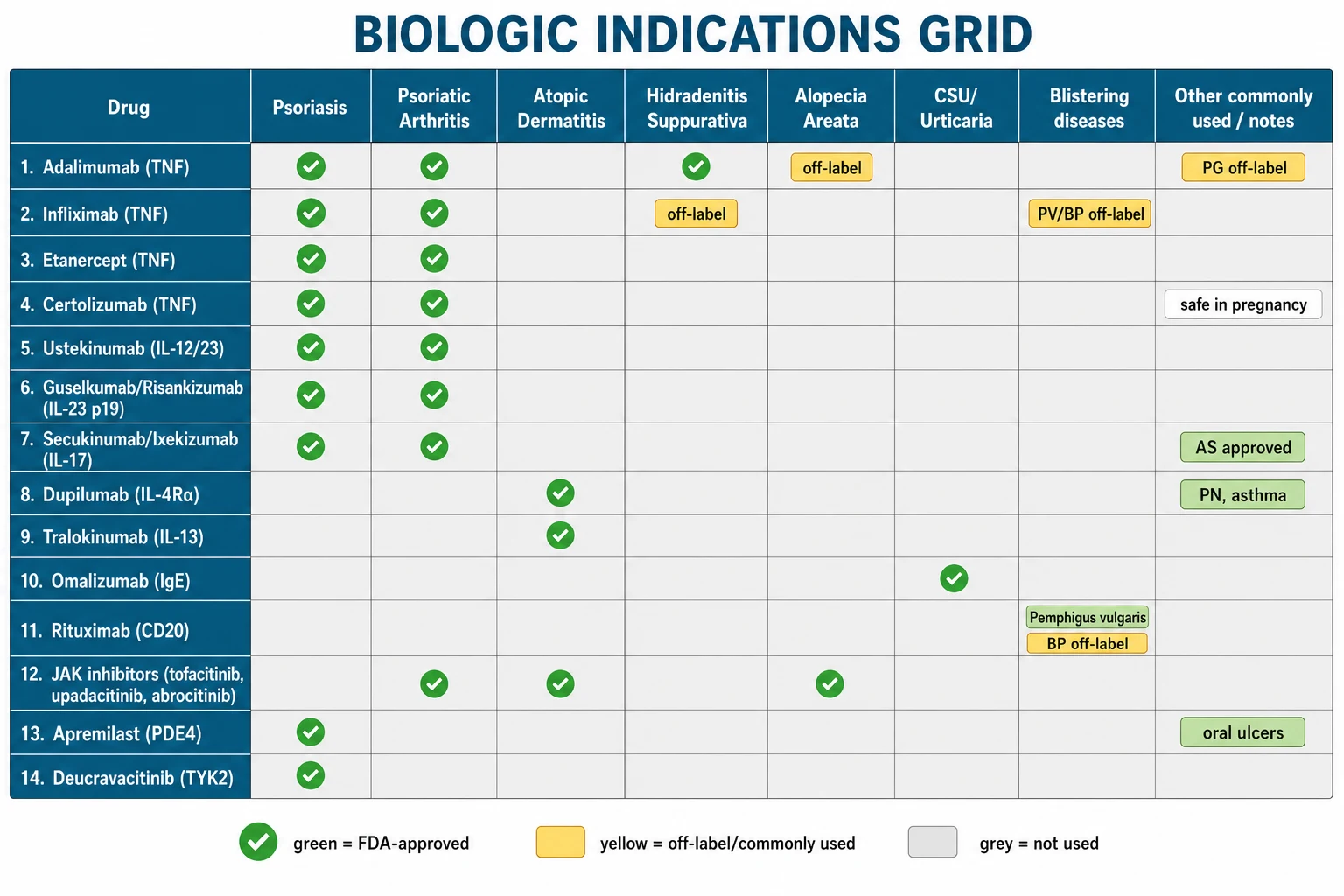
The TNF inhibitors were the first cytokine-targeted biologics and remain workhorses in plaque psoriasis, psoriatic arthritis (PsA), ankylosing spondylitis/axial spondyloarthritis (axSpA), hidradenitis suppurativa (adalimumab — only TNF approved), Crohn's disease, ulcerative colitis, Behçet disease, uveitis, and off-label pyoderma gangrenosum.[1][6][7]
- Adalimumab — fully human IgG1 anti-TNF-α mAb; SC every 1–2 weeks; only TNF inhibitor FDA-approved for HS (week-0 induction 160 mg, then 80 mg week 2, then 40 mg weekly or 80 mg q2w).
- Infliximab — chimeric (mouse–human) IgG1 anti-TNF mAb; IV infusion at weeks 0, 2, 6, then every 8 weeks; used for severe plaque psoriasis, IBD, Behçet's.
- Etanercept — TNFR2-Fc fusion protein (binds soluble TNF and lymphotoxin); SC twice weekly; does NOT work in IBD (does not fix complement or lyse TNF-bearing cells); least effective for skin clearance in head-to-head trials; highest rate of anti-drug antibodies (often co-prescribed with methotrexate).
- Certolizumab pegol — PEGylated Fab' fragment (no Fc); SC every 2 weeks; minimal placental transfer → biologic of choice in pregnancy and breastfeeding; also first choice when pregnancy is being planned.[1]
TNF-α drives keratinocyte hyperproliferation, neutrophil recruitment, granuloma maintenance (TB), and endothelial adhesion. Blocking it is highly effective for skin and joint disease — but the same biology also explains the adverse-event profile: reactivation of latent granulomatous disease (TB, histoplasmosis, coccidioidomycosis), demyelination (TNF maintains myelin sheath integrity in mice), worsening of NYHA III/IV heart failure (TNF paradoxically has a protective role in advanced HF), drug-induced lupus, and rare hepatosplenic T-cell lymphoma in young males on combination immunosuppression. HBV reactivation is highest with the TNF class — screen all patients.[1][6]
IL-23 Pathway Inhibitors
The IL-23 axis is the master regulator of the psoriatic plaque. Dendritic-cell-derived IL-23 drives IL-17-producing Th17 cells; IL-17A/F then drive keratinocyte hyperproliferation and neutrophil chemotaxis. Two molecular strategies exist:[1]
- Anti-p40 (blocks both IL-12 AND IL-23) — ustekinumab. SC at week 0, 4, then every 12 weeks. Weight-based dosing (≤100 kg vs >100 kg).
- Anti-p19 (blocks IL-23 only — spares IL-12-mediated Th1 anti-TB immunity) — guselkumab, risankizumab, tildrakizumab. SC every 8–12 weeks.[1]
Selective IL-23 p19 inhibitors achieve PASI 90 in 70–75% by week 16 and PASI 100 in ~40–50% — superior to ustekinumab in VOYAGE 1/2, IMMerge, IMMhance and reSURFACE 1/2. They are the current first-line biologic choice for moderate-to-severe plaque psoriasis when starting a systemic biologic. The sparing of IL-12 means Th1-mediated anti-TB immunity is preserved, so TB screening is still required but the reactivation risk is much lower than with anti-TNF.[1]
IL-17 Inhibitors
The fastest and most powerful anti-cytokine effect in dermatology: PASI 90 and even PASI 100 within 12–16 weeks. Four drugs are FDA-approved: [1]
- Secukinumab — anti-IL-17A; SC; PASI 90 ~70–75%; first-in-class.
- Ixekizumab — anti-IL-17A; SC; highest reported PASI 90/100 rates in head-to-head trials; IXORA-S vs ustekinumab and IXORA-R vs guselkumab.
- Brodalumab — anti-IL-17RA (blocks BOTH IL-17A and IL-17F signalling through the receptor); SC; boxed warning for suicidal ideation → REMS program in the US.
- Bimekizumab — anti-IL-17A AND anti-IL-17F (both ligands); SC; BE READY and BE SURE showed near-complete clearance but high mucocutaneous candidiasis and a label warning for IBD reactivation.[1][7]
IL-17 inhibitors are the first choice in psoriasis with severe nail, scalp or genital involvement, where their rapid onset is decisive. They are approved for ankylosing spondylitis / non-radiographic axial spondyloarthritis and for PsA. Secukinumab is approved for HS. [1]
Two class-defining safety signals:
- Mucocutaneous candidiasis — IL-17 recruits neutrophils to mucosa and skin; patients develop oral/genital/intertriginous Candida; treat with topical/oral azoles; counsel about thrush and vaginal candidiasis.
- IBD exacerbation — IL-17 is unexpectedly protective in the gut mucosa; blocking it can trigger or worsen Crohn's / ulcerative colitis. Screen every patient for IBD symptoms (chronic bloody diarrhoea, abdominal pain, weight loss) before starting — and CONTRAINDICATE in active IBD.[1]
IL-4/IL-13 (Th2) Inhibitors
- Dupilumab — fully human mAb against IL-4Rα (blocks BOTH IL-4 and IL-13); SC every other week; first-line systemic biologic for moderate-severe AD; also asthma, eosinophilic oesophagitis, prurigo nodularis, chronic rhinosinusitis with nasal polyps. Class-specific AE = conjunctivitis (10–20%) — usually mild and managed with lubricants and topical calcineurin inhibitors; rarely needs ophthalmology referral or dupilumab cessation.[2]
- Tralokinumab — selective anti-IL-13 mAb; AD; may have a lower conjunctivitis rate than dupilumab (ECZTRA trials).
- Lebrikizumab — selective anti-IL-13 mAb; AD (FDA-approved 2024); similar profile to tralokinumab.
- Nemolizumab — anti-IL-31 receptor A mAb; prurigo nodularis (FDA-approved 2024) and AD; IL-31 is the "itch cytokine" produced by Th2 cells, basophils and mast cells; IL-31R blockade reduces pruritus and sleep disturbance within 1–2 weeks.
DUPILUMAB
Anti-IgE, Anti-CD20, Anti-IL-1, Anti-C5a
- Omalizumab (anti-IgE mAb): SC every 4 weeks; dose by IgE level and weight; first-line biologic for chronic spontaneous urticaria (CSU) refractory to 4-fold-dose H1 antihistamines; also chronic inducible urticarias (cold, cholinergic), allergic asthma, chronic rhinosinusitis with nasal polyps. Class AE: anaphylaxis (~0.1%) → observe 2 h after first 2 doses and 30 min thereafter; serum sickness-like reactions rare.
- Rituximab (chimeric anti-CD20 mAb — depletes B-cells): IV every 6 months; first-line for pemphigus vulgaris (RITUX 3 trial — superior to corticosteroids alone); off-label bullous pemphigoid, mucous membrane pemphigoid, severe CTCL, Langerhans-cell histiocytosis. Monitor: B-cell recovery at 6 months; hepatitis B reactivation screening mandatory; live vaccines contraindicated; PML rare.[4]
- Anakinra (IL-1 receptor antagonist — recombinant IL-1Ra): SC daily; autoinflammatory syndromes (CAPS, TRAPS, FMF, Hidradenitis suppurativa — off-label); Schnitzler, adult-onset Still's.
- Canakinumab (anti-IL-1β mAb): SC every 8 weeks; CAPS, TRAPS, FMF, gout, Still's; off-label HS and pyoderma gangrenosum.
- Vilobelimab (anti-C5a mAb): SC/IV; pyoderma gangrenosum (FDA 2024 — first drug with a label for PG); inhibits complement-driven neutrophil chemotaxis.
- Mepolizumab, reslizumab (anti-IL-5): eosinophilic dermatoses (eosinophilic panniculitis, hypereosinophilic syndrome, BP) — off-label.
JAK Inhibitors
Janus kinases (JAK1, JAK2, JAK3, TYK2) are cytoplasmic tyrosine kinases that transmit signals from cytokine receptors (Type I/II) to STAT transcription factors. All four JAK family members are activated by combinations of cytokines — so 'JAK-selective' drugs still have off-target effects, and 'pan-JAK' drugs hit everything.[2]
| Drug | Selectivity | Indication | Route | Notes |
|---|---|---|---|---|
| Tofacitinib | JAK1/3 (pan) | PsA, UC | Oral | First JAK in rheumatology; less used in dermatology |
| Baricitinib | JAK1/2 | AD (EU), AA (FDA), vitiligo | Oral | BRAVE-AA1/AA2 — 30% SALT ≤ 20% at week 36 |
| Upadacitinib | JAK1-selective | AD (FDA/EU), PsA | Oral | Fastest onset in AD (EASI-75 by week 2) |
| Abrocitinib | JAK1-selective | AD (FDA/EU) | Oral | JADE trials — rapid itch reduction |
| Ritlecitinib | JAK3 / TEC family | AA (FDA 2023) | Oral | First JAK3-selective — sparing JAK1/2 reduces anaemia |
| Deuruxolitinib (CTP-543) | JAK1/2 | AA (FDA 2024) | Oral | Deuterated ruxolitinib — improved PK |
| Ruxolitinib 1.5% cream | JAK1/2 (topical) | Vitiligo (FDA 2022), AD (FDA 2021 short-course) | Topical | Only topical JAK — class boxed warning limited; TRuE-V trials — F-VASI ≥ 50% in 30% by week 24 |
| Filgotinib, peficitinib | JAK1-selective | PsA, UC, AD (regional approvals) | Oral | EU/Asia; not FDA for dermatology |
TYK2 Inhibitor — Deucravacitinib
Deucravacitinib is the first allosteric TYK2 inhibitor — it binds the pseudokinase (regulatory) domain rather than the active ATP-binding site. This confers two properties critical to fellowship exams:[1]
- Selectivity — by avoiding the conserved ATP site, deucravacitinib does NOT inhibit JAK1, JAK2 or JAK3 at therapeutic doses; it is functionally TYK2-selective.
- No JAK1/2/3 boxed warning — because it doesn't engage the JAK1/2/3 pathway, the FDA boxed warning that applies to oral JAK inhibitors does not apply to deucravacitinib. [1]
TYK2 is upstream of IL-23, IL-12 and Type I IFN signalling. Blocking TYK2 reduces IL-17, IL-22 and IL-23-driven keratinocyte hyperproliferation. POETRY-PSO-1/2 trials showed PASI 75 in ~53% and PASI 90 in ~30% at week 16; durable through 52 weeks. AEs: upper respiratory infections, nasopharyngitis, headache, mild acneiform rash; screen for TB (TYK2 also participates in IL-12/IFN anti-mycobacterial immunity); no need for FBC or lipid monitoring at the intensity required for JAK inhibitors. [1]
Dosing Reference — Specific Biologics & Small Molecules
The exact loading and maintenance regimens below are the doses that recur in board examinations, electronic-prescribing order sets, and dermatology-pharmacy protocols. Memorise the loading pattern (where one exists) and the maintenance interval, then the route (SC vs PO).[1][2]
Atopic dermatitis (Th2 axis). [1]
- Dupilumab — adult & adolescent ≥ 60 kg: 600 mg SC loading (two 300-mg injections at different sites), then 300 mg SC every other week (q2w). Children 6 months to 5 yr (≥ 5 kg): 200 mg q4w (≥ 5–< 15 kg) or 300 mg q4w (≥ 15–< 30 kg). Pre-filled syringes / pen; rotate abdomen, thigh, upper arm. No loading required for paediatric q4w schedules. Conjunctivitis peaks in the first 8–16 weeks.
- Tralokinumab — anti-IL-13; 600 mg SC loading (four 150-mg injections, or two 300-mg), then 300 mg SC q2w. Approved for moderate-to-severe AD when systemic therapy is needed. Class AE: conjunctivitis (~ 7%) and injection-site reactions; live-vaccine contraindication.
- Lebrikizumab — anti-IL-13; 500 mg SC loading (two 250-mg) at week 0 and week 2, then 250 mg SC q2w. Trials ADvocate 1/2: EASI-75 ~ 58–61% at week 16; durable through 52 weeks. Conjunctivitis (~ 8%); reduced IgE and TARC; no boxed warning.
- Upadacitinib (JAK1) — oral; 15 mg once daily for AD (and PsA); 30 mg daily is approved for rheumatoid arthritis but generally not the dermatology dose. Onset of itch relief within days; EASI-90 ~ 30% at week 16 (Measure Up 1/2). FDA-boxed warning applies (VTE/zoster/MACE/malignancy).
- Abrocitinib (JAK1) — oral; 100 mg or 200 mg once daily for moderate-to-severe AD (200 mg for inadequate responders at 12 weeks). Approved ≥ 12 yr. EASI-90 at week 12: ~ 30% (100 mg) and ~ 40% (200 mg); JAK boxed warning applies.
- Baricitinib (JAK1/2) — oral; 2 mg or 4 mg once daily (AD dose 2 mg EU; alopecia areata 2 mg in BRAVE-AA1/AA2, 4 mg not approved for AA in US/EU due to VTE risk). Used off-label for AD in EU. [1]
Plaque psoriasis (Th17 axis). [1]
- Secukinumab — anti-IL-17A; 300 mg SC weekly × 5 (weeks 0, 1, 2, 3, 4), then 300 mg SC monthly (q4w). The 300-mg dose is preferred for high-weight / severe disease; 150 mg q4w is acceptable for low-weight mild psoriasis.
- Ixekizumab — anti-IL-17A; 160 mg SC loading (two 80-mg) at week 0, then 80 mg SC q2w through week 12, then 80 mg SC q4w. UNCOVER-3 IXORA-Q showed PASI 100 in ~ 40% at week 12.
- Brodalumab — anti-IL-17RA; 210 mg SC q2w (no loading required). AMAGINE-2/3 trials: PASI 100 ~ 44% at week 12. Boxed warning for suicidal ideation + REMS program (SILQ). Screen for mood symptoms before and during therapy.
- Bimekizumab — anti-IL-17A and IL-17F; 320 mg SC q4w after a 320-mg loading at weeks 0, 4, 8, 12, 16 (then q4w). BE READY / BE VIVID: PASI 100 ~ 60–70% at week 16. Class AE: candidiasis (~ 9%); contraindicated in IBD.
- Risankizumab — anti-IL-23 p19; 150 mg SC q12w after induction (150 mg at weeks 0 and 4). UltIMMa-1/2: PASI 90 ~ 75–80% at week 16; sustained through 5 yr.
- Guselkumab — anti-IL-23 p19; 100 mg SC at weeks 0 and 4, then 100 mg SC q8w. VOYAGE-1/2: PASI 90 ~ 70–75% at week 16.
- Tildrakizumab — anti-IL-23 p19; 100 mg SC at weeks 0 and 4, then 100 mg SC q12w; 200 mg if ≥ 90 kg or inadequate response at week 28. reSURFACE-1/2: PASI 90 ~ 65% at week 28.
- Ustekinumab — anti-IL-12/23 p40; SC at weeks 0 and 4, then q12w. 45 mg if ≤ 100 kg; 90 mg if > 100 kg (or high disease activity). [1]
Hidradenitis suppurativa. [1]
- Adalimumab — week 0: 160 mg SC; week 2: 80 mg SC; week 4 onward: 40 mg SC weekly (or 80 mg q2w in some jurisdictions). PIONEER-1/2: HiSCR ~ 42% at week 12.
- Secukinumab — approved 2023 HS; 300 mg SC q2w × 5 loading, then q4w maintenance (same regimen as psoriasis but off-label q2w maintenance for HS).
- Bimekizumab — EU approval 2024 HS; 320 mg SC q2w × 4, then q4w maintenance. [1]
Alopecia areata. [1]
- Baricitinib — 2 mg PO daily for SALT ≥ 50 (BRAVE-AA1/AA2); SALT ≤ 50 can use 2 mg; 4 mg reserved for non-responders in some jurisdictions but not FDA-approved for AA due to VTE signal.
- Ritlecitinib (JAK3/TEC) — 50 mg PO daily for ≥ 12 yr with SALT ≥ 50 (ALLEGRO-LT); JAK-class boxed warning applies.
- Deuruxolitinib (JAK1/2) — 8 mg PO BID until SALT ≤ 20 (12–24 wk), then taper. THRIVE-AA1/AA2: SALT ≤ 20 in ~ 30% at week 24.
- Upadacitinib — off-label; 15 mg PO daily (open-label cohorts suggest SALT-50 ~ 50% at week 24). [1]
Pemphigus & CSU. [1]
- Rituximab — 1000 mg IV × 2 (days 1 and 15) for pemphigus vulgaris; CD19/20 B-cell depletion lasts 6–9 months; re-dose on relapse. Premedicate with methylprednisolone, paracetamol, antihistamine; screen HBV (HBsAg, anti-HBc, anti-HBs) — reactivation can be fulminant.
- Omalizumab — 150–300 mg SC every 4 weeks, dose by IgE (30–1500 IU/mL) and weight (20–150 kg). CSU injection-site reaction; anaphylaxis ~ 0.1% — observe 2 h after first 2 doses and 30 min thereafter.
PDE4, S1P and Other Small Molecules [1]
- Apremilast (oral PDE4 inhibitor; 30 mg BD after titration): raises intracellular cAMP → anti-inflammatory in psoriatic skin and Behçet oral ulcers; off-label HS. AEs: nausea/diarrhoea (self-limiting over 4–6 wk), weight loss (~10%; monitor), depression / suicidal ideation (rare signal). No TB screening or routine bloods are required.[1]
- Dimethyl fumarate (BG-12): oral fumarate ester; approved for psoriasis (EU; not US for skin) and multiple sclerosis; AEs: flushing, GI upset, lymphopenia (CD4 monitoring), PML rare.
- Etrasimod (S1P1 modulator; oral): sequesters lymphocytes in lymph nodes; approved for ulcerative colitis and psoriasis (recent); first-dose bradycardia / AV block — titration ECG required; macular oedema, LFT, FBC and VTE monitoring.
- Ponesimod (S1P1 modulator): MS; first-dose bradycardia.
Pre-treatment Screening Bundle
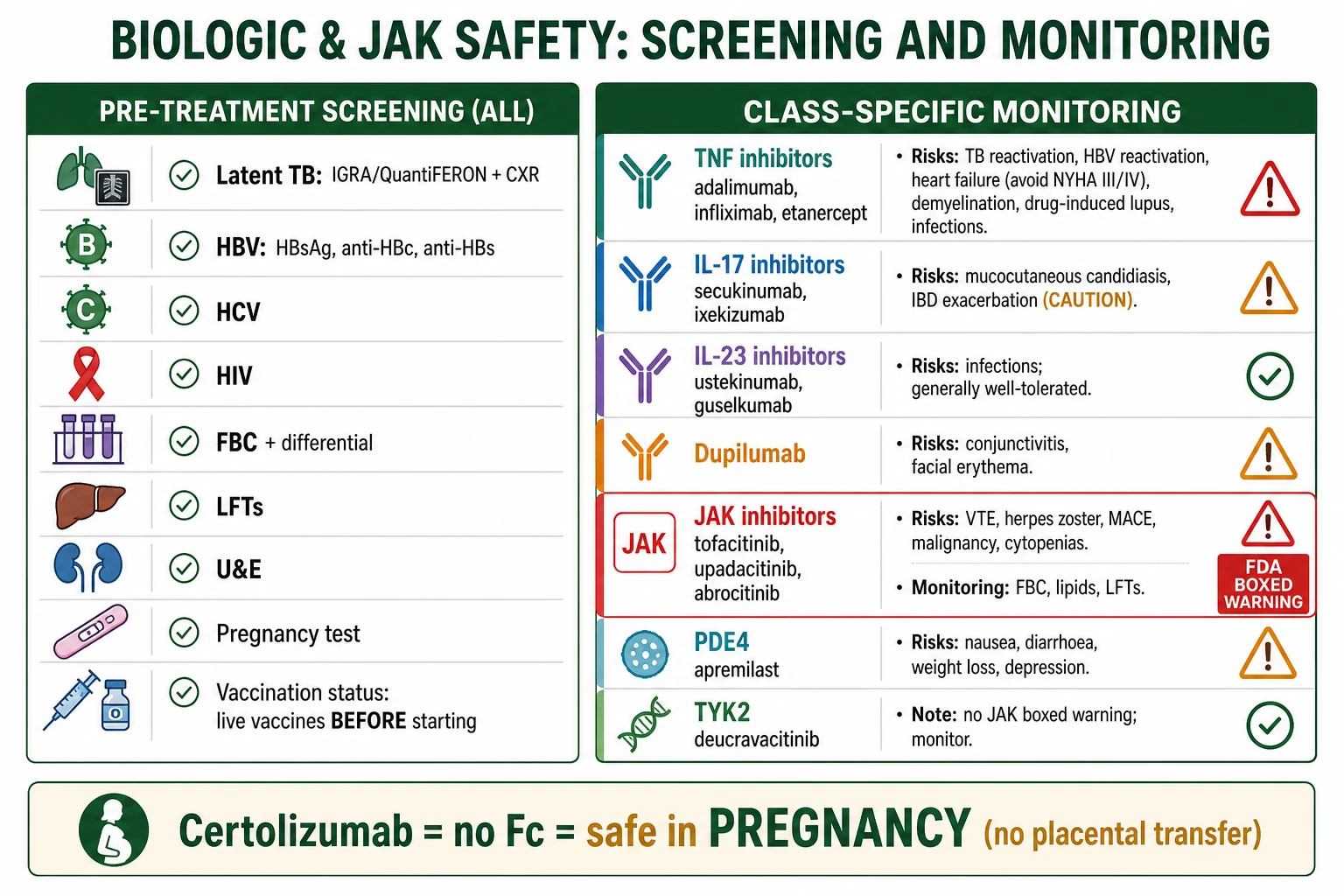
Every patient starting a biologic, JAK inhibitor or TYK2 inhibitor requires the same universal screening bundle. Disease-specific add-ons are layered on top.[1][2]
Class-specific add-ons: [1]
- Anti-TNF — annual TB risk review; avoid NYHA III/IV HF; screen for demyelinating disease; review drug-induced lupus (ANA, dsDNA, antihistone); check for psoriasiform paradoxical eruption (switch class).
- Anti-IL-12/23 / IL-23 p19 / IL-17 — screen bowel symptoms for IBD (CI).
- Dupilumab — baseline eye history (blepharitis, keratoconjunctivitis); inform about conjunctivitis.
- Rituximab — B-cell count, immunoglobulins (IgG, IgM, IgA); hepatitis B essentials (anti-HBc + HBsAg); PML counselling; live vaccines contraindicated.
- JAK inhibitors — VTE risk score, MACE risk, malignancy history, recent zoster, age, smoking; lipid monitoring; FBC every 3 months; creatinine.
- Omalizumab — IgE level (must be 30–700 IU/mL for CSU); weight for dose calculation; emergency adrenaline; anaphylaxis observation period. [1]
Indications Grid
Special Clinical Scenarios
COVID-19 vaccination and infection
Biologic and JAK therapy attenuates vaccine response (lower antibody titres) but does NOT abrogate the protective effect against severe disease. Continue therapy through vaccination; consider pausing 1–2 doses around acute COVID-19 infection only in hospitalised patients on rituximab. Recombinant zoster (Shingrix) and pneumococcal (PCV20 / PPSV23) vaccines are highly recommended before starting.[1][2]
Surgery
For most biologics, withholding one dose around major surgery is reasonable (no good RCTs). For rituximab, defer elective surgery 4 weeks and resume when wound healing complete. JAK inhibitors — withhold 1 week pre- and post-op if VTE risk is elevated. [1]
Pregnancy and breastfeeding
Paediatric
Modern guidelines licence multiple agents at increasingly young ages — the full paediatric licence table is well-summarised here: [1]
Paeds Bx Age
Biosimilars
A biosimilar is a biological product highly similar to an approved reference biologic, with no clinically meaningful differences in safety, purity and potency (FDA/EMA). They are NOT generics — they are large, complex proteins produced in living cells, with inherent batch variability. Switching is governed by clinical decision, not automatic pharmacy substitution (in most jurisdictions — except for some with formal interchangeable biosimilars in the US). The nocebo effect (symptom flare on switching) is real — counsel patients explicitly.[1]
| Reference product | Approved biosimilars (selected) | Class |
|---|---|---|
| Adalimumab | Amsparity, Imraldi, Hyrimoz, Idacio, Yuflyma, Cyltezo, Hadlima, Simlandi (US), Yuflyma | TNF |
| Infliximab | Inflectra, Remsima, Renflexis, Ixifi, Avsola | TNF |
| Etanercept | Erelzi, Eticovo, Brenzys | TNF |
| Rituximab | Truxima, Rixathon, Riximyo, Riabni | CD20 |
| Ustekinumab | Wezlana (US-FY 2024), Pykzeva, Uzpruvo | IL-12/23 |
| Denosumab (not dermatology per se) | Wyost, Jubbonti, Bomyntra | RANKL |
Exam Pearls
[1]Red Flags
Exam application bank (NEET-PG / INICET)
One-line answer
Biologic therapies (monoclonal antibodies / fusion proteins targeting specific cytokines) and small-molecule inhibitors (JAK, PDE4, TYK2, S1P) have transformed dermatology. TNF inhibitors (adalimumab, infliximab, etanercept, certolizumab) treat psoriasis, PsA, HS — but require latent TB screening and are avoided in heart failure NYHA III/IV. IL-23 inhibitors (ustekinumab [IL-12/23], guselkumab/risankizumab [p19]) are first-line for moderate-severe plaque psoriasis. IL-17 inhibitors (secukinumab, ixekizumab, brodalumab, bimekizumab) are highly effective for psoriasis/PsA but contraindicated in inflammatory bowel disease (can worsen Crohn's/UC). Dupilumab (IL-4Rα) is first-line systemic for atopic dermatitis — conjunctivitis is the class-specific AE. JAK inhibitors (tofacitinib, upadacitinib, abrocitinib) carry an FDA boxed warning (VTE, herpes zoster, MACE, malignancy). Deucravacitinib (T
Worked stems (answer without another resource)
Stem 1 — Classic presentation. Map symptoms to mechanism; name the first investigation and first treatment step with dose/route if drug therapy is standard. [1]
Stem 2 — Unstable / complicated. List red flags that force immediate resuscitation, theatre, ICU, antidote, or reperfusion — and what you do in the first 15 minutes. [1]
Stem 3 — Atypical group. Elderly, pregnancy, child, or immunocompromised: how presentation and thresholds change. [1]
Stem 4 — Differential trap. Name the three closest mimics and one discriminator for each. [1]
Stem 5 — Disposition. Who goes home with safety-netting, who is admitted, who needs HDU/ICU/theatre, and what follow-up is mandatory. [1]
Rapid viva checklist
- Definition + classification
- Pathophysiology chain
- Bedside signs / criteria
- Score with exact components (if any)
- Emergency bundle
- Definitive therapy with doses
- Complications of disease and of treatment
- Special populations
- Guideline/trial name if classic
- Three exam traps
Coverage self-check
If you cannot answer any stem above from this page alone, re-read the matching section — the page is intended to be self-sufficient for final-prof and NEET-PG/INICET questions on Biologics and small molecules in dermatology.
[1]References
- [1]Armstrong AW, Read C. Pathophysiology, Clinical Presentation, and Treatment of Psoriasis: A Review JAMA, 2020.PMID 32427307
- [2]Chu DK, Schneider L, Asiniwasis RN, et al. Atopic dermatitis (eczema) guidelines: 2023 American Academy of Allergy, Asthma and Immunology/American College of Allergy, Asthma and Immunology Joint Task Force on Practice Parameters GRADE- and Institute of Medicine-based recommendations Ann Allergy Asthma Immunol, 2024.PMID 38108679
- [3]Mateos-Haro M, Novoa-Candia M, Sánchez Vanegas G, et al. Treatments for alopecia areata: a network meta-analysis Cochrane Database Syst Rev, 2023.PMID 37870096
- [4]Powers CM, Thakker S, Gulati N, et al. Bullous pemphigoid: A practical approach to diagnosis and management in the modern era J Am Acad Dermatol, 2025.PMID 39914667
- [5]Zhou T, Koussiouris J, Kim L, et al. Management of Guttate Psoriasis: A Systematic Review J Cutan Med Surg, 2024.PMID 39080843
- [6]Azuaga AB, Ramírez J, Cañete JD. Psoriatic Arthritis: Pathogenesis and Targeted Therapies Int J Mol Sci, 2023.PMID 36902329
- [7]Bittar M, Deodhar A. Axial Spondyloarthritis: A Review JAMA, 2025.PMID 39630439