Dermatology · Medicine
Contact dermatitis
Also known as Allergic contact dermatitis (ACD) · Irritant contact dermatitis (ICD) · Occupational contact dermatitis · Hand eczema · Systemic contact dermatitis
Contact dermatitis is an eczematous reaction of the skin to exogenous agents, divided into irritant (ICD, cytotoxic barrier injury) and allergic (ACD, type IV delayed hypersensitivity) forms. Fellowship-level assessment demands mastery of the ICD/ACD mechanistic and morphological distinction, the European baseline patch-test series with ICDRG reading conventions, the common allergens by category (metals, fragrances, preservatives, rubber, topical drugs, acrylates, plants), the technique and interpretation of patch testing including relevance and false results, occupational dermatitis and its medicolegal dimension, systemic and photocontact variants, and the tiered management from allergen/irritant avoidance through topical and systemic agents including dupilumab and alitretinoin.
On this page & tools
Your progress
Saved locally on this device.
Practise this topic
Exam tags
Red flags
Overview
Contact dermatitis is an eczematous inflammatory skin reaction provoked by contact with exogenous substances, and is one of the commonest reasons for dermatology consultation and occupational disability. The two principal forms are mechanistically distinct: irritant contact dermatitis (ICD), a non-immunological cytotoxic/barrier-disruption reaction, and allergic contact dermatitis (ACD), a cell-mediated (type IV) delayed hypersensitivity reaction in a sensitised individual. Distinguishing them, identifying the causal agent through structured patch testing, and implementing rigorous avoidance are the core clinical skills, supplemented by an understanding of occupational, systemic, photocontact, and paediatric variants and a tiered therapeutic ladder that now includes dupilumab and alitretinoin for refractory hand disease.[1][2][4]
Classification and the ICD–ACD distinction
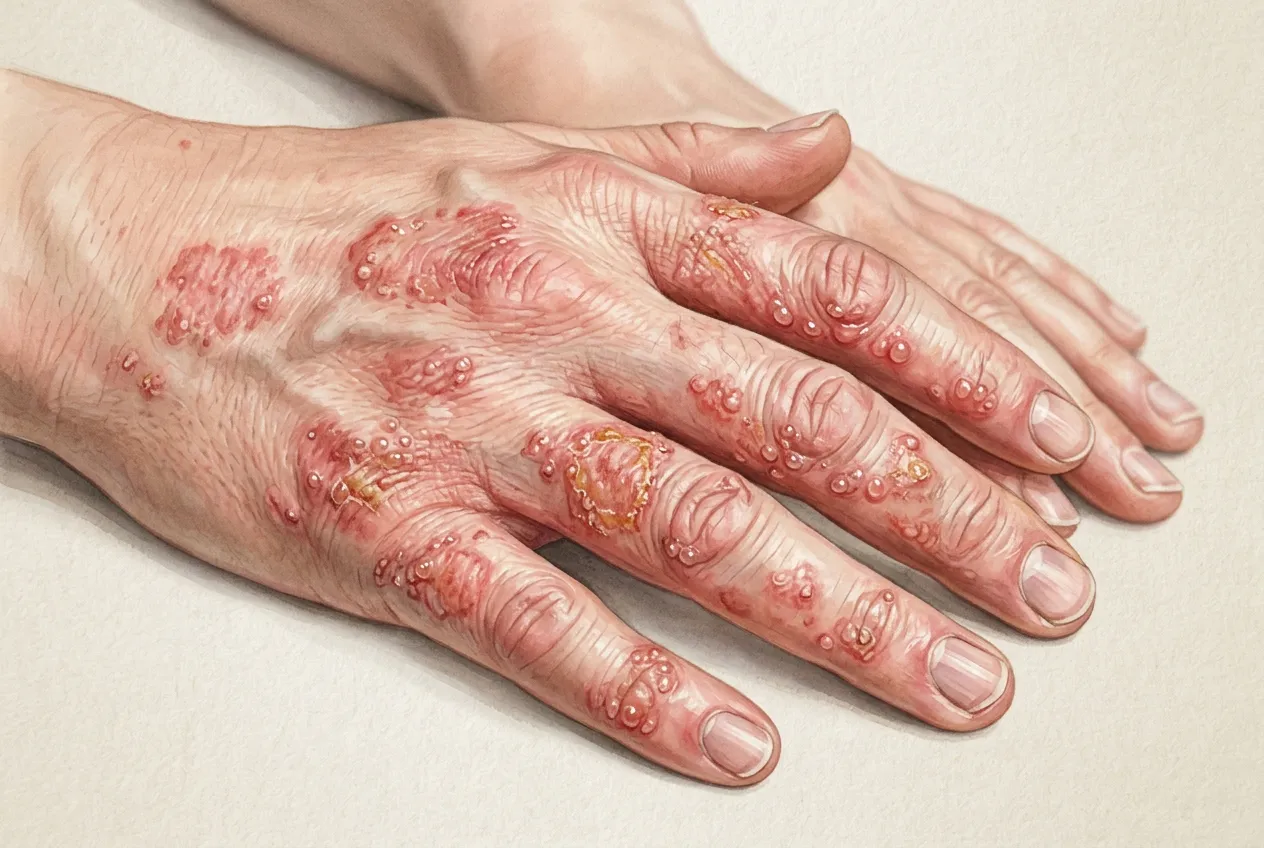
- Irritant contact dermatitis (ICD) results from direct cytotoxic damage to keratinocytes and disruption of the epidermal barrier by physical or chemical agents (water, detergents, solvents, acids, alkalis, oils, friction, wet work). It does not require prior sensitisation, may affect anyone given sufficient exposure, and shows a dose-response relationship. Acute ICD (e.g., strong alkali/acid burns, cement) is sharply demarcated and restricted to the contact site; chronic (cumulative) ICD — "housewives'/wet-work" dermatitis — presents as dry, fissured, scaly skin on the hands after repeated subthreshold insults. Atopic dermatitis, a damaged barrier, and low humidity lower the irritant threshold.[5][6][7]
- Allergic contact dermatitis (ACD) is a type IV delayed hypersensitivity reaction requiring prior sensitisation to a low-molecular-weight hapten. Re-exposure in a sensitised individual elicits a T-cell-mediated eczematous reaction, typically 24–72 hours after contact. It is immunologically specific, can occur at very low concentrations once sensitised, and may spread beyond the contact site.
In practice, ICD and ACD frequently coexist (e.g., an atopic nurse with wet-work irritant hand dermatitis who also becomes sensitised to rubber accelerators), and ICD itself facilitates ACD by enhancing hapten penetration.[1][3]
ACD versus ICD — the side-by-side mechanistic and bedside distinction
Although both reactions look eczematous, the mechanistic basis of ACD and ICD differs profoundly. ICD is a non-immunological, dose-dependent cytotoxic injury — every individual will develop ICD given sufficient exposure, and the severity tracks with concentration, duration, and barrier integrity (children, atopic, and elderly skin have a lower irritant threshold). ACD is a specific, acquired, hapten-driven type IV hypersensitivity — the patient must first be sensitised, often after subclinical exposure (e.g., nickel from earrings in childhood), and on re-exposure even picomolar hapten doses can elicit an eczematous flare in a primed individual. Innate immune signalling (TLR engagement, IL-1β, IL-18 release via the NLRP3 inflammasome, oxidative stress from irritants) is now understood to be shared by both reactions, explaining why barrier-damaged skin (chronic ICD, atopic dermatitis) predisposes to sensitisation and why ACD and ICD frequently coexist on the same site (the "wet-work + rubber accelerator" nurse's hand is the classic example). [1]
At the bedside, the distinction is suggested, not made by morphology alone: [1]
- ICD is typically painful, stinging or burning rather than itchy, appears within minutes to hours of exposure, is sharply confined to the contact site with a glazed or "chapped" surface, and rarely spreads distantly.
- ACD is intensely pruritic, appears 24–72 hours after contact (sometimes longer with weak haptens), often extends beyond the contact site with geometric, linear or "streaky" patterns reflecting the application, and may produce vesiculobullous reactions even from very low concentrations in highly sensitised patients. Chronic ACD becomes lichenified, fissured, and indistinguishable clinically from chronic ICD. [1]
Pathophysiology
Allergic contact dermatitis — the sensitisation and elicitation phases
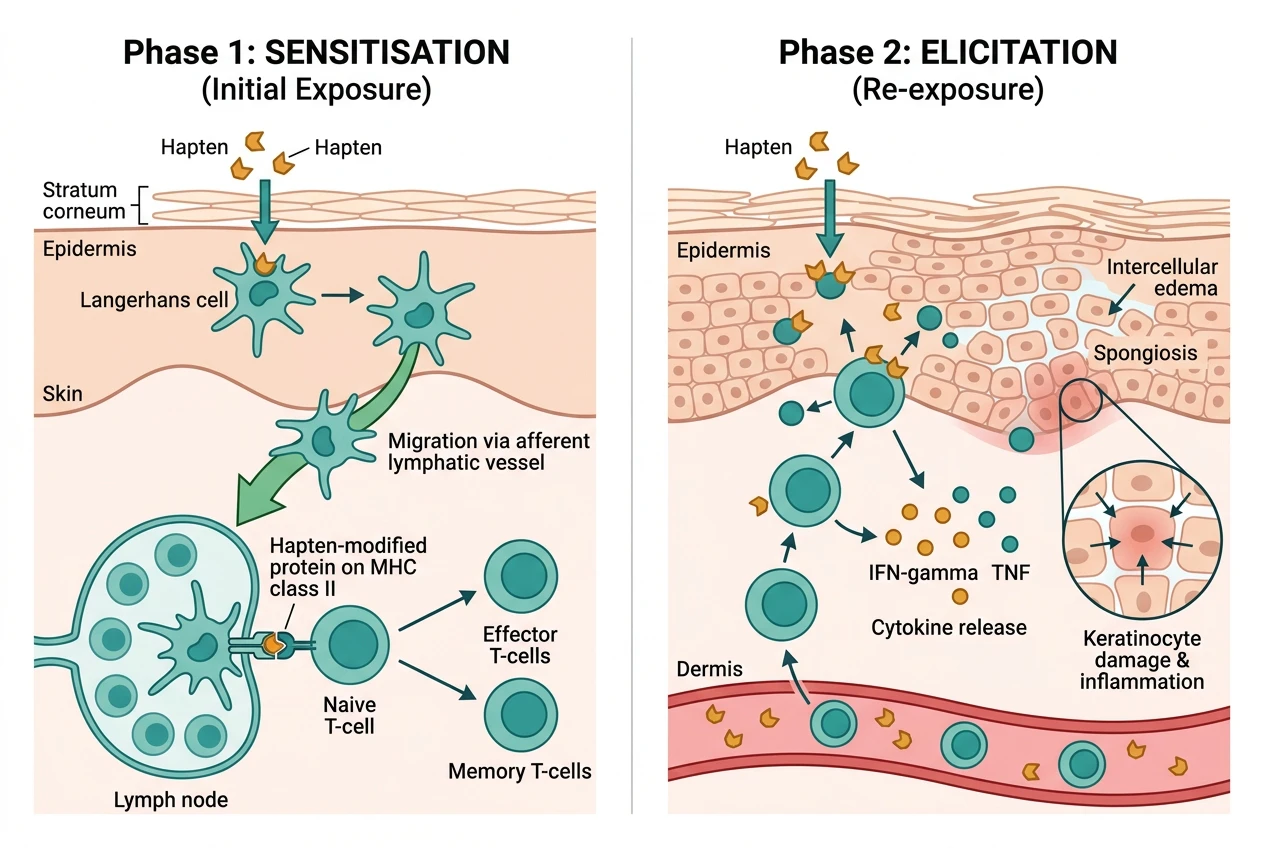
ACD is a classic type IVa (Th1) and IVc (cytotoxic CD8+) delayed hypersensitivity reaction. Sensitisation (induction) occurs when a hapten (a small lipophilic molecule under ~500 Da) penetrates the stratum corneum, binds endogenous carrier proteins to form a complete antigen, and is taken up by epidermal Langerhans cells and dermal dendritic cells. These migrate to the draining lymph nodes, process and present haptenated peptide on MHC class I and II to naive T-cells, and generate hapten-specific effector memory CD8+ and CD4+ T-cells (Th1-biased, IFN-γ and IL-2 producing) and long-lived central memory T-cells. Elicitation on re-exposure recruits these hapten-specific T-cells to the skin within 24–72 hours, releasing cytokines that recruit further inflammatory cells and produce the spongiotic eczematous reaction. Innate immune signalling (inflammasome activation, TLR engagement) amplifies the response and underlies irritant reactions, explaining the ICD–ACD mechanistic overlap.[3][4]
Skin barrier function
The stratum corneum and its lipid matrix (ceramides, cholesterol, free fatty acids) form the principal barrier to irritant and hapten penetration. Repeated wet work, surfactants, and solvents deplete surface lipids and corneodesmosomes, increasing transepidermal water loss and percutaneous absorption; this is the mechanistic basis of irritant dermatitis and a key reason barrier restoration (emollients, glove/cotton-liner strategies, soap substitution) is therapeutic and preventive. Atopic dermatitis patients have an intrinsically compromised barrier (filaggrin defects) and are markedly predisposed to both ICD and ACD.[7][1]
Clinical features
Morphology
Both ICD and ACD present with the eczematous spectrum: erythema, vesicles, weeping, crusting (acute), and dryness, scaling, lichenification, fissuring (chronic). Several features help discriminate: [1]
- ICD — onset within hours to days of exposure, painful/stinging/burning more than itchy, sharply confined to contact site, glazed or "chapped" appearance, no distant spread; chronic wet-work ICD favours the finger webs and dorsal hands.
- ACD — onset 24–72 hours after contact, intensely pruritic, may extend beyond the contact site, well-demarcated geometric or streaky patterns reflecting the application (e.g., linear streaks from plants, angular patches from metal objects), vesiculobullous in acute reactions; chronic exposure produces lichenified eczema. [1]
Distribution clues to the allergen are high-yield: [1]
- Eyelids and face — cosmetics, nail polish (toluene sulfonamide resin), hair products (PPD), preservatives, acrylates (nail), spectacle frames (nickel).
- Earlobes, wrists, neck (periumbilical) — nickel (jewellery, belt buckles, buttons).
- Hands — rubber gloves (thiurams, carbamates), chromate (cement, leather), epoxy/acrylates (dentists, printers), wet work.
- Feet — shoe components (rubber accelerators, chromate-tanned leather, glues/PTBP resin).
- Scalp/face/hands (streaky) — plants: Toxicodendron (poison ivy/oak/sumac), Primula, Compositae.
- Airborne pattern — lower face/neck/eyelids sparing under clothing (plants, volatile materials).
- Stoma/perianal/genital — topical medicaments (corticosteroids, neomycin, ethylenediamine, lanolin). [1]
Systemic, photocontact, and protein contact variants
- Systemic contact dermatitis — an eczematous flare, often with vesicular hand dermatitis (pompholyx-like) or a generalised maculopapular eruption, after systemic re-exposure to a hapten to which the patient was sensitised cutaneously (e.g., oral nickel in a nickel-allergic patient; the "baboon syndrome" variant with flexural, anogenital erythema).[23]
- Photocontact dermatitis — a reaction requiring UV co-exposure: phototoxic (dose-related, sunburn-like, no immune memory) versus photoallergic (cell-mediated, eczematous, requires sensitisation). Common culprits include NSAIDs, quinolones, tetracyclines, sulphonamides, phenothiazines, and furocoumarins (plants).[28]
- Protein contact dermatitis — a chronic eczema with an immediate (type I) component on contact with proteins (foods, animal dander, latex), common in food-handlers and veterinary workers.[2]
Epidemiology and common allergens
Contact dermatitis is among the commonest skin diseases; lifetime prevalence of a positive patch test in the general population is around 20%. ACD is more common in women and peaks in working age. The most frequent allergens identified by the European and North American baseline series are, in approximate order: nickel, fragrance mix I and oxidised fragrance terpenes, methylisothiazolinone (MI) and methylchloroisothiazolinone (MCI), preservatives (formaldehyde and formaldehyde-releasers, parabens), rubber accelerators (thiurams, carbamates, mercaptobenzothiazole), paraphenylenediamine (PPD), and topical medicaments (neomycin, bacitracin, corticosteroids).[10]
Allergens by category
Common allergens at a glance — the high-yield numbers
Patch-test positivity in consecutive patients (European clinics)
Common allergens by category — clinical detail
-
Nickel (Ni) — the single commonest contact allergen in virtually every global series, with female predominance reflecting jewellery and piercing exposure. Sensitisation is lifelong and patch tests remain positive for decades. The European Nickel Directive (1994, enforced 2001) caps nickel release from prolonged-skin-contact items (earrings, bracelets, watches, buttons, buckles, mobile phones) at < 0.2 µg/cm²/week for post-assemblies and < 0.5 µg/cm²/week for other items; meta-analysis confirms a sharp decline in sensitisation in young EU women post-implementation. Piercings are the dominant risk factor — earlobe piercing before nickel regulation produced sensitisation rates > 25% in young women. Co-sensitisation with cobalt (often co-present in alloys and costume jewellery) and with chromate is common; chromium-tanned leather shoes are the classic foot allergen. Clinically, nickel ACD favours earlobes (from earrings), periumbilical skin (jeans studs/belt buckles), wrist (watch backs), and flexor wrists (bracelets). Dietary nickel (chocolate, beans, nuts, canned foods) drives systemic contact dermatitis (baboon syndrome) in highly sensitised individuals.
-
Paraphenylenediamine (PPD) — a potent aromatic amine hapten in permanent and demi-permanent hair dyes, black henna temporary tattoos, textile dyes, photographic developer, and printing inks. Sensitisation is common in adolescents and adults exposed to hair dyes (clients AND hairdressers) and in children receiving "black henna" temporary tattoos (concentrations often exceed 10%, far above regulatory limits). Reactions can be severe, vesiculobullous, and edematous ("angry back" of the scalp, periorbital oedema, facial swelling) and cross-react with other para-amino compounds: para-aminobenzoic acid (PABA) sunscreens, sulphonamides, benzocaine and other para-amino local anaesthetics, azo dyes, and certain rubber antioxidants. Cross-reactivity is class-wide; affected patients need a written "do-not-use" list.
-
Fragrance allergens — fragrance mix I (cinnamal, cinnamyl alcohol, eugenol, isoeugenol, geraniol, hydroxycitronellal, oakmoss, Evernia prunastri), fragrance mix II (citral, citronellol, coumarin, farnesol, hexyl cinnamal, Lyral), and the oxidised hydroperoxides of linalool and limonene are the screening batteries. The oxidised terpenes are far more sensitising than the parent terpenes — they form autoxidatively on storage of citrus and lavender oils and in finished cosmetics. Balsam of Peru (Myroxylon pereirae) cross-reacts with multiple natural fragrances and certain spices (cinnamon, vanilla, clove) and foods. Clinical patterns include face/eyelid dermatitis from cosmetics and leave-on products; axillary dermatitis from deodorants; and periumbilical / hand dermatitis from "fragranced" topical medicaments and emollients.
-
Topical antibiotics (neomycin, bacitracin, gentamicin) — among the leading causes of medicament ACD, especially in patients with chronic venous insufficiency, stasis dermatitis, leg ulcers, otitis externa, and chronic eczema where topical antibiotic/steroid combinations are repeatedly applied. Neomycin cross-reacts with other aminoglycosides (gentamicin, tobramycin) and with bacitracin; allergy should prompt avoidance of all topical aminoglycosides. Clinical clue: worsening or persistence of an ulcer / venous eczema despite "appropriate" topical therapy.
-
Topical corticosteroids — an under-recognised allergen. The Coopman classification (A, B, C, D1, D2) groups cross-reacting molecules; tixocortol pivalate and budesonide are the most useful screening markers (group A and B/D respectively). Suspect when eczema fails to respond to — or paradoxically worsens with — potent topical steroids. Hydrocortisone (group A) allergy is the commonest.
-
Cobalt — present in metal alloys, jewellery, buttons, tools, paints, and animal feeds (vitamin B12); co-sensitises with nickel in roughly half of nickel-positive patients. Hand dermatitis in construction workers and bricklayers classically reflects combined chromate, cobalt, and wet-cement irritant exposure. Independent cobalt ACD is rarer and warrants workup for dietary / occupational sources. [1]
-
Metals — nickel remains the commonest contact allergen worldwide; the European Nickel Directive (limiting nickel release from items in prolonged skin contact) markedly reduced sensitisation in young women, with meta-analytic confirmation that piercings are the dominant risk. Thresholds for elicitation are in the low µg/cm²/week range, informing regulatory "safe" limits. Chromate (cement, leather, tanning) and cobalt (often co-sensitivity) are the other major metal allergens; potassium dichromate-positive hand dermatitis is classic in construction workers.[11][12][13]
-
Fragrances — among the top allergens; the baseline series includes fragrance mix I and II and the oxidised terpene hydroperoxides of linalool and limonene (which form autoxidatively on storage and are far more sensitising than the parent terpenes). Balsam of Peru cross-reacts with many natural fragrances and some foods.[14][15][2]
-
Preservatives — methylisothiazolinone (MI) caused a global epidemic of sensitisation in cosmetics and household products in the 2010s, leading to regulatory restriction (banned in leave-on cosmetics in the EU); formaldehyde and formaldehyde-releasers (quaternium-15, imidazolidinyl urea) remain important.[16][17]
-
Rubber accelerators — thiurams, carbamates, and mercaptobenzothiazole in natural-rubber and nitrile gloves; relevant to healthcare workers and a frequent cause of glove-related hand dermatitis.
-
Hair dyes — paraphenylenediamine (PPD), a potent allergen and frequent cause of severe scalp/facial ACD; also in temporary henna tattoos (where concentration is often very high) and cross-reactive with para-amino compounds (sulphonamides, benzocaine, PABA).
-
Topical medicaments — neomycin, bacitracin, lanolin (wool alcohols), ethylenediamine, and topical corticosteroids themselves (molecules recognised by structure, with budesonide and tixocortol pivalate as screening markers).[18]
-
Acrylates and resins — methacrylates in nail products, dentistry, and artificial nails; (meth)acrylates and epoxy resin in printers, builders, and orthopaedic/dental workers.
-
Plants — Toxicodendron (urushiol — poison ivy/oak/sumac), Primula obconica, Compositae (chrysanthemum, daisy), tulipalin (tulip fingers).
-
Biomedical devices and implants — metals (joint replacements, cardiac devices), bone cements (methyl methacrylate), and surgical glues/tapes; implicated in eczematous or persistent dermatitis overlying implants and in prosthetic-associated dermatitis.[24]
Patch testing
Patch testing is the diagnostic gold standard for ACD and should be performed whenever allergic contact dermatitis is suspected in chronic eczema. The European Society of Contact Dermatitis (ESCD) guideline standardises technique, reading, and interpretation.[8]
Technique
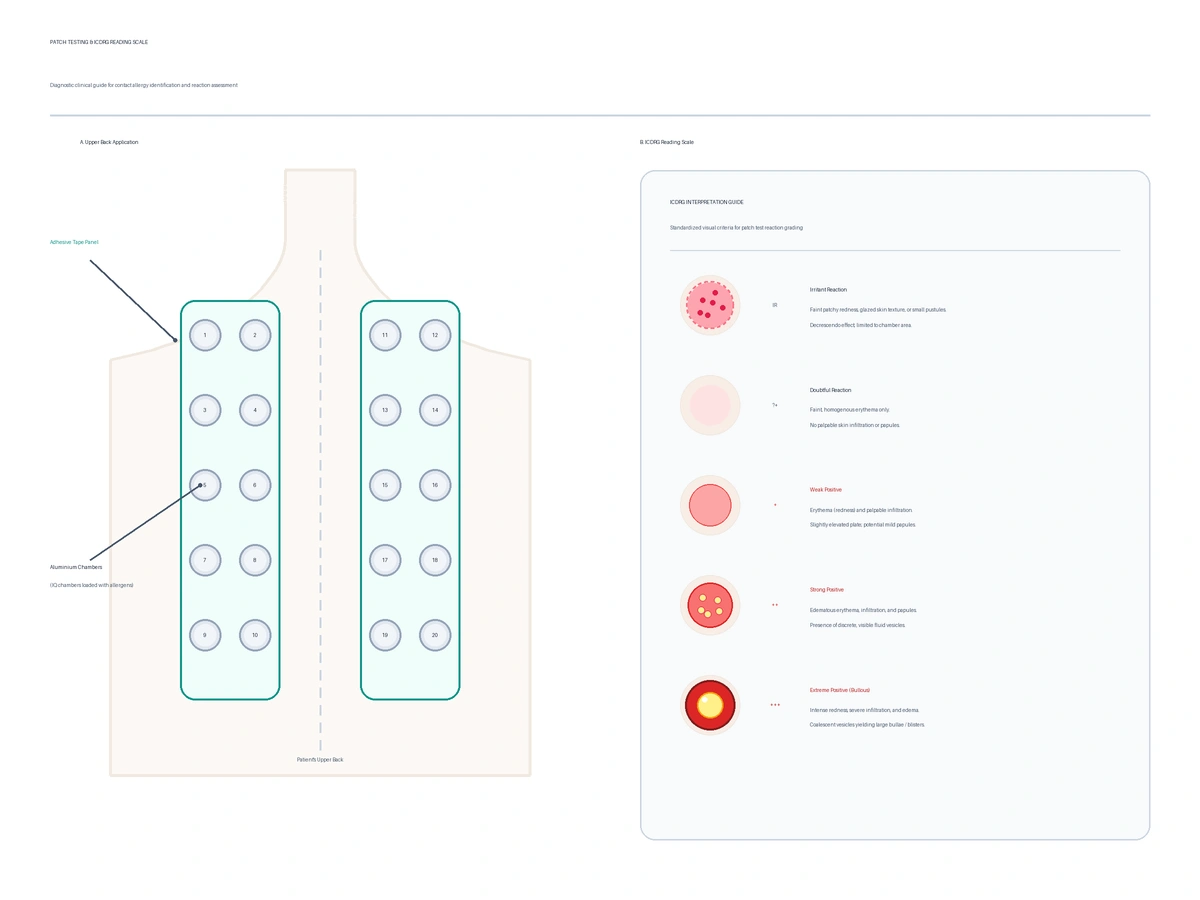
- Hapten allergens are applied under occlusion in aluminium (Finn) chambers on the upper back, in appropriate vehicles (petrolatum, water) and concentrations.
- Removed at 48 hours (D2); readings at D2, D3 or D4, and D7 to capture delayed reactions (some allergens, notably metals, corticosteroids, and some drugs, react late).
- Supplementary series (occupational, cosmetic, fragrance, dental, drug, plant) are added based on history; the patient's own products (diluted appropriately) are tested when relevant. [1]
Reading and the ICDRG scale
The International Contact Dermatitis Research Group (ICDRG) scale grades reactions (recently clarified and modified):[9]
- IR (irritant reaction) — discrete, glazed erythema, follicular reaction; not allergic.
- ?+ — faint macular erythema only (doubtful).
- + — erythema, infiltration, possibly papules (weak positive).
- ++ — erythema, infiltration, papules, vesicles (strong positive).
- +++ — bullous reaction (extreme). [1]
Relevance and pitfalls
A positive reaction must be interpreted for relevance (present/past/unknown) against the history and exposure; a positive test that does not explain the dermatitis is of limited clinical value. False positives arise from irritant reactions (concentration too high, "angry back"/excited skin syndrome), and false negatives from under-concentration, wrong vehicle, suppression by topical steroids (stop topical steroids at the test site for at least a week, and consider systemic steroid effects), or testing during an acute flare. Active sensitisation (de novo sensitisation at the test site, manifesting at D7–D14) occurs with potent haptens such as PPD and primin. Cross-reactivity (e.g., para-amino group, corticosteroid classes, fragrance terpenes) must be considered when advising avoidance. [1]
Occupational contact dermatitis
Contact dermatitis is the commonest occupational skin disease, with high-risk occupations including healthcare workers, hairdressers, mechanics, construction workers (wet cement chromate), food handlers, printers, cleaners, and metalworkers. Occupational dermatitis carries significant medicolegal and compensation implications; meticulous documentation of causation, exposure, temporal relationship, and functional impairment is essential, along with occupational-health referral, workplace modification, and appropriate personal protective equipment (correct gloves, barrier creams, soap substitution). Irritant wet-work dermatitis is the commonest occupational form; ACD is most often to rubber accelerators, chromate, epoxy, acrylates, or biocides. Hand dermatitis is the dominant clinical pattern and a leading cause of occupational disability.[21][22][2]
Differential diagnosis
The differential of an eczematous eruption includes atopic dermatitis (flexural, atopic background, often coexistent and predisposing), seborrhoeic dermatitis, nummular/discoid eczema, asteatotic eczema, dyshidrotic (pompholyx) eczema, stasis dermatitis (venous), tinea (dermatophyte — confirm with microscopy/culture; dermatophytid/"id" reactions), psoriasis (palmar/plantar pustulosis), scabies, drug eruptions, and dermatitis herpetiformis. A biopsy and/or skin scrapings help when the diagnosis is uncertain; a high index of suspicion for contact allergy should trigger patch testing in chronic, asymmetric, or occupation-/site-typical eczema.[1]
Hand eczema
Hand eczema merits separate emphasis because it is common, disabling, and often multifactorial. A Lancet review frames it as a composite phenotype where atopic, irritant, allergic, and vesicular (pompholyx) components overlap. Classification combines morphology (recurrent vesicular, hyperkeratotic, fissured, atopic) and cause (irritant, allergic, atopic, protein, mixed). Chronic hand eczema is graded with the Hand Eczema Severity Index (HECSI) and has major quality-of-life and occupational impact. Management integrates strict irritant avoidance, emollients and soap substitution, potent topical corticosteroids, and — for severe disease — alitretinoin (a systemic retinoid effective for severe refractory chronic hand eczema, teratogenic so requiring pregnancy-prevention programmes) and dupilumab (phase 3 evidence in severe chronic hand eczema with an atopic component).[25][27][26]
Paediatric contact dermatitis
ACD is under-recognised in children. Nickel (jewellery, buttons, piercings), footwear allergens, and preservatives (MI) are common culprits; adolescent patterns include cosmetics, hair dyes (PPD), and acrylates in nail products. Patch testing in children uses age-appropriate selection and reduced concentrations; the baseline series is adapted, and the family's own products are often tested. Atopic dermatitis is a strong predisposing factor.[29]
Management
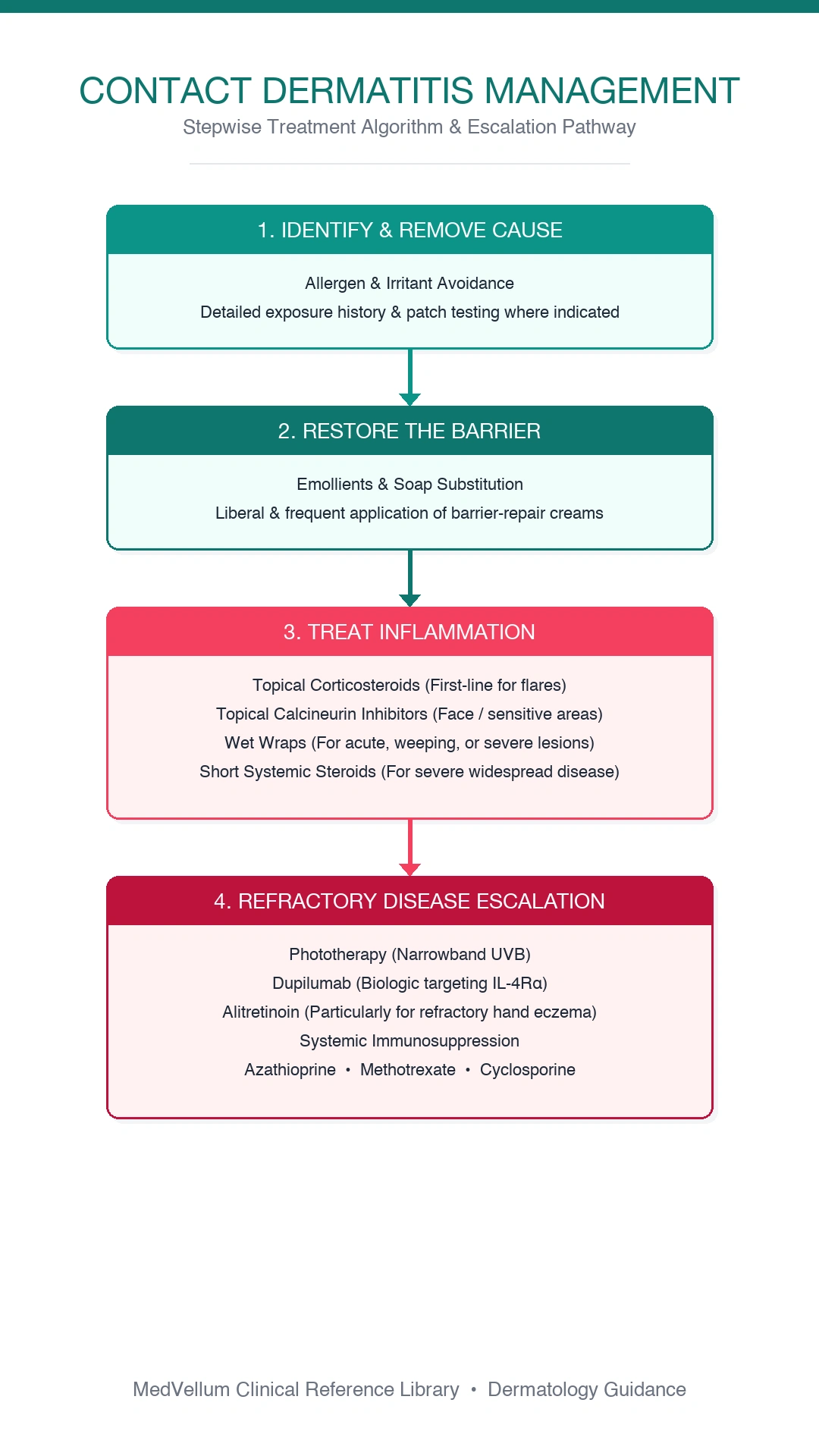
Management rests on three pillars: identify and remove the cause, restore the barrier, and treat inflammation.[19][20]
1. Allergen and irritant avoidance
This is the cornerstone and most effective intervention. Patient education must be specific and written: identify the allergen(s) by name and synonyms, list products to avoid (including "hidden" sources), explain cross-reacting agents, provide safe alternatives, and supply patient-information leaflets. For irritant/wet-work dermatitis, advise reducing wet work, soap substitution, lukewarm water, pat-drying, regular emollients, and appropriate gloves (nitrile for wet work, cotton liners for sweating, avoidance of latex where sensitised). Workplace and household modification is essential in occupational cases. [1]
2. Barrier repair and emollients
Frequent application of bland, fragrance-free emollients and barrier creams (e.g., high-lipid ointments) restores the stratum corneum and reduces flares; soap substitutes (e.g., emollient wash) replace irritant surfactants.[7]
3. Anti-inflammatory therapy
- Topical corticosteroids — once to twice daily during flares, stepped by potency and site (mild on face/flexures, potent on hands/trunk), tapered as inflammation settles; avoid prolonged potent steroids (atrophy, telangiectasia). Topical calcineurin inhibitors (tacrolimus, pimecrolimus) are steroid-sparing, especially on the face and eyelids.
- Wet-wrap therapy and systemic corticosteroids (e.g., prednisolone taper over 2–3 weeks) for severe acute flares or widespread involvement; short courses only.
- Phototherapy (narrowband UVB or PUVA) for chronic, widespread, or treatment-resistant dermatitis.
- Systemic agents for refractory disease — azathioprine, methotrexate, ciclosporin, mycophenolate mofetil, dupilumab (IL-4Rα blockade; evidence in chronic hand eczema and increasingly for severe recalcitrant ACD), and alitretinoin for severe chronic hand eczema.[26][27]
- Treatment of secondary infection (antistaphylococcal antibiotics/antiseptics) when clinically present.
Treatment doses — the high-yield numbers for fellowship exams
Contact dermatitis — systemic and biologic dose reference
Prevention
Prevention is primary care: regulation of potent sensitizers (the European Nickel Directive, MI bans in leave-on cosmetics), workplace controls (PPE, hazard substitution, health surveillance), atopic skin care, and patient education on wet-work reduction and emollients. Early intervention in occupational dermatitis improves prognosis; delay risks chronicity and permanent occupational disability.[21][22]
Clinical pearl
[1]Red flags
Exam application bank (NEET-PG / INICET)
One-line answer
Contact dermatitis is an eczematous reaction of the skin to exogenous agents, divided into irritant (ICD, cytotoxic barrier injury) and allergic (ACD, type IV delayed hypersensitivity) forms. Fellowship-level assessment demands mastery of the ICD/ACD mechanistic and morphological distinction, the European baseline patch-test series with ICDRG reading conventions, the common allergens by category (metals, fragrances, preservatives, rubber, topical drugs, acrylates, plants), the technique and interpretation of patch testing including relevance and false results, occupational dermatitis and its medicolegal dimension, systemic and photocontact variants, and the tiered management from allergen/irritant avoidance through topical and systemic agents including dupilumab and alitretinoin.
Worked stems (answer without another resource)
Stem 1 — Classic presentation. Map symptoms to mechanism; name the first investigation and first treatment step with dose/route if drug therapy is standard. [1]
Stem 2 — Unstable / complicated. List red flags that force immediate resuscitation, theatre, ICU, antidote, or reperfusion — and what you do in the first 15 minutes. [1]
Stem 3 — Atypical group. Elderly, pregnancy, child, or immunocompromised: how presentation and thresholds change. [1]
Stem 4 — Differential trap. Name the three closest mimics and one discriminator for each. [1]
Stem 5 — Disposition. Who goes home with safety-netting, who is admitted, who needs HDU/ICU/theatre, and what follow-up is mandatory. [1]
Rapid viva checklist
- Definition + classification
- Pathophysiology chain
- Bedside signs / criteria
- Score with exact components (if any)
- Emergency bundle
- Definitive therapy with doses
- Complications of disease and of treatment
- Special populations
- Guideline/trial name if classic
- Three exam traps
Coverage self-check
If you cannot answer any stem above from this page alone, re-read the matching section — the page is intended to be self-sufficient for final-prof and NEET-PG/INICET questions on Contact dermatitis.
Expanded exam teaching (depth pass)
Clinical reasoning
For Contact dermatitis, examiners test whether you can prioritise life threats, choose the right first test, and give specific therapy (agent, dose, route, timing). Generic phrases without numbers score poorly.
Mechanism → feature map
Build a short chain: cause → pathophysiologic intermediate → clinical feature → complication. Every major symptom in the classic vignette should sit on that chain.
Investigation strategy
- Bedside/first-line tests that change immediate management
- Confirmatory or staging tests
- What a normal result does not exclude
- When not to delay treatment for imaging (unstable patient)
Management ladder
- Resuscitation / ABC / sepsis or haemorrhage bundle as relevant
- Specific antidote / procedure / antimicrobial / reperfusion / surgery
- Supportive care and monitoring targets
- Definitive long-term therapy and secondary prevention
- Disposition and safety-net advice
Special populations
Always prepare one line each for children, pregnancy, elderly, renal/hepatic impairment, and immunocompromised patients when the topic allows.
Pitfalls that fail candidates
- Treating the number not the patient
- Missing pregnancy status when relevant
- Imaging before stabilisation
- Wrong empiric cover or wrong antidote timing
- Incomplete counselling on recurrence, adherence, or red-flag return
Contact dermatitis is an eczematous reaction of the skin to exogenous agents, divided into irritant (ICD, cytotoxic barrier injury) and allergic (ACD, type IV delayed hypersensitivity) forms. Fellowship-level assessment demands mastery of the ICD/ACD mechanistic and morphological distinction, the European baseline patch-test series with ICDRG reading conventions, the common allergens by category (metals, fragrances, preservatives, rubber, topical drugs, acrylates, plants), the technique and inte [1]
[1]References
- [1]Scheinman PL, Vocanson M, Thyssen JP, et al. Contact dermatitis Nat Rev Dis Primers, 2021.PMID 34045488
- [2]Johansen JD, Bonefeld CM, Schwensen JFB, et al. Novel insights into contact dermatitis J Allergy Clin Immunol, 2022.PMID 35183605
- [3]Tramontana M, Hansel K, Bianchi L, et al. Advancing the understanding of allergic contact dermatitis: from pathophysiology to novel therapeutic approaches Front Med (Lausanne), 2023.PMID 37283623
- [4]Kostner L, Anzengruber F, Guillod C, et al. Allergic Contact Dermatitis Immunol Allergy Clin North Am, 2017.PMID 27886903
- [5]Bains SN, Nash P, Fonacier L. Irritant Contact Dermatitis Clin Rev Allergy Immunol, 2019.PMID 30293200
- [6]Patel K, Nixon R. Irritant Contact Dermatitis - a Review Curr Dermatol Rep, 2022.PMID 35433115
- [7]Proksch E, Brandner JM, Jensen JM. The skin: an indispensable barrier Exp Dermatol, 2008.PMID 19043850
- [8]Johansen JD, Aalto-Korte K, Agner T, et al. European Society of Contact Dermatitis guideline for diagnostic patch testing - recommendations on best practice Contact Dermatitis, 2015.PMID 26179009
- [9]Bruze M, Svedman C. Clarification and Modification of the International Contact Dermatitis Research Group Classification of Patch Test Reactions on Behalf of the International Contact Dermatitis Research Group Dermatitis, 2025.PMID 39773000
- [10]Geier J, Uter W, Lessmann H, et al. [Current contact allergens] Hautarzt, 2011.PMID 21901563
- [11]Ahlström MG, Thyssen JP, Wennervaldt M, et al. Nickel allergy and allergic contact dermatitis: A clinical review of immunology, epidemiology, exposure, and treatment Contact Dermatitis, 2019.PMID 31140194
- [12]von Spreckelsen B, Jensen MB, Johansen JD, et al. Nickel Allergy and Piercings: A Systematic Review and Meta-Analysis Contact Dermatitis, 2025.PMID 40611585
- [13]Gawkrodger DJ. Nickel dermatitis: how much nickel is safe? Contact Dermatitis, 1996.PMID 9007370
- [14]de Groot A. Linalool Hydroperoxides Dermatitis, 2019.PMID 31313746
- [15]de Groot A. Limonene Hydroperoxides Dermatitis, 2019.PMID 31433385
- [16]Castanedo-Tardana MP, Zug KA. Methylisothiazolinone Dermatitis, 2013.PMID 23340392
- [17]Pontén A, Bruze M. Formaldehyde Dermatitis, 2015.PMID 25581665
- [18]Vatti RR, Ali F, Teuber S, et al. Hypersensitivity reactions to corticosteroids Clin Rev Allergy Immunol, 2014.PMID 23567983
- [19]Nassau S, Fonacier L. Allergic Contact Dermatitis Med Clin North Am, 2020.PMID 31757238
- [20]Li Y, Li L. Contact Dermatitis: Classifications and Management Clin Rev Allergy Immunol, 2021.PMID 34264448
- [21]Holness DL. Occupational Dermatosis Curr Allergy Asthma Rep, 2019.PMID 31352594
- [22]Karagounis TK, Cohen DE. Occupational Hand Dermatitis Curr Allergy Asthma Rep, 2023.PMID 36749448
- [23]Aquino M, Rosner G. Systemic Contact Dermatitis Clin Rev Allergy Immunol, 2019.PMID 29766368
- [24]Pacheco KA, Thyssen JP. Contact Dermatitis From Biomedical Devices, Implants, and Metals-Trouble From Within J Allergy Clin Immunol Pract, 2024.PMID 39067854
- [25]Weidinger S, Novak N. Hand eczema Lancet, 2024.PMID 39615508
- [26]Voorberg AN, Kamphuis E, Christoffers WA, et al. Efficacy and safety of dupilumab in patients with severe chronic hand eczema with inadequate response or intolerance to alitretinoin: a randomized, double-blind, placebo-controlled phase IIb proof-of-concept study Br J Dermatol, 2023.PMID 37170922
- [27]Gooderham MJ. Alitretinoin: An Update of Real-World Evidence in The Management of Chronic Hand Dermatitis Skin Therapy Lett, 2018.PMID 30086182
- [28]Honari G. Photoallergy Rev Environ Health, 2014.PMID 25274941
- [29]Brown C, Yu J. Pediatric Allergic Contact Dermatitis Immunol Allergy Clin North Am, 2021.PMID 34225896