Dermatology · Medicine
Dermatology in pregnancy
Also known as Dermatology in pregnancy · Pregnancy dermatoses · Specific dermatoses of pregnancy · PUPPP · PEP · Pemphigoid gestationis · Obstetric cholestasis · Impetigo herpetiformis
Exam-exhaustive MBBS guide to physiologic skin changes in pregnancy, atopic eruption of pregnancy, polymorphic eruption of pregnancy/PUPPP, pemphigoid gestationis, intrahepatic cholestasis of pregnancy, pustular psoriasis of pregnancy/impetigo herpetiformis, fetal-risk triage, investigations, drug safety in pregnancy and lactation, and red flags.
On this page & tools
Your progress
Saved locally on this device.
Exam tags
Red flags
Overview & Definition
Dermatology in pregnancy is not a single disease. It is the practical bedside problem of deciding whether a pregnant patient has a physiologic skin change, a pregnancy-specific dermatosis, a pre-existing dermatosis modified by pregnancy, an infection or infestation, a drug eruption, or a systemic obstetric disorder presenting through the skin. The safe answer in an exam is therefore not a memorised list; it is a reproducible triage: gestational age, whether there is a primary rash, morphology, umbilical involvement, systemic features, fetal risk, and whether the first investigation is bile acids or direct immunofluorescence. [4] [6]
The classic named group of pregnancy-specific dermatoses was reorganised by Ambros-Rudolph and colleagues into atopic eruption of pregnancy, polymorphic eruption of pregnancy, pemphigoid gestationis, and intrahepatic cholestasis of pregnancy. Modern teaching also treats pustular psoriasis of pregnancy, historically called impetigo herpetiformis, as a pregnancy-triggered severe pustular psoriasis syndrome that must be recognised because it behaves like a maternal systemic illness rather than a benign itchy rash. [6] [10]
High-yield numbers
Classification
A useful classification separates four boxes. The first box is physiologic change: pigment, connective tissue, vascular, hair and nail changes caused by hormones, vascular adaptation and mechanical stretching. The second box is pregnancy-specific dermatoses: AEP, PEP/PUPPP, PG and ICP. The third box is pregnancy-triggered or pregnancy-modified dermatoses, especially pustular psoriasis of pregnancy and flares or improvement of atopic dermatitis, psoriasis, acne, lupus and autoimmune blistering disease. The fourth box is ordinary dermatology occurring during pregnancy: scabies, tinea, urticaria, drug eruption, viral exanthem and bacterial infection. [4] [6]
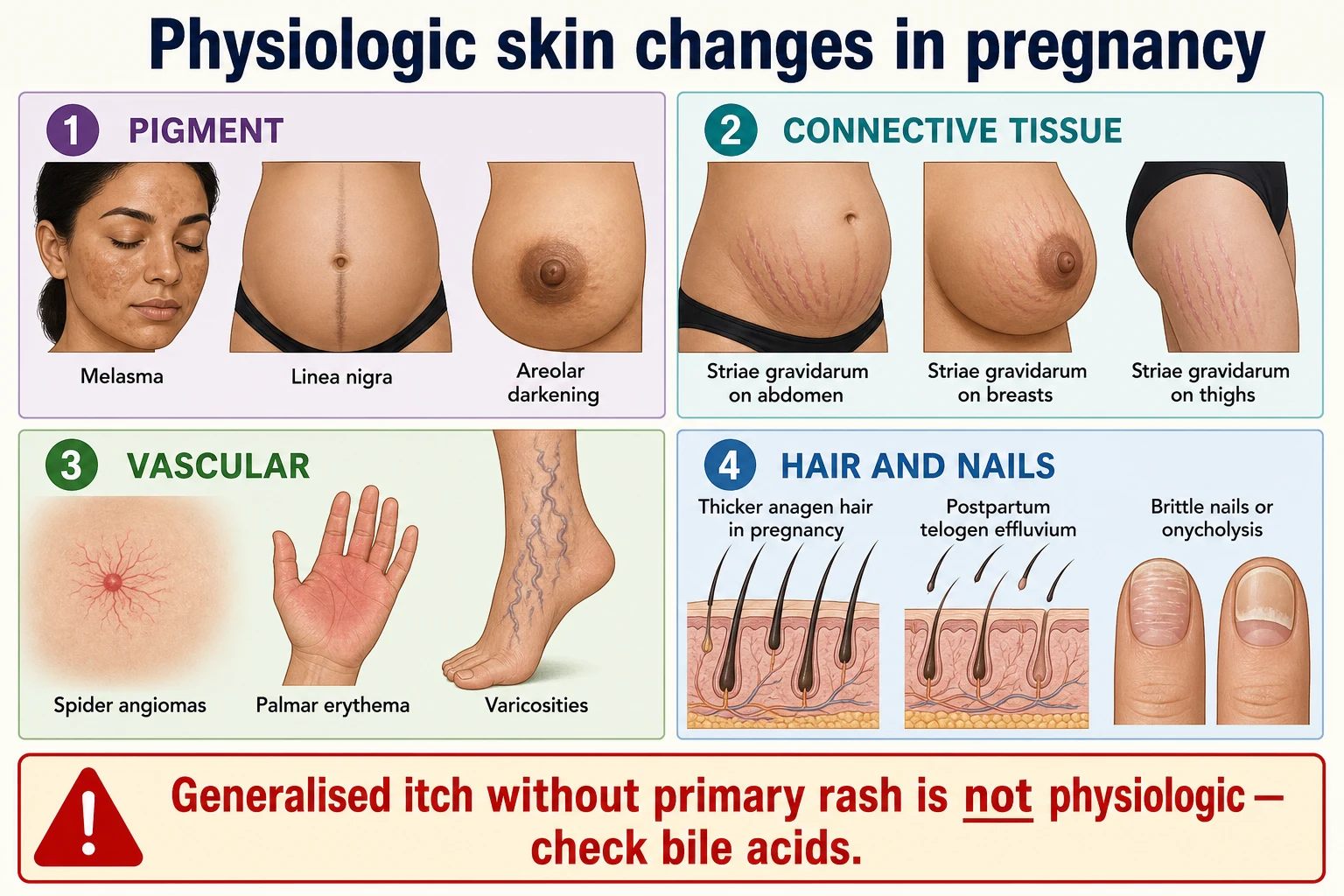
Physiologic
Benign adaptations
- Melasma, linea nigra, areolar and genital darkening
- Striae gravidarum from stretch plus connective-tissue effects
- Spider angiomas, palmar erythema, varicosities
- Anagen prolongation in pregnancy; postpartum telogen effluvium
Specific dermatoses
Pregnancy-linked diagnoses
- AEP: early eczema or papules; no fetal risk
- PEP/PUPPP: late urticarial plaques in striae; umbilicus usually spared
- PG: autoimmune blistering; periumbilical; DIF linear C3
- ICP: itch without primary rash; bile acids drive fetal-risk triage
Pregnancy-modified disease
Do not miss severity
- Psoriasis may improve, flare or transform into pustular psoriasis of pregnancy
- Atopic dermatitis commonly flares
- Acne can flare but usual retinoid/tetracycline choices become unsafe
- Lupus and autoimmune blistering disease require obstetric and specialist coordination
The classification matters because the fetal risk is not proportional to how dramatic the rash looks. PEP can be intensely itchy and widespread but is fetal-benign. ICP may have no visible rash at all but carries bile-acid-related fetal risk. PG can start as urticarial plaques before bullae appear, so the examiner expects a biopsy plan rather than blind reassurance. Pustular psoriasis of pregnancy may be rare, but fever, malaise, hypocalcaemia and fetal distress make it a dermatology emergency. [4] [7] [9] [10]
Epidemiology & Risk Factors
Atopic eruption of pregnancy is the commonest pregnancy-specific itchy dermatosis and often appears in the first or second trimester in women with personal or family atopy, dry skin, allergic rhinitis or asthma. It may represent a flare of pre-existing atopic dermatitis or a first episode of atopic eczema/prurigo during pregnancy. Because it is common, benign for the fetus and early, it is frequently tested as the diagnosis that is itchy but not obstetrically dangerous. [4] [6]
PEP/PUPPP typically affects primigravidae late in the third trimester, especially with multiple gestation, rapid abdominal distension, prominent striae or excessive maternal weight gain. The association with stretching explains why the eruption often begins inside abdominal striae and why it is commoner in late pregnancy than early pregnancy. It is uncomfortable but fetal-benign, and it usually settles soon after delivery. [4] [6]
Pemphigoid gestationis is rare. Risk is higher with prior PG, autoimmune predisposition and certain HLA associations described in the literature, and recurrence in later pregnancies is a high-yield counselling point. Recurrences often occur earlier and may be more severe; flares can also occur postpartum or with menstruation or estrogen-containing contraception. [9]
ICP risk factors include previous ICP, family history, multiple pregnancy, hepatitis C, gallstones or underlying hepatobiliary disease, assisted reproductive technology, advanced maternal age, and ethnicity. It is primarily an obstetric liver disorder, but dermatology sees it because pruritus is the presenting symptom and there may be no rash. [1] [2] [5]
Pustular psoriasis of pregnancy is uncommon but dangerous. It is reported in women with known psoriasis and in women with no prior psoriasis, and may be associated with hypocalcaemia, infection triggers, medication withdrawal, stress and the immunologic-hormonal milieu of pregnancy. The older name impetigo herpetiformis is misleading: it is not impetigo and not herpes. [10]
Pathophysiology
Physiologic pigment change is driven by estrogen, progesterone and melanocyte-stimulating influences that increase melanogenesis in predisposed sites. Melasma appears on sun-exposed facial areas because ultraviolet and visible light amplify melanocyte activity; linea nigra and areolar darkening reflect regional pigment sensitivity. Striae gravidarum arise when mechanical stretch acts on dermis whose collagen and elastic-fibre architecture is altered by pregnancy hormones and corticosteroid effects. Vascular changes arise from increased blood volume, estrogen-mediated vasodilation and venous pressure. Hair often remains in anagen during pregnancy, then shifts into telogen postpartum, producing telogen effluvium several months after delivery. [4]
AEP sits on the atopic end of pregnancy immune adaptation. A Th2-skewed environment, impaired barrier function and pre-existing atopic tendency promote eczema, papules or prurigo-like lesions. It does not represent placental autoimmunity and does not carry a specific fetal risk. [4] [6]
PEP/PUPPP is best understood as a benign inflammatory reaction in overstretched abdominal skin. The exact mechanism is not fully proven, but the association with primigravidity, multiple gestation, rapid abdominal distension and striae supports a stretch-related trigger. It does not cause complement-mediated blistering, circulating basement-membrane antibodies, cholestasis or fetal compromise. [4] [6]
PG is the pregnancy counterpart of bullous pemphigoid. Maternal autoantibodies target BP180, also called collagen XVII, especially the NC16A domain at the dermal-epidermal junction. Complement activation produces linear C3 along the basement membrane zone, then eosinophil-rich inflammation and subepidermal blistering. The placenta can express relevant antigens, and transplacental antibody passage explains transient neonatal blistering in a minority of infants. [9]
ICP is caused by impaired hepatobiliary bile-acid transport in a genetically and hormonally susceptible pregnancy. Maternal bile acids rise, producing pruritus and biochemical cholestasis. Fetal exposure to high bile-acid levels is associated with spontaneous and iatrogenic preterm birth, meconium-stained liquor and stillbirth risk; the clearest stillbirth signal in the individual patient data meta-analysis was at peak bile acids of 100 micromol/L or more. [2] [7]
Pustular psoriasis of pregnancy is a systemic sterile neutrophilic pustular dermatosis. Keratinocyte and innate immune activation recruit neutrophils into epidermis, producing spongiform pustules. The systemic inflammatory load explains fever, malaise, raised inflammatory markers, electrolyte disturbance and fetal compromise. A culture-negative pustular eruption in a toxic pregnant patient should never be dismissed as a simple superficial infection. [10]
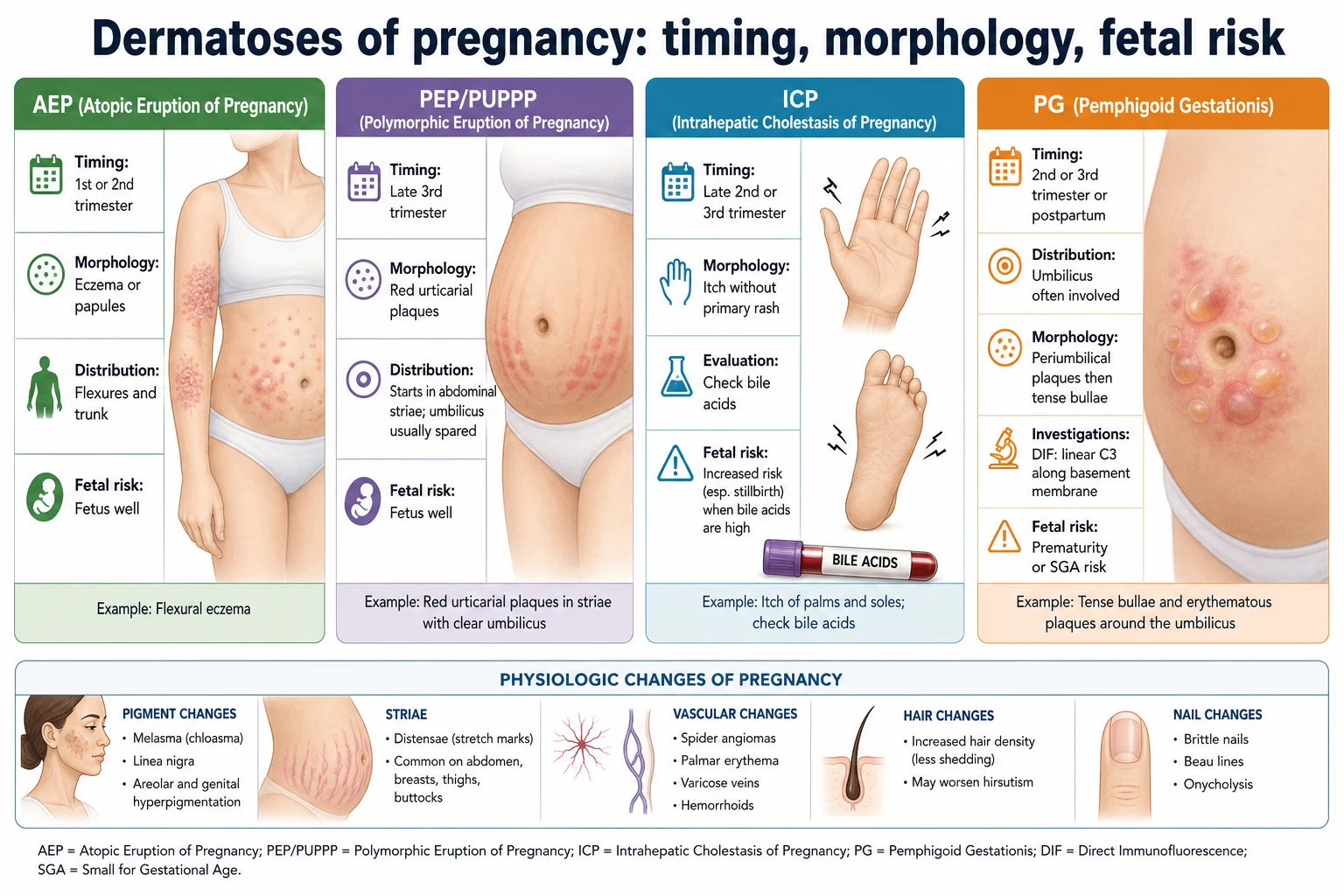
Clinical Presentation
A pregnant patient may present with a visible lesion, itch, hair loss, nail change, pigment concern, or concern about a medication. The safest first history is gestational age; onset relative to pregnancy; whether the itch preceded the rash or the rash preceded the itch; palms and soles; night-time itch; umbilical involvement; striae onset; blistering; fever; mucosal pain; jaundice; urine and stool colour; drug exposure; contacts with itch; psoriasis or atopy history; previous pregnancy rash; fetal movement; and any systemic symptoms. [4]
Physiologic changes are common and usually asymptomatic or mildly symptomatic. Melasma appears as symmetric brown facial macules or patches, classically centrofacial, malar or mandibular. Linea nigra is a vertical hyperpigmented abdominal line. Areolae, axillae, genital skin and scars may darken. Striae are pink to violaceous linear atrophic bands on abdomen, breasts, hips and thighs. Spider angiomas and palmar erythema may appear without liver disease, but jaundice, severe itch, dark urine or pale stools should move the case out of the physiologic box. [4]
AEP presents with pruritic eczema or papules. The eczematous type affects face, neck, upper chest and flexures, with xerosis and excoriation. The papular type produces small erythematous papules on trunk and limbs, sometimes prurigo-like nodules on extensor surfaces. Onset is often before the third trimester. The patient or family may have atopy, but absence of a formal prior eczema diagnosis does not exclude AEP. There is no primary blistering, no bile-acid syndrome and no specific fetal risk. [4] [6]
PEP/PUPPP is late, urticarial and striae-centred. It begins as intensely pruritic erythematous papules within abdominal stretch marks, coalescing into urticarial plaques and spreading to thighs, buttocks and limbs. The umbilicus is usually spared. Small vesicles may occur, but tense bullae should trigger PG workup. The face, palms and soles are usually spared. The mother is uncomfortable, but fever, jaundice, mucosal erosions and fetal-risk biochemistry are absent. [4] [6]
PG begins with intense itch and urticarial plaques, commonly around the umbilicus, before progressing to vesicles and tense bullae. It may involve trunk and limbs, including palms and soles, and it often flares around delivery or postpartum. Mucosal involvement is uncommon. The danger is that early PG can look like PEP; the clues are umbilical involvement, blistering, recurrence, postpartum flare and failure to behave like a self-limited striae rash. [9]
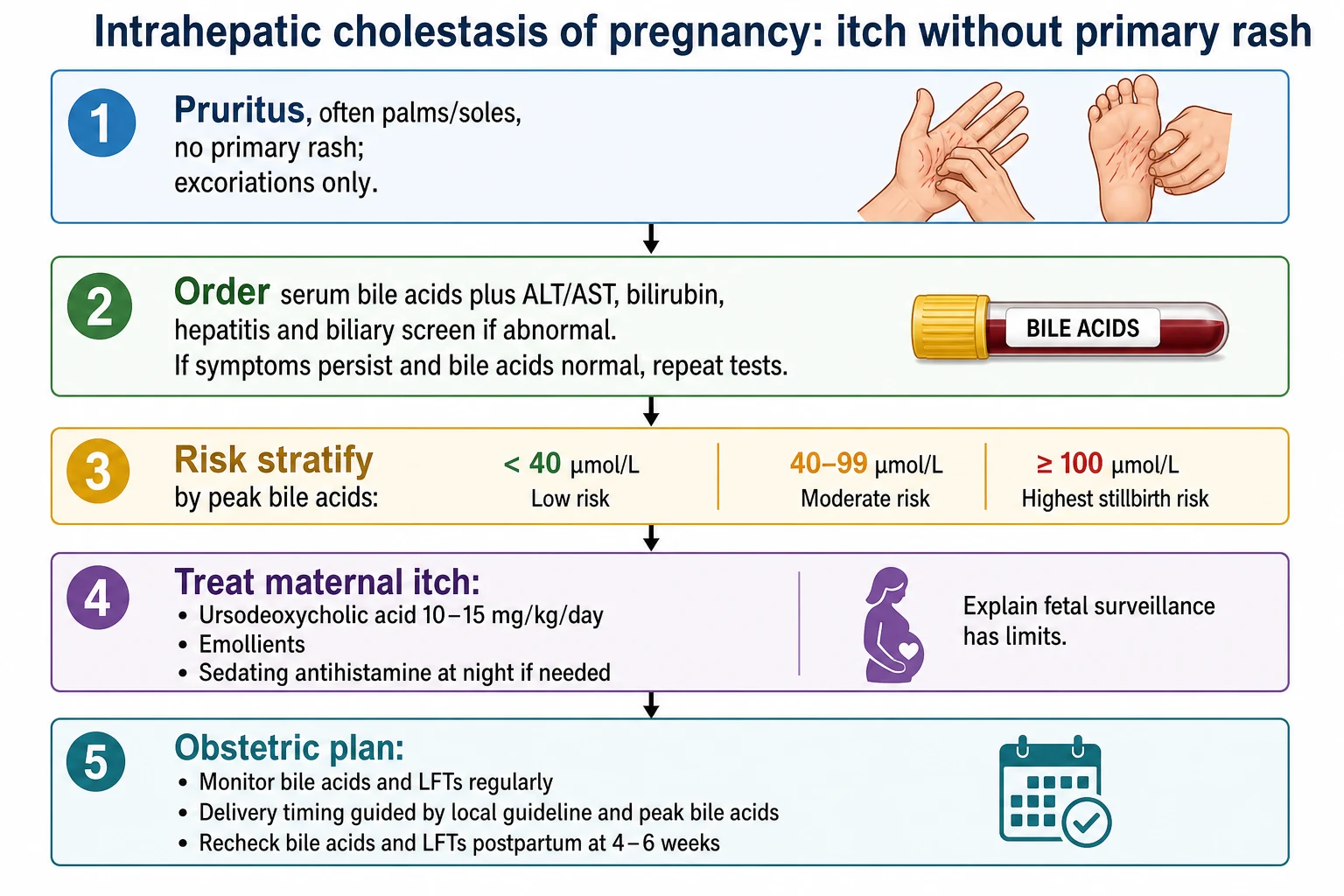
ICP presents with pruritus without a primary rash, usually late second or third trimester. Palms and soles are classic, and night-time itch is common. Scratching can cause excoriations, prurigo nodules or secondary infection, but the examiner expects you to say there is no primary eruption. Jaundice is uncommon but important. If a patient says the itch is unbearable but the skin examination shows only scratch marks, order bile acids rather than a stronger steroid. [1] [2] [3]
Pustular psoriasis of pregnancy presents as painful erythematous plaques with rings or lakes of sterile pustules, often beginning in flexures and spreading centrifugally. Fever, malaise, diarrhoea, delirium, dehydration, mucosal erosions, nail changes, hypocalcaemia, hypoalbuminaemia and secondary infection can occur. It may recur in later pregnancies. A sick pregnant patient with pustules is not a PEP patient; she needs admission and maternal-fetal assessment. [10]
Differential Diagnosis
The differential is best organised by whether the patient has itch without a primary rash, urticarial plaques, eczema/papules, bullae, pustules, pigment change, or systemic illness. Scabies, urticaria, drug eruption, viral exanthem, contact dermatitis, tinea, bacterial folliculitis, dermatitis herpetiformis, erythema multiforme, varicella, disseminated herpes simplex, acute generalized exanthematous pustulosis and ordinary psoriasis can all occur in pregnancy. The label pregnancy-specific should be used only after the morphology and investigations fit. [4]
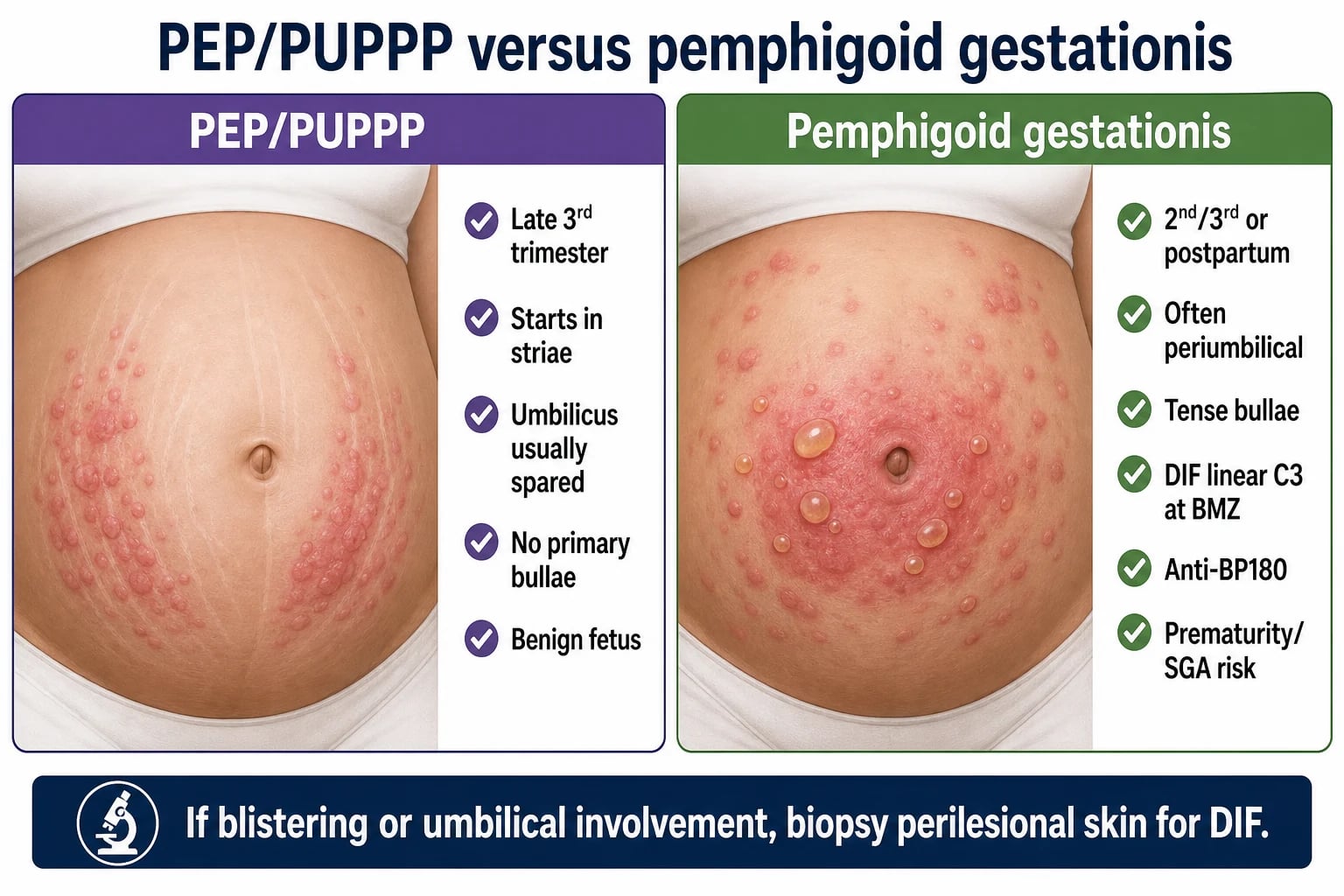
| Presentation | Most likely | Key mimics | Distinguishing features |
|---|---|---|---|
| Early pregnancy eczema or papules | AEP | Scabies, contact dermatitis, drug eruption, eczema flare | Atopic history, flexures/trunk, xerosis, no fetal risk, no bullae |
| Late papules in striae | PEP/PUPPP | PG, urticaria, drug eruption | Umbilicus usually spared, no primary bullae, negative DIF if tested |
| Periumbilical urticaria then bullae | PG | PEP, bullous pemphigoid, dermatitis herpetiformis, linear IgA disease | DIF linear C3 at BMZ, anti-BP180, fetal prematurity/SGA risk |
| Itch without primary rash | ICP | Physiologic itch, renal disease, thyroid disease, drug cholestasis, hepatitis, gallstones, pre-eclampsia/HELLP | Elevated bile acids, abnormal LFTs possible, repeat tests if early normal |
| Febrile pustules | Pustular psoriasis of pregnancy | Infection, candidiasis, AGEP, subcorneal pustular dermatosis | Sterile pustules, systemic illness, hypocalcaemia, psoriasis history may be absent |
The most examined distinction is PEP versus PG. PEP begins in striae and usually spares the umbilicus; PG commonly involves the periumbilical region and can blister. PEP has no fetal risk and needs symptomatic relief. PG has maternal recurrence and fetal associations, so it needs biopsy, DIF, obstetric coordination and counselling. If the stem says linear C3 at the basement membrane zone, the answer is PG. [4] [9]
Clinical & Bedside Assessment
Examine the whole patient, not only the visible rash. Record gestational age, vital signs and maternal distress. Look for jaundice, dehydration, fever, sepsis, pain and reduced mobility. Inspect the umbilicus, striae, flexures, palms, soles, scalp, nails and mucosa. In itchy patients, decide whether visible marks are primary lesions or secondary excoriations. In pustular patients, assess oral mucosa, flexures and evidence of systemic toxicity. In blistering patients, keep an intact fresh blister and perilesional skin available for biopsy. [4] [9] [10]
The obstetric assessment should not be an afterthought. Ask about fetal movements, contractions, ruptured membranes, bleeding, prior stillbirth, prior ICP, prior PG, multiple pregnancy and current hypertensive symptoms. Dermatology diagnoses with fetal implications require obstetric or maternal-fetal medicine involvement even if the skin is the presenting complaint. [1] [7] [9]
Investigations
No laboratory test is required for straightforward physiologic pigmentation, uncomplicated striae, typical mild AEP, or classic PEP in a well patient. The purpose of investigations is to exclude the dangerous mimics: ICP, PG, pustular psoriasis, infection, hepatitis, biliary disease, pre-eclampsia/HELLP, drug reaction and autoimmune disease. [4]
For suspected ICP, order serum bile acids and liver tests including ALT, AST, bilirubin and alkaline phosphatase with interpretation in pregnancy context. Many pathways use non-fasting or random bile acids; local laboratory reference ranges matter. If symptoms are convincing but bile acids are initially normal, repeat bile acids and LFTs because itch can precede biochemical elevation. If jaundice, marked transaminase elevation, fever, right upper quadrant pain or atypical features are present, investigate other liver disease with hepatitis serology and biliary assessment according to local obstetric medicine practice. [1] [2] [5]
For suspected PG, take two biopsies if possible: lesional skin for routine histology and perilesional normal-appearing skin for direct immunofluorescence. DIF classically shows linear C3 at the basement membrane zone, often with IgG. BP180 ELISA supports diagnosis and can help follow activity where available. Do not biopsy an old eroded blister for DIF if avoidable; perilesional skin is the key sample. [9]
For suspected pustular psoriasis of pregnancy, order FBC with differential, CRP, urea and electrolytes, calcium, magnesium, phosphate, albumin, renal and liver tests, blood cultures if febrile, swabs or cultures from pustules to exclude infection, and biopsy if diagnosis is uncertain. Obstetric assessment includes fetal wellbeing and gestational-age-specific monitoring. Correctable hypocalcaemia is not a footnote; it may worsen pustular disease and maternal instability. [10]
Management — Resuscitation
Most pregnancy rashes are outpatient problems, but the red flags must be handled first. Admit or urgently co-manage with obstetrics for fever, hypotension, dehydration, painful widespread erythema, pustules, mucosal erosions, suspected sepsis, jaundice, dark urine with pale stools, reduced fetal movements, severe sleep-destroying itch with abnormal bile acids, extensive blistering, secondary infection or any drug exposure with known teratogenicity. [4] [5] [10]
In pustular psoriasis of pregnancy, resuscitation means hospital care, maternal observations, hydration, analgesia, temperature control, correction of calcium and electrolyte abnormalities, infection exclusion, venous thromboembolism risk assessment, nutrition, wound/skin barrier care and fetal assessment. Antibiotics are not given merely because pustules exist; they are used when cultures, cellulitis, sepsis or another infection source supports them. [10]
Management — Definitive & Stepwise
The definitive management ladder starts with diagnosis-specific reassurance and ends with obstetric timing decisions only when the diagnosis has fetal implications. Treat the mother, protect the fetus, avoid teratogens, and explain that pregnancy and lactation are separate prescribing decisions. [4] [11] [12]
Stepwise approach to a pregnant patient with itch or rash
1. Triage danger
Check gestational age, fever, jaundice, reduced fetal movements, blistering, pustules, mucosal erosions and teratogen exposure.
2. Decide rash versus no primary rash
No primary rash means bile acids and LFTs for ICP. Primary rash means morphology and distribution guide AEP, PEP, PG, psoriasis, infection or drug eruption.
3. Test only where tests change risk
Use bile acids for ICP, perilesional DIF for PG, and admission labs/cultures/calcium for pustular psoriasis.
4. Treat with pregnancy-compatible agents
Use emollients, topical corticosteroids, selected antihistamines and UVB first; reserve systemic corticosteroids, ciclosporin or biologics for severe disease with specialist input.
5. Plan follow-up
Arrange postpartum resolution checks, bile-acid/LFT normalisation after ICP, recurrence counselling for PG/ICP and breastfeeding-specific drug review.
AEP treatment
Treat AEP with liberal bland emollient several times daily and after washing to restore barrier function. For inflamed eczema, use a low- or moderate-potency topical corticosteroid such as hydrocortisone 1% cream or ointment applied thinly once or twice daily for 7 to 14 days, then step down to intermittent use as control improves. For thicker plaques on trunk or limbs, a moderate potency steroid may be used for short courses; avoid unnecessary very potent steroid use, occlusion and large cumulative quantities. Oral cetirizine 10 mg at night or loratadine 10 mg daily can be considered for itch where local obstetric advice permits; chlorphenamine at night is an alternative when sedation is acceptable. Narrowband UVB is a useful non-systemic option for widespread eczema or prurigo. [4] [11]
PEP/PUPPP treatment
PEP management is reassurance plus itch control. Explain that the eruption is maternal discomfort rather than fetal danger and usually resolves within days to weeks postpartum. Use emollients and cool compresses. Apply a moderate-potency topical corticosteroid such as betamethasone valerate 0.1% cream thinly once daily for up to 1 to 2 weeks to active plaques, then reduce. Add cetirizine 10 mg daily, loratadine 10 mg daily, or a sedating antihistamine at night if sleep is severely affected and local obstetric prescribing allows. For rare severe, sleep-destroying disease, a short oral prednisolone course such as 20 to 40 mg daily for several days with taper can be used after obstetric review. [4] [11]
Pemphigoid gestationis treatment
Mild PG can be treated with potent topical corticosteroid to active plaques, non-sedating antihistamine for daytime itch and careful surveillance for blistering. Moderate or severe PG needs systemic corticosteroid, commonly oral prednisolone around 0.5 mg/kg/day, increased toward 1 mg/kg/day for extensive blistering when clinically required, followed by gradual taper to the lowest dose that controls new blisters. Treat secondary infection if present, protect erosions with non-adherent dressings, and coordinate fetal growth and obstetric monitoring because PG is associated with prematurity and small-for-gestational-age infants. Postpartum flare is common, so do not stop follow-up at delivery. [9] [11]
ICP treatment
ICP treatment has two parallel goals: relieve maternal itch and reduce fetal risk by bile-acid-guided obstetric planning. Start ursodeoxycholic acid when symptoms and biochemistry support ICP, often 10 to 15 mg/kg/day orally in two or three divided doses, with titration by symptoms, bile acids, tolerability and local protocol. UDCA may improve pruritus for some patients, but PITCHES did not show a meaningful reduction in the composite adverse perinatal outcome, so do not present UDCA as a substitute for bile-acid surveillance and delivery planning. Emollients, cool environment and night-time sedating antihistamine may help sleep but do not correct cholestasis. [1] [7] [8]
For ICP, repeat bile acids and liver tests according to local obstetric practice, stratify risk by the peak bile-acid concentration, and discuss timing of birth with obstetrics. The best-supported high-risk threshold for stillbirth is 100 micromol/L or more; lower thresholds influence monitoring and planned-birth discussions differently across regions. Conventional fetal surveillance may be used, but it cannot reliably predict or prevent sudden ICP-related stillbirth, so a reassuring CTG should not override a high bile-acid trajectory. Recheck bile acids and liver tests postpartum, often at 4 to 6 weeks, and investigate persistent abnormal results. [2] [5] [7]
Pustular psoriasis of pregnancy treatment
Pustular psoriasis of pregnancy requires admission and specialist care. Correct dehydration, electrolyte disturbance and hypocalcaemia; exclude infection; use bland emollients and wet wraps or non-adherent dressings for skin comfort; and begin systemic therapy when disease is moderate to severe. Oral prednisolone 30 to 60 mg daily is commonly used initially, adjusted to maternal severity and obstetric context, with taper after control. If disease is refractory, ciclosporin around 2 to 5 mg/kg/day orally can be considered with blood pressure, renal function and drug-level or toxicity monitoring according to local practice. Pregnancy-compatible biologic options, especially agents with low placental transfer such as certolizumab in selected cases, require dermatology, obstetric medicine and neonatology agreement. Delivery is not a dermatologic cure on demand; it is considered for obstetric indications, fetal compromise, or uncontrolled maternal disease despite treatment. [10] [11]
Specific Subtypes & Scenarios
Physiologic pigment, striae, vascular and hair changes
Melasma is managed with photoprotection first: broad-spectrum sunscreen, physical shade, hat use and avoidance of photosensitising products. Hydroquinone, retinoids and aggressive peels are generally avoided during pregnancy; postpartum treatment can be discussed if breastfeeding-compatible and clinically appropriate. Linea nigra and areolar darkening usually fade after delivery but may persist. Striae are difficult to reverse; prevention claims are weak, and treatment is usually postpartum cosmetic counselling rather than pregnancy intervention. Postpartum telogen effluvium is self-limited and peaks several months after delivery; reassure, screen for iron deficiency or thyroid disease if severe, prolonged or accompanied by systemic symptoms, and avoid unnecessary teratogenic hair-loss drugs. [4] [11]
Atopic eruption of pregnancy
AEP is the commonest answer when the stem is early pregnancy, atopic background, xerosis, flexural eczema or prurigo-like papules, and no fetal-risk clue. It can be a flare of known atopic dermatitis or new atopic disease in pregnancy. It is not a contraindication to vaginal delivery, breastfeeding or routine fetal care. The trap is undertreating eczema because the patient is pregnant; safe topical therapy is better than sleep deprivation, excoriation and secondary infection. [4] [6]
Polymorphic eruption of pregnancy / PUPPP
PEP/PUPPP is the classic primigravida late-third-trimester striae eruption. The rash can be dramatic and intensely pruritic, but the fetus is expected to be well. If a question asks for one feature that distinguishes PEP from PG, answer umbilical sparing in PEP versus periumbilical involvement in PG. If a patient has primary bullae, postpartum flare, or recurrent earlier rash in another pregnancy, move away from PEP and test for PG. [4] [6]
Pemphigoid gestationis
PG is autoimmune blistering disease of pregnancy. The name herpes gestationis is obsolete and misleading; it is not caused by herpes virus. It can begin as urticarial plaques before bullae, so the absence of bullae at the first visit does not exclude it. The diagnostic test is DIF, and the classic result is linear C3 at the BMZ. Counsel about recurrence, possible postpartum flare, fetal growth/prematurity risk, and rare transient neonatal blistering. [9]
Intrahepatic cholestasis of pregnancy
ICP belongs in a dermatology topic because itch is the symptom, but its management is obstetric. There is usually no primary rash. The dermatologist's role is to recognise the pattern, avoid giving only topical steroids, order or prompt bile acids and LFTs, exclude rash-causing mimics when lesions are present, and ensure obstetric co-management. The examiner rewards the statement that fetal risk correlates with bile-acid level and is most clearly elevated at 100 micromol/L or more, while UDCA is mainly for maternal symptoms and does not remove the need for delivery planning. [1] [7] [8]
Pustular psoriasis of pregnancy / impetigo herpetiformis
Pustular psoriasis of pregnancy, historically impetigo herpetiformis, is the sick-pustular scenario. It may start in flexures with erythematous plaques studded by sterile pustules, then spread with fever, malaise and laboratory inflammation. Hypocalcaemia, hypoalbuminaemia and dehydration may worsen the picture. It can threaten the mother and fetus through systemic illness, placental insufficiency, preterm delivery or fetal loss. It is managed as an inpatient systemic inflammatory dermatosis, not as simple bacterial impetigo and not as herpes. [10]
Pre-existing skin disease in pregnancy
Atopic dermatitis often flares and is treated much like AEP, with emollients, topical corticosteroids, selected antihistamines and UVB. Psoriasis often improves in pregnancy but can flare postpartum; avoid methotrexate and systemic retinoids, and use topical therapy, UVB, systemic corticosteroid only when appropriate, ciclosporin or selected biologics with specialist input. Acne management shifts away from isotretinoin, acitretin, topical retinoids and tetracyclines; safer options include benzoyl peroxide, azelaic acid and selected topical antibiotics when indicated. Lupus needs rheumatology-obstetric management; hydroxychloroquine is generally continued when indicated rather than stopped reflexively. [4] [11]
Complications & Pitfalls
AEP and PEP have no specific fetal risk, but maternal sleep loss, excoriations and secondary infection are real problems. PG is associated with prematurity, fetal growth restriction or small-for-gestational-age infants, and transient neonatal blistering from passively transferred antibodies. ICP is associated with preterm birth, meconium-stained liquor and stillbirth risk that rises most clearly with very high bile acids. Pustular psoriasis of pregnancy can cause maternal dehydration, sepsis mimic, electrolyte disturbance, hypocalcaemia, renal stress, fetal distress, preterm birth and fetal loss. [7] [9] [10]
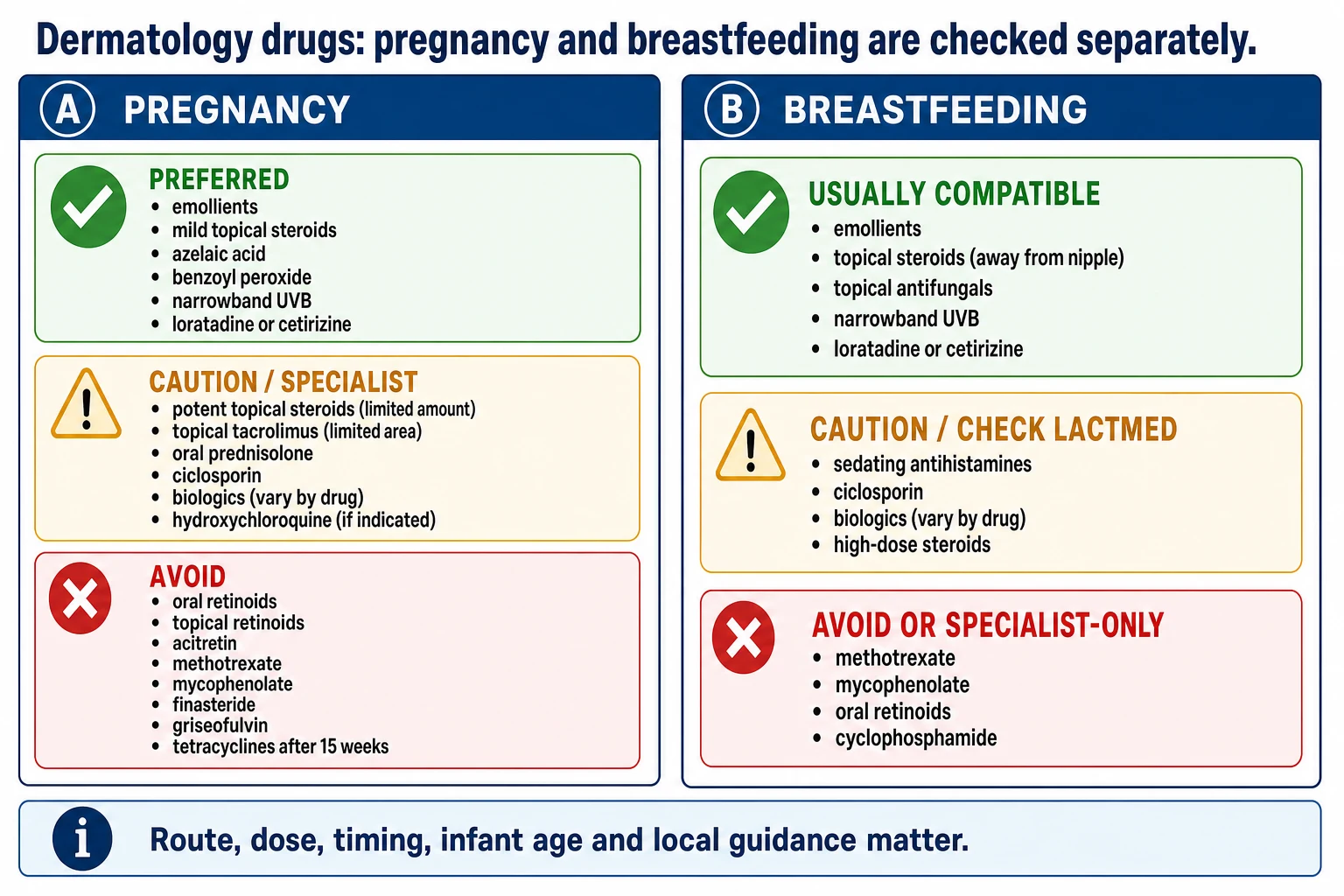
Drug pitfalls are heavily examined. Systemic retinoids are contraindicated in pregnancy; acitretin requires prolonged pregnancy avoidance after stopping because of persistence and conversion issues. Methotrexate is abortifacient and teratogenic. Mycophenolate is teratogenic. Finasteride is avoided because of male fetal genital risk. Tetracyclines are avoided especially after early pregnancy and with prolonged use because of fetal teeth and bone concerns. Potent topical corticosteroids are not absolutely forbidden, but high cumulative exposure, occlusion and large body-surface use should be avoided unless the benefit is clear. Breastfeeding decisions are separate: nipple exposure, infant age, prematurity, maternal dose and drug half-life matter. [11] [12]
Prognosis & Disposition
Physiologic changes generally improve postpartum, though melasma and striae may persist. AEP usually improves after delivery but can recur with future pregnancy or persist as atopic dermatitis. PEP usually resolves within days to weeks postpartum and recurrence is uncommon, though it can recur with multiple gestation. PG often flares around delivery or postpartum and commonly recurs in subsequent pregnancies, often earlier and sometimes more severely. ICP itch usually improves rapidly after delivery, but biochemical normalisation should be documented, and recurrence in later pregnancies is common. Pustular psoriasis of pregnancy may recur, especially in subsequent pregnancies, and requires preconception planning. [3] [4] [9] [10]
Disposition is diagnosis- and severity-dependent. Mild AEP and PEP can be managed as outpatient dermatology or primary care with safety-netting. Suspected ICP needs prompt obstetric pathway involvement even if the mother is otherwise well. PG usually needs dermatology confirmation and obstetric coordination; extensive blistering, infection or high steroid need may require admission. Pustular psoriasis of pregnancy requires hospital admission. Any diagnostic uncertainty with fetal-risk implications should be managed upward, not by reassurance alone. [4] [7] [10]
Special Populations
The fetus and neonate are part of the dermatology assessment. In PG, maternal IgG can cross the placenta and produce transient neonatal blistering; neonatal lesions usually resolve as antibodies clear, but paediatric review and gentle skin care may be needed. In ICP, fetal risk is biochemical and obstetric rather than cutaneous; neonates do not get a rash from ICP. In pustular psoriasis of pregnancy, the fetal problem is maternal systemic illness, inflammation, placental stress and treatment complexity. [7] [9] [10]
Breastfeeding is not identical to pregnancy prescribing. A drug may be teratogenic during organogenesis yet have low milk transfer; another may be acceptable in pregnancy but cause infant sedation or require infant blood monitoring during lactation. Topical corticosteroids are generally compatible if not applied where the infant contacts or ingests them, especially the nipple. Loratadine or cetirizine are commonly preferred non-sedating antihistamines; sedating antihistamines can affect maternal alertness, infant sedation or milk supply in some contexts. Methotrexate, mycophenolate, cyclophosphamide and oral retinoids need specialist avoidance or very careful advice in breastfeeding. [12]
Immunocompromised pregnant patients require a broader differential: disseminated herpes simplex, varicella, drug eruption, fungal infection, scabies crustosa and bacterial sepsis may mimic pregnancy dermatoses. Adolescents may conceal pregnancy or medication use. Multiple gestation increases PEP and ICP risk. Pre-existing liver disease changes the interpretation of LFTs and bile acids. A woman who conceives on isotretinoin, acitretin, methotrexate, mycophenolate or finasteride needs exact exposure dating, dose documentation and obstetric teratology counselling rather than vague reassurance. [5] [11]
Evidence, Guidelines & Regional Differences
The Ambros-Rudolph reclassification is the historical anchor for modern specific dermatoses of pregnancy. It emphasised atopic eruption as the commonest entity and separated benign inflammatory eruptions from autoimmune blistering and cholestatic disease. Contemporary obstetric-dermatology reviews preserve this morphology-first approach because it maps directly to investigations: no test for classic PEP, bile acids for ICP, DIF for PG, and admission labs for pustular psoriasis. [4] [6]
The key ICP evidence is risk stratification by bile acids. Ovadia and colleagues' aggregate and individual patient data meta-analysis showed that adverse outcomes correlate with bile-acid concentration and that stillbirth risk is most clearly increased at peak bile acids of 100 micromol/L or more. PITCHES then clarified that UDCA should not be oversold as fetal-protective; it may help maternal symptoms, but it did not significantly reduce the trial's composite adverse perinatal outcome. Together, these data support bile-acid monitoring and planned birth discussions rather than UDCA-only management. [7] [8]
ANZ and European practice similarly require obstetric co-management, serial bile acids and individualised delivery timing. Dermatology's contribution is diagnostic triage, treatment of skin symptoms, safe prescribing and not missing PG or pustular psoriasis.
[4][7][9][10]For NEET-PG and INICET, the highest-yield regional delta is not a delivery-week table; it is knowing which conditions are fetal-benign and which require obstetric action: AEP and PEP are benign for the fetus, PG has prematurity/SGA and neonatal blistering risk, ICP has bile-acid-related stillbirth risk, and pustular psoriasis is a maternal-fetal emergency.
[4][7][9][10]Drug guidance varies by country and changes over time. The exam-safe formulation is to name absolute contraindications, then say that pregnancy and lactation must be checked by exact agent, route, dose, timing and local teratology or LactMed-style source. Avoid binary overconfidence for biologics, topical calcineurin inhibitors and potent topical steroids; they are not all forbidden, but they are not casual prescribing either. [11] [12]
Exam Pearls
Pregnancy pruritus: A-P-P-I-P
APPIP
Atopic, early, eczema or papules, fetus well
Papules in striae, late pregnancy, umbilicus usually spared, fetus well
Periumbilical plaques and bullae, BP180, DIF linear C3, fetal prematurity/SGA risk
Itch without primary rash; bile acids and LFTs; fetal risk by peak bile acids
Pustules plus fever or systemic illness; admit and correct calcium/electrolytes
Classic viva stem: 34 weeks, itchy plaques in striae, umbilicus spared
Classic viva stem: 32 weeks, palms and soles itch at night, no rash
Exam application bank (NEET-PG / INICET)
One-line answer
Exam-exhaustive MBBS guide to physiologic skin changes in pregnancy, atopic eruption of pregnancy, polymorphic eruption of pregnancy/PUPPP, pemphigoid gestationis, intrahepatic cholestasis of pregnancy, pustular psoriasis of pregnancy/impetigo herpetiformis, fetal-risk triage, investigations, drug safety in pregnancy and lactation, and red flags.
Worked stems (answer without another resource)
Stem 1 — Classic presentation. Map symptoms to mechanism; name the first investigation and first treatment step with dose/route if drug therapy is standard. [1]
Stem 2 — Unstable / complicated. List red flags that force immediate resuscitation, theatre, ICU, antidote, or reperfusion — and what you do in the first 15 minutes. [1]
Stem 3 — Atypical group. Elderly, pregnancy, child, or immunocompromised: how presentation and thresholds change. [1]
Stem 4 — Differential trap. Name the three closest mimics and one discriminator for each. [1]
Stem 5 — Disposition. Who goes home with safety-netting, who is admitted, who needs HDU/ICU/theatre, and what follow-up is mandatory. [1]
Rapid viva checklist
- Definition + classification
- Pathophysiology chain
- Bedside signs / criteria
- Score with exact components (if any)
- Emergency bundle
- Definitive therapy with doses
- Complications of disease and of treatment
- Special populations
- Guideline/trial name if classic
- Three exam traps
Coverage self-check
If you cannot answer any stem above from this page alone, re-read the matching section — the page is intended to be self-sufficient for final-prof and NEET-PG/INICET questions on Dermatology in pregnancy.
One-page exam summary
| Condition | Timing | Morphology | Key investigation | Fetal risk | First management |
|---|---|---|---|---|---|
| AEP | 1st or 2nd trimester | Eczema, papules, prurigo; atopic background | Clinical | None specific | Emollients, low/moderate topical corticosteroid, antihistamine, UVB if widespread |
| PEP/PUPPP | Late 3rd trimester | Urticarial papules/plaques in striae; umbilicus usually spared | Clinical; DIF negative if tested | None specific | Reassure, topical corticosteroid, antihistamine, short prednisolone if severe |
| PG | 2nd/3rd trimester or postpartum | Periumbilical urticarial plaques, tense bullae | Perilesional DIF: linear C3 at BMZ; BP180 ELISA | Prematurity, SGA, transient neonatal bullae | Potent topical steroid or oral prednisolone; obstetric follow-up |
| ICP | Late 2nd/3rd trimester | Itch without primary rash; palms/soles; excoriations only | Serum bile acids and LFTs; repeat if persistent itch | Bile-acid-related preterm birth, meconium, stillbirth | UDCA for itch, bile-acid monitoring, planned birth by local guideline |
| Pustular psoriasis of pregnancy | Often late pregnancy, can recur | Fever, erythematous plaques, sterile pustules, flexural/truncal spread | FBC, CRP, calcium/electrolytes, cultures, biopsy if needed | Fetal distress, preterm birth, fetal loss if severe | Admit; correct fluids/electrolytes/calcium; systemic therapy with specialist input |
References
- [1]Smith DD, Rood KM. Intrahepatic Cholestasis of Pregnancy Clin Obstet Gynecol, 2020.PMID 31764000
- [2]Dajti E, Tripodi V, Hu Y, et al. Intrahepatic cholestasis of pregnancy Nat Rev Dis Primers, 2025.PMID 40707479
- [3]Williamson C, Geenes V. Intrahepatic cholestasis of pregnancy Obstet Gynecol, 2014.PMID 24901263
- [4]Himeles JR, Pomeranz MK. Recognizing, Diagnosing, and Managing Pregnancy Dermatoses Obstet Gynecol, 2022.PMID 36075066
- [5]Terrault NA, Williamson C. Pregnancy-Associated Liver Diseases Gastroenterology, 2022.PMID 35276220
- [6]Ambros-Rudolph CM, Mullegger RR, Vaughan-Jones SA, et al. The specific dermatoses of pregnancy revisited and reclassified: results of a retrospective two-center study on 505 pregnant patients J Am Acad Dermatol, 2006.PMID 16488288
- [7]Ovadia C, Seed PT, Sklavounos A, et al. Association of adverse perinatal outcomes of intrahepatic cholestasis of pregnancy with biochemical markers: results of aggregate and individual patient data meta-analyses Lancet, 2019.PMID 30773280
- [8]Chappell LC, Bell JL, Smith A, et al. Ursodeoxycholic acid versus placebo in women with intrahepatic cholestasis of pregnancy (PITCHES): a randomised controlled trial Lancet, 2019.PMID 31378395
- [9]Huilaja L, Makikallio K, Sormunen R, Lohi J, Hurskainen T, Tasanen K. Gestational pemphigoid Orphanet J Rare Dis, 2014.PMID 25178359
- [10]Seishima M, Hojo M, Mizutani Y. Generalized Pustular Psoriasis in Pregnancy: Current and Future Treatments Am J Clin Dermatol, 2022.PMID 35704168
- [11]Murase JE, Heller MM, Butler DC. Safety of dermatologic medications in pregnancy and lactation: Part I. Pregnancy J Am Acad Dermatol, 2014.PMID 24528911
- [12]Butler DC, Heller MM, Murase JE. Safety of dermatologic medications in pregnancy and lactation: Part II. Lactation J Am Acad Dermatol, 2014.PMID 24528912