Dermatology · Medicine
Herpes simplex
Also known as Cold sore (herpes labialis) · Herpes febrilis · Primary gingivostomatitis · Genital herpes · Herpetic whitlow · Herpes gladiatorum · Eczema herpeticum (Kaposi varicelliform eruption) · HSV keratitis (dendritic ulcer) · Neonatal HSV (SEM / CNS / disseminated)
Herpes simplex virus (HSV) causes lifelong mucocutaneous infection through HSV-1 (predominantly orolabial, increasingly genital) and HSV-2 (predominantly genital). After primary mucocutaneous infection the virus ascends sensory nerves and establishes lifelong latency in dorsal root, trigeminal or autonomic ganglia, with intermittent reactivation producing clinical recurrence or asymptomatic shedding. The MBBS / fellowship examiner expects mastery of the morphology (clustered vesicles on an erythematous base), the spectrum from primary gingivostomatitis to neonatal herpes and eczema herpeticum, the diagnostic ladder (PCR gold-standard, viral culture, Tzanck smear, type-specific serology), the first-episode versus recurrent versus suppressive antiviral strategies (aciclovir, valaciclovir, famciclovir, foscarnet, cidofovir), and the special considerations of pregnancy, neonatal HSV, immunocompromise and the still-unavailable HSV vaccine.
On this page & tools
Your progress
Saved locally on this device.
Exam tags
Red flags
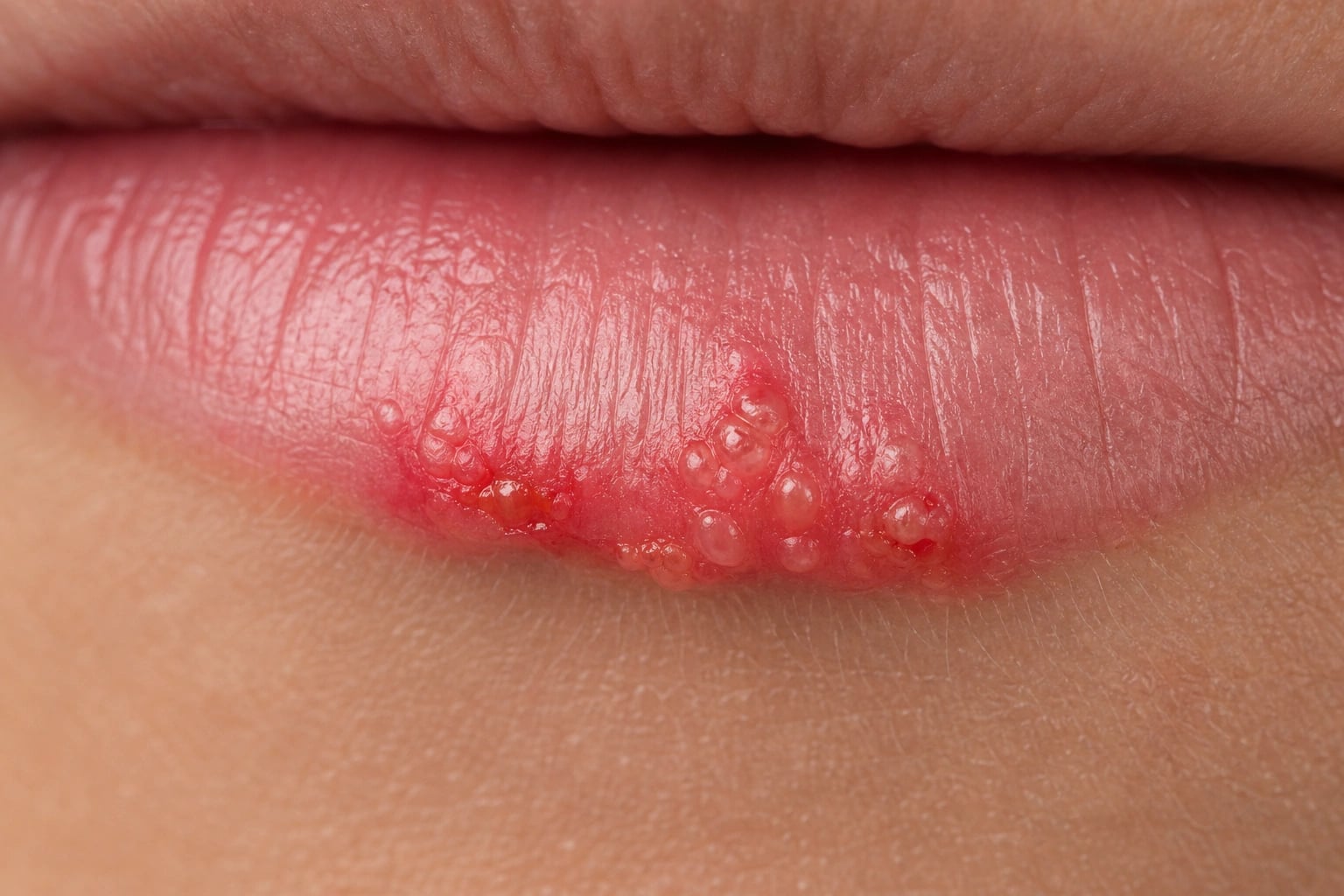
Overview & Definition
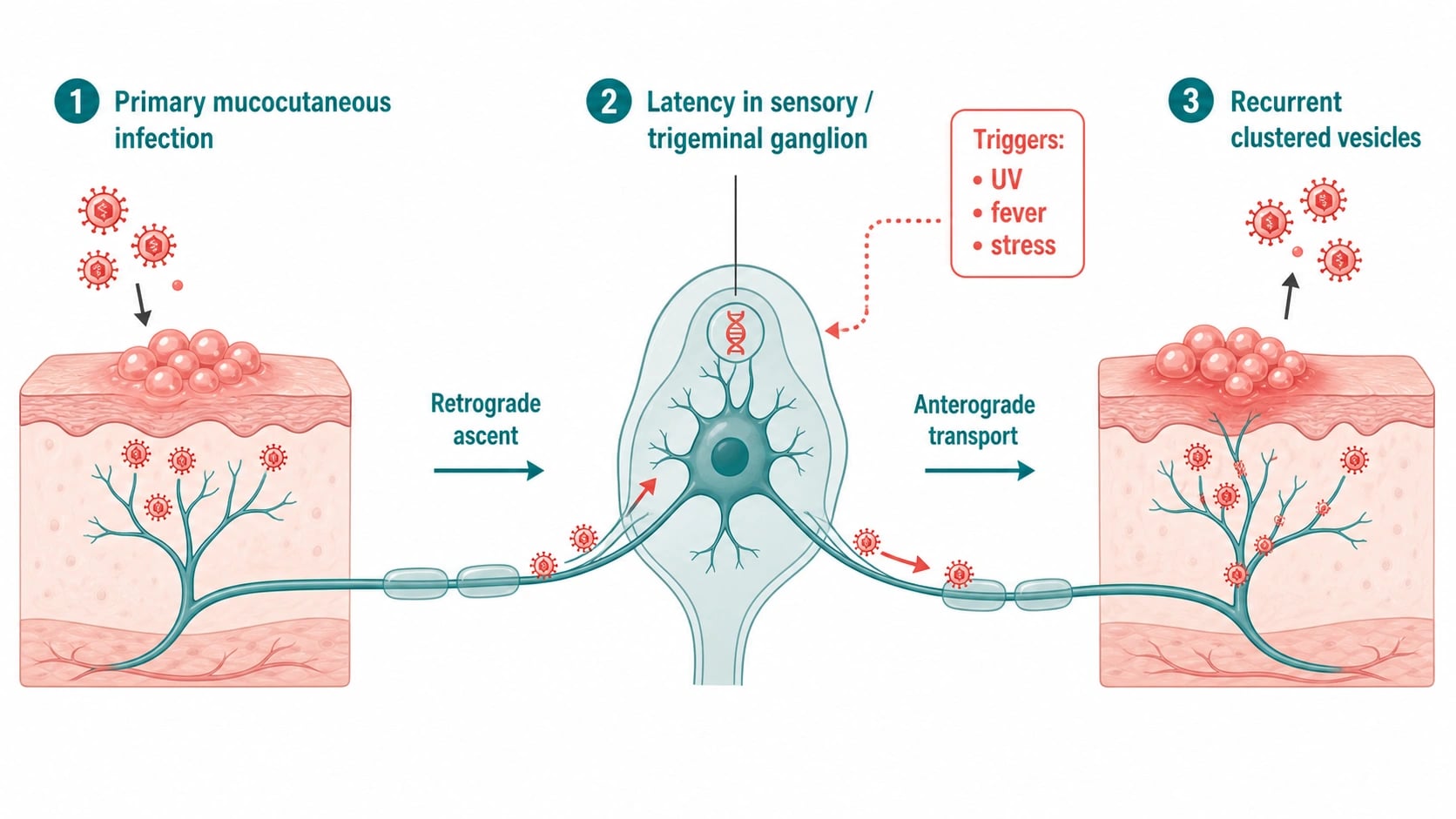
Herpes simplex virus (HSV) is a neurotropic enveloped double-stranded DNA virus in the Orthoherpesviridae family, subfamily Alphaherpesvirinae. Two closely related human pathogens — HSV-1 and HSV-2 — cause clinically indistinguishable mucocutaneous disease, but differ in their epidemiology, tissue tropism and typical site of reactivation. After primary infection at a mucocutaneous surface the virus undergoes retrograde axonal transport to sensory ganglia where it establishes lifelong latency, periodically reactivating to produce recurrent mucocutaneous lesions or asymptomatic shedding. The distinctive dermatological hallmark is the cluster of small tense vesicles on an erythematous base, evolving through pustulation, erosion, ulceration and crusting.[1][2][6]
The classical use of "HSV-1 = above the belt, HSV-2 = below the belt" is increasingly a false dichotomy. Population serosurveys and surveillance studies show rising HSV-1 genital infection in young adults in high-income countries as orolabial HSV-1 exposure in childhood declines, while HSV-2 has plateaued or modestly declined in some regions. Either type can be inoculated at any mucocutaneous site by direct contact, and the location of recurrent disease follows the site of primary infection more than the virus type.[19][20][3]
The infection is lifelong, communicable during clinical lesions and during subclinical / asymptomatic shedding, and is the leading cause of genital ulcer disease worldwide and a leading cause of viral encephalitis and corneal blindness in industrialised countries. Despite three decades of nucleoside analogue therapy, no curative therapy and no licensed vaccine exist; current management reduces severity, duration and transmission but does not eliminate latent virus.[1][2][20]
Classification
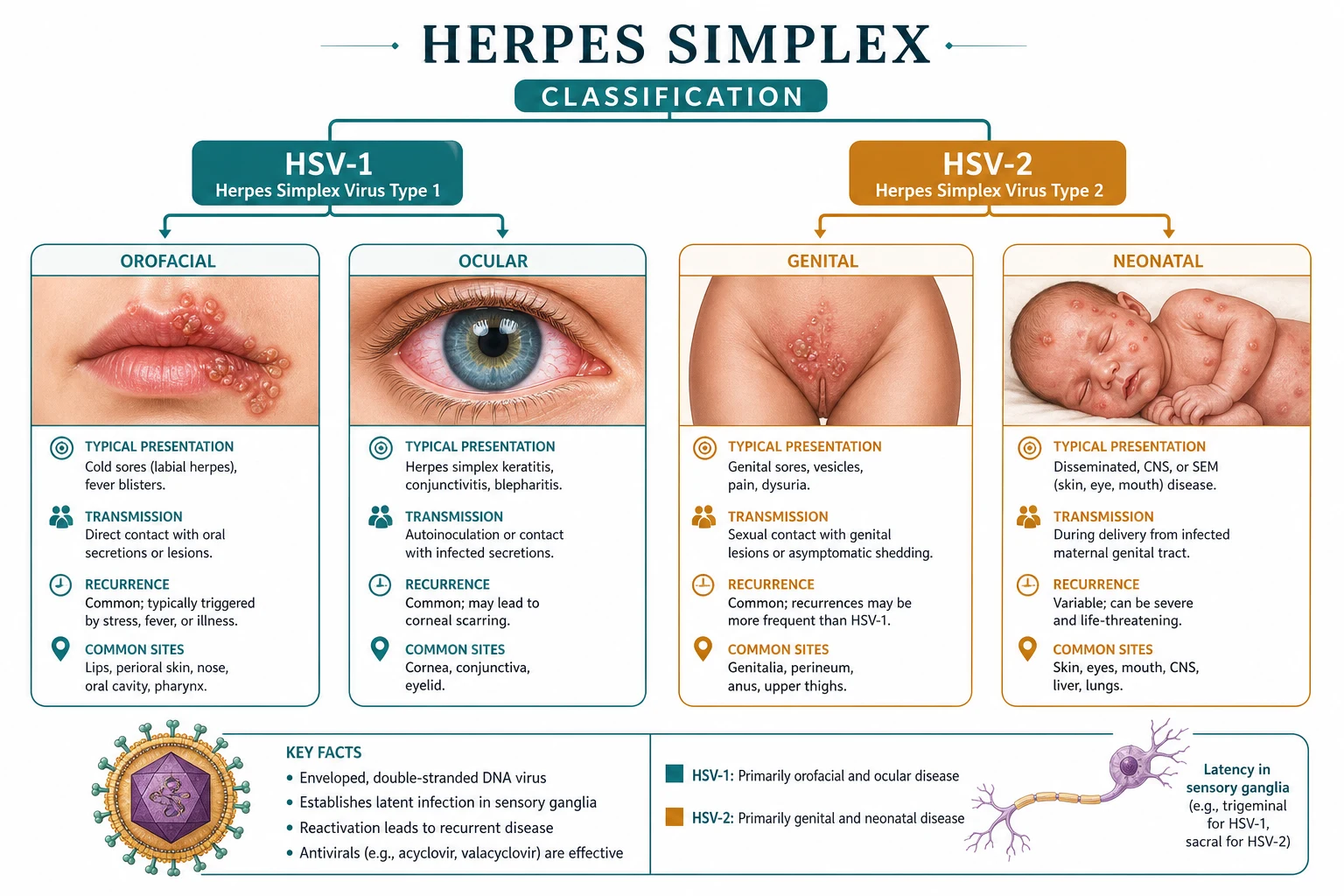
HSV-1 (Human alphaherpesvirus 1)
Predominantly orolabial; increasingly genital in young adults
- Acquired earlier in life (~67% global seroprevalence by age 50; widespread in low- and middle-income countries).
- Most common cause of primary herpetic gingivostomatitis in children and of recurrent herpes labialis in adults.
- Major cause of HSV encephalitis (temporal-lobe), HSV keratitis and is now the most common cause of primary genital herpes in many industrialised populations.
- Reactivates preferentially from the trigeminal ganglion (orolabial) and from sacral ganglia when genital.
HSV-2 (Human alphaherpesvirus 2)
Predominantly genital; sexually transmitted
- Global seroprevalence ~13% in 2016, higher in women than men and higher in lower-income settings.
- Almost always sexually acquired; presents as primary genital herpes in adolescents and adults.
- Reactivates from sacral ganglia more frequently than HSV-1 (median 4-6 episodes / year), making it the dominant cause of recurrent genital herpes.
- Strongly implicated in recurrent aseptic meningitis (Mollaret meningitis) and sacral radiculomyelitis with urinary retention.
Clinical syndromes (cross-cutting)
Defined by site, immune state and timing
- Orolabial: primary herpetic gingivostomatitis; recurrent herpes labialis (cold sore); recurrent intraoral herpes (keratinised mucosa).
- Genital: primary genital herpes; recurrent genital herpes; bilateral or unilateral depending on first-episode severity.
- Cutaneous: herpes gladiatorum (wrestlers), herpetic whitlow (finger inoculation), herpes barbae, neonatal herpes (SEM, CNS, disseminated).
- Special: eczema herpeticum (Kaposi varicelliform eruption); HSV keratitis (dendritic ulcer); HSV encephalitis; HSV hepatitis; disseminated HSV in immunocompromise.

Epidemiology & Risk Factors
HSV is one of the most ubiquitous human infections. The global burden estimates for 2016, published by the WHO/LSHTM collaboration, placed HSV-1 prevalence at approximately 67% in adults aged 0–49 years (with a peak of around 90% in older adults) and HSV-2 prevalence at approximately 13% globally, with marked regional gradients — HSV-1 prevalence is highest in the WHO Africa and Western Pacific regions, while HSV-2 prevalence is highest in sub-Saharan Africa and the Americas. Updated WHO regional estimates for 2022 reaffirm these gradients and add the observation that HSV-1 has become the leading cause of genital herpes in many high-income settings among people under 30.[19][20]
Risk factors vary by site and by virus type. Orolabial HSV-1 acquisition is driven by close contact with family members (kissing, shared utensils, oral secretions), crowded living conditions, lower socioeconomic status and a primary caregiver with active lesions; most primary infections are acquired in childhood or adolescence, with seroprevalence roughly inverted against income. Genital HSV acquisition is driven by age at sexual debut, lifetime number of partners, prior STIs, a partner with symptomatic or asymptomatic disease, lack of condom use and MSM transmission patterns; HSV-2 specifically correlates strongly with prior STIs and with HIV co-infection. Vertical transmission is a separate pathway — neonatal HSV — discussed under Special Populations.[19][20][3][4]
Asymptomatic shedding is the single largest driver of transmission. Most transmission events from individuals with HSV-2 occur during periods without visible lesions, detectable by daily home swab PCR in 10–20% of days and cumulatively explaining the majority of acquisitions by discordant partners. Suppressive valaciclovir reduces acquisition by approximately 48% in discordant couples over eight months, but does not eliminate risk.[4][21]
High-yield numbers for the examiner
Pathophysiology
HSV is a large (152-155 kb) double-stranded DNA virus encoding more than 80 proteins. The virion has an icosahedral capsid surrounded by tegument proteins and a lipid envelope carrying at least 12 glycoproteins — gB and gC mediate attachment to heparan sulphate on the keratinocyte surface, gD binds nectin-1 / HVEM to trigger fusion, and the heterodimer gH/gL activates fusion through gB. Cellular entry uses both plasma-membrane fusion and pH-dependent endocytosis, after which capsid transport along microtubules delivers viral DNA to the nucleus, where replication, capsid assembly in the nucleus and nuclear egress occur. The envelopment step at the nuclear membrane and de-envelopment / re-envelopment through the Golgi yields enveloped virions released by exocytosis and cell lysis. Mutant virus unable to express gD, gB or gH cannot replicate; these glycoproteins are the principal targets of neutralising antibody and of candidate vaccines.[1][2]
The lytic cycle lasts ~18–20 hours in epithelial cells and destroys the keratinocyte (ballooning degeneration, Cowdry type A intranuclear inclusions, multinucleated giant cells). This is what produces the vesicle and the positive Tzanck smear. In sensory neurons, the virus shifts to a different transcriptional programme: latency-associated transcripts (LATs) are abundantly transcribed, ICP0 and other immediate-early genes are silenced by heterochromatin and repressive histone marks, and the viral genome persists as an episome for the life of the host. LATs are not essential for establishing latency but enhance reactivation efficiency and protect neurons from apoptosis. Reactivation is triggered by stressors that activate neuronal stress pathways (UV light, pyrexia, emotional stress, immunosuppression, menstruation, dental or surgical trauma, hormonal change) and switches the virus back to lytic transcription; virions are transported anterogradely down the axon to the mucocutaneous junction, where limited replication produces either a clinical recurrence or asymptomatic shedding detectable by PCR.[1][2][6]
HSV-1 and HSV-2 share roughly 70% of their genomes; however, HSV-2 reactivates from sacral ganglia more often than HSV-1, explaining the higher recurrence rate of HSV-2 genital herpes, and HSV-1 is the principal cause of encephalitis (95% of cases), possibly because HSV-2 is less neurotropic for the olfactory / trigeminal pathway to the temporal lobe. HSV-2 infection induces an innate and adaptive immune response in the genital tract; HSV-2 seropositivity is associated with a 2- to 3-fold increased risk of HIV acquisition in epidemiological studies and is believed to reflect both epithelial disruption and persistent CD4+ T-cell infiltration of HSV ulcers. Clearance of clinical lesions depends on CD8+ cytotoxic T cells, and recurrent more severe herpes in HIV-positive or transplant patients reflects defective cellular immunity.[1][2][4]
Histopathology of an active mucocutaneous lesion shows ballooning degeneration of keratinocytes, intra-epidermal vesiculation with reticular and ballooning change, multinucleated giant keratinocytes with moulding of nuclei (3 Ms: multinucleation, margination of chromatin, molding of nuclei) and Cowdry type A eosinophilic intranuclear inclusions. Acantholysis and necrosis follow; the dermis shows a perivascular lymphohistiocytic infiltrate. Direct immunofluorescence is rarely needed because HSV PCR is faster and more sensitive.[2][6]
Clinical Presentation
The clinical syndromes of HSV are defined by site of primary inoculation, host immune status and whether it is the primary or a recurrent episode. The morphology is the same — grouped vesicles on an erythematous base — but the tempo, severity and complications differ by site.[6][3][4]
Primary orolabial HSV (herpetic gingivostomatitis) — the prototypical primary infection. Most primary HSV-1 infections are subclinical. When symptomatic, the typical patient is a child aged 6 months to 5 years with abrupt high fever, malaise, refusal to feed or drooling, irritability and tender bilateral submandibular / cervical lymphadenopathy. On examination: edematous, erythematous, friable gingivae that bleed on contact, followed by multiple small vesicles on the tongue, buccal mucosa, lips, vermilion and often the perioral skin. Vesicles rupture rapidly into painful round ulcers with yellow-white fibrinous base and erythematous halo. Dehydration is the principal acute complication. The illness resolves in 10-14 days. Primary HSV-2 orolabial infection is uncommon but clinically similar and more common in adolescents and adults.[6][12][18][24]
Recurrent herpes labialis ("cold sore", "fever blister") — the prototypical recurrence. After a prodrome of localised tingling, burning, itch or pain at a typical site on the vermilion border lasting 6-24 hours, a tight cluster of small vesicles on an erythematous base appears, evolves through pustulation / crusting over 48-72 hours and heals within 7-10 days. Recurrences occur at the same site or a few millimetres away in the same dermatome, averaging 2-3 episodes per year, and are triggered by UV light (lip sunburn), fever, intercurrent illness, menstruation, emotional stress, dental work or topical immunosuppression. Triggers within the previous 24-48 hours are elicitable in most cases.[6][18]
Primary genital HSV — the prototypical sexually-acquired primary. Presents 3-14 days after sexual contact with bilateral painful genital vesicles, shallow ulcers and erythematous oedematous mucosa with fever, malaise, headache, myalgia, severe dysuria (women may have urinary retention), and bilateral tender inguinal lymphadenopathy. HSV-2 primary infection is more severe and more prolonged than HSV-1, with a higher rate of systemic features, urinary retention and aseptic meningitis (Mollaret pattern recurrent lymphocytic meningitis). HSV-1 primary genital herpes is milder, with lower recurrence rates (median 1-2 / year after the first year).[3][4]
Recurrent genital herpes. Far shorter and milder than primary disease, with premonitory tingling or shooting pains followed by 1-12 grouped vesicles typically on a single side (unilateral or asymmetric), healing in 5-10 days. HSV-2 reactivates from sacral ganglia 4-6 times per year on average; HSV-1 reactivates 1-2 times per year. Subclinical shedding is detectable by PCR in 10-20% of days in people with HSV-2 and explains why most transmissions occur in the absence of visible lesions.[4][21]
Herpetic whitlow — finger inoculation, classically in healthcare workers exposed to oropharyngeal secretions (dentists, anaesthetists, respiratory therapists) or in children with primary gingivostomatitis sucking their thumb. After a 2-7 day incubation, a painful, swollen, erythematous distal finger with grouped vesiculopustular lesions on the volar pad; the pulp and paronychial tissues are involved. Tension throbbing, axillary adenopathy and constitutional symptoms can occur. Distinguishing from bacterial paronychia is critical — herpetic whitlow should never be incised, because incision risks dissemination, secondary bacterial infection and prolonged healing; it resolves over 2-3 weeks.[10][11][12]
Herpes gladiatorum — skin-to-skin transmission in wrestlers, rugby players and other contact-sport athletes, producing grouped vesicles, often with small erosions, on the head, neck, trunk or limbs at sites of mat contact. Outbreaks in teams can be explosive. Skin-shedding prevention with barrier checks and quarantine of active lesions is the standard prevention strategy; CMV is a differential diagnosis in immunocompromised athletes.[13][14]
Eczema herpeticum (Kaposi varicelliform eruption) — disseminated HSV superinfection of atopic or otherwise damaged skin (flared eczema, Darier disease, pemphigus, Sézary syndrome, burns, recent laser). Presents with monomorphic "punched-out" 2-4 mm circular erosions (rather than vesicles), high fever, malaise and regional or generalised lymphadenopathy; lesions evolve over 7-10 days, may coalesce into large denuded areas and are commonly co-infected with Staphylococcus aureus. A defect in innate antiviral immunity (reduced IFN-α / IFN-γ production, defective natural killer cell and plasmacytoid dendritic cell function, common filaggrin loss-of-function) underlies susceptibility. Widespread eczema herpeticum is a medical emergency: mortality up to 10% in the pre-antiviral era, residual scarring and bacterial sepsis common.[7][8][9]
HSV keratitis (herpes simplex keratitis) — the leading cause of infectious blindness in industrialised countries. Primary ocular HSV presents with a painful red eye, photophobia, lacrimation, lid oedema and a dendritic ulcer — branching linear epithelial defects with characteristic terminal end bulbs highlighted by fluorescein staining under cobalt blue light and decreased corneal sensation. Recurrent disease produces stromal keratitis (disciform keratitis, interstitial disease) with deeper inflammation, scarring and visual loss. Urgent ophthalmology is mandatory.[22]
HSV encephalitis — the most common sporadic fatal viral encephalitis in adults, due to HSV-1 in 95% of adult cases (HSV-2 in neonates). Presents over hours to days with fever, altered consciousness, personality change, focal neurological signs and temporal-lobe seizures; untreated mortality exceeds 70% and only ~20% of survivors regain normal function. CSF shows lymphocytic pleocytosis, elevated protein and normal / mildly low glucose; MRI shows temporal-lobe oedema and haemorrhage; diagnosis is by CSF HSV PCR (high sensitivity after day 3). Empiric IV aciclovir must start before PCR returns.[1][2]
Neonatal herpes (SEM, CNS, disseminated disease) — acquired peripartum in 85% (intrapartum exposure to maternal genital secretions), postpartum in 10% and transplacental in 5%. Categorised by the Kimberlin classification: (1) SEM — skin, eye and mouth disease (vesicles limited to skin / mucosa / cornea after the first month; best prognosis with prompt therapy); (2) CNS disease (encephalitis with seizures, bulging fontanelle, irritability, focal deficits, often with skin lesions); and (3) disseminated disease (hepatitis, pneumonitis, disseminated intravascular coagulation, shock, often with CNS involvement). Untreated mortality approaches 30-50% for disseminated disease.[16]
Differential Diagnosis
Orolabial cavity
Mostly herpes, but several key mimics
- Aphthous ulcers: non-keratinised mucosa, no preceding vesicles, no fever; helps rule out HSV when vesicles are absent and the site is movable mucosa.
- Hand-foot-and-mouth disease (coxsackie A): child or outbreak setting, lesions in mouth plus palms/soles/buttocks, often fever.
- Herpangina (coxsackie A): posterior oropharynx (soft palate, uvula, tonsillar pillars) ulcers, not gingiva or vermilion.
- Erythema multiforme: target lesions on skin with mucosal erosions; HSV-triggered recurrent EM warrants suppressive antivirals.
Genital cavity
Always include syphilis; never miss chancroid or HIV
- Syphilitic chancre: painless, indurated, single, non-tender inguinal nodes; dark-field microscopy and syphilis serology essential.
- Chancroid (*Haemophilus ducreyi*): painful ragged ulcer with suppurative tender nodes; less common in high-income settings.
- Lymphogranuloma venereum (*Chlamydia trachomatis* L1-L3): small painless ulcer then tender inguinal buboes, often MSM.
- Behçet disease: recurrent oral AND genital ulcers with ocular, skin or neurological involvement; recurrent oral lesions precede systemic features by years.
- Pemphigus or cicatricial pemphigoid: chronic widespread erosions with positive Nikolsky sign and biopsy / direct immunofluorescence.
- Trauma, fixed drug eruption (nicorandil, NSAIDs), neoplasia (squamous cell carcinoma).
Skin and special sites
Whitlow and eczema herpeticum have named traps
- Bacterial paronychia: tender, fluctuant, pus-filled — distinct from herpetic whitlow; incise and drain if bacterial (do not incise herpetic whitlow).
- Impetigo: honey-coloured crusts rather than vesicles; non-systemic.
- Herpes zoster: dermatomal, not recurrent at the same site repeatedly; PCR distinguishes.
- Varicella (primary varicella-zoster virus): crops in different stages over the trunk; disseminated in adults or immunocompromised.
- Eczema herpeticum mimics: bullous impetigo, SSSS, atypical varicella, eczema vaccinatum; PCR swabs distinguish.
- Recurrent erythema multiforme: HSV PCR / serology is reasonable even with clear target lesions.
Eye
Every red painful eye needs fluorescein + slit lamp
- Herpes zoster ophthalmicus: V1 dermatomal rash, pseudodendrites with a mucous plaque and no terminal bulbs.
- Bacterial / fungal / acanthamoeba keratitis: hypopyon, satellite lesions, contact-lens exposure.
- Marginal keratitis (staphylococcal hypersensitivity): peripheral infiltrate sparing the central cornea.
- Recurrent corneal erosion: history of trauma, no dendritic pattern, resolves within hours.
Clinical & Bedside Assessment
Bedside assessment begins with inspection under good lighting: examine the entire oral cavity or genital region, count and measure lesions, note the base, border, exudate, surrounding erythema, presence or absence of vesicles, and palpate for induration (concerning for cancer) and regional lymphadenopathy. Do not forget to look at keratinised sites (hard palate, attached gingiva, vermilion), where HSV favours recurrence versus the non-keratinised sites preferred by aphthous ulcers.[6][3]
The classic morphology is the cluster of small tense vesicles on an erythematous base, evolving into shallow round ulcers with a yellow-white fibrinous base and erythematous halo. Confirm the prodromal phase (tingling, burning, shooting pain) — present in 60% of recurrent cases and uncommon in primary infection. Document the duration, frequency, triggers, severity, sexual history, pregnancy, immunosuppression and contact history. In children, ask about thumb-sucking, oral lesions, school outbreak and immunisation status.[6][12]
Bedside procedures depend on context: [1]
- Tzanck smear — scrape the base of a fresh vesicle, smear on a slide, fix, Giemsa stain. Multinucleated giant cells with moulded nuclei confirm a herpesvirus infection but do not distinguish HSV-1 from HSV-2, VZV or CMV; sensitivity is variable and the test has been largely replaced by PCR.[6]
- Direct fluorescent antibody (DFA) — a fluorescein-labelled type-specific monoclonal antibody applied to a vesicle scraping; faster than culture but less sensitive than PCR.
- Wood's lamp for pigmentary changes in post-inflammatory hypopigmentation after eczema herpeticum.
For the eye, every red painful eye needs fluorescein and slit-lamp examination by an ophthalmologist; never try to differentiate epithelial dendrite from pseudodendrite at the bedside. The reduced corneal sensation of HSV keratitis is a useful clinical sign. [1]
For a neonate, whole-body examination including the scalp (where scalp-electrode inoculation lesions may be), mucosa, conjunctivae and fontanelle is mandatory; any vesicle or CSF abnormality triggers immediate workup.[16]
Investigations
The diagnosis is clinical in classic presentations of recurrent herpes labialis or recurrent genital herpes, but laboratory confirmation is essential in atypical presentations, suspected primary infection, neonatal disease, ocular disease, encephalitis, eczema herpeticum and immunocompromised patients. The diagnostic ladder is:[5][6]
HSV PCR (gold standard)
First-line in most contexts
- Sensitivity 95%+ and specificity 99%, type-specific (HSV-1 vs HSV-2).
- Specimens: vesicle fluid (swab base after unroofing), corneal scraping, CSF, blood / plasma, bronchoalveolar lavage, tissue biopsy.
- Turnaround 4-24 hours; result drives oral vs IV therapy, discontinuation of empirical antivirals and resistance workup.
- Quantitative PCR used in neonates (plasma HSV PCR) to classify SEM, CNS and disseminated disease.
Viral culture
Historically standard, replaced by PCR
- Sensitivity 50-70% (falls in crusted / late lesions and in patients on antivirals).
- Type-specific with immunofluorescence staining; takes 1-5 days.
- Maintained in some labs for simultaneous culture + sensitivity to antivirals (e.g., suspected aciclovir resistance).
Type-specific IgG serology
Best for counselling, not acute diagnosis
- Western blot (gold standard), gG-based ELISA (most commercial kits) — HSV-1 gG-1 and HSV-2 gG-2 distinguish the two.
- Use for: discordant couple counselling, recurrent vs new infection, pregnancy risk stratification when status unknown, epidemiology.
- IgM is non-specific and cross-reacts; not recommended for clinical diagnosis.
Direct fluorescent antibody (DFA)
Useful when rapid type needed
- Rapid (1-2 hours), type-specific, sensitivity lower than PCR (~80%).
- Useful when same-day decision needed (lab does not perform PCR).
Diagnostic tests are not all interchangeable. Vesicle fluid PCR is the test of choice, with sensitivity that exceeds viral culture at every stage and is unaffected by lesion age. CSF PCR is essential in suspected HSV encephalitis (and serial normal PCR 48-72 hours apart helps rule out early disease). Plasma HSV PCR is used in neonates with suspected disseminated disease. Type-specific serology has a specific role in counselling discordant couples, in determining serostatus in pregnancy, and in assessing epidemiology; it is not useful for diagnosing acute lesions.[5][6][16]
In neonatal disease, full work-up includes blood HSV PCR, CSF HSV PCR, surface swab PCR (eye, mouth, nasopharynx, rectum) and skin vesicle PCR if present, plus LFTs, coagulation and a head ultrasound / MRI. Surface PCR alone does not exclude disseminated or CNS disease — all three compartments (blood, CSF, surface) should be sampled at the same time.[16]
In aciclovir-resistant HSV (usually thymidine kinase mutants, occasionally DNA polymerase mutants), antiviral susceptibility testing by plaque reduction assay or by genotypic sequencing of UL23 (TK) and UL30 (pol) should be sent when an immunocompromised patient is failing therapy after 7-14 days of aciclovir.[15]
Management — Resuscitation
Most HSV disease is not a resuscitation problem, but the conditions that are life- or sight-threatening follow a strict bedside script:[5][7][16][22]
- Airway and breathing in disseminated HSV. Neonatal HSV pneumonitis, HSV tracheobronchitis in severe burns and adult HSV pneumonitis in immunocompromise are uncommon but produce rapidly progressive respiratory failure. Manage with supplemental oxygen, isolation, broad-spectrum antivirals and intensivist referral.
- HSV encephalitis — fever, focal neurology, seizures. Treat empirically — IV aciclovir 10 mg/kg every 8 hours in adults (or 20 mg/kg every 8 hours in neonates) started before the CSF PCR result returns. Continue for 14-21 days. Add anticonvulsants for seizures, antipyretics and consider corticosteroids only when the role is clear (controversial).
- Eczema herpeticum — high fever, malaise, widespread erosions. Treat with IV aciclovir 5-10 mg/kg every 8 hours when febrile / widespread, oral when mild and localised. Watch for secondary S. aureus infection — add empirical anti-staphylococcal cover if there is purulence, bullae, peeling skin or rising inflammatory markers. Maintain hydration (often the hidden resuscitation need in children with orolabial involvement).
- HSV keratitis — sight-threatening. Start topical antiviral (ganciclovir 0.15% gel, trifluridine 1% drops or aciclovir 3% ointment) with same-day ophthalmology assessment; add oral valaciclovir for stromal keratitis. Do not use topical corticosteroids without antiviral cover — they can cause severe worsening of epithelial disease.
- Neonatal HSV — a tiered emergency. Start IV aciclovir 20 mg/kg every 8 hours immediately upon suspicion. Neonatal resuscitation (ABC, fluids, dextrose, temperature management) runs in parallel. Where maternal primary genital HSV is suspected or confirmed, delay cord clamping, avoid scalp electrodes, and inform the neonatal team before birth so that treatment is not delayed.
- Erythema multiforme major with mucosal involvement or recurrent EM triggered by HSV. Supportive care, ophthalmology review if eye involvement, and consider IV aciclovir in severe mucosal disease. [1]
The bedside rule is: suspect HSV → take the appropriate swab → start the appropriate antiviral at the right dose and route → arrange escalation or specialist review. [1]
Management — Definitive & Stepwise
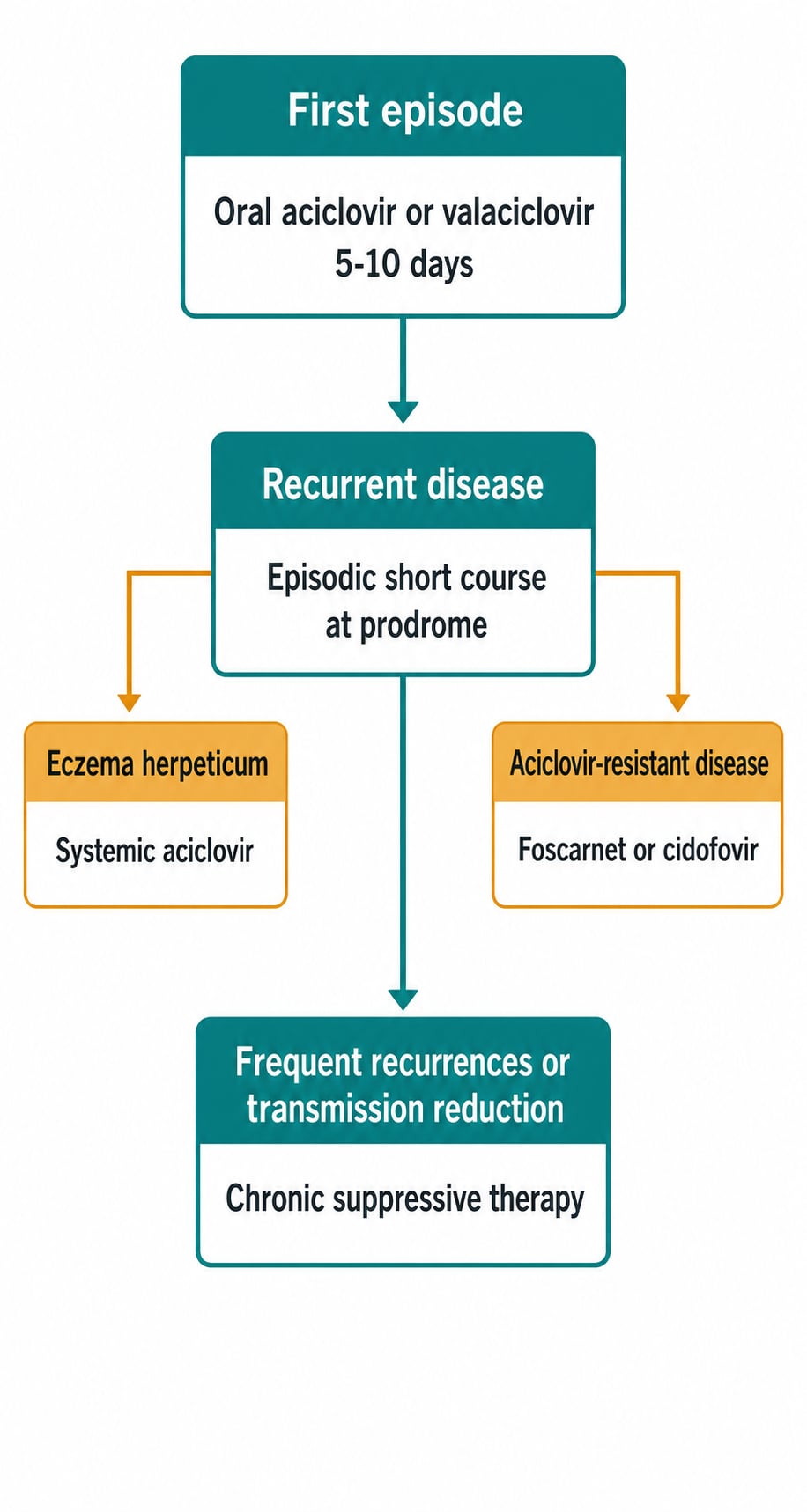
The treatment of HSV has three pillars — antiviral nucleoside analogues, supportive care and trigger management — applied differently to first episode, recurrent disease and chronic suppression. The three oral agents available are aciclovir, valaciclovir (valine ester of aciclovir, with 3- to 5-fold better oral bioavailability) and famciclovir (prodrug of penciclovir). All three are substrates of viral thymidine kinase, all three are activated to the triphosphate form and inhibit viral DNA polymerase. The haematological / renal toxicity of aciclovir at high dose (crystal nephropathy with rapid IV infusion, neurotoxicity in renal impairment) is mitigated by slow infusion, hydration and renal-adjusted dosing. In pregnancy, all three are safe and aciclovir has the longest record.[5][6][15][18]
First-episode oral antiviral regimens (immunocompetent)
Recurrent (episodic) oral antiviral regimens
Chronic suppressive oral antiviral regimens
Severe and special regimen (immunocompromised, disseminated, neonatal)
ABC of HSV suppression
AVOID
Aciclovir or valaciclovir daily reduces recurrence by 70-80% and halves HSV-2 transmission in discordant couples.
Valaciclovir is the preferred once-daily suppressive regimen (500 mg OD).
Offer suppression for >=6 episodes/year, severe recurrences, pregnancy from 36 weeks, immunocompromise or recurrent EM.
Initiate early in recurrent episodes: prodrome dosing is the most effective use of episodic therapy.
Do not exceed the licensed duration without specialist review; reassess need yearly.
What does 'acyclovir 5 mg/kg every 8 hours' actually mean — and why?
The dose is the plasma-free concentration that reproducibly inhibits >95% of viral replication for aciclovir-triphosphate inhibition of HSV DNA polymerase. Five mg/kg every 8 hours gives steady-state plasma peaks around 10 microg/mL, several-fold above the EC50 for clinical HSV isolates; doubling the dose to 10 mg/kg (CNS disease, immunocompromise, neonatal) raises peak levels for CNS penetration and for thymidine-kinase-deficient resistant mutants. The 8-hour interval matches aciclovir-triphosphate's intracellular half-life in infected cells, which is 1-2 hours longer than plasma half-life, allowing three-times-daily dosing to maintain effective intracellular concentrations.
First-episode mucocutaneous disease
The benefit of antiviral therapy is greatest when started within 72 hours of symptom onset, particularly in primary infection which is the most severe and prolonged. Recommended regimen: oral valaciclovir 500 mg twice daily for 5-10 days (or equivalent). Severe primary disease (inability to swallow, dehydration, immunocompromise) requires IV aciclovir 5-10 mg/kg every 8 hours until oral therapy can be tolerated. Children with primary gingivostomatitis benefit from oral aciclovir within 72 hours of symptom onset, although supportive care (analgesia, oral rehydration, topical lidocaine, soft diet) is the mainstay; a 2016 Cochrane review and 2023 systematic review confirm modest symptom reduction with oral aciclovir and supportive care, with IV aciclovir reserved for severe or immunocompromised cases.[18][24]
Recurrent mucocutaneous disease — episodic therapy
At the prodrome of tingling or burning, oral valaciclovir 500 mg BD for 3 days (or 2 g BD for 1 day in herpes labialis) accelerates healing by 1-2 days. Topical aciclovir is less effective than oral therapy. Penciclovir 1% cream every 2 hours while awake for 4 days is an alternative for herpes labialis.[5][6][18]
Recurrent disease — chronic suppressive therapy
Indicated for >=6 recurrences per year, severe recurrences, immunocompromised patients, frequent or severe erythema multiforme triggered by HSV, and pregnancy from 36 weeks in women with genital HSV. Regimen: valaciclovir 500 mg daily (or aciclovir 400 mg BD, famciclovir 250 mg BD). For very frequent genital recurrences (>=10/year) or immunocompromise, valaciclovir 500 mg BD or valaciclovir 1 g daily may be used. Suppressive therapy reduces clinical recurrence by 70-80% and subclinical shedding; the landmark Corey 2004 NEJM study showed daily valaciclovir 500 mg reduced HSV-2 transmission to discordant partners by 48% over 8 months, the basis for offering suppression to serodiscordant couples.[5][21]
Special situations
Eczema herpeticum. Oral aciclovir 400 mg five times daily for 7-10 days for localised or mild disease; IV aciclovir 5-10 mg/kg every 8 hours for widespread disease, fever, immunocompromise or signs of dissemination. Add empirical anti-staphylococcal therapy (flucloxacillin or equivalent) when secondary bacterial infection is suspected. Limit topical corticosteroids and calcineurin inhibitors during the acute flare.[7][8]
Aciclovir-resistant HSV. Almost exclusively in immunocompromised hosts; predominantly thymidine kinase (UL23) mutants that bypass aciclovir / valaciclovir / famciclovir and occasionally DNA polymerase (UL30) mutants. First-line: IV foscarnet 40 mg/kg every 8-12 hours, with hydration and renal monitoring (creatinine, electrolytes). Alternatives include cidofovir IV and topical cidofovir or imiquimod. Send confirmatory susceptibility testing.[15]
HSV in pregnancy. Primary genital HSV near delivery: caesarean section recommended before rupture of membranes, with IV aciclovir cover. Recurrent genital HSV with no active lesions: vaginal delivery is acceptable; weekly valaciclovir suppression from 36 weeks until delivery is recommended (ACOG Practice Bulletin 220 and RCOG) and reduces viral shedding, recurrence at delivery and the rate of caesarean delivery for HSV. Maternal disseminated HSV (hepatitis, pneumonitis, encephalitis) is rare but severe — IV aciclovir and ICU supportive care.[17][23]
Neonatal herpes. IV aciclovir 20 mg/kg every 8 hours for 21 days for disseminated or CNS disease and 14 days for SEM disease, followed by oral aciclovir suppression 300 mg/m^2 three times daily for 6 months in CNS or disseminated disease (improves neurodevelopmental outcome in the CASARCHE and follow-up studies). Treat concurrently for any bacterial sepsis until culture clears. Ophthalmology, audiology and neurodevelopmental follow-up are mandatory.[16]
HSV keratitis. Topical ganciclovir 0.15% gel five times daily or topical aciclovir 3% ointment five times daily, with ophthalmology review; add oral valaciclovir 500 mg BD for stromal or recurrent disease; consider topical steroid only under ophthalmology supervision with ongoing antiviral cover. Avoid all topical corticosteroid monotherapy.[22]
HSV encephalitis. IV aciclovir 10 mg/kg every 8 hours for 14-21 days, with CSF HSV PCR before and after to confirm response; continue empirical therapy if clinical suspicion remains despite one negative early PCR.[1]
Specific Subtypes & Scenarios
Primary herpetic gingivostomatitis is the prototypical childhood primary HSV-1. Children aged 6 months-5 years present with high fever, irritability, refusal to feed / drooling and tender submandibular adenopathy. Examination: oedematous erythematous bleeding gingivae, vesicles then round ulcers on the tongue, buccal mucosa, lips and vermilion. Supportive care — analgesia, soft diet, oral rehydration — is the mainstay; oral aciclovir within 72 hours reduces symptom duration by 1-3 days in immunocompetent hosts, and IV aciclovir is reserved for severe dehydration, inability to swallow or immunodeficiency. The differential is hand-foot-mouth disease, herpangina and Stevens-Johnson syndrome.[12][18][24]
Recurrent herpes labialis is the most common adult HSV presentation, occurring 2-3 times per year on average. Episodic aciclovir / valaciclovir at the prodrome is the standard; topical penciclovir 1% cream or aciclovir 5% cream are alternatives when oral therapy is not wanted. Suppressive valaciclovir 500 mg BD is reserved for >=4 episodes / year with severe or embarrassing recurrences; cold-sore prevention includes broad-spectrum lip balm (UV protection) and avoiding known triggers.[6]
Herpetic whitlow is a finger inoculation, classically in healthcare workers exposed to oral secretions (especially anaesthetists, dentists and respiratory therapists) and in children with oral HSV who suck their thumbs. Distinguishing from bacterial paronychia is essential: do not incise herpetic whitlow. Oral aciclovir 400 mg five times daily for 7 days shortens symptoms; empirical antibiotics are not indicated unless secondary bacterial infection develops. Recurrence rates are 20-30% over the next year, and suppressive therapy is reasonable in healthcare workers.[10][11][12]
Herpes gladiatorum is contact-sport HSV, characterised by grouped vesicles on the trunk or limbs in wrestlers and rugby players, with outbreaks on teams. Management includes covering or excluding affected athletes from contact until lesions crust, with oral antiviral therapy and rule-based return-to-play protocols (often no contact sport while vesicles / erosions present). Outbreaks have prompted NCAA and state-level screening protocols.[13][14]
Eczema herpeticum is a dermatological emergency. The clinical pearl is the monomorphic "punched-out" circular 2-4 mm erosions in someone with flared eczema — quite distinct from the polymorphic weeping plaques of bacterial superinfection. Widespread disease with fever mandates IV aciclovir 5-10 mg/kg every 8 hours, hospital admission for hydration and S. aureus cover. Mortality in the pre-antiviral era approached 10-50%; current outcomes are much better but bacterial sepsis and scarring remain. The atopic-dermatitis patients at highest risk have FLG loss-of-function mutations, reduced IFN-α / IFN-γ production and reduced plasmacytoid dendritic cell function.[7][8][9]
Primary genital herpes is the most severe genital HSV presentation, particularly with HSV-2: bilateral painful vesicles and shallow ulcers on the genitals, inguinal region and perineum, with fever, headache, myalgia, dysuria, possible urinary retention (sacral radiculomyelitis with sacral autonomic involvement) and possible aseptic meningitis. Hospital admission may be required for pain control, catheterisation, IV fluids and IV aciclovir in the most severe cases. Important differentials are syphilis, chancroid, LGV and Behçet disease.[3][4]
Recurrent genital herpes is shorter, milder and predominantly unilateral compared with the primary episode. Trigger identification (stress, menstruation, intercourse, friction, immune modulation) allows targeted episodic therapy. Suppressive valaciclovir 500 mg daily is recommended for >=6 recurrences / year, severe recurrences or when viral shedding reduction is desired (e.g., discordant couple, pregnancy).[4][5][21]
HSV keratitis (dendritic ulcer) is a sight-threatening ocular emergency. Patients present with unilateral pain, foreign body sensation, photophobia, redness and blurred vision. Fluorescein staining under cobalt blue light shows branching epithelial defects with characteristic terminal bulbs. Urgent ophthalmology is mandatory; topical ganciclovir 0.15% gel or aciclovir 3% ointment are first-line, with oral valaciclovir 500 mg BD as adjunct. Topical corticosteroids must not be used as monotherapy.[22]

Neonatal herpes is the most feared complication of maternal genital HSV. SEM disease is the mildest form (vesicles, conjunctivitis, keratitis), CNS disease has intermediate prognosis (encephalitis, seizures, long-term neurological deficit) and disseminated disease carries the worst prognosis (hepatitis, pneumonitis, DIC, shock). The Kimberlin classification guides both treatment duration and prognosis. Long-term oral suppression after IV therapy improves neurodevelopmental outcomes.[16]
HSV encephalitis is the commonest sporadic viral encephalitis in adults, caused by HSV-1 in 95%. Unexplained fever with altered consciousness, focal neurological signs or seizures justifies empirical IV aciclovir while CSF HSV PCR is pending; do not wait for MRI.[1]
Complications & Pitfalls
[1]Complications are dominated by dissemination and atypical spread. In the immunocompetent: secondary bacterial infection of lesions (especially in eczema herpeticum), scarring (especially in eczema herpeticum and ocular stromal disease), post-inflammatory hypopigmentation (more visible in patients with darker skin), chronic erythema multiforme, aseptic meningitis (HSV-2) and sacral radiculomyelitis with urinary retention, episodic autonomic dysfunction and rare Bell palsy association. In the immunocompromised: chronic ulcerating lesions, resistance, oesophagitis, hepatitis, pneumonitis, retinitis (especially in HIV), encephalitis and disseminated disease.[1][2][6][15]
The ocular complications are particularly high-stakes: recurrent keratitis with scarring, disciform (stromal) keratitis, corneal anaesthesia and secondary bacterial superinfection can produce permanent visual loss. HSV retinitis is rare, usually associated with HIV or transplant, and overlaps with CMV retinitis clinically.[22]
Neonatal complications are dominated by CNS morbidity: even with treatment, CNS disease produces long-term neurodevelopmental impairment in approximately 30% of survivors, particularly those with seizures at presentation or HSV detected in CSF at the end of induction therapy. Disseminated disease has the highest mortality (approximately 30% despite aciclovir) and the highest rate of severe neurological morbidity.[16]
Prognosis & Disposition
Prognosis depends on the syndrome. Primary orolabial, recurrent herpes labialis, primary and recurrent genital herpes are lifelong conditions with gradually decreasing severity of recurrences over years. The infection is rarely life-threatening in immunocompetent adults; severity escalates sharply in eczema herpeticum, neonatal herpes (disseminated and CNS forms), HSV encephalitis, aciclovir-resistant disease in immunocompromise and disseminated HSV in critical illness.[1][2][15][16]
Disposition: [1]
- Recurrent herpes labialis or recurrent genital herpes: managed in primary care with episodic or suppressive oral antivirals; refer to dermatology / GUM / sexual health if frequent, severe, treatment-resistant or with psychosocial burden.
- Primary disease: sexual health / GUM clinic for STI workup, contact tracing, counselling, suppressive therapy and HIV / syphilis testing; obstetric referral if pregnant; oral medicine referral for severe oral disease.
- Eczema herpeticum: emergency department and dermatology admission for IV aciclovir.
- Neonatal disease: NICU and paediatric infectious diseases; long-term neurodevelopmental follow-up.
- HSV keratitis: same-day ophthalmology.
- HSV encephalitis: emergency department with neurology / infectious diseases; ICU if obtunded or seizing.
- Aciclovir-resistant disease: infectious diseases with resistance testing. [1]
Safety-netting is part of the treatment, not an administrative afterthought. Tell the patient to return if lesions persist beyond 2-3 weeks, lesions recur more frequently than usual, lesions become widespread, there is severe pain or systemic illness, vision changes, neurological symptoms, genital symptoms in pregnancy or new vesicles or fever in a neonate. Provide written information if literacy is a concern. [1]
Special Populations
In Australia and New Zealand, primary genital HSV is managed through sexual health clinics (with contact tracing, partner notification and combined STI testing), and suppressive therapy is funded on the PBS for >=6 recurrences per year, severe recurrences or immunocompromise. Eczema herpeticum is admitted under dermatology or paediatrics at the major children's hospitals with IV aciclovir and staphylococcal cover. Antenatal clinics follow RCOG / RANZCOG guidance for weekly valaciclovir from 36 weeks in women with a recurrent history, with caesarean delivery for primary genital lesions at onset of labour. HSV encephalitis is admitted under neurology with infectious diseases support at the regional tertiary centre. Paediatric HSV care is centralised at the children's hospitals with strict follow-up.
Children. Primary herpetic gingivostomatitis is the most common primary infection, with fever, refusal to feed, gingival erythema and ulcers on the tongue, buccal mucosa and lips. Oral aciclovir or valaciclovir started within 72 hours reduces symptom duration in primary disease; IV aciclovir in immunocompromised or dehydrated children. Recurrent herpes labialis in children is managed like adults but the dose is weight-based (aciclovir 15 mg/kg/dose five times daily, max 1 g/dose). Children with eczema herpeticum represent the highest-risk paediatric population; the same IV aciclovir dose (15 mg/kg/dose TDS) with S. aureus cover and supportive care is the standard.[18][24]
Pregnancy and lactation. Maternal primary first-episode HSV is the dominant risk factor for neonatal HSV; caesarean delivery is recommended for primary genital lesions at onset of labour (or within 6 weeks before) and for any lesions at delivery with ruptured membranes. Suppressive valaciclovir 500 mg BD from 36 weeks reduces delivery-time shedding and reduces caesarean delivery for HSV; it is safe with extensive data in pregnancy. Breastfeeding is permitted with active lesions; cover the lesions and wash hands. Acyclovir is excreted in breast milk at low levels; it is the preferred antiviral and is compatible with breastfeeding.[17][23]
Elderly. New severe or frequent HSV disease in an older adult should prompt careful review for immunosuppression (haematological malignancy, chemotherapy, HIV) and for iatrogenic causes (corticosteroids, biologics, small-molecule immunosuppressants). Herpes labialis typically decreases in frequency with age, so a sudden increase is a yellow flag. Treat with the standard dose except when renal function is impaired (adjust dosing when eGFR is below ~25 mL/min).[6]
Immunocompromised. Bone-marrow and solid-organ transplant recipients, HIV-positive patients with CD4 counts below 200/µL, and patients on biologics (especially TNF inhibitors and JAK inhibitors) are at risk for severe, recurrent, treatment-resistant and atypical HSV. Higher-dose oral aciclovir 800 mg five times daily or IV aciclovir 10 mg/kg every 8 hours for severe disease. Empirical low-dose suppressive valaciclovir or aciclovir is often given to transplant recipients during the highest-risk window. Resistance is more common; send resistance testing early.[15]
Patients with atopic dermatitis / disrupted skin barrier. Counsel about the risk of eczema herpeticum; advise early recognition and early presentation; consider suppressive valaciclovir in patients with frequent severe eczema flares and a history of eczema herpeticum.[7][8]
Evidence, Guidelines & Regional Differences
Management of HSV is anchored by several authoritative guidelines with broadly consistent recommendations. The CDC 2021 STI Treatment Guidelines cover the antiviral regimens for first-episode and recurrent genital HSV, suppressive therapy in discordant couples, pregnancy suppression and management of neonatal exposure. ACOG Practice Bulletin 220 (replacing the 198 bulletin) covers obstetric management. RCOG, BASHH and the American Academy of Pediatrics Red Book cover neonatal and pregnancy management in the UK and US respectively. The IDSA, AASLD and AST guidelines cover HSV encephalitis, HSV hepatitis and post-transplant prophylaxis. The American Academy of Ophthalmology Preferred Practice Patterns address HSV keratitis.[5][23]
The landmark Corey et al. (NEJM 2004) study established that once-daily valaciclovir 500 mg reduced HSV-2 transmission to discordant partners by 48% over 8 months — the basis for offering suppression in serodiscordant couples. The Kimberlin neonatal dosing trials established the 20 mg/kg TDS dose for neonatal HSV and the 6-month oral suppression strategy following induction for CNS / disseminated disease. The Gadzgoog studies and Schreiber NF established valaciclovir and famciclovir as equivalent to aciclovir for episodic and suppressive therapy with simpler dosing.[16][21]
There is no licensed HSV vaccine despite many candidates. The most advanced was HSV-529, a replication-deficient DISC (Disabled Infectious Single Cycle) HSV-2 vaccine which completed Phase 1 with acceptable safety and immunogenicity but has not progressed to Phase 3 efficacy data. mRNA and gD subunit vaccines have entered trials. Until a vaccine is approved, preventive measures (condom use, disclosure, abstinence during prodrome / lesions, suppressive therapy) remain the principal tools for transmission reduction.[2][4]
Regional differences are mainly in funding, drug access and referral pathways rather than in the core management principles. UK valaciclovir daily is the standard suppressive dose; US dose 500 mg daily is the same. US aciclovir is approximately 5x more expensive per course than in the UK, which affects prescribing habits in resource-limited regions. In low- and middle-income settings, generic aciclovir is the workhorse antiviral with the longest safety record; valaciclovir and famciclovir are available but supply and cost are constraints. Where aciclovir resistance is suspected in immunocompromise, foscarnet and cidofovir are the rescue agents but both have significant renal toxicity; topical cidofovir 1% and imiquimod are options when systemic foscarnet is contraindicated.[5][15]
Prevention is multi-pronged: abstention from sexual contact during symptomatic prodrome and lesions, consistent and correct condom use (which reduces transmission by ~30% but does not eliminate because of skin-shedding outside the condom area), disclosure of HSV status to partners, suppressive therapy in discordant couples, and pregnancy suppression from 36 weeks. Vertical prevention includes avoiding scalp electrodes in shedding mothers, caesarean delivery for primary genital lesions at delivery and immediate empirical IV aciclovir in exposed neonates with any signs of disease. [1]
Exam Pearls
[1]HSV phenotypes by site — VEVE
VEVE
Vermilion (recurrent herpes labialis): most common adult HSV-1 recurrence, prodrome, tight vesicle cluster.
Eye (HSV keratitis): dendritic ulcer with terminal bulbs; topical aciclovir / ganciclovir and ophthalmology.
Vulva / penis (genital HSV): bilateral vesicles / ulcers; recurrences 4-6/yr for HSV-2; sexual health clinic follow-up.
Eczema (eczema herpeticum): monomorphic erosions in atopic skin; IV aciclovir; bacterial sepsis risk.
Viva trap: how do you distinguish HSV from aphthous ulcers in the mouth?
HSV has a vesicular phase before ulceration, favours keratinised mucosa (vermilion, hard palate, attached gingiva) and is recurrent at the same site. Aphthous ulcers are ulcers from the outset, favour non-keratinised movable mucosa (labial, buccal, ventral tongue, floor of mouth) and have no vesicular onset. When in doubt — especially in an immunocompromised patient — swab a fresh vesicle or ulcer edge for HSV PCR before committing to steroids.
Viva trap: when should you suspect aciclovir resistance?
Suspect in an immunocompromised host (HIV with low CD4 counts, transplant on immunosuppression, oncology on chemotherapy) with mucocutaneous HSV failing to respond after 7-14 days of appropriate-dose aciclovir or valaciclovir, with large chronic verrucous or ulcerative lesions, often in the anogenital region. Switch to IV foscarnet 40 mg/kg every 8-12 hours and send confirmatory susceptibility testing.
Red Flags
Exam application bank (NEET-PG / INICET)
One-line answer
Herpes simplex virus (HSV) causes lifelong mucocutaneous infection through HSV-1 (predominantly orolabial, increasingly genital) and HSV-2 (predominantly genital). After primary mucocutaneous infection the virus ascends sensory nerves and establishes lifelong latency in dorsal root, trigeminal or autonomic ganglia, with intermittent reactivation producing clinical recurrence or asymptomatic shedding. The MBBS / fellowship examiner expects mastery of the morphology (clustered vesicles on an erythematous base), the spectrum from primary gingivostomatitis to neonatal herpes and eczema herpeticum, the diagnostic ladder (PCR gold-standard, viral culture, Tzanck smear, type-specific serology), the first-episode versus recurrent versus suppressive antiviral strategies (aciclovir, valaciclovir, famciclovir, foscarnet, cidofovir), and the special considerations of pregnancy, neonatal HSV, immunoc
Worked stems (answer without another resource)
Stem 1 — Classic presentation. Map symptoms to mechanism; name the first investigation and first treatment step with dose/route if drug therapy is standard. [1]
Stem 2 — Unstable / complicated. List red flags that force immediate resuscitation, theatre, ICU, antidote, or reperfusion — and what you do in the first 15 minutes. [1]
Stem 3 — Atypical group. Elderly, pregnancy, child, or immunocompromised: how presentation and thresholds change. [1]
Stem 4 — Differential trap. Name the three closest mimics and one discriminator for each. [1]
Stem 5 — Disposition. Who goes home with safety-netting, who is admitted, who needs HDU/ICU/theatre, and what follow-up is mandatory. [1]
Rapid viva checklist
- Definition + classification
- Pathophysiology chain
- Bedside signs / criteria
- Score with exact components (if any)
- Emergency bundle
- Definitive therapy with doses
- Complications of disease and of treatment
- Special populations
- Guideline/trial name if classic
- Three exam traps
Coverage self-check
If you cannot answer any stem above from this page alone, re-read the matching section — the page is intended to be self-sufficient for final-prof and NEET-PG/INICET questions on Herpes simplex.
[1]One-page clinical workflow
Definition
HSV-1 and HSV-2 are enveloped double-stranded DNA alphaherpesviruses that produce lifelong mucocutaneous infection with latency in sensory ganglia; the morphology is the cluster of small vesicles on an erythematous base at any mucocutaneous site.
Classification
HSV-1 (predominantly orolabial, increasingly genital in young adults) vs HSV-2 (predominantly genital). Clinical syndromes by site: gingivostomatitis, recurrent herpes labialis, primary and recurrent genital HSV, herpetic whitlow, herpes gladiatorum, eczema herpeticum, HSV keratitis, neonatal HSV (SEM / CNS / disseminated), HSV encephalitis.
Key Investigations
HSV PCR from vesicle fluid (gold standard); CSF PCR for suspected encephalitis; plasma / surface / CSF PCR in neonates; corneal scraping in HSV keratitis; type-specific IgG serology for counselling; viral culture and Tzanck smear largely replaced by PCR; resistance testing for suspected aciclovir failure in immunocompromise.
Management
First episode: valaciclovir 500 mg BD for 5-10 days (or aciclovir 400 mg TDS / IV 5-10 mg/kg TDS for severe). Recurrent episodic: valaciclovir 500 mg BD for 3 days at prodrome (or valaciclovir 2 g BD for 1 day for herpes labialis). Suppressive: valaciclovir 500 mg daily for >=6/yr, severe, immunocompromise, pregnancy from 36 weeks or transmission reduction in discordant couples. Severe / neonatal / encephalitis: IV aciclovir 10-20 mg/kg TDS. Resistant disease: IV foscarnet.
Prognosis
Recurrent oral and genital herpes are lifelong with gradually decreasing recurrence rate; eczema herpeticum, neonatal HSV (CNS and disseminated), HSV encephalitis and aciclovir-resistant disease in immunocompromise carry the highest mortality and morbidity.
Key References
References
- [1]Zhu S, Viejo-Borbolla A. Pathogenesis and virulence of herpes simplex virus Virulence, 2021.PMID 34676800
- [2]Su D, Han L, Shi C, et al. An updated review of HSV-1 infection-associated diseases and treatment, vaccine development, and vector therapy application Virulence, 2024.PMID 39508503
- [3]Groves MJ. Genital Herpes: A Review Am Fam Physician, 2016.PMID 27281837
- [4]Van Wagoner N, Qushair F, Johnston C. Genital Herpes Infection: Progress and Problems Infect Dis Clin North Am, 2023.PMID 37105647
- [5]Workowski KA, Bachmann LH, Chan PA, et al. Sexually Transmitted Infections Treatment Guidelines, 2021 MMWR Recomm Rep, 2021.PMID 34292926
- [6]Cole S. Herpes Simplex Virus: Epidemiology, Diagnosis, and Treatment Nurs Clin North Am, 2020.PMID 32762854
- [7]Damour A, Garcia M, Seneschal J, et al. Eczema Herpeticum: Clinical and Pathophysiological Aspects Clin Rev Allergy Immunol, 2020.PMID 31836943
- [8]Wang V, Boguniewicz J, Boguniewicz M, et al. The infectious complications of atopic dermatitis Ann Allergy Asthma Immunol, 2021.PMID 32771354
- [9]Hodara E, Ong PY. The Genetics of Eczema Herpeticum Clin Rev Allergy Immunol, 2022.PMID 36114947
- [10]Wu IB, Schwartz RA. Herpetic whitlow Cutis, 2007.PMID 17674583
- [11]Betz D, Fane K. Herpetic Whitlow 2026.PMID 29494001
- [12]Amin N, Darcey J. Primary gingivostomatitis and herpetic whitlow Br Dent J, 2023.PMID 37059770
- [13]Mirfazaelian H, Daneshbod Y. Herpes gladiatorum Emerg Med J, 2013.PMID 23413153
- [14]Minichiello JM, Fleming ST, Olson K, et al. Herpes Gladiatorum in College-Aged Wrestler Ann Emerg Med, 2024.PMID 39428193
- [15]Schalkwijk HH, Snoeck R, Andrei G. Acyclovir resistance in herpes simplex viruses: Prevalence and therapeutic alternatives Biochem Pharmacol, 2022.PMID 36309081
- [16]Pinninti SG, Kimberlin DW. Neonatal herpes simplex virus infections Semin Perinatol, 2018.PMID 29544668
- [17]Hammad WAB, Konje JC. Herpes simplex virus infection in pregnancy - An update Eur J Obstet Gynecol Reprod Biol, 2021.PMID 33581405
- [18]Mancini A, Inchingolo AM, Marinelli G, et al. Topical and Systemic Therapeutic Approaches in the Treatment of Oral Herpes Simplex Virus Infection: A Systematic Review Int J Mol Sci, 2025.PMID 40943411
- [19]James C, Harfouche M, Welton NJ, et al. Herpes simplex virus: global infection prevalence and incidence estimates, 2016 Bull World Health Organ, 2020.PMID 32514197
- [20]Harfouche M, Alareeki A, James C, et al. Estimated global and regional incidence and prevalence of herpes simplex virus infections and genital ulcer disease in 2020: mathematical modelling analyses Sex Transm Infect, 2025.PMID 39658199
- [21]Corey L, Wald A, Patel R, et al. Once-daily valacyclovir to reduce the risk of transmission of genital herpes N Engl J Med, 2004.PMID 14702423
- [22]Ahmad B, Gende LS, Gentry ET, et al. Herpes Simplex Keratitis 2026.PMID 31424862
- [23]American College of Obstetricians and Gynecologists. Management of Genital Herpes in Pregnancy: ACOG Practice Bulletinacog Practice Bulletin, Number 220 Obstet Gynecol, 2020.PMID 32332414
- [24]Coppola N, Cantile T, Canfora F, et al. Supportive care and antiviral treatments in primary herpetic gingivostomatitis: a systematic review Clin Oral Investig, 2023.PMID 37733027