Dermatology · Medicine
Herpes zoster
Also known as Shingles · Zoster · Postherpetic neuralgia (PHN) · Herpes zoster ophthalmicus · Ramsay Hunt syndrome
Herpes zoster (shingles) results from reactivation of latent varicella-zoster virus (VZV) in a dorsal root or cranial-nerve ganglion, producing a painful, unilateral, dermatomal vesicular eruption. Fellowship-level assessment demands mastery of the dermatomal distribution and prodromal pain, the complications of postherpetic neuralgia (and its prevention), herpes zoster ophthalmicus with its sight-threatening keratitis, the Ramsay Hunt syndrome of the geniculate ganglion, disseminated zoster as a marker of immunocompromise, the role and timing of antiviral therapy (aciclovir, valaciclovir, famciclovir), adjunctive corticosteroids, the recombinant zoster vaccine for prevention, and zoster in pregnancy and immunocompromise.
On this page & tools
Your progress
Saved locally on this device.
Exam tags
Red flags
Overview & definition
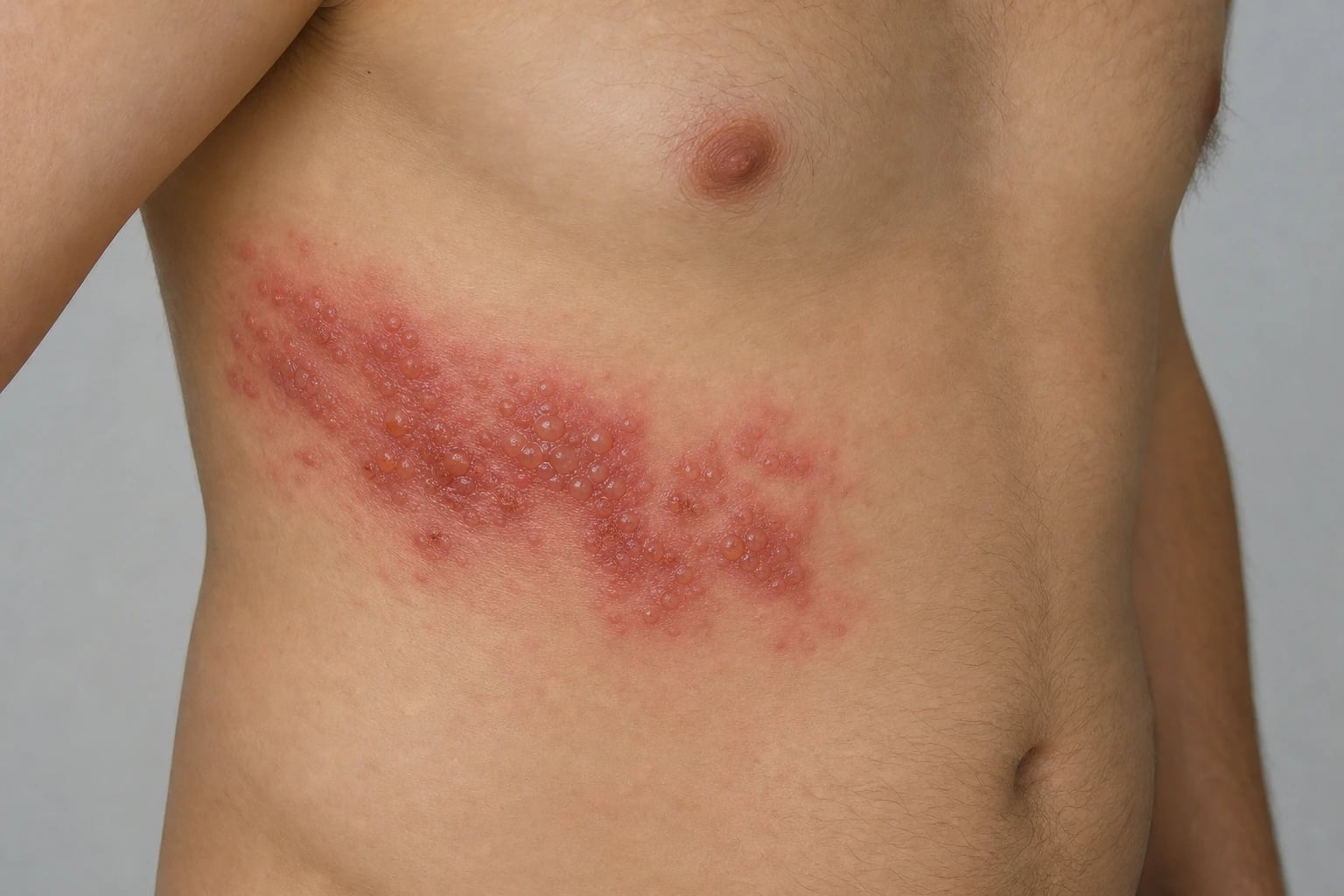
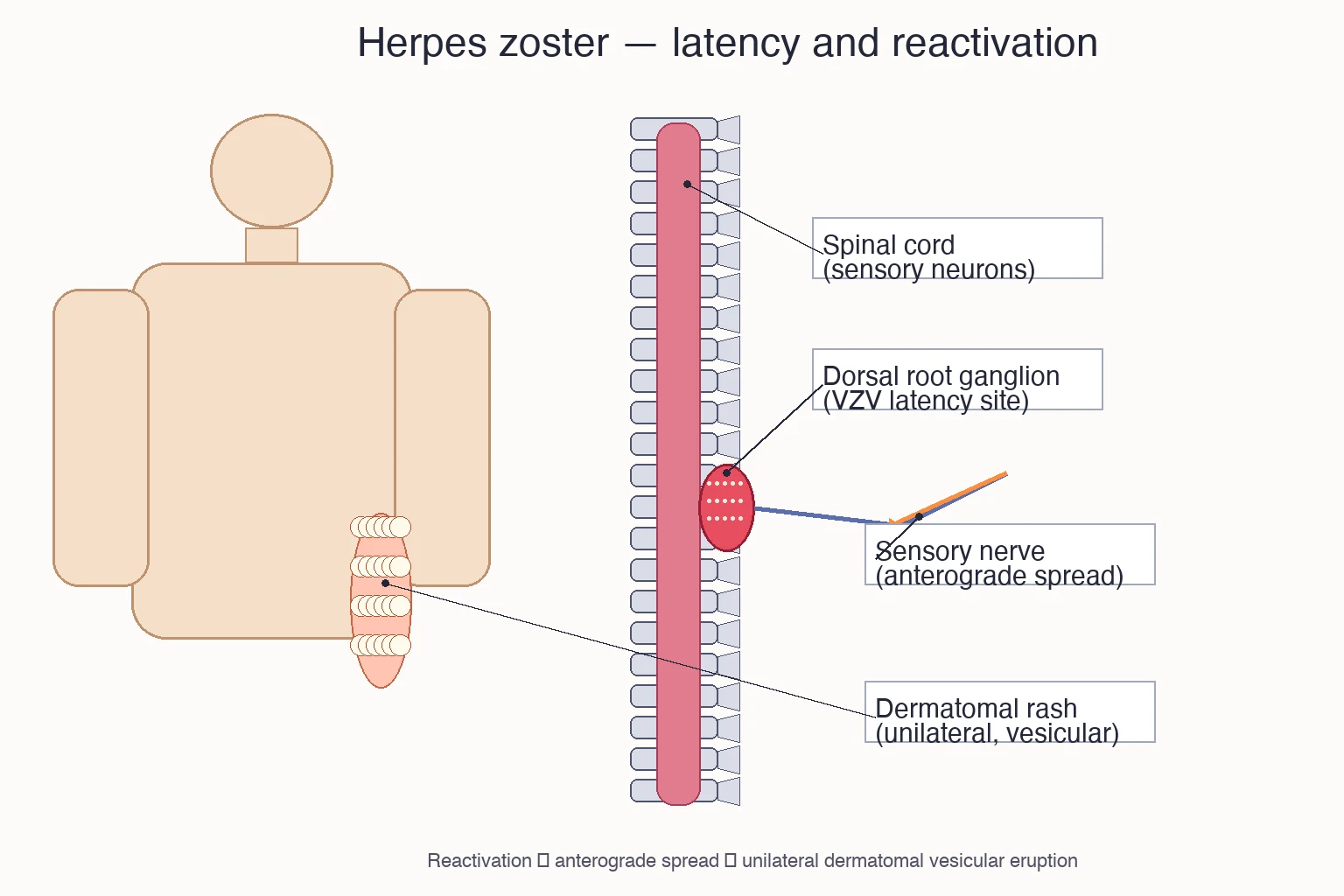
Herpes zoster (shingles) is the recurrent, dermatomal manifestation of varicella-zoster virus (VZV). Primary infection is varicella (chickenpox), after which VZV establishes lifelong latency in dorsal-root (spinal) sensory ganglia and in cranial-nerve ganglia (most importantly the trigeminal (V) ganglion and the geniculate ganglion of VII). Reactivation occurs with waning cell-mediated immunity — most commonly because of age >50, but also from immunosuppression (HIV, organ transplantation, chemotherapy, immunosuppressants and biologics), stress, trauma, radiotherapy, or preceding dental/surgical insult to the ganglion. Viral replication in the ganglion produces neuritis (the basis of prodromal pain), and anterograde viral spread down the sensory nerve produces the characteristic unilateral dermatomal vesicular eruption that stops at the midline. [1]
VZV is a double-stranded DNA alphaherpesvirus (Human alphaherpesvirus 3) that has a single serotype with no animal reservoir. Once infected, the host remains a lifelong carrier unless and until reactivation; the recombinant zoster vaccine can dramatically reduce that risk and the morbidity of any reactivation that does occur.[1][2][3]
The clinical spectrum of herpes zoster is broad: from a single thoracoabdominal dermatome in an older immunocompetent patient (most often) to disseminated dermal/visceral disease in the immunocompromised, ophthalmic (V1) zoster with sight-threatening keratitis, geniculate (VII) zoster causing Ramsay Hunt syndrome, and an uncommon but devastating spectrum of motor, meningeal, encephalitic, and vascular complications. The 50% lifetime risk (unvaccinated) plus the morbidity of post-herpetic neuralgia (PHN) in older adults makes prompt recognition and early antiviral therapy the centrepiece of management. [1]
High-yield numbers for the examiner
Pathophysiology
Virology and immunity
VZV is a double-stranded DNA virus of the Herpesviridae family. Primary infection (varicella) establishes viraemia with tropism for cutaneous epithelium; sensory ganglia (dorsal root, trigeminal, geniculate, vagal, glossopharyngeal) become latently infected by haematogenous spread and retrograde neuronal transport. Latent VZV is maintained by host cell-mediated immunity — primarily CD8⁺ and CD4⁺ T-cells — that supresses viral gene transcription and replication. As immunity wanes (age, immunosuppression), the suppression is lifted, latency breaks, and lytic viral replication in the ganglion produces: [1]
- Neuronal inflammation → prodromal pain and hyperaesthesia.
- Anterograde axonal transport of virions → vesicular rash in the corresponding dermatome.
- Secondary viraemia → scattered vesicles outside the primary dermatome. [1]
Risk stratification
Reactivation is most likely when cellular immunity declines. Highest-risk groups include adults >50, solid-organ and bone-marrow transplant recipients (peaking in the first year), HIV-positive patients (especially with low CD4 counts or no antiretroviral therapy), patients on anti-tumour necrosis factor therapy (etanercept, infliximab, adalimumab), JAK inhibitors, prolonged high-dose corticosteroids, chemotherapy, and patients with lymphoid malignancies. Mechanical triggers — dental extraction, ocular surgery, cranial irradiation, spinal surgery — can provoke VZV reactivation in the corresponding dermatome. [1]
Sensory ganglionitis
Prodromal pain reflects ganglionitis plus neuritis along the spinal or cranial sensory root. Some patients develop a post-herpetic flare weeks-months after the rash, and a smaller subgroup develop motor zoster with weakness in the affected myotome — from extension of inflammation into adjacent anterior-horn cells or motor roots. Zoster sine herpete (dermatomal pain without rash) is a rare, increasingly recognised entity confirmed by VZV PCR or rising IgM/IgG.[1][5]
Epidemiology & risk factors
- Lifetime risk in unvaccinated populations is approximately 30%, rising to ~50% by age 85.[2]
- About 70% of cases occur in adults >50.
- Risk factors: age >50 (single biggest risk factor); immunosuppression (HIV, malignancy especially haematological, transplant, chemotherapy, biologics, JAK inhibitors); localised trauma (including dental/surgical procedures) to the ganglion; emotional or physiological stress; total-body irradiation; malnutrition. Diabetics and patients with renal failure have a small increased risk.
- Recurrent zoster is uncommon in immunocompetent patients — recurrence should prompt HIV testing and consideration of underlying immunodeficiency or malignancy.[2][4]
- Subsequent recurrence in ~5% of patients; each recurrence progressively raises the probability of undetected immunosuppression, especially in patients under ~50.[15]
- The risk of PHN rises sharply with age. PHN is unusual below 40 but occurs in 20-30% of patients over 80, with associated pain often persisting >1 year.
Clinical presentation
Prodrome
Most patients experience 1-5 days (range 2-10) of pain, burning, tingling, itching or hyperaesthesia localised to the upcoming dermatome. The pain can mimic cardiac ischaemia (left T1-T4 dermatome), biliary colic (T6-T8), renal colic (T10-L1), appendicitis (T12-L1) or an acute abdomen (lumbo-abdominal zoster). Prodrome may be asymptomatic in young patients. [1]
Eruption
A rapid succession of lesions unfolds: [1]
- Day 0-1: erythematous macules and papules.
- Day 2-3: grouped vesicles on an erythematous base ("herpetiform"); the classic "drop-like" vesicles in a band-like distribution.
- Day 4-5: vesicles become pustular or turbid.
- Day 7-10: crusting.
- Weeks 2-4: crusts fall away, possibly leaving depigmented scarring or permanent dysaesthesia. [1]
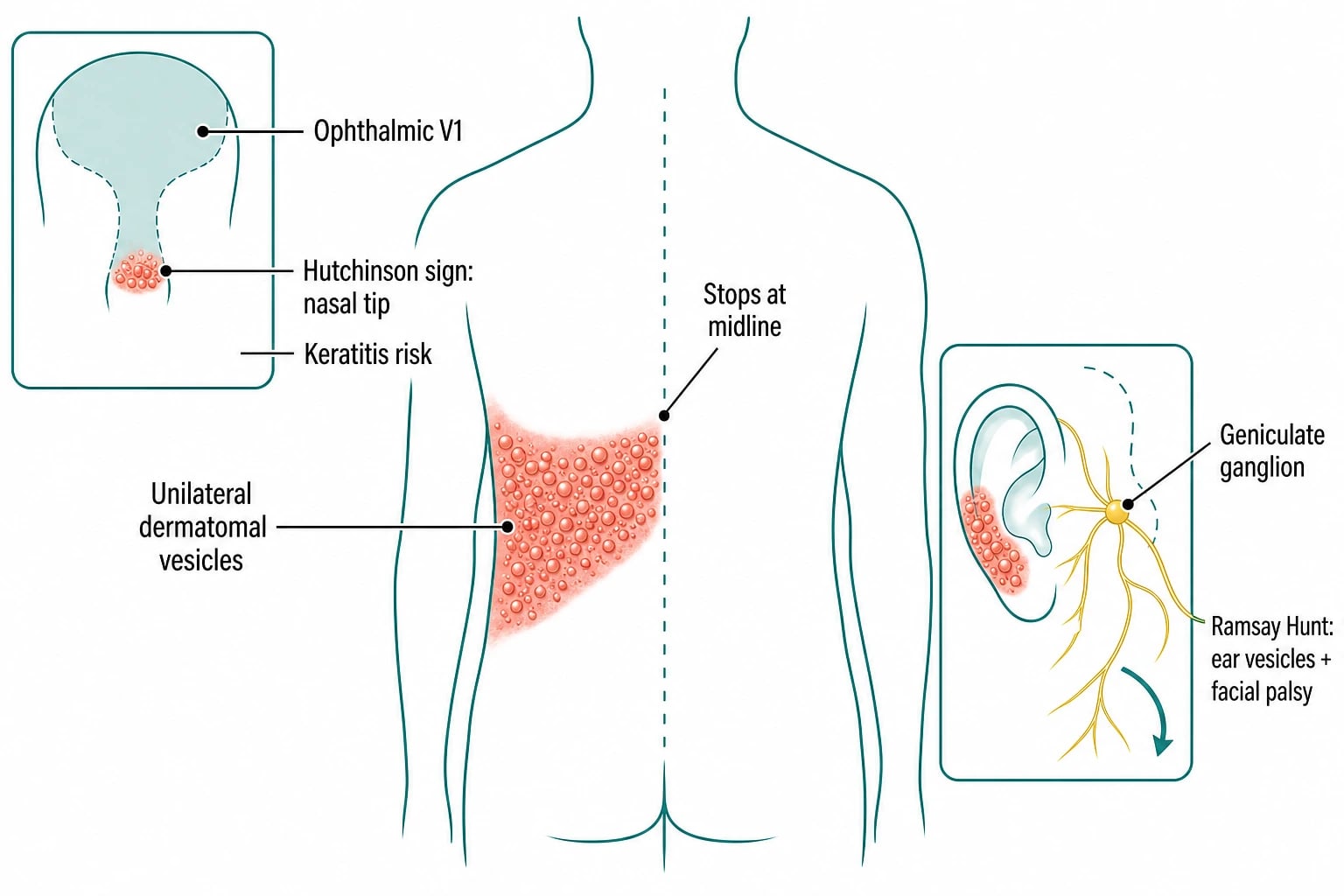
The hallmark is dermatomal, unilateral, not crossing the midline (because the dermatomes are defined by dorsal roots, and the midline has fibres from both sides). When vesicles cross the midline, the diagnosis is usually immunocompromise with disseminated zoster. [1]
Pain
Pain severity reflects the inflammatory burden in the ganglion and peripheral nerve. Most patients have significant acute pain that improves as the rash settles. Some develop severe persistent post-herpetic neuralgia.[6][9][10]
Atypical patterns
- Ophthalmic (V1) zoster: vesicles on forehead, upper eyelid, and/or nose (Hutchinson sign on the nasal tip is predictive of ocular involvement). Must be reviewed by ophthalmology for keratitis, uveitis, scleritis, sclerokeratitis, acute retinal necrosis, choroiditis, or optic neuritis.
- Maxillary (V2) and mandibular (V3) zoster: oral mucosal lesions (palate, buccal mucosa, tongue, gingiva).
- Geniculate (VII) zoster — Ramsay Hunt syndrome: see below.
- Vagal (X) zoster: ipsilateral vocal cord paralysis, dysphagia, dyspnoea.
- Cervical zoster: pharyngeal involvement, brachial neuritis.
- Lumbar/sacral zoster: lower abdominal/pelvic pain, leg weakness, urinary retention, and sometimes transverse myelitis (myelitis is rare and a red flag).
- Motor zoster: focal weakness in the affected myotome — most commonly facial palsy (geniculate), diaphragmatic paresis (C3-5), or limb paresis. [1]

Special syndromes
Herpes zoster ophthalmicus (HZO)
HZO is V1 trigeminal involvement. Incidence: 10-25% of trigeminal zoster. Hutchinson sign (lesions on the lateral nose, nasal tip, or ala) indicates nasociliary branch involvement and predicts **ocular involvement in >50%. Ocular features appear days to weeks after the rash and include keratitis (dendritic, geographic, or interstitial), anterior uveitis, scleritis, sclerokeratitis, optic neuritis, choroiditis, acute retinal necrosis (VZV-induced, often with rapid visual loss), and cranial nerve palsies. Without prompt antiviral treatment, ~50% develop chronic eye disease; even with treatment, ocular complications occur in ~30%. [1]
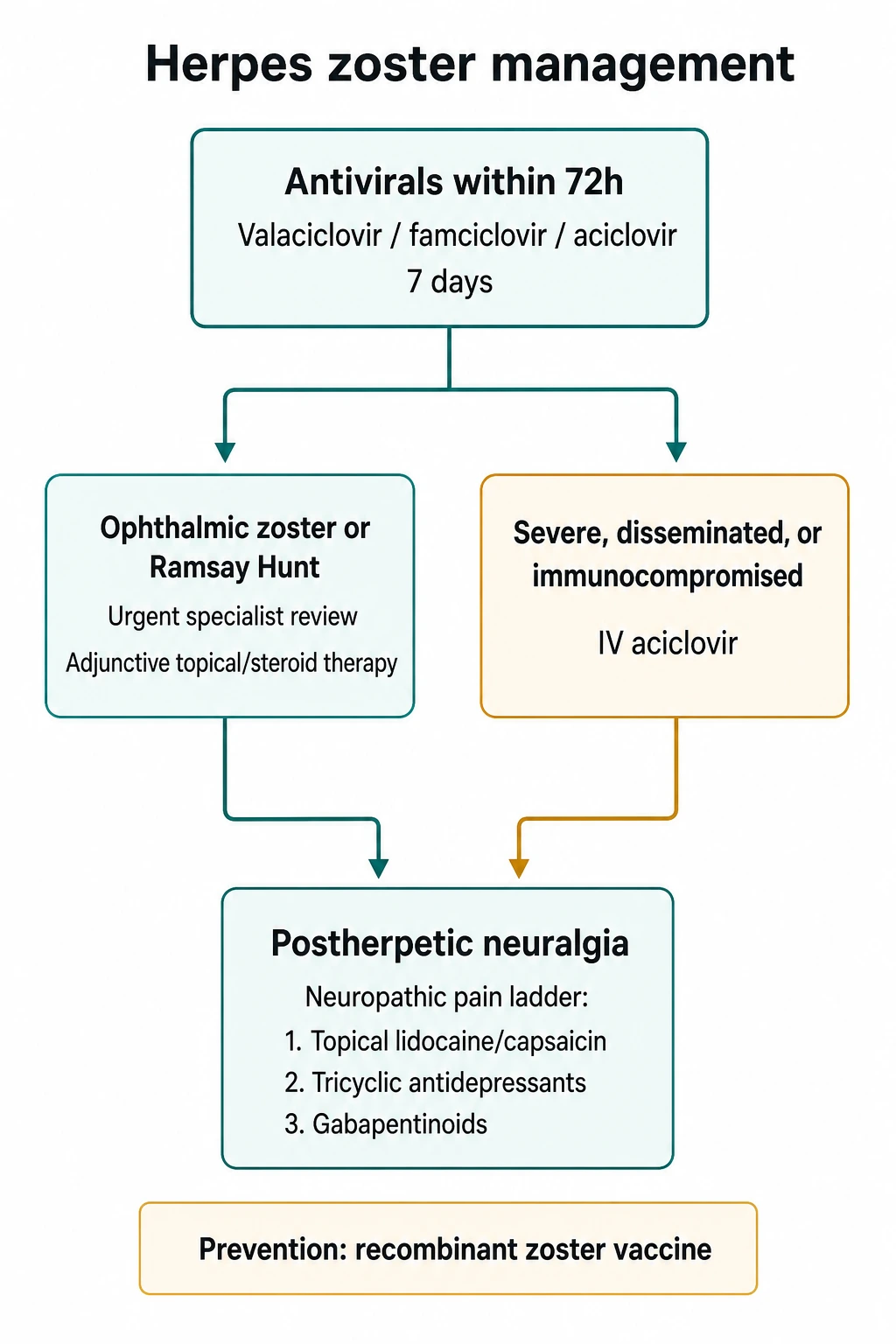
Management: oral valaciclovir 1 g TDS or famciclovir 500 mg TDS for 7-10 days, started within 72 hours of rash onset, plus urgent ophthalmology review with topical antivirals/corticosteroids for keratitis/uveitis. In severe ocular disease or immunocompromise, IV aciclovir 10 mg/kg every 8 hours is preferred.[7][8]
Ramsay Hunt syndrome
Ramsay Hunt syndrome is VZV reactivation in the geniculate ganglion of the facial (VII) nerve with extension through the vestibulocochlear nerve and chorda tympani. Features: acute ipsilateral peripheral facial palsy + ear pain + vesicles in the external auditory canal/pinna/tympanic membrane/oral cavity/anterior 2/3 tongue + hearing loss/tinnitus/vertigo + hyperacusis. Outcomes are worse than Bell palsy: ~30% develop permanent facial weakness without prompt therapy, dropping to under ~10% with antiviral + corticosteroid within 72 hours. [1]
Management: IV aciclovir 10 mg/kg every 8 hours for 7 days plus prednisolone 1 mg/kg/day for 7 days then taper. Continued 21-day corticosteroid has been reported to give best facial nerve outcomes. ENT input, eye protection (Bell's phenomenon), facial rehabilitation.[13][14]
Disseminated zoster
20 vesicles beyond the primary dermatome, or visceral involvement (pneumonitis, hepatitis, meningoencephalitis), almost always in immunocompromised patients — HIV with low CD4, transplant recipients, chemotherapy, high-dose corticosteroids. Viraemia disseminates virus to multiple skin sites and organs. Mortality without treatment is significant. IV aciclovir 10 mg/kg every 8 hours, dose-adjusted for renal function, for 7-10 days minimum, with continuing suppression (oral valaciclovir 1 g TDS or famciclovir) until full immune reconstitution.[12][15]
Motor zoster
Segmental paresis in the affected myotome. The most clinically important patterns are: [1]
- Diaphragmatic (C3-5): look for unexplained dyspnoea or ipsilateral hemidiaphragm elevation on chest radiograph.
- Limb: focal weakness related to the myotome.
- Urinary retention, constipation: sacral/lower lumbar motor involvement; rule out cauda equina syndrome with MRI. [1]
Zoster sine herpete
Pain in a dermatomal distribution without vesicles. Confirm with VZV PCR of the affected skin field, saliva, or CSF; paired sera showing IgM/IgG rise. Treated the same as classic zoster. [1]
Diagnosis
- Clinical diagnosis is sufficient in the immunocompetent patient with classic dermatomal vesicular eruption. No investigations needed.
- VZV PCR: gold standard for type-specific confirmation; vesicle fluid, saliva, tears, aqueous or vitreous humour, or CSF; sensitivity >95%.
- Direct fluorescent antibody (DFA) on cells from a vesicle base: rapid, distinguishes VZV from HSV; useful when PCR is not available.
- Tzanck smear: multinucleated giant cells confirm a herpesvirus infection but cannot distinguish VZV from HSV — discouraged.
- Culture: rarely used; slow and insensitive.
- CSF PCR: VZV meningitis, encephalitis, myelitis, vasculopathy with stroke.
- HIV testing in any patient under ~50 with zoster, recurrent zoster, or disseminated disease.
- Ocular review for V1 disease (slit-lamp, fluorescein staining, intraocular pressures, fundus).
- FBC, UEC, LFTs, chest radiograph if dissemination suspected. [1]
Differential diagnosis
- HSV — recurrent, often not strictly dermatomal, usually smaller lesions; PCR is definitive.
- Recurrent HSV can be dermatomal in some patients; PCR is required for confirmation.
- Contact dermatitis — eczematous, often linear, depending on contact pattern.
- Cellulitis or erysipelas (pre-vesicular phase) — diffuse erythema, fever, no vesicles yet.
- Pyoderma gangrenosum — begins as a pustule/ulcer; rapidly progressive, often in IBD/rheumatoid/inflammatory disease.
- Erythema multiforme — target lesions, mucosal involvement, frequently post-infectious (HSV, Mycoplasma).
- Eczema herpeticum — extensive, monomorphic punched-out ulcers; atopic dermatitis background.
- Orbital cellulitis (ophthalmic zoster) — proptosis, ophthalmoplegia.
- Pre-eruptive pain: cardiac ischaemia, biliary colic, renal colic, appendicitis, cholecystitis, pancreatic pain, spinal pathology. [1]
Management
Time-critical bundle
- Anti-VZV therapy within 72 hours of rash onset — for all patients.
- Continue past 72 hours for ophthalmic, Ramsay Hunt, disseminated, immunocompromised, or ongoing-vesicle presentations.
- Adequate analgesia — acute pain is severe; opioid sparing where possible.
- Eye care — ophthalmology for V1.
- Identify host immunosuppression — HIV testing in any patient under ~50 or with recurrent/disseminated disease.
- Vaccination — plan Shingrix for >50 immunocompetent or selected immunocompromised patients post-attack.
- Educate on PHN — early warning to start neuropathic agents if pain persists. [1]
Antiviral therapy
First-line oral agents (7 days, ideally within 72 hours of rash onset): [1]
- Valaciclovir 1 g TDS, OR
- Famciclovir 500 mg TDS, OR
- Aciclovir 800 mg five times daily (cheaper but inconvenient dosing). [1]
Indications to extend therapy beyond 7 days: immunocompromised, severe disease, ophthalmic, Ramsay Hunt, disseminated. [1]
IV aciclovir 10 mg/kg every 8 hours (renal-dosed): [1]
-
HZO with ocular complications or visual loss.
-
Ramsay Hunt syndrome.
-
Disseminated zoster (any immunocompromised patient).
-
VZV meningitis/encephalitis/myelitis — 14-21 days.
-
Pregnancy with severe disease (rare). [1]
right_items=Live attenuated Oka/Merck VZV at fourteen-times varicella doseSingle subcutaneous doseEfficacy 51% against zoster, 67% against PHNEfficacy wanes after five to eight yearsContraindicated in immunocompromised (HIV CD4 below 200, transplant, chemo, biologics)Now withdrawn in the US; rarely used elsewhereMay be offered if Shingrix unavailable and immunocompetentSequential Shingrix two months after Zostavax acceptable [1]
Ophthalmic zoster: topical + ophthalmology input; systemic corticosteroids only when vision is threatened. [1]
Ramsay Hunt syndrome: prednisolone 1 mg/kg/day for 7 days (then taper) added to IV aciclovir is the standard of care — improves facial nerve outcomes in trials. [1]
Immunocompetent adult with severe acute pain: a 21-day prednisolone taper may reduce acute pain and accelerate healing but does NOT prevent PHN; not routinely recommended.[6]
Pain management
- Acute pain: paracetamol ± tramadol ± oxycodone if severe; neuropathic agents if pain is lancinating, burning or allodynic — start at low dose, titrate.
- Post-herpetic neuralgia (PHN) (pain >90 days after rash):
- First-line: amitriptyline 25-50 mg nocte (TCAs), pregabalin 75 mg BD titrated to 300 mg BD, gabapentin 300 mg TDS titrated to 1200-1800 mg/day.
- Topical: lidocaine 5% patch over the painful area (12-18 hours/day), capsaicin 8% patch (single application can give 12 weeks of analgesia; require pre-treatment lidocaine to avoid heat sensation).
- Tramadol: moderate efficacy; opioid-sparing profile.
- Refractory: spinal cord stimulation, intrathecal methylprednisolone by pain team; botulinum toxin A injection in selected cases. [1]
Prevention
Recombinant zoster vaccine (RZV, Shingrix)
The single most consequential intervention for zoster. Recombinant VZV glycoprotein E + AS01B adjuvant, 2-dose series at 0 and 2 months (range 1-6 months). Two doses are required for full protection. [1]
- Efficacy: 97% in 50-59; 90% in 60-69; 89% in >=70 (ZOE-50/ZOE-70 trials). PHN protection parallels zoster protection. Protection persists at ~7-9 years and may need boosting at 10 years (data emerging).
- Safety in immunocompromised: safe in HIV (CD4>=200), post-bone marrow transplant, post-solid-organ transplant on low-dose immunosuppression, and patients receiving low-dose corticosteroids — although responses blunted. Licensed for adults >=18 at high risk of zoster in many countries.
- Storage: 2-8 °C, two vials (antigen + adjuvant). [1]

Live attenuated zoster vaccine (Zostavax)
A live attenuated single-dose vaccine previously recommended for immunocompetent adults over 60. Contraindicated in immunocompromised (HIV with low CD4, transplant, chemotherapy, biologics, high-dose steroids). The recurrence risk of zoster and PHN is half with Zostavax compared with unvaccinated — significantly less than Shingrix, which has largely superseded Zostavax in routine use. [1]
Complications & prognosis
- Subsequent recurrence in ~5% of patients; each recurrence progressively raises the probability of undetected immunosuppression, especially in patients under ~50.[15]
- Herpes zoster ophthalmicus with keratitis/uveitis — potentially blinding; correlates with Hutchinson sign.
- Ramsay Hunt syndrome — facial palsy outcomes worse than Bell palsy without prompt therapy.
- Motor zoster — segmental weakness, can include diaphragmatic paresis or limb paresis.
- Secondary bacterial superinfection with Staph aureus or Strep pyogenes — often heals with cosmetically unsatisfactory scars.
- CNS complications — VZV meningitis, encephalitis, transverse myelitis, vasculitis. Stroke is a recognised, though uncommon, complication after V1 zoster (VZV vasculitis of cerebral arteries).
- Disseminated visceral disease in immunocompromised — pneumonitis, hepatitis, encephalitis.
- Postherpetic scarring and depigmentation (especially in dark skin).
Prognosis in immunocompetent adults: most recover within 3-4 weeks. PHN persists in 10-20% >50 and decreases gradually over the next year. [1]
Special populations
- Pregnancy: primary VZV (varicella) carries fetal-embryopathy risk (limb hypoplasia, ocular, cicatricial skin lesions, neurodevelopmental delay) if contracted in the first 20 weeks. Maternal shingles does not carry fetal varicella-embryopathy risk, but a severe maternal shingles near delivery can transmit varicella to the newborn (maternal varicella >5 days before delivery gives neonatal varicella). Treat maternal severe zoster with IV aciclovir; VZIG for seronegative exposed pregnant women.
- Children: less common because of vaccination; usually milder; consider immunodeficiency in recurrent zoster in paediatrics.
- HIV-positive: any zoster in a person with HIV not on ART or with low CD4 should be treated with IV aciclovir for severe/disseminated disease, then suppressive oral antivirals until immune reconstitution (CD4 >200 sustained). Recurrent zoster is a marker for treatment failure or undiagnosed HIV.
- Transplant recipients: peaks in the first year; IV aciclovir for severe disease; consider prophylactic oral valaciclovir during maximal immunosuppression.
- Biologic therapy: lowest risk with low-dose methotrexate; highest with TNF inhibitors, JAK inhibitors, post-BMT. Where possible, screen VZV serology and vaccinate before starting biologics (Shingrix is non-live and safe).
- Elderly: highest risk of PHN, the strongest indication for Shingrix. [1]
Evidence, guidelines & regional differences
- ZOE-50 (NEJM 2016): Shingrix efficacy 97% in >=50; ZOE-70 (NEJM 2016): efficacy 89% in >=70.
- Whitley / AVTHS: corticosteroids may reduce acute pain and accelerate healing but do not reduce PHN.
- Cochrane 2023 review: antivirals modestly reduce PHN.
- UK NICE (2023): Shingrix recommended for immunocompetent 60-79 (catch-up).
- US CDC ACIP (2022): Shingrix preferred for immunocompetent adults >=50 and adults >=19 on low-degree immunosuppression; Zostavax no longer recommended in the US.
- Australian NIP / ATAGI: Shingrix free for adults >=65 (and 70-79 catch-up); immunocompromised adults >=18 access funded. [1]
High-yield zoster management ladder
High-yield microcard
[1] [1]Deep dive: HZO, Ramsay Hunt, PHN pharmacotherapy, antiviral pharmacology and VZV vaccines
Herpes zoster ophthalmicus (HZO) — clinical deep dive
Herpes zoster ophthalmicus is VZV reactivation within the ophthalmic (V1) division of the trigeminal ganglion. The ophthalmic division carries three sensory branches — frontal, lacrimal, and nasociliary — and the nasociliary branch supplies the eye itself (cornea, iris, ciliary body, sclera, tip and side of the nose, and root of the nose). The nasociliary territory overlaps with the external nose, which is why Hutchinson sign (vesicles on the tip, side, or root of the nose) is the bedside predictor of ocular involvement in more than half of cases (positive predictive value approaching 80% in series with active rash, and close to 100% specificity even in the absence of eye pain).[7][8]
Tip: Hutchinson sign predicts ocular disease but its absence does not exclude it — every patient with V1 zoster needs an urgent ophthalmology slit-lamp review, ideally within 24–72 hours of rash onset, and again at 1–2 weeks because delayed ocular inflammation (uveitis, scleritis) can emerge after the rash has crusted. The ocular spectrum spans (i) epithelial keratitis — fine dendrites or geographic ulcers stainable with fluorescein and Rose Bengal; (ii) stromal/interstitial keratitis with corneal haze, halos, and reduced visual acuity; (iii) disciform (endothelial) keratitis with focal stromal oedema and keratic precipitates; (iv) anterior uveitis with ciliary flush, cells and flare, and risk of synechiae and raised intraocular pressure; (v) scleritis and sclerokeratitis producing deep boring pain; (vi) acute retinal necrosis (ARN) with peripheral pale retinal lesions, vitritis, and rapid vision loss if untreated — VZV-induced ARN carries a 70% risk of retinal detachment and bilateral blindness; and (vii) optic neuritis, choroiditis, and cranial nerve III, IV, or VI palsies with diplopia.[9]
Treatment ladder for HZO: oral valaciclovir one g TDS or famciclovir five hundred mg TDS for 7–10 days, ideally started within 72 hours of rash onset; if presentation is beyond 72 hours but new vesicles are still appearing or ocular disease is evolving, treatment is still worthwhile. IV aciclovir ten mg/kg every eight hours (renal-dosed) is reserved for sight-threatening disease (ARN, optic neuritis, severe uveitis), immunocompromised patients, or those unable to absorb oral therapy. Ophthalmology co-prescribes topical aciclovir 3% ophthalmic ointment five times daily for epithelial keratitis, topical corticosteroids (prednisolone acetate one percent) with antiviral cover for stromal or disciform keratitis and uveitis, and cycloplegics for uveitis. Long-term ophthalmic follow-up is mandatory because recurrent inflammation, secondary glaucoma, corneal scarring, and postherpetic neuralgia of the V1 distribution can all emerge months later.[7][8]
Ramsay Hunt syndrome — clinical deep dive
Ramsay Hunt syndrome is VZV reactivation within the geniculate ganglion of the facial (VII) nerve, with viral spread through the nervus intermedius to chorda tympani (taste anterior two-thirds of the tongue) and through anastomoses with the vestibulocochlear (VIII) nerve, producing sensorineural hearing loss, tinnitus, vertigo, and hyperacusis. The clinical triad is ipsilateral peripheral facial palsy + ear pain + vesicles in the external auditory canal, on the pinna, on the tympanic membrane, or in the ipsilateral oral cavity and anterior two-thirds of the tongue. When the only finding is a peripheral facial palsy without vesicles, the clinical diagnosis is “Ramsay Hunt sine herpete” (similar in concept to zoster sine herpete) and should still trigger antiviral-plus-steroid treatment while awaiting VZV PCR of saliva or vesicular fluid. [1]
Severity is graded with the House-Brackmann scale (I normal; VI complete paralysis) — facial-nerve outcomes correlate inversely with severity at presentation and with delay to combined antiviral-corticosteroid therapy. Without treatment, complete recovery (House-Brackmann I/II) occurs in roughly thirty percent at six months; with prompt combination therapy within seventy-two hours, complete recovery rises to seventy to eighty percent. Sequelae include synkinesis (involuntary facial movement during voluntary facial movement — e.g. blinking triggers a twitch at the corner of the mouth), hemifacial spasm, persistent lacrimation while eating (“crocodile tears” from misdirected parasympathetic regrowth), and permanent taste loss.[13][14]
Treatment: start IV aciclovir ten mg/kg every eight hours for 7 days and prednisolone one mg/kg/day for 7 days then taper; a 21-day steroid course has the best published facial-nerve outcomes in observational series. Adjuncts: eye protection (artificial tears day, lubricating ointment at night, taping at bedtime) for the inevitable lagophthalmos with Bell’s phenomenon, facial-rehabilitation physiotherapy with mime therapy from week two, ENT input for audiometry and vestibular assessment, and consideration of antivirals beyond seven days in immunocompromised patients or those with delayed presentation. Surgical facial-nerve decompression is reserved for severe, electrophysiologically-confirmed nerve injury not improving on medical therapy. [1]
Post-herpetic neuralgia (PHN) — definition, risk and pharmacologic ladder
Post-herpetic neuralgia is defined as dermatomal pain persisting beyond ninety days from rash onset (some definitions extend to pain beyond three months from rash healing). Mechanism combines peripheral nerve damage (sensory-axon loss with deafferentation, sodium-channel accumulation driving ectopic firing), spinal dorsal-horn sensitisation (wind-up, microglial activation), and descending modulatory failure. The cardinal features are burning pain, lancinating/shock-like pain, allodynia (pain from non-painful stimuli — light touch of clothing, breeze, or even a sheet), and hyperalgesia. Risk rises sharply with age (greater than thirty percent in those eighty or older), severe acute pain, severe rash, ophthalmic distribution, and immunocompromise. The combination of prompt antiviral therapy, vaccination, and aggressive acute pain control all reduce — but do not abolish — PHN risk.[6][9][10]
First-line oral agents (the FDA- and EMA-approved therapies for PHN). Both gabapentin and pregabalin are α2δ-subunit calcium-channel ligands, modulating neurotransmitter release from hyperexcitable neurones. [1]
- Gabapentin — start three hundred mg nocte; titrate by three hundred mg every 2–5 days to a target of three hundred to six hundred mg three times daily (total nine hundred to eighteen hundred mg/day, maximum thirty-six hundred mg/day in divided doses). Renal-dose (creatinine clearance fifteen to twenty-nine mL/min: three hundred to six hundred mg/day). Main adverse effects: sedation, ataxia, peripheral oedema, weight gain; not hepatically metabolised.
- Pregabalin — start seventy-five mg twice daily; titrate over one week to one hundred fifty mg twice daily; up-titrate to three hundred mg twice daily if tolerated (total one hundred fifty to six hundred mg/day). Renal-dose. Similar adverse-effect profile; faster titration, more rapid analgesia, fixed BID dosing. Both agents carry a black-box warning for suicidality and a well-documented risk of misuse. [1]
Tricyclic antidepressants (TCAs) such as nortriptyline and amitriptyline are effective but anticholinergic burden limits use in older adults (start ten to twenty-five mg nocte; titrate by ten to twenty-five mg weekly to fifty to one hundred fifty mg/day; obtain a baseline ECG in patients greater than forty or with cardiac risk because of QT prolongation and arrhythmia risk). [1]
Topical agents are attractive in older patients because of negligible systemic exposure. [1]
- Lidocaine five percent medicated patch — apply to intact skin over the painful area for up to twelve hours within any twenty-four-hour period; useful for focal, well-localised PHN; minimal systemic absorption, low adverse-effect profile. Do not apply to broken skin, near mucous membranes, or over the eye.
- Capsaicin eight percent patch (Qutenza) — a high-concentration, in-clinic, single-sixty-minute application performed by trained personnel under local cooling and pre-treatment lidocaine; provides twelve weeks of analgesia from a single application; transient local burning is common during application but post-procedural pain is mild. Reserved for refractory, well-localised PHN.
- Capsaicin zero point zero seven five percent cream (lower strength) is available over the counter for daily self-application, useful as adjunct or when high-strength patch is unavailable. [1]
Refractory PHN: combination therapy (gabapentinoid + TCA, or gabapentinoid + topical lidocaine), tramadol or oxycodone as short-term rescue, and interventional options — intercostal nerve blocks, epidural injection, sympathetic blockade, spinal-cord stimulation, or peripheral-nerve stimulation — for the small subset with persistent severe pain. Tricyclic antidepressants, gabapentinoids, and topical lidocaine are NICE/NGC first-line for PHN; capsaicin eight percent patch is recommended as a third-line option where formulary permits. [1]
Antiviral pharmacology and dosing table
All three agents are guanosine analogues that inhibit viral DNA polymerase after phosphorylation by viral thymidine kinase; famciclovir and valaciclovir have oral bioavailability three to five times that of aciclovir and require less frequent dosing. [1]
- Aciclovir — eight hundred mg orally five times daily for seven days (equivalent to four hundred mg five times daily for recurrent HSV in the immunocompetent — note the VZV dose is double). Renal-dose (creatinine clearance ten to twenty-five mL/min: eight hundred mg every eight hours; below ten: eight hundred mg every twelve hours). IV: ten mg/kg every eight hours for severe, ophthalmic, Ramsay Hunt, disseminated, or immunocompromised disease; for HSV encephalitis use fifteen mg/kg every eight hours.
- Valaciclovir (L-valyl ester of aciclovir) — one g TDS for seven days for acute herpes zoster; renal-dose (clearance thirty to forty-nine: one g BD; ten to twenty-nine: one g OD; below ten: five hundred mg OD). For recurrent genital HSV: five hundred mg BD; for suppression in immunocompromised: five hundred mg BD.
- Famciclovir (diacetyl ester of penciclovir) — five hundred mg TDS for seven days; renal-dose (clearance forty to fifty-nine: five hundred mg BD; twenty to thirty-nine: five hundred mg OD; below twenty: two fifty mg OD). [1]
Initiation within seventy-two hours of rash onset accelerates lesion healing, reduces viral shedding, reduces acute pain severity, and modestly reduces PHN incidence (NNT roughly eight to thirteen); benefit beyond seventy-two hours exists for ongoing lesions, immunocompromised patients, special syndromes (HZO, Ramsay Hunt, disseminated), and ocular involvement. Combination of oral antiviral with adjunctive corticosteroids is not recommended for the routine immunocompetent patient because it does not prevent PHN; it is reserved for Ramsay Hunt syndrome and select cases of severe acute pain.[2][5][6]
PHN pharmacotherapy at a glance
VZV vaccines — Shingrix versus Zostavax compared
Recombinant zoster vaccine (RZV, Shingrix, GSK) is a recombinant VZV glycoprotein E antigen combined with the AS01B adjuvant (monophosphoryl lipid A plus QS-21 saponin in a liposomal formulation). Two intramuscular doses in the deltoid at month zero and month two (range one to six months if the second dose is missed). The pivotal ZOE-50 and ZOE-70 trials showed 97% efficacy against zoster at age fifty to fifty-nine, 90% at sixty to sixty-nine, 89% at seventy and above; PHN efficacy parallels zoster efficacy; protection against PHN persists even when a breakthrough case occurs. Modelling suggests durable immunity to seven to nine years with possible boosting at year ten. The main adverse effects are injection-site reactions (pain, redness, swelling in roughly eighty percent), myalgia, fatigue, and low-grade fever; serious events are rare. Shingrix is the preferred vaccine in all current guidelines. [1]
Live attenuated zoster vaccine (Zostavax, Merck, now largely withdrawn from US market) used the Oka/Merck VZV strain at fourteen times the varicella-vaccine dose, given as a single subcutaneous dose, previously recommended for immunocompetent sixty-plus. Efficacy in the Shingles Prevention Study was fifty-one percent against zoster, sixty-seven percent against PHN, but efficacy waned substantially after five to eight years. Because it is a live vaccine, Zostavax is contraindicated in immunocompromised patients (HIV with CD4 below two hundred, transplant recipients, chemotherapy, biologics, high-dose corticosteroids). Where Shingrix is unavailable, Zostavax remains an option for immunocompetent adults.[11][18]
Practical vaccination guidance: offer Shingrix to all immunocompetent adults fifty and above, regardless of prior zoster or prior Zostavax (give at least two months after Zostavax); safe and recommended in selected immunocompromised adults eighteen and above (per ACIP 2022) on low-level immunosuppression; screen serostatus is not required because nearly all adults above fifty in VZV-endemic regions are seropositive. Common exam pearls: you can give Shingrix with other adult vaccines (influenza, pneumococcal, Tdap, COVID-19) at separate sites; syncope risk means vaccinating patients seated; the second dose is mandatory for full protection — single-dose efficacy is markedly lower and not licensed. The emerging benefit of an additional non-infectious signal is reduction in dementia risk (observational data — Tang 2025), though this is not yet an indication for vaccination.[11][18]
[1]Antimicrobial stewardship and shared decision-making
Educate patients that the vaccine does not treat active zoster (it is prophylactic, not therapeutic — start antivirals; do not delay antiviral treatment to “prime” the immune response). Reinforce non-pharmacologic measures during acute zoster: cool compresses, loose cotton clothing, rest, paracetamol for fever, calamine lotion for itch, meticulous hand hygiene to prevent auto-inocution and VZV transmission to seronegative contacts (especially pregnant women and immunocompromised), and avoidance of contact with pregnant women and immunocompromised individuals until all lesions have crusted. Discuss transmission: VZV in skin lesions can cause primary varicella in seronegative contacts; PHN itself is not transmissible. [1]
Exam pearls
Exam application bank (NEET-PG / INICET)
One-line answer
Herpes zoster (shingles) results from reactivation of latent varicella-zoster virus (VZV) in a dorsal root or cranial-nerve ganglion, producing a painful, unilateral, dermatomal vesicular eruption. Fellowship-level assessment demands mastery of the dermatomal distribution and prodromal pain, the complications of postherpetic neuralgia (and its prevention), herpes zoster ophthalmicus with its sight-threatening keratitis, the Ramsay Hunt syndrome of the geniculate ganglion, disseminated zoster as a marker of immunocompromise, the role and timing of antiviral therapy (aciclovir, valaciclovir, famciclovir), adjunctive corticosteroids, the recombinant zoster vaccine for prevention, and zoster in pregnancy and immunocompromise.
Worked stems (answer without another resource)
Stem 1 — Classic presentation. Map symptoms to mechanism; name the first investigation and first treatment step with dose/route if drug therapy is standard. [1]
Stem 2 — Unstable / complicated. List red flags that force immediate resuscitation, theatre, ICU, antidote, or reperfusion — and what you do in the first 15 minutes. [1]
Stem 3 — Atypical group. Elderly, pregnancy, child, or immunocompromised: how presentation and thresholds change. [1]
Stem 4 — Differential trap. Name the three closest mimics and one discriminator for each. [1]
Stem 5 — Disposition. Who goes home with safety-netting, who is admitted, who needs HDU/ICU/theatre, and what follow-up is mandatory. [1]
Rapid viva checklist
- Definition + classification
- Pathophysiology chain
- Bedside signs / criteria
- Score with exact components (if any)
- Emergency bundle
- Definitive therapy with doses
- Complications of disease and of treatment
- Special populations
- Guideline/trial name if classic
- Three exam traps
Coverage self-check
If you cannot answer any stem above from this page alone, re-read the matching section — the page is intended to be self-sufficient for final-prof and NEET-PG/INICET questions on Herpes zoster.
References
- [1]Gershon AA, Breuer J, Cohen JI, et al. Varicella zoster virus infection Nat Rev Dis Primers, 2015.PMID 27188665
- [2]Schmader K. Herpes Zoster Ann Intern Med, 2018.PMID 30083718
- [3]Kennedy PGE, Gershon AA. Clinical Features of Varicella-Zoster Virus Infection Viruses, 2018.PMID 30400213
- [4]Patil A, Goldust M, Wollina U. Herpes zoster: A Review of Clinical Manifestations and Management Viruses, 2022.PMID 35215786
- [5]Lim DZJ, Tey HL, Salada BMA, et al. Herpes Zoster and Post-Herpetic Neuralgia-Diagnosis, Treatment, and Vaccination Strategies Pathogens, 2024.PMID 39057822
- [6]Saguil A, Kane S, Mercado M, et al. Herpes Zoster and Postherpetic Neuralgia: Prevention and Management Am Fam Physician, 2017.PMID 29431387
- [7]Kovacevic J, Samia AM, Shah A, et al. Herpes zoster ophthalmicus Clin Dermatol, 2024.PMID 38281688
- [8]Litt J, Cunningham AL, Arnalich-Montiel F, et al. Herpes Zoster Ophthalmicus: Presentation, Complications, Treatment, and Prevention Infect Dis Ther, 2024.PMID 38834857
- [9]Niemeyer CS, Harlander-Locke M, Bubak AN, et al. Trigeminal Postherpetic Neuralgia: From Pathophysiology to Treatment Curr Pain Headache Rep, 2024.PMID 38261232
- [10]Erskine N, Tran H, Levin L, et al. A systematic review and meta-analysis on herpes zoster and the risk of cardiac and cerebrovascular events PLoS One, 2017.PMID 28749981
- [11]Lal H, Cunningham AL, Godeaux O, et al. Efficacy of an adjuvanted herpes zoster subunit vaccine in older adults N Engl J Med, 2015.PMID 25916341
- [12]Shum D, Arenas CG. Disseminated herpes zoster J Am Osteopath Assoc, 2015.PMID 25722364
- [13]Crouch AE, Hohman MH, Moody MP, et al. Ramsay Hunt Syndrome 2026.PMID 32491341
- [14]Jeon Y, Lee H. Ramsay Hunt syndrome J Dent Anesth Pain Med, 2018.PMID 30637343
- [15]Tayyar R, Ho D. Herpes Simplex Virus and Varicella Zoster Virus Infections in Cancer Patients Viruses, 2023.PMID 36851652
- [16]Hayward K, Cline A, Stephens A, et al. Management of herpes zoster (shingles) during pregnancy J Obstet Gynaecol, 2018.PMID 29565203
- [17]Arvin AM. Varicella-zoster virus Clin Microbiol Rev, 1996.PMID 8809466
- [18]Tang E, Ray I, Arnold BF, et al. Recombinant zoster vaccine and the risk of dementia Vaccine, 2025.PMID 39733478