Dermatology · Dermatology
Hirsutism and hypertrichosis
Also known as Hirsutism · Hypertrichosis · Excess hair growth · Ferriman-Gallwey score · Modified Ferriman-Gallwey score
Hirsutism is androgen-dependent terminal hair growth in a woman in a male-pattern distribution; hypertrichosis is androgen-independent excess hair at any site. The examination focus is distinguishing PCOS and idiopathic hirsutism from non-classic CAH, Cushing syndrome, androgen-secreting ovarian or adrenal tumours, drug-induced hypertrichosis, porphyria and paraneoplastic lanugo hair.
On this page & tools
Your progress
Saved locally on this device.
Exam tags
Red flags
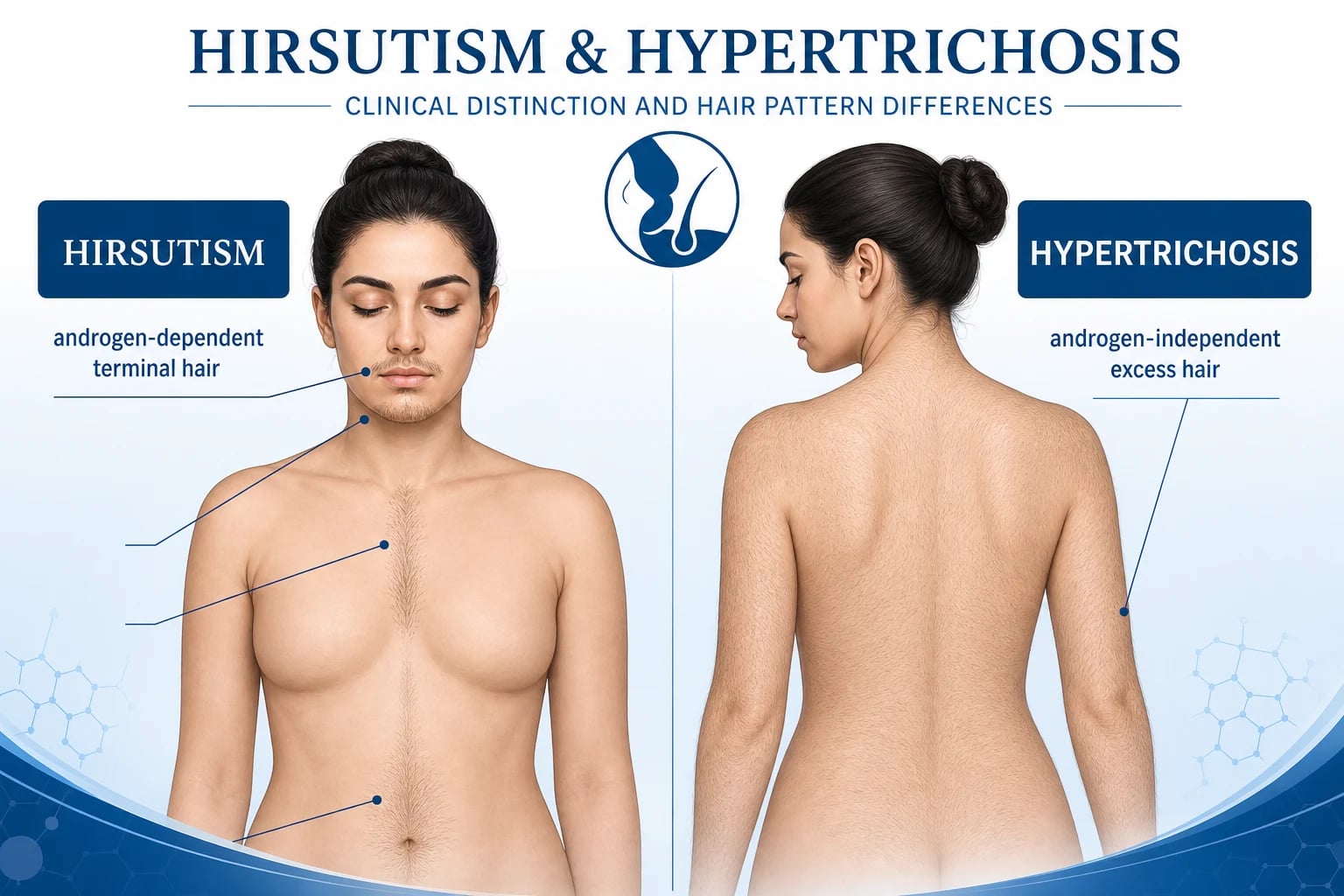
Overview & Definition
Hirsutism is not simply "too much hair". It is excess terminal hair growth in women in sites where hair follicles are androgen-sensitive: upper lip, chin, chest, upper and lower abdomen, back, upper arms and thighs. The hair is coarse, pigmented and terminal, and the distribution resembles the male pattern. It may reflect true androgen excess or increased follicular sensitivity to normal androgen concentrations. That distinction matters: a woman with normal testosterone and regular cycles can still have distressing hirsutism because skin 5-alpha-reductase activity and androgen receptor sensitivity vary between follicles and families.[1][2]
Hypertrichosis is a broader descriptive term: hair is excessive for age, sex and ethnicity, but not confined to androgen-dependent male-pattern sites. It may be generalized or localized, congenital or acquired, lanugo, vellus or terminal. Hypertrichosis often points away from endocrinology and toward drugs such as minoxidil, ciclosporin, phenytoin and systemic corticosteroids; porphyria cutanea tarda with facial hypertrichosis and photosensitive fragility; severe malnutrition with lanugo hair; or rare congenital syndromes. Antiandrogens usually do not help because androgen signalling is not the driver.[7][10]
The practical danger is missing the minority with rapid androgen excess. Most hirsutism is chronic, mild-to-moderate and due to PCOS or idiopathic hirsutism. A rapidly progressive presentation, especially with virilisation, is different: it may be an ovarian Sertoli-Leydig tumour, ovarian steroid-cell tumour, adrenal adenoma or adrenal carcinoma. The student who can define the terms but fails to ask about voice deepening and clitoromegaly has missed the life-changing diagnosis.[1][8]
Classification
Classify excess hair along three axes: pattern, hair type and tempo. Pattern separates hirsutism from hypertrichosis. Hair type separates terminal androgen hair from fine lanugo or vellus hair. Tempo separates chronic constitutional or PCOS-related disease from tumour, drug effect or paraneoplastic disease.[1][7]
Hirsutism
Androgen-dependent terminal hair
- Female patient with coarse terminal hair in male-pattern sites
- Upper lip, chin, chest, abdomen, back, upper arms and thighs
- Usually PCOS or idiopathic; rarely CAH, Cushing syndrome or tumour
- Measure severity with modified Ferriman-Gallwey score
Hypertrichosis
Androgen-independent excess hair
- Excess hair anywhere, generalized or localized
- May be lanugo, vellus or terminal hair
- Think drugs, congenital syndromes, porphyria, malnutrition, paraneoplastic acquired lanugo
- Ferriman-Gallwey score is not the right tool
Virilisation
Androgen effect beyond hair
- Deep voice, clitoromegaly, temporal balding, increased muscle mass
- Rapid progression over months
- Marked testosterone or DHEAS elevation
- Urgent endocrine and imaging pathway
The modified Ferriman-Gallwey score
The modified Ferriman-Gallwey score is the standard bedside/semiquantitative score for hirsutism. It grades terminal hair density from 0 to 4 at nine androgen-sensitive sites, giving a maximum of 36. The nine sites are: upper lip, chin, chest, upper back, lower back, upper abdomen, lower abdomen, upper arms and thighs. Forearms and lower legs are deliberately excluded because hair there is common and not a reliable marker of androgen-driven hirsutism.[1][9]
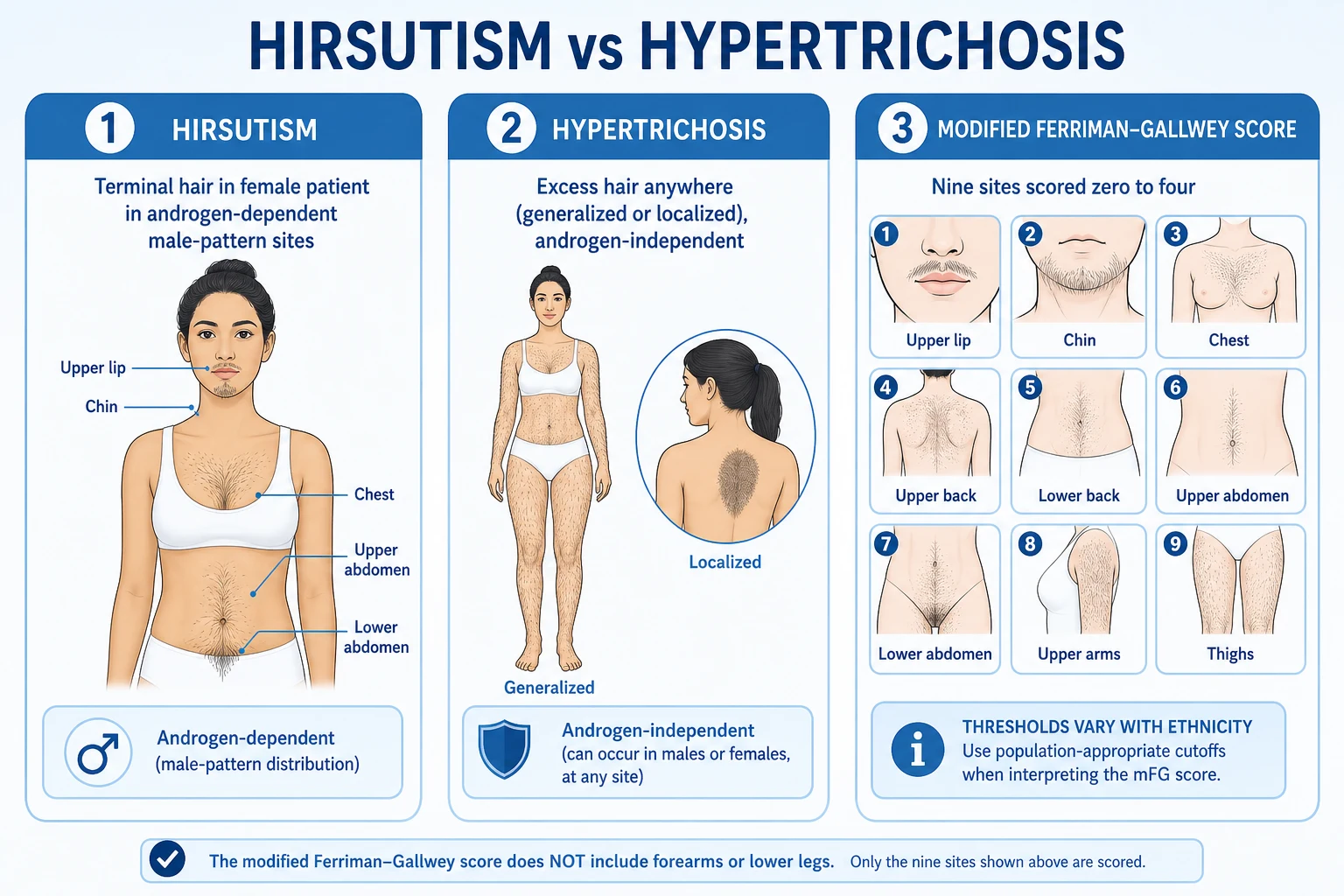
A historical cutoff of 8 or more is often quoted in Western populations, but it is not universal. East Asian populations may have clinically important hirsutism at lower scores; Mediterranean, Middle Eastern and South Asian patients may have higher background terminal hair. Prior waxing or laser, pale hair, observer bias and the patient's own distress can all make the score underestimate burden. Therefore, use the score as a structured description, not as a veto over symptoms.[1][9]
Epidemiology & Risk Factors
Hirsutism is common, distressing and culturally visible. Across studies, around 5 to 10 percent of reproductive-age women report clinically significant hirsutism, but prevalence depends heavily on the scoring threshold and population. The commonest causes are PCOS and idiopathic hirsutism; dangerous tumours are uncommon, but the examiner tests them because they present with a recognisable tempo and phenotype.[1][2]
Risk factors for androgen-mediated hirsutism cluster around the ovarian-adrenal-insulin axis. PCOS is associated with obesity, insulin resistance, family history, oligo-ovulation, acne and androgenic alopecia. Non-classic CAH is more likely with early onset, family history, infertility, severe acne, certain ethnic backgrounds and an elevated morning 17-hydroxyprogesterone. Cushing syndrome should be suspected when hirsutism is accompanied by proximal myopathy, easy bruising, wide purple striae, diabetes, hypertension, osteoporosis or growth failure in a child.[1][3][8]
Hypertrichosis has a different risk-factor list. The high-yield drug exposures are minoxidil, ciclosporin, phenytoin, diazoxide and systemic corticosteroids. Porphyria cutanea tarda produces fragile photosensitive skin, dorsal hand blisters, milia, hyperpigmentation and facial hypertrichosis. Acquired hypertrichosis lanuginosa is a classic paraneoplastic clue, although rare; the stem may describe sudden fine, downy lanugo hair on the face and trunk in an older adult with weight loss.[7][10]
Pathophysiology
Hair follicles cycle through anagen growth, catagen involution and telogen rest. Androgens do not have one uniform effect on all follicles: they enlarge beard, chest and pubic follicles but miniaturise scalp follicles in androgenetic alopecia. Hirsutism occurs when androgen-sensitive follicles in a woman are exposed to enough androgen signal to convert fine vellus hair into coarse terminal hair. The signal is usually mediated by testosterone and its more potent tissue metabolite dihydrotestosterone, formed by 5-alpha-reductase within skin.[1][2]
Why PCOS produces hirsutism
Insulin resistance
Hyperinsulinaemia stimulates ovarian theca cells and lowers hepatic sex hormone-binding globulin, increasing free androgen exposure.
LH-predominant ovarian stimulation
Theca cells make androstenedione and testosterone; anovulation prevents the normal cyclic progesterone pattern.
Peripheral amplification
Skin 5-alpha-reductase converts testosterone to dihydrotestosterone inside susceptible follicles.
Follicle remodelling
Vellus follicles enlarge and produce pigmented terminal hairs in androgen-sensitive sites.
The adrenal contribution is tested through DHEAS, a relatively adrenal-specific androgen. Non-classic 21-hydroxylase CAH increases ACTH drive and shunts steroid precursors toward adrenal androgen production; the screening marker is early-morning 17-hydroxyprogesterone, with ACTH stimulation if borderline or elevated. Cushing syndrome can cause hirsutism through excess adrenal steroidogenesis, reduced SHBG and overlapping metabolic features that mimic PCOS.[1][8]
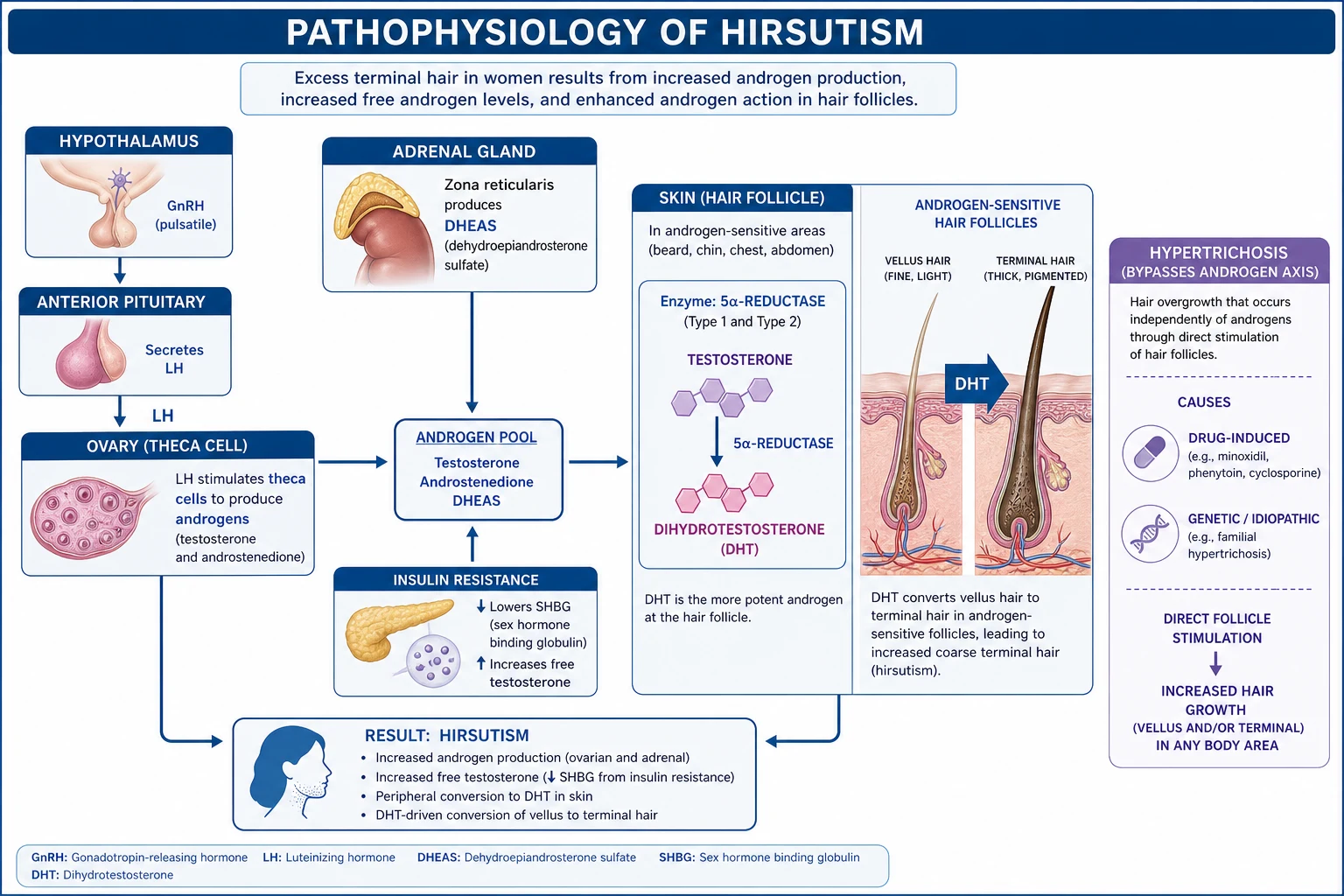
Hypertrichosis bypasses this endocrine axis. Minoxidil prolongs anagen and increases follicular calibre; ciclosporin alters follicular immune signalling; phenytoin and corticosteroids are less completely understood but produce recognizable drug-related excess hair. Porphyria cutanea tarda damages sun-exposed skin through porphyrin-mediated phototoxicity and is associated with facial hypertrichosis, skin fragility and blistering rather than menstrual disturbance or biochemical hyperandrogenism.[7][10]
Clinical Presentation
The history should describe pattern, onset, progression, associated androgen features, menstrual function, fertility, drug exposure and patient distress. A slow increase from adolescence with irregular menses, acne, obesity and acanthosis nigricans is typical of PCOS. A patient with regular cycles, normal androgens and isolated facial hair may have idiopathic hirsutism. A postmenopausal woman with new severe chin and chest hair over six months, temporal recession, deep voice and clitoromegaly has androgen excess until proved otherwise.[1][2]
Virilisation means androgen action strong enough to masculinise beyond hair: deepening of voice, clitoromegaly, breast atrophy, increased muscle bulk, severe acne, temporal balding and increased libido. Voice deepening and clitoromegaly are especially important because they may be irreversible even after the androgen source is removed. Their presence moves the case from routine dermatology to urgent endocrine assessment.[1][8]
Hypertrichosis presents according to cause. Drug-induced hypertrichosis may be diffuse and temporally linked to starting minoxidil, ciclosporin, phenytoin or corticosteroids. Porphyria cutanea tarda adds fragile skin on sun-exposed sites, bullae on the backs of the hands, milia, hyperpigmentation and facial hypertrichosis. Acquired hypertrichosis lanuginosa presents as sudden fine downy hair and should trigger a search for weight loss, gastrointestinal symptoms, cough, breast symptoms and systemic clues to malignancy.[7][10]
Atypical presentations matter. Adolescents normally pass through transient acne, irregular cycles and evolving body hair in the first years after menarche, so overdiagnosis of PCOS is common; use persistent menstrual dysfunction and clear hyperandrogenism, not ultrasound alone. Pregnancy limits drug therapy and can worsen hair growth physiologically. In postmenopause, new hirsutism is more suspicious because ovarian stromal hyperthecosis and androgen-secreting tumours become more relevant.[1][3]
Differential Diagnosis
The differential is not a list of all hairy conditions; it is a pattern-recognition exercise that asks: androgen pattern or not; slow or rapid; menstrual disturbance or not; systemic features or not; drug exposure or not.[1][7][8]
| Diagnosis | Clues supporting it | Clues against or discriminator |
|---|---|---|
| PCOS | Chronic hirsutism, acne, oligo-ovulation, infertility, obesity, acanthosis, polycystic ovarian morphology | Diagnosis needs two of three Rotterdam features after excluding mimics; LH:FSH ratio is not required |
| Idiopathic hirsutism | Normal menses, normal serum androgens, family/ethnic tendency, slow course | No virilisation, no biochemical hyperandrogenism, no systemic features |
| Non-classic CAH | Early onset, severe acne, infertility, family history, elevated morning 17-hydroxyprogesterone | ACTH-stimulated 17-hydroxyprogesterone confirms; often mistaken for PCOS |
| Androgen-secreting ovarian tumour | Rapid onset, virilisation, high testosterone, adnexal mass sometimes absent | DHEAS may be normal if ovarian; requires pelvic imaging and specialist care |
| Adrenal tumour | Rapid virilisation, high DHEAS, Cushing features, abdominal mass rarely | Adrenal CT or MRI; adrenal carcinoma can co-secrete cortisol |
| Cushing syndrome | Proximal myopathy, wide purple striae, easy bruising, hypertension, diabetes, osteoporosis | Screen with overnight dexamethasone suppression, late-night salivary cortisol or urinary free cortisol |
| Drug-induced hypertrichosis | Minoxidil, ciclosporin, phenytoin, diazoxide, corticosteroids; diffuse growth | Not male-pattern; menses and androgens usually normal |
| Porphyria cutanea tarda | Facial hypertrichosis plus fragile photosensitive skin, hand blisters, milia, liver risk factors | Urine/plasma porphyrins, hepatitis C, iron overload and alcohol history |
| Acquired hypertrichosis lanuginosa | Sudden lanugo hair in adult with weight loss or systemic symptoms | Paraneoplastic search; not androgen-mediated |
Clinical & Bedside Assessment
Start with the patient's language: what hair bothers them, how they remove it, and what outcome would feel successful. Hair removal before clinic can hide severity; ask about shaving frequency, waxing, threading, laser sessions, depilatory creams and the psychological burden. Hirsutism can produce anxiety, depression, sexual distress and avoidance of social situations; management is justified by distress even when the score looks modest.[1][2]
The examination has six parts. First, map the hair and score the nine mFG sites if visible. Second, inspect for hyperandrogenic skin signs: acne, seborrhoea and androgenetic alopecia. Third, look for virilisation: voice, clitoral size if appropriate and consented, temporal recession and muscle bulk. Fourth, assess PCOS/metabolic risk: BMI, waist circumference, blood pressure and acanthosis nigricans. Fifth, look for mimics: thyroid enlargement, galactorrhoea, Cushingoid habitus, striae, bruising and proximal myopathy. Sixth, examine for hypertrichosis clues: photosensitive blisters, milia, lanugo hair, gingival hyperplasia with phenytoin or ciclosporin, and drug-related distribution.[1][8][10]
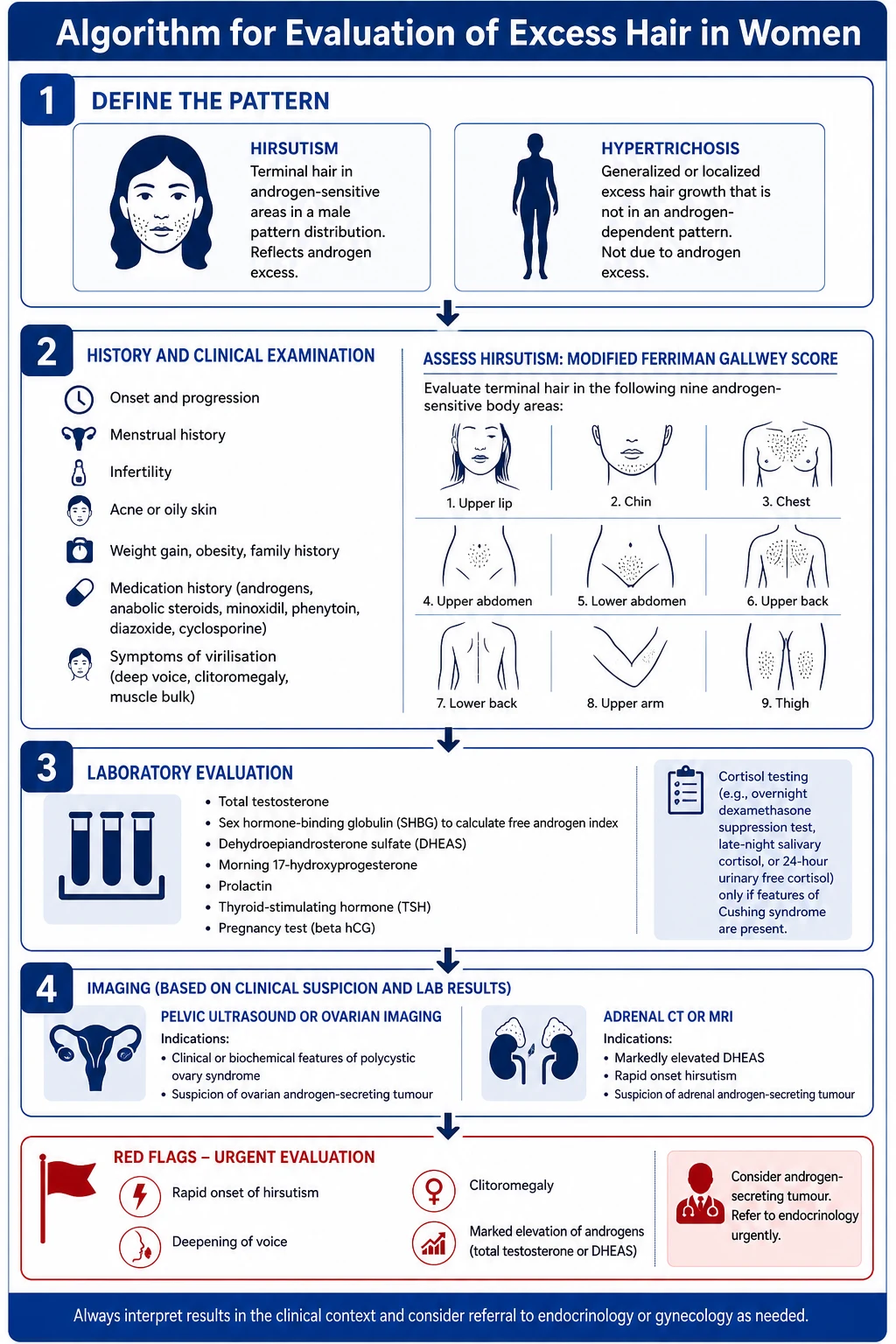
Do not let the Ferriman-Gallwey score override a red flag. A low score after repeated waxing can coexist with a testosterone-secreting tumour; conversely, a high score in a woman from a high-background-hair population with regular cycles and stable symptoms may not imply dangerous disease. The score is a common language for documentation and follow-up, not the whole diagnosis.[1][9]
Investigations
Investigations answer four questions: Is androgen excess present? Is the source ovarian or adrenal? Is there a specific endocrine mimic? Is imaging required? Test selection is guided by severity, progression, menstrual disturbance, fertility goals and red flags. Mild, stable hirsutism with normal cycles may need less testing than severe or progressive hirsutism, but MBBS exam stems usually include enough features to justify a targeted biochemical screen.[1]
| Investigation | What it answers | Exam threshold or interpretation |
|---|---|---|
| Total testosterone | Overall androgen burden; ovarian tumour more likely if very high | Around 5 nmol/L or 150 to 200 ng/dL is concerning, especially with virilisation |
| SHBG with calculated free androgen index or calculated free testosterone | Free androgen exposure, especially in PCOS with low SHBG | Direct free testosterone immunoassays are unreliable; calculate where possible |
| DHEAS | Adrenal androgen contribution | Around 700 micrograms/dL or more suggests adrenal source and warrants adrenal imaging |
| Early-morning 17-hydroxyprogesterone | Non-classic 21-hydroxylase CAH screen | Above about 200 ng/dL warrants ACTH stimulation; stimulated levels around 1000 ng/dL support non-classic CAH |
| Prolactin | Hyperprolactinaemia causing menstrual disturbance | Add when amenorrhoea, galactorrhoea or pituitary symptoms are present |
| TSH | Thyroid dysfunction causing menstrual disturbance or hair complaints | Not a hirsutism marker, but useful in menstrual mimics |
| Pregnancy test | Safety before antiandrogens, imaging or hormonal therapy | Mandatory when pregnancy is possible |
| Cortisol tests | Cushing syndrome | Overnight 1 mg dexamethasone suppression, late-night salivary cortisol or 24-hour urinary free cortisol when Cushing features exist |
| Pelvic ultrasound | PCOS morphology, ovarian mass | PCOS ultrasound is supportive, not mandatory if the other Rotterdam criteria are met |
| Adrenal CT or MRI | Adrenal tumour | Use when DHEAS is markedly elevated or adrenal carcinoma is suspected |
PCOS diagnosis
PCOS is diagnosed after excluding mimics. The adult Rotterdam framework requires two of three: oligo- or anovulation, clinical or biochemical hyperandrogenism, and polycystic ovarian morphology. Ultrasound alone is insufficient, and polycystic ovarian morphology is common in adolescents and healthy women. Modern practice also considers metabolic risk, glucose intolerance, sleep apnoea, mood symptoms and fertility goals rather than treating PCOS as only a hair disorder.[3][2]
Tumour localisation
If testosterone is markedly elevated with an ovarian pattern, perform pelvic ultrasound first, but a small ovarian steroid-cell tumour can be missed; MRI pelvis or specialist venous sampling may be needed. If DHEAS is markedly elevated, adrenal CT or MRI is appropriate. If both testosterone and DHEAS are high, consider adrenal carcinoma, mixed secretion, exogenous androgen use or assay interference. Always repeat surprising values with a reliable assay before major surgery if the patient is stable, but do not delay urgent imaging in a virilised patient.[1][8]
Hypertrichosis workup
Hypertrichosis investigations are cause-driven. Review the drug chart and over-the-counter products, including topical minoxidil exposure from a partner or hair product. In suspected porphyria cutanea tarda, test plasma or urinary porphyrins, liver enzymes, hepatitis C and iron studies. In acquired lanugo hair with systemic symptoms, investigate for malignancy based on age and symptoms: breast examination and screening, chest imaging if respiratory symptoms, gastrointestinal evaluation for weight loss or anaemia, and age-appropriate cancer screening.[7][10]
Interpreting discordant results
Discordance is common and examiners like it because it tests clinical judgement. A patient can have visible hirsutism with a normal total testosterone because the abnormality is low SHBG, increased free androgen index, increased skin 5-alpha-reductase activity or follicular androgen-receptor sensitivity. Conversely, a mild testosterone elevation in PCOS does not automatically mean tumour if symptoms are long-standing, cycles are chronically irregular and virilisation is absent. The safest phrasing is: interpret androgens with the tempo and phenotype. A rapid phenotype with a borderline result should be repeated on a reliable assay and discussed; a stable phenotype with a mild abnormality should be worked through PCOS and non-classic CAH before imaging every gland.[1][2]
Assay quality matters. Immunoassays are less accurate at the low testosterone concentrations seen in women; liquid chromatography with tandem mass spectrometry is preferred when available. SHBG falls with obesity, insulin resistance, hypothyroidism, glucocorticoids and androgens; it rises with oestrogen, pregnancy and some anticonvulsants. That is why a calculated free androgen index can explain symptoms when total testosterone looks only mildly abnormal. DHEAS is more stable across the day than testosterone, but values still vary by age and laboratory method. If a result is surprising, repeat it before labelling a patient with a tumour, unless the clinical picture is clearly virilising.[1][8]
Timing is also examinable. In a menstruating patient, draw testosterone and 17-hydroxyprogesterone in the early follicular phase when feasible, and draw 17-hydroxyprogesterone in the early morning because ACTH-driven steroid precursors vary through the day. If the patient is already taking a COCP, SHBG is increased and ovarian androgen production is suppressed, so biochemical testing may underestimate the untreated state. In a red-flag case, do not delay urgent assessment simply to wash out hormones; document the limitation and involve endocrinology.[1][8]
What not to order routinely
Do not order every endocrine test for every patient. LH:FSH ratio is a historical PCOS clue, not a diagnostic criterion. AMH and ovarian ultrasound can support PCOS in adults but should not be used as a shortcut in adolescents. Random cortisol is a poor screen for Cushing syndrome; use a recognised screening test when the phenotype warrants it. Tumour markers are not first-line for hirsutism; imaging and endocrine localisation come first. Skin biopsy is almost never needed for hirsutism, but may help if porphyria, blistering disease or a congenital hair syndrome is in the differential.[1][3][10]
Minimum safe investigation sets
For a typical MBBS stem with chronic hirsutism plus irregular cycles, a safe initial set is pregnancy test, total testosterone, SHBG or free androgen index, DHEAS, morning 17-hydroxyprogesterone, prolactin and TSH, plus metabolic PCOS screening and pelvic ultrasound if diagnostic criteria remain incomplete. For rapid virilisation, compress the pathway: pregnancy test, urgent total testosterone and DHEAS, basic safety bloods, and ovarian/adrenal imaging. For hypertrichosis without androgen pattern, the first investigation is often the medication list; add porphyrins, nutritional assessment or malignancy screening only when the morphology and systemic clues fit.[1][7][8]
Management — Resuscitation
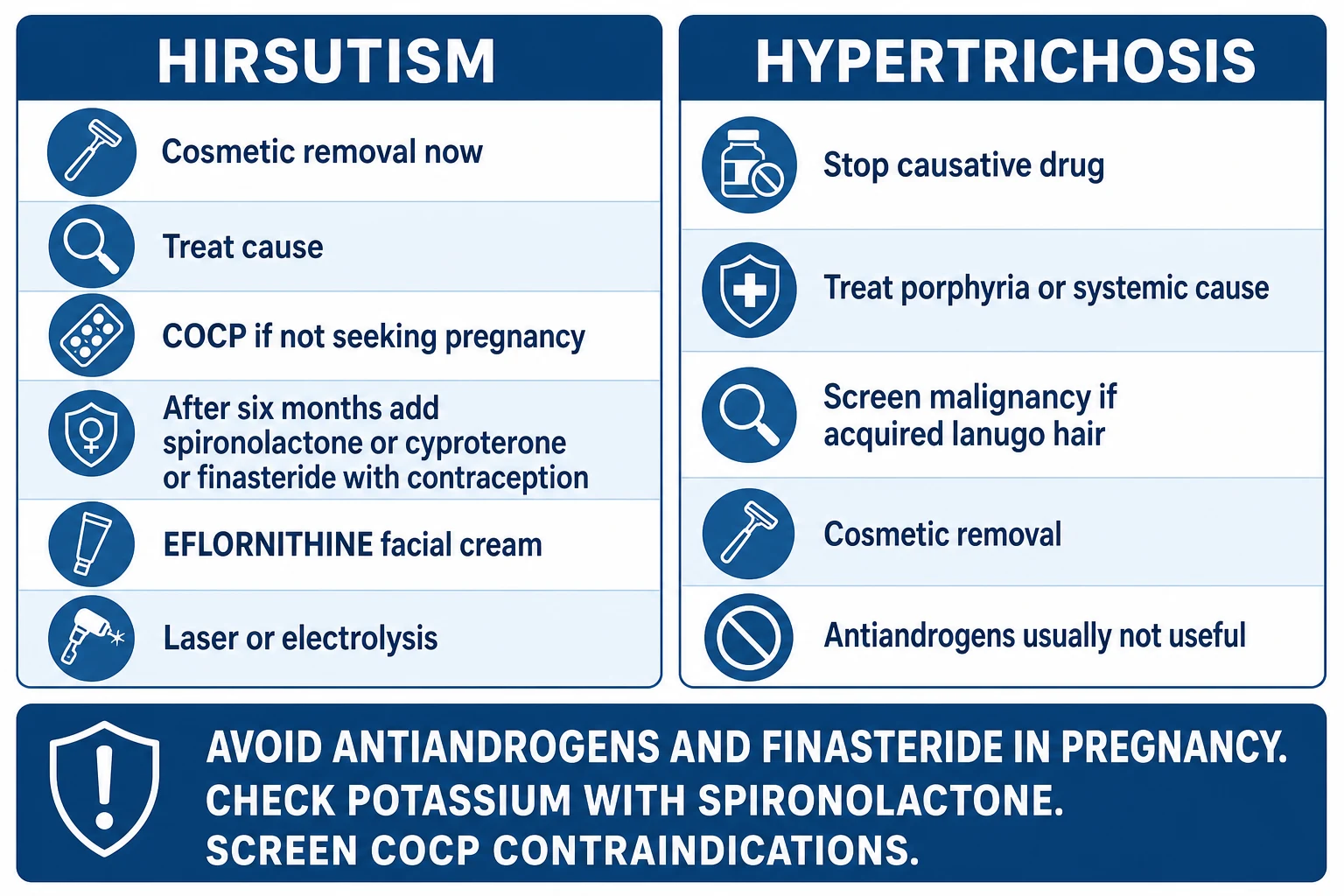
Hirsutism is usually outpatient medicine, so there is no routine ABC resuscitation bundle. The time-critical action is triage: decide whether the patient is routine, urgent endocrine, or emergency medical care. Virilisation, postmenopausal rapid onset, very high androgens, suspected adrenal carcinoma, or Cushing syndrome with severe hypertension, sepsis, hypokalaemia or uncontrolled diabetes requires urgent specialist assessment.[1][8]
Immediate triage bundle
Stable chronic hirsutism
Assess pattern, score severity, screen for PCOS and mimics, start cosmetic measures and arrange endocrine follow-up according to results.
Rapid or virilised
Do pregnancy test, total testosterone, SHBG, DHEAS, 17-hydroxyprogesterone and urgent ovarian or adrenal imaging according to the hormone pattern.
Cushing or adrenal crisis concern
Check blood pressure, glucose, potassium and infection features; discuss same day with endocrinology or acute medicine.
Drug-induced hypertrichosis
Do not start antiandrogens reflexively; identify the causative drug, assess whether substitution is safe, and coordinate with the prescribing specialty.
Do not start antiandrogens before excluding pregnancy and tumour in a red-flag case. Spironolactone, cyproterone and finasteride can reduce androgen effects and blur the clinical picture; they also carry fetal risk. Cosmetic measures such as shaving, trimming and temporary depilation can start immediately because they do not interfere with diagnosis.[1]
Management — Definitive & Stepwise
Management has two parallel goals: find and treat the cause, and reduce visible hair in a way that matches the patient's priorities. Hair follicles respond slowly, so drug therapy is judged after at least six months, while cosmetic methods provide earlier control. Combine approaches rather than forcing the patient to wait for endocrine therapy to work.[1]
General and cosmetic measures
Shaving does not make hair grow thicker; it cuts hair bluntly so stubble feels coarse. Waxing, threading and depilatory creams are useful temporary methods but can irritate skin, worsen folliculitis or cause post-inflammatory hyperpigmentation. Bleaching reduces contrast but does not remove hair. These measures are safe while investigations proceed and should be offered without dismissing distress as cosmetic vanity.[1]
Laser photoepilation targets melanin in the hair shaft and follicular unit, so it works best for dark terminal hair. Alexandrite and diode lasers are effective in lighter skin; long-pulsed Nd:YAG is safer for darker skin types when used by experienced operators. Multiple sessions are required because only anagen follicles are vulnerable at a given session. Blonde, grey, white and red hair respond poorly to laser; electrolysis is slower but can treat all hair colours because it destroys individual follicles electrically.[6]
Pharmacological therapy for hirsutism
Combined oral contraceptive pill is first-line pharmacological therapy for most premenopausal women with hirsutism who do not desire pregnancy. A typical option is a monophasic pill containing ethinylestradiol 20 to 35 micrograms with a low-androgenic or antiandrogenic progestin, taken one tablet daily in a standard cyclic or extended regimen. It suppresses LH-driven ovarian androgen production and increases SHBG, lowering free testosterone. Screen contraindications: pregnancy, migraine with aura, current breast cancer, uncontrolled hypertension, history of venous thromboembolism or thrombophilia, severe liver disease, and smoking age over 35 depending on local guidance.[1]
Spironolactone is the commonest add-on antiandrogen. Dose is usually 50 mg orally once daily, increasing to 100 mg twice daily if needed and tolerated. It blocks the androgen receptor and weakly reduces androgen production. Check baseline renal function and potassium, repeat after dose escalation in patients at risk, and avoid with significant renal impairment, hyperkalaemia or interacting potassium-raising drugs. It is not safe as monotherapy in a person who could become pregnant because antiandrogen exposure may feminise a male fetus; use reliable contraception.[1]
Cyproterone acetate is a progestational antiandrogen used in some regions, commonly as cyproterone acetate 2 mg with ethinylestradiol 35 micrograms in a combined pill, or specialist short-course higher-dose regimens. It is effective but carries thromboembolic, hepatic and meningioma-related cautions; availability and restrictions differ by country. Finasteride 2.5 to 5 mg orally daily inhibits type 2 5-alpha-reductase and is an alternative add-on, but it is teratogenic to a male fetus and must be paired with reliable contraception. Flutamide is avoided for routine hirsutism because hepatotoxicity risk outweighs benefit.[1]
Eflornithine 13.9 percent cream slows facial hair growth by inhibiting ornithine decarboxylase in the follicle. Apply a thin layer to affected facial areas twice daily at least eight hours apart, and avoid washing for about four hours after application. It does not remove existing hair, so combine with shaving, threading or laser. Improvement can begin within 4 to 8 weeks, but benefit is lost after stopping. It is for facial hair and is not a treatment for tumour, PCOS or generalized hypertrichosis.[4][5]
Treat the cause
PCOS management includes weight optimisation, exercise, cycle control, metabolic screening, fertility planning and treatment of acne or alopecia. Even 5 to 10 percent weight loss can improve insulin resistance and ovulatory function in some patients, but never make weight loss a prerequisite for treating distressing hirsutism. Metformin is useful for metabolic indications and cycle regulation in selected PCOS patients, but it is not as effective for hair reduction as COCP or antiandrogen therapy.[1][3]
Non-classic CAH should be confirmed biochemically before long-term glucocorticoids. Hydrocortisone or prednisolone may be used by endocrinology when fertility, severe hyperandrogenism or adrenal suppression goals justify it; routine high-dose glucocorticoids for mild hirsutism are poor practice because of iatrogenic Cushing risk. Androgen-secreting tumours require surgical management. Cushing syndrome treatment is directed at the cortisol source: pituitary surgery, adrenal surgery, medication or oncological management depending on cause.[1][8]
Hypertrichosis treatment is cause-specific. Stop or substitute minoxidil, ciclosporin, phenytoin or corticosteroids only after discussing with the prescriber, because the original disease may be serious. Porphyria cutanea tarda needs photoprotection, alcohol and oestrogen review, hepatitis C and iron overload evaluation, and specialist treatment such as venesection or low-dose hydroxychloroquine where appropriate. Acquired lanugo hair requires a malignancy search rather than antiandrogen therapy.[7][10]
Counselling and follow-up
Counselling is treatment. Explain that medical therapy prevents or miniaturises future androgen-stimulated hair; it does not pluck existing terminal hairs out of the skin. Set a review at six months for COCP or antiandrogen response, sooner for adverse effects, potassium checks or severe distress. Use a patient-centred endpoint: shaving frequency, time spent removing hair, inflammatory complications, social avoidance and satisfaction are often more meaningful than a one-point score change. Photographing fixed facial areas with consent can document response better than memory, but privacy and cultural sensitivity are essential.[1]
Safety-net the red flags in plain language: return urgently for rapid worsening, new voice change, scalp balding, clitoral enlargement, new severe acne, proximal weakness, easy bruising, severe headaches or visual symptoms. If antiandrogens are prescribed, document contraception, pregnancy testing when indicated, teratogenic counselling and what to do if pregnancy occurs. If cyproterone is used, document the regional risk discussion around thrombosis, liver disease and meningioma; if spironolactone is used, document renal function, potassium risk and interacting drugs. For laser, discuss burns, pigment change, paradoxical hypertrichosis, need for multiple sessions and lower efficacy for light hair.[1][6]
Practical management by presenting problem
For facial hirsutism with normal cycles and normal androgens, combine immediate cosmetic removal, eflornithine if facial hair is the main burden, and COCP or antiandrogen only if the patient wants drug therapy and pregnancy is not planned. For PCOS with metabolic risk, combine hair treatment with weight-neutral counselling, blood pressure, glucose and lipid assessment, menstrual protection and fertility planning. For non-classic CAH, avoid committing to chronic glucocorticoids until the ACTH-stimulation diagnosis is secure and the goal is clear. For drug-induced hypertrichosis, changing the drug may be impossible after transplant or epilepsy control; in that case, validate the adverse effect and optimise cosmetic treatment rather than undermining the lifesaving therapy.[1][7][8]
Monitoring table
| Treatment [1] | What to monitor [4] | When to change plan [6] |
|---|---|---|
| COCP | Blood pressure, migraine symptoms, VTE risk, smoking status, bleeding pattern | Contraindication develops, pregnancy desired, no meaningful response after six months |
| Spironolactone | Pregnancy risk, renal function and potassium in at-risk patients, dizziness, breast tenderness | Hyperkalaemia, renal decline, pregnancy, intolerable adverse effects |
| Finasteride | Pregnancy avoidance, sexual adverse effects, mood symptoms | Pregnancy planned or occurs, inadequate response after adequate trial |
| Eflornithine | Irritation, acneiform eruption, adherence to twice-daily use | No benefit after four to six months or patient prefers procedural removal |
| Laser or electrolysis | Burns, pigment change, folliculitis, paradoxical growth, number of sessions | Poor response due to light hair, unsafe skin reaction, unrealistic expectations |
Specific Subtypes & Scenarios
PCOS-associated hirsutism
This is the commonest exam stem: young woman, chronic hirsutism, acne, irregular cycles, obesity or acanthosis. Diagnosis uses Rotterdam criteria after excluding mimics. Treat visible hair and metabolic risk together: lifestyle support, COCP if not trying to conceive, add spironolactone after six months if inadequate response, and screen for diabetes, dyslipidaemia, hypertension, obstructive sleep apnoea and mood symptoms. If fertility is the immediate goal, avoid antiandrogens and refer for ovulation induction rather than suppressing cycles.[1][3]
Idiopathic hirsutism
Idiopathic hirsutism means hirsutism with regular ovulatory cycles and normal serum androgens after reasonable exclusion of other causes. It is not imaginary; follicular sensitivity and local androgen metabolism can be increased. Management is symptom-led: cosmetic methods, COCP if acceptable, eflornithine for facial hair, and antiandrogen add-on only if pregnancy is not planned and contraception is reliable.[1][2]
Non-classic congenital adrenal hyperplasia
Non-classic 21-hydroxylase deficiency can mimic PCOS with hirsutism, acne, irregular cycles and infertility. The high-yield test is early-morning follicular 17-hydroxyprogesterone. Borderline elevation requires ACTH stimulation. Management depends on fertility and symptoms: COCP and antiandrogens may control hirsutism; glucocorticoids are reserved for specialist indications such as fertility management or severe adrenal androgen excess.[1][8]
Androgen-secreting tumours
Tumours are rare but high consequence. Ovarian sources produce testosterone-predominant hyperandrogenism; adrenal sources often raise DHEAS and may co-secrete cortisol. The clinical clue is rapid progression with virilisation, not just a slightly abnormal lab value. Imaging follows hormone pattern but may need MRI or specialist sampling if first-line imaging is negative and biochemistry remains convincing.[1][8]
Drug-induced and porphyria-related hypertrichosis
Drug-induced hypertrichosis is exam-friendly because the drug list is memorable: minoxidil, ciclosporin, phenytoin, diazoxide and systemic corticosteroids. Management is medication review plus cosmetic care. Porphyria cutanea tarda adds photosensitivity, dorsal hand blisters, skin fragility, milia, hyperpigmentation and facial hypertrichosis; do not mislabel it as PCOS. The workup is porphyrin and liver-risk-factor based.[7][10]
Complications & Pitfalls
The main disease complication is not mortality; it is missed diagnosis and psychosocial harm. PCOS carries metabolic, reproductive and psychological risks. Non-classic CAH can lead to infertility or inappropriate PCOS labelling. Androgen-secreting tumours can be malignant, and delayed diagnosis may allow irreversible virilisation. Porphyria cutanea tarda can signal hepatitis C, alcohol-related liver disease or iron overload.[1][3][8][10]
Treatment pitfalls are common. Starting spironolactone without contraception risks fetal antiandrogen exposure. Calling laser "permanent" overpromises; it is long-term reduction and often needs maintenance. Using laser on tanned or darker skin without appropriate wavelength and expertise risks burns and pigment change. Treating minoxidil hypertrichosis with COCP misses the cause. Using glucocorticoids casually for suspected CAH creates iatrogenic harm. Dismissing distress because the score is below a threshold undermines care.[1][6][7]
Prognosis & Disposition
Most chronic hirsutism improves with combined therapy, but expectations must be realistic. Existing terminal hairs do not vanish when testosterone falls; follicles must cycle and miniaturise, so visible benefit takes six months or more. Eflornithine helps faster for facial growth but stops working after discontinuation. Laser reduces hair density over repeated sessions but may not eliminate all hair permanently. Idiopathic hirsutism and PCOS often require long-term maintenance chosen around contraception, fertility and adverse effects.[1][4][6]
Disposition is risk-based. Routine chronic hirsutism can be managed in primary care, dermatology, gynaecology or endocrinology depending on local pathways. Refer urgently for virilisation, rapid progression, postmenopausal onset, markedly raised androgens, suspected Cushing syndrome, adrenal mass, ovarian mass, or diagnostic uncertainty. Hypertrichosis from an essential drug may require shared decision-making with neurology, transplant medicine, cardiology or dermatology rather than abrupt cessation.[1][8]
Special Populations
Adolescents are overdiagnosed with PCOS if adult ultrasound criteria are applied too early. Irregular cycles are common soon after menarche, acne is common, and polycystic ovarian morphology is nonspecific. Persistent menstrual dysfunction plus clear clinical or biochemical hyperandrogenism is more meaningful; severe virilisation is never normal.[1][3]
Pregnancy and preconception change the plan. Avoid spironolactone, finasteride, dutasteride and cyproterone when pregnancy is possible without reliable contraception, and stop them before conception according to specialist advice. COCP is inappropriate when trying to conceive. Cosmetic methods, shaving, threading and selected laser decisions can be individualized, but endocrine drug suppression is usually deferred unless a dangerous tumour or adrenal disorder is present.[1]
Postmenopausal patients deserve a lower threshold for tumour evaluation because new androgen excess is not masked by normal reproductive-age PCOS. Ovarian hyperthecosis can cause gradual severe hyperandrogenism; tumours tend to be more rapid. Do not reassure a 60-year-old with new virilisation as "late PCOS" without hormones and imaging.[1][8]
Ethnicity and skin type affect both diagnosis and treatment. The mFG threshold must be interpreted against local norms, hair colour and prior hair removal. Laser device choice and burn risk depend on Fitzpatrick skin type; long-pulsed Nd:YAG is generally safer in darker skin, while alexandrite may be more effective in lighter skin. Post-inflammatory hyperpigmentation risk should be discussed before aggressive depilation or laser.[6][9]
Children and very early puberty are a special red-flag group. True hirsutism before expected puberty suggests premature adrenarche, non-classic or classic CAH, exogenous androgen exposure, adrenal tumour or ovarian pathology rather than ordinary PCOS. Document growth velocity, pubertal stage, blood pressure, acne, body odour and clitoromegaly; involve paediatrics or paediatric endocrinology early. Weight-based glucocorticoid decisions for CAH are specialist decisions, not dermatology empiricism.[1][8]
Immunocompromised and transplant patients often develop hypertrichosis from ciclosporin or corticosteroids. The key management skill is not simply stopping the drug; rejection prevention, seizure control and inflammatory disease control may be more important than hair reduction. Discuss substitution such as tacrolimus-based regimens only with the treating specialist, and provide safe cosmetic options while systemic therapy is optimised.[7]
Patients with anticoagulation, keloid tendency or pigmentary risk need procedural caution. Waxing and threading can bruise anticoagulated skin; electrolysis can inflame follicles; laser can burn or dyspigment darker or recently tanned skin if wavelength and fluence are poorly chosen. Ask about isotretinoin use, photosensitising drugs, active infection, herpes simplex history and prior post-inflammatory hyperpigmentation before procedural hair removal.[6]
Evidence, Guidelines & Regional Differences
The Endocrine Society guideline anchors the widely taught approach: test women with an abnormal hirsutism score for androgen excess, test eumenorrhoeic women less aggressively when hair growth is local and mild, use COCP as initial pharmacological therapy for most not seeking pregnancy, avoid antiandrogen monotherapy unless effective contraception is used, and add an antiandrogen after about six months if response is inadequate.[1]
In South Asian and Middle Eastern populations, background terminal hair distribution and cultural distress thresholds differ from older Western mFG cutoffs. For NEET-PG and INICET, write the distinction clearly: score the correct nine sites, but interpret score with ethnicity and patient distress. In resource-limited settings, the highest-yield tests are total testosterone, DHEAS, 17-hydroxyprogesterone, pregnancy test and targeted pelvic/adrenal imaging for red flags.[1][9]
The controversy is not whether hirsutism matters; it does. The controversy is how much testing is needed for mild disease, which numeric mFG threshold is fair across ethnicities, and how to balance effective antiandrogen therapy against contraception, pregnancy plans and adverse effects. A good answer acknowledges that normal androgens do not exclude clinically important hirsutism, but virilisation always overrides reassurance.[1][2]
Exam Pearls
Excess hair workup mnemonic
HAIR
Hirsutism in androgen sites or hypertrichosis anywhere
Ask rapid onset, voice, clitoris, balding, testosterone, DHEAS
17-hydroxyprogesterone, prolactin, TSH, cortisol if indicated
Remove cause, reduce hair cosmetically, add COCP or antiandrogen safely
- Hirsutism is terminal hair in androgen-dependent male-pattern sites; hypertrichosis is excess hair anywhere and is usually androgen-independent.[1][7]
- The modified Ferriman-Gallwey score uses nine sites only: upper lip, chin, chest, upper back, lower back, upper abdomen, lower abdomen, upper arms, thighs.
- A universal mFG cutoff is unsafe; ethnicity, hair colour, prior depilation and distress matter.
- PCOS is diagnosed by two of three Rotterdam criteria after excluding mimics; LH:FSH ratio is not required.
- Non-classic CAH screen: early-morning 17-hydroxyprogesterone; confirm borderline/elevated results with ACTH stimulation.
- Tumour clue: rapid virilisation with deep voice, clitoromegaly, balding or marked androgen elevation.
- DHEAS points to adrenal source; testosterone-predominant elevation points more toward ovarian source, but overlap occurs.
- COCP is first-line drug therapy when pregnancy is not desired; antiandrogens require reliable contraception.
- Spironolactone dose is commonly 50 mg daily increasing to 100 mg twice daily; check renal function and potassium in at-risk patients.
- Finasteride and dutasteride are contraindicated in pregnancy; flutamide is avoided for routine hirsutism because of hepatotoxicity.
- Eflornithine 13.9 percent cream slows facial hair; it does not remove existing hair and works only while used.
- Laser works best for dark terminal hair; electrolysis treats light hair but is slower.
- Minoxidil, ciclosporin, phenytoin, diazoxide and corticosteroids cause hypertrichosis, not classic androgen-pattern hirsutism.
- Porphyria cutanea tarda causes facial hypertrichosis plus photosensitive fragility and dorsal hand blisters.
- Acquired lanugo hair in an adult can be paraneoplastic; do not treat it as PCOS.
One-minute viva answer
"Hirsutism is androgen-dependent terminal hair in a male-pattern distribution in a woman, whereas hypertrichosis is excess hair not limited to androgen sites. I would score the nine modified Ferriman-Gallwey sites, ask tempo, menses, fertility, acne, alopecia, drugs and virilisation, then examine for PCOS, Cushing syndrome and hypertrichosis clues. Routine labs are total testosterone with SHBG or free androgen index, DHEAS, morning 17-hydroxyprogesterone, prolactin and TSH as indicated, pregnancy test, and cortisol testing if Cushing features exist. Rapid virilisation, deep voice, clitoromegaly or marked testosterone/DHEAS elevation needs urgent ovarian and adrenal imaging. Management is cosmetic plus cause-directed: COCP first-line if not seeking pregnancy, add spironolactone or another antiandrogen only with contraception after an adequate trial, use eflornithine, laser or electrolysis, and treat hypertrichosis by stopping drugs or treating systemic disease rather than antiandrogens."[1]
Exam application bank (NEET-PG / INICET)
One-line answer
Hirsutism is androgen-dependent terminal hair growth in a woman in a male-pattern distribution; hypertrichosis is androgen-independent excess hair at any site. The examination focus is distinguishing PCOS and idiopathic hirsutism from non-classic CAH, Cushing syndrome, androgen-secreting ovarian or adrenal tumours, drug-induced hypertrichosis, porphyria and paraneoplastic lanugo hair.
Worked stems (answer without another resource)
Stem 1 — Classic presentation. Map symptoms to mechanism; name the first investigation and first treatment step with dose/route if drug therapy is standard. [1]
Stem 2 — Unstable / complicated. List red flags that force immediate resuscitation, theatre, ICU, antidote, or reperfusion — and what you do in the first 15 minutes. [1]
Stem 3 — Atypical group. Elderly, pregnancy, child, or immunocompromised: how presentation and thresholds change. [1]
Stem 4 — Differential trap. Name the three closest mimics and one discriminator for each. [1]
Stem 5 — Disposition. Who goes home with safety-netting, who is admitted, who needs HDU/ICU/theatre, and what follow-up is mandatory. [1]
Rapid viva checklist
- Definition + classification
- Pathophysiology chain
- Bedside signs / criteria
- Score with exact components (if any)
- Emergency bundle
- Definitive therapy with doses
- Complications of disease and of treatment
- Special populations
- Guideline/trial name if classic
- Three exam traps
Coverage self-check
If you cannot answer any stem above from this page alone, re-read the matching section — the page is intended to be self-sufficient for final-prof and NEET-PG/INICET questions on Hirsutism and hypertrichosis.
References
- [1]Martin KA, Anderson RR, Chang RJ, Ehrmann DA, et al. Evaluation and Treatment of Hirsutism in Premenopausal Women: An Endocrine Society Clinical Practice Guideline J Clin Endocrinol Metab, 2018.PMID 29522147
- [2]Spritzer PM, Marchesan LB, Santos BR, Fighera TM Hirsutism, Normal Androgens and Diagnosis of PCOS Diagnostics (Basel), 2022.PMID 36010272
- [3]Rotterdam ESHRE/ASRM-Sponsored PCOS consensus workshop group Revised 2003 consensus on diagnostic criteria and long-term health risks related to polycystic ovary syndrome (PCOS) Hum Reprod, 2004.PMID 14688154
- [4]Wolf JE Jr, Shander D, Huber F, Jackson J, et al. Randomized, double-blind clinical evaluation of the efficacy and safety of topical eflornithine HCl 13.9% cream in the treatment of women with facial hair Int J Dermatol, 2007.PMID 17214730
- [5]Hamzavi I, Tan E, Shapiro J, Lui H A randomized bilateral vehicle-controlled study of eflornithine cream combined with laser treatment versus laser treatment alone for facial hirsutism in women J Am Acad Dermatol, 2007.PMID 17270315
- [6]Tan K, Coster T, Mousa A, Mar A, et al. Laser and Light-Based Therapies for Hirsutism Management in Women With Polycystic Ovarian Syndrome: A Systematic Review JAMA Dermatol, 2024.PMID 38630483
- [7]Prescrire Editorial Staff Drug-induced excess hair growth Prescrire Int, 2017.PMID 30730670
- [8]Yesiladali M, Yazici MGK, Attar E, Kelestimur F Differentiating Polycystic Ovary Syndrome from Adrenal Disorders Diagnostics (Basel), 2022.PMID 36140452
- [9]Afifi L, Saeed L, Pasch LA, Huddleston HG, et al. Association of ethnicity, Fitzpatrick skin type, and hirsutism: A retrospective cross-sectional study of women with polycystic ovarian syndrome Int J Womens Dermatol, 2017.PMID 28492053
- [10]Horner ME, Alikhan A, Tintle S, Tortorelli S, et al. Cutaneous porphyrias part I: epidemiology, pathogenesis, presentation, diagnosis, and histopathology Int J Dermatol, 2013.PMID 24261722