Dermatology · Medicine
Hyperhidrosis
Also known as Hyperhidrosis · Excessive sweating · Primary focal hyperhidrosis · Secondary generalised hyperhidrosis
Hyperhidrosis is sweating beyond the physiological requirement for thermoregulation. It is divided into primary focal (idiopathic, bilateral, symmetric, focal onset before age 25, ceases during sleep, often familial) and secondary generalised (endocrine, neurological, malignant, infectious, drug-related or autonomic cause). Primary focal hyperhidrosis affects roughly 1-3% of people and causes substantial psychosocial and occupational disability. Eccrine sweat glands are innervated by sympathetic cholinergic post-ganglionic fibres that release acetylcholine onto muscarinic-3 (M3) receptors; this explains why anticholinergics and botulinum toxin are effective. Site drives therapy: aluminium chloride 20% for axillary disease, tap-water iontophoresis for palmar/plantar disease, botulinum toxin A for refractory axillary or palmar disease, oral anticholinergics for generalised disease, and endoscopic thoracic sympathectomy (ETS) only as a last resort for severe palmar disease because of compensatory hyperhidrosis.
On this page & tools
Your progress
Saved locally on this device.
Exam tags
Red flags
Overview & Definition
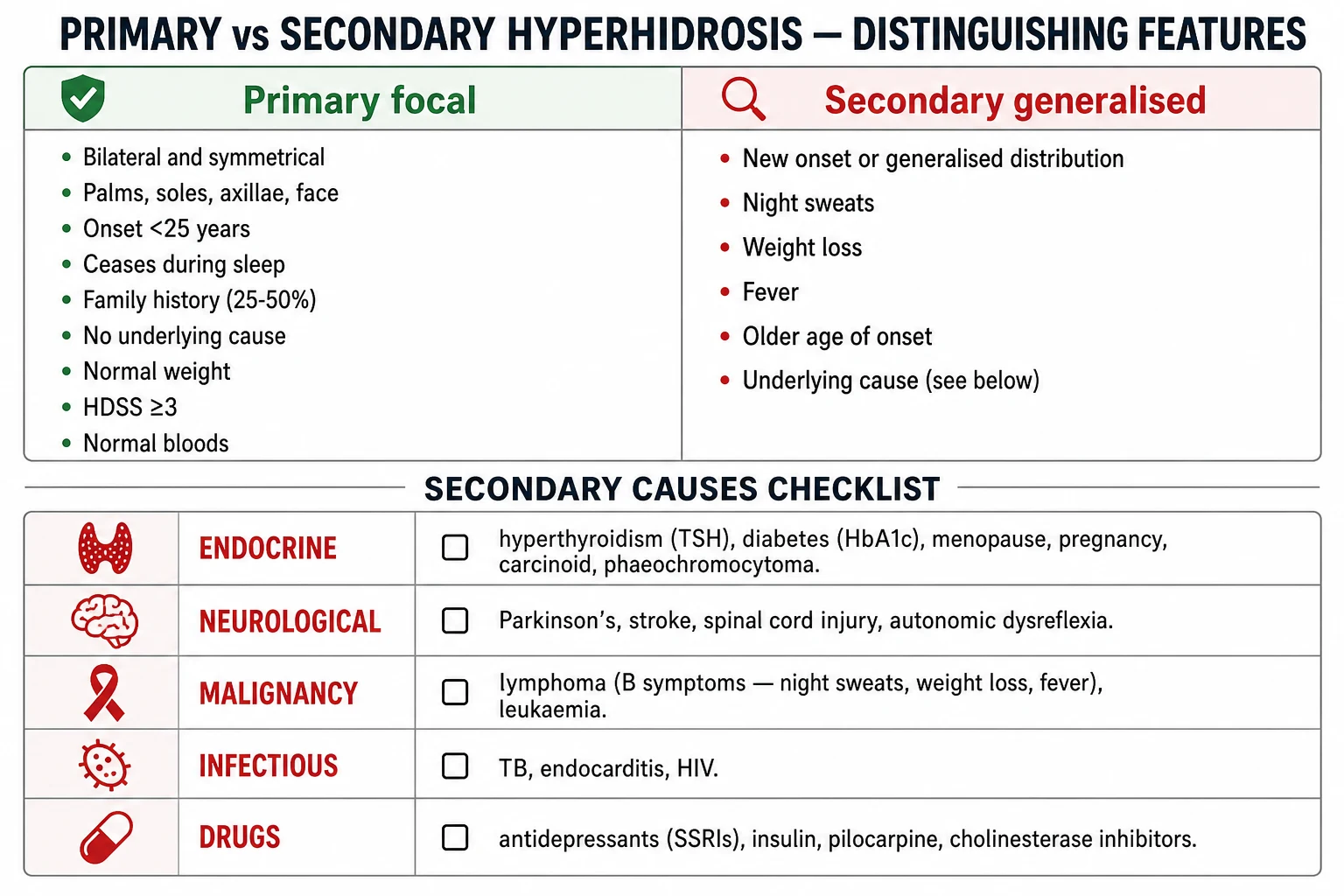
Hyperhidrosis is defined as sweating that exceeds the amount required for normal thermoregulation. It is not a single disease but a clinical presentation with two major categories: primary focal hyperhidrosis and secondary generalised hyperhidrosis. The distinction is the first and most important clinical decision because it determines whether the patient needs reassurance and site-directed therapy or a full systemic work-up for an underlying disorder.[2]
Primary focal hyperhidrosis is a benign, idiopathic, chronic disorder of eccrine sweat gland overactivity. It is typically bilateral, symmetric, and confined to characteristic focal sites: the palms, soles, axillae, face or a combination of these. It usually begins in childhood or adolescence, often before age 25, and may be accompanied by a strong family history. A defining clinical feature is that the sweating stops during sleep; it is triggered or worsened by emotional stress, heat, exertion, anxiety, or spicy foods. The sweating can be severe enough to drip from the hands, soak clothing, ruin paperwork, or cause visible social distress. Despite the absence of serious organic pathology, the effect on quality of life is comparable to chronic dermatoses such as psoriasis or atopic dermatitis, and many patients experience significant anxiety, depression, and social avoidance.[5]
Secondary generalised hyperhidrosis is excessive sweating due to an identifiable underlying cause. It is often generalised rather than focal, may begin later in life, and is frequently associated with systemic symptoms such as fever, weight loss, palpitations, tremor, or neurological signs. The sweating may also occur during sleep, and it may be asymmetric or unilateral. Causes include endocrine disorders (hyperthyroidism, diabetes mellitus, hypoglycaemia, menopause, phaeochromocytoma, carcinoid syndrome), neurological disease (Parkinson's disease, stroke, spinal cord injury, autonomic neuropathy), malignancy (lymphoma, leukaemia, solid tumours with paraneoplastic features), infections (tuberculosis, endocarditis, HIV, malaria), drugs (antidepressants, antipyretics, opioids, hypoglycaemic agents, alcohol, caffeine) and other autonomic conditions. When a patient presents with new-onset, generalised or atypical sweating, the clinician must investigate before treating symptoms.[2][3]
Classification
Hyperhidrosis is classified by distribution (focal vs generalised), aetiology (primary vs secondary), severity (mild, moderate, severe) and anatomical subtype (palmar, plantar, axillary, facial/gustatory). This classification directly determines management.[2]
By distribution and aetiology
Primary focal hyperhidrosis
Idiopathic, symmetric, sleep-free
- Bilateral and symmetric distribution
- Focal sites: palms, soles, axillae, face, groin
- Onset usually in childhood or adolescence (under 25 years)
- Sweating ceases during sleep
- Family history in 30–50% of cases
- No underlying systemic cause identified
Secondary generalised hyperhidrosis
Underlying cause, often systemic
- Generalised or asymmetric distribution
- May involve the trunk, back or whole body
- Onset at any age, often after adolescence
- Sweating may persist during sleep
- Associated with systemic symptoms (fever, weight loss, tremor, palpitations)
- Requires investigation for endocrine, neurological, malignant, infectious or drug causes
By anatomical subtype
- Palmar hyperhidrosis — excessive sweating of the palms, often the most functionally disabling because it affects handwriting, grip on objects, social handshakes, and use of electronic devices. It can be severe enough to drip sweat.
- Plantar hyperhidrosis — excessive sweating of the soles, leading to maceration, malodour, fungal infection (tinea pedis), and difficulty keeping footwear dry. Patients often rotate several pairs of shoes.
- Axillary hyperhidrosis — excessive sweating of the armpits, usually the most socially visible and the most common reason patients seek medical help because of sweat stains, body odour, and embarrassment.
- Facial and gustatory hyperhidrosis — sweating of the face, forehead or scalp, often triggered by eating, especially spicy foods or strong flavours (gustatory sweating). It is common after parotid surgery or in diabetic autonomic neuropathy (Frey syndrome), but can also occur as a primary focal subtype.
- Generalised hyperhidrosis — diffuse sweating over large areas of the body, strongly suggestive of a secondary cause until proven otherwise. [1]
By severity
Severity is usually graded by patient-reported impact. The Hyperhidrosis Disease Severity Scale (HDSS) is a validated four-point scale used in both clinical practice and trials:[6]
- Score 1 — my sweating is never noticeable and never interferes with my daily activities.
- Score 2 — my sweating is tolerable but sometimes interferes with my daily activities.
- Score 3 — my sweating is barely tolerable and frequently interferes with my daily activities.
- Score 4 — my sweating is intolerable and always interferes with my daily activities. [1]
A score of 3 or 4 indicates severe disease that warrants active treatment. A reduction of at least one HDSS point after treatment is considered clinically meaningful.[6]
Epidemiology & Risk Factors
Hyperhidrosis is commoner than is often recognised in clinical practice. Population-based surveys in the United States have estimated a prevalence of roughly 2.8%, or approximately 7.8 million people, with the majority reporting axillary or palmar disease. The condition often begins in childhood or adolescence and may persist for decades. Many patients do not seek medical attention because they are embarrassed, because they believe nothing can be done, or because they have been told the problem is psychological.[5]
Risk factors and associations for primary focal hyperhidrosis:[2]
- Family history — reported in 30–50% of affected individuals, with an autosomal dominant inheritance pattern and incomplete penetrance. Some families show linkage to chromosome 14q, but no single gene has been established as the sole cause.
- Age — onset is usually before age 25, often in childhood or adolescence. Axillary disease tends to appear around puberty.
- Emotional or stress triggers — anxiety, embarrassment, public speaking, examinations, or social situations can provoke sweating even in cool environments.
- Heat and exertion — high ambient temperature or physical activity worsens symptoms, but primary focal hyperhidrosis is distinct from normal physiological sweating because it occurs at rest and in mild conditions.
- Comorbid anxiety or depression — quality-of-life impairment is substantial; patients may avoid social or occupational situations. [1]
Risk factors for secondary generalised hyperhidrosis are essentially the underlying diseases listed in the differential diagnosis section. Any patient with new-onset, generalised or nocturnal sweating should be evaluated for these. [1]
Pathophysiology
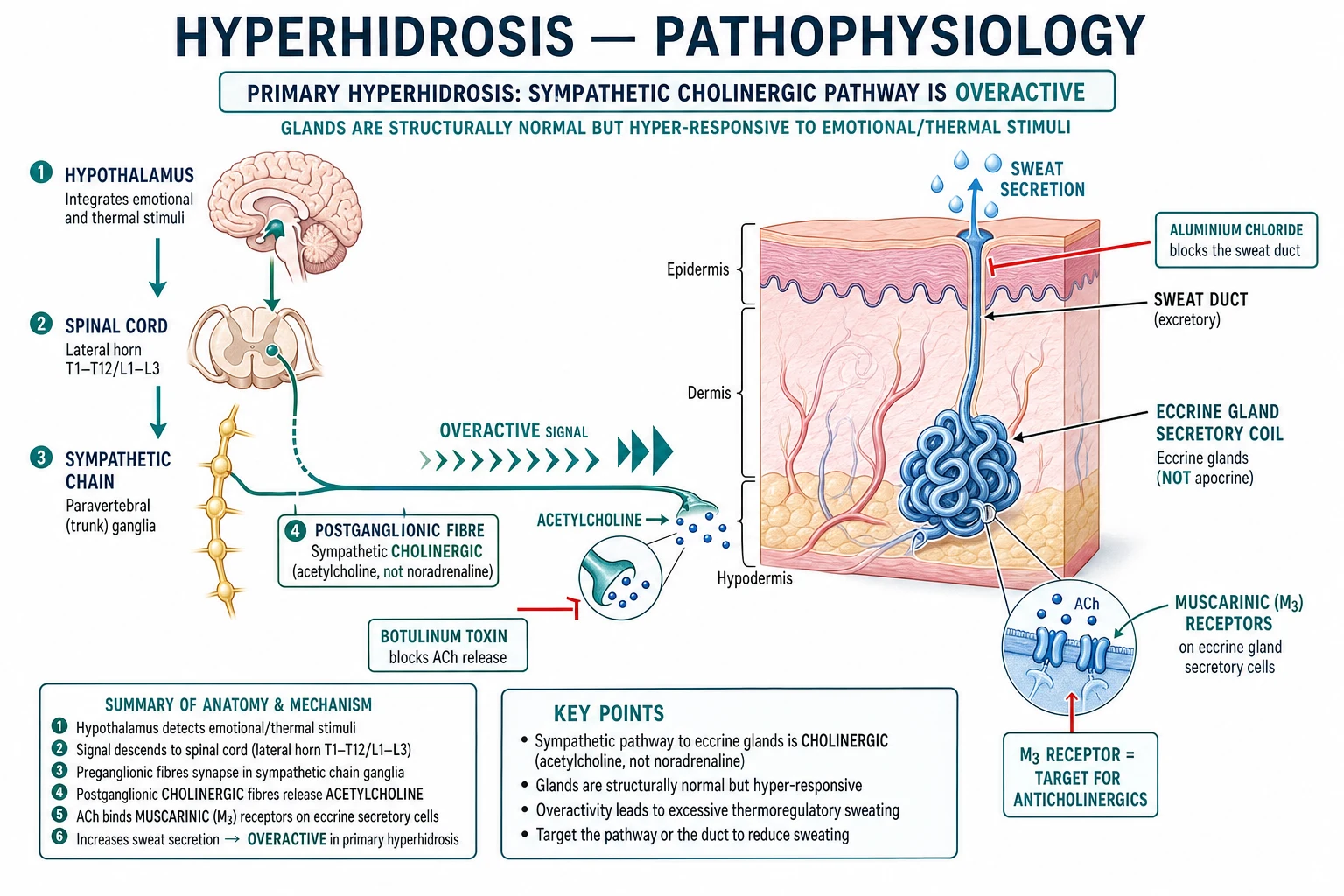
The human body has two types of sweat glands: eccrine and apocrine. Hyperhidrosis is primarily a disorder of the eccrine glands, which are distributed over almost the entire body surface but are especially dense on the palms, soles, forehead and axillae. Eccrine glands are responsible for thermoregulatory sweating and are controlled by the autonomic nervous system.[2]
Neural control of eccrine sweating
The central drive for thermoregulatory sweating originates in the preoptic area of the hypothalamus, which receives input from peripheral and core temperature receptors. Emotional sweating, in contrast, is driven by the limbic system and cerebral cortex, particularly the amygdala and anterior cingulate cortex, which explains why stress, anxiety and embarrassment trigger palmar and axillary sweating even when the body is cool. Both pathways descend through the brainstem and spinal cord to the sympathetic preganglionic neurones in the lateral horn of the thoracic spinal cord.[4]
Preganglionic fibres leave the spinal cord through the ventral roots and pass to the sympathetic chain ganglia, where they synapse with post-ganglionic fibres. A critical exam point follows: although these fibres are anatomically part of the sympathetic nervous system, the post-ganglionic fibres that innervate eccrine glands are cholinergic, not adrenergic. They release acetylcholine from their nerve terminals. Acetylcholine binds to muscarinic-3 (M3) receptors on the clear cells of the eccrine secretory coil, triggering a cascade of intracellular calcium release, chloride secretion and osmotic water movement into the duct. This produces the dilute, watery sweat that reaches the skin surface.[4]
This sympathetic-cholinergic anatomy explains the pharmacology of hyperhidrosis: [1]
- Aluminium chloride blocks the sweat duct at the level of the stratum corneum, causing ductal plugging and atrophy of the secretory coil with repeated use.
- Botulinum toxin A prevents the calcium-dependent release of acetylcholine from cholinergic nerve terminals, thereby reducing sweat production at the injected site.
- Anticholinergic drugs (glycopyrrolate, oxybutynin, propantheline) competitively block M3 receptors on the eccrine gland and elsewhere, reducing sweating but also causing dry mouth, blurred vision, constipation and urinary retention.
- Iontophoresis is thought to work by microvascular vasoconstriction, pilocarpine antagonism, and possibly plugging of the sweat duct with charged particles or aluminium ions from tap water.
- Sympathectomy interrupts the sympathetic chain at the level of the second to fourth thoracic ganglia, removing the central drive to the palmar sweat glands but risking compensatory sweating elsewhere because the total sweating capacity is redistributed. [1]
Pathophysiology of primary focal hyperhidrosis
Primary focal hyperhidrosis is believed to reflect overactivity of the hypothalamic and limbic sweating centres rather than a structural abnormality of the sweat glands themselves. Histology of the eccrine glands is usually normal, but the glands are hyper-responsive to emotional and thermal stimuli. Functional imaging and neurophysiological studies suggest exaggerated sympathetic outflow, particularly to the palms and axillae, with a lowered threshold for emotional sweating. Genetic factors contribute, as shown by family clustering and twin studies, but the condition is likely polygenic or oligogenic rather than monogenic.[2]
Pathophysiology of secondary hyperhidrosis
In secondary hyperhidrosis, the sweating is a manifestation of an underlying systemic process. Examples include: [1]
- Hyperthyroidism — increased metabolic rate and heat production raise the thermoregulatory set-point, causing generalised sweating.
- Hypoglycaemia — autonomic counter-regulatory response releases adrenaline and acetylcholine, producing sweating, tremor and palpitations.
- Phaeochromocytoma — catecholamine surges cause episodic hypertension, palpitations, anxiety and sweating.
- Menopause — fluctuating oestrogen levels destabilise hypothalamic thermoregulation, producing hot flushes and night sweats.
- Parkinson's disease — autonomic dysfunction and altered thermoregulation cause generalised or localised sweating, often with oily skin and seborrhoea.
- Malignancy — lymphoma and leukaemia classically produce drenching night sweats as part of B symptoms.
- Infections — tuberculosis, endocarditis, malaria and HIV can cause night sweats and fever. [1]
Clinical Presentation
Primary focal hyperhidrosis
The typical history is one of bilateral, symmetric, excessive sweating beginning in childhood or adolescence, localised to the palms, soles, axillae or face. The sweating is usually intermittent, occurring in episodes that can last minutes to hours, and is often triggered by stress, anxiety, heat, spicy foods or physical exertion. A key historical clue is that it stops completely during sleep. Patients may describe:[2]
- Palmar disease: constantly damp or dripping hands, difficulty writing, smudging ink, dropping objects, avoidance of handshakes, reluctance to wear certain fabrics, and frequent use of tissues or hand dryers.
- Plantar disease: wet socks, macerated soles, malodour, recurrent tinea pedis, ruined shoes, and slipping in footwear.
- Axillary disease: large sweat rings on clothing, need for absorbent pads, frequent shirt changes, embarrassment at work or school, and avoidance of certain colours of clothing.
- Facial/gustatory disease: forehead or scalp sweating with meals, especially spicy foods, cheese, chocolate or alcohol; social embarrassment and difficulty wearing makeup. [1]
Physical signs depend on the affected site. The skin may be macerated, white, soggy or peeling on the soles; the palms may be cool, wet and pink; the axillae may show irritant contact dermatitis from deodorants or antiperspirants. Bromhidrosis (body odour from bacterial degradation of sweat and keratin) may coexist, particularly in the axillae. [1]
Secondary generalised hyperhidrosis
This presentation should raise immediate concern. The sweating is often generalised, may occur during sleep (night sweats), may be asymmetric or unilateral, and may begin after age 25. Associated systemic symptoms help point to the cause:[2][3]
- Weight loss, fever, night sweats — lymphoma, leukaemia, tuberculosis, HIV, endocarditis, solid malignancy.
- Heat intolerance, weight loss, tremor, palpitations, anxiety — hyperthyroidism.
- Episodic hypertension, severe headache, pallor, sweating — phaeochromocytoma.
- Flushing, diarrhoea, wheeze, right-sided cardiac valvular disease — carcinoid syndrome.
- Tremor, rigidity, bradykinesia, autonomic symptoms — Parkinson's disease.
- Burning feet, orthostatic dizziness, erectile dysfunction — diabetic autonomic neuropathy.
- Hot flushes, menstrual irregularity, vaginal dryness — menopause.
- Drug history — antidepressants (SSRIs, SNRIs, tricyclics), opioids, antipyretics, hypoglycaemic agents, alcohol, caffeine. [1]
Differential Diagnosis
The differential diagnosis of hyperhidrosis includes both primary focal disease and secondary causes. The first clinical task is to separate these. In addition, several conditions can be confused with hyperhidrosis or coexist with it.[2]
Bromhidrosis
Malodour, not wetness
- Excessive body odour from bacterial breakdown of sweat and skin keratin
- Usually axillae or feet
- Skin may be normal or minimally sweaty; the problem is smell
- Treated with antiseptic washes, topical antibiotics, antiperspirants and hygiene
Chromhidrosis
Coloured sweat
- Sweat that is coloured (yellow, blue, green, black)
- Due to lipofuscin granules in apocrine glands or exogenous pigments
- Confined to apocrine areas (axillae, areolae, anogenital)
- Distinguish from pseudochromhidrosis caused by dyed clothing or topical agents
Eccrine naevus
Focal, often unilateral
- A hamartoma of eccrine glands producing focal sweating
- Usually solitary plaque or linear lesion
- May be present from birth or childhood
- Diagnosis by clinical appearance and iodine-starch test showing localised sweating
Physiological sweating
Heat/exertion
- Normal response to heat, exercise, fever or hot environment
- Generalised, symmetric, proportional to stimulus
- Resolves when the stimulus is removed
- No impact on sleep and no family history of excessive sweating
Secondary causes of generalised hyperhidrosis
| Category | Causes | Key distinguishing features | Investigation |
|---|---|---|---|
| Endocrine | Hyperthyroidism, diabetes mellitus (hypoglycaemia), phaeochromocytoma, carcinoid syndrome, menopause, pregnancy | Heat intolerance, tremor, weight change, palpitations, flushing, hot flushes | TSH, free T4, fasting glucose/HbA1c, plasma/urine metanephrines, FSH/LH |
| Neurological | Parkinson's disease, stroke, spinal cord injury, autonomic neuropathy, syringomyelia | Rigidity, tremor, bradykinesia, focal neurological deficits, orthostatic hypotension | Neurological examination, MRI brain/spine if indicated |
| Malignancy | Lymphoma, leukaemia, solid tumours with paraneoplastic features | B symptoms: fever, night sweats, weight loss, lymphadenopathy, hepatosplenomegaly | FBC, LDH, CRP/ESR, CXR, CT chest/abdomen/pelvis, biopsy |
| Infectious | Tuberculosis, HIV, endocarditis, malaria, brucellosis | Fever, night sweats, weight loss, cough, lymphadenopathy, murmurs, travel history | IGRA, HIV test, blood cultures, malaria film, echocardiography |
| Drugs/toxins | SSRIs, SNRIs, tricyclics, opioids, antipyretics, hypoglycaemics, alcohol, caffeine, nicotine | Temporal relationship to drug initiation or dose change | Detailed drug history, trial of withdrawal or dose reduction |
| Cardiovascular | Heart failure, acutely after myocardial infarction | Dyspnoea, orthopnoea, oedema, chest pain | ECG, troponin, echocardiography, BNP |
| Autoimmune | Rheumatoid arthritis, systemic lupus erythematosus, vasculitis | Joint pain, rashes, serositis, Raynaud phenomenon | Autoantibody screen, inflammatory markers |
Why is a detailed drug history essential in secondary hyperhidrosis?
Many commonly prescribed drugs cause or worsen sweating. Antidepressants (especially SSRIs, SNRIs, tricyclics and bupropion), opioids, antipyretics, hypoglycaemic agents, thyroid hormone replacement, alcohol, caffeine and nicotine are frequent culprits. The onset of sweating after starting or increasing a drug, and resolution after stopping or reducing it, establishes the diagnosis. Always ask specifically about over-the-counter products, herbal medicines and recreational substances.
Clinical & Bedside Assessment
A focused history is the most important diagnostic tool in hyperhidrosis. The clinician should determine the distribution, onset, triggers, family history, impact on daily life, and presence of systemic symptoms. The history alone usually separates primary focal from secondary disease.[2]
Key historical questions: [1]
- Where is the sweating? Is it focal or generalised? Is it symmetric or asymmetric?
- When did it start? Was the onset in childhood/adolescence or later in life?
- Does the sweating stop during sleep?
- What triggers it? Heat, exertion, stress, anxiety, spicy foods, alcohol?
- Is there a family history of excessive sweating?
- What effect does it have on work, school, social life, mood and relationships?
- Are there any systemic symptoms: fever, weight loss, night sweats, palpitations, tremor, heat intolerance, neurological symptoms?
- What medications, supplements, alcohol, caffeine or recreational drugs are used?
- What treatments have already been tried and what was the response? [1]
Bedside examination
The physical examination in primary focal hyperhidrosis is usually normal apart from the visible sweating. However, the clinician should examine: [1]
- Skin of palms and soles for maceration, peeling, fissuring, fungal infection, and bacterial overgrowth.
- Axillary skin for irritation, dermatitis, folliculitis, and signs of apocrine involvement.
- Thyroid status — check for tremor, tachycardia, exophthalmos, goitre, brisk reflexes (hyperthyroidism).
- Blood pressure and heart rate — hypertension, tachycardia and episodic symptoms suggest phaeochromocytoma.
- Neurological examination — rigidity, tremor, bradykinesia, postural hypotension, focal deficits.
- Lymph nodes and abdomen — lymphadenopathy or hepatosplenomegaly suggest lymphoma or leukaemia. [1]
Starch-iodine test (Minor test)
The starch-iodine test is a simple bedside method to map the area of sweating and to assess severity before and after treatment. The skin is dried and painted with an iodine solution (e.g. povidone-iodine or Lugol iodine). After the iodine dries, cornstarch or starch powder is dusted over the area. Where sweat is present, the iodine reacts with starch to produce a blue-black colour. The test is useful for:[3]
- Mapping the exact area of sweating before botulinum toxin injections.
- Documenting severity objectively.
- Demonstrating response to treatment.
- Distinguishing focal from generalised sweating patterns. [1]
A modified gravimetric version involves weighing filter paper before and after a defined period of sweating to quantify sweat production. [1]
Investigations
Investigations are directed by the history and physical examination. In a typical case of primary focal hyperhidrosis — bilateral, symmetric, focal, onset in childhood or adolescence, ceasing during sleep, no systemic symptoms — no laboratory investigations are required. The diagnosis is clinical. In contrast, secondary generalised hyperhidrosis requires targeted investigation.[2][3]
Baseline investigations for suspected secondary hyperhidrosis
When the presentation is atypical, order a screening panel: [1]
- Full blood count — anaemia, lymphocytosis, leukaemia, infection.
- Inflammatory markers — CRP and ESR elevated in infection, inflammation and malignancy.
- Liver and renal function — baseline and to screen for malignancy or metabolic disease.
- Fasting glucose and HbA1c — diabetes mellitus and hypoglycaemia.
- Thyroid function tests — TSH and free T4 for hyperthyroidism.
- Chest X-ray — mediastinal lymphadenopathy, tuberculosis, malignancy.
- HIV test — after counselling, if risk factors or constitutional symptoms present. [1]
Targeted investigations
| Suspected cause | Investigation | Notes |
|---|---|---|
| Hyperthyroidism | TSH, free T4, thyroid antibodies | TSH suppressed, free T4 raised |
| Phaeochromocytoma | 24-hour urinary fractionated metanephrines or plasma metanephrines | Best initial test; CT/MRI adrenal if positive |
| Carcinoid syndrome | 24-hour urinary 5-HIAA, serum chromogranin A | Flushing, diarrhoea, wheeze, cardiac valvulopathy |
| Lymphoma/leukaemia | FBC, LDH, CRP/ESR, CXR, CT chest/abdomen/pelvis, lymph node biopsy | B symptoms: fever, night sweats, weight loss |
| Tuberculosis | Interferon-gamma release assay or Mantoux test, sputum AFB, CXR | Consider in endemic areas or immunocompromise |
| HIV | HIV antigen/antibody test | With pre- and post-test counselling |
| Endocarditis | Blood cultures, echocardiography, inflammatory markers | Fever, murmur, embolic phenomena |
| Parkinson's disease | Clinical diagnosis; dopamine transporter scan if uncertain | Tremor, rigidity, bradykinesia, postural instability |
| Diabetic autonomic neuropathy | Glucose control assessment, cardiovascular autonomic tests | Postural hypotension, gastroparesis, erectile dysfunction |
In many low-resource settings, CT chest/abdomen/pelvis, plasma metanephrines and specialised endocrine tests are not immediately available. The clinician should still perform the basic screening panel (FBC, ESR/CRP, glucose, TSH, chest X-ray, HIV test) and refer for specialist evaluation when red flags are present. A normal baseline screen does not fully exclude secondary disease if clinical suspicion remains high.
Management — Resuscitation
Hyperhidrosis is rarely a life-threatening emergency in itself, but the patient with severe dehydration or heat-related illness from profuse sweating may require urgent resuscitation. The same principles apply to patients with hyperhidrosis who collapse in hot environments, athletes with exertional heat illness, and those with autonomic failure.[3]
Immediate management: [1]
- Airway, breathing, circulation — assess conscious level, airway patency, respiratory rate, oxygen saturation, pulse and blood pressure.
- Temperature — measure core temperature. Hyperthermia from heat stroke is a medical emergency; sweating may actually be reduced in classical heat stroke, but in exertional heat illness the patient may be sweating profusely.
- Cooling — remove excess clothing, move to a cool environment, apply cool packs to the neck, axillae and groin, and use evaporative cooling with fans and water misting.
- Fluid resuscitation — give oral rehydration if conscious and able to drink; otherwise give IV balanced crystalloids. Replace electrolytes, particularly sodium and potassium, guided by blood tests.
- Electrolyte monitoring — severe sweating can cause hypokalaemia and hyponatraemia. Check and replace as needed.
- Treat the underlying cause — if secondary hyperhidrosis is precipitating the crisis (e.g. thyrotoxic crisis, phaeochromocytoma crisis, hypoglycaemia), treat that specifically. [1]
Management — Definitive & Stepwise
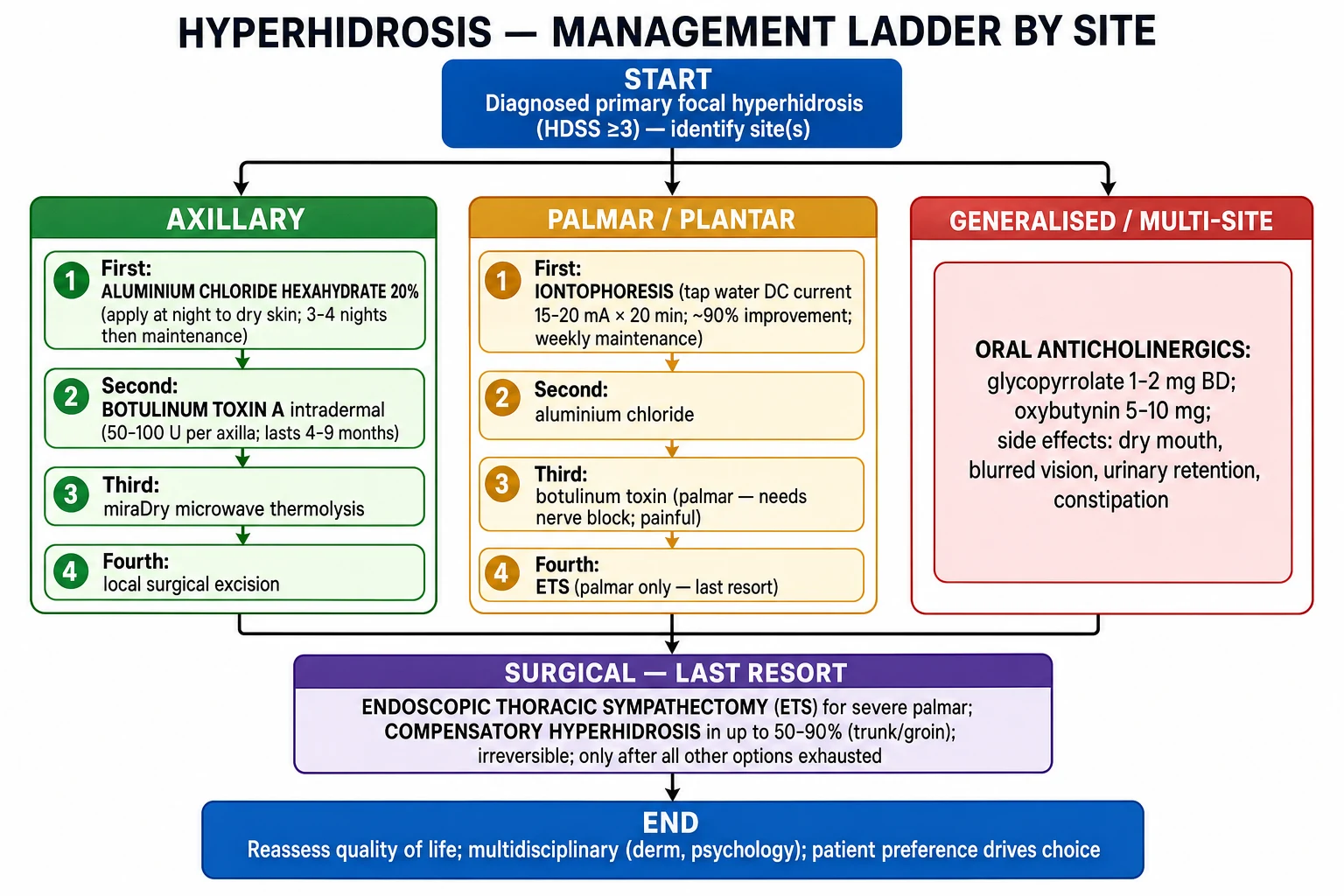
Management of hyperhidrosis is site-specific and severity-based. The first step is to confirm that the presentation is primary focal rather than secondary, because treating secondary hyperhidrosis without investigating the cause can delay serious diagnoses. Once primary focal disease is confirmed, treatment is chosen according to the affected site and the patient's response to previous therapies.[3][4]
General measures
All patients should be advised about: [1]
- Avoiding triggers — heat, spicy foods, alcohol, caffeine, nicotine, stress where possible.
- Absorbent products — cotton or moisture-wicking clothing, absorbent underarm pads, talc-free powders.
- Hygiene — regular washing, drying between toes, changing socks and shoes, rotating footwear.
- Skin care — emollients to prevent irritant dermatitis from antiperspirants; treatment of tinea pedis.
- Psychological support — reassurance that effective treatments exist, and referral for anxiety or depression if present. [1]
Axillary hyperhidrosis
First-line: topical aluminium chloride hexahydrate 20% (Driclor, Drysol, Anhydrol Forte).[3][4]
- Mechanism — aluminium salts form temporary plugs in the sweat duct and cause atrophy of the secretory coil with repeated use. They also have a weak antiseptic effect that reduces odour.
- Application — apply to completely dry skin at night, usually after a cool bath or shower, and allow to dry before putting on clothing. Wash off in the morning. Apply nightly for 3–7 consecutive nights until dryness is achieved, then maintenance once or twice weekly.
- Efficacy — reduces sweating in most patients with mild to moderate axillary disease; less effective if sweating is severe or if the skin is not properly dried before application.
- Side effects — skin irritation, burning, stinging, dryness, folliculitis. These can be reduced by applying a mild topical corticosteroid, reducing frequency, or using a lower concentration (e.g. 6.25% or 12.5%). [1]
Second-line: botulinum toxin A intradermal injections.[3][4]
- Mechanism — botulinum toxin blocks the release of acetylcholine from cholinergic nerve terminals, preventing stimulation of the eccrine gland.
- Dosing — typically 50–100 units per axilla (onabotulinumtoxinA), injected intradermally in a grid pattern across the hair-bearing area, often 10–20 injections per axilla. Doses up to 100 units per axilla are commonly used in practice.
- Duration — effect lasts 4–9 months, often 6 months.
- Efficacy — approximately 75–90% reduction in sweating and a significant improvement in HDSS.
- Side effects — injection pain, bruising, temporary muscle weakness (rare in the axilla), compensatory sweating elsewhere (uncommon with axillary treatment), and high cost.
- Technique — the starch-iodine test can be used to map the area before injection. Use a 30-gauge needle and inject superficially into the dermis. [1]
Third-line: microwave thermolysis (miraDry).[7]
- Mechanism — microwave energy is delivered to the interface between the skin and the underlying fat, where eccrine and apocrine glands are concentrated. The energy produces controlled thermolysis of the sweat glands.
- Procedure — performed under local anaesthesia; typically one to two treatment sessions spaced three months apart.
- Efficacy — substantial and durable reduction in axillary sweating and odour in clinical trials and real-world series. Some patients achieve near-complete cessation of axillary sweating.
- Side effects — temporary swelling, bruising, altered sensation, numbness, and rarely nerve injury or scarring. It is approved for axillary use only in many jurisdictions. [1]
Other options: [1]
- Topical glycopyrronium (glycopyrrolate) cloth or cream — an anticholinergic applied to the axilla, useful for patients who cannot tolerate aluminium chloride or prefer a non-injectable option. Recent systematic reviews support efficacy and safety, though local irritation and dry mouth can occur.[8]
- Oral anticholinergics — reserved for patients with multi-site or generalised disease that fails topical therapy, or for those who cannot access botulinum toxin or miraDry.
Palmar and plantar hyperhidrosis
First-line: tap-water iontophoresis.[3][4]
- Mechanism — a direct electrical current is passed through tap water while the hands or feet are immersed. The exact mechanism is not fully understood but is thought to involve microvascular vasoconstriction, ionic plugging of the sweat duct, and antagonism of pilocarpine-sensitive sweating.
- Technique — each palm or sole is placed in a separate tray of tap water. A direct current of 15–20 mA is applied for 20–30 minutes per session. Initially, treatments are performed 3–4 times per week until improvement is achieved, then maintenance once weekly or every two weeks.
- Efficacy — approximately 80–90% of patients experience improvement. It is safe, non-invasive, and can be performed at home with a portable device.
- Side effects — skin irritation, tingling, discomfort, and rarely burns or blisters if the current is too high or electrodes are improperly placed. Contraindications include pregnancy, epilepsy, cardiac pacemakers, and metal implants near the treatment site.
- Practical tip — adding glycopyrronium or aluminium chloride to the water can enhance efficacy in refractory cases, though this requires caution. [1]
Second-line: topical aluminium chloride. [1]
- Aluminium chloride 20% can be applied to the palms and soles, but it is less effective here than in the axillae because the thicker stratum corneum and occlusion by gloves or socks limit penetration. It is worth trying, especially when iontophoresis is unavailable or poorly tolerated. [1]
Third-line: botulinum toxin A. [1]
- Botulinum toxin is highly effective for palmar and plantar disease but is painful and usually requires a nerve block (median, ulnar and radial nerves for the palm; tibial and sural nerves for the sole).[4]
- Dosing is higher than for the axillae: 100–200 units per palm or sole, injected intradermally in a grid pattern.
- Effect lasts 4–6 months.
- Side effects include pain, bruising, temporary weakness of small hand muscles or foot muscles, and compensatory sweating.
- Because of pain and cost, botulinum toxin is usually reserved for patients who fail iontophoresis and topical therapy.
Last resort: endoscopic thoracic sympathectomy (ETS).[4][9]
- Indication — severe palmar hyperhidrosis that substantially impairs quality of life and has failed all conservative measures.
- Technique — under general anaesthesia, the sympathetic chain is identified endoscopically and interrupted at the level of T2, T3 or T4 (the ganglia supplying the upper limb). The procedure can be performed by cutting, cauterising, clipping or excising the chain.
- Efficacy — immediate and often dramatic cessation of palmar sweating in 95–98% of patients.
- Risks — the major risk is compensatory hyperhidrosis, which occurs in 50–90% of patients and can be severe and more disabling than the original palmar sweating. Other risks include Horner syndrome (ptosis, miosis, anhidrosis; ~1–2%), pneumothorax, intercostal neuralgia, gustatory sweating, and cardiac effects from sympathetic denervation.
- Counselling — because compensatory sweating is unpredictable and often irreversible, ETS should be considered only after extensive counselling and only for severe palmar disease. It is not recommended for axillary or plantar hyperhidrosis as a primary treatment. [1]
Facial and gustatory hyperhidrosis
- Topical aluminium chloride or glycopyrronium can be used cautiously on the forehead and scalp, but irritation is common.
- Botulinum toxin can be injected into the affected facial area, but care is needed to avoid brow or eyelid ptosis.
- Gustatory sweating due to diabetic autonomic neuropathy or Frey syndrome (after parotid surgery) may respond to botulinum toxin injected into the affected skin area.
- Oral anticholinergics may help generalised facial sweating but are limited by side effects. [1]
Generalised or multi-site hyperhidrosis
Oral anticholinergics are the mainstay for generalised disease or for patients with multiple focal sites that cannot be managed with local therapy.[3][4]
- Glycopyrrolate — a quaternary ammonium anticholinergic that does not cross the blood-brain barrier readily, so it has fewer central side effects than some alternatives. Dose typically 1–2 mg once or twice daily, titrated to effect and side effects. It is preferred in many guidelines because of its lower propensity to cause confusion.
- Oxybutynin — a tertiary amine that crosses the blood-brain barrier and can cause sedation, confusion and cognitive effects, particularly in the elderly. Dose typically 2.5–5 mg once or twice daily, titrated slowly. It is often used in younger patients.
- Propantheline — an older anticholinergic, typically 15 mg three times daily before meals. It is less commonly used now but remains an option.
- Side effects — dry mouth, blurred vision (accommodation failure), constipation, urinary retention, tachycardia, reduced sweating with risk of heat intolerance, and cognitive effects (especially oxybutynin). Start low, go slow, and warn patients about heat illness.
- Contraindications — narrow-angle glaucoma, urinary retention, severe constipation, paralytic ileus, myasthenia gravis, and severe cardiac disease. Use with caution in the elderly and in hot climates. [1]
Specific Subtypes & Scenarios
Palmoplantar hyperhidrosis
Palmoplantar disease is the most disabling focal subtype because it affects manual dexterity, walking comfort, and social interaction. The first-line treatment is tap-water iontophoresis, which is effective, safe and can be performed at home. Topical aluminium chloride is less effective on the palms and soles than in the axillae but can be tried. Botulinum toxin is effective but painful and costly; a nerve block improves tolerability. ETS is reserved for severe, refractory palmar disease after extensive counselling about compensatory hyperhidrosis.[4]
Axillary hyperhidrosis
Axillary disease is the most common reason for presentation. Topical aluminium chloride 20% is the correct first-line therapy. Patients must be taught to apply it to completely dry skin at night and to wash it off in the morning. Botulinum toxin is the standard second-line for severe disease or aluminium chloride failure. miraDry provides durable reduction for patients seeking a long-term solution. Oral anticholinergics are rarely needed for isolated axillary disease because of their systemic side effects.[3][4]
Gustatory and facial hyperhidrosis
Gustatory sweating is sweating of the face, scalp or neck triggered by eating, particularly spicy foods, chocolate, cheese or alcohol. It can be primary or secondary. The classic secondary cause is Frey syndrome (auriculotemporal nerve syndrome) after parotid surgery, where parasympathetic fibres regenerate into the sympathetic pathway to the sweat glands. Other causes include diabetic autonomic neuropathy and post-herpetic neuralgia. Management includes dietary modification, topical anticholinergics, and intradermal botulinum toxin into the affected area.[2]
Secondary generalised hyperhidrosis
The priority is not symptom control but diagnosis of the underlying cause. A systematic history, examination and targeted investigations are required. Symptomatic treatments such as oral anticholinergics may be used while the underlying cause is being evaluated, but they should not delay investigation. Management of the underlying cause (e.g. thyrotoxicosis, phaeochromocytoma, lymphoma) often resolves the sweating. [1]
Hyperhidrosis in the context of anxiety disorders
Anxiety and hyperhidrosis often coexist. Emotional sweating is mediated by the limbic cortex and can be severe even in the absence of heat. Patients may develop a vicious cycle in which sweating triggers social anxiety, which triggers more sweating. Cognitive-behavioural therapy, anxiolytic treatment where appropriate, and effective control of the sweating can break the cycle. However, be cautious with SSRIs and SNRIs because these drugs can themselves cause sweating. [1]
Complications & Pitfalls
Complications of untreated hyperhidrosis
Chronic hyperhidrosis is not medically dangerous in itself, but it causes significant physical and psychosocial complications:[5]
- Skin complications — maceration, intertrigo, fungal infection (tinea pedis, candida), bacterial overgrowth, bromhidrosis, pitted keratolysis of the soles, and contact dermatitis from topical products.
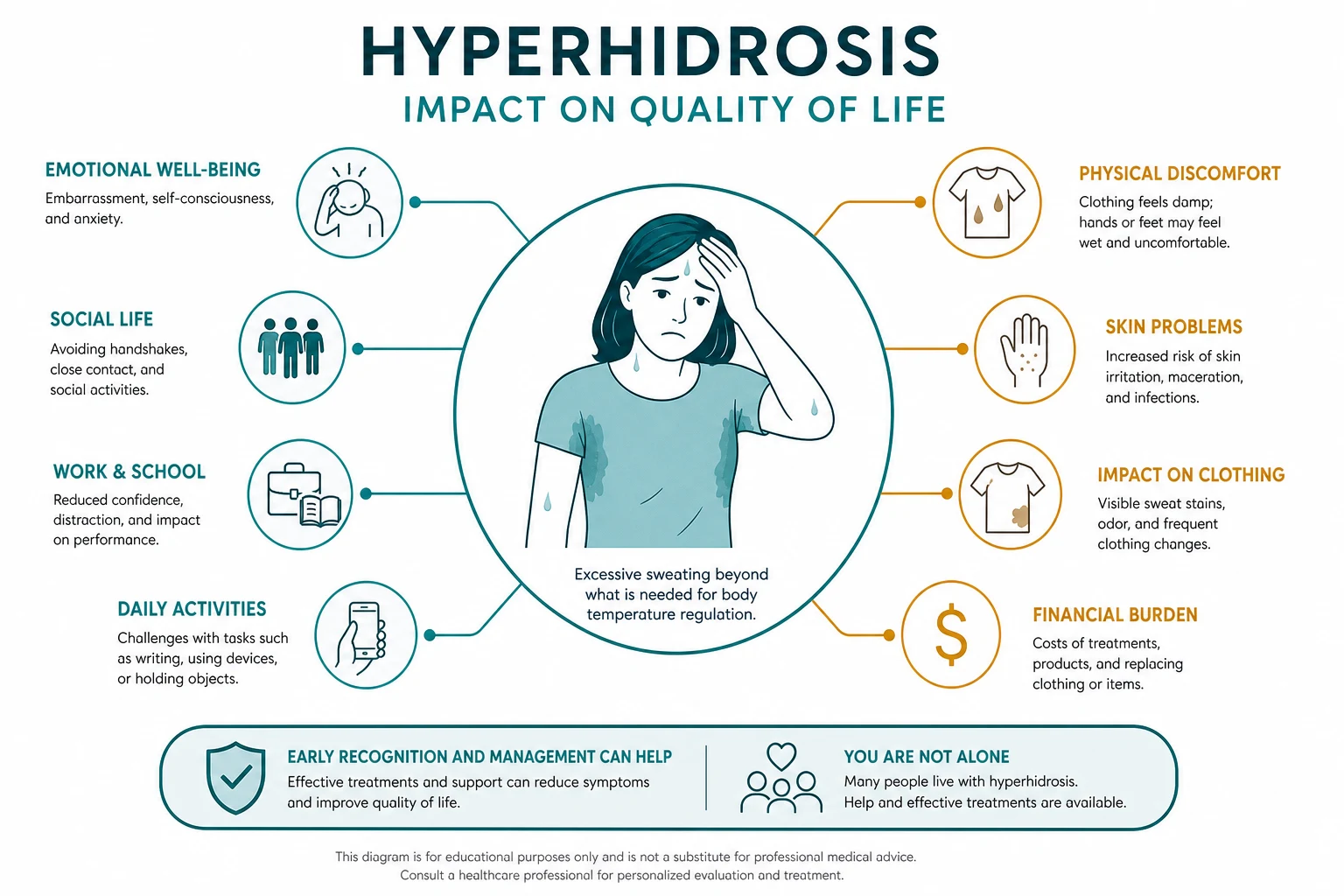
- Psychosocial complications — anxiety, depression, social phobia, low self-esteem, avoidance of work or school, occupational impairment, and reduced quality of life. Studies have shown quality-of-life impairment comparable to psoriasis or atopic dermatitis.
- Occupational complications — difficulty with manual tasks, use of electronic equipment, handling paper, or wearing protective gloves.
- Recurrent infections — macerated skin is prone to bacterial and fungal infection. [1]
Complications of treatment
Aluminium chloride
Irritant dermatitis
- Skin irritation, burning, stinging
- Dryness, eczema, folliculitis
- Mitigate by applying to dry skin, using lower concentration, or adding topical corticosteroid
Botulinum toxin
Local effects
- Pain, bruising, haematoma
- Temporary local weakness (hand/foot muscles if deeply injected)
- High cost and need for repeat injections
Oral anticholinergics
Systemic muscarinic block
- Dry mouth, blurred vision, constipation, urinary retention
- Tachycardia, heat intolerance, confusion (especially oxybutynin)
- Contraindicated in narrow-angle glaucoma, retention, ileus
ETS
Compensatory sweating
- Compensatory hyperhidrosis in 50–90% of patients
- Horner syndrome, pneumothorax, neuralgia, gustatory sweating
- Often irreversible; may be worse than original disease
Clinical pitfalls
- Treating primary focal disease without excluding secondary causes — always ask about systemic symptoms, age of onset, distribution, and sleep-related sweating.
- Failing to provide practical application advice — aluminium chloride fails if applied to wet skin or washed off too soon. Patients need clear instructions.
- Starting oral anticholinergics without screening for contraindications — narrow-angle glaucoma, urinary retention, severe constipation, ileus, and myasthenia gravis are absolute contraindications.
- Offering ETS without adequate counselling — compensatory hyperhidrosis is the most feared complication and can be disabling. Patients must understand it is unpredictable and often irreversible.
- Attributing all sweating to anxiety — while anxiety can cause or worsen sweating, a thorough medical and drug history is essential before making this diagnosis. [1]
Prognosis & Disposition
Primary focal hyperhidrosis is a chronic, lifelong condition that does not usually resolve spontaneously. It may improve somewhat with age, particularly after middle age, but many patients require ongoing treatment for decades. The natural history is one of fluctuating severity, often worse in adolescence and young adulthood when social and occupational demands are greatest. With appropriate treatment, most patients can achieve substantial control of symptoms and improvement in quality of life.[2]
Prognostic factors: [1]
- Severity at presentation — more severe disease often requires more aggressive or combination therapy.
- Site of involvement — palmar and plantar disease may be more difficult to control than axillary disease; generalised disease often requires systemic therapy.
- Response to first-line treatment — early response to aluminium chloride or iontophoresis predicts good long-term control.
- Psychosocial impact — significant anxiety or depression may require concurrent psychological support.
- Underlying cause — secondary hyperhidrosis generally improves when the cause is treated. [1]
Disposition and referral:[3]
- Primary care — most patients with primary focal hyperhidrosis can be managed initially in primary care with topical therapy and iontophoresis.
- Dermatology referral — severe disease, failure of first-line therapy, need for botulinum toxin, miraDry, or consideration of oral anticholinergics.
- Thoracic surgery referral — only for severe, refractory palmar disease after extensive counselling and after failure of all other options (ETS).
- Specialist referral for secondary causes — endocrinology, oncology, neurology, infectious diseases, or cardiology as indicated by the suspected cause. [1]
Special Populations
Children and adolescents
Primary focal hyperhidrosis commonly begins in childhood or adolescence. It can cause severe embarrassment at school, difficulty with handwriting, and avoidance of social activities. The mainstays of treatment are topical aluminium chloride and tap-water iontophoresis, both of which are safe in children. Botulinum toxin is used off-label and is generally well tolerated; doses are reduced compared with adults. Oral anticholinergics are used with caution because of side effects, particularly in hot climates. Psychological support and school liaison are often valuable.[2]
Pregnancy and breastfeeding
Hyperhidrosis often worsens during pregnancy because of hormonal changes and increased metabolic rate. Topical aluminium chloride is generally considered safe because systemic absorption is minimal. Iontophoresis is also considered safe. Botulinum toxin is usually avoided in pregnancy and breastfeeding unless absolutely necessary, because of limited safety data. Oral anticholinergics are generally avoided in pregnancy and breastfeeding unless the benefits clearly outweigh the risks. Non-pharmacological measures and reassurance are important.[2]
Menopause
Menopausal hot flushes and night sweats are common and may be confused with hyperhidrosis. They are usually generalised, associated with flushing, and occur during sleep. Hormone replacement therapy, where appropriate, is the most effective treatment. Non-hormonal options include gabapentin, venlafaxine, and clonidine in selected patients. Distinguish true hyperhidrosis from vasomotor symptoms, because the management differs. [1]
Elderly patients
New-onset hyperhidrosis in an older adult is more likely to be secondary. The clinician should have a low threshold for investigating thyroid disease, diabetes, malignancy, infection, neurological disease and medications. Oral anticholinergics are particularly problematic in the elderly because of increased risk of confusion, falls, urinary retention, constipation and glaucoma. Oxybutynin should be avoided if possible; glycopyrrolate may be better tolerated but still requires caution. Topical therapy and iontophoresis are preferred when feasible. [1]
Immunocompromised and diabetic patients
Diabetic patients may have gustatory sweating or generalised autonomic sweating due to autonomic neuropathy. Good glycaemic control is the foundation of management. Immunocompromised patients with chronic macerated skin are at increased risk of bacterial and fungal infection; skin care and prompt treatment of infection are essential. [1]
Evidence, Guidelines & Regional Differences
The most widely cited modern guidance on hyperhidrosis comes from the 2019 comprehensive two-part review by Nawrocki and Cha in the Journal of the American Academy of Dermatology, which covers aetiology, diagnosis and therapeutic options. This review provides the backbone of most clinical teaching on hyperhidrosis.[2][4]
Key evidence-based points:[3][4]
- Topical aluminium chloride 20% is first-line for axillary hyperhidrosis. It is effective, inexpensive and widely available.
- Tap-water iontophoresis is first-line for palmar and plantar hyperhidrosis, with high patient satisfaction and a good safety profile.
- Botulinum toxin A is a well-established second-line treatment for axillary disease and a third-line option for palmar/plantar disease; it produces marked reduction in sweating for several months.
- Oral anticholinergics (glycopyrrolate, oxybutynin) are effective for generalised or multi-site disease but are limited by systemic anticholinergic side effects.
- ETS is highly effective for severe palmar disease but carries a significant risk of compensatory hyperhidrosis, which limits its use. [1]
Regional differences
[1] [1]In many low- and middle-income countries, access to botulinum toxin, miraDry and ETS is limited or unavailable. Management relies heavily on topical aluminium chloride, tap-water iontophoresis (devices can be made locally in some settings), and oral anticholinergics such as oxybutynin or propantheline, which are inexpensive. The basic work-up for secondary causes (FBC, ESR/CRP, glucose, TSH, chest X-ray, HIV test) should still be performed when indicated.
Recent developments
- Topical glycopyrronium preparations have expanded the non-injectable options for axillary disease and are supported by systematic reviews showing efficacy and acceptable safety.[8]
- miraDry continues to be evaluated for long-term durability and safety in axillary hyperhidrosis, with studies showing sustained reduction in sweating and odour.[7]
- ETS techniques are evolving, with interest in T2-sparing or lower-level sympathectomy to reduce compensatory hyperhidrosis while maintaining palmar efficacy, though long-term data are still maturing.[9]
Exam Pearls
Primary focal hyperhidrosis — the five diagnostic features
BISSS
Affects both sides symmetrically
No underlying systemic cause
Mirror-image distribution
Sweating ceases during sleep
Onset in childhood or adolescence, usually under 25 years
Exam application bank (NEET-PG / INICET)
One-line answer
Hyperhidrosis is sweating beyond the physiological requirement for thermoregulation. It is divided into primary focal (idiopathic, bilateral, symmetric, focal onset before age 25, ceases during sleep, often familial) and secondary generalised (endocrine, neurological, malignant, infectious, drug-related or autonomic cause). Primary focal hyperhidrosis affects roughly 1-3% of people and causes substantial psychosocial and occupational disability. Eccrine sweat glands are innervated by sympathetic cholinergic post-ganglionic fibres that release acetylcholine onto muscarinic-3 (M3) receptors; this explains why anticholinergics and botulinum toxin are effective. Site drives therapy: aluminium chloride 20% for axillary disease, tap-water iontophoresis for palmar/plantar disease, botulinum toxin A for refractory axillary or palmar disease, oral anticholinergics for generalised disease, and end
Worked stems (answer without another resource)
Stem 1 — Classic presentation. Map symptoms to mechanism; name the first investigation and first treatment step with dose/route if drug therapy is standard. [1]
Stem 2 — Unstable / complicated. List red flags that force immediate resuscitation, theatre, ICU, antidote, or reperfusion — and what you do in the first 15 minutes. [1]
Stem 3 — Atypical group. Elderly, pregnancy, child, or immunocompromised: how presentation and thresholds change. [1]
Stem 4 — Differential trap. Name the three closest mimics and one discriminator for each. [1]
Stem 5 — Disposition. Who goes home with safety-netting, who is admitted, who needs HDU/ICU/theatre, and what follow-up is mandatory. [1]
Rapid viva checklist
- Definition + classification
- Pathophysiology chain
- Bedside signs / criteria
- Score with exact components (if any)
- Emergency bundle
- Definitive therapy with doses
- Complications of disease and of treatment
- Special populations
- Guideline/trial name if classic
- Three exam traps
Coverage self-check
If you cannot answer any stem above from this page alone, re-read the matching section — the page is intended to be self-sufficient for final-prof and NEET-PG/INICET questions on Hyperhidrosis.
[1]References
- [1]Beitz JM. Parkinson's disease: a review Front Biosci (Schol Ed), 2014.PMID 24389262
- [2]Nawrocki S, Cha J. The etiology, diagnosis, and management of hyperhidrosis: A comprehensive review: Etiology and clinical work-up J Am Acad Dermatol, 2019.PMID 30710604
- [3]McConaghy JR, Fosselman D. Hyperhidrosis: Management Options Am Fam Physician, 2018.PMID 30215934
- [4]Nawrocki S, Cha J. The etiology, diagnosis, and management of hyperhidrosis: A comprehensive review: Therapeutic options J Am Acad Dermatol, 2019.PMID 30710603
- [5]Strutton DR, Kowalski JW, Glaser DA, et al. US prevalence of hyperhidrosis and impact on individuals with axillary hyperhidrosis: results from a national survey J Am Acad Dermatol, 2004.PMID 15280843
- [6]Solish N, Benohanian A, Kowalski JW. A comprehensive approach to the recognition, diagnosis, and severity-based treatment of focal hyperhidrosis: recommendations of the Canadian Hyperhidrosis Advisory Committee Dermatol Surg, 2007.PMID 17661933
- [7]Wimmer F, Schwaiger P, Giovanoli P, et al. Evaluation of Efficacy and Safety of miraDry(®) Procedure in the Treatment of Primary Axillary Hyperhidrosis Aesthetic Plast Surg, 2025.PMID 39753871
- [8]Kim J, Na K, Park J, et al. Efficacy and Safety of Topical Anticholinergics in the Treatment of Primary Axillary Hyperhidrosis: A Systematic Review and Meta-analysis Clin Drug Investig, 2026.PMID 41989535
- [9]Delgado LM, Jiang J, Rascovan L, et al. T2-sparing vs T2-including sympathectomy for hyperhidrosis: a meta-analysis on compensatory sweating J Cardiothorac Surg, 2026.PMID 42351253