Dermatology · Medicine
Lyme disease and erythema migrans
Also known as Lyme borreliosis · Erythema migrans · Acrodermatitis chronica atrophicans · Borrelial lymphocytoma
Lyme disease (Lyme borreliosis) is a tick-borne spirochaetal infection by Borrelia burgdorferi sensu lato, whose dermatological hallmark is erythema migrans at the inoculation site and, later, acrodermatitis chronica atrophicans. Fellowship-level assessment demands mastery of the Ixodes tick vector and endemic geography, the early-localised (erythema migrans), early-disseminated (multiple lesions, carditis, neuroborreliosis), and late (arthritis, acrodermatitis) stages, the clinical diagnosis of erythema migrans (serology is negative early), two-tier serological confirmation for later disease, first-line doxycycline/amoxicillin/cefuroxime, the prophylactic single-dose doxycycline after a high-risk tick bite, and the contested entity of post-treatment Lyme disease syndrome.
On this page & tools
Your progress
Saved locally on this device.
Exam tags
Red flags
Overview & definition
Lyme disease, properly called Lyme borreliosis, is a multisystem infection caused by spirochaetes of the Borrelia burgdorferi sensu lato complex and acquired through the bite of infected hard-bodied Ixodes ticks. It is the most frequently reported vector-borne infection in the Northern Hemisphere, and the skin is involved at every stage of the disease — as the initial erythema migrans (EM), as borrelial lymphocytoma in early dissemination, and as acrodermatitis chronica atrophicans (ACA) in late disease. Because the dermatological lesion is often the first and only clue, dermatologists and general physicians occupy the front line of diagnosis, and the single most important examination fact is this: erythema migrans is a clinical diagnosis, made on morphology and epidemiological risk, and treated empirically — serology is not required and is usually negative in the first weeks.[1][3]
The disease takes its name from Lyme, Connecticut, where an unusual cluster of juvenile inflammatory arthritis was investigated in 1975 and linked, a few years later, to the bite of the Ixodes tick and to the spirochaete Borrelia burgdorferi (named for its discoverer, Willy Burgdorferi). Although originally characterised as an arthropathy, Lyme borreliosis is now understood as a staged infection of skin, nervous system, heart, and joints whose tempo ranges from an indolent expanding rash over days to weeks, to a chronic atrophic dermatosis unfolding over years.[1][11]
Mastery at fellowship level rests on six pillars: the vector and endemic geography that frame any risk assessment; the three clinical stages and their organ-specific syndromes; the principle of clinical diagnosis of early disease with the judicious, late use of two-tier serology; a stage-specific antibiotic ladder of doxycycline, amoxicillin/cefuroxime, and parenteral ceftriaxone; the prevention strategy of tick avoidance, prompt removal, and targeted prophylaxis; and a critical, evidence-based stance toward post-treatment Lyme disease syndrome and the harms of prolonged antibiotics.[2][4]
Classification — genospecies and cutaneous taxonomy
The Borrelia burgdorferi sensu lato complex contains more than 20 genospecies, of which three are the principal human pathogens. They differ in geography and in the clinical syndromes they favour, which is why European disease (richer in afzelii and garinii) looks different from North American disease (almost exclusively burgdorferi sensu stricto). [1]
*B. burgdorferi* sensu stricto
*B. afzelii*
*B. garinii*
The three cutaneous manifestations of Lyme borreliosis — each a distinct clinicopathological entity — are themselves a high-yield classification: [1]
Erythema migrans (EM)
Borrelial lymphocytoma
Acrodermatitis chronica atrophicans (ACA)
Borrelial lymphocytoma is a rare, dense lymphocytic infiltrate of the dermis presenting as a solitary bluish-red nodule or plaque, classically on an earlobe, nipple, scrotum, or areola. It is overwhelmingly a European paediatric manifestation and, like ACA, reflects the skin-tropism of B. afzelii.[1][11]
Epidemiology & risk factors
Lyme borreliosis is reported across the temperate belt of the Northern Hemisphere. The United States records roughly 300,000 to 476,000 diagnoses annually (CDC estimate counting clinically diagnosed and surveillance cases), concentrated in the northeastern and upper midwestern states plus parts of the Pacific coast. Europe reports around 65,000 to 230,000 cases a year, with the highest incidence in central Europe (Slovenia, Austria, southern Germany, Czechia), Scandinavia, and the Baltic states; it is present across Russia and temperate Asia (China, Japan, Korea). Incidence tracks the distribution of the tick vector and the density of infected reservoir rodents.[5][11]
The vectors are hard-bodied Ixodes ticks, and their species sets the regional geography: Ixodes scapularis (the blacklegged or "deer" tick) in the northeastern and midwestern US, Ixodes pacificus (the western blacklegged tick) on the North American Pacific coast, Ixodes ricinus (the castor bean or sheep tick) across Europe, and Ixodes persulcatus (the taiga tick) in Russia and Asia. The white-footed mouse (Peromyscus leucopus), deer mice, chipmunks, shrews, and ground-feeding birds are the principal reservoir hosts on which larval and nymphal ticks acquire the spirochaete. White-tailed deer are essential to the tick reproductive cycle (adult females feed and mate on deer) but are not competent reservoirs — they mount an immune response that clears Borrelia — a distinction examiners enjoy testing.[5][14]
The single most important transmission variable is tick attachment time. Because the spirochaete lives dormant in the tick midgut bound by outer-surface protein A (OspA), it must, during the blood meal, downregulate OspA, upregulate OspC, multiply, and migrate to the salivary glands before it can be inoculated — a process that takes roughly 36 to 48 hours. Attachment of less than 36 hours rarely transmits infection, which is the entire biological justification for prompt tick removal and for the narrow window of post-exposure prophylaxis. Nymphs (the pinhead-sized immature stage) cause most human infections precisely because they are so small they feed unnoticed long enough to transmit; adults are larger and more often found and removed early. Risk is therefore concentrated in the nymphal activity season, April through September, and in people whose occupations or recreations put them in wooded, brushy, grassy habitat — forestry workers, hikers, hunters, gardeners, and children playing in tick-infested yards.[1][5]
Pathophysiology — tick, spirochaete, and dissemination
The pathogenesis of Lyme borreliosis is a dialogue between the tick's feeding biology and the spirochaete's antigenic versatility. Borrelia burgdorferi is a microaerophilic, motile spirochaete with a small genome and an unusual linear chromosome plus numerous linear and circular plasmids that encode its virulence repertoire, chief among them the outer-surface lipoproteins OspA through OspF. The spirochaete cycles between the tick (where it expresses OspA) and the mammal (where it switches to OspC and the VlsE antigenic-variation system), allowing it to persist in two very different hosts.[14]
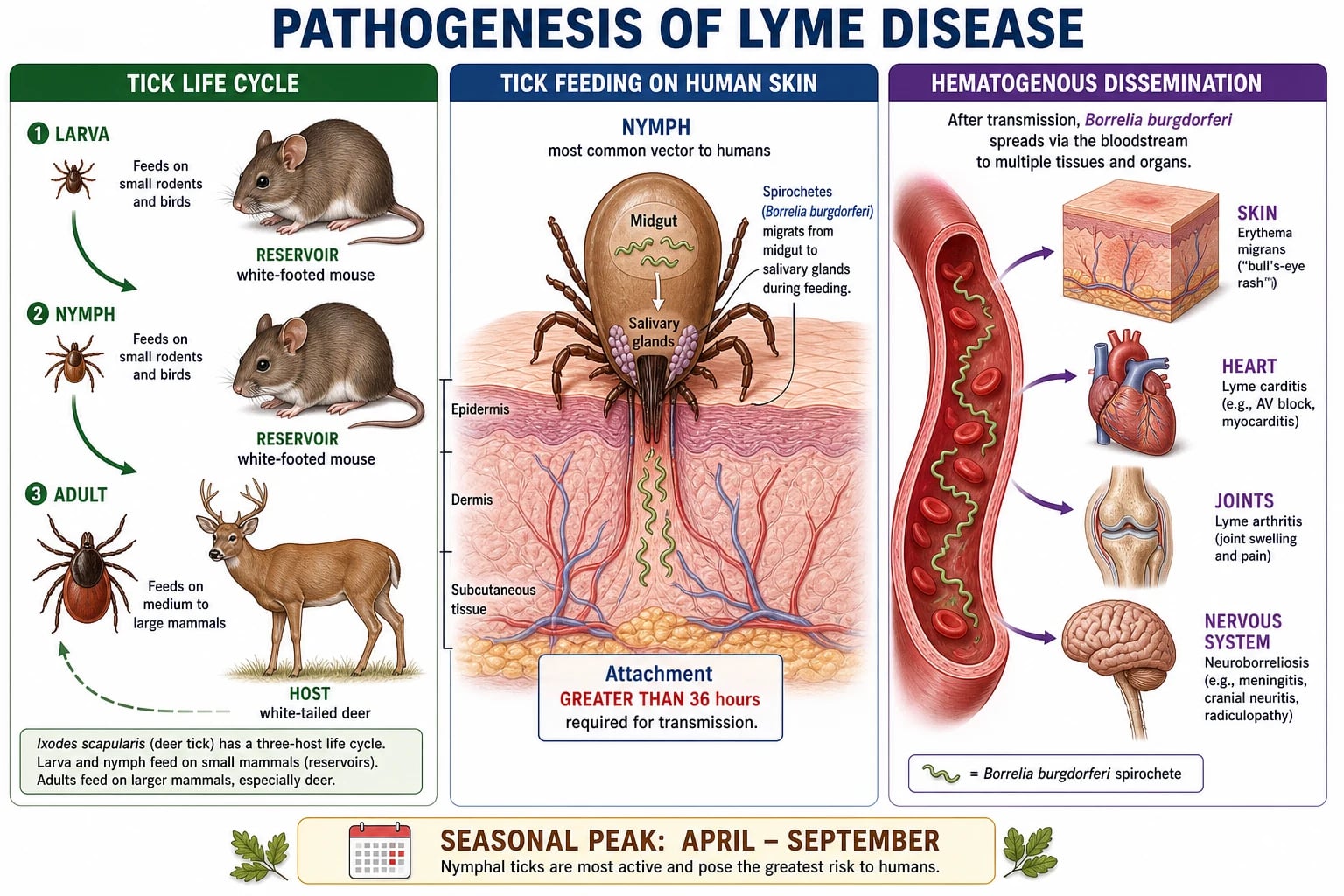
After inoculation into the skin, the spirochaete spreads locally outward through the dermis, producing the slowly expanding ring of erythema migrans, and then haematogenously and lymphatically to distant sites — the characteristic spread that explains the multiple lesions of early-disseminated disease (seeding of skin at sites remote from the bite) and the involvement of heart, joints, and nervous system. The organism is rarely recoverable from blood by the time symptoms appear; it is a tissue-dwelling pathogen that traffics through collagen and endothelium, which is partly why culture is insensitive and why serology, rather than direct detection, dominates late diagnosis. [1]
Tissue damage is driven less by a toxin than by the host immune response. Lipoproteins such as OspC engage Toll-like receptor 2 on macrophages and dendritic cells, releasing a cascade of pro-inflammatory cytokines (TNF-alpha, IL-1, IL-6, interferon-gamma). In Lyme arthritis, persistent intra-articular spirochaetal antigens (even after the organism is cleared) trigger an autoimmune-like synovitis in a genetically susceptible host (HLA-DRB1 alleles conferring risk; the T-helper-1/T-helper-17 inflammatory axis), explaining the antibiotic-refractory arthritis that behaves like a spondyloarthropathy and responds to DMARDs rather than further antibiotics. The same autoinflammatory logic underlies acrodermatitis chronica atrophicans, in which a chronic dermal B. afzelii infection produces a slowly progressive lymphoplasmacytic infiltrate followed by atrophy and fibrosis.[6][14]
Clinical presentation — the three stages
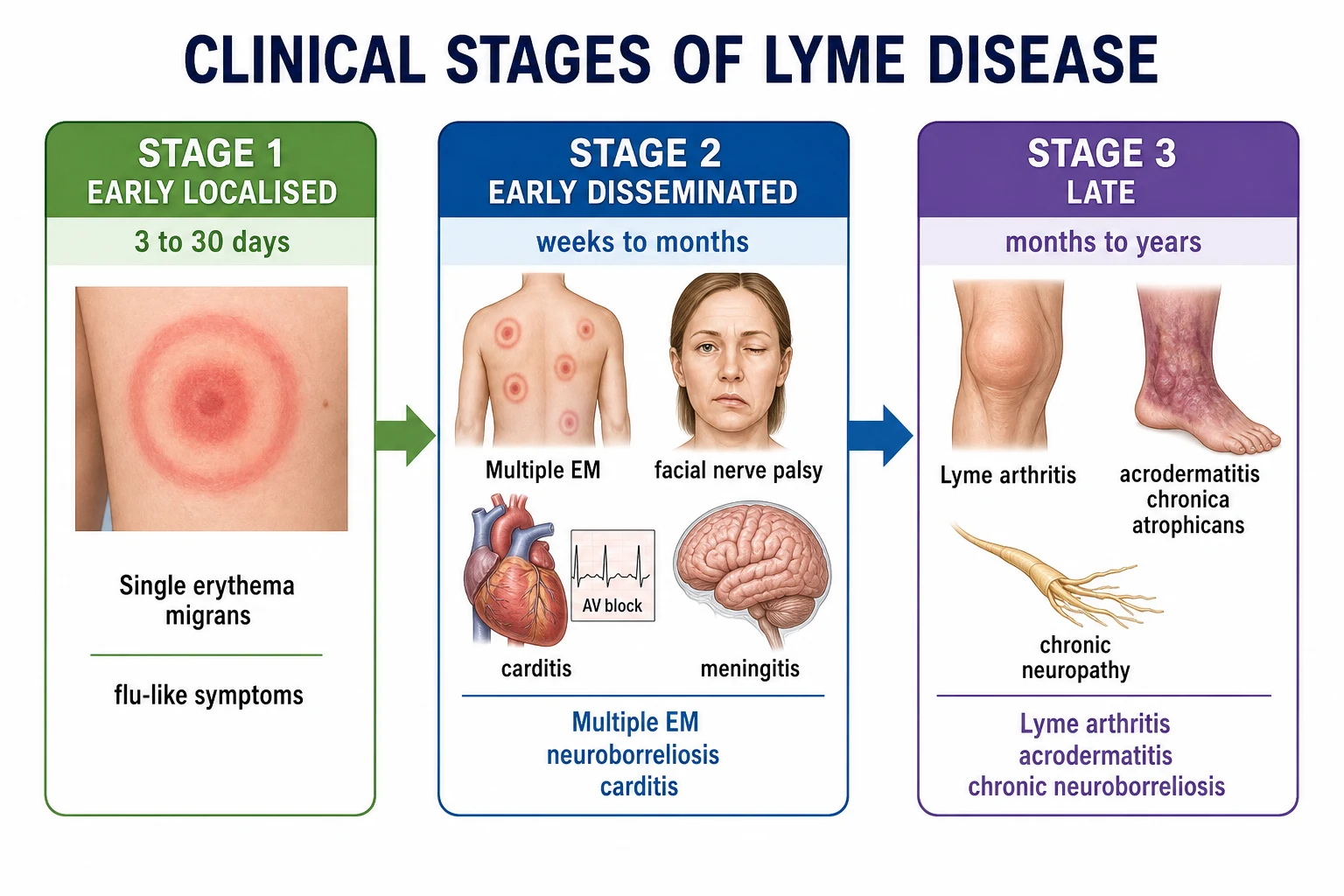
Lyme borreliosis unfolds in three overlapping stages, mirroring the spirochaete's expansion from skin to bloodstream to deep tissues. Each stage carries a defining dermatological or systemic syndrome, and examiners test the tempo, morphology, and organ tropism of each. [1]
Stage 1 — Early localised disease (3 to 30 days post-bite)
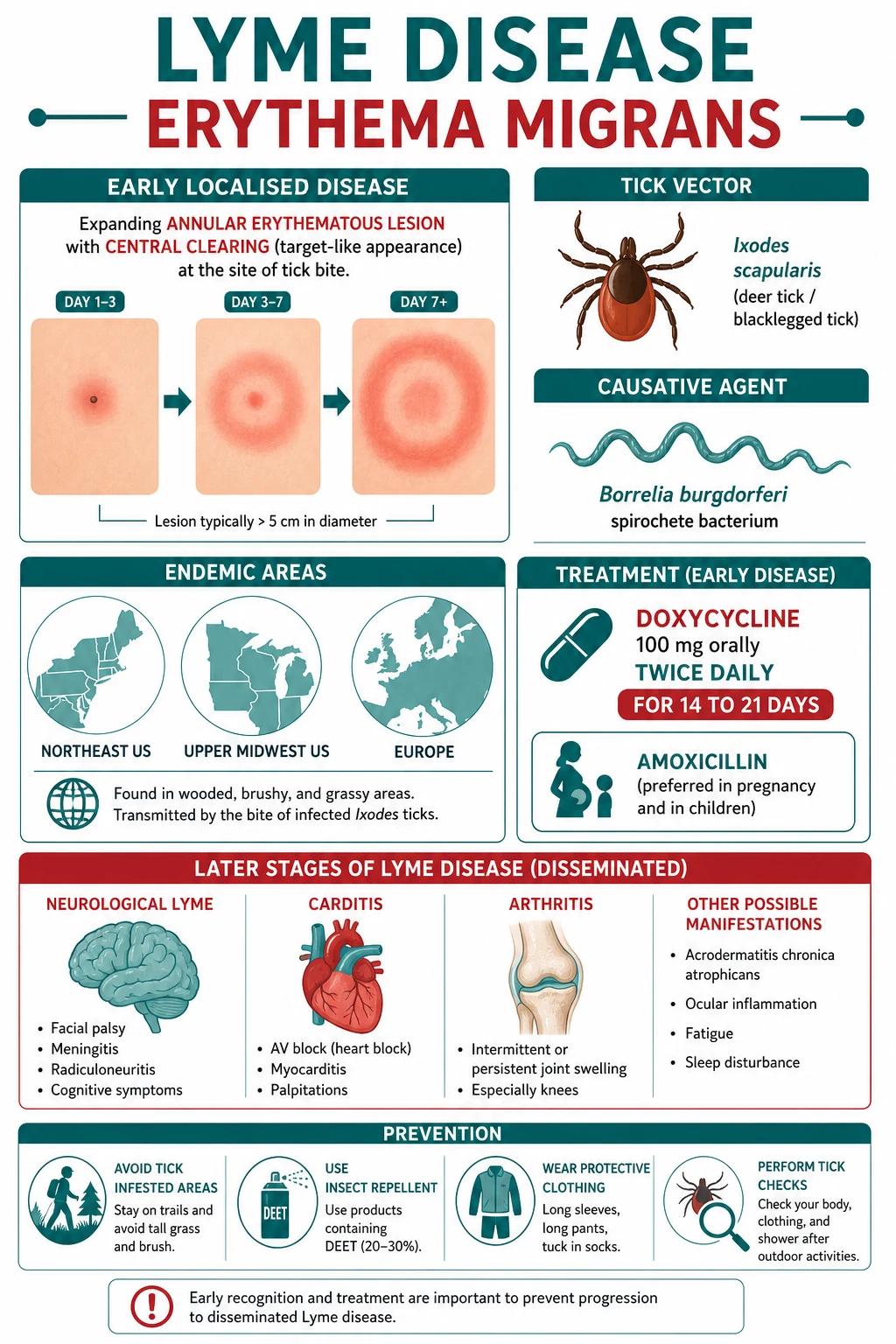
Erythema migrans is the pathognomonic early lesion and the presenting feature in roughly 70 to 80 per cent of patients. It begins, between 3 and 30 days after the bite (median around 7 to 14 days), as an erythematous macule or papule at the inoculation site that expands centrifugally over days to weeks into an annular patch or plaque that must measure at least 5 cm in its largest diameter (the size cut-off distinguishes it from a banal tick-bite hypersensitivity reaction, which stays small).[1][2]
EM = 5
The rash is frequently accompanied by a "flu-like" prodrome that is usually mild and non-specific: low-grade fever, chills, fatigue, malaise, headache, myalgia, arthralgia, and regional or generalised lymphadenopathy. Frank high fever is uncommon and should prompt a search for a co-infection (anaplasmosis, babesiosis) or an alternative diagnosis. Some patients have no constitutional symptoms at all and notice only the rash. [1]
Stage 2 — Early disseminated disease (weeks to months)
If untreated, the spirochaete seeds haematogenously, producing systemic manifestations within weeks to a few months. The skin, nervous system, and heart are the targets examiners probe hardest.[7][8]
Multiple erythema migrans is the cutaneous hallmark of dissemination — secondary annular lesions at sites remote from the original bite, often smaller and more numerous than the primary EM. This is not multiple tick bites; it is bloodstream seeding of the skin, and it is one of the few situations in which a rash itself signals bacteraemia. [1]
Neuroborreliosis occurs in roughly 10 to 15 per cent of untreated patients and has three classic European-described faces: cranial neuropathy (most famously facial nerve palsy, which — unlike idiopathic Bell palsy — may be bilateral), lymphocytic meningitis (headache, photophobia, meningism, CSF lymphocytic pleocytosis), and painful radiculoneuritis (Bannwarth syndrome — severe radicular pain, sensory and motor deficits, and CSF lymphocytosis, the commonest neuroborreliosis pattern in Europe). Less common are encephalitis, myelitis, and mononeuritis multiplex.[7]
Lyme carditis occurs in roughly 1 to 5 per cent of untreated patients and is dominated by fluctuating atrioventricular block of any degree, from first-degree to complete (third-degree) heart block, which can cause palpitations, dyspnoea, chest pain, presyncope, or syncope and, rarely, sudden death. Myopericarditis may coexist. Any patient with suspected or confirmed Lyme and cardiac symptoms (palpitations, syncope) must be admitted for continuous telemetry, because AV block can progress rapidly within hours.[4][8]
Borrelial lymphocytoma (see Classification) is the rare fourth cutaneous/lymphoid manifestation of this stage. [1]
Stage 3 — Late disease (months to years)
Lyme arthritis is the commonest late manifestation, especially with B. burgdorferi sensu stricto in North America: an intermittent, mono- or oligo-articular arthritis, most often of a single knee, marked by large effusions but comparatively little pain, recurring over months to years. Roughly 60 per cent of untreated North American patients develop arthritis; a minority progress to antibiotic-refractory arthritis, an autoimmune synovitis persisting after microbiological cure.[6]
Acrodermatitis chronica atrophicans (ACA) is the late cutaneous manifestation, almost exclusively European and Asian and caused by B. afzelii. It begins insidiously on extensor surfaces of the distal limbs — dorsal hands and feet, lower legs, forearms — as an oedematous, bluish-red to violaceous plaque (the inflammatory stage) that, over years, evolves into striking atrophy: the skin becomes thin, dry, wrinkled, and translucent ("cigarette-paper" or "cellophane" skin), through which veins are visible. Fibrous nodules may form over joints (juxta-articular fibrous nodules). ACA is chronic and slowly progressive but rarely life-threatening; it responds to oral antibiotics even years into its course.[12]
Chronic neuroborreliosis is rare and debated — a slowly progressive encephalomyelitis, peripheral neuropathy (often associated with ACA), or a mild cognitive/encephalopathic syndrome. Distinguishing genuine chronic neuroborreliosis from post-treatment symptoms requires objective neurological signs and CSF evidence of intrathecal antibody synthesis. [1]
Differential diagnosis
The expanding annular erythema of EM has a long differential, and examiners expect the features that separate each rather than a bare list. [1]
Cellulitis / erysipelas
Tinea corporis
Erythema multiforme
Granuloma annulare
Fixed drug eruption
STARI
Arthropod bite / hypersensitivity
The practical discriminator triad for EM is centripetal expansion over days to weeks, a maximum diameter of at least 5 cm, and compatible tick exposure in an endemic area. The absence of a remembered tick bite does not exclude EM (only a minority of patients recall the bite), and the absence of the classic target does not exclude it either. Southern tick-associated rash illness (STARI) deserves special mention because it is the most clinically confounding mimic: an EM-like rash following the bite of the lone-star tick (Amblyomma americanum) in the southeastern and south-central United States, distinguished by geography, milder or absent systemic symptoms, absence of arthritis or carditis, and — usually — a benign self-limited course; the causative agent (Borrelia lonestari) is debated and routine antibiotic benefit is unproven.[3][11]
Clinical & bedside assessment
The focused assessment of suspected Lyme begins with the history: any tick exposure or outdoor activity in an endemic area in the preceding month, the date and site of any recognised bite, the evolution and measurements of the rash, and systemic symptoms (fever, headache, facial weakness, palpitations, syncope, joint swelling). Examine the rash in good light, measure its largest diameter, and document its morphology (annular, targetoid, homogeneous, vesicular) and whether there are multiple lesions (a red flag for dissemination).[3]
For any patient with EM, screen for dissemination by history and examination: ask about and examine for facial weakness (test both sides — bilateral palsy is highly suggestive of Lyme), meningism (neck stiffness, photophobia), radicular pain, cardiac symptoms (palpitations, exertional dyspnoea, syncope), and joint swelling (especially the knee). A low threshold for an ECG is warranted when any cardiac symptom is volunteered: the cheap, rapid finding of a prolonged PR interval or higher-degree AV block changes management immediately, from outpatient oral therapy to admission and telemetry.[4][8]
Named syndromes worth knowing at the bedside: Bannwarth syndrome (the European triad of painful radiculopathy, lymphocytic meningitis, and cranial neuropathy), bilateral facial palsy (think Lyme in an endemic area — and also sarcoidosis and Guillain-Barre), and the "knee that swells, comes, and goes" of recurrent Lyme arthritis. Generalised lymphadenopathy and splenomegaly, when present, should also raise the question of a co-infection (anaplasmosis, babesiosis) carried by the same Ixodes tick. [1]
Investigations — clinical diagnosis first, two-tier serology later
[1]The investigation strategy is therefore stage-dependent: [1]
Early-localised EM
Early-disseminated / Late
Two-tier serology is the standard for any non-EM presentation. The traditional CDC algorithm is a sensitive first-line enzyme immunoassay (ELISA/EIA), often using the C6 peptide of VlsE; if positive or equivocal, it is confirmed by a Western immunoblot — IgM (requires 2 of 3 bands, useful in the first month) and IgG (requires 5 of 10 bands, the mainstay for later disease). The two-step design trades a small loss of sensitivity for a large gain in specificity, preventing false positives from cross-reacting antibodies (other spirochaetes, autoimmune disease, Epstein-Barr).[2][4]
The modified two-tier testing algorithm (MTTT), now endorsed by the CDC, replaces the Western blot with a second, different EIA (e.g., C6 plus a whole-cell or VlsE-based EIA): two positive EIAs constitute a positive result. MTTT is simpler, faster, and at least as sensitive in early disease. Whichever algorithm is used, the result must be interpreted in context: antibodies persist for years after treated or even untreated infection and do not distinguish active from past disease, so a positive serology alone is never an indication to treat in the absence of compatible clinical findings.[4]
For suspected neuroborreliosis, lumbar puncture is performed: the CSF shows a lymphocytic pleocytosis (typically tens to a few hundred cells per microlitre), elevated protein, and — most specifically — intrathecal synthesis of anti-Borrelia antibodies, demonstrated by a raised antibody index (CSF-to-serum antibody ratio corrected for blood-brain barrier integrity). A normal CSF white count argues against neuroborreliosis even with a positive serum serology. PCR of CSF is insensitive (around 30 per cent) and is not a frontline test, but PCR of synovial fluid is highly sensitive and useful in confirming Lyme arthritis when serology is positive but the picture is atypical.[7]
Culture in Barbour-Stoenner-Kelly (BSK) medium is possible from an early EM skin biopsy (sensitivity around 40 to 70 per cent) but is slow (weeks), specialised, and restricted to reference or research laboratories — it is not a routine clinical tool. Skin biopsy with Warthin-Starry silver stain or Borrelia immunohistochemistry is occasionally used for ACA or atypical lesions but is likewise not routine; EM is diagnosed, and treated, without it. [1]
Management — resuscitation (time-critical situations)
Although most Lyme disease is managed as an outpatient, three situations demand immediate escalation: [1]
- Lyme carditis with any AV block — admit for continuous cardiac monitoring (telemetry), obtain serial ECGs, and start IV ceftriaxone 2 g once daily. Symptomatic or high-degree (second- or third-degree) AV block, and any block with a prolonged ventricular pause, require a temporary pacemaker until the conduction recovers (it usually does within days of antibiotics). The patient can be stepped down to oral therapy and discharged once the PR interval stabilises.[4][8]
- Meningitis, radiculopathy, or bilateral facial palsy — suspected neuroborreliosis warrants CSF examination and IV ceftriaxone; a painful radiculopathy (Bannwarth) can be excruciating and may require analgesia.
- An unwell patient with high fever and cytopenias — consider a co-infection (human granulocytic anaplasmosis, babesiosis) from the same tick bite, which changes the antibiotic choice (anaplasmosis responds to doxycycline; babesiosis needs atovaquone plus azithromycin).
Exam application bank (NEET-PG / INICET)
One-line answer
Lyme disease (Lyme borreliosis) is a tick-borne spirochaetal infection by Borrelia burgdorferi sensu lato, whose dermatological hallmark is erythema migrans at the inoculation site and, later, acrodermatitis chronica atrophicans. Fellowship-level assessment demands mastery of the Ixodes tick vector and endemic geography, the early-localised (erythema migrans), early-disseminated (multiple lesions, carditis, neuroborreliosis), and late (arthritis, acrodermatitis) stages, the clinical diagnosis of erythema migrans (serology is negative early), two-tier serological confirmation for later disease, first-line doxycycline/amoxicillin/cefuroxime, the prophylactic single-dose doxycycline after a high-risk tick bite, and the contested entity of post-treatment Lyme disease syndrome.
Worked stems (answer without another resource)
Stem 1 — Classic presentation. Map symptoms to mechanism; name the first investigation and first treatment step with dose/route if drug therapy is standard. [1]
Stem 2 — Unstable / complicated. List red flags that force immediate resuscitation, theatre, ICU, antidote, or reperfusion — and what you do in the first 15 minutes. [1]
Stem 3 — Atypical group. Elderly, pregnancy, child, or immunocompromised: how presentation and thresholds change. [1]
Stem 4 — Differential trap. Name the three closest mimics and one discriminator for each. [1]
Stem 5 — Disposition. Who goes home with safety-netting, who is admitted, who needs HDU/ICU/theatre, and what follow-up is mandatory. [1]
Rapid viva checklist
- Definition + classification
- Pathophysiology chain
- Bedside signs / criteria
- Score with exact components (if any)
- Emergency bundle
- Definitive therapy with doses
- Complications of disease and of treatment
- Special populations
- Guideline/trial name if classic
- Three exam traps
Coverage self-check
If you cannot answer any stem above from this page alone, re-read the matching section — the page is intended to be self-sufficient for final-prof and NEET-PG/INICET questions on Lyme disease and erythema migrans.
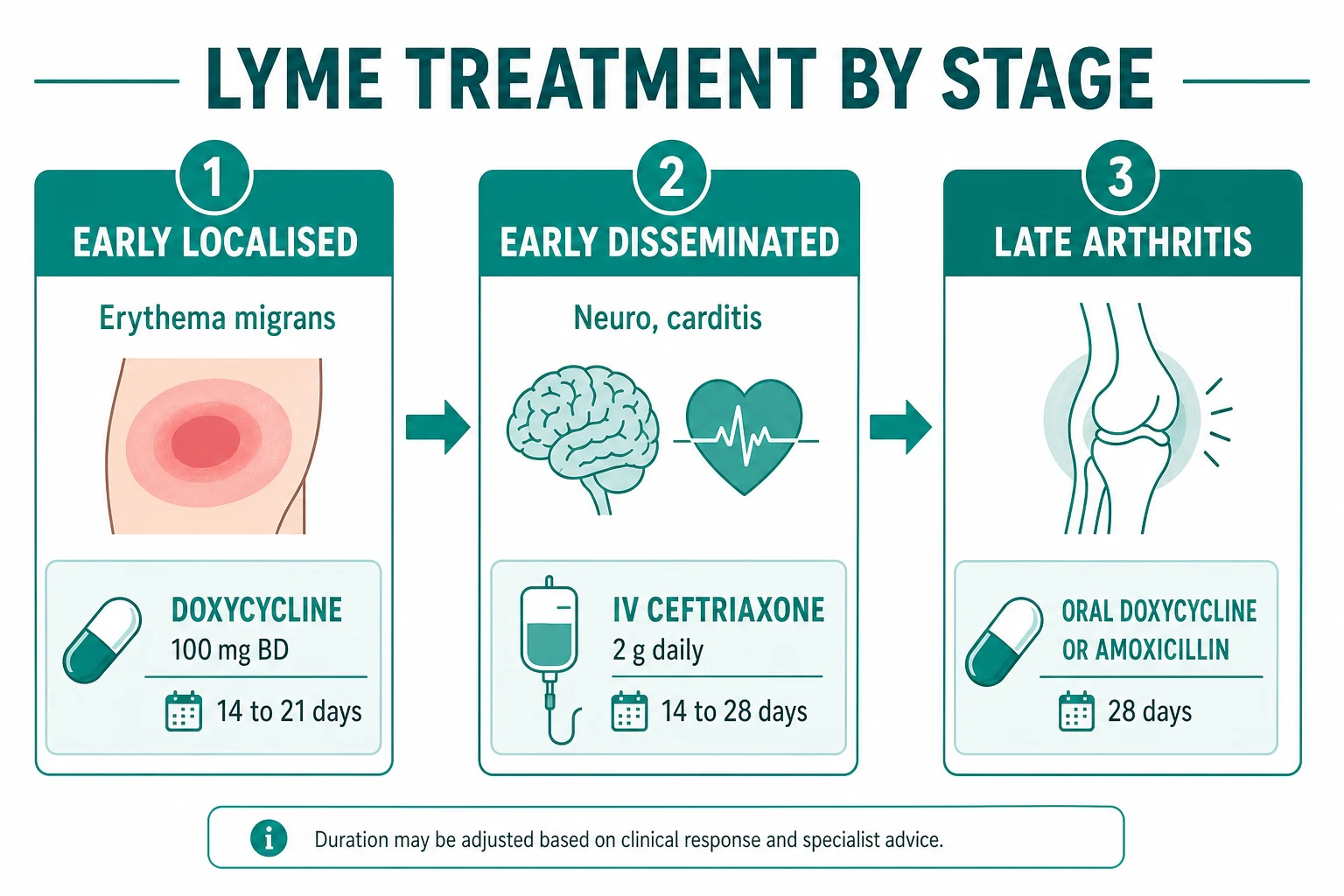
[1]Management — definitive and stepwise antibiotic ladder
The treatment of Lyme borreliosis is stage-specific, and every regimen should be stated as agent, dose, route, and duration. First-line oral therapy cures the great majority of early disease; parenteral ceftriaxone is reserved for neurological, high-grade cardiac, and refractory disease.[2][3][4]
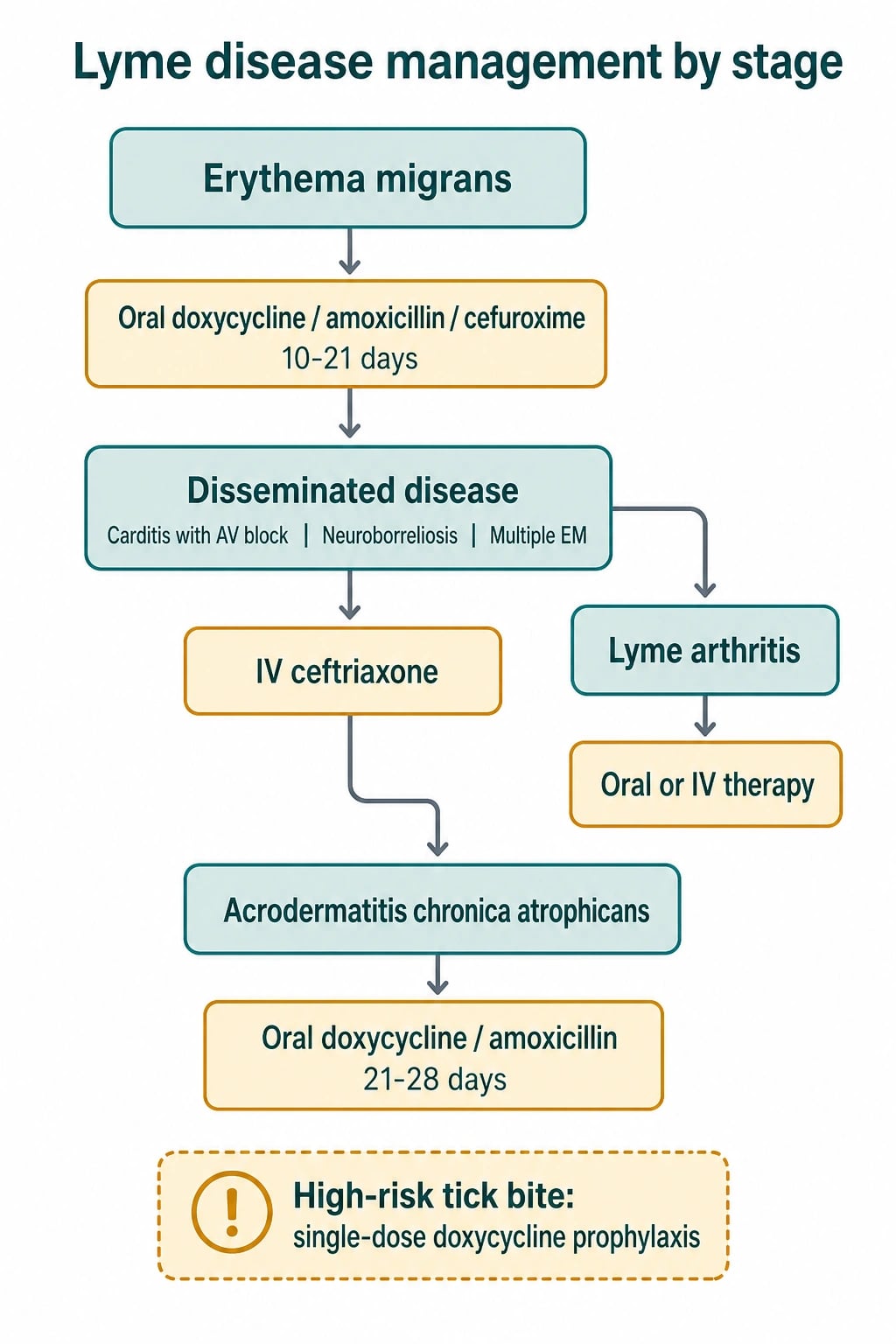
Early-localised erythema migrans (and early-disseminated disease without neurologic or cardiac involvement)
Doxycycline 100 mg orally twice daily for 14 to 21 days is first-line in adults and in children aged 8 years and older (and is now acceptable in younger children for short courses — see Special Populations). Doxycycline is favoured because it is once-or-twice-daily, covers co-infecting Anaplasma, and penetrates the CNS. The principal alternatives — used in pregnancy, in young children, and in doxycycline-intolerant patients — are amoxicillin 500 mg orally three times daily and cefuroxime axetil 500 mg orally twice daily, each for 14 to 21 days. Azithromycin is a third-line oral macrolide (shorter course) but is less effective than the beta-lactams and tetracyclines and should be reserved for genuine intolerance. The standard duration is 14 to 21 days (some guidelines accept 10 days for uncomplicated EM).[2][3][4]
Neuroborreliosis
Ceftriaxone 2 g intravenously once daily for 14 to 28 days is first-line for meningitis, radiculopathy, and other parenchymal CNS disease. Alternatives are cefotaxime 2 g IV every 8 hours and penicillin G 18 to 24 million units IV daily in divided doses. For mild neuroborreliosis — particularly an isolated facial palsy with a normal CSF — oral doxycycline 100 mg twice daily for 14 to 21 days is an accepted alternative (European guidelines favour it more than US guidelines), avoiding a hospital admission and a line. A facial palsy with CSF pleocytosis is generally treated parenterally.[7][8]
Lyme carditis
Admit for telemetry (see Resuscitation). First-degree AV block with a normal ventricular response and no symptoms can be managed with oral doxycycline or cefuroxime on an inpatient basis initially. Higher-degree or symptomatic block is treated with IV ceftriaxone 2 g daily for 14 to 28 days and a temporary pacemaker if the block is symptomatic or high-grade; the conduction abnormality usually resolves within a week of antibiotics, at which point oral step-down therapy and discharge are reasonable.[4]
Lyme arthritis
Oral doxycycline 100 mg twice daily or amoxicillin 500 mg three times daily for 28 days is first-line. If arthritis persists after the first oral course, a second 28-day course of oral therapy or a switch to IV ceftriaxone 2 g daily for 14 to 28 days is given. About 10 per cent of patients develop antibiotic-refractory arthritis — persistent synovitis months after adequate antibiotic courses, with no evidence of persistent infection. This is an autoimmune, HLA-associated synovitis driven by residual spirochaetal antigens, and it is managed as an inflammatory arthropathy: NSAIDs, intra-articular corticosteroid injection, disease-modifying agents (hydroxychloroquine, methotrexate, tumour necrosis factor inhibitors), and, in refractory cases, arthroscopic synovectomy. Prolonged antibiotics do not help.[6]
Acrodermatitis chronica atrophicans and borrelial lymphocytoma
ACA responds to oral doxycycline 100 mg twice daily or amoxicillin 500 mg three times daily for 21 to 28 days; severe or extensive disease can be treated with IV ceftriaxone. Improvement is slow (months) and the atrophy is only partly reversible, so early treatment matters. Borrelial lymphocytoma is treated with the same oral regimens for 14 to 21 days.[12]
Specific subtypes & scenarios
Borrelial lymphocytoma (described above) is a firm, bluish-red, painless nodule on the earlobe of a European child (or on the nipple/areola or scrotum of an adult). Histology shows a dense, polyclonal lymphocytic infiltrate (B and T cells) with germinal centres; the clinical question is usually "is this a lymphoma?" and the clue is the typical site and endemic exposure. It resolves with standard oral antibiotics.[11]
Acrodermatitis chronica atrophicans is a clinical-histological entity: the late, B. afzelii-driven dermal infiltrate that progresses to atrophy and fibrosis on extensor acral skin. Histology shows a band-like lymphoplasmacytic infiltrate in the upper dermis with plasma cells and epidermal atrophy; serology is almost always strongly IgG-positive, and PCR of affected skin may detect Borrelia DNA even years in. Fibrous nodules over joints and sclerodermoid change are recognised variants.[12]
Lyme in pregnancy: transplacental transmission has been reported but is rare and no consistent congenital syndrome is established; the consensus is that maternal Lyme, promptly treated, does not harm the fetus. Crucially, doxycycline is avoided in pregnancy (dental and bone effects on the fetus), so the regimen is oral amoxicillin 500 mg three times daily or cefuroxime 500 mg twice daily for 14 to 21 days, with IV ceftriaxone for disseminated disease. Breastfeeding is not contraindicated in treated Lyme.[4]
Post-exposure prophylaxis after a tick bite is narrowly defined. The classic recommendation is a single dose of doxycycline 200 mg orally within 72 hours of removing an engorged, nymphal or adult Ixodes tick acquired in a highly endemic area (the regimen validated by Nadelman et al.), reducing EM risk by roughly 80 per cent. The 2020 IDSA/AAN/ACR guidelines moved to shared decision-making rather than routine prophylaxis, because the baseline risk after a recognised bite is low (around 1 to 3 per cent) and the evidence for universal prophylaxis is modest; instead they recommend watchful waiting with instructions to seek care if EM or a flu-like illness develops within 30 days. The European approach is similarly conservative: no routine prophylaxis, emphasise prompt tick removal. A meta-analysis confirmed a modest prophylactic benefit but highlighted the narrow window and low baseline risk.[4][13]
Complications & pitfalls
The complications of Lyme are essentially the manifestations of untreated or disseminated disease: chronic arthritis (including antibiotic-refractory arthritis), chronic neuroborreliosis, permanent cardiac conductive tissue injury, cosmetic atrophy of ACA, and — across the whole spectrum — the secondary harm of misdiagnosis and mistreatment.[6][11]
The Jarisch-Herxheimer reaction — transient fever, chills, myalgia, and rash within hours of the first antibiotic dose, caused by liberated spirochaetal antigens — can occur in early-disseminated disease and is self-limited over 24 hours (antipyretics; no reason to stop or change antibiotics). Patients should be forewarned. [1]
The diagnostic pitfalls are several and well-loved by examiners: ordering and acting on an early EM serology (falsely negative); treating a positive serology with no compatible syndrome (antibodies persist for years); missing an atypical EM (not all are targets, and only a minority recall the bite); attributing bilateral facial palsy to idiopathic Bell palsy; and confusing STARI with Lyme in the southeastern US. The therapeutic pitfall is the mirror image: prescribing prolonged or repeated courses of antibiotics for "chronic Lyme disease" or post-treatment symptoms — a practice unsupported by four randomised trials and associated with real harm (line infections, Clostridioides difficile colitis, antimicrobial resistance, and the costs and anxiety of a contested diagnosis).[9]
Prognosis & disposition
Early-treated erythema migrans has an excellent prognosis: a 14-to-21-day course of oral doxycycline or amoxicillin cures the overwhelming majority, with complete resolution of the rash and constitutional symptoms within days to weeks and no progression to disseminated disease. The long-term outcomes of adequately treated Lyme, including arthritis and neuroborreliosis, are likewise excellent, with full recovery in most.[3][10]
Post-treatment Lyme disease syndrome (PTLDS) — persistent, non-specific fatigue, musculoskeletal pain, and cognitive complaints lasting more than six months after recommended treatment — affects roughly 10 to 20 per cent of treated patients (the exact figure is debated and depends on case definition). It is not associated with evidence of persistent infection, does not respond to further antibiotics (demonstrated by the Klempner, Krupp, Fallon, and Berende trials), and is managed with a rehabilitative, symptom-directed approach: graded exercise, sleep hygiene, cognitive-behavioural therapy, analgesia, and treatment of comorbid depression or anxiety. Reassurance that the infection has been treated is itself therapeutic.[9]
Acrodermatitis chronica atrophicans has a slowly progressive natural history over years if untreated, with permanent atrophy and fibrosis; treated even years into the course, it stabilises and partially resolves. Lyme arthritis has a good prognosis with oral therapy, but the antibiotic-refractory subset can develop chronic synovitis and joint damage requiring DMARDs and, occasionally, arthroplasty. The disposition for uncomplicated EM is outpatient oral therapy with safety-net advice to return if facial weakness, palpitations, syncope, or joint swelling develop; carditis and neuroborreliosis are admitted. [1]
Special populations
Children: Lyme is common in children (high tick exposure). Doxycycline was historically avoided under age 8 years because of dental staining, but the American Academy of Pediatrics and current IDSA guidance now permit short-course doxycycline for suspected Lyme at any age, because the staining risk of brief courses is small. When feasible and the syndrome allows, amoxicillin 50 mg/kg/day in three divided doses (max 500 mg/dose) or cefuroxime remains a reasonable alternative in young children. Neuroborreliosis and carditis in children are treated with weight-adjusted IV ceftriaxone (50 to 75 mg/kg/day). The facial palsy of paediatric Lyme is especially common.[4]
Pregnancy: as above — avoid doxycycline; use amoxicillin or cefuroxime, with ceftriaxone for disseminated disease. Treat promptly to minimise any (low) fetal risk. Breastfeeding is not contraindicated once treated.[4]
Immunocompromised: the clinical presentation and treatment are broadly the same; serology may be less reliable in profound immunosuppression, and atypical or more severe courses (and co-infections) should be considered, but there is no separate antibiotic regimen for Lyme in immunocompromised hosts. [1]
Elderly: presentations may be subtler — an unexplained high-degree AV block in an older patient in an endemic area should prompt consideration of Lyme carditis, as should an unexplained mono-articular knee effusion. Atrophic skin changes of ACA may be mistaken for chronic venous disease or steroid atrophy. [1]
Evidence, guidelines & regional differences
The 2020 IDSA/AAN/ACR guidelines (published 2021) are the current North American standard for prevention, diagnosis, and treatment, and have moved toward shared decision-making for post-exposure prophylaxis, doxycycline first-line for EM (including across age groups for short courses), two-tier serology for non-EM presentations, IV ceftriaxone for neuroborreliosis and significant carditis, and an explicit rejection of prolonged antibiotics for PTLDS. The European landscape is shaped by the EFNS (now EAN) guidelines on neuroborreliosis, the EUCALB consortium criteria, and the UK NICE NG95 guideline, which share most recommendations but differ in detail: a heavier reliance on clinical diagnosis of EM (treat without serology), the modified two-tier algorithm, formal diagnostic criteria for neuroborreliosis (Halperin and the European Ljostad criteria), and a greater recognition of B. afzelii and garinii syndromes (ACA, Bannwarth) that are rare in North America.[3][4][7]
The landmark evidence underpinning these guidelines includes Steere and colleagues' original epidemiological work, the Nadelman prophylaxis trial (NEJM, 2001) validating single-dose doxycycline, the four NIH-sponsored randomised trials (Klempner 2001, Krupp 2003, Fallon 2008, Berende 2016) showing no benefit of prolonged antibiotics for PTLDS, and modern epidemiological surveillance from the CDC and ECDC. The 2023 review of Borrelia pathogenicity summarises the molecular basis of virulence (Osp protein switching, VlsE antigenic variation) that underlies both persistence and immune evasion.[9][13][14]
[1] [1]The vaccine story is instructive. A recombinant OspA vaccine (LYMErix) was licensed in the United States in 1998 and was around 76 per cent effective, but it was withdrawn in 2002 amid low uptake, litigation, and unsubstantiated concerns about autoimmune arthritis — leaving the United States without a human Lyme vaccine for two decades. A new generation is now in trials: VLA15 (Pfizer/Valneva), a multivalent OspA vaccine targeting the six most common Borrelia OspA serotypes in the Northern Hemisphere, completed phase 3 enrolment, and an mRNA-based OspA vaccine is in early development. A Lyme vaccine for dogs is widely used but does not protect humans. [1]
Post-treatment Lyme disease syndrome — and the controversy
PTLDS is defined as subjective symptoms — fatigue, musculoskeletal pain, and cognitive complaints — persisting for at least six months after completion of recommended antibiotic therapy, in the absence of objective evidence of persistent infection. It affects roughly 10 to 20 per cent of treated patients, is more common after delayed treatment of disseminated disease, and overlaps syndromically with chronic fatigue syndrome and fibromyalgia. The pathophysiology is unknown — proposed mechanisms include a post-infectious autoimmune/autoinflammatory state, tissue damage, and dysregulation of central pain processing — but four large randomised, placebo-controlled trials of prolonged antibiotic courses (90 days of doxycycline with or without ceftriaxone) showed no durable benefit and significant harms, including line sepsis and biliary complications.[9]
The related and contested label "chronic Lyme disease" is used by some to attribute a wide range of non-specific symptoms to persistent Borrelia infection in the absence of compatible clinical or serological evidence, and is not accepted by mainstream infectious-disease, rheumatology, or neurology societies. The evidence-based management of PTLDS is rehabilitative and symptom-directed: explanation and reassurance, graded aerobic exercise, sleep and mood management, cognitive-behavioural therapy, and simple analgesia, with the patient safely netted to return if objective new signs of disseminated disease appear.[4][9]
Prevention
Prevention is a layered strategy combining personal protection, prompt tick removal, targeted prophylaxis, and surveillance.[2][4]
- Tick avoidance in endemic habitat: long sleeves and trousers tucked into socks, light-coloured clothing (ticks are more visible), staying on cleared trails, and treating clothing and gear with permethrin.
- Insect repellents: DEET 20 to 30 per cent on skin (effective, safe in pregnancy and in children over two months at lower concentrations), picaridin/icaridin, and oil of lemon eucalyptus (not in young children) as alternatives.
- Tick checks: a full-body check (including scalp, ears, axillae, groin, popliteal fossae, navel) after outdoor activity in endemic areas, and showering within two hours of coming indoors (which can wash off unattached ticks and is associated with lower infection risk).
- Prompt, correct tick removal: grasp the tick close to the skin with fine-tipped tweezers, pull straight upward with steady even pressure, and clean the site. Do not squeeze, twist, smother with petroleum jelly, nail-polish, or heat/burn the tick — these can cause the tick to regurgitate and increase transmission. The popular folk methods (matches, Vaseline, alcohol) are ineffective and potentially harmful.
- Prophylactic doxycycline 200 mg once within 72 hours of removing an engorged high-risk Ixodes tick in a highly endemic area — offered selectively by shared decision-making (see Specific subtypes).
- Landscape measures: clearing leaf litter, mowing, creating tick-safe zones with wood-chip barriers, and deer fencing in endemic residential areas.
- Vaccination: the VLA15 OspA vaccine is in phase 3 development; if licensed, it will be the first human Lyme vaccine in over two decades. [1]
Cover up and apply DEET 20-30% before entering tick habitat in an endemic area
Perform a full-body tick check (and shower) within 2 hours of coming indoors
Remove any attached tick promptly with fine-tipped tweezers - grasp near the head, pull straight up; do not squeeze, twist, smother, or burn
Consider single-dose doxycycline 200 mg within 72 h for a high-risk engorged Ixodes bite in a highly endemic area (shared decision)
Watch for erythema migrans or flu-like illness for 30 days; seek care and treat early
Exam pearls & high-yield minutiae
[1]One-line takeaways
- EM = clinical diagnosis; treat, don't serologise.
- More than 36 hours of tick attachment to transmit; nymphs cause most cases.
- Doxycycline for skin; ceftriaxone for brain, heart, and refractory joint.
- Bilateral facial palsy in an endemic area is Lyme until proven otherwise.
- ACA is the late, B. afzelii, European atrophic dermatosis — still antibiotic-responsive.
- PTLDS is real but not an infection — prolonged antibiotics do not help. [1]
References
- [1]Steere AC, Strle F, Wormser GP, et al. Lyme borreliosis Nat Rev Dis Primers, 2016.PMID 27976670
- [2]Sanchez E, Vannier E, Wormser GP, et al. Diagnosis, Treatment, and Prevention of Lyme Disease, Human Granulocytic Anaplasmosis, and Babesiosis: A Review JAMA, 2016.PMID 27115378
- [3]Kullberg BJ, Vrijmoeth HD, van de Schoor F, et al. Lyme borreliosis: diagnosis and management BMJ, 2020.PMID 32457042
- [4]Lantos PM, Rumbaugh J, Bockenstedt LK, et al. Clinical Practice Guidelines by the Infectious Diseases Society of America (IDSA), American Academy of Neurology (AAN), and American College of Rheumatology (ACR): 2020 Guidelines for the Prevention, Diagnosis and Treatment of Lyme Disease Clin Infect Dis, 2021.PMID 33417672
- [5]Mead P. Epidemiology of Lyme Disease Infect Dis Clin North Am, 2022.PMID 36116831
- [6]Arvikar SL, Steere AC. Lyme Arthritis Infect Dis Clin North Am, 2022.PMID 36116835
- [7]Rauer S, Kastenbauer S, Fingerle V, et al. Lyme Neuroborreliosis Dtsch Arztebl Int, 2018.PMID 30573008
- [8]Lantos PM, Rumbaugh J, Bockenstedt LK, et al. Clinical Practice Guidelines by the Infectious Diseases Society of America, American Academy of Neurology, and American College of Rheumatology: 2020 Guidelines for the Prevention, Diagnosis, and Treatment of Lyme Disease Neurology, 2021.PMID 33257476
- [9]Wong KH, Shapiro ED, Soffer GK. A Review of Post-treatment Lyme Disease Syndrome and Chronic Lyme Disease for the Practicing Immunologist Clin Rev Allergy Immunol, 2022.PMID 34687445
- [10]Smith RP. Lyme Disease Ann Intern Med, 2025.PMID 40354663
- [11]Stanek G, Wormser GP, Gray J, et al. Lyme borreliosis Lancet, 2012.PMID 21903253
- [12]Gade A, Matin T, Rubenstein R, et al. Acrodermatitis Chronica Atrophicans 2026.PMID 33085436
- [13]Zhou G, Xu X, Zhang Y, et al. Antibiotic prophylaxis for prevention against Lyme disease following tick bite: an updated systematic review and meta-analysis BMC Infect Dis, 2021.PMID 34749665
- [14]Strnad M, Rudenko N, Rego ROM. Pathogenicity and virulence of Borrelia burgdorferi Virulence, 2023.PMID 37814488