Dermatology · Medicine
Orofacial granulomatosis and Melkersson-Rosenthal syndrome
Also known as Orofacial granulomatosis (OFG) · Melkersson-Rosenthal syndrome · Cheilitis granulomatosa · Miescher's cheilitis
Orofacial granulomatosis (OFG) is a chronic, non-caseating granulomatous inflammatory disorder of the orofacial soft tissues that presents with persistent or recurrent swelling of the lips, face, and oral mucosa. The complete Melkersson-Rosenthal syndrome is the triad of (1) recurrent orofacial swelling, (2) facial nerve palsy, and (3) fissured (scrotal) tongue; cheilitis granulomatosa (isolated lip swelling) is the most common incomplete form. OFG is associated with Crohn's disease, sarcoidosis, and dietary/contact allergy (cinnamaldehyde, benzoates, tartrazine). Management is stepwise: eliminate triggers (elimination diet), intralesional corticosteroid, steroid-sparing systemic agents (hydroxychloroquine, clofazimine, thalidomide), anti-TNF biologics for refractory or Crohn's-associated disease, and cheiloplasty for established deformity.
On this page & tools
Your progress
Saved locally on this device.
Exam tags
Red flags
Overview and definition
Orofacial granulomatosis (OFG) is best understood not as a single disease but as a unifying clinicopathological pattern — a chronic, granulomatous inflammation of the soft tissues of the face and oral cavity that produces persistent or recurrent swelling, with non-caseating granulomas on histology and no immediately obvious cause. The swelling is classically confined to one or both lips, but it can also involve the cheeks, eyelids, forehead, gingivae, buccal mucosa, and tongue. The disorder is painless, slowly progressive, and, without treatment, tends to become permanent and fibrotic over months to years.[4]
The term deliberately covers a spectrum. At one end sits cheilitis granulomatosa (Miescher's cheilitis) — isolated, persistent swelling of one lip, usually the upper. At the other end sits the complete Melkersson-Rosenthal syndrome (MRS), defined by the classic triad of orofacial swelling, recurrent facial (seventh cranial) nerve palsy, and a fissured (scrotal) tongue. In between lie every partial combination. The uniting feature is the granuloma: discrete collections of epithelioid histiocytes and Langhans-type giant cells in the submucosa and dermis, indistinguishable from those seen in Crohn's disease and sarcoidosis.[3]
This shared histology is the heart of the clinical problem. OFG is a diagnosis of exclusion: before the label is attached, the clinician must actively seek Crohn's disease, sarcoidosis, mycobacterial and fungal infection, and contact or dietary allergy, because each of these demands a different treatment. Get the workup wrong and the patient is committed to long-term immunosuppression for a treatable Crohn's, or — worse — immunosuppressed in the presence of undiagnosed tuberculosis. [1]
Classification
OFG can be classified along two axes — the clinical expression and the underlying aetiology. Both matter at the viva table, because the first determines the cosmetic and functional problem, while the second determines the treatment. [1]
By clinical expression
By aetiology
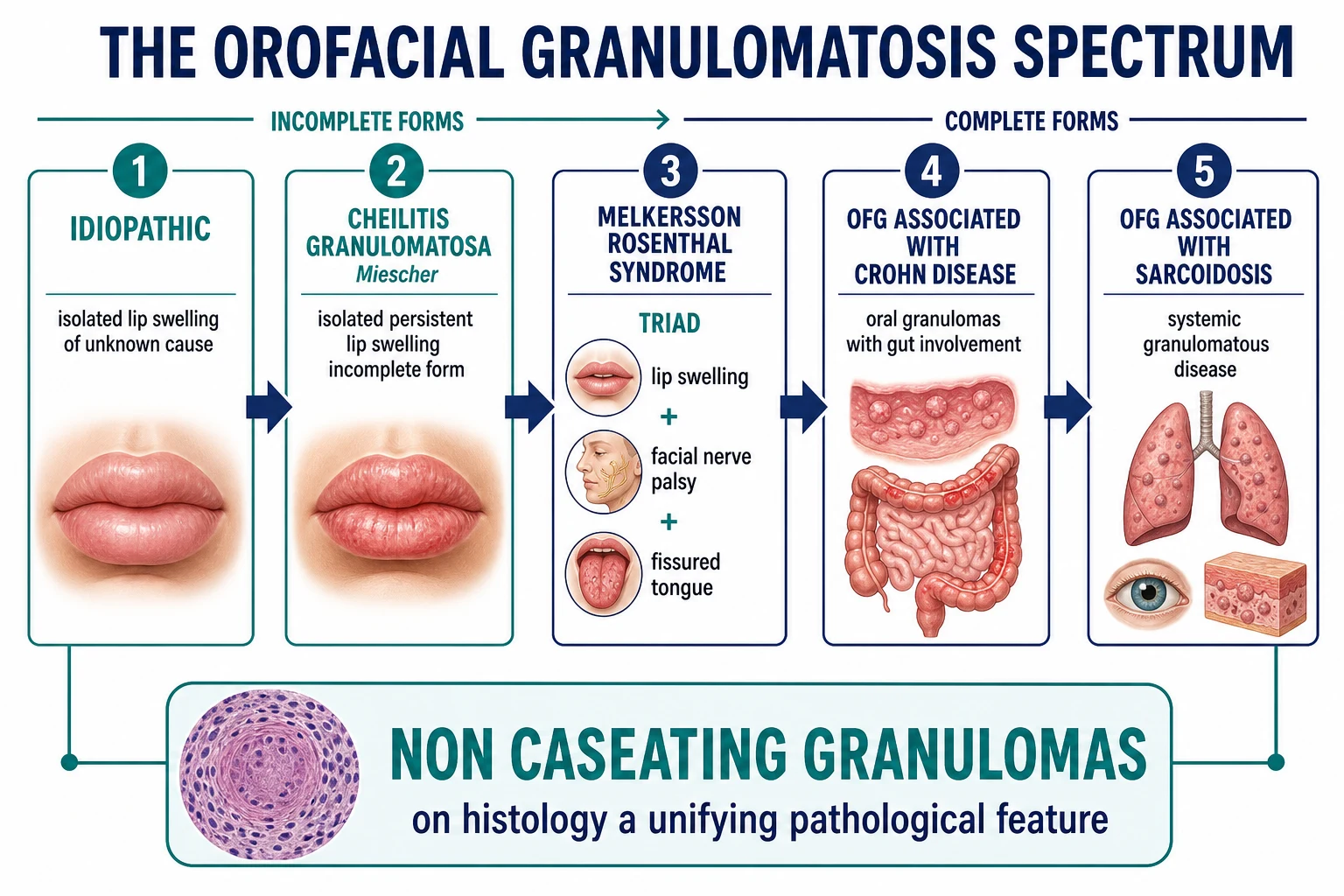
- Idiopathic (true OFG) — no identifiable cause after full workup; the largest single group.
- Crohn's-associated (oral Crohn's) — identical granulomatous inflammation in mouth and gut; OFG may precede, accompany, or follow intestinal disease by years.[2]
- Sarcoidosis-associated — systemic granulomatous disease with pulmonary hilar lymphadenopathy and elevated ACE.
- Allergy-associated — patch-test positive to cinnamaldehyde (cinnamon), benzoates, tartrazine, chocolate, monosodium glutamate, or dental materials; the most treatable subtype.
- Infection-associated — tuberculosis, leprosy, and deep fungal infection can produce identical granulomas in the orofacial soft tissues.
- Foreign-body reaction — dental amalgam, silica, or suture material producing a granulomatous response.
Epidemiology and risk factors
OFG is uncommon, although its true incidence is uncertain because mild cases are under-reported and the diagnosis is often delayed. Published incidence estimates range from roughly 0.8 per 100,000 population per year in UK oral medicine series to lower figures in regions without specialist oral medicine services, and a mean diagnostic delay of one to three years is typical. It presents most often in young and middle-aged adults (peak in the second to fourth decade) with a slight female predominance, and has been described in all ethnic groups. A family history is occasionally reported, suggesting a possible autosomal dominant inheritance with incomplete penetrance in a small subset; HLA associations have been studied but are not clinically useful.[3]
The complete Melkersson-Rosenthal triad is rare, present in only about a quarter of patients with OFG. Cheilitis granulomatosa is by far the most common presentation, accounting for the majority of cases seen in oral medicine and dermatology clinics. The fissured (scrotal) tongue is a common congenital finding in the general population, and a single episode of lip swelling is frequently mislabelled as angioedema — the diagnosis of OFG is therefore often made only after the swelling has recurred or persisted for many months.[4]
The most important aetiological association is Crohn's disease. Systematic review data place the proportion of OFG patients with coexistent or subsequent Crohn's disease in the range of 20-50%, and OFG may precede gut symptoms by years — a point examiners probe relentlessly. Other risk factors are dietary (a high intake of cinnamon-flavoured foods, preserved foods containing benzoates, or foods with tartrazine), contact allergy (toothpastes, lip balms, dental materials), and a personal or family history of atopy or autoimmune disease.[2]
Pathophysiology
OFG is a delayed-type (Type IV) hypersensitivity reaction to an unidentified antigen. The antigen is presented by dendritic cells to CD4+ T-helper-1 lymphocytes, which release a cytokine cascade dominated by interferon-gamma, tumour necrosis factor-alpha, interleukin-2, and interleukin-12. These cytokines recruit and activate macrophages, which transform into epithelioid histiocytes and fuse into Langhans-type giant cells (characteristically with a horseshoe or peripheral arc of nuclei). The result is the formation of discrete, paucibacterial, non-caseating granulomas within the submucosa and dermis of the lip, face, and oral cavity.[4]
The granulomatous infiltrate sits alongside a perivascular lymphocytic infiltrate and marked dermal and submucosal oedema. This oedema is the immediate cause of the clinical swelling, and in the early phase it is intermittent — oedema fluid accumulates during an episode and drains between episodes, producing the characteristic relapsing-remitting course. Over months to years, however, chronic lymphoedema drives fibrosis and permanent induration, and the swelling becomes fixed. This is the rationale for early treatment: prevent the irreversible fibrotic stage. [1]
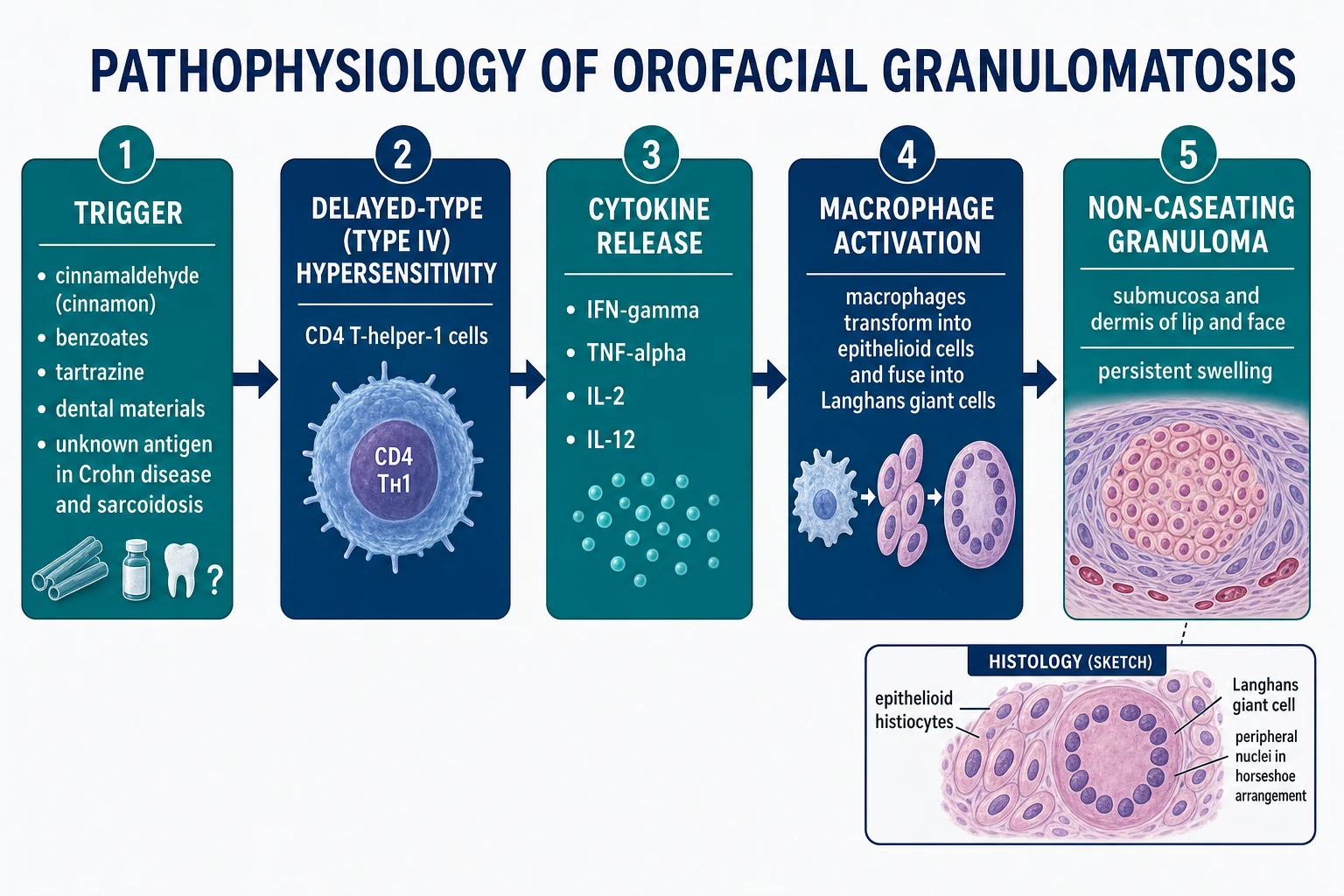
Why OFG is so tightly linked to Crohn's disease is not fully resolved, but the most plausible explanation is that oral and intestinal granulomas share a common antigen — possibly a microbial cell-wall component presented in the context of a susceptible host. The response of OFG to anti-TNF therapy and the documented remission of allergy-associated OFG on an elimination diet both support the immune-mediated model. The pathophysiology of the facial nerve palsy in MRS is thought to be granulomatous infiltration or oedema of the nerve within the facial canal.
Natural history and disease evolution [1]
OFG evolves in a predictable pattern that explains both the clinical findings and the rationale for early treatment. In the early oedematous phase, intermittent episodes of lip and facial swelling come and go over hours to days, separated by complete resolution; histology at this stage may show only dermal and submucosal oedema with perivascular lymphocytes and dilated lymphatics, and granulomas may be absent — a fact that traps the unwary clinician who biopsies once and concludes "no granuloma, no OFG". In the intermediate phase, episodes become more frequent and longer-lasting, and residual swelling persists between them; granulomas become easier to find. In the late fibrotic phase, the swelling is permanent, firm, and indurated, the lip feels woody on palpation, and histology shows established fibrosis alongside the granulomatous infiltrate. By this stage, anti-inflammatory treatment is less effective because the deformity is largely structural, and surgical reduction becomes the only way to restore contour. The window for medical reversal is therefore the early and intermediate phases, which is why a persistent lip swelling of more than a few weeks duration warrants biopsy and workup rather than watchful waiting. [1]
The facial nerve palsy of MRS, when it occurs, follows its own timetable. It is typically acute in onset, unilateral, and clinically indistinguishable from Bell's palsy; it recovers over weeks but recurs, and with each recurrence the chance of incomplete recovery rises. Bilateral or sequential palsy is recognised but rare, and should always prompt exclusion of Lyme disease, sarcoidosis, and Guillain-Barre syndrome before it is attributed to MRS. [1]
Clinical presentation
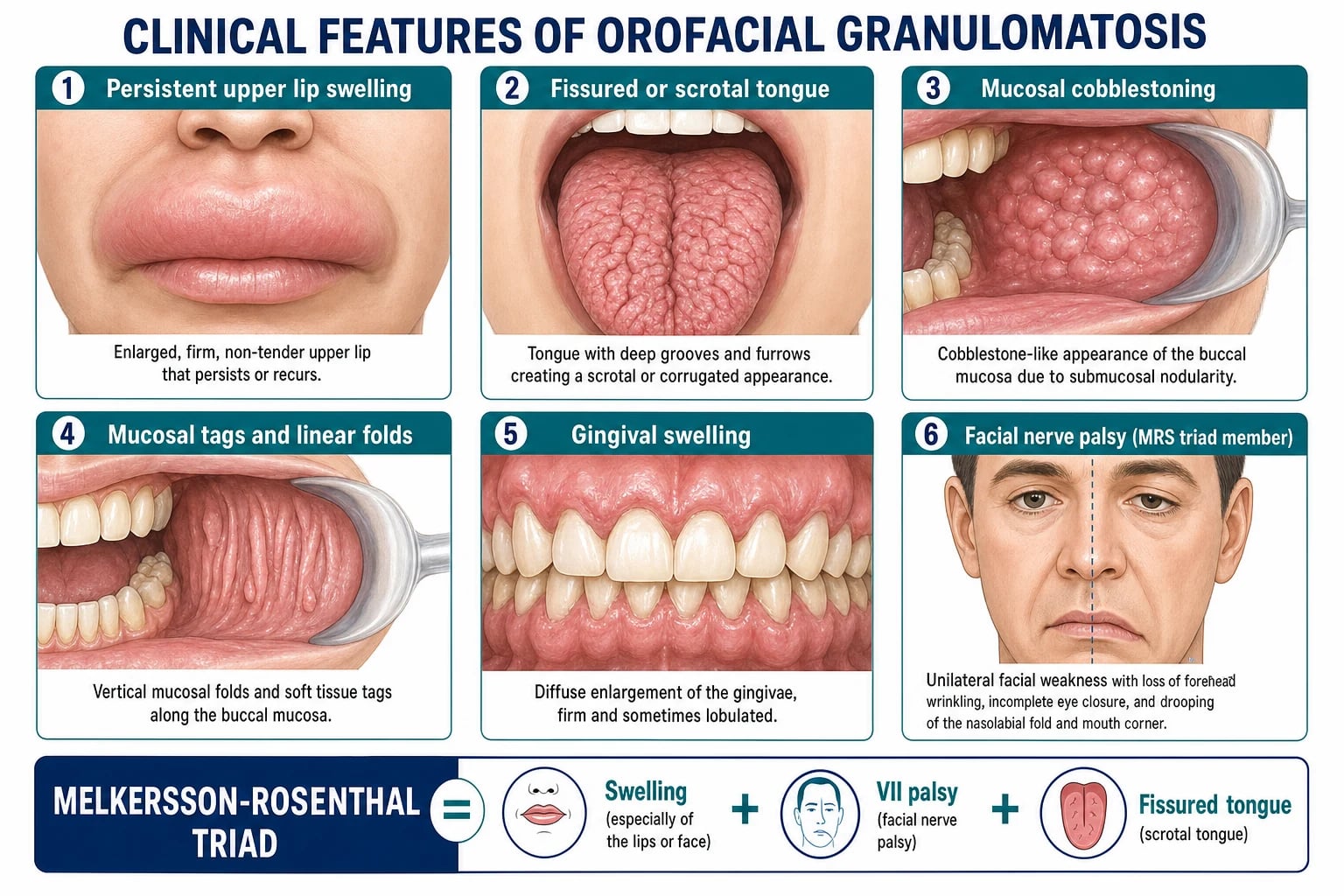
The clinical hallmark of OFG is persistent or recurrent, painless, non-pitting swelling of one or both lips. The upper lip is more commonly involved than the lower, but both may be affected, and the swelling may extend to the cheeks, eyelids, and forehead. Early in the disease the swelling is intermittent — it appears over hours to days, resembles angioedema, and resolves between episodes. Over time it becomes persistent, firm, and indurated, sometimes taking on a reddish-brown or yellowish hue. The swelling is not tender, not warm, and not erythematous in the way that cellulitis would be.[3]
The Melkersson-Rosenthal triad
The complete MRS syndrome is defined by three features, of which the swelling is one: [1]
- Recurrent orofacial swelling — most often the upper lip, but also the cheeks, eyelids, and tongue. With each recurrence the swelling tends to last longer, eventually becoming permanent.
- Recurrent facial (seventh) nerve palsy — unilateral or bilateral, clinically indistinguishable from Bell's palsy, and typically recovering spontaneously over weeks. Occurs in roughly a third of patients with the complete syndrome.
- Fissured (scrotal) tongue — deep grooves and fissures on the dorsal tongue surface, a congenital feature that is common in the general population but is significantly over-represented in MRS. Present in about half of patients with OFG. [1]
Intra-oral features
The intra-oral examination frequently reveals changes that overlap with oral Crohn's disease and are highly characteristic: [1]
- Mucosal cobblestoning — a nodular, cobblestone-like appearance of the buccal mucosa.
- Mucosal tags and linear folds — short, thick, painless folds of mucosa, often in the sulcus.
- Gingival swelling — diffuse, firm enlargement of the attached gingivae.
- Aphthous-like ulcers — non-specific oral ulcers.
- Fissured tongue — deep grooves on the dorsum. [1]
Facial and periocular involvement
Swelling may extend to the eyelids, cheeks, and forehead. Primary periocular OFG — swelling confined largely to the eyelids and periorbita — is a recognised variant that frequently mimics angioedema and is often misdiagnosed for years; ophthalmology collaboration is valuable because of the risk of secondary ocular surface exposure.[5]
Atypical presentations
Examiners probe the corners. Be ready for: onset in childhood (where the Crohn's association is strongest and the index of suspicion for occult gut disease must be highest); isolated gingival or buccal disease with minimal lip involvement; OFG as the first manifestation of occult Crohn's disease, preceding diarrhoea and weight loss by months or years; and bilateral facial nerve palsy (a presentation that demands exclusion of Lyme disease, sarcoidosis, and Guillain-Barre syndrome before attributing it to MRS).[2]
Differential diagnosis
The differential of persistent lip and facial swelling divides into the non-granulomatous mimics (which must be excluded clinically) and the other granulomatous diseases (which are sought on workup because they ARE OFG by histology and differ only in their systemic implications). [1]
The can't-miss is angioedema mislabelled as OFG (transient vs persistent) and occult Crohn's disease missed because the patient's GI symptoms were not elicited or a faecal calprotectin was never sent. The classic viva trap is the allergic contact cheilitis that looks like OFG but has no granulomas on biopsy — patch testing settles it. [1]
Approach to the patient with persistent lip swelling
A practical algorithm structures the encounter. First, decide whether the swelling is transient or persistent — transient swelling points to angioedema (ask about urticaria, drug exposure, family history, and check C4 and C1-inhibitor), while persistent or progressively persistent swelling points to OFG or one of its mimics. Second, decide whether the swelling is acute and infective or chronic and granulomatous — acute, painful, erythematous swelling with fever is cellulitis and needs antibiotics, not biopsy. Third, in the chronic group, biopsy for non-caseating granulomas and stain for AFB and fungi. Fourth, once granulomas are confirmed (or the clinical picture is so typical that a negative biopsy does not deflect), run the exclusion workup — faecal calprotectin and colonoscopy for Crohn's, ACE and chest X-ray for sarcoid, patch testing for allergy, IGRA for tuberculosis. Fifth, treat the cause if one is found (Crohn's gets anti-TNF, infection gets antimicrobials, allergy gets diet); if no cause is found, treat the OFG pattern with the stepwise ladder. The single most common error is to stop at the lip and never look at the gut. [1]
Clinical and bedside assessment
The focused orofacial examination is the single most useful step. Inspect and palpate both lips: the swelling in OFG is firm, non-pitting, non-tender, and is not warm. Evert the lips and inspect the buccal mucosa for cobblestoning, mucosal tags, and linear folds; examine the gingivae, palate, and oropharynx; and inspect the dorsal tongue for the deep grooves of a fissured (scrotal) tongue. [1]
Perform a full cranial nerve examination, with particular attention to the facial nerve — look for a subtle or recovered palsy (ask the patient to close the eyes tightly, bare the teeth, and puff out the cheeks). Examine the eyelids and periocular skin for swelling, and the cervical and submandibular lymph nodes for adenopathy. [1]
Then move beyond the face. Examine the abdomen (for the tenderness, mass, or perianal disease of Crohn's), the chest (for the signs of sarcoid), and the skin generally (for erythema nodosum, which links OFG to both Crohn's and sarcoidosis). Take a focused history of gastrointestinal symptoms (diarrhoea, abdominal pain, weight loss, perianal disease), dietary and dental exposures (cinnamon, preserved foods, toothpaste, dental work), atopy and allergy, travel and TB contact, and any family history of Crohn's disease, sarcoidosis, or granulomatous disease. [1]
Investigations
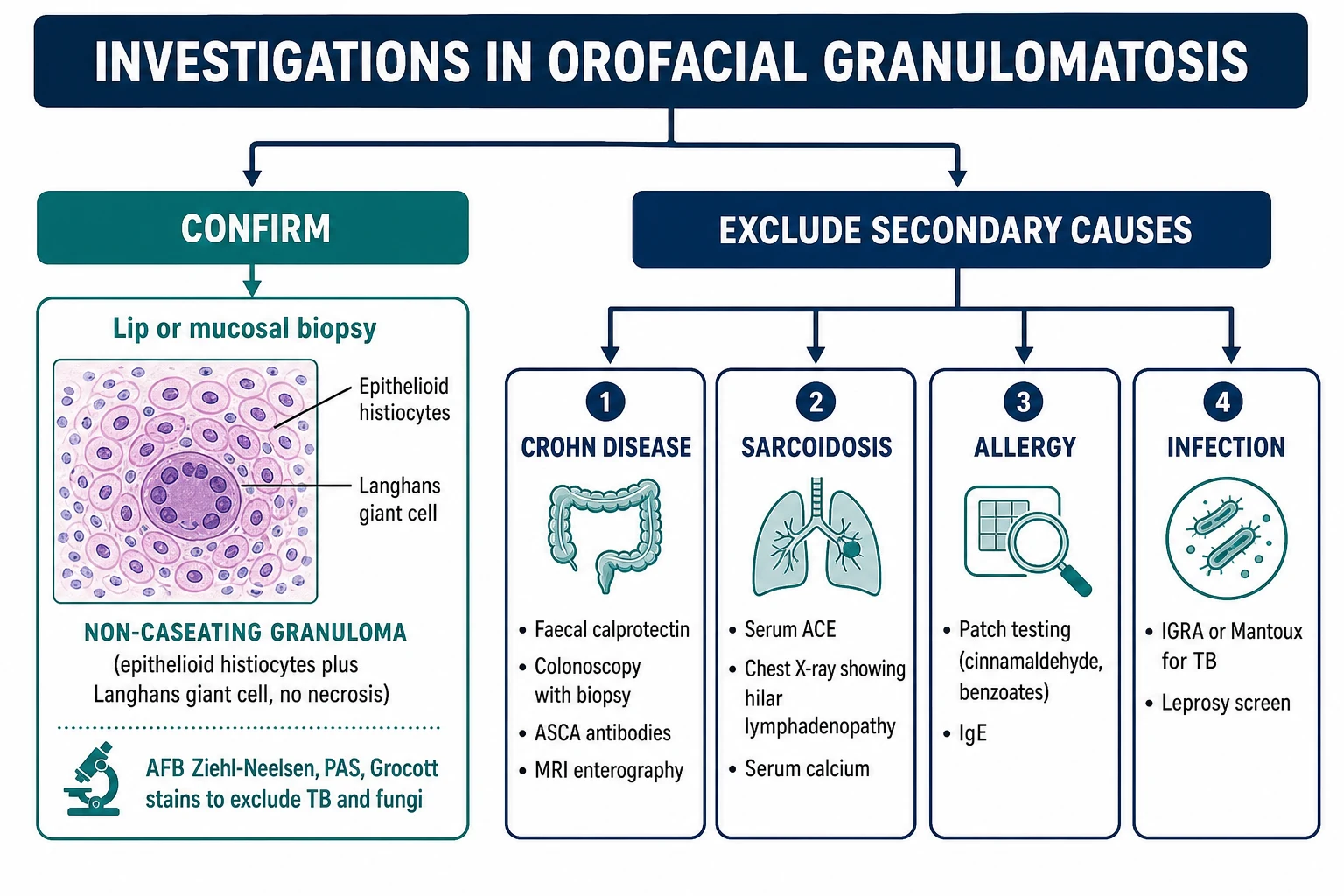
Investigation serves two purposes: confirm the diagnosis by biopsy, and exclude the secondary causes (Crohn's, sarcoid, infection, allergy) that determine treatment. No single blood test confirms OFG. [1]
Histology — the confirmatory test
A lip or buccal mucosal biopsy is the cornerstone. The diagnostic finding is a non-caseating granuloma — a discrete collection of epithelioid histiocytes with Langhans-type giant cells, without central necrosis, sitting in the submucosa or dermis, accompanied by a perivascular lymphocytic infiltrate and dermal oedema. Special stains for acid-fast bacilli (Ziehl-Neelsen) and fungi (PAS, Grocott) are mandatory to exclude mycobacterial and fungal granulomas.[4]
A critical caveat: histology is often non-specific in early disease, showing only oedema and lymphatic dilation, and a negative biopsy does NOT exclude OFG if the clinical picture is typical. Multiple biopsies, taken from involved tissue at different time points, increase the yield. [1]
The exclusion workup
Management — resuscitation and the first decision
OFG is not a dermatological emergency, but the first management decision is diagnostic, not therapeutic: identify and treat any underlying cause. A patient with Crohn's-associated OFG is best served by gastroenterology co-management and an anti-TNF biologic; a patient with sarcoidosis is best served by sarcoid-directed therapy; a patient with tuberculosis or fungal infection must NOT receive immunosuppression until the infection is treated; and a patient with cinnamaldehyde allergy may respond to diet alone.[1]
The resuscitative step is therefore the workup, executed promptly. The one genuine time-critical scenario is persistent lip swelling with new gastrointestinal symptoms (diarrhoea, abdominal pain, weight loss, perianal disease) — this mandates urgent faecal calprotectin and gastroenterology referral with a view to colonoscopy, because OFG may be the herald of active Crohn's disease that needs specific treatment.[2]
Management — definitive and stepwise
Once the cause is sought, treatment proceeds up a stepwise ladder, escalating from trigger elimination to local therapy, to steroid-sparing systemic agents, to biologics, and finally to surgery. The aim is to suppress granulomatous inflammation, relieve symptoms, prevent progression to fibrosis, and minimise treatment adverse effects. [1]
Eliminate triggers
Cinnamon-, benzoate-, and chocolate-free elimination diet for 6-8 weeks with structured reintroduction; remove offending dental materials if patch-test positive; smoking cessation; manage coexistent Crohn's with gastroenterology.
Local anti-inflammatory
Intralesional triamcinolone acetonide 10-40 mg/mL into the swollen lip every 4-6 weeks (first-line for localised lip swelling); topical tacrolimus 0.1% ointment twice daily as adjunct.
Steroid-sparing systemic
Hydroxychloroquine 200-400 mg/day; or clofazimine 100 mg/day; or metronidazole 400 mg three times daily; or thalidomide 50-100 mg/day (teratogenic, neuropathy monitoring); or methotrexate 10-25 mg/week; or azathioprine 1-2 mg/kg/day. Short courses of oral prednisolone 0.5-1 mg/kg/day for acute flares only.
Biologic (refractory / Crohn's-associated)
Infliximab 5 mg/kg at weeks 0, 2, 6, then 8-weekly; or adalimumab 160 mg then 80 mg at week 2, then 40 mg alternate weeks. Ustekinumab reported in case series.
Surgical
Cheiloplasty, commissuroplasty, or lip reduction for persistent cosmetic or functional deformity AFTER medical control; recurrence is common if inflammation is not first suppressed.
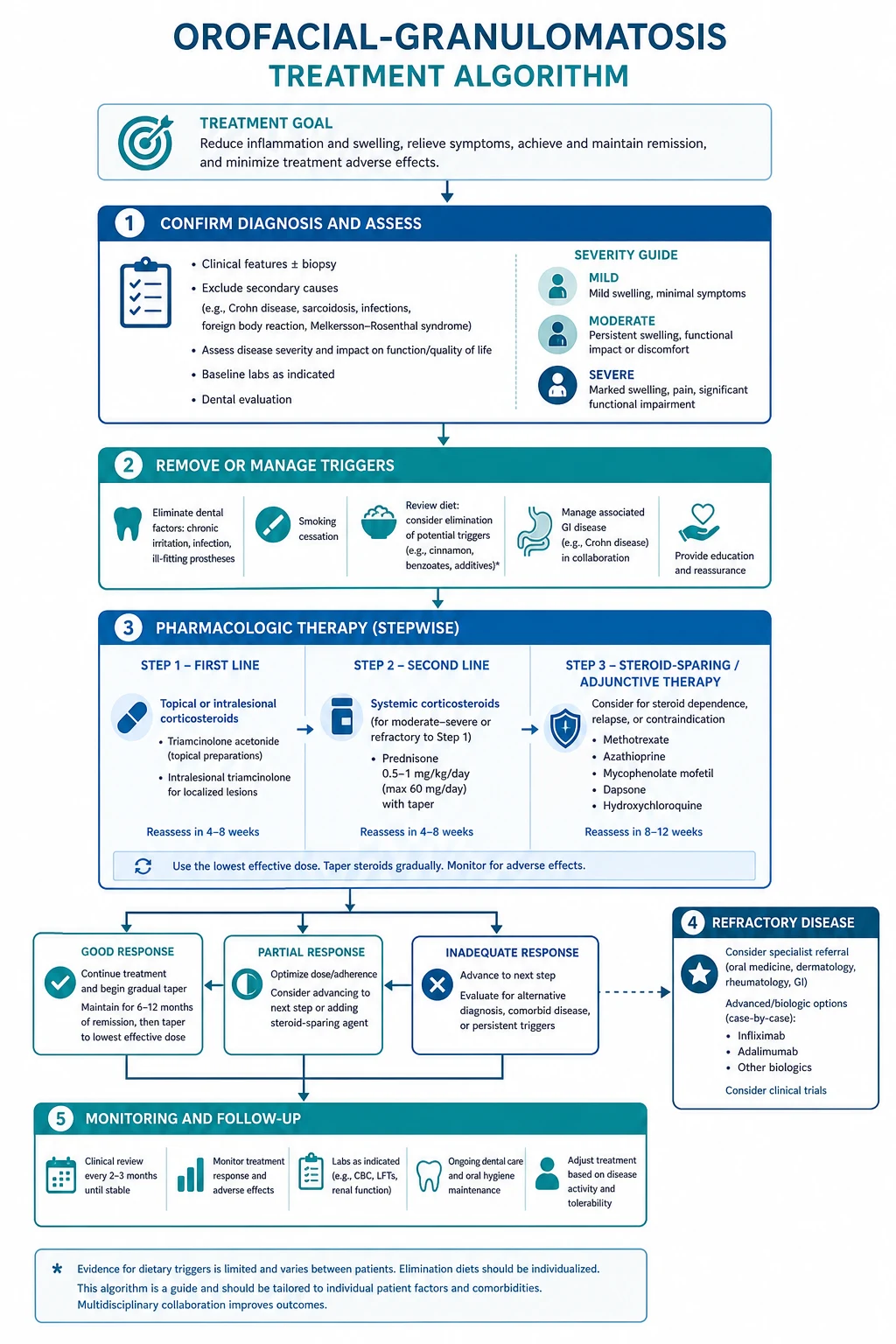
Step 1 — Eliminate triggers
A cinnamon-, benzoate-, and chocolate-free elimination diet for 6-8 weeks, followed by structured reintroduction, is the recommended first intervention in all patients, because a meaningful subset (particularly those with a positive patch test to cinnamaldehyde or benzoates) enter remission on diet alone and need no immunosuppression. Dental review identifies chronic irritation, ill-fitting prostheses, and dental materials (especially amalgam) that may be acting as foreign-body antigens; patch-test-positive materials should be removed. Smoking cessation and management of coexistent gastrointestinal disease in collaboration with gastroenterology complete this step.[1] In practical terms, the elimination diet removes cinnamon and cinnamaldehyde-flavoured foods (chewing gum, mints, baked goods, curries, flavoured beverages), benzoate preservatives (E210-E219, found in soft drinks, sauces, and preserved foods), chocolate and cocoa, monosodium glutamate, and the dye tartrazine (E102), for a minimum of six to eight weeks. The patient keeps a swelling diary, and if the swelling subsides, foods are reintroduced one at a time every few days to identify the specific trigger. Roughly half of patch-test-positive patients respond, and those who do can often maintain remission on a modified long-term diet without needing any drug therapy — an attractive outcome in young patients keen to avoid immunosuppression. Diet is least likely to help in patients with established fibrosis or with coexistent Crohn's disease, in whom escalation to systemic therapy is appropriate.
Step 2 — Local anti-inflammatory therapy
Intralesional triamcinolone acetonide (10-40 mg/mL injected into the swollen lip every 4-6 weeks) is first-line for localised lip swelling. It delivers a high local anti-granulomatous effect with minimal systemic absorption and often produces visible reduction within one or two sessions; the main adverse effects are local skin atrophy, telangiectasia, and depigmentation at injection sites. Topical tacrolimus 0.1% ointment twice daily is a useful adjunct or alternative for patients who decline injection, particularly for milder disease.[1]
The technique matters. The lip is cleansed, a 30-gauge needle is used, and triamcinolone acetonide (diluted to 10 mg/mL for diffuse swelling, up to 40 mg/mL for focal nodularity) is injected in small aliquots through multiple puncture sites along the swollen vermilion and submucosa, aiming for tissue blanching rather than a single depot; the total dose per session is typically 0.5-1.5 mL (5-20 mg) per lip, repeated every four to six weeks for up to three or four sessions. Injecting too superficially causes skin atrophy and telangiectasia, and injecting too much in one sitting risks tissue necrosis; patients are warned that the lip will feel firm for a few days and that bruising is common. Combining intralesional corticosteroid with the elimination diet in the early phase gives the best chance of halting progression to fibrosis. [1]
Step 3 — Steroid-sparing systemic therapy
For refractory disease, extensive involvement, or patients in whom intralesional therapy has failed, a steroid-sparing systemic agent is introduced. The choices and their monitoring requirements are: [1]
Step 4 — Biologic therapy
Anti-TNF biologics are reserved for refractory OFG and for OFG associated with Crohn's disease, where they treat both the gut and the mouth. Infliximab (5 mg/kg at weeks 0, 2, and 6, then 8-weekly) and adalimumab (160 mg subcutaneously, then 80 mg at week 2, then 40 mg alternate weeks) have the best evidence. Screening for latent tuberculosis (IGRA, chest X-ray), hepatitis B and C, and HIV is mandatory before initiation, and patients need monitoring for infusion reactions, infection, and (infrequently) demyelination or heart failure. Ustekinumab (anti-IL-12/23) has been reported in small case series for anti-TNF-resistant disease.[2]
Step 5 — Surgery
Cheiloplasty, commissuroplasty, and surgical lip reduction debulk fibrotic tissue and correct the cosmetic and functional deformity of long-standing OFG. They are reserved for patients in whom medical control has been achieved but a residual deformity persists — operating on actively inflamed tissue leads to recurrence and a poor cosmetic result. Recurrence is also possible after well-timed surgery, and patients need ongoing medical follow-up.[3]
Specific subtypes and scenarios
Cheilitis granulomatosa (Miescher's cheilitis) is the most common presentation of OFG — isolated persistent lip swelling without the rest of the MRS triad. Intralesional corticosteroid is first-line, with elimination diet as adjunct; the prognosis for cosmetic improvement is good with early treatment. [1]
Complete Melkersson-Rosenthal syndrome is rare. The combination of lip swelling and facial nerve palsy demands that the clinician first exclude stroke, Ramsay Hunt syndrome, acoustic neuroma, Lyme disease, and sarcoidosis before attributing the palsy to MRS. Management combines intralesional corticosteroid for the lip with systemic therapy (often hydroxychloroquine or thalidomide) for the recurrent nerve palsy and swelling. [1]
OFG associated with Crohn's disease is the most important subtype to recognise because it changes management. The granulomatous inflammation in the mouth and gut is identical, the gut may be silent, and anti-TNF therapy treats both. A new diagnosis of OFG in a child or young adult with any gastrointestinal symptom is an indication for faecal calprotectin and gastroenterology referral.[2]
Allergy-associated OFG — patch-test positive to cinnamaldehyde, benzoates, tartrazine, or dental materials — is the most treatable subtype; a structured elimination diet can induce and maintain remission without any immunosuppression. It should be sought in every patient. [1]
Primary periocular OFG — swelling predominantly of the eyelids and periorbita — is easily mistaken for angioedema; the persistence, the eventual induration, and the biopsy settle it. Ophthalmology collaboration addresses secondary ocular surface exposure.[5]
Complications and pitfalls
OFG complications fall into disease-related and treatment-related groups, and both are favourite viva material.
Disease-related complications include persistent lip enlargement causing functional impairment (difficulty eating, speaking, drooling, and loss of oral competence), cosmetic disfigurement and the psychological distress that accompanies facial change, permanent fibrosis and induration if treatment is delayed, and the consequences of any underlying Crohn's disease or sarcoidosis. Recurrent facial nerve palsy in MRS is usually self-limiting but, rarely, may leave residual weakness. [1]
Treatment-related complications are agent-specific and must be discussed when prescribing: skin atrophy, telangiectasia, and depigmentation from intralesional corticosteroid; the severe teratogenicity and peripheral neuropathy of thalidomide; retinopathy and QT prolongation from hydroxychloroquine; skin discolouration and GI intolerance from clofazimine; the hepatotoxicity, myelosuppression, and pneumonitis of methotrexate and azathioprine; the infection and infusion-reaction risks of anti-TNF biologics; and the recurrence and scarring that may follow cheiloplasty. [1]
The classic pitfalls are four. First, mislabelling persistent OFG as angioedema (transient) or cellulitis (acute) — the persistence, the granulomas, and the fissured tongue settle this. Second, missing occult Crohn's disease by failing to send a faecal calprotectin or arrange colonoscopy in a patient with any GI symptom. Third, using long-term oral corticosteroids instead of a steroid-sparing agent — the patient accumulates steroid toxicity without durable control. Fourth, operating before medical control — cheiloplasty on inflamed tissue recurs and gives a poor result.[1]
Prognosis and disposition
OFG runs a chronic relapsing-remitting course over years. Complete resolution without treatment is uncommon, and long-term management is the rule; the aim of therapy is suppression of inflammation, prevention of progression to fibrosis, and maintenance of function and appearance. With early and appropriate treatment — elimination diet where relevant, intralesional corticosteroid for lip swelling, and escalation to systemic therapy as needed — most patients achieve meaningful improvement, and a subset enters durable remission.[3]
Episodes of facial nerve palsy in MRS usually resolve spontaneously over weeks but may recur; permanent facial palsy is uncommon. The cosmetic and psychological impact of facial disfigurement is often the dominant patient concern, and quality-of-life assessment and psychological support should be part of routine care. Because associated Crohn's disease may develop years after the initial OFG presentation, long-term gastrointestinal surveillance — a repeat faecal calprotectin if new GI symptoms arise — is part of the safety-net.[2] A practical follow-up framework helps: review the patient every two to three months during active disease to assess response and drug adverse effects, then every six to twelve months once stable. At each visit, re-examine the lip and oral mucosa, photograph for objective comparison, reassess facial nerve function, screen for new gastrointestinal symptoms, and check bloods relevant to the systemic agent in use (full blood count, liver, and renal function for methotrexate and azathioprine; visual fields and colour vision for hydroxychloroquine; nerve conduction for thalidomide). A patient-centred outcome measure — such as a simple swelling diary or a dermatology quality-of-life instrument — helps objectify the slow, fluctuating course that is otherwise hard to capture in a clinic letter.
Disposition is shared care: dermatology or oral medicine leads on the lip and mucosa, gastroenterology co-manages when Crohn's is present or suspected, ophthalmology contributes when periocular disease threatens the ocular surface, and neurology is consulted for the facial palsy of MRS. Patients need a clear safety-net: return if the swelling changes, if new gastrointestinal symptoms arise, or if the facial palsy recurs or fails to recover. [1]
Special populations
Children and adolescents form a significant cohort of OFG, and paediatric presentation carries special implications. The Crohn's association is strongest in this group — in some paediatric series, oral granulomatous disease is the presenting feature of inflammatory bowel disease in over half of cases — so the index of suspicion for occult gut disease must be correspondingly high. A faecal calprotectin and early gastroenterology referral with a low threshold for colonoscopy are warranted in any child with OFG, even without overt gastrointestinal symptoms, because growth failure and delayed puberty may be the only clue to active Crohn's. Systemic agents are dosed by weight; thalidomide is avoided in girls of childbearing potential; the elimination diet is well tolerated, genuinely first-line, and especially valuable in children where avoiding immunosuppression is desirable. Psychological support is important — facial disfigurement at school age carries a heavy social and developmental burden, and the clinician should actively ask about teasing, school avoidance, and mood. [1]
Pregnancy and women of childbearing potential require a careful choice of agent. Thalidomide is absolutely contraindicated (severe teratogenicity) and methotrexate must not be used (abortifacient and teratogenic); azathioprine is relatively safe in pregnancy under specialist supervision. Intralesional corticosteroid and topical tacrolimus are the preferred local therapies; biologics are used on a risk-benefit basis with obstetric input. [1]
Patients with Crohn's disease need joint management with gastroenterology. Anti-TNF therapy treats both gut and oral disease; the patient is monitored for immunogenicity (loss of response, anti-drug antibodies) and for infection. The OFG may flare independently of intestinal activity and vice versa. [1]
Immunocompromised patients require aggressive exclusion of infection (tuberculosis, fungal) before any immunosuppression is started; biopsy with AFB and fungal stains is mandatory, and IGRA is sent. Where infection cannot be confidently excluded, treatment is deferred or limited to local measures until the workup is complete. [1]
Older adults may present atypically, and a lower threshold for biopsy is warranted to exclude malignancy (lymphoma, squamous cell carcinoma) that can mimic lip swelling. The comorbidity burden influences the choice of systemic agent — hydroxychloroquine and topical therapy are often preferred over methotrexate or biologics. [1]
Evidence, guidelines, and regional differences
The evidence base for OFG is limited, dominated by case series, retrospective reviews, and expert consensus rather than randomised trials — the condition is too rare for large controlled studies. The foundational description of OFG as a clinicopathological entity and its relationship to Crohn's disease is the 2004 review by Leão and colleagues, which established the conceptual framework still used today.[4] The 2009 twenty-year review by Grave et al. describes the long-term natural history and treatment outcomes, and remains a key reference.[3]
The 2021 systematic review by Gavioli et al. quantified the OFG-Crohn's disease association and confirmed that OFG can precede gut disease by years, justifying active gastrointestinal screening in every OFG patient.[2] The 2023 review by Joshi et al. is a practical modern management reference that sets out the stepwise approach used in this topic.[1] The 2024 systematic review by Plemel et al. characterises primary periocular OFG, the variant most often misdiagnosed as angioedema.[5]
Clinical evidence
PMID 19076470
Population: OFG cohort over 20 years
Key finding
Established the chronic relapsing natural history, the predominance of cheilitis granulomatosa over the complete MRS triad, and the responsiveness of lip swelling to intralesional corticosteroid.
Practice change
OFG is chronic; the complete MRS triad is rare; intralesional corticosteroid is effective first-line for lip swelling.
The principal controversy in OFG management is the place of the elimination diet. UK oral medicine centres, drawing on the work of Wray and others, champion the cinnamon- and benzoate-free diet as a genuine first-line therapy in patch-test-positive patients and report meaningful remission rates; other centres regard the evidence as modest and reach for intralesional corticosteroid first. The pragmatic position is that both are reasonable first steps and that diet is most likely to help the patient with a demonstrable contact allergy. [1]
India and South Asia (IADVL) — higher background burden of infectious granulomatous disease (tuberculosis, leprosy) demands rigorous exclusion of infection before any immunosuppression; biopsy with AFB and fungal stains and IGRA are mandatory first steps. The elimination diet, intralesional corticosteroid, and the Crohn's exclusion are otherwise universal.
Exam pearls
SWELL
Red flags
Exam application bank (NEET-PG / INICET)
One-line answer
Orofacial granulomatosis (OFG) is a chronic, non-caseating granulomatous inflammatory disorder of the orofacial soft tissues that presents with persistent or recurrent swelling of the lips, face, and oral mucosa. The complete Melkersson-Rosenthal syndrome is the triad of (1) recurrent orofacial swelling, (2) facial nerve palsy, and (3) fissured (scrotal) tongue; cheilitis granulomatosa (isolated lip swelling) is the most common incomplete form. OFG is associated with Crohn's disease, sarcoidosis, and dietary/contact allergy (cinnamaldehyde, benzoates, tartrazine). Management is stepwise: eliminate triggers (elimination diet), intralesional corticosteroid, steroid-sparing systemic agents (hydroxychloroquine, clofazimine, thalidomide), anti-TNF biologics for refractory or Crohn's-associated disease, and cheiloplasty for established deformity.
Worked stems (answer without another resource)
Stem 1 — Classic presentation. Map symptoms to mechanism; name the first investigation and first treatment step with dose/route if drug therapy is standard. [1]
Stem 2 — Unstable / complicated. List red flags that force immediate resuscitation, theatre, ICU, antidote, or reperfusion — and what you do in the first 15 minutes. [1]
Stem 3 — Atypical group. Elderly, pregnancy, child, or immunocompromised: how presentation and thresholds change. [1]
Stem 4 — Differential trap. Name the three closest mimics and one discriminator for each. [1]
Stem 5 — Disposition. Who goes home with safety-netting, who is admitted, who needs HDU/ICU/theatre, and what follow-up is mandatory. [1]
Rapid viva checklist
- Definition + classification
- Pathophysiology chain
- Bedside signs / criteria
- Score with exact components (if any)
- Emergency bundle
- Definitive therapy with doses
- Complications of disease and of treatment
- Special populations
- Guideline/trial name if classic
- Three exam traps
Coverage self-check
If you cannot answer any stem above from this page alone, re-read the matching section — the page is intended to be self-sufficient for final-prof and NEET-PG/INICET questions on Orofacial granulomatosis and Melkersson-Rosenthal syndrome.
References
- [1]Joshi S, et al. Management of orofacial granulomatosis Br J Hosp Med (Lond), 2023.PMID 36989148
- [2]Gavioli CFB, et al. Orofacial Granulomatosis and Crohn Disease: Coincidence or Pattern? A Systematic Review Dermatology, 2021.PMID 33582676
- [3]Grave B, et al. Orofacial granulomatosis--a 20-year review Oral Dis, 2009.PMID 19076470
- [4]Leão JC, et al. Review article: orofacial granulomatosis Aliment Pharmacol Ther, 2004.PMID 15569103
- [5]Plemel DJA, et al. Primary Periocular Orofacial Granulomatosis: Case Series and Systematic Review Ophthalmic Plast Reconstr Surg, 2024.PMID 37486339