Dermatology · Medicine
Pediculosis
Also known as Head lice (pediculosis capitis) · Body lice (pediculosis corporis) · Pubic lice / crabs (pediculosis pubis, phthiriasis) · Phthiriasis palpebrarum (eyelash lice)
Pediculosis is infestation by sucking lice: Pediculus humanus capitis (head louse), Pediculus humanus humanus (body louse), and Phthirus pubis (pubic/crab louse). Fellowship-level competence requires mastery of the three species and their ecologies, the body louse as a vector of louse-borne typhus, trench fever, and louse-borne relapsing fever, detection-combing as the diagnostic gold standard, the topical pediculicide ladder (dimeticone 4% preferred for its physical mode; malathion 0.5%, permethrin 1%, benzyl alcohol 5%, spinosad 0.9%, isopropyl myristate; oral ivermectin for refractory disease), wet-combing as a non-chemical option, two-dose 7-day dosing to kill hatchlings, contact tracing, environmental decontamination (clothing for body lice), and the safeguarding dimensions (pubic lice in a child, body lice as a marker of social deprivation).
On this page & tools
Your progress
Saved locally on this device.
Exam tags
Red flags
Overview & Definition
Pediculosis (lice infestation) is a cosmopolitan ectoparasitosis caused by three obligate blood-feeding insects of the suborder Anoplura (sucking lice), all of which infest only humans and complete their entire life cycle on a single host. The three species are Pediculus humanus capitis (head louse), Pediculus humanus humanus (body louse, also termed P. h. corporis), and Phthirus pubis (the pubic or crab louse). Although P. h. capitis and P. h. humanus are technically ecotypes of the same species (mitochondrial 12S rRNA divergence < 0.003), they occupy distinct niches, are transmitted by different routes, and have very different clinical and public-health significance — the head louse is a nuisance, the body louse a vector of three life-threatening bacterial infections.[1][2][11]
The unifying clinical signature is pruritus — driven by a delayed type I/IV hypersensitivity to louse salivary antigens injected at each feed — combined with direct visualisation of the insect or its egg (the nit, firmly cemented to hair or cloth fibre by a chitinous glue secreted by the female's accessory glands). Fellowship-level competence requires distinguishing the three species by site, route, and pattern of disease, recognising the body louse as a vector (and not just a skin pest), delivering the two-dose 7-day topical regimen that defeats ova-survival, and handling the safeguarding and public-health dimensions that examiners deliberately test.[3][4][9]
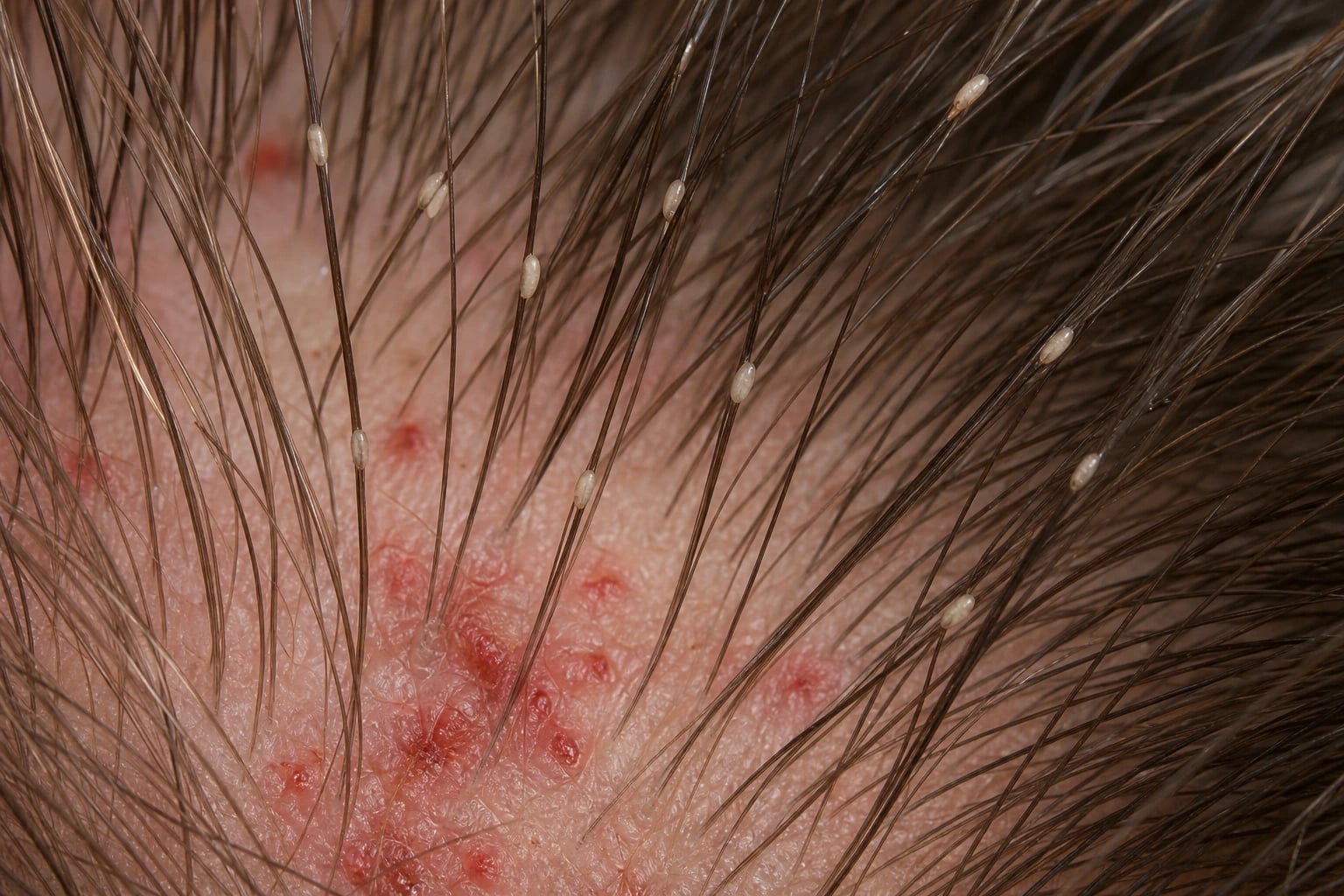
Classification
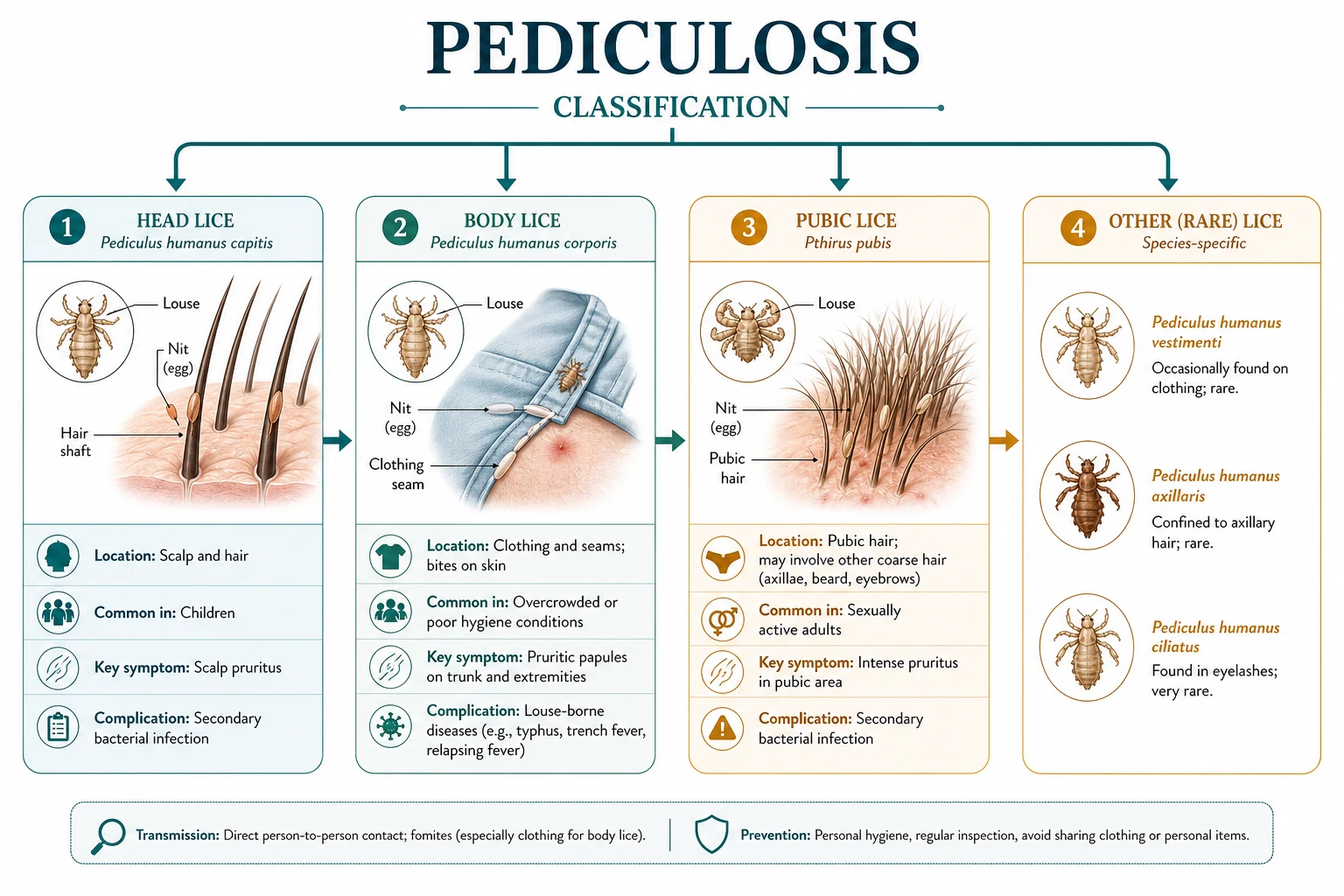
Pediculosis is classified by infesting species, each with a distinct site, route, and clinical signature. The clinical pattern, differential, and management differ so much that the three are usually addressed as separate diseases. [1]
Head louse (P. h. capitis)
Body louse (P. h. humanus / corporis)
Pubic louse (Phthirus pubis)
The distinction between P. h. capitis and P. h. humanus is ecological, not strictly genetic: a head louse transplanted onto clothing can be reared into a body-louse phenotype within a few generations, and vice versa. The two ecotypes are kept apart in real life by hair-shaft diameter, microclimate (warmth, humidity), and feeding frequency. The practical bedside rule is site + habitat = species: scalp hair = capitis, clothing seam = humanus, coarse body hair = pubis.[1][8][9]
Epidemiology & Risk Factors
Head lice are the most common louse infestation, with an estimated 6-12 million cases per year in the United States and similar rates in most developed countries. They are most prevalent in children aged 3-12 years (peak incidence 7-9 years), with a slight female predominance (longer hair provides more purchase), and affect all socioeconomic groups — head lice are not a hygiene problem. Outbreaks occur in primary schools, summer camps, hostels, and households, and transmission is almost exclusively by direct head-to-head contact; fomite transmission (hats, combs, pillows) plays a small role because the head louse survives off-host for less than 36 hours and is unlikely to traverse clothing or fabric to a new head. Asymptomatic carriers (about 1 in 10) drive the silent spread.[1][3][4]
Body lice are the rarest of the three in industrialised countries and function as a sentinel of social deprivation. They infest the seams of clothing worn continuously for days or weeks, so they are found in homeless populations, refugees, prisoners, and people in cold climates with infrequent clothing change. The World Health Organization estimates that body-louse infestation affects millions of people in displaced populations, conflict zones, and post-disaster settings. Body lice are the only louse that transmits systemic bacterial disease to humans: the three great louse-borne infections — epidemic (louse-borne) typhus caused by Rickettsia prowazekii, louse-borne relapsing fever caused by Borrelia recurrentis, and trench fever caused by Bartonella quintana — have all reappeared in modern refugee and prison outbreaks (Burundi 1997, Russia 1998, Rwanda 2001, Algeria 2002, and ongoing outbreaks in the Horn of Africa). Mortality in untreated louse-borne typhus is 10-40%; in louse-borne relapsing fever up to 30-70% in epidemics.[1][8][11]
Pubic lice are predominantly an infestation of sexually active young adults (15-40 years), with a slight female predominance, transmitted by direct body-hair contact during sex. Co-infection with other sexually transmitted infections is the rule rather than the exception — the prevalence of concurrent chlamydia, gonorrhoea, syphilis, HIV, or hepatitis B in patients with pubic lice is 20-30% in most case series, which is why every adult with pubic lice warrants a full STI screen. The pubic louse is rarely found in pre-pubertal children; when it is, safeguarding assessment is mandatory because sexual transmission is the usual route, although non-sexual transmission via shared towels, bedding, or close household contact with an infested adult is well documented.[6][9]
Pathophysiology
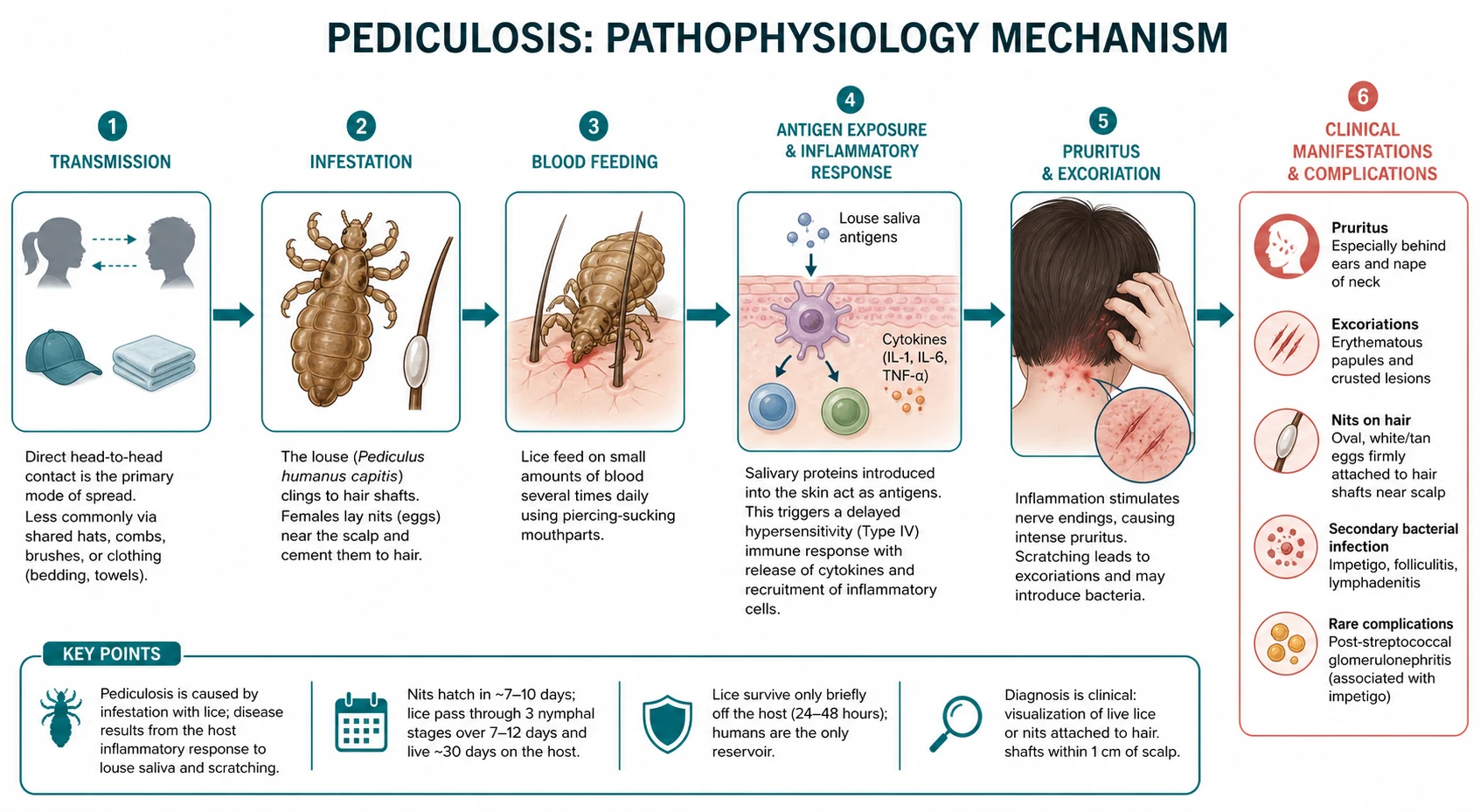
All three human lice are obligate blood-feeding ectoparasites with a five-stage life cycle: egg (nit), three nymphal instars, and adult. The female cements each egg to a hair shaft or fibre with a chitinous glue secreted by her accessory gland; this glue is insoluble in water and most shampoos, and is the reason nits do not slide along the shaft. Eggs hatch in 7-10 days (capitis), 8-10 days (humanus), or 6-8 days (pubis); the three nymphal instars each take 4-7 days; the adult lives 30-40 days and feeds every 4-6 hours. Off-host survival is short: the head louse dies within 36-48 hours away from the scalp; the body louse, adapted to cool stable microclimates in clothing, survives up to 7-10 days; the pubic louse, adapted to body temperature, dies within 24 hours off-host.[1][2][3]
The itch is not a direct effect of the bite. It is a delayed hypersensitivity (type I and type IV) reaction to louse salivary antigens, which is why first infestations are often silent for 4-6 weeks (sensitisation phase) and re-infestations itch within 1-4 days (memory response). Excoriations, lichenification, and secondary bacterial infection then follow. The maculae caeruleae (blue-grey macules 0.5-1 cm) seen on the trunk and thighs in pubic-lice infestation are haemosiderin and bilirubin deposits from the louse's saliva and bite — they are pathognomonic when present.[6][9]
Permethrin resistance is the most clinically important pathophysiological change over the last 30 years. It is mediated by point mutations in the voltage-gated sodium channel (the louse's kdr locus) — T929I, L920F, and M815I individually confer low-level pyrethroid resistance, and the super-kdr double mutation M827I + T929I confers high-level resistance. The same channel mutations also mediate DDT resistance (DDT and pyrethroids share the same binding site). Resistance to malathion (organophosphate) is mediated by esterase gene amplification and to ivermectin by mutations in the glutamate-gated chloride channel (the target of ivermectin and lotilaner). The clinical consequence is that permethrin 1% now achieves only 60-80% cure in many regions (down from >95% in the 1990s), whereas dimeticone 4% (a silicone polymer that physically occludes the louse's spiracles) and oral ivermectin (a glutamate-gated chloride channel opener causing paralysis) retain full activity because resistance to physical occlusion is biologically implausible.[12][13]
Clinical Presentation
Pediculosis capitis (head lice)
The dominant symptom is scalp pruritus, most marked over the occiput, post-auricular areas, and nape of the neck — the warm, well-perfused regions the louse prefers. The onset is typically 4-6 weeks after first exposure (delayed hypersensitivity). On examination, live lice are seen moving on the scalp and proximal hair shafts, and viable nits are seen as oval, 0.8 mm, opalescent brown specks firmly cemented to the hair shaft within 6 mm of the scalp (older, hatched, and empty nits are pearly white and located further out). A useful rule: nits < 6 mm from the scalp = viable; nits > 1 cm from the scalp = empty old shells. Occipital and posterior-cervical lymphadenopathy is common. Secondary bacterial infection with Staphylococcus aureus or group A Streptococcus (impetigo, furunculosis, cervical lymphadenitis) is the most frequent complication, especially in children who scratch. Asymptomatic carriers (lice but no itch) are estimated at 5-20% of infested children and are the principal reservoir.[3][4][5][10]
Pediculosis corporis (body lice)
The patient is usually a homeless, displaced, or otherwise deprived adult. The dominant symptom is generalised pruritus, worst over the covered trunk, shoulders, waist, and upper thighs — exactly where clothing seams press against the skin. The skin shows excoriations, eczematous change, lichenification, and post-inflammatory hyperpigmentation (sometimes called "vagabond's skin"). Impetiginisation, furunculosis, and cellulitis are common. The lice and nits are found in the seams of the clothing, not on the body — a key point that examiners deliberately test. In heavy chronic infestation, the patient may be systemically unwell, anaemic, and febrile, and may have lost weight. The clinician should actively consider louse-borne typhus, trench fever, and relapsing fever in any febrile homeless or displaced patient with body-lice-infested clothing.[8][10][11]
Pediculosis pubis (pubic / crab lice)
The presenting symptom is pruritus of the pubic area, perineum, and perianal region, often with visible "crabs" on the hair shafts and nits glued to the coarse pubic hair. Examination reveals the pathognomonic maculae caeruleae — blue-grey macules 0.5-1 cm on the trunk, abdomen, and thighs, representing louse-bite haemosiderin deposition. Coarse body hair elsewhere may also be infested: axillary hair, beard, moustache, chest hair, and (in 5-10%) eyelashes (phthiriasis palpebrarum). Pubic lice on the eyelashes present as itchy red eyes with visible lice and nits at the lash bases. Adults with pubic lice warrant a full STI screen (HIV, syphilis, hepatitis B, gonorrhoea, chlamydia) because of the 20-30% co-infection rate. Children with pubic lice trigger safeguarding assessment for possible sexual abuse, although non-sexual transmission via shared towels and bedding with an infested adult is documented.[6][7][9]
Atypical and severe presentations
In elderly, demented, immunocompromised (HIV, transplant), and institutionalised patients, the infestation can be heavy and crusted, with thousands of lice and a psoriasiform appearance. This is the louse equivalent of crusted (Norwegian) scabies and is highly contagious. Bullous and figurate urticarial reactions to lice are described; id reactions (auto-sensitisation dermatitis with distant papular eruption) occur in heavy infestations. In body-lice epidemics, louse-borne disease may dominate the presentation.[1][2]
Capitis — site
Capitis — transmission
Capitis — vector of systemic disease
Corporis — site
Corporis — transmission
Corporis — vector of systemic disease
Pubis — site
Pubis — transmission
Pubis — vector of systemic disease
Differential Diagnosis
The head-lice differential is dominated by conditions that produce whitish specks on the hair. The bedside rule is "if it slides, it is not a nit": a louse nit is firmly cemented to the hair shaft by chitin glue and does not slide when the hair is pinched and pulled, whereas dandruff, seborrhoeic-dermatitis scales, hair casts, and lint all slide freely. The differential also includes fungal nodules (white and black piedra) and structural hair-shaft disorders (trichorrhexis nodosa, monilethrix). Scabies produces burrows in the web spaces and never produces nits; pediculosis is a hair-shaft disease.[9][10]
Top differentials for white specks on the hair shaft (the "is it a nit?" question): [1]
- Dandruff / seborrhoeic dermatitis — loose white flakes scattered through the hair and on the scalp; SLIDES along the hair shaft; often with seborrhoeic distribution (scalp, eyebrows, nasolabial folds); not firmly attached; KOH negative.
- Hair casts (pseudo-nits / keratin cylinders) — whitish cylindrical beads 1-3 mm that SLIDE along the hair shaft; commoner in girls with long hair, often confused with nits; KOH negative; resolve with conditioner.
- White piedra (Trichosporon asahii) — soft white-cream nodule surrounding the hair shaft (not cemented to one side); KOH shows hyphae and arthroconidia; commoner in tropical climates, on facial and genital hair.
- Black piedra (Piedraia hortae) — hard pinhead-sized black nodule on scalp hair; KOH shows dematiaceous hyphae and ascospores; tropical.
- Trichorrhexis nodosa — whitish fracture nodes along the hair shaft; hair snaps at the nodes; light microscopy shows splayed cortical fibres ("paintbrush"); not infectious.
- Monilethrix — beaded hair with regular nodes and internodes (autosomal dominant); microscopy diagnostic; not infectious.
- Lichen simplex / nodular prurigo — thick excoriated plaque on an accessible site (lower leg, scrotum, nape); no nits; biopsy shows pseudoepitheliomatous hyperplasia.
- Scabies — web-space burrows and generalised nocturnal itch; NEVER nits on hair shafts; microscopy of a burrow shows mite, faeces (scybala), and eggs. [1]
Dandruff / seborrhoeic dermatitis
Hair casts (pseudo-nits / keratin cylinders)
White piedra (Trichosporon asahii)
Black piedra (Piedraia hortae)
Trichorrhexis nodosa
Monilethrix
Lichen simplex / nodular prurigo
Scabies
For the pubic-lice differential, the main distractors are folliculitis (pustules centred on follicles, not nits at hair base), molluscum contagiosum (pearly umbilicated papules, no nits), and condylomata lata (flat, moist, secondary syphilis). A Wood's lamp and dermoscopy (or microscopy of a plucked hair) resolve the doubt. For body lice, the main mimic is scabies (which produces burrows and never involves clothing seams) and prurigo nodularis (thick excoriated nodules, no insects in clothing). [1]
Clinical & Bedside Assessment
The focused examination has three goals: confirm the species, assess severity and complications, and identify contacts and the social context. For head lice, the examination is best performed in good daylight (or with a bright handheld light and a magnifier) at the patient's occiput and behind the ears, parting the hair systematically in 1-cm sections. Detection combing is the gold standard: a fine-toothed (0.2-0.3 mm) comb drawn through conditioned or damp hair from root to tip, repeated 3-4 times per session and on 3 separate occasions 1-2 days apart. A single session detects about 65-75% of infestations; three sessions about 90%. Visual inspection alone has a sensitivity of only ~30% and is inadequate. Wood's lamp is a useful adjunct: live nits fluoresce a pale opalescent blue, empty nits dull white — but it does not replace combing.[3][4][5]
Dermoscopy (entomododermoscopy) at 10-30x magnification confirms the species by visualising the louse's body, claws, and gut — the pubic louse's crab morphology and the head louse's elongated shape are pathognomonic. Microscopy of a plucked hair with the nit attached, mounted in 10-20% KOH or saline, confirms a viable egg (embryo visible) versus an empty shell. In difficult cases (recurrent infestation, resistance), molecular species confirmation by PCR of a louse is available in reference laboratories. [1]
For body lice, the examination of the patient is rarely diagnostic — the patient shows pruritic, excoriated, lichenified skin and the insects are in the clothing. Examine the seams of the underclothing, particularly at the waist, collar, cuffs, and axillae, with the patient's consent. A sticky-tape preparation (transparent adhesive tape pressed against the seam, then mounted on a glass slide and examined under low power) confirms the diagnosis. For pubic lice, examine all coarse body hair — pubic, perianal, axillary, beard, moustache, eyelashes — and the skin for maculae caeruleae. In every adult with pubic lice, examine the genitals, perineum, mouth, and skin for evidence of other STIs, and take a sexual history that includes same-sex contact.[6][7][8][9]
Step 1 — Confirm the species and the site
Head = scalp hair (comb and dermoscopy). Body = clothing seams (sticky-tape prep). Pubic = coarse body hair (visual + dermoscopy).
Step 2 — Assess severity and complications
Look for excoriations, impetigo, furunculosis, cellulitis, lymphadenopathy, post-inflammatory pigmentation, id reaction.
Step 3 — Identify contacts
Household, school, sexual (pubic lice), institutional (body lice). All to be examined and treated simultaneously if positive.
Step 4 — Address the social context
Homelessness, displacement, poverty (body lice) -> social work, housing, delousing of clothing/bedding. Pubic lice in adult -> STI screen. Pubic lice in child -> safeguarding.
Step 5 — Plan follow-up
Second application of pediculicide at day 7; re-examine at day 14; confirm live-lice-free; treat retreatment failure as resistance.
Investigations
The diagnosis of pediculosis is clinical: the finding of a live louse or a viable nit within 6 mm of the scalp (or on a coarse body hair, or in a clothing seam) confirms active infestation. No blood test, swab, or imaging is required for the diagnosis itself. Investigations are reserved for atypical presentations, contact tracing, complications, and the specific case where a febrile homeless patient with body lice needs louse-borne disease ruled out. [1]
The "viable nit" rule of thumb is the only quantitative bedside threshold examiners should memorise. A nit's distance from the scalp (or from the skin, for pubic lice) reflects when it was laid: hair grows about 0.3-0.4 mm per day on the scalp, so a nit 6 mm from the scalp was laid within the last 2-3 weeks (and is likely viable if the hair was not cut). A nit 1 cm or more from the scalp was laid more than 4-6 weeks ago and is almost always an empty shell. This rule is what allows a clinician to tell an old, residual, dead-nit infestation from a new active one and is the single most useful quantitative threshold in the topic.[3][4][9]
For pubic lice in an adult: a full STI screen is mandatory because of the 20-30% co-infection rate — HIV fourth-generation antigen/antibody, syphilis (RPR/VDRL with TPHA confirmation), hepatitis B sAg/sAb/cAb, hepatitis C, NAAT for Chlamydia trachomatis (endocervical/vaginal/urine) and Neisseria gonorrhoeae (endocervical/urine/pharyngeal/rectal as appropriate), and consideration of Mycoplasma genitalium and trichomoniasis testing. Microscopy of a plucked pubic hair with the nit attached in 10% KOH confirms viability. [1]
For body lice in a febrile homeless or displaced patient: a louse-borne disease screen is indicated. Send FBC, CRP, LFTs, urea and electrolytes, blood cultures, and acute and convalescent serology for Rickettsia prowazekii (IFA), Bartonella quintana (IFA), and Borrelia recurrentis (the latter is best confirmed by Giemsa-stained thin and thick blood films during a febrile episode, which show the spirochaetes between red cells). Empirical doxycycline 100 mg bd PO/IV for 5-7 days should be started as soon as louse-borne typhus or relapsing fever is suspected, before serology returns.[8][11]
For impetiginised pediculosis: bacterial swabs for culture and sensitivities are not routinely needed unless there is treatment failure, recurrent infection, or systemic signs; the empirical therapy (flucloxacillin 500 mg QDS 7 days in the UK; dicloxacillin 250 mg QDS 7 days in the US; or a macrolide in penicillin-allergic patients) covers both S. aureus and group A Streptococcus. Post-streptococcal glomerulonephritis is a recognised complication of heavy body-lice infestation in epidemics and warrants urinalysis and anti-streptolysin-O titre if suspected. [1]
Microscopy of the louse or nit is the only way to confirm the species definitively and is useful in recurrent or treatment-resistant cases. Place the louse or plucked hair with nit in a drop of 10-20% KOH or saline on a glass slide, coverslip, and examine under 10-40x. The head louse is elongated (2-4 mm) and pigmented; the body louse is similar but slightly larger and paler; the pubic louse is short, broad, and crab-like with large claws on the second and third pairs of legs. In research and forensic settings, PCR-RFLP of the mitochondrial 12S rRNA gene can separate P. h. capitis and P. h. humanus ecotypes.[13]
Management — Resuscitation
Pediculosis is almost never a resuscitation scenario, but two settings demand urgent action: (1) louse-borne systemic disease in a febrile homeless or displaced patient with body lice, and (2) heavy secondary bacterial infection with cellulitis or systemic signs in any louse infestation. [1]
Louse-borne typhus (Rickettsia prowazekii) and louse-borne relapsing fever (Borrelia recurrentis) are medical emergencies. The empirical antibiotic of choice in any louse-borne rickettsiosis is doxycycline 100 mg PO or IV twice daily for 5-7 days (WHO and CDC guidance); in children < 8 years and in pregnancy, doxycycline is still recommended because alternative agents are inferior and the risk of severe disease outweighs the small risk of dental staining. A single dose of doxycycline 200 mg is curative for louse-borne typhus if given early. For louse-borne relapsing fever, doxycycline 100 mg bd for 5-7 days (or erythromycin 500 mg qds) is effective; a Jarisch-Herxheimer reaction is common within 2 hours of the first dose (rigors, hypotension, fever spike) and the patient should be observed, with IV access and resuscitation equipment at the bedside. For trench fever (Bartonella quintana), doxycycline 100 mg bd for 4-6 weeks plus gentamicin 3 mg/kg/day IV in divided doses for 2 weeks is the standard regimen for chronic disease; the combination is essential to prevent relapse.[1][8][11]
Heavy secondary bacterial infection (impetigo, furunculosis, cellulitis) in any louse infestation is treated with empirical anti-staphylococcal and anti-streptococcal therapy. In the UK, flucloxacillin 500 mg four times daily for 7 days; in the US, dicloxacillin 250 mg four times daily for 7 days; in penicillin-allergic patients, clarithromycin 250 mg bd for 7 days or doxycycline 100 mg bd for 7 days. Severe cellulitis or systemic sepsis requires IV therapy (flucloxacillin 1 g qds IV or ceftriaxone 2 g IV daily) and hospital admission. Louse delousing and environmental decontamination run in parallel with the antibiotic course — the patient is the source of re-infection until the lice are eradicated.[5][10]
Environmental decontamination of body-lice-infested clothing and bedding is itself a life-saving intervention in outbreaks: hot machine wash (≥ 60 °C) and tumble-dry (≥ 70 °C for ≥ 30 minutes) kill all stages of the louse; alternatively, sealing in plastic bags for 14 days (head-louse and body-louse off-host survival), dry-cleaning, or freezing for 48 hours are all effective. In mass outbreaks (refugee camps, prisons, homeless shelters), permethrin 0.5% or 1% dusting powder or, more effectively, permethrin 2% impregnation of underwear and bedding reduces body-louse burden by > 90% within 4-6 weeks and is the WHO-recommended population-level intervention in displaced populations.[8]
[1]Management — Definitive & Stepwise
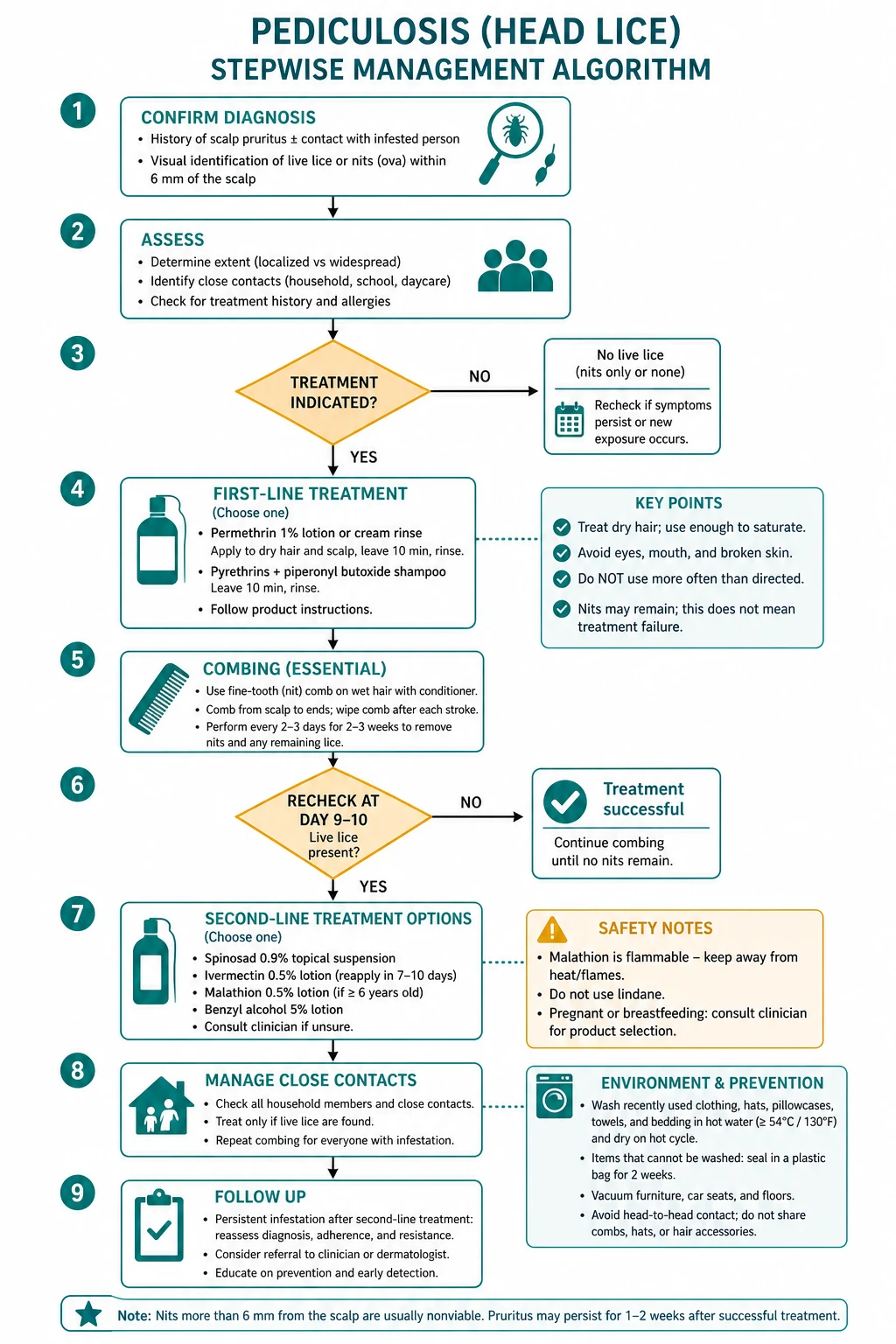
The management ladder for pediculosis capitis is structured around the principles of (a) two applications 7 days apart (no agent is 100% ovicidal, so the second dose kills nymphs that hatch from surviving eggs), (b) simultaneous treatment of all household contacts (otherwise re-infestation from an asymptomatic carrier is the rule), (c) no school exclusion (AAP 2015, NHS 2016 — "no-nit" policies are not evidence-based), and (d) mechanical removal with a fine-toothed comb after each application to remove dead lice and detached nits. The order of agents has shifted in the last decade: in regions where permethrin resistance exceeds 50-80%, dimeticone 4% is now first-line; in low-resistance regions, permethrin 1% remains a cost-effective first choice.[3][4][5][12]
Step 1 — Confirm the diagnosis
Live louse or viable nit within 6 mm of the scalp on detection combing. Visual inspection alone (sensitivity ~30%) is inadequate.
Step 2 — Choose the first-line agent
Dimeticone 4% lotion (preferred, physical mode, no resistance) OR permethrin 1% cream rinse (where resistance is low) OR malathion 0.5% (resistance lower than permethrin).
Step 3 — Apply correctly
Dimeticone: dry hair, scalp-to-ends, leave 8 h or overnight, comb. Permethrin: washed/towel-dried hair, leave 10 min, rinse. Malathion: dry hair, leave 12 h, repeat day 7.
Step 4 — Repeat at day 7
All agents: second application day 7 to kill hatchlings from surviving eggs. NO agent is reliably 100% ovicidal.
Step 5 — Comb after each application
Fine-toothed (0.2-0.3 mm) comb on damp, conditioned hair; 3-4 strokes per section; clear comb between strokes.
Step 6 — Treat all household contacts simultaneously
Even if asymptomatic; one untreated carrier re-infects everyone. Examine and treat all close household members on the same day.
Step 7 — Decontaminate fomites
Wash bedding, towels, hats, combs at 60 deg C; seal soft toys 14 days. No need for insecticidal sprays.
Step 8 — Re-examine at day 14
Detection comb. If still positive -> check adherence, contact treatment, and consider resistance; switch to a different class (dimeticone -> malathion; permethrin -> ivermectin) or use oral ivermectin 200-400 mcg/kg PO single dose, repeat day 7-10.
Dimeticone 4% lotion is a long-chain silicone polymer that physically occludes the louse's respiratory spiracles and intersegmental membranes, killing the insect by suffocation and water imbalance. It is applied to dry hair, scalp to ends, left for 8 hours or overnight, then combed out with a fine-toothed nit comb and washed out. The application is repeated at day 7. The mode of action is physical, so resistance is biologically implausible and is the principal reason dimeticone has displaced permethrin as first-line in many European guidelines. It is cosmetically acceptable (no smell, no staining), safe in children from 6 months, in pregnancy, and in patients with atopic skin, and is licensed in the UK, most of Europe, Australia, and increasingly in the US. Efficacy in head-to-head RCTs is similar to permethrin (95-97% cure) and slightly higher than malathion.[4][5][12]
Permethrin 1% cream rinse is a synthetic pyrethroid that opens the voltage-gated sodium channels of the louse nerve membrane, causing paralysis and death. It is applied to washed and towel-dried hair, left for 10 minutes, then rinsed out, with a second application at day 7. Permethrin has been the workhorse of head-lice treatment since the 1990s but is now compromised by kdr mutations in many regions: the French Lice Observatory 2022-2024 reported permethrin resistance rates of 60-80% in some French regions, and similar rates have been reported from the US, UK, Israel, and Australia. The clinical failure rate lags the in-vitro resistance rate, but cure rates of 60-80% in permethrin-treated patients are now typical in resistant regions. Permethrin is safe from 2 months of age and in pregnancy (category B), but should be avoided in patients with chrysanthemum or pyrethrin allergy. Permethrin 5% is reserved for scabies — using it for head lice is over-treatment and adds to selection pressure.[3][5][12]
Malathion 0.5% in isopropyl alcohol (or 0.5% lotion) is an organophosphate that irreversibly inhibits acetylcholinesterase in the louse nerve synapse, causing paralysis. It is applied to dry hair, left for 12 hours (overnight) or 8-12 hours for the lotion, and repeated at day 7. The isopropyl-alcohol vehicle is itself partially ovicidal (it dehydrates the egg), so malathion has higher ovicidal activity than permethrin. Resistance is lower than permethrin (kdr mutations do not affect organophosphate binding) but has been reported in the UK, France, and Australia, and the strong odour and alcohol base limit acceptance. It is flammable until dry. Malathion is generally avoided in children under 6 months and in pregnancy.[3][4][5]
Benzyl alcohol 5% lotion is a physical agent that kills lice by suffocation (it blocks the louse's airway tubes). It is applied to dry hair, left for 10 minutes, rinsed, and repeated at day 7. It is safe in infants from 6 months and has no neurological resistance, but is less effective than dimeticone in head-to-head trials. Spinosad 0.9% suspension is a fermentation product of Saccharopolyspora spinosa that causes louse paralysis by over-stimulating nicotinic acetylcholine receptors; a single application is often sufficient, but it is expensive and less widely available. Isopropyl myristate 50% (Full Marks) is a physical agent that dissolves the louse's cuticular wax, leading to dehydration; it is applied for 10 minutes and repeated at day 7. Topical ivermectin 0.5% lotion (Sklice, in the US) is a single-application ovicidal agent with > 70% cure after one application; not yet widely available elsewhere.[4][5][12]
Oral ivermectin 200-400 mcg/kg as a single dose, repeated on day 7-10, is the systemic option for refractory or resistant head lice. Ivermectin binds to the louse's glutamate-gated chloride channels (and to a lesser extent the GABA receptors), causing paralysis and death; the louse dies when it next feeds on the ivermectin-treated host's blood. The Chosidow 2010 NEJM RCT showed ivermectin 400 mcg/kg on day 1 and day 8 was superior to malathion 0.5% lotion (97.1% vs 67.6% lice-free at day 15). Ivermectin is not first-line in uncomplicated head lice because (a) it is systemic and requires oral dosing in children, (b) safety and efficacy are not established in children < 15 kg or in pregnancy, and (c) it is more expensive than topical alternatives. It is the drug of choice for refractory or multiply-resistant head lice and is the only oral option. Lotilaner, a newer isoxazoline with even greater potency at the louse's glutamate-gated chloride channel, is in clinical trials but not yet licensed for pediculosis.[4][13]
Wet combing alone ("Bug Busting" / "Nit Buster") is the non-chemical option. The procedure is to wash the hair with ordinary shampoo, apply a generous amount of conditioner (the conditioner immobilises the lice and makes combing easier), and then comb systematically from root to tip with a fine-toothed (0.2-0.3 mm) detection comb, repeated every 3-4 days for 14 days (i.e., four sessions). The conditioner-and-comb combination has lower efficacy than topical pediculicides (about 50-60% cure in RCTs) but is preferred by some parents who wish to avoid insecticides. The comb must be metal (plastic combs bend and miss nits), and the hair must be wet (wet combing is 4x more effective than dry). Wet combing is the only safe option in infants under 6 months, in pregnancy if the parent refuses topical therapy, and in patients with severe topical allergy.[3][5]
Dimeticone 4% lotion
Permethrin 1% cream rinse
Malathion 0.5% in isopropyl alcohol
Benzyl alcohol 5% lotion
Spinosad 0.9% suspension
Topical ivermectin 0.5% lotion
Oral ivermectin 200-400 mcg/kg
Isopropyl myristate 50%
Wet combing (Bug Busting)
Pediculosis corporis (body lice) management is dominated by environmental decontamination because the lice live in the clothing, not on the body. The patient should be bathed or showered, the infested clothing and bedding removed in a sealed bag and either (a) hot machine-washed at ≥ 60 °C and tumble-dried at ≥ 70 °C for ≥ 30 minutes, (b) dry-cleaned, (c) sealed in a plastic bag for 14 days (the off-host survival of the body louse is 7-10 days), or (d) frozen for 48 hours. Topical permethrin 1% or 5% is applied to the body in severe infestation, and anti-histamines and emollients manage the residual itch. In outbreaks, the WHO recommends permethrin 0.5% or 1% body powder or permethrin 2% impregnation of underwear and bedding for the affected population. Antibiotics treat secondary bacterial infection. Address the social determinants — homelessness, displacement, lack of laundry facilities — in parallel.[8][10]
Pediculosis pubis is treated with permethrin 1% cream rinse (the same regimen as head lice, applied to pubic and any other affected coarse hair, left for 10 minutes and washed off, repeated at day 7) or malathion 0.5% lotion (left for 12 hours, repeated at day 7). Ivermectin 250 mcg/kg single dose, repeated at day 7-10, is an oral alternative. All sexual contacts within the previous month must be examined and treated simultaneously. The patient and contacts should be screened for other STIs (HIV, syphilis, hepatitis B, gonorrhoea, chlamydia) because of the 20-30% co-infection rate. Phthiriasis palpebrarum (eyelash lice) requires special management: do NOT use standard pediculicides near the eye. The safest approach is mechanical removal (fine forceps under magnification) plus petrolatum (petroleum jelly) applied thickly to the lash bases twice daily for 8-10 days, which suffocates the lice and nits. An alternative is physostigmine 0.25% eye ointment or yellow mercuric oxide 1% ointment, both of which kill the lice but are not universally available.[6][7]
Specific Subtypes & Scenarios
Heavy / crusted pediculosis
A rare but important variant seen in immunocompromised (HIV, transplant), elderly, demented, and institutionalised patients. Hundreds to thousands of lice and a heavy, crusted, sometimes psoriasiform scale are present, the patient is often systemically unwell, and the infestation is highly contagious (the louse equivalent of crusted/Norwegian scabies). Management requires combined therapy — a topical pediculicide (dimeticone or permethrin) every 2-3 days for 2-3 weeks, plus oral ivermectin 200-400 mcg/kg on days 1, 2, 8, 9, 15, and 22 (similar to crusted scabies), with keratolytics (salicylic acid or urea) to penetrate the crust, and aggressive environmental decontamination and isolation with contact precautions.[1][2]
Phthiriasis palpebrarum (eyelash lice)
An isolated or accompanying presentation of pediculosis pubis. The patient (often a child) presents with itchy red eyes, visible lice and nits at the lash bases, and blepharitis. The mainstay of treatment is petrolatum (petroleum jelly) applied thickly to the lash bases two to four times daily for 8-10 days; the lice and nits are suffocated and the dead lice can be removed with fine forceps. Do NOT apply permethrin, malathion, or other pediculicides to the eye or periocular skin — the risk of chemical conjunctivitis and corneal injury is unacceptable. In adults, exclude pediculosis pubis elsewhere and screen for other STIs. In children, safeguarding assessment is mandatory because of the implied sexual contact with an infested adult (although non-sexual transmission via shared towels and bedding is documented).[7][9]
Recurrent / treatment-resistant head lice
The commonest cause of apparent "treatment failure" is re-infestation from an untreated household contact, not resistance. Confirm by detection-combing all household members and treating all positive cases simultaneously. If re-infestation is excluded and the patient remains infested after two courses of a topical agent, resistance is the likely cause and the strategy is to switch to a different class of agent or a non-neurotoxic physical agent. Specifically: permethrin failure -> dimeticone 4% (or benzyl alcohol, malathion, spinosad, topical ivermectin); dimeticone failure -> oral ivermectin 200-400 mcg/kg single dose, repeat day 7-10. Combination therapy (permethrin + malathion, or dimeticone + oral ivermectin) is reserved for the most resistant cases. Wet combing alone is inadequate for resistant disease.[4][12]
Body-lice outbreaks in displaced populations
Louse-borne typhus, trench fever, and relapsing fever all track body-lice epidemics. The WHO-recommended package for outbreak control is: (1) active case-finding by direct examination of clothing seams in the affected population; (2) mass delousing with permethrin 0.5% or 1% dusting powder, or, more effectively, permethrin 2% impregnation of underwear and bedding; (3) environmental decontamination of clothing and bedding (hot wash, sealing); (4) empirical doxycycline 100 mg bd for 5-7 days for any febrile case (do not wait for serology); (5) surveillance for new cases for at least 4-6 weeks (the incubation period of typhus is 1-2 weeks; relapsing fever 4-18 days; trench fever 4-30 days).[8][11]
Pediculosis in pregnancy and lactation
The first-line agent is dimeticone 4% (no systemic absorption, no resistance). Permethrin 1% is category B and is acceptable. Malathion is generally avoided in pregnancy (organophosphate, theoretical risk). Oral ivermectin is contraindicated in pregnancy. Wet combing is acceptable throughout pregnancy. In lactation, all topical agents are acceptable; oral ivermectin should be avoided or the breast milk discarded for 24 hours after a dose.[3][4]
Pediculosis in children under 2 years
The licensed age thresholds vary: dimeticone is licensed from 6 months (UK), permethrin 1% from 2 months, malathion generally not under 6 months, benzyl alcohol 5% from 6 months, spinosad 0.9% from 4 years, oral ivermectin < 15 kg is off-label. Wet combing with conditioner is the safest option in infants under 6 months. All agents are well-tolerated in children when used as directed.[3][5]
Complications & Pitfalls
The immediate complications are dominated by secondary bacterial infection: impetigo, furunculosis, cellulitis, and cervical lymphadenopathy in head lice; impetigo and cellulitis in body and pubic lice. In heavy body-lice infestations in displaced populations, post-streptococcal glomerulonephritis is a recognised late complication. Id reactions (auto-sensitisation dermatitis with a widespread papular eruption distant from the site of infestation) are uncommon but well documented and respond to topical corticosteroids once the underlying infestation is cleared.[1][10]
The systemic complications are all caused by the body louse and include the three louse-borne diseases: epidemic (louse-borne) typhus (Rickettsia prowazekii — abrupt fever, severe headache, myalgia, maculopapular rash starting on the trunk and spreading centrifugally, confusion, multi-organ failure; mortality 10-40% untreated; can relapse decades later as Brill-Zinsser disease), trench fever (Bartonella quintana — relapsing 5-day fevers, pretibial pain, hepatosplenomegaly, endocarditis in the chronic form), and louse-borne relapsing fever (Borrelia recurrentis — recurrent high fevers with afebrile intervals, sometimes complicated by abortion in pregnancy, myocarditis, and cerebral haemorrhage; mortality up to 30-70% in epidemics). The Jarisch-Herxheimer reaction within 2 hours of the first antibiotic dose in relapsing fever can be fatal if not anticipated.[8][11]
The pitfalls the examiner and the clinician must avoid are: [1]
- Treating the patient but not the contacts — re-infestation is the rule, not the exception. Examine and treat all household members and (for pubic lice) all sexual contacts within the previous month on the same day.
- Single application of pediculicide — no agent is 100% ovicidal; the second application at day 7 is non-negotiable.
- Continuing permethrin despite treatment failure — recognise resistance (especially in regions with documented kdr mutations) and switch to dimeticone, malathion, or oral ivermectin.
- Treating the patient but not the environment — for body lice, the clothes are the reservoir; for head lice, fomites (combs, hats, pillows) play a minor but real role; for pubic lice, bedding and towels can transmit.
- Using pediculicides near the eye — phthiriasis palpebrarum is treated with petrolatum, not permethrin.
- Mis-diagnosing pubic lice in a child — failure to consider safeguarding is a serious oversight; non-sexual transmission is documented but the safeguarding assessment is mandatory.
- Excluding children from school — "no-nit" policies are not evidence-based; the AAP (2015) and NHS (2016) recommend return after a single completed treatment application.
- Missing louse-borne disease in a febrile homeless patient — the differential of fever in a homeless patient with body lice must include typhus, trench fever, and relapsing fever; empirical doxycycline is started before serology.
- Failing to monitor for Jarisch-Herxheimer in louse-borne relapsing fever — IV access, fluids, and resuscitation at the bedside for 4-6 hours after the first dose.
- Treating tinea capitis as pediculosis (and vice versa) — nits do not fluoresce, but Microsporum does; tinea capitis produces patchy alopecia with scaling, not isolated nits; if in doubt, take scrapings for mycology.[3][5][9][10]
Prognosis & Disposition
Head lice are a benign, self-limiting infestation with no long-term sequelae if treated. Recurrence is common and is almost always due to re-infestation from an untreated contact or to mis-diagnosed resistance. The prognosis for the secondary bacterial infection is excellent with appropriate antibiotics. No school exclusion is required — the AAP (2015) and NHS (2016) explicitly recommend return to school after a single completed application of pediculicide, regardless of the presence of residual nits (the "no-nit" policy is not evidence-based).[3][5]
Body lice resolve rapidly with environmental decontamination, but the prognosis in epidemics is dominated by the co-incident louse-borne disease. Untreated louse-borne typhus has a mortality of 10-40%; treated early with doxycycline, mortality falls to < 1%. Louse-borne relapsing fever has a mortality of 30-70% in epidemics untreated, falling to < 5% with doxycycline and supportive care. Trench fever usually resolves with 4-6 weeks of doxycycline, but the chronic form with endocarditis carries significant mortality if unrecognised. The social prognosis (housing, displacement) is the determinant of long-term outcome for the homeless patient.[8][11]
Pubic lice are cured with topical therapy plus contact tracing. The prognosis for the lice themselves is excellent. The prognostic determinant is the concurrent STI screen — a missed HIV, syphilis, or hepatitis B in a patient with pubic lice is a serious oversight. The psychological and relationship consequences of a pubic-lice diagnosis are often under-acknowledged and warrant sensitive counselling.[6]
Special Populations
Paediatrics: The peak age for head lice is 7-9 years. The safest first-line agent in children is dimeticone 4% (no resistance, no systemic absorption, licensed from 6 months). Permethrin 1% is licensed from 2 months. Malathion is generally avoided under 6 months. Oral ivermectin safety and efficacy are not established under 15 kg and it is reserved for refractory disease. School exclusion is not required (AAP 2015, NHS 2016).[3][5]
Pregnancy and lactation: Dimeticone 4% is first-line (no systemic absorption). Permethrin 1% (category B) is acceptable. Malathion and oral ivermectin are avoided. Wet combing is acceptable throughout pregnancy.[3][4]
Elderly and institutionalised: Heavy or crusted pediculosis may be seen in patients with dementia, Parkinson's disease, or chronic psychiatric illness, and in nursing-home residents. Combined therapy (topical + oral ivermectin), keratolytics, and environmental decontamination are required. Outbreaks in nursing homes trigger an infection-control response analogous to scabies outbreaks.[1][2]
Homeless and displaced populations: Body lice are the marker. The management package is: (1) environmental decontamination of clothing and bedding, (2) hot wash and tumble-dry or seal 14 days, (3) permethrin 2% impregnation of underwear and bedding (population-level intervention in outbreaks), (4) empirical doxycycline for any febrile case pending louse-borne-disease serology, and (5) active case-finding to break the transmission chain.[8][11]
Immunocompromised (HIV, transplant, biologics): Heavy and crusted pediculosis can occur. Combined topical + multi-dose oral ivermectin, keratolytics, isolation with contact precautions, and environmental decontamination are the management pillars.[1][2]
Children with pubic lice: Phthiriasis palpebrarum in a child is a safeguarding flag. The differential is sexual abuse (most cases) versus non-sexual transmission (shared towel or bedding with an infested adult, or, very rarely, vertical transmission). A formal safeguarding assessment is mandatory, and the local child-protection team should be involved. Phthiriasis palpebrarum from head-to-head contact with a heavily-infested adult has also been reported.[6][7][9]
Evidence, Guidelines & Regional Differences
The management of head lice is one of the more actively-evolving areas of dermatology because of permethrin resistance. The 2018 Cochrane review of pediculicide RCTs concluded that no single agent is clearly superior, that permethrin remains first-line where resistance is low, that combination products (permethrin + malathion) are effective in resistant disease, and that wet combing with conditioner has low-to-moderate efficacy and is best as adjunctive or alternative therapy. The Burgess 2015 BMJ Clinical Evidence review highlighted dimeticone and benzyl alcohol as the agents with the best evidence for ovicidal activity. The Chosidow 2010 NEJM RCT established oral ivermectin 400 mcg/kg on days 1 and 8 as superior to malathion 0.5% lotion (97.1% vs 67.6% cure at day 15).[4][12]
Regional differences are important because the first-line agent is dictated by the local resistance pattern: [1]
- UK (NHS 2016, BAD 2017): First-line dimeticone 4%; alternatives permethrin 1% or malathion 0.5%; wet combing is an option. No school exclusion. Two applications 7 days apart.
- US (AAP 2015, AAD): First-line permethrin 1%; alternatives pyrethrins, malathion 0.5%, benzyl alcohol 5%, spinosad 0.9%, topical ivermectin 0.5%, oral ivermectin 200-400 mcg/kg. No-nit policies explicitly rejected.
- Europe (European guideline 2017, French Lice Observatory 2022-2024): First-line dimeticone 4% in countries with documented permethrin resistance (France, UK, Israel); permethrin 1% in low-resistance regions. Two applications 7 days apart.
- Australia and New Zealand: First-line dimeticone 4% or permethrin 1% depending on local resistance; oral ivermectin for refractory disease.
- WHO 2022 refugee/health-emergency guidance: Permethrin 0.5% or 1% body powder, or permethrin 2% impregnation of underwear, for mass body-louse control in displaced populations; combined with hot-wash decontamination of clothing and bedding. [1]
Landmark trials to know: [1]
- Chosidow O et al. 2010, NEJM — oral ivermectin 400 mcg/kg days 1 and 8 vs malathion 0.5% lotion: 97.1% vs 67.6% cure at day 15 in moderate-to-severe head lice.
- Burgess IF et al. 2005, BMJ — dimeticone 4% vs phenothrin (a pyrethroid): non-inferior; subsequently influenced NICE/NHS guidance.
- Cochrane 2018 (review) — no single agent clearly superior; permethrin first-line where resistance low; combinations in resistant disease.
- AAP 2015, NHS 2016 — explicit rejection of "no-nit" school-exclusion policies; child can return after a single completed treatment application.
- WHO 2022 — permethrin 2% impregnation of underwear reduces body-louse burden by > 90% in displaced populations. [1]
WHO 2022 refugee / health-emergency guidance: Permethrin 0.5% or 1% body powder, or permethrin 2% impregnation of underwear and bedding, for mass body-louse control in displaced populations. Combined with hot-wash decontamination (≥ 60 °C) of clothing and bedding. Empirical doxycycline 100 mg bd for any febrile case pending louse-borne-disease serology.
Exam Pearls
[1]Exam application bank (NEET-PG / INICET)
One-line answer
Pediculosis is infestation by sucking lice: Pediculus humanus capitis (head louse), Pediculus humanus humanus (body louse), and Phthirus pubis (pubic/crab louse). Fellowship-level competence requires mastery of the three species and their ecologies, the body louse as a vector of louse-borne typhus, trench fever, and louse-borne relapsing fever, detection-combing as the diagnostic gold standard, the topical pediculicide ladder (dimeticone 4% preferred for its physical mode; malathion 0.5%, permethrin 1%, benzyl alcohol 5%, spinosad 0.9%, isopropyl myristate; oral ivermectin for refractory disease), wet-combing as a non-chemical option, two-dose 7-day dosing to kill hatchlings, contact tracing, environmental decontamination (clothing for body lice), and the safeguarding dimensions (pubic lice in a child, body lice as a marker of social deprivation).
Worked stems (answer without another resource)
Stem 1 — Classic presentation. Map symptoms to mechanism; name the first investigation and first treatment step with dose/route if drug therapy is standard. [1]
Stem 2 — Unstable / complicated. List red flags that force immediate resuscitation, theatre, ICU, antidote, or reperfusion — and what you do in the first 15 minutes. [1]
Stem 3 — Atypical group. Elderly, pregnancy, child, or immunocompromised: how presentation and thresholds change. [1]
Stem 4 — Differential trap. Name the three closest mimics and one discriminator for each. [1]
Stem 5 — Disposition. Who goes home with safety-netting, who is admitted, who needs HDU/ICU/theatre, and what follow-up is mandatory. [1]
Rapid viva checklist
- Definition + classification
- Pathophysiology chain
- Bedside signs / criteria
- Score with exact components (if any)
- Emergency bundle
- Definitive therapy with doses
- Complications of disease and of treatment
- Special populations
- Guideline/trial name if classic
- Three exam traps
Coverage self-check
If you cannot answer any stem above from this page alone, re-read the matching section — the page is intended to be self-sufficient for final-prof and NEET-PG/INICET questions on Pediculosis.
[1]References
- [1]Coates SJ, Thomas C, Chosidow O, et al. Ectoparasites: Pediculosis and tungiasis J Am Acad Dermatol, 2020.PMID 31306729
- [2]Do-Pham G, Monsel G, Chosidow O. Lice Semin Cutan Med Surg, 2014.PMID 25577849
- [3]Meister L, Ochsendorf F. Head Lice Dtsch Arztebl Int, 2016.PMID 27974145
- [4]Burgess IF, Silverston P. Head lice BMJ Clin Evid, 2015.PMID 25587918
- [5]Gunning K, Kiraly B, Pippitt K. Lice and Scabies: Treatment Update Am Fam Physician, 2019.PMID 31083883
- [6]Creighton-Smith M, Sloan SB. Pediculosis Pubis JAMA Dermatol, 2019.PMID 31553414
- [7]Gurnani B, Badri T, Hafsi W. Phthiriasis Palpebrarum 2026.PMID 29083779
- [8]Powers J, Badri T, Syed HA. Pediculosis Corporis 2026.PMID 29489282
- [9]Ko CJ, Elston DM. Pediculosis J Am Acad Dermatol, 2004.PMID 14699358
- [10]Flinders DC, De Schweinitz P. Pediculosis and scabies Am Fam Physician, 2004.PMID 14765774
- [11]Chosidow O. Scabies and pediculosis Lancet, 2000.PMID 10711939
- [12]Meinking TL. Clinical update on resistance and treatment of Pediculosis capitis Am J Manag Care, 2004.PMID 15515630
- [13]Lamassiaude N, Toubate B, Neveu C, et al. The molecular targets of ivermectin and lotilaner in the human louse Pediculus humanus humanus: New prospects for the treatment of pediculosis PLoS Pathog, 2021.PMID 33600484