Dermatology · Medicine
Pellagra (niacin/vitamin B3 deficiency)
Also known as Pellagra · Niacin deficiency · Vitamin B3 deficiency · Casal's necklace
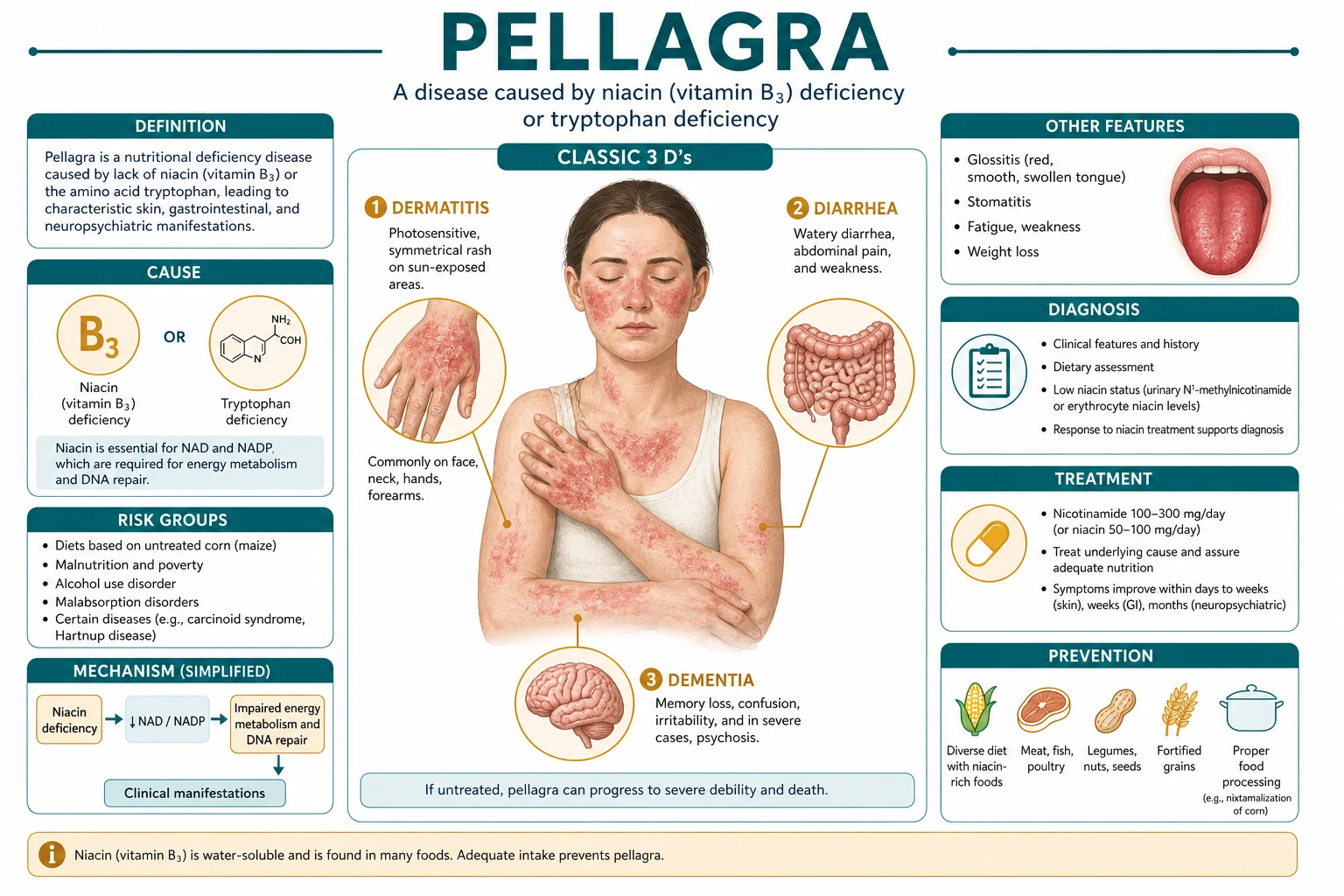
Pellagra is a systemic disease caused by deficiency of niacin (vitamin B3) or its amino acid precursor tryptophan, classically presenting with the '3 Ds': dermatitis (a sharply demarcated photosensitive rash on sun-exposed skin including Casal's necklace), diarrhoea, and dementia — with death as the untreated 4th D. Causes span dietary deficiency (maize/sorghum-based diets), alcoholism, malabsorption, Hartnup disease (impaired tryptophan transport), carcinoid syndrome (tryptophan diversion to serotonin), and isoniazid therapy (vitamin B6 antagonism). Tryptophan converts to niacin (~60 mg to 1 mg) via the kynurenine pathway, requiring B6, B2, and B1. Treatment is oral nicotinamide (niacinamide) 100 mg four times daily for 3-4 weeks then 50 mg TDS maintenance, with rapid clinical response within days.
On this page & tools
Your progress
Saved locally on this device.
Exam tags
Red flags
Overview & Definition
Pellagra — from the Italian pelle (skin) and agra (sour or rough) — is a systemic nutritional disease caused by deficiency of niacin (nicotinic acid, vitamin B3) or, more precisely, deficiency of niacin and its amino acid precursor tryptophan. The term was coined in 18th-century Mediterranean Europe when the disease ravaged peasant populations subsisting on untreated maize imported from the Americas, and it has retained its identity as the textbook archetype of a photosensitive nutritional dermatosis for over 250 years.[1][5]
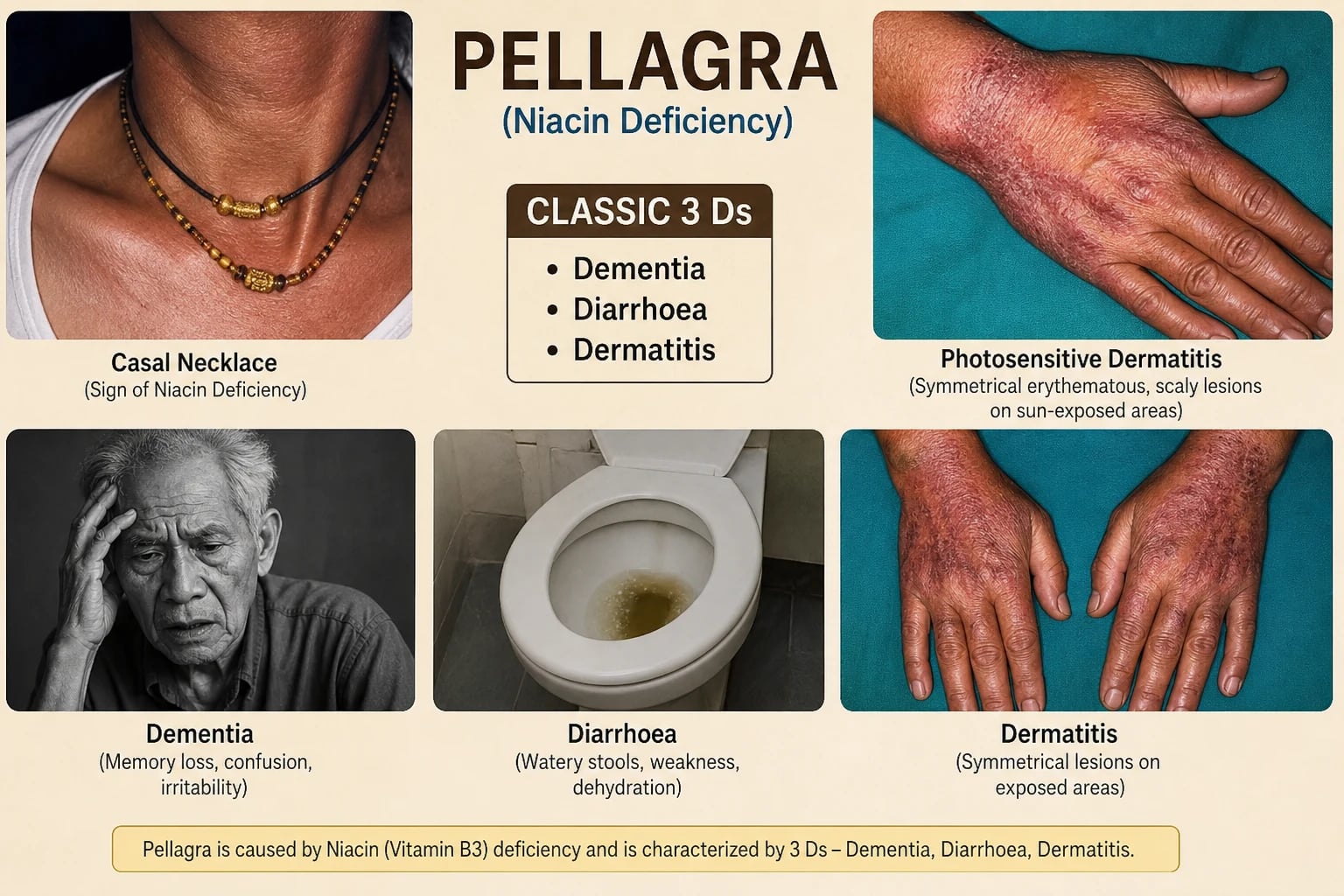
The clinical signature is the famous tetrad of the "4 Ds": dermatitis, diarrhoea, dementia, and — if untreated — death. The dermatitis is distinctive: a sharply demarcated, photosensitive eruption on sun-exposed skin, of which the eponymous Casal's necklace (a band of erythema and pigmentation encircling the neck in the V-neckline of sun exposure) is the most celebrated single sign. Yet pellagra is not primarily a skin disease. It is a systemic failure of NAD-dependent metabolism that simultaneously devastates the gastrointestinal mucosa and the central nervous system, and the cutaneous eruption is simply its most visible — and often its earliest — manifestation.[3][4]
Pellagra matters to the clinician for three reasons. First, untreated it is fatal: death classically supervenes within 4 to 5 years, and fulminant cases can kill within weeks, yet the disease is completely reversible if recognised and treated. Second, it is a chameleon: in developed countries it masquerades as alcohol withdrawal, malabsorption, eating disorder, drug reaction, or decompensated carcinoid, and the diagnosis is missed because it is "not supposed to happen here". Third, its pathophysiology is one of the most elegant bridges in all of medicine between diet, intermediary metabolism, and clinical phenotype — the tryptophan-to-niacin (kynurenine) pathway links a single vitamin deficiency to dermatology, gastroenterology, and neuropsychiatry in one biochemical arc. [1]
Classification
Pellagra is best classified along two axes: the underlying aetiology (which dictates counselling and whether the disorder will recur), and the clinical tempo (which dictates the urgency and route of treatment). Both are clinically useful and examineable. [1]
Primary versus secondary pellagra
Primary pellagra
Secondary pellagra
By clinical tempo
Epidemiology & Risk Factors
Pellagra was once among the commonest causes of death in maize-dependent populations. At its peak in the early 20th century, it claimed tens of thousands of lives annually in the southern United States and Mediterranean Europe; Joseph Goldberger's epidemiological work (1914-1929) established its nutritional (rather than infectious) origin and paved the way for niacin identification in 1937.[5]
The principal risk factors cluster into four groups. Dietary causes dominate in low-resource settings: reliance on maize (corn) or sorghum as the energy staple without the alkali treatment (nixtamalisation) that liberates bound niacin; refugee and displaced populations; chronic famine and food insecurity; and, in the developed world, anorexia nervosa, strict fad diets, and unsupplemented parenteral nutrition. Alcoholism is the single most important cause in developed countries — a combination of poor intake, ethanol-induced malabsorption, and impaired hepatic tryptophan metabolism. Malabsorptive and surgical causes include Crohn's disease, coeliac disease, gastrectomy, and short-bowel syndrome. Metabolic and drug-related causes include carcinoid syndrome (tryptophan diversion), Hartnup disease (tryptophan transport defect), isoniazid (B6 antagonism), and rarely azathioprine, 5-fluorouracil, chloramphenicol, phenytoin, and sulfonamides.[1][2][6]
A second epidemiological lesson is the seasonality and periodicity of endemic pellagra. Outbreaks characteristically follow drought, crop failure, or economic collapse that force populations onto a narrow maize or sorghum diet, and they cluster in the post-harvest hungry season when stores are depleted. Women of reproductive age, growing children, and the elderly bear disproportionate disease because of higher metabolic demand and lower dietary autonomy. In the developed world the epidemiology is different: pellagra is sporadic and concentrated in marginalised individuals — chronic alcoholics, the socially isolated elderly, patients with eating disorders, those on unsupplemented restrictive or fad diets, post-bariatric-surgery patients with malabsorption, long-term dialysis patients, and people living with HIV — rather than in whole populations. Clinicians in tertiary centres must therefore keep pellagra on the differential for any unexplained photosensitive dermatosis with systemic features, even when overt malnutrition is absent.[1][5]
Endemic pellagra persists where untreated maize or sorghum is the dietary staple: parts of sub-Saharan Africa (recurrent outbreaks in Mozambique, Angola, Zimbabwe, Malawi during drought and economic crisis, 2001-2002), India and Nepal (among populations on jowar/sorghum or leached maize), China, and pockets of the former Soviet Union. The South African scoping review documents continuous pellagra from 1897 to 2019, with a recent resurgence in HIV-positive and alcoholic populations.[5]
Pathophysiology
Niacin, NAD, and why a single vitamin failure causes a systemic disease
Niacin (nicotinic acid) and its amide nicotinamide are the two dietary forms of vitamin B3, and both are converted in vivo to the pyridine dinucleotide coenzymes NAD (nicotinamide adenine dinucleotide) and NADP (nicotinamide adenine dinucleotide phosphate). These two molecules are among the most important coenzymes in human metabolism, participating in over 400 redox reactions across glycolysis, the TCA cycle, oxidative phosphorylation, fatty acid oxidation, and steroidogenesis. Beyond redox chemistry, NAD is the obligate substrate for poly(ADP-ribose) polymerase (PARP) — the central enzyme of DNA repair — and for the sirtuins that regulate chromatin, inflammation, and mitochondrial biogenesis. When NAD is depleted, the cell cannot repair DNA, sustain ATP synthesis, or maintain rapidly renewing epithelium. The clinical consequence is precisely the tissue triad that fails fastest: skin (basal keratinocytes with high turnover and UV stress), gut mucosa (continuous epithelial renewal), and brain (high ATP demand, excitotoxic vulnerability).[4]
The tryptophan-to-niacin (kynurenine) pathway
Humans derive niacin from two sources: preformed dietary niacin/nicotinamide (rich in meat, fish, poultry, peanuts, legumes, mushrooms, whole grains) and endogenous synthesis from tryptophan via the kynurenine pathway. The conversion ratio is approximately 60 mg of tryptophan to 1 mg of niacin (1 niacin equivalent, NE), and the daily requirement of about 14 to 16 mg NE/day is normally met by a mixture of both. The pathway is enzymatically demanding: it requires vitamin B6 (pyridoxal phosphate) as a cofactor for kynureninase, vitamin B2 (riboflavin) for kynurenine hydroxylase, and adequate vitamin B1 — which is why multiple B-vitamin deficiencies often coexist and why a single antagonism can precipitate the disease. [1]
This single biochemical arc explains every cause of pellagra. Low intake (maize/sorghum, alcoholism, anorexia) directly depletes both niacin and tryptophan. Maize-bound niacin (niacytin) is biologically unavailable; the indigenous Mesoamerican practice of soaking maize in alkaline (lime) water — nixtamalisation — liberates it, which is why pellagra ravaged European and American maize-eaters but rarely native American populations. Cofactor antagonism is the mechanism of isoniazid-induced pellagra: INH chelates pyridoxal phosphate and directly inhibits kynureninase, blocking the pathway even when tryptophan intake is normal.[6] Tryptophan transport failure is the mechanism of Hartnup disease, where an autosomal-recessive SLC6A19 defect wastes tryptophan in the gut and kidney. Tryptophan diversion is the mechanism of carcinoid syndrome, where a tumour can consume up to 60% of dietary tryptophan for serotonin synthesis.[7]
DIVERT
Why the rash is photosensitive
The cutaneous eruption is photosensitive because UV irradiation generates reactive oxygen species and DNA adducts in basal keratinocytes that demand high NAD consumption for PARP-mediated repair. When NAD is depleted, the basal layer cannot sustain this repair load, and sun-exposed skin decompensates first — producing the sharp demarcation between exposed and covered sites that is the hallmark of the disease.[3]
Clinical Presentation
Pellagra is a multi-system disease, but the dermatitis is the diagnostic key because it is the most visible and most specific feature. The full tetrad develops in sequence and reflects the tempo of NAD depletion; many patients present with the rash alone in early disease, and the absence of diarrhoea or dementia does not exclude the diagnosis. [1]
The 4 Ds
Dermatitis
Diarrhoea
Dementia
Death (4th D)
Dermatitis in detail — Casal's necklace and the photosensitive pattern
The cutaneous eruption is symmetrical, sharply demarcated, and confined to sun-exposed skin — a pattern that immediately distinguishes it from most other dermatoses. The classical sites are the dorsal hands (Casal's glove), the neck (Casal's necklace), the face (often a butterfly malar distribution), the forearms, the dorsal feet, and the sternal 'shield' area. Casal's necklace — named for the 18th-century Spanish physician Gaspar Casal — is a band of dermatitis encircling the neck, demarcated anteriorly by the open shirt collar and posteriorly by the hairline and clothing; it is the single most board-examinable sign of pellagra.[3]
The eruption evolves in stages. The earliest lesion is an intensely erythematous, oedematous, photosensitive plaque that resembles severe sunburn and is precipitated or worsened by sunlight (often after a season of increased exposure or outdoor work). With continued exposure, the erythema deepens, vesicles and bullae may form, and the skin then desquamates, leaving a smooth, glazed, atrophic surface that progressively develops hyperpigmentation, thickening, and a dry, cracked, leathery (crazy-paving) texture. Chronically affected skin becomes rough, fissured, and hyperkeratotic, particularly over pressure points and the dorsal hands. The mucous membranes are involved in parallel: a beefy red, swollen, painful tongue (glossitis), angular cheilitis, stomatitis, and vulvovaginitis or urethritis. The glossitis causes odynophagia that further cripples intake, perpetuating the deficiency. [1]
Stages of the pellagra dermatitis
The distribution is the single most diagnostic feature. Because the eruption is confined to sun-exposed skin, it mirrors the patient's clothing and lifestyle: the dorsal hands and forearms of outdoor workers, the face and V of the neck of those without hats, and the dorsal feet of those in open shoes. The sharp cut-off at the collar, sleeve, and sock lines — with normal skin beneath clothing — is pathognomonic and contrasts with the diffuse, non-photosensitive distribution of most drug eruptions and atopic dermatitis.[3]
Gastrointestinal disease
The gut mirrors the skin. Profuse, watery, sometimes bloody diarrhoea (often 5 to 10 stools daily) reflects small-intestinal and colonic mucosal atrophy with impaired epithelial regeneration in the absence of adequate NAD. Achlorhydria is common and further impairs absorption. There is frequently associated abdominal pain, nausea, vomiting, and anorexia, and the resulting worsening of intake accelerates the deficiency. Glossitis and stomatitis make eating painful, completing a vicious cycle. [1]
Neuropsychiatric disease — the dementia and beyond
The central nervous system manifestations are the most protean and the most easily misattributed. Early disease produces irritability, headache, insomnia, anxiety, fatigue, and impaired concentration and short-term memory — often dismissed as depression, anxiety, or alcohol-related. As NAD depletion deepens, the picture evolves into apathy, depression, confusion, disorientation, and frank psychosis with hallucinations — historically mistaken for schizophrenia or alcohol withdrawal. Severe untreated disease progresses to encephalopathy with myoclonus, grasping and sucking reflexes, stupor, coma, and death.[4] A symmetrical peripheral sensorimotor neuropathy may accompany the CNS features and overlaps clinically with alcoholic and thiamine-deficient neuropathy. Recognising the cognitive syndrome as a deficiency state — not a psychiatric diagnosis or withdrawal — is the critical clinical step.
A useful clinical staging of the neuropsychiatric syndrome runs from prodrome (vague mood change, anxiety, sleep disturbance) through early cognitive (impaired recent memory, apathy, social withdrawal) to florid encephalopathy (confabulation, hallucinations, catatonia) and finally coma and death. The early psychiatric presentation is so non-specific that pellagra is rarely the first diagnosis considered — yet it is one of the few causes of acute psychosis that is completely reversible with a single vitamin, which is why empiric niacin is increasingly recommended in any alcoholic or malnourished patient with unexplained encephalopathy. Peripheral neuropathy, when present, is typically a distal, symmetrical, sensorimotor pattern clinically indistinguishable from alcoholic or thiamine-deficient neuropathy — again arguing for combined B-vitamin replacement rather than chasing a single deficiency.[4]
Differential Diagnosis
The differential diagnosis is dominated by other photosensitive dermatoses and by the other nutritional deficiencies that may coexist or mimic pellagra. Every differential should be actively excluded in a patient presenting with a photosensitive eruption and systemic features, because pellagra can coexist with several of them (especially Wernicke encephalopathy in alcoholics). [1]
Porphyria cutanea tarda (PCT)
Drug-induced photosensitivity
Subacute cutaneous / discoid lupus
Polymorphic light eruption / chronic actinic dermatitis
Kwashiorkor / protein-energy malnutrition
Hartnup disease
Wernicke encephalopathy (alcoholic)
Carcinoid syndrome flushing
The key discriminating principles are three. First, look for the systemic tetrad: a photosensitive rash alone is non-specific, but a photosensitive rash plus diarrhoea or cognitive change in an at-risk patient (alcoholic, refugee, INH therapy, carcinoid, Hartnup) points decisively to pellagra; isolated skin disease without GI or CNS features favours a primary photodermatosis (PCT, drug, lupus). Second, examine the morphology: pellagra produces erythema with a sharp clothing-line cut-off that evolves to hyperpigmentation and fissuring, whereas PCT produces fragile bullae with milia and scarring, lupus produces scaly annular or discoid plaques, and drug phototoxicity produces uniform exaggerated-sunburn erythema. Third, use the response: pellagra resolves dramatically with niacin, and a therapeutic trial is both treatment and diagnosis. When the cause is alcoholic, always consider coexistence with Wernicke — give thiamine and nicotinamide together rather than choosing between them.[2]
Clinical & Bedside Assessment
The diagnosis of pellagra is clinical, made at the bedside in an at-risk patient, and the focused examination is designed to confirm the tetrad, identify the cause, and exclude mimics. No single investigation should delay the initiation of niacin in a convincing case. [1]
The skin examination is the highest-yield manoeuvre. In good light, inspect all sun-exposed sites — dorsal hands, extensor forearms, neck (look specifically for Casal's necklace), the V of the chest, the face (especially the malar/butterfly area), the dorsal feet, and the sternal shield area. Note the sharp demarcation between involved and uninvolved skin at clothing lines — this is pathognomonic in the right context. Characterise the stage of the eruption: early erythema and oedema, vesicobullous change, desquamation, or chronic hyperpigmentation and fissuring. Inspect the mucous membranes — the tongue for beefy red glossitis and atrophic papillae, the angles of the mouth for angular cheilitis, the oral mucosa for stomatitis, and (where relevant) the genital mucosa for vaginitis or urethritis.[7]
The general examination looks for the cause and the complications. Seek stigmata of chronic alcoholism (palmar erythema, spider naevi, gynaecomastia, parotid enlargement, hepatomegaly), malnutrition (muscle wasting, oedema of kwashiorkor, loss of subcutaneous fat), malabsorption (cachexia, abdominal scars, stoma), and carcinoid syndrome (episodic flushing, teleangiectasia, right heart murmur, hepatomegaly from metastases). The neurological examination assesses cognition (mini-mental state, orientation, attention), mood, cerebellar function (to distinguish Hartnup ataxia or alcohol-related Wernicke), and a peripheral sensory and motor examination for the symmetrical neuropathy of pellagra. [1]
[1]Investigations
Pellagra is principally a clinical diagnosis, confirmed by the therapeutic response to niacin (dramatic improvement in dermatitis, diarrhoea, and mental state within days). The laboratory exists to support the diagnosis in uncertain cases, to exclude mimics, and to identify the underlying cause. [1]
Diagnostic biochemistry
Skin biopsy (when uncertain)
General panel
Identify the cause
The urinary N1-methylnicotinamide (N-MN) assay is the most useful functional test: levels below 0.5 mg per 24 hours (or a low N-MN to 2-pyridone ratio) support deficiency, but the test is not available in most hospitals and should never delay treatment. The skin biopsy is non-specific but its principal value is exclusion of lupus (negative direct immunofluorescence), porphyria (subepidermal bulla with caterpillar bodies and periodic acid-Schiff-positive vessels), and drug eruption. The rapid, dramatic response of dermatitis, diarrhoea, and cognition to a therapeutic trial of nicotinamide is often the single most compelling diagnostic evidence.[1][3]
Management — Resuscitation
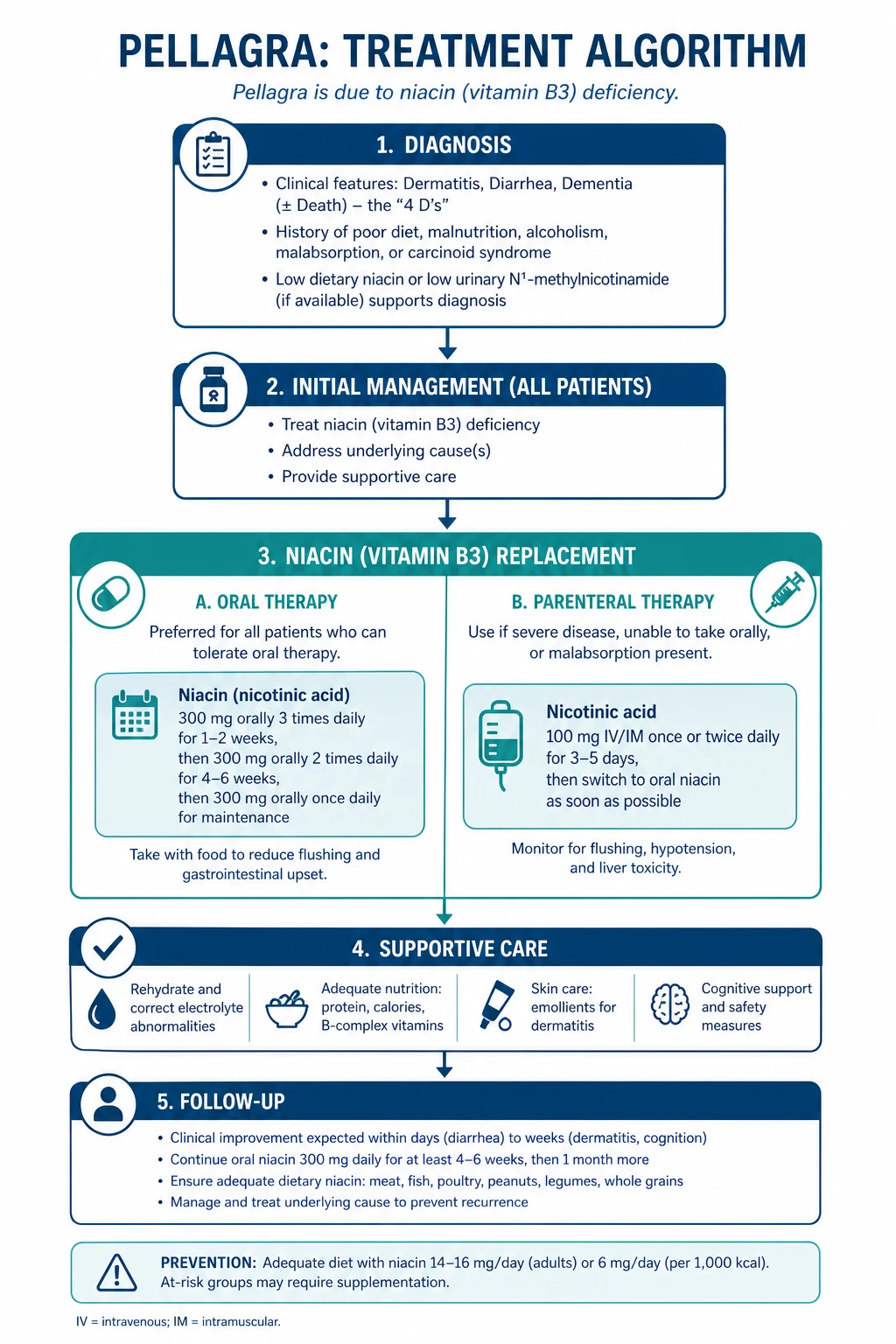
Most patients with pellagra are treated as outpatients with oral nicotinamide. Resuscitation is reserved for fulminant disease — severe encephalopathy, coma, intractable vomiting, or overwhelming diarrhoea with dehydration — but must not be delayed once the diagnosis is entertained. [1]
**Parenteral niacin** — nicotinamide 25 to 100 mg IV or IM, two to three times daily, until oral therapy is tolerated; switch to oral as soon as possible
**Fluid and electrolyte resuscitation** — IV crystalloid with potassium and magnesium replacement for profuse diarrhoea and achlorhydria
**Thiamine 100 mg IV** BEFORE any glucose-containing fluid in any alcoholic or malnourished patient — to prevent precipitating Wernicke encephalopathy
**Empirical broad-spectrum antibiotics** only if sepsis or intercurrent infection is present — infection is both a precipitant and a leading cause of death in fulminant pellagra
**Sun protection and emollients** — strict photoprotection during the recovery phase, as the skin remains highly photosensitive
The principle is simple: niacin deficiency demands niacin replacement, and the response is rapid enough that failure to improve within 48 to 72 hours should prompt a search for alternative or coexisting diagnoses (especially Wernicke, hepatic encephalopathy, or sepsis). [1]
Management — Definitive & Stepwise
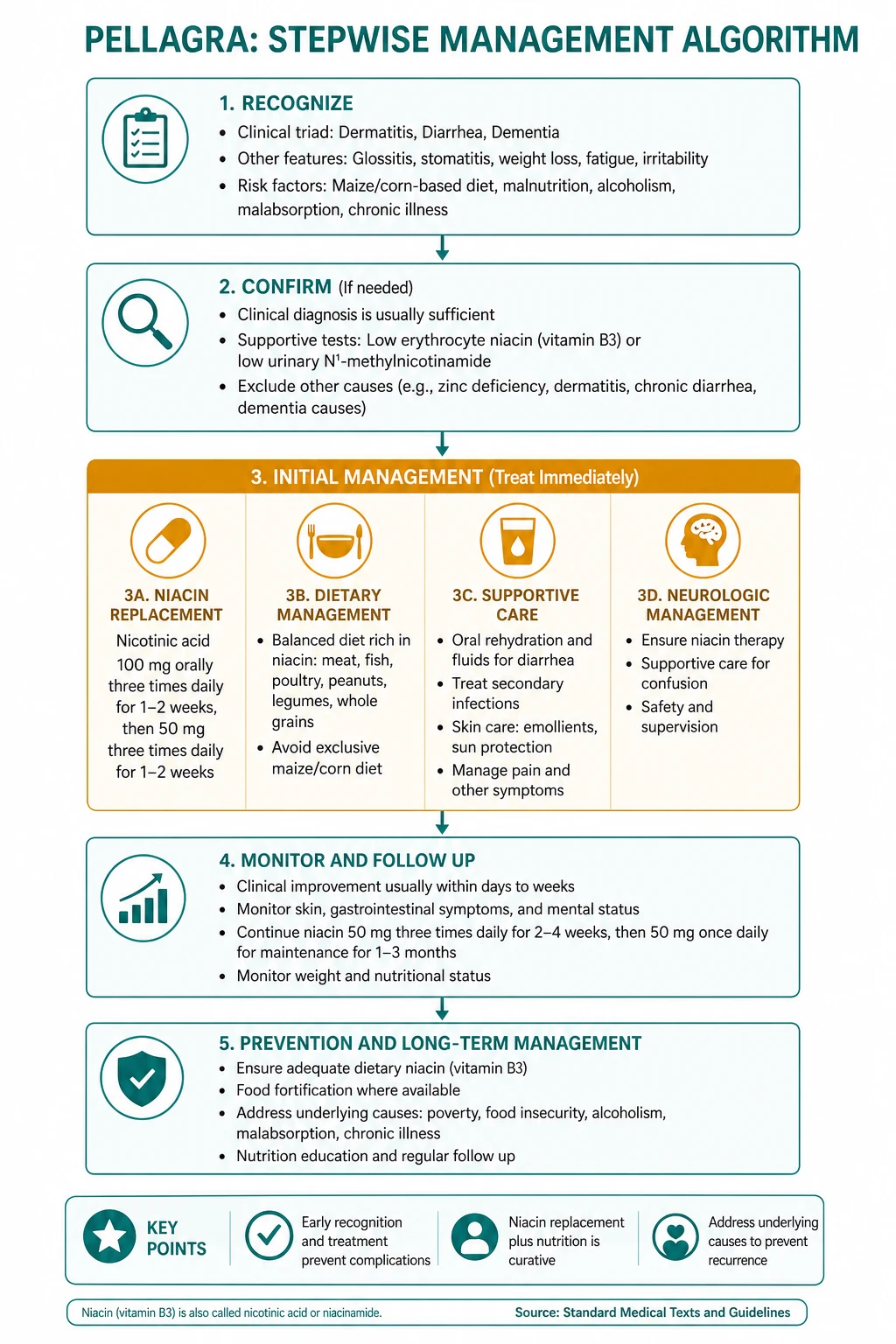
The definitive management of pellagra combines specific niacin replacement, correction of the underlying cause, nutritional rehabilitation, and supportive skin care. The response is one of the most gratifying in medicine. [1]
Nicotinamide (niacinamide)
Dose
100 mg PO four times daily (QID) for 3 to 4 weeks, then 50 mg three times daily (TDS) as maintenance
Specific niacin replacement
The agent of choice is nicotinamide (niacinamide), not nicotinic acid. Nicotinamide does not cause the prostaglandin-mediated flushing, pruritus, headache, and dyslipidaemia seen with nicotinic acid, and is equally effective at restoring NAD. The standard regimen is oral nicotinamide 100 mg four times daily for 3 to 4 weeks, followed by 50 mg three times daily as maintenance until the underlying cause is corrected and the diet is adequate.[1] For severe disease with vomiting, coma, or intractable diarrhoea, parenteral nicotinamide 25 to 100 mg IV or IM two to three times daily is given until oral therapy is tolerated. The cutaneous eruption, glossitis, and diarrhoea typically begin to improve within 24 to 72 hours, and the cognitive and neurological features resolve over 1 to 2 weeks.[4]
The choice between nicotinamide and nicotinic acid matters clinically. Nicotinic acid (the form used for lipid-lowering at gram doses) activates the GPR109A (HM74A) receptor on Langerhans cells, keratinocytes, and dermal mast cells, releasing prostaglandin D2 and producing the characteristic niacin flush — an intense erythema, warmth, pruritus, and sometimes headache that is distressing, mistaken for an allergic reaction, and a major cause of treatment non-adherence. Nicotinamide bypasses this receptor entirely, making it the form of choice for deficiency replacement. Children receive a proportionally smaller dose (typically 10 to 50 mg three times daily), and the maintenance phase continues until the diet is demonstrably adequate and the underlying cause is controlled — premature cessation risks relapse, particularly in patients with ongoing alcohol use, persistent malabsorption, or unresected carcinoid.[1]
Correcting the underlying cause
Specific replacement is necessary but never sufficient — the cause must be addressed or the disease will recur. In alcoholic pellagra, address the alcohol use disorder, correct coexisting thiamine, folate, and B12 deficiency, and arrange nutritional rehabilitation. In isoniazid-induced pellagra, supplement pyridoxine 25 to 50 mg daily and consider whether INH can be modified; importantly, pellagra can occur despite routine B6 supplementation, so persistent symptoms demand niacin replacement.[6] In carcinoid syndrome, optimise somatostatin analogue therapy and consider definitive tumour-directed treatment, while continuing nicotinamide. In Hartnup disease, lifelong nicotinamide 40 to 250 mg daily prevents relapse. In malabsorption, treat the underlying disease (coeliac with gluten-free diet, Crohn with immunosuppression) and address the surgical anatomy where possible. In refugee and famine pellagra, institute population-level fortification and high-protein feeding.
Nutritional and supportive care
**High-protein, niacin-rich diet** — meat, fish, poultry, peanuts, legumes, whole grains, mushrooms; adequate tryptophan (milk, eggs, cheese)
**B-complex supplementation** — thiamine, riboflavin, pyridoxine, folate, B12 (deficiencies coexist and share precipitants)
**Strict sun protection** — broad-spectrum SPF 50+ sunscreen, protective clothing, broad-brimmed hat; the skin remains photosensitive during recovery
**Emollients and topical care** — for fissured, hyperkeratotic skin; treat secondary bacterial infection with topical or oral antibiotics
**Nutritional counselling and follow-up** — prevent relapse; identify the social and dietary drivers
Specific Subtypes & Scenarios
Hartnup disease
Hartnup disease (named for the Hartnup family in whom it was first described in 1956) is an autosomal-recessive disorder of neutral amino acid transport caused by mutations in SLC6A19, expressed in the intestinal and renal proximal tubular epithelium. The defect produces renal and intestinal wasting of tryptophan and other neutral amino acids, depleting the substrate for niacin synthesis and producing a pellagra-like phenotype: a photosensitive rash, cerebellar ataxia, and episodic psychiatric disturbance. It presents in childhood, often after a triggering illness or poor diet. The diagnostic test is urinary amino acid chromatography showing a characteristic neutral aminoaciduria. Treatment is oral nicotinamide 40 to 250 mg daily plus a high-protein diet; the response is excellent, though lifelong treatment is required.[1]
Carcinoid syndrome pellagra
A neuroendocrine tumour can divert an extraordinary fraction of dietary tryptophan — up to 60% — toward serotonin synthesis, depleting the substrate pool for niacin and producing carcinoid-associated pellagra. This is one of the most frequently missed causes in developed countries because the carcinoid is the focus of attention and the rash is attributed to flushing, photodamage, or drug reaction. The presentation may include the usual pellagra tetrad, sometimes with vulvovaginal or perianal involvement and an overlap with lichen sclerosus.[7] Management combines nicotinamide with optimisation of somatostatin analogue therapy (octreotide, lanreotide) and definitive tumour control.
Isoniazid-induced pellagra
Isoniazid (INH), the backbone of tuberculosis therapy, causes pellagra by two mechanisms: it chelates pyridoxal phosphate (depleting the cofactor for kynureninase) and it directly inhibits kynureninase, blocking the tryptophan-to-niacin pathway. The syndrome is well described in TB patients on standard therapy, and critically, it can occur despite routine pyridoxine supplementation — so a patient on INH and B6 who develops a photosensitive rash, diarrhoea, or confusion still has pellagra until proven otherwise.[6] Management is nicotinamide plus pyridoxine 25 to 50 mg daily, and a review of the INH regimen with the TB team.
Alcoholic pellagra
In developed countries, alcoholism is the commonest cause of pellagra. The mechanism is multifactorial: poor dietary intake of both niacin and tryptophan, ethanol-induced intestinal malabsorption, and impaired hepatic conversion of tryptophan to niacin. Crucially, alcoholic pellagra coexists with and is masked by Wernicke encephalopathy (thiamine deficiency), Marchiafava-Bignami disease, and hepatic encephalopathy, so any alcoholic with confusion and a rash should receive both thiamine and nicotinamide empirically while the work-up proceeds. [1]
Endemic and refugee pellagra
Where untreated maize or sorghum is the dietary staple, pellagra remains endemic and erupts in epidemics during drought, economic collapse, or displacement — as documented in southern Africa (2001 to 2002) and continuously in parts of India and sub-Saharan Africa.[5] The public-health interventions are dietary diversification, fortification of maize and wheat flour, and the alkali treatment of maize (nixtamalisation). Refugee-feeding programmes must ensure adequate niacin and protein, not just calories.
Complications & Pitfalls
The complications of pellagra are the untreated tetrad itself, the consequences of misdiagnosis, and the chronic skin sequelae. [1]
Disease complications
Diagnostic pitfalls
Treatment pitfalls
Exam application bank (NEET-PG / INICET)
One-line answer
Pellagra is a systemic disease caused by deficiency of niacin (vitamin B3) or its amino acid precursor tryptophan, classically presenting with the '3 Ds': dermatitis (a sharply demarcated photosensitive rash on sun-exposed skin including Casal's necklace), diarrhoea, and dementia — with death as the untreated 4th D. Causes span dietary deficiency (maize/sorghum-based diets), alcoholism, malabsorption, Hartnup disease (impaired tryptophan transport), carcinoid syndrome (tryptophan diversion to serotonin), and isoniazid therapy (vitamin B6 antagonism). Tryptophan converts to niacin (~60 mg to 1 mg) via the kynurenine pathway, requiring B6, B2, and B1. Treatment is oral nicotinamide (niacinamide) 100 mg four times daily for 3-4 weeks then 50 mg TDS maintenance, with rapid clinical response within days. [1]
Worked stems (answer without another resource)
Stem 1 — Classic presentation. Map symptoms to mechanism; name the first investigation and first treatment step with dose/route if drug therapy is standard. [1]
Stem 2 — Unstable / complicated. List red flags that force immediate resuscitation, theatre, ICU, antidote, or reperfusion — and what you do in the first 15 minutes. [1]
Stem 3 — Atypical group. Elderly, pregnancy, child, or immunocompromised: how presentation and thresholds change. [1]
Stem 4 — Differential trap. Name the three closest mimics and one discriminator for each. [1]
Stem 5 — Disposition. Who goes home with safety-netting, who is admitted, who needs HDU/ICU/theatre, and what follow-up is mandatory. [1]
Rapid viva checklist
- Definition + classification
- Pathophysiology chain
- Bedside signs / criteria
- Score with exact components (if any)
- Emergency bundle
- Definitive therapy with doses
- Complications of disease and of treatment
- Special populations
- Guideline/trial name if classic
- Three exam traps
Coverage self-check
If you cannot answer any stem above from this page alone, re-read the matching section — the page is intended to be self-sufficient for final-prof and NEET-PG/INICET questions on Pellagra (niacin/vitamin B3 deficiency).
Prognosis & Disposition
The prognosis of treated pellagra is excellent and the response is among the most satisfying in clinical medicine. The cutaneous eruption and glossitis begin to improve within 24 to 72 hours of starting nicotinamide; the diarrhoea resolves within days to one week; and the cognitive and neurological features recover over 1 to 2 weeks, although full cognitive recovery may lag for weeks to months in chronic depletion.[4] Untreated pellagra is fatal within 4 to 5 years of chronic disease, and fulminant cases can kill within weeks from cachexia, intercurrent infection, or neurological decline. The disposition depends on severity: most patients are managed as outpatients with oral nicotinamide, dietary advice, and follow-up; patients with severe encephalopathy, dehydration, or fulminant disease require admission for parenteral niacin, fluid resuscitation, and treatment of infection. Long-term outcome is determined by whether the underlying cause is corrected — relapse is the rule in uncontrolled alcoholism, ongoing INH therapy, untreated carcinoid, or unsupplemented Hartnup disease.
Recovery timeline after starting nicotinamide
Special Populations
Pregnancy and lactation
Paediatric
Elderly alcoholic / socially isolated
Dialysis and renal
Evidence, Guidelines & Regional Differences
The evidence base for pellagra is observational and physiological rather than randomised — there are no placebo-controlled trials of niacin for pellagra, and none are likely or ethical given the dramatic, well-established response. The key historical and contemporary evidence is summarised below. [1]
Historical landmarks
Public health
Contemporary
Regional differences in approach are modest because the disease and its treatment are universal, but the focus of prevention differs sharply. In endemic regions (sub-Saharan Africa, South Asia), the priority is dietary diversification, fortification, and nixtamalisation plus population-level feeding programmes during famine. In developed countries (UK, US, ANZ, Europe), the priority is clinical vigilance for secondary pellagra in alcoholics, refugees, patients on INH, carcinoid patients, bariatric surgery patients, and those on unsupplemented restrictive diets. The UK SACN, US Institute of Medicine, and WHO all set similar RDAs (14 to 16 mg NE/day), and all recommend nicotinamide over nicotinic acid for replacement.
Exam Pearls
4 Ds
Why does isoniazid cause pellagra even when pyridoxine is supplemented?
INH both chelates pyridoxal phosphate (depleting the B6 cofactor for kynureninase) and directly inhibits kynureninase, blocking the tryptophan-to-niacin pathway. Routine B6 prophylaxis does not fully prevent the syndrome — persistent symptoms demand nicotinamide replacement.[6]
Why is the pellagra rash photosensitive?
Ultraviolet irradiation generates reactive oxygen species and DNA strand breaks in basal keratinocytes, which require high NAD consumption by poly(ADP-ribose) polymerase (PARP) for repair. NAD-depleted keratinocytes cannot sustain this repair load, so sun-exposed skin fails first — producing the sharp demarcation between exposed and covered sites.[3]
References
- [1]Karthikeyan R, Chhabra S, Prasad PVS. Pathophysiology and clinical management of pellagra - a review Folia Med Cracov, 2021.PMID 34882669
- [2]Mwafy SN, Afifi TM. Pellagra a review exploring causes and mechanisms, including isoniazid-induced pellagra Photodermatol Photoimmunol Photomed, 2021.PMID 33471377
- [3]Wan P, Moat S, Anstey A. Pellagra: a review with emphasis on photosensitivity Br J Dermatol, 2011.PMID 21128910
- [4]Piechota M, Merecz-Szponder A, Świętek K, Błażewicz A, Błażewicz A. The Promise of Niacin in Neurology Neurotherapeutics, 2023.PMID 37084148
- [5]Moodley S, Aldous C. Pellagra in South Africa from 1897 to 2019: a scoping review Public Health Nutr, 2021.PMID 33769244
- [6]Darvay A, Basarab T, McGregor H, Russell-Jones R. Isoniazid induced pellagra despite pyridoxine supplementation Clin Exp Dermatol, 1999.PMID 10354170
- [7]Forster EC, Smith KJ, Skelton HG. Vulvovaginal pellagra and lichen sclerosus complicating carcinoid syndrome Obstet Gynecol, 2009.PMID 19155950